A Weird Shidduch and the Message of Tu B’Av

Name calling in politics is nothing new.  America has a long history of presidential candidates hurling insults at one another, going all the way back to the 1800 race between Thomas Jefferson and John Adams.  And yet, it often feels like we manage to reach new lows.


Just this week one candidate described the other as an “incompetent socialist lunatic” who is “not very smart” and has the “laugh of a crazy person,” while the other side has repeatedly labeled their opponents as, “creepy and yes, just very weird.”


When those who are competing for the presidency on both sides engage in juvenile name calling instead of focusing on differences in policies, it is not only demeaning to the position they seek but it helps launder this behavior for the general population, and makes name-calling permissible, acceptable, and even admirable.  Children who call others names are called bullies and it is no less wrong when the same behavior is coming from adults.


When I was growing up, one insult that was considered particularly biting and especially hurtful was calling someone weird.  It may not strike a desensitized, 21st-century reader as overly cruel, but calling someone a “weirdo” or weird isolates them, making them and others believe that they aren’t normal, they are an outlier and outsider and don’t belong.


Labeling someone as weird isn’t just a momentary insult, it can damage socially and financially in real and lasting ways you may not even appreciate in the moment. 


Dovid and Elisheva (names changed) are a fantastic couple in our community.  They participate in davening, learning, and volunteering in community programs and chesed activities. They are building a beautiful family together, but their wonderful marriage almost didn’t happen. 


Elisheva was moving to the West Side of Manhattan and went to meet up with a friend to see a potential apartment.  She got to the building early and while waiting in the lobby, noticed a guy who looked, in her words, “frum and normal.”  Always on the lookout for her potential bashert, she asked the friend, “What’s the story with the guy who was in the lobby before? “ The friend made a face and said, “Oh, that guy? That guy is totally weird, he is always talking to the doorman.”  That comment, that one word “weird,” embedded itself deeply in her mind and created a mental block, a narrative that Dovid was “the weird guy who talks to the doorman,” someone she should never be interested in.


Elisheva moved into the building and, over the course of the next couple of years, crossed paths with Dovid at Shabbos meals, speed dating events and, naturally, the lobby of the building.  They made small talk and at times it even felt like they were making a connection, but whenever they interacted, Elisheva still heard the voice of her friend telling her that Dovid is the “weird guy who talks to the doorman,” and she of course had no interest. Who wants to go out with someone weird?


Two years after Elisheva moved in, Dovid was scheduled to move out, to leave the building, and leave New York.  On his last Shabbos, he ran into Elisheva and told her that he was leaving.  They had a great conversation, and it even felt to him like for the first time, she had let her guard down.  So, he thought to himself, why not, why not give this a shot and ask her out directly.  When Shabbos ended, he called her.  Elisheva thought to herself, you know, he is a nice enough guy, and even if he is weird, he deserves an A for effort.  I will go out once just to be nice.  It will be a “one and done.”


When they went out, Elisheva discovered that Dovid often talked to the doorman because he lived on the first floor, worked from his apartment, had limited interactions with people, and enjoyed stepping out to connect with someone who was often lonely himself.  Dovid wasn’t “weird,” he was actually wonderful.  A few months later they were engaged, and the rest is history. 


Reflecting on their story, Elisheva says had the friend not dropped that anchor, attached that label of “weird” and planted that mental block, they could have avoided two years of going down the wrong paths, dating the wrong people and “wasting” their time.  Recognizing that while everything has a reason and Hashem clearly decided they needed to date for two additional years after first seeing each other, she still says the friend was unkind and unfair using that term “weird” and it could have caused her to pass up her bashert altogether.  (To this day, to her credit, Elisheva has yet to tell Dovid who the friend was that had called him weird and had almost kept them apart forever.)


This coming week we observe Tu B’Av.  The Mishna characterizes Tu B’Av as the happiest day of the year, a day that the women of Yerushalayim would dress up in white and would draw attention to their interest in finding a husband and building a home.


But why this date?  The Gemara in Taanis (30a) identifies several events that happened specifically on the 15th of Av, including the day young men and women were allowed to intermarry among the different tribes.  It was also the day the tribe of Binyamin was welcomed back into Klal Yisroel, the day those who travelled through the desert stopped dying, the day the guards who blocked the roads to Yerushalayim were removed, the day those martyred in Beitar were allowed to be buried.

What emerges from this seemingly disparate list is that Tu B’Av is the holiday of bringing back together that which was apart.  Tribes were divided, the Jewish people were alienated from Hashem, and on Tu B’av the pieces of the puzzle that belonged together were put back in place to form the most beautiful and unified picture.  Tu B’Av is the chag ha’achdus v’ha’ichud, it is the holiday of unity and oneness, of parts becoming a whole. 


We can only go from Tisha B’Av, a day commemorating the tragedies and calamities that come from being divided, to Tu B’Av, a day of unity and togetherness, if we are careful with our labels, words, and the way we describe one another.  There is nothing weird about loving every Jew and seeing the best and the positive in them.  


The next time you are asked about someone for a shidduch, a business deal or as a reference, be honest and truthful.  But, also be thoughtful and judicious in what adjectives and labels you use.  What is just a word or phrase for you can be the difference between happiness and prosperity or loneliness and struggle for them. 


In a world in which leaders act like children, let’s strive to be the adults in the room.

Stay Humble or Be Humbled

Of the many lessons we have been taught over the last seven months, one critical one is humility.  I will leave for those in Israel to explore at a later date how the horrific and unexpected events of October 7 should humble elected leaders, the military and intelligence establishments, and all of us.  Instead, I want to focus on how these last months in America have humbled me. 


Earlier this year, the great behavioral economist, best-selling author Daniel Kahneman, passed away.  He taught at Princeton, UC Berkeley and the University of British Columbia, and in 2002, he won a Nobel Prize in Economics. He was the nephew of Ponevezh Rosh Yeshiva Rav Yosef Shlomo Kahaneman and was considered one of the greatest thinkers of the 20th century.


Kahneman once said: “We’re blind to our blindness. We have very little idea of how little we know. We’re not designed to know how little we know.” Indeed, when asked what he would eliminate in the world if he had a magic wand, Kahneman answered with one word: overconfidence.


It is instructive that one of the brightest minds of our time thought overconfidence was even more dangerous than ignorance. Indeed, overconfidence is to blame for the sinking of the Titanic, the nuclear accident at Chernobyl, the loss of Space Shuttles Challenger and Columbia, the subprime mortgage crisis of 2008, the Great Recession that followed, and the oil spill in the Gulf of Mexico, among countless other things. Overconfidence has brought personal financial disaster, imploded relationships, and ruined lives.


Overconfidence comes from hubris, from a feeling of arrogance that we see the whole picture, know all the relevant facts, can draw the proper conclusions, and have a monopoly on the truth.  One would think the recent pandemic that brought us to our knees would have softened our confidence, tempered the strength of our views, made us admit the limits of our knowledge and understanding.


And yet, when it comes to politics (and other areas of life), we have remained as convinced, as confident, and strident as ever.  We know exactly whom we are aligned with, whom we should support and vote for, which party is the future of Israel and will always stand up for the Jews. Many speak in absolutes, with generalizations and overconfidence about politicians, parties, and the political landscape.


And yet, not surprisingly, they were wrong again.  Reading, watching and following who has stood with us and who hasn’t over these last seven months should humble us,  cause us to reconsider entrenched positions, and to be more open, interested, curious, and persuadable going forward. 


On October 6, we thought we understood the political landscape, which party was exclusively the future of the US-Israel relationship, and who would stand with the Jewish people if they were under attack. For example, many were cynical at best about Senator John Fetterman, with criticisms of his progressive policy ideas, his bizarre and inappropriate wardrobe, and even his physical and mental fitness to serve while recovering from a stroke.  Little did we know or appreciate that he would emerge as one of the most passionate, eloquent, and outspoken advocates for Israel and of the Jewish community, that he would courageously confront our enemies and haters without backing down or cowering for a moment.  We could not have predicted he would speak up and speak out against his own party and even the president when it came to defending Israel.  On October 6, I think only a tiny minority of members of our greater community would have contributed to Fetterman’s campaign.  Today, I don’t know a shul that wouldn’t embrace the opportunity to honor him at their dinner.


Previously, we may have thought a congressman who describes himself as a liberal progressive may not be aligned with us, our values, or interests.  But we would be terribly mistaken to reduce him to those labels or components of who he is or what he believes in.  Most important for us, Rep. Ritchie Torres has paid a heavy price for being among our greatest friends in Congress, standing up, posting, advocating and passing legislation for Israel and to protect the Jewish community when it isn’t easy or popular in segments of his party or his base. 


When our new congressman, Rep. Jared Moskowitz, was campaigning and ultimately elected, were we only distracted by policies or positions we disagreed about, or did we bother to focus on the fact that on what matters most to us, he would become a true champion of our cause, a relentless fighter of our people?


Last week we interviewed an extraordinary young man named Shabbos Kestenbaum on Behind the Bima.  He has been on the front lines of defending the Jewish people at Harvard, including contending with a death threat from a faculty member of the university that resulted in a need for private security and the filing of a lawsuit against what was long considered the most prestigious university in the country, maybe the world.  Shabbos (yes that is his name) is a student of Chassidus, loves the Kotzker Rebbe, considers Rav Aharon Leib Steinman one of his heroes, and has defiantly remained not only fully and publicly observant on a campus filled with hate and genuine threats, he has emerged a heroic spokesperson of our people, testifying before Congress proudly wearing his yarmulka and clinging to Torah. 


But if terrorist sympathizers and supporters hadn’t essentially taken over Harvard, would we ever come to know that about Shabbos, would we have learned about what we have in common and how much admire him, or would we have remained focused on other passions of his, like his rallying for progressive causes and policies?


There are many more examples in every direction, but the bottom line is that we must not be overconfident or arrogant in assuming we can reduce people to their political party or one component of who they are. Doing so not only deprives us of friendships and relationships we can gain from but alienates those who could and would be our friends. 


There are many issues, policies, and positions we care about but they are not all equal and we must not get confused about how we prioritize them and which matter most.  If we didn’t know it already, the last seven months have taught us that for us, the top three issues that should influence or vote and political giving are Israel, antisemitism and Israel. This does not mean being overconfident, or screaming from the rooftops that we are certain the person we are voting for is going to be the best candidate for any issue, including Israel. It does mean, however, that we have the responsibility to make the best decision with what we know at any given moment, with the humility and understanding that we may be wrong.


There are many others who can focus on the other issues, but as of 2023, we are only 0.2% of the 8 billion worldwide population and by some estimates 2.2% of the population in the United States.  Nobody is going to fight for, prioritize, and care about Israel and antisemtisim like we do.  Does that mean we may find ourselves contributing to and voting for people whose other policies, or whose character is alien to us or repulsive? Or that we may find ourselves voting for someone in a party we feel no affinity for but believe the person on the ballot will be loyal to our interests?


It might, but when you are in a burning building and the fireman comes to save you or you are being chased by an armed madman and a policeman comes to save you, you don’t have the luxury of making sure you are in alignment in your beliefs and lifestyle, or you approve of their character and behavior.  You embrace their sacrifice and efforts towards your safety and security with gratitude and appreciation.  Maybe in a perfect world you’d prefer another policeman or fireman to intervene who better aligns with your values and general worldview, but in a crisis, you don’t get that choice, and we are in a state of perpetual crisis. 


There are many lessons that we have learned, and still are learning, from this painful and difficult period for our people.  Let one of them be humility.  Let’s never be overconfident, let’s not put our faith in ourselves or overly in anyone else. It was just this past week’s Pirkei Avos in which Rabban Gamliel cautions us to be careful with and not put too much faith in government. Let’s remember that Hashem is in control and in charge, and that as our rabbis say, harbei sheluchum la’makom, Hashem has many agents and emissaries He can act through.  Let’s do our best to identify them not by the party they belong to or the ways they are different than us, but by us prioritizing what matters most and making sure we share that in common.  


Surviving Auschwitz With Constant Prayers on Her Lips (Guest Post: Rebbetzin Yocheved Goldberg)

A tribute to Chaya Esther Bruckstein, a Holocaust survivor, in honor of Yom Hashoah

Sitting on my shelf is a precious treasure. While its pages are starting to brown and its letters starting to fade, its words still jump off the pages and fill my heart every time it catches my eye. Because it’s more than just an old, used book. It’s a time machine.


My Babi, Chaya Esther Bruckstein, was born on August 15, 1913. She grew up in a beautiful, spacious and ornate home in Bustina, Hungary (now Ukraine). Later in her life she would wistfully tell us, “Ve vere so very vealthy.”  Her family was prestigious and prosperous and Babi’s childhood was filled with plenty—the most beautiful dishes and décor, servants who took care of everything, even a separate guest house on their large estate. It was a hospitable and warm home too, rich with Torah values and gemilus chassadim, attracting all different types of guests. Some were recuperating from illness while others were visiting Rabbis from all over Europe. Her family, including 6 siblings and over 60 first cousins, was loving and close-knit, a robust, beautiful family steeped in Yiddishkeit. It was during those early days, and then later in 1938 when she and her husband had their first child, that she would open up her Tehillim and recite the words of Hallel and Hoda’ah for all the good she was given and for the brachos in her life: Hodu lashem ki tov ki le’olam chasdo.


Like so many others, one day her warm, pleasant life was shattered. She, her husband and their 5-year-old daughter were rounded up together with her extended family and community, and taken to Auschwitz. As she was standing on the platform, waiting to be told in which line she should stand, an unfamiliar man in prison garb came up to her and instructed her, “give your child to the old lady next to you right now.” My Babi, disoriented from the long and arduous train ride, followed his orders and handed over her child to her mother-in-law, never to be seen again. As the days went on, starved and exhausted, Babi would find inner reservoirs of strength that she never knew she had. It was there, in Auschwitz, that she would see her father for the very last time, across a fence in the men’s camp, and not know who he was, until he called out to her in a weak voice, saying, “Don’t you recognize me Hajnal? It’s me, your Opu.” And a little while later, while in Ravensbruck, her sister and cousin would task her each day with dividing up the measly rations they would get, because she was the oldest and wisest and had deep compassion and integrity. It was there that her younger sister felt helpless and hopeless and shared her plan to throw herself against the electrocuted barbed wire to end her agony. My Babi was the one who, despite being just as beaten down and tired, pleaded with her sister, encouraging hope, faith and will to survive. It was there that she cried out to Hashem, from the depths of her suffering, quoting the same Tehilim from her parched lips that she once sang from a full heart: Mima’amakim kirasicha HaShem


After being liberated and reuniting with the few scattered members of her family, her realization of how many people were lost was daunting. Among the living was her first cousin, a wonderful man she had her eye on earlier in her life and had wanted to marry, but her parents had not allowed it at the time. They both found themselves at a mutual cousin’s home in Romania and they decided to get married. It was there that she had to do chalitza before her wedding, after testimony that her child was killed before her first husband. In the aftermath of the war that broke their bodies and souls, they were able to locate her brother-in-law, find a Rabbi, and make it a priority to complete this obscure and complicated mitzvah so they could finally be able to unite under their chuppah. Together they grieved the life they once had, he too having lost a wife and son in Auschwitz. It is there that they committed to put one foot in front of the other and look towards the future. There was nothing left for them in their hometowns and it was time to move on. They had a baby, my father, secured visas, and came to America to start a new life, but the hardships continued. They arrived in Ellis Island with battle scars, empty pockets and an unfamiliar language. They were able to get jobs in a garment factory, sewing clothing. My grandfather had no idea what he was doing. He was a brilliant man but his talents and skills were not in the sewing and fabrics trade. He would slowly and painstakingly try to do his work, but struggled to finish his pile. My grandmother would not let him get fired. She would spend those days working quickly and tirelessly to do his workload in addition to hers, in order for him to save his job and his self-respect. It was here, replanted in a new world, with nothing but hope for the future, that she called out with those same tefilos that had accompanied her this far, Dovid Hamelech’s Tehilim: Ezri me’im HaShem.


As the years went on, Babi slowly rebuilt her life. She raised her son and supported her husband with care and selflessness. She was machshiv Torah at a time when it wasn’t so common to care about daily limud Torah. In the cold, winter months she would wake up early to warm their clothes on the heater so “her men” could learn together each morning in comfort, before going off to work and Yeshiva. With kindness and grace she devoted herself to her sister Gizi, who was never zoche to have her own children, including her in every part of her life so she had a family to call her own. It was in their Washington Heights apartment that she had to tell her precious 13-year-old son that he did not need to fast as a bechor before Pesach, because there was another child who came before him. And it was here that she reunited with the man who took that child from her arms in Auschwitz and, now realizing that he had saved her life, stayed in touch with him and invited him to partake in all of her family simchas. Despite trying to move forward, she was never able to fully let go of her past. Where else to turn but her Tehilim to find the right words that can capture her desire to transition to a life of goodness and no more sadness: Hafachta mispidi l’machol li.


In her later years she imparted life lessons to us, her grandchildren, who she never imagined she’d see, in her everyday attitude and actions. We knew that every crumb was precious, never to be wasted. Every grandchild and great-grandchild was a miracle, never to be taken for granted. And every milestone was a momentous occasion to participate in and celebrate. There was not one graduation, Visiting Day or Chumash party that she missed. Each time her heart filled with nachas and joy as she experienced the rebirth of her family. She reveled in her husband’s Torah learning and scholarship, in her son’s success in medicine and in the beautiful home he built with his wonderful eishes chayil, her precious daughter-in-law. She felt her life, in her tiny apartment in Rego Park, Queens, without the servants and fancy serving pieces, was complete. She would thank HaShem for all the bracha and riches she had, and with her beloved Tehilim in her hand she would sing: Kos yeshuos esa uv’sheim HaShem ekra.


In 1993 I went off to seminary and, upon my return trip for Pesach I wanted to buy something for my Babi. I knew that her old Tehilim was battered and ripped and that it was time for a new one. I got her name engraved on the cover and when I presented it to her, the smile on her face and joy in her eyes convinced me that it was the right gift.  At that moment she knew that I understood what was most important to her and the legacy she was passing on. I have such vivid memories of my Babi reading from that Tehilim, day and night, well into her 90’s. Her connection with HaShem was unflinching, her love for HaShem palpable: Lehagid Baboker Chasdecha, Ve’emunascha Balaylos


And so, sitting on my shelf for the past 18 years since her petirah, is my Babi’s precious Tehillim, the one that I gifted to her 30 years ago. It’s a symbol of her tenacity, courage, strength, perseverance, profound faith and deep love.  And now, since its pages are starting to brown and its letters starting to fade, I keep it in a frame on my shelf to preserve it for longer and safeguard it for many more years. Whenever I walk by the shelf and see it from the corner of my eye, it serves as an inspiration to me.  It reminds me that while Baruch Hashem, my own highs and lows can’t begin to compare with what my Babi endured, I too, like everyone, have good days and more challenging ones. And that no matter what is going on in my life and the lives of those I love, I can find expression like she did, in the book of Tehillim. Sometimes singing Hodu laShem ki tov and at other moments, Mimamakim kerasicha Hashem.


Now that I am blessed to have grandchildren who call me their Babi, I look at that time machine on my shelf and feel responsible to not only transmit the physical sefer to my children and grandchildren, but all the lessons, tefillos and tears it has absorbed as well. I try my best to give over the values and messages I was privileged to gain from previous generations, and to be the next link in the unbreakable chain: Dor l’dor yishabach ma’asecha.


Reprinted from Mishpacha Magazine, Pesach 2023

Every Last Crumb

The Large Hadron Collider (LHC) is the world’s largest and most powerful particle accelerator.  The circumference of the collider is 16.565 miles, and it contains thousands of magnets. It was built in collaboration from over 10,000 scientists and hundreds of universities as well as more than 100 countries and it cost $4.75 billion.

In 2009, the collider overheated and shut down. Scientists were perplexed and investigated what went wrong. The problem was found at a compensating capacitor, one of the points where the mains electricity supply enters the collider from above ground.  Sitting there was a bird munching on a baguette.  It turns out a crumb had fallen into the collider causing the overheating. 10,000 scientists and $5 billion dollars couldn’t stop the impact of one crumb.


The power and potency of a crumb is at the core of Pesach.  The Talmud (Pesachim 29b) tells us chametz is forbidden in the smallest quantities, and that while in many cases with prohibited food we apply the concept of “bittul” – nullification of a small amount amidst a much larger amount – when it comes to chametz, one crumb is not nullified, even in a thousand parts.


The Meor Einayim (Tzav), Rav Menachem Nochum of Chernobyl, points out that the letters in the words “chametz” and “matzah” are almost exactly the same. The mem and tzadi are in both words, the only difference is that Chametz has a ches, and Matzah has a hay. The only difference between those two letters, a hay – ה – and a ches – ח –, is a tiny little line, a speck of ink. That mashehu of a line seems so insignificant, so seemingly inconsequential it is easy to dismiss. But the truth is that mashehu is what makes all the difference between the words chametz, or matza.


Says the Meor Einayim, the yetzer hara works not by convincing us to violate a major boundary or commit an egregious mistake.  It works perniciously by telling us that something is only a mashehu, it’s tiny, insignificant, what difference does it make?  What does it matter if you come a bit late to shul or schmooze a little during davening?  Does Hashem really care if a mashehu of what you declare as a business expense aren’t really?  Is a mashehu of lashon hara really going to hurt anyone? 


Slowly, those small things add up until a person doesn’t recognize himself anymore.  On Pesach, chametz is assur b’mashehu to teach us how important everything, even what seems so small, truly is.  One crumb can bring a $5 billion dollar machine to a grinding halt, and one crumb of yetzer hara can corrupt an invaluable neshama.


The Be’er Heitev in his commentary on Shulchan Aruch quotes the Arizal who says that a person who is careful about a mashehu, a negligible amount of chametz on Pesach, is guaranteed not to make a mistake the whole year.


I don’t read this statement as a metaphysical promise as much as a strategy for change.  If over Pesach you can learn to be disciplined even about the “mashehu”s of life, if we can learn not to dismiss or minimize the small things, we will live our most disciplined selves.


Don’t underestimate the impact of a crumb.  One mashehu, a drop of ink, is the difference between a hay of matzah and a ches of chametz.  Don’t let the yetzer hara convince you not to care about the mashehu


But maybe the message of Pesach is not only the danger and damage of even a crumb, a mashehu. If a mashehu matters, if it can make all the difference, then isn’t it true that a mashehu of a mitzvah or of a good thing also matters, it means something, it makes a difference.  The meaning of mashehu works in both directions. 


The typical approach to self-improvement or changing habits is to set a large goal, then try to take big leaps to accomplish the goal in as little time as possible. But this method often ends in burnout, frustration, and failure. Instead, focus on a mashehu at a time, continuous but steady, slow, incremental improvement.


It is so easy to dismiss the value of making slightly better decisions on a daily basis.  Making mashehu improvements isn’t going to make headlines, but it makes a difference.


In the Haggadah, we recite: וְהִיא שֶׁעָמְדָה לַאֲבוֹתֵינוּ וְלָנוּ. שֶׁלֹּא אֶחָד בִּלְבָד עָמַד עָלֵינוּ לְכַלּוֹתֵנוּ.  Tzaddikim say what is amad aleinu l’chaloseinu, what stands to destroy us? An attitude of she’lo echad bilvad, I am just one person, this is just one mitzvah, this is just one daf of Gemara, one perek of Tehillim, one dollar of tzedakah, one moment of being my best.  An attitude of echad bilvad, it is just one thing, something small, inconsequential, it doesn’t matter, that attitude stands to destroy us.


We have to realize a crumb can destroy, a mashehu of chametz is assur, but a mashehu of a mitzvah, a mashehu, a moment of nobility, righteousness, discipline, spirituality, moves the cosmos, can change the world, can change your life, and that of your family.


This Pesach, as we sit at our Seder tables, hostages are still being held, soldiers are still fighting on our behalf.  While we mark our freedom, some are in shackles and others are heroically fighting to liberate them.  After more than six months of this war and this situation, fatigue can set in, and it feels hard to sustain the intensity of prayer, contributions, advocacy, and earning merits.  Now is when it is critical to remember that even a mashehu, a small measure of effort, of caring, of prayer and connection matter.


This past week, Iran launched hundreds of drones and missiles with the intent to cause severe harm and damage to our people and our homeland. While the swift and successful defense by Israel and its allies seemed almost matter-of-fact, the minimal damage caused by the attack was nothing short of miraculous. If one Iron Dome radar-guided missile is off by a mashehu, the attacking missile could cause catastrophic loss of life. Similarly, none of us know how much of Hashem’s benevolence is due to the merits of our own mashehu contributions, our small acts of learning, davening, kindness, and righteousness.


A mashehu of mitzvos matters to Hashem and is measurable over time in us. Like the Jews in Egypt, many of us are enslaved, not to external oppressors but to our own habits and patterns, between us and Hashem, us and others, or even with ourselves.


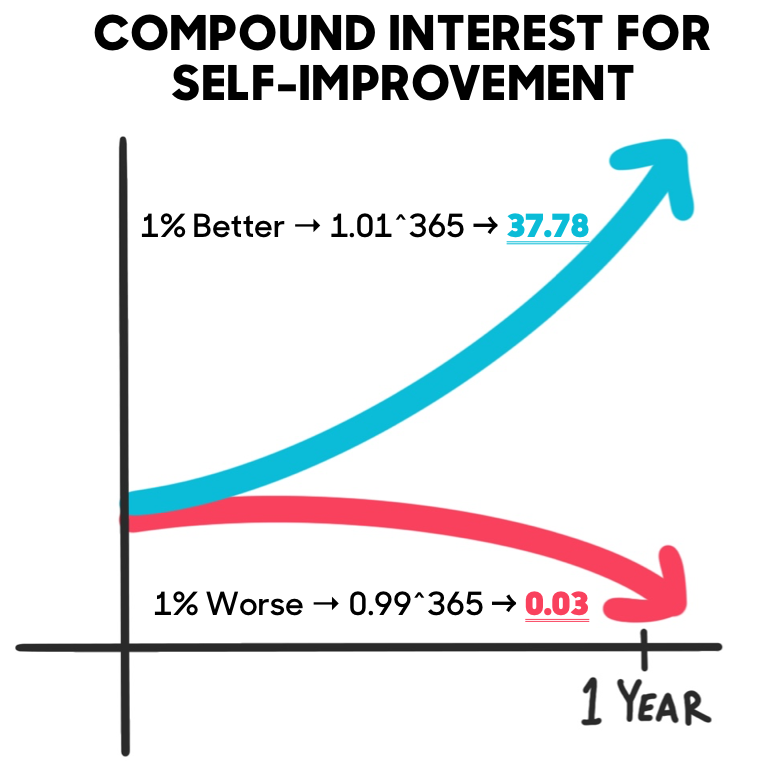
In the beginning, there is basically no difference between making a choice that is a mashehu, 1 percent better or mashehu, 1 percent worse. But as time goes on, these small improvements or declines compound and you suddenly find a very big gap between people who make slightly better decisions on a daily basis and those who don’t. In Atom Habits, James Clear shows that if you get one percent better each day for one year, you’ll end up thirty-seven times better by the time you’re done.


In one of the most inspirational stories in Shas, Chazal describe how Rebbe Akiva was a shepherd, a laborer, an am ha’aretz. At age 40, he didn’t even know how to read the aleph-beis. One day, while sitting by a brook, Akiva noticed a steady trickle of water hitting a rock. It was only a drip, it was a mashehu, but it was constant – drop after drop after drop. Akiva observed something incredible: A hole had been carved out by that steady drip of water. He wondered how that could be. He concluded: If something as soft as water can carve a hole in solid rock, how much more so can words of Torah – which is hard as iron – make an indelible impression on my heart.


That marked a turning point in Rebbe Akiva’s life. He committed himself to Torah study and went on to become the greatest sage of his generation, producing 24,000 talmidim and later a group of students who were the transmitters of Torah Sheb’al Peh.  Akiva became Rebbe Akiva because he noticed a mashehu of water and grew a mashehu at a time.


This Yom Tov we are pledging to liberate ourselves from bad habits, to make meaningful changes.  We are dedicated to do so in the merit that the matzav for our people improves, that miracles of salvation happen in our days.  If you want to change the way you live, how you learn, daven, treat others, it isn’t by hoping to wake up one morning and being radically different. 


One crumb can shut down a collider and one crumb can start up your life. Make the decision to grow a mashehu, 1% each day, and by next Pesach you will be at least 37% better.


Be an Influencer by Being Yourself

The Harvard Business Review recently reported that 27 million Americans, and 300 million people globally, consider themselves online content creators. There is no escaping that in today’s day and age, influencer marketing is a very profitable business. At the end of 2023 the global industry was worth $21 billion. Surveys from Nielsen, Reuters, and others conclude that, “People trust influencers; social media users get news from influencers more often than from journalists; people believe that brands are better positioned than governments to solve social problems; and becoming an influencer is a top career aspiration for many young people.”


With all the growth of influence online, we should never underestimate the influence we can have offline, just by being ourselves.


Last week, our BRS community went on our annual Mevakshim fly-in to the New York area to meet with diverse Rabbonim, Roshei Yeshiva, Rebbes, and community leaders.  In an effort to maximize our time, a few amazing participants flew ahead of the rest of us to pick up the vans we would use for transportation. We had it all orchestrated and coordinated to perfection. Nobody checked luggage, so the plan was once we landed at JFK, everyone would move expeditiously off the plane to the baggage area so we could be picked up seamlessly by our “advance team” and head out to our first stop.


We had it all figured out but Hashem had other plans.  Despite the reservation, the rental car company didn’t have one of the vans.  It took time to find another company nearby that had a van in stock and available.  Instead of essentially walking off the plane into our vans and setting off, we were waiting at baggage claim,  delayed, a little frustrated and irritated. 


Nearly two dozen guys had taken two days off of work, woken up early in an effort to grow and be inspired.  Why would Hashem introduce a delay, wouldn’t He want us to hit the ground running?


We soon found out why.  As we stood there waiting, a young guy in a baseball cap approached us and said, “Shalom.”  Enrique shared that he was a student at West Point Academy and would be entering the army, but had recently become more interested in exploring and engaging with his Judaism. He mentioned that his background was so devoid of Judaism that he had never even had a bar mitzvah.  Within seconds, one of our participants, Mordy Goldenberg, asked him if he would like to put on Tefillin, and he enthusiastically agreed.  Mordy helped Enrique put on Tefillin and say Shema for the first time in his life and we spontaneously began to sing and dance in a circle.  Others at baggage claim were looking on with big smiles, some taking pictures or video as we celebrated an impromptu Bar Mitzvah at JFK baggage claim, all orchestrated from Above by delaying our exit from the airport.  Mordy and Enrique traded numbers as we made our way on our journey.


As I was reflecting on the beautiful scene that unfolded, it occurred to me how much influence Mordy had on a young person’s life, not by standing in the airport with a sign or megaphone, simply by being himself.


Someone I know was on our flight that morning.  He has a complicated relationship with his Judaism, doesn’t generally wear a yarmulka in public, and wasn’t wearing one that day.  I saw him after we both returned from New York and he said, “Rabbi, I need to share something with you.  You know I don’t generally wear a yarmulka, but when I got off the plane and I saw your group of guys assembled, all standing as Torah-observant Jews proudly wearing their yarmulkas, I felt jealous.  And so I decided right then that even if I am not ready to wear it all the time, I am going to at least wear it for this entire trip.  I want to be like the guys in this group, a proud Jew, unafraid, unapologetic, proud to display my Jewishness.  Rabbi, I wore a yarmulka for the rest of the trip because I saw your guys.”


I was so happy to have seen him and that he shared what happened with me.  And yet again I realized, wow, our guys had influence over a fellow Jew, not by preaching or proselytizing, not by posting or optimizing, just by being themselves.


On the way back, we were walking through the airport when a “random” secular Israeli woman came up and said, “Thank you for wearing your kippa in public, it gives me strength.”  Gives strength? We weren’t waving a flag, running a rally, facing down protestors… or even doing anything at all.  We were simply being us, walking with kippas, and apparently that had an influence on her.


Rabbi Paysach Krohn tells the story of a Conservative Jew walking into an Orthodox shul in Dallas, Texas.  The man introduces himself to the rabbi and presents a large, unsolicited donation.  The rabbi was stunned by the unexpected gift and explained that the shul had a great need to renovate an educational wing but didn’t have the startup money.  “Your donation,” he said, “is going to turn this project into a reality, but I am very curious about who you are and why you chose to make a large gift to our shul?”


The man explained that he made his first trip to Israel a few months back and ended up at the Kotel. He said, “As I took in the sights around me, I noticed a Jew standing and davening in silent devotion.  I had never witnessed someone praying so fervently or with such meaning.  I was mesmerized and entranced.  But even more, I was inspired.  I determined right then and there that when I got home, I was going to make a donation to a shul in honor of that Jew.  When I returned I thought to myself, if that Jew were here in Dallas, where would he be comfortable praying, and I looked in the Yellow Pages for an Orthodox shul and came up with yours.”  That man ultimately became more observant and continued his generosity in building the Torah institutions of the community.


Reflecting on the story, Rabbi Krohn invites us to imagine what happens when the Yerushalmi Jew at the Kotel that day comes before the Heavenly court after 120 years in this world.  He will be greeted enthusiastically with a hero’s welcome.  He will be rewarded for transforming Judaism in Dallas, Texas, and for all the Torah learned by thousands of people there, and by all the davening that took place in the Shul that he supported. He will undoubtedly turn to the Heavenly Judge and say, “There must be a mistake, I have never even been to Dallas, Texas.  I don’t know where that is. I don’t even speak English.”  He will only then learn the impact of the impression and inspiration he unknowingly spread when he davened so sincerely and fervently at the Kotel that fateful day.


Every day, twice a day in kedusha we pledge, “Nekadeish es shimcha ba’olam, we will sanctify Your name in this world.”  We affirm our mission, our purpose, our mandate to elevate Hashem’s brand, to draw others closer to His Torah, to represent His vision for this world. 


As the war continues in Israel, as antisemitism rises in America, there are many large and grand actions we are called upon for like Tehillim recitations, contributions, rallies, letter-writing, and more.  We can influence the people and circumstances around us, but not only by doing large and active things, but we can be critical sources of influence and make a difference by simply being ourselves: proud, practicing, and proper Jews.


Among all the things you are doing, proudly display your Judaism in public. Let antisemites see and know that we aren’t afraid. Let fellow Jews see, gain strength and maybe even be inspired to join. 


Be an influencer just by being yourself. 


It’s None of Your Business…or Is It?

Recently, the Princess of Wales announced that she has cancer. In a video recorded in Windsor, the former Kate Middleton disclosed her diagnosis in order to put an end to speculation and gossip that began online but was then embraced and promoted by mainstream media about the state of her health and marriage.  One of the perpetrators responsible is popular television host Stephen Colbert, who promoted unsubstantiated rumors about the princess and her husband. 


When she revealed her diagnosis and the reason for her absence from public life, Colbert said on his show:  “For the last six weeks, everyone has been talking about the mystery of Kate Middleton’s disappearance from public life and two weeks ago, we did some jokes about that mystery and all the attendant froufrou in the reporting about that, and when I made those jokes, that upset some people even before her diagnosis was revealed… I don’t know whether her prognosis is a tragic one, she’s the future queen of England and I assume she’s going to get the best possible medical care, but regardless of what it is, far too many of us know that any cancer diagnosis of any kind is harrowing for the patient and for their family, and though I’m sure they don’t need it from me, I and everyone here at ‘The Late Show’ would like to extend our well wishes and heartfelt hope that her recovery is swift and thorough.”


Besides for his monologue being a textbook example of a lame non-apology, the damage was already done.  A woman was essentially bullied into disclosing something personal and private because enduring the gossip and conspiracy theories were worse and even harder to deal with.


It happened because people felt they had the right to know something that was actually none of their business. Colbert and members of the media weren’t the only ones who inquired where they didn’t belong.  Three staff members at the prestigious private London hospital in which she had her surgery are accused of accessing her private medical records to satisfy their curiosity about what was going on in her life. 


The Torah places great value on people’s right to privacy. Jewish law demands that we conduct ourselves with the presumption that all that we are told, even in pedestrian, casual conversation, is to be held in confidence unless it is explicitly articulated that we are free to repeat what we heard. The laws of hezek re’iyah forbid a person from looking into his or her neighbor’s property in a way that violates their privacy. We are instructed not to speak lashon ha’rah or rechilus and spread gossip, even if the information is absolutely true and entirely accurate. The Talmud (recent Daf Yomi – Bava Metzia 23b) goes so far as to tell us that we are permitted to distort the truth in circumstances where someone is prying for information that is none of their business and that they are not entitled to have.


This phenomenon expresses itself in many scenarios. When some hear about a couple getting divorced, their first response is, “What happened?” as if they are entitled to a full report about the most personal and private details of a couple (and often their children) going through a difficult time. Many pay a shiva call and feel a need to ask, “How did he/she die?” Certainly the mourner is free to volunteer the cause of death if they like, but is it really our business and do we truly need to know? When we ask, “Why did he lose his job?” or “Why did they break their engagement?” or “Why is she still single?” are we asking because we care about them, or is finding out somehow satisfying something in ourselves?


For some, the need to know stems from a sense of information as a source of power. Information is social currency and the more we know, the richer and more powerful we are. For others, the need to know stems from an inability to live with tension or mystery. And yet, for others, the need to know is similar to whatever draws us to slow down and look at the accident on the highway even though it has nothing to do with us at all and only creates traffic for others.


If we are really curious and want to inquire about something, it shouldn’t be about private information that doesn’t belong to us, it should be about the well-being of people who are eager for us to care enough to ask about it. 


As the war continues to rage in Israel and the lives of our brothers and sisters remain radically interrupted, one of the things that compounds pain is a sense that those in chutz la’aretz have moved on.  I have heard from Israelis how meaningful and powerful it is when people check in, inquire how they are doing, ask about their children who are serving and fighting.  Conversely, when they receive a text or a phone call asking for advice about where the best restaurant is in Yerushalayim or about an activity for Pesach or upcoming trip without even mentioning how are you doing, how are your children, it hurts and it stings.  Similarly, there are people living in our communities who have children and grandchildren living in Israel or fighting in Gaza.  When they come to shul or meet not just acquaintances but friends in the supermarket or at an event and they aren’t asked about how their family is coping and how they are managing, they feel isolated and alone.


There are things that are none of our business, we aren’t entitled to know and we shouldn’t ask, push or bully others into disclosing or sharing with us.  And then there are things we should feel are all of our business, all of our responsibility, the well-being of people we love and care about. 


Let’s always remember the difference and channel our curiosity into the questions that will lift people up instead of making them feel down. 

Do Something by Saying Nothing

A few weeks ago, I was travelling and davened in a shul in another community.  In the middle of davening, I was trying to concentrate on my conversation with Hashem when I heard a voice loudly say, “Hello.”  It caught me off guard and I wondered if Hashem was acknowledging my prayers when I looked up and saw there was someone wearing a tallis and tefillin talking loudly on his phone.


Over the last five months, we have been focusing on doing things in the zechus of our brothers and sisters in Israel, but perhaps in the merit of our brothers and sisters in Israel we have been neglecting something that we should not be doing.


Most communities have added Tehillim at the end of davening, some have been saying Avinu Malkeinu, others have taken on a new practice or positive change.  But possibly, instead of going directly to adding, we should focus on subtracting.   The idea should be simple: Let’s stop talking during davening, let’s eliminate conversations among one another, when we are supposed to be talking to Hashem.  Let’s leave our phone in the car or put it on airplane mode when we walk into shul so we can truly be present and focused, especially in these moments that our tefillos matter so much.


In the early 1600’s, Poland functioned as a feudal land with landlords ruling over the peasants who served them, causing great resentment.  Beginning in 1648, Bogdan Chmielnicki led a rebellion against the magnates and nobility claiming freedom and territory for the Cossacks, peasants, and outlaws he represented and led. In that period of upheaval between  1648 and 1653, it is estimated that some 300,000 Jews were killed, representing 30% of the total Jewish population of Eastern Europe. (Despite the calls for cancellation and removing statues, Chmielnicki remains a hero of the Ukrainians, with a statue dedicated to him in Kiev).


Those massacres are known in our literature as Gezeiras Tach V’tat, the decree of years 5408 and 5409.  They are considered among the most devastating in all of Jewish history.  Rav Yom Tov Lippman Heller (1579 – 1654), known best for his commentary on Mishna called Tosfos Yom Tov, lived during that time  in Prague and in Poland.  The Chida writes that it was revealed to the Tosfos Yom Tov from Heaven that the terrible tragedy and loss of life was associated with the talking that was taking place during davening and the general disrespect for Shul. 


To be clear, we aren’t God and cannot and should never engage in an effort to categorically explain why things happen, but the tragic and devastating loss of his day inspired the Tosfos Yom Tov to suggest that his generation reflect on how they could improve their decorum and general respect for davening and shul. In an effort to motivate and incentivize his contemporaries to be more vigilant about not talking during davening, the Tosfos Yom Tov composed a MiShebeirach to be recited for the benefit of those who don’t speak during davening. 


The Tosfos Yom Tov’s generation was in crisis and rather than introduce something new like saying extra Tehillim, he thought it was critical to return to something old, eliminating talking during davening. 


While Baruch Hashem it is not of the magnitude of Tach V’Tat, our generation is confronting a profound crisis, fighting a real war, and facing enemies around Israel and embedded in countries around the world.  We can and we should add things in the hopes of meriting the outcomes we desperately want, but we must not forget to also subtract, to remove, and eliminate our talking during davening.


There are two reasons that now is the time to be more careful with this.  Firstly, as has long been said, if you come to shul to talk, where do you go to daven?  With all our initiatives and efforts, ultimately, we will only merit to see the hostages come home, to win this war and defeat the wishes of antisemites when Hashem consents and enables.  Each time we daven, we are meant to genuinely and desperately pour out our heart to Him, beg and beseech Him to shower us with compassion, hear our heartfelt pleas and intervene on our behalf.  The stakes are high, the moment is great, and we cannot afford to be distracted or unfocused.


Several centuries after the Tosfos Yom Tov, the Chafetz Chaim, (Mishna Berura 124:27) quoting the Kol Bo, warned us further of the danger of speaking during davening: “Woe to the people who speak during davening.  We saw several Shuls destroyed because of this sin.  There should be people appointed to work on this issue.” The Shulchan Aruch, (OC 124:7) discussing the terrible aveira of talking during Chazaras Hashatz uses the expression, “v’gadol avono mi’neso — his sin is too great to bear,” the only place in his extensive code of Jewish law that he uses that phrase.  


The Chasam Sofer (Derashos 2:309) writes that only Shuls that are homes of prayer, not conversation, will be rebuilt in Israel when Moshiach comes.  The Tzlach, R’ Yechezkel Landau, writes, “There is no greater rebellion against the King of the world than to speak in His sanctuary, in His presence.  Speaking during davening is like placing an idol in the Temple.”


The Piskei Teshuvos (124:7) tells us that when one speaks during during Chazaras Hashatz, not only has one caused that his own tefillos will not be accepted, but one has also caused that the tefillos of others will not be accepted. Therefore, if one knows himself; that he will be unable to remain silent, it is better that he should not come to shul at all, rather than be “a sinner who causes others to sin.”


Have you ever been talking to someone and they pull out their phone and start typing or reading something they received?  Forcing someone to compete for your attention is aggravating, obnoxious, and rude. While Hashem doesn’t have human feelings, we demonstrate our attitude in our relationship with Him if we make Him compete for our attention, if we are talking to others while He is “standing” before us in the middle of a conversation with Him. 


There is a second reason for us to be careful right now.  Putting a bigger-picture spin on the old phrase mentioned above: If you come to shul to talk, where should your friends and neighbors go to daven? The place we come to daven is called a בית כנסת, a hall to assemble and congregate.  We draw energy from one another, we come to connect with one another.  But there are times to greet one another, moments to connect and commune, and there are times to be focused exclusively on our conversation with Hashem.


There are two parts of davening in which talking is prohibited altogether, and at a minimum, now more than ever, we should make great efforts to stay silent during these times:


  • One may not talk from Borchu until the end of the chazzan’s repetition at Shacharis and from the beginning of the silent Amidah through the repetition at both Mussaf and Mincha.


  • Kaddish is among our holiest prayers. It can only be said in the presence of a minyan and is so significant that if given the choice between answering Kedusha or Kaddish, the Mishna Berura (56:6) says one should choose to answer Kaddish.  The Talmud (Berachos 57a) teaches that one who replies “Yehei shmei rabbah…” can rest assured that he has a place in the Next World.


Not talking during these parts of davening is mandated by Halacha and non-negotiable.  But, even for those who don’t connect to davening, don’t feel they are in the presence of the Almighty, or don’t feel bound by these particular laws, not talking during these parts of davening is simply what any decent person would do.


Talking during these parts of davening is not only disrespectful to God, it is also unkind, insensitive, and even cruel to those trying to offer heartfelt and focused prayers. It is a gross bein adom l’chaveiro violation.  Social norms have trained us not to during a show, an opera, or a movie, no matter how bored or distracted we might be. How could we entertain talking when people around you are in the middle of a conversation with Hashem, even if you are done?  It is hard enough to connect with our prayers, to concentrate on the words and to feel we have experienced an intimate rendezvous with our Creator in the best of circumstances.  To do it while people in our vicinity are chatting away is nearly impossible.


Not talking until the conclusion of Chazaras HaShatz, including the time between when we finish our silent Amidah and we are waiting for the chazzan, is doable, it is realistic, it is a fair expectation of those attending and it is the minimum to be respectful of our friends and neighbors.


When mourners recite Kaddish, they are paying tribute to their lost loved one.  When others around them are talking, it is not only rude and unkind, it is an affront to the memory of their family member. We can and must all make an effort to listen quietly and answer enthusiastically when Kaddish is being recited.


Right after October 7, one of our BRS members, Yudi Arem, created a WhatsApp group (click to join) for those who have committed to not talk during davening in the merit of our brothers and sisters in Israel.  Originally, he was hoping for 40 to sign up but the group quickly maxed out at over 1,000 members and other groups have opened to accommodate the now thousands of people all over the world who have made this pledge and are part of a holy effort to strengthen theirs and each other’s davening through taking on this commitment. Join, if not forever, certainly for now. 


The bottom line is this – klal Yisroel needs your help.  Please join the movement and commit to not talk minimally during these points of davening.  Turn off your technology and turn on your connection to Hashem.


In that merit, may all our prayers be answered for good and may we merit only Hashem’s greatest blessings.

It Doesn’t Do Anything for Me

At the request of his parents, I recently met with a young man who had stopped going to Shul on Shabbos morning.  (People think when we get semicha, Rabbis get a magic wand that we can wave and make their spouse or children or neighbor or friend do exactly what they want.) I asked the young man, someone who keeps Shabbos and Kosher and is observant, why he stopped going to Shul on Shabbos morning.  He told me, “I only get to sleep late one day a week and I don’t want to wake up early.” I told him we have a Teen Minyan that begins at 9:45, he could at least come at 10:30 and catch Mussaf and the Kiddush and still sleep in.  He said, “10:30 am? That’s not sleeping late.  I want to sleep until 1:00 or 2:00 pm.” 


I pressed on. “I understand you want to really sleep in but isn’t coming to Shul on Shabbos important to you, doesn’t it matter?” He answered, “Rabbi, the bottom line is this – I don’t go to Shul on Shabbos morning because it doesn’t do anything for me.”  I was somewhat stumped. 


“It doesn’t do anything for me” and so I don’t do it. 


For a long time, Jews didn’t have the option of saying “it doesn’t do anything for me.”  Some did “it” – whatever “it” was at the time – because their father or mother said so and some did it anyway because their Father in Heaven said so.  For a big part of our history, for most of my lifetime, “doing something for me” was not part of the consideration.  Responsibilities were obligations, not options.


But we live in a different world, we live at a different time.  We live with different expectations, different assumptions, and different entitlements.  In today’s world of on-demand and instant gratification, of comfort and convenience, young people and adults alike bring a mentality to relationships with spouses, friends, and with Hashem of “what does this do for me” and the impact is showing.


Had our ancestors considered this question, we may not be here today.  When they confronted pogroms, extermination attempts, expulsions and forced conversions they didn’t ask what does this Judaism do for me.  When our grandparents came to America and often were forced to choose between keeping Shabbos and keeping a job, they didn’t consider what this observance does for them.


Make no mistake, this isn’t just a question of the non-religious or unaffiliated, nor is it the challenge of the “modern.” It is a question that affects every segment of the Jewish community, including those who outwardly keep Torah and mitzvos but inwardly are deeply disaffected and barely holding on. 


So how would you answer?  What would you say to someone who doesn’t want to do a mitzvah or keep a Halacha, doesn’t want to sacrifice or compromise for his or her Yiddishkeit, isn’t truly invested in the lifestyle they are living, because it doesn’t do anything for them? 


Why be committed to a life and lifestyle that don’t do anything for me? Why does Judaism even matter, why continue to fight for it? Why does Israel matter, why not pack it in, set up shop in Uganda or accept the invitation of America and the West to assimilate, integrate and leave our separateness and apartness behind? 


These questions have been brewing for some time and our failure to formulate a meaningful, compelling and persuasive response have been a growing challenge.  But then October 7th happened and it woke something up inside us, it stimulated a feeling and connection.  In some ways it provided an answer without words.


As Hamas attempted to eliminate Israel, as antisemitism rises and pledges to extinguish the fire of Torah, an identity that had been suppressed or struggling became firm and proud.  For some it is simply a Jewish identity while for others it is the central role of Torah and proudly bringing a fervor and feeling to davening and learning that had become stale or sour. 


This war has awakened something inside us, from the secular to the Satmar, from the elderly to the young, from the unaffiliated to the fanatic, something bigger than us is happening, something that we feel part of and connected to, something that matters and that means something and that is in fact doing something for us, or better yet, it doesn’t even need to. 


This is an important moment for our generation, this is a window that won’t remain open forever or even for long.  Some segments of the Jewish people are realizing they had confused other movements and ideologies with Judaism and while environmentalism, feminism, or social justice may matter to them, their Judaism must return to its roots, be true to itself, stand alone for what it is and not be defined by or associated with people and movements that betrayed Israel and the Jewish people in our moment of truth. 


For others, it is the recognition that it isn’t enough to be Jew-ish, we must be strong Jews, proud, practicing and passionate.  The rise of the y’dei Eisav, the threat of the hands of our enemies, has made us lean into the power of our Kol Ya’akov, the influence, impact and responsibility of using our voices for Torah, Tefillah and our traditions. 


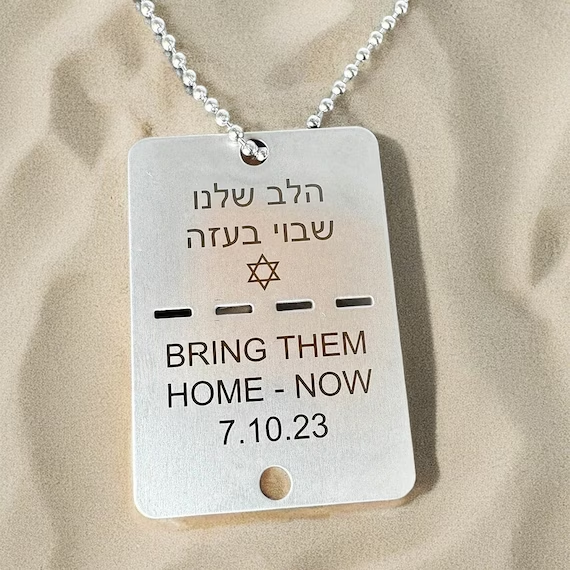
Some have put flags on their cars and others dog tags around their necks.  But, please God, this war will be won and the hostages brought home, those flags and necklaces will come off… and then what?  So many have started putting tefillin on their arms or tzitzis under their clothing, they have started lighting Shabbos candles or practicing something meaningful, but will it continue?


We have unaffiliated brothers and sisters all around us who feel betrayed by movements they stood with and who feel connected to a heritage and a homeland in a way they haven’t before.  What are we doing about it?  Are we reaching out and reaching in with the goal of all of us better reaching up?  Are we making Torah more accessible and available to them than ever? Are our communities warm, welcoming, accessible and supportive of those who have more limited education and background? 


If these feelings are to endure, if these changes in our identity, our mission and our lifestyles are to last, we must take advantage of this moment, capture the pervasive sentiment, not of what does this do for me, but what can I do for my people, my country, my Torah, and my Creator.   We need to have these conversations, find the vocabulary and language for why being Jewish, keeping Torah, remaining in our land matter, why we must do even that which doesn’t do anything for us.


It is time for us to focus not only on how do we get out of this situation, but also on what can we get out of this situation.  Hopefully the answer is a renewed passion, commitment, connection, and unity that endures. 


Reframe Your Life

During these extraordinary times for the Jewish people, there have been extraordinary stories, videos, and vignettes emerging.   The challenge is to not only watch them, marvel at them, cry with them or forward them, but to be changed by them, to inculcate these extraordinary lessons and examples into our own lives.


Among the moving videos that have been coming out are the ones of soldiers coming home and being reunited with children, spouses, parents, and siblings.  It is almost impossible to watch them without tissues nearby.  While Baruch Hashem, many such videos have made the rounds, last week a video went viral of a son coming home that stood out among the others. 


After long, hard days of fighting, a soldier came home to surprise his father who hadn’t seen him in 73 days. With a look of shock, joy, relief and gratitude on his face, the father jumps up, hugs his son, starts saying lo ma’amin, he can’t believe it, and while still in a tight embrace, proclaims Shema Yisrael Hashem Elokeinu Hashem Echad, Baruch Ha’Tov V’hameitiv.  He can’t stop hugging his son, looks him up and down and says, “ha’kol shaleim,” you are whole, and then offers a tefilla, asking Hashem for all soldiers to come home whole to their mothers and fathers, and may He protect all of our precious soldiers. 


It’s impossible to see this video and not be reminded of last week’s parsha when Yaakov Avinu finally reunited with his cherished son Yosef HaTzadik and recites those same words of Shema. The viral video provides an image of our capacity to  shower love and affection on a family member while simultaneously channeling the overwhelming feelings into gratitude to Hashem in the statement of Shema.


That particular video and its Parsha connection are heartwarming and they caught the attention of so many.  There is a different connection between something that went viral from Israel last week and the Parshios we are reading right now that is also powerful, almost unbelievable, that I think can inspire each of us in our own way.


Yosef was marginalized, dismissed, ultimately sold into slavery, thrown into jail for a crime he never committed, waited twenty-two years to see his dreams realized.  In the text of the Torah we don’t find him getting words of encouragement from Hashem, messages or signals from above to stay the course because it is all going to work out. 


He struggled, he suffered, he navigated an unfair world all alone, and yet, at the end of it all, when he reveals himself to his brothers, rather than bitterness, resentment, or revenge, he urges his brothers to join him in seeing that everything that happened was part of Hashem’s plan.  He doesn’t hold his brothers accountable; he doesn’t seek to make them pay, he isn’t even lukewarm or cold to them.  After all that happened, Yosef comforts his brothers, telling them “Al tei’atzvu,” don’t be sad or distressed, don’t blame yourselves, this was orchestrated from Above, from Hashem.  He used you to send me here for the good of our greater family, our nation.   This was Yosef’s message in last week’s Parsha when he first revealed himself, and continues into this one when Yaakov dies and his brothers feel threatened. Yosef doubles down, says he has no intention of seeking revenge, and repeating to them it is all from Hashem.


Those superhuman words, אַל־תֵּעָ֣צְב֗וּ וְאַל־יִ֙חַר֙ בְּעֵ֣ינֵיכֶ֔ם, don’t be distressed or reproach yourselves, words we cannot believe someone so wronged could be capable of saying, were essentially repeated last week, granted in very different circumstances.


After IDF troops mistakenly identified them as a threat, three hostages, Yotam Haim, Alon Shamriz and Samar Talalka, were shot and killed.  They had escaped Hamas terrorists and were waving white flags, but instead a videoed reunion with their families set to music, with hugs, kisses and gratitude, these three of our hostages missing since October 7th will not come home. 


The circumstances of the incident are still under investigation and suffice it to say none of us can imagine the decision-making in real time, the threats of urban warfare, and the immeasurable challenges of fighting terrorists with zero scruples.  The pain of the families is enormous and the pain and guilt of those who made the mistake is also beyond and one would have seen them as contradictory or incompatible with one another. 


But last week, Iris Haim recorded a message to those soldiers essentially saying what Yosef said:

I am Yotam’s mother. I wanted to tell you that I love you very much, and I hug you here from afar. I know that everything that happened is absolutely not your fault, and nobody’s fault except that of Hamas, may their name be wiped out and their memory erased from the earth. I want you to look after yourselves and to think all the time that you are doing the best thing in the world, the best thing that could happen, that could help us. Because all the people of Israel and all of us need you healthy. And don’t hesitate for a second if you see a terrorist. Don’t think that you killed a hostage deliberately. You have to look after yourselves because only that way can you look after us. At the first opportunity, you are invited to come to us, whoever wants to. And we want to see you with our own eyes and hug you and tell you that what you did — however hard it is to say this, and sad — it was apparently the right thing in that moment. And nobody’s going to judge you or be angry. Not me, and not my husband Raviv. Not my daughter Noya. And not Yotam, may his memory be blessed. And not Tuval, Yotam’s brother. We love you very much. And that is all.  


The soldiers sent her back a voice note, “We received your message, and since then we have been able to function again.  Before that, we had shut down.”  She sent back, “Amazing, that is what I wanted.”  The next day, the opportunity came and the soldier from the battalion that had made the mistake visited Iris.  She continued to repeat the same message Yosef told his brothers, אַל־תֵּעָ֣צְב֗וּ וְאַל־יִ֙חַר֙ בְּעֵ֣ינֵיכֶ֔ם, don’t be distressed or reproach yourselves, this was Hashem’s plan. 


How? How did Yosef so long ago, and Iris in this war, find this superhuman strength and perspective?


When Yosef first reveals himself to his brothers, he tells them: וַיֹּ֗אמֶר אֲנִי֙ יוֹסֵ֣ף אֲחִיכֶ֔ם אֲשֶׁר־מְכַרְתֶּ֥ם אֹתִ֖י מִצְרָֽיְמָה׃,  I am your brother Yosef, he whom you sold into Egypt. The Sfas Emes highlights Chazal’s (Shabbos 87) interpretation of the expression Hashem uses to Moshe regarding the Luchos: “asher shibarta, that you broke  – Yasher Koach she’shibarta, good job for breaking them.” So too, the Sefas Emes says, here Yosef tells his brothers, “asher Machartem osi, that you sold me” – Yasher Koach she’machartem osi, shkoyach for selling me! 


In that moment, Yosef made a choice.  He could focus on their actions, remain deeply injured and wounded, see himself as a complete victim, or he could zoom out the lens, see a bigger, more complete picture, choose what to do now and be the arbiter of his destiny.  He chooses the latter by employing something cognitive therapy calls reframing.  Reframing means that just like we can have a painting or picture and when we change the frame, it looks different, we see it differently even though the picture remains the same, so too in life, events and experiences can happen but we choose what frame to put around them and with that reframing, how we see them and how they make us feel. 


Rabbi Lord Sacks points out that while Yosef may have been the first to employ the reframing technique, it is what has enabled and empowered us to navigate nearly impossible circumstances since then. He writes:

Viktor Frankl showed there is another way – and he did so under some of the worst conditions ever endured by human beings: in Auschwitz. As a prisoner there Frankl discovered that the Nazis took away almost everything that made people human: their possessions, their clothes, their hair, their very names. Before being sent to Auschwitz, Frankl had been a therapist specialising in curing people who had suicidal tendencies. In the camp, he devoted himself as far as he could to giving his fellow prisoners the will to live, knowing that if they lost it, they would soon die… Frankl writes that he was able to survive Auschwitz by daily seeing himself as if he were in a university, giving a lecture on the psychology of the concentration camp. Everything that was happening to him was transformed, by this one act of the mind, into a series of illustrations of the points he was making in the lecture.


In his Tanya, the Alter Rebbe, Rav Shneur Zalman of Liadi, emphasizes that if we change the way we think, we will change the way we feel and if we change how we feel, we will transform how we behave. Rav Shlomo Wolbe points out that the Rambam places the topic of Middos, character, in Hilchos De’os, the Laws of Mindsets, because our actions are all rooted in our mindset. 


Yosef was trying to get his brothers to see their situation and their picture with the new frame he had placed on it. He had made the choice to no longer see himself as a man wronged by his brothers. Instead, his life was framed by a mission from Hashem. Reframing allowed Yosef to live and function without anger, without outrage or a thirst for revenge. Framing the picture this way enabled him to forgive his brothers. As Rabbi Sacks says, the frame transformed negative feelings about the past into a focused mission about the future.


The video of the father hugging his son and saying Shema is amazing, but the voice note of the mother who will never see her son again saying don’t blame yourselves is truly extraordinary. 


If Iris can reframe the accidental killing of her son, what can we reframe in our lives? How can we choose to interpret something or the behavior of someone differently? How can we see the picture of our lives, not as victims of the past, but the arbiters of our future?  


An October 8th Judaism

Our shul recently hosted Bret Stephens, the Pulitzer Prize-winning journalist and foreign affairs expert.  In his talk, he referenced a column he wrote for the New York Times reflecting on the atrocity of October 7th titled, “For America’s Jews, Every Day Must Be Oct. 8.” 


He opens:

There used to be a sign (which, for all I know, is still there) somewhere in the C.I.A.’s headquarters that read, “Every day is Sept. 12.” It was placed there to remind the agency’s staffers that what they felt right after the attacks of Sept. 11, 2001 — the sense of outrage and purpose, of favoring initiative over caution, of taking nothing for granted — had to be the mind-set with which they arrived to work every day.


There ought to be a similar sign in every Jewish organization, synagogue and day school, and on the desks of anyone — Jewish or not — for whom the security and well-being of the Jews is a sacred calling: “Every day is Oct. 8.”


Stephens goes on to share several important and insightful takeaways of how we must forever be different since the horrific and barbaric pogroms, the likes of which we haven’t seen since the Holocaust.  One of the key ones: “On Oct. 8, Jews woke up to discover who our friends are not.” Stephens continues to enumerate the “friends,” institutions of “prestige” and movements that abandoned us, betrayed us, and with whom we should no longer feel aligned or seek the approval of. 


He concludes: “More than 3,800 years of Jewish history keeps yielding the same bracing lesson: In the long run, we’re alone. What can Oct. 8 Jews do? We can stop being embarrassed, equivocal or defensive about Zionism, which is, after all, one of the world’s most successful movements of national liberation… Jewish America abounds with dreamers and entrepreneurs who took crazy risks in their careers to find value and create things that never existed before. It’s time they apply the same talent and energy to creating new institutions that hew to genuinely liberal values, where Jews need never be afraid. In time, the rest of America may follow.”


Bret Stephens is a proud Jew and supporter of Israel, a brilliant and insightful commentator, and his speech at BRS and his column calling for us to be October 8th Jews is a powerful and important framing.  However, I believe there is more for the October 8th Jew, a different change without with we cannot hope to defeat our enemies, and without which we cannot survive or thrive. 


The October 8th Jew must not only lean in to their unapologetic Zionism but must embrace, live, and promote unapologetic Judaism, Yiddishkeit, and Torah.  The October 8th Jew must find his or her voice, not only the voice and vocabulary to lobby, advocate, rally and fight for the rights of the Jewish state and the Jewish people. The October 8th Jew must find his or her distinctly Jewish voice, a voice informed and inspired by our sacred Torah.  We must raise our voices of prayer and voices of study, our voices of Jewish unity and our voices of Torah justice and truth. 


When Yaakov presents himself to his father Yitzchak to seize the blessings from his brother Esav, he disguises his hands but not his voice.  Troubled by the incongruity, Yitzchak wonders aloud, “Ha’kol kol Yaakov, v’hayadayim y’dei Esav, the voice is the voice of Yaakov, but the hands feel like the hands of Esav.” Noting the anomaly, that the voice of Yaakov is simiply incompatible with the hands of Esav, our rabbis conclude (Bereishis Rabba 63:20):  


הַקֹּל קוֹל יַעֲקֹב, בִּזְמַן שֶׁקּוֹלוֹ שֶׁל יַעֲקֹב מָצוּי בְּבָתֵּי כְנֵסִיּוֹת אֵין הַיָּדַיִם יְדֵי עֵשָׂו, וְאִם לָאו, הַיָּדַיִם יְדֵי עֵשָׂו, אַתֶּם יְכוֹלִים לָהֶם.

“The voice is the voice of Jacob” – when the voice of Jacob is found in the synagogues, the hands are not the hands of Esau, but if not, “the hands are the hands of Esau.”


Antisemites and our enemies thrive when we are assimilated, apologetic, defensive, embarrassed, or afraid about our Jewish identity and Jewish values.  When we lower the volume on our Jewish voices, they are empowered to raise their hands against us and pounce. 


The October 8th Jew must confront these enemies, sometimes on the battlefield, other times at congressional hearings, other times in the courtroom.  But the October 8th Jew must also confront himself and herself, confront their Jewish passion, Jewish pride, and Jewish practice. 


In his short but extremely powerful book, The War of Art, Steven Pressfield talks about resistance, the force that holds us back form fulfilling our dreams and potential. He describes the dangers and the methodology of resistance and ultimately offers a strategy for how to overcome it.  He writes:


Aspiring artists defeated by Resistance share one trait.  They all think like amateurs.  They have not yet turned pro.


The moment an artist turns pro is as epochal as the birth of his first child.  With one stroke, everything changes.  I can state absolutely that the term of my life can be divided into two parts: before turning pro, and after.


To be clear: When I say professional, I don’t mean doctors and lawyers, those of “the professions.” I mean the Professional as an ideal.  The professional in contract to the amateur.  Considers the differences.


The amateur plays for fun. The professional plays for keeps. To the amateur, the game is his avocation. To the pro it’s his vocation.  The amateur plays part-time, the professional full-time. The amateur is a weekend warrior. The professional is there seven days a week. 


The word amateur comes from the Latin root meaning “to love.” The conventional interpretation is that the amateur pursues his calling out of love, while the pro does it for money.  Not the way I see it.  In my view, the amateur does not love the game enough.  If he did, he would not pursue it as a sideline, distinct from his “real” vocation. 


The professional loves it so much, he dedicates his life to it.  He commits full-time.  That’s what I mean when I say turning pro.  Resistance hates it when we turn pro. 


Yes, the October 8th Jew must know who are not among our friends.  As Bret Stephens convincingly argues, the October 8th Jew must be ready to build our own institutions that conform to our values.  But most importantly, the October 8th Jew must be ready to take their Judaism pro.  From the observant to the unaffiliated, we cannot continue with our Judaism as usual, we cannot be amateurs with a casual attitude, lukewarm Jewish practices, impassive Jewish experiences and lives.  Our Judaism must not be observed only on the weekends and holidays but must be there seven days a week.  Our study and prayers must not be avocations but vocations.  We must love our Judaism, the Torah and Hashem so much we are ready to dedicate our lives. 


On billboards, bumper stickers, and the sides of busses all over Israel is the motto – Am ha’netzach y’nateiach, the people of eternity will prevail.  If we want to prevail, we must ensure that the October 8th Jew is practicing a Judaism of eternity.


Rabbi Efrem Goldberg

Join Our Community

Subscribe to our newsletter or connect with us on WhatsApp.