
Do You Have 8 Minutes?

In his book, “The Anatomy of Hope: How People Prevail in the Face of Illness,” Dr. Jerome Groopman shares the following story:


Barbara received another three courses of chemotherapy, but the tumor seemed to shrug off the drugs. The deposits grew in her liver and in her bones. She lost weight and spent most of the time in bed. After the last cycle of chemotherapy, I admitted her to the hospital with a high fever. Antibiotics stemmed an early bacterial infection.


As Barbara slowly recovered from the infection, I told myself knew of no drugs, either standard or experimental, that stood a real chance of ameliorating her condition. The time had come for me to tell her.


I chose to visit in the early evening, when the hubbub of the hospital had settled down, so there would be less chance of distraction and interruption. Barbara greeted me warmly, as she always did. I moved a chair close to the bedside and grasped her hand. She returned the gesture, but it had little force. After we chatted for a short time about several articles in the day’s newspaper, I began to break the bad news.


“Barbara, we’ve known each other for well over a year, and we’ve been honest with each other every step of the way.” Briefly, her lips trembled, and then she regained her composure. Her eyes told me she knew what I was about to say.


“I know of no medicines that I can give at this point to help you.”


We sat in heavy silence.


Barbara shook her head. “No, Jerry,” she said.  “You do have something to give. You have the medicine of friendship.”


I shared this story recently at the Chemed Medical Ethics Florida Summit in an effort to encourage medical practitioners to see their work as much more than a profession or source of income, but rather as a remarkable platform and opportunity to do chesed, to the share the medicine of friendship on a daily basis.  


Indeed, according to Halacha, doctors are not even permitted to be paid for treating or healing patients.  The Gemara (Bechoros 29a) rules that one may not be compensated for performing a mitzvah.  Hashem says, in essence, “Just as I share Torah and heal people without compensation, so too those who emulate Me must provide those services at no cost.” 


So how do doctors, educators, or rabbis Halachically charge or receive payment?  Our rabbis rule that it is permissible to collect a fee, not for the healing or teaching, but for schar batala, the time spent on the noble activity that could have been used to earn a different income instead.  Or they are paid for schar tircha, compensation for the trouble or effort exerted.  Alternatively, for schar halicha, the travel expense incurred. 


While Halacha provides a legal mechanism to be paid, medical providers should still be mindful that the renumeration is not coming for their healing and treatment, which must remain sacred acts of chesed, gestures of lovingkindness.


Following my presentation, one of the participants, a gastroenterologist, shared with me the following story:  When he was in in 40’s, he developed regional migratory osteoporosis, a rare condition where a person experiences severe, excruciating, migrating joint pain.  A flare-up would hit, last eight to nine months, and then go away.  There is no treatment for the condition and during an episode it is nearly impossible to find relief. 


He had suffered for nine years on and off from the condition and one time found himself going through a bout.  The pain was so severe and his joints so compromised that he could only get around with crutches.  “It was motzei Yom Kippur,” he told me.  “I was in unbearable pain, truly suffering.  We were supposed to go to Israel for Sukkos and I could barely get around.  After breaking the fast, I went up to my bedroom and just cried.  I was so low, depressed, frustrated, angry, and I called out to Hashem asking Him, why would you give me this rare condition?  Why would you put me through such pain?  What are you trying to tell me?”


Just then, a Gemara (Bava Metzia 85a) he had previously learned popped into his head.  Rebbe Yehuda HaNasi, the great direct descendant of Dovid HaMelech and the editor of the Mishna, was minding his own business when a calf that was being led to slaughter came running toward him to hide. The calf nuzzled inside Rebbe’s robe and began to weep in fear.  Instead of protecting or comforting the calf, Rebbe scolded it and said, “This is why you were created, go back to your owner.” He then sent it on its way to meet its demise. 


At that moment, it was decided in Heaven that since Rebbe hadn’t shown compassion toward the calf, he wasn’t worthy of compassion and would suffer great pain.  Beginning then, Rebbe suffered six years of kidney stones and seven years of scurvy.  The pain was so intense, the Talmud relates, that Rebbe’s scream could be heard by the sailors out at sea. 


One day, Rebbe’s maid was sweeping the house when she encountered young weasels.  She was disposing of them when Rebbe said to her, “Let them be, after all, the pasuk says, v’rachamav al kol ma’asav, Hashem has mercy on all of His creations.”  At that moment, it was determined in Heaven that since Rebbe was compassionate, he would receive compassion and his suffering ceased. 


The doctor shared with me that it occurred to him, maybe his suffering from this rare disorder was meant to teach him to have more compassion for his patients.  He realized that night that for his whole career, he had practiced very clinically, impersonally, quickly going from patient to patient, expediting their visits as quickly as possible.  That night, in his bedroom, he wiped away the tears and felt Hashem had answered his question, He gave this physician insight into his suffering and he knew what he had to do differently.


The very next morning, someone stopped him in shul and asked for his help with a GI issue he was having.  Instead of blowing him off or answering on one foot, he sat down with the person, looked him directly in the eye, listened to his issues, felt empathy for his situation, and recommended a remedy. 


Almost immediately, his own pain began to dissipate and disappear.  He returned to his practice a transformed man, intentionally connecting with and feeling sympathy for those in his care, not just seeing them as a patient but as a person.  He healed not only from that particular episode of regional migratory osteoporosis, but the condition went away entirely and never came back again.   


He finished the story by suggesting that maybe this is what Dovid HaMelech means in the pasuk (Tehillim 94:12): Ashrei ha’gever asher teyasrenu Kah u’mitorasecha selamdenu, “Happy is the man whom You discipline with yissurin, with suffering, the man You teach from your Torah.” He had looked in the Torah to make sense of his situation and he walked away having learned a lesson that changed his life.    


Early this year, a study was published in the Journal of General Internal Medicine showing that meeting a patient’s eye level while talking about their diagnosis or care make a huge difference. Making the effort to sit in the office or hospital when speaking with a sitting patient, being on the same level and looking them in the eye, brought about a better outcome and helped patients recover quicker and better.  


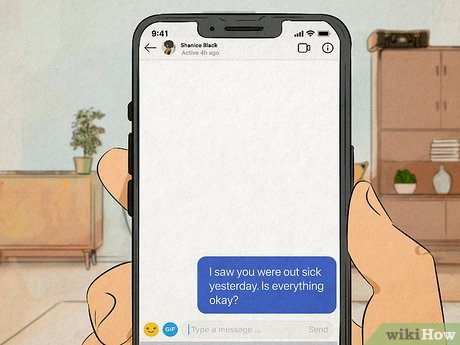
A recent study showed that all it takes is eight minutes with a caring friend to significantly decrease anxiety, depression, and loneliness.  Eight minutes of a conversation, visit, or even text exchange. 


You don’t need a medical license or the ability to prescribe to dispense the medicine of friendship.  You simply have to care, to literally or metaphorically get to someone else’s eye level for eight minutes, look them in the face, make them feel seen, and care to show the kindness of companionship.
I Didn’t Know How Much They Love Us

Antisemitism is the world’s oldest hatred. Rabbi Lord Jonathan Sacks zt”l described it as follows:


Antisemitism is not a unitary phenomenon, a coherent belief or ideology. Jews have been hated because they were rich and because they were poor; because they were capitalists and because they were communists; because they believed in tradition and because they were rootless cosmopolitans; because they kept to themselves and because they penetrated everywhere. Antisemitism is not a belief but a virus. The human body has an immensely sophisticated immune system which develops defenses against viruses. It is penetrated, however, because viruses mutate. Antisemitism mutates.


Jews comprise only 2.4% of the US population but in 2023 were the targets of 68% of religiously motivated hate crimes, a 63% increase from 2022.  Following October 7, 2023, hate incidents against Jews spiked 400%. 


Just this week, Hadassah published the results of a two-year survey on antisemitism.  It found that 64% of those polled reported that hate and discrimination have directly impacted their lives, relationships, and professional environments; additionally, more than half felt compelled to conceal their Jewish identity.


As Jews, we have always known that there are people who hate us, but it isn’t until this past year that we realized how much they hate us.  That hate is so strong, so loud, and so threatening, that it is easy to not appreciate how many love us.


This week, I had the privilege of offering remarks and a prayer at a large gathering that was overwhelmingly attended by a non-Jewish audience.  I concluded by saying:

Master of the Universe – do not allow us to remain apathetic or silent.  Grant us the faith in You, and the faith in ourselves, to believe that we can make a difference in securing a bright future for the United States and for Israel.  


Our Father in Heaven, let the hostages, Americans and Israelis be released and return home. Let Israel be victorious over her enemies. Guard the courageous members of the United States military and the Israeli Defense Forces as they guard us and protect freedom and democracy around the world.


Dear God – We ask that you grant peace and prosperity to the United States, to the State of Israel and to the entire world, and let us respond, Amen.


I received a few handshakes on my way back to my table, but what happened the rest of the evening truly surprised me.  When I made my way around the room, I was stopped over and over again by people telling me how much they pray for Israel, for the release of the hostages, and for the Jewish people as a whole.  Non-Jews from all over the country sincerely and genuinely expressed their care and their concern for our people. 


One young man who was attending with his mother found me to share that though he isn’t Jewish, he feels connected to Israel and desperately wants to help.  He took my contact information and asked if would be alright to follow up and if I could introduce him to an organization or effort in Israel that he can work on from his home in Houston.  A member of the security team at the event saw my yarmulka and said “Shalom.”  He shared that he has been to many parts of the world providing protection but the place he really wants to go is Israel.  A veteran of the United States Army who fought for many years for our country came over to proudly share that when he was first training, he went to Israel to practice with the IDF and told me about the gratitude he has had for the many years since. 


The examples could go on and on, but they all left me with a feeling that while we know there are people who hate us and have come to learn how much they hate us, we also need to know that there are people who love us and just how much they love us.


During his recent visit to our community, when Rabbi Dr. Meir Soloveichik was asked about his concerns regarding the state of antisemitism in American and particularly on college campuses and among academic elites, he responded that he is steadfastly optimistic. While he agreed that rising antisemitism is cause for legitimate concern, he explained that there is no time in Jewish history where we have had more support from the non-Jewish world and we should recognize and appreciate that.


When that care and concern are communicated, when we are strengthened by a simple sentence or supportive gesture, we should think to ourselves, how can I pay it forward?  Is there a community, a nationality, or a people who are feeling hated and to whom I can communicate some camaraderie and concern?  Are there individuals who are feeling abandoned, forsaken, or forgotten to whom I can express support, and heartfelt prayers?


Commenting on our Parsha and the complicated relationship between Esav and Yaakov, our rabbis predict and foretell that “Esav sonei es Yaakov,” the descendants of Esav will hate and haunt the offspring of Yaakov.  Interestingly, the Talmud introduces this observation with the words, “Halacha b’yaduah,” it is a well-known halacha. 


Commenting on this phrase used only once in rabbinic literature, Rav Moshe Feinstein in a teshuva in the 1970’s writes:  


I have already explained concerning Rashi’s language in his Torah commentary… on the word וישקהו: Rabbi Shimon bar Yochai says: “It is a well-known halacha that Esau hates Jacob.” And why is the word halacha relevant here? It is because just as halacha never changes, so also Esav’s hatred of Yaakov never changes. Even in those [nations] that behave well [toward Jews], their hatred [of Jews] is actually strong. 


Essentially, antisemitism is a fact that they hate us—it is a given that will not change.  The fact that some love us, though, is not and should never be taken for granted.  We should recognize it, appreciate it and pay it forward in showing love to others who could use it.


A study conducted a few years ago concluded that casually reaching out to people in our social circles means more than we realize. As one of the researchers explained, “Even sending a brief message reaching out to check in on someone, just to say ‘Hi,’ that you are thinking of them, and to ask how they’re doing, can be appreciated more than people think.”


Hearing people I didn’t even know tell me, “I’m thinking about Israel and I’m praying for your people,” filled me with comfort and delight. Contacting someone you know, even if you don’t know them well, to tell them they are on your mind can  make an impact you could not have imagined.

Who Left the Flowers at Our Door?

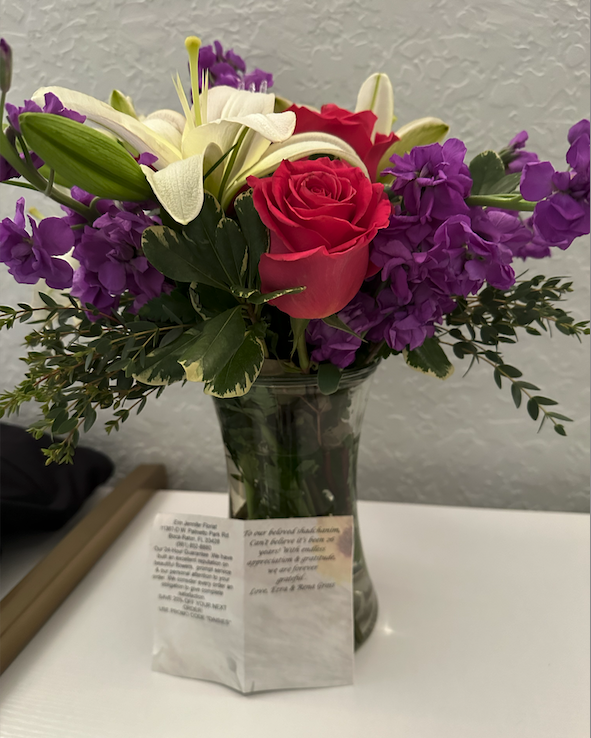
Last week, my doorbell rang but when I answered it, there was nobody there. Instead, I found a vase of flowers outside the front door with a note.  Flowers on a random weekday?  There wasn’t a birthday or anniversary to mark. Who could they be from?  I opened the card:


To our beloved shadchanim – can’t believe it’s been 26 years! With endless appreciation, we are forever grateful, Love, Ezra and Rena.


Twenty-six years ago, Yocheved and I set up mutual friends and now, for no particular reason, out of the blue, they sent flowers to say thank you.  This wasn’t the first time they expressed their gratitude, it isn’t that they remembered a debt they had never repaid.  They had thanked us numerous times before. Yet, because their gratitude had not diminished, they felt compelled to still say thank you again.


Most people don’t realize how much a simple gesture of thanks can mean to the recipient of it. In 2018, Psychological Science published a study of 300 participants who were asked to write a letter of gratitude to someone who positively impacted them from long ago. Participants wrote to their parents, friends, coaches, or teachers. The writers were asked to predict the degree of surprise, happiness, and awkwardness the recipients would feel after receiving their gratitude.  The study found that those writers expressing gratitude consistently underestimated how much people appreciate being appreciated.  The recipients of the letters reported feeling less awkward and in fact much more appreciative than the letter writers predicted.  Being appreciated and receiving gratitude proved to make someone’s day much more than those expressing thankfulness thought it would. 


In our Parsha, when Leah names her fourth son Yehudah, the Torah tells us she did so because הפעם אודה את ה׳, it was an expression of gratitude to Hashem.  The Gemara (Berachos 7b) goes so far as to say that, in fact, Leah was the first person in history to say thank you to Hashem.  This doesn’t seem to make sense. Adam HaRishon said, “Tov l’hodos laShem.”  Noach thanked Hashem, Malkitzedek expressed gratitude to the Almighty.  Eliezer communicated appreciation for Divine assistance, and the pre-Leah list could go on.  How could the Gemara make such a bold assertion when it seems from the Torah not to be true?


Rav Yeruchem Levovitz explains: most people say thank you in order to pay off a debt of gratitude.  Someone does something nice for us and, as part of an unofficial quid pro quo, we say “thank you” to them in an effort to settle up the score.  Each of the earlier people who said thank you did it once, one time, to pay a debt. Leah was the first to understand that gratitude doesn’t conclude, it doesn’t end.  If we see gratitude as more than a debt, we never stop expressing it. 


Leah named her son Yehudah, literally meaning thank you.  Every time she called out his name – “Yehudah come for supper, Yehudah did you do your homework, Yehudah get ready for bed,” every time she called his name, she reawakened her sense of appreciation and fulfilled her commitment to never take him for granted.  Unlike the others who said thank you and paid off their debt of gratitude, Leah formulated a thanks that was felt and expressed each and every day on a consistent basis.  


Rav Yeruchem explains that Leah expressed this committment when she gave Yehudah his name.  We normally read הפעם אודה את ה׳ as an explanation for why the new son was called Yehudah.  Rav Yeruchem suggests that we read Leah’s expression with a question mark –  הפעם אודה את ה׳?  Should I only thank Hashem this one time and then move on?  No way, I will continue to thank Him over and over again.


A shadchanus gift represents paying off a debt of gratitude once and done.  Flowers twenty-six years later for no reason demonstrate that the appreciation never ended, or as they wrote, feeling forever grateful.


The Torah endorses, encourages, and urges us to be grateful. We are call Yehudim, says the Chiddushei HaRim, because we are a people of gratitude.  We don’t just pay a debt of gratitude, like Leah, we say thank you over and over, we feel endless thankfulness and boundless gratitude for the good things in our lives.  


Charles Plumb, a U.S. Naval Academy graduate, was a jet fighter pilot in Vietnam. After 75 combat missions, his plane was destroyed by a surface-to-air missile. Plumb ejected and parachuted into enemy hands. He was captured and spent six years in a Communist prison. He survived that ordeal and one day, when Plumb and his wife were sitting in a restaurant, a man at another table came up and said, “You’re Plumb! You flew jet fighters in Vietnam and you were shot down!”


Plumb did not recognize this man and was perplexed. “How in the world did you know that?” asked Plumb. “I packed your parachute,” the man replied, “I guess it worked!”


That night, Plumb couldn’t sleep. He kept wondering what this man might have looked like in a sailor uniform. He wondered how many times he might have passed him on the ship without acknowledging him. How many times he never said hello, good morning, or how are you. Plumb was a fighter pilot, respected and revered, while this man was just an ordinary sailor. Now it grated on his conscious.


Plumb thought of the many lonely hours the sailor had spent on a long wooden table in the bowels of the ship carefully weaving the fabric together, making sure the parachute was just right and going to great lengths to make it as precise as can be, knowing that somebody’s life depended on it. Only now did Plumb have a full appreciation for what this man did. After that encounter, Plumb began travelling around the world as a motivational speaker asking people to recognize who is “packing their parachute.”


Have we thanked those who contributed to the lives we are blessed to live? Imagine if our kindergarten teacher got a note from us thanking her for nurturing us with love. Imagine if our high school principal, our childhood pediatrician, our housekeeper who cleaned our childhood room, out of the blue got a gesture of gratitude showing that we cared enough to track them down and say thank you after all of these years. Did we express enough appreciation to the person who set us up with our spouse, gave us our first job, safely delivered our children?


Research shows that expressing gratitude has mental and physical health benefits, including lower rates of depression and better sleep, improved relationships, and success at work.  


Be thankful. Stay thankful. And keep demonstrating gratitude, for your own benefit and for the benefit of someone who will be thrilled to know you still appreciate their role in your life.

Hypocrisy or Healthy? Meeting with the Vilified

After a vicious campaign season with billions of dollars spent vilifying one another, name-calling, and competing who could label the other the bigger threat to democracy, the election has finally been decided and whatever outcome you were hoping for, we should all be relieved it’s over.


Given the rhetoric leading up to the election, one would have expected to see the vitriol kicked up a few notches higher after it, if that is even possible.  But instead of escalation and increased warnings and predictions, refreshingly, there are reasons to be hopeful and optimistic that we can learn to get along even through disagreement.


If you didn’t know the history and just saw the smiles, enthusiasm, and spirit of cooperation when President Biden welcomed President-elect Trump to the Oval Office last week, you might have thought it was a reunion of two old friends rather than two bitter enemies observing protocol.  The two men seated in front of a roaring fire smiled, shook hands, and pledged a smooth and cooperative transition.  They then met for two hours for a discussion that the press secretary described as “very gracious and substantive.”


Two men who had spent months—if not the last few years—calling each other names and railing about the disasters the other is responsible for, found a way to shake hands, smile, and make us believe it was more than just for the cameras. 


While the presidents were following protocol, an even more surprising meeting took place this week that didn’t need to happen.  Two of Trump’s fiercest critics, MSNBC anchors Joe Scarborough and Mika Brzezinski, opened their show by reporting that they had visited Mar-a-Lago to essentially extend an olive branch to the president- elect.  


The meeting was the first time they had seen or spoken to Trump in seven years.  Scarborough shared that while they don’t see “eye to eye on a lot of issues, and we told him so,” they discussed such topics as abortion, mass deportation, and threats of retribution against political opponents and media outlets.


Clearly braced for strong criticism, they shared: “For those asking why we would go speak to the president-elect during such fraught times, especially between us, I guess I would ask back – why wouldn’t we? Five years of political warfare has deeply divided Washington and the country. We have been as clear as we know how in expressing our deep concerns about President Trump’s actions and words in the coarsening of public debate.  But for nearly 80 million Americans, election denialism, public trials, January 6, were not as important as the issues that moved them to send Donald Trump back to the White House with their vote. [We] realize it’s time to do something different, and that starts with not only talking about Donald Trump, but also talking with him.”


President Trump was also positive about the meeting and their commitment to restart communication. He said, “I received a call from Joe Scarborough requesting a meeting for him and Mika, and I agreed that it would be a good thing if such a meeting took place.  Many things were discussed, and I very much appreciated the fact that they wanted to have open communication … In many ways, it’s too bad that it wasn’t done long ago…The meeting ended in a very positive manner, and we agreed to speak in the future.”


While many applauded the effort to heal our country and its discourse, some cynically suggested that the meeting was driven by fears of retribution and governmental and legal harassment from incoming administration.  Others were outright critical of the hosts, labeling it “disgusting” and calling for a boycott of their show, asking,  How can you call a man a fascist, imply he is a Nazi and then go meet with him and make nice?  One person wrote on X, “Bend the knee to the King in order to save their careers.” Another tweeted, “Total capitulation after years of railing about his lack of fitness. Not even an interview to show their ‘journalistic integrity.’ Just a pure kiss-the-ring session. Disappointed and done with them and their show.”


While many of their fans felt that the hosts were hypocritical, I actually came to the opposite conclusion.  The approach should not be to avoid meeting with someone you have called names, labeled the enemy and described as the greatest threat to democracy.  The approach should be to avoid the name-calling and labeling in the first place.


One lesson of this election cycle and the meetings of the last few weeks is to think before calling someone a name, assigning them a label, or framing them in an overly negative light. Consider what would happen if the opportunity presented itself to meet with that person. Would you be a hypocrite, based on your prior comments?  Disagree, argue, advocate, debate. Do so vociferously and determinedly.  But do so civilly.  Do so by arguing about policies and positions, reject behaviors and choices.  Don’t call names and make comparisons you can’t walk back.  Express concerns; don’t offer prophecies.


There are powerful debates taking place now in America and Israel.  From abortion to combatting antisemitism, judicial reform to IDF service, emotions are high and feelings are strong.  Dialogue and debate are healthy and helpful but drawing firm lines in the sand, setting up paradigms of people being either with us or against us, getting to a point that we cannot find any commonality, is destructive and dangerous. 


The Torah tells us that Yosef’s brothers hated him to the point that v’lo yachlu dabro l’shalom.”  The Ibn Ezra explains, “v’lo yachlu dabro l’shalom – afilu l’shalom.”  It isn’t that they just couldn’t talk about the issues they disagreed about.  It isn’t just that they didn’t want to be close, loving brothers.  It isn’t just that they couldn’t debate respectfully.  “Afilu l’shalom” – they couldn’t even give each other a shalom aleichem.  The hatred and intolerance had grown so deep that they couldn’t stand to even extend greetings to one another or to be in a room together.


Rav Yehonasan Eibshitz in his Tiferes Yonasan has an additional insight.  When we disagree with people, we withdraw from them and stop speaking to them.  We see them as “the other,” different from us and apart from us.  As our communication breaks down, the dividers rise up stronger and stronger and we can’t find a way to break through them.


If there is a person who you more than simply disagree with, but their opinion or practice repulses you, and that person were in a position to help you when you needed them, would you not reach out them? Would you not go meet with them?  If they lost a family member in a terror attack or tragedy, would you not cry for them or feel their pain? 


Yeshaya HaNavi said: ועמך כלם צדיקים לעולם יירשו ארץ, “And your people, all of them righteous, shall possess the land for all time.”  Commentators interpret: when we are “kulam tzadikim,” all righteous and worthy of the land? V’Ameich.  When we are part of one nation, united, unified and getting along. 


By the time you read this, the reset on civility and communication may have been short-lived and ended.  But the lesson for us should endure.  Disagree, debate, reject opinions or practices but don’t vilify or call names that would make you a hypocrite or cause you to not be able to meet with them or be in a room.

A House of Celebration and Houses of Mourning

When my cousin’s daughter asked me to officiate her wedding in Israel the week after Sukkos, how could I say no?  Her mother, my beloved first cousin, passed away at a young age from cancer.  She loved Israel and at several points in her too-short life wanted to live there but never had the chance to realize that dream.  Her daughter, passionate about Torah, the Jewish people, and Eretz Yisroel, moved to Israel shortly after getting up from shiva.  She enlisted, rose to be an officer in the IDF, and proudly wore her olive green IDF skirt throughout.  She met her husband, an amazing young man who, like her and like Avraham Avinu before them, got up, left his family to answer the call of Lech Lecha, and went to settle in Hashem’s land.  After learning in Yeshiva he too served in the IDF.  These two beautiful souls finding each other and committing to building the Jewish people in the Jewish homeland was truly a special occasion not to be missed.


And now, at a magnificent chuppa with the hills of Yerushalayim as the backdrop, I had the tremendous honor and privilege to marry them. But there was something I needed to do first.


In Koheles (7:2), Shlomo HaMelech, the wisest of all men, taught, טוֹב לָלֶכֶת אֶל בֵּית אֵבֶל מִלֶּכֶת אֶל בֵּית מִשְׁתֶּה בַּאֲשֶׁר הוּא סוֹף כָּל הָאָדָם וְהַחַי יִתֵּן אֶל לִבּוֹ, “It is better to go to a house of mourning than to a house of celebration; for that is the end of every man, and a living one should take it to heart.”


As Israel’s longest war in its history continues to rage on across multiple fronts, we tragically, regularly continue to see and hear the most dreaded words: “Released for publication.”  Heroic, seemingly ordinary but truly extraordinary soldiers continue to make the ultimate sacrifice, their families paying the ultimate price to protect, defend and fight for the Jewish people.  Indeed, as our rabbis taught two thousand years ago (Berachos 5a), Eretz Yisroel nikneis b’yesurin, the land of Israel is acquired and held with sacrifice and struggle.


I paid a shiva call to the family of Rav Avi Goldberg Hy”d.  A tent was set up to accommodate the countless visitors who came from all over: friends, family, political leaders, and “strangers” like me who came to comfort, share in the pain and pay tribute to this incredibly special man.  It was heartbreaking to see his children clutch framed pictures of him.  It was moving to hear his wife Rachel talk about him and offer a heartfelt plea for all segments of Am Yisroel to share in the burden of this war.  R’ Avi loved and excelled at music, using it to arouse the souls of many, and so the family requested music be part of the shiva.  Accompanied by a guitar and a violin, the many packed in the tent joined in a slow, stirring niggun.  At that moment, eyes closed and swaying in unison, all those gathered were singing the song of the Jewish people, the song of pain and of joy, a song of eternity.


That day, I was scheduled to meet with R’ Avi’s brother Eliezer about another matter.  We indeed met, but instead of at a coffee shop or in an office, it was with him sitting in a low chair and my desperately trying to find words that would be meaningful.  He shared about his brother’s special character and impact and I communicated that I represented not only myself, my family and our community, but I was there on behalf of all Am Yisrael around the world sharing in their pain and expressing our boundless gratitude. 


I shared the same message at the second shiva call, to the family of Sammy Harari Hy”d.  Sammy came to yeshiva for his gap year and decided to stay and serve in the IDF and build his life in Israel. His dedication to our people and to our country was unwavering.  He was 35 years old and lived in Tzefat with his wife, Anna, and their three children.


“It is better to go to a house of mourning than to a house of celebration.” Commentators explain that Shlomo HaMelech encouraged going to a shiva home over a simcha because a simcha is prospective.  We share our hope, dreams and ambitions for the future of this new couple, this Bar Mitzvah boy or Bat Mitzvah girl, this new baby.  A shiva home is retrospective, reflective of the legacy, influence and impact the person made.  Each of these precious soldiers, our kedoshim who are now sitting next to the Kisei HaKavod, directly adjacent to Hashem’s throne, leave the highest legacy of having been moseir nefesh for the Jewish people. 


On this short trip, I also visited Hadassah Hospital to spend time with injured soldiers.  Unlike previous trips in which the injured were young soldiers in the middle of their mandatory service, each of those I visited this time was a reservist, these were people who had left their family multiple times to fight, often on different fronts. 


In one room were three men who had been injured less than a week before in Lebanon.  Hezbollah fighters saw them coming and released gas in the house they were entering.  In many countries, gas companies add a chemical with a distinctive smell to alert people to a gas leak but natural gas has no odor and so these soldiers had no idea they were entering a home filled with gas.  Protocol calls for opening fire when entering an area with terrorists.  When these soldiers entered the home and the first one opened fire, it ignited the gas, causing an explosion.  The terrorists were positioned nearby and opened fire after the explosion.  One of the soldier’s legs was literally on fire while he continued to shoot back and fight the terrorists. 


Hanging next to his hospital bed are the remnants of the uniform, a testament to the miracle of his being alive.  These soldiers had bandages on their legs, fingers and one had burns on his face.  One of them has four children, the youngest two months old, born during his service.  Another got married in between serving his reserve duties.  They all spoke with faith, determination, gratitude, positivity and a message to Jews everywhere that it is time to come home and be part of this destiny. 


In another room was a soldier who was injured on Yom Kippur night in Lebanon.  His father shared that he was so badly compromised, losing so much blood, that at one point they felt he wouldn’t survive and no more resources or time should be spent on him.  Nevertheless, they continued and there he was recovering and improving, eager to return home to his wife and children.  The soldier mentioned that in his life he had donated a lot of blood, never knowing that he was actually making a deposit for one day needing to take a withdrawal to save his life. As hashgacha had it, his uncle is a friend of mine, someone I went to Yeshiva with. 


In a third room was a soldier injured on the border with Syria.  He was the quietist, and seemed to be struggling the most physically and emotionally, but after spending a few minutes, showering him with love, as we were leaving his room, he perked up to call to us and say, “Am Yisrael Chai.”


On this trip, I spent time with my heroic friend who fought in Gaza, saw and experienced horrific things, and has been suffering with diagnosed PTSD.  Despite support, medication, and therapy, he continues to have panic attacks, and it isn’t unusual for him to wake up in the middle of the night from a nightmare, drenched in sweat and with a racing heart. 


He shared with me that he had recently been in the park with his children when they saw a young boy on the playground crying.  He approached the boy asking what is wrong, is he hurt.  The boy responded, no I am angry and there is nothing you can do about it. He asked the boy what happened and the young boy explained that his father is back in milu’im, reserve duty, and his uncle picked him up from school instead of his father and he is very upset about it.  My friend said, are you hungry, let’s go buy a treat and the boy said, no I am not eating.  He asked, why not and the boy said, I don’t want to eat until my father comes home and we can eat together.  After spending some time showing some love and support, the boy calmed down and went home to get something to eat. There are literally thousands of children in Israel like this young boy, some expressing their feelings, many not, and we cannot lose sight of how many families continue to feel the impact of this war on a daily basis.


This past year I have been fortunate to have gone to Israel for numerous missions, visiting army bases, hospitals, hostage families, displaced families, and doing all kinds of volunteering. As Yom Tov here ended and I prepared for this trip, I thought, perhaps naively, that I was going for a wedding and to see my family.  I thought that the chamals, cheder milchamah, the wartime volunteer command centers were closed, the volunteer opportunities had grinded to a halt, but I was terribly wrong.  There is still so much to do, so much love to show and share, so much support, financial, emotional to provide, so many people to spend time with.


The director of Hadassah hospital told me that visits have slowed down but there are still so many soldiers recovering and in rehab who cherish the chance to tell their story, to receive some love and to connect with Jews, particularly from outside of Israel.


It has now been more than a year. Fatigue may have set in for many, but it can’t for our soldiers.  They are still fighting on multiple fronts, their families continue to have to experience and navigate their absence while they serve.  For the new orphans and widows there is nothing old about this war. 


They are doing their part.  We must continue to do ours.  A member of our community visited an army rest area outside Gaza over Sukkos. One of the tables still holds a letter a child wrote that we delivered back in March. 


Continue to write letters to soldiers.  Continue to learn and daven for those serving and all those injured physically and emotionally. When planning winter vacation or your next trip, consider going to Israel to visit hospitals, those still displaced from the north, or army bases. 


We daven and long for the day that we go to Israel only to attend simchas and happy occasions. 


Sukkah and Sleeplessness

When most of us think about or talk about the mitzvah of Sukkah, it’s about eating in the Sukkah.  Indeed, that is the activity in which we recite the beracha of Leishev BaSukkah.  We don’t make a leishev b’sukkah when hanging out, playing a game, learning Torah, or going to sleep in a Sukkah.  And yet, the Halacha is clear that eating is not the most significant thing one does in a Sukkah.  To illustrate, one is allowed to eat achilas arai, an “insignificant” eating like a snack, outside of a Sukkah, but even sheinas arai, a short nap, is forbidden outside of the Sukkah.  (The Rama rules that we are lenient today about sleeping in the Sukkah because of weather and the elements).  When we sleep in a Sukkah, sleep goes from a mundane necessity to a mitzvah, a means of connecting with Hashem.  


In his Emunas Itecha on Sukkos, Rav Moshe Wolfson points to an interesting Halacha.  In instructing the Jewish people about bringing Korbanos to the Beis HaMikdash on the Shalosh Regalim, the pasuk tells us, “וּבִשַּׁלְתָּ֙ וְאָ֣כַלְתָּ֔ בַּמָּק֕וֹם אֲשֶׁ֥ר יִבְחַ֛ר ה׳ אֱלֹקיךָ בּ֑וֹ וּפָנִ֣יתָ בַבֹּ֔קֶר וְהָלַכְתָּ֖ לְאֹהָלֶֽיךָ׃, You shall cook and eat it at the place that your Hashem will choose; and in the morning you may start back on your journey home.”  When offering a korban in Yerushalayim you have to fulfill a mitzvah of leena, you have to stay over, you can’t leave until the morning.  Rav Wolfson suggests that there is a relatable social principle here: coming to eat and drink and then not staying over is rude.  When we come to the holiest place in the world, into Hashem’s home, we don’t eat and run, we stay over.  Similarly, he says, the Sukkah, wherever it is, is a mini-Mikdash, an embassy of Shechina.  Eat and drink like we would a korban, and then perform leena, stay over, sleep.  Sleeping in the Sukkah is experiencing Divine hospitality and being a gracious guest.  Perhaps we can build upon this idea.

Sleep is necessary, it is non-negotiable.  The world record for staying awake is eleven days. More precisely, the record is 264 hours and 24 minutes without sleep. If you stay up the night of Shavuos and know how you feel in the morning, you can only imagine doing that for 11 days straight.  The record was set in 1965 by Randy Gardner, who was then seventeen years old and apparently wasn’t harmed from the experience.  However, staying awake that long straight is actually dangerous and can cause irreparable harm to the brain which is why the Guinness Book of Records stopped accepting entries for staying awake. 


The Gemara in Nedarim (15a) tells us והא”ר יוחנן שבועה שלא אישן שלשה ימים מלקין אותו וישן לאלתר…Rabbi Yochanan said “An oath that I will not sleep for three days” – we punish him since he took an oath in vain and he may sleep immediately.  In other words, the Gemara implies that one can’t stay away for even three straight days.


In January of 1788, because of efforts regarding a young Jewish man who had converted to Christianity, the Vilna Gaon was arrested on charges of kidnapping.  On September 15, 1789, the Gaon and others were sentenced to twelve weeks in prison, leaving him incarcerated over Sukkos.  As you can imagine, the Lithuanian prison did not provide a Sukkah.  As mentioned, the Halacha is one cannot even take a nap outside of the Sukkah so what was the Vilna Gaon to do?  Simple.  He decided he wouldn’t sleep the week of Sukkos. Indeed, the sefer Tosefes Ma’aseh Rav, published in 1892, describes that he “walked from one place to another, and held his eyelids open, and made an extraordinary effort not to sleep outside the sukkah – not even a brief nap – until the authorities released him to a sukkah.”


Did the Gra really stay awake for a week?  Randy Gardner did for 11 days so who knows, it does appear possible. Without exception, we have all had days, or weeks, or periods where we felt there was so much to do we wish we didn’t have to use time to sleep. No matter how hard we try – maybe we could go three days, eleven days, or somewhere in between, but eventually we all need to sleep.  Why?


In Tehillim (3:6) Dovid HaMelech says: אֲנִ֥י שָׁכַ֗בְתִּי וָאִ֫ישָׁ֥נָה הֱקִיצ֑וֹתִי כִּ֖י ה׳ יִסְמְכֵֽנִי׃ , I lie down and sleep and wake again, for Hashem sustains me.  In the next Perek (4:9) he says, בְּשָׁל֣וֹם יַחְדָּו֮ אֶשְׁכְּבָה וְאִ֫ישָׁ֥ן כִּֽי־אַתָּ֣ה ה׳ לְבָדָ֑ד לָ֝בֶ֗טַח תּֽוֹשִׁיבֵֽנִי׃ , Safe and sound, I lie down and sleep, for You alone, Hashem, keep me secure. 


Do you know who doesn’t need sleep?  Hashem.  הִנֵּ֣ה לֹֽא־יָ֭נוּם וְלֹ֣א יִישָׁ֑ן שׁ֝וֹמֵ֗ר יִשְׂרָאֵֽל, The guardian of Israel neither slumbers nor sleeps.  He is infinite, omnipotent, and perfect.  He has no need for sleep, but we do. For Dovid HaMelech, sleep is not a mundane act, but an act of faith.  Sleep is surrender, submission, it reflects the ability – the necessity – to stop working, solving, thinking, perseverating, worrying.  Sleep is our admission, our concession that we cannot constantly be in motion, be productive, be doing.  When we are awake and active, we are wrestling with Hashem, competing for who is in charge, who is in control.  When we go to sleep, we are giving Him the victory, we are relinquishing control and implicitly admitting that we are passengers along for the ride, He is driving the plane.   Sleep is the ultimate act of bitul, of nullification of the self and a beautiful daily act and demonstration of letting go and letting God with the faith that one will wake up and start again. 


The Mishna (Avos 3:4) teaches, רבי חנינא בן חכינאי אומר הנעור בלילה … הרי זה מתחייב בנפשו one who stays awake at night “is liable with his life.” We need sleep because we need to let go, we need to stop, we need to rest and we need to believe. 

Sleep is a daily reminder we are not Him and He is not like us. Sleep is a gift from Hashem, it is an expression of love and affection.  Sleep is an invitation to let go, put everything down, be at peace. Trust in Him, lay your head on the pillow, close your eyes and for a few hours, let go. 


This feels particularly important in a time where too many families, too many of our brothers and sisters around the world are experiencing sleepless night after sleepless night. Has a hostage or one of their loved ones slept a full night in a year? How many soldiers are fighting for our freedom and being deprived of sleep because of the physical, mental, and emotional obligations and pressures of war? How many families can’t sleep because they have loved ones on the front lines, or have to wake up in the middle of the night to run to a shelter?


There are times to wake up and times we need to embrace sleep, not only the health value but the spiritual and religious value.  On Rosh Hashana, our job was to stop sleepwalking, to wake up, to become active in transforming ourselves. Indeed, the Rambam describes the Shofar as our alarm clock that aroused us from sleep.  The Rama quotes the custom that it is forbidden to sleep during the day on Rosh Hashana.  Now, on Sukkos, we leave the comfort and protection of our home and move into the Sukkah, the shade and shelter of Hashem. 


On Sukkos we don’t just sit under the Schach as a demonstration that our faith is in Him, we lie down there, look up through the cracks in the schach to see the stars and the Heavens, we close our eyes, declare, Hashem you win, You are in charge, I am letting go and letting God and we fall asleep.

Elul, Rosh Hashana, Aseres Ymei Tshuva and Yom Kippur we pushed ourselves to wake up.  May we now merit to enjoy righteous acts of sleep, and may Hashem put an end to the sleepless nights too many are experiencing, through a full, complete victory and salvation.

One Step at a Time

I recently read a story about one of the most successful magazine entrepreneurs in the world. The man was raised by a single mother in the Midwest, struggled growing up, and was failing out of high school. He promised his mother he would take the SAT test, though he didn’t expect to get a good score. He was shocked to learn he got a 1480 out of 1600 on the SAT. His mother, knowing her son, asks, “Did you cheat?” He swore to her he did not. And suddenly, things started to change.


In his senior year he decided since he’s smart he should attend classes. He stopped hanging out with his old crowd. The teachers and kids seemed to notice. They started treating him differently. He graduated, attends community college, went on to Wichita State, and eventually to an Ivy League university. He went on to become a successful magazine entrepreneur.


You might be looking at this story as someone who was really smart all along but just needed the standardized test to unlock his potential. No. That isn’t the story. What comes next is the important part. Twelve years after his fateful SAT exam, the man gets a letter in the mail from Princeton, New Jersey. He doesn’t think anything about it. The next day his wife asks him if he’s going to open the letter.


He opens it. It turns out the SAT board periodically reviews their test-taking procedures and policies. He was one of 13 people sent the wrong SAT score. His actual score was half of what he thought he got: 740. People had been saying his whole life changed when he got the 1480. What really happened is his behavior changed. He started acting like a person with a 1480 and started doing what someone with a score like that does.


Indeed, though not often thought of in this way, that is what Yom Kippur is about.   Most mistakenly think that Yom Kippur is a day to feel worthless, a total failure, a mess-up, an underachiever. After all, we spend this day literally smacking ourselves and counting one by one the ways we have failed, the mistakes we have made.  It seems a bit much. Yes, it is sobering and productive, but can’t we say vidui once? “I shouldn’t have done x, y and z,” mean it sincerely, then move on, break our fast. Why must we hit our chests and confess over and over and over again?  Is perpetually beating ourselves up what this day is literally all about?


We say towards the end of our Yom Kippur Amida, עַד שֶׁלּא נוצַרְתִּי אֵינִי כְדַאי, וְעַכְשָׁו שֶׁנּוצַרְתִּי כְּאִלּוּ לא נוצָרְתִּי. “God, before I was formed, I was unworthy, and now that I have been formed it is as if I had not been formed.”  I dread arriving at these words each year, words that are debilitating, deflating, and really very depressing. They come from the Gemara (Berachos 17a) – Rava said them at the conclusion of the Amida every day.  I was nothing before, I am nothing now, what is the point of living at all? 


Rav Avraham Yitzchak HaKohen Kook reads this disheartening tefilla in a very different way.  He explains it is in fact empowering, inspiring, and motivating.  It is the answer and response to the imposter syndrome, to feeling worthless and a fraud.   Explains Rav Kook, “Before I was formed, I was unworthy” means that each and every one of us enters the world at the exact moment when we are needed. Before we were formed, there was no need for us. Hashem sends us into His world at the exact moment when we are worthy — that our skills, talent and abilities and even our challenges are uniquely needed by the universe, by the world, by our neighbors, family and friends. We are precisely what the world needs at the moment we arrive and for the time that we are in it.  


Until now I wasn’t needed, but if I am here, I must answer the call, live up to that potential in me, recognize my ability and be the person the world was waiting for and needs at this moment.   Rav Kook is teaching us that the vidui of Yom Kippur, our confession and admission, is not our failures, not a list of rules and regulations we violated per se, rather it is more an admission and confession of failing to realize the potential inside us, indulging in temptations, urges and impulses that distracted us from our core mission, from who we are meant to be.  If we forsake our mission, if we squander our time and resources, if we fail to see the potential inside us and to believe in our power, then “now that I have been formed it is as if I had not been formed.”


Yom Kippur is not to beat ourselves up, but to raise ourselves up, to use 25 hours for an honest look in the mirror, to admit the potential that is inside us, to regret the ways we have failed to realize it and to pledge to make our existence purposeful, meaningful and impactful.


Degel Machaneh Efraim cites the Baal Shem Tov in explaining the pasuk we recite today (Tehillim 71:9) אַֽל־תַּ֭שְׁלִיכֵנִי לְעֵ֣ת זִקְנָ֑ה כִּכְל֥וֹת כֹּ֝חִ֗י אַֽל־תַּעַזְבֵֽנִי , Do not cast me off to old age; when my strength fails, do not forsake me! The simple understanding is this is a tefillah that one maintain his physical strength, vigor, and cognitive faculties through old age.


But the Baal Shem Tov explained that Dovid Hamelech was asking for help in a different way.  Al tashlicheini, don’t cast me off to old age, don’t let me act like a person who has a fixed mindset, who is done, a finished product, who considers his or her book complete, done. Let me not live a stale life, give my mitzvos and my life, my mission and my purpose freshness, energy, vibrancy and dynamism.  


It was said that in Kotzk, there was no such thing as an old man. An older individual simply contained in him three or four younger people. He may have been eighty years old, but he was full of energy and enthusiasm, he is constantly moving if not physically, spiritually.  Today, it is often the other way around: a young person is a third of an old man. He lacks a sense of vitality, of life. He might be physically agile, but if someone has given up on themselves, if they aren’t fighting to be independent and add their unique voice to the world, they have reached eis ziknah


Late in his life, Rav Aharon Soloveitchik zt”l had a massive stroke.  He recovered but it was very hard for him to walk.  I will never forget watching him make his way to the YU Beis Medrash on his own two feet.  He had a walker, dragged one side of his body, and involuntarily let out a load groan with each step he took.


It was hard, arduous, undoubtedly painful, but Rav Aharon wanted so badly to walk into the Beis Medrash on his own two feet.  Two people would walk with him holding him.  He would walk step by step, very slowly into the Beis Medrash.  When asked why he would not accept help, he explained that he wanted to walk on his own as much as possible to be makayeim the beracha of hamaichin mitzadei gaver, Hashem guides our steps. 


When Rav Aharon passed away, at his levaya it was described that when he would take each step towards the Beis Medrash he would count like the Kohain Gadol on Yom Kippur sprinkling the blood in the Kodesh HaKadashim: Achas.  Achas V’Achas.  Achas V’shatyim. 


In his broken state, in great pain, with tremendous effort, he recognized that whatever I am up to in life, that’s the most important step in the world.  That’s my personal Kodesh Hakadashim. We have to see our next step, our next moment, our next action as our holy of holies, something so important, so meaningful to the universe, the fulfillment of why we are here. We cannot be Netzavim.  Like Moshe at the end of his life, like Rav Aharon at the end of his life, we must be Vayeilech, keep moving, keep taking the next step and then we are young no matter how old the calendar says we are.     


One beracha. One tefilla.  One shiur. One page of Gemara.  One Mishna. One demonstration of Emunah and bitachon.  One great parenting moment or marriage moment of patience, love and affection.  One gesture of kindness.  One act of tzedakah.  Al tashlicheinu, don’t cast me to old age, I’m young and vibrant and ready to go one step at a time, like the Kohen Gadol. That is our avodah: achas, achas v’achas, one step, one moment at a time. 


The world didn’t need you until you were born.  That was Hashem’s decision.  But now that you are here, what will you do with it? Achas v’achas, take it one step at a time. 


Don’t wait for the world to recognize your greatness.  Unlock your potential, act like the person you are meant to be, and people will treat you like that person. More importantly, you will see yourself, treat yourself and believe in yourself as that person.

Assassination Attempts and Bucket Lists

 “0 – 2.”


That was the defiant tweet former President Trump posted shortly after an assassination attempt on his life earlier this week, the second in less than three months.


The first time, Trump came within inches of losing his life and while the second time the would-be assassin didn’t get off a shot, Trump couldn’t help but feel he escaped death yet again.  Reflecting on the incident, one of his sons said, “My father is running out of lives.”


The truth is one doesn’t need to be a former president, a current candidate, or a target of assassins to be concerned with mortality.  Many people experience the mortality alarm in mid-life, triggered by the loss of a parent, a diagnosis, a near-death experience or just general “FOGO,” fear of growing old.  As we age (and for some even in our youth) when we think about the dangers of this world, the uncertainty of life, the risk of illness, natural disasters, terrorist attacks and more, one can’t help but spend their life thinking about their eventual death.


While confronting mortality and contemplating the fragility of life can be debilitating and anxiety-producing, it can also be enormously motivating and inspiring. 


The Gemara (Berachos 5a) teaches:

אָמַר רַבִּי שִׁמְעוֹן בֶּן לָקִישׁ: לְעוֹלָם יַרְגִּיז אָדָם יֵצֶר טוֹב עַל יֵצֶר הָרַע, שֶׁנֶּאֱמַר: ״רִגְזוּ וְאַל תֶּחֱטָאוּ״ אִם נִצְּחוֹ — מוּטָב, וְאִם לָאו — יַעֲסוֹק בַּתּוֹרָה, שֶׁנֶּאֱמַר: ״אִמְרוּ בִלְבַבְכֶם״. אִם נִצְּחוֹ — מוּטָב, וְאִם לָאו — יִקְרָא קְרִיאַת שְׁמַע, שֶׁנֶּאֱמַר: ״עַל מִשְׁכַּבְכֶם״. אִם נִצְּחוֹ — מוּטָב, וְאִם לָאו — יִזְכּוֹר לוֹ יוֹם הַמִּיתָה, שֶׁנֶּאֱמַר: ״וְדֹמּוּ סֶלָה״.

Rabbi Shimon ben Lakish said: One should always incite his good inclination against his evil inclination…If one succeeds and subdues his evil inclination, excellent, but if he does not succeed in subduing it, he should study Torah…
If he subdues his evil inclination, excellent; if not, he should recite Shema
If he subdues his evil inclination, excellent; if not, he should remind himself of the day of death.


As human beings with an animal soul, we are drawn to the material, physical world around us.  We struggle with desires, drives and appetites that relentlessly tempt us. Our rabbis teach when we feel we are in the throes and the grip of our alter ego, our animal impulse and instinct, we should follow a formula.  First, try to show discipline, employ your positive inclination.  If that isn’t successful, engage in Torah study to ground you and calm you.  If that doesn’t work, say Shema, contemplate before Whom we must give an accounting.  If we are still tempted, struggling and on the verge of indulging, the last resort is to contemplate the day of death.


(The Vilna Gaon says that the Rebbe Shimon Ben Lakish’s advice is alluded to in the verse rabos machshavos b’lev ish, v’atzas Hashem hi sakum.  The Gra notes that “sakum” is the acronym for Torah, kerias shema and misa.)


Death is a motivating factor.  Thinking about our mortality, considering the finality of death, serve to remind us to live and live life to its fullest.  Perhaps that is why Yom Kippur, the holiest day of the year, is in some ways a dress rehearsal for our deaths. From Kapparos, the death of a chicken to atone for our mistakes, to the wearing of the kittel, the white garment that we will literally be buried in, to the Torah reading of Acharei Mos, “after the death” of the two sons of Aharon, the day is replete with references to death.  We read of the asara harguei malchus, the ten holy martyrs murdered by the romans. We recite Viduy, the confession that is also said by someone on their deathbed.  We abstain from eating, drinking and physical comforts and pleasures as if we are already only a soul devoid of a body.  The Talmud says that Yom Ha’Hakippurim atzmo m’caper, u’misah m’chaperes, Yom Kippur and death atone for our mistakes.


Yom Kippur, like every encounter with death, urges us into the fullness of living.  It should not be the most depressing day of the year, but rather can be our happiest if we use it to inspire our best year, a year in which we cross things off our bucket list.   A bucket list is a list of goals and objectives to accomplish before we kick the proverbial bucket and it is too late.  There are many books, websites and apps that encourage and promote people to create their own lists of what we want to do before we die.


There are classic lists, adventure lists, food lists, indulgent lists, and everyday lists like make someone smile, dance in the rain.  Some want to skydive and others make a handmade quilt. Some want to travel to exotic locations and others taste unusual foods. 


Our lists reveal a great deal about us.  Confronting mortality means considering the question, what is on your list?  What do you want to achieve or experience before it is too late?  Does your list include making a million dollars, or making a difference?  Does it include finishing a TV series or finishing Shas?  Does it include spending time on vacations and trips or spending time with spouses and children? 

Once you identify what is on your list, ask yourself, why haven’t you done it yet, what is holding you back or what is in your way?


You don’t need to be shot at to think about mortality.  Considering death should inspire our best life.  Write your bucket list and more importantly, start checking things off.


A Shul Built Thanks to a Rotisserie Chicken

One day in 2022, Azriel was minding his own business when he got a call from Charlotte.  She introduced herself as the president of Congregation Anshei Shalom, a large Conservative Temple in Century Village in West Palm Beach, Florida and she asked him to come to a meeting of her board.  Despite not having any idea why he was called, Azriel agreed to attend the meeting.


It turns out, CAS may have been a large temple in square footage but was shrinking and now fairly small in membership. They used to have 1,000 members but were now at the point that they couldn’t put a minyan together even counting men and women combined. There are 2,000 yahrzeit plaques on the walls and essentially that is where nearly all their membership is today.


The board was interested to find out if the growing orthodox population in the area was interested in renting space for their services.  The chapel has a separate entrance and separate bathroom facilities enabling two groups to simultaneously use the campus while maintaining their separate identity and function.


Azriel listened to the proposal and responded that he is just a simple Jew, not any sort of macher or leader in Century Village and that he lives a mile and a half away, probably too far to even be able to attend Shabbos services.  He said, “I love you with all of my heart, not as cousins but as my brothers and sisters.  However, the likelihood of Orthodox people renting space at the Temple is very remote.” He explained that they could try to work something out but that a long-term deal to share space was very unlikely. They ended the meeting with the possibility of continuing the conversation but pessimistic they would work something out. 


Azriel went to his Orthodox shul the next morning for davening and told some of the chevra there about this meeting.  One friend advised to go back to Charlotte and offer her 1 million dollars to purchase the shul and the campus.  The man said he would back up the finances.


Azriel called Charlotte and set up a meeting with the board for the following week. They sat down and he asked them how much would they want for the building. They explained that they had actually done an appraisal and it was worth $6 million.  Azriel turned to them and said, I don’t know about that but I will give you $500,000. Additionally, he told them that he would keep every single dedication plaque in the building and would maintain the yahrzeit lights on the thirteen memorial boards. The current temple would be able use the building through the end of the year and the new group would take over January 1. Lastly, he agreed that the large Israeli flag would continue to fly outside the building. 


A week later, Charlotte called Azriel to inform him that the board had accepted the offer.  Overjoyed, he was prepared to wire over the half million dollars and close the deal. 


If only it was that simple. The United Civic Organization of Century Village, where the campus is located,  held their board meeting.  The president of Century Village got up in front of the whole crowd and said that they have heard that some unknown guy by the name of Azriel has purchased the CAS building for $500,000 and that Century Village is opposed to this sale.  He proclaimed that they will do everything in their power to stop the sale and take over the building by themselves.  He insisted they will knock down the building and put up a shopping center there and to comply with the deed restriction set up by the original builder of all the Century Villages providing that there has to be a house of worship there, Century Village will put in a Presbyterian church in one of the storefronts. 


Charlotte and Azriel got wind of what happened and the efforts to interfere with the sale they had agreed upon. The two had the same exact thought.  Rather than conduct a sale that could be overruled, Azriel and his friends would all join CAS as members, he would then run for and get elected president, and CAS could keep its name and change its charter. Azriel, of course, had his motivations, but Charlotte, too, was devoted to the continuation of the shul, the yahrzeit lightings, the dedication plaques, and that all of the investment in Yiddishkeit that previous members there had put in for over 50 years.


At this point, Charlotte said to forget about the $500,000 and just give $100,000 to pay out CAS’s outstanding bills and obligations.  Azriel wired the money and he and his chevra officially took over the board.


At the next Century Village United Civic Organization meeting, Azriel took the microphone and explained to the crowd that he had been elected the President of the Board, there would be no sale of the CAS building, and that services and the shul would continue. Everyone clapped and that put that whole issue to rest.


In December, Azriel met with Charlotte for the handover of the keys to the building. She gave him the keys and told him that she only ended up using $45,000 of the money to pay the bills.  She then proceeded to hand him back $55,000.00.


In the end it cost a grand total of $45,000 for a campus that occupies over eight acres of land, includes a main sanctuary that seats 750, with two kitchens, a large social hall, and several offices.  There is a large library and beis medrash. 


The story of Congregation Anshei Shalom is extraordinary but there is one question that was still left to be asked.  Azriel wanted to know, why him?  How did Charlotte find him and why was he the one she called, seemingly out of the blue, about the possibility of an Orthodox congregation renting space?


Azriel moved to Century Village around ten years ago.  He met a neighbor, Janet, who told him about a kosher bakery at BJs on State Rd 7 in Royal Palm Beach.  Janet would buy her Shabbos challah there and, she added, once she’s there she would buy the rotisserie chicken for Shabbos from there as well.


Azriel couldn’t understand. Janet, at the time was close to 90 years old. She would shlep five miles for kosher challah and yet she had no problem eating treif chicken?  Azriel had an idea.  He would going to Glicks in Delray each Friday morning to buy food for Shabbos and food for the following week. He started picking up a chicken for Janet each and every Friday and leaving it on her door handle for Shabbos. 


Every Monday night, Janet played in the same mahjong game with Charlotte.  One week, Charlotte is describing how her temple is hemorrhaging members and in financial trouble.  She shares that since so many Orthodox Jews are moving in, maybe they would be interested in the space, she just wishes she knew someone to call about the possibility of renting.  Janet says, I know just the person, I have an amazing neighbor who is so kind and thoughtful, he picks up a kosher chicken for me each and every week.


For $45,000, a large Orthodox shul now hosts three weekday Shacharis minyanim, two weekday Mincha/Maariv minyanim, two Shabbos morning minyanim, Daf Yomi shiurim, and so much more… all because a simple Jew cared about his neighbor and brought her a chicken weekly.


The word Elul, the month we find ourselves in, is an acronym for many phrases and pesukim.  Perhaps the most famous, Ani l’Dodi v’Dodi li, I am to my Beloved and my Beloved is to me, reflects our special loving relationship with our Creator and the effort we are instructed to make during this time of year to come closer and closer with Him.  Less famous but as important is the acronym, taken from the words of Megillas Esther, “ish l’reiehu u’matanos l’evyonim, a person to their friend and generosity to those who need.”  This time of year is also dedicated to coming closer with one another, displaying care, concern, connection, and community.  How devoted are we to our neighbors, without caring if we are similar or different?  Are we generous with those who may feel isolated or alone? 


A single parent was recently telling me how few invitations he has received since his divorce and how alone the children and he feel. 


Caring about our neighbors is the right thing to do, but it is also what Hashem looks for and loves, His children caring for one another.  We describe Hashem as tzilcha, our shadow.  His attitude towards us is a shadow, a reflection of how he sees us act towards other.  If we want Him to judge us favorably and show devotion to us, we need Him to see us devoted to and caring about our neighbors.


For the cost of a rotisserie chicken, we can create and show love, to an entire community.    


“Stuck” and “Stranded” in Space

They went for eight days but will end up being stuck there for eight months. Suni Williams and Butch Wilmore, two NASA astronauts, traveled to the International Space Station in June on Boeing’s Starliner spacecraft.  However, during the test flight for their return, the propulsion system malfunctioned, and engineers determined it wasn’t safe enough to bring the two astronauts back to Earth alive.


NASA and Boeing officials have been careful with their language describing the circumstances, reluctant to use the words, “stuck” and “stranded,” which would reflect poorly on them.  Describing their predicament, Suni also avoiding those words, saying, “Butch and I have been up here before, and it feels like coming home. It’s great to be up here, so I’m not complaining.”


Cynics are challenging the diplomatic description of the “extended stay.” Delian Asparouhov, a founder and the president of Varda Space Industries, posted on X: “I don’t know about you, but if I got stuck at an airport for seven months longer than expected, that would definitely qualify as ‘stranded.’”


Starliner, the spacecraft that brought them, will return to Earth unmanned, and the two astronauts are set to return in February on a SpaceX Crew Dragon spacecraft. The two have plenty of supplies and say they aren’t anxious about their extended stay or being stuck.  Wilmore’s wife Deanna told AP that her husband is “content” at the space station, “neither worrying nor fretting.” She said he has faith God is in control, and that this gives his family “great peace.”


While it may not be for eight months, many of us feel stranded or stuck in situations or places we find ourselves: a cancelled flight, a hospital stay, an unexpected business trip, a long line, even a traffic jam, and it is hard to just feel that it is an “extended stay.”  The key is to know and internalize that God is in control and thorugh that to find great peace.


In 1967, Mrs. Miriam Swerdlov attended a Chabad-sponsored convention for women and girls in Detroit. After the inspiring event, while waiting to board the plane home, Miriam and about 20 other women learned that the flight was canceled due to a snowstorm.  The women were somewhat panicked, feeling their families needed them, they had been gone long enough, and really needed to return home.


The group rushed to a payphone and called the Chabad headquarters in New York to ask the Rebbe what to do. Mrs. Swerdlov recalled how the leader of the group, Mrs. Miriam Popack, spoke with Rabbi Binyomin Klein, the Rebbe’s secretary and told him that they were stuck in Detroit. He put them on hold, and a minute later came back on the line: “The Rebbe doesn’t understand the word ‘stuck,’”  he said. Mrs. Popack proceeded to explain what the word stuck meant, to which Rabbi Klein replied, “The Rebbe knows what stuck means. The Rebbe says that a Jew is never stuck.”


Caught off guard by the Rebbe’s response, the women immediately got the message and rose to the occasion. They spread throughout the airport and began handing out Shabbat candles to the Jewish women they met. The result: “There are women and families today all over the United States lighting Shabbat candles because we got ‘stuck’ in Detroit.” (As told by Mrs. Miryam Swerdlov, Here’s My Story (JEM) No. 121)


On Tisha B’av, we had the opportunity to interview Sapir Cohen who was abducted from Nir Oz on October 7 and held by Hamas for 55 days.  She described being dragged out from her hiding spot under a bed, placed on a motorcycle between two terrorists, and driven back into Gaza where she was abused by civilians. She talked about her harrowing time being held first aboveground and then in a tunnel where she encountered Sinwar. 


Her first few days being held hostage, Sapir described she kept replaying what had happened, second-guessing her decisions.  Why had she and her boyfriend gone to his family for the Chag? Why did she hide under that bed instead of in a different spot?  After several days of feeling tortured by her captors but also by her own mind, Sapir had a major paradigm shift.  She simply said to herself, if this is where I am and I have no choice but to be here, this is where God wants me to be.  Now, the question is why? What is my mission. 


Sapir described that she was being held with a teenage girl who was struggling and suffering terribly with their condition.  From the moment she went from feeling stuck and stranded to being there for a reason, she became determined to help this girl and get her out of there alive.  She took the girl under her wing, encouraged her, and took great risks to ensure she had enough food.  When they learned they were being taken into the tunnels, the girl panicked.  Sapir told her, we are in Gaza and what is Gaza’s biggest attraction?  The tunnels.  We can’t be here and not see them for ourselves!  With humor and positivity, she turned the girl’s attitude from helplessness to hope and from dread to determination.  After an “extended stay” of 55 days, Sapir and the young girl were released in the final swap on November 30. Of course, we continue to daven that Sapir’s boyfriend Sasha and all the hostages are released and return home.


The Torah describes, “These are the journeys of Bnei Yisroel” and then goes on to immediately list 42 encampments, 42 stops.  Which is it, where they journeys or stops?  The Rebbe explained (Likkutei Sichos, vol. 23, pp. 227-8):


This is because these encampments were not seen as ends unto themselves but as way-stations and stepping-stones in the larger journey of the Jewish People to attain their goal of entering the Promised Land. Therefore, the stops themselves are referred to as journeys, because they were part of what brought about the ultimate objective.


The same is true of our journey through life. Pauses, interruptions, and setbacks are an inadvertent part of a person’s sojourn on earth. But when everything a person does is toward the goal of attaining the “Holy Land”—the sanctification of the material world—these, too, become journeys of their own. Ultimately, these unplanned stops are shown to have been the true motors of progression, each a catalyst propelling us further toward the realization of our mission and purpose in life.


Like, NASA, though for an entirely different and more meaningful reason, we should be intentional and conscious with our language and like Sapir, purposeful with our attitude and approach. 


A Jew is always where they are meant to be.  Wherever you are, the goal must be to focus on and figure out why, what is your mission, and how can you make the most of this “journey.”


Rabbi Efrem Goldberg

Join Our Community

Subscribe to our newsletter or connect with us on WhatsApp.