Beyond Blue and White and Daglanut: What Does it Mean to be a Religious Zionist in America?

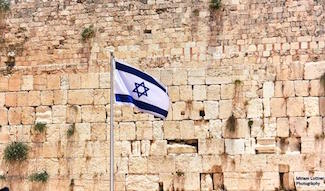
Image result for israeli flag kotel

A few weeks ago, we marked Yom Ha’atzmaut, Israel’s Independence Day, celebrating a return of Jewish sovereignty to our homeland after nearly 2,000 years of longing and praying for it.  Our community held a Yom Hazikaron/Yom Ha’atzmaut program with approximately 250 people in attendance.  By most measures, that number indicates a successful event.  But, when one considers how many members we have and how many more regularly participate in other Shul programs, one would expect a much higher attendance, especially given our community’s strong connection to, and passion for, the State of Israel.  Unfortunately, low attendance at events such as the one held in Boca seems to be the norm in many other religious Zionist communities as well, with many rabbis reporting empty seats at similar events.


For many people, Hallel on Yom Ha’atzmaut and Yom Yerushalayim are the measure of whether someone is a religious Zionist.  There is a lot of discussion and emotion in the debate about Hallel with a beracha, without a beracha, during davening, or after davening.  Every rabbi interviewing for a job in a modern orthodox community is guaranteed to receive that question and in many communities, his answer can make or break his pruba.


And yet, the absence of those who identify as “religious Zionist” from both Yom Ha’atzmaut and Yom Yerushalayim programs as well as from the morning davening with Hallel has left me wondering exactly what it means to be a religious Zionist in America today.  If one’s Zionism isn’t expressed through participating in these opportunities, where and how does it show?  Sending your children to a school that serves blue and white cookies or choreographs daglanut does not alone make you a religious Zionist.  So what does?  While I have not arrived at a definitive answer, it seems to me that the following factors are key ingredients:


Belief in the centrality of Israel


The Torah is replete with references to the centrality of Israel in the realization of our national destiny and the fulfillment of our people’s purpose and mission in the world.  Hashem’s vision is for Am Yisroel, the Jewish people, to observe Toras Yisroel, His sacred Torah, in Eretz Yisroel, His singular land.  While we may feel comfortable or even have a sense of patriotism elsewhere, a Jew must always recognize and be mindful of the centrality of Israel to our religious lives, individually and collectively.


Gratitude


If one truly appreciates the singularity and centrality of Israel and connects with our national longing to return to our land, he or she will not only be overwhelmed with gratitude for the miracles of the modern State of Israel, but see this reality as religiously and theologically significant.


We are called “Yehudim” because we are characterized by the quality of hoda’ah, gratitude.  To be a Yid, a Yehudi, is to be filled with gratitude to Hashem for the blessings in our lives.  Meriting to live in the generation that can travel the width and breadth of Israel, daven at its holy sites, and visit its special places, is among the greatest blessings our ancestors could have only dreamt of, and certainly deserves our regular appreciation and gratitude.


Israel Consciousness


While we care about our fellow Jews around the world, our relationship with and connection to our brothers and sisters in Israel is qualitatively different.  In the laws of tzedaka, there is a hierarchy to our giving priorities that includes giving to the indigent in our community first.  Yet, wherever one lives in the world, one must prioritize giving to Israel because even though we may not live there yet, in a real way we are all potential residents of the country.


Feeling like a resident of Israel even while living in the diaspora means following the news from Israel closely, sharing in its successes, and being pained by its challenges.  It means advocating and lobbying on behalf of Israel.  It means contributing our resources in a meaningful way to Israel.  It means raising our children to think about Israel like their hometown, rather than like another foreign place they don’t live.  It means connecting regularly with family and friends who live in Israel and communicating our sense of identification with all that is happening in Israel.


Aliyah


At any given moment, there are many legitimate reasons not to make Aliyah, but there are no legitimate reasons not to struggle with it.  According to Rav Moshe Feinstein, living in Israel is not just an ideological and historical reality, it is the fulfillment of a mitzvah.  The Ramban writes that, in fact, all mitzvos are only truly fulfilled in Israel.  Mitzvah observance outside the land is obligatory, but serves only to habituate us and prepare us for when we will fulfill them in Israel.  This insight should generate a discomfort and sense of impermanence with living in America, even if our being here is warranted at the present time.


Community


You can subscribe to the centrality of Israel, feel gratitude for the gift of Israel, struggle with Aliyah, and be mindful of our brothers and sisters there, all without coming to Shul.  Nevertheless, there is one aspect of practicing a love of Israel that is lacking at home.  Shlomo HaMelech taught us that “B’rov am hadrat melech, In the multitude of people is the king’s glory.” (Mishlei 14:28)


The importance of community is axiomatic to Jewish life. For a mourner to say Kaddish and be comforted, there must be people who are present and can respond.  For a couple to be blessed with the recitation of sheva berachos at the meals that occur during the week following their wedding, there must be not only a minyan, but panim chadashos, new faces, guests who physically come to share in their joy.


Milestones and special moments, both happy and sad, cannot be adequately observed in an online community, even with the incredible help of Skype or FaceTime.  Imagine a wedding where the bride and groom stand all alone under the chuppah with all their friends and family Skyping in or “liking” the Livestream, or a funeral where the loved ones physically stand by themselves, even if people are watching it online.


Valuing, cherishing and loving Israel means participating in, and being counted among, a community of people who love Israel.  Many self-identify as religious Zionists even though they have no desire or intention to make Aliyah, are not connected to the news from Israel and don’t participate in Israel advocacy or philanthropy.  For such people, the only thing left to be practicing Zionists is to at least show up at and participate in Yom Ha’atzmaut and Yom Yerushalayim celebrations.  Can those who fail to put in this minimum effort, and instead abstain from the opportunity to join with a community who do, truly call themselves religious Zionists?


Yom Yerushalayim


We will imminently mark the 50th anniversary of the miraculous reunification of Yerushalayim, but it almost didn’t happen.  At 4:00 in the morning a few days into the Six-Day War, then-opposition leader Menachem Begin awoke with a premonition and turned on the radio. He heard on the BBC that a vote was occurring at the UN to pressure Israel into a cease fire with its enemies who had been swiftly decimated. In the middle of the night, he called Prime Minister Levi Eshkol and begged him to call a special cabinet meeting to approve going into the Old City and conquering the remainder of Jerusalem. The meeting was called and Begin argued this could be an unique moment that history would not provide again. They would have to reclaim Jerusalem from the Jordanians before the international community pressured Israel to a cease fire.  A unanimous vote approved the military operation and just three hours later, the now famous statement, “har ha’bayit b’yadeinu, the Temple Mount is in our hands” was uttered.


After visiting the Kotel for the first time under Jewish sovereignty, Begin was asked what went through his mind.  “When I touched the Wall today I cried.  I suppose everyone had tears in their eyes.  Nobody need be ashamed.  They are men’s tears.  For the momentous truth is that on this day we Jews, for the first time since the Roman conquest of 70 C.E., have regained ownership of the last remaining remnant of our Temple site, and have own for ourselves free and unfettered access to pray there.”


Next week, Jews from around the world will be traveling to Israel to celebrate Yom Yerushalayim.  Will you travel to your Shul that morning to daven in a minyan?  Will you make your way to your Shul’s program and connect with the community of those who value the singularity and uniqueness of Yerushalayim and Eretz Yisroel?


I believe that for all of us who consider ourselves proud religious Zionists, these questions and considerations must remain front and center at all times, but especially on days of communal commemorations.  What a strong, powerful message of identification with, and appreciation of, the miracle of the State of Israel and a united Yerushalayim it would be if the upcoming programs across the country are standing room only with lines out the door to get in.


What Do Lag Ba’Omer and Mother’s Day Have in Common?

A number of years ago, someone, who I guess felt I could use some motivation, gave me a CD of Tony Robbins to listen to.  I was excited to hear what one of the most inspirational people of modern times would have to say and how it could change my life for the better.  He started his talk by saying that he has the secret to both happiness and success.  If you follow his advice and begin each and every day of your life exactly as he prescribes, he can all but guarantee you will find yourself both happier, and achieving your goals and dreams.  I, like everyone else, want to be happy and I try to be successful in everything I do.  I was therefore, very eager to hear, what would he say next, what is the secret?

What Tony Robbins said is exactly correct, but for me, and for you, and for Jewish 3-year-olds around the world, it was nothing new.  The secret to happiness and to achieving success, he said, is to start every day of your life by expressing gratitude.  As soon as you wake up, before doing anything else, say thank you.  Be grateful and appreciative for being alive, having a roof over your head, having your health if you are lucky, your family, etc.  He continued that it isn’t enough to think appreciatively, but you need to start your day by verbalizing and actually saying thank you out loud.  If you do, the rest of your day is guaranteed to be successful and happy.


What Tony Robbins is teaching in the 21st century, Judaism has taught since its inception thousands of years ago.  From an early age, we teach our children to wake up saying modeh ani lefanecha, I am grateful to you God for the fact that I woke up, that I am alive to see another day, for the wonderful blessings in my life and for my relationship with You.   It has been inculcated within us from our youth that we don’t wake up feeling entitled, deserving and demanding.  Rather, we wake up with a deep and profound sense of gratitude, appreciation and thanks.


In my experience, Tony Robbins is absolutely correct.  How we start our day has an incredible impact on how the rest of it will go.  This coming Sunday, we will celebrate Lag Ba’Omer, the 33rd day of the Omer.  Each day of the omer is characterized by another kabbalistic attribute.   Lag Ba’Omer is hod she’b’hod, the glory of glory, reflecting our appreciation of God’s greatness and glory.  Alternatively, though, hod can be understood as coming from the same word as hodu, or modeh, meaning thanks.  Lag Ba’Omer is a day characterized as thankfulness within thankfulness, or a day to celebrate gratitude.


The Chassam Sofer, Rav Moshe Sofer says that the miraculous manna that fell from Heaven began to descend on Lag Ba’omer.  On the first day, the manna was undoubtedly greeted with great enthusiasm and appreciation, but as time went on and there was an increasing expectation the heavenly bread would descend, it became much easier to take it for granted and to forget to be appreciative for it at all.  Lag Ba’omer therefore, is a time that we identify and say thank you for all of the blessings that regularly descend into our lives, but unfortunately, like the manna, that we take for granted.


It is so easy to fall into a sense of entitlement and to forget to be grateful.   Why should I thank my children’s teachers, they are just doing their job.  Why should I be so appreciative to the waiter, or the custodian, or the flight attendant, isn’t that what they are supposed to do?  When is the last time we said thank you to whoever cleans our dirty laundry?  Do we express gratitude regularly to our spouse who shops, cooks dinner, or who worked all day to pay for dinner, or in some cases did both?


One person without whom we would literally not be here, but who often goes unappreciated is our mother.  Lag Ba’Omer this year overlaps wtih Mother’s Day. On Sunday, over 135 million cards will be given, millions of bouquets of flowers sold, brunches eaten, and an estimated $20 billion will be spent on gifts. With all the attention and fanfare paid to what has become among America’s most popular holidays, it is critical to remain mindful and sensitive to those who aspire to be mothers, but have not yet been blessed with the opportunity.  However, ultimately, Mother’s Day is not about celebrating the institution of motherhood, taking pride in one’s maternal instinct or even about applauding all mothers. According to its founder, Anna Jarvis, Mother’s Day is entirely about our own personal mother and recognizing her unique role and contributions to our life. Jarvis, who did not have children of her own, specifically did not call it Mothers’ Day in the plural, but Mother’s Day, the day dedicated to our singular, one and only mother.


When Jarvis introduce Mother’s Day, it didn’t take long for Hallmark and other greeting card companies to capitalize on this new holiday by selling printed cards with messages of appreciation to Moms. Jarvis was so disappointed and disturbed by the commercialization and exploitation of what she intended to be a genuinely sentimental day that she worked to rescind the very holiday that she had introduced. Mother’s Day was supposed to be about hand written, personal letters of appreciation, she felt, not about mass produced, impersonal cards that generate profit for big companies instead of engendering love and gratitude. Despite her organized boycotts, it was too late. The greeting card industry was too strong and Mother’s Day was here to stay. Over a hundred years after being introduced, I wonder what Jarvis would think of Mother’s Day today when many gush about their mother or wife on social media for the world to see, but don’t necessarily match that enthusiasm and affection offline, when nobody is watching.


On Sunday, as we celebrate Lag Ba’Omer and l’havidil Mother’s Day, let’s not just say modeh ani in the morning and then quickly transition to feelings of entitlement.   Let’s remember to say thank you to the people who do extraordinary things in our lives.  But even more importantly, let’s especially express gratitude to the people who do the ordinary things that make our lives so filled with blessing.


I Couldn’t Believe This Guest Was Invited to the White House Celebration of Yom Ha’atzmaut

Vice President Mike Pence hosted a historic celebration at the White House on Tuesday in honor of Yom Ha’atzmaut.  He made headlines for remarking that President Trump is giving serious consideration to moving the Israeli embassy from Tel Aviv to Jerusalem.  I had the great privilege of attending the event and while I am very excited about the prospect of an embassy move, these were not the comments that gave me goose bumps.

I was incredibly moved when Vice President Pence said:


Thank you for being here today at the White House to celebrate this day, the anniversary of a moment that will be remembered for eternity…You’re all here, all of you, regardless of your home, your creed, because on this day, the fifth day in the month of Iyar in the Hebrew calendar in 1948, nothing short of a miracle occurred.  On that day, in the ancient and eternal homeland of the Jewish people, the state of Israel was reborn.


On that day, the Jewish people’s 2000-year exile, the longest exile of any people anywhere, ended.  And on that day, a prophecy literally came to pass.  And I believe in my heart that God Himself fulfilled his promise to His people.  The Lord God tells us… “Behold, I will cause breath to enter into and ye shall live.”  And Israel lives today…


Today and every day, the state of Israel and her people bear witness to God’s faithfulness as well as their own.  How unlikely was Israel’s birth?  How much more unlikely has been her survival?  And how confounding against all odds, both past and present, has been her thriving…


For my part, my Christian faith compels me to cherish Israel as well as our deep alliance and historical ties…On this day, so many years ago, only three years after the horrors of the Holocaust, Israel was given life by a people who had looked into the eye of the angel of death.  The Jewish people have persevered through history’s darkest hour, for in that darkness shine the light of faith, of hope, and of love…


And so today we celebrate and we marvel at all that Israel and her people have accomplished…Israel is an eternal testament to the undying fortitude of the Jewish people, to the unfathomable power of human freedom, and to the unending faithfulness of God.  Indeed, though Israel was built by human hands, it’s impossible not to sense that just beneath their history lies the hand of heaven [emphasis mine].  For as God tells us in his word, speaking to his people so long ago, “I know the plans I have for you, plans to prosper you and not to harm you, plans to give you hope and a future.”


Standing in the most powerful building in the world, listening to arguably the second most powerful man in the world talk about the US-Israel relationship, I couldn’t help but look at the vice president and wonder why we ourselves can’t speak more like him.  When describing the meaning of Israel’s Independence Day, Vice President Pence didn’t just make the standard, albeit important, reference to our countries’ shared values such as liberal democracy, he didn’t just banally talk about a strategic alliance, he spoke about God.  It felt as though among the guests invited to celebrate Yom Ha’atzmaut at the White House, was God Himself.


Do you feel self-conscious putting on a Tallis and Tefillin in an airport terminal? If so, you’re certainly not alone. Many observant Jews are uncomfortable wearing a yarmulka at work or make great efforts to avoid having to make a beracha on food or be seen davening or benching when among non-Jews or non-observant Jews. Yet, many of our Christian or Muslim counterparts aren’t shy or reluctant at all to mention God or to pray in public.


In working with a pastor who is a great supporter of Israel I have noticed something amazing.  On numerous occasions, when confounded about a situation and trying to decide what action to take, he has said to me, “Let’s take a moment and pray on it.”  When describing how he came to a certain position, idea, or plan, or what he credits for a particular achievement or success he has said, “I was looking for inspiration and so I prayed.”  While obviously the style, content, and destination of his prayers are not in consonance with Judaism or Torah, there is something inspiring about his lack of inhibition to reference faith in his everyday conversation.


It is not just pastors or the vice president that are comfortable talking freely about God in casual conversation.  In an interview about his retirement, Mariano Rivera, the greatest closing pitcher of all time, reflected on his successful Yankee carrer and said:  “Everything I have and everything I became is because of the strength of the Lord, and through him I have accomplished everything.  Not because of my strength. Only by his love, his mercy, and his strength.”  How many of us if interviewed would as explicitly and overtly attribute all that we have accomplished to God?


To his credit, when David Friedman, the US Ambassador to Israel, spoke at the event, he proudly quoted the words from Hallel, “Zeh hayom asah Hashem, nagila v’nismecha vo, this day was created by God, let us rejoice in it.”  Elsewhere in Hallel we say, he’emanti ki adabeir, ani anisi m’od, which is normally translated to mean, I trust in God, out of great suffering I spoke.  The Slonimer Rebbe, Rav Shalom Noach Berzovsky, offers an alternative understanding.  He explains, he’emanti, I grow in emunah.  How? Ki adabeir, because I choose to speak about God.  When we reference and credit Hashem, when we talk to Him, express gratitude to Him and rely on Him, we grow closer to Him.  Hashem is not theoretical, He doesn’t live only in the four walls of the Shul.  Hashem should be part of our lives, referenced in our conversations and instinctively prayed to when we need to make a difficult decision or seek guidance and support.


To be clear, this is not about Vice President Pence’s politics.  I admire his faith and I respect his lack of defensiveness or discomfort with his strong religious values and convictions.  Though he is uncompromising in them, they have not held him back from achieving the second highest office in the land.  Recently, the Vice President was quoted in an interview saying that he never dines with a woman alone and he doesn’t attend functions without his wife “if there’s alcohol being served and people are being loose.”


The explosion from the vice president’s bombshell disclosure was loud and the response was quick and harsh.  Pence drew criticism and scorn that ranged from mocking him, to questioning his character, and mostly accusing him of objectifying women.  Some wondered if he had just landed from a previous century.


I found the criticism remarkable, particularly since it came mostly from people who were more outraged by Pence’s behavior to safeguard his marriage, than they were towards certain elected officials who defiled theirs.  Instead of deriding the Vice President, they—and we—would do well to admire his commitment to what he once called, “building a zone around his marriage.”


A few years ago, I asked Dr. Ruth Westheimer what she thought were the most important ingredients for a healthy and strong marriage.  I was very surprised when among her answers was a steadfast commitment to observing the laws of yichud.  She explained that especially in our world of enticement and access, it is so important to remove temptation and opportunity before they ever arrive by pledging to never be alone with a non-family member of the opposite gender.  Being vigilant in the laws of yichud is not something to be mocked for, it is something to admire and for which we should be unabashedly proud.


Yet, how many of us, Torah Jews who observe the laws of yichud, would be comfortable invoking these practices in a public interview?  How many of us would so unapologetically promote what is in our time bizarre to many behavior?


This week’s parsha enjoins us “Kedoshim tiheyu,” be holy and be sacred.  Rashi explains that holiness is achieved by excelling in the area of arayos, being cautious and vigilant in not being promiscuous.  The natural tendency towards giving in to temptation and desire in areas of intimacy is as old as the world itself.  The Torah wasn’t written for a utopian society or perfect people.  It legislates and regulates how imperfect, fallible people can and should live the most meaningful and values driven lives.  Be kadosh, create healthy separations and boundaries to ensure modest relationships and interactions.  Eliminate the opportunities for devastating mistakes by practicing safeguards like the laws of yichud and not being alone with a member of the opposite gender.


While there is nothing wrong with being inspired by others such as the vice president of the United States, we are the ones charged with being role models for the world, proud examples of virtuous lifestyles and faithful living.  May we fulfill our mission as a mamleches kohanim, a kingdom of priests, by not hesitating to talk about God.  And may we realize our responsibility to be an am kadosh, a holy people, by excelling and setting the standard in safeguarding our marriages and relationship, by practicing modesty.


What Could Be More Important Than Showing Honor to our Survivors?

How many people do you know who fast on the 20th of Sivan?  The likely answer is zero.  It is not one of the minor fast days, and obviously not Tisha B’av or Yom Kippur, so why would anyone fast?


Twice in our history, the 20th of Sivan was designated as a permanent fast day to commemorate massacres against our people.  The first time was by Rabbeinu Tam, Rashi’s grandson in 1171, after 31 Torah scholars were executed as a result of a blood libel in France.  Rabbeinu Tam declared the 20th of Sivan as a day of fasting “greater than Tzom Gedalya, like Yom Kippur,” and instituted special selichos to be recited.  Shortly after, the Crusades expanded and for the next 150 years would bring great devastation of Jewish communities.  It overshadowed the incident of the blood libel and the fast ceased being observed.


Almost 500 years later, from 1648-1649, Polish Anti-Semite Chmielnicki launched a series of pogroms that led do the deaths of tens of thousands of Jews and the loss of hundreds of Jewish communities.  The Shach, Rav Shabbsai Ha’Kohen, instituted the 20th of Sivan as a private fast day for his family to commemorate their great loss.  Soon after, the Council of the Four Lands, the rabbinic authority of Eastern Europe, adopted the fast for all Polish Jewry in commemoration of the tragedies of what became known as Tach V’Tat.


Twice the 20th of Sivan was designated as a day commemorating Jewish tragedies, and twice the observance faded until it is now entirely obsolete.


Learning about the 20th of Sivan, one can’t help but wonder – what will become of Yom Ha’Shoah?  Will it continue to be observed 20 years from now?  Will gatherings, commemorations, ceremonies, and school assemblies be held, or as time passes will Holocaust Remembrance Day fade into oblivion?


Sadly, the likelihood is that Yom Ha’Shoah will go the way of the 20th of Sivan.   While the Holocaust was a defining event and experience for the last two generations, evidence shows that young people today want to “move on,” put it “behind us,” and come “out from under its shadow.”   The younger generation is rapidly seeing the Holocaust in the context of the Crusades, the Inquisition, and the Expulsion from Spain: events that are part of our past, rather than as something that happened to our parents and grandparents, a very real piece of our personal lives.


I don’t know what will happen with Yom Ha’Shoah in the future.  What I do know, is that as long as we are blessed to have our precious and holy survivors, Yom Ha’Shoah is not just about commemorating an event of Jewish history and memorializing the kedoshim, the 6 million who were murdered in our past.  For who knows how much longer, Yom Ha’Shoah is about the present and the opportunity to honor and express our awe at the extraordinary survivors in our midst.


Our survivors have lived through the greatest atrocities and most horrific circumstances in the history of the world.  They endured unimaginable suffering, inconceivable loss, and profound pain.  They rebuilt their lives with deep faith, amazing and inspiring optimism, and in most cases little to no expectation that the world owes them anything in return for what they have been through.


With the Holocaust survivors whom I have been privileged to know, I have found that there is one request they have of us, one wish and hope: they are desperate for us not to forget what they went through.  They reawaken their darkest memories and become traumatized each time they share their horrendous stories.  More than one survivor has told me that for days after telling their story, they cannot sleep, eat, or find a peaceful moment.    Nevertheless, they open themselves up to great pain continue to tell their story with the hope and expectation that we are listening, that we will remember, and that we will continue to tell it long after they are gone.


In his Hagaddah, Rabbi Lord Jonathan Sacks writes:


There is a profound difference between history and memory. History is his story – an event that happened sometime else to someone else. Memory is my story – something that happened to me and is part of who I am. History is information. Memory, by contrast, is part of identity. I can study the history of other peoples, cultures and civilizations. They deepen my knowledge and broaden my horizons. But they do not make a claim on me. They are the past as part. Memory is the past as present, as it lives on in me. Without memory, there can be no identity.


Our survivors tell their story and give personal testimony because more than anything they don’t want the Holocaust to be relegated to history; they desperately want it to remain part of our collective memory.


In his article, “Holocaust Commemoration and Tish’a Be-Av: The Debate Over “Yom Ha-Sho’a” published in Tradition 41:2, Rabbi Jacob J. Schacter traces the origins of Yom Ha’Shoah and examines the great debate surrounding its observance.   Whether you feel Yom Ha’Shoah should have been established or you believe Holocaust remembrance should be incorporated into our day of national mourning, Tisha B’av, is academic at this point.  The reality is that the Jewish calendar marks Yom Ha’Shoah and failure to participate in remembering is essentially a slap in the face of our beloved survivors who yearn to know that we have not forgotten their loss and suffering.


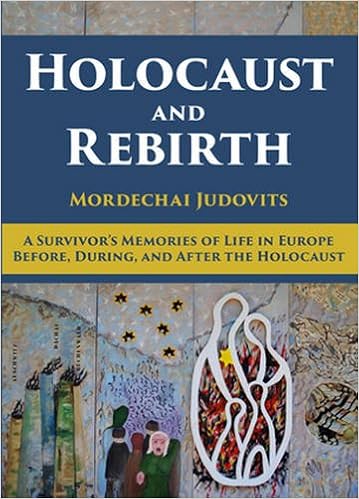
Our Yom Ha’Shoah program this year will take place on Sunday evening beginning with a live presentation via phone from Rabbi Broide and our students participating on March of the Living at 6:00 pm.  The formal program begins at 7:00 pm and features a conversation with our very own Martin Judovits who will share his story of survival and renewal.  Martin’s new memoir, Holocaust and Rebirth, will be available for purchase following the program.


If you have children of a suitable age, I implore you to bring them.  Older people and adults have lived with and met Holocaust survivors.  It is specifically children who are running out of time and opportunities to meet these extraordinary people whom they will look back at later in life and only wish they could have known better.  Babysitting is available at no charge by registering with Rabbi Gershon Eisenberger at rge@brsonline.org


With all the pressures on our time and the endless list of things that we must get done, I simply can’t imagine a more important place to be on Sunday evening than with your children at your side honoring the survivors of our community.


Are You Kind Enough to Cut Others Slack and Give the Benefit of the Doubt?

Burt Reynolds describes an incident that occurred with him before he was a famous actor. He is in a bar minding his own business sipping on a beer. Two stools over sits a man with humongous upper body strength and broad shoulders. Out of nowhere, the guy starts harassing a man and a woman seated at a table nearby. Reynolds tells him to watch his language. That’s when the guy with the huge shoulders turns on Reynolds.


Reynolds describes: “I remember looking down and planting my right foot on this brass rail for leverage, and then I came around and caught him with a tremendous right to the side of the head. The punch made a ghastly sound and he just flew off the stool and landed on his back in the doorway, about 15 feet away. And it was while he was in mid-air that I saw . . . that he had no legs.” Only later, as Reynolds left the bar, did he notice the man’s wheelchair, which had been folded up and tucked next to the doorway.


Even though Reynolds was looking right at the man he hit, he didn’t see all that he needed to see.


Upon experiencing the miracle of the splitting of the sea, the Jewish people joyously sang, “Nachisa b’chasdecha am zu ga’alta. With Your kindness, You guided this people that You redeemed.” Nachisa, you led them with kindness, is in the past tense. Which kindness is it referring to? The simple understanding would be that Hashem performed the great miracles of the eser makos, the ten plagues and krias yam suf.


The Midrash (Tanna D’vei Eliyahu) gives an altogether different understanding. When the Jewish People were enslaved in Egypt, notes the Midrash, they felt the bleakness and hopelessness of the situation, so they assembled together as a group. During this meeting they made a commitment towards one another. They pledged that with whatever else was going on around them, no matter how bad it would get, they would practice gemillus chassadim, kindness and generosity with one another.


What precipitated this commitment? Why now? The Chafetz Chaim explains that when the people realized that they could not come up with a strategy to end the persecution and that the suffering under Pharaoh was only going to increase with each ensuing day, they decided among themselves that the only way to make things a bit better and hopefully to earn redemption from above would be to be kinder to one another. Writes the Chafetz Chaim definitively, “ha’davar ha’zeh hayah siba l’geulasam.” This kindness that they showed one another was the catalyst and cause for their salvation.


The Chafetz Chaim concludes, this is the meaning of our pasuk that we say every day: Nachisa b’chasdecha, you led us out with chesed. It was our performance of and predisposition towards chesed that caused You to lead us out. When we do chesed with one another, Hashem does chesed with us. This is the meaning of the pasuk from Yirmiyahu that we say on the yamim noraim: “Zacharti lach chesed n’urayich.” Hashem, you remember the chesed of our youth? What chesed did we do in our infancy? Says the Chafetz Chaim, this refers to chesed we did in Egypt, even in the harshest of circumstances when we had every reason to be self-centered and self-absorbed.


Forty-five years ago, social psychologists Ned Jones and Victor Harris coined the phrase “fundamental attribution error” or “correspondence bias” to describe the phenomenon of people’s tendency to place an undue emphasis on internal characteristics to explain someone else’s behavior in a given situation, rather than considering external factors.


In other words, when we see someone behave in a certain way, we reach conclusions about their internal personality rather than ascribe the behavior to outside factors. When someone runs through a red light we assume they are reckless instead of considering that they are driving someone to the hospital in an emergency. If we see someone kick a vending machine we assume they have anger problems whereas if we kick the machine it is because our snack got stuck. If someone is impatient in the line at the drug store we label her nasty instead of realizing she is a considerate person rushing to get home with the medicine for her sick, miserable child. When other people’s cell phones ring during davening, it’s because they are inconsiderate boors. If my cell phone rings, it’s because I’m a conscientious person who needs to be able to get a call from those who rely on me.


Harvard psychologist Daniel Gilbert explained it this way, “…in everyday life people seem all too willing to take each other at face value and all too reluctant to search for alternative explanations for each other’s behavior.”


To put it most simply, we fail to cut each other slack. We tend to look for the worst in others, to be easy to anger or to be insulted, rather than give people the benefit of the doubt and to recognize that there may be something else going on that we don’t know.


Ian Maclaren, the 19th-century Scottish author once said, “Be kind, for everyone you meet is fighting a battle you know nothing about.” Cutting slack, giving the benefit of the doubt, is a chesed, is kindness that absolutely every one of us can do.


Someone didn’t invite you back, or respond to your text, or say hello when passing you in the supermarket. Don’t assume the worst. With friends, co-workers, and even family members—make an effort to remind yourself that almost everyone is fighting a battle you likely know nothing about.


If we want Hashem to interact with us with chesed, to give us the benefit of the doubt, and to cut us some slack, we need to do the same for others. Don’t ever even metaphorically punch someone because even when you are looking him or her in the eye, there is likely much you don’t see.


Suggestions for a More Meaningful Seder This Year

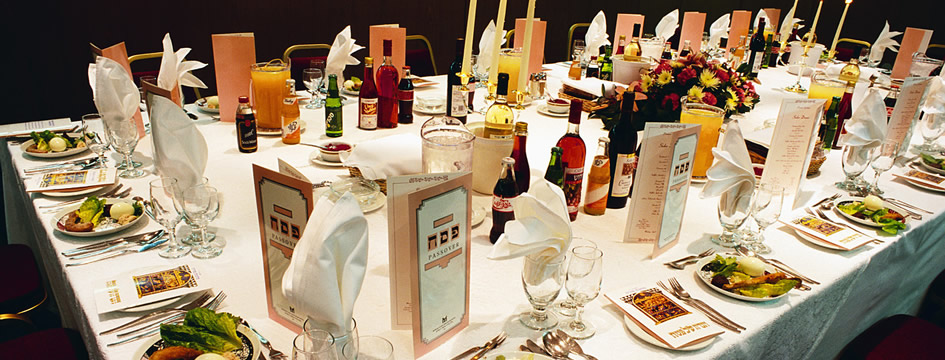
Image result for seder table

If your Seder looks anything like the typical one, you likely have young kids fighting over giving every single Dvar Torah they prepared in school, adults offering technical and complicated vortelach (Torah thoughts), someone napping on the couch due to drinking the four cups too zealously, and more than one person complaining that they spent most of the Seder in the kitchen and missed the whole thing.


Is this an authentic picture of what the Rabbis really had in mind when they instituted an evening with family and friends designed to nostalgically recall the miracle of leaving Egypt and our journey to freedom? I think not!


It is abundantly clear from countless sources that the purpose of the evening is not simply to ramble through the text of the Haggadah, or to compete for who has the most to say. The entire format of the Seder supports the goal of the evening, which is, at its core, to simply have a conversation.


Indeed, Rav Chaim Soloveitchik suggests that this format is what differentiates the mitzvah to speak about Yetzias Mitzrayim (the exodus) on Seder night, from the mitzvah to remember it every single day. The rest of the year we lecture, teach, and tell Divrei Torah about leaving Egypt. Seder night, we have a conversation about the experience in the form of questions and answers, give and take, dialogue and discussion. Indeed, so many of the peculiar practices of the evening are done just so that the children will be curious, ask and ignite a conversation.


I would like to offer a bold suggestion – consider asking your children to put away their Haggadahs for part of the Seder. The teachers of our community do an extraordinary job in preparing our students. The creativity, ingenuity and hard work that goes into designing the beautiful, personalized Haggadahs, and filling them with Torah thoughts is a testament to the dedication of our outstanding Rebbeim, Morahs, and teachers. We should welcome their incredible Haggadahs at our Seder table, but in moderation. If not, these Haggadahs can become a source of distraction and even worse, a source of friction when each of our children feel an obligation to read every single thought on every single page of their Haggadah at the Seder.


Of course, we should spend time sitting with each child, looking through their Haggadah, listening to their Divrei Torah, and appreciating their enthusiasm. Perhaps we can dedicate time on Erev Pesach or on Yom Tov afternoon to look at their Haggadahs more in depth and to hear the thoughts that didn’t make it into the Seder itself. But, if we want our children to get the most out of our Seder experience, it can’t just be a presentation of what they learned in school.


The Seder must be a time to have conversations that matter and discussions that can be transformative and provide inspiration that lasts the entire year. These conversations can happen with children and adults of all ages. Young kids should be engaged in storytelling in a real and personal way.


We must turn to our children and grandchildren and tell them the riveting story of how we used to be slaves, do backbreaking labor, and then we were freed through miracles. With older children and adults, the conversations should be more sophisticated. I would like to suggest a few examples of how the Seder can be a platform for great conversations.


Here are some thought-provoking questions that you can share Seder night to generate the kind of rigorous and robust discussions that our Rabbis imagined us having:


  1. Ha Lachma Anya: Why do we begin the Seder specifically by inviting the underprivileged to join us? Is there a connection between freedom and sharing with others?
  2.  

  3. Avadim Hayinu: What is slavery and what is freedom? Though we are physically free, are there things and behaviors we are enslaved to? Does technology give us greater freedom or enslave us?
  4.  

  5. Four sons: Which child do you identify with? Is the Rasha really so wicked if at least he comes to the Seder? What about the hypothetical 5th son who doesn’t even show? Are the eino yodei’ah lish’ol (don’t know how to ask) the unaffiliated of our generation, and how do we engage them?
  6.  

  7. V’hi she’amdah: Who are the enemies of our generation that seek to destroy us, and can we identify miracles Hashem does to protect us? What is the root of Anti-Semitism and why have we always had enemies that seek our destruction?
  8.  

  9. Arami Oveid Ami: We became a nation when living among the Egyptians. Is living in a land of freedom good or bad for Judaism? Has the freedom of this great country, America, contributed positively or negatively to the continuity of Torah Judaism?
  10.  

  11. Ten Plagues: Can you think of a situation where you felt stuck and Hashem bailed you out? Are there miracles in your life in which you saw the guiding hand of Hashem?
  12.  

  13. Dayenu: What does it mean to have the capacity to say enough? Are we ever satisfied or do we always crave more?
  14.  

  15. Hallel: What are you thankful for and why? Tell stories of personal freedom and liberation.
  16.  


These are just a few examples, but there are countless more conversations to be had on Seder night. Even if you disregard my earlier suggestion and insist on listening to every single Dvar Torah your child brings home, I urge you to be sure to make time to tell stories, ask questions and have critical conversations.


When all is said and done, the Seder is intended to be an exercise in emunah (faith). If we walk away from the Seder and we have not grown in seeing Hashem in our lives and feeling a connection and closeness to Him, we have failed in our mission. Make sure to have the kind of Seder that will leave friends and family wanting to come back for more of your good food and great company, but most of all for your incredible and inspiring conversations.


When You Dip the Karpas, Think of AIPAC and What We Could Accomplish With Our Many Voices if We Had One Mission

Last March, I tore my Achilles tendon and needed surgery.  The tear, surgery, and rehab were uncomfortable, but having to miss the annual AIPAC Policy Conference in Washington was painful.  I lay in bed on painkillers, security pass and credentials around my neck, watching the conference live on my laptop.  Not only did I miss the exhilarating two and a half days of the conference itself, but something felt missing from my entire year, though I couldn’t put my finger on it until this week when I once again was able to attend Policy Conference in person.

With its hundreds of breakout sessions, one can learn an incredible amount about a diverse range of topics.  But that is not why I go.  Sitting in the conference center and the Verizon arena with over 18,000 pro-Israel advocates is nothing short of a religious experience.  The diversity in that room crosses religion, ethnicity, race, political affiliation, Jewish denomination, age, and more.


And yet, this large group of people who agree on little and in many cases have little in common, choose to put all of their differences aside and focus exclusively on what they have in common, a love and devotion to the Jewish State of Israel.  I spend the conference swelling with Jewish pride and pride for what our people have accomplished in the short time we have returned to our homeland.  The conference each year features Israeli innovation and technology that are changing the world.  It highlights Israel’s leadership in humanitarian efforts around the world.  It celebrates Israel’s values that are so closely aligned with America’s, including democracy and human rights.


I measure the conference by how many “goose bump moments” occur.  Who could not be moved by Hatikvah being played by virtuoso Hagai Shaham on a repaired violin that the Nazis had forced Jews to play as they witnessed their fellow Jews march to their deaths in gas chambers. Who could not rise to their feet for the endless applause for UN Ambassador Nikki Haley as she pledged “The days of Israel-bashing are over,” adding, “We don’t have a greater friend than Israel.”


The theme for this year’s conference captured the secret to AIPAC’s effectiveness: “Many voices, one mission.”  The idea of “many voices” is nothing new, but having one mission, being singularly focused on one goal, is something we don’t see often and is what makes AIPAC both special and successful.  For two and a half days, nobody discusses what divides us, what makes us different, or what we can’t begin to understand about one another.  AIPAC has one goal, bi-partisan support for the US-Israel relationship and for Israel’s security and military advantage, and it will not be distracted, deterred, or sidetracked from it.  By focusing exclusively on one goal and creating a culture and atmosphere that won’t tolerate anyone hijacking the agenda or changing the conversation, over 18,000 very different people can feel united not only for the two and a half days, but throughout the year.


Imagine what we could accomplish if we follow this model in other areas.  What if the whole Orthodox community found its common ground and we dedicated ourselves towards seeing it through, despite our differences.  Imagine what could be possible if the many denominations within Judaism worked together on matters that we all agree on, without allowing our differences to deter us. Think what we could achieve.


Soon, we will all sit down at our sedarim and dip the karpas in salt water, an odd opening to a night of freedom.  In his commentary on the Rambam, Rabbeinu Manoach suggests that the word karpas is closely related to pasim, the coat of many colors given to Yosef by his father Yaakov.  When the enmity between Yosef and his brothers grew and they sold him into slavery, the dipped his coat in animal’s blood and presented it their father as if Yosef had been killed.


Yosef’s brothers didn’t just hate him. “V’lo yachlu dabro l’shalom,” they couldn’t even speak to him.  R’ Avraham Ibn Ezra explains, “afilu l’shalom.” It isn’t just that they couldn’t talk about the issues they disagreed about. It isn’t that they didn’t want to be close, loving brothers. And it’s not that they couldn’t debate respectfully. “Afilu l’shalom” — The issue with Yosef and his brothers was they couldn’t even give each other a Shalom Aleichem. The hatred and intolerance had grown so deep that they couldn’t stand to even extend greetings to one another or to be in a room together.  This expression describes a disgraceful and shameful state of affairs. They couldn’t even say “good morning,” “how are you,” or “good Shabbos” to one another, let alone attend a conference and work for a common cause together.


Rav Yehonasan Eibschitz in his Tiferes Yonasan has an additional insight on the verse in question. Translated literally, “lo yachlu dabro l’shalom” means “they could not speak to him to peace.” What could that mean? Rav Eibshitz suggests that when we disagree with people, we withdraw from them and stop speaking to them. We see them as “the other,” different from us and apart from us. As our communication breaks down, the dividers rise and grow stronger and stronger.


We can never resolve conflict, find common ground, or maintain a relationship despite our differences, if we can’t even have conversation between us. Had Yosef and his brothers been talking, he might have communicated how he felt isolated and alone, and they might have explained how his tattle-telling and the favoritism their father displayed toward him were very painful to them. However, “lo yachlu dabro l’shalom.” They weren’t talking at all, so they couldn’t use speech to achieve peace, or even just civility, between them.


We begin our seder, our night of freedom and liberation from bondage, by remembering what started it all, how we found ourselves in Egypt to begin with and the source of our slavery and suffering.  Sinas chinam, baseless hatred, intolerance, and animosity landed us in Egypt and, if we don’t want to find ourselves metaphorically back there again, we best learn the lesson of the dipping of the karpas and kesones pasim.


To be clear, there are important things we disagree about and there are times, places, and platforms to explore those differences and debate them.  However, if we spew venom and rhetoric at one another, look to find fault, pursue our agenda in a militant fashion without respect for other views, if we try to marginalize those we don’t like or agree with, we can never come together on the things we do have in common.  AIPAC proves that when we want to, we can maintain our many voices, but still pursue one mission, but everything begins with being able to communicate b’shalom, peacefully and civilly.


If it Takes You More Than a Day to Clean for Pesach, You are Doing Spring Cleaning, Not Pesach Preparations

Image result for purim pesach cinderella

Now that Purim is behind us, the countdown to Pesach has officially begun, complete with its angst, anxiety, stress, and exhaustion. Sadly, many people associate Pesach with backbreaking work, exorbitant expenses, endless preparation, and bread deprivation. It is not unusual to hear moans, groans, and krechts coming from both men and women when mentioning the upcoming holiday. Many describe themselves as rolling into Pesach ‘like a shmatta,’ unable to enjoy the festive atmosphere, meaningful Sedarim, or even quality time with friends and family.  The consequences of this attitude, don’t just impact us, they negatively influence our children and those around us.


The Haggadah quotes the rasha, the wicked son who challenges – what is all of this work to you?   Why does he specifically choose the seder as the time to question and challenge?  The seder is filled with good wine, good food and good conversation.  Wouldn’t it make more sense for the rasha to issue his challenge on Yom Kippur, when we are fasting and abstaining from pleasure?  In his new Hagaddah, Rav Avraham Elimelech Biderman answers (thank you R’ Naftali Lavenda for pointing it out to me) that the work the turned off child is referring to, is not the seder, it is all of the preparation and lead up to Pesach.  After hearing his parents complain about the cleaning and hard work, after being yelled at neurotically not to bring chametz anywhere in the house, after overhearing the moaning about the cost of making Pesach, he comes to the table and challenges, why would I want all of this avodah, this work that YOU do and don’t stop complaining about?


This is not the way the Torah or our Rabbis intended it. I believe that the bulk of the stress, aches, and pains that result from Pesach preparation is self-induced and utterly unnecessary. True, there is a high cost of matzah, wine, and Kosher-for-Pesach groceries that cannot be avoided and are challenging particularly during these difficult economic times. However, the overly labor-intensive house preparations and extensive,arguably overly complicated menus and recipes can all be avoided.


For some reason, Pesach has gotten away from us with the purely voluntary now becoming mandated standards and what should be the primary goals becoming almost entirely neglected and dismissed. Undoubtedly, halacha demands that we seek and destroy all chametz in our possession. Definitions of “chametz,” “seek,” and “in our possession” are all very clear and require a preparation of a home that should take only a few hours total. Areas and places where chametz is never brought don’t need to be cleaned or checked (Shulchan Aruch o.c. 433:3). Appliances that will not be accessed or used need not be cleaned or checked; they simply need to be put away and sealed. Any food that is not categorized as edible (a dog would not eat it) is not considered chametz (Shulchan Aruch 442:2). There is no need to check for crumbs that are less than a k’zias if they are dirty or soiled and wouldn’t be edible by a human (Mishna Berura 442:33).


Practically speaking, any cabinet, closet or room that will not be entered on Pesach, can simply be closed with a piece of tape across the door and any chametz contents in it sold. Any kitchen cabinet, drawer, or cupboard that will not be used on Pesach need not be cleaned at all; it just needs to be taped shut. Any appliance, food processor, sandwich maker, mixer, bread machine, etc. that will not be used, need not be cleaned whatsoever. They just need to be put away for Pesach in a sealed space.


Nevertheless, at some point in recent Jewish history, Pesach preparation was substituted with spring-cleaning. If one is moving a refrigerator, oven, or any other heavy appliance, he is spring cleaning, not preparing for Pesach. If one is climbing on a ladder to clean a ceiling fan, taking a toothpick to a toaster or food processor, scrubbing grout with a toothbrush, emptying and wiping all dressers, closets, linen pantries, crawl spaces, or shaking out books that haven’t been opened in years, she is spring cleaning, not preparing for Pesach.


Halacha demands that we go room to room confirming there is no chametz that is larger than 30 grams and edible. That can realistically be accomplished in a few hours at most in almost all of our homes. If you are spending days, weeks, or over a month cleaning, if you are worn down, exhausted and your back aches, blame your proclivity for spring cleaning, don’t dare blame God or His wonderful holiday of Pesach.


Make no mistake, this substitution of spring-cleaning instead of Pesach preparation comes at a great cost and it will likely hurt our community’s attitude towards Pesach in the future. Rather than enter Pesach excited, enthusiastic, and energized to spend time with family and share divrei Torah at our Sedarim, we are increasingly becoming resentful and negative about being observant and burdened by Pesach. Rather than happy people eating bitter herbs to celebrate freedom, we are becoming bitter people exchanging our freedom for unnecessary burdens in anticipation of Pesach.


Pesach, more than any other holiday or time of year, is designed to communicate our values, priorities and lifestyles to the next generation. Pesach, and the days leading up to it, should leave our children with sights, smells, flavors, traditions, and experiences they will draw from and seek to emulate in their own homes for the rest of their lives. It should provide memories and recollections that will inspire and charge the next generation in their Judaism and commitment to the beauty of a Torah lifestyle.


Bedikas chametz, complete with its hide-and-seek nature, should be fun, exciting, and adventurous. Instead, for many it has become a chore that we unburden ourselves from as quickly as possible. Burning chametz, rolling matzah balls by hand, chopping charoses, grinding marror, setting the regal seder table, reenacting the Pesach story at our seders, welcoming visiting family, are among the activities that can be carried out with joy, enthusiasm, nostalgia, and meaning.


Depleting ourselves of energy and joy by engaging in spring cleaning rather than Pesach preparation is not only depriving us of the simcha, joy, we are capable of feeling, but it is indelibly impressing on our children negative memories and associations that will likely haunt them and shape their own attitude toward Pesach preparation and observance.


By exerting all of our energy into that which is unnecessary, we have little left to do the things that make Pesach preparation fun and create the memories that our children and grandchildren will draw from throughout their lives. Today, you can buy bedikas chametz kits complete with numbered pieces of bread, packaged finely chopped charoses and even a jar of kosher for Pesach salt water.


With all respect to the companies that have commercialized those mitzvos, I implore you, don’t cave. I vividly remember how we prepared and hid the bread for bedikas chametz and that is how I taught my children to do it. I can easily picture my siblings and me competing over who got to chop the charoses and how my mother and grandmother lovingly added all the ingredients in their special recipe and it is that experience we try to create for our children today. Is adding salt to water so laborious that we can’t put in even that effort to prepare for our seder table?


As we enter the final countdown to Pesach this year, I beg you to ask yourself the question – which sounds will ring in your children’s ears in the future when they think back to Pesach in their home? Will it be moans, groans, bitterness and complaints or will they remember the joyous sounds of an energized family eagerly preparing for a meaningful Yom Tov?


The Shulchan Aruch (529:2) tells us, “Chayav adom liheyos sameach v’tov leiv b’moed. A person is obligated to be joyous and happy on the holiday.” The Mishna Berura is quick to add that being happy on the holiday is a Biblical mandate and applies equally to men and women.


Let’s not allow spring cleaning or unnecessary stringencies to get in the way of fulfilling our duty to God, our children and ourselves of being happy, joyous, energetic, and enthusiastic.


Over the next few weeks as we prepare for Pesach, let’s remember what is essential and what is unnecessary, what is an obligation and what isn’t even a mitzvah and most importantly, what will make our children love Pesach and what will cause them to resent it.


The Gift of Failure

Image result for michael jordan quote

Michael Jordan, a man associated with success in his field as much as anyone alive, famously said, “I’ve missed more than 9,000 shots in my career, I’ve lost almost 300 games. Twenty-six times I’ve been trusted to take the game-winning shot and missed. I’ve failed over and over and over in my life. And that is why I succeed.” The six-time NBA champion, five-time MVP, and certified athletic legend… attributes all his success to his failures.


Did you ever wonder what happened to the broken luchos?  Were they kept? Were they thrown out?  Where are the broken tablets today?


When Moshe descends to find the people passionately and enthusiastically worshiping the Eigel, he instinctively and intuitively throws down the luchos and smashes them into pieces.  Note that Hashem didn’t instruct Moshe to break the luchos, he did it on his own.  These luchos were no small matter; they were the handiwork of the Almighty.  They were a miraculous expression of divine intervention; for example, the letters samech and mem had insides that supernaturally remained suspended in air.


God fashioned these tablets and Moshe—in one motion, in a fit of rage—destroys them.  I can only imagine the millisecond of silence when Moshe realizes exactly what he has done and is waiting to see how God will react.  However, we have a tradition that Hashem tells Moshe yasher ko’ach she’shibarta.  Indeed, this is the origin of the expression “yasher ko’ach.”  God gives his consent.  But what happens next?  Did he get a broom and sweep them up?  Does he step over the shattered pieces to descend further to rebuke the people?  The Torah never tells us what happened to the luchos but the Gemara does.


The Gemara in Berachos and Bava Basra says “luchos v’shivrei luchos munachin ba’aron,”  in fact, the broken, shattered pieces were gathered, collected, and carefully placed in the aron to sit right next to the whole, complete, second set of tablets.


Why were the broken tablets kept?  Why not discard them?  After all, they serve no purpose and have been replaced by new ones?  The real estate of the ark is precious, why take up room with this seemingly superfluous item?


In 1962, four nervous young musicians played their first record audition for the executives of the Decca Recording company. The executives were not impressed. While turning down this group of musicians, one executive said, “We don’t like their sound. Groups with guitars are on the way out.” That group was called The Beatles.  In 1954, Jimmy Denny, manager of the Grand Ole Opry fired a singer after one performance. He told him, “You ain’t goin’ nowhere son. You ought to go back to drivin’ a truck.” He didn’t go back to driving a truck; instead, Elvis Presley went on to become the most popular singer in America.


What is the message of the chet ha’eigel?  Why does it play such a prominent role for us in the Torah and even in ritual life?  Why is this the passage we read on fast days?  The Gemara in Avodah Zarah tells us explicitly that the story occurred and is studied to teach of the possibility and power of teshuva.  While we mostly focus and concentrate on how and why they could have worshiped an eigel, I think instead it is worth examining how the Jews recovered from such a massive, collective failure.  The lesson of the eigel is not that they made a mistake, that they failed.  The lesson is seen through their will, determination and resolve to pick up the pieces, literally and figuratively, and to succeed.


Indeed, Shelomo Hamelech tells us in Mishlei that sheva yipol tzadik v’kam, seven times a tzadik falls and gets up.  The commentaries explain that the tzadik analyzes and studies his failures and failings and when he gets up he emerges a tzadik by correcting his mistakes.  The essence of the tzaddik’s rising again is directly by way of his seven falls, whereas a rasha just falls deeper and deeper.


Luchos v’shivrei luchos munachim ba’aron.  The broken pieces are saved to remind us that our failures and mistakes are not to be discarded, eliminated, and forgotten from our memories.  We can only succeed when we remember the broken experiences and use the lessons learned as springboards to success.


When Thomas Edison invented the light bulb, he tried over 2,000 experiments before he got it to work. A young reporter asked him how it felt to fail so many times. He responded, “I never failed once. I invented the light bulb. It just happened to be a 2000-step process.” Our failures, our broken luchos, are steps to a process of success.


Rabbi Yitzchok Hutner wrote a beautiful letter to a student who was very discouraged:


A failing many of us suffer from is that when we consider the aspects of perfection of our sages, we focus on the ultimate level of their attainments, while omitting mention of the inner struggles that had previously raged within them. A listener would get the impression that these individuals came out of the hand of their Creator in full-blown form.  Everyone is awed at the purity of speech of the Chofetz Chaim, z.t.l., considering it a miraculous phenomenon. But who knows of the battles, struggles and obstacles, the slumps and regressions that the Chofetz Chaim encountered in his war with the yetzer hara (evil inclination)? There are many such examples, to which a discerning individual such as yourself can certainly apply the rule.  The English expression, ‘Lose a battle and win a war’ applies. Certainly you have stumbled, and will stumble and in many battles you will fall lame. I promise you, though, that after those losing campaigns you will emerge from the war with the laurels of victory upon your head. Lose battles but win wars.


Our challenge in life is not to be perfect. That is unattainable and, according to Shlomo Hamelech, it is in some way undesirable, for one cannot become a tzadik without falling.  The challenge is to carry both sets of luchos with us, to take pride in our successes and seek to repeat them and to recall and learn from our failures and be determined to transcend them.


Scientists Have Proven That Doing This Improves Health and Brings Greater Happiness, But Our Rabbis Knew it Long Ago…

Image result for happiness

Milton Friedman, the great Nobel Prize-winning economist and professor at the University of Chicago, had a very simple suggestion for how to identify a person or institution’s priorities.  Many people eloquently describe their beliefs, values, and principles and talk about what is most important to them.  Friedman advised to ignore what they say.  If you want to truly know what someone’s priorities are it is simple – Look at someone’s budget and you know what is important to him.  See how someone prioritizes their money and you will know her priorities.


Our Parsha that begins with the capital campaign for the Mishkan follows Parshas Mishpatim, which ends with the famous words “na’aseh v’nishma.”  Isn’t it a bit anticlimactic to go from the high of na’aseh v’nishma immediately to an appeal?


The Ba’al Shem Tov explains that not only is it not strange, it is absolutely critical.  Whenever a person is spiritually awakened, whenever we have a moment that our neshama is alive and aroused, we must concretize the inspiration in a practical action or deed.  We must help that fleeting feeling find tangible expression and physical manifestation.


Being moved and inspired by Matan Torah to say na’aseh v’nishma is nice, it is impressive, and it is commendable, but it is only meaningful and lasting when it is immediately followed by a yikchu li terumah.  As Milton Friedman taught, Hashem heard about our priorities and values with our lips, but immediately put to the test whether our actions and our budget would match. V’yikchu li terumah.  Are you ready to put your money where your mouth is?


The Beis HaLevi like so many others asks the famous question:  Why does it say v’yikchu, they should take, when it should say v’yitnu, they should give?  He explains that when you buy something material, when you make a purchase, you may appreciate what you bought or it may have been a complete waste. Sometimes the money we expend adds value to our lives and sometimes we don’t truly get anything for it in return and it is gone forever.


What applies to money we spend on ourselves is completely inapplicable to money we spend for others or on others.  When we give for others, or to others, we not only don’t lose, but we gain much more in return.  The pasuk in Tehillim 49 that we say in a shiva home says, ki lo b’moso yikach ha’kol, for in death you cannot take it all.”  The Malbim asks, cannot take it all?! Implying you can take some of it with you?  Isn’t the reason that a kittel doesn’t have pockets is to emphasize that you can’t take any with you?


The Malbim explains that in fact, there is something you can take with you. The money that you give to tzedaka and the money you use to help others remains with you and you take it and its impact with you forever.


This insight is familiar to most of us.  We have been taught that by giving, we are truly getting.  But, science has now shown that not only do we receive spiritually when we give, but we receive physical benefits as well.


In their book “Happy Money,” researchers Elizabeth Dunn and Michael Norton summarize the research on the science of spending, explaining how spending money on others enhances one’s own happiness.  Happiness does not result from a focus inward, but it results from the deep satisfaction and profound gratification of helping others.


At the end of Hilchos Megillah (2:17), the Rambam makes an incredible comment.  He asks, if a person has limited funds and has to choose between having a more lavish and luxurious Purim meal, or more extravagant and impressive mishloach manos, or giving more matanos l’evyonim, money to the poor, what should he do and why?


The Rambam codifies that the resources should be dedicated to helping the indigent and poor because Purim is about simcha and there is no greater happiness than bringing joy to others, especially the underprivileged. If your meal is smaller, or your mishloach manos less elaborate, because you’ve appropriated some of that money for helping poor people, you have fulfilled the mitzvah of simchas Purim to the fullest.


The words of the Rambam remain profoundly appropriate for us this year. How can we spend significant funds to create a theme for each mishloach manos package or make dozens of packages with expensive items when there are people around us who literally don’t have food to eat?


It is in the context of the above stated halacha that I appeal to you and to all of the members of our community to scale back both on the type of mishloach manos we make, and on the amount of people to whom we give.  I strongly encourage you to do the following three things:


  1. Fulfill the basic mitzvah by giving to one person.
  2.  


  1. Participate in the Sisterhood’s project and help every family in our community receive at least one package.
  2.  


  1. In lieu of mishloach manos, contribute to the Tomchei Shabbos program. There are dozens of people who are fed weekly by this discreet, confidential program. Our monthly budget to give food items and Kosher Market gift cards is over $10,000 a month and unfortunately only growing. We desperately need your help. Please contact Linda at 561-394-0394 to purchase cards that can be distributed instead of mishloach manos. The cards can be individualized and state that in lieu of mishloach manos, a gift has been made in your honor to FOR Tomchei Shabbos.
  2.  


Not only does being generous with others with your time and money bring you happiness, it brings you greater health.  A team at the University of British Columbia recruited adults ages 65 to 85 who had high blood pressure, the leading risk factor for death worldwide. They gave each person a total of 120 Canadian dollars to spend over the course of three weeks, and measured their blood pressure before and after.


Every week, the participants got a pill bottle fitted with a special cap that recorded the date and time it was opened. Inside each bottle were two $20 bills. The bottles came labeled with instructions about how to spend the money. Some participants always got bottles telling them to spend the money on themselves, while the remaining participants were required to spend the money on others.


Those who spent the cash on themselves purchased anything from wool sweaters and massages to tickets.  Meanwhile, people in the spending group bought muffins for firefighters, cookies for neighbors, and toys and clothing for their grandchildren.


When participants reported back to the lab, nearly all of them said they liked getting bottles of money. Using a device that automatically measured their blood pressure, researchers saw a clear difference between the spending groups. People who spent money on themselves showed no change whatsoever, whereas people assigned to use the money in generous ways showed a significant reduction in blood pressure.


The researchers found to their astonishment that this change was similar in magnitude to what is typically observed when people start engaging in regular aerobic exercise.


But it is even easier than that.  Recent findings by the psychologists Tristen Inagaki and Naomi Eisenberger show that simply writing a supportive note to a friend can lower blood pressure.


The Vilna Gaon famously comments that the word venasnu, and they shall give, is a palindrome, it is spelled the same way forwards and backwards. The act of giving is intrinsically linked with receiving benefits.


We are now into the month of Adar and rapidly approaching Purim.  If we want to attain simcha, happiness, lower our blood pressure and receive great spiritual fulfillment, it is time to put our actions where are words are.  The more we give of our time, energy and resources, the more we will in fact receive in return.


Rabbi Efrem Goldberg

Join Our Community

Subscribe to our newsletter or connect with us on WhatsApp.