
We Have Been Called Out by a Teenager: Will We Get Defensive or Get Serious?

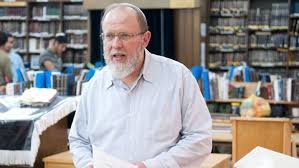
A few years ago, I went to see Rav Eli Sadan, the Rosh Yeshiva of Bnei David, a Mechina in Eli.  Maj. Roi Klein z”l, the hero who threw his body over a hand grenade in the 2006 Lebanon war to save his fellow soldiers, was a graduate of Bnei David.  So was Lt. Hadar Goldin, z”l, as was Col. Ofer Winter, who led the massive effort to get Goldin back after he was kidnaped and killed in the last Gaza war.  A growing number of officers in the IDF are products of Eli.  It seemed to me that something very special is happening in the yeshiva and I wanted to meet its founder and visionary to better understand what it might be.

Rav Sadan explained to me that in his yeshiva they teach the classic curriculum of Gemara, halacha and mussar; however, underlying all that they study is a common set of values and motifs they want to inculcate into the young men: living with emunah, faith in Hashem, and being devoted to a life of mesirus nefesh, selfless service to Him and to His people.  Every text they encounter, every law they analyze, is looked at from the perspective of how it can reinforce, grow and help them be more inspired in their emunah and in their devotion to a life of avodah (service).  In addition to classic texts, the yeshiva spends much time studying the writings of the Maharal, Rav Kook and other who focus on these themes.


On the first day each year, Rav Sadan hands each boy a piece of paper and a pen and asks them to write their goals in five years and ten years from that point. Where do they see themselves?  What do they want to accomplish?  He then collects the papers, submitted without their names, and looks through them. Rav Sadan explained to me that every year, almost everyone writes a version of the same thing: “I want to marry a great girl, I want to have a family and I want to have a great job where I can make enough money to live comfortably.”


Rav Sadan then turns to the boys and asks a piercing a question.  What did you write in your goals and ambitions for your future that reflects that you are a Torah Jew?  Is what you wrote any different than what someone without Torah and who isn’t observant would write?  Where are your aspirations spiritually?  What are your goals in avodas Hashem and in yiras Shomayim?


Rav Sadan’s goal for his students is that by the time they leave his yeshiva, each one thinks, feels, and acts like a Torah Jew with spiritual ambitions, aspirations, and goals.  He wants them to see themselves as having a personal mission in this world, a unique calling to serve Hashem in some capacity or form.  It is said that Rav Sadan calls every graduate of Eli in the month of Elul and asks, what did you do to serve Hashem and the Jewish people this past year?  How have you made the world a better place?


Rav Sadan’s extraordinary success has revolutionized the IDF with the number of religious officers having grown tenfold since he began.  Last year, he was awarded the prestigious Israel Prize in recognition of his great contributions to Israeli society.  I walked away from the meeting very inspired, and the following year we were proud to host Rav Sadan for a Shabbos in Boca where, among other things, he met with our educators and leaders to share his approach.


I was reminded of Rav Sadan and his wonderful Mechina in Eli when I read a very provocative blog post this week.  Eitan Gross, a high school student who describes himself as a modern orthodox teenager, writes:


As kids, we are proactively exposed to media and entertainment that is anti-religious and contrary to Halacha. Is it realistic to assume that a teenager’s value system will not be corroded by the endless subtle and not so subtle attacks on Torah true values?


Aside from the challenge of not letting the modern world negatively affect our inner world, the supposed balance between religious values and secular values seems to be much more weighted towards the secular than the religious.


Modern Orthodox teenagers can tell you who Kobe, Jay Z, or even Shakespeare is, but very few will know R’ Chaim Kanievsky or R’ Herschel Shachter. We’ll know the history of America in depth, but won’t know how the State of Israel was established. We’ll know how to solve complex math equations, but wouldn’t be able to read a simple mishnah. We are infested with American culture, and forget our past. We care about world values, and neglect our own. We care more about Western morals than the true morals of the Torah. We are high school students before talmidim. We are aspiring sports players before yearning Talmud scholars. We are college graduates before yeshiva bachurim. We are Modern before Orthodox.


Many in our communities take up the attitude that G-d’s laws are a burden (or even immoral in certain cases) so they simply write off areas of Halacha as if they don’t apply. Of course, their kids get the message and proceed to pick and choose whatever is comfortable for them as well. And for the laws that are being kept, we treat them as if they are a checklist — Say Modeh Ani, check. Wash hands, check. Then go to davening, look on my phone and wrap my Tefillin before Aleinu because I’m so eager to get on with my day, but it still counts because I said Shema and Shemonah Esrei, right? Check.


We are so addicted to the secular world that Hashem is never given a chance.


You may disagree with his analysis or formulation, but I believe Eitan is on to something and we cannot dismiss his heartfelt and sincere plea to provide him and his peers with an education, community, and hashkafa that gives a relationship with Hashem a chance.


If Rav Sadan gave us a blank paper and pen, and asked us to record our dreams, goals and aspirations for the next month, year, or decade, would they include being a better eved Hashem, davening with more kavanna, improving our emunah and bitachon, living with more yiras Shomayim, or would they just list losing weight or getting in shape, earning more money, buying a bigger house, getting a nice car, and taking better vacations. To be sure, all of these are reasonable and in some cases admirable goals, but none of them reflect our core identity as Torah Jews.


There continues to be a great deal of discussion regarding the tuition crisis, and it deserves to continue to be addressed.  But, Eitan brings our attention to a parallel crisis, one more urgent and much less comfortable to deal with meaningfully.


In our parsha, Avraham is described as “Ha’ivri.”  Rashi explains that this title derives from the fact that he comes from “mei’eiver ha’nahar,” from the other side of the river.  Avraham is an immigrant to Cana’an.  Nevertheless, the midrash tells us he was called an “ivri,” and we continue to be labeled “ivrim,” not as a geographical description but an existential one. Avraham loved people, he was a selfless and devoted giver and he was dedicated to all of humanity, not just his family.  However, when push came to shove and everyone stood on one side of an issue that ran contrary to what Hashem wanted, Avraham had the courage, fortitude and faith to stand mei’eiver, on the other side.


When there is a conflict between our Western values and our Torah ones, which side do we stand on?  When there is tension between being modern and being orthodox, which side are we on?  As the progeny of Avraham we carry within our DNA the capacity and strength to be mei’eiver, to stand on the unpopular side; the question, though, is will we?  Eitan and his peers are counting on us to.


The Jewish Community & Drug Addiction: Al Cheit for Not Listening, Not Learning and Not Acting

This week, our community joined too many others who have confronted the impossible task of saying goodbye to a young person stolen from this world, robbed from us by the dreaded illness of addiction.  In her 23 years on earth, Miriam made an indelible impression on so many who already miss her terribly.  While we were coronating God, Miriam’s soul ascended to join Him on Rosh Hashana.


The faces of the countless people who attended her funeral carried immense grief, profound loss, but also great fear.  For many of her peers, this was not the first time saying goodbye to a friend who had succumbed to addiction—a challenge which can be managed, but never fully conquered.  Some looked frozen by the realization that this could be them, that it may just be a matter of time until their family gets that dreaded call or makes that horrific discovery.  There were parents who have given every form of love and support to their children who were or are struggling and yet looked so helpless and even hopeless.  One described to me the stress and anxiety of waiting every moment of every day to get a phone call that will turn their lives upside down forever.


In just a few days, when we confess al cheit on Yom Kippur, I will be adding a few more this year.  Al cheit for our ignorance.   Al cheit for our indifference, even if unintentional.  Al cheit for not showering enough love, care and support to those gripped by the terror of a life of addiction.  Al cheit for not looking out for those falling between the cracks, those that may struggle to excel in the ways that our society has defined as successful, but who have so much to offer in other ways.   Al cheit for not being there for our young people or their family members who are suffering from their loved one’s disease more than we could ever know.  Al cheit for not listening, for not learning, for not acting.


The Jewish community must do more, we must do better.  I don’t know what the solutions are yet, but I do know it begins by acknowledging the problem and vowing to solve it.  The first step is to increase awareness and it is in that spirit that Miriam’s parents asked me if I would share the eulogy I delivered for their special daughter.  May Hashem give them strength.


May 5778 be the year that we all do our part in our schools, shuls, communities and in our homes to help our young people be safe, healthy and prosperous.


Hesped for Miriam Orlan a”h


Miriam Esther bas Avraham Yitzchak


Darcho shel olam, the way of the world is for children to gather to say goodbye to parents; parents are not supposed to be standing graveside to say goodbye to their children.  Zachreinu l’chaim, melech chafetz ba’chaim…for these ten days, three times a day we beseech God to remember us for life.  We refer to Him as the King who cherishes life.  And yet, our zachreinu l’chaim has so abruptly turned into a yizkor Elokim, a hope for a rich life transformed into a prayer for the memory of someone no longer.  It is beyond painful, tragic and almost incomprehensible that we find ourselves standing here today to give kavod acharon, to say goodbye to a precious young woman, a special neshama, Miriam Esther bas Avraham Yitzchak, who has left the world way too soon and before her time.


Devora and Avi – Miriam knew how much you loved her and how deeply you cared about her.  She cherished your love in all forms, affectionate love and tough love, because she knew you were concerned only for her.  There are simply no words we can offer that can ease your pain or comfort your aching soul.  All we can do is pray that Hashem gives you the strength to know that you did all that you could and the courage to endure this horrific moment.


Sara and Yitzchak, Doniel, Penina and Tal – Miriam felt your love and commitment to her and she loved you.  We pray that the fun times, laughter, happiness and joy you had with her will shape your memory of her and that you somehow find comfort during this time.


Mrs. Orlan, Mrs. Phillips, Perel, Shmuly and all of Miriam’s family – you were each part of what gave Miriam strength and courage over these last years.  Miriam had wonderful qualities and virtues, undoubtedly due to your influence and the model you each set.  We pray this will be a source of comfort and consolation.


There is great soul-searching, reflection and even cheshbon ha’nefesh that our community must undertake in the wake of this tragedy.  We must do more and do better for the vulnerable among us, to soothe the pain of the spiritually wounded, to love and comfort the souls that are aching so that they don’t need to find solace elsewhere.  I pledge that we will take an accounting, we will listen, learn and act. But not now, not today.  Today is about our special and sensitive soul, Miriam Esther bas Avraham Yitzchak.


We are in the period of aseres y’mei teshuva, and these days of awe culminate with Yom Kippur.  Yom Kippur forces us to confront our mortality, to reflect on how fragile life is, with the hope it will motivate a more meaningful and fulfilled life.  We perform kapparos and say may the death of this chicken be a source of atonement for us.  Men wear a kittel on Yom Kippur, the garment we are buried in.  On Yom Kippur, we read from Acharei Mos, the portion that tells of the premature death of Aharon’s two sons.  We read the story of the asarah harugei malchus, the ten martyrs.  We recite vidduy on Yom Kippur, just as a person does at the end of his life.  We deny ourselves physical comfort and pleasure as if we no longer have a body.  Lastly, the Talmud tells us Yom Hakippurim atzmo m’caper, u’misah m’chaperes, Yom Kippur atones, and death atones.  There is an undeniable connection between Yom Kippur and death that is meant to inspire life.


But there is another way of interpreting these customs and observances.  On Yom Kippur we are focused not on death, but rather, we are focused on life, our real lives, the true us, not the illusion of this world.  For 364 days a year, we live in this physical world, but for 25 hours, we transcend it, we are a soul free of the pleasures of this world, unburdened by the urges and temptations of the body.  For one day, we taste what it will mean to be an unencumbered soul: pure, good, and noble.


Some souls can’t wait to get back to the physical world, to indulge and to be carefree.  Other souls, like Miriam, feel the pain of the world, of the people around them, and carry all that pain, making reentry difficult, if not impossible.  Miriam was born with an insatiable appetite.  From a young age, she loved to take it in.  She enjoyed good food, deep conversation, close relationships.  She loved to indulge in what life had to offer.


There is no doubt she was passionate. But what made Miriam special is not her passion, but her compassion.  Miriam was caring, sensitive, loving, and had a seemingly endless capacity for empathy.  She genuinely felt the pain of people around her and carried it like it was her own.  She was pained for people around her who were hurting.  She even felt the pain of little chickens and of bees, and that is why for a long time she was a vegan who refused to eat animals or even the honey they produced.


Miriam was politically astute and instinctively always rooted for underdog.  She didn’t judge, she didn’t criticize, she just loved.  She had a gutta neshama, a neshama not from this world, a neshama that couldn’t handle the pain of this world.


The Rambam uses a very unusual word in the beginning of the 7th chapter of hilchos teshuva.  “Yishtadeil adom la’asos teshuva, a person should try to repent.” He doesn’t say “accomplish teshuva,” he says yishtadeil, try, do your best, battle and don’t ever give up.  Miriam battled since she was 14 years old.  She never ever thought she would become a statistic, a victim of this dreaded disease.  It took enormous physical and emotional energy to fight and to battle, daily.


Miriam Esther bas Avraham Yitzchak must not be remembered for a battle she lost, but for the countless battles she won.  She went to cosmetician school, she moved to New York, and built a life for herself.  She had a good job as a beloved nanny for a wonderful family.  She was a loyal friend and a dedicated daughter, devoted granddaughter, sibling and aunt.  She was beloved to so many on whom she had a great impact.


While the pain for you, her beloved family, is beyond words or even consolation, I hope and pray that you find strength in knowing that Miriam’s soul is no longer encumbered by this world, she is no longer burdened by pain, that of hers or that of others.  While this Saturday night at Havdalah, we will return from Yom Kippur into this world, Miriam Esther bas Avraham Yitzchak will now remain a pure, pain free soul forever.


T’hei nafsha tzerura b’tzror ha’chaim


Remembering Hashem When the Crisis Passes


The sitting and waiting was becoming unbearable.  A week of preparations, warnings, and constantly tracking a shifting cone can leave you exhausted even before the hurricane begins.  It is easy to stay calm and confident until the many wonderful, well-intentioned people and organizations around the world let you know they are holding Tehillim rallies for your survival.

The checklist of preparations before a hurricane is intense  – buy water, batteries, gas, flashlights, take in outdoor furniture, put up shutters or plywood, fill bathtubs, and more.  Yet, with all the preparations, we are powerless from actually influencing the storm.  The meteorologists and media can talk about and analyze the storm, but they cannot direct it.  Nobody can—not scientists, not the Army or Air Force, not even great kabbalists.  The key to the strength and trajectory of hurricane Irma belonged exclusively to the Almighty and nobody else.  And that is why our community turned to Him.  When the shutters were hung and the supplies purchased, we gathered in the Shul for a heartfelt plea to the Ribono Shel Olam that the monster category 5 storm that was heading our way and threatened our very lives be redirected and downgraded and spare not only us, but all.


Mi yichyeh u’mi yamus…mi ba’mayim, who will live and who will die…who by water?  While our tehillim rally took place two weeks before we would recite these profound words in U’nesaneh Tokef, they were poignantly on our minds and in our hearts that night.  The intensity of tefillah in the countdown to a catastrophic hurricane surpassed even ne’ilah in its intent and sincerity.


As Sunday progressed and the winds and rain picked up in Boca Raton, we closely followed the movement of Irma and its impact on our neighboring communities.  We watched Miami get hit hard from the storm surge and heard of the power outages as the storm made its way north towards us.  When it finally arrived, the rain went sideways and the wind howled. Trees landed on houses and cars, windows smashed and broke; for many, the electricity is still out.  The Shul parking lot flooded and a massive tree crashed into our gate.  But most importantly, nobody from our community was hurt, all are ok, and the devastation and destruction that threatened us never materialized.


We recognize that not all who davened they be spared were answered in the affirmative as much as we were.  We continue to pray for their well-being, their safety, and that recovery efforts go smoothly.  Nevertheless, there is something incredibly special as a community in palpably feeling that our tefillos were answered and that Hashem said YES to our heartfelt pleas. Modim anachnu lach…al nisecha she’bechol yom imanu, we are forever grateful to You Hashem, for Your miracles that are with us each and every day.


A man is late for an interview and he’s been driving around the block for 20 minutes trying to find a parking spot.  Running out of time and in great desperation, he looks to the heavens and says “God, if you help me find a parking spot right now, I’ll never speak lashon hara again, I will always make it to shul on time and I will give generously to tzedaka.”  Just then, a parking spot opens up right in front of the building in which he is having his meeting.  He sees the spot, looks back up to the Heavens and says, “never mind God, I found one.”


We bang on the bima to say tehillim when there is an emergency or a terribly ill individual.  We send an email notice and sign people up to complete sefer Tehillim in times of great need.  But do we equally rush to gather and sign up to say Tehillim as an expression of gratitude when everything turns out ok?  Or, like the man, do we say, never mind Hashem, ignore the promises we made at the Tehillim rally—as it turns out, the hurricane wasn’t that bad after all.


Throughout the storm, I kept watching a large tree as the wind whipped through its leaves and its branches and made it bend until it seemed at times like it reached a ninety degree angle.  I was sure it was going to snap.  At one point, I heard a loud crack and knew a tree had snapped.  I looked outside at my tree but it was still stubbornly standing tall.  It was the tree next to it that broke in half and fell to the ground landing with a loud thud.  I wondered why one tree endured and the other couldn’t withstand the wind, and then I remembered what the rabbis taught us.


לעולם יהא אדם רך כקנה ואל יהא קשה כארז – A person should always be soft like a reed, and not stiff like a cedar (Ta’anis 20a).   A reed is soft and flexible and, therefore, when it confronts winds and the elements, it endures.  A cedar is stiff and rigid; as a result, even an unimpressive wind can knock it over.  When hardship comes, when we face challenges, we need to go with the flow, put our trust in Hashem and adapt to what He throws our way.  When we are rigid, we tighten up with fear, angst and a lack of trust, and it becomes easy to be knocked right over.


When surveying the downed trees, one cannot help but notice a second difference.  The trees that stayed up, like the palms, are not only flexible and bendable, but they have deep roots that hold their foundation steady.  The trees that have very shallow roots, however, like the ficus, tip right over, as there is no foundation to hold them strong.


To weather the storms life throws our way, we must never forget how deep our roots go.  We have an incredibly strong foundation that can hold us up against any wind, as long as we remember where we come from and tap into the tradition of not only praying to Hashem in times of need, but thanking Him in times of goodness and joy.


May our cries of ya’ancha Hashem b’yom tzara, answer us Hashem on our day of crisis, always be followed by a feeling of tov l’hodos laShem, it is good to thank Hashem.


We are All in the Cone of Uncertainty Always and Should Pray Like It

If you live in South Florida, when you hear the word cone this time of year, you don’t think of ice cream, but hurricane highway.  When a new storm develops and begins heading towards making landfall, the experts offer their best projections of where it is going and when it will get there.  The “cone of uncertainty” is formed, and with each periodic update the communities and people in its path desperately look to see if they are still projected to sustain a hit.  As long as one remains in the cone of uncertainty, there is an unavoidable angst and the tortuous process of waiting and anticipating what is to come.


Just a week after Harvey devastated Houston, Irma threatens our Boca Raton and South Florida communities.  Larger than the country of France, this massive and powerful storm has elicited and inspired a sense of urgency and a tremendous response.  Gas lines are endless, many stores have sold out of supplies, and people are panicking and legitimately afraid.  A sizeable segment of our community has left.  Some flew, others took the Auto Train, and many have just gotten in the car and driven north.  The Jewish community of Atlanta, led by Rabbi Adam Starr and Rabbi Ilan Feldman, has been absolutely incredible and has taken in several hundred families.  They mobilized rapidly and extended themselves to us generously and we couldn’t be more grateful to them.


The shaylos have been pouring in.  Can I leave my radio and TV on over Shabbos?  How will I know if the eruv is down?  If we lose power can I carry a lit candle or flashlight?  Can I add fuel to my generator on Shabbos?  What if I am powering a refrigerator holding someone’s critical medicine?  Fascinating and sad questions, to be sure, but the most moving question I received came this afternoon from a man in our shul whose neighbor is an elderly woman, with no family, living in an old home with an old roof.  His family invited her to stay with them but she stubbornly insists on riding out the storm in her house by herself.  With great concern in his voice, he called to ask me if it would be appropriate to physically pick her up and take her to his house since once the storm comes, nobody would be able to come rescue her should something God forbid happen.


The preparations are enormous, but they are only about protecting ourselves; unfortunately, we can’t actually do anything to prevent or redirect the storm.


Shortly after creation, God told Adam to multiply and to conquer His world.  Indeed, He has given us the keys to understanding His universe and with each scientific, medical or technological breakthrough, we come closer to conquering it.  But, there are three keys that God kept on His keyring and refused to share with us.  “Rebbe Yochanan said: Three keys the Holy One blessed be retained in His own hands and Has not entrusted to the hand of any messenger, namely, the Key of Rain, the Key of Childbirth, and the Key of the Revival of the Dead” (Ta’anis 2a).  In truth, the three exceptions are really one.  God has held onto the ability to provide, sustain and resurrect life.


This insight of our rabbis nearly two thousand years ago stands out as profoundly true today.  With all that we can master, manipulate and control, the weather remains an enigma and a mystery.  We identify that a catastrophic storm has formed, but not only do we lack the capacity to dissolve, disrupt or redirect it, we cannot even predict where it will go with any true sense of accuracy or precision.


There is a whole lot we can and should do to prepare for the storm – buy batteries, water, flashlights, take in outdoor furniture, put up shutters – but we are powerless from directly influencing the storm.  The meteorologists and media can talk about the storm, but they cannot impact it.  Nobody can, not scientists, not the Army or Air Force, not even great kabbalists.  The key to the strength and trajectory of hurricane Irma belongs exclusively to the Almighty and nobody else.


When it comes to other crises or emergencies, there is hishtadlus, effort and initiative we can take to solve and resolve the challenge.  The effort and impact we make fool us into thinking that the doctor alone healed the patient or the shadchan deserves the full credit for making the shiduch.  With a hurricane, because the only initiative anyone can take is to protect themselves, not to direct the storm, it should be more obvious and easier to recognize the importance and need to turn to the Key Master and beseech Him to send the storm elsewhere, in a way nobody is threatened or hurt.


On all the checklists and preparation charts provided by agencies and organizations, prayer never appears.  Nevertheless, it should be at the top of our list, not in place of other preparations but certainly in addition to them.  I urge everyone to do what should come naturally at this critical time – ask Hashem from the bottom of our hearts to turn the storm out to the ocean and spare us, our community, and all humanity.


L’Dovid Mizmor, Tehillim 27 that we recite in the morning and evening from the beginning of Elul until Simchas Torah ends with the pasuk “kavei el Hashem, chazak v’yameitz libecha v’kavei el Hashem — put your hope in Hashem, strengthen yourself and get the courage to put your hope and faith in Hashem.”  Why the redundancy?  If we have placed our hope in Hashem, why does the pasuk call on us to do it a second time?  Our rabbis (Berachos 32b) explain: “if a person sees that they prayed but they were not answered, let them return and pray again.”


In his new sefer on Emunah and Bitachon, Rav Asher Weiss explains that we learn from this pasuk that when our prayer doesn’t immediately yield the results we want, it doesn’t mean we received a no, it means we need to go back and pray again, with more fervor and greater concentration.  One must never give up on prayer, never concede that it wasn’t answered, or stop believing that there is someone worth praying to.


Our rabbis teach (Berachos 2b) that one who recites the Amidah right after saying Ga’al Yisrael, the blessing on redemption, is guaranteed the world to come.  Why is connecting the two themes with no interruption so important?  Rabbeinu Yonah explains that the prerequisite to sincere prayer is the belief that there is someone listening and that He, and He alone, determines if our prayers are heard and what our future brings.  Before we say the Amidah, we recite the blessing that recalls a time when the Jewish people called out to Hashem and He responded by redeeming them.  On the heels of that precedent we pray that we, too, will be heard and that Hashem will intervene on our behalf as He did for our ancestors.


Says Rav Asher Weiss: “Prayer and faith depend on each other.  Prayer is the highest expression of faith and faith obligates prayer, for if in fact a person believes that Ein od milvado, there is nothing in the world but Him, and that He is all powerful and all knowing, that person will put his faith in Him and will feel compelled to pray to Him with all his heart.”


As we in South Florida prepare for Hurricane Irma, it occurs to me that in truth, we aren’t the only ones in a cone of uncertainty.  True, if you don’t live on the East Coast or in the gulf area, you can be confident you won’t be hit by this hurricane. But who knows what could hit you personally or collectively with little warning or projection.  We all live in a cone of uncertainty at all times and should channel our sense of vulnerability and mortality into turning towards Hashem, the only certain in this world.


While Irma is unwanted and should go elsewhere, the renewed intensity of prayer that she is inspiring is most welcome, especially this time of year as we gear up for sitting before the Almighty in judgement.


Kavei el Hashem, we put our hope in Hashem and then we check the next advisory and when we see ourselves still sitting in Irma’s path, chazak v’yameitz libecha, we strengthen ourselves and find the courage to once again v’kavei el Hashem, put our faith and hope in Hashem.


We pray that in the merit of our turning towards Hashem at this urgent time, the next advisory will show Irma turning away from us.


How a Shabbos Meal Turned a White Supremacist Against Bigotry and How it Can Turn Your Hate to Love

Image result for derek black
(Matt McClain/The Washington Post)

The United States was hit by two disasters over the past two weeks.  One was natural, and the other was man-made.  One left devastating damage as the result of strong winds and hard rain, while the other left horrific damage resulting from hate and discrimination.  One caused hopelessness, while the other provides great reason to hope.


Texas, and the Houston community in particular, continues to reel from the devastating and historic flooding that resulted from Hurricane Harvey.  The loss of life, destruction of property, and displacement of people give tremendous reason for sadness and sorrow.  And yet, a sub-story of this disaster is how it has united a nation in the midst of experiencing distressing divide.  The whole country has not merely fixated its attention on the victims of Harvey as spectators, but has stepped up impressively to donate money, coordinate help, and plan for recovery efforts.  The images and videos of everyday people risking their lives to rescue others, and the stories of people opening their homes to take in now-homeless families, are not only heartwarming, but are great reason to maintain faith in the goodness of people and hope in the future of our great country.


While we certainly don’t welcome this hurricane, the sense of unity it has generated and the basic goodness and kindness in man that it has elicited could not come at a better time.  Just two weeks before Harvey made landfall, a tsunami of hate hit America when neo-Nazis and white supremacists rallied in Charlottesville resulting in violence and even death.  The president’s failure to unequivocally and categorically reject these extreme groups and their racist and anti-Semitic agenda without qualification or comparison to others was celebrated by those very groups as a victory.  While he later clarified his condemnation of these hate and extremist groups, the damage of the moral ambiguity of his initial response had been done and caused many to have grave concerns about a growing divide in America.


How can we heal from this sad and concerning episode?  What can we do to marginalize and ultimately eliminate these views?  How can we be hopeful when events make us feel hopeless?  We must examine our hearts and words for the presence of our own sense of supremacy over others and hate for those who are different than us.  Obviously, we must stand for and with those who are the targets and victims of hate.  But must we accept that there are hateful people, or is there a way to actually change the minds of those who hold these views and eliminate hate, be it grounded in race, religion, politics or no reason at all?


Derek Black was literally raised on hate.  His father, Don Black, was the founder of Stormfront, the internet’s largest white supremacist website, with over 300,000 users. His mother, Chloe, had previously been married to David Duke, who was Derek’s godfather.  As a young man, Derek launched a popular white nationalist website for children and quickly became a leader in the greater movement.  When he spoke at a white supremacist conference, he was introduced as “the leading light of our movement.”


When Derek enrolled in New College of Florida, a top-ranked liberal arts school, he kept his extremist views and KKK affiliation to himself, even while continuing to host his supremacist radio show.  One night in April 2011, a fellow student was Googling hate groups online when he came across Derek’s picture.  It didn’t take long for the word to get out and by the next semester he was a pariah.  Nobody would talk to him or even come near him and he avoided public places or events for fear of hostility given his views.


One of Derek’s acquaintances started reading Stormfront and listening to Derek’s radio show to get insight into Derek’s thinking.  Then he did something radical, unexpected, and uncomfortable.  He texted Derek, “What are you doing Friday night?” The classmate was Matthew Stevenson, the only Orthodox Jew in the school.  He hosted weekly Shabbos dinners in his campus apartment and decided to invite Derek.  Though he initially debated if it was a good idea, he decided if Derek is going to hate Jews, he might as well meet one and know more about them.


Derek accepted the invitation and arrived with a bottle of wine.  Nobody at the meal mentioned white nationalism or his involvement with its movement.  Derek enjoyed the meal and came back the next week and then the following one, until after a few months his fellow guests at the Shabbos meals became his friends.  Eventually, a strong enough relationship was built that the topic of his beliefs could come up.  Conversations ensued in which Derek’s beliefs were challenged in a respectful way.  His assertions were challenged by data, studies, evidence, and facts and one by one they were dismantled leaving Derek increasingly confused.  He stopped posting on Stormfront and gave up his radio show.  By his final year of college, he was taking classes in Jewish scripture and feeling totally disconnected to white nationalists and their beliefs.


After graduating, he decided to publicly disavow all that he had formally subscribed to and promoted, and he published a bold statement:


A large section of the community I grew up in believes strongly in white nationalism, and members of my family whom I respect greatly, particularly my father, have long been resolute advocates for that cause. I was not prepared to risk driving a wedge in those relationships. After a great deal of thought since then, I have resolved that it is in the best interests of everyone involved to be honest about my slow but steady disaffiliation from white nationalism. I can’t support a movement that tells me I can’t be a friend to whomever I wish or that other people’s races require me to think of them in a certain way or be suspicious at their advancements.  The things I have said as well as my actions have been harmful to people of color, people of Jewish descent, activists striving for opportunity and fairness for all. I am sorry for the damage done.


When his father saw the post the next day, he told Derek, “You have been hacked.”  Derek explained to his father that it was in fact real and was how he felt.  His father was in physical pain.  He felt betrayed.  Their relationship has been frayed and barely existent since then.  Derek went on to earn a Master’s degree and essentially build a new identity and life.  The young man who was once the heir to the mantle of leadership of the entire white supremacist movement became an outspoken opponent of racism, bigotry, anti-Semitism and hatred. How did it happen?  An invitation to a shabbos meal.


The Torah endorses loving people.  On the other hand, it condones hating those who are evil.  How do we reconcile these two imperatives?  Rav Shneur Zalman of Liadi, the founder of Chabad, writes in his Tanya (32): “It is a mitzvah to hate them, and it is a mitzvah to also love them. Both are true. You hate the yetzer hara, the evil inclination that’s in them, and you love the goodness that is concealed in them, which is a spark of Godliness.”


Perhaps the best way to persuade someone to abandon his beliefs is to reject only his beliefs but remain open to the Godliness and potential in him.  With the foundation of a relationship, genuine conversation can take place bringing with it the possibility of persuading someone to abandon or even reject what she had previously believed.


I am not suggesting we invite members of the KKK for a Shabbos meal or that a bowl of chulent and piece of potato kugel can solve the challenges of bigotry and hatred in this country and others.  But, perhaps we can learn from Derek Black’s story that people are capable of change and that we shouldn’t give up hope even when someone subscribe to beliefs we find repulsive and abhorrent.


While I wouldn’t recommend inviting neo-Nazis for a Shabbos meal, I strongly encourage you to invite into your home those in our own community with whom you disagree or even, God forbid, feel animus.  Never underestimate the power of a Shabbos meal to build a relationship, find common ground, and replace hatred with love.


Tisha B’Av: Turning Mourning into Action

This article first appeared on aish.com


On April 11, 1944, a young Anne Frank wrote in her diary:

Who has made us Jews different from all other people? Who has allowed us to suffer so terribly until now? It is God Who has made us as we are, but it will be God, too, who will raise us up again. Who knows – it might even be our religion from which the world and all peoples learn good, and for that reason and that reason alone do we now suffer. We can never become just Netherlanders, or just English, or representatives of any other country for that matter. We will always remain Jews.


Anne Frank was on to something. The Talmud asks, from where did Mount Sinai derive its name? After offering a few alternatives, the Talmud suggests that Mount Sinai comes from Hebrew word “sinah” which means hatred, because the non-Jews’ hatred of the Jews descended upon that mountain when the Jewish people received the Torah there.


Torah demands a moral and ethical lifestyle, an attitude of giving rather than taking, a life of service rather than of privilege, that has revolutionized the world. The Jewish people have been charged to be the moral conscience of the world, a mission they have not always succeeded at, but that nevertheless drew the ire, anger and hatred of so many. For two thousand years the Jews were bullied and persecuted simply because of their Jewishness and all that stands for.


After the Holocaust, the world gave the Jews a reprieve from their hatred, becoming instead beneficiaries of their pity. But looking at events around the world, it is rapidly becoming clear that the last 70 years was an aberration. We are witnessing the rise of anti-Semitism, particularly in Europe, as the world reverts back to its ageless pattern and habit.


The Midrash (Eichah Rabbah 1) teaches that three prophets used the term “eichah” – o how! In Devarim, Moshe asks: “Eichah, how can I alone bear your troubles, your burden and your strife?” (Deut. 1:12) In the Haftorah for Shabbos Chazon, the Prophet Yeshayahu asks: “Eichah, how has the faithful city become like a prostitute?” Lastly, Yirmiyahu begins the Book of Eichah: “Eichah, how is it that Jerusalem is sitting in solitude! The city that was filled with people has become like a widow…”


Eicha – How? How is it that anti-Semitism persists? Why must they rise up against us in every generation? On Tisha B’Av we will sit on the floor and wonder aloud, eicha? How could it be Jews in Eastern Europe have to fear for their lives yet again? Eicha – how could it be that today, with all the progress humanity has made, the ADL measures more than a quarter of the world as holding anti-Semitic views? Eicha – how could it be that terror persists, that three members of family gathering together on Shabbat to celebrate a shalom zachor could be murdered in cold blood?


Our job is to make sure we can answer the call of ayeka, where are you? Are you taking responsibility?


Rabbi Soloveitchik tells us that though the Midrash identifies three times the word eicha is used, in truth there is a fourth. When Adam and Eve fail to take responsibility, God calls out to them and says ayeka, where are you? Ayeka is spelled with the same letters as eicha, leading Rabbi Soloveitchik to say that when we don’t answer the call of ayeka, when we don’t take personal responsibility for our problems and blame others, we will ultimately find ourselves asking eicha, how could it be?


We can ask eicha, how could all of these terrible things be, but we may never have a definitive answer. Our job is to make sure we can answer the call of ayeka, where are you? Are you taking responsibility?


We may not be able to fully understand why anti-Semitism exists, but we can and must remain vigilant in fighting it. We must remain strong in standing up for Jews everywhere. We must confront evil and do all we can to defeat it. And, we must do all that we can to take personal responsibility to fulfill the Jewish mission to bring Godliness into the world.


If individual Jews were hated for being the conscious of the others, all the more so does a Jewish country generate hate for being the moral conscious of the whole world, held to higher moral standards than any other country or state.


Our job is not to be discouraged by asking eicha, but to ensure that we can answer the call of ayeka. Anti-Semitism will not come to an end by assimilating and retreating. It will come to an end when we can positively answer the question that the Talmud tells us each one of us will be asked when we meet our Maker: did you long for the redemption and did you personally take responsibility to do all that you can to bring the redemption? Did you truly feel the pain of exile and feel the anguish of the Jewish condition in the world? Do you truly and sincerely care? Did you anxiously await every day for Moshiach to herald in an era of peace and harmony, an end to anti-Semitism and suffering?


It is not enough to long for Moshiach, we must bring him. It is not enough to hope for redemption, we must be the catalyst for it. It is not enough to be tired of eicha, we must answer ayeka.


If we want to get up off the floor and end the mourning, if we want to finally end anti-Semitism, it is up to us to do what is necessary to heal our people, to repair the world, to love one another, and to earn the redemption from the Almighty.


The Absolute Wrong Reaction to Israel’s Recent Controversial Decisions

Six million is an impossible number to fathom.  We can picture 60 or 600 people in a room, and maybe even identify with being among 6,000 or even 60,000 in a stadium, but beyond that, the number is simply beyond our experience and therefore our comprehension.  That is why, standing in Majdanek last week in the barrack filled with shoes, I suggested to the members on our BRS trip that they fix their eyes on one shoe.  Examine the size, color, design, and picture the person who wore that shoe. Try to imagine what went through their mind when they walked in that shoe into this horrific place.

In her testimony about arriving at Majdanek, Judith Becker talks specifically about shoes:


Shoes are the most important thing you owned, if you owned it, in the camps, because if you didn’t have shoes your feet got sore and once you had sores on your feet, they didn’t heal.  You couldn’t keep up the pace and you might as well have died.  You were finished… I am sure that every survivor’s story has something about shoes because they became a matter of life and death.  (Yad Vashem Archives)


The importance of shoes in the camps had extra resonance for me on our trip because just a few days before we left, I unexpectedly underwent minor surgery to remove a foreign body from my foot.  Baruch Hashem, I was able to wear a shoe just in time, but each step was painful and I wobbled around the sites we visited, moving slower and more gingerly than usual.


Standing in that barrack of shoes at Majdanek, and later in front of the display of shoes at Auschwitz, I couldn’t stop thinking about the prisoners who were denied decent footwear and the pain, suffering and degradation they endured from that alone.  What happened to someone who stepped on a foreign body in those places?  If Judith Becker is right, they were finished, they couldn’t keep up the pace and, they might as well have died.


Every morning we say the blessing, “she’asah li kol tzorchi,” blessed are you God who has provided my every need.  We follow it up by acknowledging God as the One who is, “ha’meichin mitzadei gaver,” who firms man’s footsteps.  Though we say these as part of the series of Birchos HaShachar, morning blessings, the Talmud (Berachos 60b) actually prescribes the recitation of these blessings in conjunction with putting on our shoes in the morning.  In proclaiming them, we acknowledge Hashem’s benevolence in allowing us to function independently and to be mobile so that we can accomplish, achieve, travel, and enjoy His world.


In one of the barracks of Birkenau, our trip’s remarkable educator, Dr. David Bernstein, held up two contrasting pictures to illustrate a poignant point.  The first is a 1942 scene of a helpless man wrapped in a tallis being cruelly taunted and tortured by the Nazis in the village of Lukow in central Poland. The man, whose yarmulka has been removed, is looking down, with his hands in the air, as if surrendering.  He was murdered a short time later.


(Yad Vashem)

The second picture is of that man’s grandson.  He is wearing a uniform.  It is not one of a prisoner in a concentration camp, but the uniform of the IDF, the Israel Defense Forces.  His name is Meir Dagan a”h and he rose to become a general in the Israeli army and then director of the Mossad.  Throughout his career, he kept the photograph of his grandfather on the wall of his office.  When eulogizing General Dagan, Prime Minister Netanyahu referred to the picture of his grandfather and said, “Meir was determined to ensure that the Jewish people would never be helpless and defenseless again and to this end he dedicated his life to building up the strength of the state of Israel.”


(Getty Images)

Our week in Poland was physically and emotionally grueling.  Visiting mass graves, former ghettos, and walking through death camps tore us apart and gave us a tiny glimpse into the suffering, torment, and devastation our people went through.  Traveling with many children of survivors enhanced the trip greatly, as the stories they told made the places we visited much more vivid and real.  Obviously, the Holocaust must be studied, mourned, and shared as a discrete part of our communal, collective history.


Nevertheless, the recognition of just how blessed we are to live in the time of the miraculous modern State of Israel is inescapable, even—or perhaps especially—on a trip like this.  Our ancestors had no place to run, no one to welcome them with open arms, no place to provide refuge and nobody to protect them.  While many lacked shoes literally, they were also metaphorically barefoot: immobile, vulnerable, and utterly dependent on others.


Israel and the IDF are the shoes of our people, providing us all with protection, independence and safety, not only in Israel, but around the world.  When Jews are held hostage in Entebbe, it is the IDF who pulls off a courageous and miraculous rescue.  When Jews are finally able to escape from behind the Iron curtain, it is Israel that absorbs them.  And when Jews need to be transported from Ethiopia, it is Israel who brings them home.


I was in Poland when I read about the escalation of controversy coming from Israel due to two recent decisions.  I am greatly sympathetic to the pain and anguish of so many of our Jewish brothers and sisters as a result of these policy decisions and from the reneging on the deal that was struck and agreed to.  No matter how complicated these issues, I understand their desire to be recognized and to have access.  I respect their right to advocacy and to pursue their agenda vigorously.


What I cannot possibly understand, however, and frankly find unconscionable, is any call for withdrawing support of Israel.  As American Jews are struggling with unprecedented levels of assimilation and intermarriage, threatening our very future in this country, is anyone in America really in a position to withdraw support of Israel?


These complicated issues deserve to be addressed more fully and to a better conclusion, but in the meantime, American Jews must never make the mistake of thinking that Israel needs us more than we need her.  If God forbid tides would turn and we in America would be in danger, it is Israel and her powerful military that we would rely on to come to our rescue.  If we needed to flee and find refuge, it is Israel that we would expect to open her arms, no matter our denomination.


Support for Israel must never be a negotiating tool or a point of leverage.  We don’t tolerate calls for boycotts of Israel from our enemies and we cannot, and must not accept them from our friends, no matter the reason or motivation.  A weaker or compromised Israel is a weaker and more vulnerable Jewish people globally.


Seventy-two years ago, the greatest atrocity in history was followed a short three years later by the greatest miracle in nearly 2,000 years. Pledging to never forget means not only preventing another Holocaust, but remembering how fortunate and blessed we are to have a strong State of Israel and therefore, doing all we can to support Israel, unconditionally.


With a strong Israel, never again will we walk without shoes.


A New Study Shows That American Jewry is Disappearing. Patrilineal Descent and Intermarriage are the Problem, Not the Solution

Image result for american jewry

The startling findings of a recent Jewish People Policy Institute study drew an Ha’aretz headline of “Low Marriage Rates and Intermarriage Threaten Future of U.S. Jewry” and an Arutz Sheva’s headline asking, “Is there a future for non-Orthodox American Jewry?” The study found that outside of Orthodoxy, fewer Jews are getting married, those marrying are marrying later and having fewer children and intermarriage rates are increasing.  The combination of these three factors raises the daunting question of the future of American non-Orthodox Jews.


Shockingly, the study shows that among all non-Orthodox Jews in the 25-54 age group, just 15% are married to a Jewish spouse and have Jewish children.  An additional 8% have a Jewish spouse, but no children, 4% are single parents, 36% are single and have no children, 13% are intermarried and have Jewish children, 8% are intermarried and have non-Jewish children, and 17% are intermarried and have no children.


Intermarriage rates increase the younger the generation.  Among those aged 40-44, 60% are intermarried.  Among those aged 35-39, it is 73%, and 75% of those aged 30-34 have a non-Jewish spouse.


In contrast to the other denominations, studies show that the Orthodox community is on the rise and exhibit high levels of demographic stability.  While that conclusion is gratifying and validating, it is absolutely no cause for celebration or triumphalism.  Realize that the hemorrhaging of other denominations is not the result of Jews flocking to the Ocommunity.


Rav Aharon Lichtenstein zt”l wrote (Tradition, Spring 1982):


Nor do I share the glee some feel over the prospective demise of the competition. Surely, we have many sharp differences with the Conservative and Reform movements, and these should not be sloughed over or blurred. However, we also share many values with them – and this, too, should not be obscured. Their disappearance might strengthen us in some respects, but would unquestionably weaken us in others. And of course, if we transcend our own interests and think of the people currently served by these movements – many of them, both presently and potentially, well beyond our reach or ken – how would they, or klal Yisrael as a whole, be affected by such a change? Can anyone responsibly state that it is better for a marginal Jew in Dallas or Dubuque to lose his religious identity altogether rather than drive to his temple?


If the muscles of the left arm atrophy or the arm needs to be amputated, it is hardly a comfort that the right arm is strong and has larger muscles than ever.  Sadly, rather than an honest review and return to tradition, ritual and halacha, there has been a doubling down of the policies and ideology that have brought these results to begin with.


Some have suggested an embrace of patrilineal descent as a solution.  Others argue it is time for rabbis to officiate at intermarriages. Aside from representing gross distortions of halacha, mesorah and the will of the Almighty, these suggestions don’t actual address the core issues. They simply attempt to put a Band-Aid over a deeply infected wound that is gushing blood.  Indeed, they are the equivalent of cooking the books or manipulating earnings so that they appear to report profit instead of loss.  Recognizing patrilineal descent or accepting intermarriage just gives the illusion of addressing the problem; it doesn’t actually do anything to address the very real threat facing the future of American non-orthodox Jewry.


If one thinks the Orthodox community is unaffected by these suggested monumental shifts in policy, they are grossly mistaken. Individuals and families who will have grown up thinking they are Jewish will meet our children through NCSY or at their college Hillel and their Jewish status will come into question.  Children who apply to attend day schools or families that will seek membership in our shuls may have questionable statuses.  This potential shifts in policy and practice will not only fail to stem assimilation, but it will further divide our people.  This is not a hypothetical issue that may arise in the future.  This is happening now in our own institutions and among families in our own community.  I see these issues arise frequently – and tragically.


The antidote to these devastating demographic findings is not less adherence to halacha, but more.  When talking about the mitzvah of tzitizis, our rabbis (Bamidbar Rabbah 17:6 and see Nesivos Shalom) provide the following metaphor.  A person was once cast into the sea and was drowning.  The Coast Guard threw the person a rope and said grab on. If you hold onto it, you will survive but if you let go, you will be swept away and disappear.  Wearing tzitzis reminds us of our commitment and responsibility to a life of Torah and mitzvos.  Grabbing on to those ropes and what they stand for gives us life.  Tzitizs themselves are not the solution, but they are symbol of a lifestyle of mitzvos.   Eitz chaim hi la’machazikim bah, the Torah is the tree of life for those who grab onto it.  Let it go and you will be swept away.


The storms of change are raging around us.  The current is getting stronger and stronger and sweeping more and more people away.  The only way to stay safe, and remain true to our values, our traditions and our obligations, is to make a commitment to not only hold on to Torah, but to demonstrate a willingness to swim upstream at times, to go against the tide, to dare to be different and to be willing to stand out.  This is no easy task and takes great courage, but we have it within our very DNA because our great patriarch Avraham planted it there.  Avraham was called Avraham Ha’Ivri meaning mei’eiver, on the other side.  When the whole world took one position and stood on one side, he had the courage to stand out, remain true to the vision and will of the Almighty and to stand on the other side, even when it meant standing by himself.


The great Piacetzner Rebbe, R’ Kalonymous Kalman Shapira writes in his spiritual diary, Tzav V’Ziruz:


You cannot remain static in this torrent river just by standing firm in your place – you must actively swim against the flow.  You may not be successful in swimming upstream, but at least you will not be swept down by the flow.  So it is with spiritual life and the purity of spirit that you have attained.  You cannot retain them against the flow unless you continue to struggle for spiritual growth.  You must swim upstream without respite – upward, onward against the flow.  There may be a limit to how far you can go, but at least you will not be drawn down with the flow.


W.C. Fields once said, “Remember, a dead fish can float downstream, but it takes a live one to swim upstream.”  Those who are spiritually dead, cut off from our timeless and time tested traditions, are floating away.  We, the community who are willing to swim upstream, must not only swim harder, but we must be willing to grab on to those around us and share our life preserver (the Torah).


The potential demise of other denominations is no cause for celebration.  It is an opportunity —  and an obligation  —  to reach out and share the beauty, majesty, meaning and joy of a Torah lifestyle.  These findings demand a mass movement of outreach.  The needle won’t move and the problem won’t be solved by kiruv professionals and rabbis alone.  A difference will only be made when every Torah shul, institution and individual sees as part of their core identity and personal mission to not only hold on to the sturdy tree of Torah (eitz chaim hi la’machazikim bah) to prevent being swept down the river, but to reach out and extend a hand to those floating by.  We are proud that BRS has a dedicated outreach rabbi on our staff whose mission is not to service our members per se, but to run outreach programs, make contacts in the greater Jewish community and minister to those who are integrating into the community.


Milton Friedman, the great Nobel Prize-winning economist and professor at the University of Chicago, had a very simple suggestion for how to identify a person or institution’s priorities.  Many people eloquently describe their beliefs, values, and principles and talk about what is most important to them.  Friedman advised to ignore what they say.  If you want to truly know what someone’s priorities are, it is simple – Look at someone’s budget and you know what is important to him/her.  See how someone prioritizes their money and you will know their priorities.


We claim to care about outreach but do our institutions, shul and schools have an outreach budget?  Do we have dedicated people working on this cause?  Do we put our money where our mouth is?


This is our generation’s test; it is our challenge.  Many summers ago, I worked at Aish Ha’Torah in Jerusalem as an advisor in their Discovery program.  My friend and I were fresh out of yeshiva and when asked to recruit at a particular location that we didn’t feel was appropriate for “bnei Torah” to spend time, we resisted.  A meeting was scheduled with Rav Noach Weinberg zt”l, founder of Aish.  After some small talk, he asked us what the problem was.  We explained that we were yeshiva guys trying to work on ourselves and we didn’t feel that it would be good for our neshamos to hang out at an immodest location.  I will never forget what he answered.


He looked us in the eye and with the greatest sincerity said, “Let me ask you.  If you were in Eastern Europe and the train was leaving to Auschwitz and a woman extended her hand for you to pull her off, would you hesitate to take it because you are a yeshiva guy?!”  “Well,” he said, “the train is leaving and it is taking millions not to Auschwitz, but to assimilation and oblivion.  You need to go recruit and figuratively extend your hand to pull people off the train and redirect them from assimilation and into Discovery.”


It has been said that in Europe they killed us with hate and in America they are killing us with love.  These statistics bear out that truth and challenge us to ask ourselves, will we rise to our generations test and care enough to not only be willing to swim upstream ourselves when necessary, but to extend our hand to those around us who are being swept away.  If the answer is not a resounding “yes,” the consequences will be devastating.


Tuning In to the Sinai Frequency – Was God’s Revelation a Thing of the Past or is it a Voice Speaking to Us Today?

“Mosquito tone” is a 17 KHz sine wave that teenagers use on their cell phone to alert them when they’ve got a text message so the teachers can’t hear it. Studies say that most adults can’t hear much above the 13-14KHz range, but teenagers can.  Our ability to hear high frequencies falls as we age.

I found the mosquito tone online and played it. I heard nothing but my kids in the other room started screaming, “What is that? Turn it off!”


Adults have now struck back using the teenagers’ technology against them.  Inventor Howard Stapleton has created the Mosquito teen repellent (I kid you not). He says only a few people over age 30 can hear the Mosquito’s sound.  Stores and parks in England and Japan have begun to use it to keep teenagers from loitering.  The repellent continually plays a high frequency.  Adults can’t hear it and teenagers can’t stand it.


The most seminal moment in human history occurred when God addressed millions of people at Mount Sinai in an act of supreme revelation. Indeed, this moment was unprecedented, unparalleled and unrepeated. The Torah says,   “These words that God spoke to all your assembly in the mountain out of the midst of the fire, the cloud and the thick darkness, with a great voice which was not heard again… [v’lo yasaf]” (Deut. 5:19)


The simple meaning of the words, v’lo yasaf as explained by the Ibn Ezra and other commentaries, is that the voice and experience were “not to be repeated.”  This was a onetime only deal, an exceptional and transcendent moment in human history, never to be replicated.


On the one hand, the uniqueness of this event is significant and special.  We eternally reflect back and recognize that the moment is inimitable and unique, distinct and singular.  On the other hand, its uniqueness forces us to consider the fact that no matter how we live and whatever choices we may make we can never experience revelation like Mount Sinai again.  This generates a sense of disenfranchisement and deflates our spiritual ambition.  If God only spoke once and we missed it, how do we connect today?  How do we access the affirmation that only God’s voice can provide as to His existence and our charge in the world?


Commentators were troubled by this dilemma and offer another layer of interpretation of the phrase v’lo yasaf.  Onkelus, the famous convert who lived in the period of the Tannaim from 35 – 120, translates v’lo yasaf not as never repeated, but rather as v’lo p’sak, God’s voice never ended or ceased.  The Ramban brings a few sentences as evidence that the Hebrew root – yud, samech, fey – can mean ‘never stops.’  According to this interpretation, God spoke at Sinai thousands of years ago and his voice and message continue to carry until today and beyond.


So, which is it? Does v’lo yasaf mean God’s voice never repeated or does it mean God’s voice never ceased?


I believe the answer is up to each and every one of us.  We each have a critical choice to make.  Do we view the giving of the Torah on Mount Sinai as part of the past, a historical event and previous occurrence, or does God voice speak to us today?


Each year on Shavuos we recall the Sinai experience and challenge ourselves with the question of which interpretation best reflects our life.  Are we going to choose the reading that says the voice of God is no longer heard, or are we going to continue to listen carefully for the reverberation of God’s message in our lives? Are the events of Mount Sinai representative of an ongoing, developing relationship with God, or are they an isolated event?


In truth, God’s voice is all around us. Like the mosquito tone, a frequency is playing, the only question is if we can hear it.


Each time we open a book and challenge ourselves by learning Torah, expanding and broadening our wisdom, understanding and insight, God’s voice is reverberating. Each prayer in which we are not only physically present but spiritually invested, God’s voice is reverberating. Each magnificent sunrise or sunset that we pause to take in, God’s voice is reverberating.  Each act of kindness we share with others God’s voice is reverberating.


There is no doubt that God’s great and mighty voice is all around us.  Shavuos demands of us to consider: are we tuned into the Sinai frequency or do we simply go through the motions, and view God’s voice as something of the past?


The choice is yours to make.


The Six Day War Changed Israel, But Did it Change You?

Image result for six day war western wall

The Klausenberger Rebbe zt”l, R’ Yekusiel Yehuda Halberstam, lost his wife and eleven children in the Holocaust.  After the war, he gathered a small community of followers who had also survived, and from that small group eventually rebuilt a beautiful community.  Rabbi Shlomo Riskin describes a visit to the Beis Medrash of the Klausenberger Rebbe in the summer of 1952 when he was just 12 years old:


Then came the Torah reading. In accordance with the custom, the Torah reader began to chant the Warnings in a whisper. And unexpectedly, almost inaudibly but unmistakably, the Yiddish word “hecher – louder,” came from the direction of the lectern upon which the rebbe was leaning at the eastern wall of the synagogue.


The Torah reader stopped reading for a few moments; the congregants looked up from their Chumash in questioning and even mildly shocked silence. Could they have heard their rebbe correctly? Was he ordering the Torah reader to go against time-honored custom and chant the tochacha out loud? The Torah reader continued to read in a whisper, apparently concluding that he had not heard what he thought he heard. And then the rebbe banged on his lectern, turned to face the stunned congregation and cried out in Yiddish, with a pained expression on his face and fire blazing in his eyes: “I said louder! Read these verses out loud! We have nothing to fear; we’ve already experienced the curses. Let the Master of the Universe hear them. Let Him know that the curses have already befallen us, and let Him know that it’s time for Him to send the blessings!” The rebbe turned back to the wall, and the Torah reader continued slowly chanting the cantillation out loud. I was trembling, with tears cruising down my cheeks, my body bathed in sweat.


I could hardly concentrate on the conclusion of the Torah reading. “It’s time for Him to send the blessings!” After the Additional Service ended, the rebbe rose to speak. His words were again short and to the point, but this time his eyes were warm with love leaving an indelible expression on my mind and soul. “My beloved brothers and sisters,” he said, “Pack up your belongings. We must make one more move – hopefully the last one. God promises that the blessings which must follow the curses will now come. They will come – but not from America. The blessings will only come from Israel. It is time for us to go home.”  And so Kiryat Sanz – Klausenberg was established in Netanya where the rebbe built a Torah Center as well as the Laniado Medical Center.


The tochecha in our parsha describes the devastating result of siluk ha’Shechina, when God removes and withdraws His countenance and providence from us.  While its graphic description is, thank God, unimaginable to us, the Klausenberger Rebbe felt the tochecha was an apt description of what he and so many others had actually endured.  But it isn’t just the Holocaust that appears to be the fulfillment of the terrible consequences foretold in the tochecha. In many ways, the Jewish condition during much of the last 2,000 years, punctuated by pogroms, crusades, the inquisition and countless expulsions, provides examples of the embodiment of the harsh and cruel description the tochecha.


In the middle of the tochecha that we read this week, the Torah says:


וַהֲשִׁמֹּתִ֥י אֲנִ֖י אֶת־הָאָ֑רֶץ וְשָֽׁמְמ֤וּ עָלֶ֙יהָ֙ אֹֽיְבֵיכֶ֔ם הַיֹּשְׁבִ֖ים בָּֽהּ׃


“I will make the land desolate, and your enemies who dwell in it will be desolate upon it.”


Chazal see a silver lining, a ray of hope and optimism, even within this harsh promise.  The Sifra writes that when we are exiled from our land, it will remain desolate.  Despite being occupied by others, it will remain in ruins, and they will not succeed in making it bloom.  It is striking how accurate this promise of our parsha has been.  Over the last two millennia, despite countless efforts to make it blossom by crusaders, the Mamelukes, the Ottomans, the Turks, the Arabs and the British, Eretz Yisroel was in a virtual state of ruin.


In the mid-1800’s, Mark Twain traveled the world and wrote a book recording his impressions and experiences called “The Innocents Abroad.”  Listen to what he writes about his experience in then Palestine and compare it to what you think of when you picture traveling around Israel today.  He writes:


Of all the lands there are for dismal scenery, I think Palestine must be the prince.  The hills are barren, they are dull of color, they are un-picturesque in shape.  The valleys are unsightly deserts fringed with a feeble vegetation…It is a hopeless, dreary, heartbroken land…Palestine sits in sackcloth and ashes.  Over it broods the spell of a curse that has withered its fields and fettered its energies.  Renowned Jerusalem itself, the stateliest name in history, has lost all its grandeur, and is become a pauper village.


Six hundred years before Twain, in his commentary on our parsha, the Ramban writes:


And your enemies will be desolate upon it is a good tiding.  It proclaims in every generation that our land does not accept or enemies.  This is a great proof and promise for us, for you will not find in the entire world another land that is so good and spacious and was always inhabited but is now in such a state of ruin.  Ever since we left it, it has not accepted any other nation; and they all try to settle it, but are unsuccessful.


Indeed, the gemara (Sanhedrin 98a) quotes Rebbe Abba who teaches –


ואמר רבי אבא אין לך קץ מגולה מזה


And Rabbi Abba says: You have no more explicit manifestation of the end of days than when produce will grow in abundance in Eretz Yisrael; it is an indication that the Messiah will be coming soon. (See more in R’ Moshe Lichtman’s “Eretz Yisroel in the Parsha”)


R’ Yoel Bin Nun, the great Tanach teacher in Israel today, was a member of the now famous 55th brigade of paratroopers who liberated Yerushalayim.  When his commander, a Shomer Ha’tzair kibbutznik, asked him how he felt after taking Har Ha’Bayis, he responded “alpayim shenot galut nigmeru, two thousand years of exile are now over.”


If for the Klausenberger Rebbe, the Holocaust represents the fulfillment of the tochecha, the consequences of siluk ha’Shechina, Divine withdrawal and hiddenness, then 1967, the miracle of the Six-Day War and the reunification of Yerushalayim, represent nothing short of giluy ha’Shechina, the intense presence and the powerful revelation of the hand of the Almighty.  If the Holocaust engenders all kinds of compelling questions, then the Six Day War provides all kinds of undeniable answers.


Those of us with no memory of May 1967 and earlier don’t know what it means to feel truly fragile and vulnerable as a people. Those of you who do remember will confirm that just over 20 years after losing 6 million of our people there was a collective panic and sense of urgency that there was going to be another Holocaust.  Rav Yehuda Amital recounted that before the Six Day War there were American Jewish leaders who pleaded with the Israeli government to evacuate the children from Israel, since the annihilation of Israel was expected. The Chief Rabbinate of Israel had designated public parks as burial sites and almost 100,000 graves had been dug in anticipation of the mass casualties.


But instead of a massacre, a miracle occurred.  On June 5, Israel launched a preemptive strike. In a single day, it destroyed almost the entire Egyptian air force. Jordan and Syria both declared war. In six days, Israel defeated all three armies, each larger than the size of its own. The Israelis retook Sinai, captured the old city of Jerusalem, Yehuda and the Shomron and the Golan Heights.


This sweeping military victory against all odds continues to defy explanation and leaves experts confounded.  R’ Berel Wein tells the story of a cadet at West Point who asked why the Six-Day War was not part of the curriculum.  The high-ranking teacher silenced the questioner and demanded he speak to him following the class.  The soldier approached the general and again wondered why Israel’s victory in the Six-Day War wasn’t studied.  The teacher explained that the Six-Day War is not studied because at West Point they study strategy and tactics, not miracles.


Yossi Klein Ha’Levi tells the powerful story of his father who was from a very religious chassidishe family and gave up on God and on religion after surviving the Holocaust.  Even after the founding of the State of Israel, he was still so traumatized from his devastating loss that he couldn’t find God.  In June of 1967, however, after witnessing with the world the miracle of Israel not only surviving, but thriving, he took his family to Israel and went directly to the Kotel.  After seeing the hand of God, he was ready to forgive Him and to have a relationship once again.  They moved to Israel and his father came back to religion.


Yossi Klein Ha’Levi explains that 1967 turned Israel from a secular to a sacred landscape.  Yes, in 1948 we gained sovereignty over our own country, but we still had no holy sites.  After the miracle of ’67, overnight, we returned not only to the Kotel and Har Ha’bayis, but to our Mama Rochel imeinu, to Chevron and Ma’aras Ha’Machpeila.


In our parsha, God promises us:


וְזָכַרְתִּ֖י אֶת־בְּרִיתִ֣י יַעֲק֑וֹב וְאַף֩ אֶת־בְּרִיתִ֨י יִצְחָ֜ק וְאַ֨ף אֶת־בְּרִיתִ֧י אַבְרָהָ֛ם אֶזְכֹּ֖ר וְהָאָ֥רֶץ אֶזְכֹּֽר׃


“Then will I remember My covenant with Jacob; I will remember also My covenant with Isaac, and also My covenant with Abraham; and I will remember the land.”


God has indeed made good on that promise to remember our land, and with it, we have access again to our forefathers.  The first Jew to enter the Ma’arat Ha’Machpeila, the burial place of the Patriarchs and Matriarchs in some 800 or 900 years, was General Moshe Dayan. When he entered, he did not know exactly what to do. But instinctively he straightened up, offered a snappy salute, and said “Shalom” to Avraham, Yitzchak and Ya’akov.


Following the Six-Day War, Jews around the world felt as if they were 7 feet tall, confident, proud, almost invincible. Jews walked the streets of New York, Paris, London, Johannesburg, Melbourne, with their heads held high, the envy of their neighbors.  Everyone wanted a piece of this special nation, a connection to the Jewish people.  And the Jewish people felt a giluy ha’shechina, revelation of God Himself, and wanted a greater connection with Him.


A few summers ago, I attended a Rabbinic conference in Israel where Rabbi Chaim Druckman, Rosh Yeshva of Ohr Etzion and the Rabbinic head of all Bnei Akiva.  He talked about the paragraph we say before benching, chapter 126 of TehillimShir Ha’Maalos b’shuv Hashem es shivas tziyon hayinu k’cholmim.  When Hashem will return the us to tziyon, we will be like dreamers.  What does it mean to be like a dreamer, he asked?  He quoted a number of interpretations of the classic commentators but then he gave his own and it touched me very deeply.


He said, picture a teacher at the front of the classroom who is teaching when he or she suddenly calls on a child in the classroom and asks a question.  The child is startled and is caught off guard because they weren’t paying attention to the teacher.  They were, what we would call “day dreaming.”   Day dreaming is when you are eyes are open, you are looking at the person talking, you see, hear and feel everything going on, but you are so checked out and distracted that you don’t really register what was said or what just happened.


Hayinu k’cholim, said Rav Druckman, means that after 2,000 years of persecution and suffering, Hashem will perform miracles and bring us back to our land.  After being the scorn of the world, we will be the envy.  It will be so surreal, that we may be like day dreamers who see and hear what is happening but are so distracted that it doesn’t truly register; it doesn’t move us the way it should.


Every time I visit Israel, I find a way to spend a few minutes sitting in the square in the Old City of Yerushalayim.  I don’t sit in the big square with all the pay phones that tourists all walk through.  There is another square where the residents hang out.   This square is no ordinary gathering place.  Etched in the stones on the side of the square are the ancient words of our prophet Zecharia.  Our ancestors read these words as depicting a fantasy, a fictional description.   We, the most blessed generation in 2,000 years, can read those words and witness their very fulfillment before our very eyes.  I love watching the older people walk by with their walkers and canes and listening to the sounds of the children running and playing and then reading:


כֹּ֤ה אָמַר֙ יְהוָ֣ה צְבָא֔וֹת עֹ֤ד יֵֽשְׁבוּ֙ זְקֵנִ֣ים וּזְקֵנ֔וֹת בִּרְחֹב֖וֹת יְרוּשָׁלִָ֑ם וְאִ֧ישׁ מִשְׁעַנְתּ֛וֹ בְּיָד֖וֹ מֵרֹ֥ב יָמִֽים׃


וּרְחֹב֤וֹת הָעִיר֙ יִמָּ֣לְא֔וּ יְלָדִ֖ים וִֽילָד֑וֹת מְשַׂחֲקִ֖ים בִּרְחֹֽבֹתֶֽיהָ׃


“Thus said the Lord of Hosts: There shall yet be old men and women in the squares of Jerusalem, each with staff in hand because of their great age. And the squares of the city shall be crowded with boys and girls playing in the squares.”


My friends, if the Klausenberger Rebbe described living through the curses we just read about, then we are meriting to live through the fulfillment of the blessings.  This week when we mark a little over 50 years since that summer of Divine revelation and God’s miracles, we dare not day-dream through it.  We dare not sleepwalk through this milestone as if it is an ordinary everyday event.  We must awaken ourselves with a sense of hallel v’hodaah, profound gratitude and boundless appreciation.  We must once again tap into the feeling of having experienced yad Hashem, the guiding hand of the Almighty.


V’ha’aretz ezkor – We are in the generation that after millennia of waiting has witnessed God’s remembering His people and His land. The question is, will you remember Him?


Rabbi Efrem Goldberg

Join Our Community

Subscribe to our newsletter or connect with us on WhatsApp.
