How Confident Are You That What You Are Reading is True?

In his book “Other People’s Money and How Bankers Use It,” Supreme Court Justice Louis Brandeis famously wrote, “Publicity is justly commended as a remedy for social and industrial diseases. Sunlight is said to be the best of disinfectants.” Shining a spotlight on an issue can expose and reveal corruption, dishonesty, fraud or abuse that otherwise might go unnoticed, ignored, or even excused.  Brandeis wrote these words well before the Internet was a thought in anyone’s mind and he likely could not have even dreamt of the sunlight it would shine and the accountability it would generate.

The capacity for instant access to information also makes us better informed, allows us to think more critically, and empowers us to ask crucial questions that make us safer, healthier, and stronger.  If you want to know more about your doctor’s education, read reviews of your landscaper, or see what your child’s teacher posts on Facebook, the endless information is now just a click away.


Brandeis was absolutely correct.  Sunlight is indeed a great disinfectant.  The internet has sanitized our world in wonderful ways by holding people accountable for their behavior, choices, actions, positions, and writings.  But what Brandeis didn’t mention is that unfiltered sunlight can also be harmful, toxic, and cause cancer.


There has never been a greater vehicle to disseminate lashon ha’rah, gossip and slander, than the internet.  Lives have been literally destroyed because of false accusations, innuendo, distortions, and untruths.  Once upon a time thoughts, ideas, and opinions were only printed if they had merit and were deemed worthy and carefully screened by a publisher.  Journalists had to vet their stories and fact checkers confirmed all assertions before an article went to print.  While the system wasn’t perfect, the result was authors gained credibility and readership based on their education, expertise, experience, and peer review.


Today, anyone with internet access can publish his or her ideas and opinions and even his or her version of facts with no expertise or credentials and with no consequence or accountability.  Readership and popularity are often a function of salaciousness and sensationalism, not truth and accuracy.


In his book, The Death of Expertise: The Campaign Against Established Knowledge and Why it Matters, Thomas M. Nichols elucidates this concept: People are now exposed to more information than ever before, provided both by technology and by increasing access to every level of education. These societal gains, however, have also helped fuel a surge in narcissistic and misguided intellectual egalitarianism that has crippled informed debates on any number of issues. Today, everyone knows everything: with only a quick trip through WebMD or Wikipedia, average citizens believe themselves to be on an equal intellectual footing with doctors and diplomats. All voices, even the most ridiculous, demand to be taken with equal seriousness, and any claim to the contrary is dismissed as undemocratic elitism.


All of this places an enormous burden on us, the readers and consumers of information, to be vigilant and judicious before blindly accepting everything we come across in print, online, or in person.  Especially in the information age, we must ask ourselves, who is the author or speaker of these words?  What authority or credibility do they have?  How does what they are saying match up with what I know about the person, place, or issue being discussed?  Is there another side to this story?  Do I have all the facts and information to draw a conclusion?


This week’s Parsha contains the instruction – mi’dvar sheker tirchak, distance yourself from falsehood.  The Gemara (Shabbos 55a) tells us that God’s signature, his insignia, is emes, truth.   To be Godly and God-like one must have ferocious loyalty and fidelity to the truth.  Exaggerating, distorting and bending the truth distance us and alienate us from the Almighty.


The great Chassidishe Rebbe, Rebbe Zushia explains the verse, “Mi’dvar sheker tirchak” as: Mi’dvar sheker – as a result of lies and falsehood, tirchak – you will become distant from Hashem.  To be close with and in the footsteps of God, truth must be our stamp and our signature.


The Sefer HaChinuch (Mitzvah 74) writes that the Torah does not include the obligation to “distance” ourselves when it comes to any other mitzvah or law.  When it comes to lying, it isn’t enough to be committed to the truth and devoted to never lying, but one must distance themselves completely from lies and from liars.  He writes that not only is the one who lies accountable, but the one who listens to lies, who provides a platform, or who explicitly or implicitly allows the liar to spread his or her lies, is also answerable.


The Chinuch speaks in strong terms about one who lies: “Falsehood is abominable and disgraceful in everyone’s eyes, there is nothing more disgusting than it, and curses come to the home of those who love it. Therefore the Torah exhorts us to greatly distance ourselves from falsehood, as it says, ’distance yourself from falsehood.’”


Shlomo HaMelech, the wisest of all men, wrote in Mishlei (18), “maves v’chaim b’yad lashon, death and life are in the hand of the tongue.”  Perhaps his wisdom can be amended today to read death and life are in our fingertips on the keyboard.  Not everything appearing in our inbox or on our Facebook timeline are authoritative or even true.  Just because someone rants about a bad meal or poor service he had at a restaurant doesn’t mean you shouldn’t try it out.  Just because someone got his or her thoughts posted to The Huffington Post or The Times of Israel doesn’t mean he or she is a journalist or someone with a command of facts, the definitive position, or even a reliable perspective at all.


The burden of making sure that the internet functions as a disinfectant and not as a toxin is on the readers and consumers of its content.  We must be judicious, careful, and extremely vigilant, not only in what we write, but as importantly, in how we process and accept what we read.


When the Bullies Go Low, BRS Goes High: A Sad Update on Matthew Kelly and Boca Raton Synagogue

At so many points during this past month, I have not known whether to laugh or cry.  As I was assaulted with emails, texts, voicemails, social media campaigns, and numerous videos spewing outrageous and hateful lies, I laughed out loud because of the ridiculousness, preposterousness, and absurdity of what was being said.  When I read and heard about the “special place in hell reserved for me,” how I “dishonor the memory of those killed in the Holocaust,” how nobody should marry my children or come within four feet of me, how I should “be fired and thrown to the garbage” by my community “yesterday,” how I am the biggest rasha, wicked person since Korach,  among many more charming comments, I mostly laughed.

When my wife was harassed, chastised, and instructed to be more like the wife of Ohn ben Peles and stop her wicked husband, I laughed a little less.  When a video posted to Facebook challenged, how could Rabbi Moskowitz repay God in this way after his prayers were answered and he was cured from cancer, I stopped laughing.


And then I got a letter from Matthew Kelly, the speaker around whom this invented scandal erupted, and not only did I no longer laugh, I cried. I literally shed tears.  He writes (see the complete letter at the end of the article):


Dear Rabbi Efrem Goldberg,


It is with a profound sadness that I write to you today to inform you that I have decided not to present to your community this coming Sunday.


Over the past month, at an ever increasing rate, I have been receiving phone calls, emails, social media messages, and You Tube video messages warning me not to come. To summarize, I have been accused of being an “anti-Semitic idol worshipping missionary bozo.”


This harassment at first felt like a simple disagreement between people who love God. As this hate campaign continued it has grown in quantity, disrespect, and intensity: disagreements became harassment, harassment became bullying, bullying turned into threats lightly veiled as warnings, and finally, the warnings became all out threats. But woven into every message I have received is fear not courage, and hate not love. What we do out of fear should always be questioned and discerned. What we do without love always has a lesson to teach us.


At first, my concern was for your safety due the hateful words that were directed towards you, but it is now very clear that there is a dark cloud over my own safety. As a result, I no longer feel that it is safe to appear and speak at the Boca Raton Synagogue this weekend.


These critics have lied, taken extreme positions, refused to be distracted by the facts, and promoted the defamation of one good man, and another who is striving to be a good man. You are the former, Rabbi…


It is perplexing that such criticisms were leveled at you and me, given that my presentation was to be in the area of professional development. For more than two decades I have been speaking to people of all faiths and people with no faith. I have spoken to groups of politicians, school children and college students, and the Fortune 500 business community has welcomed my presentations with open arms. In every instance, I have been respectful of the audience and tried to exercise the emotional intelligence necessary to avoid alienating or offending anyone.


But the critics in this situation seem to have focus exclusively on my spiritual convictions, and have attacked me in a way that I would never dream of attacking someone else.


We have so much in common and it pains me that I would be falsely accused of seeking to dissuade the people you lead from the beauties of Judaism. Nothing could be further from the truth…


The individual and his followers who launched and relentlessly promoted this campaign predicated on lies will undoubtedly feel victorious and that they triumphed in what they have explicitly called their “holy war.”  They will surely say they prevented a chillul Hashem by stopping a missionary from speaking “in front of the holy Torahs.”


But here is the thing – Matthew Kelly is a motivational speaker and business consultant and while a proud practicing Catholic, he is not a missionary to the non-Catholic community.  The truth is they have not prevented a chillul Hashem, they have perpetrated one.  They have not “won.” God’s honor has lost.


Through their absurd campaign, the critics who have spread lies, slander, hate, and threats have also ironically spread more of Christianity’s teachings, tenets, and texts to the Jewish community than Matthew Kelly ever has or would.  Through their campaign they have achieved exactly what they illegitimately declared Kelly was going to do – they have driven Jews further away from Judaism.


Civility, derech eretz, disagreeing agreeably, and speaking with dignity are hallmarks of Boca Raton Synagogue and core values of our community.  That is why my BRS colleagues and I have taken the high road.  We have not responded to one nasty or threatening post, comment, email, or message.  We refuse to get down in the mud and lower ourselves to the level of those behind this campaign of lies and distortions and that will not change.


Our BRS community slogan, proudly embedded in our logo and displayed on every single piece of literature the shul produces, is “Valuing diversity, celebrating unity.” Our derech eretz statement, which sets forth our expectation that people in our community communicate their diverse views respectfully and appropriately, is prominently displayed in our bulletin every single week and referenced regularly in sermons, classes, and writings.


This entire “scandal” was manufactured by people outside of our community who have an axe to grind.  While a few have inquired what this is all about, literally not one member of Boca Raton Synagogue has objected to Matthew Kelly speaking or has questioned our judgment or the judgment of our rebbeim to whom we turned to for guidance on this and other matters.


That is why rather than engage these individuals, our response is to affirm our BRS values and dedicate ourselves even harder to promote them in our community and beyond.  In response to this massive chillul Hashem, we will be holding an event centered around civility and derech eretz that I know will prove to be unforgettable.  We look forward to a phenomenal turnout, a clear rejection of the methods and language that has been directed at our community, and a strong commitment to create a community and culture that allows for principled disagreement and debate but insists on respect, dignity and honor.


The people who sought to make my life miserable employed an age-old tactic – bullying.  They tried to bully not only me, my wife, and fellow BRS rabbis, they bullied my rebbeim with harassing phone calls, they bullied the Chief Rabbinate of Israel to reject my conversions, and even tried to bully an Israeli newspaper to run a story on us.  They called on thousands to “disrupt the program and the synagogue” and have attempted to bully our members to fire us or demand we resign.  They must be held accountable for their bullying and their tactics and I hope the broader Jewish community will condemn them and marginalize them.  (For starters, please contact the website that hosts these vile videos and demand all of Yosef Mizrachi’s videos be removed – https://www.torahanytime.com/#/contact-us)


Before the seminal moment of revelation at Sinai, before God gifts us His precious Torah, He says, “If you will obey Me faithfully and keep My covenant, you will be My treasured possession among all the peoples. Indeed, all the earth is Mine, but you shall be to Me a mamleches Kohanim, a kingdom of priests, and a goy kaddosh, a holy nation” (Shemos 19:5-6).  Our national mission is to be a people that sanctifies God’s name.  Each time we recite Kedusha, we reaffirm that pledge – “nekadeish es shimcha ba’olam, I am committed to sanctify your name in the world.”


It is not a coincidence that when the Torah warns us “V’lo sechalelu es sheim kadshi, we must not ever perpetrate a chillul Hashem, it immediately enjoins us, “v’nikdashti b’soch b’nei yisroel,” instead we must be dedicated to sanctifying Hashem’s name.  Rabbeinu Yona writes, the only antidote to chillul Hashem, the only repair to the devastating damage it leaves in its wake, is to fill the void with Kiddush Hashem, sanctification of Hashem’s name.


Eliminating bullying and the chillul Hashem that ensues begins with ourselves, our interactions, our digital footprint, and our way of interacting.  Sadly, due in part to social media and in part to other contributing factors, bullying and boycotting are becoming the new normal.  Otherwise kind, good and thoughtful people are unintentionally engaging in bullying and likely don’t even realize it.  When you have a bad meal at a restaurant and you rant about it online and call on your friends not to go there, you are bullying.  When you spread unsubstantiated rumors about local businesses and contribute to conflict, you are bullying.  When you look down on, are cynical about, or condescending towards, those who are not exactly like you religiously, politically, demographically, or in any other way, you are a bully.  When you are insensitive or cruel in your interactions with your spouse or children, you are a bully.


We are each responsible not only for how we speak but for the type of speech we tolerate within our space. Space can mean our Shabbos table, it can mean at the water cooler, and in this moment in time it most definitely means on our social media platforms. When we remain “friends” with toxic people, when we allow hateful and vitriolic comments, we are guilty by association. While there is much we should tolerate, bullying, hate and disrespect are not among them. Our Torah websites must not be platforms for chillul Hashem, our Facebook walls must not be podia for negativity, and our Shabbos tables must not be spaces for lashon hara, gossip, slander and hurtful talk.


Not stooping to the horrifying level of those who have sought to contaminate our community with their venom is not enough.  We must negate their bullying with kindness.  We must offset their grand chillul Hashem with marvelous displays of kiddush Hashem.  We must drown out their negativity with positivity.  We must silence their incivility with a viral campaign of derech eretz and respect.


If we each take responsibility to improve ourselves, to be more pleasant, and to sweeten one another’s lives, the light will dispel the darkness of this unfortunate episode, we can realize our mandate to be a goy kaddosh, a holy people, and we can, in fact, be Hashem’s treasured people.


[pdf-embedder url=”http://rabbisblog.brsonline.org/wp-content/uploads/2017/02/mathew-kelly-letter.pdf” title=”mathew kelly letter”]


Visit Chalutza and Witness the Fulfillment of God’s Promise

Related imageWhatever one’s politics or perspective on the evacuation of Amona may be, the pictures and videos of Jews pulling other Jews out of their homes and Shul were indisputably heart- wrenching.  Though the circumstances were not identical, the images were reminiscent of the 2005 Gaza withdrawal and the painful evacuation of 10,000 Jews from their well-established communities.

Over Sukkos, my family and I participated in a one-day JNF tour led by Yedidya Harush, a young man who grew up in Gush Katif.  When there was a call for settling the Sinai, his parents moved there, only to be later evacuated from their home in Yamit.  They later settled in Gush Katif, responding once again to the call for settling a specific region of our ancient homeland.


In 2005, having now been asked to settle twice and subsequently forced to move, one might have expected the Harushes to move from Israel altogether, or at least retreat to another community with great anger, resentment, and disappointment.  But, rather than be disillusioned and disaffected, Yedidya, and many of those forced to give up their homes, responded very differently.  He described how they went to the government and said, “We are devastated by your actions and couldn’t disagree with them more.  Nevertheless, we want to know what you need us to do next. Where do you need us to go and what area needs settlement now?  What is our next mission?”


The government immediately pointed to Chalutza, an area located in the remote corner of the northwest Negev.  This area of the desert, which borders Gaza, Egypt, and Israel, had never been inhabited, settled, or farmed.  In fact, when Prime Minister Ehud Barak and Yasser Arafat were negotiating, Barak offered the area of Chalutza to the Palestinians.  Arafat took one look at the vast sandy desert and turned it down, claiming nobody could possibly make it blossom or bloom or produce anything of value there.


This statement brought to mind a maxim I’m fond of: “If you say it can’t be done, you’re right—YOU can’t do it.”  Arafat was right that he and his people could not have made the desert bloom.  However, Yedidya and other modern-day pioneers are not ordinary.  With vision, dedication, eternal optimism, and a deep sense of mission, over 100 families have already built new homes, founded magnificent communities, and planted acres of growing organic crops, all sitting amidst sand dunes and desert.  And 30 new families are scheduled to move into temporary homes and found a third town of Shlomit, in the Chalutza region.


Like many, I had been mistaken in thinking that JNF was only about planting trees, blue tzedaka boxes, and planting more trees.  That day, visiting numerous JNF projects, including the revamped Ammunition Hill, the indoor bomb-proof playground in Sderot, and a tour of Chalutza, we began to realize what JNF does and how indispensable it is to Israel’s past, present, and future.


JNF has supported Chalutza’s growth from the very beginning by clearing land for housing and farming, purchasing temporary prefabricated homes, laying basic infrastructure, and paving roads. As the region grows, it has been instrumental in providing social, medical, and educational services.


I have come to love, admire and support JNF because they are apolitical, uninterested in staking political positions, or directing policy.  Instead, they are singularly invested in helping residents across the width and breadth of Israel, by providing crucial assistance to the new Gush Etzion visitor center, Nefesh B’Nefesh, lone soldier programs, and so much more.  Look at a JNF map and you will see projects everywhere, with no lines being drawn to differentiate or distinguish between parts of our homeland.


It is so appropriate that we host a JNF weekend at BRS specifically this Shabbos as we celebrate Tu B’Shevat, but not for the reason you may think.  True, JNF is invested in planting trees and forests in Israel, but even more it is involved in planting and building communities, reuniting the Jewish people with and through our precious land.


R’ Eliyahu Kitov, in his Sefer HaToda’ah, writes regarding Tu B’Shevat, “It is customary to eat fruit which comes from the Land of Israel… The reason for the festive mood of the Rosh Hashanah of trees is that the 15th of Shevat bespeaks the praise of the Land of Israel, for on this day, the strength of the soil of the land is renewed.  When the soil of the Land of Israel renews its strength to give forth its riches, the people of Israel who love the land and yearn for it, also rejoice.”


The Talmud (Sanhedrin 98a) says, “There is no clearer indication of the ‘end of days’ than the blossoming of the land of Israel, as it says in Yechezkel, ‘But you, O mountains of Israel, you shall shoot forth your branches and bear your fruit for My people Israel when they are about to come.’”  Rashi explains that there is no greater sign of the redemption than when the land gives forth succulent fruit.


On the fourth day of the Fifth Zionist Congress in Basel, Switzerland in 1901, a Viennese journalist named Theodor Herzl stood up and made a passionate plea to create a fund that would purchase land in what was then Palestine.  The motion passed and the congress resolved that a fund, to be called Jewish National Fund (Keren Kayemet L’Yisrael), should be established and that “the fund shall be the property of the Jewish people as a whole.”


A visit to Chalutza is not a favor to its residents, though it does provide great moral and material support.  It is an opportunity to witness the fulfillment of God’s promise – that after 2,000 years of barrenness and desolation, our people would return to our land and our land would return to yielding its precious fruit and produce, something it had held back from doing for over two millennia.


Tu B’Shevat, long celebrated in exile with the hope and longing of returning to the Land and seeing it transformed from rocks and sand to green and lush fields, is celebrated today with the fulfillment of that promise and prophecy.  It is not a coincidence that many of Israel’s major institutions chose Tu B’Shevat as the day for their inauguration.  The cornerstone laying of Hebrew University took place on Tu B’Shevat 1918, the Technion on Tu B’Shevat 1925 and the Knesset on Tu B’Shevat 1949.


As we mark our annual JNF weekend this Shabbos, it is an opportunity like Yedidya to ask Israel, what do you need from me?  What is my next assignment to advance the mission of the Jewish people and how can I do my part?


This Shabbos, make a point of eating fruit of the seven species of Eretz Yisroel and celebrate how fortunate and blessed we are to be living in a time in which Tu B’Shevat is not about longing for the opportunity to return to our land, but having the privilege and chance to do so.


Victimized by Fake News: Setting the Record Straight on Matthew Kelly Speaking at BRS

Fake news warning signFake news doesn’t distinguish between parties or victims.  At the end of his term, former President Obama bemoaned the explosion of fake news and current President Trump has referenced the phrase often since entering office.  This month, lawmakers introduced two bills that would legislate schools to teach students how to distinguish fake news from the real thing.

Wikipedia describes “fake news” as websites that “deliberately publish hoaxes, propaganda, and disinformation purporting to be real news — often using social media to drive web traffic and amplify their effect. Unlike news satire, fake news websites seek to mislead, rather than entertain, readers for financial, political, or other gain.”


Thousands of years ago, the Torah warned us of fake news, only it called it a different name – lashon hara, wicked gossip and slander.  The Torah warns, “Lo seilech rachil b’amecha, do not go about as a talebearer among your people.” (Vayikra 19:16) Why is talebearing called rechilus?  A rachil is a peddler, one who goes door to door, but instead of selling encyclopedias or Girl Scout cookies, the rachil is peddling fake news and slander.  Rechilus is a particularly insidious form of gossip, as the perpetrator seeks to make slander go viral.  The Gemara (Erchin 15b) cautions us about the grave danger of rechilus and warns that it destroys three people – the peddler, the recipient, and the subject.


Sunday morning, I woke up to fake news about myself in my emails, texts, Whatsapp messages, social media feeds, and every other form of communication.   When my phone lit up with people calling me, I quickly learned it had been sent around the world.


HELP!!!!!!!!!! Chilul HaShem being made!!!!  Am Israel we have a kehila of over 1000 Modern Orthodox Jewish families in danger and they don’t even know it.  The leadership at Boca Raton Synagogue in Florida is bringing The #1 Catholic MISSIONARY in the World to speak about the purpose of life…Reasoning with Rabbi Efrem Goldberg at the leadership has failed. They think that this guy is not coming to recruit PURE JEWISH SOULS and will just motivate them, putting his missionary work aside for the day…Am Israel, We NEED YOUR HELP. Call the Gdoley HaDor, your local Beit Din, local Rabbi’s, Jewish KIRUV Organizations, and anyone else that cares and get these naive leaders to stop this before it’s too late.


Don’t be surprised about Heavenly punishment from the Creator when His Name, His Torah and His people are being desecrated.  If you care about saving jewish souls from Christian/Catholic Missionaries then please share this.


This message was soon followed by a barrage of emails such as:


Mr.Amalek, why would you invite such a rasha to speak? You’re not afraid of your judgement day when you’ll leave this world? acting like you’ll be here forever. Full of ga’ava. Zero yirat shamayim. Busha vecherpah. Erev Rav amalek you are!


Posts and comments, including “How dare you call yourself “orthodox,” “May Hashem have mercy on you for making his children go off the derech,” and “we should call you Father Efrem” soon followed.


Like fake news, this was and is a propaganda campaign instigated by an individual whose intent is to mislead and goal is to cause havoc.  To set the record straight, here is the rest of the story:


Last year, after a discussion regarding marriage counseling, a well-respected therapist in New York, whose Torah observance is unimpeachable, sent me a book about relationships titled “The Seven Levels of Intimacy.”  The book included no references to religion and was excellent, worthy of its status as a New York Times bestseller. I looked into the author, Matthew Kelly, and found other brilliant, secular material he authored, as well as his professional web site referencing the forty companies on the Fortune 500 list who are his clients.  He is an internationally renowned motivational speaker and consultant who is sought after around the world.  We invited him to give a seminar at Boca Raton Synagogue and he graciously agreed.


If you Google Matthew Kelly you will find that he is also a devout Catholic who is proud of his religion and dedicated to teaching its principles and values.  He is not a pastor or a priest, has never engaged in missionary work to convert Jews, and has clearly delineated separate intellectual disciplines, including different web sites that distinguish his professional profile and career from his personal religious pursuits. Study his business website (http://floydconsulting.com/) and you won’t find any reference to religion.


The agitators of the campaign against me would have you believe that a missionary has been invited to share his religious beliefs and convert our members to his faith.  They give the impression he is speaking on Shabbos morning, in front of the holy ark and is being provided a platform to “make people go off the derech.”


Here is the truth – Boca Raton Synagogue invited Matthew Kelly to give a talk on a Sunday evening in our social hall.  Part of the arrangement was that there would be no reference to religion and that his talk would be consistent with the secular motivational speeches he regularly delivers in business forums.  Not surprisingly, Mr. Kelly had no issue with this at all, and was on the same page as the shul regarding the subject matter of his presentation.


To be clear, I recognize that not all communities are as open as ours in inviting diverse speakers.  I respect those communities who would not invite Matthew Kelly or any other non-Jew or even a non-observant Jew to address their members.  That is their standard and their choice and we would never challenge them or judge them for it.


However, I feel it is perfectly within halacha and Jewish values for us to have extended this invitation.  Recognizing my personal bias, when the fake news campaign struck, I sought the counsel of two of our generation’s greatest poskim, one in Israel and one in America.  After providing the exact facts I’ve presented here, both felt there was absolutely no reason to cancel Mr. Kelly’s appearance provided that he was not speaking about religion which, again, he isn’t.


While I would never provide a platform for another theology in our Shul or invite our members to possibly be convinced by it, it is interesting to note that the biggest critic of our hosting Matthew Kelly held a three-hour debate with a professor of Christianity who freely shared his views, religious beliefs and theological arguments inside a holy synagogue and repeatedly recited the name of a foreign deity.  (https://www.youtube.com/watch?v=UQ6ZIMPm-KE&app=desktop)  Our rabbis teach (Kiddushin 70a) kol ha’poseil b’mumo poseil, whoever invalidates another, does so with his own flaw.


Lest you think Boca Raton Synagogue has engaged in a radical departure from the rest of the Orthodox community by having a non-Jewish presenter who holds beliefs different from our own, consider that Agudas Yisroel of America has hosted the following speakers at its dinners: Zalmay M. Khalilzad, a religious Muslim-American, the late Justice Antonin Scalia, a proud Catholic whose son is a priest, Senator Cory Booker, an outspoken proponent of same-gender marriage, and then-Rep. (now Director of National Intelligence nominee) Dan Coates, a devout Presbyterian who drew parallels between his religion and ours, among others.  Of course, the obvious explanation for their presence is they were invited to speak about something other than their beliefs that contradict our own. They had vast resources of wisdom and inspiration to offer beyond their faith. The same is true with Matthew Kelly.


Perhaps a closer analogy is the great Stephen Covey.  Search the words Stephen Covey and Torah and you will find countless pages of Jewish web sites quoting Covey’s famous “Seven Habits of Highly Effective People” in the context of Divrei Torah.  Examples include chabad.org, klalperspectives.org, aish.com, torahlinks.org, torah.org, ou.org, and jewishpress.com, to name a few.


Undoubtedly, if orthodox synagogues could have afforded Covey, they would have eagerly hosted him to deliver his famous, revolutionary motivational and productivity lectures.  And guess what: Covey was a practicing member and leader of the Church of Latter Day Saints.  He authored several devotional works including: “Spiritual Roots of Human Relations,” “The Divine Center” and “6 Events: The Restoration Model for Solving Life’s Problems.”


It is legitimate to have a different opinion from mine about the choice of inviting Matthew Kelly to address our community.  It is not legitimate to spread fake news, share only part of a story, distort the facts, and slander a community.  I am proud of the sizable amount of shiurim and Torah learning our shul offers, and of the many visiting scholars and world famous Roshei Yeshiva who inspire our BRS community regularly.  We care deeply and unconditionally about the spiritual growth and well-being of our community and would never compromise or risk them.  We would never proceed with this program without the support of our poskim, true gedolei Yisroel.


The Torah has a specific prohibition regarding listening to gossip and slander, and in fact, our Rabbis teach that one who accepts such speech and communication is worse than the one speaking it.  The burden is on us not to accept everything that enters our inbox or our ears as truth, accurate or the whole story.  We must be discerning in distinguishing fake news from the real thing and should be especially careful and cautious when we know the subject being spoken about and he or she deserves the benefit of the doubt.


Make no mistake, like fake news stories, a systematic campaign has been organized by a person with an agenda.  He has employed grossly unethical, deceptive, and nefarious tactics that are unbecoming of any decent and honest human being, let alone a true yirei shomayim.


I can’t pass legislation that educates how to distinguish fake news from the real thing.  However, I can ask for your help to share the truth, stand up to boorish bullies and not let the peddler instigating this episode to successfully peddle his slanderous wares.


Did the Anti-Trump Protests Stand Up for Femininity or Compromise It?

Just when you thought our society could not get more morally depraved and immodest, two recent events have set the bar even lower.  On January 8th, the 16th annual No Pants Subway Ride took place in sixty cities across twenty-five countries around the world including, sadly, our holy city of Yerushalayim.  This outrageous “tradition” began in 2001 and was introduced by the group “Improv Everywhere,” who thought it would be funny and entertaining for people around the world to ride public transportation without pants, no matter the weather and without concern for the sensitivities of fellow passengers.


Last Saturday, many groups of people, largely led by women, held anti-Trump protests in 600 cities around the globe.  President Trump himself tweeted, “Peaceful protests are a hallmark of our democracy. Even if I don’t always agree, I recognize the rights of people to express their views.”


But, while the gatherings aspired to represent women’s interests, the name of some of the protests and imagery used slang that has always been considered disparaging, disrespectful, immodest, undignified and grossly inappropriate for public discourse, hardly advancing the interests of women or humanity at large.  Granted, the name is a reference to a vulgar, reprehensible and inexcusable conversation President Trump himself was recorded having. But putting the obscenity on placards and introducing it into national headlines doesn’t sensitize people to avoid its use, it in fact makes it more mainstream, acceptable and popular.  I am all for protesting vulgarity and obscenity, just not with vulgarity or obscenity.  Granted, not all or even most of those who protested did so inappropriately, but the movement drew attention for those who did.


There is a story told of a fascinating 19th-century science experiment, (which may be more of a metaphor than a true experiment) in which researchers found that when they put a frog in a pan of boiling water, the frog quickly jumped out.  On the other hand, when they put a frog in cold water and slowly put the water to boil over time, the frog stayed in the pan and ultimately boiled to death.  The hypothesis is that when a frog is introduced to boiling water, it senses the danger and avoids it.  When a change in temperature is gradual, however, the frog does not realize it’s boiling to death and stays put.


At the risk of sounding melodramatic, it seems to me that when it comes to striving for holiness and wholesomeness, we are boiling to death.  We find ourselves wearing, watching, listening to, reading, speaking, and emailing things that just a few years ago we would have blushed and been ashamed to do.


We are living in a world with fewer boundaries and the disintegration of limits.  People are fighting for the right to walk around in whatever state of dress or undress they please and to engage in any public act of affection they crave.  Billboards, posters, signs, advertisements, and banner ads relentlessly place images before our eyes that are designed to be enticing, alluring, and tantalizing. Television shows that include themes, relationships, language, and images that once upon a time would have be relegated to seedy cable channels and appear in the middle of the night, are now part of mainstream TV that families watch together and whose reruns play during dinner time. This didn’t happen overnight; it is the product of a slow but steady moving of “the line” over decades.


Society around us is changing, and unless we conscientiously distinguish ourselves in our pursuit of sanctity, we are going to spiritually boil to death.


In pledging to redeem us from the servitude of Egypt, God promises to extract us from sivlos mitzrayim, classically translated as “from under the burdens and bondage of Egypt.”  However, the Imrei Chaim, Rav Chaim Meir of Vizhnitz, explains that sivlos comes from savlanut.  Being taken from tachas sivlos mitzrayim means, I will redeem you from your patience and from a willingness to endure the hedonistic and decadent culture of Egypt.


Redemption came through reaching a place of being disgusted and repulsed by the degradation and defilement of Egypt.  When we no longer had savlanut, patience and tolerance for the culture of Egypt, is when we were on your way to redemption and to a life of kedusha, holiness.


Patience is a virtue and there are many things we must be patient about.  But it is time to be fed up with allowing ourselves and our standards to be defined by pop culture, the fashion industry, advertising agencies, Hollywood writers, and segments of society that tout progressiveness, when in fact, they are bringing society backwards, not forwards. If we are going to save ourselves and our children from boiling to spiritual death, we need to lose patience with the unhealthy viruses that have been introduced into our moral system and elevate ourselves above them.


In his book “The Road to Character,” David Brooks writes, “We don’t live for happiness, we live for holiness.”  The world around us keeps telling us we deserve to be happy and to do whatever we want towards that end, as long as it doesn’t hurt others.  But as Brooks says, people who subscribe to this philosophy are missing the key ingredient for a life of virtue and character.  We don’t live for happiness, we live for holiness.


We currently find ourselves in a time of the year that has been designated for centuries to work on our striving for greater kedusha, holiness.  The verse in Yirmiyahu (3:14) says, “shuvu banim shovavim, return my wayward children.”  The great Kabbalist, the Ari, had a tradition that the word shovavim is an acronym for shemos, va’eira, bo, beshalach, yisro, mishpatim.  Since his time, these forty-two days have been designated for reflection, introspection, and commitment to work on seeking holiness in our lives.


During this time of the year, we are called upon to sanctify ourselves and revisit the temperature of the water in our pot and how it is affecting our souls and our lives.  Permanent promises are difficult to keep, but we can all pledge to be more careful about how we dress, what we look at and how we speak for the remainder of these forty-two days.  Mark your calendar Februrary 25, parshas Mishpatim and until then make a practical commitment to strive for a life of holiness and wholesomeness.


In his Orot Ha’Kodesh, (3:296) Rav Avraham Yitzchak Kook writes of a time when the world will look with great admiration and awe at the Jewish people’s quest for purity, particularly during the period of Shovavim.  We have given the world great technological advances and medical breakthroughs.  The time has come to give an example of what it means to participate in and contribute to the world around us, without compromising or conceding our standards of and pursuit of holiness and wholesomeness.


I Was Shocked by What I Learned on My Trip to Cuba This Week

It is no secret that the incoming president of the United States is highly unpopular among significant segments of the country.  At least 60 Democratic members of the House of Representatives, representing over 10 percent of Congress, do not plan to attend the inauguration.  I personally disagree with their intended actions, as I disagree with those who did not attend President Obama’s inaugurations for partisan reasons.  The installation of our new president is as much about respecting the office, appreciating the smooth transition of government, and celebrating democracy as it is about honoring the person who will fill the chair in the oval office.


I also vehemently disagree with Rabbi Shmuly Yanklowitz, who publicly proclaimed that when President-Elect Trump takes office he will no longer say the standard prayer for the government.  “Because of my commitment to the integrity of prayer, starting this week, I can no longer recite or say amen to the Shabbat prayer for the success of the U.S. President,” he wrote.  To paraphrase others, an American citizen not praying for the success of the U.S. President is like a passenger on an airplane not praying for the pilot’s success because they have differences.  I think it was a serious mistake and dangerous example that some omitted or altered the text of the standard prayer for the president while President Obama was in office and the same holds true now.


In an age and at a time that many struggle to find meaning in prayer, I am concerned with the precedent of altering davening as a form of activism.  Would we be satisfied with people making alterations to other parts of davening that they are offended by or that aren’t compatible with their world view?  I understand the authorship of different prayers matters as does the varying versions available, but it is the precedent and spirit of change that worries me.   Additionally, in an age of partisanship and division, with each administration, some will not want to pray for him (or her). Will we continue to go back and forth over these prayers as a tug of war rope to determine if a particular president is good or bad for the Jews?  When we have concerns over a leader, it is exactly the time to daven hardest for him and his wisdom, guidance and success. We have many avenues for political activism, our prayers shouldn’t be one of them.


While I disagree with the protesting members of Congress, those who challenge the legitimacy of our democratically elected incoming president, and with people who will not pray for his success, I am extraordinarily grateful that they can freely articulate and practice as they wish.  In fact, their liberty and freedom of speech is exactly what this inaugural weekend is all about.


Earlier this week, I participated in a small, one-day humanitarian mission to Cuba.  We visited the country’s three existing synagogues and met with the president and vice president of the Jewish community of Cuba which once numbered 15,000 and is down to a conservatively estimated 1,200.  Sadly, over 99% have intermarried.  We brought them prescription medications such as antibiotics and cholesterol medicine, and basic supplies like toothbrushes and bulbs that are simply unavailable in Cuba.

If you want to experience time travel, visit Havana, Cuba.  The cars, styles, and above all the mentality are a throwback to another era, one which most of us today are unfamiliar with.  There is no internet access other than in Wi-Fi parks where it is monitored and filtered.  It is illegal to kill a cow in Cuba and meat is unavailable for purchase.  In fact, conditions are so poor, that our guide told us he has been trying to buy deodorant for two months unsuccessfully and his father shared that he has gone to three stores to purchase toilet paper but none is available.


Each synagogue has a pharmacy and functions more to provide social services than religious ones.  The large former sanctuary of the Sephardic shul has been converted into a dance studio and theater and they have moved into a much smaller space with an emphasis on caring for seniors.  The small orthodox shul continues to meet, though the majority of its attendees do not live in walking distance.  Cuba has no rabbi, no mohel, and no shochet.  When enough lifecycle events pile up, a rabbi flies in from Chile to officiate combined weddings, bar mitzvahs and brises.


Most of the children have moved to Israel or Miami.  Ask those who remain why they are there and they answer something that stunned me.  Despite the limitations, dying Jewish community, and lack of what we consider basic freedoms, they feel pride in Cuba and in their history and heritage.  Even more surprising, when we asked what they think of Fidel Castro those we met with said it was a love-hate relationship.  We are used to hearing Cuban-American elected officials describe the horrific human rights violations, the oppressive dictatorship, but for many Cubans, Castro and his revolution brought egalitarianism, equality, free college education, and some form of health coverage.  They concede Castro did some terrible things but, they explain, “nobody is perfect.”  In their opinion, those who left and those that have only disdain for Castro came from wealthier families and those in private businesses that Castro dissolved.  But those who came from poorer backgrounds and struggled to be employed are grateful for the social equality they now enjoy.  They point to the absence of crime and anti-Semitism in Cuba evidenced by the lack of security at any synagogue or destination we visited.Yes, it is possible that those who shard those sentiments simply lacked the ability to speak freely with us and tell us how they really feel.  However, while I don’t presuppose to challenge the authenticity of their feelings, my own suspicion is that the reason they feel as they do has to do with the power of indoctrination.  The socialist, communist forces, influences, values, and ideas have been hammered home for multiple generations and seem to have successfully brainwashed many of the Cubans.

When God recruits Moshe to shepherd the Jewish people out of Egypt, He describes the mission as taking them “MiYad Mitzrayim, from the hand of Egypt.”  Rabbi Soloveitchik explains that there were two exoduses that needed to occur.  First, the Jewish people needed to be liberated from the physical persecution of Egypt.  But additionally, they needed to be freed from the culture, ideas, influences, and indoctrination they were subjected to.  Taking the Jews out of Egypt was the easier part.  Taking Egypt out of the Jews would prove much harder.


Listening to our newfound friends in Cuba, I couldn’t help but wonder in what ways are we back home indoctrinated with ideas, values, and pursuits that are obviously foolish to others, but we are too blinded to see.  How have we been molded and shaped by the culture and milieu in which we live and operate in such a way that we fail to see or realize how much better we could have it in some ways?


When we asked how they felt about the renewed relations between the U.S. and Cuba and the recent change in the immigration law, they sounded very hopeful and optimistic.  We watched American Airlines, Delta, Jetblue and Spirit all land planes in our short time in the airport (while we waited for airport personnel to take some of our humanitarian goods for themselves before they would let us through).  Cubans see the cruise ships coming in daily and witness the burst of the tourist industry.  The government and Raúl Castro are the only beneficiaries right now of the influx, but the Cubans see what could be if only things would change. With the reversal of the wet foot, dry foot policy that had granted residency to Cuban refugees who made it to America, Cubans now know they have nowhere to escape to and they will be motivated to demand changes.  Those we spoke to feel change is coming and it is going to be good.  Let us hope and pray they are right.


Over a cup of Cuban rum and a fine Cuban cigar we asked one last question.  What would happen if you would stand in the street with a sign or a megaphone criticizing Castro or the Cuban government?  The answer – “I would immediately be arrested and imprisoned for a minimum of five years.”


Whether you love Trump or hate him, whether you agree or disagree with the boycotters and those changing our prayers, this weekend, take a moment to offer thanks for how fortunate and blessed we are to live in a country that allows us to express our opinions, in which we citizens choose our leaders and shape our policies and destiny.


We Cannot Control Enemies from Without But We Can Stop Being Our Own Worst Enemies From Within: A Call for a Kiddush Hashem Campaign

Image result for un vote

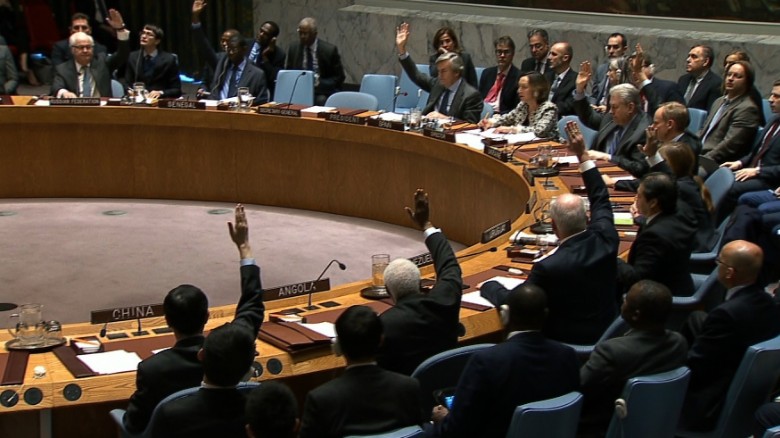
What was supposed to be a Chanukah week of joy and happiness has in fact been challenging and difficult.  On the very holiday celebrating our liberation from the Syrian Greeks occupying our most sacred space, Har HaBayis, the Temple Mount, the UN Security Council passed a resolution declaring that we are in fact illegally occupying the very location of our miracle.  Acutely painful was the abstention from the vote by Israel’s closest ally in the world, who participated in—if not outright orchestrated—the ambush and betrayal.  That pain was compounded by the lopsided, unfair, historically inaccurate rebuke of Israel by the Secretary of State before the entire world.


I think these events have been particularly agonizing because they represent a harsh wake-up call to the reality that as much as things have changed over time, they have by and large stayed the same.  Israel may contribute to global medical and technological advances, may be the first to arrive at humanitarian disasters, may be a beacon of democracy and human rights in a region devoid of either, but at the end of the day, the prophecy of, “hein am levadad yishkon, they are a nation that will dwell alone,” remains true.  The vote was 14-0, with our greatest ally abstaining.  That is the epitome of levadad yishkon, isolation and solitude.


As excruciating as these developments have been, they were predicted and prophesized.  While we should never stop fighting anti-Israel activism, standing up for truth, justice, and our beloved Israel, we should stop allowing ourselves to be lulled into the fantasy that Israel or the Jewish people will be treated more fairly now that we have a modern state, than we have as a people throughout our long and mostly lonely history.


The Torah predicted our adversaries and opponents from without.  What has made this Chanukah particularly challenging has been our adversaries and antagonists from within.  The last few weeks have seen prominent scandals and arrests involving observant Jews, including the second largest hedge fund fraud in history.  In the week in which we light our Menorahs to dispel the darkness and illuminate the world, our light and our sacred mission have been dimmed by these heinous alleged crimes and the great desecration of God’s name that has resulted.


We cannot control the enemies that rise from without, but we can and must stop being our own worst enemies from within.  We have a mission and mandate to model for the world a life of values, guided by ethical principles and lived with kindness, dignity, integrity, and sanctity.  Following each headline featuring a scandal, we must redouble our efforts to offset the damage by making positive impressions and conducting ourselves in ways that will bring all with whom we interact to appreciate the Ribono Shel Olam, the Master of the Universe, and to jump on board to perfect His world.


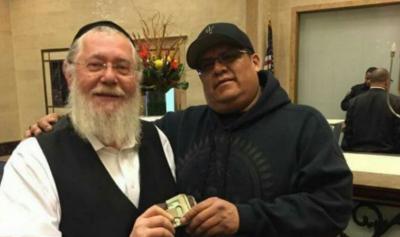
Opportunities for Kiddush Hashem, sanctifying God’s name, are all around us.  Just this week, Mr. Hershel Waldner, a Chassidic employee of B&H in Manhattan added great light to the world and helped offset the darkness with a generous act of lovingkindness.  He was walking in Manhattan when he found a wallet with a driver’s license, credit cards, and cash, but no contact information other than a business card with a handwritten phone number on the back.  Mr. Waldner called it and the man who answered was the boss of the wallet’s owner, who was in New York for a few days of vacation.  The boss put them in touch and the stranger came to B&H Photo to retrieve his wallet with great gratitude and appreciation.


We don’t all discover wallets and aren’t presented with prospects for acts of Kiddush Hashem that will make it to the newspapers, but we do have daily opportunities to advance the mission.  Here are a few to consider, particularly during this season of the year:


  • I have not formally studied the subject, but it stands to reason that, on average, there is more garbage picked up after the weekend outside Observant Jewish homes than from our neighbors. We have all seen the multiple garbage cans plus overflow bags following each Yom Tov, let alone a three-day holiday.  Wouldn’t it be amazing if every observant Jewish family tipped their sanitation workers once a year and communicated gratitude for literally handling our garbage?  The same goes for the people who deliver our mail.  True, they are paid, but so are many of us who still appreciate gestures of appreciation.
  •  


  • When we go out to eat, we are served and waited on by people who work hard and are not retiring on the salary the job provides. At the end of the meal, we have an option.  We can be stingy, exacting, and look to reduce the tip because of flaws in the service.  Or, we can be generous, magnanimous, appreciative and overlook what might not have been perfect.  If we choose the latter, coupled with common courtesy like please and thank you, we can advance the mission more than we think.  The few extra dollars between a generous or miserly tip will unlikely affect our lifestyle or savings but they are a great investment in making a Kiddush Hashem.
  •  


  • Some people have part-time or full-time help at home. Often, these individuals clean our messes, scrub our toilets, do our laundry, and much more.  They add great value and service to our family and while they are paid for their work, they are too often mistreated, dealt with disrespectfully, or taken advantage of.  Be fair and transparent about whether they will be partially paid when you are on vacation.  Consider giving a gift or tip this time of year to say thank you.  Treat them as you would want your family members treated in the same position.
  •  


  • Next time you are standing on line in a store or supermarket, watch as people approach the cashier and notice how many are talking on their cell phone and never look at or engage the person helping them. Cashiers stand on their feet all day providing a service.  They deserve not to feel invisible or insignificant.  When you get to the front of the line, hang up the phone, look your cashier in the eye, ask him or her about their day and say thank you.  Consider using their name when addressing them.  You wouldn’t believe the positive impression you can make just by using someone’s name.
  •  


Rabbi Yosef Shalom Elyashiv zt”l once commented that every generation possesses a mitzvah that is especially significant for its time. Previous generations were challenged with the mitzvah of dying al Kiddush Hashem.  Rav Elyashiv said the mitzvah for our day is to “let the Name of Heaven become beloved through you.” Our mitzvah is living al Kiddush Hashem.


We cannot easily impact the way the UN votes on Israel or how fair or friendly the administration will be.   However, it is entirely in our hands to not God forbid hurt our people by setting back the mission, and instead always act like a mensch and thereby bring greater light into the world.


Are You Crazy Busy? Build More Margin into Your Life

Image result for crazy busy

In his article “The ‘Busy’ Trap,” Tim Kreide writes:


If you live in America in the 21st century you’ve probably had to listen to a lot of people tell you how busy they are. It’s become the default response when you ask anyone how they’re doing: “Busy!” “So busy.” “Crazy busy.” It is, pretty obviously, a boast disguised as a complaint. And the stock response is a kind of congratulation: “That’s a good problem to have,” or “Better than the opposite.”


Look around and you’ll notice it isn’t generally people pulling back-to-back shifts in the I.C.U. or commuting by bus to three minimum-wage jobs who tell you how busy they are; what those people are is not busy but tired. Exhausted. Dead on their feet. It’s almost always people whose lamented busyness is purely self-imposed: work and obligations they’ve taken on voluntarily, classes and activities they’ve “encouraged” their kids to participate in. They’re busy because of their own ambition or drive or anxiety, because they’re addicted to busyness and dread what they might have to face in its absence.


Busyness is an epidemic and it is wreaking harm and havoc on our emotional, mental, and physical well-being and compromising our relationships.  Activities and experiences we claim to value and prioritize sit on the back burner because of our self-perceived busyness.  Hillel warned of this when he taught (Pirkei Avos 2:5), “al tomar l’chesha’ipaneh eshneh, shema lo tipaneh, don’t say ‘when I have free time I will learn’, for you may never have free time.”  The simple understanding is that we cannot predict the length of our lives and if we procrastinate and delay we may never in fact get to what we claim are our goals.


However, perhaps Hillel is warning us that the issue is not the unpredictability of the future, but rather just how predictable it is if we can’t master our sense of busyness.  Shema lo tipaneh, perhaps your addiction to busyness will deny you free time to ever do what you say you will someday do.


There is a fascinating law regarding the writing of a Torah scroll.  The Talmud (Menachos 29a) mandates that “kol os she’ein gvil mukaf mei’arbah ruchoseha pesula.  If a letter is not entirely surrounded by parchment on all sides the Torah is invalid.”  In other words, if letters run into one another with no break, the Torah is not kosher.  Why do the letters’ borders matter?


Have you ever read a book whose sentences begin on one edge of the page and extend all the way to the other edge?  Books are not published that way because if the entire page is covered in ink, the book is unreadable.  Instead, books have margins, white space in the columns and in between paragraphs.  The white space not only provides a prettier, more readable layout, but provides the room to absorb, contemplate, and assimilate what is being read.


Rav Kook explains (Shemuot HaRe’iyah IV) that when the medrash describes the Torah as having been given with black fire and white fire, it means the words have meaning, but the blank spaces and margins, the room to absorb, are also critically important.  He writes, “We can deepen our understanding of the white and black fires by considering another example of white space in the Torah. Extra space is left blank to separate sections of the Torah. The Sages explained that these separations allowed Moshe to reflect upon and absorb the previous lesson. In other words, the white fire corresponds to the loftier realm of thought and contemplation. The black fire of the letters, on the other hand, is the revelation of intellect into the realm of language — a contraction and limitation of abstract thought into the more concrete level of speech.”


In his book “Margin: Restoring Emotional, Physical, Financial, and Time Reserves to Overloaded Lives,” Richard Swenson, M.D. writes:


Margin is the space between our loath and our limits. It is the amount allowed beyond that which is needed. It is something held in reserve for contingencies or unanticipated situations. Margin is the gap between rest and exhaustion, the space between breathing freely and suffocating…


If we were equipped with a flashing light to indicate “100 percent full,” we could better gauge our capacities. But we don’t have such an indicator light, and we don’t know when we have overextended until we feel the pain. As a result, many people commit to a 120 percent life and wonder why the burden feels so heavy. It is rare to see a life prescheduled to only 80 percent, leaving a margin for responding to the unexpected that God sends our way.


Perhaps building margin into our lives to think, contemplate, and absorb is also a message of Chanukah.  After lighting the menorah, we sing “ein lanu reshus l’histameish bahem elah lirosam bilvad, we have no permission to make use of them but only to see them.”  It is forbidden to use the light of the Chanukah candles to engage in activity.  The power of the Chanukah candles is not that they provide light to increase our busyness.  Rather, we are to interrupt our busyness each evening for eight days, sit next to the glowing candles and reflect.


Women have developed a custom not to do work in the home while the candles are burning.  The Mishna Berura writes that many men have the custom as well.  The light of the menorah reminds us to interrupt the constant activity and to take a break from work to reflect, contemplate and grow.  The crazy busy person never pauses to see the blessing that is before them all along.


When you light the menorah this year, use the mandated idle time basking in its light to make a commitment to break the cycle of busyness and build more margin into your life all year long.


Are You as Offended as the Conductor? Eliminating Disruptions and Distractions in Davening

Photo Credit: Hiroyuki Ito for The New York Times

A few years ago, Alan Gilbert, the Conductor of the New York Philharmonic made history, but not for something you would expect. Conductors almost never interrupt a performance, other than truly exceptional circumstances. Gilbert not only stopped the performance, he did something even more. Towards the end of the Philharmonic’s performance of Mahler’s Ninth Symphony, someone’s cell phone began to ring, and ring, and ring endlessly. Before every performance in that hall, a recorded voice reminds people to turn their cell phones off, but apparently at least one patron had forgotten.


The Conductor didn’t just pause the performance, he turned towards the corner of Avery Fisher Music Hall where the sound was coming from and with the help of the audience narrowed down the possible violators until he identified the perpetrator. He then stared him down for what felt like a significant amount of time and refused to continue with the Symphony until the individual verbally acknowledged that his phone was now off and wouldn’t interrupt again.


The story itself is interesting. But it was an interview with the Conductor, Alan Gilbert, following the performance that really struck me. Mr. Gilbert said: “It was so shocking what happened. You’re in this very far away spiritual place in the piece. It’s like being rudely awakened. All of us were stunned on the stage.”


In reading this story, I was actually moved by the intolerance of the Conductor and his protest against someone’s callousness and lack of courtesy compromising his spirituality. Indeed, contrast what happened at the New York Philharmonic and what happens almost daily in Shul. Three times a day we gather for a symphony not of classical music, but of prayer. When davening, we are to get lost in a very far away spiritual place such that the sound of a ringing cell phone would rudely awaken us and bring us back down to earth. And yet, sadly, most of us are unfazed and frankly unbothered when a cell phone goes off. In fact, if anything, for many the ring serves as an alarm to interrupt our day dreaming and bring us back to the fact that we are actually in the middle of davening.


After interrupting the performance, the conductor apologized to the audience for stopping, saying that usually, it’s best just to ignore such a disruption, but this case was simply too much and had crossed the line. The audience then cheered and applauded clearly showing support for his intolerance of such a rude disruption.


Of course, we should not be rude or embarrass someone who innocently forgot to turn their ringer off.  My point is not to suggest we ought to call people out and publicly shame them.  Rather, I am suggesting that we reflect on why the interruption to our davening is not as offensive or disturbing to us as the interruption of the performance was to Gilbert.


When a cell phone goes off in shul and nobody says anything, it is not only an indictment of the perpetrator, but of the rest of the Minyan as well. Our davening should mean to us minimally what Mahler’s Ninth Symphony means to Conductor Alan Gilbert.  Let’s together, with great sensitivity, create an environment that does not tolerate talking or cell phones ringing during davening and through a sense of reverence and serenity find ourselves “in a far away spiritual place” in the siddur.


Has Chabad Quietly Revolutionized the Role of Rebbetzin?

Image result for chabad
Photo by Baruch Ezagui

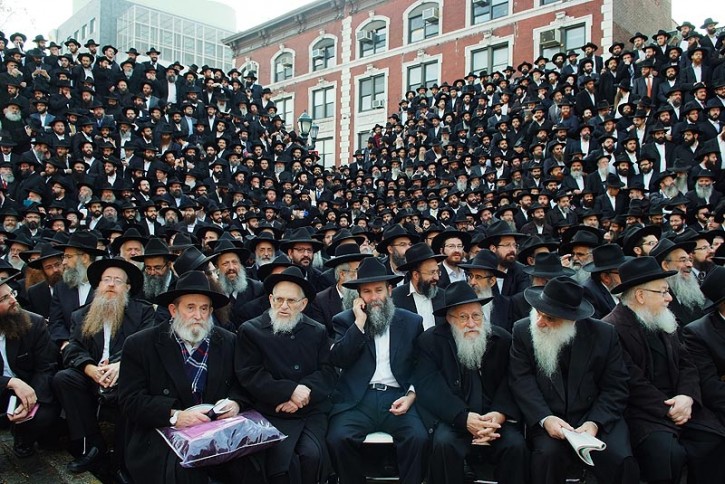
With 5,600 rabbis serving in over 90 countries one would have thought that Chabad had the entire United States covered, yet they only placed a rabbi in the 50th state last week. South Dakota may only be home to about 400 Jews, but that isn’t stopping Rabbi Mendel and Mussie Alperowitz from buying one-way tickets, opening a Chabad House in the wild west, and seeking to build a relationship with each and every one of their Jewish brothers and sisters in the entire state.


This past June marked 75 years since the Lubavitcher Rebbe zt”l, Rav Menachem M. Schneerson and his wife, Rebbetzin Chaya Mushka, came to America from war-torn Europe.  The Rebbe didn’t accept the mantle of leadership until 1950, but his vision and influence were felt immediately upon his arrival to these shores and they continue to be felt 22 years after his passing.


Avraham Avinu was arguably the most influential person who ever lived. Today he is claimed as the spiritual ancestor of two and a half billion Christians, one and a half billion Muslims and thirteen million Jews around the world, representing more than half the people alive today.  Lord Rabbi Jonathan Sacks points out that Avraham, in partnership with Sarah, achieved that influence and impact without ruling an empire, commanding a great army, performing any miracles, or proclaiming to have prophecy.  All they did was heed the call of Lech lecha to begin a Jewish journey, and to define for all time what it is to be a Jew.


Avraham and Sarah revolutionized the world without political power or force.  They did it by preaching faith and showing lovingkindness.  They are the supreme example in all of history of influence without power.  It is hard to think of many Jewish leaders since Avraham who have left more fingerprints across the globe than the Rebbe.  By assembling a spiritual army and opening up Chabad houses and centers around the world, there is practically no destination left where Jews travel or which they won’t find a Shul, kosher food, a mikvah, and, importantly, a warm smile and an open heart.


When traveling recently, I found myself at a dinner marking the opening of a magnificent new Chabad building in an exotic location outside of the contiguous United States.  The event was attended by both financial supporters as well as those supported by that Chabad.  The participation and warm words from dignitaries and government representatives in attendance testified to the genuine relationships the Chabad rabbi and rebbetzin have established beyond the Jewish community.


As I sat there marveling at the accomplishments on display, it occurred to me that perhaps by preaching and inspiring a message of unapologetic faith in and dependence on the Almighty, unconditional love for all Jews, and unparalleled warmth and lovingkindness, the Rebbe was able to create a movement that transcends many of the controversies currently dividing the Jewish community.  The Rebbe certainly had his share of detractors when he was introducing some of his campaigns and placing great emphasis on Moshiach, but today Chabad has earned the admiration and respect of diverse segments of the Jewish people.


Consider the following two examples, which while based on my experiences and not statistically conclusive, I believe often go underappreciated.  The orthodox world has been rigorously debating women’s roles in Jewish communal leadership and whether women can formally serve as rabbis.  Meanwhile, though it has no stated progressive agenda or goals, Chabad has quietly revolutionized the role of women in leadership.  Chabad rebbetzins may not have the title of rabbi, but in most cases they are involved in, and empowered with, setting the vision of their community and executing the leadership necessary to make it a reality as much as their husbands are.  They design programming, lead meetings, teach, give support at lifecycle events, play very public roles and are often listed as co-directors, equal with their husbands.


At the opening I attended, it was the rebbetzin, not the rabbi, who served as the master of ceremonies.  The rabbi gave a wonderful dvar Torah and speech, but it was the rebbetzin who welcomed hundreds of people, offered expressions of gratitude to the list of dignitaries, gave her own dvar Torah, and charged the community with a vision of where they are going next.


The contemporary Chabad rebbetzin is functioning in a significantly different way than her predecessors and many of her peers in the orthodox world.  And yet, one doesn’t find people questioning her motives, her commitment to halachik norms, or her respect for rabbinic authority.  Her selflessness, mesirus nefesh and boundless love and devotion, with no other agenda regarding women’s roles, seem to insulate her from the usual suspicions and criticisms.


A second example: In world of tragic antagonism between the “right” and the “left,” both groups claim Chabad as a being more similar to them.  The “left” has an affinity for Chabad’s emphasis on loving all Jews, being non-judgmental, warm, and opening.  The “right” identifies with Chabad’s strict standards of modesty, stringent positions in halacha like cholov yisroel and pas yisroel and general Chassidic orientation.


I was once talking to someone who was complaining to me about how his rabbi is too far to the right and why can’t he be more like the Chabad rabbi who is so centrist.  I asked him: in what way is your rabbi more to the right of the Chabad rabbi?  Do you realize that your rabbi has a college degree and the Chabad rabbi never studied secular subjects?  Do you realize your rabbi is more comfortable with less strict standards of modesty and halacha than the Chabad Rabbi?  Do you appreciate that the Chabad rabbi always goes out in public with his black hat and wears a gartel while he davens while your rabbi doesn’t wear more than a kippa?  How is your rabbi more “right wing”?


The individual argued that his rabbi was more to the right because he wasn’t as open, tolerant, welcoming, friendly or warm as the Chabad rabbi.  I realized after that conversation that for many people, “right” and “left” are not a function of actual hashkafic differences or variances in halachik practice, but a function of how open or closed they feel someone is to others, particularly those that are different from themselves.


With its culture of lovingkindness, acceptance and warmth, Chabad successfully transcends the typical labels and divisions that divide us and instead, the movement and its rabbis and rebbetzins find resonance and embrace in the diverse segments of the Jewish community.


There is so much to admire and appreciate about Chabad.  Minimally, every one of us should be incredibly grateful for the ability to go almost anywhere in the world on business, vacation, or to live and to have a Chabad house welcoming us and providing for our Jewish needs.  We should be in awe of the selflessness of people like Rabbi Mendel and Mussie Alperowitz who move to places with no Kosher food, no school for their children, often no mikvah, no eruv, and only a handful of other shomer Shabbos people.  It doesn’t deter them that there is no endowment, or consistent membership dues, and that if they are going to keep the lights on it is up to them to raise the funds to do so.


Most of all, I think we can learn from Chabad how to continue the journey that Avraham and Sarah began.  The combination of faith in the Almighty with lovingkindness to His children can radically influence and improve the world and can help us transcend the differences that too often get in the way of our greater mission.  Like Chabad, let’s not have agendas that alienate, divide and create controversy, but be focused exclusively on the agenda of helping Hashem find expression in this world and showering love and kindness on others.


Rabbi Efrem Goldberg

Join Our Community

Subscribe to our newsletter or connect with us on WhatsApp.