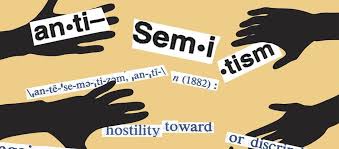
On April 11, 1944, a young Anne Frank wrote in her diary:
Who has made us Jews different from all other people? Who has allowed us to suffer so terribly until now? It is God Who has made us as we are, but it will be God, too, who will raise us up again. Who knows – it might even be our religion from which the world and all peoples learn good, and for that reason and that reason alone do we now suffer. We can never become just Netherlanders, or just English, or representatives of any other country for that matter. We will always remain Jews.
Anne Frank was on to something. The Talmud asks, from where did Har Sinai derive its name? After offering a few alternatives, the Talmud suggests that Har Sinai comes from Hebrew word “sinah” which means hatred, because the non-Jews’ hatred of the Jews descended upon that mountain when the Jewish people received the Torah there. Torah demands a moral and ethical lifestyle, an attitude of giving rather than taking, a life of service rather than of privilege, that has revolutionized the world.
The Jewish people have been charged to be the moral conscience of the world, a mission they have not always succeeded at, but that nevertheless drew the ire, anger and hatred of so many. For two thousand years the Jews were bullied and persecuted simply because of their Jewishness and all that stands for. After the Holocaust, the world gave the Jews a reprieve from their hatred, becoming instead beneficiaries of their pity. But looking at events around the world, it is rapidly becoming clear that the last 75 years was an aberration. We have witnessed the rise of anti-Semitism around the world as the world reverts back to its ageless pattern and habit.
The Midrash (Eichah Rabbah 1) teaches that three prophets used the term “eichah” – o how! In Devarim, Moshe asks: “Eichah, how can I alone bear your troubles, your burden and your strife?” (Deut. 1:12) In the Haftorah for Shabbos Chazon, the Prophet Yeshayahu asks: “Eichah, how has the faithful city become like a prostitute?” Lastly, Yirmiyahu begins the Book of Eichah: “Eichah, how is it that Jerusalem is sitting in solitude! The city that was filled with people has become like a widow…” Eicha – How? How is it that anti-Semitism persists? Why must they rise up against us in every generation?
On Tisha B’Av we will sit on the floor and wonder aloud, eicha? How could it be Jews have to fear for their lives yet again? Eicha – how could it be that today, with all the progress humanity has made, more than a quarter of the world is still holding anti-Semitic views?
Rabbi Soloveitchik tells us that though the Midrash identifies three times the word eicha is used, in truth there is a fourth. When Adam and Chava fail to take responsibility, God calls out to them and says ayeka, where are you? Ayeka is spelled with the same letters as eicha, leading Rabbi Soloveitchik to say that when we don’t answer the call of ayeka, when we don’t take personal responsibility for our problems and blame others, we will ultimately find ourselves asking eicha, how could it be?
We can ask eicha, how could all of these terrible things be, but we may never have a definitive answer. Our job is to make sure we can answer the call of ayeka, where are you? Are you taking responsibility? We may not be able to fully understand why anti-Semitism exists, but we can and must remain vigilant in calling it out, confronting it and fighting it. We must remain strong in standing up for Jews everywhere. We must confront evil and do all we can to defeat it.
And, we must do all that we can to take personal responsibility to fulfill the Jewish mission to bring Godliness into the world. If individual Jews were hated for being the conscious of the others, all the more so does a Jewish country generate hate for being the moral conscious of the whole world, held to higher moral standards than any other country or state.
Our job is not to be discouraged by asking eicha, but to ensure that we can answer the call of ayeka. Anti-Semitism will not come to an end by assimilating and retreating. It will come to an end when we can positively answer the question that the Talmud tells us each one of us will be asked when we meet our Maker: did you long for the redemption and did you personally take responsibility to do all that you can to bring the redemption? Did you truly feel the pain of exile and feel the anguish of the Jewish condition in the world? Do you truly and sincerely care? Did you anxiously await every day for Moshiach to herald in an era of peace and harmony, an end to anti-Semitism and suffering?
It is not enough to long for Moshiach, we must bring him. It is not enough to hope for redemption, we must be the catalyst for it. It is not enough to be tired of eicha, we must answer ayeka. If we want to get up off the floor and end the mourning, if we want to finally end anti-Semitism, it is up to us to do what is necessary to heal our people, to repair the world, to love one another, and to earn the redemption from the Almighty.
Outrage Without Rage
It seems everywhere we turn these days is anger and rage. Some are angry at those not wearing masks, others outraged mask-wearing is being legislated. There is anger provoked by the pandemic. Anger at elected leaders on both sides of the aisle for how they have governed during this unprecedented time. There is anger at the police and anger at those calling to defund the police. Anger at those supporting annexation in Israel and anger at those who could possibly object or question its wisdom or timing.
Raymond Novaco, a psychology professor at the University of California at Irvine, describes that right now, “We’re living, in effect, in a big anger incubator.” Maurice Schweitzer, a professor at the Wharton School at the University of Pennsylvania, who studies the regulation of emotions says that most of us are more comfortable being angry than anxious. When life becomes uncertain and more and more seems out of our control, we alleviate and avoid the proclivity towards anxiety by getting angry instead. That anger can be directed at a spouse and children, at a neighbor or co-worker, or moral outrage expressed online.
And now, disastrously, this angry incubator is about to be put into a literal pressure cooker. Meteorologists revealed this week that more than two-thirds of the continental U.S. is going to experience a historic heat wave in July.
But is anger really all bad? Doesn’t anger energize and spark revolutions? Didn’t anger just stimulate a national conversation on race and equality that may finally lead to positive developments?
The simple answer is anger is never good. It never builds, only destroys. It never produces, it just compromises. It never provides clarity, only cloudiness and confusion. Anger never builds bridges, it only creates schisms. The word “rage” comes from the Latin rabies, meaning madness. Giving in to rage is an act of madness because you give up so much and get nothing in return. Mark Twain said, “Anger is an acid that can do more harm to the vessel in which it is stored than to anything on which it is poured.”
The Orchos Tzaddikim says that character traits are called middos in Hebrew, literally translated as “measurements,” because they are neither inherently good or bad, rather they must be appropriately channeled and employed in correct measures. The exceptions are arrogance and anger which are categorically wrong and don’t belong in our emotional toolbox at all. Moshe Rabbeinu, the greatest person of all time, saw his dream of entering Israel shattered in this week’s Parsha because, according to many, he gave in to anger when he hit the rock instead of speaking to it.
In a letter to his son, the Ramban writes that anger is a midah ra’ah, a wicked impulse. The Rambam in Hilchos Dei’os (2:3) writes that anger diminishes a person’s overall quality of life: “Those who frequently become angry have no quality of life; therefore, our rabbis instructed us to distance ourselves from anger to the farthest degree, until a person acts as though he does not sense even those things that would justifiably anger a person.”
Indeed, research shows that anger clouds judgment, distorts perspective, and deprives you of the ability to see another point of view or feel empathy. Anger is linked to higher blood pressure and inflammation, infections, heart disease, and cancer. One study found a tripled risk of a stroke during the two hours following an angry outburst. Mental health experts are warning about rising domestic violence during this age of anger.
What stimulates positive change, and drives people to pursue justice, equality, goodness, and truth is not anger or rage, but outrage. The Rambam writes that real anger is never healthy, warranted, or productive. But occasionally and strategically, one may exhibit anger in order to strongly communicate a message or accomplish a goal. Nevertheless, even when expressing outrage, one can never indulge the feeling of rage and let himself be overtaken by the emotion of anger.
Anger is an animalistic emotion; outrage is a call to action. There are things worth being outraged about, but there is nothing worth feeling rage over. Outrage is productive, rage is counterproductive. Outrage brings results, rage creates problems. Plato put it well: “There are two things a person should never be angry at, what they can help, and what they cannot.”
There are no shortage of causes that could benefit from your outrage, your social action, and efforts in measured, productive ways. Save your energy to take on racism, antisemitism, incivility, or inequality. Don’t waste energy by taking your anger out on your spouse or children, your friends or colleagues.
Address your anxiety, don’t let it manifest as anger. Keep your calm by letting out energy through regular walks, exercise, or meditation. Practice an attitude of gratitude by journaling the blessings in your life each day and staying focused on what is going right, not what is wrong, what you have, not what is missing. Expose yourself to media and social media that will help generate productive outrage but shut out news and commentary, posts and conversations that will frustrate, irritate, and aggravate. Watch for warning signs, familiarize yourself with triggers and cut off the anger before it even escalates or rises within you. Learn to self soothe, distract and put things in perspective.
As the summer is about to get hotter, don’t let yourself lose your cool.
Privilege Is Not A Dirty Word
One of the many important national conversations taking place these days involves recognition and awareness of privilege. To some people, privilege is a negative thing and something to be ashamed of. I don’t see it that way at all.
Privilege is not a dirty word. To be clear, it is critical to be aware of whatever privileges one is blessed with, recognize and appreciate that others do not share that blessing, and incorporate that awareness and recognition while demonstrating care and compassion for others. Nevertheless, one needn’t apologize for privilege or be ashamed or feel guilty for having it. Quite the contrary, privilege is, well, exactly that—a privilege. One should be grateful for, appreciative of, and most of all feel tremendously obligated by the privileges we have.
We Jews are particularly privileged, but not in the way you may think.
For some, privilege means receiving the benefit of the doubt, or the assumption of innocence. For others, privilege means having access, entrée, and opportunity. For yet others, privilege means the comfort of feeling safe, protected, and secure.
By these definitions, in the context of history, and even now, Jews are among the most underprivileged people. We have been the target of libel, false accusations, and assumptions of guilt. These aren’t part of ancient history. A blood libel occurred in Massena, New York, in 1928.
We have been denied access and opportunity. As recently as the 1970’s Jews and blacks were unabashedly denied entry into country clubs in South Florida, an area thought of today as “so Jewish.” Many had signs that said “No dogs, no colored, no Jews.” And it wasn’t that long ago that Jews were similarly denied or limited to enter universities and graduate schools. In 1935, a Yale dean instructed his admissions committee: “Never admit more than five Jews.” Harvard’s president wrote that too many Jewish students would “ruin the college.”
Safety and security? The Anti-Defamation League reports that there were 2,107 hate crimes against Jewish people nationwide in 2019, the highest since the ADL began tallying hate crimes in 1979. Antisemitic incidents comprise a majority of reported hate crimes in New York City. According to 2018 FBI data, Jews were 2.7x more likely than blacks, and 2.2x more likely than Muslims to be a hate crime victim.
In the context of recent rioting and looting, the Los Angeles Jewish community recently experienced what one called a “modern-day pogrom” in which Jewish businesses were ransacked and five synagogues and three Jewish schools were vandalized.
The current attention to racism in America and the fight for racial justice is important. As I have said, racism is an evil we must actively, categorically reject. At the same time, we should also be aware, and make others aware, that antisemitism is on the rise globally and there remain entire nations and countless individuals who seek the extermination and elimination of the Jewish people. Just last week, what are widely considered A-list celebrities with large social media presences praised Louis Farrakhan, a vile, unapologetic anti-Semite. In 2018, Farrakhan warned his 335,000 followers on Twitter about “the Satanic Jew.” As recently as October, 2018 Farrakhan told his followers in a widely-attended and shared speech, “When they talk about Farrakhan, call me a hater, you know how they do – call me an anti-Semite. Stop it, I’m anti-termite!”
A high-profile spokesman during this important current conversation on justice, equality, and discrimination is Al Sharpton, a man who once said, “If the Jews want to get it on, tell them to pin their yarmulkes back and come over to my house…All we want to say is what Jesus said: If you offend one of these little ones, you got to pay for it. No compromise, no meetings, no coffee klatch, no skinnin’ and grinning.’ Pay for your deeds.” He has never apologized or offered contrition for those remarks, or for his role in inciting the Crown Heights riots (perhaps he still stands by them), and yet he is consistently given a public platform with no hesitation or qualification.
In many places around the world, including too many right here in the United States, a Jew feels the need to remove a yarmulke or outer Jewish symbols to feel safe. There is no privilege to protect him.
I share this all not to make the argument we are more underprivileged or victimized by prejudice than anyone else, but that even today, access and opportunity, assumption of innocence, and especially safety and security, are not privileges the Jewish people can so readily count on and enjoy.
So what do I mean that we are particularly privileged and should be proud of it?
Privilege is not only about the way you are thought of and treated by others, but about how you think of and behave yourself. Privilege is not how others treat you but how you treat others. It isn’t what others do to you, but what you do with what you have.
רבי חנניא בן עקשיא אומר, רצה הקדוש ברוך הוא לזכות את ישראל, לפיכך הרבה להם תורה ומצות, שנאמר (ישעיה מב, כא) ה׳ חפץ למען צדקו יגדיל תורה ויאדיר. (מכות כב:).
Hashem wanted to give a zechus to the Jewish people so He charged us with an abundance of Torah and mitzvos. What does zechus mean? When we host a distinguished guest or speaker, they are often introduced with “what a zechus it is to have so and so.” Zechus literally means privilege. Hashem wanted us to be privileged so He trusted us and charged us to live virtuous and righteous lives and to transform His world in His vision.
For a Jew, privilege doesn’t mean access, opportunity, or favors. It means responsibility, an awesome responsibility to set an example, to live elevated, meaningful lives, to repair the world in His image, to be of service to others. It means to rise above how we may be treated by others and to treat all with dignity, respect, and honor.
We have the privilege of studying Torah and being inspired by its timeless lessons. We were given the privilege of the instruction manual to life including the 613 mitzvos. We bear the privilege of being asked and expected to be at the forefront of fighting for justice, equality, fairness, and truth.
Rav Yitzchak Hutner, the great Rosh Yeshiva of Chaim Berlin, once stood before a Torah U’Mesorah convention, a gathering of Jewish educators from across the country. He suggested to them that he could summarize their entire duty, their task, in five words. If nothing else, their job, their role, and their mission of inspiring the Jewish future came down to their ability to communicate to the next generation “asher bachar banu mi’kol ha’amim, we are to be exceptional.” If a Jewish child walks away with nothing else from their Jewish education, minimally they must be made to feel that we are exceptional, privileged to be charged with being different.
Our status as a privileged or exceptional people is not intended to make us feel superior. Rabbi Dr. Norman Lamm, z”l pointed out that we don’t recite “asher bachar banu al kol ha’amim,” he has chosen us above all other nations. Rather, we say “mikol ha’amim,” he has chosen us from among all the nations of the world.
Being privileged should make us feel obligated and bound to live more ethically, act more sensitively, conduct ourselves more honestly, and proclaim our faith in the Almighty with pride and distinction, and never with shame or embarrassment.
Part of the responsibility that comes along with our privilege is to use whatever material privileges we have for the good. Despite the many challenges Jews have faced throughout the generations, most of our communities in the 21st century are blessed with the trappings of material and social privilege our ancestors would never dream of. We don’t have to and shouldn’t apologize for that; however, we must recognize that a Jew never focuses on his own entitlement, but rather thinks how his resources can be better used to advance good in the world, including for the “underprivileged.”
Privilege is not a luxury, it’s a legacy; it isn’t a free pass, it is a weighty proposition. Privilege shouldn’t breed entitlement, it should demand exceptional behavior.
I’m proud of my Jewish privilege and I hope my children will be too.
Don’t Chirp Like a Grasshopper, Roar Like a Lion
The Torah tells us explicitly that Bnei Yisrael were forced to wander in the desert for forty years as a corresponding punishment for the forty days the spies spent in the land of Israel. The pasuk strongly implies that this was a forty-day sin, which resulted in forty years of wandering, a year for each day.
If you think about it, though, the
spies didn’t sin for forty days, but rather for one day. Their mistake was miscalculating and
processing their experience and reporting negatively about Israel. This only happened at the end of their
journey and lasted one day. Why were
they accountable and punished for forty days of indiscretion?
The late Jose Lima starred as a
pitcher for the Houston Astros for serval years in the late 1990s. Lima was an
outgoing, energetic, likable young player known for exuding a positive
attitude. But in 2000, when the Astros built their new stadium, now known as
Minute Maid Park, Lima was upset. The fence in left field was much closer than
the fence at the Astrodome. In fact, Minute Maid Park still has one of the
shortest distances from home plate to the left-field fence of any ballpark baseball.
The hitters love it, of course, but the short left-field makes it tougher on
the pitchers.
The first time Lima stepped onto the new diamond, he walked out to the pitcher’s mound, and when he looked into the outfield, he immediately noticed the close proximity of the left-field fence. “I’ll never be able to pitch in here,” he said.
Indeed, despite coming off an all-star season, and the excitement of playing in a brand new ballpark, Lima had the worst year of his career. He plummeted from being a twenty-game winner to a allowing a near-record amount of home runs.
Rav Asher Weiss explains that the meraglim’s
mistake didn’t occur at the end of their journey, but at the beginning, and it
lasted forty days. The meraglim engaged
in a self-fulfilled prophecy. They came
to the land with a poor attitude and outlook and everything they then witnessed
was seen through their negative and pessimistic filter.
The Gemara in Berachos (55b) tells us
that when a person dreams, he is shown the thoughts of his heart. The same is true while we are awake. We are shown the world around us, refracted
through the prism of our hearts. When
our heart is pure, when our attitude is positive, we see goodness in everyone
and everything around us and we create good results for ourselves. If our hearts are tainted with pride and
jealousy, we see only negativity in others and create a toxic existence for
ourselves. B’derech she adom holeich molichim oso.
The Midrash tells us that the spies “searched
for the faults of Eretz Yisroel, which Hashem called a good land.” The meraglim
weren’t punished or held accountable for reporting faults in
Israel. They were accountable for looking
for faults, and that is something they engaged in for forty days.
Referring to the spies’ encounter with the giants, the Torah says “vanehi b’eineinu k’chagavim, v’chein hayinu b’eineihem” and “and in our eyes [too] we were like grasshoppers and so we were in their eyes.” While originally described as anashim, men of great stature, the spies report they became diminished in their own eyes and that of others. How could they know how they appeared in the eyes of others? The Kotzker Rebbe explains, by thinking so little of themselves, they projected this feeling onto others as well.
The very first statement of Shulchan Aruch, the code of Jewish law, instructs us to see ourselves as lions – hisgabeir ka’ari, la’amod laboker, wake up like a lion to greet the day. The spies saw themselves as grasshoppers, lowly and vulnerable. Instead, we are to roar like lions, confident, capable and ready to conquer whatever comes our way.
Modern psychological research
concludes if we build up a strong belief in ourselves and what we want to achieve,
we can do almost anything with a little training and coaching. The brain is designed to help us accomplish anything
that we really want and believe we can do.
When we use words like “can’t” or “I wish I could, but” or “I would do
it if only” then we have set ourselves up for failure, just like the
meraglim. The first step to changing our
reality is to change our attitude. If we
are going to realize our own prophecies, let’s have a vision for ourselves of
success, accomplishment and achievement.
Patience, Not Platitudes: What Not to Say to Those Celebrating or Mourning During Corona
Usually, when I get a call before speaking at a Chuppah, it is to remind me what to say, whom to acknowledge and remember, the qualities of the chassan and kallah to recognize. This week, I got a phone call requesting what to not say at an upcoming wedding. “Rabbi,” the kallah said respectfully, “please don’t mention that Covid is great, giving us opportunities, and this wedding is exactly what Hashem wanted, isn’t this amazing. Please don’t say that because it isn’t true. I am so grateful to be getting married, but this isn’t the wedding I had been anticipating.” (Shared with permission)
I never would have said such a thing, of
course, but it is telling that she was concerned I might. This wonderful kallah is among many celebrating
simchas during this time who have heard the platitudes from people telling them
why this version of their simcha is so much better, is so much more beautiful,
is exactly what Hashem wants them to have, and how happy they should be about
it.
This week, countless young people are
celebrating graduations, some over Zoom, some with a drive-by, and some in
person but substantially modified. Our
school administrators, teachers, and community members have been nothing short
of heroic in making the most and the best of a difficult year. But while these
efforts must be appreciated and recognized, we still need to be honest with
ourselves and with our students: these are not the graduations they pictured
and looked forward to for four or eight years or more while they worked towards
their milestone.
Over the last three months, many people
have lost loved ones. I personally have
three family members whom I was close with and loved, who have passed away
during this time. They deserved large funerals and robust shivas, yet their
neshamas were denied this kavod and their loved ones were deprived of the
brilliant formula for grieving prescribed by the Torah and Chazal.
To be clear, if a person chooses to process
their own simcha or personal loss by reflecting on the positive opportunities
presented, how they feel better off and grateful for diverting from the norm,
that is their prerogative. For one to
have that attitude about themselves is not only a coping mechanism, but admirable. By contrast, explaining to people who are
disappointed or disheartened why they shouldn’t be is unlikely to change their
feelings, and more likely to just make them feel guilty for having them.
I think we can convey a different message to those struggling with feelings of frustration and grief from unrealized dreams and hopes.
Nine years ago, Yocheved
and I attended a spectacular 50th anniversary party that was as
beautiful as a wedding. I remember thinking the venue, music, food and drinks
were magnificent but frankly, it felt like a little much for an anniversary
party. And then our host Mike spoke. He
is a survivor who had been separated from his parents for parts of the war, and
though reunited with them afterwards, had lost most of his family. His family had next to nothing when he
married Barbara. When they got married
at the Young Israel of Cleveland, the shmorg consisted of potato chips,
pretzels, and ginger ale. Mike explained
that he told her then, “Barbara, this is all we can afford now, but you deserve
the wedding of your dreams. One day I
will make it for you.” And so fifty years later, they invited family, friends
and the rabbis from all the communities they had ever lived to a beautiful
anniversary party.
Not having the
wedding, Bar or Bat Mitzvah, or graduation of your dreams is not fantastic,
it’s unfortunate and it’s frustrating.
Not being surrounded by friends and family to provide support and love
when you lose a loved one feels unfair and even cruel. Our response must not be to give unsolicited
perspective, to offer empty platitudes, to provide explanations and reasons, or
to encourage them to find a silver lining.
Our response must be to validate, acknowledge and encourage patience.
It took fifty years
for Mike and Barbara to celebrate the wedding of their dreams. Perhaps those
getting married during this period can mark a future anniversary by filling in what
they felt is missing now. With patience and time, perhaps graduates will mark
other graduations or class reunions more fully to compensate what is missing
this year. Perhaps time will allow
sheloshim or yahrzeit observances to more fully memorialize with friends and
family.
After Miriam spoke lashon hara
about her brother Moshe and was struck with tzara’as, she was
quarantined for seven days. While she
was not part of the camp during that time, the camp stood still. They did not
travel, they did not move forward without her.
Out of love and respect for Miriam, the people refused to leave without
her. Why? Wasn’t it dangerous to stand still in the
desert baking in the sun, depleting resources?
Why did three million people stand still, waiting for one person?
The Mishna in Sota tells us that in
the merit of Miriam waiting to see what would happen to Moshe’s basket floating
in the Nile, the entire nation waited for her for seven days. When things
looked hopeless and her parents felt like giving up on bringing more Jewish
children into the world, Miriam had faith and convinced her parents to believe
in a brighter future. When once again
things looked bad, the Jewish future literally sailing down the Nile River, again
Miriam stood and watched with great faith and hope. Miriam was rewarded, not just for standing on
the bank of the river that day, but for her tenacity, faith and hope and for
her patience.
Nobody has more patience than the
Jew. For 2,000 years we longed to return to Israel and Yerushalayim, and we have
been rewarded by coming home.
Once again we are being asked to
wait. To wait to celebrate fully, to wait to mourn fully, to wait to return to normal
life. But we are the progeny of Miriam. She
waited for Moshe, our ancestors waited for her, and they both imbued within us the capacity and fortitude to wait for
Moshiach. B’chol yom achakeh lo, every day for millenia we have been practicing
waiting.
Like Miriam was rewarded for her waiting, may every graduate, bride and groom be rewarded for their patience with celebrations that are truly the fulfillment of their dreams.
The Death of Certainty, the Birth of Accepting our Limitations
I
have not slept well during the last three months. Don’t get me wrong, I fall right asleep, but
I don’t wake up well-rested. There is a
pit in my stomach that won’t seem to go away.
Baruch Hashem, my family is healthy and well. I feel truly blessed in so many ways and I try
to be grateful each and every day. I usually feel and act genuinely happy, and
yet nevertheless, these days I live with a continuous uneasiness, a discomfort
that I can’t seem to shake.
Throughout
this time, I have tried to investigate the source of these unfamiliar, foreign
feelings, but to no avail. Finally, this
week, as we began to try to prepare for this coming Rosh Hashanah and found
ourselves left with more questions than answers, more we don’t know than we do
know, it struck me. The ache is the
absence of confidence, the agitation is the loss of certainty.
Just
three months ago, we were capable of knowing, of planning. After all, we live in the information
age. All we had to do was Google a
question and we had terabytes of answers within seconds. We searched YouTube and accessed countless “how
to” videos on how to fix, repair, build almost anything. We had answers, we had
solutions, we had control, we had the capacity to predict, to anticipate, to
prepare, and to plan.
While
three months ago we knew so much, we now know next to nothing. We can’t plan,
we have no answers, we can’t predict what will be and we can’t fix this problem
by Googling or searching. This virus has
rendered even those who haven’t contracted it various levels of impotent,
incompetent, and incapable and that hurts badly.
In
truth, the discomfort and uneasiness are feelings of grief, of loss. In a widely-read
article published shortly after the pandemic first shut down the country, David
Kessler, considered the world’s foremost expert on grief, classified this
feeling as “anticipatory grief,” saying, “Anticipatory grief is that feeling we
get about what the future holds when we’re uncertain. Usually it centers on
death. We feel it when someone gets a dire diagnosis or when we have the normal
thought that we’ll lose a parent someday.”
Many
of us feel this grief daily, if not hourly. We have lost the life and lifestyle
we once knew and luxuries like certainty we took for granted have vanished. The longer this continues, the less confidence
and less certainty we have.
When can we resume davening indoors? Will we ever have classes in person again, will we enjoy kiddush together, Shalosh Seudos as a community? Will our children have camp, will in-person school resume next year? What will our simcha look like, and God forbid if we lost a loved one, would we be able to grieve properly? Can we take a vacation, will we be able to travel? What financial impact will this have on us? When will this be over and what will life look like afterwards? What will be different, and will anything be the way it was?
We
go to sleep and don’t know what world we will wake up to. If I told you four months ago a pandemic
would shut down the world, we would lose precious people out of nowhere and it
would obliterate whole industries , you wouldn’t have believed me. And if I told you just one week ago that in
the midst of our collective quarantining, we would suddenly find ourselves in
the middle of a critically important nationwide conversation on racism and also
see a national pandemonium including rioting, looting, and the destruction of
countless businesses, you wouldn’t have believed me, and for good reason.
Pandemic
and pandemonium, what’s next? What else
can we not imagine today that will become our reality tomorrow?
We
crave certainty, we thrive off of predictability and there simply isn’t any. We rely on planning and right now we cannot
plan. We depend on being in control and we
currently have none. That realization,
that reality itself is daunting, for many, devastating, and has left us in a
daze. The structure and routines we have
come to rely on are not available to us and it leaves us feeling lost and
disoriented.
I
was recently talking with someone who described his struggle with concentration
and productivity during this period. He
related that his davening is unfocused, he isn’t sure how much he is retaining
from his learning, and his time isn’t used as efficiently as he would
like. When I asked him why, he
explained, it is hard to be fully present in anything when there is so much
uncertainty.
I
have been thinking about that conversation and about my own feelings and
wondering if we had unfair expectations and an inaccurate outlook.
We
are accustomed to davening three times a day in fulfillment of the Rabbinic
obligation, but the Rambam and Ramban have a debate about we are responsible
for on a Torah level. The Rambam counts
a daily Torah obligation to pray while the Ramban insists our biblical
obligation to pray only applies b’eis tzarah, in a time of great
distress, in a time of crisis.
In
“Reflections of the Rav,” Rav Soloveitchik suggests that perhaps they aren’t
really arguing. Both agree that the Torah only places an obligation to pray in
a crisis but whereas the Ramban assumes that to mean a catastrophe or
emergency, the Rambam says every day sees us struggle with our helplessness and
sense of dependence. To be alive, to try
to navigate this complicated, complex world is to be in a state of crisis.
We
think we have lost certainty and predictability, but perhaps they were never
really ours and we were never entitled to feel we had them. We are pained by a loss of a sense of
control, but at most all we had was an illusion of control. In reality, whether we are experiencing pandemic
or paradise, we are in a perpetual state of crisis, of dependence.
Armed
with this understanding, we need to ask ourselves, now what? We can wallow in the grief of the loss of the
age of predictability, of confidence and certainty, we can spend the day
mourning the inability to plan the future, or we can adjust, adapt, create new
paradigms, assumptions and craft new lifestyles. Maybe it will all be temporary, maybe it will
last a long time or parts will even become permanent, but at this point, three
months in, it is time to go from victims to victors, from passive to
passionate, from spectators to writing the script.
We
are not the first of our own people or of any people to live with
uncertainty. There wasn’t certainty
during the Black Plague or the Spanish Flu, during the Inquisition or the Crusades,
during the Six Day War or the days, weeks, and months after 9/11.
Those
who came before us found the capacity to not only survive but to thrive,
despite the uncertainty. They didn’t
know what would come next, but they knew they would keep going.
What
about us? Are we ready to stop grieving the loss of control and to take control
of what we have left, of what we can know?
Take time, talk to your spouse, a friend or even with yourself about how
you can live your best even when things aren’t the best. Set meaningful and realistic goals, personal and
professional, spiritual and physical during this new time and articulate a plan
to both accomplish them and to measure your progress on your way there.
We
are living through great turbulence and the wind is desperately trying to
redirect us. Now is the time to grab the wheel and be determined to be the
pilot, not a passenger of your life.
An Open Letter From the Bottom of My Heart
To my dear, precious, and sacred
Synagogue:
For the last ten weeks I have missed you so. I have longed to be together with our shared friends, united in prayer in your sanctuary, joined in learning in your Beis Medrash, celebrating beautiful simchas in your social hall. I have yearned to bring our children to youth groups in your classrooms and to play on your playground. For ten weeks I have pined to spend time with friends in your hallways, to shmooze on your front lawn, and to linger in your lobby.
For over two months now I have dreamt of kissing your Torahs, of singing along to the sweet melodies coming from our wonderful chazzanim standing on your bima. My finger aches to point at the Torah being lifted during hagbah for all to see and my hand hurts from not giving out candies to the countless children who come to say “Good Shabbos” on Friday night. My feet yearn to dance with Bar Mitzvah boys upon receiving their first aliyah and my head hankers to get hit by candies thrown at young men celebrating their aufruf. My office sits empty, absent the people who come to meet with me, but as much to encounter you, to find solace, strength, meaning and support in your walls, in the symbols and holy objects your furnishings contain.
Every day for over seventy days I have
wondered, when? When can we come back?
When will this exile end? When will this
isolation expire? When will we be
together again? When will we finally feel the comfort and confidence you
provide? We have never needed you more than when we can’t have you. We have
never wanted you more than when you are inaccessible to us.
Davening simply hasn’t been the same. What I would give to hear those who sometimes
daven so loudly they distract me. Things
just don’t feel right without the pacers, the shukelers, the stragglers,
the whisperers, the screamers, and I dare say, even the talkers. Maybe we weren’t all getting it entirely
right, but we were there, we showed up, we were together. And now we are so far apart, so alone, so
distanced. Our davening is too quiet, too
isolated, too far away from you, our holy space and sanctuary. Just being with you brought out our best,
helped us concentrate and focus, and now we feel so lost, so displaced, so out
of sorts.
To be completely honest with you – it certainly has been refreshing to automatically be on time, to be able to daven at our own pace or to slow down for the sake of children we now daven with, to not have to fight for a parking spot or a seat. But we would trade those comforts and conveniences in a heartbeat just to be with you again.
My beloved and cherished shul, I have
missed walking behind your Torah to and from the bima, shaking hands and
hugging friends along the way. My soul
screams to have the privilege and honor to transmit our tradition’s timeless
teachings from your shtender to a packed room, men and women, young children
and Holocaust survivors, most of whom are thirsty to drink from the fountain of
our Torah’s wisdom and even to those whose eyes are closed as they are “deep in
thought.”
Just a few months ago, your worn-out
carpet and areas that need a coat of paint jumped out at me as I focused on
your blemishes and flaws, but now I couldn’t notice such things because you are
beautiful to me, perfect as you are, and I just want us to be together
again.
To be clear, our separation is not your
fault or ours. You heroically sacrificed,
shutting down long before you were legally obligated to, all to protect us,
even though it meant you would sit alone, empty and maybe even looking abandoned.
My darling BRS, for months I have
fantasized about our reunion. I have visualized our first time back together,
the palpable joy, the unbridled happiness, the affectionate hugs, the sincere seudas
hoda’ah and the emotional birchas shehechiyanu. I have pictured how
we would decorate you, how we would sing and dance with your
Torahs, kiss your siddurim, embrace your chumashim. We would settle into your chairs, breathe a
sigh of relief, and feel a surge of strength, faith, and hope. We would be back
where we belonged.
And now that this day is finally here, we
feel so close and yet we must remain so far apart.
This coming week, if all continues to go
well, we will return to your campus, but we still cannot enter your
premises. We will be together in
makeshift minyanim, but we will still be separated by at least 8 feet. Instead of hugs or handshakes, we will be
lucky to say hi. Instead of a reunion,
we will experience a tease. Instead of
feeling we are back, we will still feel like we don’t know where we are. Instead of dancing, we will be distancing. Rather than see into each other’s hearts we
will be staring at one another’s masks.
As badly as we want things to return to
normal and to be familiar, my dear shul, we accept that this simply isn’t an
option just now. Last week we completed
the third book of the Torah and declared “Chazak.” We couldn’t scream it with you, but
nevertheless we meant it more than ever when we turned to one another and said,
“Be strong, be strong, and together we will be strengthened.” And this week, as we begin the fourth book of
the Torah (we will have so much rolling to do when we finally come home to you),
we acknowledge that a person has to make himself or herself a midbar, a desert,
to truly receive Torah. We have proven our willingness to live with barrenness
and spiritual homelessness and now, in that merit, we desperately hope to come
home.
Our dear shul, our love and longing for you will never fade. While we still can’t step inside, we will soon be one step closer to being together. We hope you understand that while that will have to do for now, it still isn’t enough.
With love and longing,
Your dear friend,
Efrem
These are Defining Moments
When You & Your Children Look Back, How Will You Remember Them?
Last week, we finished streaming an episode of Behind the Bima and I was immediately gratified to receive wonderfully positive feedback in texts and emails. For the most part. One person, whom I don’t know, chose to write a highly critical email. When receiving criticism, I try to always ask myself, is there merit to what is being said, even if I don’t like how they are saying it? Is there truth to the message, even if I don’t appreciate this messenger or the messaging?
Often the answer is yes, and while I am far
from perfect, I try to learn and, when necessary, to apologize or take
responsibility. But in this particular
instance, the criticism was not only communicated grossly inappropriately, it
was simply factually incorrect and way off-base.
I quickly came to that conclusion and committed
to move on. But I couldn’t. For the next few hours, and even into the
next day, it wasn’t the compliments or positive feedback that occupied my mind
or my thoughts, it was the outrageous email from a complete stranger. As
disappointed as I was with the email, I was terribly frustrated at myself for
perseverating.
It turns out, I am not alone. Researchers summarized
dozes of studies that compared the impact of negative information and
experiences against positive ones. Their
conclusion, and the title of their paper: “Bad Is Stronger than Good.” They found
that negative information, experiences and communications pack a heavier punch
and have a more lasting impact than positive ones. It is why sports fans think more about the
games their team lost than those they won.
It is why in diaries or journals, people spend more time reflecting on
the bad things that happened than the good.
It is why runners remember the headwind they battled in one direction
much more than the helping wind they benefited from in the other.
And it is why we hold onto and think about
criticisms and negative feedback approximately ten times more than compliments
or positive comments. Social scientists
call it the negativity effect or negativity bias and almost all of us suffer
from it.
I find myself thinking about this, not
only because of that particular email and my reaction to it, but because of
what we are all going through right now and the lives we are living.
In their fantastic book, “The Power of
Moments,” Chip and Dan Heath argue that not all moments are created equal. There are some moments, events, or
experiences that we will remember for decades and others that expire and
disappear, almost as quickly as they arrive or are experienced.
In ten or twenty years, we and our children
will look back at this time. Whether we are still recovering from the trauma of
it or are nostalgic for the blessings and opportunities we made of it is being
determined right now by our attitudes and behaviors.
We will look back and say, “during this time we…” What will be the end of that sentence? We laughed, we learned, we played, we prayed and we persevered? Or, we fought, we yelled, we worried, and we despaired?
We must recognize and appreciate now that
the negative experiences and moments, the frustrations, anger, worry,
criticisms, and impatience will embed memories disproportionally to the
positive flashes of fun, laughter, compliments, optimism, hope and faith. To create the long-term feeling we want towards
what we are living through right now, our positive moments must outnumber the
negative ones at least tenfold.
The Heaths write that defining moments
shape our lives and we don’t have to wait for them to happen. We can create
them. In their research they found that
defining moments are created from one or more of the following four elements: elevation,
insight, pride and connection.
Our timeless Torah and magnificent Jewish
lifestyle promote and provide the ingredients for all four. We elevate each time we daven, each
Shabbos meal, each act of chessed, and with every encounter or imitation of the
Divine. We encounter insight each time we study, share an idea, lesson,
or learn a value or law. Is there a greater pride than being a member of
the am ha’nivchar, the people charged with leading the way to repair
Hashem’s world in His image? Lastly, there is no greater connection than
being part of a covenantal community, living as anעם ,
a nation because we feel עם, together, bound and connected through our shared destiny.
One of the true challenges of this time period is to still find elevation, insight, pride, and connection. Our usual methods appear inaccessible. We cannot elevate through minyan at shul. We may struggle to find the time or focus for insight. It can be difficult to feel pride, we feel like there is so much we can’t do anymore. And of course, the lack of connection is one of the biggest trials of this pandemic.
If we give into the negativity and
concede, we will miss the opportunity to be resourceful and create defining moments.
We can elevate our davening by connecting differently with Hashem than we would
at shul – maybe davening slower, or outside, or focusing on a different
sentence or paragraph each day. We can commit to a new area of learning, or regularly
attend one of the hundreds of Zoom shiurim being held now around the world, and
bring insight into our lives. We can take pride in our children and ourselves
for overcoming challenges, persevering, and accomplishing things big and small.
And we can and we must, still seek connection with our people – call that
family member, FaceTime that friend you haven’t seen in weeks, reach out to
someone and tell them you’re thinking about them or miss them.
Bad may be stronger than good, but we can
be stronger than bad by flooding our homes with positive defining moments.
Shalom Bayis When You Can’t Leave the Bayis
by Rabbi Efrem & Rebbetzin Yocheved Goldberg
There is an old joke that a man’s version of “shalom bayis” is to
turn and wave as he leaves home and say “Shalom, goodbye bayis.” But these days, the joke is on those who
think they can have peace by leaving. The
word shalom also means hello, and right now, like it or not, we can only say
hello to being home, there is no goodbye. How can couples maintain, even
improve shalom bayis, when they can’t leave the bayis? While there is no
one-size-fits-all solution, the following are practical tips that we find apply
to many if not most people:
Allow for Differences: This pandemic and quarantine has forced many into roles and responsibilities outside their experience, expectation, and comfort. Everyone is adjusting to these new realities in different ways. Our rabbis teach, k’sheim she’ain partzufeihem domim zeh la’zeh, kach dei’oseihem, ainam domim zah la’zeh. Just like our faces aren’t identical and we don’t criticize or reject those who don’t look exactly like us, people’s personalities, their psyche, coping mechanisms aren’t the same either. Make space for the other people in your home to cope in their way. Honor and validate their feelings and their needs. Know what you need and respect the needs of others.
Communicate: We are deep into this crisis and many haven’t even shared with one another how they are feeling, what they are worried about, what they long for or dream about, what is particularly hard about the situation and what is working to make it easier. Be sure to let each other know about what your triggers are, specifically what you are feeling when negative emotions come up (“I’m feeling anxious”, “I’m feeling frustrated”, “I’m scared”, “I am overwhelmed”). Agree to boundaries that need to be honored and respected, such as work space and work time versus family space and family time. Often the best way to communicate is to listen actively, not trying to fix the other person or their problem. Don’t take anything for granted and don’t assume that either your spouse or children know what you are feeling or needing, or that you know what they are going through or how you can help.
How to “Fight”: Dr. John
Gottman writes that within every fight is a conversation that needed to happen
but didn’t because the fight broke out instead.
The very differences that enhance and enrich our relationships can also,
at times, introduce friction and conflict.
Gottman says that the way conversations begin
usually determines how the conversations end. So, when bringing up a
challenging or difficult subject, remember, this is someone you love, make sure
to give the benefit of the doubt and see the whole person and the big
relationship. Pirkei Avos (Perek 2) teaches that we must dan es kol ha’adam
l’kaf zechus, judge everyone favorably.
The Menachem Tziyon points out, it says, judge kol
ha’adam, the whole person, because a happy relationship demands not
defining a person or your relationship with them by one action or conversation
but by kol ha’adam, the big picture of who they are and the life you
have together. Use a productive,
non-judgmental, and non-accusatory tone. To be productive, get to the root of
the difference and calmly navigate and negotiate a conclusion or action both partners
can live with, even if not ideal.
Positivity: We may feel
like we are struggling to keep our heads above water, but we must not forget we
are the heads of our homes. Rashi at the
beginning of our Parsha writes, l’hazhir gedolim al ha’ketanim, the
adult Kohanim are instructed to teach the children how to protect their
holiness. The Imrei Chaim explains l’hazhir
doesn’t just mean to warn or caution, but can be translated as to brighten or
illuminate. The adults are charged to
bring light and, through modeling, brighten the lives of the ketanim,
the children, with positive messaging and positive behavior. Focus on the good, the blessings and
opportunities and feel grateful. Be
mindful to use positive language and to smile, even when you don’t feel
happy. Smiling utilizes facial muscles
that release dopamine and researchers have shown that smiling is contagious,
like yawning or sneezing. Smile and those around you will start smiling
too. The passuk says, He’emanti ki
adabeir, which has been translated as I have emunah, faith, because I
choose to talk about Hashem. Bring
Hashem into your home by speaking about and to Him, even if it doesn’t come
naturally.
Self-Soothe: When you are
struggling to stay positive, when you sense you are at the end of your fuse,
don’t take it out on others or display moodiness. Know what you need for self-care to restore
your sanity, nourish your soul and bring back your patience and positivity. Go
for a walk, savor a cup of coffee, call a friend, listen to a shiur, or do what
works for you in a way and at a time that can work for your spouse.
Don’t Sweat the Small Stuff: When under
pressure and in a tense environment, we tend to overact and over-dramatize what
are ordinarily small and insignificant issues.
In his bestselling “Don’t Sweat The Small Stuff…And It’s All Small
Stuff,” Richard Carlson reminds us that the secret to serenity, good health,
and happiness is perspective. It is understandable to sometimes grow
frustrated or to want to address difficult matters, but do it with
perspective. Before escalating, ask
yourself if this really matters, if it is worth getting upset about or holding
on to. Use the 5-5-5
technique to hold yourself back from getting angry. Before losing your
cool, take a step back and step outside yourself and ask, “Will this matter in
5 days? Will this matter in 5 months? Will this matter in 5 years?” If it won’t, let it go and move on. There is never a time to hold a grudge but
especially not during a pandemic when we need to conserve our energy for what
really matters.
“Steal” Time: Time is the
oxygen relationships need to breathe.
Many are juggling working with homeschooling with trying to make it
through the day. By quitting time, there
is no energy left. However, we can’t
neglect this critically important relationship in our lives. Make the time to go for a walk, play a game,
laugh and dream together. Partner in a
goal that will add meaning to your lives like learning Torah, volunteering, or
planning for the future. Being stuck at home presents a great opportunity to do
what social psychologists refer to as “nostalgizing.” Go through that trove of
cards, letters, pictures and videos of simchas, vacations and outings. Reliving the best parts of the past will put
a smile on your face and bring you closer together.
Make an Effort: You
may not be engaging the outside world, but you are still presenting yourself to
those who should be the center of your world.
Make an effort to be attractive to one another. Surprise your spouse with a cute, inexpensive
gift ordered online for no reason at all. Give compliments and express
gratitude, especially for mundane and expected things like shopping, cooking,
cleaning, taking out the garbage or putting the children to sleep.
Most relationships will not emerge from this extraordinary time the
way they went in. The pandemic of 2020 is a chance to either grow together or, sadly,
to grow apart. Whether we look back with
positive memories and sentiments towards our relationship in this time, or find
ourselves still recovering from the conflict and trauma, will be determined by
how we act and treat one another now.
The shalom in our bayis is up to us. Now is the time to say goodbye to strife and hello to happiness.
*This article is adapted from classes delivered by Rabbi and Rebbetzin Goldberg.
To hear Rabbi Goldberg’s class for husbands, click here To hear Rebbetzin Goldberg’s class for wives, click here
Extraordinary Times, Extraordinary People
While we might be starting to see a light at the end of the tunnel, it remains unclear when we will reach it. For now, we remain homebound, maximizing distancing and finding ourselves in roles and having responsibilities many of us are not used to. These are no ordinary times and yet, there are countless stories emerging of extraordinary people who, rather than focus on themselves and this challenging crisis, are performing spectacular acts of kindness for others.
Those on the front lines are risking their own well-being to treat those who are ill.Those who were previously sick, rather than hibernate in recovery are donating plasma to pay it forward. Some at great personal expense and pain have pledged to continue to pay workers. A
group of Chasidic men delivered 1,000 tablets to coronavirus patients in New
York City hospitals to let them connect to their families who are not allowed
to visit. In our community, on Seder night a young family set up a table and
hosted their seder outside the window of an elderly Holocaust survivor so he
wouldn’t be alone. All around us, there are ordinary people doing extraordinary
things at this time.
In her recent article, The
Science of Helping Out, Tara Parker-Pope writes: “At a time when we are all
experiencing an extraordinary level of stress, science offers a simple and
effective way to bolster our own emotional health. To help yourself, start
by helping others. Much of the scientific research on resilience — which is our
ability to bounce back from adversity — has shown that having a sense of purpose,
and giving support to others, has a significant impact on our well-being.
What science is teaching now,
the Torah has endorsed for us all along.
לא תשנא את אחיך בלבבך…לא תקם ולא תטר את
בני עמך ואהבת לרעך כמוך אני ה״
“Do
not hate your brother in your heart….you shall not take revenge and you shall
not bear a grudge, you must love you fellow as yourself, I am Hashem.”
This passuk contains one of
the most famous commands in the entire Torah, and the Ramban is bothered by the
same question as everyone else – is it really possible to love someone as much
as you love yourself? We have been
designed and programmed to naturally be inclined to take care of ourselves,
look out for ourselves, and prioritize our well-being. We know ourselves better than anyone in the
world, and we give ourselves the benefit of the doubt, judge ourselves
favorably, see the best in ourselves, and are quick to justify and explain any
shortcomings in ourselves. Can we really
meet that standard for others including mere acquaintances and even strangers?
The Ramban explains that in
truth it is impossible to love someone as much as we love ourselves and, accordingly,
this is not actually the threshold of the mitzvah. In fact, says the Ramban, to actually put our
love for someone on equal footing with ourselves is a violation of the Halacha
which demands that in a conflict between saving our own life or saving that of
another, חייך קודמים, our life comes
first. So what, then, is the mitzvah and
how is it fulfilled?
The Ramban says it is human
nature to wish well for others but in reality want them to have less than
us. We want someone to make a good
living and be happy… as long as they earn less than we do. We want them to have a nice house… as long as
it isn’t as big as ours; or drive a nice car… as long as it isn’t as fancy as
the one we drive. Comes the Torah, and
demands, ואהבת לרעך כמוך, while you cannot
truly love others as you love yourself, you can want others to have כמוך, as much or more than you. You can be happy for them.
Nechama Leibowitz z”l quotes an
opinion that holds we are, in fact, absolutely obligated to love another כמוך; however, we need to re-think our
understanding of the word. כמוך doesn’t mean love
someone as much as you love yourself.
Not only is that standard impossible, but we cannot fully control or
regulate our emotions or how much we love someone. So what is כמוך
and how do we fulfill this mitzvah? To truly
understand כמוך, we must look to where it is used earlier
in the Torah. When Yosef hides his
identity from his brothers and holds Binyamin hostage, Yehuda steps up and
approaches his brother:
Parshas Vayigash opens with
Yehuda telling his brother: “if you please, may I speak a word in your ears and
let not your anger flare up at me because you are like Pharaoh.” כמוך here means “you are similar to.”
ואהבת
לרעך כמוך doesn’t mean love your
neighbor as you love yourself. It means
love your neighbor. Why? כמוך –
because he or she is similar to you. You
both possess the same spark of life, the same Godly soul, you both have
strengths and weaknesses, you both have virtues and faults, you both have
things to be proud of and areas to work on.
We cannot love others,
certainly not all others, as much as we love ourselves, but we certainly can
learn to love. Why should we and how can
we? כמוך – because if you can cut away their different type of
kippa or their lack of a kippa altogether, if you ignore that they dress
differently, act differently, think differently, if you cut away their
idiosyncrasies and habits that drive you crazy you will find they are כמוך, just like you.
Rebbe Akiva witnessed the
failure of thousands of his students to learn this lesson. They focused on their differences rather than
choosing to embrace their similarities and the result was that they couldn’t
see themselves in one another, they could not relate or identify. They saw their fellow student as different,
the other, and this caused them to disrespect one another. Rebbe Akiva attended thousands of funerals
and delivered thousands of eulogies as his students were cut down by a punitive
plague and he turned around and taught, ואהבת לרעך כמוך
is the כלל גדול בתורה, the primary
principle of the Torah.
It is not a coincidence that
the same Rebbe Akiva is quoted in Pirkei Avos as teaching us חביב אדם שנברא בצלם, precious is every person because we were
all created in the image of God. Knowing
and internalizing that concept is the secret of loving everyone.
We may not have the capacity
to love others as much as ourselves but we can do a whole lot better at loving
others, especially those who are different than us, by focusing on the כמוך, that as different as they seem, they are
in truth just like us. Loving those who
are just like you in hashkafa, Halacha and are your dear friends is wonderful,
but it is not real ahavas yisroel. Genuine
ahavas yisroel means peeling back the layers of that which separates us from
others until we find common ground and that which connects us.
But how do we express that
love? Is loving a fellow Jew just about tolerating them?
R’ Moshe Leib Sassover used to tell his chassidim
that he learned what it means to love a fellow Jew from two Russian peasants.
Once he came to an inn, where two thoroughly drunk Russian peasants were
sitting at a table, draining the last drops from a bottle of strong Ukrainian
vodka. One of them yelled to his friend,
“Do you love me?” The friend, somewhat surprised, answered, “Of course, of
course I love you!” “No, no”, insisted
the first one, “Do you really love me, really?!” The friend assured him, “Of course I love
you. You’re my best friend!” “Tell me,
do you know what I need? Do you know why
I am in pain?” The friend said, “how
could I possibly know what you need or why you are in pain?” The first peasant answered, “How then can you
say you love me when you don’t know what I need or why I am in pain.”
R’ Moshe Leib told his
chassidim that he learned from these two peasants that truly loving someone
means to know their needs and to feel their pain.
Real love is not lip
service, it is not just tolerating one another.
Love is noticing someone is having a bad day, it is feeling their pain,
it is showing someone you care, even when that person is someone you barely
know or don’t know at all.
The blessings of
Birchos HaShachar are said in the plural – פוקח עורים,
מלביש ערומים, etc. There is one exception – שעשה לי כל צרכי thank you God, who fulfills all of my
needs. Why is this blessing written in
the singular?
The same R’ Moshe Leib
Sassover, who taught us what it means to love a fellow Jew, explains that when
it comes to ourselves, we should have an attitude that I have everything I
need. We should feel content and
satisfied. But, when it comes to others,
we must be thinking – he or she doesn’t have everything they need. What are they lacking? How can I help them? What can I do for them?
There are people
around us hurting, lacking, or in pain. While
this is unfortunately true year-round, it is especially true in this moment in
time. If we claim to love these people them, we cannot fail to notice. While for many of us Shabbos these days is
the happiest, most restful day of the week, for others, it is filled with
stress, anxiety and pain. Imagine living
alone and each week as Shabbos approaches finding yourself dreading the 25
hours away from the phone, the computer, any meaningful social interaction. With
the days getting later, imagine the prospect of a long Shabbos day by
yourself. How much of a nap and how much
reading can you do before you feel lonely?
This is one example of many people and populations we claim to love, but
we aren’t doing a great job of showing it. If you love them you reach out
during the week, maybe set up a time to check in with them on Shabbos
consistent with social distancing policies and the guidelines we have
previously sent out. If we love the people whose businesses or livelihoods are
taking a significant hit from this crisis, how are we creatively and sensitively
finding ways to help them, support them, or just let them know we are thinking
about them?
The sefer Kavanas Ha’Ari advises that
before beginning davening in the morning, one should say: הריני מקבל עלי מצות ואהבת לרעך כמוך, I hereby accept upon
myself the positive commandment to “Love your fellow as yourself.” Based on R’ Moshe Leib Sassover’s insight, we
can understand this in a new light. Before we can pour out our hearts to Hashem
for all of our needs, we must pause to think about our fellow man and their
needs. Before we ask Hashem to be there
for us, we must commit to be there for others.
Join Our Community
Subscribe to our newsletter or connect with us on WhatsApp.