Seeing 20/20, Even In 2020

A husband and wife are getting ready to go to sleep. The wife is ready to close her eyes but her husband is standing and staring at himself in the full-length mirror. “What’s the matter with you?” she says. Come to sleep already.” He turns to her and says, “Look at this, I am so depressed. All I see is a receding hairline, a growing gut, and wrinkles under my eyes and what hair I have left is grey. Tell me something positive, something uplifting so I can go to sleep.” She thinks for a moment and says, “Well the good news is your vision is still 20/20.”


There is a very strong  association between Chanukah and the sense of sight, of seeing. Haneiros halalu kodesh heim, v’ein lanu reshus l’hishtameish bahem elah lirosam bilvad.  As we sing each night of Chanukah, the candles are sacred; we don’t have permission to benefit from their light but their purpose is simply to be looked at. Moreover, we have a unique halacha on Chanukah.  The Talmud tells us – and the shulchan aruch records – haroeh mevareich, one who can’t light for himself or herself and sees the candles of someone else nevertheless makes the second beracha of she’asah nissim la’avosainu.  When I see someone put on tefillin, take a lulav, or blow shofar, I don’t make a beracha.  Only on Chanukah do I make a beracha when seeing someone else do the mitzvah.  Why?


The Kedushas Levi, Rav Levi Yitzchak of Berdichov, tells us that Chanukah is the holiday of seeing.  The different moadim correspond with our different senses.  On Purim our hearing is heightened as we listen to the Megillah.  On Pesach our sense of taste is sharpened when we eat matzah and marror. On Chanukah, he says, we evaluate our sense of sight, testing how well we see.


Eyes Are a Liability


What kind of seeing are we honing?  It is not our physical sense of sight.  Indeed, in a sort of paradoxical way, our eyes are a liability.  We often feel that “seeing is believing.”  If I can perceive and observe it, it is true.  If I can’t, it is not real.   Following this rule, we have dismissed and disregarded the most precious truths and realities in our lives.  There are ideas, feelings, thoughts and dreams that are authentic and genuine, despite the fact that they can’t be seen or observed.


Our Rabbis describe the Greek empire and Hellenist influence as choshech, darkness.  In expounding on the opening verses of the creation story, the Midrash Rabbah says choshech al p’nei sehom – zu galus yavan.  Moreover, our Rabbis taught that darkening our eyes was the goal of our Greek oppressors – shehechshichu einehem shel yisroel


Seeing Beyond the Surface


What is the difference between a room that is filled with darkness versus one filled with light?  Is there any change to the room itself?  Whether the light is on or off in the room, the furniture remains the same, the layout of the room, the placement of the door, and the height of the ceiling are a constant.  What, then, is the difference between the light being on or off in my room – just my perception, my ability to identify and see the reality, the truth and that which was right before me all along.  Chanukah is about seeing things, people, ideas, and miracles that are really right in front of us, even though wevmay not be able to visibly see them.


George Orwell once wrote: “To see what is in front of one’s nose needs a constant struggle.”  One can live with their eyes open, perfect vision and the light on and still be cloaked in darkness.  On the other hand it can be pitch black all around and yet a person can see absolutely clearly.  The Chashmonaim didn’t see their few numbers, weak army, and impossible task.  They saw the mighty hand of Hashem, they saw the obligation to fight, and they saw Divine protection that would accompany them.


Chanukah is about lighting the candles and using them to harness our sight, not ophthalmically speaking, but our deep vision of what is true, precious, and dear.  When we look at our spouses and children, do we see the amazing blessing of their presence in our lives or do we hear lots of noise, see rooms that need to be cleaned up, and a messy house?  When we face a challenge do we see no way out or an opportunity to further lean on our Creator?  There are truths all around us; it is up to us to decide what to look at and how to see.


Lighting Candles in Bergen-Belsen


In her “Hasidic Tales of the Holocaust,” Professor Yaffa Eliach shared the incredible story of Chanukah in Bergen-Belsen:

Chanukah came to Bergen-Belsen. It was time to kindle the Chanukah lights. A jug of oil was not to be found, no candle was in sight, and a menorah belonged to the distant past. Instead, a wooden clog, the shoe of one of the inmates, became a menorah, strings pulled from a concentration camp uniform, a wick, and the black camp shoe polish, pure oil.

Not far from the heaps of bodies, the living skeletons assembled to participate in the kindling of the Chanukah lights.  The Rabbi of Bluzhov lit the first light and chanted the first two blessings in his pleasant voice, and the festive melody was filled with sorrow and pain. When he was about to recite the third blessing, he stopped, turned his head, and looked around as if he were searching for something.

But immediately, he turned his face back to the quivering small lights and in a strong, reassuring, comforting voice, chanted the third blessing: “Blessed are Thou, O Lord, our God, King of the Universe, who has kept us alive, and has preserved us, and enabled us to reach this season.”

Among the people present at the kindling of the light was a Mr. Zamietchkowski, one of the leaders of the Warsaw Bund. He was a clever, sincere person with a passion for discussing matters of religion, faith and truth. As soon as the Rabbi of Bluzhov had finished the ceremony of kindling the lights, Zamiechkowski elbowed his way to the Rabbi and said, “Spira, you are a clever and honest person. I can understand your need to light Chanukah candles in these wretched times. I can even understand the historical note of the second blessing, “Who wrought miracles for our Fathers in days of old, at this season.” But the fact that you recited the third blessing is beyond me. How could you thank G-d and say “Blessed art Thou, O Lord, our God, King of the Universe, who has kept us alive, and hast preserved us, and enabled us to reach this season”? How could you say it when hundreds of dead Jewish bodies are literally lying within the shadows of the Chanukah lights, when thousands of living Jewish skeletons are walking around in camp, and millions more are being massacred? For this you are thankful to God? For this you praise the Lord? This you call “keeping us alive?”

“Zamietchkowski, you are a hundred percent right,” answered the Rabbi. “When I reached the third blessing, I also hesitated and asked myself, what should I do with this blessing? I turned my head in order to ask the Rabbi of Zaner and other distinguished Rabbis who were standing near me if indeed I might recite the blessing. But just as I was turning my head, I noticed that behind me a throng was standing, a large crowd of living Jews, their faces expressing faith, devotion, and deliberation as they were listening to the rite of the kindling of the Chanukah lights.

I said to myself, if God has such a nation that at times like these, when during the lighting of the Chanukah lights they see in front of them the heaps of bodies of their beloved fathers, brothers, and sons, and death is looking from every corner, if despite all that, they stand in throngs and with devotion listening to the Chanukah blessing “Who performed miracles for our Fathers in days of old, at this season”; indeed I was blessed to see such a people with so much faith and fervor, then I am under a special obligation to recite the third blessing.”

Chanukah – Seeing with 20/20 Vision, Even in 2020

That night in Bergen-Belsen, Mr. Zamietchkowski only saw what lay before him, dead bodies and terrible suffering.  The Rebbe also looked, but he saw another layer of truth that was equally accurate – that there was a gathering of people who maintained incredible faith despite the most horrific circumstances.

As we celebrate Chanukah this year, it is hard not to be acutely aware of what is happening around us.  Corona numbers are going up, many places are experiencing a third wave of disease.  People have been devastated financially, by loneliness, and in so many other ways.  But even in this challenging 2020, we can still choose to see with 20/20 vision.  We can focus on the truths  that are all around us not visible to the naked eye. Let us use the light of the Chanukah candles to inspire us to see the positive, the good and the blessings, even in a year that requires us to look a little harder.  

The Virus of Playing God

Last Shabbos, at the early Mincha at BRS, the Torah rolled off the bimah and onto the floor.  Like many shuls that have adjusted during the pandemic, we currently don’t position Gabbaim on either side of the bimah, so the ba’al koreh is up there alone, with only those who receive aliyos standing on the other side of a plastic divider.  The Torah normally remains still but for some reason, in this case, one of the sides began to roll and it wasn’t detected in time.  Though I wasn’t there when it happened, if anyone is at fault it is me for not arranging to modify the bimah with a bracket on either end to prevent this from happening.


Those present were understandably shaken.  Indeed, as soon as Mincha ended there were knocks at both my back and front doors from people who were there and desperate to know what it means and what they need to do.  In this particular circumstance, Rav Shlomo Zalman (Halichos Shlomo 1:12:39) and others write that a public fast is not necessary since the Torah was not dropped by any individual, nor was there any action or event that seemed to precipitate its fall.  (You can read more about the laws of when a Torah falls here.)


Feeling traumatized by witnessing a Torah fall is appropriate.  As believing Jews, we know that everything that happens comes from Hashem and that He is communicating with us through events that we participate in, witness, or are otherwise part of.  Asking oneself why I was meant to observe this, what can I learn from it, and how can the experience inspire me to grow as a result, is fitting and commendable.


One rabbi from outside of Florida decided that he knows why this happened. Referring to BRS and its rabbis, he wrote on Facebook:


Of course, the traumatized congregants were all wearing masks, so no one could see their pained expressions when the Torah fell to the floor. Not a single unmasked face has been seen at that synagogue for many months. And everyone stood far apart from one another in fastidious observance of social distancing. Consequently, no one was standing close enough to catch the falling Torah.


In fact, this congregation is rather extreme in its enforcement of “public health policy.” Even before covid, the rabbis at this shul were most fanatic in enforcing total compliance to mandatory vaccine schedule. Children who hadn’t been vaccinated… were banned from attending local Jewish schools under the guidance of these rabbis, and families who hadn’t complied with vaccine requirements were banned from synagogue…


Once covid started, this synagogue went to extremes to comply with every single dictate and recommendation of the CDC. Congregants who weren’t in total compliance were banned from shul and in some cases, banned from ever joining the shul again!…


Is it a coincidence that the Torah fell off the bima in THIS shul?

Is the holy Torah trying to tell them something?

Is the Torah’s sudden fall an act of Heavenly protest?


By ousting children from Talmud Torah and banning Jews from shul or even from congregating in their own homes, have they effectively defiled, betrayed, and neglected the holy Torah… to such a degree that the Torah no longer feels comfortable on their bima?


How can we help this deeply-misguided congregation repent from their wicked ways? How can we impress upon this errant community to demand competent Torah leadership from their rabbis? Who can explain to them that their “covid policies” are an egregious violation of Judaic law, and that every Jewish man, woman, and child, must be welcome in every shul, with or without a mask… and if not, then the Torah doesn’t feel welcome there either? When will they wake up to the reality that covid policy is a modern-day idolatry, an unprecedented assault on G-d and His Torah?


Let’s pray that the Torah’s shocking fall will rouse them from their reverie of indifference and indoctrination.


I don’t know what is more disturbing, that someone would think this and write it, or how many people agreed with it, liked it, and shared it.  I wonder if he also tells the family of each person who died of coronavirus why their loved one was taken from this world or if he can explain the Holocaust to our survivors. 


To be honest, when I read it, I was somewhat relieved.  A friend had told me that a rabbi had written about why the Torah fell at our Shul.  To state the obvious, I am imperfect and so is BRS so I feared highlighting one of my or our faults would be profoundly embarrassing and humiliating.  When I read it, rather than feel shame, I felt proud of our community’s efforts to be compliant, to be safe, and to protect the health and wellbeing of our members in a manner consistent with accepted science and medical guidance.


So what does the falling of the Torah mean for our community and for those who were present?


The Mishna in Pirkei Avos teaches: “Histakeil b’shelosha devarim v’ein atah bah liydei aveira: dah mah l’maaleh mimecha, ayin ro’eh, v’ozen shoma’as, v’chol ma’asecha b’sefer nichtavin – Look at three things and you will avoid misbehaviors – know Who is above you: an eye is watching, an ear is listening and all of your actions are being recorded.”


The Baal Shem Tov interpreted this teaching differently.  He said, know what is above you – there is a God, an omnipotent, infinite Being controlling the universe.  Therefore, ayin ro’eh – what you see, you were meant to see.  V’ozen shoma’as – and what you hear, you were meant to hear.  V’chol ma’asecha b’sefer nichtavin –how you react and how you respond to what you see and what you hear will be recorded and reflect who you are.  


We certainly have a tradition of learning from all that we experience and encounter, particularly the most unusual experiences and interactions.  However, the onus and responsibility are on us to introspect, reflect and determine what we want to change or improve as a result of what we have seen or experienced.  Even among those who consult rabbis and rebbes about what particular events mean, the response is to consider taking on something new or to improve a personal practice, not to correlate the two in the form of blame. (For example, if someone receives bad news, the appropriate response is not, “This happened because I didn’t daven with enough consistency or focus,” but an appropriate response would be, “Now that I have received this news, I should respond by working on davening with more consistency or focus.”)


Whether reacting to a fallen sefer Torah in a community or someone’s personal illness, we are never in a position to tell people why things are happening to them.  To do so, particularly with confidence and surety, is not only arrogant, it is to play God and compete with the Divine. It borders on heresy, even if you have “rabbi” before your name.


At the same time, to casually dismiss or ignore Hashem’s messages to us is to mute the Divine, to ignore the One Who is speaking to us, which is cruel both to Him and to ourselves. 


Perhaps the message of a Torah falling in BRS is to be stricter with coronavirus guidelines, not less.  Maybe it is a message about paying closer attention to Torah reading, showing great honor to Torah, being more punctual to davening, or treating others with more sensitivity, respect and love.  It is up to us to take time to reflect.


Let’s use the Torah’s fall to inspire all of us to rise. 

Harvard Researchers Found that Children Who Do This Have Lower Risks of Mental Illness

Before coronavirus ever arrived, levels of anxiety, particularly among young people, were disturbingly high.  Indeed, nearly one in three adolescents (31.9%) will meet criteria for an anxiety disorder by the age of 18.  Many others struggle with depression and other forms of mental illness.  Much has been researched and written to understand this deeply disturbing trend which is only growing.  Many theories have been offered, including the impact of technology and social media.  Last year, Erica Komisar, a psychoanalyst and author, shared a theory in the Wall Street Journal that is very worthy of consideration, particularly given the stress of an ongoing pandemic challenging us all.


In our parsha, Yaakov falls asleep and has one of the most famous dreams in history, one that produced the iconic image of a stairway to heaven.  He awoke and remarked – “this is none other than the house of Hashem and a gate to heaven.” Yaakov identifies his location as both a house and gateway. Are these descriptions independent or complimentary?  Was Yaakov describing one place or two? 


The Gemara (Pesachim 88a) tells us that Yaakov’s description of this place surpassed that of his father and grandfather.  They had each encountered this special space, the Temple Mount, but described it in a more limited fashion: “Avraham called it a ‘mountain, har Hashem yeira’eh,’ and Yitzchak called it a ‘field,’ but Yaakov called it ‘Beis Elokim, a house.’”  Why is the designation of a house superior to the other ones?


Avraham saw the Beis HaMikdash as a mountain, a place one climbs towards, ascends to.  But we know that it is difficult, if not impossible, to stay on the top of a mountain.  We all have highs and lows, we wax and we wane in our religious inspiration and in our level of connection to Hashem.  Yitzchak described the place as a field, a place of planting, growing, blossoming, reaping and harvesting.  We visit the Beis HaMikdash to grow and to blossom.  But a field after being harvested is fallow, barren, and empty and needs to be plowed and planted once again.  Yaakov describes the Beis HaMikdash not as a mountain or a field, but as a house or a home.  A home is not a place to visit or tour; it is your permanent residence, where you live, function and exist. 


Avraham describes religious inspiration and spirituality as something to strive for, a mountain to climb, a peak to ascend towards.  Feeling Hashem’s presence in our lives comes in fleeting moments, and while we do feel those highs, we spend a good part of our time at the base of the mountain, trying to climb back up.  Yitzchak describes religious inspiration as a field.  It comes in cycles.  We must plant the seeds that will blossom into a deep relationship and feeling of the Almighty’s presence, but seasons change, and fields die, and they must be planted once again. 


In Yaakov’s vision, by contrast, our relationship with Hashem is not far off, distant, or in a transcendent state.  It is not a high altitude that is hard to spend a long time at. Rather, we build a home for Hashem when we welcome Him into our mundane lives in a sustained and continuous way.  For Yaakov, the best metaphor to describe our relationship with Hashem is the home and all that happens therein. 


Put differently, for Avraham, the holiest place in our lives is the Shul.  We climb the mountain and we see seek to attain inspiration in our prayers.  For Yitzchak, the holiest place in the community is the Beis Midrash.  Like the field, we go there to learn, study, grow and blossom.  But for Yaakov, the holiest place, the space for the greatest religious growth, spiritual inspiration, and a relationship with Hashem is the bayis, the home.


Rav Hirsch explains, when we turn ourבית , our physical homes into a בית אלוקים, a place of virtue, nobility, honesty, integrity, chesed, gratitude, learning, generosity and kindness, then we create aשער השמים , a gateway straight up to Heaven. 


Too many of us make the mistake of thinking that learning and growing, inspiration and spirituality only happen at school, the shul or the beis midrash, while the house is for eating, sleeping, recreation, entertainment, and storing our things.  We think that Hashem is found in religious settings, but in reality, if you want a stairway to Heaven, if you want access to the highest places, it is by inviting God into your home.  Our homes are fertile classrooms, places of higher learning in which our children are watching and absorbing all that we do.  


In bentching we sayהרחמן הוא יברך את אבי מורי ואמי מורתי , Hashem bless my father, my teacher and my mother, my teacher.  But most people’s fathers are not employed as teachers and their mothers are not in education so why do we give them the title Morah and Moreh?  Rav Shmuel Kaminetzky says because in truth, no matter what their training, profession or type of business, every single parent is a teacher and indeed is very involved in educating not only their children but all those whom they influence.


As Yaakov understood, our homes, the environment we create, the activities we promote, the images and ideas we allow to enter, are the greatest contributor to our religious identity and ultimately have the biggest impact on our children as well.  The emphasis on home is not just the physical structure, but home is a symbol of our attitudes, our efforts and our willingness to work and sacrifice for spirituality.


Erica Komisar wrote in the Wall Street Journal:


As a therapist, I’m often asked to explain why depression and anxiety are so common among children and adolescents. One of the most important explanations—and perhaps the most neglected—is declining interest in religion. This cultural shift already has proved disastrous for millions of vulnerable young people.


Harvard researchers studied 5,000 people and among many factors, tracked religious involvement.  They found that children or teens who reported attending a religious service at least once per week scored higher on psychological well-being measurements and had lower risks of mental illness. Weekly attendance was associated with higher rates of volunteering, a sense of mission, forgiveness, and lower probabilities of drug use and early sexual initiation.


Komisar suggests that there may be a correlation between the decreased practice of religion and the increase in anxiety and depression.  She writes:


I am often asked by parents, “How do I talk to my child about death if I don’t believe in God or heaven?” My answer is always the same: “Lie.” The idea that you simply die and turn to dust may work for some adults, but it doesn’t help children. Belief in heaven helps them grapple with this tremendous and incomprehensible loss. In an age of broken families, distracted parents, school violence and nightmarish global-warming predictions, imagination plays a big part in children’s ability to cope.


I also am frequently asked about how parents can instill gratitude and empathy in their children. These virtues are inherent in most religions… Such values can be found among countless other religious groups. It’s rare to find a faith that doesn’t encourage gratitude as an antidote to entitlement or empathy for anyone who needs nurturing. These are the building blocks of strong character. They are also protective against depression and anxiety.


This pandemic has caused all of us to spend more time at home.  Some have not been able to go back to Shul, many have not seen their offices in months, others have been forced to convert their homes into classrooms with children engaged in distanced learning or home schooling.  Certainly, we all long to return to vibrant activity and attendance in those venues so valued and critical to our sense of belonging, growth and community.


But this should not be disheartening. The paradigm shift to our role as teachers and educators, and transforming our homes into religious places, could be just what we and our children need to be resilient, strong, happy and healthy.  While tempted to turn inward to avoid feeling anxious, it turns out the opposite is true.  Turn out, towards caring for others, and towards connecting with God. 


Even if your children are grown up, even if they are no longer in your home or under your influence, they are still deeply impacted by who you are, how you live, what you value, how you speak, and how you prioritize your life.  It is never too late to turn your literal or figurative home and life into a house for Hashem and thereby create a gateway to Heaven. 

This Scares Me More Than Antisemitism and It Should Scare You Too

Several years ago, I was standing with our new assistant rabbi, who had just moved here from South Africa, when a stranger came over and engaged us.  In the course of our conversation, the man mentioned something about his non-Jewish wife.  When he walked away, I looked over and the new rabbi was visibly shaken.  I asked what was wrong and he told me it was the first time he had ever met someone who is intermarried.  Coming from a Jewish community in South Africa where even those who aren’t observant are overwhelmingly traditional, he had never personally encountered someone who married out of our faith and it left him startled and shaken.


While my colleague was startled by meeting someone who “married out,” I, too, was startled that day, but for an altogether different reason.  I was startled by how not startled I was. Intermarriage has become so “normal” and “mainstream” in America that we meet or hear about someone married to a non-Jew and we don’t flinch. 


Indeed, I thought about this story recently when I saw a headline, “Kamala Harris and Douglas Emhoff made history for interfaith families. All Jews should celebrate that.”  Politics aside, many have expressed excitement over Kamala’s step-children calling her “Momala” and how Doug broke a glass at their wedding.  Others have kvelled that all of President-Elect Joe Biden’s three children, who are Roman Catholic, married Jews


According to a 2013 Pew survey, 44% of married Jewish respondents, and 58% of those who have married since 2005, are married to a non-Jewish spouse. Shockingly, the rate of intermarriages among non-Orthodox Jews, who make up the majority of the American Jewish population, was a staggering 71%. This data is seven years old and I shudder to think what the numbers look like today.


Correctly, we are all outraged by and concerned with growing antisemitism.  This week, the FBI published its 2019 hate crime report, which found that antisemitic hate crimes rose by 14% last year and once again comprised the overwhelming majority of hate crimes based on religion. (60.2% of all hate crime victims were targeted because they were Jews; next on the list were victims of anti-Islamic bias, who comprised 13.2% of the total.) Last year saw a series of lethal antisemitic attacks in Poway, Jersey City, and Monsey that created understandable concern and worry. 


Nevertheless, as disturbing as these horrific incidents and troubling trends are, when it comes to Jewish continuity, the statistical threat of antisemitism pales in comparison to the damage we are doing to ourselves and our contributions to the disappearance of our people.


In his blueprint for sustainable synagogues, Rabbi Rick Jacobs, president of the Union for Reform Judaism said, “Interfaith families are now the majority of the movement. Audacious hospitality says, ‘You know what? We’re not going to be just nice and let them in. We’re going to say we can’t be who were meant to be without them.’”


“Majority of the movement.”  That phrase is not only exceedingly upsetting, it is terribly scary. Make no mistake, I am not suggesting we make those who choose differently feel rejected, alienated, or marginalized, or believe that they have no place or future in our people.  Perhaps there was a time that such an attitude served to disincentivize and put artificial pressure to marry within the fold, but those days are over, not only outside of orthodoxy, but within it as well.  We should continue to make all Jews feel loved, welcomed, and secure with the knowledge that they always have a place within our people.  We should not only leave the door open but welcome them to walk through it. 


At the same time, we must not provide hospitality by diluting our values, distorting our principles, or worst of all, compromising on our continuity.  The rampant assimilation and growing intermarriage won’t be solved by moving the goal posts, offering a new and convenient definition of who is a Jew or what is a Jewish family, any more than an accountant can solve a bad quarter by cooking the books.  We must find a way to simultaneously be hospitable to all Jews while inhospitable to some decisions. 


We shouldn’t literally or figuratively tear keriah for the purpose of discouraging others; we should do it to sensitize ourselves.  We love all Jews and don’t want them to be hurt by our attitude towards intermarriage, but we must also love the Almighty, feel His pain, fight for His values and vision and pursue His blueprint for the Jewish people in His world. 


In the beginning of our parsha, Toldos, the Torah tells us that Yitzchak was the spitting image of his father Avraham, something divinely designed to respond to the cynics of the generation who challenged Yitzchak’s true parentage. In a talk delivered to Mizrachi and recorded in his Chameish Derashos (3:3), Rav Soloveitchik suggests that the cynics didn’t doubt Avraham’s physical ability to father a child.  Rather, they were doubtful that an old man could successfully communicate his old ideas and lifestyle to a young person from a new generation.  


The leitzanei hador, cynics and skeptics of his time, saw Avraham’s philosophy and ideology as a passing fad, a short-lived trend.  How could an old man with extreme ideas inspire a son who would embrace his legacy and perpetuate his lifestyle?  Instead, they whispered, Yitzchak must be the son of Avimelech, the offspring and follower of the modern society and culture and popular trends. Yitzchak must surely be carrying the legacy of Avimelech rather than the outdated ideas of his biological father.


The Rav writes:


People laughed at the event. They did not believe that Isaac would inherit Abraham. That he, a young lad of the new generation, would continue to carry Abraham’s visions and laws, and that he also would engage in building altars and calling on the name of God. They laughed at Abraham’s dreams that his son would give his life for Torah and fight for the sanctity of Abraham’s house.  The scoffers said: ‘Sarah conceived from Avimelech.’  Others claimed ‘They brought themselves a foundling from the market place.’  It is impossible to pass on Abraham’s outlook, the mitzvot of Abraham, his statutes and laws, to the modern generation, to young Isaac who fights with a rifle, works in laboratories and thinks in modern categories of thought.


When Abraham dies, people said, his entire philosophy will perish, his altars will be dismantled, his Shulchan Aruch will be eaten by moths and all trace of his life will vanish, just as the grass will grow over his grave.


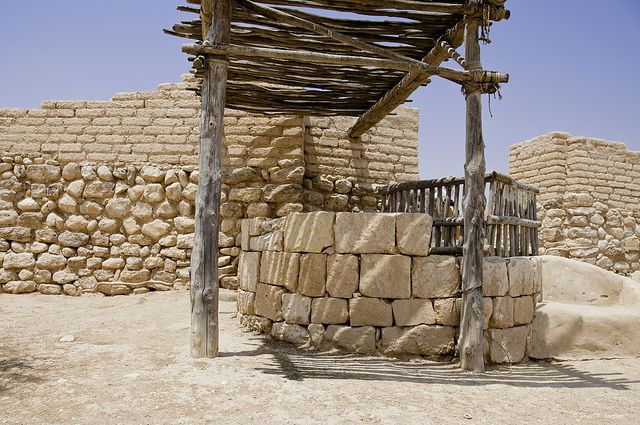
Rav Soloveitchik sees this theme appearing later in the parsha when Yitzchak re-dug the wells of his father and gave them the exact same names in an effort to keep the legacy of his father alive and to declare that rather than abandoning his father’s ways, he was embracing them fully and wholeheartedly. 


Intermarriage is not a Reform or Conservative challenge, it is not the problem of the “unaffiliated” or “secular.”  Too many Orthodox parents have reached out to me about their children who have gone through a robust Jewish education and grew up in observant homes who have met someone non-Jewish and are building a life with them. We are one people, one nation, and we are watching our family hemorrhage.  


This is a time for all of us to dig deep, to draw from the wellsprings of our heritage and our timeless Torah.   The parsha begins by telling us that “Yitzchak is the son of Avraham” but then continues, “Avraham bore Yitzchak.”  Yitzchak didn’t just emerge, Avraham was invested in him, spent time with him, exposed him to the beauty of his values and the meaning and joy of his lifestyle.  We must return to the wells of our forefathers, to bringing God back into the conversations in our homes, to celebrating the joy of being Jewish, and to be willing to sacrifice in our dedication and devotion to Torah lifestyles. 


To be clear, there are parents who are excellent role models, who are deeply and profoundly devoted to Jewish life and living and whose children nevertheless make their own choices about life and about religion.  There are no guarantees in life.  I share these thoughts not to assign blame or promote guilt or cast aspersions on anyone, but to motivate action and inspiration.


Someone once asked me to meet with a man and his son whom I didn’t know.  The son was in a serious relationship with a non-Jew and the father was devastated.  He was hoping I could meet and “talk some sense” into the son.  I will never forget the conversation in my office.  The father began by describing how betrayed he feels, how pained he is and what a mistake his son is making.  When he was done, the son turned to his father and said, Dad, you speak so self-righteously, you claim to care so much about Judaism and Jewish continuity, but what sacrifices are you making for your Judaism?  You have a casual attitude towards Jewish law, you pick and choose as you see fit, you are not consistent about praying or study.  You aren’t willing to give up the foods you love, the things you want to do, your time or energy and you want me to give up a girl I have fallen in love with who will make a wonderful wife and mother?


I was absolutely floored.  The son had made an articulate and compelling case, not in defense of his tragic choice, but rather as an indictment of a father he believed had no right to be surprised or upset.


If we have a casual and selective attitude towards our Judaism, what can we expect from our children and grandchildren.  We need to return to the wells that have sustained us and kept us hydrated throughout our history. We must double down on lifestyles of deep commitment to Jewish law, Jewish life, Torah study, character development and lovingkindness.  We must work to share our treasured Torah with Jews around us making outreach a priority, not only for outreach professionals but the responsibility of every concerned Jew. 


Hearing about intermarriage, whether in the highest office in the land, or anywhere else, is not something to “celebrate” or admire, it is something to grieve, to be pained by, but most of all, to be driven to do something about.  


2 Things Rav Dovid Feinstein zt”l & Rabbi Lord Jonathan Sacks zt”l Had in Common That We Can All Learn From

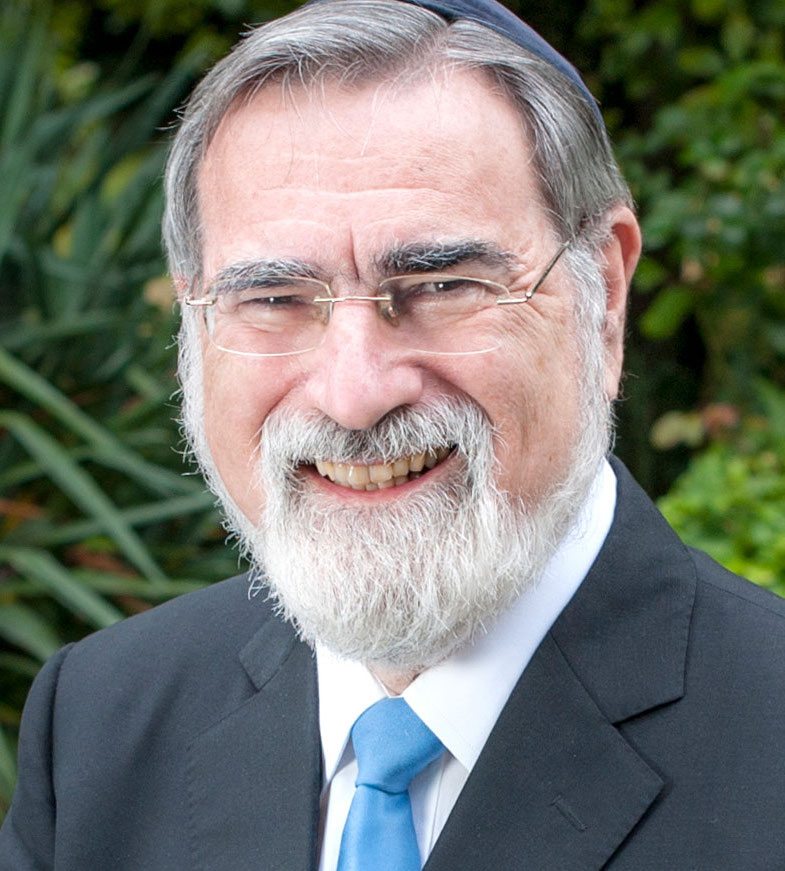
The world is a darker place this week as two great lights have been extinguished.  While Rav Dovid Feinstein zt”l and Rabbi Lord Jonathan Sacks zt”l achieved greatness in different ways and arguably among different audiences, they had infinitely more in common because they both spent their lives humbly devoted to the Infinite One. 


They were both geniuses, winners of the genetic lottery that endowed them with brilliant minds and memories.  But neither rested or relied on that gift; both were disciplined, diligent and, devoted to the study of Torah and the proliferation of its ideas and ideals. Both were prolific writers, and guidance and advice were sought from each of these luminaries.  Both were profoundly admired and revered, not only for their scholarship, intellect and wisdom, but even more for their humble characters, modest natures, and impeccable middos. 


Rav Dovid, as he was affectionately known, was an extraordinary Talmid Chacham, the final address on Halachic issues, referred to by Rav Elyashiv as the posek of America.  Rabbi Sacks was the Chief Rabbi, not only for the United Kingdom, but for countless around the world, Jew and non-Jew alike, who revered him for his insight, wisdom, and teachings.


When we learn of their achievements, we recoil in awe but unfortunately, many or most cannot relate, can’t imagine being able to accomplish a fraction of what they did.  And yet, with all their greatness in leadership and learning, there were two areas of greatness that every one of us can in fact emulate or learn.  Much has already been written about them, and more will be shared by people much closer and more competent than I.  But in thinking about their lives and legacies, I was struck by two things they had in common that should not go unnoticed, underappreciated or worst of all, under-imitated.


Both Rav Dovid and Lord Sacks, for all their genius and love of texts, were even more devoted and drawn to people. Both extended themselves, sacrificed to help others, gave generously of their time and resources, and were true ba’alei chesed. 


When Artscroll was struggling to survive, Rav Dovid loaned his life savings to their founders, his students, to keep it afloat.  When a Jewish newspaper asked prominent people if they could have three dinner guests for Friday night who would it be, while others answered with great personalities in Tanach, Talmud or from today, Rav Dovid answered he would have three poor people who need a meal.  


Rav Dovid’s gabbai once told Rav Dovid that he wanted to take him to the hat store to get a new hat. When they arrived, he asked Rav Dovid to try on a hat. Rav Dovid replied, “Me? I don’t need a new hat. I thought we came because you needed a new hat and you wanted my help choosing one.”  At his funeral, his son shared that towards the end of his life, when he was frail and infirm, he asked that it be shared that he asks mechila, begs forgiveness from anyone he may have hurt.


I participated in a Zoom call, mostly consisting of rabbis from the UK, reflecting on Rabbi Sacks and so many of them shared how he extended himself for them.  One young rabbi shared that when his father passed away, the very first phone call he got when he returned from the cemetery was from Rabbi Sacks who spent time offering comfort and strength. Rabbi Sacks, an introvert by nature who felt more comfortable sequestered in a library than socializing with others, spent countless hours with others lifting spirits, working to free agunos, resolving conflicts, and advocating for the Jewish people.  Several years ago, when BRS and I were attacked publicly for something that was completely untrue and I was feeling down and somewhat alone, I was shocked to answer the phone one day and find Rabbi Sacks on the other line, calling to simply offer companionship, support, and love.


The Mishna in Pei’ah which we recite each morning says:

אֵלּוּ דְבָרִים שֶׁאָדָם אוֹכֵל פֵּרוֹתֵיהֶן בָּעוֹלָם הַזֶּה וְהַקֶּרֶן קַיֶּמֶת לוֹ לָעוֹלָם הַבָּא. כִּבּוּד אָב וָאֵם, וּגְמִילוּת חֲסָדִים, וַהֲבָאַת שָׁלוֹם בֵּין אָדָם לַחֲבֵרוֹ, וְתַלְמוּד תּוֹרָה כְּנֶגֶד כֻּלָּם

“These are things the fruits of which a man enjoys in this world, while the principal remains for him in the World to Come: Honoring one’s father and mother, acts of kindness, and bringing peace between a man and his fellow. But the study of Torah is equal to them all.”


The simple understanding is that Torah study is so great, so central that it is equal to all the other acts of kindness and good deeds.  However, the Rebbe Reb Zusha explained the final expression differently.  K’neged kulam doesn’t mean Torah study is equal to them all.  Said Reb Zusha, it means, Torah is only valuable when it is k’neged kulam, when one does all the other mitzvos stated before it, such as: honoring parents, doing loving-kindness, hospitality, visiting the sick, etc. 


The second commonality that we could all not only admire but emulate is the way both Rav Dovid and Rabbi Sacks related to their wives and families.  They each received tremendous attention from followers and admirers, but never let it get to their heads or distract them from their families.  I saw a beautiful video this week of an elderly Rav Dovid, despite being surrounded by younger aides and talmidim, opening the front passenger door of a car for his Rebbetzin, helping her in, patiently waiting until she had settled into the seat, closing the door, and only then getting into the back.  He was known to help her on and off with her coat and be attentive to her, not only at home and in private, but at conventions and simchas when the masses were focused on him.  


I witnessed firsthand Rabbi Sacks’ love and affection for Lady Elaine on their visits to Boca Raton.  Indeed, she was always by his side throughout his world travels and packed schedule. He might have been the “celebrity” in any room, but he shared the spotlight with her, acknowledging her in each talk, speaking about her in such admiring ways, making sure she was comfortable and happy and always including her as his equal partner.  A rabbi from England emailed me this week and shared:  “Lady Elaine told me that one of the final things he told her, was ‘I couldn’t have done anything in my life without you.’”


We cannot all be gedolim in Torah, but we can all be gedolim, achieve greatness in chesed, in kindness, and we can be gedolim in humility and how we treat our spouses and families.  The world is severely bereft by these losses; Rav Dovid and Rabbis Sacks were each irreplaceable in their own ways.  While they would be tremendously proud to know we continue to study their works, I believe they would be even prouder to know we are walking in their ways.

Why Were Comments Disabled on My Last Article?

Last week, I wrote about why I believe rabbis should not tell people how to vote. While I feel strongly about why I think the candidate I voted for would bring about the results and policies I value most, I tried hard to communicate my thoughts in a way that wouldn’t indicate which candidate I was pulling the lever for.


Nevertheless, the response came fast and was furious. Indeed, aish.com posted the article and had to disable comments because they were so vicious from both sides. I am always grateful to receive feedback on my writing and was gratified so many chose to reach out to share their thoughts. 


I must admit I was surprised by a theme that emerged.  Many wrote that they agree in principle that rabbis shouldn’t mix religion and politics and shouldn’t endorse candidates or parties.  Nevertheless, they continued, this election is different, it is exceptional, and it is irresponsible for a rabbi not to be forceful in communicating whom to vote for. 


But that is as far as the common theme went, because the emails were then split between those who said this time is different because it is a moral obligation to not vote for Donald Trump while others said this time is different because it is a moral duty to vote for him.  Amazingly, half who reached out challenged how I dare be voting for Trump while the other half were outraged that I would be voting against him.  Shockingly, there were people brazen enough to say they could no longer listen to my shiurim if I was voting for the “other” candidate, without even knowing which way I voted at all!


Whoever wins this election, I fear that we have all lost. We have lost our sense of derech eretz, of civility, of the ability to disagree agreeably and to allow others to come to conclusions different from our own.  This is not who we are, who we are meant to be.  To be clear, this is hardly solely a Jewish or orthodox issue but a reflection of the polarization and division in the world today. 


The problem, though, is we are not meant to be a reflection of the culture in which we live, we are intended to be a model and inspiration for that culture.  The Netziv writes that the book of Bereishis is called Sefer Ha’Yashar because Avraham and his descendants were “yesharim,” they were straight, honest, had integrity and treated all people properly: 


The greatness of the Patriarchs in addition to the fact that they were righteous, pious and lovers of God as much as possible, is that they were straight and honest.  Namely, they interacted with the nations of the world, even repulsive, disgusting idolators, with love and an effort to improve their lives since they too are part of God’s creation.


Avraham, Yitzchak and Yaakov lived before the Torah was given.  We learn about their lives in depth because we are charged with emulating their interpersonal behavior.  Derech eretz kadma la’Torah.  Proper conduct, common courtesy, living with civility, all come before the Torah and are prerequisites to Torah.  Avraham was called “Ivri” because he was me’eiver, on the other side of every issue from the rest of the world.  He disagreed vehemently and passionately with his contemporaries but nevertheless he did so with civility, derech eretz, and graciousness.


Diversity is part of our motto and the dignity of difference is fundamental to our community’s mission.  We can disagree vehemently, see things in polar opposite ways, behave differently, vote differently, daven differently, and root for different sports teams.  What we cannot do is turn differences into divisiveness, or respectful debate and dialogue into bullying, vitriol, and demeaning language. We cannot call names or speak dismissively of others. 


Yes, there will be times that we must take strong positions, or make decisions that will have real consequences and implications, but we must do so with respect, dignity, and civility. Not only is it inappropriate, incorrect and unacceptable to speak harshly, it is also ineffective.  Nobody ever changed an opinion or observance because they were yelled at, called a name, or dismissed. 


Shlomo HaMelech teaches us in Koheles: Divrei Chachamim b’nachas nishma’im.  The more gentle, refined and respectful our communication, the likelier our position will be heard and perhaps even embraced.  It is not a coincidence that the same Avraham who was the “Ivri,” on the other side of every debate, also succeeded in winning over thousands of followers.  His methodology of respectful debate and the power of persuasion proved incredibly effective.


The Arizal writes that before davening each day all of us should recite, Hineni muchan u’mezuman l’kayeim mitzvas v’ahavta l’reiacha kamocha.  Why does the Arizal ask us to say it every day, doesn’t everybody know to love neighbors as themselves?  Isn’t it the “Klal gadol ba’Torah,” isn’t obvious?  And why specifically before davening and not at some other time?  


For the Arizal, when we are about to come to Shul, daven with the community, and interact with a diverse range of people, we must remind ourselves that our talk with God is only welcome after we have committed to talk properly with people.  V’ahavta l’reiacha kamocha.  “Love my children, even the ones you disagree with, even the ones you don’t like, and then – and only then – you can claim to love me,” says God.  “Talk nicely to everyone, even those who you differ from greatly, and then you can talk to me.”


Let’s continue to disagree, but agreeably.  Let’s continue vigorous debate, but respectfully, not divisively.  Let’s truly be the progeny of Avraham Avinu and treat every human being with dignity and honor and thereby, please God, ourselves be worthy of being called yesharim.

As an Orthodox Rabbi…I will Not Tell You How To Vote & Neither Should Anyone Else

This election cycle has brought us headlines such as, “Leading Orthodox rabbi endorses Trump for reelection” and “Leading Israeli Modern Orthodox rabbi condemns Trump.” 


We have orthodox rabbis publishing articles telling us, “Why (Orthodox) Jews Must Vote for Joe Biden,” and “The Case for President Trump.”


Ask most people if rabbis should endorse candidates or parties and they will say no. Ask them if they want their shul to be a place that clearly supports one candidate or party over the other and they will say no.  And yet, some of the same people will say that while those rules apply in ordinary times, these are extraordinary circumstances, there is so much on the line and it would be inappropriate to not speak out. 


Those encouraging rabbis to take positions, or the rabbis themselves, will defend weighing in on politics by saying this election is the most important of our time.  But my question is, when wasn’t it?  A quick look at news archives will show you that every single presidential election is referred to by many as “the most important election of our lifetimes.” Some will no doubt say, “but this election has enormous consequences,” to which I wonder, which election did not?  Most amazingly, the same people who will bemoan or react critically if a rabbi takes a position supporting the candidate they don’t, will happily share or point to an article or quote of a rabbi who takes the position that matches their own. 


Make no mistake, I appreciate as much as anyone how significant the issues of our day are.  This election could shape the character of our nation, and will surely result in meaningful policy implications for the economy, healthcare, pandemic response, race relations, the threat of Iran, the US-Israel relationship, Israel’s prospects for peace and much more. Like many of you, I have strong feelings about the importance of these issues and which candidate I believe is more likely to pursue them in the ways that I feel are best.  But here is the critical point—none of these are simple issues, these aren’t predictable times, and there are countless other variables at play. 


If the last eight months of this pandemic have taught us anything, it should be humility: how little we know, how little we control, and how little we can even predict.  While this is certainly true about coronavirus, it applies to every other issue as well. People who speak with certainty about how the next four years will go based on what candidate or party is in power would do well to keep this in mind. That isn’t to say we can’t have healthy and respectful debates, that we can’t advocate or campaign for the candidate, party, or policies we think will be best.


But what it does mean is that we should do it with a sense of humility, not hubris, with concern, not overconfidence, with hope and not  certitude.  The issues and personalities in this election, and the intersection of the two, are sufficiently complex that it shouldn’t be hard for anyone supporting either side to be able to say this simple statement: reasonable people can come to a reasonable conclusion in either direction. 


Imagine what our dialogue and debate would look like if it took place against the backdrop of subscribing to that statement as both the introduction to the conversation and the conclusion.  Reasonable people can come to a reasonable conclusion in either direction. Sure, it is fair, maybe even constructive at times, to try to persuade others to see things as you do, but if you can’t, acknowledge that not only is the other person entitled to his or her perspective, their opinion is reasonable, legitimate, and fair. The fact that they come to a different conclusion, even one you are convinced is wrong, doesn’t mean they have corrupt character, less patriotism, compromised commitment to Israel, or less devotion to Torah.


I am an orthodox rabbi, and let me be clear, as an orthodox rabbi, I am not telling you who you must vote for.  If Torah interpretation has 70 faces and Halacha is driven by the principle that Eilu V’Eilu divrei Elokim Chaim, contradictory opinions are both the word of the living God, then certainly in politics, l’havdil, reasonable, thoughtful, and respectful people can come to opposing conclusions. 


But this is a matter of life and death, you will say. My answer to that is you should research some of the Halachic disputes involving brain death, a quite literal life-and-death issue. On this sensitive, critical issue, some of our greatest Halachic decision-makers held opposing opinions, yet greatly respected each other, respected the other’s opinion, spoke of each other in the most dignified ways, and were genuinely close to one another.


While I will continue to defer to and submit to great Roshei Yeshiva and Talmidei Chachamim on matters of Halacha and Hashkafa, I don’t want them, no matter how “prominent” they may be, to decree whom I must vote for, diagnose the mental status of either candidate, tell me they know with certainty who is better for the Jewish people or Israel, or to oversimplify what is a truly complicated choice.  


What disturbs me most about rabbinic declarations dictating how we vote and articulating with complete confidence what will happen if we don’t is not just the unfair denial of people to think for themselves and draw their own legitimate conclusions, but I believe it is also a significant departure from an important Torah principle.


Long ago Shlomo HaMelech (Mishlei 21:1) taught us, “Palgei mayim lev melech b’yad Hashem, al kol asher yachpotz yatenu, the heart of a king is like a stream of water in the hand of Hashem, wherever He wishes, He will direct it.” We say every single day in our davening, “Al tivtechu b’nedivim, don’t place your faith and trust in princes and diplomats.”


As believing Jews, we recognize that it is the Master of the Universe who orchestrates domestic, foreign, and of course all policies and their consequences.  To be a student of Torah and of Jewish history is to recognize the Almighty’s guiding hand.  His hand guided our history and ultimately, it is His hand that is guiding our destiny, no matter the outcome of an election, even “the most important one of our time.”


Our rabbis tells us (Bamidbar Rabba 18a), “Harbei sheluchim la’makom, Hashem has lots of agents and messengers.” While we must make choices based on our finite and limited perspective, the vision of the Ribono Shel Olam is limitless.  We don’t know why He chooses to employ any particular person or leader in a given situation or time.  When the dust settles and the final votes are counted, the candidate that wins any election not only reflects the will of the people, but much more importantly, the will of our Creator. 


In this final week and perhaps even more importantly, in the aftermath of this election, I beg you to approach people with humility, to make room for those who conclude differently, and most of all, to daven and put our faith in the One who is truly the Highest of every land, Hashem. Daven for a peaceful reaction to the election, for unity and civility in our community and our country and for the ability to see Hashem’s hand in this and every other part of our lives.

Do You Come When Davening in Shul is Just Davening, in Shul?


I spoke to several rabbinic colleagues across the country this week who have all noticed a similar phenomenon.  Despite shuls having re-opened in safe and cautious ways, only a fraction of those “eligible,” i.e., those without specific vulnerabilities, secondary conditions, and are not considered “high risk,” have come back.  Some rabbis are panicking about what this means for the future and what our communities look like post-corona.  Personally, I do not share that fear.  I have confidence in our community, the people who comprise it, and what being together has to offer. 


There are likely many factors contributing to decreased participation since re-opening, which includes people who are not “locking down” in other areas of life, but it occurs to me that one of the fundamental reasons is that davening at shul has been reduced to, well, just davening at shul.  Let me explain.


There are many reasons people came to shul, all legitimate and meaningful, even if not equally so.  Some, of course, come to connect and open their hearts to Hashem, others to socialize, others to be part of community, yet others to enjoy kiddush or shalosh seudos.  With significant distancing, mask requirements and no food, the only reason to come to shul right now is to daven.  The beautiful byproduct, of course, is essentially no talking during davening whatsoever.  The awful unintended consequence is missing so many of our beloved members. 


While I am sure that the people who are not returning to shul are davening either at home or elsewhere, I believe the absence of a desire to come back to a shul that lacks anything other than davening is a sign that people are struggling with connecting to davening itself.


I am saddened not only to miss so many friends and members of our BRS family, but truly devastated by the reality check of how many people seem to be dealing with this struggle, to get enough out of davening that they would continue to come to shul even if the basic prayer services are all that is happening currently.  To be clear, I am not blaming anyone or issuing judgment as much as sharing this observation in hopes we can bring a change.


I recently listened to an interview with Naval Ravikant, an Indian-American entrepreneur and the co-founder, chairman and former CEO of AngelList. He was reflecting on how doing daily meditation has radically improved his life.  His description jumped out at me for several reasons:


You sit there for 60 minutes. So unfortunately, not less than an hour at a time, because it takes 30 to 40 minutes to sink in past the initial chattering. So you get to the good part or the so-called runner’s high equivalent. And you sit for 60 minutes every day and you do it for at least 60 days. And you do it first thing in the morning. When your mind is clear and you’re alert and you’ve had a good night’s sleep.


And you sit up with your back straight and you can use cushions, or you can use a chair or whatever. There’s no magic position. And just whatever happens, happens, whatever your mind wants to do, you just let it do. If it wants to talk, you let it talk. If he wants to fight, you let it fight. If it wants to be quiet, you let it be quiet. If it wants to chant the mantra or pay attention to breathing, you can do that, but you don’t force anything.


You just kind of let it happen. And so you don’t fight it. You don’t resist it. You don’t argue with it. You don’t double down on it. You just kind of let things happen. And when you do that for at least 60 days, my experience has been that you kind of clear out your mental inbox and all the craziness that was going on. All the chattering will come out. Some problems will get resolved. You will have some epiphanies. You will make changes to your life.


Some will be self-examination, some of it, you just get tired of, some of it just needs to be heard once, and then it goes away. And eventually you will get to a mental state of inbox zero, where now you’re just thinking about what happened yesterday. You’re kind of caught up and your mind is relatively clear and just your anxiety level goes down. You’re living more peacefully. And I’ve been doing this for about two and a half years now.


And I’ve probably missed about a dozen days total. But there are some days where I’ve done two hours a day or more. And I will tell you that is the single most important thing that I do. It is a sheer joy. Much of it is highly entertaining, pleasurable. Sometimes it’s just flat. It’s nothingness. I can’t even tell you why I do it. I can’t even tell you what’s going on in that state, but I will tell you that time spent by myself is the most important time that I have.


And thanks to that, I am now much more self-contained. I don’t feel like I need other people. I don’t need external sources of pleasure or happiness all the time. I drink less. I’m not attracted to trying any drugs whatsoever. It’s just, life is easier. It’s more pleasant. I don’t take things as seriously. I’m not afraid of my mortality as much anymore. I don’t fear aging. I don’t lust after things.


I don’t have this constant pervasive need to find something outside of me to make my life better. When the best hour of my day is spent by myself, then the world has very little to offer me and I can still participate in it, but it doesn’t have that grip on me that it used to. I don’t fear solitary confinement. And I think that is a superpower. And I think everyone should have it. Everyone does have it. It’s easy.


It requires doing nothing. It’s your birthright. You can’t fail at it. There’s no way to fail at it. Literally all you have to do is just sit down and close your eyes and just be by—give yourself a break for an hour every day. Just take the time off from the world.


I appreciate that davening is meant to be very different from meditation.  But it is a misnomer to think the entire davening is spent talking to Hashem.  In fact, only during the Amidah are we standing before our Creator in conversation.  For that conversation to be meaningful, intimate and effective, we spend the rest of “davening,” both before and after the Amidah, in conversation with ourselves about Hashem and about His role in our world and our lives. 


Ideally, we should be present with our thoughts and feelings for every word of davening from beginning to end.  Nevertheless, the Shulchan Aruch (Orach Chaim 1:4) writes that it is preferable to daven less with more meaning than to daven the entire text without any concentration or mindfulness.  We are meant to be transformed from davening, enriched, invigorated and elevated. 


For many people, davening is the only time of day not connected or attached to technology, anything or anyone else.  It is our alone time, lost in our thoughts, in the words that are designed to calibrate our priorities and to stimulate us to think about what matters most and evaluate who we are and how we are doinig.  Shemoneh Esrei is called the personal Amidah because each one says it privately, on their own, adding their own words and coming from their own specific place.  


When I shared Naval’s words from the interview with a friend, he wrote back, “1 hour, wow.”  I reminded him that if you add up Shacharis, Mincha and Ma’ariv daily, we are already there, we just don’t think of it in that way or sadly anticipate getting that benefit from it. 


Wearing a mask for davening is miserable, but it also provides an opportunity.  Even in a room filled with people, it enables a sense of privacy; nobody knows when your lips are moving and when they are still.  Behind the mask, we can stand or sit with our eyes closed,  with only our thoughts, dreams, hopes, aspirations, concerns, needs and wishes.  The mask eliminates the inhibition and awkwardness of being lost in true prayer, while not saying any words. 


If safety and health are not holding you back from coming to shul regularly and yet you have not returned, ask yourself why not, and what does it mean about your relationship with davening for davening’s sake?  If you are coming back, you are already allocating significant time each day to not only fulfill a mitzvah but engage in an activity meant to meaningfully impact us.  Why not figure out how?


I long for and look forward to the time we will all be back together, on campus, as a unified community.  I sorely miss the symphony of voices produced from sections of our orchestra noticeably absent, including children and our older population.  We and our davening are simply not the same without you. 


Until then, let’s pass this most unwelcome litmus test about why we daven at shul with flying colors and transform our davening into the type of experience that leaves us inspired. As Naval said, “It’s your birthright… give yourself a break for an hour every day. Just take the time off from the world.”

I Almost Lost a Friend Over This

A month ago, I had a very uncomfortable and sad conversation, or at least it started that way.  Someone I consider a close friend had distanced himself and I called to check in and see if there was a reason why.  While I never discuss politics from the pulpit, both to honor our non-profit status and my own commitment not to abuse my position, and I have never publicly endorsed candidates or parties, I am happy to share respectful dialogue on these things as a private citizen. 


This friend and I had shared several such conversations and after consideration, he had come to the conclusion that if I am open to voting for a candidate that he cannot even consider, he questioned how he could trust my insights or judgement on other issues or matters.  Suffice it to say, I was extremely taken aback and, frankly, shocked that he would reduce not only our whole relationship but his entire opinion of me to this one decision, albeit a significant one. 


There is no question that the stakes seem very high in this election.  In this culture of deafening rhetoric and devastating divisiveness it is easy to get emotionally involved and invested in not only defending our own political positions but in being frustrated and even angry and intolerant at how others could come to different ones, particularly family and our closest friends. 


While we tend to focus on how radically different the candidates in this election are in both their personality and policies, the fundamental commonalities among those who will make the choice between them far outweigh our differences. 


After hearing my friend’s reason for pulling back, I told him that while we may disagree vehemently and viciously about this particular decision that divides us, we agree just as fervently and passionately about all that unites us which is far, far more.  We are both proud Jews who love, value and share a commitment to Torah.  We are both loyal patriots who are deeply appreciative to this country. We share a passion for Israel and see it as having religious significance in our lives. Our families have a shared history together, we had celebrated together, cried together, even traveled together.  


I told my friend that there will be a day after the election when, no matter the outcome, we will both root for the success of the president and our lives will be dominated again by all we have in common, all we have shared and all that we love and admire about one another.  By the end of our conversation, to my great relief and joy, our friendship was back on track. 


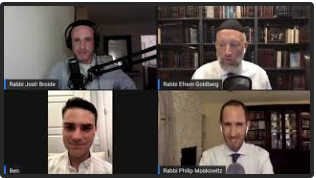
This week, we hosted Ben Shapiro on our Behind the Bima program. Ben has written eleven books, hosts a podcast/radio program listened to by millions of people daily and has millions of followers online.  He proudly identifies as an Orthodox Jew and wears a yarmulka consistently during all his appearances, interviews and on his own show. 


Ben is beloved by many for his strong conservative positions and equally strong style of communicating them.  He is reviled by others who are turned off to his substance, his style, or both.  When we announced he would be a guest on our show, several people reached out to me wondering why we would introduce divisive politics to our show.  I told them we had no intention of talking politics and they insisted it would be impossible.


For forty minutes, we talked to Ben about his upbringing and background, how his Judaism impacts his views, how he relates to people in the community, whether he regrets things he has said and how he said them, why he learns Daf Yomi, what lessons he gleans from Tanach, how he uses davening to disconnect and experience peace, and much more.  An interview with one of the most listened-to political commentators in the country and we didn’t engage in political discussion at all.  After the show, even one of Ben’s biggest critics I know said the conversation was fascinating and he was very likeable when not talking politics. 


I share that not to endorse or promote Ben Shapiro specifically but as an example of how even with someone considered by some to be a polarizing figure, if we focus on what unites us rather than divides us, on what we have in common, rather than what separates us, we can learn from one another, enjoy each other’s company. When we zoom out the lens and consider the total person not one particular view or component of who they are, we may even be able to find the other “likeable.”


As this election grows even more intense as it approaches, it is not too early to be thinking about the morning after and the impact of the tone, tenor, and vocabulary of the conversations we are having now. Sadly, I know of too many friends and family members that are having similar experiences as me and my friend before we had our much-needed conversation. 


Certainly, we are entitled to make our voices heard, to express our concerns, criticism, and critiques. Indeed, at the core of our democracy is the recognition that others are permitted to see things differently and to share their point of view without fear of being slandered or censored.


The Gemara (Berachos 58a) states, “Just as the faces of people do not exactly resemble one another, so too their opinions do not exactly resemble one another.” What is the comparison between faces and opinions? Rav Shlomo Eiger (1786-1852) explained that we would never become exasperated or disturbed that someone’s facial features are different than ours. We wouldn’t condemn or criticize someone for having different color eyes or hair than we do. We implicitly understand and recognize that everyone is created differently and our physical differences are part of what weaves the wonderful tapestry of our interconnected lives. Similarly, we should recognize that everyone’s opinions are the result of their being created differently and raised differently. Just as someone is entitled to look different, so too are they entitled to think differently and approach things differently without harsh disapproval or condemnation.


Our practice of taking three steps backward at the conclusion of the Amidah comes from a Gemara in Yoma (53) which states, “Hamispaleil tzarich she’yafsiah shelosha pesios l’achorav v’achar kach yitein shalom. The one who prays must take three steps back and only then pray for peace.” R’ Menachem BenZion Zaks (in his commentary on Pirkei Avos) explains that we cannot pray for, nor achieve, peace if we are not willing to step back a little and make room for others and their opinions, their tastes and personalities. After stepping back, we ask “oseh shalom bimromav, God, please bring peace,” and we then turn to the right and to the left. Explains R’ Zaks, achieving peace and harmony means bowing towards those on the right of us and those on the left of us, not just straight ahead on our path.


Maintaining the capacity and the will to bow towards those on the right and left of us religiously, politically, and in every other way is a prerequisite to the peace we claim we desperately seek and yearn for.


If debating this election will not change minds but only create divide, why have the conversation?  And if we do entertain them, remember, the opinion of the person you are dialoguing with is only one component of who they are.  When you can’t relate at all to that particular perspective or policy, zoom out the lens and remember how much you relate to about the totality of who they are and how much you share with them

Admitting “I Don’t Know” is a Sign of Strength, Not Weakness

Mark Twain once said: “It ain’t what you don’t know that gets you into trouble. It’s what you know for sure that just ain’t so.” Nobel prize winner Dr. Daniel Kahneman put it a little differently: “We’re blind to our blindness. We have very little idea of how little we know. We’re not designed to know how little we know.” Indeed, when asked what he would eliminate in the world if he had a magic wand, Kahneman answered with one word – overconfidence.


Overconfidence has been blamed for the sinking of the Titanic, the nuclear accident at Chernobyl, the loss of Space Shuttles Challenger and Columbia, the subprime mortgage crisis of 2008, the great recession that followed it, and the oil spill in the Gulf of Mexico, among other things. Overconfidence has brought personal financial disaster, imploded relationships and ruined lives.


One person who understood this was Shlomo HaMelech, the wisest of all men. In Koheles, which we read on Sukkos, he describes his efforts to explore and understand.  אמרתי אחכמה והיא רחוקה ממניI said I will be wise, but it remained elusive to me.” Shlomo confesses that he tried, analyzed, contemplated, but at the end of the day, he came up short; complete understanding was beyond his grasp.


What is Shlomo referring to and why do we specifically read his words on Sukkos, the holiday marking our greatest joy? What did he try to apply wisdom to but was unsuccessful? Most say he is talking about the quintessential chok, the parah adumah, whose law is paradoxical. The impure person is purified from its ashes, but the pure person becomes impure. Shlomo tried to understand its mechanics, how and why it worked, but in the end, he concedes, rechoka mimeni, it is too distant.


Rav Yosef Shaul Natanson, the Shoel U’Meishiv, has a different interpretation. He says the word v’hi in “v’hi rechoka mimeni” refers to the entire Torah. He understands Shlomo HaMelech as telling us: After I saw that I could not comprehend the reason for parah adumah, I realize that the reason for everything in the Torah was entirely beyond me.


Someone once challenged the Chazon Ish about the challenge of theodicy, how bad and painful things can exist in the world. He was driven to make sense and understand the suffering. The Chazon Ish showed him a Tosfos and asked him to explain it. The man tried but failed to interpret or understand the Tosfos. The Chazon Ish told him, “If you don’t understand a few line of Tosfos, how do you expect to understand the ways of Hashem, which are concealed from all mankind.”


We say in Tehilim, מה גדלו מעשיך ה׳ כולם בחכמה עשית…איש בער לא ידע וכסיל לא לבין את זאת, How great are your ways, Hashem.. A fool doesn’t understand them…” R’ Meilech Biderman wonders why Dovid singles out the fool as not understanding them, when even the wise can’t comprehend the ways of Hashem? He explains, what makes someone wise is that they know what they don’t know. The fool suffers from overconfidence, thinks they understand and know everything. The fool thinks he or she has all the answers.


We live in a world that makes us feel that if we say “I don’t know” or “I don’t have a strong opinion about that” we are uninformed, weak or unsophisticated. But we come from a tradition that says exactly the opposite. Humility, nuance and admitting that we don’t know are not signs of weakness, but strength. They don’t display ignorance; they show that we are informed enough to know that we can’t possibly know absolutely.


The Gemara (Berachos 4a) states, דאמר מר למד לשונך לומר איני יודע שמא תתבדה ותאחז “Teach your tongue to say ‘I do not know, lest you become entangled in a web of deceit.” Our greatest scholars didn’t hesitate to say “I don’t know,” causing us to think more, rather than less of them, and to place greater confidence in the things they did purport to know. Rashi, without whom the Talmud would be a closed book, is famous for the several places in which he writes, “eini yodei’ah, I don’t know” regarding the meaning, interpretation, or relevance of a particular verse or statement.


I had the privilege to sit in Mori V’Rabbi, Rav Hershel Schachter’s shiur for several years. I truly appreciated his greatness not when he quoted from the width and depth of all Torah by heart, but rather, when someone asked him a question and he humbly and simply said, I don’t know.


Perhaps this passuk is why we read Koheles on Sukkos, zman simchaseinu. Feeling entitled or capable of understanding everything only sets ourselves up for disappointment, brings about a failure of overconfidence, and leaves us feeling down, incomplete and unfulfilled.


This pandemic and Covid-19 specifically should humble us all.  The greatest experts and most brilliant minds have struggled to understand, predict and even guide us.  This shouldn’t make us lose confidence in others who are doing their best as much as it should make all of us more humble, modest and willing to admit the limits of our knowledge and understanding, not only regarding this, but regarding everything.


Of course, we should pursue understanding, try to gain wisdom, and obtain insight. But we must admit and concede that we can’t have the answers to everything and there are things we just can’t understand. Listen to the advice of the wisest of all men: If you want to be happier in your marriage, at work, in your relationship with your children and with Hashem, learn to say ״I don’t know״.

Rabbi Efrem Goldberg

Join Our Community

Subscribe to our newsletter or connect with us on WhatsApp.