It’s Never Too Late to Be What You Might Have Been

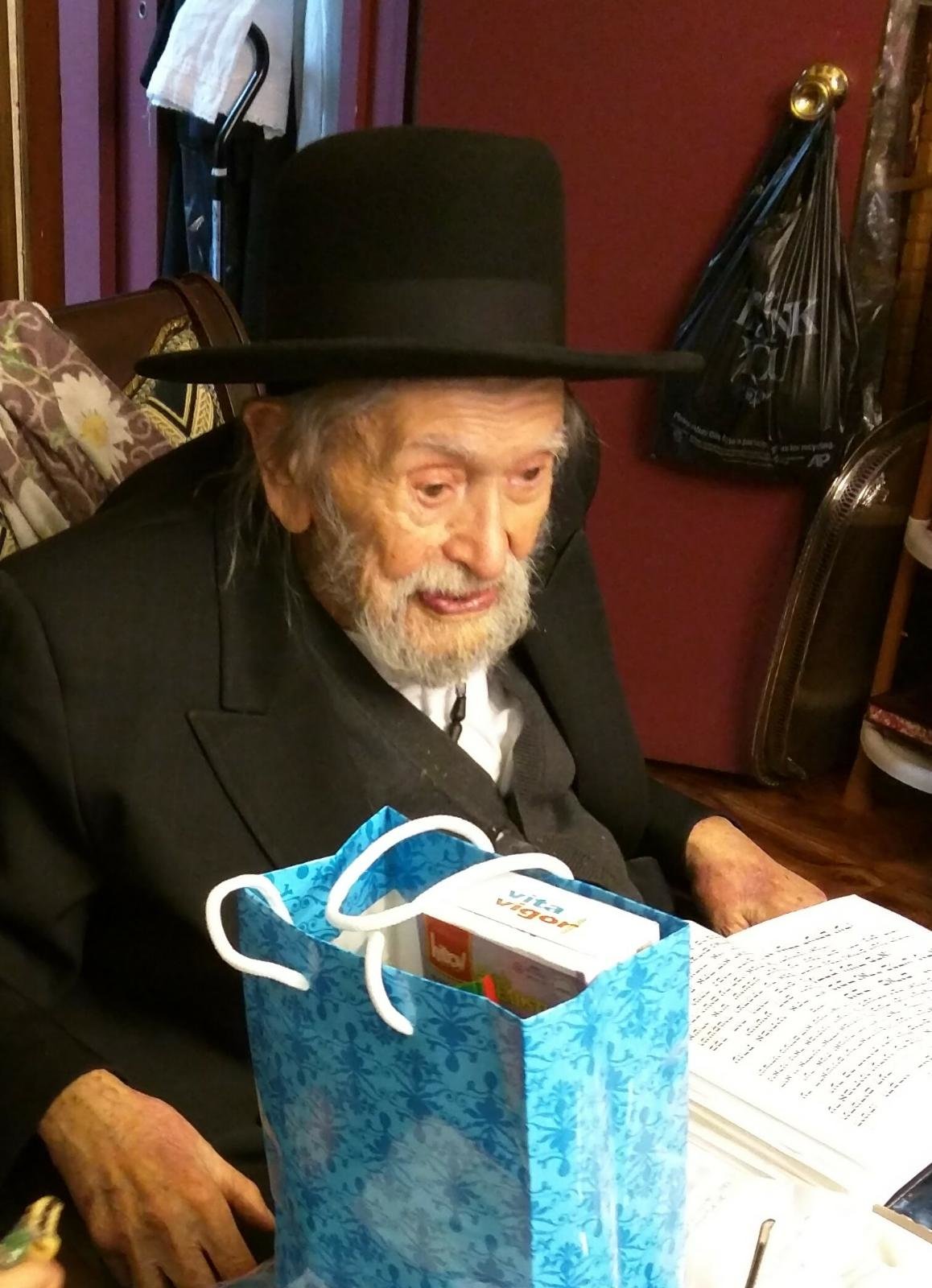
In December of 2018, Yehoshua Zvi Hershkowitz passed away at the age of 92.  You probably never heard his name and that is exactly how he wanted it.  Mr. Hershkowitz was born in 1925 in Hungary. After the Germans occupied the country in 1944, he was deported to Dachau and spent the next year there, surviving on meager rations of bread and soup.  After liberation, he made his way to the United States, moved to Borough Park and got married.


In 1975, he became aware that a neighbor of his was struggling to put food on the table and he realized there must be more people struggling like his neighbor.  So, Mr. Hershkowitz founded Tomchei Shabbos out of the kitchen of his home in Borough Park.  He and friends began gathering the ingredients of traditional Shabbos meals and dropping off packages of food by station wagon at the homes of those they heard were wanting. From this humble beginning, Mr. Hershkowitz built an organization that every week distributes meals to 600 families in the Borough Park area.


His concept and the name were rapidly imitated. Today there are Tomchei Shabbos organizations in New York, Boca Raton, Los Angeles, Toronto, Washington, Phoenix, Miami, Antwerp, London and other world cities, as well as dozens in Israel.  Thousands of families have food to eat only because of the vision and hard work of a survivor who earned a living working in the Post Office in Brooklyn, but earned immortality by caring enough to think about struggling people around him. 


His Tomchei Shabbos branch grew to a point where it deployed a fleet of 16 trucks to deliver food packages each week.  He personally raised millions of dollars to fund it.  He was constantly out of the limelight, took no pay for his work and never accepted public recognition. In fact, the New York Times obituary for him pointed out that he even rejected the prestigious sixth Torah Aliyah in his shul.  When the Gabbai tried to convince him to accept it, he replied, “I’m sorry, I’m a plain Jew.”


Too many today associate going viral with adding value.  They think the greater the name recognition, the greater the person, the more friends and followers on social media, the more of a difference someone is making.


Though our parsha begins with Hashem talking to Moshe, rather than use his name, it simply says the pronoun “and you.” Indeed, this is the only parsha in the Torah since our introduction to Moshe in which his name does not appear.  Commentaries scramble to explain why the omission and why specifically in this parsha?  


The Ba’al HaTurim explains that when Moshe pleads with Hashem to forgive the people after their horrific mistake in building a Golden Calf, he says “erase me now from Your book which You have written.” Hashem takes Moshe up on the offer and, indeed, his name is erased from our parsha.


The Lubavitcher Rebbe (Likutei Sichos v. 21) takes an entirely different perspective, one that turns our assumption on its head.  He explains that Moshe is not missing from the parsha at all; in fact, he is even more present than usual.  But where? 


Says the Rebbe, he is found in the very first word “v’ata”, and “you.” A name is how we are known and how we are referred to and referenced by others.  However, we exist even before we have a name, even before others label us.  The word “you” refers to the essence, the core of who the person is, far beyond the name by which they are called.  “You” reflects the soul with its unique character, personality and mission for which it is created.  “You” is the person with no interference from others and no need to be identified or acknowledged by others.


God Himself testifies that Moshe is the greatest “anav”, the most humble person who ever lived.  His life was not dedicated to his honor or glory. It was devoted to the mission of repairing Hashem’s world, to helping people and to actualizing the potential for which he was created.  Moshe spent his life seeking to fulfill his “You,” not to advance or promote his “Moshe,” his name or standing. 


Mark Twain famously said, “The two most important days in your life are the day you are born and the day you find out why.”  We each have a mission; we were born for a purpose.  We each have talents, skills and assets that can make a difference.  We were not born with them to simply have a nicer house or car, to drink a more expensive bottle of wine or to enjoy the most channels of cable TV.  We are here to make a difference, to matter, not so that our name goes up in lights, but so that our essence makes the difference it was meant to make. 


George Eliot once said, “It’s Never Too Late to Be What You Might Have Been.” Don’t just be a name for others; be a “you” to realize your truest self.  Figure out what difference you can make, and then go make it.  Don’t just be what you might have been.  Be what you are still meant to be. 

A Year Ago We Put on Masks For Purim and Haven’t Taken Them Off Yet

While Purim is normally one of the happiest days on our calendar, this year it will mark a sobering milestone.  Purim will essentially mark a full year of living through a pandemic that has radically changed our lives. While we are beyond grateful for the progress with treatments and vaccinations, the return to some sense of normalcy doesn’t seem imminent.


In ordinary times, when we meet someone, we shake their hand.  Why not nod, bow, smile or just say hello?  The history of the handshake dates back to the 5th century BCE in Greece. Shaking someone’s hand showed you weren’t approaching with a weapon.  It was a gesture to communicate that you came in peace, that you posed no threat. 


But while handshaking began as an effort towards safety and peace, during this pandemic, it came to symbolize a simple threat.  And so, it is now a year since we last shook hands, a year since we hugged anyone outside of our immediate family, a year of distancing from people we want to feel close to. 


Who knew a year ago that when we put on a mask for Purim, we would still be wearing a mask a full year later?  How can we not be anxious for this to finally end, frustrated by how long it has gone on, and concerned with how uncertain the future is?


Towards the ends of the Megillah, we are told how the holiday that we will observe this week, all these years later, came to be.  The 14th and 15th were dedicated to observe and celebrate.  Why were these days chosen?  The Megillah tells us because that is when אֲשֶׁר־נָ֨חוּ בָהֶ֤ם הַיְּהוּדִים֙ מֵא֣וֹיְבֵיהֶ֔ם, the days the Jewish people “rested from their enemies.” 


Isn’t that a peculiar way of choosing a holiday?  Shouldn’t it be designated based on when they defeated their enemy, triumphed over their enemy, were victorious over their enemy?  Why because asher nachu, they found peace and rest from their enemy?


To answer, we look to a different reading from this time of year. Each year, the Torah mandates us to stop, pause and remember what Amalek wanted to do to us.  Amalek the people, but just as important, Amalek the philosophy, seeks our destruction, our utter elimination.  Amalek’s methodology is not limited to physically attacking, overpowering, and destroying.  Amalek is also satisfied with crushing our spirit, with breaking our faith. 


The Torah tells us that the attack from Amalek was unexpected.  The people weren’t prepared.  Amalek came suddenly, from behind, and startled them.  Amalek thrives by confusing their enemy, by evoking a sense of panic and hysteria in their opponent.  When they create a paranoia, instill a fear and worry, when they deprive the Jewish people of a sense of tranquility and serenity, they have essentially accomplished their goal; they have won. 


When the world was created, the Torah tells us:


וְהָאָ֗רֶץ הָיְתָ֥ה תֹ֙הוּ֙ וָבֹ֔הוּ וְחֹ֖שֶׁךְ עַל־פְּנֵ֣י תְה֑וֹם וְר֣וּחַ אֱלֹהִ֔ים מְרַחֶ֖פֶת עַל־פְּנֵ֥י הַמָּֽיִם׃

The earth being unformed and void, with darkness over the surface of the deep and a wind from God sweeping over the water—


The Midrash (Bereishis Rabbah 2:4) expounds:

רַבִּי שִׁמְעוֹן בֶּן לָקִישׁ פָּתַר קְרָיָא בַּגָּלֻיּוֹת, וְהָאָרֶץ הָיְתָה תֹהוּ, זֶה גָּלוּת בָּבֶל, שֶׁנֶּאֱמַר (ירמיה ד, כט): רָאִיתִי אֶת הָאָרֶץ וְהִנֵּה תֹהוּ. וָבֹהוּ, זֶה גָּלוּת מָדַי (אסתר ו, יד): וַיַּבְהִלוּ לְהָבִיא אֶת הָמָן.


The Torah’s choice of words in Bereishis explicitly evokes our Megillah. The exile of Persia in which the Purim story takes place is characterized by chaos, craziness, frenzy, and hysteria.  When they come to get Haman to bring him to Esther’s party, the Megillah says וַיַּבְהִלוּ לְהָבִיא, they scramble to bring him, they rush and come suddenly and hurriedly.  The galus of Persia is בהלה, the power of Amalek is to take away yishuv ha’daas, to be a disrupter.  This was Haman’s goal, his mission.


כִּי֩ הָמָ֨ן בֶּֽן־הַמְּדָ֜תָא הָֽאֲגָגִ֗י צֹרֵר֙ כָּל־הַיְּהוּדִ֔ים חָשַׁ֥ב עַל־הַיְּהוּדִ֖ים לְאַבְּדָ֑ם וְהִפִּ֥יל פּוּר֙ ה֣וּא הַגּוֹרָ֔ל לְהֻמָּ֖ם וּֽלְאַבְּדָֽם׃

“Haman had plotted to destroy the Jews, and had cast pur—that is, the lot—with intent to confuse, complicate, disrupt, destroy and exterminate them.”


There is an Amalek energy in us, a negative voice that says, “Panic! Be hysterical, have no peace of mind, be anxious, worried and deprived of happiness and calmness.” 


We defeat the Amalek around us and the Amalek within us when we find the capacity to show faith, to stay calm, and to carry on with confidence.  Says Rav Avraham Schorr in his HaLekach V’Halibuv, that is why our rabbis made the holiday of Purim not directly correspond with the physical defeat of Haman, but specifically with the asher nachu part of the story, when we restored our menuchas ha’nefesh, we found a way to be calm, to live with confidence, to have a peace of mind, to find faith, no matter what.


Panicking, becoming frantic, worrying about what is, what will be, stressing over things that we cannot control, is the influence of Amalek, it is the voice of our enemy who seeks to deprive us of happiness, to rob us of serenity.  It is not who we are and who we can be.  We are God-fearing Jews of deep faith.  We believe in taking our initiative, making our effort, and then relying on our Creator. 


As challenging as these times have been and remain, as much as we still, nearly one year in, don’t know about what will be, we cannot and must not forfeit our lives and our happiness in the very month in which we are told to be happier than ever, to have greater confidence and trust, to believe there is something so much bigger than ourselves and therefore to find the capacity to stay calm. 


In 1939, in preparation for World War II and in an effort to raise the morale of the British public, the British government printed 2.5 million copies of a poster to be hung in all the major cities in England.  It displayed a simple message that still resonates 70+ years later:  Keep Calm and Carry On.


There is still so much we cannot control, so many variables we cannot predict.  One of the few things we can regulate is our menuchas ha’nefesh, our sense of calm and of peace.


As we come up on a year of wearing a mask, let us make an extra effort to be mindful of the impact of Amalek-type thinking on our lives, and pledge no matter what, to Keep Calm and Carry On. 

Have You Contributed to the BRS Global Campaign? If Not, Why?

Imagine someone found your credit card statement and reviewed it.  What would they conclude about your values, priorities, what you consider essential and nonessential? Does your actual spending match your expressed values?  How much do you spend a month on streaming entertainment and how much on streaming shiurim? 


During the pandemic we were painfully precluded from offering shiurim and programs in person. Right from the start, BRS pivoted to bringing our programming online—at first for our members, but, we soon discovered, for many outside Boca Raton who connected with our values, vision and Torah, as well.   


There are thousands of people each week, on Zoom, Youtube, Whatsapp groups, Facebook, and more, who benefit from our shiurim, classes, programs, conversations, writings, and posts.  While our core community of course remains our local BRS members, Corona created a BRS Global Community learning together, being entertained together, and sharing values and vision together with our local members.  It is tremendously gratifying and rewarding that in February alone, our youtube channel (youtube.com/rabbiefremgoldberg) had over 32,300 views.  


This week we are once again running a campaign inviting non-BRS members to show appreciation and to partner and enable us to provide these learning opportunities beyond Boca.  (Please visit brsonline.org/global to find out more)  We pour our hearts and souls into all we do, we regularly hear the most heartwarming and gratifying feedback and encouragement.  Does the response to the campaign reflect the number of people who watch, listen, read and tell us they enjoy? 


The truth is, am I any different?  Can I possibly even put a dollar amount on the value I receive from YUTorah.org, Sefaria.org, Wikipedia, and other free resources that I use regularly?  And yet, I am embarrassed to confess that most often, when the annual pop-up opens saying that the website is free and relies on voluntary donations, I simply X out and proceed to take full advantage of what is being offered. 


When I came to this realization, I went to these websites to do my part, but it got me thinking, why wasn’t my first instinct to give? 


Last week we begin the first of four special readings, Parshas Shekalim.  Every man over twenty was obligated to give one half-shekel weight of silver, approximately nine grams of silver, worth about $7.86 today, which was used to operate the Beis HaMikdash and which rendered the animals purchased with these funds truly communal sacrifices.  This required gift had an unusual condition:


הֶֽעָשִׁ֣יר לֹֽא־יַרְבֶּ֗ה וְהַדַּל֙ לֹ֣א יַמְעִ֔יט מִֽמַּחֲצִ֖ית הַשָּׁ֑קֶל

“The rich shall not pay more and the poor shall not pay less than half a shekel…”


Why not let the rich pay more and cover the entire cost of the communal sacrifices?  Wouldn’t it make sense to let the poor preserve their money to support themselves and allow the wealthy to underwrite the communal activity?  And why is this command even necessary? Wouldn’t each individual want to contribute to be counted among the community and be among those supporting the communal sacrifices?


The tendency of people to assume “someone else will take care of it” is not new.   Someone else will pay, someone else will volunteer, someone else will lead.  The Torah reminds each individual that it is not someone else’s responsibility or obligation but our own.  To be counted among the community, it isn’t enough to speak about values, one must act on them.  It isn’t enough to say one cares, one must exhibit commitment.


The more our benefit is anonymous, cloaked by our device, the less we feel obligated to contribute or show appreciation for the value added to our lives.  It is easy to X out of the appeal and move on to the website, there is no shame, no embarrassment. But that doesn’t make it right. 


In Judaism, gratitude is not a debt we pay, it isn’t simply a means of making the one who gave us whole.  Gratitude isn’t just for the recipient; it is for the one who gives it to express humility and a recognition of being dependent on one another.  Moshe was not allowed to strike the Nile, an inanimate river, because he needed to show appreciation, even if the Nile wouldn’t have missed it had he not.  


Contributing, even when it isn’t required, giving, even when it isn’t demanded, is a great expression of appreciation, a statement of who we are, even more than how much we value the one we are giving it to.   


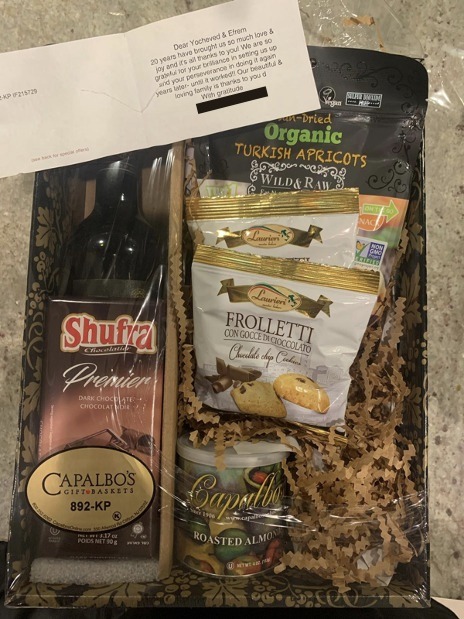
Last year, Yocheved and I received a gift basket delivered to our home with a beautiful note.  It was from a couple we set up who were celebrating their 20th wedding anniversary and wanted to acknowledge our role in their introduction.  They have said thank you many times, we didn’t expect or need anything.  (Frankly, I had no idea it was their anniversary.)


Have we thanked those who contributed to the lives we are blessed to live? Imagine if our kindergarten teacher got a note from us, decades later, thanking her for nurturing us with love. Imagine if our high school principal, our childhood pediatrician, our housekeeper growing up who cleaned our room, out of the blue got a gesture of gratitude showing that we cared enough to track them down and say thank you after all of these years. Did we express enough appreciation to the person who set us up with our spouse, gave us our first job, safely delivered our children?


In 1943, Eric Schwam arrived in Le Chambon-sur-Lignon, in southeast France, with his parents and a grandmother.  During the Holocaust, a pastor of this town and his wife led calls to protect Jewish refugees from the occupying Nazis.  The village became a center of resistance and ordinary residents took in and hid those who fled, including Schwam and his family. 


Last year, Schwam passed away at 90 years old.  The town’s mayor revealed that he left the town that had saved him $2.4 million dollars.  One of the town’s workers said, “He was a very discreet gentleman and he didn’t want a lot of publicity about his gesture.”


Seventy-eight years later, with no obligation or responsibility, Eric Schwam showed gratitude, not just with words but with resources.  He didn’t do so for honor, fame or attention, he didn’t do it because he was asked to, he did it because he felt it was the right thing to do. 


We are tremendously grateful to all those who have already given to our campaign.  We remain hopeful that others who benefit from BRS will yet contribute.  Either way, I am grateful for what this campaign has taught me, not about others, but about myself. 

(If you enjoyed this article, I invite you to show it at brsonline.org/global.  Thank you in advance!)


Did You Ask a Good Question Today?

When Rav Chaim Shmuelevitz, the great Rosh Yeshiva of the Mir, was a young bachur (student) learning in Grodno, he went to visit to his uncle, the Rosh Yeshiva of Novardok, Rav Avrahahm Yaffen. During his visit, he asked his uncle to show him the best bachur in the Yeshiva. Rav Yaffen pointed to one bachur and said this is the greatest amkan in the yeshiva, he has the most penetrating insights. He next pointed to a different bachur and said he is the biggest masmid in the yeshiva, he is the most diligent. And he continued to point to different bochrim and point out each one as the greatest. This one for his Yiras Shomayim, incredible piety, or that one for his bekius, breadth of knowledge.


Rav Chaim said to his uncle, these are all great talmidim (students), but in the end which one is the greatest bachur in the yeshiva? The Rosh Yeshiva answered: “None of the above.”  Rav Chaim was stunned. “None of the above?  You just spoke about each of their virtue and nobility.  If not them, who is the best?”  His uncle took him to one of the corners of the Beis Medrish and showed him a bachur and said: “This is the greatest bachur in the whole yeshiva.” Rav Chaim was perplexed – in mentioning all the previous great bochrim his uncle never even mentioned this bachur, yet he is the greatest in the whole yeshiva?!


The Rosh Yeshiva answered, “This bachur’s defining trait is greater than all of the other bochrim in the yeshiva – this bachur is a mevakeish, he is a seeker and a searcher.  The others may be smarter, more diligent, more pious, but he is the hungriest, he wants it the most.” That mevakeish ended up being the great Steipler Gaon, Rav Yaakov Kanievsky.


Commenting on Yisro’s declaration, “Now I know that Hashem is greater than all the gods,” Rashi explains, based on the Mechilta, that Yisro had ample basis for comparison, since, “she’lo hiniach avodah zarah she’lo avdah,” he had experimented with and worshiped every form of idolatry in the world.  At first glance, this teaching sounds demeaning, but the Alter of Kelm points out that in fact it is a huge compliment.  The Torah and our rabbis are telling us that Yisro was a mevakeish.  He was searching for truth and wasn’t satisfied until he discovered it.  With each new religion he thought he had come upon it, but he then discovered a greater truth elsewhere and went to explore.  He probed and asked and inquired and searched and didn’t stop until he found the truth. 


For many others, it would have been good enough, they would have been fine with questions that are unanswered.  Others would have tired or become bored or distracted by something else.  Not Yisro.  He was a mevakeish, a seeker with an insatiable appetite for learning and growing. 


We can’t necessarily control how smart we are, how well we remember things or our ability to focus for long periods.  But, we can all control and improve our sense of being mevakeish, of being hungry for discovery, of having an appetite for learning and of yearning for truth. 


The whole world heard about what had happened to the Jewish people, everyone read about the splitting of the sea, the battle with Amalek and the giving of the Torah.  They turned the page of the newspaper and continued sipping their coffee.  Only Yisro, put the paper down and said, I need to take a closer look.  I want to see this for my own eyes.  I need to understand what happened and learn about this extraordinary people for whom extraordinary miracles occurred.


Yisro was a mevakeish, a seeker, and it is the story of his arrival that precedes the narrative of Mattan Torah to teach us that the prerequisite to kabbalas ha’Torah, receiving the Torah, is being a mevakeish, a seeker of truth.


A pasuk that appears both in Tehillim and Divrei Ha’yamim is part of our Pesukei D’Zimrah every morning: “Yismach lev me’vakshei Hashem. Let the hearts of those who seek Hashem rejoice.” The Chafetz Chaim explains that when one seeks and searches for something, he is not satisfied unless he successfully finds or obtains that which he is looking for. However, one who is mevakeish Hashem, seeks Hashem, finds great pleasure and joy from the actual search, regardless of its ultimate success. The process itself, the exercise of seeking, searching, and yearning gives great satisfaction. Yismach lev me’vakshei Hashem – That is Hashem’s promise for the individual who is sincere in his or her quest.


Torah is compared to water. One unique quality of water is that it lacks taste.  It is “delicious” based on how thirsty you are.  Nobody reaches for a “delicious glass of water” with their steak.  But after a run or at the end of a fast day, nothing tastes better or more refreshing than a cold glass of water.   If you are not mevakesh, Torah is bland to you – it’s nothing special. If you are thirsting for it, it is the most delicious thing in the world.  Whether Torah is bland or tasty is up to the attitude we bring to it.  Be thirsty and show your children you are thirsty.


Learn, study, read, go to classes, ask, inquire, be curious, just be a mevakeish – don’t stop searching, seeking and growing. 


Isidor Isaac Rabi was a physicist and Nobel laureate who was recognized for his discovery of nuclear magnetic resonance, used the world over in MRI machines.  He was born into a religious Jewish family in Hungary and came to the US as a young child.


A letter to The New York Times in 1988, published shortly after he died, tells an amazing story.  The author recalls that Rabi was once asked, ”Why did you become a scientist, rather than a doctor or lawyer or businessman, like the other immigrant kids in your neighborhood?” 


Rabi answered, ”My mother made me a scientist without ever intending it. Every other Jewish mother in Brooklyn would ask her child after school: ‘So? Did you learn anything today?’ But not my mother. She always asked me a different question. ‘Izzy,’ she would say, ‘did you ask a good question today?’ That difference – asking good questions -made me become a scientist!”


Ask good questions today and every day.  Be a mevakeish and discover joy and satisfaction. 


Collecting Crumbs

Last week, within the span of just a few days, two individuals both became extraordinarily wealthy in an instant. A Powerball ticket-holder in Maryland won the $731 million jackpot and a Mega Millions ticket-holder in Michigan was the winner of $1.05 billion.  While that may seem like a dream come true, winning instant wealth overnight in a public way can come with many challenges including the loss of anonymity, frivolous lawsuits, addiction, divorce, bankruptcy and even death.


Now, I am fully aware that most people would welcome the test and take their chances but it is worth pointing out there is another type of wealth, and another way to accumulate it, that comes with a lot less risk or danger.


For fifty years, Moshe Bruckstein lived in Bushtyno, Hungary (now Ukraine) with great honor and prominence.  His family, including his great-grandson—my father-in-law—were familiar with the story of his successful business, his role in the community, and how it was all then lost during the war.  However, it was only recently, when someone shared a book about the Jews of Maramures (Romania), that we discovered what, in fact, Moshe attributed his wealth and success to.


Moshe’s father, Yisrael Nosson Alter Bruckstein, was the Rebbe of Pistin and author of Minchas Yisrael and Emunas Yisrael.  His grandfather, Chaim Yosef, was a close Chassid of the Baal Shem Tov, a close friend of the Alter Rebbe, and the Shpoiler Zayde and the author of Tosafos Chaim.  Moshe himself was a loyal Chassid who frequented the tables and courts of great Chassidic masters.


Bushtyno was near a forest and Moshe had a lumber business.  It provided for his family but wasn’t particularly lucrative.  One Shabbos, Reb Moshe’s wife had the great honor of providing a kugel for the Nadvorna Rebbe (1824–1894), Rav Mordechai Leifer’s Friday night tisch.  As was customary, the Rebbe enjoyed a small portion of the kugel and then immediately distributed the rest to the chassidim eager to taste of the shirayim, the holy leftovers of the Rebbe.  By the time Reb Moshe got to the tray, all that was left were tiny scraps and crumbs.  The Rebbe, sensing the disappointment and frustration of his Chassid, turned to Reb Moshe with a big smile and said, don’t worry about it, from the shards of the broken luchos, Moshe Rabbeinu became wealthy.   


Moshe Bruckstein didn’t understand the reference but enjoyed the rest of the Shabbos and the following week went back to work at the lumberyard.  Just a few days later he noticed something: When the large trees were chopped down and cut into lumber, small pieces of wood were regularly discarded as worthless scraps.   He took a closer look at them and realized that while those small pieces weren’t useful for construction or even for firewood, they were perfect for something else.  At the time, canes and walking sticks weren’t just for the elderly or infirm, they were trendy among people of all ages and particularly sought after by the wealthy and aristocratic. Immediately, he opened a factory to transform the discarded scraps from lumberyards into canes and walking sticks and in a short time became one of the largest distributors across Europe.  After World War I ended, his business sold hundreds of thousands of canes and crutches to those injured in the war. 


The subtle beracha of the Rebbe had come true – from the scraps, Moshe Bruckstein became a wealthy man.


וַיֹּ֤אמֶר ה׳ אֶל־מֹשֶׁ֔ה פְּסָל־לְךָ֛ שְׁנֵֽי־לֻחֹ֥ת אֲבָנִ֖ים כָּרִאשֹׁנִ֑ים וְכָתַבְתִּי֙ עַל־הַלֻּחֹ֔ת אֶת־הַדְּבָרִ֔ים אֲשֶׁ֥ר הָי֛וּ עַל־הַלֻּחֹ֥ת הָרִאשֹׁנִ֖ים אֲשֶׁ֥ר שִׁבַּֽרְתָּ׃

Hashem said to Moshe: “Carve two tablets of stone like the first, and I will inscribe upon the tablets the words that were on the first tablets, which you shattered.”


Rashi quotes the Midrash (Tanchuma 3:9:29) which comments on the words psal lecha, carve for yourself: “He showed him a quarry of sapphire in his tent and said to him: ‘The pesoles, the shards, shall be yours.’ It was from this that Moshe became so rich.”


Some become extraordinarily wealthy by making a lot of money overnight. Others gain wealth by collecting the small, seemingly insignificant and inconsequential things, moments and experiences that others are prepared to discard and throw away. 


I have a dear friend who keeps a notebook for each of his children.  From when they first begin to speak, he writes down and collects the most adorable, witty and insightful things they have said.  At each of their bar and bat mitzvahs, and later at their weddings, he has pulled out their book and with a mix of nachas, emotion and nostalgia shared things he has collected from them throughout the years. When he wants to reflect on his “wealth,” he doesn’t look at his financial statements or holdings, he simply needs to open any of those notebooks and start reading.


While the likelihood of winning the lottery is exceedingly small (there is a greater chance of your getting hit by lightning twice on the same day), we can all become very wealthy, if not overnight, over time.  For many, this year has been financially challenging, draining savings and depleting hard earned moneys.  For many, it has been emotionally exhausting, depriving us of many things we were looking forward to or previously took for granted. And yet, in other ways it has been rich with opportunity to remember the difference between what is essential and unessential and to be grateful for that which we most often have taken for granted.


How many moments, experiences, people and things have we dismissed and discarded as insignificant? How many cute or witty lines did we hear from a child we would not have heard had we not been spending more time at home? How many opportunities have we had to participate in something online – a shiur, a concert, an out-of-town relative’s graduation – that we would not normally have been able to be part of? Imagine the “savings” we can accumulate by taking note – either in a journal, or on an app, or at a minimum just spending a reflective moment at the end of the day – of something meaningful, something enjoyable, however small it may seem, that happened to us that day.


Take the time to think, reflect and recognize that if we only hold onto that which we previously discarded, like Moshe Bruckstein and Moshe Rabbeinu before him, we can become very wealthy indeed.

To Lower the Heat Be a Thermostat, Not a Thermometer

The Jewish People are suffering through the servitude of Egypt. After being oppressed and persecuted for an extended period of time, they finally receive a message of redemption: Moshe relays the promise that Hashem will take them out, rescue them, and take them to the Promised Land. How do they react? Lo shamu el Moshe, they don’t (or can’t) listen. Why? Mikotzer ruach umei’avodah kashah. Their backbreaking labor and physical burdens caused a shortness of breath, an exhaustion and despair that blocked them from hearing any positive message of change.


The Ohr HaChaim HaKadosh has an alternative way of understanding kotzer ruach. The word kotzer comes from the word katzar, meaning small, short, or narrow. They couldn’t hear Moshe, and his message of freedom and optimism didn’t penetrate, not because of literal shortness of breath and physical exhaustion, but rather because they had narrow vision and a terribly closed mind. The stress they were under shrank their brain and diminished their ability to think, to dream, to hope, and to believe.


When our ruach is katzar and our spirit is limited because of the stress we are carrying, all we can see is what lies immediately before us, what is happening at that moment. This can often lead to depression, despondency, and hopelessness.


And yet, despite their stress and the limited vision, Bnei Yisrael ultimately buy in, open their eyes, and embrace their own redemption. The pesukim continue with the beginning of the transition from galus to geulah, from exile to freedom. While the plagues were the catalyst that actually liberated the Jewish People, what changed in them that allowed them to see, think, and believe differently?


The Midrash (Vayikra Rabbah 3:1) states: Ein Yisrael nigalin ela b’zechus haShabbos. One way of understanding this is that the redemption will come if Jews properly and scrupulously observe Shabbos — put another way, just one Shabbos and we’ll all be free. The Slonimer Rebbe, however, understands this differently. He cites a Midrash in Shemos that describes how, long before we received the Torah and with it the code of halachah, Moshe established the observance of Shabbos as a day of rest.


The Midrash describes what happened next. Pharaoh increased the workload, canceled the off day of Shabbos, and reinstated the relentless burden of labor that filled the Jews’ every waking moment: Tichbad ha’avodah al ha’anashim.


The Slonimer Rebbe explains that the first step of redemption, the beginning of transformation and change for the Jewish People, was having Shabbos. This day of rest created a break in the stress, an opening in the relentless work, a space without the noise so that the people could dream, imagine, think, and envision.


What is true for national exile and redemption is true of our own personal exiles and redemptions as well. The Slonimer emphasizes that “Etzem hagalus hi histalkus hadaas” — the essence of exile is the inability to think. True servitude means living with the stress that shrinks our brain and our ability to think clearly and imaginatively.


One can have physical freedom and yet be spiritually and emotionally enslaved by relentless pressures, obligations and stresses. Ein Yisrael nigalin ela b’zechus haShabbos: Redemption comes from observing Shabbos — not just refraining from the 39 melachos, but basking in the spirit of Shabbos and enjoying the quiet, the break from stress, the disconnect from technology.


This week, Representative Chip Roy of Texas wrote in the Wall St. Journal that he is taking a sabbatical from social media.  In explaining why, he writes:


Eighteen months ago, my wife and I joined with friends to establish a weekly Sunday Night Supper, and to do our best to reduce or eliminate the use of screens on Sundays by setting rules that any screen use had to involve the whole family such as watching the Masters Tournament or a family movie. We were inspired by seeing our Jewish brethren in Israel celebrate Shabbat, which reminded us of the Sundays we grew up with in the 1970s and ’80s. Ever since, one-seventh of our time has been immeasurably better, and Sunday dinner is a highlight of our week.


I will suspend both my personal and official accounts, delete the apps from my devices, and encourage those around me to do the same. I haven’t decided whether this will be a permanent change or a long pause, but I believe it will make me a better man, better father, better citizen and better congressman.


So many of us are going through the motions of observant life, but living in spiritual exile. We are technically filling the roles of husband or wife and mother or father, but without the passion, time, attention, excitement, enthusiasm and enjoyment that could and should accompany these roles. The stresses and burdens of life are causing histalkus hadaas, which consigns us to emotional exile even in otherwise successful marriages, careers, and family life.


It’s not just that we don’t have time to think these days — it’s that we don’t like thinking. We can’t stand being by ourselves, and we have been conditioned to avoid moments of quiet and stillness. The technology of today permits us and encourages us to avoid these moments as much as we want. Learning to rediscover the desire to be lost in our thoughts and the capacity to be happy with quiet will come only from practicing real behavioral changes in our lives.


If we want to liberate ourselves from the stresses that are shrinking our brains and creating kotzer ruach in our lives, we need to “make Shabbos” more often, we need to voluntarily take a sabbatical from the apps and habits robbing us of our serenity. We must recover the capacity to disconnect from all the stress, make space for what’s truly important, and clear our heads of all the static. If we want to grow — spiritually, emotionally, and in our relationships — we need to regain our daas by finding the capacity and space to think.


If we are tired of living in our own personal galus, with chronic tension and pressure, we can bring about our own geulah by restoring our daas through learning to enjoy thinking and being still. While we may not be able to eliminate every stress or difficult in our lives, we can reduce their impact on us.


For many of us, as for our ancestors in Egypt, it is hard to imagine a different or better reality. Being constantly busy, stressed, and pressured is the state we have come to know and expect.  A new reality begins with the belief it can be different and better.


Follow the bold pronouncement of Representative Roy and declare a sabbatical from that which is putting you in shackles. Go for a walk by yourself or with someone who matters to you — and leave your phones at home. When you sit down to dinner with your family, create a ritual of asking everyone to turn their phones off. Not just to vibrate, but off. If the thought of actually turning your phone off makes you break out in hives or start sweating, be aware of the root of the problem. Decide that you are going to savor the elevator ride or exercise session or wait at the red light without looking at your latest message, listening to the radio, or making a call. Rediscover the ability to stop the frenzied activity, set yourself free, and just be. After all, only when we learn to just be, can we truly be present when spending time with others, and with ourselves.


In life we can be a thermometer or a thermostat. A thermometer tells you the temperature, but a thermostat allows you to control it. Don’t just be a thermometer, aware of how stressed, busy, and anxious you are. Be a thermostat and adjust your emotional settings so that you can experience peace and serenity.


In his essay Menuchas Hanefesh, Rav Chaim Friedlander quotes the Zohar (3:29), which says that talmidei chachamim are called “Shabbos” because they experience Shabbos all week long. The truly righteous have the capacity to experience serenity and tranquility even during the most stressful parts of the week.


Our personal geulah will come from making more Shabbos — disconnecting, creating space, and finding quiet, quiet to truly be present with ourselves, with those we love and most of all, to fully experience our relationship with Hashem.


When You Get Your Vaccine, Don’t Forget To Do This

While necessary, wearing a mask is miserable.  It is difficult to breath comfortably with a mask on and it is even harder to deliver a speech.  And yet, those aren’t the hardest parts for me.  Countless times over the last few months I find myself spotting someone across the Shul or in a store, smiling at them and wondering why they aren’t smiling back or acknowledging my bid for connection.  Each time it takes a moment to remember that they aren’t ignoring me and it isn’t their fault. They never saw my smile because of the mask that covers half my face.


Being deprived of the ability to exchange smiles is a relatively small price to pay for protecting one another and preserving our collective health, but make no mistake, the lost smiles are also unfortunate casualties of this pandemic.


We need to smile and be smiled at. In complimenting and blessing Yehuda, Yaakov says, “His teeth are whiter than milk.”  Of all virtues, why is Yaakov highlighting Yehuda’s teeth? The Gemara (Kesubos 111b) explains that Yaakov saw a quality in Yehuda he greatly admired and benefited from. Yehuda had a habit of smiling, of flashing the white of his teeth when seeing others.  Indeed, the Gemara concludes when a person shows the white of his teeth to another by smiling widely, it is more beneficial than giving a cup of milk to drink.  Why the comparison to milk?


In his Alei Shor, Rav Shlomo Wolbe explains that milk nourishes and nurtures growth.  What milk does for the body a smile does for the heart and soul.  He writes that just as plants require sunshine to live, converting the rays of the sun into nutrients, people convert smiles into energy and strength, and without it they wilt and perish.  Dogs and cats can’t smile. Smiling at one another is part of what differentiates us as humans. 


While our panim, our face, reflects our pnim, our internal thoughts and feelings, it also has an impact on those around us. Rav Yisroel Salanter famously said a person’s face is not his or her personal property; it is a reshus ha’rabim, part of the public space. If you are farbbissina, if you project a sour and negative disposition and countenance, you have placed a bor, a dangerous pit in the public thoroughfare.  If instead you flash a smile, you can bring happiness to those around you, literally.


Dr. Nicholas Christakis, a physician at Harvard Medical School, authored a study concluding that happiness is contagious.  The same one person yawning sparks a chain reaction of yawning from others, when one person smiles or is happy it leads to others’ happiness and draws smiles from others as well.  Perhaps the greatest and most direct example of this phenomenon is a baby. When you smile at a baby they light up, but if you frown or make a sad or angry face, he or she will start crying.


In Pirkei Avos (1:15) Shammai teaches:

 שַׁמַּאי אוֹמֵר…וֶהֱוֵי מְקַבֵּל אֶת כָּל הָאָדָם בְּסֵבֶר פָּנִים יָפוֹת

Shammai used to say, receive all people with a pleasant countenance.


Rav Ovadia Bartenura provides a powerful interpretation: “When you bring in guests to your home, do not give to them while ‘your face is buried in the ground;’ as anyone who gives and ‘his face is buried in the ground’ – even if he gave all of the gifts in the world – it is counted for him as if he did not give anything.”  If you give someone, even generously, but you don’t smile, it is as if you gave nothing.  The smile is more valuable than the resource you shared. 


But don’t just smile because it will positively impact others.  Smile because of the benefit it will bring you.  A study from the University of California, Irvine recently showed that a genuine smile, the kind that brings up the corners of your mouth and produces creases around the eyes, can lower your heart rate and reduce the pain of a needle injection by up to 40 percent. 


One of the researchers, professor of psychological science Sarah Pressman, said that they don’t yet fully understand why displaying a smile can help reduce pain and stress, but they have a theory they call the “facial feedback hypothesis”. “The thought is that the nerves in your face, that when those muscles are activating they actually send a message to your brain that’s telling you that you’re happy. … The basic premise is that somehow that expression is sending signals back to your mind, and it’s altering your emotion in some sense.”


Though there is much to be grateful and happy for, there is also much sadness and concern in these unprecedented times.  Now more than ever, don’t wait to be happy to smile, start smiling and you will be happy and you will bring smiles and happiness to those around you.


So when it comes time for you to get your vaccine or to take the second dose if you got the first already, don’t forget to smile, not for the nurse or doctor, not for the camera, but for yourself. 

Count Your Blessings Each Friday Night & Throughout the Week

When most people think of Times Square this time of year, they picture the tremendous New Year’s Eve party usually attended by more than a million people filled with banners, streamers and the ball that drops at midnight.  Less well known, and with much poorer attendance, is an annual event in Times Square that takes place just a few days earlier. It even took place this year, albeit with social distancing and masks.

On Monday, a small group gathered to observe the annual “Good Riddance Day.”  Each year, around New Year’s, visitors and residents of New York write down the problems and disappointments they experienced that year on a piece of paper, toss it in a dumpster, and watch it get shredded. They say good riddance to the aspects of the year they wished to leave behind.

Most years I would say that Good Riddance Day is yet another reminder of the stark contrast between the way the secular New Year is observed and the way we observe Rosh Hashana, the Jewish New Year.  But this year, I join the chorus of those eager to say good riddance to so much of 2020.  Good riddance to Corona. Good riddance to quarantine.  Good riddance to contentious and divisive politics.  Good riddance to 2020.

And yet, with all we are eager to say good riddance to, it is simultaneously more important than ever to focus on what we hold on to.  Indeed, we have a weekly practice of literally counting our blessings. 

Since I have been a small child, each and every week I have looked forward to my father’s Friday night beracha.  When I went off to my year in Israel, I would receive it on the phone and if we missed that, I knew that before my father would begin Kiddush, he would close his eyes, picture me and give the beracha telepathically.  I always knew that geographic distance or different time zones could not stop the flow of that beracha each and every Friday night. 

Even today, as a grown man, I look forward to feeling his hand on my head, his whisper in my ear and his kiss on my cheek.  I may be a grandfather myself, but when he is in Boca and when it is safe to be close and touch, I still cherish when he gives me the same beracha I have been receiving weekly for over four decades. 

Ever since I became a father, I have equally looked forward to giving each of my children their weekly beracha.  Technology has improved and now, with the help of Facetime, I can put my hands on their heads, even if they are thousands of miles away, and utter those same words that were said to me.

Where did this custom come from?  What is its source? 

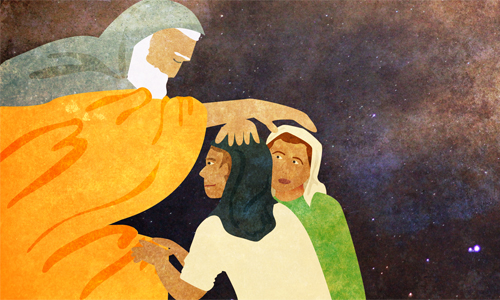
In our Parsha, when Yaakov anticipates his impending demise, he summons his children and grandchildren to not only arrange his material estate, but to communicate his ethical will, his vision and charge to each of them.  He begins with his grandsons, Efraim and Menashe, and bestows upon them opening berachos. 

Afterwards, he tells them:

וַיְבָ֨רֲכֵ֜ם בַּיּ֣וֹם הַהוּא֮ לֵאמוֹר֒ בְּךָ֗ יְבָרֵ֤ךְ יִשְׂרָאֵל֙ לֵאמֹ֔ר יְשִֽׂמְךָ֣ אֱלֹקים כְּאֶפְרַ֖יִם וְכִמְנַשֶּׁ֑ה וַיָּ֥שֶׂם אֶת־אֶפְרַ֖יִם לִפְנֵ֥י מְנַשֶּֽׁה׃

So he blessed them that day, saying, “By you shall Israel invoke blessings, saying: ‘May God make you like Efraim and Menashe.’”

But why Efraim and Menashe, why not Avraham, Yitzchak or Yaakov?  Why not Yosef, Dovid or Shlomo, or one of the other shevatim?  Why mention anyone by name at all, why not a general blessing to be like our Avos HaKedoshim, our holy patriarchs? 

Moreover, the Torah doesn’t tell us when to give this beracha, it just says when the Jewish people will bless children it will be through invoking these names.  Indeed, the custom to use this beracha on Friday nights is relatively recent, only a few centuries old.  Why do we give it Friday night?

Rav Chaim Dovid HaLevi in his Teshuvos Aseh Lecha Rav says he cannot find a source for giving this beracha on Friday night so he offers his own suggestion.  The Magen Avraham  (ריש ס׳ רעד)writes  טוב לנשק ידי אמו בליל שבת, it is good to kiss your mother’s hand on Friday night.  He suggests the minhag developed because when a father witnessed his children bestowing honor on their mother, he couldn’t help but want to give them a beracha.  Witnessing the next generation see themselves as connected to the past and continuing to honor, revere and respect their parents is among the greatest blessings we can have and it elicits from us a desire to reciprocate blessing back. 

That explains Friday night, but why specifically to be like these two?  Many suggest that after several generations of sibling rivalry, conflict, competition and adversarial relationships, Efraim and Menashe are the first generation to not only get along and tolerate one another, but to embody loyalty, love, mutual admiration and respect.  The foundational beracha for our children, even before we can invoke the chesed of Avraham, the gevurah of Yitzchak, the emes of Ya’akov, the piety of Yosef or the passion of Dovid, the wisdom of Shlomo or the virtue of any of our great leaders, is that our children—and by extension our families, our communities and our people—simply get along. 

As we begin our Shabbos meal basking in the light of the Shabbos candles, the symbol of shalom bayis and peace, we offer a blessing of unity, harmony, cooperation, love, loyalty and family.  As we sit down for the Friday night meal, rife with potential for heated exchanges and divisive debate about politics, religion or life, we offer a beracha that our table be like Efraim and Menashe and it be the fulfillment of  מה טוב ומה נעים שבת אחים גם יחד, how wonderful and pleasant when we sit together as unified siblings. 

Others suggest that among Yaakov’s twelve sons and their families, Efraim and Menashe were the only ones raised outside of the Land of Israel, in a foreign culture and with powerful external influences. Despite the pull to assimilate into Egyptian culture, religion and practice, Efraim and Menashe clung tenaciously to the teachings and traditions of their father and were steadfast in their commitment to Torah.

Shabbos provides an oasis from the chaos of the week and from the images, ideas, and temptations we face all week. As we reflect on another week gone by and immerse ourselves in a new Shabbos to energize us for the week ahead, we offer a beracha that our children, our families and ourselves be protected from the forces and pressures we face daily to compromise who we are, the choices we make and the lives we lead.

Rav Moshe Shternbuch (Ta’av V’Daas 265) suggests another answer.  He explains that when the Torah says we give a beracha to be like Efraim and Menashe it doesn’t mean like the two specific people themselves but we should emulate Yaakov to give our children berachos in which we identify their potential, who and what can come of them and guide them to achieve it. 

The mandate is not to give a beracha to be like Efraim and Menashe per se, but to make the time to give a beracha, to interact, to share hopes, dreams and aspirations.  The Sefer Nishmas Shabbos says this is why we give the beracha Friday night.  Our children are not competing for attention with our work, our other obligations, or nowadays with our technology.  The biggest beracha we can give our children, and for that matter all those around us that we care about, is ourselves, our full attention when we are engaging with them.

Reb Moishe Lieb Sassover suggests that the content of the beracha Yaakov gave Efraim and Menashe was to live in the moment, to be fully present in the present.  ויברכם ביום ההוא, he gave them a beracha, “ביום ההוא”, to be in the moment.

On Shabbos we go off the grid, disconnect with no guilt, no second guessing, no FOMO or self-importance, but only the rich possibility of truly being present with those we are engaging.  What a beracha for us and for those around us!

May we merit the fulfilment of the archetypal beracha to Efraim and Menashe – to see our children figuratively kiss our hands and embrace our values and instinctively respond by giving them blessings.  May we experience only harmony, unity, love and loyalty within our families, at our Shabbos tables and in our lives.  May we find the resolve and resiliency to overcome the influences and forces we confront and be uncompromising in our mission as Torah Jews.  And may we be blessed to live ביום ההוא, fully present, living each moment to its fullest.

As we say good riddance to 2020, let’s not forget to count our berachos, on Friday night and throughout the week. 

You Are In a Unique Position to Help

Mike Esmond, owner of a construction company in Gulf Breeze, Florida, wrote a check this month for $7,600 to pay off overdue utility balances for 114 residents of his city.  All of them were at risk of their gas and water being turned off before his magnanimous gesture.  His community in the Panhandle has been hit hard, not only by the pandemic but because they haven’t yet recovered from Hurricane Sally in September. 

This isn’t the first time he showed such generosity to total strangers for seemingly no reason at all.  In November of 2019 Mike walked into City Hall in Gulf Breeze and cut a check for $4,300 to pay for 36 local residents whose utilities bills were overdue and about to be disconnected.  Joanne Oliver, the utility billing supervisor for Gulf Breeze, told the NY Times, “I’ve been in customer service more than 20 years, and this had never happened.” 


What would motivate someone to give money that they worked so hard for to people they have never met? 


Last year at this time, Mr. Esmond opened his own utility bill and his memory flashed back to the winter of 1983, when he was broke and his own gas and water service was shut off over his holidays. He described, “I had three young girls at home at the time, and the temperature got down to 6 degrees, with ice and frost on the inside of the house.  I’ve lived that where I didn’t have a dollar in my pocket to care for my family, so I know what it’s like to really be broke and in need.  I wanted to see if I could help people that might be experiencing the same thing — where they couldn’t pay their bills and their utilities were going to be shut off around [holiday] time.”


When asked if he plans to continue this practice next year, Esmond said, “I’m 74 years old and I don’t even know if I’m even going to be here next year, but I can guarantee you one thing: If I am, I’ll do something to help people out.”  After the story of Esmond’s generosity went public, others began to give in the same way.  As of this week, his city has received additional anonymous donations to cover utility bills totaling several thousand dollars. 


Mike’s generosity launched a wave of generosity from others and it all began with his transforming his own personal experience and pain into a way to prevent others from going through it. 


When Yosef reveals himself to his brothers in this week’s Parsha, he tells them, don’t be upset and don’t be scared, I have no desire for revenge and I am not upset.   Your selling me to Egypt put me in a position to rise to power and to be able to help you and others.  In his Eish Tamid, Rav Yisroel Meir Druk asks, Yosef’s attitude is understandable with regard to the ten years he was viceroy in charge of the economy, but not all twenty -two years of their separation had been the same.  What about the twelve years he had languished in prison unjustly?  How could he reflect positively on that painful period?


Explains Rav Druk, Yosef didn’t see his time in prison as different than his time in the palace.  He credited his empathy, care and concern for those who were hungry, underprivileged and feeling alone to his time in prison when he felt that way himself.  Yosef understood that he never would have had the ten years of prosperity in Egypt without first enduring the twelve years of suffering that taught him, prepared him, and inspired him to help others avoid what he had felt. 


When I saw the story about Mike Esmond it reminded me of a similar story I have shared before.  Each year at the Rabbinical Council of America convention, an award is given to a chaplain.  A few years ago when the award was given to Rav Zvi Karpel, he described what had driven him to work in chaplaincy:


I lost my father when I was five and a half years old. This coming yahrzeit will mark his 60th. Put in other terms, by the time I was Bar Mitzvah, I had been saying yizkor for half of my life. My mother z”l raised me on her own. She herself became seriously ill my junior year in high school, and passed away my sophomore year in college. I relate these events because in retrospect, I feel that losing both my parents as I did had a tremendous impact on my life and my decision making.


I grew up in Rockville Centre, New York, a town on Long Island void of any Orthodox presence. I attended the public schools there, and received my religious education at an afternoon Hebrew school in the Conservative synagogue. My first real exposure to Orthodoxy was spending a Shabbos at my Kitah Bet teacher’s home in Far Rockaway, Queens.


For college studies, I went away to the State University of New York at Albany. It was that fall that I decided to become Shomer Shabbos, at least as far as I knew how to be one. I emerged as one of five yamulka-wearing students on a campus that arguably boasted 4,000-5000 Jewish students.


I knew that I needed a plan as to what I was going to do after graduation. Since my yiddishkeit is what most prominently drove my thoughts, feelings and actions, I decided I wanted to become a Rabbi. In addition, I realized that having never gone to yeshiva, I needed to accelerate my Jewish education, so I decided to go learn in Israel. When I returned here to the States, I was accepted into the semicha program at RIETS. Overlapping with the learning in the yeshiva, I matriculated into the Wurzweiler School of Social Work, and earned my MSW in conjunction with my semicha.

After working as a social worker for a couple of years in a day program for a Jewish nursing home, I began working as the full-time Rabbi at the Daughters of Israel. There I have remained for the last 32-plus years.


If I were to relate to you the single most significant aspect of my work, I would say it’s providing the spiritual and pastoral care to family members when their loved one is dying. In thinking way back to the experience with my own mother, I can tell you that when I heard her voice over the telephone and sensed she was close to the end, without hesitation I made the decision to leave the university to be with her. It turned out that I was to be at her bedside for her last week.


In reflecting back on that time, I know that I could have really used the support of a chaplain; I also know that I was not only a son at the bedside, I was my mother’s chaplain, walking with her during her final journey. The Shulchan  Aruch tells us in hilchos kibbud av v’aim, “Chayav l’chvodo, afilu achar moso”. A person is obligated to honor one’s parents, even once they have passed. I would like to think that my work with residents and their family members at the end of life provides some measure of kavod to my parents, may their memories be blessed.


Hashem tells Avraham, היה ברכה, don’t just be blessed, be a blessing to others.  Yosef remembered what it was like to be hungry and in pain and used those feelings to be inspired to feed others.  Orphaned at a young age, Rabbi Karpel knew what it was like to face loss alone and he turned it into decades of helping support people in their time of loss and need.  Mike Esmond appreciated what it means to be cold and scared without water or power and he used it to be motivated to pay off the utility bills of those who were about to have them shut off.


We have all gone through challenges and struggles, be they financial, physical, emotional or spiritual.  We can look back at them with resentment and bitterness or try to forget them altogether.  Or, we can invoke those memories to be moved to make a difference in someone’s life to help them avoid the pain we know well and to be their blessing.


Think about people going through something you might be able to relate to. Did you receive a scholarship as a child? If you have the capacity now, help makes sure others can get the help they need.  Have you overcome an illness? Perhaps those going through it now could benefit from your experience and your support.  Did you struggle with infertility, loneliness, or painful loss? If so, you are in a position to guide and help those going through that now.


Let’s all try to be like Mike.  What have you gone through in your life and how will you use it to help others?

Is Zoom a Window or a Mirror?

Recently, plastic surgeons are reporting an unprecedented number of requests for procedures.  Though the actual data won’t be available until spring 2021, assuming the anecdotal reporting is accurate, it could be the result of several factors.  Perhaps it is simply pent-up demand after months of shutdown.  It could be the lack of social events and gatherings, combined with wearing masks in public, making now the perfect time to get a procedure. 


Or maybe it’s something else. One cosmetic surgeon, Dr. Jon Mendelsohn, reports that in his office, injectable procedures such as Botox and fillers were up 90 percent compared with the same period last year.  When asked why he thought that is, he said, “During the virtual consultations, 9 out of 10 people commented about noticing these things over Zoom.”


Whether you are giving the class or listening to it, leading the meeting or attending it, over the last nine months almost all of us have spent a lot of time on Zoom, often essentially looking in the mirror.  As opposed to typical, face-to-face interactions, on Zoom you end up seeing more of yourself than you are used to. Apparently, many don’t like what they see (and now realize others see) and are choosing to change it with a procedure or injection.


Those living with others are spending more time with them, and are more on top of each other, than ever.  For many, coronavirus has been a pressure cooker, tense and intense, anxious and overwhelming. Many have discovered strength, faith and resilience they never knew they had.  Others have found patience, calm, and the ability to see the blessings.  But others, and in some way, probably all of us, have also discovered flaws we need to work on, or have seen character traits and qualities exposed that could use some work.


This pandemic can be either a window or a mirror. It can serve to only reveal to others who we truly are, a glimpse for the outside world to look in.  Or, we can look in the mirror to learn more about ourselves, even if it means seeing blemishes and faults.


With a credit card or cash, a plastic surgeon can change what we see on Zoom that we don’t like.  But changing what we see when we truly look inside ourselves, and listen to others describe what they see, takes a lot more effort and work.


Rav Yitzchak Hutner writes (Pachad Yitzchak, Yom Kippur 1:8), “The truth of the matter is that the power of change is the greatest innovation, after the wonder of the creation of Heaven and Earth.”  The Vilna Gaon writes (Mishlei 4:13), “A person lives in order to break the middah, the attribute, which he hasn’t broken yet until now. Thus, a person must always strengthen himself to work on this, because if he doesn’t, what is the point of living?”


Don’t push the virtual mirror away because you are afraid of what you will see.  Embrace it, lean into it, be proud of the beauty you behold and be bold enough to confront the blemishes you inevitably see.  We live not to be in denial of what we need to work on but to discover it, and strengthen ourselves to work on it.  We become partners with God in creation when we reinvent and re-create ourselves as necessary. 


In the early 1970s, Maryland was one of the first states that came out with vanity license plates. You could choose up to 6 letters and personalize your license plate. My friend’s father had a great idea. He was working as a director for NCSY at the time so he got a license plate with the word, “Torah.” It was a first-issue (not “Torah1” or the like). He was so proud of that license plate.  Driving around, every so often someone Jewish would pull up beside him and honk and wave to show or take pride in their Jewish identity. And of course, sometimes others would honk and give a different gesture to demonstrate their lack of support for Torah or Jews.


One hectic erev Shabbos the man had an order waiting for him at a restaurant. The hour was late, and there was no place to park. He circled around the block once and finally he double-parked, turned on his hazard lights and ran in to pick up his orders, which were not completely ready. A few moments later he returned to his car to find not one, but two notes on the windshield which essentially said the same thing: For a Torah Jew, illegally double-parking and blocking traffic is not a Mitzvah. Message received.


Just one week later, my friend’s father was driving and found himself stuck behind a driver who seemed to be moving in slow motion. He sped up to pass him and stared down the slow driver as he did. Sure enough, half a mile later, he stopped at a traffic light and the other driver pulled up next to him, rolled down his window, and said, “You know, a person representing Torah should have a little more patience.”


That night my friend’s mother saw her husband removing the license plates from his car and asked him what he’s doing. “I’m going back to number plates.” “But why? You love these plates!” his wife said.


He related the recent events to his wife and shared his frustration but instead of offering comfort or support, she challenged him: “So what you’re saying is you would rather change your license plate than change your behavior?”


To his credit, he knew that his wife was right. He kept the license plates and he worked on changing himself. Psychologists point out that one of the greatest obstacles to functioning relationships in our family, at work, and with friends, are the blind spots we live with.  We think we see ourselves and appreciate how the way we behave impacts those around us.  We blame those around us instead of looking in the mirror and confronting that which we need to change, and it isn’t our license plates or our wrinkles.


If we use this intense, challenging time to learn about ourselves and work to improve, when it finally ends we can emerge more beautiful inside and out. 

Rabbi Efrem Goldberg

Join Our Community

Subscribe to our newsletter or connect with us on WhatsApp.