Massacre in Australia: Chanukah in the Shadow of Terror

The light of Chanukah this year is dimmed and diminished even before it is lit. The news of a horrific terror attack at a Chanukah event at Bondi Beach in Australia has shaken us to the core. Ten innocent people were murdered, among them the Chabad Rabbi, Rabbi Eli Schlanger Hy”d. Australia has become a hotbed of antisemitism, met far too often with a grossly insufficient response by government and authorities. Chanukah begins with a painful reminder that when our enemies march to the chant of “globalize the intifada,” they mean it. And they must be confronted.

It is far too soon to truly process or respond to such a heinous crime. But anyone with a sensitive soul cannot avoid the question that rises unbidden in the heart. How do we light candles, gather with family, sing songs of gratitude, spin the dreidel, and eat latkes in the shadow of such devastating loss and tragedy?

Two years ago, six holy hostages held captive by the evil Hamas terrorists gathered around a makeshift menorah fashioned from paper cups to light Chanukah candles. In an act of cruelty meant to compound the suffering of the hostage families, their wicked captors recorded the moment on video. That footage was later discovered by the IDF in Gaza, shared privately with the families, and only recently released in time for Chanukah this year. The video shows each of the hostages thin, weakened, but still alive. Some even smile at the camera. Among them is Hersh Goldberg Polin, missing the lower half of his left arm, blown off by a grenade on October 7.

In the video, almost impossible to comprehend, the hostages can be heard singing the beracha of Shehechiyanu, thanking Hashem for enabling them to reach that moment. Ultimately, all six, Hersh Goldberg Polin, Eden Yerushalmi, Ori Danino, Alex Lobanov, Carmel Gat, and Almog Sarusi, were brutally murdered by their captors in a tunnel in Rafah on August 29, 2024. Their bodies were discovered by Israeli troops two days later.

Released hostages later shared that when they encountered Hersh in captivity, he strengthened them with words of encouragement. He would quote the teaching made famous by Viktor Frankl, that those who have a why to live can bear almost any how. That belief empowered Frankl to survive the Holocaust. Though Hersh was ultimately murdered, it gave him the courage to live each day in captivity, and through it, he helped others survive and return home.

On that recently released video, as Hersh and the others light the menorah, he can be heard likening their circumstance to the Holocaust, saying, “There’s that picture of the Chanukkiah with a Nazi flag above it.”

If six hostages held captive by the evil enemies of our time, tortured and starved, could nevertheless push back the darkness with the light of the menorah, then we too can find the will and the way to respond to darkness with light. If they could smile and sing Shehechiyanu in that moment, then we can not only say Shehechiyanu, but sing it and mean it, more grateful than ever to be alive and present in this moment.

The Jews of Australia, and Jews around the world, are not the first to confront the challenge of lighting Chanukah candles against a backdrop of darkness. Two years ago, six hostages found a way to light in the darkest of places. Over eighty years before them, in the depths of Bergen Belsen, Jews also found a way to light and to sing Shehechiyanu.

In her Hasidic Tales of the Holocaust, Professor Yaffa Eliach shared the extraordinary story of Chanukah in Bergen Belsen:

Chanukah came to Bergen Belsen. It was time to kindle the Chanukah lights. A jug of oil was not to be found. No candle was in sight. A menorah belonged to the distant past. Instead, a wooden clog, the shoe of one of the inmates, became a menorah. Strings pulled from a concentration camp uniform became wicks, and black camp shoe polish became oil.

Not far from heaps of bodies, living skeletons assembled to participate in the kindling of the Chanukah lights. The Rabbi of Bluzhov lit the first light and chanted the first two blessings in his pleasant voice, the melody filled with sorrow and pain. When he was about to recite the third blessing, he stopped. He turned his head and looked around as if searching for something.

Then he turned back to the quivering lights and, in a strong, reassuring, comforting voice, recited the third blessing. “Blessed are You, Hashem our God, King of the Universe, who has kept us alive, preserved us, and enabled us to reach this season.”

Among those present was Mr. Zamietchkowski, one of the leaders of the Warsaw Bund, a sincere and thoughtful man with a passion for discussing faith and truth. When the ceremony concluded, he pushed his way to the Rabbi and said, “Spira, I understand your need to light Chanukah candles in these wretched times. I can even understand the second blessing, ‘Who performed miracles for our fathers in days of old at this season.’ But the third blessing I cannot understand. How could you thank God for keeping us alive when hundreds of Jewish bodies lie in the shadows of the Chanukah lights, when thousands of living skeletons walk this camp, and millions more are being massacred? For this you are thankful? This you call keeping us alive?”

“Zamietchkowski, you are one hundred percent right,” the Rabbi answered. “When I reached the third blessing, I too hesitated. I asked myself what to do. I turned my head to ask the Rabbi of Zaner and other distinguished rabbis standing near me whether I could recite it. But as I turned, I saw behind me a large throng of living Jews. Their faces were filled with faith, devotion, and focus as they listened to the kindling of the Chanukah lights.

“I said to myself that if God has such a nation, a people who at a time like this, when they see before them the bodies of their beloved fathers, brothers, and sons, when death lurks in every corner, still stand together listening with devotion to the blessing ‘Who performed miracles for our fathers in days of old at this season,’ then I am obligated to recite the third blessing.”

That night in Bergen Belsen, Mr. Zamietchkowski saw only what lay before him, death and unbearable suffering. The Rebbe saw that as well. But he also saw another layer of truth that was just as real. He saw a people who clung to faith and refused to surrender their spiritual dignity even in the most horrific circumstances.

Sadly, we have a long history of Chanukah overlapping with tragedy and loss. But we also have a sacred tradition of finding faith despite circumstance, and of stubbornly insisting on bringing light even when surrounded by darkness.

Our hearts and thoughts are with the Jewish community and all decent people of Australia. We pray for the families of those murdered, for the complete recovery of those injured, and for the healing of all who have been traumatized. As we light candles this year, we are not ignoring the darkness. We are following in the footsteps of those who came before us, responding to it with deeper faith, stronger resolve, and an even greater commitment to spread light.


 

The Sound of a Beer Bottle: A Twenty-Year Journey, One Day at a Time

Twenty years ago, a woman I knew came to me with a heavy heart. She was married to a man who had become an alcoholic. This wasn’t social drinking nor was it “a little too much at kiddush or at a simcha.” It was a pattern that was slowly hollowing out his life and his home. She was clear on what had to happen, but she lacked the courage and confidence to confront him. She asked me if I would.

As a young rabbi, I was inexperienced in this area (and most others) but I knew one thing: confrontation can humiliate or it can heal. It can push a person further into denial, or it can become the beginning of their redemption. I agreed to speak with this husband, not because I had guarantees about how it would go, but because looking away and staying silent was no longer an option.

I called him and asked if I could stop by. I didn’t spell out why, I just asked if we could catch up. I will never forget that evening: the fear I felt pulling up to his house, the tefillah I whispered asking Hashem to give me the right words. When I arrived, we sat outside. In his typical generous hospitality, he opened two beers, one for himself and one for me. On the surface, it was the picture of two people, friends shmoozing on a nice Florida evening. We spoke about work, family, life. It felt casual, unforced.

But the whole time, beneath the surface, I knew I wasn’t there just to catch up. I wasn’t there to judge him, label him, or attack him. I was there to share a truth that his wife, some close friends, and I all saw clearly, and that he, on some level, likely already knew but had not allowed himself to fully face. At a certain point, I gently steered the conversation where it needed to go.

“Look, I didn’t come here only to hang out. I came because your wife, some close friends, and I are very concerned. We see the role alcohol plays in your life, and it isn’t healthy; it has gotten out of control. This isn’t easy for me to say, but it’s harder to watch you continue this way and say nothing.” When you bring something like this up, you brace yourself for the response: “You’re overreacting. Everyone drinks. This is my business, not yours. Mind your own business. Stay out of my personal life.” You expect anger, denial, defensiveness.

This man didn’t do any of that. He didn’t blow up or storm off. Instead, he looked at me. Really looked at me. He gave me a long, strong, searching stare that made time feel like it had slowed down. It wasn’t a hateful look, and it wasn’t even particularly angry. It was the look of a man suddenly faced with a mirror he could no longer avoid. In that moment, it felt as if he was asking himself, “Is this really what people see when they look at me? Is he serious? Am I an alcoholic? Have I lost control?”

Then, without fanfare, without any dramatic declaration, he put his beer down and the sound of the glass made a clank. He did not take another sip. We continued to talk. From the outside, nothing dramatic had changed. There was no emotional explosion, no tearful promise, no big speech. But in that simple act of placing the beer down and not picking it back up, a line had been drawn. A decision had been made.

That beer was the last drink he ever took. From that day forward, he threw himself into recovery. He did not try to do it alone. He joined a recovery program. He went to meetings. He got a sponsor. He surrounded himself with people who understood his struggle and were committed to helping him heal and rebuild his life. And here is what is so remarkable: he told me that not only has he not touched alcohol since that day, but he has not even felt tempted to drink. Not once.

Twenty years ago, he put down that bottle and hasn’t picked up alcohol since, but that is far from the only change in his life. Twenty years of sobriety has meant twenty years of showing up differently for his family, for himself, for his career, and for Hashem. From the outside, it looks like he made one decision and held to it for two decades. But that is not how it really works. Recovery is not accomplished in twenty-year chunks. It can only ever be lived one day at a time.

When someone faces a destructive habit, whether alcohol, drugs, uncontrolled anger, dishonesty, impatience, or anything else, and realizes something must change, they often hear or tell themselves, “You can never do this again for the rest of your life. You have to stop forever.” The natural reaction is panic. “The rest of my life? Never again? That’s impossible. I’m guaranteed to fail.” The phrase “for the rest of your life” feels so big, so heavy, that it nearly paralyzes the person before they even take their first step.

We simply are not designed to live for “forever.” We are only capable of living today. But if instead you say, “Don’t drink today,” something shifts. Today is manageable. Today is concrete. Today feels attainable. Whatever we need to eliminate or work on, as soon as we move it into the realm of “forever,” it feels hopeless. But when we bring it down to one more day, to today, it becomes possible.

That is the secret of recovery: one day at a time. Not, “I will never drink again,” but, “Today, I will not drink. Today, I will stay sober.” And tomorrow, with Hashem’s help, we will say it again. You wake up in the morning and you don’t stay sober for twenty years; you stay sober for this morning, for this afternoon, for this evening. You do that enough times, and before you know it, those individual days have added up into something enormous. One day you turn around and realize that one more day and one more day and one more day without became twenty years.

When Yaakov Avinu agrees to work for Lavan for seven long, challenging years in order to marry Rochel, the Torah tells us something very surprising: “Vaya’avod Yaakov b’Rochel sheva shanim, vayihyu b’einav k’yamim achadim b’ahavaso osah.” Yaakov worked for Rochel for seven years, and they seemed to him but a few days, k’yamim achadim, because of his love for her.

At first glance, this is difficult to understand. When we long for something, when we are waiting for someone we love, time usually moves slowly. Every day feels like an eternity. When a chassan and kallah are waiting for their wedding, when someone is waiting for a refuah, when a person is waiting for vacation to start, it rarely feels like a “few days.” If anything, it feels like forever. So how could the Torah say that seven hard years passed for Yaakov “like a few days”?

Rabbi Dr. Abraham J. Twerski z”l, who was a world-renowned expert, thinker, and writer on addiction and recovery, suggests a beautiful insight. He points out that the word “achadim” shares a root with the word “echad,” one. Yaakov did not live those seven years as one overwhelming, crushing block of time. He lived them as yamim echadim, one day at a time. Each day was a single unit of avodah: one day of working, one day of being one step closer, one day of commitment, one day of holding on to his love for Rochel and his trust in Hashem. Seven years is daunting. “Today” is not. When one lives in the present day, focused on what today demands, seven years can indeed pass “like a few days.”

When my friend quietly put his beer down that day, I don’t believe he was consciously committing to perfection for the rest of his life or picturing celebrating his twentieth anniversary of sobriety. He was taking the next right step. He was agreeing to face the truth, to seek help, to walk into that first meeting, to say no to the immediate urge. He was choosing to live that day differently. Hashem took that one courageous “today” and, one day at a time, turned it into twenty years.

He and I met recently to sit and talk once again and to celebrate the twentieth anniversary of that fateful conversation.  He shared with me, “When I put the bottle of beer down, something happened.  Something humanly unexplainable.  A profound change happened instantly.  The only attribute could be Hashem.  He was the catalyst that began this journey.”   In recovery, step three is to submit to a higher power and trust in God for help.  Twenty years ago, my friend discovered a real and raw relationship with Hashem, a genuine and ongoing conversation with the Almighty.

As I marveled at his fortitude and accomplishment, I thought to myself: every one of us has something we need to work on, a temper that flares too quickly, a tongue that speaks too freely, a laziness that holds us back, a jealousy that corrodes our happiness, a private behavior we are ashamed of. When we tell ourselves, “I must never do this again for the rest of my life,” we set ourselves up to feel crushed and defeated. We mean well, but we are thinking in terms that only Hashem can handle.

What if, instead, we thought and spoke to ourselves the way Torah and recovery both teach us to: “Today, I will be careful with my speech. Today, I will work on being more patient. Today, I will not open that site, that bottle, that door. Today, I will show up as the husband, wife, parent, friend, Jew I know I can be.” The next day, we take a deep breath, trust in Hashem and say it again. Forever is not in our hands. Today is.

If you are like the woman in this story, watching someone you love slipping into something destructive, the feeling of helplessness can be overwhelming. You look at their future, and at yours, and “the rest of our lives” feels unbearably heavy. But you are not responsible to fix the rest of their life in one action, and you are not expected to know exactly what the next twenty years will bring. You can take one step. She took one step by reaching out and asking for help. I took one step by agreeing to have a hard conversation. He took one step by putting down that beer and walking into recovery. Each of those steps was a yom echad, a single day’s act of courage. Hashem can multiply that.

And if, in this story, you recognize yourself not in the wife but in the husband, if you sense that your drinking, or some other behavior, your private life, has become something you no longer fully control, then please hear this clearly: you do not need to promise perfection and you do not need to swear that you will never struggle again. You need to be honest today. Today, admit that this has gotten out of control. Today, share it with someone you trust. Today, make one phone call, walk into one meeting, send one message asking for help. Today, ask Hashem for the strength not for the next twenty years, but for the next twenty-four hours.

The yetzer hara, the voice of self-sabotage, loves the language of “forever.” It whispers, “You’ll never keep this up. You’ll fail eventually. Why even start if you can’t be perfect?” Torah and genuine recovery answer with the language of echad: not forever, but one. One step. One day. One honest conversation. One sincere tefillah. One refusal to pick up the next drink.

Twenty years ago, a wife’s fear, a husband’s hidden readiness, and one difficult but loving conversation converged on a porch. I can still hear the sound of him putting down that beer. That small, almost unremarkable motion did not just end a drink; it began a new life.

Published with permission

An Invocation in an America First Moment: Standing for Faith and Principle

When I was invited to deliver an invocation at the America First Policy Institute (AFPI) Summit, I was honored, but I also hesitated. The timing, early Friday morning, was particularly challenging, and there were other considerations as well. After consulting with people I respect and trust, I came to see it as an important opportunity at a critical moment.


AFPI is a relatively new but rapidly growing conservative think tank that promotes a Trump-aligned “America First” agenda. It has limited Jewish involvement and, until now, had never hosted a rabbi to speak or offer an invocation. With several high-ranking members of the administration and prominent conservative leaders present, the invitation created a rare platform: to both express gratitude for those standing firmly with Israel and the Jewish people, and to candidly address the troubling trends and dangerous elements emerging in parts of the conservative world.


In this broader landscape, some institutions have taken divergent paths. Most notably, the Heritage Foundation has not, in recent times, been sufficiently clear or consistent in condemning antisemitism or its purveyors. By contrast, the Hudson Institute has been a steadfast ally of the Jewish community through its long-standing, principled pro-Israel positions. AFPI is currently on the pro-Israel side of that divide, but it is crucial to reinforce and encourage institutions like AFPI to follow the Hudson model rather than drifting toward the ambiguity we have seen from Heritage.


I am grateful to share that the remarks were warmly received. There were several spontaneous rounds of applause, particularly when speaking about unwavering support for Israel. Afterward, many attendees came over specifically to express their strong solidarity with Israel and the Jewish people, and to affirm how deeply the message resonated with them.


I am sharing the text of my remarks below not only for your interest, but also as a resource, a set of talking points and themes you can draw upon and adapt for your own settings, whether addressing a crowd or having one-on-one conversations where these issues arise.


Invocation at the America First Policy Institute

Mar-a-Lago | November 21, 2025


Ladies and gentlemen, honored leaders and dear friends,


We gather today to thank God for the gift of this great nation and to offer our prayers for America: for safety, unity, and for moral clarity and courage.


I stand before you this morning as an Orthodox rabbi, as an unapologetic Jew, and as a grateful and proud American.


If we speak of “America First,” we must also speak of how America first came to be. This country was born from an extraordinary faith, deeply informed by the language and ideas of the Jewish Bible.


When our Founders wrote in the Declaration of Independence that all men are “endowed by their Creator with certain unalienable Rights,” they were echoing the first chapter of Genesis, that every human being is created b’tzelem Elokim, in the image of God.


When they appealed to “the Laws of Nature and of Nature’s God,” they were affirming that there is a moral law higher than any king, any parliament, or any polling data.


When they concluded, “with a firm reliance on the protection of Divine Providence,” they spoke in the language of our prophets, a people placing its destiny in the hands of Heaven.


So if we say “America First,” it must mean America first in fidelity to these founding biblical principles: First in honoring the Creator who endows our rights. First in defending the dignity of every person and their right to practice their faith. First in preserving the moral order that makes liberty possible.


“America First” must not only mean prioritizing American interests; it must mean America first in standing true to the principles, values, and ideals that made her exceptional in the first place.


We now approach 250 years of American history. For nearly a quarter of a millennium, this nation has been a beacon of light and hope to the world. It has understood that being the world’s superpower means wielding not only might, but also moral influence.


This morning, we offer our deepest gratitude and our prayers for the next 250 years.  That America remains strong, free, and secure. That her children grow up in homes of stability, in communities of faith and responsibility. That her leaders be guided by wisdom, humility, and courage.


As Jews, we are profoundly conscious of the blessing this country has been. In all of Jewish history, no diaspora land has given us more freedom, more safety, and more opportunity than the United States of America, and for that we are deeply grateful.


I stand here as a rabbi but also as an ordinary Jew to say, “I love America,” not as a slogan or a platitude, but as a heartfelt expression of religious obligation, a fulfillment of hakaras hatov, of gratitude: recognizing the goodness we have received and feeling the responsibility to respond with loyalty and service.


Yet I must also take this moment to speak personally and honestly. We are living in a time when, from the extremes of both the left and the right, a climate is being created in which many Jews feel less safe.


There are moments, even in this blessed country, when I step onto certain streets wearing this yarmulka on my head, and for the first time in my life, I hesitate. I feel the stares. I hear the rhetoric. I read the threats. And I find myself unimaginably asking: Are they questioning my loyalty? Do they see me as fully American?


There are voices on the left who demonize Israel and then look suspiciously at anyone who loves and supports it, as if that love somehow disqualifies us from full belonging in American life. There are voices on the right who speak of “real Americans” and “patriots” in a way that can leave Jews and other minorities wondering whether we are truly included in that vision.


To all those voices, I say this, respectfully but firmly: my loyalty to this country is not conditional, not partial, not divided. It is expressed in prayer for its leaders, in gratitude for its freedoms, in service to its communities, and in the raising of children who sing its anthem and uphold its ideals.


And at the very same time and in no way a contradiction, I am a proud, unapologetic Jew and a steadfast supporter of Israel. To love Israel is not to betray America. To stand with Jerusalem is not to stand against Washington.


In truth, to love Israel is to be deeply faithful to America’s own values, because America is founded on values that come from Jerusalem: On belief in one God. On the sanctity of human life. On the rule of just law over mere power. On the conviction that nations are accountable to a higher moral standard.


The Bible that inspired the Declaration of Independence is the same Bible that first gave birth to the people and land of Israel. So when America stands with Israel, America is standing with the very wellspring of its own moral vocabulary.


Let me be clear: to platform purveyors of hate, to provide a podium to promote antisemitism, may be one’s first amendment legal right, but it is not “America First.” In fact, it is not American at all. It is an offense against the very values that America ought to be first in defending.  Those spreading vile lies against Israel and the Jewish people on college campuses, outside of Synagogues and even in the halls of Congress do so not only because they hate the Jew.  In truth, they hate America, they are not proud Americans, and they are not loyal to how America first came to be or how it must remain first in upholding its values.


We must speak with moral clarity. We must act with courage. And we must continue to express gratitude. We thank God Almighty that on July 13, as a bullet was fired at him, President Trump suddenly turned his head. Turning his head saved his life, and the president has continued to turn his head since then: turning to listen, turning to hear the call of the moment, turning to act.  President Trump and his Administration have shown unprecedented loyalty and friendship to Israel and the Jewish people, a steadfast support that we don’t take for granted and for which we will never stop saying thank you. 


I close with a brief prayer.


“The Lord is my Shepherd; I shall not lack.”  Let us never lack in knowing the Lord is our Sheperd.


Master of the Universe, Bless the United States of America as she approaches her 250th year. May she return again and again to the truths written in the Bible and echoed in its founding Declaration—that our rights come from You, and that our greatness lies in fidelity to Your moral law.  Bless our leaders, that they may have wisdom to discern right from wrong, courage to choose what is sometimes the harder path. Bless the alliance between America and Israel, two nations that look to Jerusalem not only as a city on a map, but as a source of enduring values. Bless this land so all may continue to walk proudly including those with our yarmulkas visible, our faith intact, and our love for America unwavering


Our Father in Heaven: Give strength, wisdom and courage to President Trump and his distinguished administration to guide our country towards unity, security, and success.  Guard the courageous members of the United States military and the Israeli Defense Forces as they guard us and protect freedom and democracy around the world.


Dear God – We ask that you grant peace and prosperity to the United States, to the State of Israel and to the entire world, and let us respond, Amen.


Falling Up: Winning through Failure

“What’s the Torah here?” What is the message?


A dear friend of mine often sees headlines or stories in the secular world and tries to seek deeper meaning behind them. In this case, he posted on his WhatsApp status a picture of a football player and the description of an unusual phenomenon.  The Denver Broncos are tied for the best record in the NFL but also leading the league in punts.  These data points seem contradictory because a team punts the ball when they fail to achieve a first down and concede being on offense to the other team.  Punting reflects failure and no team has punted this year more than the Broncos.  And yet, simultaneously, they are not only in first place in their division, they are tied for the best record in the game.  My friend posted these stats with the question, what is the Torah, what is the deeper message?


While I don’t follow football, this anomaly fascinated me, so I thought about it, took a shot, and wrote back, “Success isn’t linear.  Can’t do everything or score every play.  Need to punt when necessary in order to focus and win.”


As much as we wish life were simple, straightforward and linear, it is invariably filled with ups and downs, successes and failures, highs and lows.  Our instinct is to often fight this pattern, resist it, and resent it.  In truth, we should embrace the ride and work to move in the right direction.  


Rav Avraham Schorr explains that like an EKG, a straight, flat line means you are no longer alive.  Only when the line goes up and down, rising and falling, is the heart truly beating. The same is true of life: The ups and the downs, the moments of inspiration and the moments of struggle, are all signs that a person is spiritually alive and moving. Hashem designed the world so that growth happens through cycles, tests, successes, failures, rebuilding. A perfectly smooth life with no challenges might feel easier, but it would represent no movement, no pulse, no life.


Shlomo HaMelech teaches, “Sheva yipol tzaddik v’kam,” a righteous person falls seven times and rises. At first glance, it sounds like the tzaddik succeeds despite failure: he rises even though he falls. But Chazal reveal a deeper truth. The tzaddik does not rise in spite of the falls, he rises because of them. Each fall becomes part of the very process that shapes him.


The Chiddushei HaRim explains that a person gains from a fall what he could never gain from uninterrupted success. Falling teaches humility, reveals inner strength, refines character, and creates sensitivity toward the struggles of others. Every stumble forces a person to confront their limitations and renew their relationship with Hashem. In that sense, the fall is not an interruption to spiritual growth but the mechanism through which growth is achieved.


The pasuk does not say, “A person falls seven times, and a tzaddik rises.” It says, “Sheva yipol tzaddik v’kam.” The one who has fallen is already referred to as a tzaddik. Why? Because he kept getting up. His identity is defined not by the fall but by his response to it. The seven setbacks are not seven failures; they are the seven rungs of the ladder that lift him higher than untested success ever could.


Speaking at a Dartmouth graduation, Tennis great Roger Federer put it so well. He noted that in the 1,526 singles matches he played in his career, he won almost 80% of them. Then he asked the assembled crowd, “What percentage of the points do you think I won in those matches?” He paused. “Only 54 percent.” In other words, even top-ranked tennis players, the greatest who ever played the game, win barely more than half of the points they play. Federer continued:


When you lose every second point, on average, you learn not to dwell on every shot. You teach yourself to think: OK, I double-faulted. It’s only a point. OK, I came to the net and I got passed again. It’s only a point. Even a great shot … an overhead backhand smash that ends up on ESPN’s Top Ten Plays: that, too, is just a point.


Here’s why I am telling you this. When you’re playing a point, it is the most important thing in the world. But when it’s behind you, it’s behind you. This mindset … frees you to fully commit to the next point … and the next one after that … with intensity, clarity and focus.


The truth is, whatever game you play in life … sometimes you’re going to lose. A point, a match, a season, a job … it’s a roller coaster, with many ups and downs. And it’s natural, when you’re down, to doubt yourself. To feel sorry for yourself. And by the way, your opponents have self-doubt, too. Don’t ever forget that. But negative energy is wasted energy.


You want to become a master at overcoming hard moments. That to me is the sign of a champion. The best in the world are not the best because they win every point … It’s because they know they’ll lose … again and again … and have learned how to deal with it. You accept it. Cry it out if you need to … then force a smile. You move on. Be relentless. Adapt and grow. Work harder. Work smarter.


There is probably no athlete in history more associated with winning than Michael Jordan. Nike recognized his greatness early and became the largest apparel companies in the country by tying itself to Jordan’s talent and success. While most Nike commercials that featured Jordan would showcase his highlights and championships, a 1997 commercial shrewdly did the exact opposite. The brief commercial shows Jordan exiting a dimly lit arena as he narrates: “I’ve missed more than 9,000 shots in my career. I’ve lost almost 300 games. Twenty-six times, I’ve been trusted to take the game-winning shot and missed. I’ve failed over and over and over again in my life. And that is why I succeed.”


In life, we often imagine spiritual growth as linear, smooth, steady, predictable. We think success means never punting, never losing a point. But the Torah teaches that a straight line is not the sign of life, it’s the sign of death. Movement, fluctuation, rise and fall, these are the signs of a beating heart. Our missteps and disappointments are not evidence that we are failing. They are invitations from Hashem to ascend higher. When we rise after falling, we emerge not as who we were before, but as someone deeper, wiser, and closer to Him.


So the next time you fall—and you will fall—remember: The 9-2, first-place Denver Broncos have punted more than any team in the league. Roger Federer lost 46% of his points. Michael Jordan lost hundreds of games. The tzaddik falls seven times. And the EKG only shows life when the line moves up and down.


Your falls don’t disqualify you from greatness. They are the very path to it. Don’t fear the fluctuations. Embrace them. They mean you are alive, growing, and on a real journey. They mean your heart is still beating.


Friends Don’t Let Friends Embrace Antisemites

I still remember a slogan from a well-known public service announcement from my youth: “Friends don’t let friends drive drunk.” Simple yet profound, it captured the essence of true friendship: stepping in when someone else’s choices could cause harm.


That slogan came to mind this week in a different context when “friendship” became the excuse and defense for standing by those who platform antisemites and disseminate hate.


Tucker Carlson was one of highest-rated hosts in network news.  His shift to independent media has only expanded his global reach and influence, with views for his individual episodes on X often in the tens or hundreds of millions.  During that same shift, he has faced repeated accusations of spreading antisemitism, amplifying conspiracy theories, and promoting extremist views.


The controversy reached its peak when Carlson hosted Nick Fuentes, a far-right figure known mostly for extreme antisemitic rhetoric and Holocaust denial. While Carlson framed the interview as an attempt to understand Fuentes’ perspective, it was hard to see it as anything other than giving legitimacy to hate speech and normalizing extremist ideology, particularly as Tucker failed to ask difficult questions, condemn deplorable comments, or challenge Fuentes or hold him accountable for his views. 


While for the last couple of years, Carlson flirted with the line of anti-Israel bias and antisemitic beliefs, several recent comments, coupled with the Fuentes episode, have firmly and undeniably put him over the line and raised real questions. Was he always filled with this latent hate, or did his views and opinions change over time?  Can he still be brought back, or is he hopeless and irredeemable?  


Whatever the answers to those questions, it has become clear that it is time for those who align with him politically to call out and confront Carlson, and that is exactly what Ben Shapiro did last week on a special episode of his podcast.  Using clips from Carlson and Fuentes themselves, Ben called Tucker an “intellectual coward” and an “ideological launderer,” someone who softens “hideous ideas” and gives them wider audiences. He did not call for cancellation but instead issued a call for moral clarity and accountability, a line drawn that others had been hesitant to draw.


The episode drew over 36 million views on X, quickly becoming a flashpoint within the conservative world. With moral lines now unmistakably drawn, many praised Ben for his clarity and conviction, while others, especially those aligned with Tucker, Fuentes, and their ideological circle, reacted with hostility. His decision to speak out may appear straightforward and a low bar, but it demanded genuine courage. Speaking out against someone from his own side of the aisle comes with risks that are not theoretical, and challenging powerful figures and entrenched audiences comes at a cost: to one’s safety, reputation, and professional influence alike. In an era when moral equivocation has become the easier path, we should be both proud and profoundly grateful that one of the most visible Jews in public life, a man whose yarmulke is as recognizable as his voice, is using his platform to articulate moral truth when so many others remain silent.


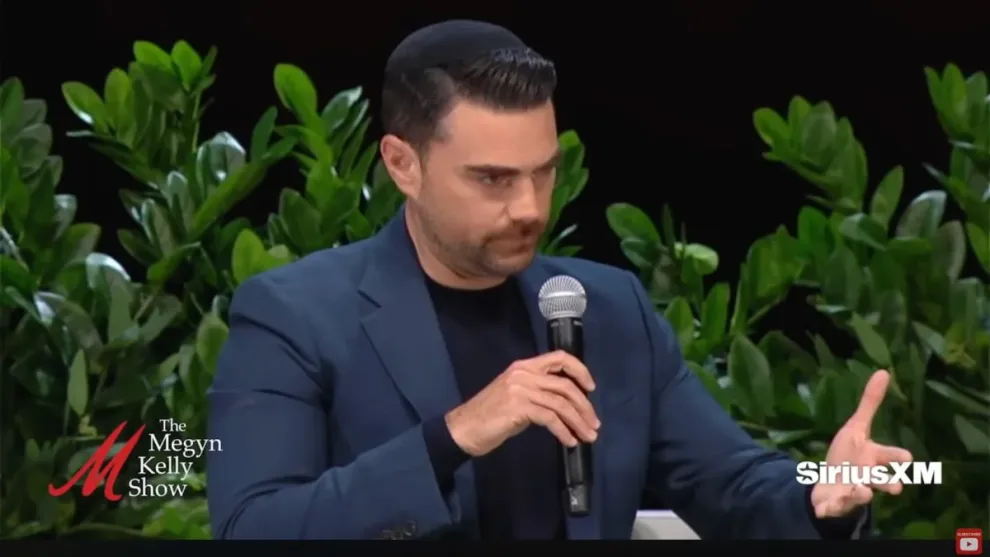
Ben didn’t stop there.  In the last few days, he has risked relationships by confronting conservative colleagues and challenging them on their silence surrounding the Carlson-Fuentes episode.  Megyn Kelly had Ben on her show to discuss these developments and when he confronted her on failing to speak out against people like Candace Owens, she defended herself by saying, “My position is it’s really none of my business,” and “I’m not mother of the internet.”  When pushed on Carlson, Kelly defended her friendship and spoke about loyalty. 


I don’t envy Megyn Kelly and others in the conservative world who have been caught between prominent, popular, and highly influential friends.  They express that this isn’t their fight, they aren’t responsible to police everything that everyone says or monitor who they host.  They argue that when it comes to friends, criticism and reproach should be shared privately, never in the public sphere. 


This tension between loyalty and moral responsibility is not unique to public figures, though for them it is a different calculation and conclusion. The truth is we all face these issues in our private lives: friends who make ethical missteps or betray trust, loved ones who engage in harmful or criminal behavior. How far should friendship go? Does standing by someone implicitly condone their actions or associate us with their behaviors? Is silence a sign of loyalty, or a betrayal of our own values?


Certainly, there are differences between public figures and private friends.  There are support roles for rabbis and professionals to play and that often differs from how individuals should navigate these complicated decisions. 


The Mishna in Pirkei Avos teaches: “Rav Yehoshua ben Perachia taught, make for yourself a rabbi, acquire for yourself a friend and judge every person favorably.”  The Rambam notes that it doesn’t say make for yourself a friend or befriend other people.  It specifically says “acquire” because when it comes to friendship, one cannot be casual or complacent.  We have to bring the same attention, critical thinking and seriousness in searching for a friend who will bring out our best and hold us accountable, that we bring to major acquisitions.


Perhaps with the choice of that word, our rabbis also intended another subtle message about friendship.  K’nei, acquire also has the same root as l’sakein, to repair.  Real friends reproach and seek to repair one another.  Real friendship is not loving someone so much that you let anything they do slide.  It is caring so much that you are willing to confront and call out when you are concerned your friend has lost his way.  


Perhaps it is time for a modern update to my childhood PSA: “Friends don’t let friends embrace antisemites.” Antisemitism, like any form of hate, clouds judgment, endangers others, and corrodes the soul. Standing by those who embrace it is not friendship, it is enabling. Moral courage, even at the cost of discomfort or confrontation, is the highest expression of care.


Friendship, loyalty, and ethics intersect in complex ways, but one thing is clear: love and loyalty do not absolve hate. True friends hold each other accountable and protect the moral health of their community and of their movement.


This Anonymous Email Left Me Shaken

Just before Rosh Hashana an email arrived without a name: just a cry, an anonymous letter addressed not to me, but to God. “You have hurt me. You have abused and tortured me. You have taunted and judged me… You left me. And so I leave you, too.”  Line after line bled with anguish, betrayal, and the raw honesty of a broken heart.


This email didn’t just arrive in my inbox; it punched me in the gut.  I didn’t just read it with my eyes; I felt with my entire being the pain it conveyed.  At first glance, it smacks of heresy, sacrilege, and blasphemy.  “I leave you, too.” But when you read between the lines, you see something else altogether.  With permission, here is the email, followed by what I sent back as a response:


I write this to you, God, because the time for apologetics has come to an end. 


I will express this in no uncertain terms. You have hurt me. You have abused and tortured me. You have taunted and judged me. In my hour of need, you abandoned me. You have condemned me to loneliness and envy. You elect at every moment to continue to subject me to pain which drains the little hope I still have for things in my life to improve. I have been aware of all of this for awhile, but the time has come for me to say it. 


You dare call yourself a merciful father. A father who treats his children like you do deserves nothing but the staunchest condemnation. You willingly subject humanity to horrors unimaginable and claim to be a God of kindness and compassion. If you are as they say you are – omnipotent, omniscient, omnipresent – then it is within your power to reverse the sadistic creation that you have fashioned. Yet you continuously choose to prop it up. Here is what I have to say to you. 


Nearly a decade of dedication to you. Your laws. What I thought was your will. Go on. I’d like you to think about the thousands of times I’ve prayed. Put on tefillin. Kept Shabbos. Pushed normal thoughts of girls out of my developing brain and castigated me when I strayed. I slaved away over a Gemara for years, bored to tears and pressured to meet toxic social standards, because I thought it would make you love me. Well, so be it. You have hurt me, and this time, I’m going to remember it. 


Of course, what I’d like to say is that I’m going to hurt you, too. But, if you are as they say you are, that’s not quite something I or anyone else can do. Fine. I accept that hurting you is beyond my control. Fortunately for me, you decided to grant me free will, and oh, I’m itching to use it. This mouth will never utter another word of praise or thanks to you, the source of my pain and misfortune. I will dedicate my arms and legs and ears to helping those in need because you have abandoned them, too. I will forever rue the day your cruel masochism decided to plant me in this traumatic world to suffer and scream. How many times – how many times?! – have I prayed to you to heal me? To comfort and console me? To show me the purpose in my pain? You have left me unanswered. You have stood me up. You left me. 


And so I leave you, too. 


May you know the pain of a parent witnessing their child turn his back and walk away. May you feel the seething grief that darkens my days and slashes at my guts. May your eyes flood with tears shed over losing your son forever. 


I don’t want you to explain anything anymore. I don’t want to hear from you at all. I’m done asking questions, and I’m done reaching out. I suppose the next time I see you will be whenever you decide to pluck me from this world and stand me up before your kangaroo court to judge me as a wicked man for defending myself from an abuser. Until then, please don’t talk to me. Don’t communicate with me. I will never forget what you have done to me, and I know you won’t, either. This Rosh Hashanah, I will be doing some remembering of my own. 


I hope it was worth it. 


My response:


I have read and re-read your email so many times and each time it breaks my heart and brings tears to my eyes.  I am beyond sorry for your pain and experiences.  I found your words so real, raw, authentic, and profound.  While they are written to “write off” Hashem, I see them as one of the greatest expressions of emunah I have ever read.  If you didn’t believe He is real you wouldn’t bother being angry or disappointed with Him or walking away from Him.  Your walking away is in fact an enormous demonstration of walking towards.  Maybe on Rosh Hashana, if you don’t want to open a machzor, print out your letter and read it to Him.  Scream it to Him.  


If you want to communicate further and if I can help you in any way, please let me know.  I am honored, humbled, and grateful that you shared your letter with me.  


The author ended up revealing himself to me and despite his letter of rejection to God, he not only attended Shul on Rosh Hashana and Yom Kippur, he never stopped davening for a day. 


Although his letter rejected Hashem, the fact that he continued to seek Him reminded me of an image shared by Nobel Laureate Elie Wiesel.


Elie Wiesel said that he was present when a group of inmates, suffering beyond comprehension in Auschwitz, put God on trial.  He described that the Almighty was found guilty for the evils of the Holocaust.  Wiesel later wrote a play on this topic called, “The Trial of God.”  What Wiesel said happened next is truly remarkable.  After the trial of God was over with a guilty verdict, noticing the sun was setting, the very same people who acted as the prosecutors organized a minyan and davened Mincha, the afternoon service.


I share this with you not as a model or standard for us to aspire to.  Anger at Hashem is not an ideal goal or objective, but it is also not a failure of faith or an expression of heresy.  There are some who go through all the motions of mitzvos and Torah, they daven diligently, they would say they talk to Hashem three times a day, but have they ever had a real and honest conversation with Him?


Associating what is happening in our lives as coming from our Creator is not heresy, it is faith.  Disappointment and malcontent are not necessarily indications of faithlessness, they are often evidence of genuine belief in God.  One is not angry at someone that isn’t real.  One doesn’t feel disappointed with a figment of their imagination. 


Indeed, while our greatest teachers and leaders were not ordinary people, and their words need to be studied, analyzed and appreciated for their deeper meaning, we do have precedent for directing dissatisfaction and challenges toward Hashem, beginning in our parsha with our founding father, Avraham. 


When informed that Sedom is going to be destroyed, Avraham doesn’t passively accept the will of Hashem.  He brazenly challenges: “Will You indeed sweep away the righteous with the wicked? … Shall not the Judge of all the earth do justice?”


Generations later, feeling overwhelmed and upset, even somewhat abandoned, Moshe challenges: “Why have You dealt ill with Your servant? … Did I conceive all this people? … I am not able to carry all this people alone… if You will deal thus with me, kill me, I pray You, at once.”


This theme continues with our Neviim. After Hashem spares the people of Nineveh, Yonah, feeling his mission is undermined, is explicitly angry: “But it displeased Yonah exceedingly, and he was angry. And he prayed and said, ‘Hashem, is not this what I said when I was yet in my country? … Therefore now, Hashem, please take my life from me.’” Experiencing misery, pain and grief, Iyov expresses his anger after what he feels is unjust suffering: “I will say to Hashem, Do not condemn me; show me why You contend with me.” Feeling betrayed, Yirmiyahu challenges: “You deceived me, Hashem and I was deceived; You overpowered me and prevailed. I am ridiculed all day long; everyone mocks me.”


To be clear, our great leaders used these moments to draw close, not to push away.  They believed in and were devoted to Hashem beyond anything we can understand.  Their words deserve to be studied closely. But it is undeniable that the Torah communicates their words in a way that gives us license to confront and protest to Hashem.  After all, that is the basis of all tefillah, an invitation to challenge the status quo and to appeal to the Almighty to do things differently.  


Don’t aspire to be upset at Hashem.  But if that is how you are feeling, don’t deny it, don’t beat yourself up, knock yourself down, or feel guilt and shame.  It’s okay to feel anger, disappointment, or betrayal toward Hashem. These emotions don’t have to distance us, they can draw us closer, deepen our prayers, and reveal the raw honesty of our faith. Like the letter-writer, we can confront God and yet continue to daven, knowing that our questions and our tears are themselves an expression of emunah

Standing on the Other Side—Without Turning Our Backs

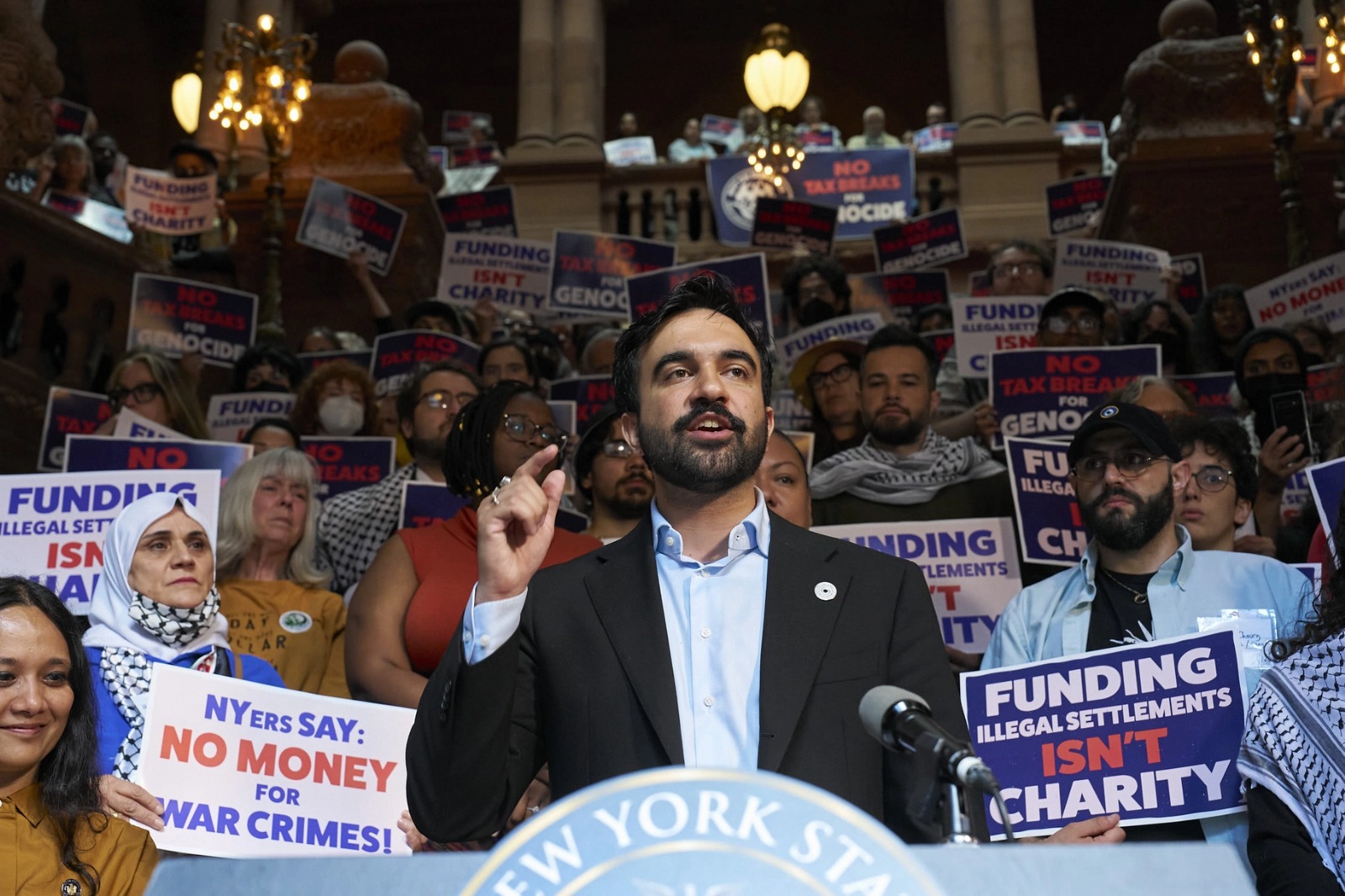
In the last week, more videos have emerged demonstrating New York mayoral candidate Zohran Mamdani’s obsessive hatred of Israel.  During a panel at the 2023 Democratic Socialists of America’s national convention, he said, “We have to make clear that when the boot of the NYPD is on your neck, it’s been laced by the IDF.”   Additionally, in an effort to blame the problems of his city on Israel, he said, “You have so many opportunities to make clear the ways in which that struggle over there (Israel), is tied to capitalists interests over here.”  He has defended suicide bombers as soldiers, repeatedly refused to condemn the violent and threatening phrase, “Globalize the Intifada,” falsely accused Israel of genocide, and announced he would attempt to have Prime Minister Netanyahu arrested as a war criminal if he came to New York.  His hateful preoccupation with Israel has been well documented and rises to the level that many Jews in New York are concerned they will be less safe if he wins.


Recognizing the danger, over 1,000 rabbis signed a letter opposing Mamdani. Rabbi Elliot Cosgrove of the Conservative Upper East Side Park Avenue Synagogue gave a sermon that went viral in which he said,  “To be clear, unequivocal, and on the record: I believe Zohran Mamdani poses a danger to the New York Jewish community.”


And yet, despite what should be obvious, polls ranging from as high as 43% (and on the low end, 21%) show that Jewish voters in New York intend to vote for him.  Prominent Jewish actors and media personalities have unabashedly endorsed Mamdani. This week, a campaign video produced in partnership with the organization “Jews for Racial and Economic Justice” was released, which includes four self-described rabbis (three women and a transgender rabbi) expressing open support for Mamdani. 


In the best case scenario, these Jewish poll responders, celebrities and these rabbis seem to be putting their liberalism and progressivism ahead of their Jewish identity and loyalty to Israel.  They are prioritizing being part of a socialist movement over the safety and preservation of their own families and their people. In the worst case scenario, they are not making a choice between two things (progressive politics and Jewish identity) they embrace, rather they substituting one for the other, rejecting their Jewish identities. Either way, it is deeply troubling.


This segment of our people failed to learn the lesson of Avraham, who in our parsha is referred to as Ha’Iviri.  While the literal translation means Avraham “the Hebrew,” our rabbis share another layer of interpretation. Ha’ivri meanis mei’eiver, on the other side.  When the whole world took one position and stood on one side, Avraham had the courage to stand out, remain true to the vision and to the will of the Almighty.  He had the courage and confidence to stand on the other side, even if it meant standing alone.  


This mayoral election is hardly the first time members of our people chose to stand with their own haters.  Nor did this behavior begin with the many Jews who tragically donned keffiyehs and spent two years protesting against Israel’s right to defend itself. When after over two centuries of slavery and persecution, our people were redeemed from Egypt, the Torah tells us that 80% stayed behind, wanted to remain part of the very society and culture that had oppressed them.   They chose to stay attached to their oppressors, comfortable in their captivity, unwilling to walk toward freedom.


It’s hard not to look at those Jews for Mamdani, look at Jews who join “Free Palestine” rallies, and be disheartened and say, “This is our generations 80%.  They are choosing Egypt over Israel, Socialism over Judaism, they are irredeemable and hopeless.”  But that would be to neglect another part of Avraham’s legacy.  


Avraham didn’t just stand apart, he also reached back. When his nephew Lot, who had already parted ways with Avraham, was taken captive, the Torah describes Lot as achiv, Avraham’s brother, even though Lot was not actually his brother. Avraham didn’t say, “Lot made his bed, let him lie in it.” He didn’t cancel him, mock him, or write him off. He felt the responsibility to his brother and went to rescue him.


And maybe as this election approaches, that is a lesson for us. We have to follow Avraham Ha’Ivri and stand proudly, courageously, on the side of Torah, of Israel, of truth. But we also have to be like Avraham the uncle—the brother—the one who never gives up on family.


Those Jews supporting Mamdani are still part of our family. They are misguided, confused, maybe even lost, but they are ours. The goal isn’t to shame or scorn them; it’s to love them back into the light. We can disagree deeply while still caring deeply. We can hold firm to our principles without hardening our hearts.


Avraham teaches us that being on the other side doesn’t mean turning our backs. It means standing strong for what’s right while still extending a hand to bring others along.


That’s our challenge, and that’s our calling, to stand where Avraham stood, with unrelenting conviction in one hand but compassion in the other.


One More Conversation with Rabbi Hauer z”l

Coming off a joyous Simchas Torah, the excitement of the Yom Tov heightened with gratitude for the return of the twenty living hostages, I turned on my phone after Havdalah, eager to see more pictures of reunions and read stories of courage and resilience. And then, like so many others, I was stunned: my dear friend and mentor, Rabbi Moshe Hauer z”l, had suddenly passed away. It didn’t make sense. I couldn’t process it.


In the days since he was so abruptly taken from us, one thought has played over and over in my mind. If I had known that he would no longer be here on Motzei Yom Tov, I would have called him on Erev Yom Tov. I would have finished our conversations, told him what he meant to me, thanked him for all I had learned from him, and sought his guidance on how to continue the work he began.


I first met Rabbi Hauer many years ago, at a gathering organized by a mutual friend who brought together people he felt should know one another. There was no particular agenda, it wasn’t hosted by any organization, and it was such a success that for years, our group met annually to share, be vulnerable, brainstorm, collaborate, and inspire one another. 


At the first gathering, we were strangers: guarded, cautious, and formal with one another.  Rabbi Hauer sensed a need to break the ice and I vividly remember when he said, “Let’s get comfortable, let’s be real.  Enough with formalities. I am Moshe, not Rabbi Hauer,” and he proceeded to take his tie off, something I wasn’t under the impression he did often. At each gathering, his presence and participation contributed enormously.  With great humility and impeccable middos, he didn’t speak the most, and certainly not the loudest, but when he spoke he was a fountain of wisdom, thoughtfulness, insight.  He was sensitive, complimentary, authentic, genuine, and driven. 


What impressed me most over the years was that Rabbi Hauer was a true Ben Torah in every sense. As he built his shul and guided his community, he never left the Beis Midrash, never closed the Gemara. He remained growth-oriented, always striving, always climbing higher, and always inviting us to climb alongside him. Every conversation he had, every initiative he supported, was framed by a deep care for Klal Yisrael, for the community at large, and for each individual within it.


He was rare: proud and unapologetic about his hashkafa, his rebbeim, his principles, and his values, yet effortlessly and seamlessly connected with people of all backgrounds. He found common ground and common cause with everyone, and saw the Godliness in each person, developing genuine bonds while always remaining true to himself.


It is telling that in the days since his passing, tributes have come from a staggering variety of sources, including politicians and “plain” people, organizations like the OU and Agudah, the ADL, yeshivas and rabbis across denominations, and even the Catholic Bishops of New York. Rabbi Hauer’s reach was profound because his relationships were real, never performative, transactional, or forced.


Professionally, he shaped my rabbinate in countless ways, in ideas and practices I emulate, in how I see myself and my responsibility, in how I dream for Klal Yisrael. He stood with me when I needed support, spoke honestly when I needed feedback, and always did so with love. Personally, his loss is devastating. I find myself replaying voice notes he sent, each beginning with the affectionate, “Yedidi Rav Efrem.” In one, he said, “This message will have four points: Firstly, I haven’t spoken to you in ages, which I don’t like. Secondly, thank you for all you do,” before moving on to practical matters.


Here is the thing.  I know I am far from the only one.  Rabbi Hauer had this warm, affectionate, complimentary, close connection with countless shul members, talmidim, colleagues, friends, and community leaders.  His love for us was real, it was genuine, and it nourished our souls and warmed our hearts.


When he became the Executive Vice President of the OU, a leader and spokesperson for Klal Yisrael, his title and sense of mission changed but his character and personal conduct remained the same. 


When the Torah describes how Moshe and Aharon went to confront Pharaoh it says (Shemos 6:27):

הֵ֗ם הַֽמְדַבְּרִים֙ אֶל־פַּרְעֹ֣ה מֶֽלֶךְ־מִצְרַ֔יִם לְהוֹצִ֥יא אֶת־בְּנֵֽי־יִשְׂרָאֵ֖ל מִמִּצְרָ֑יִם ה֥וּא מֹשֶׁ֖ה וְאַהֲרֹֽן׃

It was they who spoke to Pharaoh king of Egypt to free the Israelites from the Egyptians; these are the same Moshe and Aaron.


What does it mean these are the same Moshe and Aharon, as opposed to different ones?  Rashi explains, it means despite their rise to greatness, their high profile, prominence, even power as spokespeople of Klal Yisrael, they were unchanged as people, they remained humble and mission driven. 


The same can be said about Rabbi Hauer.  הוא משה, he was the same person, as Rashi says, 

בשליחותם ובצדקתם מתחלה ועד סוף, with a sense of mission from beginning to end and with righteousness.


Rabbi Hauer set the bar for his colleagues and friends.  We strived to be like him and now he is gone. Reflecting on our unfinished conversations, I am reminded of the Gemara (Shabbos 153a) which advises we should do teshuva one day before we die. How can anyone know that day? The answer is profound: live each day as if it could be your last, and strive to be your best. We can’t speak to everyone as if it’s our last chance, but we can ensure that the people who matter most know how much they mean to us.


One of Rabbi Hauer’s favorite insights, which he shared with me several times, is from the moment when Hashem visits Avraham after his bris, and three travelers appear at his doorstep. Avraham interrupts his conversation with Hashem to greet and host them. Rabbi Hauer would ask: how could he do such a thing? Wasn’t it disrespectful to Hashem? He explained that in that moment, Avraham had a choice: to continue speaking with Hashem or to act like Hashem by showing kindness. The greater tribute, Rabbi Hauer suggested, was the latter.


Rabbi Hauer has been taken from us. We can no longer speak to him directly, but we can strive to be more like him: genuine, compassionate, thoughtful, and concerned about Klal Yisrael. In doing so, we offer a tribute he would have considered even higher than words.


Sharing Your Blanket

Israeli war hero and statesman Moshe Dayan was once stopped for speeding by a military policeman. Dayan protested: “I only have one eye. What do you want me to watch—the speedometer or the road?”


The Shulchan Aruch (634:1) teaches that the minimum size of a kosher sukkah is 7 tefachim by 7 tefachim, about 2.5 feet by 2.5 feet—less than half the size of my desk. The Mishnah Berurah explains that as long as a sukkah can fit your head, most of your body, and part of a table, it is valid.


Rav Yankele Galinsky highlights a striking contrast between Pesach and Sukkos. On Pesach we recline, stretch out, and dine like royalty. On Sukkos, however, we squeeze into fragile, temporary huts. And once we’re inside, pressed against each other, that’s when we invite the ushpizin—Avraham, Yitzchak, Yaakov, and more. Not only them, but v’imach kol ushpizei ila’ei—“come one, come all, there’s plenty of room.” But where exactly is there room?


So much of life depends not on what we see, but on how we see. The Mishnah in Avos (5:22) teaches that Avraham Avinu lived with an ayin tova—a generous eye—while Bilam embodied an ayin ra’ah—a critical, stingy eye.


The truth is, we all carry both. At times, we see loved ones with an ayin tova, overlooking flaws, excusing quirks, and feeling close. Psychologists call this the Halo Effect. Other times, when we feel distant, we look with an ayin ra’ah, where nothing the other person does can be right.


What makes the difference? Not the size of the bed or the blanket. Not even necessarily the other person’s behavior. It’s our own perspective. As the Talmud (Sanhedrin 7a) says: when love is strong, a couple can sleep on the edge of a sword and still have room. When love is weak, even a ninety-foot bed feels cramped.


This is the heart of Sukkos. After the High Holidays, when we’ve repaired relationships and renewed our bonds, we enter our sukkah and choose to see others with an ayin tova. We give the benefit of the doubt, forgive slights, and see the good in people.


That’s why on Pesach, the four sons each ask their own question and receive their own unique answer, and the four cups must be drunk separately. But on Sukkos, the four species must be taken b’agudah achas—bound together as one. Pesach highlights individuality; Sukkos highlights unity.


So will our sukkah feel cramped and claustrophobic, or spacious and welcoming? The answer doesn’t lie in its square footage, the menu, or even our guests’ behavior. It depends entirely on us. With an ayin tova, even a tiny sukkah feels endless. With an ayin ra’ah, even the largest sukkah feels suffocating.


The Mishnah in Avos (5:5) describes how in the Beis HaMikdash, people stood crowded, yet when bowing, there was space for all. The Chasam Sofer explains: it was objectively crowded, but no one felt restricted because of the joy and love that filled them.


Several years ago, researchers in England found that the average couple argues in their bedroom 167 times a year. What do they fight about? The survey revealed the most common disagreements: leaving a light on to read, adjusting the temperature, letting children sleep in the bed, and snoring. But the top cause of conflict? Hogging the blanket.


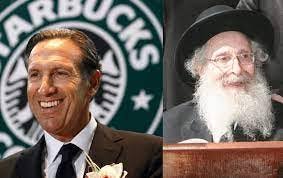
Howard Schultz, the Chairman and Chief Global Strategist for Starbucks, visited Israel in 2011 and wrote an article upon his return. He related an encounter that he and a number of high-powered executives had when they met with Rav Nosson Tzvi Finkel, zt”l, the former Rosh Yeshiva of the Mir.


Gentlemen, the elderly rabbi began, who can tell me the lesson of the Holocaust? The Rabbi called on one of the men who was surprised to be singled out and he began meekly, “We will never, ever forget …” The Rabbi indicated this was not the right answer… No one wanted to be called on next. Schultz avoided eye contact with the teacher so he wouldn’t be recognized. Another man spoke up saying “We should never be a victim or a bystander.” The elderly Rabbi dismissed this answer as well.


At this point, Schultz said the entire group felt reduced to a group of elementary school students. Then the Rabbi responded in gentle but firm voice, “Let me tell you the essence of the human spirit. As you know, during the Holocaust, people were transported in the worst possible inhumane way, by cattle cars, convinced they were going to prisoner of war camps but ultimately they ending up in death camps. After hours and hours in the stifling crowded cattle car with no light, no bathroom, nowhere to sit, they arrived in the camps freezing cold and hungry. The doors of the rail cars were swung wide open and the people inside were blinded by the light.


Men and women were separated, mothers were torn from their daughters and fathers from their sons, and they were herded off to bunks to sleep. Only 1 person out of 6 was given a blanket. And at that moment, that person, who was fortunate enough to be handed that blanket, had a choice: am I going to push the blanket to the other five people who didn’t get one or am I going to pull it toward myself to stay warm? Am I going to give or am I going to take? It was during this defining moment that we learn the power of the human spirit, when people pushed the blanket to five others.” With that, the Rabbi stood up and said “take your blanket, take it home and push it to five other people.”


This Sukkos, let’s see our sukkah, our blanket, and our love as big enough to share with other people.


Which [Book of] Life Will You Choose?

My wife’s grandfather, Isadore (Sruli) Bruckstein z”l, passed away just shy of his 99th birthday. When he was already well into his nineties I asked him, “Bameh he’erachta yamim? Why do you think you merited longevity?”

Without hesitating he responded:

“When I was in the concentration camp, I didn’t tip my cap properly to an SS guard who walked by, not out of rebellion but because I didn’t notice him. It didn’t matter; the guard beat me senseless. [In fact, he became blind in one eye as a result.]

“I returned to the barrack, broken, despondent, and in incredible physical and emotional pain. I was ready to give up; I decided that that night I would leave This World. But in the same barrack was the Chuster Rav. He saw how hopeless I was, and he stayed up the entire night giving me chizuk. He told me that if I make it through the night, he gives me a brachah that I will survive, and while Hitler and the Nazis will become a distant memory, I will live a long life and merit to see children, grandchildren, and great-grandchildren, all shomrei Torah u’mitzvos.

“That is why I have merited arichus yamim.”

The brachah of the Chuster Rav meant the world to him because he had been to Gehinnom and back and seen the Rav’s unconditional emunah and effort to do everything he could to live, not only physically, but spiritually. My wife’s grandfather related that one Yom Kippur in the concentration camp, the Chuster Rav found an empty barrack and invited anyone who wanted to join him for Kol Nidrei. They obviously didn’t have machzorim and kittels, and they didn’t hold sifrei Torah, but he knew the entire davening by heart and everyone else listened. Before he began Kol Nidrei, he told those in attendance that he wanted to say something.

The Gemara (Rosh Hashanah 32b) says that on Yom Kippur the books of life and the books of death are opened before the Almighty. Why, he asked, does it say books of life and books of death, in the plural? Isn’t there one book for those who will merit life and one book for those who won’t?

The Chuster Rav looked out at those skeletal Jews, the broken souls who had gathered with him to daven, and said, “I’ll tell you why: Because there is not one way to live and one way to die. You can live with freedom and prosperity, or you can live in a camp like this being tortured, beaten, and forced to work. You can die at an old age in your bed, or you can die in the gas chamber. You can be buried in a Jewish cemetery, or you can be burnt in the crematorium.

“Let us say Kol Nidrei,” he told them, “and daven that we not only merit life, but that we merit a real life, a life outside of this camp, and that if we must die, that we merit a dignified death and a proper Jewish burial.”

With that he began to sing Kol Nidrei, and all of those gathered were crying, sobbing.

The window of the barrack was open, my wife’s grandfather related, and an SS officer heard the cries. He came in and started screaming, “What are you crying about? You have no reason to cry. I will give you a reason to cry!” He shouted for the windows to be closed, but in the meantime my wife’s grandfather jumped out the window, anticipating what was to come. He later heard that the SS had beaten those inside, some of them to death.

The Chuster Rav’s question was actually asked earlier, by the Alshich Hakadosh (Parashas Emor) and others, but the answer was likely never as powerful as it was that night.

Unlike the Chuster Rav and millions of other Jewish martyrs and survivors throughout history, most of us have known only freedom, opportunity, and prosperity. We have the great luxury and brachah of not having to think of the books of life and books of death in that way. What, then, do the multiple books of life mean to us?

There are multiple books of life and death, for us as well, because there is more than one way we can choose to live. Will we see the blessings in our lives, or the hardships? Will we be grateful for what we have, or resentful and bitter for what is missing? Into which book of life will we inscribe ourselves?

Hashem decides if we live or die, but we decide how we will live, and even, to an extent, how we will die. Will you inscribe yourself in the book seeing the good in your life, even within the suffering? Or will you inscribe yourself in the book of negativity, of bitterness, of being dead while alive?

For ten days, from the bottom of our hearts we will plead zachreinu l’chayim, Melech chafetz bachayim, vechasveinu b’sefer hachayim, lemaancha Elokim chayim. The Maggid of Mezritch explains that we aren’t simply asking for a pulse and the ability to breathe. We are asking Hashem to make us truly alive, to help us know why we are here, and to imbue our lives with simchas hachayim, the joy of life that comes from understanding our mission, pursuing the opportunities we have, and recognizing the brachah that surrounds us.

We can’t change our circumstances; we can’t change the people in our lives and how they behave; we can’t change the natural events that impact us and our health. The only thing we can change is how we process and react to what happens to us. We can choose a life filled with living, or we can concede our happiness and our health to others and be as good as dead, even while alive.

Money is one form of wealth, but there so many other forms: good health, happiness, shalom bayis, nachas and more. “Some people are so poor,” the saying goes. “All they have is money.” Money can solve a lot of problems, but the ones that it can’t help are problems none of us would ever want. If our happiness is defined by what we don’t have, by what we crave, then we will never be happy because there is always something more to acquire. However, if our happiness is the result of being grateful for what we have, we can decide to be happy, because we always have something.

Throughout this time of the year, we repeat the words, “Al tashlicheinu l’eis ziknah, kichlos kocheinu al taazveinu,” which are normally translated as: Do not cast us away in old age; when our strength gives out, do not forsake us. But if that is the case, we should say b’eis ziknahin old age. Why do we say l’eis ziknahto old age?

Rav Eliezer Waldenburg, the Tzitz Eliezer, offers a magnificent explanation. Young people are filled with energy and vitality. They have their whole life ahead of them to grow, mature, develop, and change. Older people, however, are set in their ways, fixed in their behavior, and unlikely to change. We ask Hashem, Al tashlicheinu l’eis ziknah — don’t cast me away or give up on me as if I can’t change, as if I am old and set in my ways. Don’t forsake me when I don’t believe I have the strength to change. Help me recognize, Hashem, whether I am young or old, healthy or infirm, that I have the capacity to choose life, that I can yet change, that I am not stuck in my ways.

The possibilities, the potential, the opportunities are great. We don’t have one book, we have many. There is the book of our complacency, apathy, excuses, and regret, and there is the book of possibility, no matter what age or stage of life we are at. There is the book of misery and bitterness, or the book of feeling blessed and grateful, even when paralyzed in every muscle of your body but your eyes.

At this time of the year, the books of life and the books of death are opened. In which one will you inscribe yourself?

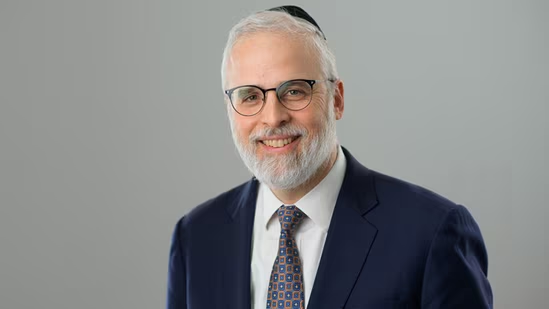
Rabbi Efrem Goldberg

Join Our Community

Subscribe to our newsletter or connect with us on WhatsApp.