How You Can Turn $1,000 into $14 Billion for Israel

If you could give $1,000 and turn it into $14 billion for Israel, wouldn’t you?  If you could prevent anti-Israel/antisemitic candidates from getting elected to Congress, wouldn’t you?  Well, you can!


In the first month following October 7th, American Jewry raised over $1 billion for Israel.  Since then, the generosity and donations have continued.  While incredibly important and certainly impactful, the current amount of donations to Israel is a small fraction of what is needed to fight this war, to address the economic impact of it, and to fund the expense of recovery from it.


Since the inception of the modern state, Israel has been dependent on United States support.  Indeed, Israel has been the largest cumulative recipient of US aid since its founding, having received about $300 billion (adjusted for inflation) in total economic and military assistance. 


Of course, America’s commitment to Israel’s military superiority is not a favor or a gift, it is in the United State’s security interest.  As the only liberal democracy in the Middle East that shares values and foreign policy interests, a strong, intimidating Israel is an American interest.  The United States has an expanding military base in Israel but in some ways, all of Israel serves as a US presence in a complicated and dangerous region of the world, one that threatens American values and Americans themselves. In a Republican Presidential debate, Nikki Haley put it well when she said, “The last thing we need to do is to tell Israel what to do. The only thing we should be doing is supporting them in eliminating Hamas. It is not that Israel needs America. America needs Israel.”


There is no doubt that the US military aid to Israel is significant but often unappreciated is that most of the aid, approximately $3.3 billion a year, is provided as grants that Israel must use to purchase U.S. military equipment and services.  In other words, American gives billions of dollars to Israel that Israel must spend buying military equipment from America, stimulating the American economy while helping Israel.


While we long for a time that Israel is financially, politically and security independent, currently, US aid accounts for about 15 percent of Israel’s defense budget. Moreover, from a foreign policy standpoint, Israel relies on America providing diplomatic cover at the UN and elsewhere.  While there are greater steps Israel can take to gain independence in these areas, that dependance reality is part of the galus we still find ourselves in and, given Israel’s relatively small size, it is hard to believe that will change entirely before Moshiach comes. 


The cost of replenishing munitions to continue to eliminate Hamas in Gaza and the expense of being prepared for a prolonged war in the north are enormous.  It is for that reason the Senate just passed a special $14.1 billion aid package for Israel.  While it passed 70-29, there were Democrats and Republicans who voted against it and it still needs to pass the House where it may well encounter resistance.


Bernie Sanders voted against the aid and said, “As I have said many times, Israel has the right to defend itself against Hamas’ terrorism, but it does not have the right to obliterate an entire people.”


Peter Welch of Vermont opposed the package saying, “I have always supported the free, secure, and democratic State of Israel. I still do. The Netanyahu government’s destruction of Gaza won’t make Israel more secure or more free.”


Jeff Merkley of Oregon explained why he voted against the aid, saying, “I cannot vote to send more bombs and shells to Israel when they are using them in an indiscriminate manner against Palestinian civilians.” 


Only 22 Republicans, less than half of the membership, voted in favor of the aid package, likely more to do with the allocation to Ukraine and their concern regarding the dangers of an unsecured US border, but their votes are still troubling. 


Here is the bottom line.  For better or worse, Israel needs American support more today than it has since the Yom Kippur war and American support for Israel is less of a given than it has been perhaps since Israel’s inception. 


Since October 7th, American Jews have been working to find our place in this war.  Certainly davening, learning, financial support, visits and missions are important, they matter and make a difference.  But, what has not been as widely focused on or emphasized is our role in ensuring formal, state-sanctioned US support for Israel.


While soldiers are fighting on the front lines of Gaza and the North and every Israeli is holding down the fort on the front lines of everyday life, our front line in America is urging, advocating and using our support to positively influence US-Israel policy. 

Here are some things we can, and must do:

·   Political Giving: Recently, AIPAC shifted strategy significantly and, through their PAC, now rate, endorse and financially support pro-Israel candidates.  In the last election, this effort helped defeat 13 candidates who would have undermined the US-Israel relationship.  AIPAC has created a tool called the Detractor’s Fund to push back against The Squad and those who seek to isolate and undermine Israel in Washington by funding candidates looking to defeat detractors of Israel in Congress.  Please contribute any amount – www.aipacpac.org – and be part of determining who determines US policy towards Israel.  The money you spend supporting candidates can be the difference of $14 billon of aid to Israel.  Where else can you get that kind of return?


·      Advocacy: AIPAC, ZOA, OU, and Agudah regularly send out action alerts asking people to send emails and make calls to lobby for different pieces of legislation having to do with Israel.  Don’t unsubscribe, delete the email, or assume someone else will take the time because you are too busy.  Stop what you are doing, spend a few moments taking action and make your voice heard. Congressional staff keep an account of how many calls and emails they get supporting and opposing proposed legislation.  Even those representatives who will certainly vote with Israel need to be contacted to express gratitude and appreciation.  Your emails and calls matter, take the time to make and send them. 


·        Primaries: Due to gerrymandering, the overwhelming majority of Congressional districts are predominantly Republican or Democrat, and there are relatively few genuine swing districts.  That means most elections are decided in the primary.  Don’t ignore primary elections and stay home. No matter your true political affiliation or identification, register with the majority party in your district so that you qualify to vote in the primary and can influence who will vote in Congress. You can still vote for either party’s candidate in the general election but by registering with the majority party you ensure you will have a say in the election that is more likely to determine the ultimate member of Congress.


When Yaakov confronted Esav he prepared in three ways – prayer, gifts and war.  Our brothers and sisters in Israel are fighting this war.  We can and must contribute the prayer and gifts/contributions.


The war with Hamas is not Israel’s war alone.  Defeating evil, defending our homeland, is the responsibility of every Jew.  There is much work to do fighting for Israel in the US. This is our front line and each of us is being called upon to serve faithfully.  Soldiers in Israel are asked to be willing to sacrifice their lives.  Their families are sacrificing with severely disrupted lives.  Our sacrifice is to give the time it takes to make a phone call and send an email and the cost of being considered for contributing to a campaign. 


In Israel, they have reported to reserve duty at over 100%.  Will we report to fulfill our duty?


Grateful or Not Good Enough? The Grammys Tribute to the Victims of the Nova Music Festival

The Grammy Awards, presented by the Recording Academy of the United States, are regarded as the most prestigious and significant awards in the music industry worldwide. As far as awards shows are concerned, the Grammys couldn’t be a more appropriate and prominent event to pay tribute to the barbaric and horrific murder of hundreds of people and the kidnapping of 40 more at the Nova Music Festival in Israel on October 7th.  For that reason, our friend, former Congressman Ted Deutch, now CEO of the AJC, published an op-ed calling on them to honor the victims and advocate for the hostages. 


The 66th annual Grammys took place this week and indeed, it drew an enormous audience of 16.9 million viewers, up 34% from last year.  To his credit, Recording Academy CEO Harvey Mason Jr. did use the enormous platform to acknowledge the historic atrocity at the Supernova Festival, saying:


Every one of us, no matter where we’re from, is united by the shared experience of music. It brings us together like nothing else can, and that’s why music must always be our safe space. When that’s violated, it strikes at the very core of who we are.  We felt that at the Bataclan concert hall in Paris. We felt that at the Manchester Arena in England. We felt that at the Route 91 Harvest Music Festival in Las Vegas. And, on October 7, we felt that again, when we heard the tragic news from the Supernova Music Festival for Love, that over 360 music fans lost their lives and another 40 were kidnapped.


That day and all the tragic days that have followed have been awful for the world to bear as we mourn the loss of all innocent lives.  We live in a world divided by so much, and maybe music can’t solve everything, but let us all agree that music must remain the common ground upon which we all stand, together in peace and harmony. Every song that we’re honoring or hearing tonight moved someone, no matter where they were from, what they believed, it connected us to others who were moved in the same way. Take this string quartet: As individuals they sound really good, but together they achieve something beautiful they could never do apart. These musicians of Israeli, Palestinian and Arab descent are here, playing together.  Now is the time for us, for humanity, to play together, to come together.


On the one hand, in a world of growing antisemitism, anti-Israel sentiment, moral equivalency and political considerations, we should feel gratitude to Mason for the moral clarity to use the awards show to address the darkest day the Jewish people have had since the Holocaust.  While obvious to us, addressing the Supernova atrocity was likely complicated for him. 


But while Mason showed courage in some ways by addressing the atrocity, he fell way short of truly honoring those murdered, advocating for the victims, and hostages or standing for the truth when he omitted who they were, where they lived, and why they were killed.


Look at his words more carefully.  Notice that the Bataclan concert hall is in Paris. Manchester Arena is in England.  Route 91 Harvest Music Festival is in Las Vegas. What about the Supernova Music Festival, where did it take place, where did that tragedy occur?  No mention, as if Israel, the one and only Jewish state, is a dirty word, a political football, a divisive or taboo term.    


Mason goes on to describe, “over 360 music fans lost their lives,” as if they died in an accident or natural disaster.  They didn’t lose their lives, they were murdered. Brutally, barbarically, viciously.  They were raped, tortured, and massacred and it was not because they were “music fans,” it was because they were Israelis, because most of them were Jews.


The “tragic days” that have followed and the loss of “all innocent lives” are not because of a conflict that has two legitimate sides, but entirely and only because a barbaric terrorist organization, Hamas, attacked the innocent civilians of Israel.


While the symbolism evoked by the string quartet is meaningful, it is empty if not accompanied by substance. Peace won’t come from Israelis and Palestinians simply playing music together. It will come when we can call evil by its name, when we can say out loud the difference between perpetrators and victims and when we don’t have to wordsmith statements to make them politically correct.


Maybe you will say I am being unfair, hypercritical, or expecting too much.  Maybe by so closely analyzing his words I am being ungrateful for the courage it took to share them at all.  Perhaps.  But I ask you to consider this.  Forty participants at that Festival for Love were kidnapped, many still being held hostage against all international law, human rights, and basic morality.  Could Mason not have used that moment, that stage, to say before nearly 20 million people, “Let them go,” or “Bring them home”?  Is calling for the release of innocent women and children controversial?  Is it politically incorrect or divisive?  Is it too much to ask or expect?


Yes, we should be appreciative and yes, we should express our gratitude, but we also must simultaneously not sell ourselves short, settle for less than we deserve or are entitled to.  Are we so insecure, do we lack confidence in who we are, our story, our right to exist and live in peace and harmony?


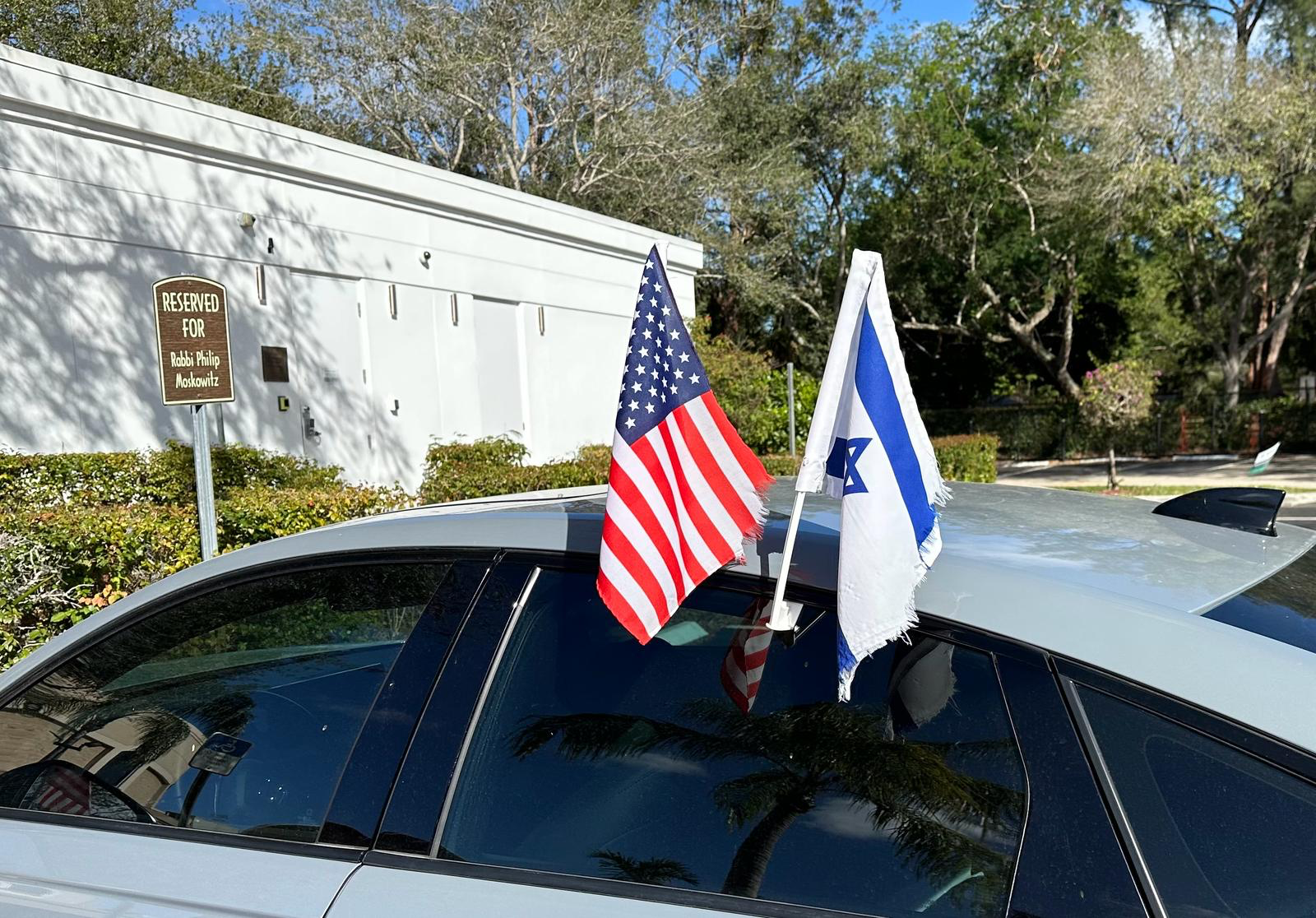
After October 7th, Boca Raton Synagogue distributed 1,000 car flags.  We didn’t only encourage Israeli flags but we also provided and encouraged people to display American flags (and IDF flags).  While pro-Palestinians rallies have only included American flags as objects to burn, we wanted to communicate the shared values and close connection of Israel and America. 


I proudly display the flags on my car.  A few weeks ago, I was driving down Palmetto Park Road, a busy street in our area, when someone tried to cut me off, almost pushing me off the road.  I slowed down to avoid a collision or an escalation when he lowered his window, pointed to my flags, starting yelling and gesturing obscenely in my direction.  He was cursing Israel and me wildly.  I slowed significantly and avoided further interaction but those moments truly shook me.  I couldn’t believe that right here in Boca Raton, a community that is more than fifty percent Jewish, such hatred and public antisemitism could be displayed so brazenly. 


When I shared the story with someone I am close with, their response as to encourage me to take off the flags.  Why identify so publicly with Israel, they asked?  Why put it in people’s face?  Why drive around with a target on your car?


To be honest, I was shocked.  The answer is to hide my pro-Israel feelings?  The response is to take down my American and Israeli flags?!  When I was in Yeshiva in Washington Heights, I vividly remember seeing Puerto Rican flags around the neighborhood and feeling admiration for the patriotism, pride, and connection my neighbors felt for where they are from.  


My children were recently in Los Angeles.  My son-in-law was walking to Mincha with his 4-year-old son when a car slowed down, the window lowered, and the driver gestured obscenely and screamed out at them, “wrong way to the tunnels.”  Are they not entitled to walk down the street safely?  Must a Jew in Los Angeles, New York, or Boca Raton take off their yarmulka, remove any display of their Jewishness when in public? 


In this moment, more than ever in our lifetimes, we need to stand tall and firm, with pride, unapologetically, without defensiveness or insecurity about who we are, what we deserve, what we stand for, and who we stand with.  We must not be satisfied with universalized messages against “all hate” instead of specifically calling out antisemitism.  We must not be content with a minimal acknowledgement when it fails to say Jew or Israeli.  We must not tolerate moral equivalence, a lack of clarity of who is the aggressor and who is the victim.  We must demand those who display hate against us be prosecuted to the full extent of the law.  We must urge decent people everywhere to advocate for the release of our hostages immediately.


When we were liberated from Egypt, we were first instructed to go to our neighbors and respectfully, but firmly, ask for gold and silver, the compensation for our years of slavery.  Hashem wanted us to walk out with resources and wealth but He wanted us to leave with something even more important.  A slave feels like a passive spectator to their own lives.  They must meekly accept whatever they get and whatever happens to them.  The only way for a slave to gain true wealth is to be liberated from that mentality and to proclaim, I know what I am worth, I know what I deserve, I know what I am entitled to, and I demand it now.  When asked boldly and confidently, the Egyptians complied with the Jews request. 


We left Egypt with more than gold and silver, we left with pride and confidence, the knowledge of who we are and what we deserve.  The time has come to free ourselves from an apologetic, fearful mentality and posture and to stand up for who we are.  When we respect ourselves we will find others have greater respect for us as well. 

You are Insane

“You are insane!”

Those were the words Rav Asher Weiss Shlit”a used to greet me when I visited him this week and shared that we had a group of 70 people from BRS who had come to spend Yeshiva Week in Israel. He continued that anyone visiting Israel right now, anyone flying into a country at war, is insane.

In a few weeks it will have been two years since Russia invaded Ukraine. In that time, six million Ukrainians have fled to Europe, but do large groups of Ukrainians from around the world come to visit Ukraine? How many have come on solidarity missions to bring supplies, to visit army bases, to sponsor barbecues, to hug displaced families?

“And so, you and the many who have come to visit Israel during this war are simply insane,” said Rav Asher. “But it is a magnificent insanity, a beautiful insanity, an insanity driven by love and loyalty, by connection and community, by a sense that we aren’t just a people, we are a family and family doesn’t run away from trouble, they are willing to run towards it.”

Of course, in truth there is nothing insane about visiting Israel right now. It feels not just safe but tremendously meaningful, moving, and one truly appreciates that visits make a difference. I don’t take for granted for a moment the privilege of spending time in Israel during this monumental, historic, and critical time.

There are many legitimate reasons not to be able to visit Israel during this time. Not everyone can take off from work. Those with young children and those who are responsible for taking care of aging parents cannot travel or be far away. The expense of flying and finding a place to stay is significant and the relationships and connections needed to craft a productive and meaningful itinerary are not available to all. And so, there are many legitimate reasons that people can’t stop what they are doing during this war and come to Israel.

But here is the thing. There is no legitimate reason for every member of our precious Jewish people not to feel with every fiber of their being that they want to go to Israel right now, that they are drawn to the beautiful and magnificent insanity of running to be with our family in Israel at this moment: for them, for ourselves, to honor our history, and to together forge our destiny.

As this war continues to rage, as the danger of it expanding to a northern front increases, as hundreds of thousands of families remain displaced, as funerals and shivas of soldiers are tragically still taking place, as hospitals and rehabilitation facilities remain full of thousands fighting to recover and resume life, as the economy continues to be compromised by a massive dip in tourism, and as too many in the world are working to marginalize and isolate Israel, every member of our sacred family should be drawn to our home, should feel the powerful force of the magnetic pull to be with our people, to be in our place, to be part of this sense of purpose.

It shouldn’t be hard to want to go to Israel right now; it should be hard not to, it should feel impossible to stay away, it should hurt to not be there, to not be counted and to not be contributing.

Rav Michael Yammer, the Rosh Yeshiva of Shaalvim, told me about a call he received from a talmid of the Yeshiva who was in Gaza. Anxious and upset, the young man had gotten access to a special phone from his captain to be able to call his rebbe to tell him that he had decided to put his role as a husband and father ahead of being a soldier and that pending permission from his rebbe, he was requesting to leave the Gaza battlefield to go home. Sensing that something had happened, Rav Yammer asked him what changed, why was he feeling this way? The young man said that just a few hours earlier, a dear friend and fellow soldier had been killed in fighting and he now felt he just couldn’t go forward with the feeling that his family might lose their husband and father.

Rav Yammer told him there is a conflict taking place between your head and your heart, between what you are thinking and how you are feeling. Come home for a couple of days, speak to your wife and come with her to meet me to explore if you think your head can rein in your heart, if what you believe can sway and control how you feel. Rav Yammer challenged him, in this moment, can you set aside your being an ish perati, am individual person, to serve as an ish ha’kelal, a person who is devoted to the greater good? Can you put what is right for am Yisrael ahead of what is right for you or your family? If you can’t, that is completely understandable and acceptable and not subject to anyone’s judgment, but consider it thoroughly, be true and honest with yourself.

The next day, the couple cancelled their appointment with him explaining they had been up all night discussing and had reached a conclusion. With his wife’s support, he was determined to continue to be an ish ha’kelal, a person who was dedicated to the greater good of his people. His head could and would rule his heart, his commitment and belief would be stronger than his fear, and he and his feelings were going back in to fight and defend his greater family, the Jewish people.

Israel is filled with anshei ha’klal right now, ordinary people with extraordinary commitments to serve something bigger than themselves, and they are making tremendous sacrifices as they do so. While fatigue has set in for too many, soldiers cannot afford to tire, their wives and families have to continue to pick up the slack, a nation whose citizens are at most one or two degrees of separation from October 7 victims, or soldiers who have paid the highest price since then, has to live with trauma and grief it hasn’t yet had time to process or experience.

This war is and will be won by a country of individuals putting aside their individual needs, wants, and well-being to serve the klal, the greater community and people. Soldiers are risking their lives on the front lines. Families are filling in while loved ones are way from home for prolonged periods. Volunteers, many of whom don’t sleep for days at a time, are cooking, delivering, serving, supporting, and supplying. A nation is davening and learning with greater diligence, determination, and dedication than ever before. People who have been far away from mitzvos and spirituality are experiencing an awakening and pledging to take on practices outside of their previous experiences and comfort zones.

Not everyone who lives outside of Israel can go right now but every one of us should feel that we want to, should work to plan to, should find a way to not do what is best for us or even just for our families, but to prioritize what we can do for our collective future, for the good of our people.

Even if we can’t physically be in Israel, our focus, consciousness, and compass can be connecting us constantly to Israel and to the sacrifices our brothers and sisters are making there. We cannot and must not be tone deaf or disconnected, acting as anshei prat, individual people, practicing, posting, speaking and living as if there isn’t a war raging, heroic angels aren’t being killed, hundreds of thousands aren’t grinding through the grueling reality of being displaced for many months.

Before planning, posting, or doing anything during these difficult days, ask yourself, is this the behavior of an ish ha’klal, someone connected with our greater people? How would this picture, this comment, or this message, be seen or understood by those I claim to care about going through something we cannot begin to truly comprehend? How can I put my personal, individual instinct or need aside and use my time, energy, resources and attention to serve, contribute and put the family first instead?

In this critical time, ask yourself simply, how will you be magnificently and beautifully insane?

An Open Letter to Those Visiting Israel

Dearest fellow visitors to Israel,


One of the more popular refrains I have heard from people considering going to Israel during these challenging times is something along the lines of: “Does it really make a difference if I come?  Aren’t I just in the way?  Does my presence or my volunteering really matter or make a difference?  Are Israelis just humoring the visiting Americans and making them feel good about coming? 


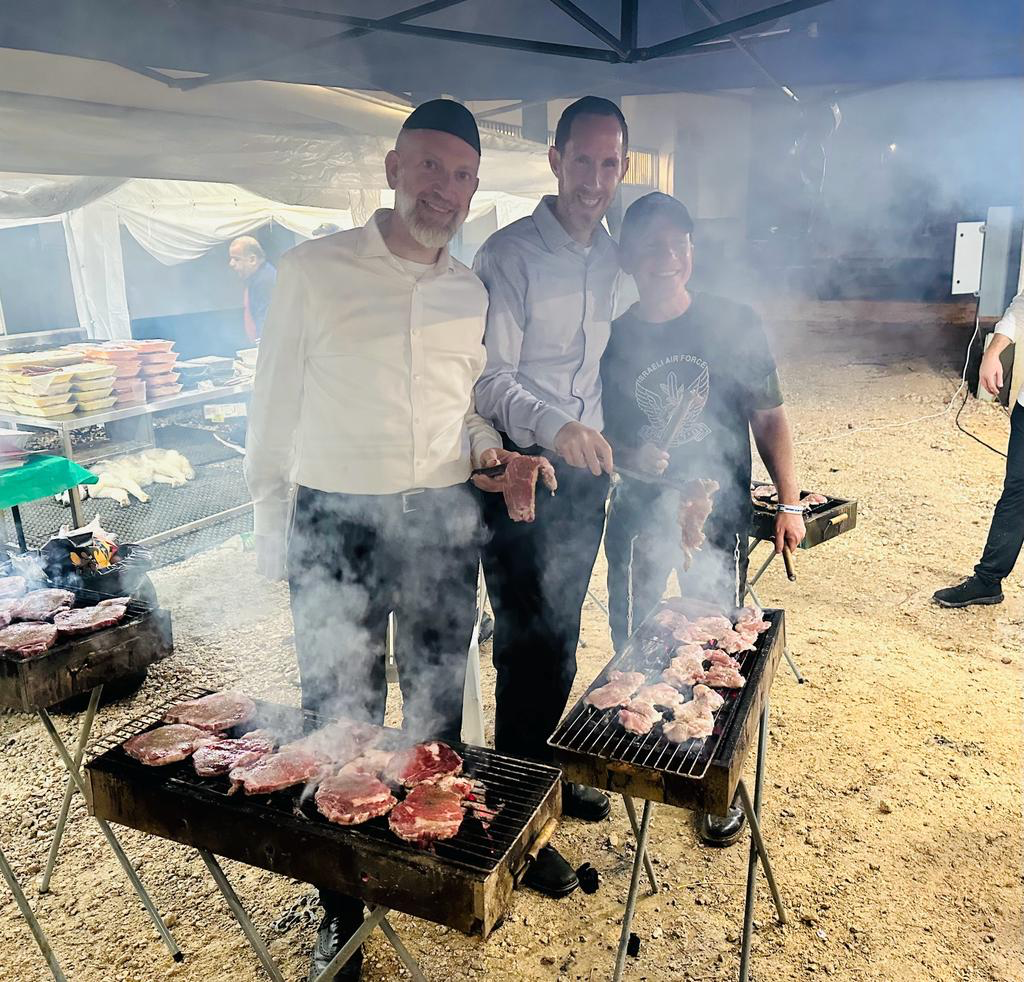
Having been to Israel twice since October 7th and with another trip planned, I can tell you based on my personal experiences, the answer to whether or not to go is an unequivocal and resounding YES.  Yes, our visits matter.  Yes, our showing up while Israel is in a war means something.  No, it doesn’t begin to compare and isn’t in the same universe as the extraordinary sacrifices of the most ordinary Israelis during this time.  But our trips, our support, our barbecues, our gifts, our hugs, and our genuine expressions of love and support are not mere photo ops or empty gestures, they are demonstrations of love, loyalty, connection, they mean something to our brothers and sisters in Israel, and they mean even more for us.


As I head back to Israel I am trying to process and think about different pointers I have heard from friends there about sensitivities that are critical for us to have when visiting.  I have heard from them that at times, even those with the best intentions and who certainly mean no harm might not be fully mindful of how something we say or do will land or be received.  The following is not to God-forbid judge but simply to share what I have heard, what I am thinking about and what I will try to be mindful of on my trip:


Don’t Just Show Up or Walk In:

Wanting to visit army bases, hospitals, displaced communities and family and friends is beautiful.  However, it must be about them, not us, on their schedule, not ours, when convenient and appropriate for them, not when works best for us.  Don’t just show up or walk into a hospital room, a base or someone’s home.  Communicate, coordinate, and only come if it will indeed contribute.


Sharing Resources and Gifts:

Remarkably, North American Jewry raised $1 billion for Israel in the first month of the war through major organizations entrusted with allocating it in prioritized and transparent ways. Additionally, on organized missions and individual trips, monies have been generously given to help bereaved families, displaced communities, and injured soldiers in a small way.  Many have brought toys and gifts to bring a bit of joy to children or women whose husbands have been called up. 


It is important to be mindful of the best way to distribute money and gifts.  How can it be done in a way that doesn’t make others feel like a chesed project or like they are needy, indigent, or underprivileged?  Should it be distributed directly or through someone on the ground more connected to the recipients?  Can it be given privately or modestly and not with fanfare or attention? 


Pictures and Videos:

The experiences and people you meet will certainly move you to take pictures and videos, whether for yourself or to share with others. But there are critical considerations to keep in mind. Is this person or is this group of people comfortable being photographed or videoed?  Should they even be asked and put on the spot, or only if they offer?  Instead of taking or sharing a video from the sidelines as a spectator, can we engage someone and ask if they have a message they want to share?  Would we want to be the subject of someone’s “this is what we just did for Israelis” Instagram post or would we prefer to be asked if we want to communicate the context and share a message? The heroic people of Israel, soldiers in uniform, army bases, and certainly scenes of destruction or devastation – these aren’t photo ops or tourist attractions. Take a picture to tell a story or advance a cause, but do so mindfully and sensitively.


Personal Connections and Relationships:

Instead of watching as a tourist, can we engage directly, maybe break into small groups to genuinely share, listen, and connect? Instead of, or in addition to, capturing a presentation that we may record and share on Whatsapp or elsewhere online, can we disconnect to connect in a way that communicates showing up, that conveys empathy, love, and listening? 


Ordinary People in Extraordinary Times:

We must keep in mind throughout our visit that everyone we meet, those displaced, farming, injured, fighting, on their own at home, volunteering, almost all of them are really just regular people who have been thrown into the middle of a crazy time that they themselves are still processing. They are not objects of our chavaya, they are real people, with real feelings, real experiences, real worries, concerns.  Can we relate and speak in genuine ways, in normal tones? Our brothers and sisters are not museum pieces, they are not a piece of history, they are not here so that our kids can have an educational experience or we can have an amazing and meaningful chavaya. They are not part of a photo op or a vacation memory.  We are coming because we are Jews who care about or fellow Jews and we just want to connect to what they are experiencing and we can tell them how we are feeling. 


This Isn’t Over Yet:

Be mindful that these trips are not to see, pay witness to or help with a situation that is over.  This is not a modern version of March of the Living or Heritage Trip. We are very much still in this war and we don’t know when it will be over. The war is not a closed event, something that happened in the past. It’s something that people are very much still living every day, will continue to be living after you leave, and it must not be related to as something that was.  At Shabbos tables, around family, friends, and strangers, don’t take anything for granted, be careful and sensitive how you speak, what you speak about, and before whom you are speaking.


Not Just an Itinerary:

The daily life of every Israeli has been impacted since October 7 with no clear end date.  From significant interruptions to businesses and universities, to the fear that a husband, father, son or brother won’t return home, life has been turned upside down.  Israelis are just trying to cope and manage their day-to-day. Most haven’t gotten to go see Be’eri, or visit hospitals or displaced people at hotels, they haven’t made a barbecue at an army base or been briefed by politicians or military. They are genuinely happy that Americans are coming to visit, show support and that we care.  We must be careful not to commercialize or sterilize our loving trips to connect with our greater family and turn them into a tourist experience, a great “war trip” experience. The itinerary should not distract or blind us to the love, kindness, support we can show the cab driver, the makolet owner, the restaurant server, and our family and friends who have made Aliyah.  The purpose of our trip is not the collage we can create, the photobook we will produce, or the video we can compile. It is the people we will connect with, the love we can share, the energy we can contribute to.   Our trip should be informed not only by what we want to do, but how we are needed and where we can be most of service. 


Comfort In, Dump Out:

No matter how little you slept on the flight, how exhausting the itinerary is, don’t tell a soldier who hasn’t slept or a mother caring for a home all alone how tired you are.  If seeing or experiencing something is emotionally difficult or draining, don’t process or seek comfort from those who are more closely connected or bearing the brunt of this war.  Be mindful to only comfort in and dump out


Caring and Compassionate, Not Condescending:

Find a way to be caring and compassionate without being pitying or condescending.  It is hard enough to be thrust into a difficult situation, being made to feel like a nebuch, weak or helpless makes it worse.


The penultimate plague on Egypt was choshech, darkness.  We have all lived through blackouts or woken in the middle of the night to a dark room while trying to find our way to the light or door.  What was so devastating about this plague that it deserved to be placed right before the final blow of makas bechoros?  The Chidushei HaRim explains homiletically.  Light is the capacity to know that there are other people in the world and that life is not just about us.  Darkness falls when we turn exclusively inward and live a life of egocentricity.   When we care only about ourselves, our interests, our success, our needs, our happiness, we are cloaked in darkness.   


When the Torah describes darkness it says: V’lo ra’u ish es achiv, no person could see his brother.  Says the Chidushei HaRim, when you live life without even seeing the person next to you, you are covered in darkness and you are blind to what life is really all about.  Being trapped in a life of self-centeredness, only caring about yourself and not helping or even seeing others around you, is a life of darkness, it  results in pain and suffering like a plague.    


It is wonderful to go to Israel anytime, it is particularly meaningful to go during this time.  As you plan your trip, as you experience each visit and interaction, simply ask yourself, if you were in the other position, how would you want to be related to, spoken to, and thought about.


Let us all go selflessly, not selfishly, let’s dispel all the darkness and contribute enormous light. 

Antisemitism is Scary, This Should be Scarier


According to a new ADL report, antisemitism in the United States has “skyrocketed” since Hamas’s October 7 invasion of Israel.  In the last three months, there were 3,283 antisemitic incidents including 60 physical assaults, 553 incidents of vandalism and 1,353 incidents of harassment. That is more than four times the number that occurred during the same period last year.  In the aftermath of Claudine Gay’s resignation from the Harvard presidency, Harvard’s anonymous campus social media platform Sidechat has been filled with an unprecedented level of overt antisemitism.  All posters on Sidechat are current undergraduates, graduate students, continuing education students, alumni, faculty, or staff.


The wave of antisemitism is deeply troubling, disconcerting and profoundly worrying.  We must do all we can to confront it, combat it, call it out, and create consequences for those who practice it.  And yet, while alarming, there is something even more destructive, devastating, and dangerous to the safety and security of our Jewish future.  Even with its meteoric rise, the statistical threat of antisemitism pales in comparison to the crisis of assimilation: the damage we are doing to ourselves and our contributions to the disappearance of our people.


In the United States, intermarriage was rare until the middle of the 20th century, with rates never rising above 3%. In 1964, the intermarriage rate had risen to 7%. Today, 70% of secular Jews in the United States, and 50% in Europe, are married to non-Jews.


In contrast to the other denominations, studies show that the Orthodox community is on the rise and exhibit high levels of demographic stability.  While that conclusion is gratifying and validating, it is absolutely no cause for celebration or triumphalism; the hemorrhaging of other denominations is not the result of Jews flocking to the Orthodox community.


Rav Aharon Lichtenstein zt”l wrote (Tradition, Spring 1982):


Nor do I share the glee some feel over the prospective demise of the competition. Surely, we have many sharp differences with the Conservative and Reform movements, and these should not be sloughed over or blurred. However, we also share many values with them – and this, too, should not be obscured. Their disappearance might strengthen us in some respects, but would unquestionably weaken us in others. And of course, if we transcend our own interests and think of the people currently served by these movements – many of them, both presently and potentially, well beyond our reach or ken – how would they, or klal Yisrael as a whole, be affected by such a change? Can anyone responsibly state that it is better for a marginal Jew in Dallas or Dubuque to lose his religious identity altogether rather than drive to his temple?


If the muscles of the left arm atrophy or the arm needs to be amputated, it is hardly a comfort that the right arm is strong and has larger muscles than ever.  Sadly, rather than an honest review and return to tradition, ritual and halacha, there has been a doubling down of the policies and ideology that have brought these results to begin with.


Some have suggested an embrace of patrilineal descent as a solution.  Others argue it is time for rabbis to officiate at intermarriages. Aside from representing gross distortions of Halacha, mesorah and the will of the Almighty, these suggestions don’t actually address the core issues. They simply attempt to put a Band-Aid over a deeply infected wound that is gushing blood.  Indeed, they are the equivalent of cooking the books or manipulating earnings so that they appear to report profit instead of loss.  Recognizing patrilineal descent or accepting intermarriage just gives the illusion of addressing the problem; it doesn’t actually do anything to address the very real threat facing the future of American non-orthodox Jewry.


If one thinks the Orthodox community is unaffected by these suggested monumental shifts in policy, they are grossly mistaken. Individuals and families who will have grown up thinking they are Jewish will meet our children through NCSY or at their college Hillel and their Jewish status will come into question.  Children who apply to attend day schools or families that will seek membership in our shuls may have questionable statuses.  These potential shifts in policy and practice will not only fail to stem assimilation, but it will further divide our people.  This is not a hypothetical issue that may arise in the future.  This is happening now in our own institutions and among families in our own community.  I see these issues arise frequently – and tragically.


Intermarriage is not a Reform or Conservative challenge, it is not the problem of the “unaffiliated” or “secular.”  Too many Orthodox parents have reached out to me about their children who have gone through a robust Jewish education and grew up in observant homes who have met someone non-Jewish and are building a life with them. We are one people, one nation, and we are watching our family hemorrhage.  


Antisemitism and assimilation are not only both rising dangerous threats, our response to both must be one and the same –  more Jewish pride, more Jewish practice, more Jewish passion. When talking about the mitzvah of tzitizis, our rabbis (Bamidbar Rabbah 17:6 and see Nesivos Shalom) provide the following metaphor.  A person was once cast into the sea and was drowning.  The Coast Guard threw the person a rope and said grab on. If you hold onto it, you will survive but if you let go, you will be swept away and disappear.  Wearing tzitzis reminds us of our commitment and responsibility to a life of Torah and mitzvos.  Grabbing on to those ropes and what they stand for gives us life.  Tzitzis themselves are not the solution, but they are symbol of a lifestyle of mitzvos.   Eitz chaim hi la’machazikim bah, the Torah is the tree of life for those who grab onto it.  Let it go and you will be swept away.


The storms of change are raging around us.  The current is getting stronger and stronger and sweeping more and more people away.  The only way to stay safe, and remain true to our values, our traditions and our obligations, is to make a commitment to not only hold on to Torah, but to demonstrate a willingness to swim upstream at times, to go against the tide, to dare to be different and to be willing to stand out.  This is no easy task and takes great courage, but we have it within our very DNA because our great patriarch Avraham planted it there.  Avraham was called Avraham Ha’Ivri meaning mei’eiver, on the other side.  When the whole world took one position and stood on one side, he had the courage to stand out, remain true to the vision and will of the Almighty, and to stand on the other side, even when it meant standing by himself.


The great Piacetzner Rebbe, R’ Kalonymous Kalman Shapira writes in his spiritual diary, Tzav V’Ziruz:


You cannot remain static in this torrent river just by standing firm in your place – you must actively swim against the flow.  You may not be successful in swimming upstream, but at least you will not be swept down by the flow.  So it is with spiritual life and the purity of spirit that you have attained.  You cannot retain them against the flow unless you continue to struggle for spiritual growth.  You must swim upstream without respite – upward, onward against the flow.  There may be a limit to how far you can go, but at least you will not be drawn down with the flow.


W.C. Fields once said, “Remember, a dead fish can float downstream, but it takes a live one to swim upstream.”  Those who are spiritually dead, cut off from our timeless and time tested traditions, are floating away.  We, the community who are willing to swim upstream, must not only swim harder, but we must be willing to grab on to those around us and share our life preserver, the Torah.


These findings, both of the rise of antisemitism and the growth of assimilation, demand a mass movement of outreach.  The needle won’t move and the problem won’t be solved by kiruv professionals and rabbis alone.  A difference will only be made when every Torah shul, institution, and individual sees as part of their core identity and personal mission to not only hold on to the sturdy tree of Torah (eitz chaim hi la’machazikim bah) to prevent being swept down the river, but to reach out and extend a hand to those floating by. 


Milton Friedman, the great Nobel Prize-winning economist and professor at the University of Chicago, had a very simple suggestion for how to identify a person or institution’s priorities.  Many people eloquently describe their beliefs, values, and principles and talk about what is most important to them.  Friedman advised to ignore what they say.  If you want to truly know what someone’s priorities are, it is simple – Look at someone’s budget and you know what is important to him/her.  See how someone prioritizes their money and you will know their priorities.


We claim to care about outreach but do our institutions, shul and schools have an outreach budget?  Do we have dedicated people working on this cause?  Do we put our money where our mouth is?


This is our generation’s test; it is our challenge.  Many summers ago, I worked at Aish HaTorah in Jerusalem as an advisor in their Discovery program.  My friend and I were fresh out of yeshiva and when asked to recruit at a particular location that we didn’t feel was appropriate for “Bnei Torah” to spend time, we resisted.  A meeting was scheduled with Rav Noach Weinberg zt”l, founder of Aish.  After some small talk, he asked us what the problem was.  We explained that we were yeshiva guys trying to work on ourselves and we didn’t feel that it would be good for our neshamos to hang out at an immodest location.  I will never forget what he answered.


He looked us in the eye and with the greatest sincerity said, “Let me ask you.  If you were in Eastern Europe and the train was leaving to Auschwitz and a woman extended her hand for you to pull her off, would you hesitate to take it because you are a yeshiva guy?!” Well, the train is leaving and it is taking millions not to Auschwitz, but to assimilation and oblivion.  You need to go recruit and figuratively extend your hand to pull people off the train and redirect them from assimilation and into Discovery.”


It has been said that in Europe they killed us with hate and in America, even with the rising hate,  they are mostly killing us with love.   Will we rise to our generations test and care enough to not only be willing to swim upstream ourselves when necessary, to stand tall, proud, to be passionately practicing, but also to extend our hand to those around us who are being swept away.  If the answer is not a resounding “yes,” the consequences of the combination of antisemitism and assimilation will be devastating.


Don’t Vote Republican or Democrat, Vote Israel

For most of the 20th century, the vast majority of Jews in the United States identified with the Democratic Party and voted for Democratic candidates. Even now, according to Pew, seven in ten Jewish adults identify with or lean toward the Democratic Party, and half describe their political views as liberal. Orthodox Jews stand out as an exception: 60% of Orthodox Jews describe their political views as conservative, with 75% identifying with or leaning towards Republican. 


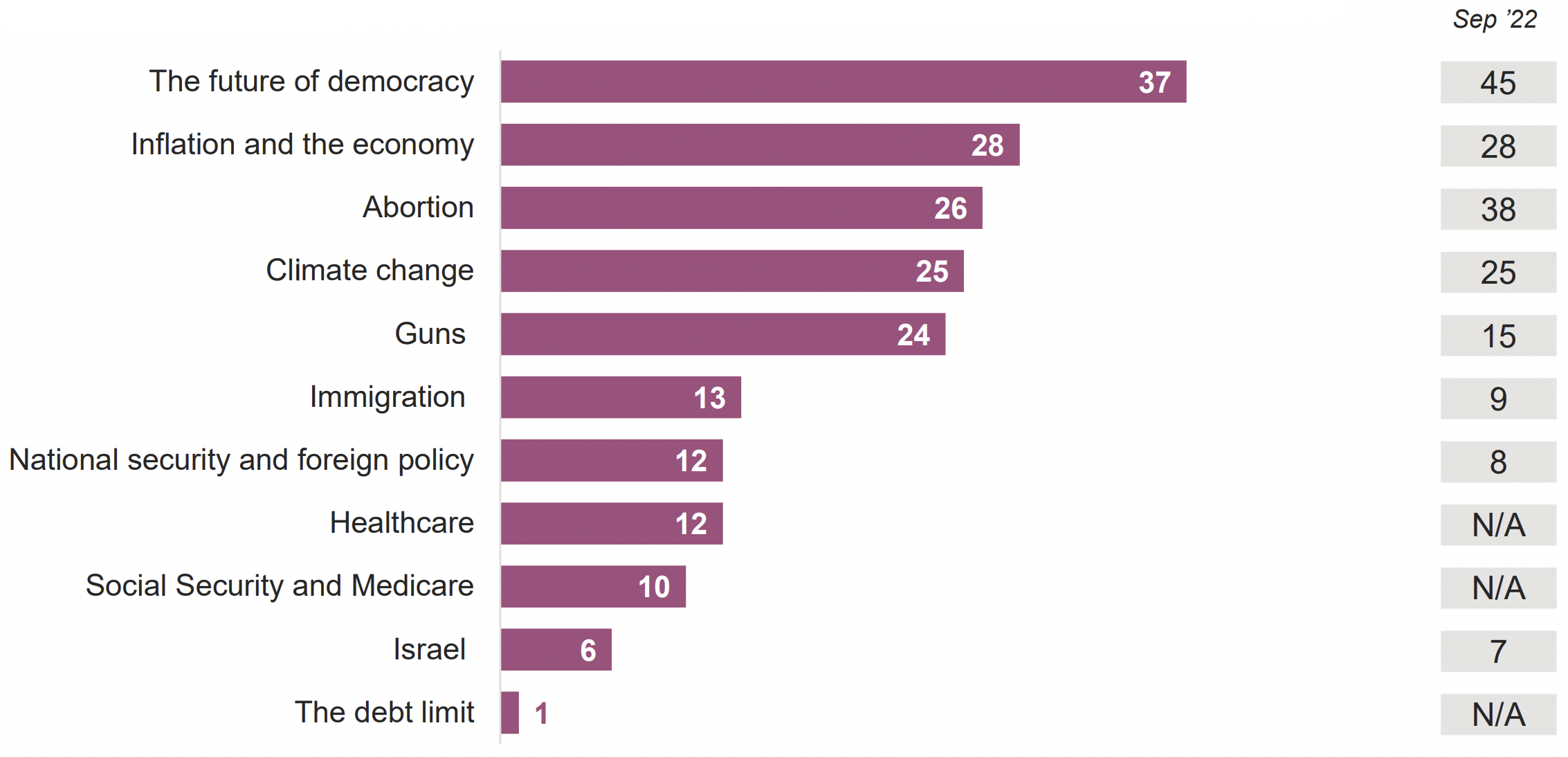
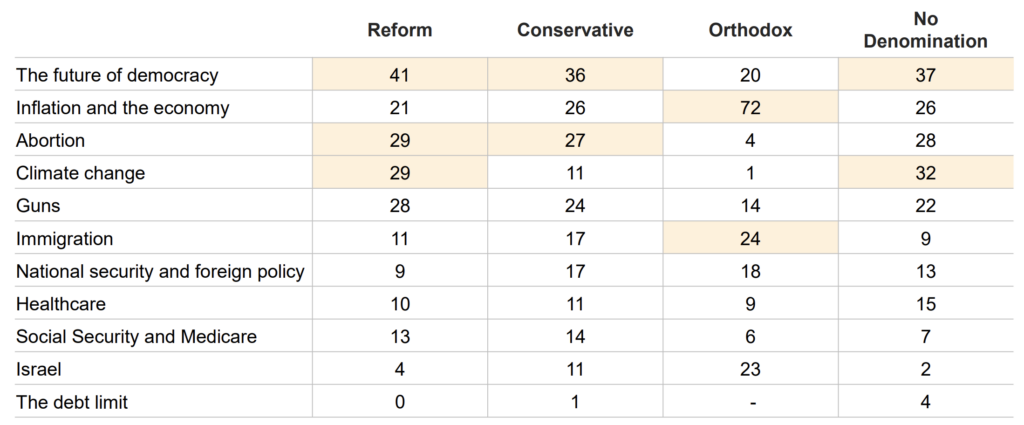
The non-partisan Jewish Electorate Institute (JEI) released its annual national survey of Jewish voters in November 2023. The poll found that Jewish voters remain very focused on cultural issues such as democracy, abortion, guns, inflation, and climate change.  The data was published before the atrocity of October 7th and before the current war but, how low Israel ranked as a priority in voting was upsetting even then.  


Even among the Orthodox, Israel ranked behind inflation and the economy and immigration: 


The pogroms, mass murder, and atrocities of October 7th stunned Israel and those who love her. Reeling from the unimaginable attack, grieving from the horrific loss, worried about the staggering number of hostages, Israel felt isolated and alone and highly uncertain.  Immediate statements of strong support from American political leaders and elected officials, coupled with real demonstrations of loyalty to Israel’s security, were critical. 


At that time, and in the moments that have followed, we have learned who are true friends of Israel and the Jewish people and who are not.  In many cases, the answer is not who we would have predicted.  Some of the most vocal and vociferous voices are politicians the pro-Israel community was not very confident about.  Take Senator John Fetterman.  In the 2022 election, the Orthodox community of Pennsylvania did not exactly embrace Fetterman, a progressive Democrat, or celebrate him as a champion of our causes.  And yet, since October 7th, you would be hard-pressed to find a more outspoken, unequivocal, even defiant supporter of Israel. Consistently rejecting the call for a ceasefire and defending Israel’s efforts to destroy Hamas, he recently said, “I would be the last man standing to be absolutely there on the Israeli side on this with no conditions.”


And so, among the many things that have changed as a result of October 7th, I would humbly recommend that the Jewish community would do well to no longer identify with a single party, Republican or Democrat, but to look carefully at every candidate’s position and record on Israel.  When we step in a voting booth, we shouldn’t look for an (R) or a (D) but for moral clarity and loyalty on Israel.  Understanding how critical support for Israel is militarily, diplomatically, and financially, our top three issues in any election ought to be Israel, Israel, and Israel.  As important and meaningful as other issues are, without a strong Israel, Jews are not safe or secure. 


We must not fall in love with or identify too closely with either party. We must not be blinded or enticed by how much we may have in common on social or domestic issues with one side or the other, one candidate or another.  The pro-Israel community must keep our eye on how pro-Israel a candidate is, with their words and statements and even more importantly, with their practice.  We must do a better job at rewarding our friends and calling out our adversaries.  We must not ignore or discount the support of an elected official on the basis that they are simply doing what is obvious and right to us.  If that senator, member of Congress or the administration as a whole receives much greater feedback, letters and calls against Israel than for it, their vote and voices can easily change. 


Our exile in Egypt and the harsh suffering and servitude there began with the fact that  וַיָּ֥קם מֶֽלֶךְ־חָדָ֖שׁ עַל־מִצְרָ֑יִם אֲשֶׁ֥ר לֹֽא־יָדַ֖ע אֶת־יוֹסֵֽף , a new king arose over Egypt who did not know Yosef.  Chazal debate if it was literally a new king, or the same king who had chosen to forget Yosef’s contribution to saving the Egyptian economy.  Some commentators point out that the Jewish people had retreated to live in Goshen, neglecting the relationship with the king and leadership of Egypt.  Absent that connection, the king was able to forget, overlook and disregard what the Jews had done to save Mitzrayim. 


This lesson of the centuries of servitude is clear.  We must never take for granted any relationships with people in positions of power.  We must build them, nourish them, educate them, and hold them accountable when it comes to Israel and issue of Jewish concern.  Contribute to and be grateful towards those who stand with Israel and against antisemitism.  Take the time to write a letter or make a donation.  Don’t look for a particular party, look for the heart and soul of those who “get it” on the issues that matter to us.  AIPAC is one great resource to track candidates, their positions on Israel, and to take action by writing letters and being in touch, specifically with those who need to hear it to reinforce their correct position or call them out on having the wrong one. 


We are blessed to currently have a president, administration, and overwhelming majority of Congress who firmly stand with Israel.  While they aren’t perfect and there are positions or statements we wish were different, they fundamentally have Israel’s back, often when it isn’t politically advantageous or comfortable for them.  Don’t take that for granted and wait for a  new king to arise who doesn’t know us or care about the issues that matter most to us. 

Reframe Your Life

During these extraordinary times for the Jewish people, there have been extraordinary stories, videos, and vignettes emerging.   The challenge is to not only watch them, marvel at them, cry with them or forward them, but to be changed by them, to inculcate these extraordinary lessons and examples into our own lives.


Among the moving videos that have been coming out are the ones of soldiers coming home and being reunited with children, spouses, parents, and siblings.  It is almost impossible to watch them without tissues nearby.  While Baruch Hashem, many such videos have made the rounds, last week a video went viral of a son coming home that stood out among the others. 


After long, hard days of fighting, a soldier came home to surprise his father who hadn’t seen him in 73 days. With a look of shock, joy, relief and gratitude on his face, the father jumps up, hugs his son, starts saying lo ma’amin, he can’t believe it, and while still in a tight embrace, proclaims Shema Yisrael Hashem Elokeinu Hashem Echad, Baruch Ha’Tov V’hameitiv.  He can’t stop hugging his son, looks him up and down and says, “ha’kol shaleim,” you are whole, and then offers a tefilla, asking Hashem for all soldiers to come home whole to their mothers and fathers, and may He protect all of our precious soldiers. 


It’s impossible to see this video and not be reminded of last week’s parsha when Yaakov Avinu finally reunited with his cherished son Yosef HaTzadik and recites those same words of Shema. The viral video provides an image of our capacity to  shower love and affection on a family member while simultaneously channeling the overwhelming feelings into gratitude to Hashem in the statement of Shema.


That particular video and its Parsha connection are heartwarming and they caught the attention of so many.  There is a different connection between something that went viral from Israel last week and the Parshios we are reading right now that is also powerful, almost unbelievable, that I think can inspire each of us in our own way.


Yosef was marginalized, dismissed, ultimately sold into slavery, thrown into jail for a crime he never committed, waited twenty-two years to see his dreams realized.  In the text of the Torah we don’t find him getting words of encouragement from Hashem, messages or signals from above to stay the course because it is all going to work out. 


He struggled, he suffered, he navigated an unfair world all alone, and yet, at the end of it all, when he reveals himself to his brothers, rather than bitterness, resentment, or revenge, he urges his brothers to join him in seeing that everything that happened was part of Hashem’s plan.  He doesn’t hold his brothers accountable; he doesn’t seek to make them pay, he isn’t even lukewarm or cold to them.  After all that happened, Yosef comforts his brothers, telling them “Al tei’atzvu,” don’t be sad or distressed, don’t blame yourselves, this was orchestrated from Above, from Hashem.  He used you to send me here for the good of our greater family, our nation.   This was Yosef’s message in last week’s Parsha when he first revealed himself, and continues into this one when Yaakov dies and his brothers feel threatened. Yosef doubles down, says he has no intention of seeking revenge, and repeating to them it is all from Hashem.


Those superhuman words, אַל־תֵּעָ֣צְב֗וּ וְאַל־יִ֙חַר֙ בְּעֵ֣ינֵיכֶ֔ם, don’t be distressed or reproach yourselves, words we cannot believe someone so wronged could be capable of saying, were essentially repeated last week, granted in very different circumstances.


After IDF troops mistakenly identified them as a threat, three hostages, Yotam Haim, Alon Shamriz and Samar Talalka, were shot and killed.  They had escaped Hamas terrorists and were waving white flags, but instead a videoed reunion with their families set to music, with hugs, kisses and gratitude, these three of our hostages missing since October 7th will not come home. 


The circumstances of the incident are still under investigation and suffice it to say none of us can imagine the decision-making in real time, the threats of urban warfare, and the immeasurable challenges of fighting terrorists with zero scruples.  The pain of the families is enormous and the pain and guilt of those who made the mistake is also beyond and one would have seen them as contradictory or incompatible with one another. 


But last week, Iris Haim recorded a message to those soldiers essentially saying what Yosef said:

I am Yotam’s mother. I wanted to tell you that I love you very much, and I hug you here from afar. I know that everything that happened is absolutely not your fault, and nobody’s fault except that of Hamas, may their name be wiped out and their memory erased from the earth. I want you to look after yourselves and to think all the time that you are doing the best thing in the world, the best thing that could happen, that could help us. Because all the people of Israel and all of us need you healthy. And don’t hesitate for a second if you see a terrorist. Don’t think that you killed a hostage deliberately. You have to look after yourselves because only that way can you look after us. At the first opportunity, you are invited to come to us, whoever wants to. And we want to see you with our own eyes and hug you and tell you that what you did — however hard it is to say this, and sad — it was apparently the right thing in that moment. And nobody’s going to judge you or be angry. Not me, and not my husband Raviv. Not my daughter Noya. And not Yotam, may his memory be blessed. And not Tuval, Yotam’s brother. We love you very much. And that is all.  


The soldiers sent her back a voice note, “We received your message, and since then we have been able to function again.  Before that, we had shut down.”  She sent back, “Amazing, that is what I wanted.”  The next day, the opportunity came and the soldier from the battalion that had made the mistake visited Iris.  She continued to repeat the same message Yosef told his brothers, אַל־תֵּעָ֣צְב֗וּ וְאַל־יִ֙חַר֙ בְּעֵ֣ינֵיכֶ֔ם, don’t be distressed or reproach yourselves, this was Hashem’s plan. 


How? How did Yosef so long ago, and Iris in this war, find this superhuman strength and perspective?


When Yosef first reveals himself to his brothers, he tells them: וַיֹּ֗אמֶר אֲנִי֙ יוֹסֵ֣ף אֲחִיכֶ֔ם אֲשֶׁר־מְכַרְתֶּ֥ם אֹתִ֖י מִצְרָֽיְמָה׃,  I am your brother Yosef, he whom you sold into Egypt. The Sfas Emes highlights Chazal’s (Shabbos 87) interpretation of the expression Hashem uses to Moshe regarding the Luchos: “asher shibarta, that you broke  – Yasher Koach she’shibarta, good job for breaking them.” So too, the Sefas Emes says, here Yosef tells his brothers, “asher Machartem osi, that you sold me” – Yasher Koach she’machartem osi, shkoyach for selling me! 


In that moment, Yosef made a choice.  He could focus on their actions, remain deeply injured and wounded, see himself as a complete victim, or he could zoom out the lens, see a bigger, more complete picture, choose what to do now and be the arbiter of his destiny.  He chooses the latter by employing something cognitive therapy calls reframing.  Reframing means that just like we can have a painting or picture and when we change the frame, it looks different, we see it differently even though the picture remains the same, so too in life, events and experiences can happen but we choose what frame to put around them and with that reframing, how we see them and how they make us feel. 


Rabbi Lord Sacks points out that while Yosef may have been the first to employ the reframing technique, it is what has enabled and empowered us to navigate nearly impossible circumstances since then. He writes:

Viktor Frankl showed there is another way – and he did so under some of the worst conditions ever endured by human beings: in Auschwitz. As a prisoner there Frankl discovered that the Nazis took away almost everything that made people human: their possessions, their clothes, their hair, their very names. Before being sent to Auschwitz, Frankl had been a therapist specialising in curing people who had suicidal tendencies. In the camp, he devoted himself as far as he could to giving his fellow prisoners the will to live, knowing that if they lost it, they would soon die… Frankl writes that he was able to survive Auschwitz by daily seeing himself as if he were in a university, giving a lecture on the psychology of the concentration camp. Everything that was happening to him was transformed, by this one act of the mind, into a series of illustrations of the points he was making in the lecture.


In his Tanya, the Alter Rebbe, Rav Shneur Zalman of Liadi, emphasizes that if we change the way we think, we will change the way we feel and if we change how we feel, we will transform how we behave. Rav Shlomo Wolbe points out that the Rambam places the topic of Middos, character, in Hilchos De’os, the Laws of Mindsets, because our actions are all rooted in our mindset. 


Yosef was trying to get his brothers to see their situation and their picture with the new frame he had placed on it. He had made the choice to no longer see himself as a man wronged by his brothers. Instead, his life was framed by a mission from Hashem. Reframing allowed Yosef to live and function without anger, without outrage or a thirst for revenge. Framing the picture this way enabled him to forgive his brothers. As Rabbi Sacks says, the frame transformed negative feelings about the past into a focused mission about the future.


The video of the father hugging his son and saying Shema is amazing, but the voice note of the mother who will never see her son again saying don’t blame yourselves is truly extraordinary. 


If Iris can reframe the accidental killing of her son, what can we reframe in our lives? How can we choose to interpret something or the behavior of someone differently? How can we see the picture of our lives, not as victims of the past, but the arbiters of our future?  


An October 8th Judaism

Our shul recently hosted Bret Stephens, the Pulitzer Prize-winning journalist and foreign affairs expert.  In his talk, he referenced a column he wrote for the New York Times reflecting on the atrocity of October 7th titled, “For America’s Jews, Every Day Must Be Oct. 8.” 


He opens:

There used to be a sign (which, for all I know, is still there) somewhere in the C.I.A.’s headquarters that read, “Every day is Sept. 12.” It was placed there to remind the agency’s staffers that what they felt right after the attacks of Sept. 11, 2001 — the sense of outrage and purpose, of favoring initiative over caution, of taking nothing for granted — had to be the mind-set with which they arrived to work every day.


There ought to be a similar sign in every Jewish organization, synagogue and day school, and on the desks of anyone — Jewish or not — for whom the security and well-being of the Jews is a sacred calling: “Every day is Oct. 8.”


Stephens goes on to share several important and insightful takeaways of how we must forever be different since the horrific and barbaric pogroms, the likes of which we haven’t seen since the Holocaust.  One of the key ones: “On Oct. 8, Jews woke up to discover who our friends are not.” Stephens continues to enumerate the “friends,” institutions of “prestige” and movements that abandoned us, betrayed us, and with whom we should no longer feel aligned or seek the approval of. 


He concludes: “More than 3,800 years of Jewish history keeps yielding the same bracing lesson: In the long run, we’re alone. What can Oct. 8 Jews do? We can stop being embarrassed, equivocal or defensive about Zionism, which is, after all, one of the world’s most successful movements of national liberation… Jewish America abounds with dreamers and entrepreneurs who took crazy risks in their careers to find value and create things that never existed before. It’s time they apply the same talent and energy to creating new institutions that hew to genuinely liberal values, where Jews need never be afraid. In time, the rest of America may follow.”


Bret Stephens is a proud Jew and supporter of Israel, a brilliant and insightful commentator, and his speech at BRS and his column calling for us to be October 8th Jews is a powerful and important framing.  However, I believe there is more for the October 8th Jew, a different change without with we cannot hope to defeat our enemies, and without which we cannot survive or thrive. 


The October 8th Jew must not only lean in to their unapologetic Zionism but must embrace, live, and promote unapologetic Judaism, Yiddishkeit, and Torah.  The October 8th Jew must find his or her voice, not only the voice and vocabulary to lobby, advocate, rally and fight for the rights of the Jewish state and the Jewish people. The October 8th Jew must find his or her distinctly Jewish voice, a voice informed and inspired by our sacred Torah.  We must raise our voices of prayer and voices of study, our voices of Jewish unity and our voices of Torah justice and truth. 


When Yaakov presents himself to his father Yitzchak to seize the blessings from his brother Esav, he disguises his hands but not his voice.  Troubled by the incongruity, Yitzchak wonders aloud, “Ha’kol kol Yaakov, v’hayadayim y’dei Esav, the voice is the voice of Yaakov, but the hands feel like the hands of Esav.” Noting the anomaly, that the voice of Yaakov is simiply incompatible with the hands of Esav, our rabbis conclude (Bereishis Rabba 63:20):  


הַקֹּל קוֹל יַעֲקֹב, בִּזְמַן שֶׁקּוֹלוֹ שֶׁל יַעֲקֹב מָצוּי בְּבָתֵּי כְנֵסִיּוֹת אֵין הַיָּדַיִם יְדֵי עֵשָׂו, וְאִם לָאו, הַיָּדַיִם יְדֵי עֵשָׂו, אַתֶּם יְכוֹלִים לָהֶם.

“The voice is the voice of Jacob” – when the voice of Jacob is found in the synagogues, the hands are not the hands of Esau, but if not, “the hands are the hands of Esau.”


Antisemites and our enemies thrive when we are assimilated, apologetic, defensive, embarrassed, or afraid about our Jewish identity and Jewish values.  When we lower the volume on our Jewish voices, they are empowered to raise their hands against us and pounce. 


The October 8th Jew must confront these enemies, sometimes on the battlefield, other times at congressional hearings, other times in the courtroom.  But the October 8th Jew must also confront himself and herself, confront their Jewish passion, Jewish pride, and Jewish practice. 


In his short but extremely powerful book, The War of Art, Steven Pressfield talks about resistance, the force that holds us back form fulfilling our dreams and potential. He describes the dangers and the methodology of resistance and ultimately offers a strategy for how to overcome it.  He writes:


Aspiring artists defeated by Resistance share one trait.  They all think like amateurs.  They have not yet turned pro.


The moment an artist turns pro is as epochal as the birth of his first child.  With one stroke, everything changes.  I can state absolutely that the term of my life can be divided into two parts: before turning pro, and after.


To be clear: When I say professional, I don’t mean doctors and lawyers, those of “the professions.” I mean the Professional as an ideal.  The professional in contract to the amateur.  Considers the differences.


The amateur plays for fun. The professional plays for keeps. To the amateur, the game is his avocation. To the pro it’s his vocation.  The amateur plays part-time, the professional full-time. The amateur is a weekend warrior. The professional is there seven days a week. 


The word amateur comes from the Latin root meaning “to love.” The conventional interpretation is that the amateur pursues his calling out of love, while the pro does it for money.  Not the way I see it.  In my view, the amateur does not love the game enough.  If he did, he would not pursue it as a sideline, distinct from his “real” vocation. 


The professional loves it so much, he dedicates his life to it.  He commits full-time.  That’s what I mean when I say turning pro.  Resistance hates it when we turn pro. 


Yes, the October 8th Jew must know who are not among our friends.  As Bret Stephens convincingly argues, the October 8th Jew must be ready to build our own institutions that conform to our values.  But most importantly, the October 8th Jew must be ready to take their Judaism pro.  From the observant to the unaffiliated, we cannot continue with our Judaism as usual, we cannot be amateurs with a casual attitude, lukewarm Jewish practices, impassive Jewish experiences and lives.  Our Judaism must not be observed only on the weekends and holidays but must be there seven days a week.  Our study and prayers must not be avocations but vocations.  We must love our Judaism, the Torah and Hashem so much we are ready to dedicate our lives. 


On billboards, bumper stickers, and the sides of busses all over Israel is the motto – Am ha’netzach y’nateiach, the people of eternity will prevail.  If we want to prevail, we must ensure that the October 8th Jew is practicing a Judaism of eternity.


It’s a Time to Dig Deeper

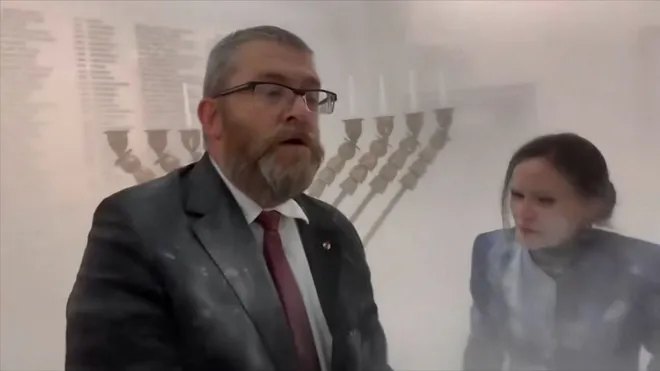
This week, Grzegorz Braun, a lawmaker in the Polish parliament, literally extinguished the candles of a Menorah. Rabbi Shalom Ber Stambler lit the Menorah at Parliament as he has done for the last 17 years. The ceremony had just ended when suddenly Braun grabbed a red fire extinguisher, coldly walked over to the Menorah, and put out the candles on the Menorah. A cloud of smoke, haze and white powder filled the area, injuring the eyes of some assembled for the occasion and chaos broke out.  Many members of the Polish parliament and the newly-elected prime minster condemned the antisemitic event.  After the incident the candles were lit again. 


Braun may have literally extinguished the Menorah, but the truth is right now, we have countless enemies, both surrounding Israel and sitting in the leadership of Ivy League and many other universities, some Congressional offices, and walking the streets of cities in America, who are equally dedicated to turning out the light of Judaism and extinguishing the Jewish people. They all want the same thing that the Syrian-Greeks wanted thousands of years ago, להשכיחם תורתך ולהעבירם מחוקי רצונך, for us to abandon our values, our mission, our way of life, our way of thinking.  They are trying to extinguish our Menorah, our source of wisdom and truth, our Toras Chaim. 


In reporting on our recent short trip to Israel, this past Shabbos I spoke of the resolve, tenacity, and determination of the modern Maccabees, the heroes of the IDF. When the Chashmonaim entered the Beis HaMikdash, they discovered that not only could they not find pure oil, the Menorah itself had been confiscated.  Rather than give up, they took sheva shipudim shel barzel, seven steel rods and crafted a makeshift Menorah to light.  The Menorah being crafted from the weapons of war was not a mere coincidence or necessary solution to having no candelabra to light in.  It was an expression of how the light of the Menorah, the presence of Hashem, the drive to spread His light in the world, is what drove that small group of Jews to fight against all odds, to be tenacious, resilient, brave, courageous, and unstoppable.  The light of the Menorah fueled the army and their victory, and that victory enabled us to keep the light going. 


Certainly, the focal point of the current war, the clear front line, is in Israel, on the Northern and Southern borders.  But the war has expanded and extended. We may be 6,000 miles away from the physical front lines, but make no mistake, if you saw the hearings in Congress in which the leaders of three prestigious schools of so-called higher learning couldn’t say calling for genocide against Jews is hate, we are very much on the battlefront. 


They want us to stop learning and living Torah? The response must be to learn and live it more.  They want us to abandon our values? Lean into them, hold on to them stronger, tighter.  They want to dim our candle? Add more fuel, make it burn brighter.  They want you to hide your yarmulka, tuck in your tzizis? Get a bigger yarmulka, longer tzitzis. 


Someone recently asked me, if I had $100 million to fight antisemitism what would I do with it? I said I wouldn’t buy ads on television or hire lobbyists in Congress.  I would put every penny into reaching out to our Jewish brothers and sisters to stand taller, prouder, to live more Jewishly.  I would send a mezuzah for every Jew and every Jewish student on a college campus to hang on their door. I would send candles for every Jew to light Friday night.  We cannot win a war if we don’t know what we are fighting for.  We can’t have victory if our own people are in the dark without the light of the Menorah. 


Don’t just take something upon yourself, don’t just become a better, bigger, and more practicing Jew as a merit for the soldiers on their front lines.  Do it because it is how we fight on our battle front in this very same war.  150% of reservists showed up for this war, we have to show up at the same rate, give a 150% effort.  They aren’t afraid, we can’t be afraid, they have courage of their convictions, we must have the courage of ours.  This war has multiple fronts. They are doing their job on theirs, will you show up, will you serve, will you be counted, and will you be part of victory in our battle?


Jerry Jones, owner of the Dallas Cowboys, was the first to build a billion-dollar stadium. Everyone knows him as super successful and wealthy, but where did he get it from?  He started out by purchasing thirteen abandoned oil wells.  There were enormous companies that sunk huge money into studying and studying these sites and they thought they would strike oil, but when they didn’t, they abandoned them and moved on. Jones and his partner said to themselves, why start from scratch, if those big boys did research and thought there was something here, it is worth looking further.  Sure enough, he struck oil in twelve out of the thirteen of the wells. 


When asked why he found oil while the others didn’t, he said, when they didn’t strike oil they abandoned the sites and walked away.  When I didn’t succeed, I just dug a little deeper and that is when I struck oil.  


This is a time that we need to dig deeper, muster all of our energy, courage and resources to stand tall and proud and to be practicing Jews.  Together, we will win the war in Israel, the battles outside of it and make our Jewish torch burn brighter than ever. 


Be a Proud, Practicing, Unapologetic Jew

* Derasha delivered at Boca Raton Synagogue on December 9, 2023


The Beis Yosef asks a well-known question to which hundreds of answers have been suggested.  If a flask of oil was found that had enough for one night and it lasted seven extra nights for a total of eight, why is Chanuka, which seemingly commemorates a seven-day miracle, celebrated for eight days? 


The Meiri writes: ולילה הראשון שלא היה שם נס השמן מברכין על הגאולה ועל הודאת מציאת הפך ושאר הלילות על נס השמן. The answer is simple.  We do only mark the seven nights that were miraculous with seven days of lighting.  The first night, however, we are marking and celebrating a different miracle, the miraculous military victory and redemption.  The Pri Chadash, in his commentary on Shulchan Aruch, gives a similar answer and writes if there were no miracle of the flask of oil, there still would have been a holiday established filled with Hallel and hoda’ah for the military victory. 


Our eight-day holiday of Chanuka is a celebration of two reasons to celebrate, two miracles that we mark in one blended holiday.  Is there a connection between the two or did they both happen to overlap on the same days of the calendar, so we combine them into one holiday? Which is the main driver of this holiday and which is secondary?


This week, my fellow BRS rabbis and I visited Shura once again.  It is the base of the Rabbinate of the IDF, the place all fallen soldiers (and on October 7, civilians) are taken to be identified and prepared for burial.  On our visit, the body of 22-year-old Ben Zussman, the second member of the greater Bendheim family (who have a remarkable 46 cousins currently serving) to be killed in battle, was being taken from the building into the car that would carry him to Har Hertzl for his funeral and burial.  We were present for the first Kaddish being said on his behalf. 


Last month when we returned from our first visit, I told you about the literature, posters and tefilla cards for soldiers produced at Shura, how this is the only army in the world with a division for spirituality and faith. This time I saw Chanukah booklets published for soldiers, including addressing questions like how to light in Gaza in a tank, if you don’t have a home and  Divrei Torah and motivational messages connected to Chanukah.  In it, the following explanation of the duality of the Chanukah miracles is offered: The menorah of the Beis HaMikdash was lit in the Heichal and illuminated it all night.  The Kohanim didn’t serve at night, there was no avodah so why did it need to be lit up?  The type of person who regularly turns the lights off when nobody is in the room would go crazy seeing the Beis HaMikdash lights on with nobody in it all night, every night.  What was the point?


The Gemara in Shabbos (22b) explains that this was an unusual light; it wasn’t for illumination or to be able to see more clearly.  וְכִי לְאוֹרָהּ הוּא צָרִיךְ? וַהֲלֹא כׇּל אַרְבָּעִים שָׁנָה שֶׁהָלְכוּ בְנֵי יִשְׂרָאֵל בַּמִּדְבָּר לָא הָלְכוּ אֶלָּא לְאוֹרוֹ! אֶלָּא עֵדוּת הִיא לְבָאֵי עוֹלָם שֶׁהַשְּׁכִינָה שׁוֹרָה בְּיִשְׂרָאֵל. מַאי עֵדוּת? אָמַר רַב: זוֹ נֵר מַעֲרָבִי שֶׁנּוֹתֵן בָּהּ שֶׁמֶן כְּמִדַּת חַבְרוֹתֶיהָ, וּמִמֶּנָּה הָיָה מַדְלִיק וּבָהּ הָיָה מְסַיֵּים.

The light was a signal, a symbol that Hashem’s presence was dwelling among the Jewish people, that we have a special relationship and an exceptional mission.  


The Shem MiShmuel writes that the miracle happened specifically through the Menorah because the Menorah is the symbol of chochma, Jewish wisdom, values, culture, and knowledge.  The Gemara in Bava Basra (25b) says הרוצה להחכים ידרים,  if you want truth and wisdom turn south to the Menorah.  The Syrian Greeks wanted to eliminate our unique Torah vision and values, to have us abandon our wisdom and culture and subscribe to theirs. They wanted to erase Judaism and its influence and impact on the world. The military victory enabled the rededication of the Beis HaMikdash and allowed us to light the Menorah once again.  It was really a victory of our chochma, shinning our light over their darkness. 


The book of Chashmonaim describes that our enemies didn’t only eliminate the oil, they took away our Menorah.  When we reconquered our Beis HaMikdash, they weren’t just missing pure oil, they were missing the Menorah itself.  What did they do?  Megillas Taanis (Perek 9) describes that the Chashmonaim took sheva shipudim shel barzel, seven iron rods that were used as weapons against the Yevanim and turned them into the Menorah. 


When they lit that original first flame, they weren’t just marking the miracle of the oil, but they looked at that Menorah made from their weapons and they were celebrating the miracle of the victory of the few against the many, the weak against the mighty, the holy and pure against the evil and wicked. 


The Menorah being crafted from the weapons of war was not a mere coincidence or necessary solution to having no candelabra to light in.  It was an expression of how the light of the Menorah, the presence of Hashem, the drive to spread His light in the world, is what drove that small group of Jews to fight against all odds, to be tenacious, resilient, brave, courageous, and unstoppable.  The two miracles are intertwined, they are indeed one and the same.  The light of the Menorah fueled the army and victory, and the victory enabled us to keep the light going. 


The Sfas Emes asks, how did lighting the Menorah and having it be illuminated at night express the presence of the Shechina in Klal Yisroel? After all it was the Kohen who struck the match, set up the Menorah, lit the wick?  Anyone who passed by wouldn’t be thinking of the Shechina but of the Kohen who lit it. Says the Sfas Emes, this is exactly the point. The evidence of the presence of Hashem doesn’t come from a revealed supernatural miracle but from our own hands, our own effort, our own initiative.  The same was true with the military victory. With a moral clarity, a sense of purpose and resolve, a vision for representing Hashem, we fought, we battled, we had the courage to confront the enemy and take him head on.  The successful result of that sacred mission was the evidence of Hashem’s presence among us, that His light shone through us.


The miracle of Chanukah, what we truly celebrate, is the resilience and the drive of the עם הנצח, that when we come together, when we stand up with pride, when we fight, when we refuse to assimilate, blend in, or lay down, the result is we are the miracle, we are the manifestation and expression of Hashem, we are the light that illuminates the world.  We aren’t a secular, political state, we are dedicated to the wisdom of the Menorah and we will forever fight to rededicate it over and over again. 


We met with retired Brigadier General Amir Avivi who gave great insight on what has happened, what is happening, and what he thinks will happen next.  At the end we thanked him and he said I want to tell you one more thing. He doesn’t wear a kippa and isn’t observant but he told us he wants to end with a Dvar Torah: 


People often think of Chanuka as a small war with the Greeks and we won.  They may picture a big battle, but most people don’t know we fought for 30 years, endless amounts of wars.  Yehuda Macabee fought the first five big wars, he was killed and Yonatan took over and kept fighting.  Yes, we celebrate that they liberated Beis HaMikdash.  But the Greeks threw them out again and they fled to the desert and only then did they fight back and in the days of Shimon did we secure all the borders. 


What is amazing that in the history of warriors and leaders, in Jewish wars we never once hired mercenary armies.  We have always been a people imbued with leadership and vision.  We get our people again and again, we call them and they come, led into combat, without getting paid, just to save the Jewish nation, that is our DNA, that is who we are. 


That is why Al HaNissim focuses mostly on the military victory and only briefly references the miracle of the oil.  The victory was the result of the endless drive, determination, will, positivity, faith, of a people who were fueled by the values, wisdom, and truth of the Menorah.  It was their initiative, their efforts that reflected the presence of Hashem.


On the border of Gaza, at a barbecue we made for 700 soldiers, we met a 51-year-old sleeping on the floor, eating army food, going in to fight.  We asked him, how are you still in the active army? He told us he was released 11 years ago but refused to be finished. He negotiated with the army until they agreed that if he passes a physical each year he can continue to serve.  We said, “what do you do, make the food, clean the guns?” He said, “No I drive a hummer into Gaza to our missions.” 


We met soldiers everywhere, on several bases, in Chevron, at new pop-up locations to feed and care for them.  There is no such thing as a secular soldier. We found angels of Hashem putting on tzitzis, securing a pair of Tefillin, and going to fight for a cause they believe in with every fiber of their soul.  Shem Shamayim Shagur Bfi the IDF, all of them telling us “Elokim Yishmor,” “Hashem Yaazor.” We met injured soldiers at Tel HaShomer hospital who are fighting to heal so they can return to battle. They are positive, upbeat, determined.  We spent time with a father of a fallen soldier. He and his family are Olim and he told us he has no regrets bringing his family to Israel despite paying the highest price because it is what it means to be a Jew, it is why we live and sometimes what we need to die for. 


We toured Be’eri for three hours, walking the site of a pogrom, like visiting Poland the day after the Holocaust. We will never get that smell out of our nose or unsee what we saw. We saw burnt homes, bloody sheets, bullets on the ground, smashed windows.  We heard stories of how two parents and a big brother leaned over three younger siblings to save their lives by paying with theirs, homes people were kidnapped from.  A man named Yarden told us the story of his heroic brother, a medic who tried to save the injured and ultimately, Hamas terrorist shot him at blank range first saying out loud, a witness later shared, רק בשביל הכיף, “just for the fun,” before pulling the trigger. 


Naor, whose father-in-law was murdered, shared with us: “A strong message I remind myself, is when the same thing happened in Europe, we didn’t go back to Poland and Germany, but this is our house, our land, our country our people.  We are going to come back.  It doesn’t matter what you did to us, you cannot stop us.  Buildings you can burn, but you can’t break our spirit.  We will rebuild.”


I think this is our part of the war from America.  Yes, donate, support, visit, check in. But ultimately, the enemy around Israel is the same enemy sitting in the administration at Harvard, MIT and Penn, the same enemy in the offices of the New York Times, in some Congressional offices, and on streets of major cities.  They all want the same thing – להשכיחם תורתך ולהעבירם מחוקי רצונך, for us to abandon our values, our mission, our way of life, our way of thinking.  They are trying to extinguish our Menorah, our source of wisdom and truth, our Toras Chaim. 


We may be 6,000 miles away from the physical front lines, but make no mistake, if you saw the hearings in Congress in which the leaders of three prestigious schools of so-called higher learning couldn’t say calling for genocide against Jews is hate, we are very much on the battlefront.  They want us to stop learning and living Torah? The response must be to learn and live it more.  They want us to abandon our values? Lean into them, hold on to them stronger, tighter.  They want to dim our candle? Add more fuel, make it burn brighter.  They want you to hide your yarmulka, tuck in your tzizis? Get a bigger yarmulka, longer tzitzis.  Someone asked me, if I had $100 million to fight antisemitism what would I do? I said I wouldn’t buy ads on television or hire lobbyists in Congress.  I would put every penny into reaching out to our Jewish brothers and sisters to stand taller, prouder, to live more Jewishly.  I would send a mezuzah for every Jew and every Jewish student on a college campus to hang on their door. I would send candles for every Jew to light Friday night or for Chanukah.  We cannot win a war if we don’t know what we are fighting for.  We can’t have victory if we are in the dark without the light of the Menorah. 


Don’t just take something upon yourself, become a better, bigger, and more practicing Jew as a merit for the soldiers on their front lines.  Do it because it is how we fight on our battle front in this very same war.  150% of reservists showed up for this war, we have to show up at the same rate, give a 150% effort.  They aren’t afraid, we can’t be afraid, they have courage of their convictions, we must have the courage of ours.  This war has multiple fronts. They are doing their job on theirs, will you show up, will you serve, will you be counted and will you be part of victory in our battle?


We daven for the miracles today that we had yesterday, biggest among them not supernatural oil, but the miracle of believing in ourselves and believing in our cause and therefore having the determination to fight against all odds. 


Rabbi Efrem Goldberg

Join Our Community

Subscribe to our newsletter or connect with us on WhatsApp.