Hamas Underestimated Us and So Did We

In 1977, after serving in the opposition for many years, Menachem Begin won the election that would make him Prime Minister.  Soon after, Begin was in the process of assembling a governing coalition when seven members of the Haredi party burst into his office, lashing out over something that upset them. Hart Hasten, a close friend and advisor of Begin recalled how Begin sat silently as they expressed their anger and agitation.  When they had finished, Begin paused and then calmly responded in Yiddish: Rabbosai, hobn ihr shoin gedavent minha, Gentlemen, have you already davened Mincha? Stunned by the response, they replied that in fact, they had not yet davened. So, Begin recruited Hasten, his chief of staff Yehiel Kadishai, and together with himself and the seven men of the Haredi party, they proceeded as a minyan to daven Mincha. By the time they were done, tempers had subsided, and the rage had dissolved. Begin had disarmed his political adversaries by pivoting to common ground, a shared reverence for Torah and Yiddishkeit and a united commitment to surrender in faith to Hashem by davening the afternoon prayer.  Against the backdrop of a holy Mincha prayed with the harmony produced from disparate voices, Begin resumed negotiations, ultimately succeeding in building a coalition.


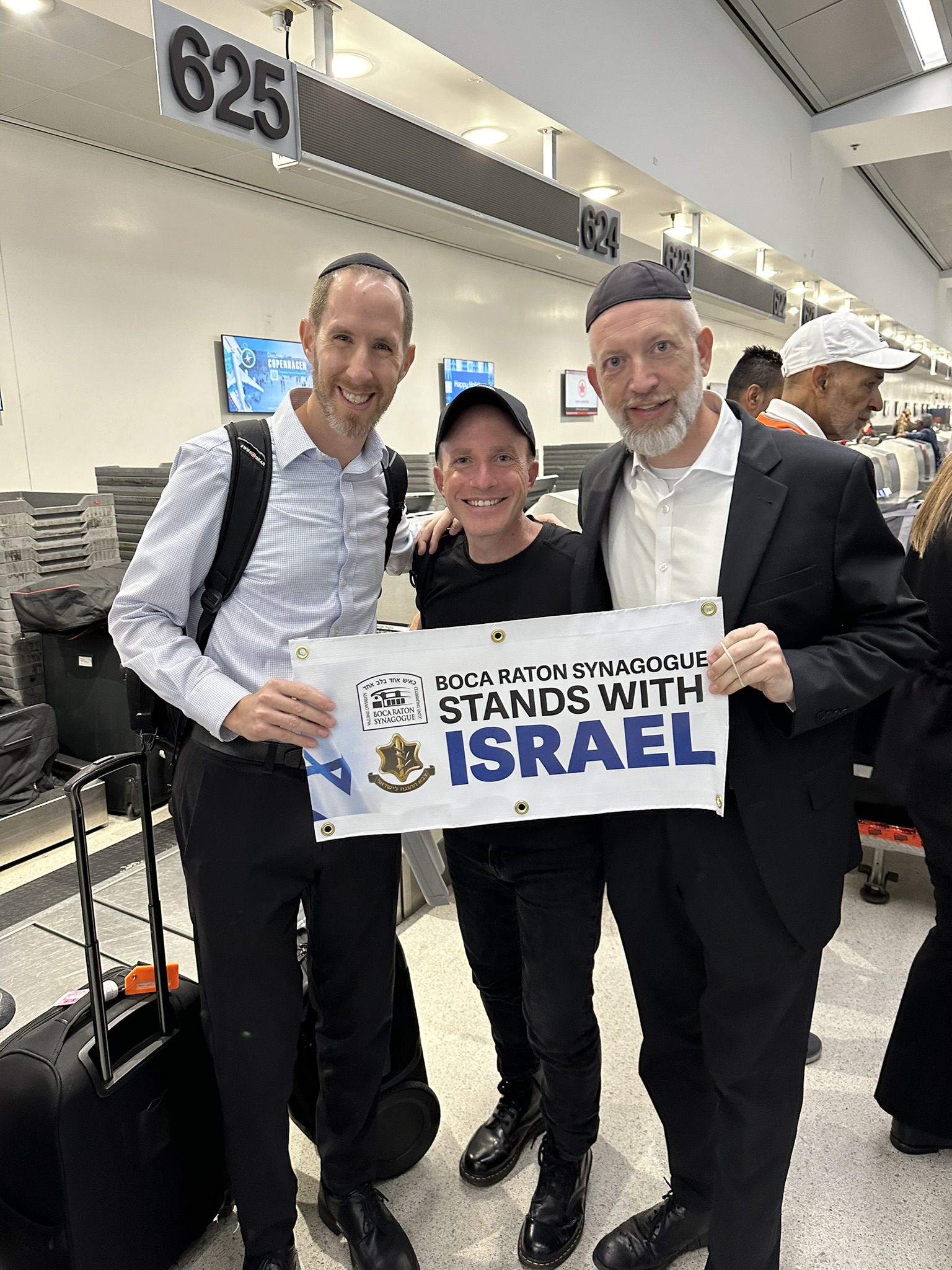
I was reminded of this story this week as Rabbi Moskowitz, Rabbi Broide, and I traveled back to Israel for three days of hugs, chizuk, love, comfort, support and partnership that culminated in a Maariv minyan that reminded me of Begin’s Mincha. 


Our trip took us to army bases in the North and South in which our community sponsored meals and music and we distributed handwritten letters to the precious and heroic members of the IDF.  We encountered soldiers who had not been home in weeks or now months and who were sleeping on the cold floor.  We met a 51-year-old soldier whose service concluded eleven years ago but would not be stopped from continuing to voluntarily serve and who today is the driver of his group’s hummer throughout Gaza.  We sang and danced with units that were literally on their way back into Gaza to fight, including with a dear friend whose commander fell in battle that very night after our dinner together.  Rather than exhaustion, bitterness or resentment, we encountered positivity, resolve, tenacity, faith, optimism, hope, and a sense of purpose and mission that simply defy words.


We visited with injured soldiers in Tel Ha’Shomer hospital, one of whom was told he would be there for a minimum of a full year and another with metal rods coming out of one leg, his arm in a sling, and a patch over his eye.  They, and all the others we visited, were not down or depressed, despondent or dejected. They each had a separate and unique story to tell, but they all ended with a message of hope, positivity and unwavering faith that we will prevail. 


We spent significant time with a father of a 21-year-old fallen soldier, killed by a Hamas ambush.  He shared his and his family’s devastating sense of pain, loss, and grief but his overall message was one of duty, mission and purpose.


We met with a community from the South that has been displaced since October 7th and who don’t know when it will be safe to return to their homes.  In more than half of these families, the husband has been called up to serve and the wife is left living in a cramped hotel room with her children going to makeshift school and living without almost all of their things.  Instead of giving up or giving in, rather than expressing a desire or plan to move or relocate when this is over, they have pledged and promised to go home, to expand their community, and forge a deeper connection to the area in which they live.


We toured Be’eri, one of the communities hit hardest on that “Black Sabbath” as it was referred to us.  Out of 1,200 residents, 90 were brutally murdered, 30 were taken hostage and close to 90 soldiers lost their lives liberating the survivors from the more than 500 terrorists who infiltrated on that dark day.  The now-empty community is not open to the public but we were honored to be able to pay witness to the atrocities that took place there and now bear the awesome responsibility to tell the stories of what happened that day.  We saw burnt and destroyed homes, bloody sheets and bloody stains on the ground.  We observed cars, homes, a school and a clinic riddled with bullet holes.   We picked up bullets that are still all over the ground, a testament to the fierce battles that took place in that spot that so many died al Kiddush Hashem.  We walked by a Sukkah that still stands despite Chanukah having begun because there is no person, no time, and no will to take it down. 


And yet, despite all that we saw and heard had happened there, Naor and Yarden, the two men who took us around and who each lost loved ones that day, spoke with determination and resolve and offered statements that we are not going anywhere, we will bounce back and build, we are prepared to fight for existence, our homes and our Homeland. 


We stopped at the Shuva junction where three brothers started out a help center by putting together several extension cords and setting up one table to provide hot food for soldiers.  Today there are large tents, endless buffets of food, stations of clothing, laundry and more, all coordinated by extraordinary volunteers who feed more than 3,000 soldiers a week.  We met the amazing women of Gush Etzion who rotate baking special treats and stocking the pinah chama, clubhouse for soldiers who patrol their neighborhood.  We went back to Maslul to our friend Yaakov, the Makolet owner who essentially hasn’t seen his wife since October 7th because he feeds, cares for, and takes care of the needs of over 700 soldiers a day who come for respite between their battles in Gaza.  We met Moshe who voluntarily converted the garage behind his home on the Gaza border into a space for 40 soldiers to rest, sleep, and eat.


We met and were briefed by Brigadier General (ret.) Amir Avivi who shared tremendous insights into what happened, what is happening, and what he believes will happen next.  He ended by telling us that while Hamas dealt us a devastating blow that horrible day, they made a gross and fatal miscalculation.  They saw the vociferous debates over judicial reform, the political rancor and deep divide between the left and right, religious and secular, and they predicted that Israel would react to an attack by blaming one another, splintering, and falling apart. They didn’t understand and could never predict or even comprehend the level of unity we would experience, how together we truly are, how much more we have in common than could ever divide us. 


Hamas were not the only ones who grossly miscalculated.  The Jewish people went to sleep on October 6th bitterly divided, but after the events of October 7th, woke up on October 8th a new people, a united people, an am echad k’ish echad b’lev echad, one nation, one people with one heart. 


They didn’t know what we are capable of, what we can accomplish when we come together, who we are at our core when all is on the line.  Said the General, the secular are having a spiritual awakening and the Haredim are coordinating unprecedented networks of national service.   The world and Hamas thought that the Jewish people were fractured and this would be the ultimate blow that would divide us.  They, and to a certain extent we, never imagined how united, driven and unstoppable we could become. 


And that brings me to our special Maariv at the end of our trip. We were at Knesset offices for meetings when suddenly someone realized the time for Maariv had come and asked if we would join a minyan.  As we began Borchu, I looked around the conference table.  Sitting to my immediate left, with a long beard, curly payos and black velvet yarmulka was United Torah Judaism MK, Yisrael Eichler, essentially the head of the Haredi party.  Sitting to my right was  MK Michael Biton of National Unity Party, who had been sitting in the room and borrowed a kippa from someone so he could help us make the minyan.  Across from me, wearing his kippa serugah sat Finance Minister Betzalel Smotrich.  Not individuals in a borrowed kippa, kippa seruga, and black kippa, disagreeing on important ideology and policies, but a united coalition in that moment in prayer, faith and love of our people. 


As we davened, I thought about the miracle of Chanuka and the rededication of our holy Beis HaMikdash after defeating an evil enemy.  In that moment, I was deeply moved by the fact that we are back in Yerushalayim, davening Maariv in the modern center of power, doing so with sovereignty, self-determination, and self-defense. After 2,000 years of running from pogroms, persecution, and attempted exterminations, we have returned to our homeland with the chance to be active participants in shaping our destiny. 


Our parsha describes that Yosef’s brothers hated him to the point that v’lo yachlu dabro l’shalom.”  The Ibn Ezra explains, “v’lo yachlu dabro l’shalom – afilu l’shalom.”  It isn’t that they just couldn’t talk about the issues they disagreed about.  It isn’t just that they didn’t want to be close, loving brothers.  It isn’t just that they couldn’t debate respectfully.  “Afilu l’shalom” – they couldn’t even give each other a shalom aleichem.  The hatred and intolerance had grown so deep that they couldn’t stand to even extend greetings to one another or to be in a room together. 


Rav Yehonasan Eibshitz in his Tiferes Yonasan has an additional insight.  When we disagree with people, we withdraw from them and stop speaking to them.  We see them as “the other,” different than us and apart from us.  As our communication breaks down, the dividers rise up, stronger and stronger and we can’t find a way to break through them. 


The antidote and answer is in our hands and we remind ourselves of it three times a day when we pray.  Our practice of taking three steps backward at the conclusion of the Amidah comes from a Gemara in Yoma (Daf 53) which states, “Hamispaleil tzarich she’yafsiah shelosha pesios l’achorav v’achar kach yitein shalom. The one who prays must take three steps back and only then pray for peace.” R’ Menachem BenZion Zaks (in his commentary on Pirkei Avos) explains that we cannot pray for, nor achieve, peace if we are not willing to step back a little and make room for others and their opinions, their tastes and personalities. After stepping back, we ask “oseh shalom bimromav, God, please bring peace,” and we then turn to the right and to the left. Explains R’ Zaks, achieving peace and harmony means bending towards those on the right of us and those on the left of us, acknowledging them, engaging them, and making space for them. That is a prerequisite to the shalom, the peace we crave.


In our few days meeting, touring and volunteering, we witnessed the impact of the worst of humanity and we watched the best of humanity.  The atrocity that took place was unimaginable, but so is the will and faith of our people. If we want shalom, peace, we must be capable of speaking l’shalom, not just tolerating a fellow Jew but learning to love them and maybe even daven Mincha or Maariv together too. 

Catching our Breath

I vividly remember playing football as a child and getting hit (accidentally) in the solar plexus.  Gasping for air, it felt like I would never catch my breath or breathe normally again.  I think we all have had this feeling lately; the horrors of October 7 knocked the wind out of all of us and we haven’t really caught our breath since.  Overwhelmed by grief, sadness, worry and concern, we are now two months into this war and neither the situation nor we are getting better anytime soon. 


As the hostages have been released, we have learned of the inhuman, barbaric way they were treated.  One hundred and fifty are still being kept captive.  Our soldiers remain on the front, fighting for their lives and our lives. The enormous spike in antisemitism in this country and around the world is alarming, frightening and deeply concerning.


When we consider the reality right in front of us, it is hard not to despair or grow despondent.  Israel is surrounded by enemies who seek her demise.  Jews globally are the target of increasing antisemitism and disdain.  Watching person after person speak at an Oakland City Council meeting this week, defending, excusing, and glorifying Hamas, accusing Israel of killing its own people, sympathizing with terrorists, can make you feel hopeless and make the situation feel beyond repair.  How can we find hope when so much feels hopeless?  How can we long for or bring redemption when so many seem irredeemable? 


For one thing, we can find strength in the holiday of Chanukah, which couldn’t come at a better time. Chanukah is defined by our sense of sight – Haneiros halalu kodesh heim, v’ein lanu reshus l’hishtameish bahem elah lirosam bilvad.  The candles are sacred; we don’t have permission to benefit from their light but their entire purpose is simply to be looked at. We have a unique Halacha on Chanukah.  The Talmud tells us – and the Shulchan Aruch records – haroeh mevareich, one who can’t light for himself or herself but sees the candles lit by someone else nevertheless makes the second beracha of she’asah nissim la’avosainu.  When I see someone put on Tefillin, take a lulav, or blow shofar, I don’t make a beracha.  Only on Chanukah do I make a beracha when seeing someone else perform the mitzvah.  Why?


The Kedushas Levi, Rav Levi Yitzchak of Berdichov, tells us that Chanukah is the holiday of seeing.  The different moadim correspond with our different senses.  On Purim our hearing is heightened as we listen to the Megillah.  On Pesach our sense of taste is sharpened when we eat matzah and marror. On Chanukah, he says, we evaluate our sense of sight, testing how well we see.


The truth is, in a sort of paradoxical way, our eyes are a liability.  We often feel that “seeing is believing.”  If I can perceive and observe it, it is true.  If I can’t, it is not real.   Following this rule, we have dismissed and disregarded the most precious truths and realities in our lives.  There are ideas, feelings, thoughts and dreams that are authentic and genuine, despite the fact that they can’t be seen or observed.


Our Rabbis describe the Greek empire and Hellenist influence as choshech, darkness.  In expounding on the opening verses of the creation story, the Midrash Rabbah says choshech al p’nei sehom – zu galus yavan.  Moreover, our Rabbis taught that darkening our eyes was the goal of our Greek oppressors – shehechshichu einehem shel yisroel.  They wanted to make us believe that something is only true if we can see it.  They worshipped the body, the aesthetic, the visible form.   Our enemies proclaimed that one must look at the facts and face the reality. 


We are only here because throughout our history, we have refused to see only the surface and instead we have employed a vision, a capacity to see beyond, to dream of what could be.  The truth is one can live with their eyes open, have perfect vision, and still be cloaked in darkness.  On the other hand, it can be pitch black all around and yet a person can see absolutely clearly. 


During the story of Chanukah, the Chashmonaim didn’t just see the physical reality – their few numbers, weak army, and impossible task.  They saw the mighty hand of Hashem, they saw the obligation to fight, and they saw Divine protection that would accompany them. We have been charged as a people throughout our history to not simply look at what is in front of us.  If we had, we would have given up long ago.  We have faced impossible odds, we have confronted impossible challenges.  Nevertheless, we have succeeded in retaining our hope and our optimism because we chose to have vision instead of sight, imagination instead of observation.


What if Moshe looked at the might of the Egyptian empire and never challenged Pharoah to let his people go?  What if the Macabbees had only considered the facts and never revolted against the Greek oppressors?  What if Rabban Yochanan ben Zakkai simply observed the power of Vespasian and never asked for Yavneh and its sages?  What if in 1948 and 1967 the brave men and women of Israel had conceded the impossible chances of overcoming the many nations, people, and resources that sought to obliterate them?


There is a message plastered all over Israel right now, hanging on billboards, posted on buses, displayed on bumper stickers.  It has become our motto of this war – עם הנצח ינצח, the people of eternity will be victorious.  We don’t look at odds, numbers and likelihoods; we aren’t intimidated or scared by predictions of pundits or plans of pernicious actors.  We are the people of eternity, we see differently than others, we believe in what will be, not what is. 


Residents of cities from the south who were first decimated and then displaced have not given up, given in, they are not abandoning their posts or moving to a more comfortable or safer environment.  They have vowed to return, to expand, to build and to further settle.  They are members of the Am HaNetzach, the eternal people who don’t accept what is but define what could be, who don’t just see what is on the surface but who have a vision for lives of virtue and the triumph of Jewish values. 


In her “Hasidic Tales of the Holocaust,” Professor Yaffa Eliach shared the incredible story of Chanukah in Bergen-Belsen:

Chanukah came to Bergen-Belsen. It was time to kindle the Chanukah lights. A jug of oil was not to be found, no candle was in sight, and a menorah belonged to the distant past. Instead, a wooden clog, the shoe of one of the inmates, became a menorah, strings pulled from a concentration camp uniform, a wick, and the black camp shoe polish, pure oil.


Not far from the heaps of bodies, the living skeletons assembled to participate in the kindling of the Chanukah lights.  The Rabbi of Bluzhov lit the first light and chanted the first two blessings in his pleasant voice, and the festive melody was filled with sorrow and pain. When he was about to recite the third blessing, he stopped, turned his head, and looked around as if he were searching for something.


But immediately, he turned his face back to the quivering small lights and in a strong, reassuring, comforting voice, chanted the third blessing: “Blessed are Thou, O Lord, our God, King of the Universe, who has kept us alive, and has preserved us, and enabled us to reach this season.”


Among the people present at the kindling of the light was a Mr. Zamietchkowski, one of the leaders of the Warsaw Bund. He was a clever, sincere person with a passion for discussing matters of religion, faith and truth. As soon as the Rabbi of Bluzhov had finished the ceremony of kindling the lights, Zamiechkowski elbowed his way to the Rabbi and said, “Spira, you are a clever and honest person. I can understand your need to light Chanukah candles in these wretched times. I can even understand the historical note of the second blessing, “Who wrought miracles for our Fathers in days of old, at this season.” But the fact that you recited the third blessing is beyond me. How could you thank G-d and say “Blessed art Thou, O Lord, our God, King of the Universe, who has kept us alive, and hast preserved us, and enabled us to reach this season”? How could you say it when hundreds of dead Jewish bodies are literally lying within the shadows of the Chanukah lights, when thousands of living Jewish skeletons are walking around in camp, and millions more are being massacred? For this you are thankful to God? For this you praise the Lord? This you call “keeping us alive?”


“Zamietchkowski, you are a hundred percent right,” answered the Rabbi. “When I reached the third blessing, I also hesitated and asked myself, what should I do with this blessing? I turned my head in order to ask the Rabbi of Zaner and other distinguished Rabbis who were standing near me if indeed I might recite the blessing. But just as I was turning my head, I noticed that behind me a throng was standing, a large crowd of living Jews, their faces expressing faith, devotion, and deliberation as they were listening to the rite of the kindling of the Chanukah lights.


I said to myself, if God has such a nation that at times like these, when during the lighting of the Chanukah lights they see in front of them the heaps of bodies of their beloved fathers, brothers, and sons, and death is looking from every corner, if despite all that, they stand in throngs and with devotion listening to the Chanukah blessing “Who performed miracles for our Fathers in days of old, at this season”; indeed I was blessed to see such a people with so much faith and fervor, then I am under a special obligation to recite the third blessing.”


That night in Bergen-Belsen, Mr. Zamietchkowski only saw what lay before him, dead bodies and terrible suffering.  The Rebbe also looked, but he saw another layer of truth that was equally accurate – that there was a gathering of people who maintained incredible faith despite the most horrific circumstances.


If you look on the surface, there is so much to fear right now.  But over the last nearly eight weeks, if you look a little closer, if you wear your “Chanukah glasses” you will recognize that we have merited to view things that our people have never seen before.  Our vision to be a united people is becoming fulfilled, the dream of a spiritual awakening is taking place, the hope for a resurgence of a connection to our homeland from Jews around the world is happening. 


When Chanukah comes next week, take the time to not only light the candles but to look and gaze at them.  Use the light to dispel all the darkness.  Allow it to illuminate your life, see with 20/20 vision, feel at the core of your being that the עם הנצח ינצח, our people of eternity will prevail.


May our people experience the miracles and the wonder of yesteryear today, may we merit to see the hand of Hashem bayamim ha’heim bizman ha’zeh


Davening for Soldiers Doesn’t Conflict With Faith in Hashem

For the last month and a half, nobody I know has slept through the night.  Certainly, those in Israel, especially those married to soldiers, and those who are parents or siblings of soldiers are perpetually restless, on edge, anxious, and concerned.  But in truth, all of us, the Jewish people around the world, can’t rest comfortably, we can’t settle into a deep sleep while our people are at war, while our family members, direct and extended, are on the front lines, risking their lives, fighting an evil enemy, laying it all on the line to protect the Jewish people and the Jewish homeland. We are comforted by the knowledge that our soldiers’ faith, resolve, tenacity, determination, moral clarity, and sense of mission are unparalleled, but it is only natural to remain concerned and worried nonetheless.

These ordinary soldiers and reservists are in fact extraordinary and special people. They are motivated and inspired not by simple patriotism and nationalism, but by a deep sense of conviction that we are a people of an illustrious history and a distinct destiny.  The IDF’s soldiers are well- trained, well-armed, and well informed.  They are skilled professionals with a military superiority, but the images, videos and reports from the front lines tell of soldiers who know that the secret to their victory is not in their weapons or intelligence.  In fact, it is not in their hands, but it is in their hearts, their souls, and pouring out of their mouths.  The clips of IDF bombings and operations are powerful, but they pale in comparison to the power of the clips of soldiers putting on Tefillin, asking for tzitzis, praying, singing, dancing, and proclaiming al tirah Yisrael, don’t be afraid Israel, ein lanu al mi l’hishaein elah al Avinu She’bashamayim, we have nobody to lean on other than our Father in Heaven, anachnu ma’aminim b’nei ma’aminim, we are believers the children of believers.


Our soldiers know and feel that the wind at their backs, the spiritual iron dome over their heads, are the heartfelt prayers on their behalf being uttered nonstop by all of us, their brothers and sisters around the world who love them, cherish them, admire them, and feel boundless gratitude to them. 


To deny the potency, power, and effectiveness of Torah and Tefilla as an indispensable part of any military victory is to deny a basic foundation of our faith.  Ultimately, every area of our lives, certainly our national safety and well-being is dictated from Above and is in the hands of Hashem.  There must be no doubt that our davening, our learning, our merits have meaning, they matter, they make a difference.  Just as we know it is not the doctor nor the surgeon who heals, but it is Hashem.  It is not the lawyer who makes the winning argument or the earthly judge who decides, but true justice is served by the Heavenly Judge.  It is not the businessperson or entrepreneur who closes the deal, but it is the Senior Partner of every endeavor, Hashem.  And it is not the soldier who wins the war, but the true General, the Master of all Legions, the Ribono Shel Olam. Living with Emunah and Bitachon, tenets of our faith, means recognizing and living this axiomatic truth, recognizing that we live in a matrix of illusion, while the reality of everything comes from Hashem.


Of course, simultaneously, it is also true that we don’t passively wait to be healed, we don’t sit on the couch waiting for money to fall from the sky, we search out the best doctor and we take initiative to earn an income.  Excessive effort with no faith in Hashem is heresy, but claiming to rely on faith without making any legitimate effort is not genuine faith. 


Chazal say harbei sheluchim l’Makom, Hashem has many agents and messengers.  We must always remember that He is guiding their hand and outcome.  But, while Hashem gives the talent and strength, the shliach, the agent still puts in the effort and energy to use it and is deserving of our most basic hakaras ha’tov, our gratitude and appreciation. During a loved one’s surgery we daven and pour out our heart to Hashem.  And when it is a success we thank Him, but we have never been concerned that showing appropriate appreciation to the doctor is a contradiction to knowing that Hashem is the one who guided his hand.  Just the opposite, failing to recognize the doctor’s critical role is its own denial of Hashem’s hand. We daven that the lawyer find the right words and that the judge come to a favorable conclusion.  But we have never felt finding the best representation or preparing diligently for a case somehow contradicts the reality and truth that Hashem is the real Judge whose opinion and conclusion is the one that truly matters.  In every area of our lives, we seek to strike the balance between hishtadlus, our initiative and effort, with bitachon, trust and faith.  We see them not as a contradiction or source of confusion, but two complementary, critical elements of a Jew’s life. 


During this urgent time, with Am Yisroel at war, it is no different. The brave soldiers of the IDF represent our people’s initiative, they are the shlichei Hashem fighting this milchemes mitzvah to defend the Jewish people.  Remarkably, overwhelmingly, they practice their initiative powered by profound emunah and bitachon, both theirs and ours. 


This combination, the relationship of initiative and faith, has always been evident in our attitude to war.  Commenting on the words, וְלִזְבוּלֻ֣ן אָמַ֔ר שְׂמַ֥ח זְבוּלֻ֖ן בְּצֵאתֶ֑ךָ וְיִשָּׂשכָ֖ר בְּאֹהָלֶֽיךָ׃ עַמִּים֙ הַר־יִקְרָ֔אוּ שָׁ֖ם יִזְבְּח֣וּ זִבְחֵי־צֶ֑דֶק, “And of Zebulun he said: rejoice, O Zevulun, on your journeys, And Yissachar, in your tents, they invite their kin to the mountain, where they offer sacrifices of success,” the Chassam Sofer (Toras Moshe) comments: It can be explained that we find that Shmuel and Shaul, when they went out to war, before going out, they would offer a sacrifice for protection… And when it says, ‘Rejoice, Zevulun, in your going out to war, for Yissachar in your tents,’ it means Zevulun’s success at war will come in the merit of Yissachar’s learning in the tents.”


Soldiers who fight absent Am Yisroel davening and learning cannot be successful.  But it is also true that Am Yisroel learning and davening without soldiers fighting and protecting them cannot survive.  Yaakov Avinu prepared in three ways to defeat Esav, including diplomacy, preparing militarily, and davening. Dovid HaMelech, the very author of the Tehillim we passionately recite, also led an army with generals and soldiers, as did the Jewish Kings we find throughout Tanach. 


The Chiddushei HaRim of Ger, Rav Yitzchak Meir Alter, points out that we are called Yehudim after Yehudah specifically because we as a nation are to be characterized by an ever-present sense of gratitude, by an appreciation first and foremost of Hashem, but also of His loyal agents and emissaries who carry out His will.  There must be enough room in our hearts and on our lips to express gratitude to all.  We must be grateful to those making spiritual contributions, to those storming the Heavens, and certainly to those making extreme sacrifices, our incredible soldiers who take the ultimate risks and an army who are moseir nefesh for our people. 


Loving soldiers, davening for them, showing appreciating to them has always been the Torah way, it is the example our gedolim have set, and it is the responsibility we bear at this time, something that should be obvious and intuitive.  In 2005, Rav Simcha HaKohen Kook and the Bostoner Rebbe of Yerushalayim made an urgent call to have every active soldier partnered in solidarity with someone davening for their safety. They launched the “Elef Lamateh, Elef Lamateh” campaign based on a Midrash (Bamidbar Rabbah) that says for every thousand Jewish soldiers that went to fight, one thousand who remained behind matched with them and davened and learned on their behalf. 


In the introduction to the third volume of Tzitz Eliezer, Rav Waldenberg writes:

A shudder runs through my entire body when I think about that terrible period of the birth of the state…We the residents of Jerusalem in particular were cut off without any connection with the other cities and surrounded by enemies in the soul, who are passionate and busy as we were driven out to swallow us…There wasn’t a neighborhood that wasn’t hit and there wasn’t a street where victims didn’t fall… Glory and praise to our heroic soldiers who sacrificed their lives to fight like lions for the conquest of our holy land from foreigners and for the establishment of our state with the face of a lion, their face like deer on the mountains to hurry and with God’s help were the messengers of the Supreme Providence to carry out This historic mission, God will remember those who fell in the fulfillment of their holy mission and will enshrine in memory the glory and eternity of those who are alive with us today.


Rav Shach, during a visit with soldiers to his home, expressed gratitude to them, emphasizing “that you are esteemed, important people and you provide excellent protection of the Land of Israel.” He thanked them for their actions and acknowledged their contribution, stating that he stands before them in great appreciation.


Rav Chaim Shmulevitz (1912-1979), the Rosh Yeshiva of the Mir once said: “The Gemara (Bava Basra 10b) says about those that gave their lives defending Lod, no creature can stand in their place. It is because they sacrificed their lives for Israel. I say the same about those who sacrifice themselves for our salvation. The entire world cannot stand in their place. The obligation upon us to pray for them is boundless because, as our Sages said, ‘One who opens for his friend, his soul is obligated to him.’ All the more so for one who sacrifices his life for us. The obligation upon us is boundless.”  Rav Yitzchak Brand described that during the Six Day War, he witnessed Rav Chaim Shmulevitz stand before each soldier he saw in appreciation for their mesirus nefesh to save the Jewish people. And Rav Yisroel Lau relates how no less a Gadol Hador than Rav Shlomo Zalman Auerbach z”l, when asked about traveling to daven at Kivrei Tzadikim, would respond,In order to pray at the graves of tzadikim, one doesn’t have to travel up to the Galil. Whenever I feel the need to pray at the graves of tzadikim, I go to Mount Herzl, [the national cemetery for fallen IDF soliders in Jerusalem], to the graves of the soliders…who fell ‘Al Kiddush Hashem’ for the sanctification of G-d.”


In 1980, at the 6th Knessiah Gedolah of Agudas Yisroel, a special Kayl Maleh was recited for Chayalei Tzahal, the soldiers of the IDF who gave their lives al Kiddush Hashem.  It was said in the presence of Rav Shach, The Gerrer Rebbe, Rav Moshe Feinstein, Rav Yaakov Kaminetsky, Rav Ruderman, Rav Shlomo Zalman Auerbach, the Vizhnitzer Rebbe, the Slonimer Rebbe, the Modzitzer Rebbe, and the Biala Rebbe who all stood and honored the fallen soldiers.  


Rav Aharon Lichtenstein related that once when he returned to America and was visiting with his father-in-law, Rav Soloveitchik, he posed a series of questions from students who were serving in the IDF. One student worked in the tanks division and his job was cleaning out and maintaining the tanks. Often his uniform got covered in oil and grime and he wanted to know if he needed to change before davening Mincha, something that would be terribly inconvenient and difficult. The Rav looked at Rav Lichtenstein and wondered out loud, “Why would he need to change? He is wearing bigdei kodesh (holy clothing).”


Rav Yitzchak Yosef, the current Sephardic Chief Rabbi of Israel, said, “One must express gratitude that we are here in Eretz Yisroel, that we can sit and fulfill mitzvos, each as they want.  If we didn’t have security forces, if we didn’t have soldiers could we sit in quiet and study Torah,  could we educate our children?! What was here before eighty years, there was nothing, Hashem helps through them, they are shlichim of Hashem and in their merit do we sit and fulfill mitzvos and study Torah.  We must be grateful.”


During the Yom Kippur War, a soldier approached the holy rebbe, the Bais Yisroel of Ger z”l and shared that the soldiers are extremely cold during the night in the north.  The Bais Yisroel wished him well and gave him a bracha that he should return whole. That Sukkos, the young Gerrer student appointed to help the Rebbe heard the Bais Yisroel knocking on the door to his own home, unable to get in. The “hoiz buchir” unlocked the door and the rebbe apologized to him and explained, “The key is metal and my hands are extremely cold. I tried lifting it but I just couldn’t.”  The Sukkos weather was actually rather pleasant to so the young man asked why the Rebbe’s hand was cold.   The Rebbe explained, ever since the soldier told me it’s cold in the north and the soldiers are freezing, I have been feeling so cold.


When the First Lebanon War broke out, Rabbi Yisroel Zev Gustman declared that it was a milchemes mitzvah and later announced that since Jews were fighting on the front, every yeshiva student must sleep at night like soldiers, meaning a few hours and with shoes as if they were on the front lines, and not to waste even a minute.


Klal Yisroel has children literally putting their lives on the line every day to protect all of us. Their service involves sleepless nights, stormy weather, parents who don’t hear from their children for days, wives who have no idea if their husband will ever make it home, children who yearn for their fathers and live in constant fear, loss of life, severe injuries, and the strong risk of all of it. This is what faces our soldiers and their families daily and it is frightening.


If we want those whose service to the Klal right now is through learning Torah to understand the urgency of the moment and how essential their role is to Klal Yisrael’s protection, now is the time for yeshivas to consider a call for no more off shabbosim until the war is over. Maybe those who can should eliminate bein hasdorim, breaks during the day, and all should limit their breaks for coffee. Of course the yeshiva students are diligent and are no doubt having proper intentions in learning as a merit for the safety and security of the IDF and the people of Israel. But what are they doing, what are we doing, to really feel עמו אנכי בצרה, we feel the pain of our brothers?


Our soldiers and their families are being moseir nefesh for our cause, are we doing our part to leave our comfort zone, push ourselves, maximize our time and efforts to make our contribution?  Our soldiers are living in unimaginably limited ways, are we minimally adopting limitations on our lives to at least be nosei b’ol, feel the plight and pain and discomfort of our brothers and sisters? 


I was talking to a friend from our community this week and he mentioned in passing that he hasn’t had chocolate since the war started.  Each time he has a craving and is tempted to indulge, he reminds himself of the conditions the soldiers are living in and decides he can forgo a pleasure as a small way of feeling their pain. 


What adjustments are we making to our lives and routines to reflect that for so many of our people, nothing is normal?  Will we really indulge in an elaborate vacation during Yeshiva Week this year while a war rages for our people, or will we mute our vacation and recreation as a way of demonstrating a connection with those who haven’t had a moment off since this began?  Do our simchas reflect our condition or do they carry on as if no existential threat faces our people?  Can we complain about petty discomforts or inconveniences while members of our family are sleeping on the floor, outdoors under trees, fighting not only our enemies, but the elements like bitter cold and rain?


Passing up on a piece of chocolate or forgoing an elaborate vacation or business as usual simcha may not directly eliminate Hamas, but it does connect us to our people, helps us resonate with their conditions, and powers us to pour it into heartfelt tefillos, and that makes all the difference in the world.  Nothing gets a parent’s attention or response more than children caring about one another and feeling each other’s pain. 


The lives of our precious soldiers and of all our brothers and sisters in Israel has been interrupted and severely disrupted. Those contributing from within the walls of the Beis Medrash, and all of us wherever we are with whatever we have to offer, must push ourselves to the limit as well.  We cannot carry on in ordinary ways during these extraordinary times. 

Is it Better to be Loved or Feared? A Reflection on the Washington Rally

According to a new Reuters poll, a majority of Americans now back a ceasefire in the war Israel is fighting again Hamas.  Disturbingly, nearly 70 percent of Americans said the Israeli government should pursue a ceasefire, including three quarters of Democrats and half of Republicans.  Predictably, as time passes and Palestinian propaganda continues to be promoted, support for Israel has begun to wane.


While the calls for a ceasefire ring, rockets continue to rain down on innocent Israelis, and not in areas that are “in dispute,” but in central Israel and “undisputed” cities like Tel Aviv.  This is not the first time and sadly sure not the last that the world will hold Israel to a double standard and deny Israel the most basic right, the right to take the necessary steps to defend its citizens. 


While modern Israel’s founding fathers, David Ben-Gurion and Menachem Begin disagreed on much, they both understood that Israel cannot afford to bend itself to conform to the will of the nations of the world.  Ben-Gurion once said, “What matters is not what the goyim say, but what the Jews do.” Describing the lessons of the Holocaust, Begin said, “When a Jew anywhere in the world is threatened or under attack, do all in your power to come to his aid. Never pause to wonder what the world will think or say. The world will never pity slaughtered Jews. The world may not necessarily like the fighting Jew, but the world will have to take account of him.”


Last week, former Prime Minister Naftali Bennett was in New York when he offered a similar sentiment: “A huge wave of antisemitism is sweeping the United States and the world. It’s incomprehensible: Hamas massacres, murders, rapes, loots, and who is blamed? Jews. A combination of radical Islam flooded with hatred and a progressive left flooded with stupidity. Especially on campuses. My interim conclusion: More than all the words, arguments, pictures and interviews, one thing is needed: defeat Hamas. We will not convince antisemites, but our victory is clear and clear, and the elimination of our enemy will put fear in the hearts of our enemies. We don’t need to be loved. Just let them be afraid of us. Forever. At all costs. There is no choice.”


Ben-Gurion, Begin, and Bennett were not the first to weigh in on whether it is better to be loved or feared. Five hundred years ago, philosopher and historian Niccolo Machiavelli concluded, “Whether it be better to be loved than feared or feared than loved? One should wish to be both, but, because it is difficult to unite them in one person, it is much safer to be feared than loved.”


The question – is it better to be loved or feared – is indeed an age-old question, one contemplated and debated by leaders, philosophers, and mob bosses alike.  As Israel relentlessly decimates Hamas and fearlessly pushes back at Hezbollah, it is instilling fear in the hearts of enemies and planting it in the mind of friends.  Jews around the world are pushing back at antisemites, not with violence or physical weapons but by shining a light and holding accountable those that tear down posters of hostages or tolerate hate on their campuses. Publicizing the faces of antisemites and withdrawing financial support of universities are powerful weapons and will instill fear in those who don’t want to suffer those consequences.  Legislation must be passed and prosecutions must be pursued against those who spread hate and incite violence against the Jewish community.  We can and should continue to make the case for Israel, spread the truth of the beauty the one and only Jewish state and its positive impact on the world.  The likelihood is that we will never be loved; if we want to secure our own future, let us be feared. 


The Torah (Devarim 28:10) tells us,וְרָאוּ֙ כל־עַמֵּ֣י הָאָ֔רֶץ כִּ֛י שֵׁ֥ם ה׳ נִקְרָ֣א עָלֶ֑יךָ וְיָֽרְא֖וּ מִמֶּֽךָּ  , “And all the peoples of the earth shall see that Hashem’s name is proclaimed over you, and they shall stand in fear of you.”  Commenting on these words, the Talmud (Berachos 6a) explains that this pasuk is referring to Tefillin Sheberosh, the Tefillin on the head.  Inspired by this comment, before the Six Day War in June 1967, the Lubavitcher Rebbe announced “Mivtza Tefillin” — the “Tefillin Campaign” — and that every effort should be made to put on Tefillin with as many Jews as possible. Once again today, during Israel’s current war we are seeing an enormous spiritual awakening including “secular” soldiers seeking to wear Tefillin. 


If you look more closely you will notice that the Talmud doesn’t say “Tefillin al harosh,” Tefillin worn “on the head,” but Tefillin sheberosh, in the head.  I wear Tefillin on my head, what are Tefillin “in” the head?  The story is told that the Vilna Gaon was once staying at an inn when a stranger came in and attacked the Jewish owner who was wearing Tefillin and praying.  The Gaon heard and opened the door to his room where he was davening in Tefillin.  When the attacker saw the Vilna Gaon, he was overwhelmed with fear and fled.  When the owner asked what happened, the Gaon explained that our rabbis taught when someone sees the head Tefillin that they will fear you.  The owner responded, “But I was also wearing Tefillin on my head and that didn’t stop him from attacking me?”  The Gaon explained, “You are wearing your Tefillin on your head, I am wearing my Tefillin in my head.  I don’t just place the leather box on top of my head, I place its messages, values and ideas inside my head.”  Said the Gaon, when we believe, live and practice what Hashem wants from us, the nations of the world will fear us. 


Fear or love?  Let our enemies fear how much we love, how much we love Hashem and how much we love each other. 


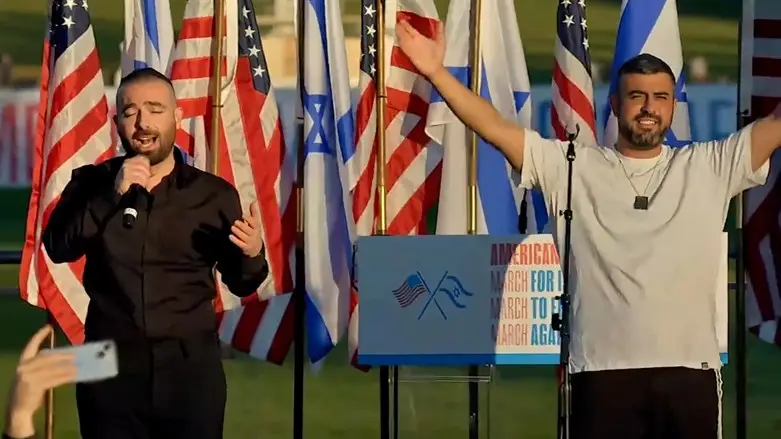
This week, BRS proudly brought a large delegation to Washington, D.C. to stand with at the largest rally for Israel in history.  For the overwhelming majority of attendees, taking a day off of work and traveling to the nation’s capital was inconvenient, time-consuming, and expensive.  And yet, almost 300,000 did it.  We stood together to rally, demand the hostages be brought home, and support elected leaders who support Israel.  But we also did so to sing, daven, dance and stand with an enormous array of our brothers and sisters, incredibly diverse but united by a shared concern about our people and committed to our homeland. Participating with the spectrum of the Jewish people from great Roshei Yeshiva like Rav Schachter, Rav Willig, Rav Lopiansky, and others, and with Rabbonim from Yeshivas Chafetz Chaim and Chabad, to Jews of all backgrounds, beliefs, and practices was a demonstration of unity to Hashem and to ourselves and of steadfast resolve to our enemies local and abroad. 


While most of the attendees were eager to post, stream, and stay connected, Hashem had other plans.  The dense gathering overwhelmed the local towers leaving almost all with no service or connection.  While frustrating and challenging, it quickly became clear it was a beracha from Above.  It felt like Hashem was looking down and saying, “My sweet kinderlach, you have never stood together in these numbers before.  Look around at your brothers and sisters, some like you and many very different.  Savor this moment, be fully present, disconnect from the world and connect with those you are standing right next to.” 


The highlight of the rally for me was when Ishay Ribo took the stage.  While I enjoy his singing and am regularly moved by his songs, it was what he said, not sang, that transformed the gathering into a religious experience for me.  Ribo led more than a quarter of a million Jews in a perek of Tehillim and turned to the mass gathering imploring everyone to be mekabeil ol malchus shamayim with him by reciting Shema together. 


People were excited when Ribo sold out Madison Square Garden earlier this year. This week, he touched the hearts, prayed, sang and led ten times that number in making a Kiddush Hashem.


While many American Jews didn’t attend for various reasons, the nearly 300,000 Jews gathered in D.C. this week were filled with love – Love for each other, love for our brothers and sisters in Israel, love for the hostages, love for the IDF and love for Hashem. 


Hamas, Hezbollah and antisemites should be very afraid.  Fear the power of our love, for it will always defeat them and whatever they plan.  

The Price of Greatness is Responsibility

This article first appeared in Mishpacha Magazine, August 2023.  

For recent articles about Israel, please go to reg.nd-staging.com


Earlier this summer, after receiving a call from his daughter in tears complaining about mean counselors and other issues, a concerned Jewish father in the UK flew 360 miles by helicopter to pick her up and bring her home. But he isn’t the only one guilty of helicopter parenting. More and more, loving parents who mean well and are eager to help, protect, and support their children are swooping in to rescue them, rather than teaching them responsibility.


While this trend is nothing new, it is gaining traction. According to the Wall Street Journal, parents have long shepherded their children through school and camp, but they are now entering the workplace. “Recruiters and hiring managers say they are seeing an uptick in parents inserting themselves into their children’s professional lives, calling up hiring managers, applying for jobs on their behalf and even showing up on the job to help mediate conflicts.”


This trend in general society, like many others, has infiltrated our frum community, with parents running interference in countless areas of life. For example, when I was a child, on parent-teacher night, children were nervous and anxious; concerned parents would come home with criticism and consequences. Today, it is educators, rebbeim, and morahs who are often anxious, having to engage parents who are critical of them and defensive of their children.


While the phenomena of helicopter parenting and now bulldozer parenting come from a good place, they are unintentionally having bad consequences, the biggest of which is raising young people who don’t know how to take achrayus, to live with responsibility and accountability.


Our sacred Torah teaches that indeed, the capacity to take responsibility is the very essence of man. In both the story of Adam and Chavah being expelled from the garden and the story of Kayin rising up to murder his brother Hevel, the Torah is clear that Hashem meted out punishment, not for disobedience and murder, but because when confronted with their mistakes, all the parties failed to take responsibility. Adam and Chavah point fingers and pass the buck. Kayin incredulously challenges, “Am I my brother’s keeper?”


Mistakes are human, they are forgivable. But only when ownership and responsibility are taken. The Torah makes clear that Hashem doesn’t punish the protagonists of these opening stories for having committed mistakes, but rather because they refused to take responsibility for them.


Rav Chaim Shmuelevitz (Sichos Mussarmaamar 15) explains that Yehudah is charged with being the progenitor of the monarchy because he demonstrates achrayus, the critical character trait for leadership. Indeed, he writes that one who doesn’t take ownership over his actions or doesn’t bear responsibility for others is a lav bar daas l’gamrei, not fully intellectually competent.


When Adam and Chavah sinned, Hashem called out, “Ayeka? Where are you?” Rav Shneur Zalman of Liadi, the first Lubavitcher Rebbe, pointed out (Toras Menachem, vol. 21), this call was not directed only to them. It echoes and reverberates in every generation. Where are you? Will you take responsibility? Will you own the consequences of your actions and behaviors? Will you take charge to repair and redeem the world? Will you step up, be resilient, choose to respond to your circumstance rather than blame it?


Ayeka — are we, with the best of intentions, raising a generation of emasculated, entitled, spoiled children who don’t know how to take achrayus for decision making, for their well-being, and for their future? Or are we raising young people who are empowered to be resilient and to take responsibility? Are they being taught and trained to provide, protect, nurture, nourish, and build lives and homes not only of kedushah, taharah, and Torah, but of achrayus and askanus?


In a conversation with Rav Yitzchak Berkovits shlita, he shared with me that in his opinion, the biggest challenge in shidduchim today is people’s lack of ability to take achrayus. He believes there should be an emphasis on teaching this middah in yeshivah. Taking achrayus in yeshivah doesn’t have to mean taking turns cleaning the dining room or serving the meals. It also means taking ownership over learning the areas necessary for being a ben Torah, like hilchos Shabbos and hilchos brachos, that aren’t necessarily part of a yeshivah curriculum.


He said the yeshivah should be a place that doesn’t coddle but instead challenges; it must not be too cozy or comfortable, a place of personal pleasure but of giving and caring for others. Rav Berkowitz said that during his years in the Mir, Rav Chaim Shmuelevitz emphasized over and over how the yeshivah must be a place of achrayus bein adam l’chaveiro.


Our world of bochurim sitting and shteiging is the crown jewel of our generation, a reflection of the freedom and prosperity that we enjoy today and that was denied to so many who came before us. Certainly, we should celebrate and elevate them, but we must be careful that we don’t put them on a pedestal in such a way that we push them off a cliff.


Having the zechus to sit in the ohel shel Torah must yield greater capacity to take responsibility, to take achrayus for ourselves and for others, not less. It must mean during the zeman taking responsibility for chaveirimchavrusas, and the yeshivah. And during bein hazmanim, it should mean being first to help at home, not sitting and expecting to be served by others. It means being invested in and contributing to the family, not approaching them with a sense of entitlement or magia li.


Teaching and demanding achrayus won’t distract or dilute yeshivah learning, it will elevate it. In 1946, the Jewish world was desolate, recovering from destruction. The great mashgiach, Rav Chatzkel Levenstein, had survived with others from the Mir, and he came to America for a short time. He related that he was once sitting with others who had escaped the furnace of Europe, and they observed that the best learning of their lives was during the few years when they were in Shanghai. The learning and davening were simply on a different level, they said. They wondered why; after all, they were on the run, refugees in a foreign land. One would assume that their diligence, davening, and focus would suffer, and yet it was elevated.


Rav Chatzkel explained: “Over there in Shanghai, we learned with a profound sense of achrayus. They had received reports that Hitler, yemach shemo v’zichro, had finished off the Jews. We thought that those in Shanghai were the only survivors of the Torah world. We thought the future of Yiddishkeit literally rested on our shoulders, it was our achrayus. When you feel a sense of achrayus, everything is elevated and more intense.”


The Gemara (Avodah Zarah17b) tells the story of Elazar ben Durdaya, a lost soul who had acted so egregiously, sinned so perversely, that he was told he had no portion in Olam Haba. Shaken, he turned to the heavens and earth, the mountains and valleys, the sun, moon, and stars, and anywhere he could to ask for help in redeeming himself.


Ein Eliyahu explains that each place he turned to was a metaphor for something. He tried to blame nature; he tried to turn to his astrology; he wanted to rely on the mountains, the harim, which can be read as horim, his parents; but in the end, none of them were legitimate excuses and none of them could rescue him. When rejected by them all, he collapsed into the fetal position and declared, “Ein hadavar talui ela bi — the only one who can change and improve things is me.” At that moment, with that expression of taking achrayus, a bas kol declared, “Rabi Elazar ben Durdaya is welcome in the World to Come.”


Taking achrayus is redeeming, liberating, defining, and it is the first step to developing a healthy sense of self. We need to teach our children from a young age to live with the principle of ownership, that ein hadavar talui ela bi.


The mishnah in Avos (1:14) teaches, “Im ein ani li, mi li? Uk’she’ani l’atzmi, mah ani? V’im lo achshav, eimasai? [If I am not for me, who will be for me? And when I am for myself alone, what am I? And if not now, then when?]” Rabbeinu Yonah explains the mishnah to mean, “If I don’t rebuke myself and hold myself accountable to be vigilant with Torah and mitzvos, who is there to motivate me? The prompting of others is only good on a temporary basis, but when the person motivates himself each and every day, he increases his focus on doing the work of Hashem successfully.”


Others can motivate and inspire us, but ultimately our success in avodas Hashem, in marriage, in our professions, and in life is dependent on our ability to take responsibility.


Today, parents take responsibility for researching and choosing shidduchim, shadchanim often plan the dates themselves, dating coaches provide a script of just what to say, rebbeim later provide strict gedarim of how often to speak and see each other, the wedding and chassan and kallah gifts surrounding it are paid for by others, and support is often provided for several years.


There is nothing necessarily wrong with any of these realities on their own, and they are unlikely to radically change; but are we positioning couples for success days and years after the wedding, when they must navigate integrating their lives, making compromises and sacrifices, and communicating productively, all on their own? Can we include them in the process in such a way that they are taking achrayus for their own lives as a prerequisite for beginning dating, and during the dating itself? We need to be roeh es hanolad, strengthening relationships to be resilient during times when couples have nobody running interference, managing, planning and paying for everything.


While radical changes are unlikely, small adjustments can be made that will hopefully have large impacts. For example, let’s stop referring to young adults who are looking to get married as “boys” and “girls.” If they are ready to be married, to b’ezras Hashem have children, don’t we believe they are adults? And shouldn’t we address them as such?


Among the questions we ask when researching a shidduch, let’s add: Are they baalei achrayus? Do they take responsibility? Can you give an example, from their time in yeshivah or seminary, or from their home or community, of how they demonstrate it?


Young couples, including those getting support or help from parents, should have skin in the game: live within a budget, pay their own bills, find opportunities to earn on their own through extra learning, shemiras sedorim, or tutoring, so they experience what it means to earn, understand the value of the money we work and sacrifice for, and make the difficult decisions for how it is spent.


It is not too late to retire our helicopters and bulldozers, to love and nurture our children, not by coddling them in a cocoon but by teaching, supporting, and guiding them as they practice and learn the wonderful middah of achrayus, of taking responsibility.


The greatest influence we can have is to model a life for them in which we prioritize not only our own happiness and pleasure but take responsibility for others. Indeed, as we enter the month of Elul and prepare to stand before Hashem who will determine our destiny, the single biggest merit we can earn is to take responsibility.  Rav Wolbe (Alei Shor 2:305) quotes Rav Yisrael Salanter, “The greatest advice for triumphing in judgment is to be indispensable to others, an ish haklal.”


Sir Winston Churchill once said, “The price of greatness is responsibility.” If we want a bright future for our children and ourselves, we simply cannot afford not to pay it.

Do Jewish Lives Matter?

In the early 20th century, universities in America, including elite Ivy league schools, imposed a Jewish quota, denying many qualified and worthy applicants’ entry, simply because they were Jewish.  For example, A. Lawrence Lowell, president of Harvard University from 1909-1933, labeled the growth of Jewish students at Harvard as the “Jew problem” and asserted that the growing number of Jewish students at Harvard would “ruin the college.” He proposed reducing the number of Jewish students at Harvard by imposing higher standards of admissions to members of “the Hebrew race.”


While 100 years later, Jews are admitted to college campuses, today, in many cases, they are not welcome there and simply are not safe there. Last week, Jewish students had to lock themselves in the Cooper Union library as other students chanted “Free Palestine” outside the doors and held up signs while aggressively and threateningly banging against the glass windows.  A few days ago, threatening statements about Jews on an online discussion board at Cornell University prompted officials to send police to guard a Jewish center and kosher dining hall and found Jewish students hiding in their dormitory rooms.  Jewish students at Columbia University said at a press conference this week that they had recently been subjected to a series of antisemitic incidents in recent weeks, including death threats.


These stories and countless others, unimaginable and unfathomable just a month ago, are now becoming the norm, not the exception, on campuses.  Shockingly, many of the hateful students are emboldened or even openly encouraged by professors who endorse and subscribe to the same ideology of hatred and attach their names and respected credentials to letters blaming Israel for October 7 and/or outright supporting Hamas. While reactions of disgust and statements of support have come from the White House, many elected leaders, and other allies, the national outrage, or mass movements that we have seen to confront other forms have hate and bigotry have not emerged.


To appreciate how relatively muted the reaction has been, consider the appropriate national reaction if black students were told the black student center was closed because it couldn’t be secured from the racists who threaten black students and all black students need to hide in their dorm room. Imagine Muslim students or LGBTQ students needing to lock themselves in the university library because they are being taunted and threatened. 


Campuses are not the only place that antisemitism is on the rise. Reuters reported that in Los Angeles, a man screaming “kill Jews” attempted to break into a family’s home. In London, girls in a playground are told they are “stinking Jews” and should stay off the slide. In China, posts likening Jews to parasites, vampires or snakes proliferate on social media, attracting thousands of supportive reactions. In countries where figures are available, like the United States, antisemitic incidents have gone up a mind-boggling 400% since Oct. 7 compared with the same period last year.


Jim Gaffigan, posted: “Does anyone else feel the need to call all their Jewish friends and say, Okay, you weren’t being paranoid?”  Gaffigan is a popular comedian, but his observation is no joke. 


In 2017, following the exposure of numerous abuse allegations against high profile individuals, the #Metoo movement swept the country with millions using the phrase and hashtag first in English and soon after in dozens of other languages.  A groundswell of support emerged to stand with victims of abuse and to make clear it would not be tolerated.


In 2013, the hashtag  #BlackLivesMatter began after the acquittal of George Zimmerman in the shooting death of Trayvon Martin. The movement returned to the headlines and gained international attention during the George Floyd protests in 2020.  That year, 67% of Americans expressed support for the Black Lives Matter movement.


Where are these same voices to defend the Jews? Where is the sweeping outrage, where is the birth of a movement to stand with Jewish lives while there are growing explicit vile threats against innocent Jewish lives?  Why hasn’t #JewishLivesMatter gone viral?  Where are the demands to defund campuses, where is the call to cancel antisemites and Hamas sympathizers? 


We would like to believe that the overwhelming majority on campuses and off of them, around America and the world, are decent and moral, disturbed by what happened in Israel and the ripple effects elsewhere. But being disturbed is not enough. Sitting on the sidelines is unacceptable. As Shai Davidai, a professor at Columbia whose passionate speech about campuses not being safe for Jewish students recently went viral, eloquently put it, “To the silent majority: I think we need to talk about your silence.”


We need all good people to speak up, act up, confront antisemitism and antisemites and be intolerant of the intolerable. We need a #JewishLivesMatter movement, a sweeping campaign to confront antisemitism and protect Jews everywhere.


Elie Wiesel once said: “We must take sides. Neutrality helps the oppressor, never the victim. Silence encourages the tormentor, never the tormented. Sometimes we must interfere. When human lives are endangered, when human dignity is in jeopardy, national borders and sensitivities become irrelevant. Wherever men and women are persecuted because of their race, religion, or political views, that place must – at that moment – become the center of the universe.”


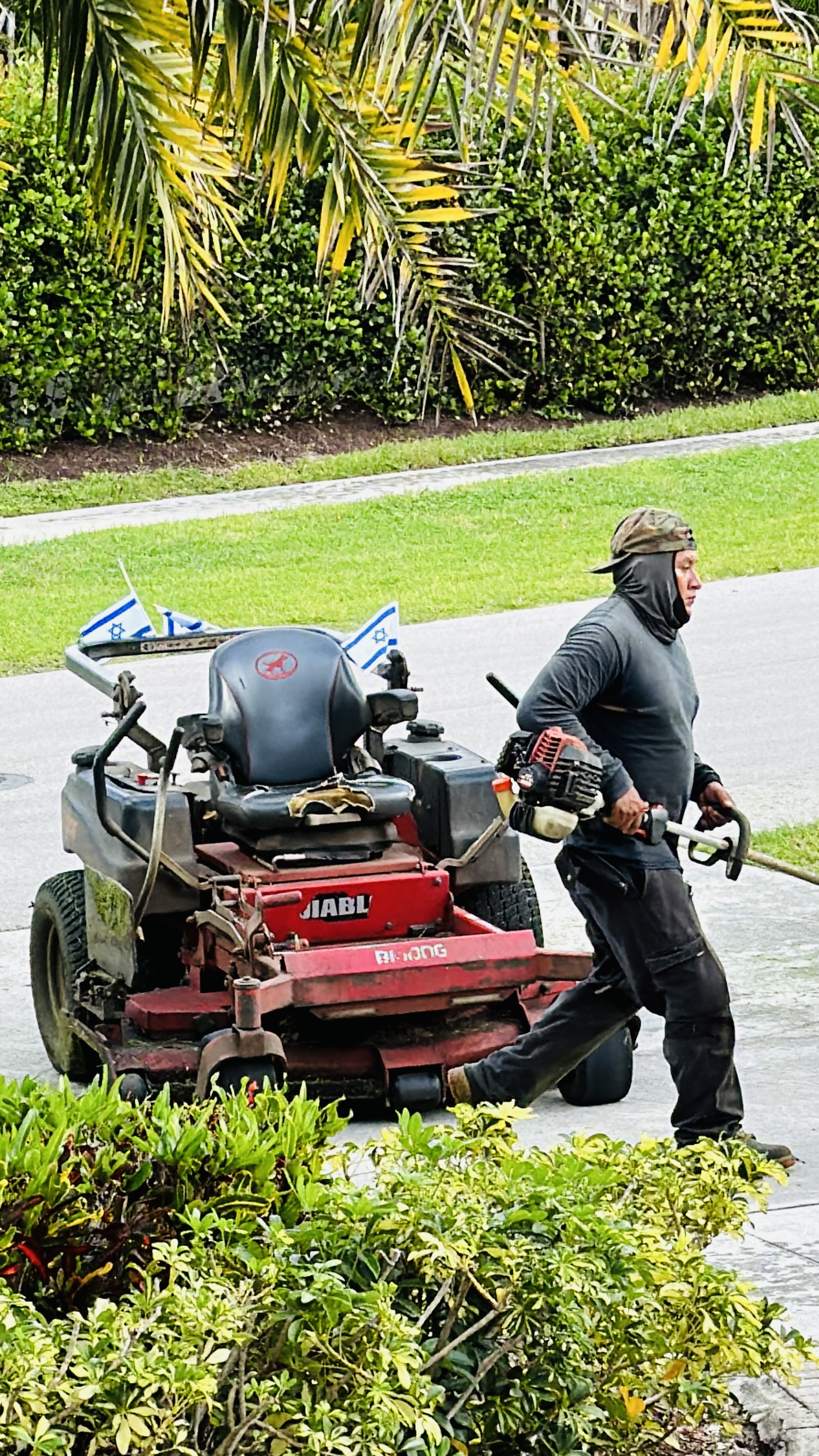
At this moment, standing with Israel and the Jewish people is the center of the universe. As antisemitism grows everywhere, I know how much it means to me to see each and every gesture and demonstration of solidarity with our people and our homeland.  Those who are not indifferent are indeed making a difference.  I opened my front door this week and saw my non-Jewish landscaper riding his lawn mower with Israeli flags flying from it.  An older non-Jewish couple in Ft. Lauderdale airport stopped me to say how upset they are by what is happening and that they stand with the Jewish people and Israel. A video of a non-Jewish construction worker in New York standing up for us and aggressively confronting someone taking down pictures of kidnapped hostages has warmed our hearts.


The position we as a people are collectively in right now is a grave cause of concern, and it should and must motivate us to speak up and fight for ourselves.  More than that, it should also inspire us to think about how we feel, what we are going through, and to remember this experience when another group, race, or minority finds itself confronting its enemies.  If even small gestures are meaningful to us, we must express them to others in the future who need to know they aren’t alone or on their own.  If solidarity matters, we must stand with those who are targeted in the future.


In last week’s Parsha, when Hashem tests Avraham by asking him to leave his home and all that he knows, He promises to make Avraham great, to bless him and also v’heyei beracha, to be a blessing.  What does it mean to be a blessing? It can’t mean to be blessed because that was already said with avarechecha, I will bless you?  Rav Samson Raphael Hirsch explains that Hashem was not only promising Avraham that he would be blessed, but at the same time was challenging Avraham to take his experience, to learn from his own story and to use it to become a blessing for others.  Others pursue being blessed, satisfying their wants and needs and finding their own happiness.  To be progeny of Avraham is to take our experiences and to pursue becoming a blessing in other people’s lives, using it to help others find justice, security, and ultimately happiness.


In this week’s Parsha, Avraham is a blessing by advocating for and protesting on behalf of Sedom.  When Hashem reveals His intent to destroy this corrupt city and society, Avraham doesn’t passively accept with indifference.  He objects, protests, and negotiates on their behalf. 


As we find ourselves in this urgent time, a crisis for our people not only in Israel but around the world, we are fair and just in expecting more from the world, in demanding outrage, support and solidarity.  But at the same time, we must demand of ourselves to take this experience and feeling and to be a blessing for others who will need us to be outraged, support and stand in solidarity with them. 

Israel Has Changed Forever, Have You?

While the primary horrors and atrocities in Israel occurred on October 7, the fallout and aftershocks are continuing every single day. Despite Hamas literally videoing, promoting, and memorialize their brutal and heinous attack using all kinds of media, there are still people questioning the scale and depravity of the massacre.  In response, Israel held a stunning session for the international press sharing gruesome images of the atrocity so that journalists could document in an undeniable way what happened.  Eylon Levy, an Israeli government spokesman, in a video announcing the session, said, “As we work to defeat the terror organization that brutalized our people, we are witnessing a Holocaust denial-like phenomenon evolving in real time as people are casting doubt on the magnitude of the atrocities that Hamas committed against our people, and in fact recorded in order to glorify that violence.”


The infiltration, casualties, number of hostages, relentless barrage of rockets, continuous attacks from Gaza and from Lebanon are indeed great reasons for concern, prayers, effort, and support.  The world is coming to learn what Israel has known for a long time: she is surrounded by enemies who seek her utter destruction and annihilation.  The infamous Hamas charter, written in 1988, doesn’t speak of disputed territory, it reads like the Protocols of the Elders of Zion and calls for a genocide against Jews.  Hezbollah, Iran and other terror organizations and individuals in the West Bank and elsewhere speak of “from the river to the sea,” a non-subtle euphemism for the destruction of all of Israel. 


The last two weeks have seen countless headlines and analyses of the risks of a ground invasion, potential implications for the North in the event of a full-scale war and the possibilities of other nations like Iran or Syria getting involved.  Indeed, there is so much to worry about, work on, daven for, and care about. 


But, here is the thing.  While I daven, advocate, and lose sleep over the safety and security our brothers and sisters right now, I am not worried about the long-term future of Israel.  Israel is incredibly resilient, capable, powerful, tenacious, fierce, smart, cunning and strong.  Israel will persevere, the IDF will triumph, the people, though deeply wounded, will bounce back.  These horrific atrocities have brought the people of Israel together, fostered a united country and people.  (I had the privilege to represent our shul and our community this week by bringing supplies, goods, toys, hugs, and love to IDF soldiers and displaced citizens this week. I saw with my own eyes resolve, achdus, and energy the likes of which cannot be believed. I look forward to sharing more with you about this trip in the coming days.)


The people of Israel have revealed that underneath the important, often vociferous debate, is a nation of profound faith, unity and conviction.  Israel will emerge stronger than ever.


This week’s Parsha is filled with pesukim and stories that feel so relevant today: Avraham first settling in Israel, Hashem promising the land to Avraham and his descendants, the birth of Yishmael and the fateful promise about his future. One of the central highlights is the Bris Bein Habesarim, the “Covenant of Parts,” in which Hashem tells Avraham about the destiny of his descendants: the slavery and suffering they would endure, and the subsequent redemption and settlement in Israel. The Torah describes how Avraham cut up a calf, a ram, and a goat, but ואת הצפור לא בתר – he did not cut the turtledove that was part of the covenant. Rashi explains that Psukim in Tanach compare other nations to calves, to rams, and to goats, and the Jewish people are compared to doves. The animals representing the other nations were cut up, representing their eventual demise. Why wasn’t the bird cut? רֶמֶז שֶׁיִּהְיוּ יִשְֹרָאֵל קַיָּמִין לְעוֹלָם – To symbolize the promise of the Jewish nation’s everlasting future.


A video clip was circulating this week of an address given by Rabbi Lord Jonathan Sacks zt”l, whose third yahrtzeit is next week. So many have expressed how much we miss Rabbi Sacks at times like these, and it brought such comfort hearing his voice at an AIPAC policy conference ten years ago, delivering chizzuk with remarks that sound like they could  have been given this week:


I have to tell you that what we grew up with, “never again,” is beginning to sound like “ever again.” And at the heart of it is hostility to Israel. Of course, not all criticism of Israel is anti-Semitic. But make no mistake what has happened.


In the Middle Ages Jews were hated because of their religion. In the 19th century and the 20th, they were hated because of their race. Today, when it’s no longer done to hate people for their religion or their race, today they are hated because of their State. The reason changes, but the hate stays the same. Anti-Zionism is the new anti-Semitism. …


Today what is at stake in Israel’s survival is the future of freedom itself. Because make no mistake, this will be the defining battle of the 21st century, which will prevail: the will to power with its violence, terror, missiles, and bombs; or the will to life with its hospitals, schools, freedoms, and rights. …


Every time I visit Israel I find among Israelis, secular or religious, an absolute unswerving dedication to Moshe Rabbenu’s great command Uvacharta Bachayim, “Choose life.” Israel is the sustained defiance of hatred and power in the name of life because we are the people who sanctify life. …


Judaism is the defeat of probability by the power of possibility. And nowhere will you see the power of possibility more than in the State of Israel today. Israel has taken a barren land and made it bloom again. Israel has taken an ancient language, the language of the Bible, and make it speak again. Israel has taken the West’s oldest faith and made it young again. Israel has taken a shattered nation and make it live again. Friends, let us not rest until Israel’s light shines throughout the world, the world’s great symbol of life and hope.


While we must not stop davening, donating, supporting and visiting, Israel will ultimately be ok.  The real question is what will happen next for those Jews living outside of Israel?  While even before October 7, everyone knew about the enemies surrounding Israel, few of us truly knew how many enemies were living in our midst and how, given the opportunity, they would boldly and brazenly rear their ugly heads and ideas. 


Surely, we thought, taking sides on an issue so clear and obvious like supporting innocent civilians, elderly, children and women who were victims of a series of pogroms and systematic murders versus associating with and sympathizing with, or full-on endorsing wicked and evil terrorists, the choice would be clear. Even if one was regularly critical of Israel and supportive of Palestinian statehood, surely it would be simple to condemn objective atrocities and express sympathy for butchered civilians and kidnapped hostages.


Instead, the last two weeks have been an enormous wakeup call to Jews of the Diaspora.  Ivy League universities, once considered bastions of intellectualism, centers of sophistication, capitals of progress and advancement have abandoned their Jewish students, failing to protect them from Hamas-sympathizing fellow students and professors.  Long considered spiritually dangerous for Torah Jews, college campuses and others are now literally dangerous physically for those who proudly identify as Jews or supporters of Israel.   Every day seems to bring new stories that should shake us all. An Israeli at Columbia got beaten with a stick. Jewish students at Cooper Union were locked in a library while a horde of threatening students, some encouraged by professors, banged on the doors and windows.  Jews on campuses across the country are being threatened, harassed, and physically intimidated, while the academics at these institutions issue statements about “escalations of violence” at best or simply casting Hamas’s atrocities as “resistance” and blaming Israel for everything that happened on October 7 at worst. One professor at a prestigious college gave a horrifying speech, captured on video, in which he described feeling “exhilarated” watching the events of October 7 unfold.


The images and videos of pro Hamas rallies in cities across the US, Europe and around the world is shocking, jarring, and downright scary. They have included swastikas and actual calls to “gas the Jews.”  We learned that for some, while Black Lives Matter and some other forms of prejudice are so serious and have zero tolerance, Jewish lives don’t matter and antisemitism is open for debate, as organizations purportedly devoted to civil rights and justice were unashamed to celebrate terrorists who paraglided into a rave killing 260 innocent people.   We experienced a legacy media that abandoned journalistic principles and practices, all too eager to swallow and regurgitate Hamas propaganda without verification or substantiation. 


We witnessed elected Congresspeople stand with the perpetrators over the victims and spread a blood libel falsely accusing Israel of striking a hospital, actions with real consequences. 


Of course, we have also witnessed extraordinary expressions and demonstrations of support, from the majority of Congress who passionately and compassionately stand with Israel, to President Biden who has demonstrated enormous support by traveling into a war, asking for significant funding for Israel and steadfastly supporting Israel’s right to defend herself, to zealous advocacy for Israel from many elected officials, including those who stand to alienate themselves in their parties and caucuses, including Congressman Ritchie Torres.  We have seen billionaires withdraw their funding and their longstanding ties with universities and institutions that are underserving of them.  We have experienced media who were moved to tears over what happened in Israel.


Yes, there are reasons to be hopeful and optimistic but with all the enemies that Israel faces, the safety, security and rights of the Jews in the diaspora feel the most vulnerable and fragile of any point in my lifetime. 


Of course, the simple answer to the now-revealed condition of Jews around the world is to move to Israel.  Certainly, Israel is our homeland, it is our destiny, and now more than ever we should recognize it should be part of each of our final destinations.  Even if we don’t live in Israel now, Aliyah must be a question not of if, but of when, for all of us. 


However, realistically, just as throughout our history there were multiple centers of Jewish life and Torah, the likelihood is that the millions of Jews living in the Diaspora are not picking up and moving tomorrow.  So what will be?  How should we confront the new reality we have seen?  While spiritually and now physically unsafe, are there consequences of having universities and college campuses that have no Jewish students, nobody to advocate for Israel, no representatives of our people?  Is there more we can do to ensure terrorist sympathizers aren’t elected to any office in this country?  Is cancelling subscriptions to legacy media that has a clear bias enough or can more be done to hold journalists accountable?  And perhaps most importantly, have the rallies and people despicably tearing down posters of kidnapped Jews changed our security considerations at our Shuls, schools and Jewish communities?  Do we continue to trust our outstanding local law enforcement and intelligence who protect us or does our sobering new reality demand elevated security measures for ourselves?


I don’t have answers to these questions, but they need to be consistently spoken about and considered.  Israel has changed forever, but so has the world of those who don’t yet live there.


An Open Letter to My Fellow Jews in the Diaspora


Dear fellow Jews who don’t yet live in Israel,


We are living in extraordinary times, days in which atrocities about which we pledged “Never Again” have happened, with dozens of pogroms, over 1,400 brutally and barbarically murdered, and unthinkably, 200 Jews taken hostage, among them babies, infants, women, and elderly, even Holocaust survivors. Hundreds of thousands of young, beautiful souls – our children, brothers, sisters, cousins, nephews, nieces, and friends – have been called up, asked to risk their lives to protect our people, in Israel and around the world.


These are indeed extraordinary times, and we cannot and must not be leading ordinary lives.  It isn’t only the media and elected leaders that need to be careful about their language, their attitudes, and their focus.  All of us need to be more sensitive, aware, and thoughtful in not only what we are doing, but what and how we are messaging.  I don’t believe people generally have malicious or bad intentions, but our words online and offline matter, they can lift and support and boost morale or they can deflate, cause pain, make our brothers and sisters in Israel feel very alone. 


Don’t Move On: Nobody in Israel, not a single person in the country regardless of age, location, or religious denomination, has been able to return to “normal” or move on.  Hundreds of thousands have been called up to fight.  Their spouses, children, parents and family have had to pick up the slack, all while worrying non-stop about their loved one’s fate.  Cities in Israel have no men to run businesses, pick up the garbage, or serve the roles we take for granted.  Restaurants and food establishments have take-out only.  The government is already planning for, and citizens are starting to think about, food conservation.  This war has barely begun with a ground operation imminent and 200 hostages still not home.  There may have been events or tragedies in Israel in the past that caught our attention – we davened, we said Tehillim, we attended a rally, maybe called a Congressman, but then we more or less got back to normal fairly quickly. This cannot be our attitude right now. Our brothers and sisters in Israel have not returned to any semblance of normal and neither can we.  It is up to each individual and family to decide how to continue to live life, do what needs to be done, and yet remain acutely sensitive to what is happening in Israel.  We must be careful not to judge one another and how we strike that balance.  But one thing we can do universally is not move on. 


Think Carefully About The Words You Use: Making those in Israel, on the actual front lines, feel alone is compounding their pain, and is downright cruel.  If you were in Israel over Yom Tov and needed to get back to work, if your family and kids’ schools and life generally are outside of Israel, it is reasonable and understandable that you had to leave.  If your child was experiencing anxiety or trauma being in a country at war, you did the right thing bringing them back.  But you and they aren’t “evacuees” or “refugees,” you didn’t “flee” for your life, and you weren’t “rescued.” Your situation was no doubt stressful, traumatic, and difficult.  You deserve to and should work through those feelings and get support for them as needed but choose your language carefully.  An American who made Aliyah 20 years ago, who voluntarily put her family’s future and destiny in Israel and has three children now fighting in the IDF, described what it is like to read and hear American Jews, including those who daven daily to return to Yerushalayim, run from Israel, post about their stress and anxiety about their return, and describe themselves as evacuees.  If you needed to leave Israel or your child needed to come home, nobody should judge you, but talk about your experience sensitively, thoughtfully, and intelligently.  Leave Israel the way you walk away from the Kotel: backwards and wistful.  Don’t turn your back and run; walk away hesitantly, slowly, regretfully, and facing Israel the whole time.


Prioritize The Captives: There is so much pain and horror to absorb, so much fear and concern on our minds. We grieve and try to comprehend 1,300 funerals and shivas, we worry about half a million soldiers in uniform, but we must keep at the top of our minds the terrifying fact that there are 200 innocent people, including small children, being held by Hamas right now.  When three boys were taken nine years ago, Klal Yisroel held our collective breath and didn’t stop davening. There are TWO HUNDRED hostages being held in ways we don’t want to imagine. Like Yaakov was inconsolable until Yosef was returned to him, we must be inconsolable until the fate of those 200 is secured.


We Are All Part of this War:  Israel is battling on the front lines, but this is not only their war.  The horrific massacre and atrocities in Israel have revealed the ugly reality of Hamas sympathizers who live in major cities around America and Europe.  We have watched supposedly educated, respectable people not only fail to condemn brutal murder, rape, and kidnapping, but defend it, identify with it, and reveal that they would be perfectly fine with it being perpetrated against us, their neighbors, not in Israel but around the world. Hamas has in its charters not only to drive Jews from Israel but to kill Jews around the world.  This is not something that happened or is happening “over there.” You are not a spectator to this war, you are not on the sidelines.  We all have skin in this, and we should be acting like it. 


Use Your Influence: Every one of us can and should be having an impact on other people. We are responsible for influencing neighbors, co-workers, friends, and family by educating them on this war and advocating for Israel, or recruiting others to daven, learn and earn merits for our soldiers and for all Israel.  But let’s be clear, when soldiers are risking their lives, you are not defeating the enemy by insisting on going about business as usual in America, by shopping or going to fancy restaurants, setting a beautiful table, or focusing on fashion or planning your next vacation.  On social media, this isn’t a time to mark birthdays or anniversaries, display desserts or décor, get vacation advice or post anything that is tone-deaf and callous to the crisis facing the Jewish people everywhere. (Of course, we should continue to celebrate milestones, particularly our children’s. We should take vacation if we need to. We should set a beautiful Shabbos table. But we need to take extreme care with what we are posting publicly right now.)


This is our Family: If you don’t have a close family member in Israel, it is time to start acting like you do. If a member of your immediate family—a parent, sibling, spouse or child—were God forbid in crisis, in the ICU, or missing, or fighting for his or her life, could you be distracted?  Would you look for or welcome distraction?  Would you not be drawn to any news, any update on their well-being?  As one person online posted, when asked by a co-worker, “Do you have any family in Israel,” he responded, “Only a few million.” Our genuine pain, anguish, grief, and worry should not just be expressions of imo anochi b’tzaaa, sympathy and empathy for what another is going through. This is OUR pain, OUR anguish, OUR fear, and our lives, our priorities, our focus and our time must reflect it.  


Be Aware of And Sensitive To Those Around You: In your shul, among your neighbors and friends, are people who have children and grandchildren serving in the IDF. Their lives are on hold, they are tortured by the concern. In some cases, they have literally no idea where their children are or what their assignment is. There are parents and grandparents of children in Israel in yeshiva and seminary or who have made Aliyah.  This is personal to them.  Be thoughtful, sensitive, and kind how you speak, what you post, how you refer to what is happening there. For example, the shul lobby might not be the best place for you to weigh in on how many soldier casualties would be acceptable to you in a ground invasion, when you don’t know if the person behind you might be sitting shiva for one of those casualties.


Focus On Practical Things You Can Do: In America we might feel helpless at times but there is so much we can be doing. Check in on people in Israel or who have loved ones there:  text, email, call, show you care.  It takes a moment and it means the world.  Also: daven, daven, daven.  Each and every one of our heartfelt tefillos and perakim of Tehillim matter, they mean something to Hashem and also to those who know we are pouring out our hearts.  Learn, do mitzvos, perform chesed in the merit of those we who cannot be doing those things right now.  Advocate, write letters, reach out to elected officials, protest those who are telling the story inaccurately and thank those who are supporting Israel the way it deserves.  Pass up on a luxury you were going to afford yourself and send support for equipment, supplies, and an economy hurting badly. (Also, be mindful of where and to whom you are giving. Give generously, but make sure you’re giving to someone you trust (who themselves are making sure the funds are being used appropriately) or a known organization. There are many well-meaning people and campaigns, but sending supplies to soldiers or civilians is not always simple. Giving to a website or cause going around Whatsapp that has not been vetted may not be the best use of your support.)


Good Day? I was checking out of a store and the cashier asked me, “Are you having a great day?”  She did nothing wrong and it could be her employee handbook mandates she say that, but I had to hold back from screaming, “Great day?  Do you know the crisis my family is in?” Again, she did nothing wrong, but we should be careful about the language we use. On Motzei Shabbos instead of “gut voch” and “Shavua tov,” I wished others, “May it be a gut voch and shavua tov.” Instead of saying “Have a great day,” when I see others, I say, “May klal Yisroel have a great and successful day.” Think about how the words you use and the way you communicate indicates that you are acutely feeling being in an eis tzara.


Pace Yourself: It is understandable that you can’t make it to every rally and can’t and shouldn’t be (nor is it healthy to be) tied to the news 24/6.  All indications are that this crisis for Klal Yisroel won’t be over quickly.  We need to pace ourselves. Be aware of what is happening but let yourself take a break from your phone and don’t let it interfere with other responsibilities. Advocate, fight, cry, daven, learn, check in, give… and take a moment to catch your breath if the alternative is burning out. The challenge of keeping up with the intensity of the efforts and opportunities to help right now must not be an excuse to abandon all of them altogether and return to “normal.” 


My dear friends who live in the Diaspora – this is a gut check moment.  We will forever be defined and remembered for how connected we feel and act to Klal Yisroel and to those in Eretz Yisroel at this time.


When Bnei Gad and Bnei Reuven ask Moshe if they can live east of the Yarden and not settle in Eretz Yisroel proper, something the Midrash tells us they were the first to exiled later because of,  Moshe responds: וַיֹּ֣אמֶר מֹשֶׁ֔ה לִבְנֵי־גָ֖ד וְלִבְנֵ֣י רְאוּבֵ֑ן הַאַֽחֵיכֶ֗ם יָבֹ֙אוּ֙ לַמִּלְחָמָ֔ה וְאַתֶּ֖ם תֵּ֥שְׁבוּ פֹֽה׃ , “Are your brothers to go to war while you stay here?” 


Jews of the Diaspora are not being asked to come fight.  (Though some are heroically volunteering to do so.) We are not even being asked to come right now.  But our hearts, souls, and every fiber of our being must be in and with Israel, wherever we may physically be right now. 


In a previous war of the Jewish people against Amalek, Moshe stood and raised his hands heavenward. The Torah tells us: וִידֵ֤י מֹשֶׁה֙ כְּבֵדִ֔ים וַיִּקְחוּ־אֶ֛בֶן וַיָּשִׂ֥ימוּ תַחְתָּ֖יו וַיֵּ֣שֶׁב עָלֶ֑יהָ וְאַהֲרֹ֨ן וְח֜וּר תָּֽמְכ֣וּ בְיָדָ֗יו מִזֶּ֤ה אֶחָד֙ וּמִזֶּ֣ה אֶחָ֔ד וַיְהִ֥י יָדָ֛יו אֱמוּנָ֖ה עַד־בֹּ֥א הַשָּֽׁמֶשׁ׃ ,     But Moshe’s hands grew heavy; so they took a stone and put it under him and he sat on it, while Aharon and Chur, one on each side, supported his hands so his hands remained steady until the sun set.”


Moshe held both his hands up, directing the people’s prayer and faith to Hashem.  When it got uncomfortable and tiring for him, Yehoshua and Chur stepped in and helped him hold his hands up.  The Gemara explains that when it was too much for Moshe and he needed to sit, he sat down, but on a rock so that he would still feel the people’s pain and not feel comfortable during the war his brothers were fighting. 


We need to lift the hands of our brothers and sisters.  We need to refuse to be too comfortable, refuse to be distracted, refuse to move on or go back to normal until this war is won with the help of Hashem. 


With great love, respect, worry and concern,


 Rabbi Efrem Goldberg


Don’t Just Sing Am Yisrael Chai, Live It!

When the Jews of Bergen-Belsen concentration camp were liberated on April 20th 1945, they sang Hatikvah. At the end of the anthem, British Army Chaplain Rabbi Leslie Hardman, cried out, “Am Yisrael Chai – the People of Israel live!”


When Golda Meir visited the Great Synagogue in Moscow as the Israeli Ambassador in 1948, the crowd of 50,000 ecstatically welcomed her with shouts of “Am Yisrael Chai!”


In 1965, in order to energize the Soviet Jewry movement, Shlomo Carlebach was asked to compose a song. He wrote the famous version of Am Yisrael Chai.


In 2009, Prime Minister Netanyahu visited Wannsee Villa in Berlin, where the Final Solution for the destruction of Europe’s Jews was planned in 1942 by Hitler and leaders of the Third Reich. In the visitors’ book he wrote just three words in Hebrew and then translated them into English: “Am Yisrael Chai – The people of Israel live.”


As a slogan, Am Yisrael Chai affirms that despite the systematic attempts to exterminate and annihilate the Jewish people, thanks to God’s guiding hand and the tenacity and resilience of the Jewish People, we stubbornly persevere. God has made an eternal covenant with the Jewish People; He has their back.


Am Yisrael Chai is also a tefilla, a longing for a united Jewish people living together in safety, security and with unity and harmony.


Explaining the words “I will take you to Me as an “עם”, a people (Shemos 6:7), Rav Soloveitchik writes:

The political-historical unity as a nation is based on the conclusion of the covenant in Mitzrayim, which occurred even prior to the giving of the Torah at Sinai.  This covenant forced upon us all one uniform historical fate. The Hebrew word עם Am, nation, is identical to the Hebrew word עם Im, with. Our fate of unity manifests itself through a historical indispensable union…No Jew can renounce his part of the unity…Religious Jews or irreligious Jews, all are included in one nation, which stands lonesome and in misery in a large and often antagonistic world…

In the ashes of the crematoria, the ashes of the Chasidim and pious Jews were put together with the ashes of the radicals and the atheists. And we all must fight the enemy, who does not differentiate between those who believe in God and those who reject Him.


The secret to a strong Am Yisrael is a sense of Im Yisrael, being in it together, united, loyal, giving one another the benefit of the doubt and judging each other favorably.


The Torah relates that at the end of the first day of creation, ויהי ערב ויהי בוקר, יום אחד – “It was evening and it was morning; the first day” (1:5).  Rav Zev of Strikov advances a beautiful chassidic reading of this pasukערב (evening) represents the gloom of exile, periods when we are thrust into “darkness,” struggling, suffering, and in distress.  בוקר (morning), then, symbolizes the “light” of the redemption, the joy of salvation.  The way we proceed from ערב to בוקר, from the darkness of suffering to the light of redemption, is יום אחד – having days of oneness, days of achdus, unity, togetherness. 

This is a major gut check moment for those who live outside of Israel.  Do we feel connected to the plight of our brothers and sisters there? Are we in profound pain by the events unfolding?  Are our lives severely interrupted and different while this is going on? 

The Rambam (Hilchos Teshuva 3:11) writes that a person who vigilantly and righteously observes Jewish law, but separates himself from the Jewish People, has no portion in the World to Come.  How does he define separating from the people?  Someone who doesn’t identify with the tzarah, with the crisis and tragedy Jews are enduring, has no portion in the World to Come. 

There is so much we can and must be doing.  We are all called to serve in this war, our courageous and brave heroes on the front lines but also Jews and decent people everywhere in the world.  Daven, learn, send funds and supplies, text, call and check in on family and friends in Israel.  Rally, advocate, write letters in gratitude to elected officials and media who are getting it right, and stand up to and protest those who are grossly wrong.

As we recite in the beracha of יוצר אור each morning, עושה שלום ובורא את הכל (“Maker of peace and Creator of everything”) – once there is shalom, then there is “everything.”  If we are embroiled in conflict and strife, we will remain in darkness.  It is only when we transcend our differences and join together in mutual love and harmony that we can emerge from ערב to בוקר, from the darkness of exile to the light of redemption.

It must be clarified that unity does not mean uniformity.  We do not need to be the same, act the same, think the same, or hold the same opinions, in order to achieve the “light” of יום אחד.  We need simply to focus on all that we share in common – which far exceeds that about which we disagree – and build and strengthen our bonds of friendship despite our relatively few differences.

Rabbi Yisrael Meir Lau, standing in Auschwitz-Birkenau at the March of the Living several years ago said, “We always knew how to die together. The time has come for us to know also how to live together.”

During this most difficult time, may the people of Israel learn to live with one another in harmony and unity. Am Yisrael Chai!


The Meaning of Am Yisrael Chai

When the Jews of Bergen-Belsen concentration camp were liberated on April 20th 1945, they sang Hatikvah. At the end of the anthem, British Army Chaplain Rabbi Leslie Hardman, cried out, “Am Yisrael Chai – the People of Israel live!”


Jews in Bergen-Belsen singing Hatikvah


When Golda Meir visited the Great Synagogue in Moscow as the Israeli Ambassador in 1948, the crowd of 50,000 ecstatically welcomed her with shouts of “Am Yisrael Chai!”


Golda Meir in Moscow


In 1965, in order to energize the Soviet Jewry movement, Shlomo Carlebach was asked to compose a song. He wrote the famous version of Am Yisrael Chai.


In 2009, Prime Minister Netanyahu visited Wannsee Villa in Berlin, where the Final Solution for the destruction of Europe’s Jews was planned in 1942 by Hitler and leaders of the Third Reich. In the visitors’ book he wrote just three words in Hebrew and then translated them into English: “Am Yisrael Chai – The people of Israel live.”


As a slogan, Am Yisrael Chai affirms that despite the systematic attempts to exterminate and annihilate the Jewish people, thanks to God’s guiding hand and the tenacity and resilience of the Jewish People, we stubbornly persevere. God has made an eternal covenant with the Jewish People; He has their back.


Am Yisrael Chai is also a tefilla, a longing for a united Jewish people living together in safety, security and with unity and harmony.


Explaining the words “I will take you to Me as an “עם” a people (Shemos 6:7), Rav Soloveitchik writes:

The political-historical unity as a nation is based on the conclusion of the covenant in Mitzrayim, which occurred even prior to the giving of the Torah at Sinai.  This covenant forced upon us all one uniform historical fate. The Hebrew word עם Am, nation, is identical to the Hebrew word עם Im, with. Our fate of unity manifests itself through a historical indispensable union…No Jew can renounce his part of the unity…Religious Jews or irreligious Jews, all are included in one nation, which stands lonesome and in misery in a large and often antagonistic world…

In the ashes of the crematoria, the ashes of the Chasidim and pious Jews were put together with the ashes of the radicals and the atheists. And we all must fight the enemy, who does not differentiate between those who believe in God and those who reject Him.


The secret to a strong Am Yisrael is a sense of Im Yisrael, being in it together, united, loyal, giving one another the benefit of the doubt and judging each other favorably.


Rabbi Yisrael Meir Lau, standing in Auschwitz-Birkenau at the March of the Living several years ago said, “We always knew how to die together. The time has come for us to know also how to live together.”


During this most difficult time, may the people of Israel learn to live with one another in harmony and unity. Am Yisrael Chai!


Rabbi Efrem Goldberg

Join Our Community

Subscribe to our newsletter or connect with us on WhatsApp.