Picking Up What We Dropped and Holding On Tight

More than 2,600 independent businesses are located in the Diamond District, and nearly all of them are related to diamonds or fine jewelry. Raffi Stepanian originally worked for those businesses, making a living as a freelance diamond setter but after a few years, instead of being found inside the stores, he spent his time outside of them.  Stepanian crawls on his hands and knees on the sidewalks armed with tweezers and a butter knife digging through cracks in the sidewalk, in search of tiny bits of valuables that most everyone would otherwise miss.  Sometimes, he’ll find a pearl that fell off a broken necklace or a small diamond that came loose from a ring; other times, he’ll come across the gold backing from an earring, or some bits of gems shaved off in the shaping process by jewelry makers. For years, Raffi made a living by picking up what other people dropped, lost or forgot about.


The Torah describes Pesach as a night of protection – Layl shimurim hu la’Hashem.  Rashi interprets “shimurim” in the sense of anticipation or preservation, commenting that since the creation of the world Hashem had been waiting to redeem His people.  However, we apply this expression in the present, not just as part of the description of the past. Treating Seder night  as a “Layl shimurim” has practical Halachic implications. Hashem’s presence is felt more intensely on Pesach night and protects us from danger. We therefore leave our doors unlocked, leave out part of krias shema al ha’mita, we don’t use salt with the matzah, and more.  


But Layl Shimurim has implications beyond the first night of Pesach.  In his Haggadah Beis Yaakov, the Izbitcher Rebbe has a magnificent explanation of this phrase.  One of the challenges of life is the fleeting nature of our experiences, our relationships, our memories, and our feelings. Life is so fast-paced and chaotic that yesterday’s experiences are quickly forgotten, and today’s amazing conversations or moments will be gone by tomorrow.  It is so hard to hold on to the feelings and experiences.


Pesach, says the Izbitcher, is the Layl Shimurim – it is a reservoir of lost things.  Pesach is a time to recover lost feelings, thoughts, emotions, relationships, and experiences.  On Pesach we reclaim what we thought was lost, we reconnect with what we thought was gone forever.


On Pesach we launch our count of the Omer which begins with the offering of the Korban Omer.  On the second day of Pesach, thousands would come to watch the ketziras ha’omer, the reaping of the barley used for the Omer offering.  The best fields, those south of Yerushalayim, were used as they produced the best grain. The reaping and harvesting was done with great pomp and ceremony.  Why?


The Izbitcher explains, when the people saw the barley being harvested they were reminded of a powerful lesson.  A person drops a seed, it gets buried under the ground, seemingly lost, squandered and forgotten.  But if they come back to it, if they return to harvest it, they will see it wasn’t lost underground, wasn’t wasted at all.  In that time it has taken root, blossomed and produced. The moments, experiences and conversations that seem dropped, lost, buried, disposed of, and despaired of, are revisited on Pesach, when we come to harvest, reap, and collect those seeds that have sprouted and grown all along. 


I remember an interview with Rav Gamliel Rabinowitz, a great Rosh Yeshiva and Mekubal in Israel today. He was reflecting on his special father, Rav Levi Rabinowitz zt”l. Rav Levi was orphaned of both his father and mother by the time he was 9 years old and was raised in the Diskin Orphan Home.  He could have despaired, given up, felt all alone in the world.  Instead, he persevered with great faith, held on to the memories of those who came before, remained optimistic, positive and devoted to the study and spread of Torah.  Ultimately, he emerged a respected talmid chacham and mechaber of the popular sefer Ma’adanei Shulchan, the Mishna Berura of Yoreh Dei’ah.  He was so careful not to speak lashon ha’rah that Rav Elyashiv zt”l referred to him as “the Chofetz Chaim of the generation.” 


Remarkably, by the time of his passing a few years ago, Rav Levi Rabinowitz, orphaned at a young age, had over 1,000 descendants. Reflecting on this amazing fact, his son Rav Gamliel said, “A person sees nothing, we have no idea what kind of seeds we carry within us, the unlimited potential of a human being.”


It is interesting to note that Pesach ends the way it began.  On the eve of Pesach, we lit a candle to search for chametz, to identify what we must dispose of, throw out, and get rid of in our lives.  On the last day of Pesach, we also have a candle lit, a yahrzeit candle to search again, but this time not for what we want to destroy, rather for what we want to recover, reclaim and take back. 


On this Pesach, characterized by Layl Shimurim, we can collect all the diamonds and specks of gold that are part of our people that we may have dropped. Let’s gather the strength, faith, fortitude and resilience of those who came before us, including so many of our parents, grandparent and ancestors who overcame tremendous challenges in their times to bequeath to us the blessed life that we enjoy and let’s strengthen ourselves to navigate these times and to transmit these jewels to the next generation.    
 

Every Last Crumb

The Large Hadron Collider (LHC) is the world’s largest and most powerful particle accelerator.  The circumference of the collider is 16.565 miles, and it contains thousands of magnets. It was built in collaboration from over 10,000 scientists and hundreds of universities as well as more than 100 countries and it cost $4.75 billion.

In 2009, the collider overheated and shut down. Scientists were perplexed and investigated what went wrong. The problem was found at a compensating capacitor, one of the points where the mains electricity supply enters the collider from above ground.  Sitting there was a bird munching on a baguette.  It turns out a crumb had fallen into the collider causing the overheating. 10,000 scientists and $5 billion dollars couldn’t stop the impact of one crumb.


The power and potency of a crumb is at the core of Pesach.  The Talmud (Pesachim 29b) tells us chametz is forbidden in the smallest quantities, and that while in many cases with prohibited food we apply the concept of “bittul” – nullification of a small amount amidst a much larger amount – when it comes to chametz, one crumb is not nullified, even in a thousand parts.


The Meor Einayim (Tzav), Rav Menachem Nochum of Chernobyl, points out that the letters in the words “chametz” and “matzah” are almost exactly the same. The mem and tzadi are in both words, the only difference is that Chametz has a ches, and Matzah has a hay. The only difference between those two letters, a hay – ה – and a ches – ח –, is a tiny little line, a speck of ink. That mashehu of a line seems so insignificant, so seemingly inconsequential it is easy to dismiss. But the truth is that mashehu is what makes all the difference between the words chametz, or matza.


Says the Meor Einayim, the yetzer hara works not by convincing us to violate a major boundary or commit an egregious mistake.  It works perniciously by telling us that something is only a mashehu, it’s tiny, insignificant, what difference does it make?  What does it matter if you come a bit late to shul or schmooze a little during davening?  Does Hashem really care if a mashehu of what you declare as a business expense aren’t really?  Is a mashehu of lashon hara really going to hurt anyone? 


Slowly, those small things add up until a person doesn’t recognize himself anymore.  On Pesach, chametz is assur b’mashehu to teach us how important everything, even what seems so small, truly is.  One crumb can bring a $5 billion dollar machine to a grinding halt, and one crumb of yetzer hara can corrupt an invaluable neshama.


The Be’er Heitev in his commentary on Shulchan Aruch quotes the Arizal who says that a person who is careful about a mashehu, a negligible amount of chametz on Pesach, is guaranteed not to make a mistake the whole year.


I don’t read this statement as a metaphysical promise as much as a strategy for change.  If over Pesach you can learn to be disciplined even about the “mashehu”s of life, if we can learn not to dismiss or minimize the small things, we will live our most disciplined selves.


Don’t underestimate the impact of a crumb.  One mashehu, a drop of ink, is the difference between a hay of matzah and a ches of chametz.  Don’t let the yetzer hara convince you not to care about the mashehu


But maybe the message of Pesach is not only the danger and damage of even a crumb, a mashehu. If a mashehu matters, if it can make all the difference, then isn’t it true that a mashehu of a mitzvah or of a good thing also matters, it means something, it makes a difference.  The meaning of mashehu works in both directions. 


The typical approach to self-improvement or changing habits is to set a large goal, then try to take big leaps to accomplish the goal in as little time as possible. But this method often ends in burnout, frustration, and failure. Instead, focus on a mashehu at a time, continuous but steady, slow, incremental improvement.


It is so easy to dismiss the value of making slightly better decisions on a daily basis.  Making mashehu improvements isn’t going to make headlines, but it makes a difference.


In the Haggadah, we recite: וְהִיא שֶׁעָמְדָה לַאֲבוֹתֵינוּ וְלָנוּ. שֶׁלֹּא אֶחָד בִּלְבָד עָמַד עָלֵינוּ לְכַלּוֹתֵנוּ.  Tzaddikim say what is amad aleinu l’chaloseinu, what stands to destroy us? An attitude of she’lo echad bilvad, I am just one person, this is just one mitzvah, this is just one daf of Gemara, one perek of Tehillim, one dollar of tzedakah, one moment of being my best.  An attitude of echad bilvad, it is just one thing, something small, inconsequential, it doesn’t matter, that attitude stands to destroy us.


We have to realize a crumb can destroy, a mashehu of chametz is assur, but a mashehu of a mitzvah, a mashehu, a moment of nobility, righteousness, discipline, spirituality, moves the cosmos, can change the world, can change your life, and that of your family.


This Pesach, as we sit at our Seder tables, hostages are still being held, soldiers are still fighting on our behalf.  While we mark our freedom, some are in shackles and others are heroically fighting to liberate them.  After more than six months of this war and this situation, fatigue can set in, and it feels hard to sustain the intensity of prayer, contributions, advocacy, and earning merits.  Now is when it is critical to remember that even a mashehu, a small measure of effort, of caring, of prayer and connection matter.


This past week, Iran launched hundreds of drones and missiles with the intent to cause severe harm and damage to our people and our homeland. While the swift and successful defense by Israel and its allies seemed almost matter-of-fact, the minimal damage caused by the attack was nothing short of miraculous. If one Iron Dome radar-guided missile is off by a mashehu, the attacking missile could cause catastrophic loss of life. Similarly, none of us know how much of Hashem’s benevolence is due to the merits of our own mashehu contributions, our small acts of learning, davening, kindness, and righteousness.


A mashehu of mitzvos matters to Hashem and is measurable over time in us. Like the Jews in Egypt, many of us are enslaved, not to external oppressors but to our own habits and patterns, between us and Hashem, us and others, or even with ourselves.


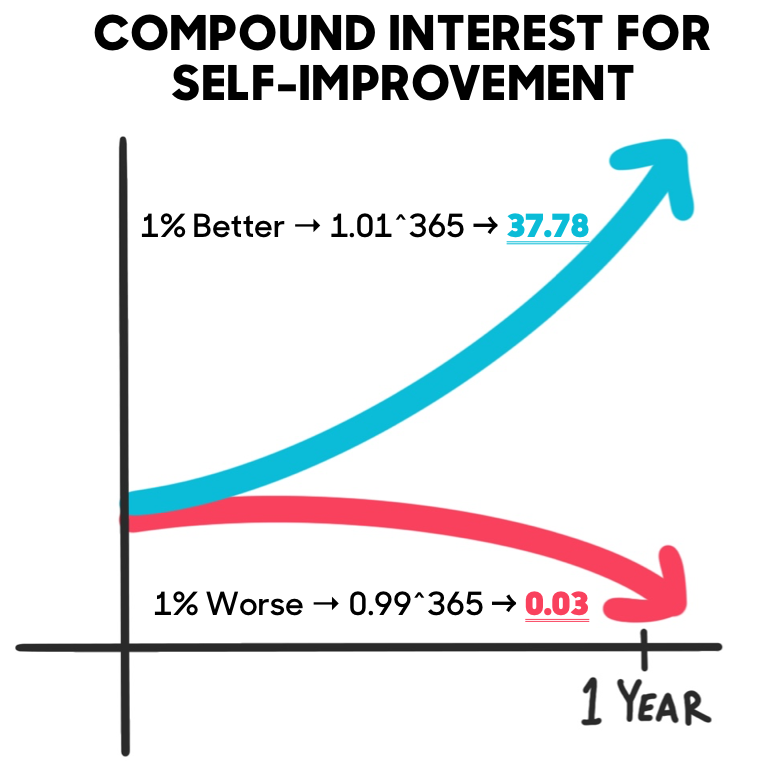
In the beginning, there is basically no difference between making a choice that is a mashehu, 1 percent better or mashehu, 1 percent worse. But as time goes on, these small improvements or declines compound and you suddenly find a very big gap between people who make slightly better decisions on a daily basis and those who don’t. In Atom Habits, James Clear shows that if you get one percent better each day for one year, you’ll end up thirty-seven times better by the time you’re done.


In one of the most inspirational stories in Shas, Chazal describe how Rebbe Akiva was a shepherd, a laborer, an am ha’aretz. At age 40, he didn’t even know how to read the aleph-beis. One day, while sitting by a brook, Akiva noticed a steady trickle of water hitting a rock. It was only a drip, it was a mashehu, but it was constant – drop after drop after drop. Akiva observed something incredible: A hole had been carved out by that steady drip of water. He wondered how that could be. He concluded: If something as soft as water can carve a hole in solid rock, how much more so can words of Torah – which is hard as iron – make an indelible impression on my heart.


That marked a turning point in Rebbe Akiva’s life. He committed himself to Torah study and went on to become the greatest sage of his generation, producing 24,000 talmidim and later a group of students who were the transmitters of Torah Sheb’al Peh.  Akiva became Rebbe Akiva because he noticed a mashehu of water and grew a mashehu at a time.


This Yom Tov we are pledging to liberate ourselves from bad habits, to make meaningful changes.  We are dedicated to do so in the merit that the matzav for our people improves, that miracles of salvation happen in our days.  If you want to change the way you live, how you learn, daven, treat others, it isn’t by hoping to wake up one morning and being radically different. 


One crumb can shut down a collider and one crumb can start up your life. Make the decision to grow a mashehu, 1% each day, and by next Pesach you will be at least 37% better.


Be an Influencer by Being Yourself

The Harvard Business Review recently reported that 27 million Americans, and 300 million people globally, consider themselves online content creators. There is no escaping that in today’s day and age, influencer marketing is a very profitable business. At the end of 2023 the global industry was worth $21 billion. Surveys from Nielsen, Reuters, and others conclude that, “People trust influencers; social media users get news from influencers more often than from journalists; people believe that brands are better positioned than governments to solve social problems; and becoming an influencer is a top career aspiration for many young people.”


With all the growth of influence online, we should never underestimate the influence we can have offline, just by being ourselves.


Last week, our BRS community went on our annual Mevakshim fly-in to the New York area to meet with diverse Rabbonim, Roshei Yeshiva, Rebbes, and community leaders.  In an effort to maximize our time, a few amazing participants flew ahead of the rest of us to pick up the vans we would use for transportation. We had it all orchestrated and coordinated to perfection. Nobody checked luggage, so the plan was once we landed at JFK, everyone would move expeditiously off the plane to the baggage area so we could be picked up seamlessly by our “advance team” and head out to our first stop.


We had it all figured out but Hashem had other plans.  Despite the reservation, the rental car company didn’t have one of the vans.  It took time to find another company nearby that had a van in stock and available.  Instead of essentially walking off the plane into our vans and setting off, we were waiting at baggage claim,  delayed, a little frustrated and irritated. 


Nearly two dozen guys had taken two days off of work, woken up early in an effort to grow and be inspired.  Why would Hashem introduce a delay, wouldn’t He want us to hit the ground running?


We soon found out why.  As we stood there waiting, a young guy in a baseball cap approached us and said, “Shalom.”  Enrique shared that he was a student at West Point Academy and would be entering the army, but had recently become more interested in exploring and engaging with his Judaism. He mentioned that his background was so devoid of Judaism that he had never even had a bar mitzvah.  Within seconds, one of our participants, Mordy Goldenberg, asked him if he would like to put on Tefillin, and he enthusiastically agreed.  Mordy helped Enrique put on Tefillin and say Shema for the first time in his life and we spontaneously began to sing and dance in a circle.  Others at baggage claim were looking on with big smiles, some taking pictures or video as we celebrated an impromptu Bar Mitzvah at JFK baggage claim, all orchestrated from Above by delaying our exit from the airport.  Mordy and Enrique traded numbers as we made our way on our journey.


As I was reflecting on the beautiful scene that unfolded, it occurred to me how much influence Mordy had on a young person’s life, not by standing in the airport with a sign or megaphone, simply by being himself.


Someone I know was on our flight that morning.  He has a complicated relationship with his Judaism, doesn’t generally wear a yarmulka in public, and wasn’t wearing one that day.  I saw him after we both returned from New York and he said, “Rabbi, I need to share something with you.  You know I don’t generally wear a yarmulka, but when I got off the plane and I saw your group of guys assembled, all standing as Torah-observant Jews proudly wearing their yarmulkas, I felt jealous.  And so I decided right then that even if I am not ready to wear it all the time, I am going to at least wear it for this entire trip.  I want to be like the guys in this group, a proud Jew, unafraid, unapologetic, proud to display my Jewishness.  Rabbi, I wore a yarmulka for the rest of the trip because I saw your guys.”


I was so happy to have seen him and that he shared what happened with me.  And yet again I realized, wow, our guys had influence over a fellow Jew, not by preaching or proselytizing, not by posting or optimizing, just by being themselves.


On the way back, we were walking through the airport when a “random” secular Israeli woman came up and said, “Thank you for wearing your kippa in public, it gives me strength.”  Gives strength? We weren’t waving a flag, running a rally, facing down protestors… or even doing anything at all.  We were simply being us, walking with kippas, and apparently that had an influence on her.


Rabbi Paysach Krohn tells the story of a Conservative Jew walking into an Orthodox shul in Dallas, Texas.  The man introduces himself to the rabbi and presents a large, unsolicited donation.  The rabbi was stunned by the unexpected gift and explained that the shul had a great need to renovate an educational wing but didn’t have the startup money.  “Your donation,” he said, “is going to turn this project into a reality, but I am very curious about who you are and why you chose to make a large gift to our shul?”


The man explained that he made his first trip to Israel a few months back and ended up at the Kotel. He said, “As I took in the sights around me, I noticed a Jew standing and davening in silent devotion.  I had never witnessed someone praying so fervently or with such meaning.  I was mesmerized and entranced.  But even more, I was inspired.  I determined right then and there that when I got home, I was going to make a donation to a shul in honor of that Jew.  When I returned I thought to myself, if that Jew were here in Dallas, where would he be comfortable praying, and I looked in the Yellow Pages for an Orthodox shul and came up with yours.”  That man ultimately became more observant and continued his generosity in building the Torah institutions of the community.


Reflecting on the story, Rabbi Krohn invites us to imagine what happens when the Yerushalmi Jew at the Kotel that day comes before the Heavenly court after 120 years in this world.  He will be greeted enthusiastically with a hero’s welcome.  He will be rewarded for transforming Judaism in Dallas, Texas, and for all the Torah learned by thousands of people there, and by all the davening that took place in the Shul that he supported. He will undoubtedly turn to the Heavenly Judge and say, “There must be a mistake, I have never even been to Dallas, Texas.  I don’t know where that is. I don’t even speak English.”  He will only then learn the impact of the impression and inspiration he unknowingly spread when he davened so sincerely and fervently at the Kotel that fateful day.


Every day, twice a day in kedusha we pledge, “Nekadeish es shimcha ba’olam, we will sanctify Your name in this world.”  We affirm our mission, our purpose, our mandate to elevate Hashem’s brand, to draw others closer to His Torah, to represent His vision for this world. 


As the war continues in Israel, as antisemitism rises in America, there are many large and grand actions we are called upon for like Tehillim recitations, contributions, rallies, letter-writing, and more.  We can influence the people and circumstances around us, but not only by doing large and active things, but we can be critical sources of influence and make a difference by simply being ourselves: proud, practicing, and proper Jews.


Among all the things you are doing, proudly display your Judaism in public. Let antisemites see and know that we aren’t afraid. Let fellow Jews see, gain strength and maybe even be inspired to join. 


Be an influencer just by being yourself. 


What is the Future of Yom Ha’Shoah?

As we approach the month of Nissan, I have been thinking a lot about what Yom HaShoah will look like this year.  The reality is we, and every community I have spoken to, have been struggling to get meaningful attendance at their Yom HaShoah programs and have not succeeded in a broad “buy in” to observe Yom HaShoah in any meaningful way.  Do the most recent horrific tragedies and atrocities of October 7, combined with the ongoing war that has cost so many lives since, make it more or less likely people will show up and care about Yom HaShoah this year? 


Will the unimaginable pogroms, the “never again” happening again, and the precipitous spike in antisemitism help people realize the same evil that led to the Holocaust still continues and we must gather to commemorate and address the most horrific end result?  Or will the open wounds of the last few months overpower and cloud our ability to meaningfully connect to atrocities and losses that preceded it by 80 years?


Twice in our history, the 20th of Sivan was designated as a permanent fast day to commemorate massacres against our people.  The first time was by Rabbeinu Tam, Rashi’s grandson, in 1171, after 31 Torah scholars were executed because of a blood libel in France.  Rabbeinu Tam declared the 20th of Sivan as a day of fasting “greater than Tzom Gedalya, like Yom Kippur,” and instituted special selichos to be recited.  Shortly after, the Crusades expanded and for the next 150 years brought great devastation to Jewish communities.  This overshadowed the incident of the blood libel and the “permanent fast” ceased being observed.


Almost 500 years later, from 1648-1649, Polish Anti-Semite Bohdan Chmielnicki launched a series of pogroms that led to the deaths of tens of thousands of Jews and the loss of hundreds of Jewish communities.  The Shach, Rav Shabbsai HaKohen, instituted the 20th of Sivan as a private fast day for his family to commemorate their great loss.  Soon after, the Council of the Four Lands, the rabbinic authority of Eastern Europe, adopted the fast for all Polish Jewry in commemoration of the tragedies of what became known as Tach V’Tat, mourning the loss of a third of Eastern European Jewry.


Twice the 20th of Sivan was designated as a day commemorating Jewish tragedies, and twice the observance faded until it is now entirely obsolete.  Many observant Jews do not even know it was once a serious day of mourning. While those calamities remain very much part not only of our history, but of our collective conscience, they have been absorbed into Tisha B’Av, the designated day to grieve and reflect over all of the tragedies of our past.


For many years, I have thought about the fast of the 20th of Sivan and the inevitability of Yom HaShoah going the same way.  But I always concluded we aren’t there yet for two reasons. First, in both magnitude and severity, the Holocaust is categorically different from every other persecution or genocide in all of human history.  It stands alone and stands apart and deserves its own day for reflection.  Secondly, as long as we are blessed to have survivors among us, we owe it to them and to ourselves to show up, to honor them, to learn from them, and just to be with them.


The uniqueness and singularity of the Holocaust will, please God, remain true forever.  But other factors are changing. In the United States today, there are fewer than 50,000 Holocaust survivors. Although South Florida is home to one of the largest populations of survivors, we increasingly struggle to identify any survivor to present to us on Yom Ha’Shoah.  Whereas it was not that long ago when we had many survivors come to light candles to start our annual Yom HaShoah program, more recently we have been relying on the second generation to light the six large candles. 


While the Holocaust was a defining event and experience for the last two generations, evidence shows that young people today want to move on, put it behind us, and come out from under its shadow.  The younger generation is rapidly seeing the Holocaust in the context of the Crusades, the Inquisition, and the Expulsion from Spain: events that are part of our past and our history, rather than as something that happened to our parents and grandparents, a very real piece of our personal lives.


Does October 7 make the Holocaust more or less relevant to the average person?  Will they be more or less likely to want to commemorate it?  And most importantly, how much does it even matter? Maybe Yom HaShoah, though lacking the status of a religious day or having a foundation in Halacha, is on the Jewish calendar and should be there permanently, regardless of participation. On the other hand, that wasn’t the case for the 20th of Sivan which ultimately stopped being observed. For some, Yom HaShoah never should have been established, and Rav Soloveitchik even tried to have it cancelled. 


In the summer of 1978, newly elected Prime Minister Menachem Begin paid a visit to the United States and visited the Rav, Rav Yosef Dov Soloveitchik. In that conversation, the Rav proposed to the Prime Minister that Yom HaShoah be annulled as a separate day of mourning and be included within the framework of Tisha B’Av, as we do with other tragedies of our past, such as the Crusades.  He quoted from one of the Kinos that we recite for the victims of the Crusades, Mi Yiten Roshi Mayim, that states: “No other time of brokenness and burning should be added, rather, all matters of communal mourning should be included in a single day of mourning.”


When Prime Minister Begin returned to Israel he tried to convince his colleagues to make the change.  Ultimately, he was unsuccessful as the government was concerned about the school system having the opportunity to teach about the Holocaust and school being on vacation when Tisha B’Av falls out.


Is it time to absorb Yom HaShoah into Tisha B’Av?  If we dedicate a shiur, lecture, discussion or program for the Holocaust on Tisha B’Av, will we do more to commemorate it than if we leave it as its own day (with the added benefit of educating more Jews about Tisha B’Av)?  Should we maintain Yom HaShoah and find a way to dedicate it this year to the atrocities of October 7?


I don’t have a conclusion about Yom HaShoah this year, but I think there are questions we need to ask ourselves and that are worthy of our careful consideration. Instead of groveling and begging for people to attend and being frustrated yet again by a room with many empty seats, let’s plan thoughtfully and consider collaboratively whether we are at a juncture in history where a change is appropriate, and if so what it should look like.  Whatever we conclude, may we no longer have tragedies to mourn and sad days to observe.  

It’s None of Your Business…or Is It?

Recently, the Princess of Wales announced that she has cancer. In a video recorded in Windsor, the former Kate Middleton disclosed her diagnosis in order to put an end to speculation and gossip that began online but was then embraced and promoted by mainstream media about the state of her health and marriage.  One of the perpetrators responsible is popular television host Stephen Colbert, who promoted unsubstantiated rumors about the princess and her husband. 


When she revealed her diagnosis and the reason for her absence from public life, Colbert said on his show:  “For the last six weeks, everyone has been talking about the mystery of Kate Middleton’s disappearance from public life and two weeks ago, we did some jokes about that mystery and all the attendant froufrou in the reporting about that, and when I made those jokes, that upset some people even before her diagnosis was revealed… I don’t know whether her prognosis is a tragic one, she’s the future queen of England and I assume she’s going to get the best possible medical care, but regardless of what it is, far too many of us know that any cancer diagnosis of any kind is harrowing for the patient and for their family, and though I’m sure they don’t need it from me, I and everyone here at ‘The Late Show’ would like to extend our well wishes and heartfelt hope that her recovery is swift and thorough.”


Besides for his monologue being a textbook example of a lame non-apology, the damage was already done.  A woman was essentially bullied into disclosing something personal and private because enduring the gossip and conspiracy theories were worse and even harder to deal with.


It happened because people felt they had the right to know something that was actually none of their business. Colbert and members of the media weren’t the only ones who inquired where they didn’t belong.  Three staff members at the prestigious private London hospital in which she had her surgery are accused of accessing her private medical records to satisfy their curiosity about what was going on in her life. 


The Torah places great value on people’s right to privacy. Jewish law demands that we conduct ourselves with the presumption that all that we are told, even in pedestrian, casual conversation, is to be held in confidence unless it is explicitly articulated that we are free to repeat what we heard. The laws of hezek re’iyah forbid a person from looking into his or her neighbor’s property in a way that violates their privacy. We are instructed not to speak lashon ha’rah or rechilus and spread gossip, even if the information is absolutely true and entirely accurate. The Talmud (recent Daf Yomi – Bava Metzia 23b) goes so far as to tell us that we are permitted to distort the truth in circumstances where someone is prying for information that is none of their business and that they are not entitled to have.


This phenomenon expresses itself in many scenarios. When some hear about a couple getting divorced, their first response is, “What happened?” as if they are entitled to a full report about the most personal and private details of a couple (and often their children) going through a difficult time. Many pay a shiva call and feel a need to ask, “How did he/she die?” Certainly the mourner is free to volunteer the cause of death if they like, but is it really our business and do we truly need to know? When we ask, “Why did he lose his job?” or “Why did they break their engagement?” or “Why is she still single?” are we asking because we care about them, or is finding out somehow satisfying something in ourselves?


For some, the need to know stems from a sense of information as a source of power. Information is social currency and the more we know, the richer and more powerful we are. For others, the need to know stems from an inability to live with tension or mystery. And yet, for others, the need to know is similar to whatever draws us to slow down and look at the accident on the highway even though it has nothing to do with us at all and only creates traffic for others.


If we are really curious and want to inquire about something, it shouldn’t be about private information that doesn’t belong to us, it should be about the well-being of people who are eager for us to care enough to ask about it. 


As the war continues to rage in Israel and the lives of our brothers and sisters remain radically interrupted, one of the things that compounds pain is a sense that those in chutz la’aretz have moved on.  I have heard from Israelis how meaningful and powerful it is when people check in, inquire how they are doing, ask about their children who are serving and fighting.  Conversely, when they receive a text or a phone call asking for advice about where the best restaurant is in Yerushalayim or about an activity for Pesach or upcoming trip without even mentioning how are you doing, how are your children, it hurts and it stings.  Similarly, there are people living in our communities who have children and grandchildren living in Israel or fighting in Gaza.  When they come to shul or meet not just acquaintances but friends in the supermarket or at an event and they aren’t asked about how their family is coping and how they are managing, they feel isolated and alone.


There are things that are none of our business, we aren’t entitled to know and we shouldn’t ask, push or bully others into disclosing or sharing with us.  And then there are things we should feel are all of our business, all of our responsibility, the well-being of people we love and care about. 


Let’s always remember the difference and channel our curiosity into the questions that will lift people up instead of making them feel down. 

Much More than a Costume

When a convert stands in the mikvah about to immerse, undergo a radical transformation, and be born anew, the Beis Din asks a series of questions. One of the most poignant is one that long seemed to many of us to be an antiquated question: “You know that Jews have been subject to persecution, antisemitism, and attempted extermination throughout the millennia. If you become a Jew, you will join this hated, targeted people. Are you prepared to share in the destiny of the Jewish people both for good and for bad?”


At every single conversion I have had the privilege to be involved with, the candidate responded to this hypothetical question in the affirmative. Until recently, this question has felt like a technicality, something we must confirm in theory but would likely never be relevant in practice.  After all, while joining the Jewish people means giving up cheeseburgers and bacon and other physical pleasures, it wouldn’t likely mean giving up one’s life.


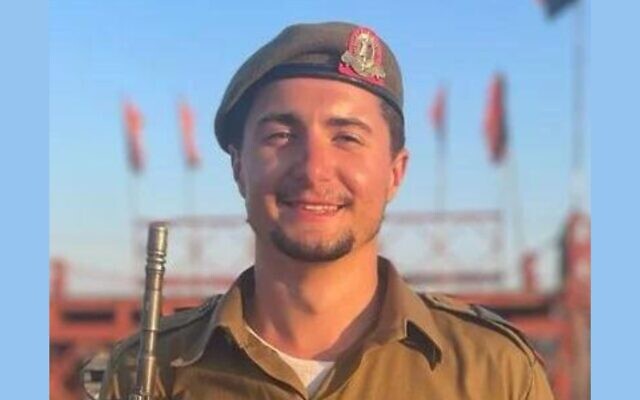
On December 8th, Staff Sgt. Yonatan Chaim H”yd, 25, was killed fighting in Gaza.  He died a Jew, but he wasn’t born that way.  Yonatan Chaim, originally from Hilton, New York, was born Jonathan Dean, Jr.  After studying the Holocaust in college, he converted to Judaism and in 2020 he moved to Israel.  His cousin, Joelle Marie Muscolino, described him as “sweet, amazing, loving, smart, caring, talented, passionate, uniquely fabulous.” She said that he had “lived in Israel for a bunch of years now and had made it his home, a home where he was loved and celebrated for everything that he was, without judgement, to live freely and happily as Yonatan Chaim, just as his loving heart, soul, and body so deserved to…He felt compelled to protect Israel, the land who had given him so much, from the brutality of the terrorist, evil, savage attacks by Hamas and Islamic Jihadists. He died bravely fighting to defend Israel’s Democracy, the Jewish People that call her home just like he did, and for Judaism around the entire world.”


When Yonatan Chaim stood before the Beis Din to convert and was asked if he understood that by becoming a Jew he too would be the target of antisemitism, subjected to hate, he likely never dreamt how serious and real a question that would become, that it would in fact become for him a question of life and death. 


Antisemitism is the world’s oldest hatred.  It has existed since the inception of our people.  In different generations it takes different forms, today manifesting in both its classic forms and in its expression as “anti-Israel” sentiment. For 2,000 years our enemies have sought our demise, they have systematically attempted to exterminate us and, aside from rare exceptions, for the most part we were passive victims and martyrs to their plots and plans. 


But we are living in a new era, we are living with the miraculous modern State of Israel.  No longer will our people go like sheep to the slaughter. No longer are Jews defenseless and helpless.  Israel has one of the strongest armies in the world and like Staff Sgt. Yonatan Chaim, the selfless, brave and tenacious soldiers fight to defend not only our brothers and sisters in Israel, but Jews around the world.


As Purim approaches, a time ordinarily characterized by tremendous joy, happiness, and light, many are struggling with how to observe it against the backdrop of sadness and darkness as one war continues to rage on and another one looms.  One of the specific questions that has arisen concerns dressing up as Israeli soldiers for Purim this year.  On the one hand, what a demonstration of who our heroes are, what a way to show whom we admire, respect, and want to emulate.  On the other hand, it might be perceived as insensitive that those who put on the uniform as a costume wear it for one day and have the luxury to take it off, while others must wear it for weeks or months on end, fighting in it and risking their lives in it on the front lines.  It has further been suggested that yet another consideration for Americans might be the impression it could leave on our neighbors if we seem to be glorifying or celebrating war by “dressing up” in an army uniform.


Several years ago, in his responsa, She’eilas Shlomo (4:87), Rav Shlomo Aviner, Rosh Yeshiva of Ateret Cohanim and Rav of the community of Beit El, addressed the following question: Is it proper to recite the beracha of Shehechiyanu on purchasing a new gun? Rav Aviner provides a long Halachic explanation and defense of why he feels a shehechiyanu is warranted while conceding the need to own a gun is sad and unfortunate. His closing argument touched me deeply and I share his words with you:


The fact that we have guns shouldn’t elicit sadness that we still have wars and conflicts. Indeed, the opposite is true, it should elicit happiness that we have merited to be an am chofshi b’artzeinu (free nation in our homeland), that we have an established Jewish government, we have an army and a police force, that we are no longer the punching bag of the wicked nations, but rather we have the capacity to protect ourselves. Would it even occur to you that when the War of Independence began and we had weapons in our hands to defend ourselves after 2,000 years of Jewish blood being spilled freely, that one shouldn’t recite shehechiyanu with joy and gladness?! That joy continues to carry us and protect us from then until now. And for that reason, a Shehechiyanu should be recited when an Israeli soldier puts on his or her IDF uniform for the first time.


Rav Aviner ends his responsa by quoting his Rebbe, Rav Tzvi Yehudah Kook zt”l who wrote:  “Fighting to protect our homeland is a mitzvah, the mitzvah of all Klal Yisroel. Therefore, everything connected with it, every gun and every weapon that is our response to our enemies, everything associated with establishing and protecting malchus Yisroel, Jewish sovereignty, it is all kodesh.”


Similarly, Rav Aharon Lichtenstein related that once when he returned to America and was visiting with his father-in-law, Rav Soloveitchik, he posed a series of questions from students who were serving in the IDF. One student worked in the tanks division and his job was cleaning out and maintaining the tanks. Often his uniform got covered in oil and grime and he wanted to know if he needed to change before davening Mincha, something that would be terribly inconvenient and difficult. The Rav looked at Rav Lichtenstein and wondered out loud, “Why would he need to change when he is wearing bigdei Kodesh (holy clothing)?”


I have heard from some in Israel who believe Americans should abstain from wearing an IDF uniform this Purim and I have spoken to others who think nothing would show more love, identification, and support.  Each person and each community will decide for themselves but one thing should be clear: The IDF uniform is not simply a costume, and it should never be confused with a symbol of warmongering.  It is the holy garb of a holy nation charged with a holy mission.  It is worn by the defenders of a people that pray for peace more than any, by those who value and celebrate life more than any, who fight with a moral clarity and go to extreme measures to protect innocent lives, more than any other army or people. 


We daven for the fulfillment of the words of our prophet Yeshaya: וְכִתְּת֨וּ חַרְבוֹתָ֜ם לְאִתִּ֗ים וַחֲנִיתֽוֹתֵיהֶם֙ לְמַזְמֵר֔וֹת לֹא־יִשָּׂ֨א ג֤וֹי אֶל־גּוֹי֙ חֶ֔רֶב וְלֹֽא־יִלְמְד֥וּ ע֖וֹד מִלְחָמָֽה׃
, “And they shall beat their swords into plowshares and their spears into pruning hooks: Nation shall not take up sword against nation; They shall never again know war.”


But until then, Shehechiyanu v’kiymanu that we merit to live in a time that with the help and protection of Hashem, just like the Jews we will read about this week, we can fight for and protect ourselves. 


Is Aliyah All or Nothing?

The hardest part of coming to Israel is leaving.


A visit to Israel these days involves connecting with the heroic and courageous soldiers of the IDF, engaging with the seemingly ordinary but in truth, truly extraordinary people, absorbing the tremendous energy and unity of our people, tapping into the spiritual awakening of so many, and much more. 


I came to Israel for a few days this week to participate in the weddings of two young members of our community who have placed their lot and destiny in our homeland.  Each wedding was extraordinary in its own right.  Didi went to Israel for a year of seminary and decided to stay forever.  She married Rafi, who followed Yeshiva by joining the Israeli Air Force, where he continues to serve faithfully during this war.  The singing under the chuppa of the Mi SheBeirach for Tzahal, as the Chosson and many of his friends in attendance continue to fight on the Jewish people’s behalf, was deeply moving and brought goosebumps. The Israeli and Tzahal flags that draped those dancing reflected the enormous pride in our people and the boundless loyalty and selflessness to our homeland and nation, especially during this difficult time. 


The second wedding celebrated the marriage of Yosef and Gavriella, two righteous converts who each joined our people at a young age.  Their souls were both at Sinai, destined to join our people and that night, under the stars, their souls united as one.  Together they began a new song and a new saga, building a future and a family in our fateful land.


At both weddings I was in awe, filled with admiration for the courage, faith, and fortitude of these four young people who walked away from what might be an easier road of life, to walk the path of our forefathers, placing their lot in the land of our people. 


These two magnificent weddings, combined with the many locations we visited, including the army outpost on the northern border, to the army headquarters in the south, from Shlomit to Nachal Oz, from Shuva Junction to volunteering on a farm, from walking Sderot to touring the Galilee Hospital, and so much more, this trip, like the three others I have been privileged to be part of since October 7, were life-changing, making it harder than ever to leave.


So why leave?  Why not stay, announce Aliyah, and call on the entire community to join?  Indeed, this is a question I receive regularly online and offline, on every trip to Israel and when engaging Israelis who visit America. Without exaggeration I have been told more than once, “Rabbi Goldberg, you are among the reasons Moshiach isn’t coming. If you would simply announce you are making Aliyah and tell the community to come with you, certainly they would.” I appreciate this encouragement comes from the best place, from those with the best intentions, many of whom have themselves taken this tremendous step. (As an aside, it is important to dispel the myth and fantasy that if American rabbis would simply declare Aliyah, their communities would most certainly pack up and come with them.  From the time of Ezra and Nechemia until this very day, from Rabbi Riskin to the Klausenberger Rebbe, to the best of my knowledge, never has a community picked up and moved with their rabbi.) 


So if it is so hard to leave each time we come, why not stay, why not finally move?  That question plagues me regularly and nobody asks it more forcefully than I do to myself. 


To be clear, I am deeply and profoundly inspired by, and envious of, family members, my rabbinic colleagues, and so many friends who have made Aliyah, many of whom are building new communities in Israel and bringing their unique voices to the symphony of our people on the greatest and most important stage we have. Their courage, faith, leadership, and example are enormous, and they and their leadership are being inscribed in the book that captures the story and destiny of our people.


However, if we can be honest and non-judgmental for a moment, the reality is that not everyone can or should make Aliyah at this moment.  There are compelling reasons that make it the correct and responsible decision to remain outside of Israel for the time being. 


There are legitimate reasons not to make Aliyah at the moment.  But there are no legitimate reasons to not be struggling and wrestling with when, not if, to move oneself and one’s family to Israel permanently.  Doing so is not a favor or gift to others, and it shouldn’t come from guilt, shame or fear.  It should be an expression of understanding Hashem’s will for His children, of embracing our responsibility to our mission and our destiny. 


Many, like the young people whose weddings we just celebrated this week, uproot themselves and move to Israel. Each year, at BRS we honor those families, and our community and its leadership continues to unabashedly and unapologetically push and promote Aliyah regularly.


But Aliyah at any given moment is not for everyone. The question that has been on my mind lately is does Aliyah have to be all or nothing?  Are you either physically living and spiritually identifying exclusively in Israel or completely outside of it? Or is there some area in between, in which you fully believe in your current decision to reside outside of Israel but also genuinely feel your heart is in Israel and your feet are there as often as possible?


Again, making Aliyah – moving permanently including taking on citizenship, settling the land, paying taxes, and participating fully – that is the ultimate goal, without question.  But if we make Aliyah binary, if we set up a paradigm in which you are either in or you are out, either you are here permanently and if you’re not you don’t really care, are we serving the greater goal of connecting our people and our land? 


Taking delight in living in the Diaspora, not caring enough to make the effort to visit, having moving be the last thing on one’s mind, is not only shameful, it runs counter to authentic Torah values.  But coming as often as possible, regularly thinking about, advocating for, fundraising on behalf of, and putting one’s efforts and energies towards Israel counts, it matters, it means something.  These are the stepping stones to being there permanently one day, but they also have value in the meantime, both for the individual and for Israel. 


To those who have made Aliyah – you are heroes, you have cemented your place in history, you are living the Jewish dream.


To those who regularly consider Aliyah but feel now is not the time, don’t stop thinking about it and struggling with it.  Keep the dream alive, keep the goal in view, keep Israel at the forefront of your mind, and keep going as often as you can.


To those who are happy where they are, would never consider moving to Israel, haven’t visited in forever and have no plans to go in the near future, I beg you to reconsider and to radically change your attitude, not for anyone else, but for yourself.


On our trip this week was someone who hadn’t been to Israel in a very long time.  After the experience, he shared the following:


As you know it’s been some time since I’ve been to Israel – 25 years. It was a real struggle to decide if I would come on this trip. Was this how I wanted my first time in Israel in a quarter of a century to be? Without my family? For such a short visit? War time tourism? It seemed macabre and voyeuristic. It’s not what I imagined it would be for my return to the holy land. But thankfully, my wife pushed me and I relented.


There are many legitimate reasons why a person cannot travel to Israel. For 20 years I could never take time off from work, using every vacation day for Yom Tov. Also financially it’s a huge expense for so many. But there is another reason that people have – I know I did – in the back of their minds: I want my Israel trip to be perfect. When the weather is good, when the crowds are small, when flights are cheap, when the kids are off, etc. and with that in mind it took an extra four years for me to just come home.


This is what was running through my mind on the flight. I felt like it was a mistake, I shouldn’t come to gawk at the soldiers or the displaced families like going to a museum or sideshow. I should come when I can be with my entire family and do all the things that people do: Kotel, Masada, tunnel tours, Ein Gedi, Eilat, etc.


But I was wrong. This experience was something that I will never forget. Not only because of the incredible access, the people we met, or the places we went, but because we were able to be with Israel instead of just going to Israel…


That’s my take away. If you can afford to go, don’t put it off. Don’t put your trip to Israel on a pedestal that it needs to be perfect or you won’t go. Because before you know it, 25 years will go by, and you’ll wonder what could have been.


Israel is not just another place; it is not where others go to live or visit.  It is core, central, and fundamental to what it means to be a Jew, to who we are, and how we identify.  Think of Israel as a parent.  When they can’t travel to you, you don’t save up to go on vacation elsewhere and neglect seeing them.  You aren’t satisfied checking in on them occasionally from afar. You make it a priority to show up whenever you can, to be present, to connect and experience what it means to be together and spend time.  Your focus is fixated on their well-being, you remain eager to hear and learn how they are, you visit as often as possible and even though there are legitimate reasons to be apart, you can’t wait to next be together.


Whatever the reason, stop waiting. Plan your trip now, start saving up and taking steps necessary to make it a reality.  It isn’t Aliyah, but it matters to those in Israel and it will forever change you.

Do Something by Saying Nothing

A few weeks ago, I was travelling and davened in a shul in another community.  In the middle of davening, I was trying to concentrate on my conversation with Hashem when I heard a voice loudly say, “Hello.”  It caught me off guard and I wondered if Hashem was acknowledging my prayers when I looked up and saw there was someone wearing a tallis and tefillin talking loudly on his phone.


Over the last five months, we have been focusing on doing things in the zechus of our brothers and sisters in Israel, but perhaps in the merit of our brothers and sisters in Israel we have been neglecting something that we should not be doing.


Most communities have added Tehillim at the end of davening, some have been saying Avinu Malkeinu, others have taken on a new practice or positive change.  But possibly, instead of going directly to adding, we should focus on subtracting.   The idea should be simple: Let’s stop talking during davening, let’s eliminate conversations among one another, when we are supposed to be talking to Hashem.  Let’s leave our phone in the car or put it on airplane mode when we walk into shul so we can truly be present and focused, especially in these moments that our tefillos matter so much.


In the early 1600’s, Poland functioned as a feudal land with landlords ruling over the peasants who served them, causing great resentment.  Beginning in 1648, Bogdan Chmielnicki led a rebellion against the magnates and nobility claiming freedom and territory for the Cossacks, peasants, and outlaws he represented and led. In that period of upheaval between  1648 and 1653, it is estimated that some 300,000 Jews were killed, representing 30% of the total Jewish population of Eastern Europe. (Despite the calls for cancellation and removing statues, Chmielnicki remains a hero of the Ukrainians, with a statue dedicated to him in Kiev).


Those massacres are known in our literature as Gezeiras Tach V’tat, the decree of years 5408 and 5409.  They are considered among the most devastating in all of Jewish history.  Rav Yom Tov Lippman Heller (1579 – 1654), known best for his commentary on Mishna called Tosfos Yom Tov, lived during that time  in Prague and in Poland.  The Chida writes that it was revealed to the Tosfos Yom Tov from Heaven that the terrible tragedy and loss of life was associated with the talking that was taking place during davening and the general disrespect for Shul. 


To be clear, we aren’t God and cannot and should never engage in an effort to categorically explain why things happen, but the tragic and devastating loss of his day inspired the Tosfos Yom Tov to suggest that his generation reflect on how they could improve their decorum and general respect for davening and shul. In an effort to motivate and incentivize his contemporaries to be more vigilant about not talking during davening, the Tosfos Yom Tov composed a MiShebeirach to be recited for the benefit of those who don’t speak during davening. 


The Tosfos Yom Tov’s generation was in crisis and rather than introduce something new like saying extra Tehillim, he thought it was critical to return to something old, eliminating talking during davening. 


While Baruch Hashem it is not of the magnitude of Tach V’Tat, our generation is confronting a profound crisis, fighting a real war, and facing enemies around Israel and embedded in countries around the world.  We can and we should add things in the hopes of meriting the outcomes we desperately want, but we must not forget to also subtract, to remove, and eliminate our talking during davening.


There are two reasons that now is the time to be more careful with this.  Firstly, as has long been said, if you come to shul to talk, where do you go to daven?  With all our initiatives and efforts, ultimately, we will only merit to see the hostages come home, to win this war and defeat the wishes of antisemites when Hashem consents and enables.  Each time we daven, we are meant to genuinely and desperately pour out our heart to Him, beg and beseech Him to shower us with compassion, hear our heartfelt pleas and intervene on our behalf.  The stakes are high, the moment is great, and we cannot afford to be distracted or unfocused.


Several centuries after the Tosfos Yom Tov, the Chafetz Chaim, (Mishna Berura 124:27) quoting the Kol Bo, warned us further of the danger of speaking during davening: “Woe to the people who speak during davening.  We saw several Shuls destroyed because of this sin.  There should be people appointed to work on this issue.” The Shulchan Aruch, (OC 124:7) discussing the terrible aveira of talking during Chazaras Hashatz uses the expression, “v’gadol avono mi’neso — his sin is too great to bear,” the only place in his extensive code of Jewish law that he uses that phrase.  


The Chasam Sofer (Derashos 2:309) writes that only Shuls that are homes of prayer, not conversation, will be rebuilt in Israel when Moshiach comes.  The Tzlach, R’ Yechezkel Landau, writes, “There is no greater rebellion against the King of the world than to speak in His sanctuary, in His presence.  Speaking during davening is like placing an idol in the Temple.”


The Piskei Teshuvos (124:7) tells us that when one speaks during during Chazaras Hashatz, not only has one caused that his own tefillos will not be accepted, but one has also caused that the tefillos of others will not be accepted. Therefore, if one knows himself; that he will be unable to remain silent, it is better that he should not come to shul at all, rather than be “a sinner who causes others to sin.”


Have you ever been talking to someone and they pull out their phone and start typing or reading something they received?  Forcing someone to compete for your attention is aggravating, obnoxious, and rude. While Hashem doesn’t have human feelings, we demonstrate our attitude in our relationship with Him if we make Him compete for our attention, if we are talking to others while He is “standing” before us in the middle of a conversation with Him. 


There is a second reason for us to be careful right now.  Putting a bigger-picture spin on the old phrase mentioned above: If you come to shul to talk, where should your friends and neighbors go to daven? The place we come to daven is called a בית כנסת, a hall to assemble and congregate.  We draw energy from one another, we come to connect with one another.  But there are times to greet one another, moments to connect and commune, and there are times to be focused exclusively on our conversation with Hashem.


There are two parts of davening in which talking is prohibited altogether, and at a minimum, now more than ever, we should make great efforts to stay silent during these times:


  • One may not talk from Borchu until the end of the chazzan’s repetition at Shacharis and from the beginning of the silent Amidah through the repetition at both Mussaf and Mincha.


  • Kaddish is among our holiest prayers. It can only be said in the presence of a minyan and is so significant that if given the choice between answering Kedusha or Kaddish, the Mishna Berura (56:6) says one should choose to answer Kaddish.  The Talmud (Berachos 57a) teaches that one who replies “Yehei shmei rabbah…” can rest assured that he has a place in the Next World.


Not talking during these parts of davening is mandated by Halacha and non-negotiable.  But, even for those who don’t connect to davening, don’t feel they are in the presence of the Almighty, or don’t feel bound by these particular laws, not talking during these parts of davening is simply what any decent person would do.


Talking during these parts of davening is not only disrespectful to God, it is also unkind, insensitive, and even cruel to those trying to offer heartfelt and focused prayers. It is a gross bein adom l’chaveiro violation.  Social norms have trained us not to during a show, an opera, or a movie, no matter how bored or distracted we might be. How could we entertain talking when people around you are in the middle of a conversation with Hashem, even if you are done?  It is hard enough to connect with our prayers, to concentrate on the words and to feel we have experienced an intimate rendezvous with our Creator in the best of circumstances.  To do it while people in our vicinity are chatting away is nearly impossible.


Not talking until the conclusion of Chazaras HaShatz, including the time between when we finish our silent Amidah and we are waiting for the chazzan, is doable, it is realistic, it is a fair expectation of those attending and it is the minimum to be respectful of our friends and neighbors.


When mourners recite Kaddish, they are paying tribute to their lost loved one.  When others around them are talking, it is not only rude and unkind, it is an affront to the memory of their family member. We can and must all make an effort to listen quietly and answer enthusiastically when Kaddish is being recited.


Right after October 7, one of our BRS members, Yudi Arem, created a WhatsApp group (click to join) for those who have committed to not talk during davening in the merit of our brothers and sisters in Israel.  Originally, he was hoping for 40 to sign up but the group quickly maxed out at over 1,000 members and other groups have opened to accommodate the now thousands of people all over the world who have made this pledge and are part of a holy effort to strengthen theirs and each other’s davening through taking on this commitment. Join, if not forever, certainly for now. 


The bottom line is this – klal Yisroel needs your help.  Please join the movement and commit to not talk minimally during these points of davening.  Turn off your technology and turn on your connection to Hashem.


In that merit, may all our prayers be answered for good and may we merit only Hashem’s greatest blessings.

Our Annual Report Card

My children’s latest report cards went out recently and some of my children posted on our family WhatsApp group the grades they were proudest of.  I jokingly shared that my report card also just came out and posted the link to our annual BRS Global campaign, our effort and invitation to get those who watch, listen, read, and grow from the content we share to contribute and partner with us going forward. 


Like most jokes, there was a degree of truth to my response.  Right or wrong, the annual global campaign can feel like a report card on our content, a grade and score on the question of how well we are doing adding value and inspiration. 


As part of my role as Rav of Boca Raton Synagogue, Hashem has blessed me with the privilege to teach Torah widely through audio, video, writings, panels, podcasts and more.  With all of the wonderful feedback we receive, when we run the global campaign and ask for support from those who aren’t members of Boca Raton Synagogue or live in our community, something the data shows is that while Baruch Hashem a large group participates and contributes, when compared with the numbers accessing the content, the data is far from matching.  


I don’t think people are fundamentally unappreciative or ungrateful and (not joking here), I know they aren’t actively giving a report card of how much they value our hard work. But as I think about every year at this time, at the end of the day, all of us take much of what we enjoy, and that enhances and enriches our lives, for granted.

  
There are incredible resources that we live off of daily that we don’t pay for.  Consider the value Google, Gmail, Waze and countless other apps and technology products add to your life.  How much do we depend on and rely on them that if we needed to pay for them we would find the money.  Yet, while we pay by being part of Big Data, these life-changing resources don’t cost us anything in traditional currency. 


An unintended consequence of this new economy is cultivating a culture of entitlement and the expectation that even the things that benefit me enormously shouldn’t cost me money and I shouldn’t have to pay for them. 


Among many other ways, this phenomenon expresses itself in people moving to a community, attending a shul, eating at a kiddush, taking advantage of youth groups, going to shiurim, asking shaylos of the rabbonim, and yet still not joining through actual membership, even when it is structured to pay whatever you can afford.  It shows itself in those who listen, read, watch, enjoy, grow and are inspired by a speaker, organization and platform and fail to say thank you or show support, even when asked. 


Indeed, in a culture of “What do I get out of it”, we have added an incentive to our campaign this year.  In addition to just showing appreciation and paying it forward, a contribution of $180 will enter you in a raffle to win a wonderful weekend with us in Boca Raton including two domestic plane tickets and VIP tickets to the Ishay Ribo concert at BRS on April 7th


Please visit brsonline.org/global to become our partner and help others benefit from the content that has moved you.  We see each and every person that contributes and read the beautiful messages that many have chosen to write.  The gestures and generosity not only mean the world to us, but each one inspires and motivates us, and for that we are so profoundly appreciative.


This Parsha contains the mitzvah of Machatzis HaShekel.  Every man over twenty was obligated to give one half-shekel weight of silver, approximately nine grams of silver, worth about $5.99 today, which was used to operate the Beis HaMikdash and which rendered the animals purchased with these funds genuinely communal sacrifices.  This required gift had an unusual condition:


“The rich shall not pay more and the poor shall not pay less than half a shekel…”  Why not let the rich pay more and cover the entire cost of the communal sacrifices?  Wouldn’t it make sense to let the poor preserve their money to support themselves and allow the wealthy to underwrite the communal activity?  And why is this command even necessary? Wouldn’t each individual want to contribute to be counted among the community and be among those supporting the communal sacrifices?


The tendency of people to assume, “Someone else will take care of it” is hardly new.  Someone else will pay, someone else will volunteer, someone else will lead.  The Torah reminds each individual that it is not someone else’s responsibility or obligation but our own.  To be counted among the community, your local community, your broader learning community, the community of the greater Jewish people, it isn’t enough to speak about values, one must act on them.  It isn’t enough to say one cares, one must exhibit commitment and tangibly show they are a stakeholder.


In Judaism, gratitude is not a debt we pay, it isn’t simply a means of making the one who gave us whole.  Gratitude isn’t just for the recipient; it is for the one who communicates it to express humility and a recognition of being dependent on one another.  Moshe was not allowed to strike the Nile, an inanimate river, because he needed to show appreciation, even if the Nile wouldn’t have missed it had he not.  


Contributing locally, globally or to Israel, even when it isn’t required, giving even when it isn’t demanded, is a great expression of appreciation, a statement of who we are, even more than how much we value the one we are giving it to.   


When your taxes are filed in this world and when your contributions are measured in the next one, when it comes to showing gratitude and empowering what you claim to care about, what grade will appear on your report card?

It Doesn’t Do Anything for Me

At the request of his parents, I recently met with a young man who had stopped going to Shul on Shabbos morning.  (People think when we get semicha, Rabbis get a magic wand that we can wave and make their spouse or children or neighbor or friend do exactly what they want.) I asked the young man, someone who keeps Shabbos and Kosher and is observant, why he stopped going to Shul on Shabbos morning.  He told me, “I only get to sleep late one day a week and I don’t want to wake up early.” I told him we have a Teen Minyan that begins at 9:45, he could at least come at 10:30 and catch Mussaf and the Kiddush and still sleep in.  He said, “10:30 am? That’s not sleeping late.  I want to sleep until 1:00 or 2:00 pm.” 


I pressed on. “I understand you want to really sleep in but isn’t coming to Shul on Shabbos important to you, doesn’t it matter?” He answered, “Rabbi, the bottom line is this – I don’t go to Shul on Shabbos morning because it doesn’t do anything for me.”  I was somewhat stumped. 


“It doesn’t do anything for me” and so I don’t do it. 


For a long time, Jews didn’t have the option of saying “it doesn’t do anything for me.”  Some did “it” – whatever “it” was at the time – because their father or mother said so and some did it anyway because their Father in Heaven said so.  For a big part of our history, for most of my lifetime, “doing something for me” was not part of the consideration.  Responsibilities were obligations, not options.


But we live in a different world, we live at a different time.  We live with different expectations, different assumptions, and different entitlements.  In today’s world of on-demand and instant gratification, of comfort and convenience, young people and adults alike bring a mentality to relationships with spouses, friends, and with Hashem of “what does this do for me” and the impact is showing.


Had our ancestors considered this question, we may not be here today.  When they confronted pogroms, extermination attempts, expulsions and forced conversions they didn’t ask what does this Judaism do for me.  When our grandparents came to America and often were forced to choose between keeping Shabbos and keeping a job, they didn’t consider what this observance does for them.


Make no mistake, this isn’t just a question of the non-religious or unaffiliated, nor is it the challenge of the “modern.” It is a question that affects every segment of the Jewish community, including those who outwardly keep Torah and mitzvos but inwardly are deeply disaffected and barely holding on. 


So how would you answer?  What would you say to someone who doesn’t want to do a mitzvah or keep a Halacha, doesn’t want to sacrifice or compromise for his or her Yiddishkeit, isn’t truly invested in the lifestyle they are living, because it doesn’t do anything for them? 


Why be committed to a life and lifestyle that don’t do anything for me? Why does Judaism even matter, why continue to fight for it? Why does Israel matter, why not pack it in, set up shop in Uganda or accept the invitation of America and the West to assimilate, integrate and leave our separateness and apartness behind? 


These questions have been brewing for some time and our failure to formulate a meaningful, compelling and persuasive response have been a growing challenge.  But then October 7th happened and it woke something up inside us, it stimulated a feeling and connection.  In some ways it provided an answer without words.


As Hamas attempted to eliminate Israel, as antisemitism rises and pledges to extinguish the fire of Torah, an identity that had been suppressed or struggling became firm and proud.  For some it is simply a Jewish identity while for others it is the central role of Torah and proudly bringing a fervor and feeling to davening and learning that had become stale or sour. 


This war has awakened something inside us, from the secular to the Satmar, from the elderly to the young, from the unaffiliated to the fanatic, something bigger than us is happening, something that we feel part of and connected to, something that matters and that means something and that is in fact doing something for us, or better yet, it doesn’t even need to. 


This is an important moment for our generation, this is a window that won’t remain open forever or even for long.  Some segments of the Jewish people are realizing they had confused other movements and ideologies with Judaism and while environmentalism, feminism, or social justice may matter to them, their Judaism must return to its roots, be true to itself, stand alone for what it is and not be defined by or associated with people and movements that betrayed Israel and the Jewish people in our moment of truth. 


For others, it is the recognition that it isn’t enough to be Jew-ish, we must be strong Jews, proud, practicing and passionate.  The rise of the y’dei Eisav, the threat of the hands of our enemies, has made us lean into the power of our Kol Ya’akov, the influence, impact and responsibility of using our voices for Torah, Tefillah and our traditions. 


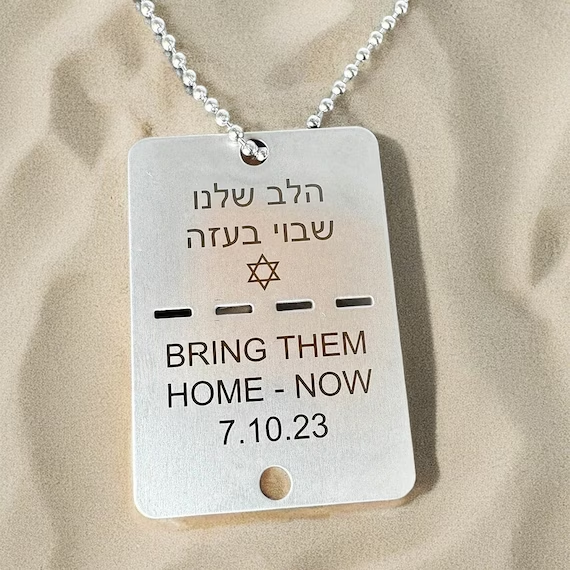
Some have put flags on their cars and others dog tags around their necks.  But, please God, this war will be won and the hostages brought home, those flags and necklaces will come off… and then what?  So many have started putting tefillin on their arms or tzitzis under their clothing, they have started lighting Shabbos candles or practicing something meaningful, but will it continue?


We have unaffiliated brothers and sisters all around us who feel betrayed by movements they stood with and who feel connected to a heritage and a homeland in a way they haven’t before.  What are we doing about it?  Are we reaching out and reaching in with the goal of all of us better reaching up?  Are we making Torah more accessible and available to them than ever? Are our communities warm, welcoming, accessible and supportive of those who have more limited education and background? 


If these feelings are to endure, if these changes in our identity, our mission and our lifestyles are to last, we must take advantage of this moment, capture the pervasive sentiment, not of what does this do for me, but what can I do for my people, my country, my Torah, and my Creator.   We need to have these conversations, find the vocabulary and language for why being Jewish, keeping Torah, remaining in our land matter, why we must do even that which doesn’t do anything for us.


It is time for us to focus not only on how do we get out of this situation, but also on what can we get out of this situation.  Hopefully the answer is a renewed passion, commitment, connection, and unity that endures. 


Rabbi Efrem Goldberg

Join Our Community

Subscribe to our newsletter or connect with us on WhatsApp.