Using Subtlety in our Rosh Hashana Greetings

Among the truly sweet things about the New Year are the heartwarming greetings and salutations being exchanged everywhere. It is heartening to have our mailboxes filled with Rosh Hashana cards, our inboxes filled with Rosh Hashana emails, and our Facebook timelines filled with Rosh Hashana wishes and blessings, even if they are not as personal and direct as when offered face to face.


The typical greeting includes a prayer that the year ahead be better than the previous one and that, in the words of our Rabbis, tichle ha’shana v’kileloseha, may the past year and its misfortune be behind us.


Rav Shlomo Zalman Auerbach zt”l makes a critically important point. While there are aspects and events of the past year for each of us that we wish didn’t happen, it is simply ungrateful and unappreciative to the Almighty to suggest in the slightest that there was nothing good about the previous year. Instead, he suggests, we should be careful in our greeting to specifically thank Hashem for the blessings of the past year and only then pray that the year ahead be even better.


Rav Shlomo Zalman’s insight is subtle, but yet so important in reminding us that while Rosh Hashana is a time to identify what went wrong the previous year and look ahead to a wonderful year to come, it is also a time to recognize the goodness and kindness Hashem has shown us and express our endless gratitude for it.


With that in mind, I want to thank the Ribono Shel Olam for all the kindness He has shown us this past year and wish all of us a year ahead of even greater heath, happiness, prosperity, personal growth, and peace in our homes, Israel and around the world.


Kesiva v’chasima tova!!


Interrupting Our Seder to Remember

The word Pesach alone invokes conflicting emotions.  On the one hand, we dread the hard work, labor-intensive cleaning, shopping, cooking, preparing, and of course the exorbitant expense involved.  On the other hand, we hear the word Pesach and we immediately picture our grandparents and parents, our family’s Seder songs and tunes, we nostalgically remember the recipes and specialty dishes, and most significantly we sentimentally remember talking, laughing, and even fighting with our family and friends.


Pesach makes us feel many things, but thank God, one of them is not fear for our lives.   This was not always the case.  For Ashkenazi Jews in particular, Pesach historically was a time that our enemies emboldened themselves and rose up to persecute us.  Blood libels, pogroms, and massacres abounded during the Pesach season in particular.


For centuries, Pesach meant a time of great fear, threat and danger for countless Jews.  Rabbi Nachman Cohen, in his Historical Haggadah, suggests that this is likely the source for two Ashkenazic customs we have at the Seder that have no source in the Talmud.  Some suggest that the wearing of a kittel, our regal white garment, is a sign of joy for our deliverance and freedom.  Similarly, the Vilna Gaon maintained that the egg that is eaten at the beginning of the meal is the egg from the Seder plate, a reminder of the Korban Chagiga, the special holiday sacrifice in the Temple.   That reason, however, doesn’t explain why we dip it in salt water.


Others suggest, therefore, that in fact, the egg is not from the Seder plate; it is to remind us of the destruction of the Beis HaMikdash.  Not coincidentally, the 9th of Av always falls on the same day of the week as the first day of Pesach. The Kittel, suggests Rabbi Cohen, is in fact not a symbol of royalty, but of mourning.  Jewish men are buried in their Kittels and therefore the Kittel is a symbol of the fragility of life.


We dip the egg in salt water and wear a Kittel to the Seder table to remind ourselves that even in the midst of celebrating freedom, liberty, and emancipation, we don’t yet have peace in Israel and we remain bereft of our Holy Temple.  Even at the Seder table, and even on the night of our freedom, we remain acutely aware of our Galus and how vulnerable and threatened we stand.


Most years, we who are blessed to live in a Medina shel chesed, a benevolent country that protects us and preserves our freedom to practice Judaism fully, cannot relate to Pesach as a time of mourning, loss, and tragedy.  However, this year is different from others.  As we come to the Seder, we need no extra reminder that there are yet people in the world and yes, even right here in America who hate Jews and seek our destruction.


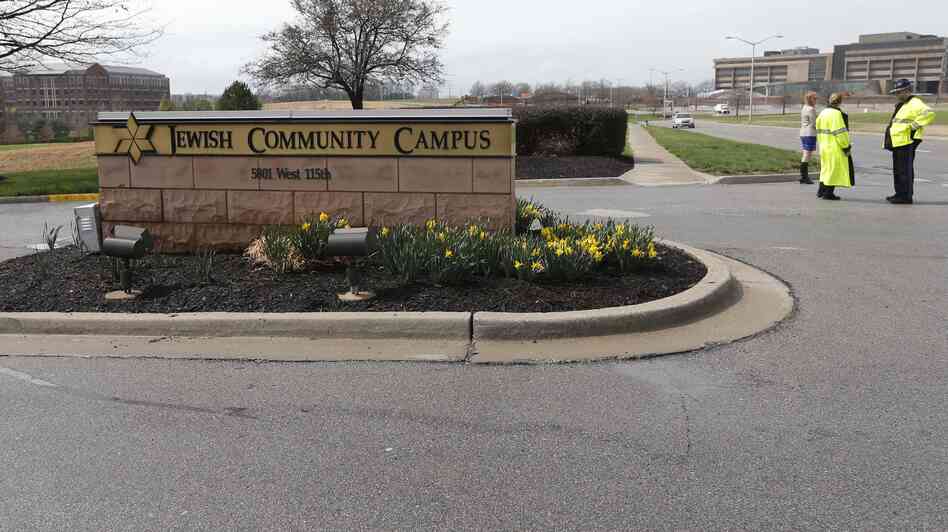
Frazier Glenn Miller, Jr., a 73-year-old former member of the Ku Klux Klan, screamed “Heil Hitler” as he sat in the back of a police car after killing three people outside Overland Park’s Jewish Community Center and at a nearby Jewish assisted living facility.  Three people, murdered in cold blood on the eve of Pesach, simply because they were on a Jewish campus and associated with the Jewish community.


While we would like to see this as an isolated incident and the work of a madman, unfortunately, we can’t.  The Times of Israel reported on Sunday that the Westboro Baptist Church, an extremist organization, announced that it would picket the funerals of the three people killed in Sunday afternoon’s shooting attacks.  The church sent out a tweet shortly after the shooting saying, “Thank God for shootings at Overland Park KS jewish centers! Westboro to picket funerals. God did not passover.”


IDF Chief of Staff Lt. Gen. Benny Gantz said, “This is a very serious and distressing incident for those who were impacted by it, and also because of what was behind it — anti-Semitism and hatred have not disappeared from the world.  We wish Jewish communities around the world a happy and kosher Passover. Despite the difficulties, we’ll celebrate Passover. Though the existence of the State of Israel, we ensure an alternative to which everyone can come.”


Lt. Gantz is absolutely correct in reminding us that we are incredibly blessed to not only sing Next Year in Jerusalem, but to be able to make it happen by moving to Israel.   Israel, the Jewish homeland, is now under Jewish sovereignty.  Rather than outsource our protection to others, in Israel we can ensure it ourselves and care for our people with the level of love, dedication, and sacrifice that a family provides for its loved ones.


But as we know well, even Israel is not immune from Pesach tragedy.  In the deadliest attack during the second Intifada, on Seder night in 2002, a suicide bomber killed thirty people and injured 140 at the Park Hotel in Netanya in what became known as the Pesach Massacre.


In the wake of the Kansas City incident, though we have no reason to be alarmed locally, our security committee has reviewed the security on our campus.   Jews in America are blessed to live in a country that cherishes our freedom of religion and works diligently to protect us in every way possible.  Jews of Israel are protected by the finest, most courageous, and dedicated soldiers and security forces in the world.


However, that said, the Haggadah’s message for us is “b’chol dor vador omdim aleinu l’chaloseinu, in every generation they rise up to annihilate us, v’hakadosh Baruch Hu matzileinu mi’yadam, it is Hashem who ultimately is responsible for saving us from their hands.”


On this Pesach, as we don our Kittels and dip our eggs in salt water, let us pray that our brothers and sisters in Overland Park and Kansas City find strength, solace, and comfort and that they can soon return to life as they knew it.  On this Chag Ha’Emunah, let us beseech the Almighty to foil the plans of our enemies and to bring everlasting safety and security to our people through the rebuilding of His Beis Ha’Mikdash.

 

Why Should You Attend a Shabbos Ha’Gadol Derasha?

Every year, on the first two nights of Pesach, I look out in Shul and have the same thought: This is not what the Rabbis meant when they instructed us to re-live the Exodus.   Halacha dictates that Kiddush at the Seder cannot begin until after nightfall, leaving a significant gap in between the conclusion of Mincha and the start of Ma’ariv.  In most Shuls, the time is designated for a short shiur on a contemporary topic or insights into the Hagaddah.


As a child, I was always taught, it is one thing to not actively go to a shiur, but it is an altogether different thing to get up and choose to walk out of one.  Those words ring in my ears as we conclude Mincha on Pesach night and I observe those re-living the Exodus through the back door.  Many concede the opportunity to hear Divrei Torah, choosing instead to stand in the lobby and shoot the breeze, share the latest gossip, or simply pass the time.  Others, however, make an exit for what they consider a noble reason.  They are heading to the Beis Midrash for “real” learning.


This phenomenon is not unique to Pesach night.  Go into any Shul on any evening and you will see that when the Rabbi gets up to share Divrei Torah in between Mincha and Ma’ariv there are people who walk out.  Some will be davening at a later Ma’ariv minyan and see no reason to remain for the Dvar Torah before leaving.  Others go to the Beis Midrash for a few minutes of “serious” learning.  Yet others remain in the Shul and brazenly open a sefer to study, oblivious to the impression it leaves and the message it sends.


Rav Yitzchak Zilberstein, in his fantastic sefer Chashukei Chemed, records the following question he received: “On Shabbos Shuva and Shabbos HaGadol the Rabbis stand up and deliver sermons before their Congregations.  Asked a Torah scholar – What should I do if I feel it would be much more productive to remain in the Beis Midrash and continue my independent study rather than attend the Derasha?  Is it appropriate for me to do so?


Rav Zilberstein is himself an outstanding Talmud Chacham and Posek.  He serves as the Av Beis Din of the Ramat Elchanan neighborhood of Bnei Brak, the Rosh Kollel of Kollel Bais David in Cholon, and the Posek of Mayanei HaYeshua Hospital in Bnei Brak.  He has authored many seforim and addresses inquiries in Halacha from around the world.  One might have anticipated that he would encourage the questioner to pursue the highest level and most productive form of Torah study and therefore to remain diligent in his personal learning rather than attend the Shiur designed for a popular audience.


Instead, however, he writes as follows: “The value of communal Torah study is tremendous, as the Gemara (Berachos 6a) says learning Torah in a group of ten or more is similar to Tefillah B’Tzibbur, communal prayer, and God Himself comes to join… We see from here that even if the quality of one’s learning will be better alone, the value of communal learning takes precedence and supersedes.  Therefore, one should stop his learning and attend the derasha.”


It is sad and admittedly shamelessly self-serving that I, a pulpit Rabbi, feel compelled to share this insight.  However, I fear that unfortunately the Rebbeim and Roshei Yeshiva who should be emphasizing this message, in most cases, are not.  One great Rosh Yeshiva who did was R’ Moshe Feinstein zt”l.


Rav Zilberstein continues his teshuva by telling the following story:


“A student approached Rav Moshe on the eve of Bein Ha’Zemanim, intercession, and asked, ‘What hanhaga tova, what virtuous practice should I accept upon myself during this upcoming yeshiva break?’  Rav Moshe responded, ‘There is a Shul in your community which undoubtedly has a short shiur between Mincha and Ma’ariv each day for the Ba’al Ha’Batim.  As a yeshiva student, you have likely completed many tractates of Shas and see yourself as superior in learning to the intended audience of the shiur.   You will prefer to step out and take a Gemara from the shelf and learn privately.  Know,’ said Rav Moshe, ‘that to do so would be egregious and a horrendous example.  When the community members see you, a Yeshiva student, take out a Gemara and learn on the side, they will conclude that the shiur is unimportant and they will step outside for frivolous conversation.”


Whenever Rabbi Rabinovici is in town, I notice that even though he davens at the late Ma’ariv, he remains after Mincha to hear the Dvar Halacha and only walks out afterwards.  To be clear, he has forgotten more Torah than I will ever know in my lifetime.  He is not only familiar with whatever the Dvar Halacha is that day, he is familiar with more nuances and sources on the topic than me or whoever is presenting that day.  Yet he remains and listens attentively and in so doing teaches a greater lesson with his example than he could with his words.


Rav Zilberstein’s wonderful insight, that Torah study is like prayer and it takes on a greater significance and value when done in a community rather than alone, transforms the Shabbos HaGadol Derasha from a regular shiur to a community experience.  Historically, community Rabbis only gave full-length sermons twice a year, on Shabbos Shuva and Shabbos HaGadol.  The modern practice of having a sermon every week is a relatively recent innovation having been introduced in England and the United States in the late 19th, and early 20th centuries.


Though some may long for the practice of old, the sermon looks to be a fixture on a weekly basis in most Shuls.  Nevertheless, there remains something categorically different about Shabbos Shuva and Shabbos Ha’gadol.  The custom is for the Rabbi to wear his Tallis when delivering these two talks and to choose topics that are specifically relevant and important for his particular community and its spiritual needs.


Whatever your personal practice regarding attending classes and shiurim throughout the year or if you learn on your own or with a chavrusa, I invite you to join us for the Shabbos HaGadol Derasha this Shabbos and to be a part of our communal learning experience.  Presenting to an incredibly diverse representation of all of our minyanim and segments of our community is both challenging and incredibly invigorating, and something I consider among the greatest highlights of my year.


This Shabbos, we will study a fascinating and difficult subject.  Each year we sit at the Seder table and read the section of the four sons including the rasha, the wicked son.  To whom exactly do we address those words?  Who is this evil child and if he or she is evil, why are they at the seder?  I found researching these questions incredibly thought–provoking and rewarding.


Together, we will examine the following:


  • Are there evil people or just people who do evil?  Are they truly evil or just sick?  How should we relate to them?
  •  

  • The Torah records four children who ask questions.  How did our Rabbis know which question belonged to which archetype of child?
  •  

  • Could the Rasha possibly be the heretical child who doubts the tenets of Judaism?  If so, why is that evil?
  •  

  • How are we to relate to those who walk away from Judaism going as far as intermarrying or just giving up an observant lifestyle?
  •  

  • How do we relate to disbelievers?
  •  

  • What is the impact of a pluralistic society on moral authority?  Can one believe in Universalism and Particularity simultaneously?
  •  

  • Lastly, do we ourselves identify with the Rasha?  Does his question about the minutiae and details of the law resonate with us?
  •  

  • Are we essentially Socially Orthodox?
  •  


I have prepared a thorough source booklet containing insights, commentaries, responsa, and excerpts of articles.  I hope that you will peruse it before the derasha, http://rabbi.brsonline.org/ShabbosHagadolDerasha2014.pdf or take it home with you to look at in order to more carefully follow it.  The goal of the source book is not to impress or intimidate, but to invite further study and reflection.  In addition, for the first time, at the derasha you will receive a one page outline. For those who feel the sources are too much, feel free to follow using only the outline.


Thank you for being part of Talmud Torah B’Tzibbur, a community of people looking to learn and grow together.


Home Depot or House Depot?

House & Home – what is the difference between the two? We say home sick and not house sick, but we say house sitting not home sitting. We say hometown and not house town, but we say house rich and not home rich. We say home field not house field, yet we say house coat not home coat. So, what exactly is the difference between a house and a home?


The Torah links our sitting in sukkos with remembering, knowing and identifying with specific aspects of life in the desert on our way from Egypt to Israel. Rabbi Akiva maintains that the verse obligating us to sit in sukkos refers to sukkos mamesh, obligating us to reenact the actual huts in which we dwelled during those years of travel.


The Malbim, Aruch Hashulchan and a host of other commentators are all bothered by the same question. Who cares that we lived in huts during that time? Why do we choose that of all things to remember and commemorate? The Jewish People also all wore sandals when they left Egypt; why not require us to wear sandals? Or, we all had tattered clothing, why not demand we wear ripped and worn clothing. Why should we dwell in flimsy, impermanent huts, just because historically we did during the exodus? Why commemorate sukkos mamesh, when it is mamesh much more comfortable inside my real house?


It is interesting to note, that the Torah’s account of yetzias mitzrayim, the exodus repeatedly refers to the concept of bayis, the home. The very name of the festival, Pesach, derives from Hashem passing over the battim, the homes of Bnei Yisroel. The Torah contrasts Hashem’s striking the Egyptians with His saving the Jewish battim. Even the pascal lamb is designated as se l’veis avos, se laboyis, a lamb for each father’s bayis, a lamb for the entire bayis. What is a bayis and why does it play such a central role?


The Tolner Rebbe explained that a bayis is a home, not a house. What is the difference between a house and a home? A house is the physical structure within which I live. It is the bricks, mortar, wood and cement that form that within which I dwell and that which protects me from the elements.


The home, on the other hand is not physical at all. It is comprised of the people with whom I live, from whom I receive emotional and spiritual protection and about whom I can rely on and count on with consistency.


The gemora tells us that Rebbe Yosi never referred to his wife as ishti, my wife, but rather as beisi, my home. The Chizkuni explains that battim, or bayis refers to children. A Jewish home is never a matter of four walls, a roof, and furniture. Bayis consists of the family within, and the dedication of that family to follow Hashem as the Jews did as they gathered with their families to eat the Pesach sacrifice on that night.


It is therefore, not coincidental that Bnei Yisroel left Mitzrayim and specifically lived in sukkos, temporary, flimsy, impermanent houses. By living in such provisional and makeshift houses, the people would learn to identify with their home and not their house. This is the model that we emulate each year on sukkos. According to Rabbi Akiva, we seek to remember sukkos mamesh, the actual huts they resided in. Though we are blessed to have beautiful comfortable houses, we go out to a diras arei, a temporary dwelling to focus on our home, rather than on our house.


Many of us prepared for sukkos by going to Home Depot. In truth, it should be called House Depot. Sukkos reminds us to spend time doing true ‘home improvement,’ not only house improvement. Society is constantly pressuring us to redesign, refurnish and update our houses and fill them with the latest gadgets and appliances. Sukkos reminds us that the true ingredients of a bayis ne’eman b’yisroel, a faithful home is not square footage and property size, but the loyalty of the inhabitants towards one another and their combined loyalty to Hashem.


Spiritual Insomnia

The Jewish holidays are often associated, for many of us with family, particularly grandparents. As each holiday comes around, I can still hear my Bobe and Zada, Grandma and Grampa sharing their aphorisms and adages with me as if they were here. Each year at this time they would remind me, as I am sure your grandparents reminded you, that you must not sleep on Rosh Hashana day because you will then have a sleepy year.


While it may sound like a bubba ma’aseh, this practice actually has a source in our halacha. The Rama, Rav Moshe Isserles, in his gloss on Shulchan Aruch quotes the Yerushalmi that “nohagin she’lo lishon b’yom Rosh Hashana u’minhag nachon hu. We have the practice not to nap or sleep on Rosh Hashana day and this is a worthy custom.”


Indeed, it isn’t only on Rosh Hashana that we try to refrain from excessive sleep. The great men of the Mussar movement taught their disciples to limit sleep, as there would be plenty of time for rest in the grave. For most of his life, The Gaon of Vilna, Rabbi Eliyahu Kramer, slept only two out of twenty four hours and even then only in four thirty-minute intervals. The Talmud records that this was also the sleep pattern of King David, whose magic harp awoke him at midnight to continue his efforts to serve Hashem and Israel. Scientists today recognize this as an alternative sleep method. It is called polyphasic sleep, also known as “Da Vinci sleep” or “Uberman sleep.”


In any case, chutzpadik child that I was, I would often turn to my Bobe and respond “and what would be so bad if I slept the whole year?” Perhaps a little older and I hope less chutzpadik, I still wonder, why is sleep fundamentally bad or negative that we discourage an excessive amount of it? Didn’t I earn my nap on Rosh Hashana afternoon by sitting in shul and davening all morning?


Just as in physical sleep we lack consciousness, awareness and alertness, and instead enter a shutdown mode, similarly one can be in a state of spiritual sleep, lacking spiritual consciousness and awareness in a state of spiritual shutdown. While physical sleep is necessary to rejuvenate the body, spiritual sleep poses a great risk to the soul, as it is deprived of the very thing that nourishes it, namely awareness.


The Rambam writes that the entire essence and goal of the shofar is to wake us from our spiritual sleep and lack of self-awareness. The shofar screams out at us, he says, “wake you sleepers from your slumber and begin to spiritually live.” Gratuitous sleep is viewed negatively on Rosh Hashana because it is a day to wake up, to rouse ourselves to a higher consciousness, not to seek to enjoy a few more minutes of unconsciousness.


Henry David Thoreau once wrote, “I know of no more encouraging fact than the unquestionable ability of man to elevate his life by conscious endeavor.” For Thoreau, the essence of life is conscious endeavor, to be awake and alert.


The Shelah ha’kadosh gives the most amazing reason for the custom of Tashlich. He explains that we go to the water to see the fish. Why? Because fish never close their eyes; they don’t sleep. They are in a constant state of awareness and alertness. Rosh Hashana reminds us that, like fish, we need to remain spiritually awake.


Too many of us are simply sleepwalking through life. Rosh Hashana demands that we wake up, not get extra sleep. May we not only remain physically awake this Rosh Hashana, but more importantly may we experience a spiritual awakening and consciousness that lasts the whole year long.


Pursuit of Other People’s Happiness


The Declaration of Independence grants us freedom and liberty, incredible blessings that we benefit from every single day while living in this great country.  Interestingly, the emphasis is on a liberty that allows for the pursuit of happiness.   Indeed, the capacity to serve our own interests, pursue our own needs and satisfy our own happiness is a critical component of freedom and one that we must never take for granted.


However, as we continue to celebrate Pesach and with it the Jewish notion of freedom, it occurs to me that our tradition places a different emphasis on how freedom is to be channeled.


“Kol dichfin yeisei v’yeichol – all who are hungry let them come and eat.”  We begin the Seder by expressing an invitation to anyone who needs.  Before we indulge in an evening celebrating our emancipation and triumph, we must give thought to those that don’t have.  The invitation seems disingenuous as we are already seated at our tables with the doors and windows closed and nobody to hear us.  Many explain that the purpose of the invitation is as much about the people already seated and their need to express graciousness as it is about hosting an indigent individual.


In our tradition, freedom means the pursuit of other people’s happiness.  Freedom means the ability to make choices that can positively and meaningfully impact others.  A slave cannot share, donate or host.   When we are stingy, self centered, and unwilling to share with others, we electively become enslaved.  When we generously share what we have with others, we attain the highest levels of freedom.


Perhaps that is why there is a great association between giving and Pesach.  The halacha demands that we provide four cups of wine for every Jew, no matter what their economic status.  Thirty days before the holiday, we have a custom of donating to ma’os chittim, the fund to provide food and necessities for those in need.


One of the highest levels of giving is doing so anonymously.  One truly sets oneself free when they give with no expectation in return.  This year, I was approached in a number of remarkable ways that are worth sharing.  In each of these instances, the person was not solicited, but simply on their own wanted to have an impact on others.


  • Someone showed up at my office with ten pounds of hand made shmurah matzah to be distributed to those that can’t afford to buy on their own.
  •  

  • Another individual came with twenty-five $50 gift cards to Kosher Marketplace to be given out to those that need.
  •  

  • A few families contacted the Shul to let us know they have room at their Sedarim and if anyone needs a place they are happy to host them.
  •  

  • Two separate people called to tell us that they would sponsor someone who can’t afford to go to the Shul Seder, but needs a place to go.
  •  

  • Someone gave money specifically to purchase new shoes and clothing for the children of families currently on Tomchei Shabbos.
  •  


These ordinary acts of chesed are truly extraordinary.  But chesed is not limited to those that lack financially.   Any one of us can find ourselves in a position of needing someone else’s chesed.  On Chol Ha’Moed, my family and I spent one afternoon in a local fun park.  At the end of an exhausting few hours of fantastic rides and fun, we made our way back to our car.  There was only one problem.  I reached into my pocket and there was no car key.


Thank God everyone remained calm and I decided to walk back into the park on the off chance that I would find my key.  I traced my steps back inside, but no luck.  I walked up to the ticket counter wanting to ask if they have a lost and found, but before I could even get the words out of mouth, the young man held up a key and said, “Are you looking for this?”


Overjoyed, I took the key and asked the guy if he knew who turned it in or where they found it.  He thought for a moment and said, “nope, don’t remember, just some guy stopped by and handed it in.”  Whoever saw my key could have just as easily ignored it and kept walking, or worse, taken it to the parking lot to see if he could find the car it would open.  Instead, some anonymous person whose identity I will never know did what for him was a small favor, but what for me was a game changer.


Freedom means the ability to pursue other people’s happiness and to bring joy to those around us.   Let’s embrace our freedom and use it to help others.  In the end, few things can bring you yourself greater happiness.


A Bold Suggestion For Your Seder This Year

If your Seder looks anything like the typical one, you likely have young kids fighting over giving every single Dvar Torah they prepared in school, adults offering technical and complicated vortelach (Torah thoughts), someone napping on the couch due to drinking the four cups too zealously, and more than one woman complaining that they spent most of the Seder in the kitchen and missed the whole thing.


Is this an authentic picture of what the Rabbis really had in mind when they instituted an evening with family and friends designed to nostalgically recall the miracle of leaving Egypt and our journey to freedom? I think not!


It is abundantly clear from countless sources that the purpose of the evening is not simply to ramble through the text of the Haggadah, or to compete for who has the most to say. The entire format of the Seder supports the goal of the evening, which is, at its core, to simply have a conversation.


Indeed, Rav Chaim Soloveitchik suggests that this format is what differentiates the mitzvah to speak about Yetzias Mitzrayim (the exodus) on Seder night, from the mitzvah to remember it every single day. The rest of the year we lecture, teach, and tell Divrei Torah about leaving Egypt. Seder night, we have a conversation about the experience in the form of questions and answers, give and take, dialogue and discussion. Indeed, so many of the peculiar practices of the evening are done just so that the children will be curious, ask and ignite a conversation.


I would like to offer a bold suggestion this year – consider asking your children to put away their Haggadahs for part of the Seder or to only bring one of the two. The teachers of our community do an extraordinary job in preparing our students. The creativity, ingenuity and hard work that goes into designing the beautiful, personalized Haggadahs, and filling them with Torah thoughts is a testament to the dedication of our outstanding Rebbeim, Morahs, and teachers. We should welcome their incredible Haggadahs at our Seder table, but in moderation. If not, these Haggadahs can become a source of distraction and even worse, a source of friction when each of our children feel an obligation to read every single thought on every single page of their Haggadah at the Seder.


Of course we should spend time sitting with each child, looking through their Haggadah, listening to their Divrei Torah, and appreciating their enthusiasm. Perhaps we can dedicate time on Erev Pesach or on Yom Tov afternoon to look at their Haggadahs more in depth and to hear the thoughts that didn’t make it into the Seder itself. But, if we want our children to get the most out of our Seder experience, it can’t just be a presentation of what they learned in school.


The Seder must be a time to have conversations that matter, and discussions that can be transformative and provide inspiration that lasts the entire year. These conversations can happen with children and adults of all ages. Young kids should be engaged in storytelling in a real and personal way.


We must turn to our children and grandchildren and tell them the riveting story of how we used to be slaves, do backbreaking labor, and then we were freed through miracles. With older children and adults, the conversations should be more sophisticated. I would like to suggest a few examples of how the Seder can be a platform for great conversations.


Here are some thought-provoking questions that you can share Seder night to generate the kind of rigorous and robust discussions that our Rabbis imagined us having:


  1. Ha Lachma Anya: Why do we begin the Seder specifically by inviting the underprivileged to join us? Is there a connection between freedom and sharing with others?
  2.  

  3. Avadim Hayinu: What is slavery and what is freedom? Though we are physically free, are there things and behaviors we are enslaved to? Does technology give us greater freedom or enslave us?
  4.  

  5. Four sons: Which child do you identify with? Is the Rasha really so wicked if at least he comes to the Seder? What about the hypothetical 5th son who doesn’t even show? Are the eino yodei’ah lish’ol (don’t know how to ask) the unaffiliated of our generation, and how do we engage them?
  6.  

  7. V’hi she’amdah: Who are the enemies of our generation that seek to destroy us, and can we identify miracles Hashem does to protect us? What is the root of Anti-Semitism and why have we always had enemies that seek our destruction?
  8.  

  9. Arami Oveid Ami: We became a nation when living among the Egyptians. Is living in a land of freedom good or bad for Judaism? Has the freedom of this great country, America, contributed positively or negatively to the continuity of Torah Judaism?
  10.  

  11. Ten Plagues: Can you think of a situation where you felt stuck and Hashem bailed you out? Are there miracles in your life in which you saw the guiding hand of Hashem?
  12.  

  13. Dayenu: What does it mean to have the capacity to say enough? Are we ever satisfied or do we always crave more?
  14.  

  15. Hallel: What are you thankful for and why? Tell stories of personal freedom and liberation.
  16.  


These are just a few examples, but there are countless more conversations to be had on Seder night. Even if you disregard my earlier suggestion and insist on listening to every single Dvar Torah your child brings home, I urge you to be sure to make time to tell stories, ask questions, and have critical conversations.


When all is said and done, the Seder is intended to be an exercise in Emunah (faith). If we walk away from the Seder and we have not grown in seeing Hashem in our lives, and feeling a connection and closeness to Him, we have failed in our mission. Make sure to have the kind of Seder that will leave friends and family wanting to come back for more of your good food and great company, but most of all for your incredible and inspiring conversations.


Preparing for God’s Courtroom


“Do you solemnly swear or affirm that you will tell the truth, the whole truth, and nothing but the truth, so help you God?”


“I do.”


Though there wasn’t formal training for this in Rabbinical school, over my relatively short career I have appeared in court on behalf of others at least a few dozen times.  Often it is to testify on a divorce matter, but I have also served as a character witness on drug issues, financial disputes and even a false rape accusation.


Remarkably, more often than not, the occasions that I have been asked to come to court have fallen during this time of the year, in the month of Elul.   As I sat in a courtroom again just this week, I noticed the many comparisons we can draw to the great court dates we will all face just a short time from now on Rosh Hashana and Yom Kippur, and the lessons we can learn:


1.     Fate – The tension, anxiety and uncertainty in a courtroom are palpable.   All parties, including highly skilled legal counsel, know that they can advance the most persuasive arguments and provide the most compelling evidence, but ultimately the judge – and the judge alone – will rule in their case as he sees fit.   Despite all of their efforts and pleadings, the fate of the litigants is solely in the hands of the judge who will determine their future.  There is much we can learn from observing the temperament, behavior and disposition of those appearing before a human judge.   As we stand before the Almighty, how can we better truly feel and acknowledge that our fate is in His hands?


2.     Decorum – The decorum in a courtroom is impeccable.  The parties all dress formally, given the seriousness of appearing before a Magistrate.   There is an absolute and total intolerance for talking, eating, ringing cell phones, noisy children, or anything else that will either distract from the proceedings or compromise the prestige of the courtroom.  How is the decorum in God’s courtroom?  Do we create an atmosphere that is equally intolerant of distractions and frivolous conversation?   Do our dress and behavior reflect the seriousness and majesty of the forum in which we stand and the reason we are there?


3.     Preparation – No lawyer or client walks into a courtroom without having prepared.  The strategy is devised, the witnesses are prepped, and opening and closing arguments are scripted and rehearsed.  Many hours are spent in preparation before appearing before the judge in an effort to achieve a favorable result.  The gemara in Berachos tells us that the early pious Jews would spend an hour in meditation, preparing to pray.  How much preparation do we do?  Do we dedicate a few moments to clear our minds and focus our thoughts before making our presentation before the Judge of Judges?


4.     Swearing In – I find it noteworthy that before a witness testifies, the court asks him or her to swear in God’s name that he or she will tell the truth.  Implicitly, the statement acknowledges God’s existence and the consequences of dishonoring His name by lacking fidelity to the truth.  The court assumes that the fear of God will prevent any witness from violating his oath to tell only the truth.  Jewish law also mandates taking an oath in certain circumstances.  The gemara explains that invoking God’s name will automatically elevate the seriousness with which the witness approaches his words.  Our words matter, particularly in a courtroom, and using them accurately, appropriately and with integrity speaks to our very credibility as people.  Do we always say what we mean and mean what we say?  Are we honest, truthful and precise when reporting experiences to others?  Does the fear of God lead us to be honest with God -– and ourselves?


5.     Record – Every courtroom has either a stenographer sitting and typing each word that is uttered, or a recording device that captures everything that is said.  Lawyers, witnesses and litigants must choose their words carefully, for once they are expressed they enter the record for posterity.  The mishna in Avos teaches us to know Who is above us and therefore to recognize that an eye is always watching, an ear is always listening, v’chol ma’asecha b’sefer nichtavimv – and all of our deeds are recorded forever.  Do we live with a cognizance and consciousness that what we say and do matters and that they enter the record of our lives, even when nobody is around to see it?


6.     Contempt of Court – Part of the proceedings I observed this week included an accusation that one party had been in contempt of court for not following a court order.  The judge turned to the accused party and said, “Do you understand that when I issue a ruling, if the other party can supply evidence that you knowingly and willingly disobeyed me, I will find you in contempt of my court and there will be great consequences?  I can throw you in jail, and you will remain there until you obey my judgment.”   Do we honor and obey the rulings of the Judge of Judges?  Do we recognize that our choices have consequences and we are accountable for what we do? Are we in contempt of God’s court?


The comparisons could go on, but it is evident what I am trying to communicate at this solemn season of the Jewish year. Sitting in a courtroom in the month of Elul is, I have found, among the best sources of inspiration and motivation to prepare for the Days of Awe so that they are, indeed, awesome days of prayer, introspection, reflection and growth.


I hope and pray that none of us has to appear in a courtroom as a litigant.  But should you find yourself there as a witness or juror or prospective juror, take advantage of the opportunity to observe and learn and find inspiration for your appearance in God’s courtroom in the hope that you will find favor in His eyes and secure a favorable outcome from the Supreme Judge.


The Modesty of Privacy


I once went to get my passport renewed and when they offered me a date for my renewal appointment I looked at my calendar and saw it would be Shavuos.  I told the woman I couldn’t come then because it would be the Jewish holiday of Shavuos.  She asked me to wait a minute and when she came back informed me that she checked with a “very Jewish” co-worker who said there is no Jewish holiday on that date and that she never heard of Shavuos.


Of all of the Jewish holidays, Shavuos is probably the least well-known and definitely the least observed among the Jewish community.   This is particularly sad in light of the theme of Shavuos, namely the camaraderie, kinship and bond our people forged as we received the Torah that unites us together as one.   Shavuos should be a time that we re-connect, re-bond and remember the fraternal nature of being a Jew.


Rosh Hashana, Chanukah, and Pesach are very public holidays that are even noted among the non-Jewish world.  Companies take out ads with holiday greetings to the Jewish community and Presidents have released holiday messages directed at the Jewish people.  Meanwhile, Shavuos is the orphan holiday with our own people barely taking notice, let alone the world.  If only it wouldn’t be such a well-kept secret.


And yet, there is an aspect of the privacy and secrecy of Shavuos that is completely appropriate.  You see we come together to remember the experience of receiving the luchos, the tablets at Har Sinai and with them the whole Torah.  However, the luchos that were to last, that ones that survived and endured were not the original set that Hashem gave to Moshe publicly.  Rather, the luchos that remained intact and that protected our people at war were the ones that Hashem gave Moshe privately at a later time.


The Midrash tells us that this is not a coincidence but in fact, is a reflection of a broader principle.  The Tanchuma teaches that because the first set of luchos were gifted at a very public ceremony with pomp and circumstance and the world watching, they were susceptible to ayin ha’rah, the jealousy and ill wishes of others.  The second set which was given privately in an understated, under the radar manner endured, because they were protected from the negative aspirations of some who would be watching.


Indeed, the Talmud tells us a fundamental rule – “ein ha’beracha sharuy elah b’davar ha’samuy min ha’ayin, blessing only comes to that which is private and protected from the public eye.”   We live in a world that encourages self expression, self promotion and the sharing publicly of every thought, idea,desire, experience and pictures that you have.  There is nothing wrong with sharing appropriately, but modesty demands that we have boundaries and that we maintain a healthy sense of privacy.


A third of all divorce filings from 2011 contained the word Facebook.  Does that mean that Facebook is causing divorce?  Absolutely not.  What it means to me is that we need to be extremely judicious and discerning in deciding what we share publicly and what remains protected by the veil of privacy.


Not every picture needs to be posted.  Not every stock market success needs to be flaunted.  Not every intimate experience needs to be shared, even with close friends offline.  People lock up their most expensive and valuable items in a vault or a safety deposit box unexposed to the world.


As we celebrate the gift of the luchos, the tablets, and the amazing blessing of Torah, let’s remember which set lasted and why.  By embracing the modesty of privacy, may our blessings be protected and may we be poised to receive more and more.


Bitter Herbs, Not Bitter People

The countdown to Pesach has officially begun complete with its angst, anxiety, stress and exhaustion. Tragically, many people associate Pesach with backbreaking work, exorbitant expenses, endless preparation, and bread deprivation. It is not unusual to hear moans, groans and krechts coming from both men and women when mentioning the upcoming holiday. Most describe themselves as rolling into Pesach ‘like a shmatta,’ unable to enjoy the festive atmosphere, meaningful Sedarim, or even quality time with friends and family.


But this is not the way the Torah or our Rabbis intended it. I would argue that the bulk of the stress, aches and pains that result from Pesach preparation are self-induced and utterly unnecessary. True, there is a high cost of matzah, wine and Kosher for Pesach groceries that cannot be avoided and are challenging particularly during these difficult economic times. However, the labor intensive house preparations and extensive and arguably overly complicated menus and recipes can all be avoided.


For some reason, Pesach has gotten away from us with the purely voluntary but now becoming mandated standards and what should be the primary goals becoming almost entirely neglected and dismissed. Undoubtedly, Halacha demands that we seek and destroy all chametz in our possession. Definitions of chametz, seek, and in our possession are all very clear and require a preparation of a home that should take only a few hours total. Areas and places where chametz is never brought don’t need to be cleaned or checked. Areas, places and appliances that will not be accessed or used, need not be cleaned or checked, they simply need to be put away and sealed. And any food that is not categorized as edible (a dog would not eat it) is not considered chametz.


At some point in recent Jewish history, Pesach preparation was substituted with spring cleaning. If one is moving a refrigerator, oven, or any other heavy appliance, they are spring cleaning, not preparing for Pesach. If one is climbing on a ladder to clean a ceiling fan, taking a toothpick to a toaster or food processor, scrubbing grout with a toothbrush, emptying and wiping all dressers, closets, linen pantries, crawl spaces, or shaking out books that haven’t been opened in years, they are spring cleaning, not preparing for Pesach. Halacha demands that we go room to room confirming there is no chametz that is larger than 30 grams and edible. This, in my opinion, can be accomplished in a few hours at most in most homes.


This substitution of spring cleaning instead of Pesach preparation has come at a great cost and I fear will hurt our community deeply in the future. Rather than enter Pesach excited, enthusiastic, and energized to spend time with family and share divrei Torah at our Sedarim, we are increasingly becoming resentful, negative and toxic about being observant. Rather than happy people eating bitter herbs to celebrate freedom, we are becoming bitter people exchanging our freedom for unnecessary burdens in anticipation of Pesach.


Pesach, more than any other holiday or time of year, is designed to communicate our values, priorities and lifestyles to the next generation. Pesach, and the days leading up to it, should leave our children with sights, smells, flavors, traditions, and experiences they will draw from and seek to emulate in their own homes, for the rest of their lives.


Bedikas chametz, complete with its hide and seek nature, should be fun, exciting and adventurous. Instead, for many it has become a chore that we unburden ourselves from as quickly as possible. Burning chametz, rolling matzah balls by hand, chopping charoses, grinding marror, setting the regal seder table, reenacting the Pesach story at our seders, welcoming visiting family, are among the activities that can be carried out with joy, enthusiasm, nostalgia, and meaning.


Depleting ourselves of energy and joy by engaging in spring cleaning rather than Pesach preparation is not only depriving us of the simcha, joy, we are capable of feeling, but it is indelibly impressing on our children negative memories and associations that will likely haunt them.


As we enter the final countdown to Pesach this year, I beg you to ask yourself the question – which sounds will ring in your children’s ears in the future when they think back to Pesach in their home? Will it be moans, groans, bitterness and complaints or will they remember the joyous sounds of an energized family eagerly preparing for a meaningful yom tov?


The answer is up to us. Let’s all decide to make Pesach the greatest and most memorable experience of our year.


Rabbi Efrem Goldberg

Join Our Community

Subscribe to our newsletter or connect with us on WhatsApp.