What Sleeping Bats Can Teach Us About Making Amends With Ourselves

A few years ago, I had the privilege of awarding someone a medallion at an AA meeting, a celebration of a significant milestone of sobriety.  This wasn’t my first time doing so and I have shared before how inspired I have been from being among people who have the courage to admit their addiction, name their enemy, and confront it on a regular basis. 


The recovery program is made up of 12 steps and from what I understand, different meetings highlight different steps for participants to share and reflect upon.  The meeting I attended addressed Step 8, which is “to make a list of all persons we had harmed, and become willing to make amends to them all” and Step 9, “to make direct amends to such people wherever possible, except when to do so would injure them or others.”


People reflected on the experience of being willing to make amends with people, some whom they hurt and others they were hurt or injured by.  Then one person got up and said something I found fascinating.  She said that when she arrived at this step in her recovery, she realized one of the people she most needed to make amends with was… herself.  The mistakes she had made, the excuses, missed opportunities, damaged relationships, sabotaged success she had caused herself, left her needing to be willing to forgive herself, to make amends with herself. 


The next person who spoke disagreed and pointed out making it about ourselves is what got us into trouble to begin with. Amends is about others, it doesn’t always have to be about the “I,” and that kind of thinking is misguided and can lead to bad outcomes.   


I walked out of the meeting really moved by both sides, really thinking about this question.  Who was right?


אמר ריש לקיש גדולה תשובה שזדונות נעשות לו כשגגות… איני והאמר ריש לקיש גדולה תשובה שזדונות נעשות לו כזכיות… לא קשיא כאן מאהבה כאן מיראה


The Gemara in Yoma (86b) reconciles two different statements of Reish Lakish. The first: גדולה תשובה שזדונות נעשות לו כשגגות – Great is teshuva as the penitent’s intentional sins are counted for him as unwitting transgressions. The second: גדולה תשובה שזדונות נעשות לו כזכיות  – Great is repentance, as one’s intentional sins are counted for him as merits. The Gemara explains the seeming contradiction: When one repents out of love, a higher level of repentance, his sins become like merits, but when one repents out of fear, a lower level, his sins are counted as unwitting transgressions.


One of these conclusions seemingly makes much more sense. I understand how the power of teshuva can transform my mistakes, indiscretions, poor judgment, and intentional violations into accidental, careless ones.  Picture a judge lightening a sentence because of good behavior and still putting criminal charges on the record, but lesser ones. But what does it mean that my intentional mistakes can become zechuyos, merits?  Put differently, the Maharsha asks, don’t we have a principle that אין חוטא נשכר, we don’t reward people for their wrongdoing? How, even with teshuva, can those mistakes be turned into merits, virtues, assets, acting in one’s favor?


The Maharsha suggests an answer, but I would like to offer a different interpretation, one that can help us experience Yom Kippur very differently and perhaps settle the debate I heard at the AA meeting.


Many people know that bats sleep upside down but few know the reason. While bats can fly, they can’t take off. Some birds can take off from a dead stop by simply flapping their wings, but bats can’t.  Birds’ wings are long and feathered and can generate enough thrust to achieve liftoff, but bats’ wings, as ScienceFriday explains, are basically large, webbed hands. Once airborne, a bat can use these webbed hands to sustain the flight over long distances and steer seamlessly, but they have a problem: they can’t do the necessary flapping to take off.  


So what do bats do if they can fly but can’t take off?  The answer is they don’t take off — they fall down.  During the night, they use their claws to climb up a tree. Once they get high enough off the ground, they drop, using gravity to gain momentum and they use the momentum from falling to take flight. Perhaps this is exactly what Chazal mean.  The Gemara said it is a contradiction, on the one hand Reish Lakish teaches if you make mistakes but then do teshuva, then even intentional acts are considered accidental occurrences.  But on the other hand, he said, if you do sincere teshuva, intentional violations can be transformed into zechuyos, merits.  The Gemara answers this contradiction by explaining that not all types of teshuva are equal. If you do teshuva מיראה, if the only reason you want to take responsibility is because of fear of punishment, you don’t want to suffer the consequence, then your fall can be considered accidental. But if you do teshuva מאהבה, you aren’t afraid, rather with love, enthusiasm and excitement you are ready to fly, then you can use the momentum generated from your fall to give you lift, to take off, to discover things and achieve things you previously couldn’t. 


For many, Yom Kippur is a dreaded day, not only because of the physical pleasures we are denied and deprived of but because they think it is a day to beat ourselves up, to rack ourselves with guilt, blame, fault, fear and dread. 


My friends, that couldn’t be farther from the truth.  The Mishna lists Yom Kippur as one of the two happiest days of the year.  Yom Kippur is not a day to beat ourselves up, to knock ourselves further down.  We are here to confront our mistakes, to think about failures and the times we have fallen, but to use them to give us the momentum, the energy, and the knowledge of how to fly.  שזדונות נעשות לו כזכיות, your fall turns into your lift, into flight. 


One of the al cheits we say in the confession is על חטא שחטאנו לפניך בוידוי פה, for the mistake we have made before You through confession.  Doesn’t it strike you as ironic that we are confessing about confessing? If we are saying it, we are indeed confessing, so what are we apologizing for?  The simple answer would be, we are confessing and apologizing for being insincere, but I think it goes deeper. 


Hashem – על חטא שחטאנו לפניך בוידוי פה, I am so sorry for using vidui to beat myself up, to knock myself down instead of for gaining momentum to give me flight. 


In Steve Jobs’ Commencement Speech to Stanford’s Graduating Class of 2005, he retold his story of getting fired from the company he created at the age of 30. It was the most devastating setback of his life. He fell and he fell fast. Though it could have destroyed him, Jobs explained to the graduates that getting publicly fired turned out to be the best thing that could have happened to him. Losing his position and success as the leader of Apple opened him up to express his creativity more freely. He started a company called NeXT, helped launch Pixar, reclaimed his role as CEO of Apple, and the rest is history. Failure opened Steve Jobs up to express himself more freely and forced him to create his way out of his rock-bottom into the mega-stardom and super-success he enjoyed at Apple. As he explained to the graduates: “It was awful tasting medicine, but I guess the patient needed it.”


J.K. Rowling has sold more than 500 million books and is one of the wealthiest women in the world, but in a commencement speech of her own she described that she needed to fall before she was able to fly.  She described how at the time of her own graduation from college, her greatest fear was failure—a fear that became reality seven years later as she struggled through single-parenthood, unemployment, and poverty all at the same time. Failure, she said, revealed her true character: “I stopped pretending to myself that I was anything other than what I was, and began to direct all my energy into finishing the only work that mattered to me… I was set free, because my greatest fear had been realized, and I was still alive, and I still had a daughter whom I adored, and I had an old typewriter and a big idea. And so rock bottom became the solid foundation on which I rebuilt my life.”


L’Havdil, Rebbe Akiva watched his entire life’s work, his 24,000 students, disappear, die from a horrible plague. His dream, his legacy were shattered.  He didn’t stay down, he used the momentum of attending 24,000 funerals into starting again, into finding five new talmidim, a new way of teaching and it gave him and them flight. And we are still riding their wings until today.   


We make amends with ourselves not by excusing our fall but by transforming it into momentum to give us lift. The world gives us our fill of yirah, of fear, worry and anxiousness. Let’s resolve to do teshuva mei’ahava, from love and longing, from lift.


We have made mistakes, we have fallen down sometimes in anger or outrage, sometimes in judgment and sometimes in envy.  Yom Kippur is not about beating ourselves up, staying down, feeling sad, somber or guilty.  Consider what went wrong, why it went wrong, and use that knowledge to learn from it, to gain lift, to take flight and to ensure it not happen again.  We don’t need to sell that many books or build a company of that size or even l’havdil leave the legacy of Rebbe Akiva to achieve success in our lives. All we need is to not only to get up after we have fallen, but to take flight.

 

The King’s Coronation: 5 Ways We Can Prepare

Immediately upon his mother’s passing, Prince Charles became King of England and the wheels of tradition were set in motion for his coronation ceremony, although it won’t take place for several months. The death of Queen Elizabeth and the transition of power has gripped not only citizens of the United Kingdom, but people around the world. 


What is so intriguing and captivating about the royal family that draws such enormous attention, focus, and even obsession? 
Dr. Donna Rockwell, a clinical psychologist who specializes in celebrity and fame, suggests that the answer is the royal family’s strict adherence to procedure and tradition. She explained: “Life by its very nature is tumultuous and dislocated… [T]he royal family represents order, discipline, stability and a sort of calmness in communication with one another that actually physiologically settles a person.” 


Dr. Rockwell believes the royal family represents an escape from an unsettling world: “So in the same way, I think that when an adult is feeling a sense of inner chaos, it’s comforting, even neurologically speaking, to be able to observe something of structure,” she said.  “The universe is profoundly chaotic so whenever we can anchor ourselves into a sense of order and safety, really, we tend to relax. And that generates the reward center of the brain.”


While none of us will be invited to King Charles coronation, all of us are not only invited, but eagerly wanted, at a much greater, much more prestigious coronation. The installation of the ultimate King, the King of Kings, will take place in just a few days on Rosh Hashana.


We associate Rosh Hashana with judgment, but the Torah itself never mentions this theme. Rosh Hashana corresponds with the creation—not of the world, the first day of creation, but with the birth of man, the sixth day. Zeh hayom techilas ma’asecha, this is the day it all began. 


How do we recognize our creation, how do we commemorate our being brought into this world? The answer is through annually coronating Hashem, the Creator of the Universe as King, as Monarch and Sovereign over us, the world and everything in it. The Vilna Gaon explains that the shofar on Rosh Hashana serves in the role of trumpets at the King’s coronation, producing blasts of joy, celebration, and allegiance.   


If connecting with the procedure and tradition of human royalty bring calm and comfort, all the more so when we coronate and celebrate Hashem’s Monarchy with our rich practices and customs and with it accept the order, discipline, and stability that a life of loyalty to Him provides.  


We don’t need to look elsewhere for majesty and pageantry. While our annual Coronation ceremony is familiar and well-known to us, make no mistake, the transfer to white Torah covers and paroches, the reverberating sounds of the shofar, and the stirring traditional melodies, are nothing short of grand, regal, and royal. 


Here are five things to keep in mind for this week’s Coronation of the King of Kings:


1.    Loyal Member of the Kingdom – While a coronation is about establishing and celebrating a monarch, it generates a period of evaluation and judgment.  Following the coronation, the re-established monarch takes stock of His kingdom, evaluating the role and service of everything in it.  That is why Chazal teach that on Rosh Hashana, kol ba’ei olam ovrim lefanav, everything in the world comes before the King to be assessed and considered.  In anticipation of the Coronation, ask yourself if you are fulfilling the purpose for which you were created?  Are you living a mission-driven life, advancing the vision and values of the King?  Are you making the unique contributions that only you can make?


2.    Prepare and be Punctual – One could not imagine attending the Coronation of King Charles dressed in anything less than their most formal and finest garb,  pressed, shined and making the best impression.  One would never show up late, and arrive when the coronation was already underway.  The coronation of the King of Kings deserves no less preparation, attention to detail, and effort.  If we want to feel like we were in the presence of the King of Kings, we need to dress for and act as we would for a human King.


3.    Avinu Malkeinu – In our case, the King is also our Father.  While the image of Him as Monarch intimidates, imposes and instills fear and judgment, the description of Him as our Father reflects His love, affection, and fighting on our behalf.  While both are true, we refer to Him first as our Father reflecting that while to the rest of the world He is only a distant King, we are blessed to feel the closeness that He is our Father.  


4.    Don’t Sleep Through the Coronation – The Rama quotes the Yerushalmi that “nohagin she’lo lishon b’yom Rosh Hashana u’minhag nachon hu,” it is a proper practice not to sleep on Rosh Hashana day.  On Coronation Day we should be so excited and exhilarated, so joyous and celebratory that we have no time or interest to take a nap.  But more significantly, being royalty demands that we don’t sleep through life, let it pass us by or be carried by momentum.  The Shelah explains that the custom of Tashlich is to go to a body of water to see fish. Fish don’t have eyelids and therefore don’t ever close their eyes.   On Rosh Hashana we are meant to remain awake and aware, fully conscious, and present, not only physically, but spiritually. 


5.    Coronation and Community – Dr. Rockwell notes that the royals have the ability to make us feel like we’re part of one big happy family.  When we connect and care about the other members of the Kingdom, it brings honor to the King.  Shlomo HaMelech taught (Mishlei 14:28), B’rov am hadras Melech,  the glory of the King is revealed when the masses are unified in their acceptance of His sovereignty.  Prepare for Coronation Day by connecting with fellow subjects of the King, showing them care and concern, feeling a sense of unity, a shared history and a shared destiny. 


In the Mussaf of Rosh Hashana we will recite, “V’yishme’u rechokim v’yavo’u, v’yitnu lecha keser melucha – And those from afar will hear and will come, and they will bestow on You the crown of kingship.”   “Afar” can be a geographic description or a spiritual one.  Even if you feel disconnected and far away, coronation is the time to come close and reconnect.


The royal website states that the coronation ceremony “has remained essentially the same over a thousand years,” so we can expect many of the same events from Queen Elizabeth’s coronation to occur at the coming one for King Charles, even though more than 90% of the current population was not alive to see it.  In a world of constant upgrades and improvements, it is important to remember that new is not necessarily better and there are traditions that are meant to remain unchanged.  We are blessed to be heirs to a uniquely rich tradition, one that goes back much further than 1,000 years.  While our coronation ceremony remains unchanged, may each of us use this time to change for the better.

When is the Last Time You Had Goosebumps?

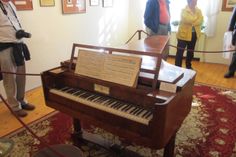
The home of the great composer Ludwig van Beethoven has been preserved and serves as a museum in Bonn, Germany.  One historical gem in the museum is the piano upon which Beethoven composed most of his renowned works.  The piano is estimated to be worth more than $50 million and is understandably roped off and out of the reach of the thousands of visitors who pass it by each day.


The story is told about a group of students from Vassar College who were once visiting the Beethoven museum. One of the students came to the room that held the piano and couldn’t resist the temptation to ask a museum guard if she could play it for a moment.  The guard allowed himself to be influenced by her generous tip and let the young woman beyond the ropes for a few moments.  She sat at the famed piano and knocked out several bars of Moonlight Sonata.  When she finished, her classmates applauded.


As she stepped back through the ropes, the young woman asked the guard, “I suppose over the years, all the great pianists that have come here have played the piano?”  “No, miss,” the guard replied.  “In fact, just two years ago I was standing in this very place when Ignacy Paderewski visited the museum.  He was accompanied by the director of the museum and the international press, who had all come in the hope that he would play the piano.


“When he entered the room he stood over there, where your friends are standing and gazed at the piano in silent contemplation for almost fifteen minutes.  The director of the museum then invited him to play the piano, but with tears welling in his eyes Paderewski declined, saying that he was not worthy even to touch it.”


Non-human mammals get what we call goosebumps, the constriction of skin surrounding hair follicles, when they feel threatened or attacked.  Only human beings get goosebumps for a different feeling: awe.  Awe is the feeling of being in the presence of greatness, of being exposed to that which is transcendent or extraordinary.  Paderewski was in a room with Beethoven’s piano and was frozen with awe.  The young student saw the piano and thought it would be cool to casually play it.


Researchers believe that we are living in a time of awe deprivation.  Technological advances have made things once thought impossible not only real, but normal, expected, even mundane and unimpressive.  We FaceTime with people on the other side of the globe without another thought, we have search engines that access millions of pages of information in nanoseconds, we instinctively use global positioning satellites to find the quickest route and avoid traffic.  The result of the speed with which breakthrough, change, and advance happens leaves us struggling to be impressed with anything.


We have gone from calling everything “awesome,” to reacting to everything by saying (or thinking) “eh.”  The byproducts of being awe-deprived are increased arrogance, decreased empathy, greater challenge to find meaning, and even failing health.


A Wall Street Journal article describes how current research shows that the capacity to feel awe makes people more empathetic, generous, kind, and humble.  The actual feeling of awe and the experiences that inspire it make us healthier, improve our relationships, and give more meaning to our lives.  The author writes, “Awe is an emotional response to something vast, and it challenges and expands our way of seeing the world.  It might be triggered by an encounter with nature, a religious experience, a concert or a political rally or sports event.  We’re not likely to find it on a treadmill at the gym.”


She goes on to describe that some experienced awe at the birth of a child, others watching a meteor shower, others visiting the Pine Forest in California, and interestingly, others who found it awe-inspiring to work with homeless people and witness their resilience and kindness.  Dr. Dacher Keltner from UC Berkeley found that feeling awe can help fight depression and can even help reduce inflammation in the body.  Dr. Paul Piff from UC Irvine explained that “awe minimizes our individual identity and attunes us to things bigger than ourselves.”


We are currently counting down towards the Yamim Noraim, the Days of Awe.  On Rosh Hashanah we will coronate God as King of the Universe and remind ourselves of His awesome omnipotence and omniscience.  On Yom Kippur, we will be evaluated and judged to determine if we are fulfilling our role in His renewed kingdom and the purpose for which we were created.  As described in U’nesaneh Tokef, these days are in fact, norah v’ayom, they are simply and literally awesome.


But we will only be moved by the awesomeness of these days if we still have the capacity for awe, reverence, and veneration.  If everything is so utterly unimpressive, uninspiring, and ordinary, these days will be ritualistic and ceremonial, empty and devoid of meaning and transformation.


Rav Yitzchak Hutner z”tl explains that Amalek is the archrival of the Jewish people because their philosophy is the very antithesis of ours.  When recounting Amalek’s attack on the Jewish people, the Pasuk in our parsha says, “Asher karcha baderech – they happened upon you.” Amalek believes in mikreh, in chance, randomness, and happenstance.  They see nothing as chashuv, nothing as significant, meaningful, or worthy of awe.  As a result, Amalek’s attitude is to denigrate, to knock down, to destroy, to be cynical, and sarcastic.  Amalek mocks and makes fun, they look at something or someone others are in awe of and they seek to demolish, to degrade, to vilify.


We, the Jewish people, are charged to live life with the opposite attitude and approach.  Our mission is to live life with awe, to see ourselves as a small part of something much greater.  Our charge is to see and create meaning and purpose, to lift up, to build, to admire, to revere, and to venerate that which is worthy and important in the world.


Rav Hutner describes that the battle between the attitude of Amalek and the attitude of the Torah is the battle between what he calls the ko’ach ha’chillul and the ko’ach ha’hillul.  The ko’ach ha’chillul is the power of skepticism, the influence of that little voice inside each of us that, like Amalek, tries to get us to be cynical, to mock and belittle, rather than to respect and be filled with awe.  The ko’ach ha’hillul is the capacity to praise, honor, identify and admire the beauty and the greatness which is sometimes beneath the surface.


Preparing for the Days of Awe includes working to defeat the Amalek inside us.  It demands we weaken and eliminate the ko’ach ha’chillul, our tendency or inclination towards cynicism and skepticism, and strengthen and build up our capacity for ko’ach ha’hillul: to see that which is impressive, remarkable and praiseworthy in people, places, and things all around us.


The WSJ article suggests that to preserve and expand our capacity for awe, we must make an effort to have three awe experiences a week.  For the remainder of Elul, look at something, study something, contemplate something, admire someone, experience something that makes you feel “Wow! That is awesome.” “That is incredible.” “That is humbling.”


Albert Einstein is quoted as saying, “There are only two ways to live your life.  One is as though nothing is a miracle, the other is as though everything is a miracle.”  As we prepare for the Days of Awe, let’s choose to see everything as a miracle and be filled with awe as a result.


Lag B’Omer & Gratitude

Years ago, someone gave me a Tony Robbins cd to listen to. I was excited to hear what one of the most inspirational people of modern times would have to say and how it could change my life for the better. He started his talk by saying that he has the secret to both happiness and success. If you follow his advice and begin each and every day of your life exactly as he prescribes, he can all but guarantee you will find yourself both happier, and achieving your goals and dreams.


I was very eager to hear what his secret is.


What Tony Robbins said is correct, but for me, and for you, and for Jewish 3-year-olds around the world, it was nothing new. The secret to happiness and to achieving success, he said, is to start every day of your life by expressing gratitude. As soon as you wake up, before doing anything else, say thank you. Be grateful and appreciative for being alive, having a roof over your head, having your health if you are lucky, your family, etc.


He continued that it isn’t enough to think appreciatively, but you need to start your day by verbalizing and actually saying thank you out loud. If you wake up with an attitude of gratitude, the rest of your day is guaranteed to be successful and happy.


What Tony Robbins is teaching in the 21st century, Judaism has taught since its inception thousands of years ago. From an early age, we teach our children to wake up saying Modeh ani lefanecha, I am grateful to you God for the fact that I woke up, that I am alive to see another day, for the wonderful blessings in my life and for my relationship with You. It has been inculcated within us from our youth that we don’t wake up feeling entitled, deserving and demanding. Rather, we wake up with a deep and profound sense of gratitude, appreciation and thanks.


In my experience, Tony Robbins is right. How we start our day has an incredible impact on how the rest of it will go. This week we will celebrate Lag B’Omer, the 33rd day of the Omer. Each day of the Omer is characterized by another kabbalistic attribute. Lag B’Omer is Hod sh’b’hod, the glory of glory, reflecting our appreciation of God’s greatness and glory. The Hebrew word hod can be understood as coming from the same word as hodu, or modeh, meaning thanks. Lag B’Omer is a day characterized as “thankfulness within thankfulness,” or a day to celebrate gratitude.


Lag B’Omer is a day characterized as “thankfulness within thankfulness,” or a day to celebrate gratitude.


The Chassam Sofer, Rav Moshe Sofer says that the miraculous manna that fell from Heaven began to descend on Lag B’Omer. On the first day, the manna was undoubtedly greeted with great enthusiasm and appreciation, but as time went on and there was an increasing expectation the heavenly bread would descend, it became much easier to take it for granted and to forget to be appreciative for it at all. Therefore Lag B’Omer is a time that we identify and say thank you for all of the blessings that regularly descend into our lives, but unfortunately, like the manna, that we take for granted.


It is so easy to fall into a sense of entitlement and to forget to be grateful. Why should I thank my children’s teachers? They’re just doing their job. Why should I be so appreciative to the waiter, or the custodian, or the stewardess? Isn’t that what they are supposed to do? When was the last time we said thank you to whomever cleans our dirty laundry? Do we express gratitude regularly to our spouse who shops, cooks dinner, or who worked all day to pay for dinner, or in some cases did both?


As we celebrate Lag B’Omer, let’s not just say modeh ani in the morning and then quickly transition to feelings of entitlement. Let’s remember to say thank you to the people who do extraordinary things in our lives. But even more importantly, let’s especially express gratitude to the people who do the ordinary things that make our lives so filled with blessing.


Our Unrecognizable World

The world we live in is becoming less recognizable every day. Assumptions, designations, and policies we took for granted are regularly challenged, with new definitions emerging frequently. If I told you just a few years ago about a question posed in a hearing to a nominee for the United States Supreme Court, a new categorization on passport applications, or a raging debate about what is appropriate for teachers to talk to young children about, you simply would not believe me. These changes are happening all around us, but should they be happening with us?  Are we even mindful of them and are we comfortable with their impact on us and our children?  


There are two seemingly conflicting lessons that emerge from Pesach.  While some might see them as contradictory, I believe that the synthesis of the two—and the nuanced conclusion that emerges—is not only true and authentic, but is our responsibility to embrace and model for the world.


In no less than thirty-six places (forty-six according to some), the Torah emphasizes our responsibility to be kind to the ger, the stranger, reminding us that we were strangers in the land of Egypt (Bava Metzia 59b).  Commenting on this Mitzvah, the Ramban writes:


The correct interpretation appears to me to be that He is saying: do not wrong a stranger or oppress him, thinking as you might that none can deliver him out of your hand; for you know that you were strangers in the land of Egypt and I saw the oppression with which the Egyptian oppressed you, and I avenged your cause on them, because I behold the tears of such who are oppressed and have no comforter… Likewise you shall not afflict the widow and the orphan for I will hear their cry, for all these people do not rely upon themselves but trust in Me.


While this Mitzvah, the one most often repeated in our Torah, is technically referring to a halachic ger, a convert, we have been encouraged to expand the definition to others who feel invisible, vulnerable, estranged, or isolated from the community. 


Rabbi Lord Sacks z”l writes that Klal Yisrael in particular is enjoined to be sympathetic and kind to the stranger, because we know from our own experience what it is like to feel like an outsider, as if we don’t belong.  He writes:


To be a Jew is to be a stranger. It is hard to avoid the conclusion that this was why Avraham was commanded to leave his land, home and father’s house; why, long before Yosef was born, Avraham was already told that his descendants would be strangers in a land not their own; why Moshe had to suffer personal exile before assuming leadership of the people; why the Israelites underwent persecution before inheriting their own land; and why the Torah is so insistent that this experience – the retelling of the story on Pesach, along with the never-forgotten taste of the bread of affliction and the bitter herbs of slavery – should become a permanent part of their collective memory.


The first lesson of Pesach is that Torah Jews and observant communities must model environments that are actively warm and welcoming, that never bully, mistreat, call names, marginalize or God-forbid abuse anyone, especially those that feel, identify, observe, or act differently. 


But there is a second lesson of Pesach that doesn’t conflict with but rather complements the first.  Hashem liberated us from slavery not only to provide freedom from tyranny, but freedom to become a mamleches kohanim v’goy kadosh, a nation of priests and a holy people.  We weren’t taken out of bondage to live as any other secular entity.  Miracles were provided and the rules of nature were suspended to give birth to a nation that would represent, teach, and defend the Almighty’s vision for His world, His prescription for life, and His definitions and laws.


Rav Meir Shapiro, the great Rosh Yeshiva of Chochmei Lublin and founder of the Daf Yomi, visited the United States in the 1920s.  It is said that when he returned to Europe, he was asked about his opinion of American Jews. He profoundly and presciently stated: “American Jews know how to make kiddush, but they do not know how to make havdallah.”


Rav Shapiro saw almost prophetically how we excel at making kiddush, at sanctifying Hashem through the Torah, Mitzvos and extraordinary acts of chesed, but that we struggle with making havdallah, differentiating ourselves from society when beliefs, social mores, and lifestyles are simply incompatible and in conflict.   


The world is complicated and people are searching for answers. All kinds of feelings, instincts, labels, names, and ideas are penetrating and infiltrating into our conversations, identities and relationships, including into spaces that were once assumed to be relatively innocent and pure. There is a lot of confusion, dysfunction, and pain all around us.


While we don’t have the solutions to every problem, how fortunate and blessed we are to be heirs to a rich Torah legacy that provides us with vocabulary, language, laws, and definitions that enable us to navigate through many modern challenges.


Let there be no mistake: Our Torah definitions must be used to educate, elevate, enrich, empower, and inspire, never to bully or mistreat those who view or define things differently. But at the same time, our ideals, carrying the authority of the Almighty, should give us the confidence, pride and strength to refuse to be bullied into abandoning or being defensive of our Torah definitions either. We should never call others names, but we must also not tolerate being called names, being labeled, or looked down upon because we maintain our traditional values, or because we stand by and defend what we believe to be ontological truths. We must not accept a culture where we have to fear social consequences for publicly proclaiming, celebrating, and standing by our values.  


While there are many legitimate disagreements and differing opinions within our Torah tradition, there are some things that are abundantly clear, truths that are non-debatable.  Even then, discussing and applying the Torah’s positions to the realities on the ground can be complicated and typically demand nuance. To be sure, we don’t avoid or run away from difficult topics (for an example, see a talk I gave several years ago here).  But while we address them with a commitment to sensitivity, we also must address them with just as firm a commitment to Hashem’s truth.


We believe genders are not social constructs; they are Divine designations. Much of Jewish law is predicated on that fact, such as the laws of marriage, divorce and familial relationships generally, obligation or exemption from certain mitzvos, and much more.


It wasn’t only humanity that God created with two genders — zachar u’nekeiva bara osam, male and female He created them (Bereishis 1:27) — the Gemara (Bava Basra 78b) tells us that kol mah she’bara Ha’Kadosh Baruch Hu b’olamo zachar u’nekeiva b’raam, every creature that the Holy One, Blessed is He, created in His world, He created them male and female. (Yes, our Torah recognizes there are highly unusual cases of tumtum and androgynous, but they are the rare exceptions, determined by technical criteria.)


We can and must love and support those that feel differently on these issues, but we also should know clearly, and not need to be afraid to say, what is a man, what is a woman, and that the Torah mandates that only a man and a woman can marry.


As the world becomes less recognizable, I believe it is our responsibility to hold on to and communicate to our children what we all once took for granted. We must not be hesitant, embarrassed, or feel guilty to speak the Torah’s truth.  Our silence or avoidance on central issues or core definitions may be convenient and comfortable, but they are not neutral; they contribute to confusion, they perpetuate distortions, and they are part of the very failure to make havdallah that Rav Meir Shapiro warned about.


Our children are desperate for rootedness, for boundaries, and for clarity of beliefs. The more they engage blurred lines in culture and pop culture, in university and professionally, on billboards and in banner ads, the more they need us to be their solid anchor, to hold them steady, to speak an authentic language and to protect what we believe are proper definitions (of course, with sensitivity and nuance).


The Sefas Emes (among others) writes that our Egyptian oppressors didn’t only deprive us of physical freedom in Egypt, they deprived us of the right to maintain our opinions, our values and to express our views.  Dibur and daas, speech and thought, were in galus, were in exile.  The Egyptians had canceled us, silenced our traditions and our values. 


When Hashem took us out, He didn’t just liberate us physically, He gave us a language and a vocabulary and made us ambassadors to speak His truth.  The Sefas Emes says that the holiday of redemption is called Pesach from the words peh-sach, the mouth speaks.  Redemption and freedom are related to speech, to the power, courage and capacity to speak the truth. 


No matter what happens in the world at large, in the world of our Shuls and schools, around our tables and in our homes, even if it gets uncomfortable, we must keep it recognizable, we must share what is true, always with dignity, respect and sensitivity. 


We and our children must continue to make kiddush by treating everyone appropriately. But if we want redemption, we must also not be afraid or apologetic to, when necessary, like our ancestors, make havdallah.

The Most Important Thing You Need to Do to Prepare for Pesach

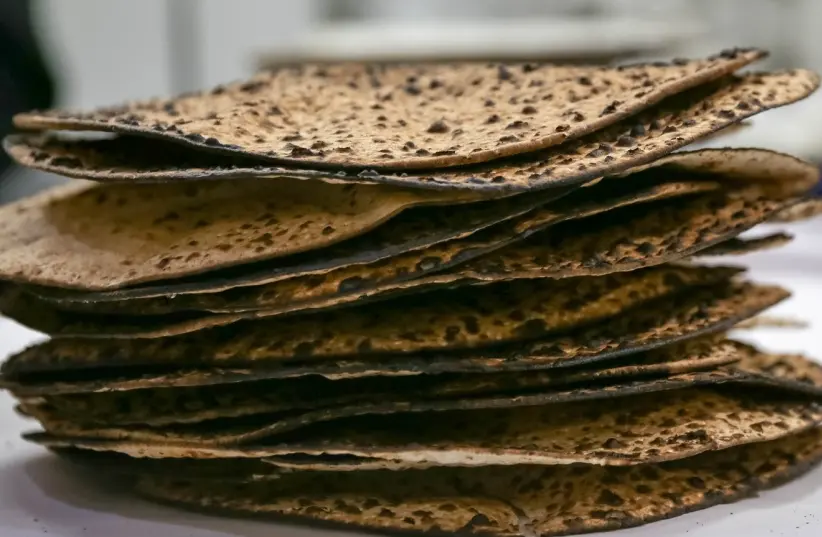
Given the current price per pound, it sure doesn’t feel like Matzah is lechem oni, the bread of the poor person. This year, 200,000 pounds of handmade shmurah matzah were baked and shipped from Ukraine to the United States, in addition to what is shipped to Europe and Israel. But, two hours before the last 20,000 pounds were loaded onto a ship in the port of Odessa, Russia invaded, and the matzahs have been stuck in limbo since.  Partially due to Putin, but also because of general supply chain issues and increased gas and shipping prices, the cost of matzah—and seemingly everything else for Pesach—is incredibly high.


More people than I can remember in any previous year have shared with me that they simply don’t know how they will afford Pesach this year.  Some have explicitly said that when they stand in the supermarkets and look at the prices, they calculate that they can buy matzah or meat but not both.


The bad news is that the prices this year are affecting more people than ever.  The good news is that there is a solution to enable everyone to have a beautiful and simcha-filled Pesach.


Since the creation of the luxury Pesach program, rabbis have been railing against them for their excessiveness, extravagance, and the forfeiting of many of the traditions involved in preparing and experiencing Pesach. Ironically, many of those same rabbis have later “eaten their words” and accepted invitations to serve as scholars in residence, bringing their families to the very type of five-star experience they had long condemned.


But internal contradictions aside, there is a more fundamental reason not to rail against such programs: there is nothing inherently wrong with them. True, kashrus can be complicated at these programs, and yes, not all the environments and activities at every program are appropriate for Yom Tov, or ever. But these are not intrinsic or inherent deficiencies and just mean that one must choose the program carefully.


Baruch Hashem, there are many large Jewish families that, for practical reasons, simply cannot experience a Yom Tov together if they are not at a program. In addition, there are those who are unable to make Pesach for themselves, don’t have family to go to, and rely on a program in order to experience a proper Pesach. And then there are those that can simply afford to experience the luxury of a Pesach program and, given that they are often generous with their support of charitable and communal institutions, why shouldn’t they?


But there is a caveat. There is no Jewish holiday and no Jewish experience that more divides the “haves” from the “have-nots” than Pesach. The contrast between those experiencing Pesach with endless menu options, midnight BBQ’s, quinoa sushi stations, and round-the-clock tea rooms, and those who literally don’t know how they will buy matzah or wine, let alone meat, is startling and staggering.


As a community Rabbi, I am exposed to both extremes.  When arranging for the sale of chametz, I like to ask what people’s Pesach plans are.  Often, I find myself meeting with someone who, with joy and excitement on his face and great anticipation in his voice, will describe the latest exotic location of the program he is attending this year or the newest amenity or entertainment being offered.  Literally moments later, someone will answer the same question with a tear in his eye and worry on his face and say I have no idea how I am going to afford matzah and wine this year because I am barely covering my bills day-to-day without these added expenses.


The Rambam writes (Hilchos Yom Tov 6:18):


When a person eats and drinks [in celebration of a holiday], he is obligated to feed converts, orphans, widows, and others who are destitute and poor. In contrast, a person who locks the gates of his courtyard and eats and drinks with his children and his wife, without feeding the poor and the embittered, is [not indulging in] rejoicing associated with a mitzvah, but rather in simchas kreiso, the rejoicing of his gut.


Though the Rambam is speaking of every holiday, there is a special practice of providing for others specifically before Pesach. The Rama (O.C. 429:1) quotes from the Talmud Yerushalmi, (Bava Basra 1:4) which states that residents of a city should give wheat or flour for matzah to those in their city in need. This is known as kimcha d’pischa, flour for Pesach, or maos chittim, money for wheat.


And yet, even with the widespread practice of giving to maos chittim, there remain far too many who struggle to keep up with the exorbitant cost of making even a basic, no-frills Pesach and are left having to cut back and sacrifice in other areas just to get through what should be a joyous holiday season.


And herein lies the caveat. There is nothing wrong with enjoying and indulging in the luxuries a Pesach program provides, or with making a beautiful, elegant Pesach at home, for that matter, so long as everyone from your community can afford to have the basic necessities. There is no set amount mandated for maos chittim, but I humbly submit the following proposal:


Just as with tzedaka, where we are instructed to give a percentage of our income, our maos chittim should similarly be calculated based on how much we spend on ourselves for Pesach. If all of those who attend Pesach programs gave proportionally to maos chittim, we could ensure that all members of our communities have what they need for Pesach without having to compromise or make trade-offs with other basic necessities. And in the spirit of Pesach, v’chol hamarbeh, harei zeh m’shubach – anyone who can and does give more is certainly worthy of praise.


True, many Pesach programs run fundraisers over Yom Tov for all kinds of worthwhile causes, but only a fraction of people participate, and by that point it is too late to help serve this particular, urgent need. It is instructive that the practice of giving to maos chittim is quoted in the context of the law that mandates that we begin preparations thirty days before Pesach.


Not knowing how one will afford to make Pesach for their family brings unimaginable anxiety, stress, and worry that compound an already difficult situation. The sooner people can be provided for and have the security that their family will indeed enjoy the amenities of Pesach, the less they will worry and fear.


A woman once approached the Beis HaLevi, Rav Yosef Dov Soloveitchik of Brisk, a few days before Pesach with a strange question. She wanted to know whether one could use milk instead of wine for the four cups of the Seder. The Rav asked her if she was ill, to which she replied that she was perfectly healthy. He then responded by giving her a large sum of money. After she left, the Rebbetzin asked her husband why he had given the woman so much money, when wine costs much less. He responded, “If she is asking about drinking milk at the Seder, it is obvious that she has no meat for Pesach, so I gave her enough to buy both wine and meat for the entire holiday.”


When we sit down for our beautiful, bountiful seder with our loved ones, our simchas yom tov should be enhanced by the knowledge that we have done what we can to ensure that none of our brothers and sisters is sitting down to a bare table where real tears substitute for salt water.


We are already well within thirty days of Pesach. Whether you are going to a Pesach program or making Pesach at home, please don’t wait to make sure that everyone can enjoy Pesach. When you are deciding how much to give, please consider what you are spending on your own Pesach for fine wines, delicious meats, and pounds of handmade shmurah matzah, and give commensurately to ensure a beautiful Pesach for all your neighbors as well.  Knowing that nobody in your neighborhood is struggling for Pesach will be more delicious, intoxicating satisfying, and simcha-generating than anything on your table.   


You can contribute to BRS maos chittim here.


Assimilation is Not the Answer to Antisemitism: Be an Ish Yehudi, a Proud Jew!

In its “Audit of Antisemitic Incidents,” the ADL recorded over 2100 acts of assault, vandalism and harassment  against Jews last year, a 12% increase from the previous year and the highest total since tracking began in 1979.  An  AJC survey found that 90% of Jewish Americans believe antisemitism is either somewhat or a very serious problem.  So, antisemitism is rising and overwhelmingly we claim to be concerned about it.  But what are we willing to do about it? 

When Haman approached Achashveirosh with his diabolical, genocidal plan to exterminate the Jews, he said, “there is a nation scattered abroad and dispersed among the nations.” The Talmud (Megillah 13b) expands on this conversation.


When Haman targeted the Jews for annihilation, he said to Achashveirosh, “Let’s destroy the Jews.” Achashveirosh replied, “Not so fast. I am afraid of their God, lest He do to me what He did to my predecessors.”


Haman relieved the King of that fear when he said, “Yeshno am echad,” which translates literally as “there is a certain nation.” The Talmud quotes Rava, who explains that Haman was telling the King something much more strategic and insightful. Not yeshno am echad, there is a certain nation, but rather yoshnu am echad, there is a sleeping nation. Said Haman, “They have been negligent of mitzvos, they are divided, fighting with one another. They are arguing amongst themselves but at the same time they are fast asleep as to what we want to do and how we threaten them.”


We were on the brink of extinction as a people because we were asleep.


We were vulnerable and literally on the brink of elimination and extinction as a people because we were asleep. Our eyes were closed to what was happening around us. We didn’t take the threats seriously and we didn’t stand up for our right to simply exist.


Haman recognized and took advantage that there is a nation that is sleeping. All he had to do was continue to lull the Jewish people into a false sense of security, to breed complacency and apathy, and at that moment he could accomplish his goal of ridding the world of our people.


Indeed, Rabbi Soloveitchik suggested that the true miracle of Purim is that an anti-Semite rose, threatened us, and we believed him. We didn’t excuse him, accept his bogus apologies or say he didn’t really understand what he was saying. We didn’t just reject his tropes, we confronted him, we took him at face value, and we were determined not to let him threaten our people.


Identifying an anti-Semite, taking him or her seriously and doing something about it is nothing short of a miracle.


So how did we survive? What spoiled Haman’s plan? Why did we ultimately triumph over Haman such that we are here today and he is a distant memory? The answer is simple: Mordechai and Esther.


We understand Esther’s heroism. She risked everything: her life, her family, her people, to go out on a limb and confront the king without permission. But what made Mordechai a hero? If you think about it, Mordechai may actually be a villain, a perpetrator in the story, responsible for initiating the decree to exterminate the Jews of Shushan and beyond.


Would it have been so terrible for him to just bow down? Just once? Not only does Mordechai refuse to bow down to Haman, he insists on antagonizing him by camping out on Haman’s route so that Haman would see him every day and be bothered by the one Jew who refuses to show him honor. Mordechai’s behavior provokes Haman and he responds by declaring his intention to destroy not only Mordechai, but all of Mordechai’s people, the Jews. Even after Haman’s plan has been pronounced, Mordechai continues to snub him.


When Achashveirosh remembers what Mordechai had done to save his life and sends Haman to reward him by parading around publicly, Mordechai could have declined the honor. Instead, he accepts, humiliates Haman and infuriates him further!


And this is the person we consider a hero of Purim? Why? A closer look seems to indicate that Mordechai’s ego put the Jewish people at risk. What was the source of Mordechai’s intransigence?


You might think it’s simple – bowing down was idolatry, one of the three cardinal sins for which we must give up our lives rather than violate. Indeed, the Ibn Ezra suggests that Haman was wearing idolatrous symbols. Rashi comments that Haman had declared himself a deity. Either way, it would seem Mordechai was right not to bow down, he was simply following Jewish law and it was his peers who were wrong for bowing, even if not doing so would mean risking their lives.


But that’s not the whole story. The Talmud (Sanhedrin 61b) says that the law of sacrificing your life rather than engaging in idolatry applies if in fact one is buying into the divine nature of the idol. If one is bowing simply out of fear, one is not liable.

So why didn’t Mordechai simply bow down in an effort to save the Jewish people?

Yes, Mordechai would have been entitled to bow down. To save his life, he could have been apologetic for his Jewishness and submitted to a virulent anti-Semite, bowing down to Haman and his worldview that wants a world without Jews. But Mordechai understood what was at stake.


Mordechai understood the antidote: To stand firm, to stand strong, and to stand as a proud Jew, a Torah Jew.


Mordechai, a humble scholar and righteous sage witnessed the growing antisemitism of Haman and his desire to see Jews and Judaism erased and he understood the antidote. If Jews were fast asleep, excusing away even the anti-Semitic “tropes” of their time, the answer was not to bow down, even if it was technically allowed. The answer was exactly the opposite. To stand firm, to stand strong, and to stand as a proud Jew, a Torah Jew.


The answer was to not apologize for being a Jew, but rather to be the proudest and most tenacious Jew, and that is exactly what he did. And this is how is Mordechai is known in the Megillah: “Ish Yehudi haya b’Shushan ha’bira – There was a Jewish man in Shushan the capital.” What do you mean a Jewish man; there was only one? There was a large Jewish population in Shushan!


The Megillah is telling us that true, there were many Jews, but some were abandoning their Judaism and others were failing to stand up for it. The Jewish community was asleep; there was only one Ish Yehudi, an unashamed, unembarrassed, unapologetic Jew.

What happens when Jews stand up for ourselves, when we call out and confront anti-Semitic song lyrics, tropes and yes, call out antisemites themselves? By the end of the story, the Megillah tells “fear of the Jew had fallen on them and so no man could stand up against them.” Why? “Because Mordechai, the proud, unashamed, unapologetic and fearless Jew earned the respect of his multitude of brothers, he sought the good of his people and spoke for the welfare of the next generation.”


One of the critical, but too often neglected, lessons of Purim is that the answer to our enemies is not to hide, apologize, or erase our Jewishness. To the contrary, it is to swell with and share our Jewish pride. When we act with confidence and pride, we gain respect. It is no coincidence that Mordechai emerges as a leader not only of the Jewish people, but a dignitary in the Persian government.


The mitzvah of Purim is to get to a point that we can’t tell between cursed is Haman and blessed is Mordechai. We are very good at the blessed is Mordechai. We look to explain, excuse, justify and see everyone as a blessing. But we need to get to a point of remembering that identifying a Haman and cursing him is as important as blessing a Mordechai. We have to call out an anti-Semite, hold them accountable, hold those whose silence makes them accomplices accountable.


This Purim, don’t just dress up like Mordechai; act like Mordechai.


If you share concern about growing antisemitism, the question is: what will you do about it? Certainly we have to write letters, make phone calls, attend rallies and hold antisemites and those who fail to condemn them accountable. But there is something else we must do.  I can’t help but notice that assimilation and intermarriage are at record highs, even as antisemitism is as well. Clearly blending in entirely and erasing our differences altogether is not only dangerously wrong theologically, it has no correlation to being safer and more secure.  It is as if just when Jews try to downplay their Jewishness, our enemies will not let us forget.


We must appeal directly to the American people, to carry ourselves with pride, but also with dignity, honesty, integrity and righteousness. If like Mordechai our neighbors come to know and respect us, they will be intolerant of leaders who dare promote anti-Semitic rhetoric or tropes. If we carry ourselves properly, those we work with, work out with, shop with, or live near will speak out and stand up to demand resolutions of condemnation and removal of voices of hate from critical committees.


This Purim, don’t just dress up like Mordechai; act like Mordechai.


Be an Ish Yehudi.


This Chanukah Savor the Moment

Several studies have shown that adopting routines can make you more productive. Routine is a hallmark of efficiency and can also help harness your creativity. Many successfully creative people swear by the routines they formed: author Stephen King famously sits down at the same time every morning, which he believes allows his writing to “kick on.”  Routine is a hallmark of many big thinkers: Geniuses like Steve Jobs and Albert Einstein liked to wear the same thing every day in order to not expend mental energy on wardrobe decisions.


Perhaps that is why Yaakov wanted to finally settle into a routine.  Vayeishev Yaakov b’eretz m’gurei aviv, Yaakov settled in his father’s homeland.  Rashi quotes Chazal: Bikeish Ya’akov leishev b’shalva, Yaakov wanted to live with a quiet routine, he wanted to settle into a peaceful and stable life and lifestyle.  Until now, his whole life has been characterized by tension, conflict, living on the run and often in fear.  No two days have been the same.  All he wants is leishev b’shalva, he wants to retire, settle down, and develop a routine in life.


Yet, for some reason, Hashem saw this desire and goal as detrimental and inappropriate.  In fact, instead of giving Yaakov peace of mind and a stable routine, kafatz alav rogzo shel Yosef, the most tumultuous and stressful episode of Yaakov’s life ensues.  Somehow, craving a peaceful routine was so wrong it was actually served as the catalyst for Hashem mixing things up.  Why?


The truth is that while there are benefits to routines, when people are too settled in their routine, complacency and contentment result.  Complacency breeds apathy, one of the biggest obstacles to growth and progress.  It also leads to poor decision-making and being blind to new choices and possibilities that could benefit us. 


On Feb. 5, 2014, London Underground workers went on a 48-hour strike, forcing the closings of several tube stops. The affected commuters had to find alternate routes. When the strike ended, most people reverted to their old patterns. But roughly one in 20 stuck with the new route, shaving 6.7 minutes from what had been an average 32-minute commute. The closings imposed by the strike forced experimentation with alternate routes, yielding valuable results. And if the strike had been longer, even more improvements would probably have been discovered.


Researchers have long studied why people purchase name-brand items when the equivalent generic is available with a significant cost savings, which could compound to real money.  This phenomenon is noteworthy for drugs, when generics and branded options are chemically equivalent. Why continue to buy a name-brand aspirin when the same chemical compound sits next to it on the shelf at a cheaper price? Scientists have already verified that the two forms of aspirin are identical. The only difference is the label and the price.  And yet, most buy the name brand.  Why?  Habit, ritual, and thoughtless routine.


So on the one hand habits are powerful, they can help promote creativity and efficiency.  But on the other hand, habits and routines can deny us the openness and flexibility to learn, to see new things, to grow, experiment, adjust and make changes that will improve us and improve our lives. 


One study estimated that 47 percent of all our behaviors are the result of habits we have formed.  That can be leveraged in a positive way.  Just think about it – if we form the right habits—being on time, showing patience, extending generosity—we have half our day preprogrammed in a way we can be proud of.  The downside, of course, is that nearly half our lives is not the result of thoughtful consideration, mindful choices, but simply having settled into habits and routines mindlessly.  That is no way to live.


This week we begin the holiday of Chanukah and the mitzvah of lighting the menorah.  The mitzvah begins after sunset and the Gemara (Shabbos 21a) tells us, it extends עד שתכלה רגל מן השוק, until people are no longer walking around in the marketplace.  The goal and purpose of the light of the menorah is ,פרסומי ניסא to publicize God’s great miracles and so once there are no longer people present to see the lights, the mitzvah is no longer applicable.  In the time of the Gemara, and even the Shulchan Aruch, this time was relatively shortly after nightfall when people couldn’t function outside without natural light.  Today, with artificial light, the time is significantly later.


The Sefas Emes quotes his grandfather, the Chiddushei HaRim, who offers a homiletical interpretation of this measure, one that gives great insight into the essence of the holiday.  “עד שתכלה רגל מן השוק”, says the Sefas Emes, is not describing how long in time the candles must be lit, but how deep the light of the candles must penetrate into our hearts and our habits.  He suggested don’t read it רגל, but rather עד שתכלה הרגל מן השוק, we must experience the light of the candles and the richness of these eight days until it breaks our habits, jolts us from our routines, and enables us to take a step back and look at our lives. 


So many of us are caught in the hamster wheel of life.  We wake up, go to work, maybe exercise, brainlessly relax, go to sleep, wake up and start again. Or we wake up, make lunches, drive carpool, shop, cook, do homework, serve dinner, collapse, wake up and start again.  Or some combination of the two.  What these routines all have in common is being carried by inertia and momentum, moving at such a fast pace that there is no time or space, no margin or room to ever stop, look, assess, evaluate and mindfully determine if we are allocating our time, energy and resources in the most optimal way, or if we are just creatures of routines, products of habits that were somehow formed at some time and have become our default, our normal, our assumed.


There is a beautiful campaign for Chanukah called “Savor the moment.”  It calls for Jews across the world to go screen-free for 30 minutes after candle lighting, the minimum necessary time for the candles to burn.  For too many of us, being chained to our smartphone, tablet, laptop or TV has become routine. We desperately need this considering that the average American touches his or her phone 2,617 times a day


Chanukah can give us the energy to have the courage and will to תכלה הרגל, to break the habits and see the light, literally and figuratively. Imagine eight consecutive nights of half an hour screen-free time together lighting candles, singing Ma’oz Tzur, dancing to great music, sharing gifts, spinning the dreidel, sharing Divrei Torah, or however you want to spend it.  Eight nights of quality, uninterrupted family time.  You don’t have to imagine it – it can be our reality this Chanukah and beyond, if only we are willing to break free from the routine.

Breaking Barriers in our Lives

Last year, Eliud Kipchoge of Kenya ran a marathon in 1:59:40, breaking the two-hour barrier  for the first time ever. To put it in perspective, he ran a mile in 4 minutes and 33 seconds — 26 times in a row. He ran at a pace of 13 miles per hour, for two hours in a row. When he finished, Mr. Kipchoge compared what he’d just accomplished to man walking on the moon.  How did he do it?


וּלְקַחְתֶּ֨ם לָכֶ֜ם בַּיּ֣וֹם הָרִאשׁ֗וֹן פְּרִ֨י עֵ֤ץ הָדָר֙ כַּפֹּ֣ת תְּמָרִ֔ים וַעֲנַ֥ף עֵץ־עָבֹ֖ת וְעַרְבֵי־נָ֑חַל וּשְׂמַחְתֶּ֗ם לִפְנֵ֛י ה׳ אֱלֹקֵיכֶ֖ם שִׁבְעַ֥ת יָמִֽים׃ 

On the first day you shall take the product of hadar trees…


The Midrash wonders, what do you mean bayom harishon, take a lulav and esrog on the “first” day? It isn’t the first day of Tishrei, it is the 15th?  So what is the Torah alluding to by describing the mitzvah as beginning on the first?


The Midrash offers a cryptic answer – ראשון לחשבון עוונות, it is in fact the first day, the first day to be accountable for the mistakes and bad decisions.  But how is that?  Yom Kippur was over five days ago.  There have been five days to go back to the way things were, to resume our poor behavior and bad habits.  How is Sukkos the day our misbehavior “begins”?


The Shemen HaTov explains that from Yom Kippur until Sukkos, who has time to sin? We are so busy running to pick our lulav and esrog, to build and decorate our sukkah, to cook for Yom Tov.  We remain on such a high from Neilah and we pour that energy and excitement into getting ready for the holiday.  


But then Sukkos comes and somewhat paradoxically, when we finally encounter those mitzvos we were so excited for in anticipation, we lose steam, run out of energy, and hit a wall.  Maybe we are excited for a brief moment entering the sukkah but then it is hot, uncomfortable, and inconvenient. There was such joy and fun in inspecting our arba minim but it wasn’t much fun having to carry them to shul and balance them with our siddur while walking in a circle for Hoshanos.  


So Sukkos comes, the work is done, the high is over, and now we have an opportunity to sit with family and friends, we have long Yom Tov days.  How will we spend them?  Will we become the people we caught a glimpse of in Elul and over the Yamim Noraim, will we fulfill the pledges and promises we made ourselves about who we could become and the lives we could live?  Will we be the best versions of ourselves and continue the growth spurt of coming more on time, talking less in shul, singing more, being better to others and to ourselves?  Or, will we simply be relieved that the marathon of the High Holidays is over, pat ourselves on the back, take pride in getting through it and go back to exactly who we were, the habits, patterns and behavior, back to the unlived life, underachieving who we could become?  


Rishon l’cheshbon avonos – Sukkos is the time we truly take an accounting about the year we are going to have.  Was it all lip service, pipe dreams, and empty aspirations? Or are we implementing and executing on what we promised ourselves, promised those around us, and most of all, promised the One above? 


The true test of a person is not if he or she is satisfied with what they have accomplished, but whether or not they continue to push forward, to set goals, to implement resolutions.  


Here is the amazing thing about Eliud Kipchoge.  He already held the record for the fastest marathon. Two years ago, he finished the Berlin Marathon at 2:01:39. So what made him push himself harder?  Before the marathon in which he broke his own record, he said, “I don’t know where the limits are, but I would like to go there.”  He wasn’t satisfied with what he had already done, he was focused on what was yet ahead.  


You likely recall, just a few days ago, on Kol Nidrei night when we got up to Shema we all proclaimed Baruch sheim kevod malchuso l’olam va’ed out loud.  Why? As we know, it is because we were on the level of angels.  Yet, moments after Neilah, just after screaming Hashem hu ha’Elokim, we said Shema in Maariv and we went right back to whispering baruch sheim.  I ask you – when are we more like angels, at Kol Nidrei when our bellies and bladders are full, when we roll into Shul at the very beginning of the Holiest day, or Motzei Yom Kippur when we have just spent 25 hours free of physical needs and pleasures, unencumbered by the trappings of this world, having spent most of the day in deep prayer and song?  Shouldn’t we say Baruch sheim out loud just after Yom Kippur instead of at its very beginning?


Rav Avigdor Neventzal explains so beautifully that being an angel is not about celebrating what you have just done, what you finished.   Rather, being angelic means making a pledge and promise for what we are about to do, starting out on a noble and holy journey.  True, on Motzei Yom Kippur we have completed something extraordinary, but it is over, we have finished.  Kol Nidrei night, we are just getting started, we are at the very beginning, but we are about to execute and implement a commitment, and that is when we are on the level to say baruch sheim out loud.  


Sukkos is not a celebration of what we have accomplished, it is not the relief that the Yamim Noraim are over.  The joy of Sukkos comes from what we are about to achieve.  It is a focused opportunity to implement all that we had promised, to follow up on everything we committed to do.  It is the beginning, not the end.  It is prospective, not retrospective.  When we sit in our sukkah and host others, when we have meaningful conversations, spend quality time, when we continue to implement the promises and resolutions we made just a few days ago, we feel the greatest simcha, the highest joy.  


The happiness of Sukkos, the v’samachta b’chagecha is not from the relief of being finished, of having persevered or survived, but rather it is the satisfaction of pushing ourselves further, of knowing we aren’t done, of believing that our best—our best at being a spouse, our best parenting, our best learning, our best davening, our best volunteering, our best in our profession—it is yet to come.  


One of the most amazing parts of the story of Eliud Kipchoge breaking the record was the description of what happened towards the end of the marathon.  When it got particularly tough, when he had to push himself to beat his own record, he started to smile.  The greatest simcha comes not from reflecting on what we have already done, but from the authentic satisfaction of pushing ourselves to fulfill what we have pledged to yet do.  


On Hoshana Rabba we will resume the Yamim Noraim nusach, the chazzan will wear a kittel.  While Neilah may have felt like the finish line, it was only the halfway mark. The verdict on our aspirations and efforts comes not from how we behaved when standing in shul all day davening, but from who we are and how we use our time over the week of Sukkos.  Are the changes we made permanent or were they just a fleeting fad?  The minimum measure of a sukkah is big enough to hold rosho v’rubo, your head and most of your body.  The Sefas Emes explains homiletically, we have to get our rosho b’rubo in the Sukkah, we have to get our head into what we are doing, to be present, to fully experience this Yom Tov.


Like Kipchoge, we don’t know where our limits are, how much Torah can we learn, how must kindness can we show, how much better can we be.  But like Kipchoge, let’s be driven to go there and find out.  We may just find ourselves smiling during the toughest parts.  

I’ve Had A Lot Of Worries In My Life, Most Of Which Never Happened

We all know the joke about the classic text message from a Jewish mother:  “Start worrying. Details to follow.”


The truth is there is much to worry about these days:

Worried about the economy and inflation

Worried about hurricanes and the weather

Worried about covid and other health challenges

Worried about Israel and its enemies

Worried about the increase of Anti-Semitism

Worried about the divisiveness and polarization in this country


And of course, worried about Rosh Hashana and yamim noraim. Some are worried about coming before Hashem in judgment and others worried about their seat, who will they be near, will they have an aisle or a middle, and yet others worried about how long the rabbi will speak.


We have so many things to be worried, anxious and afraid of regularly and especially this time of year.  You would have thought if we offered a prayer about worry and fear it would be to relieve us of our worries, to bring calm and peace, and yet we do the opposite.


Beginning Monday night, we will introduce an expression into our prayers – 

ובכן תן פחדך, please Hashem instill fear within us.  Rav Soloveitchik describes that one year, an eminent psychiatrist said to him, fear is a major cause of mental illness, we should work to be free of fear, worry and anxiety, not be praying for more of it.  


He answered: Everyone is struggling with a fear. Some are afraid they won’t succeed in their careers, others about losing their wealth, other about status or prominence.  Some are afraid of sickness, others are afraid of heights, public speaking or the weather.  Said Rav Soloveitchik, I am not a psychiatrist, but I do know that one major source of fear can wipe out all of these lesser fears and that is yiras shomayim, fear of Hashem.  We daven that we see, feel, are in awe of, and yes fear of Hashem and that our fear of Hashem overtakes and uproots all other fears that lurk everywhere and upset our lives.  


There are essentially two types of anxiety and worry. We worry over things not in our control, because they aren’t in our control. We worry about illness, weather, traffic, delayed flights and more.  Then there are things we worry about, specifically because they are in our control.  For some, having free will is both liberating and terrifying at the same time.  We worry about how well we will perform; will we execute, meet expectations, surpass them, or fall short of them.  Can we endure and handle whatever comes our way?  What if we fail?


We need to silence both voices of worry and it starts with believing we can.  As I shared a few weeks ago, when those thoughts come and knock, firstly, we can decide if we let them in.  And we can by choosing to replace these negative and anxious thoughts with confident and positive ones.  


We are in the final days of the month of Elul, a month dedicated to getting us ready for the new year.  We have heard many insights and divrei Torah based on the acronym Elul and the pesukim it stands for.  But there is another significance of the word Elul. When read backwards it spellsלולא , which means “if not,” or “if it weren’t for.”  The word  לולא only appears one place in the Chumash.


When the brothers are trying to convince Yaakov to send Binyamin with them back down to Yosef so that he would release Shimon, they appeal to him by saying:

כִּ֖י לוּלֵ֣א הִתְמַהְמָ֑הְנוּ כִּֽי־עַתָּ֥ה שַׁ֖בְנוּ זֶ֥ה פַעֲמָֽיִם׃ 

“For we could have been there and back twice if we had not dawdled.”

Rashi explains, “we would have already come back with Shimon and you would not have had this anxiety all these days.”  Lulei is associated with anxiety, with what if, what could have been, what will be.


There is another לולא, not in Chumash but in Tehillim, and we say it every day of Elul.  לולא הֶ֭אֱמַנְתִּי לִרְא֥וֹת בְּֽטוּב־ְה׳ בְּאֶ֣רֶץ חַיִּֽים  – Had I not believed in you Hashem and that I would enjoy your goodness…


We can quiet our worry by exchanging one  לולא for the other.  Instead of feeling lulei this and lulei that, if only this and what will be with that, we need to work on feelingלולא הֶ֭אֱמַנְתִּי לִרְא֥וֹת בְּֽטוּב־ְה׳, seeing, feeling Hashem in our lives, knowing all is orchestrated from above, there is an infinite, omnipotent one choreographing our lives.


But what about the worry when it comes to ourselves and how well we will perform?


The Torah tells us that when we start to panic and feel that getting done what needs to get done or being who we need to be is as far away as the heavens, on the other side of the ocean, we need to know כִּֽי־קָר֥וֹב אֵלֶ֛יךָ הַדָּבָ֖ר מְאֹ֑ד בְּפִ֥יךָ וּבִֽלְבָבְךָ֖ לַעֲשֹׂתֽוֹ, the thing is very close to you, in your mouth and in your heart, to do it. Hashem doesn’t ask for anything that is beyond us.  Yes, we will come before Him Monday night, we will be asked to reflect and holds ourselves accountable.  But the very fact that He is mocheil v’soleiach, forgiving and forbearing should itself be reassuring and encouraging.  


The Slonimer Rebbe says that those who panic with anxiety over appearing on Rosh Hashana before the Heavenly court are picturing the court as occupied with harsh, cruel judges.  But we need to know the judge is in fact our Father.  He understands our struggles and He wants our success.  The Tur says that unlike others who are anxious in judgment, wear black, don’t shave, can’t eat, we wear beautiful white clothing, eat and drink are festive because our judgment day is a yom tov, it is the day we come before our Father.


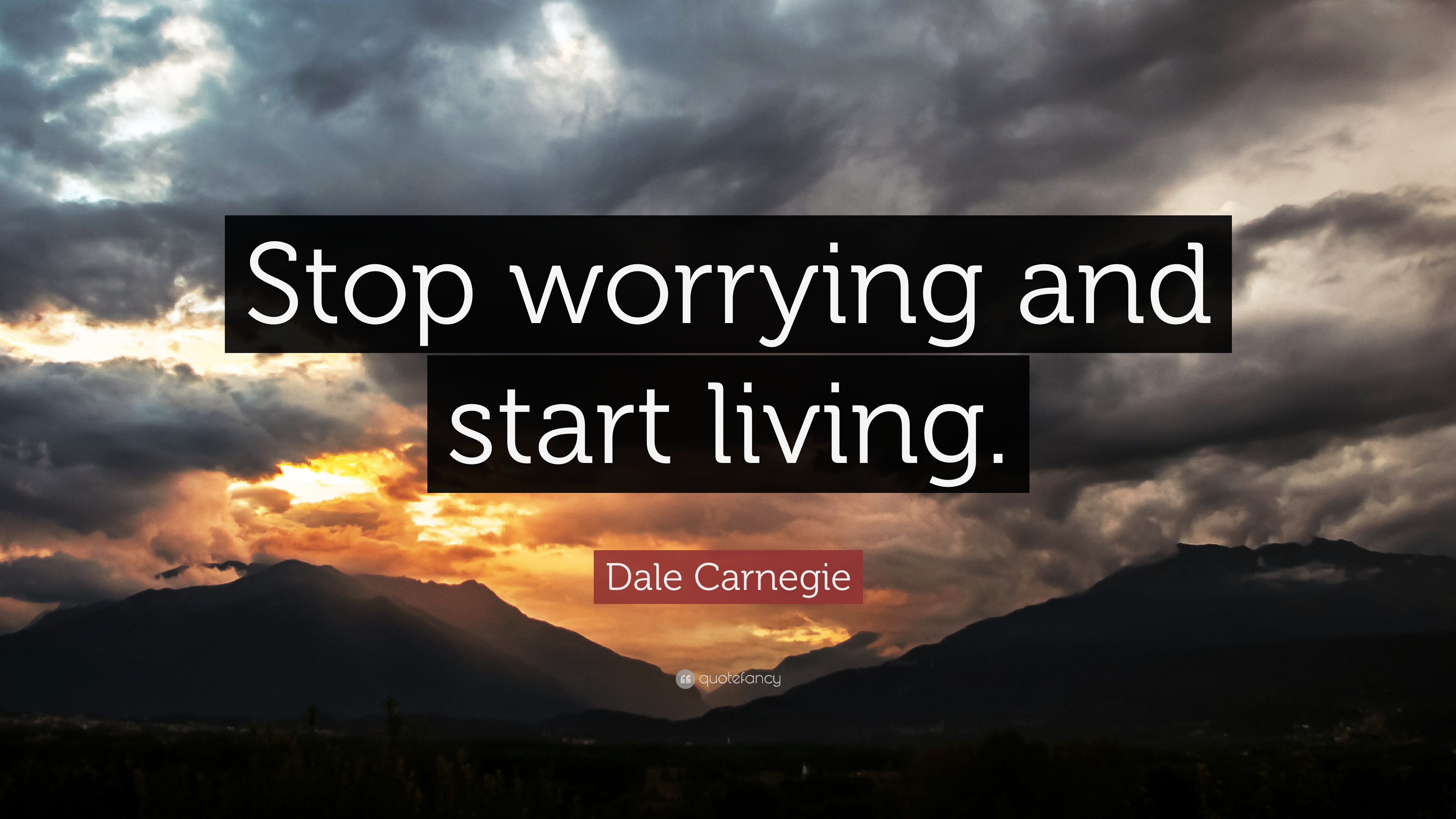
So, it turns out that there is literally nothing to worry about.  Mark Twain once said ‘I’ve had a lot of worries in my life, most of which never happened.’ Studies show that over 85% of the things we worry about don’t ever happen.  And as far as the 15% that do, worrying never made them go away, never made them better and never did anything other than compromise our own health and happiness.  


Stop worrying by remembering that Elul is לולא האמנתי, all that happens is meant to be and we have what it takes to deal with whatever comes our way.  So don’t ruin what is left of this year; remember, don’t worry – be happy.


Rabbi Efrem Goldberg

Join Our Community

Subscribe to our newsletter or connect with us on WhatsApp.