Imposter Syndrome and the Real You

Have you ever felt like a fraud?


Ever experience that sentiment that you’re a fake, that you are making this up as you go and, eventually will be found out and exposed?  It could be in your professional life, your private life, your religious life, or really anything. If you have felt this way, you are not alone.  Studies have shown that 40% of successful people do not believe they deserve success.  As many as 70% of people have felt like an imposter at some time or other.  But we aren’t the first to struggle with this phenomenon, some of our greatest leaders did too. 


When it is time for Aharon to approach the Mishkan, Opening Day of this house for Hashem, he hesitates and demurs.  Moshe says, don’t worry, come, come, you are in charge, you got this.  Why was he resisting, why did Aharon keep his distance?  Rashi, quoting Chazal, explains that Aharon felt like a fraud, he was ashamed and fearful to approach.  Moshe knew that feeling, he was familiar with that sensation.  When Hashem had tried to recruit him to lead he replied, לא איש דברים אנכי, I am not a speaker, not a leader, this isn’t for me.  Hashem said, you got this, I know you better than you know yourself.  And so having been there himself, Moshe turns to Aharon and says “למה אתה בוש לכך נבחרת, why are you embarrassed, you were born for this role.” 


There is a name for what Aharon, and earlier Moshe, was feeling. It is called imposter syndrome, coined in 1978 by two clinical psychologists, Pauline Clance and Suzanne Imes.  People who suffer from it feel that they don’t deserve success. They attribute any success not to their effort and ability but to luck, or timing, or to the fact that they have deceived others into thinking they are better than they actually are.  Those who suffer from imposter syndrome feel like they are making it up as they go, in contrast to everyone around them who really know what they are doing.  Husbands and wives feel it, mothers and fathers feel it, accountants, lawyers, businesspeople, doctors and yes, rabbis feel it.  A feeling of faking it on the outside while imprisoned by a gnawing feeling of unworthiness on the inside. 


On Rosh Hashana, the birthday of humanity, we remember the truth and the truth is that Hashem knows us, loves us, believes in us, and needs us. The truth is when we are successful in our relationships with Hashem, those around us and ourselves, we aren’t imposters or fakers. That is our reality.  It is when we come up short, give up or give in, fail to fulfill who we are meant to be, slip and indulge an urge to say, watch or do the wrong thing—that is when we are frauds, that is when we are fakers, because that isn’t the real us.


We aren’t defined by our worst moments, or our worst thoughts, actions or attitudes.  The truth is that Hashem sees the best in us, holds on to our best moments, our glimpses of greatness.  We mistakenly think the real us is the one who loses our cool with our spouse or children, the one who looks at the wrong things when nobody is looking or indulges the urge to say the wrong thing to curry favor with the listener.  We also mistakenly think that when we show up despite our shortcomings that this makes us imposters.  But that thinking is wrong, it simply isn’t the emes!  The emes is that when we are able to stay calm and be patient with those we love, when we have the discipline to do the right thing despite being tempted to follow our urge, that is who we really are, this is in fact the true us.


לצופה נסתרות ביום דין”, we usually translate as “He looks for and sees the hidden on judgment day” but Rav Avraham Zvi Kluger understands it as, “He longs, looks, digs up our purest intentions.” Similarly, in Zichronos we say: כִּי אֵין שִׁכְחָה לִפְנֵי כִסֵּא כְבודֶךָ וְאֵין נִסְתָּר מִנֶּגֶד עֵינֶיךָ. We usually understand these words to mean that we can’t hide things from Hashem, for He remembers all that we have conveniently chosen to forget.  But Rav Kluger says we are misreading, misunderstanding, and misrepresenting what Rosh Hashana is about.  The Torah doesn’t call Rosh Hashana Yom Hadin, it calls it Yom Zikaron, not only a day to remember there is a Hashem, but it is a day for us to remember who we are and who we could be, to recognize we aren’t imposters but are leading lives filled those good moments that represent who we truly are.


We may feel like imposters, we may sometimes feel useless or invisible, we may look back and see mistakes and have regret but, ein shichecha lifnei kisei kevodecha, from Hashem’s vantage point we are each unique, inimitable, we are each here for a reason and our best moment as a man or woman, as an eved Hashem, as a mother or father, as a son or daughter, as a davener, learner, chesed doer or charity giver, and that is the real us, that is who we can be, that is the emes.  We are defined by our strength not our weaknesses, we are our best moments, not our worst. While we have to take ownership and responsibility for our failures, we deserve the success and achievements we have earned. 


In Oros HaTeshuva, Rav Kook writes: “The primary role of Teshuva…is for the person to return to their true selves, to the root of their soul. Then we will at once return to Hashem, to the Soul of all souls.”


In 1977, Laura Schultz, 63, was in the kitchen of her home in Tallahassee, Florida, when she heard her 6-year-old grandson screaming from the driveway outside. Schultz ran to the door to find her grandson pinned beneath the rear tire of a full-size Buick.  Giving no consideration to limitations or barriers, Schultz ran to the car, used one hand to lift the rear of the vehicle and used the other hand to drag her grandson to safety.


For years, Schultz refused to speak about the incident. After finally agreeing to an interview with peak performance coach Dr. Charles Garfield, Schultz was asked why she had remained silent about her miracle. Schultz revealed that the incident had actually scared her and reminded her that she’d wasted most of her life living far beneath her true potential.  If she had that strength inside her all along, why hadn’t see realized it or utilized it more often or more fully?


With a little coaching from Garfield, Schultz returned to college, earned her degree and went on, at nearly 70 years of age, to fulfill her long-held dream of becoming a college professor.


Like Schultz, we often deny our strengths, we think the rare moments where we shined, we thrived, we excelled as parents, spouses and in our relationship with Hashem, they are aberrations, they aren’t true, we shouldn’t speak about them.  


But we are wrong!  See in yourself what Hashem sees, know who you are and what you are capable of.  Don’t ignore the strength that is inside you.  Your best moment as a mother or father, as a husband or wife, as an eved Hashem, that is the real you.  Believe it, embrace it, nurture it, and grow it.   


Whatever you may now be telling yourself that you can’t do, do it! It’s never too late to summon forth the full extents of your God-given potential. Your best moment, your strongest moment is the real you, your real potential, the gift that you are to the world.

A Shul Built Thanks to a Rotisserie Chicken

One day in 2022, Azriel was minding his own business when he got a call from Charlotte.  She introduced herself as the president of Congregation Anshei Shalom, a large Conservative Temple in Century Village in West Palm Beach, Florida and she asked him to come to a meeting of her board.  Despite not having any idea why he was called, Azriel agreed to attend the meeting.


It turns out, CAS may have been a large temple in square footage but was shrinking and now fairly small in membership. They used to have 1,000 members but were now at the point that they couldn’t put a minyan together even counting men and women combined. There are 2,000 yahrzeit plaques on the walls and essentially that is where nearly all their membership is today.


The board was interested to find out if the growing orthodox population in the area was interested in renting space for their services.  The chapel has a separate entrance and separate bathroom facilities enabling two groups to simultaneously use the campus while maintaining their separate identity and function.


Azriel listened to the proposal and responded that he is just a simple Jew, not any sort of macher or leader in Century Village and that he lives a mile and a half away, probably too far to even be able to attend Shabbos services.  He said, “I love you with all of my heart, not as cousins but as my brothers and sisters.  However, the likelihood of Orthodox people renting space at the Temple is very remote.” He explained that they could try to work something out but that a long-term deal to share space was very unlikely. They ended the meeting with the possibility of continuing the conversation but pessimistic they would work something out. 


Azriel went to his Orthodox shul the next morning for davening and told some of the chevra there about this meeting.  One friend advised to go back to Charlotte and offer her 1 million dollars to purchase the shul and the campus.  The man said he would back up the finances.


Azriel called Charlotte and set up a meeting with the board for the following week. They sat down and he asked them how much would they want for the building. They explained that they had actually done an appraisal and it was worth $6 million.  Azriel turned to them and said, I don’t know about that but I will give you $500,000. Additionally, he told them that he would keep every single dedication plaque in the building and would maintain the yahrzeit lights on the thirteen memorial boards. The current temple would be able use the building through the end of the year and the new group would take over January 1. Lastly, he agreed that the large Israeli flag would continue to fly outside the building. 


A week later, Charlotte called Azriel to inform him that the board had accepted the offer.  Overjoyed, he was prepared to wire over the half million dollars and close the deal. 


If only it was that simple. The United Civic Organization of Century Village, where the campus is located,  held their board meeting.  The president of Century Village got up in front of the whole crowd and said that they have heard that some unknown guy by the name of Azriel has purchased the CAS building for $500,000 and that Century Village is opposed to this sale.  He proclaimed that they will do everything in their power to stop the sale and take over the building by themselves.  He insisted they will knock down the building and put up a shopping center there and to comply with the deed restriction set up by the original builder of all the Century Villages providing that there has to be a house of worship there, Century Village will put in a Presbyterian church in one of the storefronts. 


Charlotte and Azriel got wind of what happened and the efforts to interfere with the sale they had agreed upon. The two had the same exact thought.  Rather than conduct a sale that could be overruled, Azriel and his friends would all join CAS as members, he would then run for and get elected president, and CAS could keep its name and change its charter. Azriel, of course, had his motivations, but Charlotte, too, was devoted to the continuation of the shul, the yahrzeit lightings, the dedication plaques, and that all of the investment in Yiddishkeit that previous members there had put in for over 50 years.


At this point, Charlotte said to forget about the $500,000 and just give $100,000 to pay out CAS’s outstanding bills and obligations.  Azriel wired the money and he and his chevra officially took over the board.


At the next Century Village United Civic Organization meeting, Azriel took the microphone and explained to the crowd that he had been elected the President of the Board, there would be no sale of the CAS building, and that services and the shul would continue. Everyone clapped and that put that whole issue to rest.


In December, Azriel met with Charlotte for the handover of the keys to the building. She gave him the keys and told him that she only ended up using $45,000 of the money to pay the bills.  She then proceeded to hand him back $55,000.00.


In the end it cost a grand total of $45,000 for a campus that occupies over eight acres of land, includes a main sanctuary that seats 750, with two kitchens, a large social hall, and several offices.  There is a large library and beis medrash. 


The story of Congregation Anshei Shalom is extraordinary but there is one question that was still left to be asked.  Azriel wanted to know, why him?  How did Charlotte find him and why was he the one she called, seemingly out of the blue, about the possibility of an Orthodox congregation renting space?


Azriel moved to Century Village around ten years ago.  He met a neighbor, Janet, who told him about a kosher bakery at BJs on State Rd 7 in Royal Palm Beach.  Janet would buy her Shabbos challah there and, she added, once she’s there she would buy the rotisserie chicken for Shabbos from there as well.


Azriel couldn’t understand. Janet, at the time was close to 90 years old. She would shlep five miles for kosher challah and yet she had no problem eating treif chicken?  Azriel had an idea.  He would going to Glicks in Delray each Friday morning to buy food for Shabbos and food for the following week. He started picking up a chicken for Janet each and every Friday and leaving it on her door handle for Shabbos. 


Every Monday night, Janet played in the same mahjong game with Charlotte.  One week, Charlotte is describing how her temple is hemorrhaging members and in financial trouble.  She shares that since so many Orthodox Jews are moving in, maybe they would be interested in the space, she just wishes she knew someone to call about the possibility of renting.  Janet says, I know just the person, I have an amazing neighbor who is so kind and thoughtful, he picks up a kosher chicken for me each and every week.


For $45,000, a large Orthodox shul now hosts three weekday Shacharis minyanim, two weekday Mincha/Maariv minyanim, two Shabbos morning minyanim, Daf Yomi shiurim, and so much more… all because a simple Jew cared about his neighbor and brought her a chicken weekly.


The word Elul, the month we find ourselves in, is an acronym for many phrases and pesukim.  Perhaps the most famous, Ani l’Dodi v’Dodi li, I am to my Beloved and my Beloved is to me, reflects our special loving relationship with our Creator and the effort we are instructed to make during this time of year to come closer and closer with Him.  Less famous but as important is the acronym, taken from the words of Megillas Esther, “ish l’reiehu u’matanos l’evyonim, a person to their friend and generosity to those who need.”  This time of year is also dedicated to coming closer with one another, displaying care, concern, connection, and community.  How devoted are we to our neighbors, without caring if we are similar or different?  Are we generous with those who may feel isolated or alone? 


A single parent was recently telling me how few invitations he has received since his divorce and how alone the children and he feel. 


Caring about our neighbors is the right thing to do, but it is also what Hashem looks for and loves, His children caring for one another.  We describe Hashem as tzilcha, our shadow.  His attitude towards us is a shadow, a reflection of how he sees us act towards other.  If we want Him to judge us favorably and show devotion to us, we need Him to see us devoted to and caring about our neighbors.


For the cost of a rotisserie chicken, we can create and show love, to an entire community.    


A Weird Shidduch and the Message of Tu B’Av

Name calling in politics is nothing new.  America has a long history of presidential candidates hurling insults at one another, going all the way back to the 1800 race between Thomas Jefferson and John Adams.  And yet, it often feels like we manage to reach new lows.


Just this week one candidate described the other as an “incompetent socialist lunatic” who is “not very smart” and has the “laugh of a crazy person,” while the other side has repeatedly labeled their opponents as, “creepy and yes, just very weird.”


When those who are competing for the presidency on both sides engage in juvenile name calling instead of focusing on differences in policies, it is not only demeaning to the position they seek but it helps launder this behavior for the general population, and makes name-calling permissible, acceptable, and even admirable.  Children who call others names are called bullies and it is no less wrong when the same behavior is coming from adults.


When I was growing up, one insult that was considered particularly biting and especially hurtful was calling someone weird.  It may not strike a desensitized, 21st-century reader as overly cruel, but calling someone a “weirdo” or weird isolates them, making them and others believe that they aren’t normal, they are an outlier and outsider and don’t belong.


Labeling someone as weird isn’t just a momentary insult, it can damage socially and financially in real and lasting ways you may not even appreciate in the moment. 


Dovid and Elisheva (names changed) are a fantastic couple in our community.  They participate in davening, learning, and volunteering in community programs and chesed activities. They are building a beautiful family together, but their wonderful marriage almost didn’t happen. 


Elisheva was moving to the West Side of Manhattan and went to meet up with a friend to see a potential apartment.  She got to the building early and while waiting in the lobby, noticed a guy who looked, in her words, “frum and normal.”  Always on the lookout for her potential bashert, she asked the friend, “What’s the story with the guy who was in the lobby before? “ The friend made a face and said, “Oh, that guy? That guy is totally weird, he is always talking to the doorman.”  That comment, that one word “weird,” embedded itself deeply in her mind and created a mental block, a narrative that Dovid was “the weird guy who talks to the doorman,” someone she should never be interested in.


Elisheva moved into the building and, over the course of the next couple of years, crossed paths with Dovid at Shabbos meals, speed dating events and, naturally, the lobby of the building.  They made small talk and at times it even felt like they were making a connection, but whenever they interacted, Elisheva still heard the voice of her friend telling her that Dovid is the “weird guy who talks to the doorman,” and she of course had no interest. Who wants to go out with someone weird?


Two years after Elisheva moved in, Dovid was scheduled to move out, to leave the building, and leave New York.  On his last Shabbos, he ran into Elisheva and told her that he was leaving.  They had a great conversation, and it even felt to him like for the first time, she had let her guard down.  So, he thought to himself, why not, why not give this a shot and ask her out directly.  When Shabbos ended, he called her.  Elisheva thought to herself, you know, he is a nice enough guy, and even if he is weird, he deserves an A for effort.  I will go out once just to be nice.  It will be a “one and done.”


When they went out, Elisheva discovered that Dovid often talked to the doorman because he lived on the first floor, worked from his apartment, had limited interactions with people, and enjoyed stepping out to connect with someone who was often lonely himself.  Dovid wasn’t “weird,” he was actually wonderful.  A few months later they were engaged, and the rest is history. 


Reflecting on their story, Elisheva says had the friend not dropped that anchor, attached that label of “weird” and planted that mental block, they could have avoided two years of going down the wrong paths, dating the wrong people and “wasting” their time.  Recognizing that while everything has a reason and Hashem clearly decided they needed to date for two additional years after first seeing each other, she still says the friend was unkind and unfair using that term “weird” and it could have caused her to pass up her bashert altogether.  (To this day, to her credit, Elisheva has yet to tell Dovid who the friend was that had called him weird and had almost kept them apart forever.)


This coming week we observe Tu B’Av.  The Mishna characterizes Tu B’Av as the happiest day of the year, a day that the women of Yerushalayim would dress up in white and would draw attention to their interest in finding a husband and building a home.


But why this date?  The Gemara in Taanis (30a) identifies several events that happened specifically on the 15th of Av, including the day young men and women were allowed to intermarry among the different tribes.  It was also the day the tribe of Binyamin was welcomed back into Klal Yisroel, the day those who travelled through the desert stopped dying, the day the guards who blocked the roads to Yerushalayim were removed, the day those martyred in Beitar were allowed to be buried.

What emerges from this seemingly disparate list is that Tu B’Av is the holiday of bringing back together that which was apart.  Tribes were divided, the Jewish people were alienated from Hashem, and on Tu B’av the pieces of the puzzle that belonged together were put back in place to form the most beautiful and unified picture.  Tu B’Av is the chag ha’achdus v’ha’ichud, it is the holiday of unity and oneness, of parts becoming a whole. 


We can only go from Tisha B’Av, a day commemorating the tragedies and calamities that come from being divided, to Tu B’Av, a day of unity and togetherness, if we are careful with our labels, words, and the way we describe one another.  There is nothing weird about loving every Jew and seeing the best and the positive in them.  


The next time you are asked about someone for a shidduch, a business deal or as a reference, be honest and truthful.  But, also be thoughtful and judicious in what adjectives and labels you use.  What is just a word or phrase for you can be the difference between happiness and prosperity or loneliness and struggle for them. 


In a world in which leaders act like children, let’s strive to be the adults in the room.

Keep the Fire Burning

I was once talking to a mother in our community who has several significant challenges in her family.  I asked her an innocuous question, something like, how are you doing or how is your day.  Her response has stayed with me ever since.  She said, “Rabbi, any day which ends with the same head count in my home as it began is a good day, no matter what else is going on.”  


We can sometimes be so caught up in insignificant and even significant things going on, we forget to be grateful for the simple fact of ending the day with the same head count in our home as when it began.  Tragically, October 7 and the last seven months have taught us, that isn’t a given.


This week we will celebrate Lag B’Omer, the 33rd day of the Omer. Each day of the Omer is characterized by another kabbalistic attribute. Lag B’Omer is Hod sh’b’hod, the glory of glory, reflecting our appreciation of God’s greatness and glory. The Hebrew word hod can be understood as coming from the same word as hodu, or modeh, meaning thanks. Lag B’Omer is a day characterized as “thankfulness within thankfulness,” or a day to celebrate gratitude.


The Chassam Sofer, Rav Moshe Sofer says that the miraculous mann that fell from Heaven began to descend on Lag B’Omer. On the first day, the mann was undoubtedly greeted with great enthusiasm and appreciation, but as time went on and there was an increasing expectation the heavenly bread would descend, it became much easier to take it for granted and to forget to be appreciative for it at all.


Therefore, Lag B’Omer is a time that we identify and say thank you for all of the blessings that regularly descend into our lives, but unfortunately, like the manna, that we take for granted.


It is so easy to fall into a sense of entitlement and to forget to be grateful. Why should I thank my children’s teachers? They’re just doing their job. Why should I be so appreciative to the waiter, or the custodian, or the flight attendant? Isn’t that what they are supposed to do? When was the last time we said thank you to the person who cleans our dirty laundry? Do we express gratitude regularly to our spouse who shops, cooks dinner, or who worked all day to pay for dinner, or in some cases did both?


As we celebrate Lag B’Omer, let’s remember to say thank you to the people who do extraordinary things in our lives. But even more importantly, let’s especially express gratitude to the people and to Hashem for the ordinary things that make our lives so filled with blessing, like having the same head count in our home at the end of the day.


There is another theme of Lag B’Omer that is particularly relevant this year.  The Pri Chadash in his commentary on Shulchan Aruch asks, why do we celebrate it as a happy day?  Most would answer, because on that day the students of Rebbe Akiva stopped dying.  But who makes a party because people stopped dying? And moreover, they only stopped dying because there were none left.  Why would we celebrate it as a joyous and festive day?


He answers, we don’t celebrate because the dying ended, we are marking what came next.  Rather than be defeatist or despondent, rather than give up or give in, despite all the loss, Rebbe Akiva didn’t walk away or close up shop.  When the funerals were over and the shivas concluded, Rebbe Akiva identified five new students and he began again.  He remained optimistic, positive and resolute in forging forward with the future of the Jewish people.  He took the time to mourn and grieve and then he began to build again.  Lag B’Omer celebrates our commitment and resolve to continue to light up the world, to dispel the darkness, to be true to our mission and our purpose, even after horrific loss and tragedy. 


October 7 was the most tragic day for the Jewish people since the Holocaust.  In the months that followed we have buried too many of our heroic soldiers who paid the ultimate price to defend our people.  But like Rebbe Akiva, rather than cower or fold, rather than flee or give up, the people of Israel and the Jewish people as a whole are tenacious and determined, fully committed to continue to light up the world. 


Like all of the holidays since Simchas Torah, each community and individual needs to navigate how to observe and experience Lag B’Omer while a war rages in our homeland.  But this year, whether Lag B’Omer for you means only omitting tachanun or means a bonfire or a tisch, pause to be grateful for what we too often take for granted and further consider what you can contribute to keep the fire of our people burning stronger than ever.   

Picking Up What We Dropped and Holding On Tight

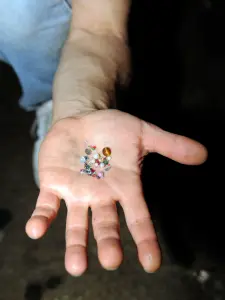
More than 2,600 independent businesses are located in the Diamond District, and nearly all of them are related to diamonds or fine jewelry. Raffi Stepanian originally worked for those businesses, making a living as a freelance diamond setter but after a few years, instead of being found inside the stores, he spent his time outside of them.  Stepanian crawls on his hands and knees on the sidewalks armed with tweezers and a butter knife digging through cracks in the sidewalk, in search of tiny bits of valuables that most everyone would otherwise miss.  Sometimes, he’ll find a pearl that fell off a broken necklace or a small diamond that came loose from a ring; other times, he’ll come across the gold backing from an earring, or some bits of gems shaved off in the shaping process by jewelry makers. For years, Raffi made a living by picking up what other people dropped, lost or forgot about.


The Torah describes Pesach as a night of protection – Layl shimurim hu la’Hashem.  Rashi interprets “shimurim” in the sense of anticipation or preservation, commenting that since the creation of the world Hashem had been waiting to redeem His people.  However, we apply this expression in the present, not just as part of the description of the past. Treating Seder night  as a “Layl shimurim” has practical Halachic implications. Hashem’s presence is felt more intensely on Pesach night and protects us from danger. We therefore leave our doors unlocked, leave out part of krias shema al ha’mita, we don’t use salt with the matzah, and more.  


But Layl Shimurim has implications beyond the first night of Pesach.  In his Haggadah Beis Yaakov, the Izbitcher Rebbe has a magnificent explanation of this phrase.  One of the challenges of life is the fleeting nature of our experiences, our relationships, our memories, and our feelings. Life is so fast-paced and chaotic that yesterday’s experiences are quickly forgotten, and today’s amazing conversations or moments will be gone by tomorrow.  It is so hard to hold on to the feelings and experiences.


Pesach, says the Izbitcher, is the Layl Shimurim – it is a reservoir of lost things.  Pesach is a time to recover lost feelings, thoughts, emotions, relationships, and experiences.  On Pesach we reclaim what we thought was lost, we reconnect with what we thought was gone forever.


On Pesach we launch our count of the Omer which begins with the offering of the Korban Omer.  On the second day of Pesach, thousands would come to watch the ketziras ha’omer, the reaping of the barley used for the Omer offering.  The best fields, those south of Yerushalayim, were used as they produced the best grain. The reaping and harvesting was done with great pomp and ceremony.  Why?


The Izbitcher explains, when the people saw the barley being harvested they were reminded of a powerful lesson.  A person drops a seed, it gets buried under the ground, seemingly lost, squandered and forgotten.  But if they come back to it, if they return to harvest it, they will see it wasn’t lost underground, wasn’t wasted at all.  In that time it has taken root, blossomed and produced. The moments, experiences and conversations that seem dropped, lost, buried, disposed of, and despaired of, are revisited on Pesach, when we come to harvest, reap, and collect those seeds that have sprouted and grown all along. 


I remember an interview with Rav Gamliel Rabinowitz, a great Rosh Yeshiva and Mekubal in Israel today. He was reflecting on his special father, Rav Levi Rabinowitz zt”l. Rav Levi was orphaned of both his father and mother by the time he was 9 years old and was raised in the Diskin Orphan Home.  He could have despaired, given up, felt all alone in the world.  Instead, he persevered with great faith, held on to the memories of those who came before, remained optimistic, positive and devoted to the study and spread of Torah.  Ultimately, he emerged a respected talmid chacham and mechaber of the popular sefer Ma’adanei Shulchan, the Mishna Berura of Yoreh Dei’ah.  He was so careful not to speak lashon ha’rah that Rav Elyashiv zt”l referred to him as “the Chofetz Chaim of the generation.” 


Remarkably, by the time of his passing a few years ago, Rav Levi Rabinowitz, orphaned at a young age, had over 1,000 descendants. Reflecting on this amazing fact, his son Rav Gamliel said, “A person sees nothing, we have no idea what kind of seeds we carry within us, the unlimited potential of a human being.”


It is interesting to note that Pesach ends the way it began.  On the eve of Pesach, we lit a candle to search for chametz, to identify what we must dispose of, throw out, and get rid of in our lives.  On the last day of Pesach, we also have a candle lit, a yahrzeit candle to search again, but this time not for what we want to destroy, rather for what we want to recover, reclaim and take back. 


On this Pesach, characterized by Layl Shimurim, we can collect all the diamonds and specks of gold that are part of our people that we may have dropped. Let’s gather the strength, faith, fortitude and resilience of those who came before us, including so many of our parents, grandparent and ancestors who overcame tremendous challenges in their times to bequeath to us the blessed life that we enjoy and let’s strengthen ourselves to navigate these times and to transmit these jewels to the next generation.    


Every Last Crumb

The Large Hadron Collider (LHC) is the world’s largest and most powerful particle accelerator.  The circumference of the collider is 16.565 miles, and it contains thousands of magnets. It was built in collaboration from over 10,000 scientists and hundreds of universities as well as more than 100 countries and it cost $4.75 billion.

In 2009, the collider overheated and shut down. Scientists were perplexed and investigated what went wrong. The problem was found at a compensating capacitor, one of the points where the mains electricity supply enters the collider from above ground.  Sitting there was a bird munching on a baguette.  It turns out a crumb had fallen into the collider causing the overheating. 10,000 scientists and $5 billion dollars couldn’t stop the impact of one crumb.


The power and potency of a crumb is at the core of Pesach.  The Talmud (Pesachim 29b) tells us chametz is forbidden in the smallest quantities, and that while in many cases with prohibited food we apply the concept of “bittul” – nullification of a small amount amidst a much larger amount – when it comes to chametz, one crumb is not nullified, even in a thousand parts.


The Meor Einayim (Tzav), Rav Menachem Nochum of Chernobyl, points out that the letters in the words “chametz” and “matzah” are almost exactly the same. The mem and tzadi are in both words, the only difference is that Chametz has a ches, and Matzah has a hay. The only difference between those two letters, a hay – ה – and a ches – ח –, is a tiny little line, a speck of ink. That mashehu of a line seems so insignificant, so seemingly inconsequential it is easy to dismiss. But the truth is that mashehu is what makes all the difference between the words chametz, or matza.


Says the Meor Einayim, the yetzer hara works not by convincing us to violate a major boundary or commit an egregious mistake.  It works perniciously by telling us that something is only a mashehu, it’s tiny, insignificant, what difference does it make?  What does it matter if you come a bit late to shul or schmooze a little during davening?  Does Hashem really care if a mashehu of what you declare as a business expense aren’t really?  Is a mashehu of lashon hara really going to hurt anyone? 


Slowly, those small things add up until a person doesn’t recognize himself anymore.  On Pesach, chametz is assur b’mashehu to teach us how important everything, even what seems so small, truly is.  One crumb can bring a $5 billion dollar machine to a grinding halt, and one crumb of yetzer hara can corrupt an invaluable neshama.


The Be’er Heitev in his commentary on Shulchan Aruch quotes the Arizal who says that a person who is careful about a mashehu, a negligible amount of chametz on Pesach, is guaranteed not to make a mistake the whole year.


I don’t read this statement as a metaphysical promise as much as a strategy for change.  If over Pesach you can learn to be disciplined even about the “mashehu”s of life, if we can learn not to dismiss or minimize the small things, we will live our most disciplined selves.


Don’t underestimate the impact of a crumb.  One mashehu, a drop of ink, is the difference between a hay of matzah and a ches of chametz.  Don’t let the yetzer hara convince you not to care about the mashehu


But maybe the message of Pesach is not only the danger and damage of even a crumb, a mashehu. If a mashehu matters, if it can make all the difference, then isn’t it true that a mashehu of a mitzvah or of a good thing also matters, it means something, it makes a difference.  The meaning of mashehu works in both directions. 


The typical approach to self-improvement or changing habits is to set a large goal, then try to take big leaps to accomplish the goal in as little time as possible. But this method often ends in burnout, frustration, and failure. Instead, focus on a mashehu at a time, continuous but steady, slow, incremental improvement.


It is so easy to dismiss the value of making slightly better decisions on a daily basis.  Making mashehu improvements isn’t going to make headlines, but it makes a difference.


In the Haggadah, we recite: וְהִיא שֶׁעָמְדָה לַאֲבוֹתֵינוּ וְלָנוּ. שֶׁלֹּא אֶחָד בִּלְבָד עָמַד עָלֵינוּ לְכַלּוֹתֵנוּ.  Tzaddikim say what is amad aleinu l’chaloseinu, what stands to destroy us? An attitude of she’lo echad bilvad, I am just one person, this is just one mitzvah, this is just one daf of Gemara, one perek of Tehillim, one dollar of tzedakah, one moment of being my best.  An attitude of echad bilvad, it is just one thing, something small, inconsequential, it doesn’t matter, that attitude stands to destroy us.


We have to realize a crumb can destroy, a mashehu of chametz is assur, but a mashehu of a mitzvah, a mashehu, a moment of nobility, righteousness, discipline, spirituality, moves the cosmos, can change the world, can change your life, and that of your family.


This Pesach, as we sit at our Seder tables, hostages are still being held, soldiers are still fighting on our behalf.  While we mark our freedom, some are in shackles and others are heroically fighting to liberate them.  After more than six months of this war and this situation, fatigue can set in, and it feels hard to sustain the intensity of prayer, contributions, advocacy, and earning merits.  Now is when it is critical to remember that even a mashehu, a small measure of effort, of caring, of prayer and connection matter.


This past week, Iran launched hundreds of drones and missiles with the intent to cause severe harm and damage to our people and our homeland. While the swift and successful defense by Israel and its allies seemed almost matter-of-fact, the minimal damage caused by the attack was nothing short of miraculous. If one Iron Dome radar-guided missile is off by a mashehu, the attacking missile could cause catastrophic loss of life. Similarly, none of us know how much of Hashem’s benevolence is due to the merits of our own mashehu contributions, our small acts of learning, davening, kindness, and righteousness.


A mashehu of mitzvos matters to Hashem and is measurable over time in us. Like the Jews in Egypt, many of us are enslaved, not to external oppressors but to our own habits and patterns, between us and Hashem, us and others, or even with ourselves.


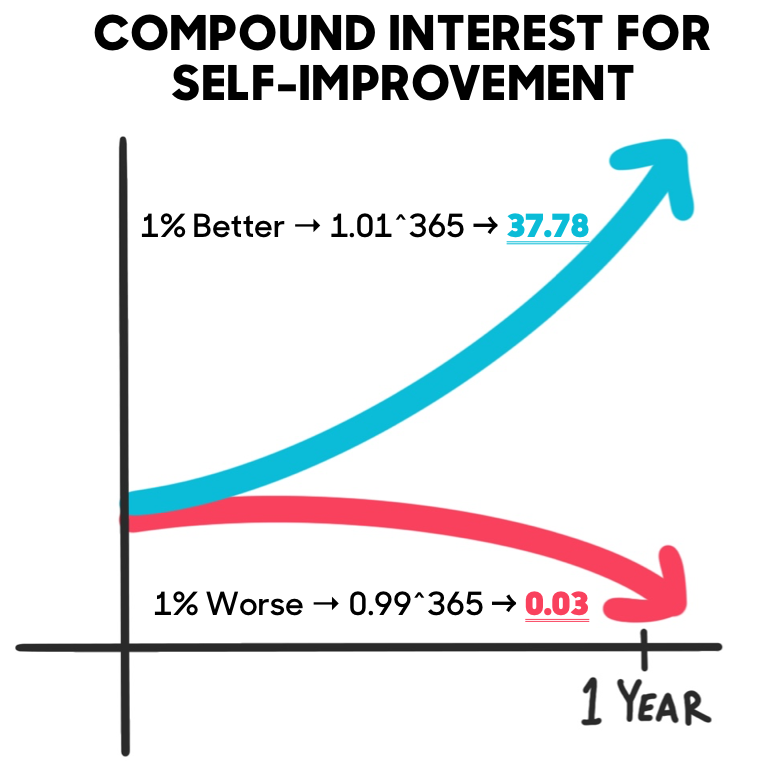
In the beginning, there is basically no difference between making a choice that is a mashehu, 1 percent better or mashehu, 1 percent worse. But as time goes on, these small improvements or declines compound and you suddenly find a very big gap between people who make slightly better decisions on a daily basis and those who don’t. In Atom Habits, James Clear shows that if you get one percent better each day for one year, you’ll end up thirty-seven times better by the time you’re done.


In one of the most inspirational stories in Shas, Chazal describe how Rebbe Akiva was a shepherd, a laborer, an am ha’aretz. At age 40, he didn’t even know how to read the aleph-beis. One day, while sitting by a brook, Akiva noticed a steady trickle of water hitting a rock. It was only a drip, it was a mashehu, but it was constant – drop after drop after drop. Akiva observed something incredible: A hole had been carved out by that steady drip of water. He wondered how that could be. He concluded: If something as soft as water can carve a hole in solid rock, how much more so can words of Torah – which is hard as iron – make an indelible impression on my heart.


That marked a turning point in Rebbe Akiva’s life. He committed himself to Torah study and went on to become the greatest sage of his generation, producing 24,000 talmidim and later a group of students who were the transmitters of Torah Sheb’al Peh.  Akiva became Rebbe Akiva because he noticed a mashehu of water and grew a mashehu at a time.


This Yom Tov we are pledging to liberate ourselves from bad habits, to make meaningful changes.  We are dedicated to do so in the merit that the matzav for our people improves, that miracles of salvation happen in our days.  If you want to change the way you live, how you learn, daven, treat others, it isn’t by hoping to wake up one morning and being radically different. 


One crumb can shut down a collider and one crumb can start up your life. Make the decision to grow a mashehu, 1% each day, and by next Pesach you will be at least 37% better.


What is the Future of Yom Ha’Shoah?

As we approach the month of Nissan, I have been thinking a lot about what Yom HaShoah will look like this year.  The reality is we, and every community I have spoken to, have been struggling to get meaningful attendance at their Yom HaShoah programs and have not succeeded in a broad “buy in” to observe Yom HaShoah in any meaningful way.  Do the most recent horrific tragedies and atrocities of October 7, combined with the ongoing war that has cost so many lives since, make it more or less likely people will show up and care about Yom HaShoah this year? 


Will the unimaginable pogroms, the “never again” happening again, and the precipitous spike in antisemitism help people realize the same evil that led to the Holocaust still continues and we must gather to commemorate and address the most horrific end result?  Or will the open wounds of the last few months overpower and cloud our ability to meaningfully connect to atrocities and losses that preceded it by 80 years?


Twice in our history, the 20th of Sivan was designated as a permanent fast day to commemorate massacres against our people.  The first time was by Rabbeinu Tam, Rashi’s grandson, in 1171, after 31 Torah scholars were executed because of a blood libel in France.  Rabbeinu Tam declared the 20th of Sivan as a day of fasting “greater than Tzom Gedalya, like Yom Kippur,” and instituted special selichos to be recited.  Shortly after, the Crusades expanded and for the next 150 years brought great devastation to Jewish communities.  This overshadowed the incident of the blood libel and the “permanent fast” ceased being observed.


Almost 500 years later, from 1648-1649, Polish Anti-Semite Bohdan Chmielnicki launched a series of pogroms that led to the deaths of tens of thousands of Jews and the loss of hundreds of Jewish communities.  The Shach, Rav Shabbsai HaKohen, instituted the 20th of Sivan as a private fast day for his family to commemorate their great loss.  Soon after, the Council of the Four Lands, the rabbinic authority of Eastern Europe, adopted the fast for all Polish Jewry in commemoration of the tragedies of what became known as Tach V’Tat, mourning the loss of a third of Eastern European Jewry.


Twice the 20th of Sivan was designated as a day commemorating Jewish tragedies, and twice the observance faded until it is now entirely obsolete.  Many observant Jews do not even know it was once a serious day of mourning. While those calamities remain very much part not only of our history, but of our collective conscience, they have been absorbed into Tisha B’Av, the designated day to grieve and reflect over all of the tragedies of our past.


For many years, I have thought about the fast of the 20th of Sivan and the inevitability of Yom HaShoah going the same way.  But I always concluded we aren’t there yet for two reasons. First, in both magnitude and severity, the Holocaust is categorically different from every other persecution or genocide in all of human history.  It stands alone and stands apart and deserves its own day for reflection.  Secondly, as long as we are blessed to have survivors among us, we owe it to them and to ourselves to show up, to honor them, to learn from them, and just to be with them.


The uniqueness and singularity of the Holocaust will, please God, remain true forever.  But other factors are changing. In the United States today, there are fewer than 50,000 Holocaust survivors. Although South Florida is home to one of the largest populations of survivors, we increasingly struggle to identify any survivor to present to us on Yom Ha’Shoah.  Whereas it was not that long ago when we had many survivors come to light candles to start our annual Yom HaShoah program, more recently we have been relying on the second generation to light the six large candles. 


While the Holocaust was a defining event and experience for the last two generations, evidence shows that young people today want to move on, put it behind us, and come out from under its shadow.  The younger generation is rapidly seeing the Holocaust in the context of the Crusades, the Inquisition, and the Expulsion from Spain: events that are part of our past and our history, rather than as something that happened to our parents and grandparents, a very real piece of our personal lives.


Does October 7 make the Holocaust more or less relevant to the average person?  Will they be more or less likely to want to commemorate it?  And most importantly, how much does it even matter? Maybe Yom HaShoah, though lacking the status of a religious day or having a foundation in Halacha, is on the Jewish calendar and should be there permanently, regardless of participation. On the other hand, that wasn’t the case for the 20th of Sivan which ultimately stopped being observed. For some, Yom HaShoah never should have been established, and Rav Soloveitchik even tried to have it cancelled. 


In the summer of 1978, newly elected Prime Minister Menachem Begin paid a visit to the United States and visited the Rav, Rav Yosef Dov Soloveitchik. In that conversation, the Rav proposed to the Prime Minister that Yom HaShoah be annulled as a separate day of mourning and be included within the framework of Tisha B’Av, as we do with other tragedies of our past, such as the Crusades.  He quoted from one of the Kinos that we recite for the victims of the Crusades, Mi Yiten Roshi Mayim, that states: “No other time of brokenness and burning should be added, rather, all matters of communal mourning should be included in a single day of mourning.”


When Prime Minister Begin returned to Israel he tried to convince his colleagues to make the change.  Ultimately, he was unsuccessful as the government was concerned about the school system having the opportunity to teach about the Holocaust and school being on vacation when Tisha B’Av falls out.


Is it time to absorb Yom HaShoah into Tisha B’Av?  If we dedicate a shiur, lecture, discussion or program for the Holocaust on Tisha B’Av, will we do more to commemorate it than if we leave it as its own day (with the added benefit of educating more Jews about Tisha B’Av)?  Should we maintain Yom HaShoah and find a way to dedicate it this year to the atrocities of October 7?


I don’t have a conclusion about Yom HaShoah this year, but I think there are questions we need to ask ourselves and that are worthy of our careful consideration. Instead of groveling and begging for people to attend and being frustrated yet again by a room with many empty seats, let’s plan thoughtfully and consider collaboratively whether we are at a juncture in history where a change is appropriate, and if so what it should look like.  Whatever we conclude, may we no longer have tragedies to mourn and sad days to observe.  

Much More than a Costume

When a convert stands in the mikvah about to immerse, undergo a radical transformation, and be born anew, the Beis Din asks a series of questions. One of the most poignant is one that long seemed to many of us to be an antiquated question: “You know that Jews have been subject to persecution, antisemitism, and attempted extermination throughout the millennia. If you become a Jew, you will join this hated, targeted people. Are you prepared to share in the destiny of the Jewish people both for good and for bad?”


At every single conversion I have had the privilege to be involved with, the candidate responded to this hypothetical question in the affirmative. Until recently, this question has felt like a technicality, something we must confirm in theory but would likely never be relevant in practice.  After all, while joining the Jewish people means giving up cheeseburgers and bacon and other physical pleasures, it wouldn’t likely mean giving up one’s life.


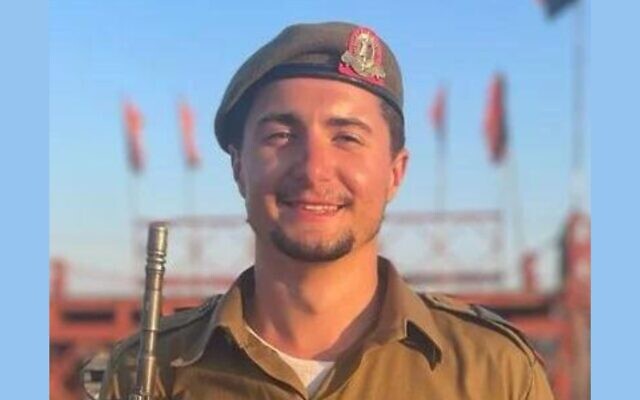
On December 8th, Staff Sgt. Yonatan Chaim H”yd, 25, was killed fighting in Gaza.  He died a Jew, but he wasn’t born that way.  Yonatan Chaim, originally from Hilton, New York, was born Jonathan Dean, Jr.  After studying the Holocaust in college, he converted to Judaism and in 2020 he moved to Israel.  His cousin, Joelle Marie Muscolino, described him as “sweet, amazing, loving, smart, caring, talented, passionate, uniquely fabulous.” She said that he had “lived in Israel for a bunch of years now and had made it his home, a home where he was loved and celebrated for everything that he was, without judgement, to live freely and happily as Yonatan Chaim, just as his loving heart, soul, and body so deserved to…He felt compelled to protect Israel, the land who had given him so much, from the brutality of the terrorist, evil, savage attacks by Hamas and Islamic Jihadists. He died bravely fighting to defend Israel’s Democracy, the Jewish People that call her home just like he did, and for Judaism around the entire world.”


When Yonatan Chaim stood before the Beis Din to convert and was asked if he understood that by becoming a Jew he too would be the target of antisemitism, subjected to hate, he likely never dreamt how serious and real a question that would become, that it would in fact become for him a question of life and death. 


Antisemitism is the world’s oldest hatred.  It has existed since the inception of our people.  In different generations it takes different forms, today manifesting in both its classic forms and in its expression as “anti-Israel” sentiment. For 2,000 years our enemies have sought our demise, they have systematically attempted to exterminate us and, aside from rare exceptions, for the most part we were passive victims and martyrs to their plots and plans. 


But we are living in a new era, we are living with the miraculous modern State of Israel.  No longer will our people go like sheep to the slaughter. No longer are Jews defenseless and helpless.  Israel has one of the strongest armies in the world and like Staff Sgt. Yonatan Chaim, the selfless, brave and tenacious soldiers fight to defend not only our brothers and sisters in Israel, but Jews around the world.


As Purim approaches, a time ordinarily characterized by tremendous joy, happiness, and light, many are struggling with how to observe it against the backdrop of sadness and darkness as one war continues to rage on and another one looms.  One of the specific questions that has arisen concerns dressing up as Israeli soldiers for Purim this year.  On the one hand, what a demonstration of who our heroes are, what a way to show whom we admire, respect, and want to emulate.  On the other hand, it might be perceived as insensitive that those who put on the uniform as a costume wear it for one day and have the luxury to take it off, while others must wear it for weeks or months on end, fighting in it and risking their lives in it on the front lines.  It has further been suggested that yet another consideration for Americans might be the impression it could leave on our neighbors if we seem to be glorifying or celebrating war by “dressing up” in an army uniform.


Several years ago, in his responsa, She’eilas Shlomo (4:87), Rav Shlomo Aviner, Rosh Yeshiva of Ateret Cohanim and Rav of the community of Beit El, addressed the following question: Is it proper to recite the beracha of Shehechiyanu on purchasing a new gun? Rav Aviner provides a long Halachic explanation and defense of why he feels a shehechiyanu is warranted while conceding the need to own a gun is sad and unfortunate. His closing argument touched me deeply and I share his words with you:


The fact that we have guns shouldn’t elicit sadness that we still have wars and conflicts. Indeed, the opposite is true, it should elicit happiness that we have merited to be an am chofshi b’artzeinu (free nation in our homeland), that we have an established Jewish government, we have an army and a police force, that we are no longer the punching bag of the wicked nations, but rather we have the capacity to protect ourselves. Would it even occur to you that when the War of Independence began and we had weapons in our hands to defend ourselves after 2,000 years of Jewish blood being spilled freely, that one shouldn’t recite shehechiyanu with joy and gladness?! That joy continues to carry us and protect us from then until now. And for that reason, a Shehechiyanu should be recited when an Israeli soldier puts on his or her IDF uniform for the first time.


Rav Aviner ends his responsa by quoting his Rebbe, Rav Tzvi Yehudah Kook zt”l who wrote:  “Fighting to protect our homeland is a mitzvah, the mitzvah of all Klal Yisroel. Therefore, everything connected with it, every gun and every weapon that is our response to our enemies, everything associated with establishing and protecting malchus Yisroel, Jewish sovereignty, it is all kodesh.”


Similarly, Rav Aharon Lichtenstein related that once when he returned to America and was visiting with his father-in-law, Rav Soloveitchik, he posed a series of questions from students who were serving in the IDF. One student worked in the tanks division and his job was cleaning out and maintaining the tanks. Often his uniform got covered in oil and grime and he wanted to know if he needed to change before davening Mincha, something that would be terribly inconvenient and difficult. The Rav looked at Rav Lichtenstein and wondered out loud, “Why would he need to change when he is wearing bigdei Kodesh (holy clothing)?”


I have heard from some in Israel who believe Americans should abstain from wearing an IDF uniform this Purim and I have spoken to others who think nothing would show more love, identification, and support.  Each person and each community will decide for themselves but one thing should be clear: The IDF uniform is not simply a costume, and it should never be confused with a symbol of warmongering.  It is the holy garb of a holy nation charged with a holy mission.  It is worn by the defenders of a people that pray for peace more than any, by those who value and celebrate life more than any, who fight with a moral clarity and go to extreme measures to protect innocent lives, more than any other army or people. 


We daven for the fulfillment of the words of our prophet Yeshaya: וְכִתְּת֨וּ חַרְבוֹתָ֜ם לְאִתִּ֗ים וַחֲנִיתֽוֹתֵיהֶם֙ לְמַזְמֵר֔וֹת לֹא־יִשָּׂ֨א ג֤וֹי אֶל־גּוֹי֙ חֶ֔רֶב וְלֹֽא־יִלְמְד֥וּ ע֖וֹד מִלְחָמָֽה׃
, “And they shall beat their swords into plowshares and their spears into pruning hooks: Nation shall not take up sword against nation; They shall never again know war.”


But until then, Shehechiyanu v’kiymanu that we merit to live in a time that with the help and protection of Hashem, just like the Jews we will read about this week, we can fight for and protect ourselves. 


Catching our Breath

I vividly remember playing football as a child and getting hit (accidentally) in the solar plexus.  Gasping for air, it felt like I would never catch my breath or breathe normally again.  I think we all have had this feeling lately; the horrors of October 7 knocked the wind out of all of us and we haven’t really caught our breath since.  Overwhelmed by grief, sadness, worry and concern, we are now two months into this war and neither the situation nor we are getting better anytime soon. 


As the hostages have been released, we have learned of the inhuman, barbaric way they were treated.  One hundred and fifty are still being kept captive.  Our soldiers remain on the front, fighting for their lives and our lives. The enormous spike in antisemitism in this country and around the world is alarming, frightening and deeply concerning.


When we consider the reality right in front of us, it is hard not to despair or grow despondent.  Israel is surrounded by enemies who seek her demise.  Jews globally are the target of increasing antisemitism and disdain.  Watching person after person speak at an Oakland City Council meeting this week, defending, excusing, and glorifying Hamas, accusing Israel of killing its own people, sympathizing with terrorists, can make you feel hopeless and make the situation feel beyond repair.  How can we find hope when so much feels hopeless?  How can we long for or bring redemption when so many seem irredeemable? 


For one thing, we can find strength in the holiday of Chanukah, which couldn’t come at a better time. Chanukah is defined by our sense of sight – Haneiros halalu kodesh heim, v’ein lanu reshus l’hishtameish bahem elah lirosam bilvad.  The candles are sacred; we don’t have permission to benefit from their light but their entire purpose is simply to be looked at. We have a unique Halacha on Chanukah.  The Talmud tells us – and the Shulchan Aruch records – haroeh mevareich, one who can’t light for himself or herself but sees the candles lit by someone else nevertheless makes the second beracha of she’asah nissim la’avosainu.  When I see someone put on Tefillin, take a lulav, or blow shofar, I don’t make a beracha.  Only on Chanukah do I make a beracha when seeing someone else perform the mitzvah.  Why?


The Kedushas Levi, Rav Levi Yitzchak of Berdichov, tells us that Chanukah is the holiday of seeing.  The different moadim correspond with our different senses.  On Purim our hearing is heightened as we listen to the Megillah.  On Pesach our sense of taste is sharpened when we eat matzah and marror. On Chanukah, he says, we evaluate our sense of sight, testing how well we see.


The truth is, in a sort of paradoxical way, our eyes are a liability.  We often feel that “seeing is believing.”  If I can perceive and observe it, it is true.  If I can’t, it is not real.   Following this rule, we have dismissed and disregarded the most precious truths and realities in our lives.  There are ideas, feelings, thoughts and dreams that are authentic and genuine, despite the fact that they can’t be seen or observed.


Our Rabbis describe the Greek empire and Hellenist influence as choshech, darkness.  In expounding on the opening verses of the creation story, the Midrash Rabbah says choshech al p’nei sehom – zu galus yavan.  Moreover, our Rabbis taught that darkening our eyes was the goal of our Greek oppressors – shehechshichu einehem shel yisroel.  They wanted to make us believe that something is only true if we can see it.  They worshipped the body, the aesthetic, the visible form.   Our enemies proclaimed that one must look at the facts and face the reality. 


We are only here because throughout our history, we have refused to see only the surface and instead we have employed a vision, a capacity to see beyond, to dream of what could be.  The truth is one can live with their eyes open, have perfect vision, and still be cloaked in darkness.  On the other hand, it can be pitch black all around and yet a person can see absolutely clearly. 


During the story of Chanukah, the Chashmonaim didn’t just see the physical reality – their few numbers, weak army, and impossible task.  They saw the mighty hand of Hashem, they saw the obligation to fight, and they saw Divine protection that would accompany them. We have been charged as a people throughout our history to not simply look at what is in front of us.  If we had, we would have given up long ago.  We have faced impossible odds, we have confronted impossible challenges.  Nevertheless, we have succeeded in retaining our hope and our optimism because we chose to have vision instead of sight, imagination instead of observation.


What if Moshe looked at the might of the Egyptian empire and never challenged Pharoah to let his people go?  What if the Macabbees had only considered the facts and never revolted against the Greek oppressors?  What if Rabban Yochanan ben Zakkai simply observed the power of Vespasian and never asked for Yavneh and its sages?  What if in 1948 and 1967 the brave men and women of Israel had conceded the impossible chances of overcoming the many nations, people, and resources that sought to obliterate them?


There is a message plastered all over Israel right now, hanging on billboards, posted on buses, displayed on bumper stickers.  It has become our motto of this war – עם הנצח ינצח, the people of eternity will be victorious.  We don’t look at odds, numbers and likelihoods; we aren’t intimidated or scared by predictions of pundits or plans of pernicious actors.  We are the people of eternity, we see differently than others, we believe in what will be, not what is. 


Residents of cities from the south who were first decimated and then displaced have not given up, given in, they are not abandoning their posts or moving to a more comfortable or safer environment.  They have vowed to return, to expand, to build and to further settle.  They are members of the Am HaNetzach, the eternal people who don’t accept what is but define what could be, who don’t just see what is on the surface but who have a vision for lives of virtue and the triumph of Jewish values. 


In her “Hasidic Tales of the Holocaust,” Professor Yaffa Eliach shared the incredible story of Chanukah in Bergen-Belsen:

Chanukah came to Bergen-Belsen. It was time to kindle the Chanukah lights. A jug of oil was not to be found, no candle was in sight, and a menorah belonged to the distant past. Instead, a wooden clog, the shoe of one of the inmates, became a menorah, strings pulled from a concentration camp uniform, a wick, and the black camp shoe polish, pure oil.


Not far from the heaps of bodies, the living skeletons assembled to participate in the kindling of the Chanukah lights.  The Rabbi of Bluzhov lit the first light and chanted the first two blessings in his pleasant voice, and the festive melody was filled with sorrow and pain. When he was about to recite the third blessing, he stopped, turned his head, and looked around as if he were searching for something.


But immediately, he turned his face back to the quivering small lights and in a strong, reassuring, comforting voice, chanted the third blessing: “Blessed are Thou, O Lord, our God, King of the Universe, who has kept us alive, and has preserved us, and enabled us to reach this season.”


Among the people present at the kindling of the light was a Mr. Zamietchkowski, one of the leaders of the Warsaw Bund. He was a clever, sincere person with a passion for discussing matters of religion, faith and truth. As soon as the Rabbi of Bluzhov had finished the ceremony of kindling the lights, Zamiechkowski elbowed his way to the Rabbi and said, “Spira, you are a clever and honest person. I can understand your need to light Chanukah candles in these wretched times. I can even understand the historical note of the second blessing, “Who wrought miracles for our Fathers in days of old, at this season.” But the fact that you recited the third blessing is beyond me. How could you thank G-d and say “Blessed art Thou, O Lord, our God, King of the Universe, who has kept us alive, and hast preserved us, and enabled us to reach this season”? How could you say it when hundreds of dead Jewish bodies are literally lying within the shadows of the Chanukah lights, when thousands of living Jewish skeletons are walking around in camp, and millions more are being massacred? For this you are thankful to God? For this you praise the Lord? This you call “keeping us alive?”


“Zamietchkowski, you are a hundred percent right,” answered the Rabbi. “When I reached the third blessing, I also hesitated and asked myself, what should I do with this blessing? I turned my head in order to ask the Rabbi of Zaner and other distinguished Rabbis who were standing near me if indeed I might recite the blessing. But just as I was turning my head, I noticed that behind me a throng was standing, a large crowd of living Jews, their faces expressing faith, devotion, and deliberation as they were listening to the rite of the kindling of the Chanukah lights.


I said to myself, if God has such a nation that at times like these, when during the lighting of the Chanukah lights they see in front of them the heaps of bodies of their beloved fathers, brothers, and sons, and death is looking from every corner, if despite all that, they stand in throngs and with devotion listening to the Chanukah blessing “Who performed miracles for our Fathers in days of old, at this season”; indeed I was blessed to see such a people with so much faith and fervor, then I am under a special obligation to recite the third blessing.”


That night in Bergen-Belsen, Mr. Zamietchkowski only saw what lay before him, dead bodies and terrible suffering.  The Rebbe also looked, but he saw another layer of truth that was equally accurate – that there was a gathering of people who maintained incredible faith despite the most horrific circumstances.


If you look on the surface, there is so much to fear right now.  But over the last nearly eight weeks, if you look a little closer, if you wear your “Chanukah glasses” you will recognize that we have merited to view things that our people have never seen before.  Our vision to be a united people is becoming fulfilled, the dream of a spiritual awakening is taking place, the hope for a resurgence of a connection to our homeland from Jews around the world is happening. 


When Chanukah comes next week, take the time to not only light the candles but to look and gaze at them.  Use the light to dispel all the darkness.  Allow it to illuminate your life, see with 20/20 vision, feel at the core of your being that the עם הנצח ינצח, our people of eternity will prevail.


May our people experience the miracles and the wonder of yesteryear today, may we merit to see the hand of Hashem bayamim ha’heim bizman ha’zeh


Shake Yourself

A renowned Rabbi once did a favor for the Gerrer Rebbe, the Lev Simcha, which the Rebbe remembered for many years.  Each year, on Erev Rosh Hashana, the Rebbe would call the man to check in on him and to wish him a kesiva v’chasima tova.


One year, the Rabbi asked the Rebbe if he could have the honor of visiting on Chol HaMoed Sukkos.  The Rebbe was more than happy to agree and they set up a time.  Chol HaMoed came and the Rabbi was welcomed into the Rebbe’s sukka where they began a joyous discussion of Divrei Torah about Sukkos. 


The Rebbe, in his classic style, pointed out something amazing about the way we perform the mitzvah of ד׳ מינים.  He said, “Did you notice that the number of times we shake the Arba Minim equals the gematria of the two sheimos, the two names of Hashem?” The Rabbi, who was a very quick thinker, remarked, “Rebbe, I’m sorry but I don’t think the math works out.  We shake five times all together.  Once when we make the ברכה, twice when we say הודו, and twice when we say אנא.  Each time there are 18 total waves or shakes, 3 in each of the 6 directions. That makes the sum total 90, whereas the gematria of the two names of Hashem is 91.” [The four-letter name of Hashem is written with letters that add up to 26 and pronounced with letters that add up to 65.]


The Lev Simcha smiled. “True, but you forgot to include one more shake, perhaps the most important one.”  The Rabbi was confused, which of the נענועים did he leave out?  The Rebbe explained, “A yid must also give himself a shake, we shake the lulav and we shake up our lives.”


We are familiar with many of the laws of לולב and אתרוג but these laws also have a deeper meaning, a פנימיות  to them.  We are meant to not only take and shake the לולב and אתרוג externally but to have it impact us internally as well. The Zohar tells us that the word לולב comes from a combination of the world “לו” (to him) and “לב” (heart), meaning our hearts must be our own, in our personal jurisdiction, and under our control.  Our hearts should not be swayed by peer pressure or the temptation to imitate the hearts of others. 


When the Torah commands the mitzvah of לולב
it says, ולקחתם לכם, take for yourself.  Chazal learn from here that we must own our own לולב the first day that we take it. We must take personal ownership over our Avodas Hashem and over our lives, and not serve Hashem by comparing, competing, or copying those around us.


This insight can provide deeper understandings behind some fundamental Halachos of lulav. A לולב הגזול is disqualified because we cannot steal or copy others, we need to find our own voice, fulfill our own unique mission in this world. A לולב היבש is pasul, a dried out לולב is invalid, because it lacks vitality, חיות.  It is simply going through motions bereft of vitality.  The לולב of an אשרה of עבודה זרה is invalid. Our heart cannot be led astray, can’t be influenced from foreign sources, ideals and ideas. It must be genuine, authentic, and true. 


The לולב must be shaken דרך גידולו , in the way that it grew, pointing upwards.  Our heart was born to strive upwards, we are positioned to grow, to stretch and to actualize our spiritual potential. 


The לולב requires נענועים.  When shake in every direction; when we interact with those all around us, we cannot simply be an imitation, a copy of someone else.  לולב, לו לב, we have to take our unique energy, talents, skills and apply them in every direction, spread them all around us.


The Gemara in Sukka (53a) teaches:

תַּנְיָא: אָמְרוּ עָלָיו עַל הִלֵּל הַזָּקֵן כְּשֶׁהָיָה שָׂמֵחַ בְּשִׂמְחַת בֵּית הַשּׁוֹאֵבָה, אָמַר כֵּן: אִם אֲנִי כָּאן — הַכֹּל כָּאן, וְאִם אֵינִי כָּאן — מִי כָּאן

They said about Hillel that when he was rejoicing at the Simchas Beis Ha’Shoeiva he said this: If I am here, everyone is here; and if I am not here, who is here?


Could Hillel be so arrogant, so self-centered to make such a pompous and bombastic statement about himself? The Talmud is replete with examples of Hillel’s paradigmatic humility. What was Hillel actually saying?


The Kotzker Rebbe famously said: “If I am I because I am I, and you are you because you are you, then I am I and you are you. But if I am I because you are you and you are you because I am I, then I am not I and you are not you.”


Knowing who you are requires an awareness and realistic measure of your capabilities. Without self-understanding, you may rely on others to determine your identity and potential. Am I one person at work, another person at shul, another at home, and someone entirely different when I’m on vacation? If I am only defined by others or by the context in which I find myself then I have no true identity of my own. The Kotzker Rebbe was teaching that identity is built from within.


Perhaps Hillel was echoing the message of the Kotzker: If I am here, the true me, the real me, the genuine and authentic me, if each of us are true to ourselves and our missions, הכל כאן, we are all really here. But if we are just imitating one another, if we are just blending together and copying each other, nobody is actually here. Hillel’s humility didn’t contradict his self-awareness.


Rav Dessler explains that this is the meaning of another famous statement by Hillel, אִם אֵין אֲנִי לִי, מִי לִי If I am not for me, who will be for me?  If I am just a copy, an imitation of others, who will represent and express the real me?  


According to the Zohar we take the לולב and we remember לו לב, be yourself, be true to your heart, don’t lose sight of the unique gifts Hashem has entrusted you with and the mission that only you can fulfill.  So you don’t have the same job, spouse, children, talents, skills or opportunities as others you know.  Your job is not to be them, it is to be you.  To know your heart and be true to it, to shake your lulav and shake yourself up until the real you comes out. 


Oscar Wilde put it well when he said: “Be yourself; everyone else is already taken.”


Perhaps this is why Sukkos specifically is זמן שמחתנו.  The biggest source of happiness is being true to ourselves, feeling genuine and authentic.

Several years ago, a group was travelling through Iceland on a tour bus and stopped near a volcanic canyon in the southern highlands. Soon, there was word of a missing passenger. A search and rescue operation was initiated involving 50 people on foot and in vehicles. As the night wore on in Iceland’s Eldgja Canyon, a description of the missing person was offered – Asian female in dark clothing and speaks English well. It was close to 3:00 a.m. and the Coast Guard readied a helicopter to help find a missing woman. But the search was called off when it became clear the missing woman was actually part of the search party. She had left to change her clothes. When she came back, her party didn’t recognize her and started the search. It turns out that all night the woman was searching… for herself.


This Sukkos, let’s not only shake the physical לולב, let’s shake ourselves us and go searching for our לו לב, who we are and the unique energy we can wave in every direction

Rabbi Efrem Goldberg

Join Our Community

Subscribe to our newsletter or connect with us on WhatsApp.