An (Updated) Open Letter Regarding Yeshiva Week(s)

This week marks the much-anticipated and highly celebrated time on the Jewish calendar. Yeshiva Week has become such a fixture and institution that it now has a Wikipedia entry defining it as “the informal term for a vacation period occurring annually in mid- to late January, in which many Jewish day schools and yeshivas afford time off to their students.  It is primarily a North American phenomenon.” 


In truth a more apt name would be “No Yeshiva Week,” as schools and yeshivas close while many students and their families go on pilgrimage to Florida, Mexico, the Caribbean and other exotic locations, while others enjoy a staycation.  What began as Yeshiva Week has morphed into Yeshiva Weeks, with different states and institutions no longer coordinating the time off and intentionally staggering it to avoid overlap, a fascinating phenomenon in its own right.


Our community is a primary destination that feels the impact of Yeshiva Week.  Local cynics describe preparing for it as one might for a hurricane.  We load up on supplies early, hunker down, assume it will be difficult to be out and about, and wait for the storm to pass before emerging.


But the truth is, there are many beautiful aspects to welcoming so many fellow Jews to our South Florida community.  For me, I look forward to meeting and greeting guests, love seeing familiar faces and old friends, colleagues, and acquaintances, and genuinely enjoy learning about new people and the places they are visiting from.  Nevertheless, for some visitors and local residents, Yeshiva Week can be challenging and frustrating when waiting on lines, looking for parking, or struggling to get a table. In general, whether we see the beauty and blessing, or instead focus on the frustration and aggravation, is really all up to us.


Dovid HaMelech teaches us (Tehillim 34:13) the secret to life: מִֽי־הָ֭אִישׁ הֶחָפֵ֣ץ חַיִּ֑ים אֹהֵ֥ב יָ֝מִ֗ים לִרְא֥וֹת טֽוֹב׃, Who is the man who is eager for life, who desires years of good fortune?  The simple interpretation of the passuk and its advice has the question mark after the words “Liros Tov.” Who is the person who wants to live a long life, loving days and seeing good? And then Dovid gives the answer:  A good long life is achieved when one guards his tongue from speaking evil…”


Rav Nissan Alpert, however, encourages us to punctuate and interpret differently. Place the question mark after the words he’chafetz chaim, who wants a long and good life?  The answer is ohev yamim liros tov, one who loves to fill days with seeing good.  


The quality of our lives is determined by the attitude that we bring.  Liros tov, look for the good, see the positive. There is a phenomenon that psychologists call the “Missing Tile Syndrome.”  When a person is in a beautifully tiled room, his eye is not drawn to the ornate tiles or to the detailed labor.  Rather, if there is one tile missing in the whole room, the natural tendency is to be drawn to and focused on that tile.  We tend to fixate on what is missing, on what is lacking or deficient, instead of emphasizing the beauty, the abundance, or the plenty.


Our Jewish world too often has a culture of criticism. We suffer from the Missing Tile Syndrome, drawn to what we think is wrong or missing, instead of focusing on the abundance of blessing.  Yeshiva Week(s) presents a fantastic opportunity to be liros tov, to bring parts of the Jewish world together, to form relationships and enjoy each other’s company while on vacation.  We can focus on the blessings, the opportunities and the good, or we can be fixated with hyper criticism on what is frustrating or wrong.


There is always more we can do to make each other’s lives even more pleasant.  Here are some suggestions:


To our Yeshiva Week visitors:


We hope you have a safe and smooth trip down here and enjoy your time in our community.  We are very excited to welcome you and to benefit from the influx of your energy, enthusiasm and participation.  We are grateful you have chosen to visit our community and to support our local establishments and attractions.  If we can be helpful in any way during your visit or can offer any hospitality, please don’t hesitate to reach out.


If you don’t mind, here are a few reminders that may be helpful during your visit:


·  Unlike the Beis HaMikdash, our restaurants don’t expand based on the pilgrimage of Jews. Our proprietors and their staffs are doing the best they can. Please be patient, understanding and courteous, and please be generous with your tips, since the waiters are doing the best they can during an overwhelming time.


·      While you feel that they may do things differently or even better “back home,” and you may have the best intentions in sharing feedback in real time or later online, please be patient and supportive of our local proprietors, especially while they are trying to manage an overwhelming mob of patrons.  Please don’t feel obligated to share your feedback and suggestions online or offline, particularly if you aren’t here full time, as it can negatively impact our friends’ livelihoods. 


·      Please note and be sensitive to the fact that while you enjoy our many kosher dining options and kosher supermarkets, it is the local residents who support them all year long and enable them to be available to you when you visit.


·  Please observe all parking rules and regulations and don’t double park. The white lines are not suggestions; your car should be between them.


·      Our shul has many minyanim each morning and each evening. Please attend one of the listed minyanim and don’t assume a new minyan should be formed based on the time you arrive. 


·     In South Florida, life moves at a little slower and more relaxed pace. If the light turns green and the person in front of you doesn’t step on the gas within a millisecond, be patient, take a deep breath, take in the palm trees, and enjoy being on vacation.


·      If you encounter a line, see it as an opportunity to spend time with others in your group or to read, learn, or listen to a shiur. Talk to the person in front of you or behind you; they are as eager as you to get to the front.


·   When shopping at the local establishments, please only enter the check-out line when you have completed your shopping. Leaving your cart in line while you run back and forth to fill it and using it as a place holder is discourteous and is not our definition of online shopping.


·      If you enjoy the minyanim, shiurim, learning opportunities, programs, mikvahs, eruv, or kashrus available in our community, please feel free to express your gratitude by making a contribution of any amount to our Tomchei Shabbos or Chesed Fund that can use help and support.


Over the course of your stay, please come say hello and introduce yourself.  If you are considering moving here, please let us know if there is any way we can help or any questions we can answer. We would love to get to know you.


Sincerely,


Rabbi Efrem Goldberg


________________________________


To my fellow Floridians:


This week begins the annual influx of visitors for Yeshiva week.  This week is a great reminder of the honor and privilege we have to live year-round in the very paradise that others clamor to get a taste of for just one week a year.  Yes, it may be hard to find parking, eat out, or have your usual seat in shul (and maybe another one for your Tallis bag) during this time, but those are small prices to pay to offer gracious hospitality to fellow Jews, some of whom specifically come here to experience the warmth our community is known for.


If you don’t mind, here are a few reminders for the coming few weeks:


·      While we support the local establishments all year, don’t minimize or dismiss the economic boon that our proprietors have come to rely on from vacation week.  Be grateful and gracious for the patronage and support of all of our visitors.


·      Be warm and welcoming when you see visitors and new faces. Offer a smile and a kind greeting.  When in doubt, fail on the side of assuming someone is visiting and say hello.  The worst that can happen is the person lives here longer than you, but they will still feel appreciated. 


·    Be patient, gracious and hospitable, and treat every visitor the way we would want to be treated when visiting or vacationing elsewhere. These weeks are an amazing opportunity to practice authentic Hachnosas Orchim – which is not just having our friends over for Shabbos meals (though there is nothing wrong with that), but helping, making sacrifices for, and showing kindness to visitors we do not know.


·      If someone is sitting in your usual seat in Shul, the appropriate response is not, “You are in my seat,” or a passive-aggressive “That row has a few empty ones,” or non-subtle gesturing with your hands in an effort to get someone to move; simply find another seat. Our visitors aren’t doing anything malicious or with bad intent, they are just trying to experience davening at BRS. (This applies the rest of the year too.)


·   Recognize it will be hard to get a table or eat out and plan around it. We can enjoy our wonderful restaurants all year long, let others have them for the week or be patient when eating out.


·      Don’t use social media to share any frustrations or displeasures. Post about all the beautiful tiles in your life, not the missing one.


Looking forward to welcoming our guests and enjoying this vacation period together.


Sincerely,


Rabbi Efrem Goldberg



Do You Put Your Money Where Your Mouth Is?

Much of our attention and concern these days is focused on the explosive increase in antisemitism.  In November alone, there was a 125% increase in antisemitic hate crimes in New York City. Also alarming is the continued increase of intermarriage rates, particularly outside of the Orthodox community.  While 98% of Orthodox Jews marry Jewish, among non-Orthodox, 72% are marrying a non-Jew. 


While resources and efforts are understandably being directed to fighting antisemitism and outreach efforts to stop intermarriage, we must never neglect “in-reach” or take retention in the observant community for granted.  While people leave Orthodoxy for all sorts of reasons, some of which are complicated and difficult to solve, one of them should be relatively easy to eliminate – the inability to afford Jewish education.


As long as there have been Jewish Day schools there have been families struggling to pay tuition.  Fortunately, though, there have also always been remarkable people devoted to Jewish education and Jewish continuity willing to help.


In 1959, due to insurmountable financial stress, the Board of Directors of the Hebrew Academy of Miami instituted a Draconian policy.  If parents didn’t pay tuition, their child could no longer attend the school. One affected family told their young son that he would sadly need to leave the school permanently. The child was devastated. He loved the Academy and was especially enjoying the Torah studies.


The very mature young man boldly wrote a handwritten letter to the dean, Rabbi Alexander (Sender) Gross:


Dear Rabbi Gross,


I would very much like to go to the academy, but even though I cannot, I do not hold anything against you or the board.  I believe that if G-d wanted me to go to the Academy everything would have been arranged so I could’ve gone.  If G-d wants me to be a rabbi I will be and if not I won’t.  Whatever G-d has planned for me to be I will follow faithfully without asking questions or being disappointed.


Rabbi Gross was so touched by the letter that he shared it publicly at the next meeting of the Board of Directors.  They decided to let the child continue at the Academy. He stayed through eighth grade and was the class valedictorian.  He continued his studies in the Telshe Yeshiva in Cleveland and became an accomplished and renowned Talmid Chacham, a prominent Rav and popular author.


The young boy who wrote the letter was Rabbi Zev (then known as Billy) Leff.  Rav Mordechai Gifter, the famed Rosh Yeshiva of Telz, once told Rabbi Gross, “If the Hebrew Academy was created just so that it could produce this one talmid, Rabbi Zev Leff, dayeinu – it would have been worthwhile.”


Rabbi Gross carried the letter of the young Billy Leff in his wallet.  It was with him wherever he went and whenever he had a hard time, he opened the letter and drew strength.  Once, referring to the letter, he told his family, “This is my entrance into Gan Eden.”


That part of the story is known.  What is much less well-known is that while Rav Leff’s letter moved the Board of the Academy, he was able to stay in school only because Rabbi Gross took it upon himself to personally pay his tuition.   Indeed, when he passed away, Rabbi Gross’s family were looking through his personal desk and found a folder that had “מיינע קינדר,” my children, written on the outside. It was a list of children that he personally paid tuition for so that they could stay in the Academy and not go to public school.


Rabbi Gross put his money where his heart and his mouth were.  He dug deep to enable Jewish children to get a Jewish education and among those it impacted for generations was one of the great rabbis of our generation. 


When I heard this story from his own family, I was reminded of a story I read about the great Rav Yitzchak Dovid Grossman, the Disco Rabbi. When he first went to Migdal HaEmek as a young newly married man, he found the city was a center of crime.  Arab men were coming into the city and preying on young Jewish girls.  He said to himself, the only way Arabs could enter the city and behave in that way is if someone was taking money to protect them and allow them to enter.  After inquiring, he found out the crime boss being paid to protect them was an incredibly tough thirty-five year old named Kobi.


Rav Grossman, a young Chassid who had rarely ever left Meah Shearim, decided to pay this crime boss a visit.  He knocked on the door and Kobi, a tall and powerfully-built, frightening figure, answered. He barked at the Chassidish man, “What do you want,” and Rav Grossman responded, “I came to drink a l’chaim with you.”


Kobi was at a loss for words but motioned for him to come in. When they were sitting across from each other, Rav Grossman said to him without preamble, “Kobi, I’m sure you know what I’ve been doing for the youth here in Migdal HaEmek.” Kobi nodded. “Of course I do. All the chevrah (the gang) talks about you and how much they love you.” “Thank you for the compliment. But the truth is I came here tonight to discuss something else – something I saw here in town. Something that disturbed me very much.” Rav Grossman described how he found out that Arabs from the nearby towns were coming there to date the Jewish girls of Migdal HaEmek.


After admitting he had been accepting a fee to let the Arabs enter, and after hearing Rav Grossman’s passionate protest, Kobi responded: “I understand you, Rabbi but this is business. It’s not easy, making money here in Migdal HaEmek, and this is a good moneymaker. For some reason, these Arabs want to marry Jewish girls, and they’re willing to pay money for the opportunity. It’s nothing personal.”


Rav Grossman knew he had to find another source of income in order to get Kobi to stop.  He asked Kobi what he wanted to do and Kobi answered, “If I had my own truck, I could do deliveries around the country and get paid very well for my work. I could make my own schedule and get up when I want and come and go when I please. If you’re asking me what I would want to do with my life, that’s the answer: I’d be very content working as the driver of my own truck.”  Rav Grossman nodded. “I hear you. You just need a truck.”  They drank a l’chaim and Rav Grossman left.


Rav Grossman’s father and father-in-law had purchased the young couple an apartment in Yerushalayim at the time of their marriage.  It was their only asset, it represented essentially their entire net worth.  The Sunday after meeting with Kobi, Rav Grossman traveled to Yerushalayim, where he put his apartment up for sale.  Soon after, with the money received from selling the apartment, he purchased a Volkswagen truck.


Rav Grossman returned to Kobi’s home and knocked on the door. When he was invited in, he placed the keys to the truck on the table and pushed them across the wooden surface toward the speechless Kobi. “You said that your dream is to have your own truck. Well, here it is. Now you have your own truck.”  With that, Arabs lost their protection and no longer entered Migdal Ha’Emek.  The Jewish girls were no longer in danger, their future as proud and practicing Jews more secure.


I find this story simply amazing.  To protect young Jewish girls and keep them part of our faith, Rabbi Grossman, without hesitation, sold his apartment and gave all the money he had.  How many of us would do the same?  How many of us would be bothered and moved enough to give a meaningful gift altogether?


Fighting antisemitism and stemming the tide of assimilation are critically important, but so, too, is ensuring a Jewish education is available to all who seek one.  They say if you want to know what someone cares about, check where they spend their money.  Granted, the cost of tuition for our own children is not small. Simply paying for one’s own family can take great sacrifice and reflects a profound commitment.  But it isn’t enough.  We must go into our pockets and do our part to ensure Jewish continuity.  As it turns out, there is nobody better to confront antisemitism and be the response to antisemites than young, knowledgable, practicing Jews.  


Please consider supporting our BRS Jewish Education Scholarship Fund that enables dozens of children each year to attend a Jewish school.  Please visit brsonline.org/jesf to make a contribution of any amount. Donors of $1,000 or more are invited to a fantastic fun event this Thursday night. If Rabbi Gross believed it was his ticket Gan Eden, maybe it could be ours as well.


Is There a Valid Excuse Not to Vote?

The world is increasingly complicated and challenging, and we are constantly processing new developments, complications, and challenges. We tend to sit around our Shabbos tables, share on Whatsapp groups and post on social media about issues of the day from growing antisemitism, school choice and vouchers, policies related to taxes and the economy, foreign policy including important issues concerning Israel, and social issues with moral implications.  All those conversations, observations, and insights may be thought-provoking and stimulating but they don’t actually directly impact policies or realities.  What does is how we vote, whom we choose to represent us, and the laws we put in place when given the chance to do so directly. 


The importance of voting may sound obvious and cliché, yet there remain so many who don’t for reasons ranging from they don’t have the time or patience, they can’t be bothered to know where to go, they don’t understand the implications of the amendments, they aren’t familiar with many of the candidates, or they are equally disgusted by the politics and politicians of both sides.  Many those excuses are legitimate for some (likely not for most) but I want to suggest a few reasons it remains critically important to vote in this election, and indeed in every one we are privileged to have the opportunity to participate in.


Your Vote Matters – In 2000, President George W. Bush was elected by only 537 votes, some of which were cast in our very district. Put another way, fewer than the number of people who go the 9:15 a.m. Minyan on Shabbos morning at BRS decided a presidential election.  That same year a Connecticut Congressman won by 21 votes and a representative from Vermont was elected by a margin of 1.  Voting in South Florida matters, it has decided elections.  If you sit it out, you are neglecting and abdicating an opportunity and responsibility to influence policy and the future of our country.


Your Vote Will Be Noticed – Even if you don’t agree with the above, or say “Ok, sometimes in a rare case it will make a difference, but I see the polls this year, nothing is that close, so why bother,” there is still another important reason to cast your ballot. While of course how you choose to vote is not public, governments and politicians are constantly studying voting demographics, including geographic area, to determine who voted. For example, if Montoya Circle and its thousands of voters show up to the polls in high numbers, it demonstrates to current elected officials and future candidates that we are a community worthy of their time, their legislative agenda, and their courtship for future elections.


Amendments Matter – We sit around Shabbos tables debating and discussing issues.  This week we will have an opportunity to not only voice our opinion, but to directly shape policies and laws on these issues and others. Research the proposed amendments, understand them, take a position on them, and participate in the process of deciding them.


Gratitude Matters – On October 3, 1984, Rav Moshe Feinstein zt”l, the undisputed Halachic authority of America at the time, wrote a responsum—on his stationary and with his signature—regarding the obligation to vote:


On reaching the shores of the United States, Jews found a safe haven.  The rights guaranteed by the US Constitution and the Bill of Rights have allowed us the freedom to practice our religion without interference and to live in this republic in safety.


A fundamental principle of Judaism is Hakaras HaTov – recognizing benefits afforded us and giving expression to our appreciation.  Therefore, it is incumbent upon each Jewish citizen to participate in the democratic system which guards the freedoms we enjoy.  The most fundamental responsibility incumbent on each individual is to register and to vote.


Therefore, I urge all members of the Jewish community to fulfill their obligations by registering as soon as possible, and by voting.  By this, we can express our appreciation and contribute to the continued security of our community.


Rav Moshe saw voting as a Halachic and moral imperative.  Staying home is not just forfeiting an incredible right and privilege—it is an act of ingratitude and thanklessness.  Sitting out an election doesn’t just damage the system and hurt the candidates.  It hurts the one who fails to express his or her appreciation for freedom and the right to vote.  Don’t sit it out and neglect a privilege and right that many of our ancestors could only have dreamed of having in their countries.


There is much at stake in this election.  Local candidates have different views on issues that affect us, such as school choice.  Candidates have different views on issues that matter deeply to us such as health care, the economy, foreign policy and, of paramount importance, the US-Israel relationship.


One of the most basic and yet greatest gifts and blessings God has bestowed upon us is our bechirah chofshis, our free will and ability to choose.  Choose candidates whose positions and opinions you share.  Nobody can or should tell you how to vote, or for whom.  But we can and must all tell one another to go out and vote, because it matters.


Don’t Stop Holding Hands

 Photo Credit: Chabad.org

In addition to the regular Ushpizin that we proudly welcome each night into our Sukkah, our family has a beautiful minhag.  We go around the table and I ask each person at the table to answer the following question.  If you could invite anyone as your personal ushpizin, someone who is not alive anymore, from the recent past or from long ago, who would it be and why?  Some mention members of their family, grandparents or great grandparents.  Others share personalities from Tanach or from Shas and yet others mention heroes of modern Israel. 


The answers are fascinating and offer a great insight into what people are reading, thinking about, feeling or who they are missing.  This year, I want to ask it a little bit differently.  Who would you invite to be your Ushpizin that thinks differently than you, that believes differently, observes differently, dresses differently?  Do you have friendships, not acquaintances, but real friendships with people different than you?   


שִׁבְעַ֣ת יָמִ֔ים תַּקְרִ֥יבוּ אִשֶּׁ֖ה לַה׳ בַּיּ֣וֹם הַשְּׁמִינִ֡י מִקְרָא־קֹדֶשׁ֩ יִהְיֶ֨ה לָכֶ֜ם וְהִקְרַבְתֶּ֨ם אִשֶּׁ֤ה לַֽה׳ עֲצֶ֣רֶת הִ֔וא כָּל־מְלֶ֥אכֶת עֲבֹדָ֖ה לֹ֥א תַעֲשֽׂוּ׃ 

“Seven days you shall bring offerings by fire to Hashem. On the eighth day you shall observe a sacred occasion and bring an offering by fire to Hashem.”


Many make a mistake of seeing Shemini Atzeres as the “last days” of Sukkos, but the truth is they are an independent holiday, Atzeres, not Sukkos.  Indeed, our rabbis label them a רגל בפני עצמו, an independent holiday. The rest of Sukkos, sacrifices are brought in the merit of the nations of the world, but on Shemini Atzeres, the sacrifices are exclusively on behalf of the Jewish people, Hashem’s children.  


Rashi quotes the midrash that compares it to a King who hosts all of his children for a party for several days and when the last day comes, he pleads, please stay with me one more day because קשה עלי פרידתכם.  Classically this is understood to mean, it is difficult for me to separate from you. 


However, the Imrei Emes has a phenomenal interpretation.  What bothers Hashem is not our parting from Him; He will come with us.  What bothers Him is פרידתכם, the idea that for the last month and a half we have been united, spent quality time together, worked together, celebrated together, focused on our sense of community with a shared destiny, together.  


And now, the holidays will be behind us and we will go back to the usual divides, focusing on our differences instead of our commonalities, resuming the usual blame, finger pointing, name calling and hyper criticism. We will go back to local minyanim instead of gathering at the shul, will go back to our own interests, instead of focusing on community, go back to judging others based on what is on or not on their heads instead of what is in their hearts, go back to worrying about is the community going too far to the right or swinging to the left.


Hashem dreads that business as usual.  The Yamim Noraim and Sukkos were so refreshing, so different, so unified, so happy.  קשה עלי פרידתכם, says Hashem.  Your pirud, your divisiveness, is kasheh, it is so difficult for me.  Please spend one more day unified and together, transcending these differences and that nahrishkeit.  


How will we spend this one last day, this regel bifnei atzmo?  We will grab hands and dance in a circle, a circle that has no beginning and no end, no hierarchy or tier system, no head of the table or dais, no mizrach or lead position, just everyone dancing equally in a circle, united, together.  There is not one circle for shtreimels, one for black hats and one for kippot serugot.  There isn’t a circle for the old and one for the young or a circle for the republicans and a circle for the democrats.  


One circle, one people, one community, one history and one destiny.  That is the enduring image of this yom tov, that is the message we take with us into the dead of winter and beyond.  


Don’t stop dancing even when Simchas Torah ends.  Don’t go back to the usual pirud.  Don’t stop holding the hands of the person on your left and your right literally, and metaphorically. 


Don’t let go of the hands of your family, friends and members of the community.  Don’t let go of the hands of those who are here, and don’t let go of those who are gone.  Like the Ushpizin, we have felt the presence of our ancestors, our parents and grandparents over these holidays.  Our homes have been filled with the aroma and taste of their recipes, we have heard the tunes they sang, and we have been observing their minhagim. They have lived with us these last few weeks and we must not let them go.


Seeing separation and division is hard for Hashem and it should be hard for you.  Don’t let go of those who are gone and don’t stop holding the hands of those who are still here.   


Social Media & Mental Health, Not Just the Problem of the “Ultra-Orthodox”


Last month, over two consecutive nights, almost 50,000 women gathered at the Prudential Center in Newark, New Jersey with an overflow crowd watching via a live hookup in a nearby hall.  Why did they gather, and what brought them together? 


The events were hosted by Technology Awareness Group (TAG), an organization that educates about the challenges of technology and offers a service to install filters on computers, tablets, and phones. 


The events were referred to as the “Nekadesh (let us make holy) rallies,” and organizers spent millions of dollars, not only to rent the arena but to offer hundreds of buses from communities around the New York metro area. The rallies, one in English and the other in Yiddish, featured prominent Rabbis and Rebbetzins and included collective singing.


While the overall message was intense and strident in raising objections to and concerns with technology, it was reported that the gatherings didn’t call for a blanket, wholesale rejection of technology, but rather for a far more selective, scaled down, cautious and judicious approach, including not participating in social media. 


Among those who not only listened carefully but acted immediately was Shaindy Braun, who over nine years had amassed 40,000 followers to her sheitel business, Sary Wigs, on Instagram.  Following the rally, she announced her departure right before deleting her profile: “I choose to leave this world of likes, followers and filters. I will be leaving Instagram to live in the real world. I want to focus on curating my real life, filtering my thoughts and speech and sending love and likes to the important people in my life…I am making this choice to close this page in order to make space for something higher. I want more אמת and more קדושה in my life and by extension for all of you my dear followers.”


While many were moved and inspired by the unprecedented rallies, others found them objectionable and even offensive and disturbing. The event was organized by and marketed to what many call the ultra-orthodox community. Some of the public criticism came from members of that community but much of it was from those outside of it who cynically saw the gatherings as misogyny on the part of the rabbis who participated, or part of a larger, methodical attempt to isolate, cut off, and disadvantage women.


I didn’t hear the speeches and don’t know the entirety of what was said at the event.  I have no doubt there were messages and themes conveyed that I wholeheartedly agree with and would echo, and other messages or messaging that I may not agree with entirely.


But as I read about reactions and criticisms of the gathering, I was struck by a thought.  If you don’t like the way this particular group is talking about technology, why not do it better.  If you think this group is extreme, go do it with moderation.  If you are offended because you believe it shouldn’t only be directed at women, organize rallies for men too. 


While many are quick to criticize, perhaps legitimately, are they leading an alternative effort to raise awareness of the dangers of technology and to promote healthier and safer practices?


Being mindful of the minefield that is technology and aware of the issues with social media is not a “frum” thing or a problem confined to the “ultra-orthodox.” The challenges and dangers don’t care what type of yarmulka you wear or don’t wear, what level of kashrus you keep, or where you send your children to school.


We are currently experiencing a mental health crisis of drastic proportions, with almost every measure of mental health getting worse for every teenage demographic, and it’s happening all across the country. The CDC reported that from 2009 to 2021, American high school students who say they feel “persistent feelings of sadness or hopelessness” rose from 26 percent to 44 percent.  Even before the pandemic, depression among adolescents had doubled.


What is the cause of this crisis, what explains this phenomenon? Experts say technology and social media are the culprit. Last year, researchers at Instagram itself published disturbing findings. “Thirty-two percent of teen girls said that when they felt bad about their bodies, Instagram made them feel worse…They often feel ‘addicted’ and know that what they’re seeing is bad for their mental health but feel unable to stop themselves.”


Facebook, which owns Instagram, also investigated the app’s effects on its users, and found, “We make body image issues worse for one in three teen girls. Teens who struggle with mental health say Instagram makes it worse.”


Researchers from NYU, Stanford, and Microsoft published a paper with the title “Digital Addiction.” In their conclusion they reported that “self-control problems cause 31 percent of social media use.”  In other words, one in three minutes spent on social media is time we neither hoped to use beforehand nor feel good about afterwards.  What is the impact on our mental health?


A recent Gallup poll shows that 58% of U.S. adults believe they’re using their smartphones “too much.” In response to a new question this year, 64% say they check their smartphone as soon as they wake up in the morning.  Research shows we receive a  dopamine rush, not unlike the one provided by drugs, when our phone rings or buzzes or when we get a like, friend, or follow.  I recently deleted (again) social media apps from my phone and I can personally testify that the impact can be felt immediately, not only on time wasted, but on clarity and presence.


If others organized an Asifa, would they have the courage to ask ourselves hard questions (and would anyone show up, let alone 50,000 people)? And what would those questions be? Certainly as a starting point we need to be careful and conservative as to when children should be getting devices, and then, when they do get them, filtering the devices and monitoring the time and activity spent on them, but what else? What about encouraging adults to be mindful of the time they are spending on social media, even if the content is completely appropriate? Does the anonymity or superficial barrier offered by certain parts of the internet work in our favor, or do we take advantage of these things to talk and act in a way that is inconsistent with how we present ourselves in “real life”? Are we capable of having an honest conversation about the effects social media is having on our self-esteem, our relationships, our anxiety, our spiritual well-being, or our overall mental health? And most importantly, are we creating a culture that believes in appropriate and healthy internet and social media use and putting up boundaries, and backing up those beliefs with real action?


Thinking these questions are only asked by the ultra-orthodox, a community you may not identify with, is a cop-out, an excuse. In fact, these questions are being asked regularly by people around the globe, many of whom are struggling with these issues, some of whom are comfortable proposing what might seem like radical responses, such as regulating social media, much like drugs or alcohol. 


There is not only a lot to consider from the “consumer” perspective, but from the producers as well.  Are Jewish “influencers” contributing to these statistics and to the damaging results?  Are we being thoughtful and intentional with who we and our children choose to be “influenced” by, about what, and how often?  Even if Jewish influencers are contributing meaningful and positive content, are they a gateway “drug” into other parts of social media and the internet that are far less valuable and far more pernicious? 


There aren’t clear answers, and most certainly different communities and different individuals will come to different conclusions, but these questions deserve to be asked, these topics need to be tackled.  Awareness about these dangerous statistics and trends needs to be promoted and healthy policies and practices need to be strengthened.


So while you may not agree with the Nekadesh rallies, you should be impressed by how many attended and left at least thinking about and talking about the role of technology in their lives.  There is no denying that there is a lot to talk about, no matter which community you identify with, so instead of only being critical about one approach, offer an alternative, and see if 50,000 people can be more thoughtful in this area. 

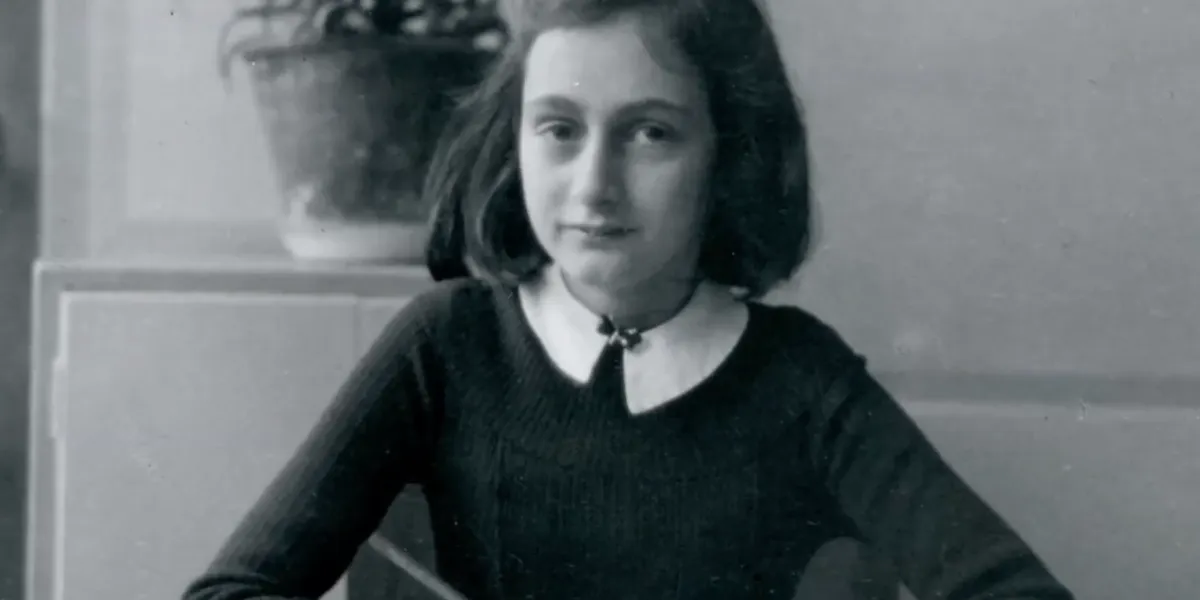
Did Anne Frank Have Privilege? Do You?

This week, Anne Frank trended on Twitter, not because of her famous diary or because she was a victim of hate. I cannot believe I am actually writing these words, but Twitter users debated whether Anne Frank had “white privilege.” Yes, you read that right.  Thousands of people were debating on social media if the 15-year-old Jewish girl who hid from brutal Nazis in an attic for two years and eventually was murdered at the Bergen-Belsen concentration camp, enjoyed “privilege” because of the color of her skin. 


To some people, privilege is a negative thing, something to be ashamed of and apologetic for but I don’t see it that way at all.  We Jews are in fact particularly privileged, but not in the way you may think.


Privilege is not a dirty word. To be clear, it is critical to be aware of whatever privileges one is blessed with, recognize and appreciate that others do not share that blessing, and incorporate that awareness and recognition while demonstrating care and compassion for others. Nevertheless, one needn’t apologize for privilege or be ashamed or feel guilty for having it. Quite the contrary, privilege is, well, exactly that—a privilege. One should be grateful for, appreciative of, and most of all feel tremendously obligated by the privileges we have.


For some, privilege means receiving the benefit of the doubt, or the assumption of innocence. For others, privilege means having access, entrée, and opportunity. For yet others, privilege means the comfort of feeling safe, protected, and secure.


By these definitions, in the context of history, and even now, Jews are among the most underprivileged people. We have been the target of libel, false accusations, and assumptions of guilt. These aren’t part of ancient history. A blood libel occurred in Massena, New York, in 1928.


We have been denied access and opportunity. As recently as the 1970’s Jews and blacks were unabashedly denied entry into country clubs in South Florida, an area thought of today as “so Jewish.” Many had signs that said “No dogs, no colored, no Jews.” And it wasn’t that long ago that Jews were similarly denied or limited to enter universities and graduate schools. In 1935, a Yale dean instructed his admissions committee: “Never admit more than five Jews.” Harvard’s president wrote that too many Jewish students would “ruin the college.”


Safety and security?  In 2021, Antisemitic incidents reached an all-time high, with a total of 2,717 incidents of assault, harassment and vandalism reported to ADL.  There were more than seven incidents per day of Jews in America being attacked, a 34 percent increase year over year.  Antisemitic incidents comprise a majority of reported hate crimes in New York City. According to 2019 FBI Data, Jews Were 2.6X More Likely Than Blacks and 2.2X More Likely Than Muslims to Be Victims of Hate Crimes.


The current attention to racism in America and the fight for racial justice is important. As I have said, racism is an evil we must actively, categorically reject. At the same time, we should also be aware, and make others aware, that antisemitism is on the rise globally and there remain entire nations and countless individuals who seek the extermination and elimination of the Jewish people.  


Two years ago, what are widely considered A-list celebrities with large social media presences praised Louis Farrakhan, a vile, unapologetic anti-Semite. In 2018, Farrakhan warned his 335,000 followers on Twitter about “the Satanic Jew.” As recently as October, 2018 Farrakhan told his followers in a widely-attended and shared speech, “When they talk about Farrakhan, call me a hater, you know how they do – call me an anti-Semite. Stop it, I’m anti-termite!”


In many places around the world, including too many right here in the United States, a Jew feels the need to remove a yarmulke or outer Jewish symbols to feel safe. There is no privilege to protect him.


I share this all not to make the argument we are more underprivileged or victimized by prejudice than anyone else, but that even today, access and opportunity, assumption of innocence, and especially safety and security, are not privileges the Jewish people can so readily count on and enjoy.


So what do I mean that we are particularly privileged and should be proud of it?

Privilege is not only about the way you are thought of and treated by others, but about how you think of and behave yourself. Privilege is not how others treat you but how you treat others. It isn’t what others do to you, but what you do with what you have.


The Mishna that we recite daily teaches, Rebbe Chananya ben Akashya omer, ratza Hakadosh Baruch Hu l’zakos es Yisroel, l’fichach hirbah lahem Torah u’mitzvos… The Holy One, Blessed Be He, wanted to bestow merit upon the Jewish people therefore He bestowed a vast Torah with a plethora of mitzvos.


What does zechus mean? When we host a distinguished guest or speaker, they are often introduced with “what a zechus it is to have so and so.” Zechus literally means privilege. Hashem wanted us to be privileged so He trusted us and charged us to live virtuous and righteous lives and to transform His world in His vision.


For a Jew, privilege doesn’t mean access, opportunity, or favors. It means responsibility, an awesome responsibility to set an example, to live elevated, meaningful lives, to repair the world in His image, to be of service to others. It means to rise above how we may be treated by others and to treat all with dignity, respect, and honor.


We have the privilege of studying Torah and being inspired by its timeless lessons. We were given the privilege of the instruction manual to life including the 613 mitzvos. We bear the privilege of being asked and expected to be at the forefront of fighting for justice, equality, fairness, and truth.


Rav Yitzchak Hutner, the great Rosh Yeshiva of Chaim Berlin, once stood before a Torah U’Mesorah convention, a gathering of Jewish educators from across the country. He suggested to them that he could summarize their entire duty, their task, in five words. If nothing else, their job, their role, and their mission of inspiring the Jewish future came down to their ability to communicate to the next generation “asher bachar banu mi’kol ha’amim, we are to be exceptional.” If a Jewish child walks away with nothing else from their Jewish education, minimally they must be made to feel that we are exceptional, privileged to be charged with being different.


Our status as a privileged or exceptional people is not intended to make us feel superior. Rabbi Dr. Norman Lamm, z”l pointed out that we don’t recite “asher bachar banu al kol ha’amim,” he has chosen us above all other nations. Rather, we say “mikol ha’amim,” he has chosen us from among all the nations of the world.


Being privileged should make us feel obligated and bound to live more ethically, act more sensitively, conduct ourselves more honestly, and proclaim our faith in the Almighty with pride and distinction, and never with shame or embarrassment.


Part of the responsibility that comes along with our privilege is to use whatever material privileges we have for the good. Despite the many challenges Jews have faced throughout the generations, most of our communities in the 21st century are blessed with the trappings of material and social privilege our ancestors would never dream of. We don’t have to and shouldn’t apologize for that; however, we must recognize that a Jew never focuses on his own entitlement, but rather thinks how his resources can be better used to advance good in the world, including for the “underprivileged.”


Privilege is not a luxury, it’s a legacy; it isn’t a free pass, it is a weighty proposition. Privilege shouldn’t breed entitlement, it should demand exceptional behavior.


I’m proud of my Jewish privilege and I hope my children will be too.


What Exactly Happened? It May Be None of our Business

In his book “Other People’s Money and How Bankers Use It,” Supreme Court Justice Louis Brandeis famously wrote, “Publicity is justly commended as a remedy for social and industrial diseases. Sunlight is said to be the best of disinfectants.” Shining a spotlight on an issue can expose and reveal corruption, dishonesty, fraud or abuse that otherwise might go unnoticed, ignored, or even excused.  Brandeis wrote these words well before the Internet was a thought in anyone’s mind and he likely could not have even dreamt of the sunlight it would shine and the accountability it would generate.


The capacity for instant access to information also makes us better informed, allows us to think more critically, and empowers us to ask crucial questions that make us safer, healthier, and stronger.  If you want to know more about your doctor’s education, read reviews of your landscaper, or see what your child’s teacher posts on Facebook, the endless information is now just a click away.


Brandeis was absolutely correct.  Sunlight is indeed a great disinfectant.  The internet has sanitized our world in wonderful ways by holding people accountable for their behavior, choices, actions, positions, and writings.  But what Brandeis didn’t mention is that unfiltered sunlight can also be harmful, toxic, and cause cancer.


There has never been a greater vehicle to disseminate lashon ha’rah, gossip and slander, than the internet.  Lives have been literally destroyed because of false accusations, innuendo, distortions, and untruths.  Once upon a time thoughts, ideas, and opinions were only printed if they had merit and were deemed worthy and carefully screened by a publisher.  Journalists had to vet their stories and fact checkers confirmed all assertions before an article went to print.  While the system wasn’t perfect, the result was authors gained credibility and readership based on their education, expertise, experience, and peer review.


Today, anyone with internet access can publish his or her ideas and opinions and even his or her version of facts with no expertise or credentials and with no consequence or accountability.  Readership and popularity are often a function of salaciousness and sensationalism, not truth and accuracy.


In his book, The Death of Expertise: The Campaign Against Established Knowledge and Why it Matters, Thomas M. Nichols elucidates this concept: People are now exposed to more information than ever before, provided both by technology and by increasing access to every level of education. These societal gains, however, have also helped fuel a surge in narcissistic and misguided intellectual egalitarianism that has crippled informed debates on any number of issues. Today, everyone knows everything: with only a quick trip through WebMD or Wikipedia, average citizens believe themselves to be on an equal intellectual footing with doctors and diplomats. All voices, even the most ridiculous, demand to be taken with equal seriousness, and any claim to the contrary is dismissed as undemocratic elitism.


All of this places an enormous burden on us, the readers and consumers of information, to be vigilant and judicious before blindly accepting everything we come across in print, online, or in person.  Especially in the information age, we must ask ourselves, who is the author or speaker of these words?  What authority or credibility do they have?  How does what they are saying match up with what I know about the person, place, or issue being discussed?  Is there another side to this story?  Do I have all the facts and information to draw a conclusion?


The Torah instructs us – mi’dvar sheker tirchak, distance yourself from falsehood.  The Gemara (Shabbos 55a) tells us that God’s signature, his insignia, is emes, truth.   To be Godly and God-like one must have ferocious loyalty and fidelity to the truth.  Exaggerating, distorting and bending the truth distance us and alienate us from the Almighty. The Sefer HaChinuch (Mitzvah 74) writes that the Torah does not include the obligation to “distance” ourselves when it comes to any other mitzvah or law.  When it comes to lying, it isn’t enough to be committed to the truth and devoted to never lying, but one must distance themselves completely from lies and from liars.  He writes that not only is the one who lies accountable, but the one who listens to lies, who provides a platform, or who explicitly or implicitly allows the liar to spread his or her lies, is also answerable.


Shlomo HaMelech, the wisest of all men, wrote in Mishlei (18), “maves v’chaim b’yad lashon, death and life are in the hand of the tongue.”  Perhaps his wisdom can be amended today to read death and life are in our fingertips on the keyboard.  Not everything appearing in our inbox or on our Facebook timeline are authoritative or even true.  Just because someone rants about a bad meal or poor service he had at a restaurant doesn’t mean you shouldn’t try it out.  Just because someone got his or her thoughts posted to The Huffington Post or The Times of Israel doesn’t mean he or she is a journalist or someone with a command of facts, the definitive position, or even a reliable perspective at all.


The burden of making sure that the internet functions as a disinfectant and not as a toxin is on the readers and consumers of its content.  We must be judicious, careful, and extremely vigilant, not only in what we write, but as importantly, in how we process and accept what we read.

There is another danger of non-judicious consumption of what is available on the internet.  Even when what is being reported is true, is it our business, do we need to know, will the knowledge help us or hurt others? The craving for salacious details and the appetite to know the story emanates from a terribly unhealthy sense of nosiness, inquisitiveness and our insatiable need to be in the know.


This phenomenon expresses itself in many scenarios. When some hear about a couple getting divorced, their first response is “what happened?” as if they are entitled to a report about the most personal and private details of a couple and often children going through a difficult time. Many pay a shiva call and feel a need to ask, “How did he or she die?” Certainly the mourner is free to volunteer the cause of death if they like, but is it really our business and do we truly need to know? When we ask, “Why did he lose his job?” or “why did they break their engagement?” or “why is she still single?” are we asking because we care about them, or is finding out somehow satisfying something in ourselves?


For some, the “need to know” stems from a sense of “information is power.” Information is social currency and the more we know, the richer and more powerful we are. For others, the “need to know” stems from an inability to live with tension or mystery. And yet, for others, the “need to know” is similar to whatever draws us to slow down and look at the accident on the highway even though it has nothing to do with us at all and only creates traffic for others.


The Torah places great value on people’s right to privacy. Jewish law demands that we conduct ourselves with the presumption that all that we are told even in pedestrian conversation is to be held in confidence unless it is explicitly articulated that we are free to repeat what we heard. The laws of hezek re’iyah forbid a person from looking into his or her neighbor’s property in a way that violates their privacy. We are instructed not to speak lashon ha’rah or rechilus and spread gossip, even if the information is absolutely true and entirely accurate. The Talmud (Bava Metzia 23b) goes so far as to tell us that we are permitted to distort the truth in circumstances that someone is prying for information that is none of their business and that they are not entitled to have.


Certainly the internet can be a great resource and blessing in our lives but the burden is on us to remain vigilant not to assume everything we read is true, or to read even things that are true, just because they are available to us.


America is in a State of Moral Decline – What Are You Doing About It?

America is in a state of moral decline. 


That is not just my feeling, it is the assessment of a majority of Americans. According to Gallup, “Not only are Americans feeling grim about the current state of moral values in the nation, but they are also mostly pessimistic about the future on the subject, as 78% say morals are getting worse and just 18% getting better.”  


Moral decline can be seen in the deterioration in civility, the increase in litigation, the lack of integrity, out-of-wedlock births and breakup of families, vulgarity, promiscuity, and immodesty.  As quickly as we have progressed technologically, medically and scientifically, morally we are rapidly going backwards, confused about basic fundamental values and institutions that much more primitive people understood clearly.


Perhaps this decline can be explained by another recent Gallup poll that reported that belief in God among U.S. adults has reached a new low. Belief in God provides a moral anchor and a moral compass, rules and regulations from an objective and absolute source of truth and decency. Breakdown of faith breeds relativism, a subjective interpretation of right and wrong. When morality is determined by popular opinion instead of objective truth, by needing to be compatible with comfort and convenience rather than mission and service, by the pursuit of pleasure and happiness, rather than sanctity and holiness, the result is moral decline. 


In this morally regressive environment, it is understandably tempting for the Jewish community to turn inward, to focus on protecting ourselves and our families from the increasing dangers of shifting sands around us and we should. 


However, we must also rise in this moment to turn outwards.  Judaism and Torah were never intended only for the Jews.  While we don’t believe in proselytizing in the sense of recruiting non-Jews to convert to Judaism, we fervently believe in promoting the Torah’s truths, values and ideals to the entire world.  That has been our mission since our inception and one shudders to consider what the world would look like if we remain entirely insular.


Consider this letter written in 1806 by John Adams, second U.S. President:


I will insist that the Hebrews have done more to civilize men than any other Nation. If I were an atheist and believed in blind eternal fate, I should still believe that fate had ordained the Jews to be the most essential instrument for civilizing the nations. If I were an atheist of the other sect, who believe or pretend to believe that all is ordered by chance, I should believe that chance had ordered the Jews to preserve and propagate to all mankind the doctrine of a supreme, intelligent, wise, almighty sovereign of the universe, which I believe to be the great essential principle of all morality, and consequently of all civilization. They are the most glorious Nation that ever inhabited this Earth. The Romans and their Empire were but a bauble in comparison of the Jews. They have given religion to three-quarters of the Globe and have influenced the affairs of Mankind more, and more happily, than any other Nation, ancient or modern.


The language of the founding fathers came from the Torah.  Three names for God in the Declaration of Independence — Creator, Judge and Providence — are unmistakably Jewish names for God. They did not come from the Greeks or Romans. 


As the world is becoming more and more uncivilized, it is time for the Hebrews, the Jewish people, to once again model, teach, preach and civilize man. 


To be sure, it is not comfortable today to unapologetically and non-defensively (albeit sensitively and respectfully) stand for and publicly promote our values, our principles, and our definitions.  It is not simple to speak our truths, protect our sacred moral institutions and resist conforming to styles, fads, and mores of our time.


But, as W.C. Fields once said, “Remember, a dead fish can float downstream, but it takes a live one to swim upstream.”  Avraham was called Avraham HaIvri meaning mei’eiver, on the other side.  When the whole world took one position and stood on one side, he had the courage to stand out, remain true to the vision and will of the Almighty and to stand on the other side, even when it meant standing by himself.  He was willing to go against the flow, to fulfill his mission, to fight for his truth. 


This Shabbos, 3 Tammuz, is the yahrtzeit of the Rebbe, R’ Menachem Mendel Schneersohn.  While most associate his legacy with a love for all Jews and sending emissaries to any place a single Jew lives, the Rebbe was also a force and influence for the non-Jewish world. 


In 1983, the Rebbe launched a campaign to promote the seven Noahide laws.  He referenced the Rambam who explicitly rules (Hilchos Melachim 8:10): “Moshe Rabbeinu commanded from the mouth of God to convince all the inhabitants of the world to observe the commandments given to the children of Noach.”  Said the Rebbe, it is our duty and responsibility to work to influence all people to lead the righteous and decent life which comes from compliance with the Seven Noahide Laws.


Earlier, in 1974, Rav Soloveitchik shared a similar vision:


Our task was and still is to teach the Torah to mankind, to influence the non-Jewish world, to redeem it from an orgiastic way of living, from cruelty and insensitivity, to arouse in mankind a sense of justice and fairness. In a word, we are to teach the world the seven mitzvot that are binding on every human being.  But we have also been assigned another mission: to be the message carrier and mentor not only of the seven mitzvos that apply to the descendants of Noah, that is, to the human race as a whole, but also of a total outlook on life, the entire moral system to which Jews are committed.  The non-Jewish world is expected to take note of the Torah life we lead, to admire our ways, our customs and mores, our mishpatim and chukim, both our rational and non-rational commandments.  The Jews must stand out in society as exemplars; our way of life must impress and attract people and fascinate their curiosity. 


Elsewhere, in addressing a social pressure in his time, Rav Soloveitchik writes:


We must not yield – I mean emotionally, it is very important – we must not feel inferior, experience or develop an inferiority complex, and because of that complex yield to the charm – usually it is a transient and passing charm – of modern political and ideological sevoros. I say not only not to compromise – certainly not to compromise – but even not to yield emotionally, not to feel inferior, not to experience an inferiority complex. The thought should never occur that it is important to cooperate just a little bit with the modern trend or with the secular modern philosophy. In my opinion Yahadus does not have to apologize … There is no need for apology – we should have pride in our Masorah, in our heritage. And of course certainly it goes without saying that one must not try to compromise with these cultural trends and one must not try to gear the halachic norm to the transient ways of a neurotic society, which is what our society is.


This is no time to retreat, to shy away from our mission, to blend in or conform with the confusion and chaos that is around us.  The world is relying on us to set it straight, stand for truth and to once again, civilize man.  


Cholent and the Stockdale Paradox: The Power of Patience

Someone picking the words at the Annual Scripps National Spelling Bee clearly has a heimishe palette.  In 2013, the winning word was “knaidel.”  In 2016, the winner had to spell the word “chremslach” correctly just to make it to the final.  And in 2018, a 13-year-old from Wyoming had to spell a word we know well  to make it on to the next round.  


When he asked for the language of origin, he was told Yiddish.  Still stumped, he then asked for the meaning and the judge replied: “A Jewish Sabbath-day dish of slow-baked meat and vegetables.” Confidently, the 13-year-old then said: “cholent, c-h-o-l-e-n-t, cholent.”  


Whether you pronounce it and spell cholent with an “o” or a “u,” and despite the endless varieties and recipes, all agree it is slow cooked and it takes great patience before you can indulge.  In fact, according to some, the name itself indicates the patience needed to eat it. Some suggest “cholent” comes from the French chaud (“hot”) and lent (“slow”). The opposite of cholent is “nonchalant,” which means cold and disinterested.  


Patience is not only literally cooked into our food, it is a critical quality we must always be working on.  The Magen Avraham (o.c. 60:2) follows the opinion of the Ramban that we are Biblically commanded to remember each day the episode of Miriam speaking Lashon Harah and her subsequentquarantine. Why?  The Chafetz Chaim suggests that our Parsha is a reminder of the severity of speaking gossip.  We remember the consequence for Miriam as a motivation to avoid Lashon Hara, gossip, ourselves.  Rabbi Soloveitchik preferred the explanation of Rav Kook (Olas Re’iah) that the purpose of remembering Miriam’s mistake is to remember never to question the singularity of Moshe and the authority of the mesorah in general.


There is a third possibility regarding what we are to remember regularly and why. After Miriam spoke Lashon Harah  about her brother Moshe and was struck with tzara’as, she was quarantined for 7 days.  While she was not part of the camp during that time, the camp stood still. They did not travel, they did not move forward without her.  In fact, the Ohr Ha’Chaim points out that the passuk  doesn’t say, ולא נסע העם, but rather וְהָעָם֙ לֹ֣א נָסַ֔ע, placing the nation first in the phrase to tell us that even though normally the people didn’t embark or journey until instructed by the clouds of glory, out of love and respect for Miriam, the people refused to leave without her. 


Why?  Wasn’t it incredibly dangerous to stand still in the desert baking in the sun, depleting resources?  Why did 3 million people stand still, waiting for one person? The Mishna in Sota introduces the idea of midah k’neged midah, the idea that in life things happen measure for measure.  The Mishna then gives the example that in the merit of Miriam waiting to see what would happen to Moshe’s basket floating in the Nile, the entire nation waited for her for seven days.


What was special about Miriam waiting at the river?  Maybe she was curious what would happen.  Maybe she had nothing better to do.  Why did her staying earn such a great merit that the nation stood still for her?  The gemara tells us that we need to understand her waiting and watching in context.  Amram, Miriam’s father, was one of the great leaders of the generation.  When he heard Pharaoh’s decree to kill all Jewish male children, he gave up hope in the future and felt it would be unfair to bring another child into the cruel and harsh world.  He separated from his wife Yocheved in a fatalistic surrender.  Others heard and followed suit. 


Miriam protested her father’s conclusion and told him his decree was more severe than Pharaoh’s, who had only decreed on the males.  Amram was persuaded and remarried Yocheved.  She conceived and gave birth to Moshe.  Again, everyone else followed their example. When Moshe was born, the house was filled with light and with promise.  Amram affectionately praised Miriam and told her that her prophecy had been fulfilled.  


But then it came time to throw Moshe into the Nile, to hide him from being taken and killed.  At this point, Amram chastised Miriam and said, what did you do, why did you encourage us to have another child just to have to give him up in the desperate hope of his survival?  It is against this backdrop that we can appreciate Miriam standing at a distance to watch what would happen with her brother.  When things looked hopeless, Miriam had faith and convinced her parents to believe in a brighter future.  When once again things looked bad, again Miriam stood and watched with great faith and hope.  Miriam was rewarded, not just for standing on the bank of the river that day, but for her deeply rooted tenacity, faith and hope, and for her patience.   That patience paid off when she intervened and enabled Moshe to be raised by his mother Yocheved, even after being found by Pharaoh’s daughter.


What would have happened if Miriam had not waited and watched?  Moshe would have been raised as an Egyptian, and he would not have been sensitive to his people’s suffering.  The entire drama of the exodus might not have happened had Miriam not waited.  This is why, many years later, her patience and perseverance were repaid, by the people patiently waiting for her.  


Vice Admiral James Stockdale was Ross Perot’s running mate in 1992, but that is not his legacy.  In 1965, his plane was shot down over North Vietnam and he was taken as a prisoner of war.  Five years after Stockdale was captured, his teenage son, Jim, sought out a counselor’s advice.  It seemed so unlikely his father would ever come home so he was told, “You may be better off just considering your father dead and gone.” 


Jim Collins tells the story in his book “Good to Great” where  coined the phenomenon “The Stockdale paradox.” Tortured over twenty times during his eight-year imprisonment from 1965 to 1973, Stockdale lived through the  war without any prisoner’s rights, no set release date, and no certainty as to whether he would even survive to see his family again. At one point, he beat himself with a stool and cut himself with a razor, deliberately disfiguring himself, so that he could not be put on videotape as an example of a “well-treated prisoner.” He exchanged secret intelligence information with his wife through their letters, knowing that discovery would mean more torture and perhaps death. 


How did he deal with it when he was there and did not know what would be the end of his story?  Collins writes:


“I never lost faith in the end of the story,” [Stockdale] said, when I asked him. “I never doubted not only that I would get out, but also that I would prevail in the end and turn the experience into the defining event of my life, which in retrospect, I would not trade.”


Finally I asked, “Who didn’t make it out?” “Oh, that’s easy,” he said. “The optimists.”  “The optimists? I don’t understand,” I said, now completely confused given what he’d said earlier.


“The optimists. Oh, they were the ones who said, ‘We’re going to be out by Christmas.’ And Christmas would come, and Christmas would go. Then they’d say, ‘We’re going to be out by Easter.’ And Easter would come, and Easter would go. And then Thanksgiving, and then it would be Christmas again. And they died of a broken heart. This is a very important lesson. You must never confuse faith that you will prevail in the end–which you can never afford to lose–-with the discipline to confront the most brutal facts of your current reality, whatever they might be.”


That is the Stockdale Paradox – surviving what life throws our way requires maintaining the sometimes-contradictory attitudes of patience, hope and optimism on the one hand and realism and pragmatism on the other.  


Nobody knows how to wait like the Jew.  For 2,000 years we longed to return to Israel and Yerushalayim, and we were ultimately rewarded by coming home.  


Perhaps the mitzvah to remember Miriam’s episode daily is a mandate to remember that we are a people of patience and of hope and like Miriam, we will one day be rewarded for it.  That reward may come soon, it may come with time, and it may not even come until after our lifetimes, but the reward for patiently preserving hope while tenaciously confronting the harshness of whatever reality we confront will one day come.  


Some of us are too rooted in realism and fall prey to Amram’s mistake of surrendering to the challenges and to the feeling that there is no greater meaning or plan.  Others practice too much passive optimism, believing everything will be ok while ignoring the realities of the moment.


We are progeny of Miriam. She waited for Moshe, our ancestors waited for her, and they both imbued within us the capacity and will to wait for Moshiach, b’chol yom achakeh lo, every day we wait for him to come.  For most of our history we have lived the Stockdale Paradox, ready to address the reality we confront, but never giving up our hope and belief in what is to come.  


Always remember: Everything will be okay in the end. For if it’s not okay, it is not yet the end.

Formula Fear

The question of having limited supply of liquid and how to allocate it to dehydrating people should be purely theoretical in 2022, and yet the country is currently suffering a baby formula shortage that literally threatens the lives of thousands of babies and infants who rely exclusively on formula to survive.  Some mothers describe driving to 20 stores a day to find formula. Nationwide, nearly 50% of baby formula is out of stock.  The situation is so dire that this week President Biden invoked the Defense Production Act to increase baby formula manufacturing and make it more available immediately.


Two thousand years ago, our sages (Bava Metzia 62) analyzed a hypothetical dilemma around a question of shortage.  Two people are lost in a desert and one of them has water, but only enough for one person.   Should the owner of the water keep it to himself, drink it all, and survive?   Or, should he or she share it, split the water with the other person, though it means both will surely die? Alternatively, perhaps he should give the other person the water so that they will live, even if it means giving up his own life.  What is the moral decision?  What would you do?


What if your companion in the desert was your child?  Should you split the water?  Give it all to them?  Drink it all yourself?  A few years ago, French tourists David and Ornella Steiner were found dead in the white sand dunes of the New Mexico desert where they had been hiking.   Their ten-year-old son Enzo was found alive in the 101-degree heat.  Police said they believed that the son survived because the parents decided to give him the bulk of their dwindling supply of water.  For each sip they each took, they gave him two which was just enough to keep him alive, even though it cost them their lives.


So what is the right thing to do? 


In the Gemara cited above, Ben Petura argues that the two people must share the water, for mutav she’yishtu sh’teihen v’yamusu v’lo yir’eh echad b’misaso shel chaveiro, better they both die and neither watch their friend perish. Rebbe Akiva disagrees and quotes a pasuk from this week’s parsha: “V’chai achicha imach – Your brother shall live together with you.”  Only once your own survival is assured are you obligated to concern yourself with the well-being of the other. Rebbe Akiva, the same person who famously taught us that loving others as we love ourselves is central to Torah, concludes that we must put our self-preservation and survival first and only then save others.


The Chidushei HaRim adds something remarkable.  True, we conclude like Rabbi Akiva that your life comes first, but from the Gemara it is clear that one should feel it is a dilemma, one should want to give the water to save their companion.  Understanding that our instinct and our intuition should be to help another, even at our own expense, the Torah needs to explicitly say no, your life comes first.  We should not only be aware of and follow the conclusion but we should also learn from the initial thought.  Yes, we drink it ourselves.  But all the while, we should still desire, we should want to give everything to help a fellow Jew. 


There are times that morally and halachically we must put ourselves first.  But even in those moments, our instinct, our natural response, should be to want to give, to help, to do for another, even if it means having less or losing out ourselves. 


Developing a giving nature is not just a nice middah for interpersonal relationships.  It is a religious imperative, it is how we get close to Hashem, it is how we imitate Him and serve Him. 


While many are scrambling for themselves, we can be very proud of our community who responded to this crisis by turning outward and caring about other.  Led by Amy Zuckerman and our amazing new Director of Member Engagement, Talia Borenstein, BRS created an emergency baby formula gemach to help stock and provide formula for families in our community who need. 


Whether you are affected by this crisis or not, we must always be looking for opportunities to work on our giving nature and working on ourselves so we are not always putting ourselves first.


Rabbi Efrem Goldberg

Join Our Community

Subscribe to our newsletter or connect with us on WhatsApp.