I’ve Had A Lot Of Worries In My Life, Most Of Which Never Happened

We all know the joke about the classic text message from a Jewish mother:  “Start worrying. Details to follow.”


The truth is there is much to worry about these days:

Worried about the economy and inflation

Worried about hurricanes and the weather

Worried about covid and other health challenges

Worried about Israel and its enemies

Worried about the increase of Anti-Semitism

Worried about the divisiveness and polarization in this country


And of course, worried about Rosh Hashana and yamim noraim. Some are worried about coming before Hashem in judgment and others worried about their seat, who will they be near, will they have an aisle or a middle, and yet others worried about how long the rabbi will speak.


We have so many things to be worried, anxious and afraid of regularly and especially this time of year.  You would have thought if we offered a prayer about worry and fear it would be to relieve us of our worries, to bring calm and peace, and yet we do the opposite.


Beginning Monday night, we will introduce an expression into our prayers – 

ובכן תן פחדך, please Hashem instill fear within us.  Rav Soloveitchik describes that one year, an eminent psychiatrist said to him, fear is a major cause of mental illness, we should work to be free of fear, worry and anxiety, not be praying for more of it.  


He answered: Everyone is struggling with a fear. Some are afraid they won’t succeed in their careers, others about losing their wealth, other about status or prominence.  Some are afraid of sickness, others are afraid of heights, public speaking or the weather.  Said Rav Soloveitchik, I am not a psychiatrist, but I do know that one major source of fear can wipe out all of these lesser fears and that is yiras shomayim, fear of Hashem.  We daven that we see, feel, are in awe of, and yes fear of Hashem and that our fear of Hashem overtakes and uproots all other fears that lurk everywhere and upset our lives.  


There are essentially two types of anxiety and worry. We worry over things not in our control, because they aren’t in our control. We worry about illness, weather, traffic, delayed flights and more.  Then there are things we worry about, specifically because they are in our control.  For some, having free will is both liberating and terrifying at the same time.  We worry about how well we will perform; will we execute, meet expectations, surpass them, or fall short of them.  Can we endure and handle whatever comes our way?  What if we fail?


We need to silence both voices of worry and it starts with believing we can.  As I shared a few weeks ago, when those thoughts come and knock, firstly, we can decide if we let them in.  And we can by choosing to replace these negative and anxious thoughts with confident and positive ones.  


We are in the final days of the month of Elul, a month dedicated to getting us ready for the new year.  We have heard many insights and divrei Torah based on the acronym Elul and the pesukim it stands for.  But there is another significance of the word Elul. When read backwards it spellsלולא , which means “if not,” or “if it weren’t for.”  The word  לולא only appears one place in the Chumash.


When the brothers are trying to convince Yaakov to send Binyamin with them back down to Yosef so that he would release Shimon, they appeal to him by saying:

כִּ֖י לוּלֵ֣א הִתְמַהְמָ֑הְנוּ כִּֽי־עַתָּ֥ה שַׁ֖בְנוּ זֶ֥ה פַעֲמָֽיִם׃ 

“For we could have been there and back twice if we had not dawdled.”

Rashi explains, “we would have already come back with Shimon and you would not have had this anxiety all these days.”  Lulei is associated with anxiety, with what if, what could have been, what will be.


There is another לולא, not in Chumash but in Tehillim, and we say it every day of Elul.  לולא הֶ֭אֱמַנְתִּי לִרְא֥וֹת בְּֽטוּב־ְה׳ בְּאֶ֣רֶץ חַיִּֽים  – Had I not believed in you Hashem and that I would enjoy your goodness…


We can quiet our worry by exchanging one  לולא for the other.  Instead of feeling lulei this and lulei that, if only this and what will be with that, we need to work on feelingלולא הֶ֭אֱמַנְתִּי לִרְא֥וֹת בְּֽטוּב־ְה׳, seeing, feeling Hashem in our lives, knowing all is orchestrated from above, there is an infinite, omnipotent one choreographing our lives.


But what about the worry when it comes to ourselves and how well we will perform?


The Torah tells us that when we start to panic and feel that getting done what needs to get done or being who we need to be is as far away as the heavens, on the other side of the ocean, we need to know כִּֽי־קָר֥וֹב אֵלֶ֛יךָ הַדָּבָ֖ר מְאֹ֑ד בְּפִ֥יךָ וּבִֽלְבָבְךָ֖ לַעֲשֹׂתֽוֹ, the thing is very close to you, in your mouth and in your heart, to do it. Hashem doesn’t ask for anything that is beyond us.  Yes, we will come before Him Monday night, we will be asked to reflect and holds ourselves accountable.  But the very fact that He is mocheil v’soleiach, forgiving and forbearing should itself be reassuring and encouraging.  


The Slonimer Rebbe says that those who panic with anxiety over appearing on Rosh Hashana before the Heavenly court are picturing the court as occupied with harsh, cruel judges.  But we need to know the judge is in fact our Father.  He understands our struggles and He wants our success.  The Tur says that unlike others who are anxious in judgment, wear black, don’t shave, can’t eat, we wear beautiful white clothing, eat and drink are festive because our judgment day is a yom tov, it is the day we come before our Father.


So, it turns out that there is literally nothing to worry about.  Mark Twain once said ‘I’ve had a lot of worries in my life, most of which never happened.’ Studies show that over 85% of the things we worry about don’t ever happen.  And as far as the 15% that do, worrying never made them go away, never made them better and never did anything other than compromise our own health and happiness.  


Stop worrying by remembering that Elul is לולא האמנתי, all that happens is meant to be and we have what it takes to deal with whatever comes our way.  So don’t ruin what is left of this year; remember, don’t worry – be happy.


Keep the Main Thing, the Main Thing

What are the most important relationships, people and activities in your life?  Would you say you allocate time to them? Do you think you make them a priority? Now take out your calendar and review your typical day, week or month. Does your schedule in fact reflect your priorities? Your calendar never lies. Where you spend your discretionary time is where your values are.  What you make time for shows what matters to you.


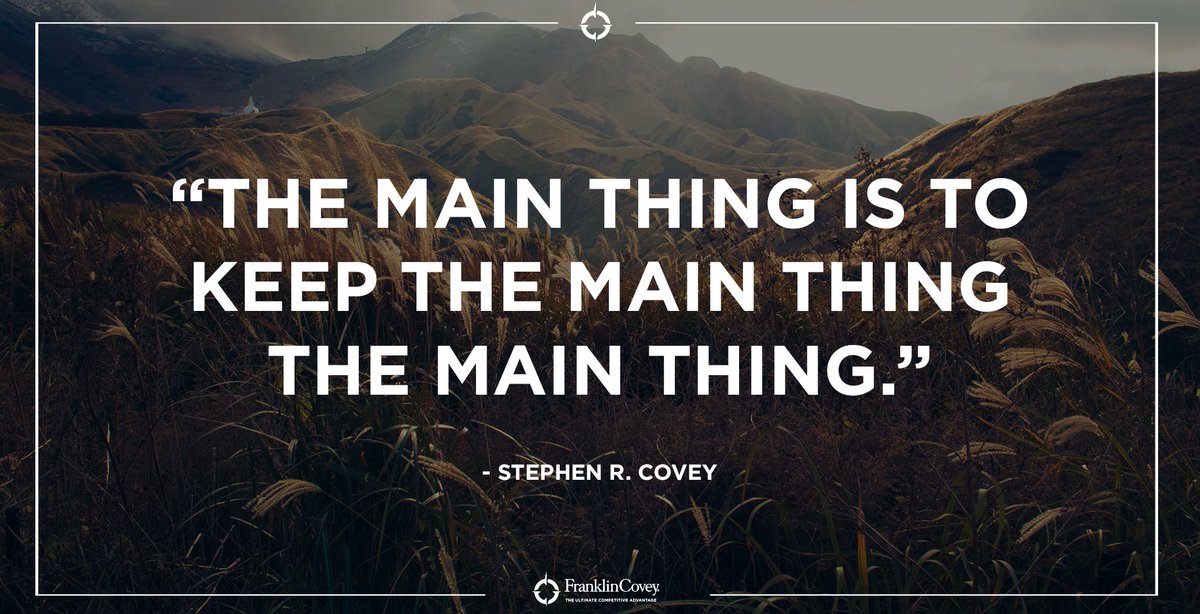
In his 7 Habits of Highly Effective People, Stephen Covey writes, “The main thing is to keep the main thing the main thing.”  We talk about our family being the main thing in our lives, or our Judaism, or some other value.  But do we keep the main thing, the main thing or does what was supposedly the main thing become just another thing?  If you want the answer, look at your calendar and see how much time you allocate to the “main thing,” or if the “main thing” even appears on your calendar at all.  Covey suggests, “The key is not to prioritize your schedule, but to schedule your priorities.” 


There are many things that legitimately take us away from the “main things” of our lives. We can’t spend time with our children or expanding our minds or nourishing our souls because we are working, or shopping or cooking. But what about when we aren’t, how do we use that time?  Is it filled with meaning, or meaningless activities?  Do we fill out our schedule with a purpose or is time taken up with purposelessness?  Are we in control of our schedules, or are our schedules controlling us?  


At the beginning of our parsha, the Torah describes how the farmer would bring his Bikkurim, his first fruit to Yerushalayim.  When presenting it, he would recite a declaration which included a short history of our people.  In that context he would tell of when we were slaves in Egypt. 

וַנִּצְעַ֕ק אֶל-ְה׳ אֱלֹק֣י אֲבֹתֵ֑ינוּ וַיִּשְׁמַ֤ע ה׳֙ אֶת־קֹלֵ֔נוּ וַיַּ֧רְא אֶת־עָנְיֵ֛נוּ וְאֶת־עֲמָלֵ֖נוּ וְאֶת־לַחֲצֵֽנוּ׃ 

“We cried to Hashem, the God of our fathers, and Hashem heard our anyeinu, amaleinu and lachatzeinu. What are those things?


Anyeinu is personal, internal anguish.  The Egyptians purposely separated husbands and wives to create loneliness and pain. Amaleinu is hard work.  The Egyptians had a strategy to literally break our backs with endless toil.  What is lachatzeinu?  Lachatz, still today in modern Hebrew, means pressure. The Egyptians applied enormous pressure in an effort to break us.  What was that pressure?  Our rabbis say, they filled our time, occupied and preoccupied us, denied us the ability to even catch our breath.  The greatest pressure is a packed schedule with no margin, no down time, no room to think, to experience, or to focus on the main thing. 


We may not have Egyptian oppressors, but we too are captives to busyness, to our crazy schedules, to noble and ignoble tasks and activities that pulling us in so many directions and denying us the chance to even breath, to live, or to dream.  As Greg McKeown, the author of Essentialism says, “If you don’t prioritize your life, someone else will.”  


For the remainder of Elul, as we continue to count down to Rosh Hashana, review your schedule regularly and make a conscious effort to have it reflect your values. Make time to keep the main thing, the main thing, be it your spiritual, mental or physical health, quality time with family, Torah learning or doing acts of kindness for others. Schedule your priorities and push back on the lachatz, the pressure trying to hold you back. 

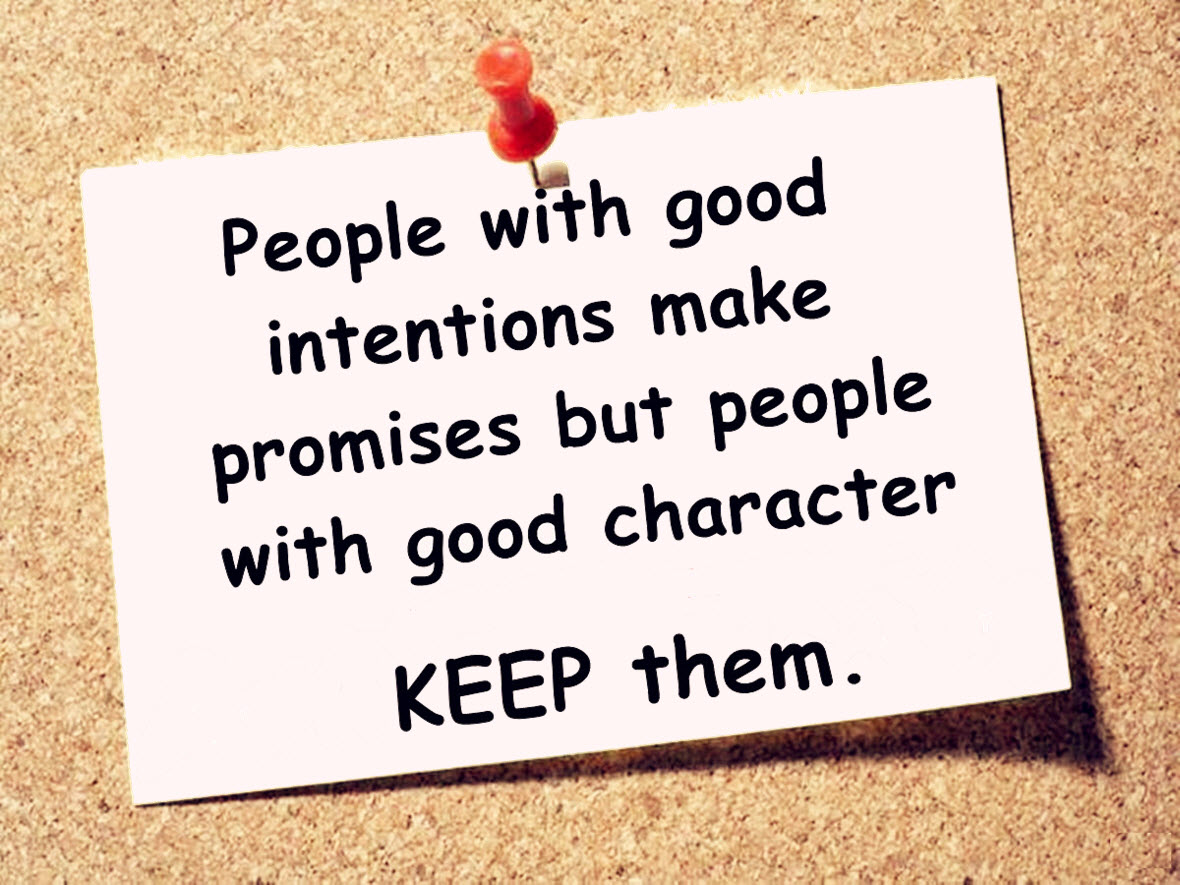
I’m Not Upset That You Lied To Me, I’m Upset That From Now On I Can’t Believe You

In addition to being an outstanding Talmid Chacham and world renowned posek, Rav Hershel Schachter is one of the most prolific Torah teachers of our time.  He recently celebrated his 80th birthday but hasn’t slowed down a bit, bli ayin harah.  During his recent visit to our community over Shavuos, he gave almost 25 shiurim. 


With all the public speaking, he often drinks hot tea to sooth his throat.  When offered sugar or Splenda, he always declines and says he takes his tea plain.  Once, the Schachters were guests in someone’s home and when offered tea, Rav Schachter graciously accepted but asked for it plain.  The host, curious as to Rav Schachter’s preference for no sugar, asked why he wanted it so bland. After being asked several times, Rav Schachter finally relented and explained.


On a trip to Israel with the Rebbetzin when they were first married, he was at a meeting at someone’s home in a Kibbutz. The person offered Rav Schachter hot tea but he was concerned that the person may not be aware that ma’aser must be taken from sugar, so he happily accepted the tea but when offered sugar, responded, “I don’t take sugar in my tea.” 


“So,” explained Rav Schachter, “to be true to what I said that day, for the last fifty years, I have never taken sugar in my tea, even if in truth, I would prefer it sweetened.” (His son, Rav Shay Schachter, shared with me that none of his children knew why he didn’t drink sugar in his tea until that day he was pressed by his host.  It is one of many examples of his personal practices that he not only doesn’t impose on others but humbly doesn’t even share with those closest to him.)


Many people are casual with what comes out of their mouth. Consequently, promises are frequently made with no real intention of keeping them.  “Let’s do lunch.”  “I’ll give you a call.”  “I will follow up with you soon.”  “I will meet you there in five minutes.”  “I’m on my way now.” These seem like inconsequential comments, hardly meaningful promises.  And yet, if we say things we don’t mean, that aren’t fully accurate or true, or that we don’t plan on following up on, what does it say about the value of our words in general?


Our parsha, Ki Seitzei, tells us, מוֹצָ֥א שְׂפָתֶ֖יךָ תִּשְׁמֹ֣ר, You must fulfill what has crossed your lips. The Gemara (Rosh Hashana 6a) interprets “your lips” as referring to someone who makes a pledge to tzedakah and rules that it has the status of a vow that must be fulfilled.  A person who made a promise or pledge to charity and reneges on it, or fails to fulfill it, has violated a Torah prohibition.  Indeed, that is why the Shulchan Aruch (y.d. 203:4) suggests one say “b’li neder,” “without a promise,” when making a charitable pledge.  It is bad enough not to commit to be generous, but even worse to make a commitment, to offer lip service, and fail to fulfill it. 


Many commentaries encourage us to understand this pasuk as not narrowly limited to tzedakah vows, but as a general directive to be extremely careful to fulfill our promises, to keep our word, to be truthful and honest in what emerges from our lips. 


Why does the pasuk say תשמור, “guard” what comes out of your lips?   Rabbeinu Yonah (Mishlei 4:21) explains that humans are designed to forget.  We may have the greatest intention to fulfill our promise or honor our word, but then a distraction, a competing interest, or something else arises and knocks us off course.  We meant to arrive when we said we would, or to follow up on what we promised.  “Tishmor” teaches that when we violate our word, we aren’t exempt from the promise we made simply because we forgot. תשמור, we should have been vigilant, careful and scrupulous to fulfill what we said we were going to do. The burden is on us to safeguard and uphold our promise, to keep our bond, no matter what else arises or distracts us. 


Be careful with what comes out of your lips.  Don’t say anything you won’t keep. And keep anything you say.  Your word must be your bond.  When they aren’t, when you fail to call, never follow up, keep me waiting or renege on your commitment, how am I supposed to trust you or believe you going forward.


Friedrich Nietzsche said it well – “I’m not upset that you lied to me, I’m upset that from now on I can’t believe you.” 


The Mishna in Bava Metzia (44a) says:

אמרו מי שפרע מאנשי דור המבול ומדור הפלגה הוא עתיד להפרע ממי שאינו עומד בדבורו

“He Who exacted payment from the people of the generation of the flood, and from the generation of the dispersion, will exact payment from whoever does not stand by his statement.”


Why is someone who doesn’t fulfill what they say compared to the generation of the flood?  Rav Asher Weiss suggests that the generation of the mabul was characterized by the Torah as a culture of chamas, chaos. When someone’s word means nothing, he or she can’t have a relationship with God, they lose the trust of their fellow man, and ultimately, they are not honest even with themselves.  A world where people’s word means nothing is a world of chaos, it is flooded with corruption and cannot continue.


In his “7 Habits of Highly Effective People,” Stephen Covey writes: “Integrity includes, but goes beyond honesty. Honesty is … conforming our words to reality. Integrity is conforming reality to our words—in other words, keeping promises and fulfilling expectations. This requires an integrated character, a oneness, primarily with self but also with life.”


Is your word your bond?  How do you want people to think of you?  Are you waiting for the other person, or is everyone always waiting for you?  If you said you will be somewhere at a certain time, that should not be treated like an idle statement—it is an implicit promise, a commitment.  Showing up late, keeping someone waiting isn’t cute or quirky, it isn’t a bad habit or an idiosyncrasy, it is rude, insensitive, and ultimately means you were untruthful, unreliable.  You broke a promise.


If you say you are going to call someone or do something, תשמור, develop a system to remind yourself, schedule it, keep a to do list, set a reminder.  Get it done.  If you don’t, you aren’t absent minded or “well intentioned,” you have lied, you have broken a promise, your word lacks value. 


Our empty promises don’t just keep people waiting, cost them their time or take advantage of their counting on us.  Sometimes, our unreliability and broken promises can cost others real money. 


I am blessed to attend many simchas and events.  When I leave, I almost always notice on the table of place cards just how many people replied that they were coming and failed to show up.  Of course, there are true emergencies and extenuating circumstances that come up.  There are last minute conflicts that can’t be avoided.   However, some casually respond they will attend and when the event comes and it is inconvenient or they just don’t feel like it, they just don’t show up, without regard for how much money the caterer charges for each person. 


If you fill out a response card that you are coming, you have made a promise, a pledge to the hosts.  If you don’t show, you have broken a promise, one that costs others real money.  If you said you are going to do something, do it, not just for the other, but for yourself.  Be trustworthy. Be reliable. Don’t say anything you don’t mean or plan to follow through on, from how you take your tea, to if you will attend the event. 


If we honor our words, we will be honorable and we will earn the honor of others. 

What You Need to Quiet Your Mind

The Centers for Disease Control and Prevention says a third of us aren’t getting the recommended seven hours of sleep we need.  A growing number of scientists are calling our lack of sleep “an escalating public health crisis.” Some aren’t getting enough sleep because they are choosing to stay awake until deep into the night, some to work, others to talk, others to watch, and many because they just can’t disconnect.


Yet, many others desperately want to sleep, but simply can’t.  It is estimated that ten to fifteen percent of adults in America have a chronic insomnia disorder.  They toss and turn, count sheep, and ultimately many resort to taking Ambien or melatonin, insomnia medications that make up an industry generating $70 billion per year.  Just recently, the FDA ordered that several popular types of prescription sleeping pills, including Ambien must come with a prominent “black box” warning slapped on the box describing the dangerous side effects. Pills are not a sustainable solution.  So, what can be done?


Among those sent home from war in our Parsha is the individual described as soft or faint of heart.  Who is this person?  What disqualifies him from fighting on the front lines? Rashi quotes: Rebbe Yossi said, the one who is fearful is afraid of the aveiros, the mistakes or indiscretions in his hand get sent home.  Which violations?  What is so severe that it disqualifies someone from fighting for the Jewish people?


The Ohr Ha’Chaim Ha’Kadosh explains that when a person goes out to war, is enlisted to the battle front, it is only natural to be scared, to say to oneself, what if I am unworthy to survive and to triumph?  The mind naturally will take the soldier to a bad place, to have doubts and fear.  He will think about aveiros, the mistakes he has made, the poor judgment he has shown, the violations and how they are about to catch up with him.  But why are they described as b’yado?  Don’t such thoughts and fears happen in the heart or the head, not the hand?


The Imrei Emes explains that to understand, we must look at the pesukim that come right before. The Torah tells of three individuals whom we send home from the battle front – someone who built a new home and hasn’t lived in it, someone who planted a vineyard and hasn’t harvested it, and someone who is in their first year of marriage.  


When it says we send home the person who is soft hearted and is carrying something in his hand, it means these three individuals.  What they have in common is they are distracted; their thoughts are elsewhere.  How can one be expected to fight, defeat an enemy, triumph in battle, how can they hear orders let alone follow through on them when they are thinking about the house they didn’t get to live in, the vineyard whose wine they never got to taste or their loved one who is back home? 


We don’t just send home someone who can’t stop thinking about what they did wrong.  The stakes are so high, the consequences so grave that we also send home someone who can’t stop thinking about something they did right, but whose thoughts are extraneous to the battle.  We need soldiers who can control and regulate their thoughts, who can quiet the noise and distractions in their mind and who can stay focused on the battle at hand, who can consistently execute on what they need to do.  


We are living in a time of unprecedented noise; we can hardly hear anyone or anything let alone hear our own inner voice.  If we are to experience our revelation, if we are to have or breakthrough, be our best selves and have a greatest relationship with Hashem, we need to quiet so many of the distracting sounds and voices around us and in us.


Like the soldier, each day we go to battle, we fight to succeed at work and in life.  We confront enemies in the form of distractions, temptations and our own sense of insecurities or unworthiness.  Our minds run wild on overdrive all day long in ways that sabotage our own success.  Some are constantly thinking about every possible problem that could arise, every reason they won’t succeed, everything that could go wrong.  For others, the mind is filled with the noise of trying to juggle a million things, emails to return, phone calls to make, people to visit, tasks to get done, people to make happy.  For yet others, the mind is overloaded with keeping up with the news cycle, with social media, pop culture, work, home and more.  The common denominator is a cluttered mind, a distracted existence.  


Who can find peace while awake or calmly fall asleep when your mind is on overdrive, constantly bombarding you with thoughts, worries and things to do?  A person with a scattered mind gets sent home from war and we are losing too many battles in our lives because of the inability to concentrate, to be present, to find peace, we struggle to disconnect and to simply shut it down.


A Chassid was once plagued by negative thoughts that relentlessly intruded upon him.  He was sidetracked by temptations and fantasy; he was distracted by worry and anxiety.  One evening it was particularly bad.  He couldn’t stop having negative thoughts and inappropriate thoughts.  He couldn’t take it anymore, so he went to his Rebbe’s house to get advice.  He knocked on the front door, but nobody answered.  He knocked harder, but still no response.  Brazenly, he walked around to the side and looked through the window.  He saw the Rebbe sitting at the dining room table learning and so he knocked on the window.  But lo and behold, the Rebbe didn’t look up and his efforts to get the Rebbe’s attention continued to fail.  Disappointed and frustrated, the Chassid went home.  


The next morning after shul, he waited patiently until it was his turn and he finally had the attention of the Rebbe. Somewhat exasperated, he said, Rebbe!  I desperately needed you last night.  The Rebbe said I know.  I know what you wanted to ask and I already gave you an answer.  Bewildered, the Chassid said, what do you mean?  I knocked and knocked but you never answered, and I didn’t even get a chance to ask my question.  The Rebbe looked at him and explained.  Last night you came over to my house.  You knocked on the front door, and then you knocked even harder.  You came around and knocked on my window.  You kept knocking, but the choice was mine whether or not to let you in.  These thoughts, these questions, doubts, temptations, worries, they can knock all day on the door of your mind, but never forget, the choice remains yours whether or not to let them in.  


I love this story because it is so much more than a story, it is a strategy, it is a solution.  Thinking about our thoughts and mind in this way has helped me personally and countless others that I have shared it with.


Like the Chassid, so many of us are plagued by unwanted and unwelcome thoughts.  They could be of temptation, of doubt, of our unworthiness or simply of being overwhelmed.  Never forget – we cannot control what knocks, but we absolutely can control what and when we let them in.


Stop saying that you cannot control your mind from racing.  You don’t have to perseverate, marinate, stew in a thought, a fear, concern or regret.  I am obviously not talking about diagnosed anxiety or mental illnesses that needs therapy and at times medication.  I am referring to the ordinary, everyday noise that clogs our brains.  You are the judge, and you are the policeman of the gates into your mind.  Decide what to let in, what to think about, what to focus on, what is productive, healthy, and positive and what you are going to lock out, what is a distraction, destructive, negative, and unwelcome.  


The stakes are high, we cannot win, we can’t win the battle to fall asleep, the battle to get ahead, the battle to get everything done, if we let any thought, image or idea storm our gates and take up precious real estate in our mind. David Allen, the great architect and author of an amazing book and system called Getting Things Done, says, “Your mind is for having ideas, not holding them.”  Let them go, put them down, control them, don’t let them control you.  


Make this your year to quiet your mind and you will likely have your biggest breakthrough yet, an enormous growth spurt in every area of your life, beginning with a good night’s sleep.  

If You Don’t Know Where You’re Going, Any Road Will Get You There

I recently drove to a funeral at a cemetery deep in Miami.  One of the other attendees asked me which route I took to get there.  I thought for a moment and realized I couldn’t remember. I had entered the address into Waze before I left and was so preoccupied with phone calls the whole way down, I arrived at the destination with no memory of how I got there. 


When Hashem refers to the holiest place in the world, He doesn’t give us an address or coordinates.  He didn’t offer directions or what route to take.  He simply says:


כִּ֠י אִֽם־אֶל־הַמָּק֞וֹם אֲשֶׁר־יִבְחַ֨ר ה״ אֱלֹֽקיכֶם֙ מִכָּל־שִׁבְטֵיכֶ֔ם לָשׂ֥וּם אֶת־שְׁמ֖וֹ שָׁ֑ם לְשִׁכְנ֥וֹ תִדְרְשׁ֖וּ וּבָ֥אתָ שָֽׁמָּה׃

Look only to the site that Hashem your God will choose amidst all your tribes to set His name there, you shall inquire after His dwelling and come there.


What is this mysterious place that Hashem wants us to find?  Why doesn’t Hashem provide the coordinates for it?  Why not give an address for Moshe to plug into his GPS?


The Chizkuni says there was no set address as the precursor to the Beis HaMikdash, the Mishkan, moved around. The Ramban disagrees and says the adverb “there” is, in fact, referring to the Beis HaMikdash. The location isn’t revealed because Hashem wants us to seek it, to calibrate our compass towards holiness and to find it.  Rather than give a specific location, Hashem wants us to intuit the location of the holiest place on earth and then confirm it with a Navi, a prophet. 


The Ramban offers a second understanding, explaining that the word שמה, “there” is not referring to a geographical location, but is modifying the word “לשכנו”, to feeling Hashem’s presence and influence.  The Torah is saying תדרשו, if you want to feel Hashem in your life, seek Him, look for Him, reveal Him, connect with Him. 


Uncle Moishe famously sings that Hashem is here, Hashem is there, Hashem is everywhere, but the Kotzker Rebbe disagreed. When he was yet a little boy, he was once asked where can Hashem be found, and he answered, only where you let Him in.  It is up to us to have that relationship to make that connection, to see behind the curtain that Hashem is there all along. 


In Havdalah, we highlight the distinctions between several things: בין אור לחושך בין ישראל לעמים בין יום השביעי לששת ימי המעשה, between light and dark, Jews and gentiles, the seventh day and the first six.  Rav Soloveitchik points out that light and darkness are clear for all to perceive. Even animals respond to the difference in these stimuli. But the Havdalah between kodesh and chol, what is holy and what is profane, is much different.  It cannot be perceived or measured by the naked eye.  A person needs to have a special intuition, to see with his or her heart, as this separation can only be sensed, not seen. 


The Midrash (Tanchuma Vayera) says when Avraham went with his entourage to the Akeida, he saw Har HaMoriah from a distance and turned to Yitzchak and asked, what do you see? Yitzchak answered, I see a beautiful and praiseworthy mountain and a cloud envelops it.  He asked Eliezer and Yishmael, what do you see?  They said, we see a barren desert.  He said to them, שבו לכם פה עם החמור – stay here with the donkey – the donkey does not see and you do not see, and ואני והנער נלכה עד כה, Yitzchak and I will go until there.


The “there,” was Har HaMoriah, the future site of the Beis HaMikdash. Avraham intuited holiness, Yitzchak was drawn to holiness, the others saw barrenness, they saw a desolate desert. 


To be a Jew, is לְשִׁכְנ֥וֹ תִדְרְשׁ֖וּ וּבָ֥אתָ שָֽׁמָּה, to be able to make Havdalah, to distinguish between holy and profane, spiritual and mundane, and be drawn to holiness, to seek spirituality.  A donkey sees everything as superficial, only at its surface level.  A donkey wants to satisfy its appetite and to be happy. If we fail to understand certain images, ideas, media, language, behaviors are profane, they are the opposite of holiness, we are no better than a donkey.  We have to see beneath the surface, to distinguish between what is holy and profane, what brings out the best in us and what satisfies a craving that is only skin deep. 


We don’t strive for happiness; we strive for and are to be drawn to holiness.  To be the progeny of Avraham is to intuit holiness, to calibrate our compass of kedusha and ובאת שמה, go to it. To go to “there” is to see Hashem in everything.  In every bite of an apple, every sunrise, every meaningful experience and every contact with kindness, you can feel Hashem.  In the words of the Kotzker, let Him in, make room, invite Him into a relationship.


We are welcoming the month of Elul, which, as is well known, is an acronym for אני לדודי ודודי לי – I am to my beloved and my beloved is to me.  When we are in a period of courtship, of falling in love, we are tidreshu, we are drawn to the other.  We keep checking our phone to see if they have called or texted, we count down until the next time we will be together, and we struggle to hang up the phone, no matter what time of night. 


Dr. John Gottman, one of the greatest authorities on healthy marriage, explains what we were doing when we stayed up all night talking or finding it hard to get off the phone. He says we were drawing love maps, learning about one another, being inquisitive, we are engaging in discovery and that creates electricity, excitement and brings romance and love. 


But too often, we then get married, life, children, responsibilities get in the way and we stop drawing love maps.  We have no time or emotional energy to discover, to learn, to ask about the other’s inner world, hopes and dreams.  And that is why many marriages struggle. Gottman says continuing to draw love maps is critical to a healthy marriage.  (On his website, you can download great questions couples can use to ask one another and continue to learn about one another deep into marriage.)


Hashem doesn’t provide the coordinates or the address, He wants us to draw the map in our relationship, to use our spiritual intuition to find Him, and to let Him in.  How?  The same way we approach our other important relationships. By learning, inquiring, being curious about Hashem’s “inner world.” 


It is time to renew our relationship with Hashem, to bring ourselves back to a time when we struggled to hang up with Him and just wanted to talk all night, finding out more, experiencing more. Relationships, both human and with Hashem, need nurturing.  They are fed with a diet of time, communication and attention.  Our relationship with Hashem, like all other relationships, needs all three. 


When I met with the Skver Rebbe a few years ago, he asked me a lot of questions about the community – he was truly curious about what it is like here.  At the end of our conversation, he said he had one more question.  He turned to me and said, Rav Goldberg, are there mevakshim in Boca Raton?  Does your community have seekers, people who are looking for Hashem?  I was proud to give him a resounding yes, but I found it fascinating that this was his major question and it struck me, it should be the question of ourselves as well.


Are we mevakshim, are we dorshim, are we searching for Hashem by learning about Him, talking to Him, listening to Him.  Over Elul and beyond, set aside time to learn daily, talk to Hashem in davening in a way you haven’t in a long time.  Draw your new love maps, reignite the energy and don’t let your relationship remain stale. 

Every Millisecond Matters

There are many lessons to draw from the Olympics currently taking place in Tokyo. The tenacity, resolve, grit, discipline, drive, and sense of teamwork of each athlete, is simply inspiring and can serve to motivate each one of us to pursue our dreams relentlessly. Olympians serve as examples of being extraordinarily focused and determined to realize the goals they have set for themselves. They are not satisfied with anything less than putting forth their very best effort and achieving the best results. Watching them obligates each one of us to identify at least one dream or goal for ourselves and to pursue it with everything that we have.


But there is another lesson that strikes me during this Olympic season and it too is applicable to our lives. Most of us tend to devalue time. Young people think that they will live forever and have endless amounts of time before them. Older people sometimes feel that the prime of their lives is over and spend the days trying to pass the time. Contemporary society has even developed an idiom “killing time.” Technology has made this task easier as we can pass the hours mindlessly surfing the web, playing on our smart phones or flipping the channels.


From a Jewish perspective killing time is a crime tantamount to murder, only when you do it, you are both the perpetrator and the victim simultaneously. Time is among the most precious commodities that we have. Once it has passed, it cannot be recovered. If it is wasted, it cannot be made up. There is a limited amount of it allocated to each one of us and with every passing second we come closer to emptying our account. As badly as we would like to slow it down sometimes, or speed it up at others, we cannot control time as it moves along at a steady pace entirely beyond our controller manipulation.


Each moment of our lives is precious and pregnant with possibility. We have the choice to fill our time with noble pursuits like helping others, improving ourselves, challenging our minds, developing our souls, caring for our bodies, or connecting with family and friends. Or, God forbid, we can allow time to pass without anything meaningful, squandered, wasted and unused.


As endless and limitless as time may seem in our lives, in truth every single moment counts. There is no place that we see the value of every second more poignantly than the Olympics. Athletes train their entire lives building up to this moment. Whether diving into a pool or pushing off the starting line of the track, everything they have worked for comes down to this. Races are often decided in the fraction of a second. The difference between qualifying or staying home, winning a medal or simply showing, being celebrated or a forgotten can be a millisecond.


Not only must we make every day in our lives count, every hour, every minute and as the Olympics teaches us, every millisecond matters, and can make or break us. If we combine all those milliseconds that we waste, we can find the time we think we don’t have, to pursue noble endeavors and to achieve our goals, aspirations and dreams.


A Jew once asked Rav Yisroel Salanter “if I only have fifteen minutes a day to learn, what should I learn, Chumash, Gemara, Navi or Halacha?” Rav Yisroel answered – “Learn Mussar, character development, and you will realize that you have much more than fifteen minutes a day to learn.”


Every Moment Is Precious 

(Author Anonymous) 


To realize the value of ONE YEAR

  Ask a student who has failed his exam.


To realize the value of ONE MONTH

  Ask a mother who has given birth to a premature baby.


To realize the value of ONE WEEK

  Ask an editor of a weekly newspaper.


To realize the value of ONE DAY

  Ask a daily wage laborer who has ten kids to feed.


To realize the value of ONE HOUR

  Ask those waiting for a loved one in surgery


To realize the value of ONE MINUTE

  Ask the person who missed the train.


To realize the value of ONE SECOND

  Ask a person who has survived an accident.


To realize the value of ONE MILLISECOND 

  Ask the person who won a “silver” medal in the Olympics.


Take advantage of every moment and be a champion at whatever you aspire to do. 

38% of All US Jews Have a Connection with Chabad – The Rebbe Passed Away 27 Years Ago & His Influence is Greater Than Ever

On Monday afternoon, the ground in the parking lot at Shaare Zedek Medical Center in Yerushalayim opened up. Thank God the massive sinkhole swallowed only cars and not people.  Korach and his followers were not so lucky.  In response to their nefarious rebellious plans, a miracle occurred, the earth split, and Korach and his followers fell right in, meeting their demise.


While we typically think of Korach as a villain and a scoundrel, the truth is that he may have in fact been a holy rebel.  He challenged Moshe and Aharon’s leadership by asserting that we are all holy, each an expression of Hashem.  What was actually wrong with his argument? It seems very compelling and attractive.  Why should we defer to an authority figure or submit to hierarchal leadership?  Aren’t we all children of Hashem?  Indeed, the Izbitcher Rebbe says that Korach was not simply advancing empty rhetoric or a disingenuous argument; he genuinely saw the holiness in every single Jew. 


So why do the Torah and Jewish history record Korach for posterity as a villain?  Why not see him as the father of grassroots activism, as a leader who simply sought to dissolve centralized authority and empower the people?


This Sunday, 3 Tammuz, is the 27th yahrzeit of Rav Menachem Mendel Schneerson zt”l, the Lubavitcher Rebbe. The Rebbe launched campaigns, built an army that spread out across the globe, influenced presidents, prime minsters and heads of state, inspired many thousands, shared brilliant and original Torah insights, and left a legacy that is stronger than ever, almost three decades after he is gone with no successor.


At the core of his philosophy and worldview was the attitude of kol ha’eidah kulam kedoshim, every Jew is a precious soul, a holy spark, with infinite potential and deserving of our love, loyalty, support and presence, wherever they may be.  The Rebbe saw the good in people, he believed in people, he empowered people to fulfill their mission on earth.


The new study from Pew reports something astounding. 38% of all US Jews have engaged in some way with a Chabad program.  Chabad is now equal in size to the Reform and Conservative movements.


And yet, all of the Rebbe’s impact, all of his good, almost didn’t happen.  When the Frierdiker Rebbe died in 1950 a vacuum was created that needed to be filled.  The previous rebbe left two sons-in-law and R’ Schneerson was the younger of the two.  He had worked as an engineer, was introverted, shy and extremely private.  When approached about becoming the next Rebbe, the Rebbe objected vehemently.  R’ Yitzchak Dubov of Manchester happened to be in New York at the time and when he stubbornly insisted that the Rebbe must accept the mantle, the Rebbe, like Moshe Rabbeinu before him, turned to Dubov and said, “what do you suppose, that Mendel Schneerson is a Rebbe?”  He felt he wasn’t qualified for such a role and it took a full year, until the first yahrzeit of the previous Rebbe, for him to finally bow to the pressure and accept.  Thank God he did, for the Jewish world until today is so much better off for it.


Why is Korach a villain and not a hero?  Why wasn’t his argument noble, if, after all, it was the same philosophy that drove the Rebbe?  We are introduced to the rebellion of Korach against Moshe and Aharon with the word Va’yikach, Korach took something, but the Torah never tells us what. 


Unhealthy, dysfunctional conflict begins when lakach, someone is on the take, personally benefitting from the encounter. One can have noble goals,  or noble ends, but ignoble means motivated by greed and ego.  In our time we see some politicians or community activists whose only activism occurs when they appear before a microphone and in the spotlight, revealing that what they are advocating may seem noble but their activism is really more about them than about a cause.


The Rebbe saw the greatness in every person and therefore hesitated, resisted, and had to be persuaded to take a position of leadership.  Korach saw the greatness of every Jew and concluded that he should be in charge.  Korach is recorded as a villain, while the Rebbe emerged a transformational leader who succeeded in empowering an army to seek to change the world.


In his fantastic book, “Good to Great,” Jim Collins describes five levels of leadership to take a company or organization from being just good to becoming great. He argues that the key ingredient that allows a company to become great is having a Level 5 leader, which he defines as an executive in whom genuine personal humility blends with intense professional will.  The best leader is one who puts the company, the cause, the mission ahead of himself or herself. 


The Rebbe was undeniably a Level 5 leader.  He did not seek to micromanage others in an effort to bolster himself.  He cared much more about the mission, the cause, the effort to redeem the world and make it a better place filled with Godliness and goodness than he cared about his name, honor or reputation.


The Rebbe once described to Yehuda Avner a’h how he saw his mission:


Reb Yehuda, imagine you are looking at a cupboard, and I tell you to open that cupboard. You open the cupboard, and you see there a candle, but I tell you that it is not a candle—it is a lump of wax with a piece of string inside. When does the wax and the wick become a candle? When one brings a flame to the wick. That is when the wax and the wick fulfill the purpose for which they were created.  “And that is what I try to do—to help every man and woman fulfill the purpose for which they were created.”


Ha-esh, zeh esh ha-Torah—the fire is the fire of the Torah. When one brings the flame to the wick, one ignites the soul—for the wick is the soul—and it gives life to the body, which is the wax. And then the body and the soul fulfill the purpose for which they were created. And that happens through the fire of Torah.”


By the time my meeting with the Rebbe was over, it was past two in the morning.   Finally, I rose and he escorted me to the door. He took hold of both my hands to say goodbye, and I said, “Has the Rebbe lit my candle?” He answered, “No. I have given you the match. Only you can light your own candle.”


The Rebbe’s candle continues to burn bright and ignite new candles, 27 years after he left this world.  How?


The Rebbe was a great optimist who placed tremendous emphasis on the power of positive language and positive thinking.  He encouraged us to say “Tracht gut un vet zein gut” (Think good and it will be good) and he replaced “S’iz shver tzu zein a Yid” (It’s hard to be a Jew) with “S’iz gut tzu zein a Yid” (It’s good to be a Jew).  He didn’t like term “kiruv rechokim” because, he explained, “We cannot label anyone as being ‘far.’ Who are we to determine who is far and who is near? They are all close to God.”  When asked to endorse a new hospital, the Rebbe insisted on it being called a Beit refuah, a place of healing, instead of a beit cholim, a place for sick people.  The Rebbe refused to called injured soldiers disabled veterans, but instead called them “exceptional soldiers.” He taught us to focus on birthdays, not just on yahrzeits. 


Perhaps the most impressive thing about the Rebbe’s legacy was his capacity to empower others. Rabbi Lord Jonathan Sacks once said, “A good leader creates followers. A great leader creates leaders. More than the Rebbe was a leader, he created leadership in others.”


The Rebbe once met a group of boys before their bar mitzvah.  He briefly blessed them that they should grow to become a source of pride to the Jewish people and to family. As they turned to leave, Rebbe surprised the three Americans with the question he addressed to the youngster: “Are you a baseball fan?” The Bar-Mitzvah boy replied that he was.


“Which team are you a fan of — the Yankees or the Dodgers?” “The Dodgers,” replied the boy. “Does your father have the same feeling for the Dodgers as you have?” No. “Does he take you out to games?” “Well, every once in a while my father takes me to a game. We were at a game a month ago.”  “How was the game?”  “It was disappointing,” the 13-year-old confessed. “By the sixth inning, the Dodgers were losing nine-to-two, so we decided to leave.”


“Did the players also leave the game when you left?” “Rabbi, the players can’t leave in the middle of the game!” “Why not? Explain to me how this works.” “There are players and fans,” the young baseball fan explained. “The fans can leave when they like — they’re not part of the game and the game could, and does, continue after they leave. But the players need to stay and try to win until the game is over.”


“That is the lesson I want to teach you in Judaism,” said the Rebbe with a smile. “You can be either a fan or a player. Be a player.”


Don’t just be a fan from the stands.  The best way to observe the Rebbe’s yahrzeit is to commit to not sit on the sideline as spectators, but to get in the game.  He has given us the match, but it is up to each of us to light our candle and to make the world a brighter, better and more Godly place.    

I Walked into an AA Meeting & Walked Out With a Deeper Relationship With God

Two years ago, a wonderful young person I know began to spiral downward.  Though they couldn’t see it or admit it at the time, alcohol was seriously hindering and sabotaging their life.  A few of their very close friends and I coordinated to confront them in an attempt to help them.  Fast forward to this week – those friends and I attended an open AA meeting to celebrate as they received their medallion recognizing two years of sobriety. 


I have had the privilege of attending recovery meetings before to celebrate milestones of sobriety and each time I have walked away extremely proud of the celebrant, grateful and humbled to have been included, but most of all, enormously inspired.  I don’t know a room of people that are more vulnerable, genuine, raw, and more united in their effort to tackle a self-destructive urge and inclination. The members of AA are part of a special fraternity, a group united by a common battle. They relate to one another in ways nobody else in their lives can. The loyalty, kinship and extraordinary displays of support are something truly special. Attending the meeting were men and women, young and old, some looking conventional and clean cut, some sporting tattoos and piercings, all supporting one another to battle a common enemy.


Parts of the standard AA meeting are consistent and the same while others change and fluctuate.  This particular meeting focused on the third step of recovery – “Made a decision to turn our will and our lives over to the care of God as we understood Him.”  


Reflecting on this step, Rabbi Dr. Abraham J. Twerski z”l writes:


The phrase “God as we understood Him” has been a source of confusion. It was meant to avoid reference to the deity of any religion. The Jew should say, “Made a decision to turn our will and our lives over to the care of Hashem.” This step expresses two Torah concepts. (1) “Set aside your own will in favor of the will of Hashem” (Ethics of the Fathers 2:4) and (2) “Cast upon God your burden, and He will sustain you” (Tehillim 55:23). Moshe Rabbeinu warns us not to assume that we are in control of our fate. “Lest you say in your heart, ‘My strength and the might of my hand made me all this wealth.’ Then you shall remember Hashem, that it is He Who gives you strength to make wealth.” (Devarim 9-17).


At the core of recovery is acceptance and submission to God, a recognition that we cannot do it on our own, that we rely on Hashem and can only find the strength to endure and persevere if we attach ourselves to Him. In the heart of the meeting, attendees have the opportunity to share.  I was blown away by the insight, depth and sincerity of those who opened their hearts. 


One young man, relatively new to recovery, talked about how he always saw religion, God and prayer as something for the weak, for those who need a crutch and can’t do it on their own.  Each time he stumbled, each time he fell, he continued to choose fear over faith.  Only when he hit rock bottom did he realize that surrendering and submitting to God is a sign of strength, not of weakness.  He began to pray daily and though he was an atheist his whole life, he now realizes that the only way he can find the strength to stay sober is by choosing God.


I was reminded of the story of a young girl and her father who were walking along a forest path. At some point, they came across a large tree branch. The girl asked her father, “If I try, do you think I could move that branch?”  Her father replied, “I am sure you can, if you use all your strength.”  The girl tried her best to lift or push the branch, but she was not strong enough. She said, with disappointment, “You were wrong, Dad. I can’t move it.”  “Try again with all your strength,” replied her father.  Again, the girl tried hard to push the branch. She struggled but it did not move.  “Dad, I cannot do it,” said the girl. Finally, her father said, “My daughter, I advised you to use ‘all your strength,’ but you didn’t. You didn’t ask for my help.”


Using all of our strength means seeing ourselves as dependent, not independent, as needing Hashem, not living without Him.  A woman described her last memory when addicted to alcohol was yelling and cursing at her young daughter who was asking her not to take the next drink.  She ended up in rehab, worked the steps including this third one, and when she surrendered to God and turned to Him for help, her life turned around. 


She shared that now she prays twice a day, expresses gratitude regularly and always asks God for help.  Sometimes she asks for help to be honest that day, sometimes to work hard, other times to overcome the urge and impulse for self-destructive decisions and behaviors.  Each day, after she prays, she spends a few moments in meditation.  She described that when she prays, she is talking to God and when she meditates, she clears her mind, listens, and feels He is talking to her.


As I sat there listening, I thought about our regular meetings called minyanim and our daily prayers called tefillos.  Are they the exercises in humility and personal growth they were meant to be?  Do we close the siddur and feel we have spoken to God and have heard Him speaking to us?  Have we taken the step of surrendering and cleaving to Hashem? 


The authors of the Amidah, the Anshei Knesses Ha’Gedolah, had a divine inspiration in composing a prayer that would capture the universal needs of mankind transcending time and place.  We utilize their formula daily to articulate our gratitude, dreams, aspirations and needs. 


But they never intended on their words being the sum total of our prayers.  They offered the template, and we are supposed to fill in the blanks, we are meant to write our own personal, individual thoughts, feelings and needs in between the lines.  I have always thought of it like the cards we give on major occasions.  If I write heartfelt thoughts on the back of a napkin and give it to my wife on our anniversary, it is a nice gesture, but the failure to buy a card dampers the efforts.  If I buy a greeting card and give it to my wife but I never fill it in or write anything personal, it is a good start but clearly incomplete and lacking.


We must recite the liturgy, read the inspired script each day to benefit from the brilliant formula.  But turning in the words of the siddur without personalizing them, without a sincere conversation with our Creator, without expressing our specific gratitude, needs and requests is incomplete and deficient.  It isn’t that God needs more, it’s that we do. 


Whether during davening, while driving, cooking, exercising or simply sitting still, talk to God in your own words, ask Him for help with what you need that day, thank Him for the blessings and gifts in your life and when you are done, spend a moment in quiet meditation and see if you can hear Him talking back to you. 


I ran out of the meeting late to my next obligation.  I got in the car and instinctively grabbed my phone to make a call.  But then I remembered what I had just heard and decided to make a different kind of call, one that required me to turn my phone off, not on.  I spent that short ride talking to God and let Him know among the things I was and am so thankful for, was being at that meeting.

Yawning, Smiling & Going on the Phone: How We Impact One Another

There are few things more adorable than a newborn baby’s delicious yawn.  My new granddaughter and her family are currently staying with us and little does this tiny bundle know how much joy she brings and how many pictures are snapped, every time she simply opens wide and yawns.  Less adorable and dare not photographed are her mother and father’s yawns, the result of sleep deprivation and exhaustion.

Science has long explored the mystery of when and why we yawn.  It turns out we begin yawning already in the womb, beginning at around 11 weeks gestation (or the first time the mother is in shul when the rabbi speaks). Lack of sleep and boredom are the assumed explanations, but some people also report yawning when they exercise, sing, or engage in other activities.


Perhaps the most puzzling part of yawning is how and why it spreads.  You may have heard, or noticed yourself, that when one person yawns it sets off a domino effect of yawning.  Researchers believes that contagious yawning is a product of the chameleon effect, the subconscious mimicry and imitation of the mannerisms, expressions and postures of those around us. They suggest it is an involuntary attempt to fit in and connect, perhaps even a display of empathy. 


Dr. Elisabetta Palagi of the University of Pisa, Italy, has studied the chameleon effect on facial expressions, hand movements, foot shaking, yawning and speech patterns.  Last month, she presented data that found the impact of the chameleon effect, not on an expression or movement, but on a behavior. 


Palagi’s research found that when a group is together and one person looks at his or her phone, 50% of the other people will look at their phone within 30 seconds.  Interestingly, only 0.5% of people looked at the phone when the trigger touched the phone without looking at it. “It’s paying attention to the phone that sets off the mimicry,” Palagi says.


Dr. Palagi pointed out a tremendous and unfortunate irony in the study’s conclusion. The chameleon effect is a manifestation of the natural instinct of humans to connect and bond and yet the practice of going on your phone separates and divides.  Moreover, those without a phone can’t even try to replicate the behavior so they are left feeling especially isolated. 


The study, and really the reality it describes, are a sobering wake-up call to what is likely happening at our dinner tables, during weekday minyanim in shul, at shiurim, in meetings and everywhere several people are gathered.  


We mistakenly think that our actions, choices, idiosyncrasies or even flaws are our own and affect only us. The truth is that we are actually wired to feel interconnected, we are designed to subconsciously connect and impact one another.   


The Midrash (Vayikra Rabba 4:6) quotes Rav Shimon Bar Yochai who gave the following mashal (parable).  A group of people were travelling in a boat. One of them began to drill a hole beneath himself. His fellow travelers said to him: “What are you doing, you are going to sink the boat!” The man replied: “What concern is it of yours? I am drilling under my seat, not yours.”  They said to him: “Fool, you will flood the boat for us all!”  


Everyone in a meeting, at a minyan, around the table are in a boat together.  What one person does will impact the behavior of others and can sink them all.  We don’t have the luxury to say what we do affects only us.  From yawning, to foot movements, to getting distracted or lost on a cell phone—our actions will be contagious to others.

But here is the important thing.  The chameleon effect doesn’t only work in negative ways.  Nicholas Christakis, a professor at Harvard Medical School, found that misery is not alone in liking company; happiness is also contagious.  Knowing someone who is happy makes you 15.3% more likely to be happy yourself. A happy friend of a friend increases your odds of happiness by 9.8%, and even your neighbor’s sister’s friend can give you a 5.6% boost.


According to Christakis’s research, “Your emotional state depends not just on actions and choices that you make, but also on actions and choices of other people, many of which you don’t even know.”


Just like yawning is contagious, so is smiling.  When one person smiles, their whole world smiles with them.  The Gemara (Shavuos 39a) teaches kol Yisroel areivim zah lazeh, all of the Jewish people are areivim one to the other.  The simple translation of “areivim” in this context is “guarantor.”  We are all responsible for one another.  Halachikly, this means one who has already fulfilled a mitzvah like kiddush or reading the megillah may repeat the mitzvah to help someone who has not yet fulfilled it.  Rashi explains: Because we are areivim, responsible to one another, if there is another Jew who has not yet fulfilled their mitzvah, I have not completely fulfilled mine, and that is why I can repeat the beracha or mitzvah for them.


The holy Tzadik, Rav Elimelech of Lizhensk, has another interpretation.  In the addendum to his Noam Elimelech called Likkutei Shoshana, he writes:


One must always pray for his friend, as one cannot do much for himself, for “One does not deliver oneself from imprisonment.” But when asking for his friend, he is answered quickly. Therefore, each one should pray for his friend, and thus each works on the other’s desire until all of them are answered. This is why it was said, “Jewish people are areivim, responsible and sweet for one another,” where areivim means sweetness, as they sweeten for each other by the prayers they pray for one another, and by this they are answered.


Rav Elimelech says the meaning of areiv is sweet and the Talmudic principle means we have a responsibility to sweeten one another’s lives.  Be happy and positive around your home and at work and your family and colleagues will be happier.  Concentrate, focus and have intent when davening and people around you will mimic and imitate your behavior.  Choose to smile, even when you don’t feel like it and your whole world will smile with you. 

The Camera is Always On – You Could Go Viral

In 2007, an employee of a New Jersey Dunkin Donuts named Dustin Hoffmann (not that one) made news when the store was nearly robbed by a serial robber who jumped on the counter grabbing the cash out of the cashiers’ register. The twenty-something Hoffmann fought back. Grabbing the man’s arm with one hand and a large coffee mug with another, he quickly and repeatedly smashed the crook’s head with the mug and successfully thwarted the crime.


When later asked about the incident, Hoffmann said that what galvanized him into action was YouTube: “What was going through my mind at that point,” he said, “was that the security tape is either going to show me run away and hide in the office, or whack this guy in the head, so I just grabbed the cup and clocked the guy pretty hard!” He then said, “There are only a few videos like that on YouTube now, so mine’s going to be the best. That’ll teach this guy!”


We traditionally assume that we read Megillas Rus on Shavuos because the story of Rus describes the paradigmatic convert. Rus made the choice to join the Jewish people and to forge her destiny with ours. She is the model of “opting in” and on the holiday in which we commemorate the mass conversion of our nation at Har Sinai, her story inspires us to embrace our Torah, our tradition and our heritage with great enthusiasm, zeal, and fervor.


Without rejecting that reason, I would like to suggest another one. The Midrash (Rus Rabbah 5) says:

The Torah teaches us Derech Eretz, that when a person does a mitzva, he should do it with a happy heart, because if Reuven would have known that God would write about him, “And Reuven heard and saved him (Yosef) from their hands,” he would have brought Yosef back to his father carrying him on his shoulders. If Aharon would have known that God would write about him, “Behold he will come out towards you and be happy in his heart,” he would have come out with drums and musical instruments (to greet Moshe). If Boaz would have known that God would write about him, “And he picked for her roasted corn,” he would have served her fatted calves.)


Had he only known… the mic is on, the camera is rolling. Had he only realized that this clip of his life would be shown on YouTube… If they had only realized that the red light was flashing… they would have done so much more.


Asks Rav Yaakov Kamenetsky, does the Midrash mean to suggest that these great individuals would have acted differently if they knew the cameras were on them? Are we meant to understand that these most humble, righteous individuals were motivated and driven by their egos such that their conduct would have been altered by the knowledge that their actions would be publicized? How could this be?


Explains Rav Yaakov, the Midrash doesn’t mean to imply that that PR would have changed their behavior. It wasn’t ego that was the problem. It was the opposite, their extreme humility. These great men thought of themselves as small, insignificant personalities on the great world stage. They saw their behaviors as small acts of kindness, no big deal. They failed to recognize the cosmic impact and large influence our small deeds can have.


If Reuven had indeed brought Yosef back to his father, the entire servitude and exile could have been avoided altogether. When Aharon and Moshe met, the greatest redemption in history was beginning to unfold and Moshe was on perhaps the most important and significant mission any individual has ever undertaken in Jewish history.


Boaz thought he was giving a little tzedaka, sharing a small amount of food. Little did he know that his interaction with Rus was the beginning of a relationship that would yield the Davidic dynasty and ultimately that will bring Moshiach.


Indeed, Rus and Boaz were truly a match made in Heaven. Rus in her soft-spoken manner did what she thought was a small chesed. She refused to leave her mother-in-law alone and pledged to accompany her. Boaz, rather than looking the other way, embraced the chance at sharing the produce of his field. Together, these two individuals who saw themselves and their actions as pedestrian and inconsequential altered all of human destiny by planting the seeds for Moshiach. Indeed, the Midrash notes how God Himself took notice of their humility and declared, “Boaz did his, and Rus did hers, so too will I do Mine!


Our actions have cosmic implications. The small acts of kindness we engage in can make the biggest difference not only to ourselves, but to all of humanity. In 1963, meteorologist Edward Lorenz introduced what he called the “butterfly effect.” He showed that the flapping of a butterfly’s wing in Australia can cause a tornado in Kansas, a monsoon in Indonesia, or a hurricane in Boca Raton. Lorenz’s thesis is part of a greater theory called chaos theory that essentially believes that small acts can have large outcomes. Chaos theory is applied in mathematics, programming, microbiology, biology, computer science, economics, engineering, finance, philosophy, physics, politics, population dynamics, psychology, robotics, and meteorology.


Chief Rabbi Jonathan Sacks has applied chaos theory in one more realm. In his book “To Heal a Fractured World,” he coined the phrase “chaos theory of virtue,” demonstrating how small acts of kindness can have immeasurable consequences on the world.


Boaz and Rus each did one act that changed the world, and so can we. Who knows what opportunity we will be presented with or what chance we will encounter that can literally change the world. The Midrash has one last line and I believe it contains the reason we read Rus on Shavuos:

In earlier times when man would do a mitzva, the prophets would record it, now that there are no prophets, who records the mitzvot of man? Eliyahu and the Moshiach; and HaKadosh Baruch Hu stamps it. (Vayikra Rabbah Behar 34)


On the day that we celebrate the giving of the Torah, Rus reminds us that the Torah is not yet complete. It is a work in progress because we continue to write it through our actions. There is a Megillas Rus and a Megillas Esther and a Parshas Noach and a Sefer Shmuel, but there are new megillos and new parshios and new sefarim being written every day that record our small acts and the ways they have changed the world, even without our knowing.


We can become the heroes of tomorrow about whom the next book is written through our small acts of kindness.  The camera is always on.  You never know which small deed you do that can have cosmic implications. 

Rabbi Efrem Goldberg

Join Our Community

Subscribe to our newsletter or connect with us on WhatsApp.