The Temple Mount is in Your Hands

In his incredible book “The Prime Ministers,” Yehudah Avner describes the remarkable circumstances surrounding the capture of the Old City of Jerusalem and the reunification of the eternal capital of the Jewish people.


Menachem Begin’s brain was so crammed with thoughts that he could not sleep. Tossing and turning, he was gripped by Jewish memories as old as time. His all-encompassing grasp of Jewish history stirred his deepest convictions, causing him to ponder how much longer Israel could wait before restoring to the bosom of its people Jewry’s most sanctified treasures locked behind the Old City’s walls. Who among his cabinet colleagues, besides Allon, would be brave enough to fight for a motion calling for the immediate storming of the Old City’s walls? At four in the morning he switched on the radio and heard the BBC announcer say that a UN Security Council ceasefire resolution was about to be voted upon with a clear majority. This was the last straw! Instantly, he phoned Eshkol. “What is it?” the prime minister yawned. “Forgive me for disturbing your sleep,” said Begin, “but I’ve just heard the BBC. The Security Council is about to pass a ceasefire resolution. We have no time left. I propose the army be ordered to enter the Old City forthwith, before it is too late.”


“Speak to Dayan,” said Eshkol, his voice suddenly wide awake. “See what he thinks and get back to me.” Begin got hold of Dayan and urged him to agree to a quick cabinet meeting to decide on the storming of the Old City. He did. Again Begin spoke to Eshkol and it was decided the cabinet would convene at seven that morning. It was a quick meeting. By unanimous decision the order was given to immediately penetrate the Old City’s walls, the troops to be spearheaded by a parachute brigade. Some three hours later, after intense combat, the brigade crashed through the Lion Gate, and shortly thereafter came the commander’s message over the wire: “The Temple Mount is in our hands! The Temple Mount is in our hands!”


Just imagine, that now famous statement, “Har Ha’bayit b’yadeinu,” “the Temple Mount is in our hands,” uttered by Motta Gur, commander of the division that captured the Old City of Yerushalayim, might not have been said had Begin slept well that night and a cease fire been called, eliminating the possibility of retaking the Old City and the Temple Mount.


In his book “Like Dreamers,” Yossi Klein Ha’Levi explains what happened next:


“Motta’s communications officer, Orni, produced an Israeli flag from his pouch. “Should we hang it on top of the Dome? Arik asked Motta. “Yallah,” Motta replied – Go on. Ari and Orni approached the copper doors, intending to hoist the flag onto the crescent moon atop the tome. The entrance was bolted; Arik shot it open with his Uzi.


The men entered the domed silence, boots on thick patterned carpets…Orni and Arik ascended a staircase to the balcony overlooking the sanctuary…Standing on Arik’s shoulders, Orni reached up and fastened the Israeli flag to the Islamic crescent…


Captain Yoram Zamosh reached the Mount. Zamosh was the Mercaz student who had been given an Israeli flag by an elderly woman just before the battle and who had promised to hang it on the Wall.


Motta’s deputy, Moisheleh Stempel-Peles, along with several other paratroopers, was searching for a way down to the Wall and Zamosh joined them. They came upon an old Arab man in a white robe, an official of the Waqf, the Islamic trust in charge of the Mount. He pointed them towards a fenced-off ledge.


The paratroopers stepped onto the ledge. Below them – the Wall. From his ammunition belt, Zamosh extracted the flag and fastened it onto the fence. Then the men sang “Hatikvah,” the national anthem. Zamosh recalled a legend he’d learned as a child: when the Roman legion commanded by Titus burned the Temple, priests threw its keys toward heaven, and a hand reached out and retrieved them for safekeeping. Now, Zamosh thought, the keys had been returned…


Defense Minister Moshe Dayan stood on Mount Scopus and, raising binoculars to his single eye, watched the Temple Mount across the valley… Now, seeing an Israeli flag flying over the Dome of the Rock, Dayan was appalled. He radioed Motta: You’re going to set the whole Middle East on fire. Remove the flag immediately. Motta relayed the order to Arik, who dispatched one of his men: he couldn’t bear to do it himself.


Now, forty-seven years later, as we look back on these miraculous events and reflect on those historic words, Har Ha’bayit b’yadeinu, the Temple Mount is in our hands, we can’t help but wonder, is it really? When Israel gained possession of the Temple Mount, Prime Minister Levi Eshkol wanted to fulfill his dream for this holiest spot. He envisioned a multi-faith council of Jews, Christians and Muslims to control the location and allow all who wished to come and pray to do so. However, his plan never came to fruition.
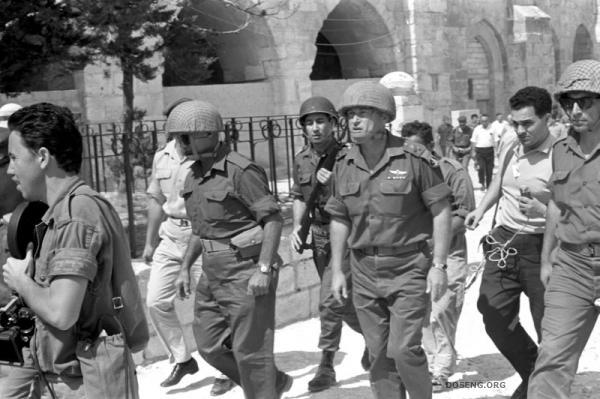
 

If, in fact, as the young soldier Zamosh thought, the keys to the Temple Mount had been returned, Moshe Dayan gave them back rather quickly. Just a few days after the Six Day War, Dayan, an Israeli war hero, visited the Muslim Waqf on the Temple Mount. In his autobiography, “Moshe Dayan: Story of My Life” he describes the conversation:


I said that Israeli troops would be removed from the site and stationed outside the compound. The Israeli authorities were responsible for overall security, but we would not interfere in the private affairs of the Moslems responsible for their own sanctuaries.  These were two Moslem places of worship, and they had the right to operate them themselves. My hosts no doubt knew that on the day we had captured this site, I had given orders that the Israeli flag be removed from the Mosque of the Dome, where it had been hoisted. We had no intention of controlling Moslem holy places or of interfering in their religious life.


Forty-seven years ago, Moshe Dayan gave the Waqf control of the Temple Mount and they continue to control it today. Just a few weeks ago, I visited Har Ha’Bayis for the third time. When Rabbi Levine, Daniel Katz, David Kay, and I approached the entrance we were told we must submit identification and wait for approval to ascend. As we waited for a good half an hour, we watched as non-Jews and non-observant Jews marched right up without being stopped at all. When we were finally approved, we were cautioned emphatically not to bow, pray or even move our lips in a way that looked like prayer. We were not allowed to bring a Siddur, Tehillim, Tefillin or any religious objects. As we walked the perimeter of the enormous Mount, in addition to an Israeli police officer who seemed more concerned with our not upsetting anyone than with protecting our right to be there, a representative of the Waqf followed us closely looking and listening to all that we did.


har ha'bayishar ha'bayis2

Our experience on Har Ha’Bayis was paradoxical, spiritually exhilarating on the one hand, and yet so sad and mournful on the other. Standing on stones from the time of the second Temple, seeing where the Holy of Holies stood, understanding the enormity and magnificence of our Beis Ha’Mikdash, visualizing how the Mount looked on Erev Pesach when the entire Jewish people were bringing their Pesach sacrifices, was simply incredible. Yet, observing the irresponsible excavations that are destroying our ancient artifacts, seeing our holiest site being desecrated, and being deprived of the ability to pray was depressing, tragic, and mournful.


As we walked, we passed groups of women, each of whom stared in our direction and screamed Allah Akbar.   As our group paused to look and learn about where we were standing, a man near us took a large metal pipe and continuously dropped it against the stone floor in an effort to disturb and intimidate us, both of which he accomplished successfully.  In a small gesture of defiance, we continuously prayed in our hearts and when we paused opposite the Kodesh Ha’Kadashim, the Holy of Holies, we even had Daniel Katz, a Kohen, give us the Priestly Blessing.


As we descended the Mount, I kept thinking to myself, it sure doesn’t feel like Har Ha’Bayit b’yadeinu. Did Moshe Dayan make a historic mistake or were we simply not ready? Are we ready now? Do we really care about Har Ha’Bayis and do we truly yearn to have the right to pray there?


Less than a year ago, a survey was done in Israel to measure public opinion on the importance of the Temple Mount. Only 29% of the people asked thought that Har Ha’Bayis is the holiest place for the Jewish people, with 66% believing it is the Kotel.   Forty percent said that it is not important to them that Jews visit the Temple Mount. Forty-one percent have no interest in a tour of Har Ha’Bayis. The survey was conducted randomly, but I imagine that if these same questions were asked of observant Jews, the responses wouldn’t be that different.


Despite being pervasive in our prayers and occupying so much of our tradition, the average Torah Jew, unfortunately, does not think often about Har Ha’Bayis or what we can do to gain the right to pray there. Granted, ascending the Mount is not for everyone. There are legitimate halachik concerns and not all authorities allow it. Those that do ascend need to first go to the mikvah with full preparations, not wear leather shoes, not carry any bag and maintain the seriousness and sobriety that our holiest place demands.


There are legitimate reasons not to go on Har Ha’Bayis but there is no excuse not to think about, care about, and advocate for the right for Jews to pray on Har Ha’Bayis. No matter what has happened in our history, we have not forgotten the Temple Mount. R’ Menachem Meiri in the 13th century references those that ascend Har Ha’Bayis. Rabbeinu Nissim, the great 14th century Spanish halachist, explicitly acknowledges the custom yet in his time of aliyah l’regel, visiting Har Ha’Bayis.   In the 15th century, the Radbaz wrote that his peers regularly visited the Temple Mount to pray there and, “we have not heard or seen anyone object to this.”


Maybe we are finally ready to take back the keys. This week, Labor Party Knesset member Yehiel Bar joined Likud Knesset member Miri Regev in sponsoring a bill that would grant freedom of movement, religion, and worship on the Temple Mount to all religions. However, immediately, the Jordanians, Arab Knesset members, and even the Shin Bet who fear it could spark riots, placed significant pressure to withdraw the bill.


Importantly, nobody is suggesting doing anything to the Dome of the Rock or the Mosque on Har Ha’Bayit. No one is advocating preventing Muslims from practicing and praying. The bill only seeks equal access and rights for all religions, just as Prime Minister Eshkol originally wanted.


Will it pass? Will we get the keys back to our people’s holiest place taking us one step closer to the final redemption? I don’t know. What I do know is meriting Har Ha’Bayis begins with caring about it. As we celebrate Yom Yerushalayim this week and the forty-seventh anniversary of the reunification of our holy city, the eternal capital of the Jewish people, please keep Har Ha’Bayis close to your hearts and prayers.


May we merit the day to ascend together as we visit the third Beis Ha’Mikdash speedily in our day.


Enough With the Public Displays of Affection in Person and Online

Once upon a time, PDA stood for something now obsolete – Personal Digital Assistant. I will never forget my first Palm Pilot together with its cool stylus and what seemed like a miraculous ability to hold over one hundred phone numbers and a To Do list, all on something that could fit in my pocket.


Today, PDA means something very different and not only is it not obsolete, it seems to be growing in popularity. Public Display of Affection or PDA is when a couple, married or otherwise, engages in more than casual physical contact in a public setting. More and more people can be seen engaging in public displays of affection unaware or unconcerned with the impact on others.


The etiquette and appropriateness of PDAs depends on the time, place and cultural expectation. A few years ago, actor Richard Gere affectionately kissed actress Shilpa Shetty on the cheek at a charity event in New Delhi.   After becoming aware of the PDA, an Indian judge issued a warrant for his arrest saying the behavior “transgressed all limits of vulgarity.” Gere left India, but five months later, Shetty was actually detained on obscenity charges.


While India has an extremely low tolerance for PDAs, the culture in the US is much more accepting. Just this week, after a historic pick in the NFL draft, a picture of the player chosen became highly controversial, not because of the act of PDA he engaged in which no longer garners attention, but only because of whom it was with.


Thanks to social media, public displays of affection are not only limited to physical contact.   I sometimes feel uncomfortable reading Facebook posts written from one spouse to another on their anniversary or birthday or most recently on Mother’s Day. Genuine expressions of affection and love between spouses are wonderful and should be encouraged, but in a private setting, not displayed in a public space. Would anyone write a card extolling their spouses virtues, describing the love they feel towards them and articulating how lucky they are to have found them and then instead of privately handing that card to their husband or wife, hang it on the wall of the Shul, school or supermarket for all to see? Of course not. So why post such sentiments online for public consumption?


Some may liken posting a public message to one’s spouse which is gushing and personal to making a toast in front of a room full of friends and family, but there is a fundamental difference.  If I go to a birthday or anniversary party or simcha of any kind, I fully expect to hear words of praise, love and adoration.  In fact, if they were absent, I would find it peculiar and ungrateful.   But if I was walking down the street and I saw you on the corner shouting out about your love for your amazing, one of a kind spouse, who is the most amazing person you ever met and who changed your life forever, frankly, I would think you are strange and inappropriate.   To me, the internet is a street corner, not your private party.


When we  see people holding hands in public we would most often think it is sweet and endearing.  If we saw the same couple engaged in greater displays of affection in public it would make us uncomfortable and would cheapen their bond.  So too, there is the social media equivalent of holding hands in public which let’s the world know you feel love and affection without violating anyone’s space.  But engaging in more intimate verbal displays of public affection makes us feel uncomfortable and I think cheapens the relationship of the author as well.


If someone wants the world to know just how much they love, adore and cherish their spouse they can do so simply by treating them really well.   Be affectionate in public by being attentive, kind, helpful and appreciative.   Let us know how lucky you feel and how in love you are by how you act, not what you write.


Often, those engaging in PDAs are calling out for attention, but more than just attracting attention, they are doing something that is harmful to others, and ultimately to themselves. Being inappropriately affectionate in public, in words or in deed, is simply immodest. But moreover, it can also be offensive and insensitive to those who are lonely and lack loving companionship that don’t need to be reminded of what they don’t have and yet still crave. Many are not married and some are in unhappy and unsatisfying marriages. While certainly not intentional, being physically affectionate in public or penning romantic and adoring messages for all to see, can be unkind and at times even cruel.


But don’t hold back from PDAs online and in person only for others. Do it for yourself and for your relationship. The gemara (Bava Metzia 42) says – Amar Rebbe Yitzchak, ein ha’beracha metzuya elah b’davar ha’samuy min ha’ayin – blessing is not found except in something that is hidden from the eye. There is nothing wrong with sharing and connecting with family and friends using social media. But Facebook is the opposite of samuy, hidden, and inappropriately flaunting our relationships for all to observe will make it difficult to receive beracha, blessing.


Ironically, public displays of affection don’t actually promote intimacy, they detract from it. In Judaism, intimacy, a deep, emotional bond and connection is achieved when something is shared in an exclusive, private and modest fashion.   That which we value the most, we protect, shield and keep from the public eye. Our most expensive jewels sit in the vault.   Our most precious heirlooms and items are not on display to the public.   What does it say about how we value our relationship if we engage in a gesture of affection for everyone to see or post a statement of our love for everyone to read?


And what does it say about how genuine we are when we post messages to people who will never possibly read them. On Mother’s Day, rather than tell their mothers directly how they feel or take the time to write a private heartfelt card, countless people turn to social media as a public stage to profess their love and appreciation to their most amazing mothers in the world, who don’t even have Facebook accounts.


The world is changing rapidly. The Palm Pilot is now an ancient relic of the past and PDA has come to mean something new. Let’s not lose our sense of etiquette and appropriateness either in person or online. By preserving our modesty and privacy in displaying affection, not only will we be showing sensitivity to others, we will bring blessing and true intimacy into our relationships as well


Pesach Sheni – Give God, Others and Yourself a Second Chance

The prisoners of Buchenwald never dreamt they would be given a second chance. They didn’t know if they would survive that day let alone what life they would ultimately lead. Of course when imprisoned they could not observe any Jewish holidays including Pesach. They couldn’t partake of the matzah, marror, seder or hagadah and never imagined celebrating a transition from slavery to freedom again.


“Vayehi ha’anashim asher hayu t’mei’m l’nefesh adom v’lo yochlu la’asos ha’pesach ba’yom ha’hu va’yikrevu lifnei Moshe v’lifnei Aharon.”   It was one year after the Exodus and the Jewish people have settled in to their new routine of freedom and emancipation. They are commanded to once again sacrifice a lamb, eat matzah and celebrate liberty, but this time not in anticipation of leaving. Instead, pesach is to be the annual commemoration of the transition from slavery to freedom.


Pesach was a national celebration, a remembrance of the birth of our people and the large family we all are. But, there was one group that felt on the outs. They did not participate in Pesach and therefore felt very disenfranchised and excluded from the community. Vayomru ha’anashim ha’heimah elav anachnu t’mei’im l’nefesh adom, lamah nigara l’vilti hakriv es korban Hashem b’moado b’soch Bnai Yisroel.   This group came forward and said at the time of Pesach we could not participate in the sacrifice because we were impure having had contact with a corpse. Lamah nigara, why should we be denied this experience?


Moshe advances their legitimate grievance to Hashem and Hashem responds positively by introducing the laws of Pesach sheni. On the 14th of Iyar, exactly one month after the Pesach sacrifice was offered, the group unable to participate was given a second chance, a pesach sheni.


Why specifically does this mitzvah have a second chance? What if you miss Chanuka due to illness or travel and could not light the candles – there is no second Chanuka. What if there is a hurricane, God forbid, and you can’t sit in a Sukkah – there is no second Sukkos. Why specifically here is there a Pesach sheni, a second chance?


Rabbi Ari Kahn of Bar Ilan University suggests that perhaps the answer lies in why these individuals were impure and from whom they contracted that impurity. The gemara sukkah 25a quotes a few opinions. One says they were occupied with burying an anonymous corpse not being tended to by anyone else. In the merit of their commitment to the highest chesed, the ultimate kindness, they were given a second chance. Another opinion says they were impure from contact with the coffins of Nadav and Avihu, Aharon’s two sons who died tragically and seemingly prematurely. The final suggestion is that it was the individuals who had carried the coffin of Yosef from Egypt in fulfillment of the promise to bury him in the Holy Land.


The Midrash in Shemos Rabbah sees the final opinion as the most correct and authoritative and seeks to prove the connection between Pesach Sheni and Yosef Ha’Tzadik. These individuals stepped forward and said we have been fulfilling the promise to Yosef Ha’Tzadik and have carried his remains on our shoulders through our travels in the desert. For making good on a promise to our Patriarch we are excluded from a national celebration? Says the midrash, the gift of Pesach Sheni and the second chance it provides are in direct merit of Yosef. What is the connection?


Think about Yosef and his life. This handsome, charismatic young man had alienated his brothers to the extent that they contemplated killing him, threw him in a pit with snakes and scorpions and ultimately sold him into slavery. Yosef was isolated from his family, on his own and far from the greatest influence in his life, his father. Despite the challenges he faced, Yosef rose to greatness in Egypt and became the second most powerful man in the strongest empire in the world.


When his brothers found themselves in Egypt appealing to Yosef for food, Yosef could have let them have it. When he finally revealed himself, he could have told them off, put them in their places, denied them assistance and in fact, have them killed in retribution. What does he do instead – he gives them a second chance. He revisits the relationship and allows them back in to his life.


Pesach Sheni is given in the merit of Yosef because courageously, bravely and with tremendous humility, Yosef introduced us to the idea of second chances in interpersonal relationships. Perhaps it is for this reason that when the group came to Moshe to register their complaint they phrase it as lamah nigara l’vilti hikriv es korban Hashem b’moado b’soch Bnai Yisroel, among the Jewish people. They wanted to feel connected, together, unified with the nation and community. After all, how did the slavery in Egypt begin – it was because Yosef was sold into slavery, violated by his brothers, dismissed, discarded, marginalized and condemned by his own brothers.


Despite being scorned, Yosef gave the brothers a second chance because he wants the family to be whole. Now, those who carried Yosef’s coffin, also carried on his mission and vision and came to Moshe saying, we want to be b’soch bnai yisroel, we want to be included in the nation so our people are whole and complete. Hashem’s response – Yosef gave a second chance, and therefore so will I. Here is Pesach Sheni.


Last March, a very special Rabbi left this world at 95 years old. Rabbi Herschel Schacter z’l, father of Rabbi JJ Schacter, led a remarkable life. He graduated Yeshiva University in 1938 after studying under Rabbi Moshe Soloveitchik and in 1941 he became the first musmach of the Rav.   He was a former chairman of the Conference of Presidents of Major American Jewish Organizations and served as the Rabbi of the Mosholu Jewish Center in the Bronx for more than 5 decades.


Most notably, Rabbi Schacter served as a chaplain in the Third Army’s VIII Corps. during WW II and was the first US Army Chaplain to enter and participate in the liberation of Buchenwald in 1945.


I share this with you firstly because Rabbi Schacter deserves to be spoken about. I share it today because Memorial Day weekend, a time we think about those who served in the American military is the perfect time. And I share it with you now to tell you about what Rabbi Shacter did on April 27th, 1945.


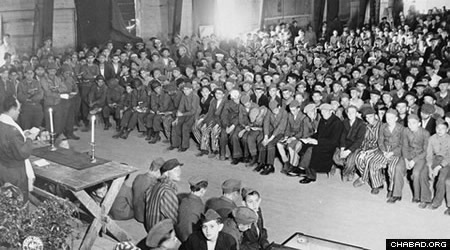
In Buchenwald on that day which was after the liberation, Rabbi Schacter led a Pesach Sheini Seder. Hundreds of individuals who were t’meiim l’nefesh adom, who had direct contact with death and who were denied the opportunity to celebrate pesach, gathered to experience Pesach Sheni. That incredible seder was likely the first Pesach Sheini Seder since the time of the Beis HaMikdash.   Just imagine for a moment a barrack filled with survivors, standing room only, in Buchenwald making a Pesach Sheni seder. We actually have a picture of that event and it is simply incredible.


Shiku Smilovic, in his autobiographical memoir tells the following about that day:


“All Jews were invited by Rabbi Schacter to attend services and to eat Matza, since it was Pesach Sheini that day. The second Pesach, for Jews that couldn’t observe the holiday of Pesach at the proper date. Rabbi Schacter brought Matzos and distributed them to everyone. Rabbi Schacter started to deliver his sermon, when suddenly he was interrupted by a fellow prisoner. When he heard the Rabbi say, “We know what you have gone through” The man screamed and said: “No one, but no one, can dare say that he knows what we went through unless, he or she was there! Only they can say, I know what you went through!” He continued at the top of his voice with quotes from the Torah and other scriptures. He was no plain ordinary every day Jew. He spoke with authority. “Why did G-d forget about his children? And we were devastated, just because we are Jews?” he continued. “Before we make a blessing and eat this Matza. We want a Din Torah with the Ribono shel olam: Why? Why the little children? They didn’t have a chance to sin yet? Why so many thousands of true dedicated Talmidei chachomim (Jewish learned men), that were sitting and learning yomam v’lyla day and night? You can take your matzos back to America. I don’t want them, as far as I am concerned. The rest of you: you are free! You can do what your heart desires!” Rabbi Schacter did not interrupt the man and he let him finish. He moved his fists towards his heart and said, “Chotosi Uvisi Pushati Lefonecha: Please, may I have your forgiveness?” The man raced up to the Rabbi and embraced him for a while. The rest of us just stood there in silence, and our tears did the talking. After that scene we all decided to have some Matzo anyway. We made the blessing of al achilas matzah in unison. I am sure that this blessing was heard in heaven, and all the Angels answered Amen.”


Yosef gave his brothers a second chance despite what they had done to him.   Years later, Hashem gave Pesach Sheni to those who requested it, in his merit. And on April 27th, 1945 the survivors of Buchenwald observed Pesach Sheni and through it gave Hashem a second chance.


It is simply never too late. Many of us, like Yosef, have been hurt by our brothers. They have caused us pain, damage, or loss. A family member, co-worker, friend, neighbor or even a spouse or child has hurt us terribly and we are tempted to write them out of our lives forever. I would argue that it is unlikely anyone here has been hurt more than Yosef and yet, he gave his brothers a second chance. We can too. Don’t think a relationship is ever damaged beyond repair. Don’t severe a connection forever. If the circumstances are right, give others a Pesach Sheni, give them a second chance.


And, like the incredible heroes of Buchenwald, even be willing to give Hashem a second chance. I would argue nobody has experienced greater suffering and nobody is entitled to write off God more than Holocaust survivors. And yet, that fateful day in 1945, hundreds of liberated prisoners observed a Pesach Sheni and were willing to give Hashem a second chance. You were disappointed by God, felt abandoned, hurt, ignored – that is legitimate and those are valid feelings. But, if they could be open to giving God a second chance, so could you. Work on the relationship, rebuild, invest, talk to Him, let Hashem back in to your life and you will benefit the most.


And lastly, while Pesach is formally the only mitzvah for which we are giving a second chance, in truth we always have second chances. If you never properly learned to read Hebrew or follow the siddur, you can still have a second chance. If you want to learn your haftorah, celebrate a milestone that passed you by you can still have a second chance. If you got married without kosher witnesses or a kosher wedding, it isn’t too late. You can have a second chance and we can arrange a private ceremony. If you have always wanted to learn gemara or complete the daf yomi, it is not too late, you have a second chance.


Whatever happens in life – between us and others or between us and Hashem – never stop believing in second chances.


Kevin Durant, Rav Aharon Lichtenstein and You – 100th Anniversary of Mother’s Day

Many cynics assume that Mother’s Day was invented by the greeting card industry and they are only half wrong. In 1905, Anna Jarvis of West Virginia lost her beloved mother whom she respected, admired and loved beyond words. She began a campaign to create Mother’s Day as a recognized holiday in the United States in order to honor, “the person who has done more for you than anyone in the world.” She was successful in convincing several states to officially recognize the day and ultimately in 1914, Woodrow Wilson signed the proclamation creating Mother’s Day, the second Sunday in May, as a national holiday to honor mothers.


It didn’t take long for Hallmark and other greeting card companies to capitalize on this new holiday by selling printed cards with messages of appreciation to Moms. Jarvis was so disappointed and disturbed by the commercialization and exploitation of what she intended to be a genuinely sentimental day that she worked to rescind the very holiday that she had introduced. Mother’s Day was supposed to be about hand written, personal letters of appreciation, she felt, not about mass produced, impersonal cards that generate profit for big companies instead of engender love and gratitude. Despite her organized boycotts, it was too late. The greeting card industry was too strong and Mother’s Day was here to stay.


This year, on the 100th anniversary of Mother’s Day, over 133 million cards will be given, millions of bouquets of flowers sold, brunches eaten, and an estimated $20 billion will be spent on gifts. With all the attention and fanfare paid to what has become among America’s most popular holidays, it is critical to remain mindful and sensitive to those who aspire to be mothers, but have not yet been blessed with the opportunity.   However, ultimately, Mother’s Day is not about celebrating the institution of motherhood, taking pride in one’s maternal instinct or even about applauding all mothers. According to its founder, Anna Jarvis, Mother’s Day is entirely about our own personal mother and recognizing her unique role and contributions to our life. Jarvis, who did not have children of her own, specifically did not call it Mothers’ Day in the plural, but Mother’s Day, the day dedicated to our singular, one and only mother.


This week, the N.B.A. bestowed its highest personal honor, the MVP, Most Valuable Player Award on the Oklahoma City Thunder’s Kevin Durant. At the reception celebrating his achievement, Durant who is incredibly competitive, aggressive and relentless on the court, was clearly emotional while thanking his teammates, coaches, fans and friends. He couldn’t fight back tears when he came to his final thank you addressed to his mother, Wanda. He told her, “We weren’t supposed to be here. You made us believe. You kept us off the street. You put clothes on our backs. Food on the table. When you didn’t eat, you made sure we ate. You went to sleep hungry. You sacrificed for us. You’re the real M.V.P.”


While Durant was receiving an award for his athletic prowess, halfway around the world in our Holy City of Yerushalayim, l’havdil Rav Aharon Lichtenstein Shlit”a was receiving the prestigious Israel Award for his contributions in the field of Jewish Religious Literature.   Rav Aharon, as he is affectionately known, is an extraordinary Talmid Chacham, Rosh Yeshiva, teacher, thinker and writer whose brilliance is only surpassed by his modesty and model character. In an interview years ago, when it was suggested to him that many of his students believe that his passion for Torah learning began when he first encountered Rabbi Joseph B. Solveitchik who would later become his father in law, Rav Aharon was quick to correct the record. He explained that in fact, it was his mother, Bluma, herself a product of Telz in Lita, who was the driving force to ensure that her son would become a Torah scholar. She arranged special teachers and advanced learning opportunities for him as young man and made special efforts to position her son as a prized student of Rav Yitzchak Hutner, long before he ever met the Rav.


Whatever success we achieve in life, whatever accomplishments we earn, would not be possible without the woman who not only brought us into the world, nourished us, nurtured us and cared for us, but empowered us, inspired us and propelled us forward to become the people we are, our mothers. Mothers have a special role and a critical voice in our development. It isn’t just that they changed our diapers, tucked us in to sleep, nursed us back to health when we were sick, packed our lunches for school, and patiently did our homework with us. Our mothers had a much more significant pedagogic role to play.


In his eulogy for his mechutenesta, the Rebbetzin of Talne, Rabbi Soloveitchik spoke about his own mother and said:


People are mistaken in thinking that there is only one masorah, and only one masorah community, the community of the fathers. It is not true. We have two masorot, two traditions, two communities, two shalshalot ha-kabbalah [chains of tradition]- the masorah community of the fathers and that of the mothers. “Thus shalt thou say to the House of Jacob [=the women] and tell the children of Israel [=the men]” [Exodus 19:3], “Hear, my son, the instruction of thy father [mussar avikha], and forsake not the teaching of thy mother [torat imekha]” [Proverbs 1:8], counseled the old king. What is the difference between these two masorot, these two traditions? What is the distinction between mussar avikha and torat imekha? Let us explore what one learns from one’s father and what one learns from one’s mother.


From one’s father one learns how to read a text- the Bible or the Talmud, how to comprehend, how to analyze, how to conceptualize how to classify, how to infer, how to apply, etc. One also learns what to do and what not to do, what is morally right and what is morally wrong. Father teaches son the discipline of thought as well as the discipline of action. Father’s tradition is an intellectual-moral one. That is why it is identified with musar, the biblical term for discipline.


What is torat imekha? What kind of a Torah does the mother pass on? I admit that I am not able to define precisely the masoretic role of a mother. Only by circumscription may I hope to explain it. Permit me to draw upon my own experiences. I used to have long conversations with my mother. In fact, they were monologues rather than a dialogue. She talked and I “happened” to overhear. What did she talk about? I must use a halakhic term in order to answer this question. She spoke of inyana de-yoma [the affairs of the day]. I used to watch her arranging the house in honor of a holiday. I used to see her recite prayers. I used to watch her recite the sidra [weekly Torah portion] every Friday night; I still remember the nostalgic tune. I learned much from her.


Most of all I learned that Judaism expresses itself not only in formal compliance with the law but also in living experience. She taught me that there is flavor, a scent, and a warmth to mitzvot. I learned from her the most important thing in life- to feel the presence of the Almighty and the gentle pressure of His hand resting upon my frail shoulders. Without her teachings, which quite often were transmitted to me in silence, I would have grown up a soulless being, dry and insensitive.


The laws of Shabbat, for instance, were passed on to me by my father; they are part of musar avikha. The Shabbat as a living entity, as a queen, was revealed to me by my mother; it is a part of torat imekha. The fathers knew much about the Shabbat; the mother lived the Shabbat, experienced her presence, and perceived her beauty and splendor.


The fathers taught generations how to observe the Shabbat; the mothers taught generations how to greet the Shabbat and how to enjoy her twenty-four-hour presence.


Rabbi Soloveitchik never attended a Yeshiva. All of his formal Torah learning came from his father. And yet, it is his mother whom he credits with awakening and nourishing his soul. “Without her teachings, which quite often were transmitted to me in silence, I would have grown up a soulless being, dry and insensitive.”


This Sunday, on the 100th anniversary of Mother’s Day, let’s make Anna Jarvis proud. Instead of purchasing a mass produced greeting card, hand write a letter to your Mother and thank her for being “the person who has done more for you than anyone in the world.” Let’s never take for granted the toras imecha, the unique roles of our mothers and the lessons we have learned from them.


Words Matter – Just Ask Donald Sterling, John Kerry & Avigdor Kahalani


When I studied in Yeshiva University there was a young man named Yossi z”l who suffered from a degenerative disease that left him in a wheelchair, immobile and unable to speak. All Yossi could do was move his finger and that is how he communicated. He had a board on his wheelchair with a chart of the alphabet on it. He would painstakingly move his finger to point to a letter, and then another letter until he spelled out a word and patiently continued until his words formed sentences.


After getting married, Yocheved and I went to Israel for two years where I studied in YU’s Gruss Kollel in Yerushalayim. I was pleasantly surprised to learn that Yossi had made Aliyah with his family and was studying there as well. By this time, he was unable to control any muscle in his entire body other than moving his eyes. In order to communicate, instead of Yossi, you had to move your finger over the board and Yossi would look to the side to indicate which letter he wanted to use to form the word that would make the sentence that would communicate his thought. Yossi’s Rebbeim in YU described him as having a brilliant mind. He had so much to offer the world, insight, wisdom, humor and yet we were so limited in our ability to gain from Yossi, simply because he lacked the ability to communicate with ease.


Today, we have technology that would allow Yossi to share his thoughts with others. However, from my relationship with him I learned that without the gift of communication, verbal or otherwise, we are left paralyzed, with so much to share, but an extremely limited ability to influence or impact the world around us. Communication allows mankind to advance and grow, to create and destroy, to build and demolish. Words matter and can even have lethal consequences. Shlomo Ha’Melech, the wisest of all men taught, “Maves v’chaim b’yad lashon, death and life are in fact found in the power of speech.”


I am not telling you anything that we haven’t all been taught since our earliest age. However, somehow despite our knowledge about the power and impact of words, we struggle to be discerning, careful and judicious in our employment of them. This week was a stark reminder of how the choice of words can have dramatic and lasting effects.


Few of us knew the name Donald Sterling before this week, but now he is a household name. He has become the poster child of racism, the symbol of bigotry and image of discrimination. Sterling’s attitude towards black people is actually nothing new. In 2009 he was sued by the coach of the Clippers, the NBA team he owns, for wrongful termination saying that the team’s owner underpaid him and treated him “as a token because of his race,” though the suit was later dropped.   In 2006 the Justice Department filed a lawsuit accusing Sterling’s rental company of refusing to lease Beverly Hills apartments to African-Americans. In 2003, the nonprofit Housing Rights Center and a group of tenants filed a lawsuit accusing Sterling of “numerous discriminatory statements and housing practices,”


Sterling’s record towards African Americans didn’t impede him from public recognition and awards. In January 2006, Sterling was inducted into the Southern California Jewish Sports Hall of Fame during a gala dinner at the Milken Jewish Community Center in West Hills. Even more shockingly, he was slated to receive his second NAACP Lifetime Achievement Award at the group’s 100th anniversary celebration next month.


But today, Sterling is considered a villain, reviled and loathed by decent people everywhere.   The NBA is fining him $2.5 million and is forcing him to sell his team. What did he do wrong? Was he caught practicing discrimination, bias or racism? No. Amazingly, it wasn’t anything he did, it was entirely what he was caught saying. A tape emerged capturing a racist rant from Sterling.   The consequences have been swift and drastic. Amazingly, those consequences were not imposed when he was accused of actually practicing racism, but they came with furor when he used his words and spoke in a vile, intolerable, reprehensible way. Words matter and the wrong choice of them can have grave consequences.


A poor choice of words can be revealing or inflammatory and provocative in dangerous ways.   Secretary of State, John Kerry’s use of the word Apartheid in the context of Israel’s future brought on a bipartisan firestorm of criticism this week. His defenders will point out that two former Israeli Prime Ministers have used that word in describing what may result in a failure to make peace. Kerry defended himself aggressively and vehemently citing his record as a Senator on Israel. Many, myself included, were unconvinced.   His record on Israel was not under question; it was his choice of one particular word, a word that is viewed as dangerously inflammatory in any context and under any condition, but especially when used in connection to Israel.


My point here is not to make the claim that it is absurd to suggest that Israel is an Apartheid state or heading towards being one, something relatively easy to do.   I am simply pointing out a second incident from just this week where someone did not take an action or enact a policy, but was riddled in controversy simply because of the words they chose to use.


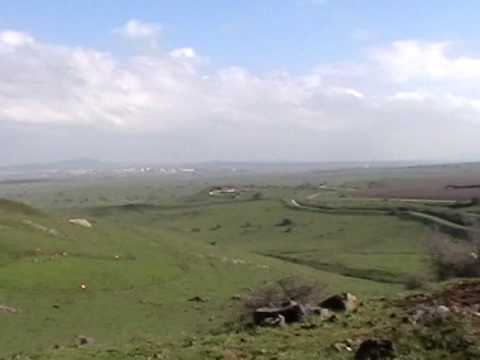
Words matter. Words can be lethal, but they can also save lives and even save a country. This week I had the privilege of visiting Emek Ha’Bacha, the Valley of Tears in the North of Israel, together with the incredible Hillel Day School 8th Grade mission to Israel. A little over 40 years ago, Israel was caught by surprise when they were attacked on Yom Kippur day.   The IDF was unprepared and some suggest even arrogant after the miraculous sweeping victory in the Six Day War, just a few years earlier.


On the fourth day of the war, Syria began a new attack from a valley in the Golan Heights. The Syrians had 1,500 tanks and the Israelis had 177. The Syrians had 460 artillery and cannons and the Israelis had 44. The Syrians had 36 anti aircraft missile batteries and the Israelis had none. In this particular battle, the Syrians had 500 tanks and the Israelis had 40.   The Syrians charged forward seeking access to the plateau that would have allowed them to spread out their forces, take control of the Golan Heights and charge deep into Israel.


At one point, 29-year-old Lt. Col. Avigdor Kahalan, who commanded the IDF’s 77th Armored Battalion, told one of his tanks to take a certain position that would intimidate the Syrians. The driver radioed back that he had no ammunition. Kahalani’s response was, “but they don’t know that.” He instructed the tank to take the position and move around raising dust in a way that would give the impression it was fierce and dangerous.


The battle raged for days and the Syrians were advancing. Kahalani’s men hadn’t eaten or slept in days. They were physically exhausted and their spirits were broken.   The Syrians made an aggressive push forward. There was one last opportunity to enter the valley and stem the Syrian advance before it was too late. Kahalani radioed the remaining tanks to join him in a rush towards the enemy, but the men were tired, they were scared and they had all but given up hope not only of protecting the Golan but of Israel’s very future.

Kahalani realized that he was going forward alone and he radioed his weary men the following words: “Just look at the Syrians’ courage as they come up to the positions facing us. I don’t understand what’s happening to us. After all, we are stronger than they. Now, start to move forward…Move!” The courageous men of his battalion described how those words, Kahalani’s short but dramatic charge, literally transformed their spirit and gave them the strength, fearlessnes, and will to join him in his aggressive advance. The battled raged and ultimately Kahalani’s battalion miraculously succeeding in achieving the Syrian retreat.


Following the war, General Rafael Eitan said to the 77th Battalion: “If we had not stopped the Syrians on the Golan Heights, then the State of Israel would have been destroyed…This division saved Israel from defeat, from catastrophe…I want to stress and make it clear to you; you saved the people of Israel. First and foremost, you!”


We went from the movie that told the story and included the actual radio conversations to a lookout over the valley where the battle was fought. As we stood there, just a few days before Yom HaZikaron and Yom Ha’Atzmaut we were in awe of the courageous men and women who founded and defend our beloved and precious State of Israel. We were overwhelmed with gratitude to God for the blessing of returning to our homeland after all of these years.


And we walked away realizing that words truly matter, and finding the right ones at the right moment can make the difference for an entire nation. Words matter, so let’s remember to always choose ours carefully.


Honor Our Survivors By Simply Showing Up

LONDON – DECEMBER 9: Auschwitz survivor Mr. Leon Greenman, prison number 98288, displays his number tattoo on December 9, 2004 at the Jewish Museum in London, England. Mr. Greenman O.B.E age 93 and a British citizen, spent three years of his life in six different concentration camps during World War II and since 1946 he has tirelessly recounted his life through his personal exhibition at the museum where he conducts educational events to all age groups. January 2005 will be the 60th anniversary of the liberation of the extermination and concentration camps, when survivors and victims who suffered as a result of the Holocaust will commemorated across the world. (Photo by Ian Waldie/Getty Images)

How many people do you know who fast on the 20th of Sivan?  The likely answer is zero.  It is not one of the minor fast days, and obviously not Tisha B’av or Yom Kippur, so why would we fast?


Twice in our history, the 20th of Sivan was designated as a permanent fast day to commemorate massacres against our people.  The first time was by Rabbeinu Tam, Rashi’s grandson in 1171, after 31 Torah scholars were executed as a result of a blood libel in France.   Rabbeinu Tam declared the 20th of Sivan as a day of fasting “greater than Tzom Gedalya, like Yom Kippur,” and instituted special selichos to be recited.  Shortly after, the Crusades expanded and for the next 150 years would bring great devastation of Jewish communities.  It overshadowed the incident of the blood libel and the fast ceased being observed.


Almost 500 years later, from 1648-1649, Polish Anti-Semite Chmielnicki launched a series of pogroms that led do the deaths of tens of thousands of Jews and the loss of hundreds of Jewish communities.  The Shach, Rav Shabbsai Ha’Kohen, instituted the 20th of Sivan as a private fast day for his family to commemorate their great loss.  Soon after, the Council of the Four Lands, the rabbinic authority of Eastern Europe, adopted the fast for all Polish Jewry in commemoration of the tragedies of what became known as Tach V’Tat.


Twice the 20th of Sivan was designated as a day commemorating Jewish tragedies, and twice the observance faded until it was lost completely.   In this context and with this background, I can’t help but wonder – what will become of Yom Ha’Shoah?  Will it continue to be observed 20 years from now?  Will gatherings, commemorations, ceremonies, and school assemblies be held, or as time passes will Holocaust Remembrance Day fade into oblivion?


Sadly, the likelihood is that Yom Ha’Shoah will go the way of the 20th of Sivan.   Anecdotal evidence from my experience and that of my colleagues indicates decreased attendance at Yom Ha’Shoah events over the last few years.  Moreover, while the Holocaust was a defining event and experience for the last two generations, evidence shows that young people today want to “move on,” put it “behind us,” and come “out from under its shadow.”   The younger generation is rapidly seeing the Holocaust in the context of the Crusades, the Inquisition, and the Expulsion from Spain: events that are part of our past, rather than as something that happened to our parents and grandparents, a very real piece of our personal lives.


With all that said, what will happen with Yom Ha’Shoah in the future – I cannot predict.  But there is one thing that I know for sure.  Yom Ha’Shoah in the present, this year, this Sunday night, must be observed, commemorated, and widely attended, especially by young people.  You see, there is one component to the Yom Ha’Shoah debate that exists now but will not be here much longer – our precious survivors.


Our survivors have lived through the greatest atrocities and most horrific circumstances in the history of the world.  They endured unimaginable suffering, inconceivable loss, and profound pain.  They rebuilt their lives with deep faith, amazing and inspiring optimism, and in most cases little to no expectation that the world owes them anything in return for what they have been through.


With the Holocaust survivors whom I have been privileged to know, I have found that there is one request they have of us, one wish and hope: they are desperate for us not to forget what they went through.  They reawaken their darkest memories and become traumatized each time they share their horrendous stories.  More than one survivor has told me that for days after telling their story, they cannot sleep, eat, or find a peaceful moment.    Nevertheless, they open themselves up to great pain continue to tell their story with the hope and expectation that we are listening, that we will remember, and that we will continue to tell it long after they are gone.


In his article, “Holocaust Commemoration and Tish’a Be-Av: The Debate Over “Yom Ha-Sho’a” published in Tradition 41:2, Rabbi Jacob J. Schacter traces the origins of Yom Ha’Shoah and examines the great debate surrounding its observance.   Whether you feel Yom Ha’Shoah should have been established or you believe Holocaust remembrance should be incorporated into our day of national mourning, Tisha B’av, is academic at this point.  The reality is that the Jewish calendar marks Yom Ha’Shoah and failure to participate in remembering is essentially a slap in the face of our beloved survivors who yearn to know that we have not forgotten their loss and suffering.


This year, our program will feature Mr. Robert Bielsky. Mr. Bielsky is the youngest son of Tuvia Bielski who, with his brothers Zus and Asael, saved more than 1,200 Jews in the forests of what is now Belarus and whose heroics became the subject of the 2008 movie Defiance.   If you have children of a suitable age, I implore you to bring them.  Older people and adults have lived with and met Holocaust survivors.  It is specifically children who are running out of time and opportunities to meet these extraordinary people whom they will look back at later in life and only wish they could have known better.


With all the pressures on our time and the endless list of things that we must get done, I simply can’t imagine a more important place to be on Sunday evening at 6:30 PM than with your children at your side honoring the Survivors of our community.  What could you possibly have to do that would be more important?


The Exodus and Immigration

The debate about immigration reform heated up again this week with the President and Republican leadership publicly sparring over who is to blame for a lack of progress in an area that all agree is critically important to the future of our country. Immigration is as controversial and emotionally driven a topic as any, with passionate views held on all sides of the issues.


Are our borders secure enough, and if not, what more should be done? Are our quotas too strict or too lenient? What should happen with illegal immigrants, their children and sometimes grandchildren who are already fully entrenched in this country?


For better or worse, I have not yet personally formed an opinion on immigration reform. Clearly there are merits for, and compelling arguments to support, multiple positions. I raise this issue here and specifically now during Pesach, not to provide a solution or definitive opinion, but to suggest that among the many variables we consider when weighing this significant issue is the Torah’s emphatic directive that one of the foremost lessons of the Exodus is to be kind and welcoming to strangers for we were once immigrants and foreigners ourselves:


Do not say cruel things to a stranger and do not oppress him, for you were strangers in the land of Egypt. (Shemos 22:20)


Do not pressure the stranger. You know the feelings of a stranger for you were strangers in the land of Egypt. (Shemos 23:9)


Do not turn in a slave to his master when he flees to you from his master. Let him live with you in your midst, in the place he chooses in one of your gates as suits him; don’t oppress him. (Devarim 23:16)


Indeed, this mitzvah is mentioned no less than thirty-six times in the Torah.   While the halachik application of this injunction may refer specifically to converts to Judaism, the simple understanding of the text as our commentators interpret it, is to be kind to non-Jewish immigrants to Israel who come from other lands and pledge to observe the seven Noahide laws as expected of them.


Why does the Torah always connect our obligation to feel for the stranger to our experience of leaving Egypt? Had we not experienced discrimination in Egypt, would we be permitted to be harsh or cold to the stranger?


Rabbi Yosef Dov Soloveitchik zt”l explained (Reflections of the Rav, pp. 190-191):


Whenever the Torah wants to impress upon us the Mitzva of having compassion and sympathy for the oppressed in society, it reminds us of our similar helplessness and lowly status during our bondage in Egypt. The most defenseless elements in society are usually the slaves, strangers (proselytes), widows, and orphans, and we are repeatedly enjoined by the Torah to be sensitive to their plight: ‘You shall not pervert the justice due a stranger or to the fatherless; nor take a widow’s garment in pawn. Remember that you were a slave in Egypt’…


The Egyptian experience may therefore be regarded as the fountainhead and moral inspiration for the teaching of compassion which is so pervasive in Jewish Law. It sharpened the Jew’s ethical sensitivity and moral awareness. The Midrash has R. Nehemiah say this explicitly: ‘the Egyptian bondage was of great value for us, since it served to implant within us the quality of kindness and mercy.’ Ours is a singularly ethical culture, which expresses itself through a heightened regard for human rights and dignity.


Compassion is a distinguishing characteristic of the Jewish people, but yet it is a natural expression of man’s being created in the Divine image, tzelem Elokim, an endowment which all mankind possesses in common.


Tzelem Elokim signifies only a capacity to love, not the necessity of loving. This capacity, which all people possess, can be and is frequently superseded, but when it becomes a necessity, it cannot be suppressed. It flows naturally and is indigenous to one’s character. The Egyptian experience sought to transform the Jews into a people to whom compassion would be a necessity, not merely capacity.


As we seek to identify with the stranger and foreigner today, we need not look all the way back to our experience of being slaves in Egypt. Sadly, we can draw from the feeling of otherness and being outsiders that remains yet today.


Though exactly who distributed the leaflets is unclear, just this week, notices were sent around the Eastern Ukrainian city of Donetsk, demanding that “all citizens of Jewish descent, over 16 years of age and residing within the republic’s territory are required to report to the Commissioner for Nationalities in the Donetsk Regional Administration building and register.” The notices further demand that Jews pay a $50 registration fee.


Secretary of State Kerry addressed the leaflets saying, “Just in the last couple of days, notices were sent to Jews in one city indicating that they have to identify themselves as Jews. In the year 2014, after all of the miles traveled and all of the journey of history, this is not just intolerable — it’s grotesque. It is beyond unacceptable.”


That the Jew is still viewed as a stranger and foreigner in the Ukraine in 2014 is sadly not terribly surprising. However, what is both surprising and extremely disturbing is just how much of a stranger Jews remain, even here in the United States, the most welcoming and kind home we have ever known.


Following the shooting in Kansas City of the eve of Pesach, an article on anti-Semitism in America shared: “The Federal Bureau of Investigation keeps statistics, the most recent of which are for 2012. In the United States that year there were 6,573 hate-crime incidents reported to the bureau… Of the religion-prompted hate crimes, 65 percent were aimed at Jews, a share relatively unchanged from five years earlier (69 percent) and another five before that (65 percent). In contrast, 11 percent of religious-bias crimes in 2012 were against Muslims.”


It is not just the white supremacist that opened fire in the Jewish Community Center who holds outrageous positions about our people.   His feelings are apparently more widespread, as no less than the mayor of the shooter’s hometown in Marionville, Missouri, essentially agrees with him. “There’s some things going on in this country that’s destroying us. We’ve got a false economy. And it’s some of those corporations, are run by Jews, cause the names are there.” He previously wrote, “The Jew-run medical industry has succeeded in destroying the United States work force. That is why our factories left.” He added that the medical industry “made a few Jews rich by killin’ us off.”


To be clear, I do not know what immigration reforms would best serve America and I am certainly not advocating for any in particular. Immigration is a difficult, complex, and critically important topic that deserves great attention, thought and analysis. Legislation needs to be just, fair, and importantly, promote security and safety.


What I do know is that among all of our logical and factual considerations and variables in forming an opinion, the Torah demands that we turn our memory of leaving Egypt into empathy and compassion for strangers and their plight.


Interrupting Our Seder to Remember

The word Pesach alone invokes conflicting emotions.  On the one hand, we dread the hard work, labor-intensive cleaning, shopping, cooking, preparing, and of course the exorbitant expense involved.  On the other hand, we hear the word Pesach and we immediately picture our grandparents and parents, our family’s Seder songs and tunes, we nostalgically remember the recipes and specialty dishes, and most significantly we sentimentally remember talking, laughing, and even fighting with our family and friends.


Pesach makes us feel many things, but thank God, one of them is not fear for our lives.   This was not always the case.  For Ashkenazi Jews in particular, Pesach historically was a time that our enemies emboldened themselves and rose up to persecute us.  Blood libels, pogroms, and massacres abounded during the Pesach season in particular.


For centuries, Pesach meant a time of great fear, threat and danger for countless Jews.  Rabbi Nachman Cohen, in his Historical Haggadah, suggests that this is likely the source for two Ashkenazic customs we have at the Seder that have no source in the Talmud.  Some suggest that the wearing of a kittel, our regal white garment, is a sign of joy for our deliverance and freedom.  Similarly, the Vilna Gaon maintained that the egg that is eaten at the beginning of the meal is the egg from the Seder plate, a reminder of the Korban Chagiga, the special holiday sacrifice in the Temple.   That reason, however, doesn’t explain why we dip it in salt water.


Others suggest, therefore, that in fact, the egg is not from the Seder plate; it is to remind us of the destruction of the Beis HaMikdash.  Not coincidentally, the 9th of Av always falls on the same day of the week as the first day of Pesach. The Kittel, suggests Rabbi Cohen, is in fact not a symbol of royalty, but of mourning.  Jewish men are buried in their Kittels and therefore the Kittel is a symbol of the fragility of life.


We dip the egg in salt water and wear a Kittel to the Seder table to remind ourselves that even in the midst of celebrating freedom, liberty, and emancipation, we don’t yet have peace in Israel and we remain bereft of our Holy Temple.  Even at the Seder table, and even on the night of our freedom, we remain acutely aware of our Galus and how vulnerable and threatened we stand.


Most years, we who are blessed to live in a Medina shel chesed, a benevolent country that protects us and preserves our freedom to practice Judaism fully, cannot relate to Pesach as a time of mourning, loss, and tragedy.  However, this year is different from others.  As we come to the Seder, we need no extra reminder that there are yet people in the world and yes, even right here in America who hate Jews and seek our destruction.


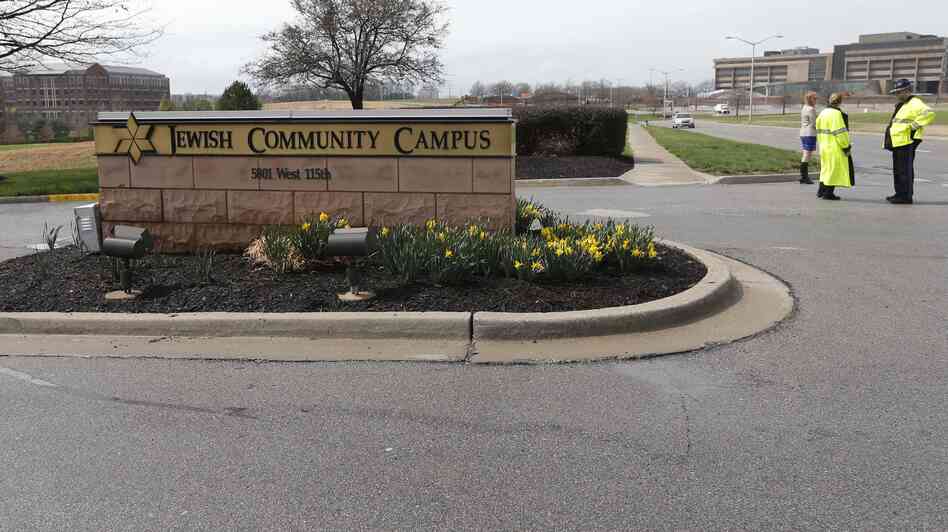
Frazier Glenn Miller, Jr., a 73-year-old former member of the Ku Klux Klan, screamed “Heil Hitler” as he sat in the back of a police car after killing three people outside Overland Park’s Jewish Community Center and at a nearby Jewish assisted living facility.  Three people, murdered in cold blood on the eve of Pesach, simply because they were on a Jewish campus and associated with the Jewish community.


While we would like to see this as an isolated incident and the work of a madman, unfortunately, we can’t.  The Times of Israel reported on Sunday that the Westboro Baptist Church, an extremist organization, announced that it would picket the funerals of the three people killed in Sunday afternoon’s shooting attacks.  The church sent out a tweet shortly after the shooting saying, “Thank God for shootings at Overland Park KS jewish centers! Westboro to picket funerals. God did not passover.”


IDF Chief of Staff Lt. Gen. Benny Gantz said, “This is a very serious and distressing incident for those who were impacted by it, and also because of what was behind it — anti-Semitism and hatred have not disappeared from the world.  We wish Jewish communities around the world a happy and kosher Passover. Despite the difficulties, we’ll celebrate Passover. Though the existence of the State of Israel, we ensure an alternative to which everyone can come.”


Lt. Gantz is absolutely correct in reminding us that we are incredibly blessed to not only sing Next Year in Jerusalem, but to be able to make it happen by moving to Israel.   Israel, the Jewish homeland, is now under Jewish sovereignty.  Rather than outsource our protection to others, in Israel we can ensure it ourselves and care for our people with the level of love, dedication, and sacrifice that a family provides for its loved ones.


But as we know well, even Israel is not immune from Pesach tragedy.  In the deadliest attack during the second Intifada, on Seder night in 2002, a suicide bomber killed thirty people and injured 140 at the Park Hotel in Netanya in what became known as the Pesach Massacre.


In the wake of the Kansas City incident, though we have no reason to be alarmed locally, our security committee has reviewed the security on our campus.   Jews in America are blessed to live in a country that cherishes our freedom of religion and works diligently to protect us in every way possible.  Jews of Israel are protected by the finest, most courageous, and dedicated soldiers and security forces in the world.


However, that said, the Haggadah’s message for us is “b’chol dor vador omdim aleinu l’chaloseinu, in every generation they rise up to annihilate us, v’hakadosh Baruch Hu matzileinu mi’yadam, it is Hashem who ultimately is responsible for saving us from their hands.”


On this Pesach, as we don our Kittels and dip our eggs in salt water, let us pray that our brothers and sisters in Overland Park and Kansas City find strength, solace, and comfort and that they can soon return to life as they knew it.  On this Chag Ha’Emunah, let us beseech the Almighty to foil the plans of our enemies and to bring everlasting safety and security to our people through the rebuilding of His Beis Ha’Mikdash.


Why Should You Attend a Shabbos Ha’Gadol Derasha?

Every year, on the first two nights of Pesach, I look out in Shul and have the same thought: This is not what the Rabbis meant when they instructed us to re-live the Exodus.   Halacha dictates that Kiddush at the Seder cannot begin until after nightfall, leaving a significant gap in between the conclusion of Mincha and the start of Ma’ariv.  In most Shuls, the time is designated for a short shiur on a contemporary topic or insights into the Hagaddah.


As a child, I was always taught, it is one thing to not actively go to a shiur, but it is an altogether different thing to get up and choose to walk out of one.  Those words ring in my ears as we conclude Mincha on Pesach night and I observe those re-living the Exodus through the back door.  Many concede the opportunity to hear Divrei Torah, choosing instead to stand in the lobby and shoot the breeze, share the latest gossip, or simply pass the time.  Others, however, make an exit for what they consider a noble reason.  They are heading to the Beis Midrash for “real” learning.


This phenomenon is not unique to Pesach night.  Go into any Shul on any evening and you will see that when the Rabbi gets up to share Divrei Torah in between Mincha and Ma’ariv there are people who walk out.  Some will be davening at a later Ma’ariv minyan and see no reason to remain for the Dvar Torah before leaving.  Others go to the Beis Midrash for a few minutes of “serious” learning.  Yet others remain in the Shul and brazenly open a sefer to study, oblivious to the impression it leaves and the message it sends.


Rav Yitzchak Zilberstein, in his fantastic sefer Chashukei Chemed, records the following question he received: “On Shabbos Shuva and Shabbos HaGadol the Rabbis stand up and deliver sermons before their Congregations.  Asked a Torah scholar – What should I do if I feel it would be much more productive to remain in the Beis Midrash and continue my independent study rather than attend the Derasha?  Is it appropriate for me to do so?


Rav Zilberstein is himself an outstanding Talmud Chacham and Posek.  He serves as the Av Beis Din of the Ramat Elchanan neighborhood of Bnei Brak, the Rosh Kollel of Kollel Bais David in Cholon, and the Posek of Mayanei HaYeshua Hospital in Bnei Brak.  He has authored many seforim and addresses inquiries in Halacha from around the world.  One might have anticipated that he would encourage the questioner to pursue the highest level and most productive form of Torah study and therefore to remain diligent in his personal learning rather than attend the Shiur designed for a popular audience.


Instead, however, he writes as follows: “The value of communal Torah study is tremendous, as the Gemara (Berachos 6a) says learning Torah in a group of ten or more is similar to Tefillah B’Tzibbur, communal prayer, and God Himself comes to join… We see from here that even if the quality of one’s learning will be better alone, the value of communal learning takes precedence and supersedes.  Therefore, one should stop his learning and attend the derasha.”


It is sad and admittedly shamelessly self-serving that I, a pulpit Rabbi, feel compelled to share this insight.  However, I fear that unfortunately the Rebbeim and Roshei Yeshiva who should be emphasizing this message, in most cases, are not.  One great Rosh Yeshiva who did was R’ Moshe Feinstein zt”l.


Rav Zilberstein continues his teshuva by telling the following story:


“A student approached Rav Moshe on the eve of Bein Ha’Zemanim, intercession, and asked, ‘What hanhaga tova, what virtuous practice should I accept upon myself during this upcoming yeshiva break?’  Rav Moshe responded, ‘There is a Shul in your community which undoubtedly has a short shiur between Mincha and Ma’ariv each day for the Ba’al Ha’Batim.  As a yeshiva student, you have likely completed many tractates of Shas and see yourself as superior in learning to the intended audience of the shiur.   You will prefer to step out and take a Gemara from the shelf and learn privately.  Know,’ said Rav Moshe, ‘that to do so would be egregious and a horrendous example.  When the community members see you, a Yeshiva student, take out a Gemara and learn on the side, they will conclude that the shiur is unimportant and they will step outside for frivolous conversation.”


Whenever Rabbi Rabinovici is in town, I notice that even though he davens at the late Ma’ariv, he remains after Mincha to hear the Dvar Halacha and only walks out afterwards.  To be clear, he has forgotten more Torah than I will ever know in my lifetime.  He is not only familiar with whatever the Dvar Halacha is that day, he is familiar with more nuances and sources on the topic than me or whoever is presenting that day.  Yet he remains and listens attentively and in so doing teaches a greater lesson with his example than he could with his words.


Rav Zilberstein’s wonderful insight, that Torah study is like prayer and it takes on a greater significance and value when done in a community rather than alone, transforms the Shabbos HaGadol Derasha from a regular shiur to a community experience.  Historically, community Rabbis only gave full-length sermons twice a year, on Shabbos Shuva and Shabbos HaGadol.  The modern practice of having a sermon every week is a relatively recent innovation having been introduced in England and the United States in the late 19th, and early 20th centuries.


Though some may long for the practice of old, the sermon looks to be a fixture on a weekly basis in most Shuls.  Nevertheless, there remains something categorically different about Shabbos Shuva and Shabbos Ha’gadol.  The custom is for the Rabbi to wear his Tallis when delivering these two talks and to choose topics that are specifically relevant and important for his particular community and its spiritual needs.


Whatever your personal practice regarding attending classes and shiurim throughout the year or if you learn on your own or with a chavrusa, I invite you to join us for the Shabbos HaGadol Derasha this Shabbos and to be a part of our communal learning experience.  Presenting to an incredibly diverse representation of all of our minyanim and segments of our community is both challenging and incredibly invigorating, and something I consider among the greatest highlights of my year.


This Shabbos, we will study a fascinating and difficult subject.  Each year we sit at the Seder table and read the section of the four sons including the rasha, the wicked son.  To whom exactly do we address those words?  Who is this evil child and if he or she is evil, why are they at the seder?  I found researching these questions incredibly thought–provoking and rewarding.


Together, we will examine the following:


  • Are there evil people or just people who do evil?  Are they truly evil or just sick?  How should we relate to them?
  •  

  • The Torah records four children who ask questions.  How did our Rabbis know which question belonged to which archetype of child?
  •  

  • Could the Rasha possibly be the heretical child who doubts the tenets of Judaism?  If so, why is that evil?
  •  

  • How are we to relate to those who walk away from Judaism going as far as intermarrying or just giving up an observant lifestyle?
  •  

  • How do we relate to disbelievers?
  •  

  • What is the impact of a pluralistic society on moral authority?  Can one believe in Universalism and Particularity simultaneously?
  •  

  • Lastly, do we ourselves identify with the Rasha?  Does his question about the minutiae and details of the law resonate with us?
  •  

  • Are we essentially Socially Orthodox?
  •  


I have prepared a thorough source booklet containing insights, commentaries, responsa, and excerpts of articles.  I hope that you will peruse it before the derasha, http://rabbi.brsonline.org/ShabbosHagadolDerasha2014.pdf or take it home with you to look at in order to more carefully follow it.  The goal of the source book is not to impress or intimidate, but to invite further study and reflection.  In addition, for the first time, at the derasha you will receive a one page outline. For those who feel the sources are too much, feel free to follow using only the outline.


Thank you for being part of Talmud Torah B’Tzibbur, a community of people looking to learn and grow together.


Anonymous Bloggers – Cowards or Courageous?

In his book “Other People’s Money and How Bankers Use It,” Supreme Court Justice Louis Brandeis famously wrote, “Publicity is justly commended as a remedy for social and industrial diseases. Sunlight is said to be the best of disinfectants.” Shining a spotlight on an issue can expose and reveal corruption, dishonesty, or fraud that otherwise might go unnoticed, ignored, or even excused.  Brandeis wrote these words before the Internet was a thought in anyone’s mind and he likely could not have even dreamt of the sunlight it would shine and the accountability it would generate.


The Internet can be credited with incredible progress, not only in disseminating information, advancing technology, and creating online communities, but also in promoting and protecting morality.  Previously, reprehensible individuals got away with all kinds of abuse and damaging behavior because their victims were intimidated and afraid to speak up.  Others who suspected inappropriate conduct had no forum to raise questions or to solicit information that would confirm their fears.   The Internet provides an instant network and a shield of anonymity for those fearful of retribution or revenge.


The capacity for instant access to information also makes us better informed, allows us to think more critically, and empowers us to ask crucial questions that make us safer, healthier, and stronger.  If you want to know more about your doctor’s education, read reviews of your landscaper, or see what your babysitter posts on Facebook, the endless information is now just a click away.


The Internet also gives a voice to those who otherwise might find themselves silenced.  A rabbi whose books were banned by a segment of the community recently wrote:


“It’s almost impossible to overstate the effect that the Internet has had on the parameters of discourse in the frum community. This first became apparent to many people during the controversy over my books, when myself… and several others were able to publicly present a defense of the rationalist approach to Torah and science, and many people were able to voice their distress and fury with the ban. This put the other side in a panic. They were used to controlling the public discourse… which never allowed criticism to appear. They were not used to people being able to talk back and get their side of things across to the public. They can’t figure out how to operate in a world where everyone can make their views available to a public, which enables people to (hopefully) make intelligent choices as to which side is presenting correct conclusions.”


Brandeis was absolutely correct.  Sunlight is indeed a great disinfectant.  The Internet has sanitized our world in wonderful ways by holding people accountable for their behavior, choices, actions, positions and writings.  But what Brandeis didn’t mention is that unfiltered sunlight can also be harmful, toxic, and cause cancer.


There has never been a greater vehicle to disseminate lashon ha’rah, gossip and slander, than the Internet.  Lives have literally been destroyed from false accusations, innuendo, distortions, and untruths.  Once upon a time thoughts, ideas and opinions were only printed if they had merit and were deemed worthy and carefully screened by a publisher.  Journalists had to vet their stories and fact checkers confirmed all assertions before an article went to print.  Authors gained credibility and readership based on their education, expertise, experience, and peer review.


Today, anyone with Internet access can publish his or her ideas and opinions and even his or her version of facts with no expertise or credentials and with no consequence or accountability.  Readership and popularity are often a function of salaciousness and sensationalism, not of truth and accuracy.


The Internet is the ultimate realization of truly free speech.  However, is truly free speech a Jewish value?  Yes, we subscribe to the American ideal of free speech and believe in not stifling conversation, debate, or freedom.  But at the same time, the Torah clearly mandates that our speech not be totally free and that we regulate carefully what comes out of our mouths.  Rav Yisroel Salanter says that last week’s parsha, Tazria, which deals with the consequences of speaking lashon ha’rah, comes immediately after Shemini, which focuses on the laws of kashrus, in order to emphasize that we should be as careful with what comes out of our mouth as we are with what goes in it.


We are enjoined from spreading gossip or hurtful words, even if they are true.  We are prohibited from revealing secrets and are forbidden from repeating information unless we have explicit permission to do so.  We are obligated to judge favorably and to give the benefit of the doubt.  We are warned not to plagiarize and instead to give credit where it is due.


Yet, somehow for many Jewish and Orthodox bloggers and social media users, these rules that we accept must regulate our speech in person, have seemingly been put to the side when it comes to the Internet and the web.  Sitting at our computer, or typing on our iPad or Smartphone, gives a false sense of insignificance to the spontaneous comment we share.  However, in some ways those comments are even more significant than what we say.  What we type becomes part of the permanent record and can be read by thousands around the world.  Would we say the same thing, in the same way, if we were standing in front of a room full of people?  Would we express the sarcasm, cynicism, snarky observation, narcissistic self-absorption, or hyper criticism before a live audience of friends, acquaintances, and strangers?


Shlomo Ha’Melech, the wisest of all men wrote in Mishlei (18), “maves v’chaim b’yad lashon, death and life are in the hand of the tongue.”  Perhaps his wisdom can be emended today to read death and life are in our fingertips on the keyboard.  Not everything appearing in our inbox or on our Facebook timeline are authoritative or even true.  Just because someone rants about a bad meal or poor service he had at a restaurant doesn’t mean you shouldn’t try it out.  Just because someone got her thoughts posted to The Huffington Post, or even The Times of Israel doesn’t mean she is a journalist, the definitive position, or even a reliable perspective at all.


Last summer, one of my young daughters asked me one day, “Abba, what is a blog?”  I was very taken aback and asked her where she heard that term.  She explained that she overheard people at Shul talking about blogs and what they are saying about the Rabbi.


I know firsthand what it is like to read outright and explicit lies about yourself and I can tell you that what hurts is not that some coward hiding behind anonymity, even with a noble agenda, posts an outright lie.  What hurts is knowing that many of the people reading it set aside their personal history, experience, and knowledge of you and accept what is written, because, hey, if it is on the Internet, it must be true.


The burden of making sure that the Internet functions as a disinfectant and not as a toxin is on the readers and consumers of its content.  We must be judicious, careful, and extremely vigilant, not only in what we write, but in how we process and accept what we read.


To be clear, I believe that bloggers who have exposed perpetrators of scandalous and heinous behavior—and those who support them—have done a great service to society.  We owe them a debt of gratitude for demanding accountability from the perpetrators and our communities and from our leaders.  They deserve our encouragement to continue to bring bad people and those who are sympathetic to them to light and to demand explanations, apologies and consequences when appropriate.


But anonymity must be used only as a last resort.  It steals from the reader the ability to evaluate the contents in light of its author.  Is he credible? Does he have any expertise or experience related to his topic?  Does he possibly have a self-serving motive or an agenda?  Has he been accurate and trustworthy in the past, or known to spread lies? How can I confront him and challenge him to defend his statements if I do not know who he is?  What consequences does he or she suffer as a result of being slanderous or relaying inaccurate information?


The pasuk in Shoftim says, “Tzedek tzedek tirdof, justice, justice shall you puruse.”  The Midrash quotes our Rabbis who encourage us to read it, tzedek b’tzedek tirdof.  Pursue justice, but only in just ways.  We must demand that in the pursuit of their often just causes, bloggers not lose sight of  justice.  When anonymity is necessary, it must be used to have the courage to expose corruption, not to provide the vehicle to cowardly spread lies and falsehoods.


Just as the laws of lashon harah are incumbent not only on the speaker, but the listener who enables them, so too, there is a great obligation not only on bloggers and social media posters, but on all of us who regularly tune in to “listen” to them as well.


Are anonymous bloggers cowards or courageous heroes?  It depends on the veracity as well as the agenda of what they write.  It is up to us to be thoughtful and exceedingly careful in applauding those who have done society a courageous service, while making clear that we won’t tolerate cowards who simply spread slander.


Rabbi Efrem Goldberg

Join Our Community

Subscribe to our newsletter or connect with us on WhatsApp.