What They’ll Never Understand About the Jews

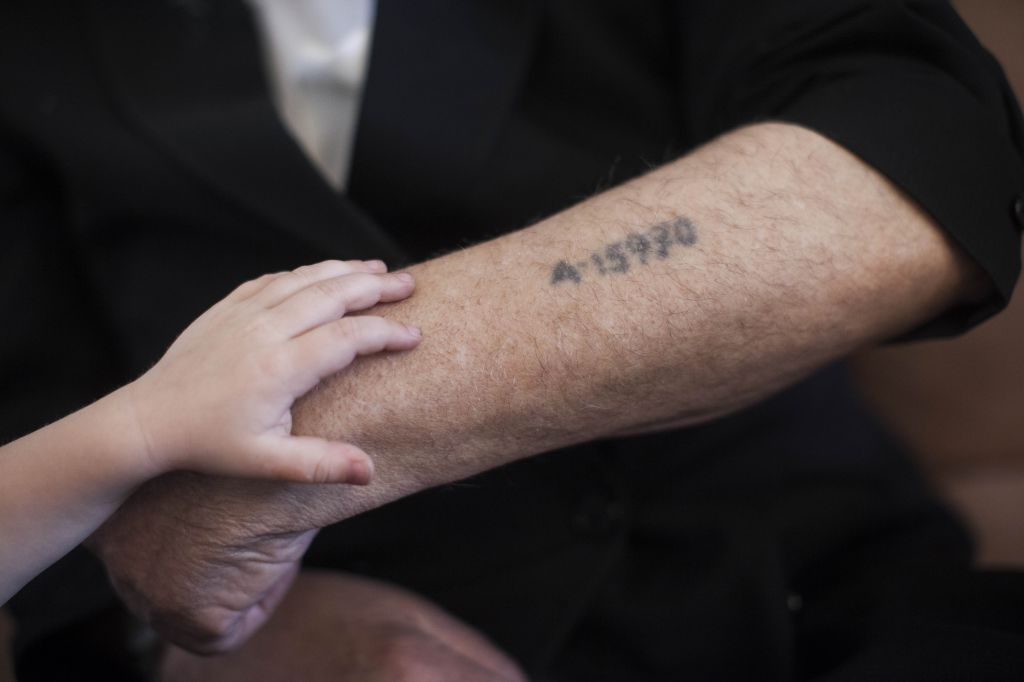
Chaim Lindenbaum, a 77-year-old man from Haifa, was diagnosed with aggressive leukemia in 2022. Doctors said the grandfather could only survive with a life-saving bone marrow transplant. Dr. Daniel Levi had signed up to be a bone marrow donor after moving to Israel from Peru and he came up as a match for Lindenbaum, even though they were not related. After finding out he could be a donor, Levi had about one week to prepare for the urgent stem cell transplant, which was arranged through Ezer Mizion, the world’s largest Jewish bone marrow registry. The transplant was a success, and the older man wanted to thank his benefactor. But donor rules forced the men to wait a year before the donor’s identity could be revealed.


A year later, Chaim Lindenbaum and Daniel Levi were anxious to finally meet each other.  They scheduled to meet after the Jewish holiday season that ended with Simchas Torah on October 7. But that meeting never happened. Daniel Levi and his young family lived in Kibbutz Be’eri and on October 7, when terrorists infiltrated the kibbutz, he answered the frantic calls from the medical clinic. He ran into the trouble, racing to treat the severely injured.  As his wife Lihi, 34, daughter Emma, 5, and son Liam, 2, were hiding in a safe room for seven hours, Levi calmly texted her, “I love you” while Hamas terrorists opened fire.  After treating many people and saving lives, Dr. Daniel Levi was killed on October 7.


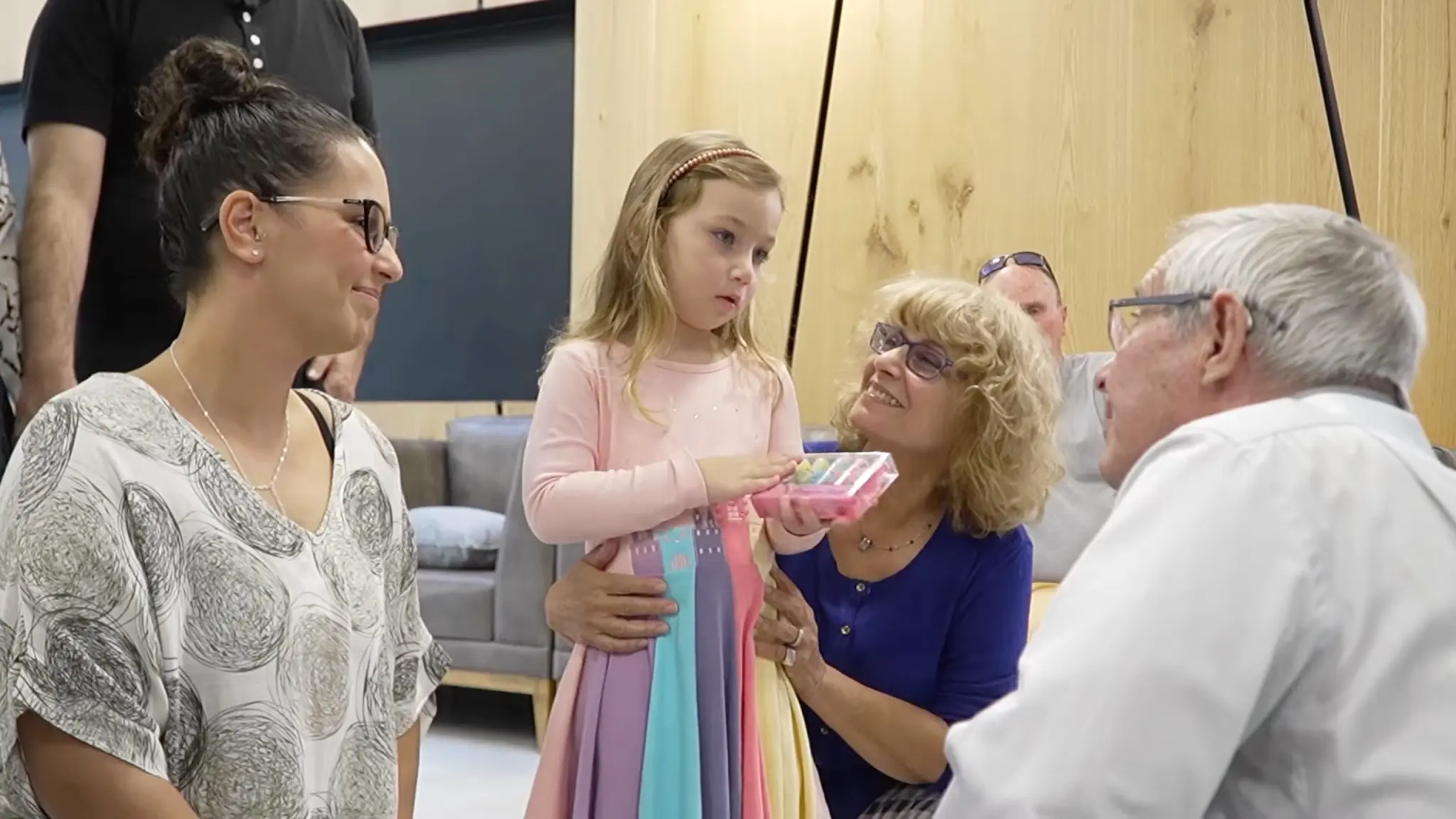
Lindenbaum never did get to meet the man who saved his life, but he did get to meet his family.  A few weeks after the horror at Be’eri, someone from Ezer Mizion was trying to arrange the meeting and kept called Levi but didn’t hear back. She looked at his file and saw he was from Be’eri.  She did more research and learned he had been killed.  She decided to call Lihi nonetheless to see if a meeting could be arranged. During an “exciting and emotional” meeting  for the two families, Daniel Levi’s widow got a chance to do what her husband dreamed of doing for more than a year, hug his bone marrow recipient.


Bending down to little Emma, Lindenbaum explained, “I was very sick – my blood was sick. And today I’m healthy, thanks to your daddy’s blood.” He continued: “I was very sad, I wanted to thank him. His blood system is in my body. In compatibility we were like brothers.” He added that a part of Levi still lives on in him: “He left, aside from his two beautiful kids, his blood, which is my blood.”


The truth is this principle is not limited to Chaim Lindenbaum and Daniel Levi, but all Jews are brothers and sisters, we must work to be perfectly compatible. 


In describing the most seminal moment in history, the revelation at Sinai, the Torah tells us: Va’yachanu ba’midbar, vayichan sham Yisrael neged ha’har, they encamped in the desert and the Jewish people camped opposite the mountain. Rashi famously comments on the change in tense—from the plural “Vayachanu” to the singular “Vayichan”—that we stood “k’ish echad b’lev echad, like one person with one heart.”  The Ohr HaChaim writes that this mindset was from “ikarei ha’hachana l’kabbalas ha’Torah” a critical part of preparing to receive the Torah. It was then, and it is again now, as each year we accept the Torah together anew


The simple understanding of this concept is that we were united, cooperative, caring and loving of one another.  We were a family, a community, a people instead of just a gathering of disparate individuals.  But the idea is deeper.  Indeed, we can’t fully observe and keep the totality of Torah unless we are united and as one.  We are all obligated in Taryag mitzvos but yet can’t observe every one of them because we can’t simultaneously be a man, woman, Kohen, levi, Live in Israel and outside of it, during the Beis HaMikdash and without it, etc.   The Kiryas Sefer explains that only through the principle of Kol Yisroel areivim zah la’zeh can we fulfill the entire 613 commandments.  By being guarantors one for the others, we can be motzei each other and thereby all fulfill it all.  It is not a coincidence that areivim is the same word as ta’aroves, a mixture.  When we guarantee one another and have each other in mind, we become a mixture together. 


The Baal Shem Tov understands this idea in an even deeper way.  The only way to fulfill Taryag Mitzvos, he says, is to not only exist independently, but also to see ourselves as part of one organic, integrated whole, one unit.  קיום תרי״ג מצוות אינו אפשרי אלא ע״י שכל אחד כולל עצמו בתוך כלל ישראל באהבה ואחוה ע״י זה יש לכל אחד חלק בתרי״ג מצוות.  This is why Chassidim say before each mitzvah they perform, “בשם כל ישראל”. 


But perhaps there is yet another explanation. We all know the name of the mountain the Torah was given on is Har Sinai.  The Gemara (Shabbos 89a) tells us the etymology of the name Sinai.

דְּרַב חִסְדָּא וְרַבָּה בְּרֵיהּ דְּרַב הוּנָא דְּאָמְרִי תַּרְוַויְיהוּ: מַאי ״הַר סִינַי״? הַר שֶׁיָּרְדָה שִׂנְאָה לְאֻמּוֹת הָעוֹלָם עָלָיו.

It is called Har Sinai because it is the mountain from which sinah, hatred descended against the Jews.  While countless explanations have been offered for antisemitism, the world’s oldest hatred, there is no unifying explanation because it has reared its ugly head in times of prosperity and poverty, in times of assimilation and strong Jewish identity, throughout history and across the globe, when we have been in our homeland and when we were dispersed in galus. 


Ultimately, our rabbis taught, we are hated because we stood at Sinai and accepted a great role and responsibility, a mission to be models and examples, to improve and repair the world. Subjective cultures and systems of morality challenge the objective moral timeless truths of our Torah, but they don’t endure.  We are meant to be the moral conscience of the world, an example of creating an ethical and holy society and community, and the people of the world don’t like that.


The sinah, the hatred of the Jew, goes all the way back to Har Sinai when we stood at the mountain, three thousand, three hundred and thirty-seven years ago and accepted to live lives informed, inspired, and guided by the Torah.  We have faced discrimination, bias, double standards, tropes and hate since the very moment we began.  We have been forced to live with and navigate sinah since we first stood at Sinai. 


How? How has our people not only survived this sinah but thrived despite it throughout the millennia?  What is the explanation for our endurance, resilience, strength and capacity to still be here standing, to be back at that same mountain that brought this hatred?


The answer, the secret to our surviving the sinah, also goes all the way back to that mountain and the way we gathered there.  כאיש אחד בלב אחד, we stood together as one: undivided, invincible, ready to confront and overcome whatever sinah would come our way. 


A study released on friendship in 2008 by professors from four universities in the Journal of Experimental Social Psychology found something remarkable about companionship and community.  Participants in their studies were asked to estimate the incline of a hill in front of them. Over and over again, those who were accompanied by a friend estimated the hill to be less steep than participants who were alone. The researchers concluded that the more one is connected with others, the more we are part of a community, the more we feel we can climb whatever mountain is in our way.


Long before researchers, our Torah understood this.  The Navi Yeshayahu (41:6) said:אִ֥ישׁ אֶת־רֵעֵ֖הוּ יַעְזֹ֑רוּ וּלְאָחִ֖יו יֹאמַ֥ר חֲזָֽק׃ , Each one helps the other, saying to his fellow, “Take courage!”    We have overcome the sinah since Sinai because we stood and we stand together k’ish echad b’lev echad, as one, turning to each other over and over and saying, “Chazak! Be strong.”  We have not just stood united, we have become united, like one, laughing together, crying together, davening together and feeling together with our lev echad, one heart.


As we prepare to stand at the mountain again to reaccept the Torah, the sinah from Sinai continues to rage in Israel, on college campuses, in some offices of Congress, and in too many countries around the world.  Our response now must be as it was then, to turn to one another with a sense of unity, love and oneness and to wish each other chazak.  If we are going to not only survive but thrive, we must be in compatibility like brothers and sisters, like one. 

One Bite of a Mitzvah – What Dave Portnoy Got Wrong

Dave Portnoy is a successful businessman with a large following online.  He sold the company he founded, Barstool Sports, for $500 million, and bought it back a few years later for $1.   Millions follow him on social media and watch his daily pizza reviews around the country, including a review of matza pizza right here in Boca Raton.


Portnoy is Jewish, something he doesn’t hide but also doesn’t regularly reference or promote.  He has occasionally displayed his Judaism, such as when Chabad put Tefillin on him or more recently, when he celebrated the defeat of an MMA fighter who had praised Hitler by putting on a yarmulka and waving an Israeli flag in the front row of the match.  Soon after October 7, he spoke out in support of Israel and has since then publicly defended Israel’s right to exist and to defend itself. 


Yet, nothing has made Portnoy as outspoken about his Jewishness or aggressively stand up for the Jewish people like the antisemitic incident that happened at his Philadelphia bar a couple of weeks ago.  Customers who order bottle service there are offered customizable letter boards, which they can ask staff members to arrange with messages of their choice.  A student or two from Temple University who visited the bar asked staff members to arrange the letters on his sign into an antisemitic message including an expletive directed at the Jewish people.  The incident was a staff breakdown and, more importantly, an expression of hate. 


Portnoy took to his social media to communicate his outrage.  “I’ve been shaking I’ve been so mad.  I’m gonna make it my life mission to ruin these people, like I’m coming for your throat.”  However, a few hours later, he posted another video saying he had reconsidered his approach, and instead had decided to send the young men responsible for the hate speech on a tour of Auschwitz to learn about the impact of hate. 


He explained: “My initial reaction was like I’m going to burn these people to the ground, their families, everything, and it’s like you know what? Maybe that’s not the best course of action.  Maybe I can use this as a teaching moment, and like before, people just are like the Jews or any group, and the hate, let’s try to like turn a hideous incident into maybe a learning experience, as cliche and very unlike me. But I talked to both the culprits, who I know are super involved in it, talked to the families. I’m sending these kids to Auschwitz. They’ve agreed to go, that’s of course, the Holocaust concentration camps…and hopefully learn something. And maybe like their lives aren’t ruined, and they think twice, and more importantly, other people like see it’s not just like words you’re throwing around. So to me, that’s a fair outcome of this event.”

Pennsylvania Senator Dave McCormick applauded Portnoy for addressing the “horrific display of hate” and using it as an opportunity to educate about anti-Jewish violence, saying, “Antisemitism needs to be identified, called out, and crushed.” 


A few days later, Portnoy gave an update saying he had “revoked” the trip to Poland because at least one of the people involved “is no longer taking responsibility” for the sign.


Though he didn’t end up sending the perpetrators to tour Auschwitz, the strategy of responding to antisemitism by sending antisemites for a Holocaust education is nothing new.  In 2006, Mel Gibson spewed antisemitic remarks during a DUI arrest.  Though not mandated by a court, Gibson met with Jewish leaders and visited the Simon Wiesenthal Center’s Museum of Tolerance in Los Angeles.  In 2014, two British teenagers vandalized a synagogue with antisemitic graffiti. As part of their community service, they were sent to visit Auschwitz.  In 2018, Nick Conrad released a controversial music video titled “Hang White People”, which contained antisemitic undertones. A French court ordered him to visit the Holocaust Memorial in Paris as part of a court ruling. 


The examples could go on and on but the question is, should they?  Certainly, Holocaust education is important.  Keeping the legacy of 6 million martyrs alive and relevant, teaching the truth about this historically unique genocide matters.  But is it the proper or effective response to contemporary antisemitism? 


Dara Horn, the author of “People Love Dead Jews,” thinks not.  In her article, “Is Holocaust Education Making Anti-Semitism Worse? Using dead Jews as symbols isn’t helping living ones,” she writes: “I have come to the disturbing conclusion that Holocaust education is incapable of addressing contemporary anti-Semitism. In fact, in the total absence of any education about Jews alive today, teaching about the Holocaust might even be making anti-Semitism worse.” 


She writes: “The Holocaust educators I met across America were all obsessed with building empathy, a quality that relies on finding commonalities between ourselves and others. But I wondered if a more effective way to address anti-Semitism might lie in cultivating a completely different quality, one that happens to be the key to education itself: curiosity. Why use Jews as a means to teach people that we’re all the same, when the demand that Jews be just like their neighbors is exactly what embedded the mental virus of anti-Semitism in the Western mind in the first place? Why not instead encourage inquiry about the diversity, to borrow a de rigueur word, of the human experience?”


This article was published in May of 2023, five months before the most murderous day of Jews since the Holocaust, and I fear her thesis has only been strengthened.  Teaching only about the Holocaust without teaching about the Jewish people, Jewish values and ideals, Jewish contributions to the world, Jewish culture and practice only focuses on Jews as victims.  But today’s antisemite learns about the Holocaust and sees the Jewish people as the committer of a current genocide instead of the victim, as perpetrating a Holocaust instead of experiencing one.


Another famous Jew has been targeted with hate for his Judaism, but he has responded in a very different way.  Michael Rapaport is an award-winning actor, comedian and podcaster. Since October 7 he has not only visited Israel countless times, he has relentlessly dedicated his online influence to advocating for Israel and the Jewish people.  Asked about how October 7 impacted him, he said, “My Judaism has changed 100%. I am more in tune with it. I’m more proud, I’m more aware, I’m more educated. I’m more proactive in every single way possible and I’m really glad about that.”


Asked how his belief in God has changed, he answered: “I believe in God in a different way. I believe in Hashem in a different way. I celebrate and understand him in a different way. I think we have nothing but faith. You have to have faith. That’s been one of the good things that has come from this last year for me personally.” Michael Rapaport now wraps tefillin and says about it, “Every single time is a blessing, every single time is a Mitzvah.”


Certainly, we must confront antisemites, hold them accountable, throw the book at them and, when possible, seek to reform them.  Educating may be a first step, but it cannot be the whole strategy.  The answer is to not focus on their education, like Dave Portnoy did, but to focus on ours, as Michael Rapaport is.  Our response to acts of antisemitism must be more Jewish pride, more Jewish practice, stronger Jewish identity, increased Torah observance. 


Rather than reward the hateful hoodlums with a trip to Poland, Portnoy should announce he is going to Israel.  He should put on a Magen Dovid necklace if not a yarmulka, hang a mezuzah on his home and office, engage his Judaism and Jewish learning in a meaningful way.


When doing one of his famous pizza reviews, before he takes a bite and gives a score, Portnoy proudly announces “one bite, everyone knows the rules.”  But the truth is, while everyone may know the rules, he does not follow them: he doesn’t take one bite, he takes several and when the pizza tastes particularly good, he can’t help himself from finishing the whole slice.


Describing a relationship with Hashem, Dovid HaMelech (Tehillim 34:9) taught, Ta’amu u’ru ki tov Hashem, taste and you will see that Hashem is good.  Why does he employ the word taste, why not just say see that Hashem is good? Faith begins with practice. You can’t just listen, read about or think about Hashem, you must engage, act and then you will see with clarity a life of meaning, purpose and eternity.   It begins with a taste, a little something and you will want more. 


We must confront antisemitism but not just with stories or tours of Jewish victimhood. Instead of focusing on educating others, educate yourself, your children and Jews all around us to be living richly proud and practicing Jewish lives.    


Start with one thing.  Just one bite of a mitzvah and you will want more and more. 

A Plane With Strings Attached: When a Gift is Not a Gimme

Heads turned this week at the news that President Trump is planning to accept a $400 million luxury plane, as a gift from the Qatari government, to serve as Air Force One. The Constitution forbids public office holders from accepting a present “of any kind whatever, from any King, Prince, or foreign State.”  The president has argued that this gift does not violate that provision since it is going to the Department of Defense and not to him personally and that, moreover, it will be decommissioned after his term for his presidential library, and promises that he will not use it after leaving office. 


I’m not qualified to weigh in on whether the gift is legal or illegal, but I do know that at a minimum it is a very bad look and raises suspicions about what is expected in exchange for the gift. 


When challenged as to the judgement of accepting such a large gift from one of the world’s greatest sponsors of terror, President Trump said, “They’re giving us a free jet. I could say, ‘No, no, no, don’t give us, I want to pay you a billion, or $400 million,’ or whatever it is. Or, I could say, ‘Thank you very much.’”


To support his judgment and approach, he invoked the alleged saying of a golf great. “There was an old golfer named Sam Snead. Old Sam Snead had a motto. They give you a putt, you say, ‘Thank you very much.’ You pick up your ball, and you walk to the next hole. A lot of people are stupid. They say, ‘No, no, I insist on putting it.’ Then they putt it, they miss it, and their partner gets angry at them. Remember that.”


The President essentially shared his philosophy of accepting gifts.  You would be stupid to ever turn one down.  Treat it like a gimme putt, take it and move on no matter who it is from or what may be implied is owed in return.


What should our view be?  Should we accept all gifts or do the source, intent, and circumstance matter?  What if the gift could potentially influence our judgement or cause us to find favor? 


The Torah’s view is very different than President Trump’s.  In Mishlei (16:27), Shlomo HaMelech taught, “Sonei matanos yichye, he who despises gifts will live.”  The Gemara (Sota 47b) reports that when people began to accept gifts, they started to live shorter lives.


Does this mean we should rejects all gifts?  Should we reject a gift when we host someone to sleep in our home or have them for a meal?  Should we send a gift back if a person we did a favor for wants to show their appreciation?  Should we insist on paying for ourselves at the end of each meal, even if we are being treated for our birthday, a special occasion or no reason at all?  Should those celebrating a simcha not accept gifts? 


Rashi explains that the inclination to reject gifts conditions you to avoid what isn’t yours and therefore protects one from being tempted to steal.  Rabbeinu Yonah explains that rejecting gifts will help a person avoid desiring that which isn’t theirs and protects one from being influenced by flattery. Rabbeinu Bechayei gives an altogether different reason.  He says that if someone has true faith in Hashem, they rely only and exclusively on Him and have no interest in gifts or handouts from others. 


The Rambam (Hilchos Zechiya U’matana 12:17) and Shulchan Aruch (CM 249) codify that it is a midas chasidus, a righteous practice not to receive gifts, and to trust that Hashem will provide what we need without relying on fellow man.  


However, the Chida (Teshuvos Chaim Sha’al 1:74:42) writes that today, not receiving gifts is a noble practice for those who want to volunteer, but the masses do  accept gifts and it is not considered a breach in faith in Hashem.  Rav Wosner and Rav Shternbuch both say that receiving a gift for a wedding is not only permissible, it is a mitzvah, as there is an obligation to bring simcha to the bride and groom.


The reality is that not all gifts are the same.  They come in different sizes and values, they come from different sources, they are given for different reasons, and they may or may not come with strings attached.  These variables could determine the merit or ethic or appropriateness of accepting a gift.


Perhaps that is why Avraham graciously accepted gifts from Pharaoh and Avimelech, yet he told the King of Sedom that he wouldn’t so much as accept a shoelace from him.  Additionally, Avraham refused to accept Ma’aras HaMachpeila as a gift from Efron and insisted on overpaying for it.  Each context must be judged individually.


Rejecting a gift from a guest or someone simply trying to show appreciation, or turning down a gift given for an occasion in your life, is ungracious and can hurt the feelings of the other.  One isn’t compromised by accepting it, and assuming it isn’t large enough to impact one’s need to earn a living and depend on Hashem, it doesn’t pose a threat to one’s faith.   Accepting gifts when they could compromise judgement or constitute a bribe, however, taking something so significant it can alter a lifestyle or sense of dependance on Hashem, can be problematic. 


In benching, we ask of Hashem, lo liydei matnas basar v’dam, may we never get to a point of needing to rely on the gifts and handouts of other people.  May we have the wisdom and insight to know which gifts to graciously accept and which to principally turn down.  When to pick up the ball and move to the next hole, and when to insist we putt it ourselves. 

Called Up Yet Again

This past week, tens of thousands in Israel received the message from the IDF that they are being called up, yet again, not for a few days, but for several weeks or months.  Children will have to adjust again to being without parents.  Spouses will have to manage households by themselves.  Parents will again have sleepless nights. Employers will again struggle to manage without key personnel. And tens of thousands will again put their lives on the line and live in challenging, difficult and dangerous conditions.  While there are efforts to persuade reservists to protest and not answer the call, yet again, overwhelmingly, our heroic soldiers are showing up and doing so in record numbers, again. 


When the war began over a year and a half ago, Jews and Israel supporters in the United States and around the world responded by raising significant funds, sending supplies, organizing missions, tying tzitzis, sponsoring BBQs, writing letters and more.  Over time, these efforts dissipated as cease fires were observed and for many, fatigue set in. 


Our soldiers have been called up and despite their true exhaustion and very real emotional fatigue, they are showing up, and so must we, in our own small and modest ways.  If we care, if we are connected, we must answer in our own record numbers to resume the coordinated efforts and show of support, to get back to planning trips, to dig deeper to send more funds, to do more to help bear the pain and struggle.


This week we will read Parshas Kedoshim and be reminded of the obligation to love our fellow Jew as ourselves, v’ahavta l’rei’acha kamocha.  What does it mean to love fellow Jews?  R’ Moshe Leib Sassover used to tell his chassidim that he learned what it means to love a fellow Jew from two Russian peasants.  Once he came to an inn, where two thoroughly drunk Russian peasants were sitting at a table, draining the last drops from a bottle of strong Ukrainian vodka.  One of them yelled to his friend, “Do you love me?” The friend, somewhat surprised, answered, “Of course, of course I love you!”  “No, no”, insisted the first one, “Do you really love me, really?!”  The friend assured him, “Of course I love you. You’re my best friend!”  “Tell me, do you know what I need?  Do you know why I am in pain?”  The friend said, “How could I possibly know what you need or why you are in pain?”  The first peasant answered, “How then can you say you love me when you don’t know what I need or why I am in pain.”


R’ Moshe Leib told his chassidim, he learned from these peasants that truly loving someone means to know their needs and to feel their pain.  Real love is not lip service, it is not just tolerating one another.  Love is noticing someone is having a bad day, it is feeling their pain, it is showing someone you care, even when that person is someone you barely know or don’t know at all. 


The morning blessings of Birchos HaShachar are said in the plural – פוקח עורים, מלביש ערומים, etc.  There is one exception – שעשה לי כל צרכי , thank you God, who fulfills all of my needs.  Why is this blessing written in the singular?


The same R’ Moshe Leib Sassover who taught us what it means to love a fellow Jew explains that when it comes to ourselves, we should have an attitude of “I have everything I need”.  We should feel content and satisfied.  However, when it comes to others, we must be thinking – he or she don’t have everything they need.  What are they lacking?  How can I help them?  What can I do for them?


Loving our brothers and sisters in Israel means recognizing their sacrifices on behalf of our people and stepping up in our own small ways to show gratitude, display support, provide relief, and do all we can to help. 


The great Arizal suggested that before beginning davening in the morning, one should say: הריני מקבל עלי מצוות עשה של ואהבת לרעך כמוך, I hereby accept upon myself the positive commandment to love your fellow as yourself.”  Based on R’ Moshe Leib Sassover’s insight, we can understand this to mean that before we can pour out our hearts to Hashem for all of our needs, we must pause to think about our fellow brothers and sisters and their needs.  Before we ask Hashem to be there for us, we must commit to be there for others. 


As you think about upcoming trips or vacations, consider going to Israel to volunteer.  As you review your finances and tzedakah opportunities, consider how you can contribute to help the physical, mental and emotional well-being of the soldiers and their families.  When you feel love for fellow Jews, express it by identifying with their pain and doing what you can to make it go away. 

Meeting with Ben-Gvir

There are few more polarizing people in the Jewish world today than Itamar Ben-Gvir. The firebrand national security minister of Israel attracts attention, protests, headlines, and controversy wherever he goes. This week, he came to America and brought all of that with him to Florida, New York, and Washington.  Many find him abhorrent and categorically reject comments he has made, policies he has pursued, and positions he espouses.  Others recognize he has some extreme views but believe he has the courage to make changes necessary for greater security and agree with much of his platform, enough that they have given him a mandate in the current government coalition.


Ben-Gvir’s team expressed interest in his speaking at our Shul, which I immediately declined.  This was a very simple and clear-cut calculation.  I have learned that if hosting someone will attract significant controversy, potentially from within the community and almost certainly from without, if it will draw negative attention, headlines, become time-consuming and can even alienate and offend a fair number of shul members, it simply is not worth it. 


Some people who read the above paragraph are undoubtably shocked and disturbed to think we would even consider giving him a platform. And no doubt some who read the same paragraph are offended and troubled that I would attempt to deny the BRS community from hearing an elected Israeli minister whose views they strongly agree with or think at least people should be open to.  Both groups are likely disappointed that I am not using this space to take a definitive position on Ben-Gvir. If you want to formulate your own opinion on him or confirm what you already think, there has been plenty written about him, including a large number of articles revolving around his trip that you can read.  I have nothing new to add and that isn’t my goal in this space.


While we declined the opportunity to publicly host Ben-Gvir, I did accept the request to meet with him privately. We sat together for almost an hour in my office, in which he shared the accomplishments that he is proud of and what remains on his agenda to achieve, explained what he would do to bring the hostages home, shared how he regrets some things he has said and done in his past, and talked about projects he is working on now.  I used the opportunity to both respectfully challenge him on things I find objectionable and also encourage him on what I think he could do better or more of. 


I had not shared with anyone that we were meeting, neither before or after, and he told me that he hadn’t either.  Nevertheless, several articles about his trip mentioned in passing that we had met, which elicited two emails respectfully questioning my judgement in having done so, arguing that the meeting alone endorses and supports a person who should be isolated and marginalized. 


The correspondence raised some interesting questions: Should private meetings be held to the same standard as giving a public platform?  Should we meet with those we don’t just disagree with but find objectionable?  If a journalist can meet with just about anyone because they are doing an interview or bringing a story to the public, should communal leaders not meet with controversial or objectional public officials in order to better be informed and to share feedback and criticism?  If we do have a red line of who we are willing to talk to or meet with, where should the line be set, what are the criteria to be excluded or outside the line?  If you wouldn’t meet with someone you object to, should they not be allowed to enter the campus, daven in our minyan?


After considering these questions, I don’t regret privately meeting Ben-Gvir, for several reasons.  Firstly, he is the democratically elected National Security Minister of the State of Israel. Love him or hate him, the position and title he carries, and representing the Israeli citizens who elected him, I believe make him deserving of an audience and conversation.  Secondly, I have a relatively broad red line when it comes to fellow Jews, particularly leaders, who want to meet and have a conversation. (That is not to suggest that I have the time or ability to meet every non-BRS member who asks for a meeting)  If someone wants to meet, not for a photo op or publicity but for a genuine open conversation, why wouldn’t I want to take advantage of the opportunity to listen and learn and to influence and impact, particularly if it was someone I have differences with or even oppose? 


I believe this applies to all those to the right and left of me politically and religiously, in Israel or America.  Certainly it applies to our brothers and sisters, our fellow Jews who share our core values and are devoted to the good of the Jewish people, even if we may disagree with how they believe it should be achieved.  But I even believe it applies to the worst actors in politics with whom we have almost nothing in common and couldn’t disagree more. I abhor everything Rashida Tlaib and Ilhan Omar stand for and their stances on Israel are dangerous if not outright evil. Of course they would never be welcomed to give a speech at BRS, but if they wanted to meet with me privately, why would I pass on the opportunity to tell elected members of Congress exactly how I feel about their positions and actions? Private dialogue and respectful debate will go much further in bringing change than shunning or boycotting.


The Torah describes that Yosef’s brothers hated him to the point that v’lo yachlu dabro l’shalom.”  The Ibn Ezra explains, “v’lo yachlu dabro l’shalom – afilu l’shalom.”  It isn’t that they just couldn’t talk about the issues they disagreed about.  It isn’t just that they didn’t want to be close, loving brothers.  It isn’t just that they couldn’t debate respectfully.  “Afilu l’shalom” – they couldn’t even give each other a shalom aleichem.  The hatred and intolerance had grown so deep that they couldn’t stand to even extend greetings to one another or to be in a room together. 


Rav Yehonasan Eibshitz in his Tiferes Yonasan has an additional insight.  When we disagree with people, we withdraw from them and stop speaking to them.  We see them and paint them as “the other,” different than us and apart from us.  As our communication breaks down, the dividers rise up, stronger and stronger and we can’t find a way to break through them.


Certainly, there are important disagreements and no doubt there are statements and policies that people will find objectionable about others.  But there is no doubt in my mind that given the opportunity, it is better, healthier, and more productive, to communicate directly, attempt to influence, and find common ground, than sow further divide.  I respect anyone’s right to disagree, I just hope they would communicate it directly, instead of boycotting a conversation. 

Running Out of Time: Why Talking About the Holocaust Now Matters

According to the recently released Anti-Defamation League (ADL) report, antisemitic incidents broke a record for 4th straight year in 2024. Last year, they identified 9,354 antisemitic incidents, a 5% increase from 2023 and a staggering 926% increase since it began tracking in 1979. There were more than 25 “targeted anti-Jewish incidents” per day in 2024, more than one every hour.  Eighty years after the Holocaust, instead of “Never Again,” attacks on Jews are now occuring once an hour. 


This week, we mark Yom Ha’Shoah, Holocaust Remembrance Day. Nations around the world are called on to remember that hate led to the extermination of six million innocent people, among them one million children. The Holocaust erased two thirds of Europe’s Jewish population, one third of the Jewish people on the globe. 


While the Holocaust is obviously not the only tragic event in our history, it is by far the most heinous and devastating. Consider how devastating October 7th was and is for our generation and yet, all of the victims of that horrific attack and the war since were the casualties of one hour in a death camp.  But the Holocaust much more than just a tragedy of the greatest magnitude, it is the symbol and the synonym for antisemitism and in that one word conveys a warning for how the world’s oldest hatred can lead to a democratically elected, “civilized” nation carrying out a genocide.  While Jews were not the only victims of the Holocaust, the term should be reserved specifically to invoke hatred directed towards the Jewish people.  That is why it is so offensive and dangerous when it is invoked flippantly and casually and when it is used in grossly inappropriate contexts and comparisons. 


Just this week, in an effort to criticize fellow comedian Bill Maher for recently having dinner with President Trump, Larry David authored a satirical essay in The New York Times titled: “My Dinner With Adolf.  David wrote from the perspective of a “vocal critic” of Hitler who is invited to dinner with the Nazi dictator and finds him to be surprisingly warm and personable. He writes: “Two hours later, the dinner was over, and the Führer escorted me to the door. ‘I am so glad to have met you. I hope I’m no longer the monster you thought I was.’ ‘I must say, mein Führer, I’m so thankful I came. Although we disagree on many issues, it doesn’t mean that we have to hate each other.’ And with that, I gave him a Nazi salute and walked out into the night.” 


One can disagree vehemently with President Trump on policies and even see them as bigoted or dangerous or one can  be a great critic of his character and even see him as repulsive, but to compare him or his policies to Hitler to make a point, even satirically is deeply misguided and offensive and yet another shameful decision of the New York Times.


We must continue to confront antisemitism, and Holocaust education to the general public is one critical component. We must create a culture in this country of the same intolerance, hypersensitivity and opposition to antisemitism, Jew hatred, and Holocaust appropriation as we do other forms of hate, bigotry, and racism. “Ugly Jew” should be taken as seriously as the N-word: triggering, traumatic, and simply unacceptable and intolerable. Good-hearted people—not just Jews—must never allow this country to become a place where Jews cannot comfortably and safely walk around in a visibly identifiable way. 


Some argue that Jews should be defended because we are the proverbial canary in the coal mine. When Jews are allowed to be attacked, it is a sign of the collapse of the society. German pastor Martin Niemöller famously wrote: “First they came for the Socialists, and I did not speak out — Because I was not a Socialist. Then they came for the Trade Unionists, and I did not speak out — Because I was not a Trade Unionist. Then they came for the Jews, and I did not speak out — Because I was not a Jew. Then they came for me–and there was no one left to speak for me.”  In her book “People Love Dead Jews,” Dara Horn, a past guest on Behind the Bima, argues that we should not be grateful for this quote or way of thinking, rather we should be offended.  This sentiment essentially suggests that the only reason to care when Jews are murdered is because it is a warning that later, actual people might be attacked or killed. We obviously should not accept this argument and certainly should not perpetuate it.


But there are two other reasons Holocaust education is vitally important within our Jewish community. When we reference the Holocaust, we are often referring to the millions of martyrs, the victims who were murdered. But there is another population who should come to mind, maybe even first: our Holocaust survivors. 


The Holocaust is not just a part of history like the Crusades or Inquisition. Holocaust survivors may be the most heroic population of all time. Their resilience, strength, fortitude, and faith may be unparalleled. There has never been a group more entitled to be bitter, resentful, to feel entitled, or to give up on the world and on people. But instead, overwhelmingly, survivors rebuilt, they worked hard, they maintained positivity, optimism, and hope. Most exude deep faith, determination and a selfless devotion to Jewish continuity, to Jewish community, and to the Jewish state.  


However, time is running out for the world to engage with Holocaust survivors. A report published this week by the Claims Conference projects that of an estimated 211,300 Holocaust survivors alive in the world today, almost half will no longer be with us in seven years. By 2032, there will be fewer than 100,000 living survivors remaining in the world.


Though we are more prosperous than ever and have more comfort and conveniences than those who have come before us, many are still struggling with finding happiness, hope, meaning and purpose. Find a survivor. Latch on. Draw from their energy, ride their enthusiasm, be carried, and lifted by their heroism. If you struggle with faith, piggyback off their unwavering emunah, be inspired by their dedication to Torah and mitzvos.


We can learn much from the six million martyrs who lost their lives in the Holocaust, but we can learn even more from the 3.5 million who survived and then built thriving, rich Jewish lives.


Lastly, I believe we should use Holocaust education and current campaigns against antisemitism as outreach opportunities. While the majority of American Jews believe that the Holocaust is essential to their Jewish identities, only 15% said that observing Jewish law is an essential element of what being Jewish means to them personally. 


With the rise in antisemitism, the world is presenting us with the opportunity to remind our fellow Jews about why Judaism matters, what it means, and why they should care. With people increasingly hating us for being Jewish and once again excluding us for being Jewish, we should double down on Jewish pride, Jewish practice, Jewish continuity, and a Jewish lifestyle.


We say at the seder, v’hi she’amda la’avoseinu v’lanu, and it has stood for our forefathers and for us. What is the v’hi, what is it? The Netziv, Rav Naftali Tzvi Yehuda Berlin, answers, it is that b’chol dor vador amad aleinu l’chaloseinu, that in every generation they have risen to attack us. While we do not welcome or want antisemitism, it often takes our enemies’ reminder that we are Jewish to inspire us to fight for our people.


A non-observant Jew told me that when there was an antisemitic event at her son’s college, her son, who previously had little to no interest or investment in his Judaism, put a mezuzah on his door and hung a Magen Dovid around his neck. While we confront and combat antisemitism, let us simultaneously leverage it to remind and inspire our fellow Jews about their Judaism.


Continue to study and speak about the Holocaust, not as the central part of our identity as Jews, but as an important way to honor our survivors, to motivate us to fight antisemitism and as an opening to engage unengaged Jews to learn more about why being a Jew matters. 


The Freedom of Simplicity

Tariffs and free trade. AI and the proliferation of technology. There are many issues of our day that remain complicated.  But for each issue that is truly complex, there are issues, policies and perspectives that are presented as complicated when in truth they should be simple and straightforward. 


Matzah, the most important food at our seder, seems straightforward, but if you think about it, it is actually complicated and confusing.  On the one hand, it symbolizes and celebrates freedom, it is the bread over which we recline like aristocrats and tell the story of our liberation.  Yet, on the other hand, it is called “lechem oni,” the bread of affliction.  Moreover, for the bread meant to be a sign of royalty, it is rather bland.  The recipe is flour and water, period.  Not only does it not call for other ingredients, any additional item would invalidate it.  When you hear someone talk about their sourdough starter, they might use more affectionate and protective words than they talk about their spouse and children.  With matzah, however, if the dough ferments or processes in any way, if you add ingredients, sweetener, spices, you disqualify it and that cannot be used to fulfill the mitzvah.  In food competitions, the taste is only part of the story, the presentation, texture, even appearance are all also important.  Matzah is asymmetrical, imperfect, basically a bland cracker, dull and simple even in its presentation and appearance. This is the food of royalty and wealth?


The Maharal is bothered by this question and in several places in his writings, he uses it to explain the fundamental theme of Matzah and how in fact it symbolizes freedom, wealth, and royalty.  In Gevuros Hashem (36) he explains that we tend to think the more things we have, the more complex and complicated our portfolio, the more intricate and sophisticated our possessions, the more elaborate and extravagant, the more it reflects wealth, freedom, and affluence.  But says the Maharal, in fact it is the opposite.  The more we are dependent on fancy things, fancy experiences, and even fancy ideas, the more we are enslaved to them, beholden to them, and reliant on them.  To truly be free, to actually be wealthy, is to embrace simplicity, pashtus.  The less we are dependent on externals, on what an object or experience can provide, the freer we are from them. 


Explains the Maharal, lechem oni doesn’t mean bread of affliction, that those who eat it are suffering.  He translates it as bread of oni, of living without, which doesn’t lead to affliction and suffering, it leads to freedom and liberation.  When you are dependent on something, dependent on worldly, material things, dependent on superficial experiences, dependent on exciting stimulation you are not at all free.  Freedom is a return to pashtus, to simplicity, to uncomplicated, to plain. Only the one who can live with oni, can live without, is free and wealthy because they have no dependency.


Now to be clear, we don’t eat Matzah the whole year.  There is nothing wrong with enjoying some yeast, some leaven, from feeding that sourdough. But, for one week we demonstrate our freedom from those things so that even when we return to them, we do so by seeing them as luxuries, as external to who we are, not necessities, part of us, something we can’t live without. 


Warren Buffet is an incredibly wealthy man.  Most would assume I say that because he is worth $139 billion, but that isn’t why.  The 93-year-old has lived in the same modest house in Omaha, Nebraska for 66 years.  When asked why he never upgraded, he said, “I’m happy there. I’d move if I thought I’d be happier someplace else. This house does just fine. I’m warm in the winter, I’m cool in the summer, it’s convenient for me. I couldn’t imagine having a better house.”  The founder of Berkshire Hathaway, one of the richest men in the entire world, only swapped his flip phone for a smartphone in 2020.  Buffett is free not because of his tremendous material wealth but because he doesn’t depend on it for happiness.

Others, too, are craving this wealth.  There is a big movement towards getting rid of smartphones and turning them in for dumbphones.  The movement isn’t in Monsey, Lakewood or Yerushalayim, it is all over America.  Sales of flip phones and dumbphones are up with people craving simplicity, plain, simple, bland, back to basics.  People are bloated on chametz and looking for more matzah in their lives.

Matzah is freedom because it is a return to simplicity, a break from that which we have grown dependent on and it is the discovery that we can be happier with less than with more.  Isn’t that exactly what we feel for the week of Pesach?  We have fewer ingredients to cook with but eat more than ever.  We put most of the toys away and the children and grandchildren are even happier playing with the simple toys that are left out, sometimes finding more joy in the box they came in than the toy itself. 


The Brisker Rav would keep his matzos for the seder under lock and key. When asked if he was concerned with someone stealing them, he would reply, “u’shemartem es hamatzos, safeguard the matzah – do you not put your valuable jewels in a safe?” The poshut, simple matzos are our most valuable treasure.


All year long we make things more complicated than they need to be by pursuing complex things and experiences.  Pesach and the Matzah remind us that the things that are most pashut, most simple and straightforward are most true and most valuable, they set us free and make us wealthy.  Like Warren Buffett, we shouldn’t be attached and dependent on complex things, even if we can afford them.  Being happy with the simple and plain will set us free.  And lastly, let’s let the Matzah inspire us to simplify our relationships.


I once attended a funeral of a woman who was clearly complicated.  There was a palpable tension among her children and grandchildren and during their eulogies they subtly (and sometimes not so subtly), while offering praise, still communicated that she introduced lots of conflict into the family.  The last speaker was her son.  He got up, paused, and said, “Mom was complicated, let’s keep things simple. Let’s simply love one another, simply be loyal to one another and simply get along with one another,” and with that he sat down.

If we want geulah, we need to introduce more Matzah into our relationships, instead of making them complicated, keep them simple.  Let’s simply love one another, be loyal to one another and get along with one another.   


This March Coach Bruce Pearl is Speaking Out Against the Madness

The Auburn Tigers are going to the Final Four, the coveted final rounds of the annual March Madness, NCAA College Championship Basketball.  For the first time, three of the final four teams have Jewish head coaches, a statistical unlikelihood.  But for Auburn’s Coach, Bruce Pearl, being in the spotlight as a Jew is much more than interesting trivia, it is an opportunity he refuses to squander.


Earlier in the tournament, after his Auburn Tigers defeated Creighton, sitting in front of countless reporters in a postgame press conference that would be seen by millions, Coach Pearl opened not by talking about the game or about basketball at all, but rather—with the permission of his players—by invoking the name of Edan Alexander, the 19-year-old Israeli-American held hostage in Gaza:


I get asked a lot how this basketball program has become so competitive over the last eight years. But for me, I believe it was God’s plan to give us this success – success beyond what we deserve. To give us this platform. To give me an opportunity to start this conference really briefly and remind the world that Edan Alexander is still held hostage in Gaza right now… Bring the hostages home.


Coach Pearl invited Edan’s parents and family to the next game and continued to highlight the plight of the American held hostage in Gaza and all the other hostages as well.  He challenged all of America to know Edan’s name and fight until he is released.  Later in that same press conference, he came back to the topic of Israel and what it means to be an American Jew: 


This Jewish American loves his country more than anything else. At the same time, Israel is our ancestral homeland and it’s under attack. It’s under siege. All it wants to do is live in peace with its neighbors.  And, you know what, there are some Arab countries that are actually wanting peace with Israel right now, but there is a segment of the population there in the Middle East who have been doing nothing but attacking Israel for 85 years. October 7 was the worst day since the Holocaust for the Jewish people, and they [Hamas] say they want to do it again and again and again. We have Americans that are held hostage in Gaza right now. It’s unacceptable.


Some were first introduced to Coach Pearl’s advocacy at this year’s tournament, but if you have been following him for the last several years, you know it is nothing new.  He tweets almost daily to his 165,000 followers about Israel, antisemitism, and good versus evil.  He isn’t afraid to risk turning off fans, criticism from his university or its supporters, or even his job, to stand up as a proud Jew and to speak about what he believes in.


A few years ago, he even brought his Auburn team to Israel, a trip coordinated by the amazing organization Athletes for Israel.  In recognition of his devotion and dedication to Israel and the Jewish people, I had the privilege to join Athletes for Israel and NCSY in giving him and his team an award on the Auburn court before the opening game of their season a couple years ago. 


Where does Coach Pearl’s courage and conviction come from?   How does he have the strength to speak out when too many others are silent? 


Three years ago, during this same time of year, at a March Madness press conference, Coach Pearl used the opportunity to talk about the war in Ukraine and the threat of Iran to Israel and the story of Purim. He spoke about how his parents named him Mordechai and he feels a responsibility like his ancestor to speak up for and fight for the Jewish people. 


Soon after, we hosted him on Behind the Bima to better understand his background and what motivated him to use that moment and platform for our cause.  Here are some highlights from that conversation:


BTB:  How do your Judaism and faith impact your coaching?


CBP: When I was a little younger I thought it was me, the great coach and the great motivator, and as I got as I’ve gotten older I realized, no, it’s simply God using me in the position and to affect others and affect young people and it’s all about Him and my service to Him.  And so, the secret sauce for Auburn basketball and our run to the Final Four and winning championships throughout the last five years if I could get my guys to simply do the things that God would have them do what is He going to at least put yourself in position and be blessed.   


BTB: Do you pray during games?


CBP: What I do after player introductions—and I’ve done this my entire career when they introduce me after they introduce the players—I am always crouched over a chair and I’m talking to God…and people are seeing me pray and I am not praying about the game, I am not going to tell you what I’m praying about because that’s between me and God but it has nothing to do with victory, it has nothing to do with the basketball team, but I want when my name is called I want them to see me praying.  


BTB: What gave you the courage to speak up?


CBP: When I was 15 years old and I was a freshman in high school I was the best athlete in town. I was the first kid picked on the playground the first kid picked for everything and then I had a career-ending injury.  When I say “career-ending,” I had a really bad knee injury and I was never the same athlete and I honestly believe that God said, “There’s way more to you Mordechai than just being the best athlete.”  I wasn’t kind to people, I was very limited in my friend population.  I thought a lot of myself.  I dominated you. I embarrassed you.  Because I could.  Because I was stronger than you and I wasn’t as nice.  


And now all of a sudden when I could no longer be that athlete it was painful, there were a lot of friends that were happy that the king got knocked off the hill but I didn’t quit and I got in the school musical and I became the class president and I’m like God, these other kids that aren’t very good athletes but they’re awesome, they’re so much fun, they’re so cool, they’re so talented.  And then I became a champion for the underdog all of a sudden. Now I was still tough and like “You ain’t gonna, you’re not, you’re not messing with these kids that aren’t athletes that are just the bandies that are acting diminished, you got to go through me right now.” I could still put my hands up and fight, I was going to be their champion, and so it just exposed me to more: there was more to life than just my ability to beat you on the basketball court or hit a home run. You know I believe these things happen for a reason and I want to be at my best when things are at the worst and I want to prepare my teams to also be at their best when things are at their worst.


BTB: How did you first connect to Israel?


CBP: I’m seven years old, it’s 1967.  My grandfather would go to bed after supper, he was up very early to work, he was always out the door working before the sun came up, but he would come home and he’d have supper and of course we prayed before all of our meals but after supper he would be pretty quick to go to bed.  He’d sit in his chair and he’d fall asleep or he’d go to bed pretty early but this one night Papa was up he was watching tv and he was crying.  I said what are you crying about?  He put me on his lap we talked about Israel.  He was afraid to go to bed during the Six Day War because he wasn’t sure when he woke up Israel would still be there. So I learned about Israel. I learned about a safe place for the Jewish people and that was that was the beginning of my love.


BTB: Do you pay a price for standing up for Israel?


CBP: When I’m out there like this does it hurt me in recruiting sometimes?  Absolutely. You know not every great basketball player that grows up in the inner city dreams of playing for a Jewish basketball coach. It does hurt me in some households. But that’s a choice I made it and I’m sure we’ve lost some kids.  My coaches have got to realize this is who you work for.  This is who I am.


I’ve become more and more outspoken as I’ve gotten older because I can see I’m playing the back nine right now.  They’re not going to fire me right now. I won 28 games this year, we won the SEC, and I’m in a stronger position now. By saying these things are there people that are out there that aren’t liking them at all and wish I would just shut up and are waiting for me to have a bad season or two and fire me?  Maybe there are.  But I’ll tell you this, I’m blessed to be a place like Auburn in Alabama and one of the things I don’t mind telling you is the Jews all over the world should be grateful in some way to the Evangelical Christian community who is standing with Israel in many ways in prayer and financial support and they provide us a lot of political cover here in this country.  


Coach Mordechai’s faith and very real and ongoing relationship with God is inspiring.  How powerful that he looked into the cameras and said, our team’s success is from God so that I could use this moment to fight for hostages held in Gaza to come home.  What an example that he can look back at his life and see a career-ending injury as a blessing and not a curse.  Coach Pearl obligates us all to use our platforms and our relationships, not only in private, but also in public, to talk about things that matter, to practice our Judaism with pride, and to do so without fear of being cancelled or fired.  


Mordechai is introduced in the Megillah as: “Ish Yehudi haya b’Shushan Habira – There was a Jewish man in Shushan the capital.” What do you mean “a” Jewish man; there was only one? There was a large Jewish population in Shushan! The Megillah is telling us that true, there were many Jews, but most were failing to stand up for their Judaism or practice it. The Jewish community was asleep; there was only one Ish Yehudi, an unashamed, unembarrassed, unapologetic Jew.


As we have entered the month of Nissan, a month of redemption, salvation and freedom, let’s follow the example of Mordechai Pearl, be an Ish Yehudi, and in that merit, may we welcome all the hostages home. 


From Non-Jewish Nanny to Now-Jewish Nanny: A Lesson For Each of Us

Adriana Fernandez had a unique path to social media fame. For years, her almost-90,0000 followers online have enjoyed her posts, pictures, and videos reflecting her insights and experiences as a non-Jewish nanny working in observant Jewish homes. She even adopted and leaned into her moniker, “Non-Jewish Nanny.”


It all began when she was a student studying opera in college when she took a job on the side babysitting.  The first family that found her on the babysitting website was Jewish.  Adriana didn’t have Jewish friends growing up and knew little about the Jewish people’s practices and lifestyle.  As she began babysitting in observant Jewish homes, it quickly became much more than just a job or source of earning money.  She came to not only love the children she interacted with but the lifestyle they and their families were leading.


She began to share her “non-Jewish” perspective and thoughts on Orthodox Jewish laws, traditions, and rituals, and it went viral.  From insights and observations on tznius and shaitels to kosher recipes and Jewish holidays, people were enamored by her energy, positivity, and capacity to pronounce the “ch” sound.  As her following grew, kosher and Jewish businesses took notice, sending her clothing and other products to feature and promote.  All the while, she continued to serve as a nanny in Orthodox Jewish homes, developing meaningful relationships with the families she cared for, particularly the children.


Online, people saw her following and influence grow.  What they didn’t see was that offline, the influence of the families she was working for was growing on her.  Adriana wasn’t just curious and intrigued by the Torah way of life, she began to want it for herself.  Adriana approached a rabbi and rebbetzin in the neighborhood where she was working and they agreed to sponsor her in the geirus (conversion) process.  She took it seriously from the start, learning, reading, reviewing, studying the curriculum, attending davening and classes, and integrating among observant Jewish friends. (Every detail here is published with her permission.) When the Beis Din became involved, being an “influencer” didn’t accelerate her process; if anything, it made it go slowly, methodically and in a way that would build confidence this interest was genuine and not a way to grow her following or any other motivation.


While the change in her dress and her life was noticeable, Adriana never discussed her journey and process with her followers. She never announced the program she was in or what she was working towards.  And finally, after a lot of work and patience, the day came.  She immersed as Adriana and emerged as Adina Shoshana. A few days after the birth of her new identity came the transformation of her online profile. The “Non-Jewish Nanny” became the “Now Jewish Nanny.”


The Gemara (Yevamos 62a) teaches that ger she’nisgayeir k’kattan shenolad dami, one who converts is like a child that is born anew. But the language of the Gemara is puzzling. Shouldn’t it be a goy she’nisgayeir, a non-Jew who converts? Why do our rabbis phrase it as, “a convert who converts”?  The Chida (Midbar Kedemos) explains that Chazal were teaching that the conversion reveals that it wasn’t a non-Jew who converted, it was someone who was always destined to be Jewish, whose soul was also at Sinai.  Ger she’nisgayeir, the would-be convert, converts. 


Adina Shoshana is the real deal: genuine, authentic, knowledgeable, spiritual, and Torah-observant. She should be admired and appreciated for her journey and encouraged and supported as she continues her next steps as a full-fledged, proud, and practicing Jew.  Her Rabbi and Rebbetzin deserve enormous credit for their guidance, care, and time teaching her how to live as a Jew.  The Beis Din who enabled her to fulfill her dream will forever now be tied to Adina like everyone they convert, getting credit for her mitzvos and also carrying a responsibility for any shortcomings.


I share this story with you because it is fascinating and inspiring but also because I think there are other, unseen people in this story who deserve great credit and who obligate each of us. 


The families that Adina worked for live a Judaism, and interact with people around them, in a way that that someone who was working for them and living with them wanted be a Torah-observant Jew.  That is extraordinary and a tremendous credit to them.  Adina shared that it was the children in particular—their sweetness, their patience in sharing their learning and lives with her, their joy in being and living Jewish—that most inspired her.


An important lesson of the Now Jewish Nanny’s journey and the families that inspired her is to ask ourselves, if someone worked in our home, lived with our family, was involved in our lives and lifestyle, would that draw them closer to Judaism or push them away? Would it inspire them or turn them off? Would it make them want to be more like us or to have nothing to do with us? 


We find ourselves in the weeks leading up to Pesach, a time of tremendous work, planning, expenses, and often stress and pressure.  What is the atmosphere in our homes? Are they places of joy or misery, excitement and positivity or resentment and negativity?  Will those in our homes, whether our children or outsiders, be inspired in the future to look forward to Pesach or to dread it? 


The Talmud (Bava Metzia 59b) stresses that the Torah obligates us to love the convert and to refrain from causing anguish or pain no less than thirty-six times.  But it isn’t only the convert we should treat well.  All who work in our homes, and in whose places of work we frequent, Jew and non-Jew alike, will be impacted by how we behave in general and by our attitude towards our Judaism in particular. 


When he was older, Rav Yisroel Salanter no longer baked his own matzah before Pesach, but rather he asked his students to bake his matzos for him. The students, knowing that baking matza is not always a simple process, asked him, “What are the Chumros (stringencies) the Rebbe makes sure to adhere to when he bakes matzah?” He replied, “I am very careful not to yell at the woman who cleans up between every batch of matzah baking. She is a widow. Please speak kindly with her.”


We may not have asked to be role models or to be responsible for others’ impressions of Judaism, but we have been entrusted with this sacred mission, one we should embrace with pride rather than resentment. Not everyone we meet will go from Non-Jewish to Now Jewish, but if we live with positivity and joy, with honor and respect, they can go from “Never Liked Jews” to “Now Love Jews,” simply because of us. 

Making Courtesy in Shul Common

The observance of the annual National Common Courtesy Day on March 21 is not so common, but then again, neither is common courtesy itself these days.  Some behaviors and conduct that used to be considered rude and uncouth have become commonplace.  This is true in life in general, such as holding doors, saying please and thank you, looking up from a phone when talking to someone, among many more examples.  And it is also sadly true in shul, a place in which we are expected to be even more mindful and aware of our conduct, both towards Hashem and towards others. 


We must not allow courtesy to become uncommon.  We must not accept rudeness or discourtesy as a new normal.  On the whole, we are blessed to live in beautiful communities filled with sensitivity and kindness, but there are areas in derech eretz, kindness and courtesy, which we as a community can work on. I want to call attention to several shul-specific behaviors that, while not malicious or poorly intended or necessarily reflective of a rude attitude, nevertheless lack the consistent derech eretz we aspire to.  Some feel almost silly to list but all are real issues that arise all too often. These are not particular to our community; indeed, I can confidently say most are ubiquitous in shul life. 


Parking:  Parking lot boundaries are not suggestions or recommendations.  Please don’t park on the line or over it.  Park evenly spaced between the lines so others can comfortably and safely park alongside you and get in and out of their cars. If you accidentally parked over the line, go back into your car and park properly. Don’t park in handicapped-accessible parking or reserved spots if they aren’t meant for you no matter how late you are for davening or how important it is for you to get there.


Talking: “If you come here to talk, where do you go to daven?” This somewhat famous sign discouraging talking during davening hangs in many shuls and appeals to our spiritual conscience and ambition not to talk.  But there is an even more basic, Bein-Adom-L’chaveiro reason to refrain from conversation during shul:  It is rude.  Even if we struggle to connect with prayer and are willing to exchange a conversation with the Almighty for a conversation with our neighbor, it is unkind to someone within earshot who isn’t undergoing that struggle.  People who talk aren’t bad people.  They are often outgoing, social, warm, and gregarious.  But without even being aware, they are acting unkind.  There are people all around shul davening who are utilizing a safe space to experience an intimate conversation with Hashem.  We have been socially conditioned not to talk while someone is trying to watch a show, we wouldn’t talk while someone is swinging on the golf course or tennis court, and we shouldn’t talk and cause a distraction l’havdil, when people are trying to daven.  Even if it is hard to rise to the standard of not speaking at all, there are critical times where it is particularly rude to talk (even if you think you are whispering), such as during Kaddish, which people are saying in memory of loved ones, while waiting for chazaras Hashatz to begin while others are still davening, or when those around us are trying to follow the Torah or Haftorah reading.  We can and we must do better.


Phones, candies, throat clearing:  It can be and should be simple – turn your phone to silent or off when in shul.  Period. Make a habit or ritual of putting it on airplane mode when walking in to our situation room that needs our full attention.  It goes without saying not to answer a phone during davening, even—or especially—to say, “I can’t talk now, I’m in shul.”  Don’t open or unwrap candies that make a lot of noise during davening or a shiur.  Do it before you walk in or step outside.  It is disturbing and distracting to the people around you.  If you need to clear your throat excessively or consistently, step outside, get a drink of water, take your time, but be aware of how it impacts others.


Coughing, Nose Blowing, Illness: If you don’t feel well, have signs of a contagious illness, or symptoms that disturb others like coughing, sneezing or nose blowing, stay home.  It is more than unkind; it is downright cruel to expose others to illness, including and especially vulnerable populations among us. Your righteousness or desire to socialize doesn’t supersede other people’s safety, health, and wellbeing. 


Kiddush:  Kiddush is meant to be a social event, not a contact sport.  No matter how appetizing the cholent or kugel looks, please remain vigilantly aware of your surroundings.  Be patient and careful not to elbow, knock over, or spill on others.  With diverse age groups in our communities and attending our kiddushes, it is critical to supervise children and to ensure they are careful.


Children Interrupting a Derasha or Guest Speaker: When I was young, if a child walked across a room while someone was speaking, the child’s parent would be mortified, grab the child to come sit until the talk was over, and would strongly instruct the child never to walk into a room while someone is speaking again. If not the parent, another adult would stop the child and direct them not to walk through the room at that time. Our sweet, precious children rely on us to place boundaries and condition proper behavior. Children who come into shul during a sermon or lecture to speak with a parent, or to collect candies, or deliver a message, should gently be instructed that this is not an appropriate time to do so. If we don’t teach them derech eretz, who will?


Standing When it Distracts Others: It is understandable that it isn’t always possible for everyone to be in shul on time, particularly women. While catching up with davening, it is important to be thoughtful and considerate when saying Shmoneh Esrei.  If you are davening at your seat during the derasha, standing and swaying may block others from seeing the speaker and distracts the person speaking. It is better to move to the side or back, or even step into the hall, to recite the Amida and catch up.


Late to a Shiur or Early for Mincha:  We have a wonderful community of learners who come each Shabbos for the class before Mincha. Even many people coming for Mincha arrive early to catch the end of the class.  If we aren’t there in time, the proper thing is to find the first available seat. If we are early for Mincha, we should wait quietly in the back.  Arriving towards the end of class and walking through the room is discourteous to both the speaker and those attending the shiur.


Picking Up Garbage: We are blessed to celebrate many simchas in our community. They are often marked with the throwing of or distribution of candy, which in turn generates lots of garbage. Often, wrappers can be found on the floor of the shul.  Children drop them or walk right past them without anyone saying anything.  We wouldn’t allow a child to leave garbage on the floor of our home and we shouldn’t let them walk past garbage on the floor of our sanctuary.  Stop a child and (kindheartedly) teach them to pick it up or pick it up yourself so they see it isn’t beneath adults to keep Hashem’s home as clean or cleaner than our own.


Putting Siddurim and Chumashim Back: Each week, when shul is over, our wonderful custodians spend considerable time collecting Siddurim and Chumashim and returning them to the shelves with great care and respect. But why should they have to? Isn’t it basic derech eretz to put something back on the shelf when we finish using it?  Being “people of the book” means not only learning what is in them, but modeling what we literally do with them and how we treat them.


Turning Your Back on a Speaker: It is one thing to not go to a shiur, but it is an altogether different thing to get up and choose to walk out of one.  Over Yom Tov, and daily between Mincha and Maariv, someone gives a short Dvar Torah. Sometimes, a person may have an obligation or responsibility at home or elsewhere that necessitates their leaving shul. On the other hand, some people leave to stand in the lobby and shoot the breeze, share the latest gossip, or simply pass the time.  Others make an exit for what they consider a noble reason—to go to the Beis Midrash for “real” learning.  Some remain in shul and brazenly open a sefer to study, oblivious to the impression it leaves and the message it sends.  Whoever is speaking in the front of the room worked hard to prepare, is putting in effort, and is making themselves vulnerable by speaking.  Walking out, opening a sefer, or staring at or texting on a phone, isn’t menschlich and is unintentionally hurtful.


The famous Midrash (Vayikra Rabba 9) tells us, “Derech eretz kadma laTorah,” derech eretz preceded Torah by 26 generations and it must be the prerequisite or precursor to our Torah.  Derech eretz, basic courtesy, must be common in shul and everywhere we go.  One has to be a mensch in order to be a vessel to receive Torah, as the Mishna in Avos (3:17) teaches: im ein Torah, ein derech eretz v’im ein derech eretz, ein Torah, If there is no Torah, there is no derech eretz and if there is no derech eretz, there is no Torah.  On this Mishna, Rabbeinu Yonah writes, “One must first improve one’s own character traits and with that, the Torah can endure with him because it cannot endure with a person that doesn’t have good character traits. One cannot learn Torah first and then acquire good character traits because this is impossible.”


Shul is perhaps the most powerful classroom our children attend.  They are watching and learning what we do to see if it matches what they hear us say.  With a little more thoughtfulness and effort to be mindful of the unintended consequences of our behavior, we can make courtesy common again each and every day, not only one day a year. 


Rabbi Efrem Goldberg

Join Our Community

Subscribe to our newsletter or connect with us on WhatsApp.