The Most Important Thing You Need to Do to Prepare for Pesach

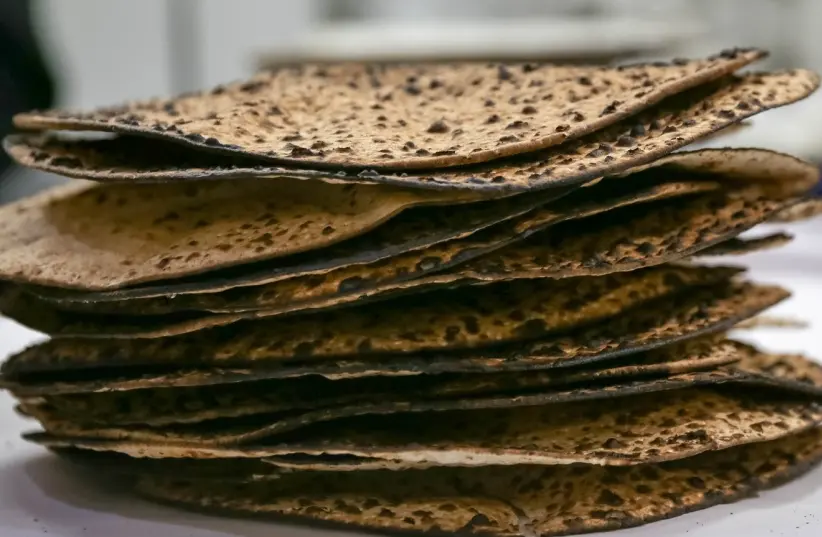
Given the current price per pound, it sure doesn’t feel like Matzah is lechem oni, the bread of the poor person. This year, 200,000 pounds of handmade shmurah matzah were baked and shipped from Ukraine to the United States, in addition to what is shipped to Europe and Israel. But, two hours before the last 20,000 pounds were loaded onto a ship in the port of Odessa, Russia invaded, and the matzahs have been stuck in limbo since.  Partially due to Putin, but also because of general supply chain issues and increased gas and shipping prices, the cost of matzah—and seemingly everything else for Pesach—is incredibly high.


More people than I can remember in any previous year have shared with me that they simply don’t know how they will afford Pesach this year.  Some have explicitly said that when they stand in the supermarkets and look at the prices, they calculate that they can buy matzah or meat but not both.


The bad news is that the prices this year are affecting more people than ever.  The good news is that there is a solution to enable everyone to have a beautiful and simcha-filled Pesach.


Since the creation of the luxury Pesach program, rabbis have been railing against them for their excessiveness, extravagance, and the forfeiting of many of the traditions involved in preparing and experiencing Pesach. Ironically, many of those same rabbis have later “eaten their words” and accepted invitations to serve as scholars in residence, bringing their families to the very type of five-star experience they had long condemned.


But internal contradictions aside, there is a more fundamental reason not to rail against such programs: there is nothing inherently wrong with them. True, kashrus can be complicated at these programs, and yes, not all the environments and activities at every program are appropriate for Yom Tov, or ever. But these are not intrinsic or inherent deficiencies and just mean that one must choose the program carefully.


Baruch Hashem, there are many large Jewish families that, for practical reasons, simply cannot experience a Yom Tov together if they are not at a program. In addition, there are those who are unable to make Pesach for themselves, don’t have family to go to, and rely on a program in order to experience a proper Pesach. And then there are those that can simply afford to experience the luxury of a Pesach program and, given that they are often generous with their support of charitable and communal institutions, why shouldn’t they?


But there is a caveat. There is no Jewish holiday and no Jewish experience that more divides the “haves” from the “have-nots” than Pesach. The contrast between those experiencing Pesach with endless menu options, midnight BBQ’s, quinoa sushi stations, and round-the-clock tea rooms, and those who literally don’t know how they will buy matzah or wine, let alone meat, is startling and staggering.


As a community Rabbi, I am exposed to both extremes.  When arranging for the sale of chametz, I like to ask what people’s Pesach plans are.  Often, I find myself meeting with someone who, with joy and excitement on his face and great anticipation in his voice, will describe the latest exotic location of the program he is attending this year or the newest amenity or entertainment being offered.  Literally moments later, someone will answer the same question with a tear in his eye and worry on his face and say I have no idea how I am going to afford matzah and wine this year because I am barely covering my bills day-to-day without these added expenses.


The Rambam writes (Hilchos Yom Tov 6:18):


When a person eats and drinks [in celebration of a holiday], he is obligated to feed converts, orphans, widows, and others who are destitute and poor. In contrast, a person who locks the gates of his courtyard and eats and drinks with his children and his wife, without feeding the poor and the embittered, is [not indulging in] rejoicing associated with a mitzvah, but rather in simchas kreiso, the rejoicing of his gut.


Though the Rambam is speaking of every holiday, there is a special practice of providing for others specifically before Pesach. The Rama (O.C. 429:1) quotes from the Talmud Yerushalmi, (Bava Basra 1:4) which states that residents of a city should give wheat or flour for matzah to those in their city in need. This is known as kimcha d’pischa, flour for Pesach, or maos chittim, money for wheat.


And yet, even with the widespread practice of giving to maos chittim, there remain far too many who struggle to keep up with the exorbitant cost of making even a basic, no-frills Pesach and are left having to cut back and sacrifice in other areas just to get through what should be a joyous holiday season.


And herein lies the caveat. There is nothing wrong with enjoying and indulging in the luxuries a Pesach program provides, or with making a beautiful, elegant Pesach at home, for that matter, so long as everyone from your community can afford to have the basic necessities. There is no set amount mandated for maos chittim, but I humbly submit the following proposal:


Just as with tzedaka, where we are instructed to give a percentage of our income, our maos chittim should similarly be calculated based on how much we spend on ourselves for Pesach. If all of those who attend Pesach programs gave proportionally to maos chittim, we could ensure that all members of our communities have what they need for Pesach without having to compromise or make trade-offs with other basic necessities. And in the spirit of Pesach, v’chol hamarbeh, harei zeh m’shubach – anyone who can and does give more is certainly worthy of praise.


True, many Pesach programs run fundraisers over Yom Tov for all kinds of worthwhile causes, but only a fraction of people participate, and by that point it is too late to help serve this particular, urgent need. It is instructive that the practice of giving to maos chittim is quoted in the context of the law that mandates that we begin preparations thirty days before Pesach.


Not knowing how one will afford to make Pesach for their family brings unimaginable anxiety, stress, and worry that compound an already difficult situation. The sooner people can be provided for and have the security that their family will indeed enjoy the amenities of Pesach, the less they will worry and fear.


A woman once approached the Beis HaLevi, Rav Yosef Dov Soloveitchik of Brisk, a few days before Pesach with a strange question. She wanted to know whether one could use milk instead of wine for the four cups of the Seder. The Rav asked her if she was ill, to which she replied that she was perfectly healthy. He then responded by giving her a large sum of money. After she left, the Rebbetzin asked her husband why he had given the woman so much money, when wine costs much less. He responded, “If she is asking about drinking milk at the Seder, it is obvious that she has no meat for Pesach, so I gave her enough to buy both wine and meat for the entire holiday.”


When we sit down for our beautiful, bountiful seder with our loved ones, our simchas yom tov should be enhanced by the knowledge that we have done what we can to ensure that none of our brothers and sisters is sitting down to a bare table where real tears substitute for salt water.


We are already well within thirty days of Pesach. Whether you are going to a Pesach program or making Pesach at home, please don’t wait to make sure that everyone can enjoy Pesach. When you are deciding how much to give, please consider what you are spending on your own Pesach for fine wines, delicious meats, and pounds of handmade shmurah matzah, and give commensurately to ensure a beautiful Pesach for all your neighbors as well.  Knowing that nobody in your neighborhood is struggling for Pesach will be more delicious, intoxicating satisfying, and simcha-generating than anything on your table.   


You can contribute to BRS maos chittim here.



Changing Ties

After davening this past Shabbos, a morning that included a fantastically energetic and joyful Aufruf of a boy from our Shul on the eve of his wedding to a girl from our Shul, someone sorrowfully said to me, “Rabbi, tomorrow two kids in our Shul will get married, and one will be buried.” That painful comment summarized what was a complicated and excruciatingly difficult day that included highs and lows and multiple life cycle events, not only for me, but for several people whose day was very full and very emotional.    


On Sunday afternoon, our community gathered to say goodbye to our beloved Corey Reichenberg a”h, a brave, tenacious, spunky, and special young man.  Since the age of three, Corey battled Duchenne muscular dystrophy. Shortly before his Bar Mitzvah, he began to need a wheelchair.  Corey never felt sorry for himself, never took advantage of his disability, and never let it bring him down.  He was funny, friendly, and focused on living life to its fullest.  He didn’t know how long he would have in this world, but he did know that whenever he left it, he wanted to have made it a more beautiful place, and he most certainly did. 


The funeral was heartbreaking, and the beautiful tributes offered by his father, sisters, and friends brought tears to everyone’s eyes.  The way the timing worked out, I needed to go directly from the cemetery to a magnificent wedding of two special souls from our Shul.  The black suit I wore worked for both the funeral and wedding; the only thing that needed to be changed was my tie.  (In semicha, Rabbi Lookstein taught us the art and importance of wearing a funereal tie)


Changing one’s tie is easy, but changing gears from a tragedy to a celebration, from the death of a young person to the celebration of a marriage between young people, is much harder.  When I arrived at the wedding venue and parked, I changed my tie but still couldn’t get out of the car.  I sat there trying to pivot my emotions.  To be honest, I was somewhat conflicted – Is toning down simcha in light of a tragic loss fair to the celebrants?  Is unleashing unbridled simcha respectful to the grieving family and to the honor of the neshama that was just lost?  How does one compartmentalize feelings? Is there a way to honor both the high and the low, the joy and the sorrow? 


I have had to compartmentalize countless times in the rabbinate, fluctuating between events, conversations, and meetings, but nothing was as intense as the contrast and immediate juxtaposition of these two occasions.  As I sat there struggling, it occurred to me that I had just heard the answer at the funeral, twice.


When Corey’s father Ed spoke, he shared:

I want to tell you that Thursday (when Corey died), as difficult and as painful as it was, it was not as bad as the day 21 years earlier when we received the diagnosis that our beautiful, sweet 3-year-old had an incurable disease, Duchenne muscular dystrophy. We were devastated, but it so happens that on that very evening our friends had an Upsherin for their son. We decided then and there that we would not shut off from the community but rather we would make our life with Corey as normal as we could. We went to that Simcha.


I had a strong suspicion I knew whose upsherin it was.  Twenty-one years prior, there had been a wonderful, elaborate celebration by someone I knew was their friend.  Immediately following the funeral, indeed that father gave Ed the biggest hug and said, “I had no idea, you were so happy for us that night, you added to our celebration. I had no idea what you were going through that very day.”   


It was the hardest day of their lives. They had received devastating news that radically changed their lives forever.  If ever there was an excuse, and if there was an event one could get out of, it was an upsherin on a day you learned your child that same age had a significant disability.  But Corey’s parents made the conscious and mindful choice to live life, to show up, to choose happy, even while still finding time to be sad.


It wasn’t just that day and for the event that night, it is who the Reichenbergs are.  In her eulogy, Corey’s sister Naomi shared:


The best story to describe my parents’ unwavering strength goes as follows. We were at a conference for muscular dystrophy in Baltimore, Maryland, and it was the final night of the conference. I was only about eight years old and the founder of Parent Project Muscular Dystrophy, Pat Furlong, was speaking. Pat had two boys who had passed away from Duchenne which is why she started the organization. She was speaking about her boys and she mentioned their deaths.


Naive little Naomi turned to her parents in disbelief. “Corey’s gonna die?” I uttered those words with the utmost shock. I ran out of the ballroom in tears and my mom ran after me. I went into a bathroom stall and she followed. She came in and I expressed to her how I wish I could have at least found out differently. She told me she wished the same.


She then went on to say, “Naomi, I know this is hard and you’re sad because he’s your brother and you love him but we can’t be sad all the time.” She said, “You’re gonna wipe your tears and you’re gonna go back out there and we are gonna give Corey the best life possible and the happiest life possible in the time he has because otherwise, it’s not worth it. Otherwise, life wouldn’t be worth living. If we aren’t giving him and everyone around us a fulfilled life, there is no point in this nisayon (test).” From that moment forward I was determined to bring happiness to everyone around me. All because of my mom’s superhuman strength, I was then able to realize what I love doing most, making others happy. Their strength specifically over these last few months has been unwavering.


Our Parsha describes the details of the laws of Tzara’as, the spiritual leprosy that can afflict a person, their garments, or their home.  If an article of clothing develops a questionable affliction, the Kohen quarantines it for seven days and then examines it to see if the blemish has spread.  If it has, the garment is burned, but if it hasn’t, it is washed and locked up for seven more days to see if the affliction has dimmed. 


The Torah describes that the Kohen looks at the garment to see if “hafach ha’negah es eino,” did the affliction change its color.  The Imrei Emes suggests that the Torah isn’t describing the garment or affliction, but is talking about the Metzora, the individual.  Did this person going through a difficult situation change his perspective?     


Rav Leib Lopian, Rosh Yeshiva of Gateshead, points out that the letters in the words “nega” – affliction – and “oneg” – pleasure – are identical. The only difference between them is where the letter ayin appears. Shlomo HaMelech, the wisest of all men, writes that “he’chochom einav b’rosho” – a wise person places his eyes in front (Koheles 2:14).  It has been suggested that on a deeper level, Shlomo was telling us that the wise person put the letter ayin in the beginning, chooses to live with oneg, happiness, even if they are struggling with a negah, a challenging time. 


Corey’s disability and so many other challenges people confront are certainly not negaim, they are not afflictions, but the insight remains relevant and inspiring nonetheless.  Like Corey’s family each of us have a choice of where to put the ayin: will we focus on the negah, what is going wrong, or on oneg, what is going right, even with the tests.  To be very clear, this is not to God-forbid judge, look down on, or be critical of anyone who is genuinely struggling with managing difficult challenges, or staying positive while facing trying life circumstances. Rather, we can admire and learn from people who are able to find the extraordinary strength to see the oneg while understanding and empathizing with those who are having a hard time seeing past the negah. (This lesson is particularly relevant for those a step removed, who aren’t themselves going through the challenging circumstances.)


And that is what I realized sitting in the parking lot outside the wedding. If the Reichenbergs could pivot on that day 21 years earlier, certainly I could transition to enjoy the wedding that evening.  The choice to compartmentalize is not disrespecting or being insensitive to a crisis or loss or to someone you love.  It is finding the resolve to push through, to choose to live life, to put the ayin b’rosh, to change not only our tie, but also our outlook.


Smile, Everyone is Watching

Earlier this week, four Israelis were killed, and several others were injured, in a terrorist stabbing attack at a shopping center and gas station in Be’er Sheva.  Beautiful, innocent souls, guilty only of being Jewish and living in the one and only Jewish homeland, were murdered in cold blood, reminding us yet again how our brothers and sisters in Israel live daily with threats and dangers.


One would think a country whose citizens face terror regularly and are surrounded by hostile enemies who seek their extermination would be paralyzed by fear and would be debilitated by distress.  Instead, despite the daily dangers, Israelis are remarkably happy.


According to this year’s World Happiness Report that was just released, Israel has climbed to its highest ranking yet, breaking into the top 10 happiest countries in the world.  Finland came in first for the fifth year in a row, while Afghanistan placed last at No. 146.  At No. 9, Israelis are happier than Canadians (No. 15), Americans (No. 16) and the people of the United Kingdom (No. 17).


When the Founding Fathers included the “pursuit of happiness” as an American right and entitlement, it is almost as if there was an inherent concession that happiness can be pursued, but it is hard to ever attain.  For many, that pursuit has grown tiring and indeed, they have given up.  In 2006, Harvard psychologist Daniel Gilbert wrote a book called “Stumbling on Happiness.”  In it, he argues that the things and experiences we typically predict and imagine will bring us happiness, rarely do.  Rather, he says, happiness is elusive, and while there are efforts we can make, our best bet is to hope to stumble upon it. 


Judaism doesn’t agree.  Happiness, simcha, is not something that we stumble or trip upon by accident.  It is the result of a conscious decision, a determined attitude.  In his Mesillas Yesharim, the Ramchal writes that simcha is ikkar avodah, being happy and joyful is not a luxury or simply preferable, they are critical components of a meaningful life of serving Hashem. 


We tend to think that when we are happy we smile, but it turns out to be the opposite.  Science has shown that the mere act of smiling, engaging the micro muscles involved, can lift your mood, lower stress, boost your immune system, and even prolong your life.  When you smile, your brain releases neuropeptides to help fight stress. Dopamine, serotonin, and endorphins are released that relieve pain and bring pleasure. 


As a result, choosing to smile is choosing happiness, not only for you but for the people around you.  Nicholas Christakis, a professor at Harvard Medical School, found that misery is not alone in liking company; happiness is also contagious.  Knowing someone who is happy makes you 15.3% more likely to be happy yourself. A happy friend of a friend increases your odds of happiness by 9.8%, and even your neighbor’s sister’s friend can give you a 5.6% boost.


In Pirkei Avos (1:15) Shammai teaches: שַׁמַּאי אוֹמֵר…וֶהֱוֵי מְקַבֵּל אֶת כָּל הָאָדָם בְּסֵבֶר פָּנִים יָפוֹת.  Shammai used to say, receive all people with a pleasant countenance. Rav Ovadia Bartenura provides a powerful interpretation: “When you bring in guests to your home, do not give to them while ‘your face is buried in the ground;’ as anyone who gives and ‘his face is buried in the ground’ – even if he gave all of the gifts in the world – it is counted for him as if he did not give anything.”  If you give someone, even generously, but you don’t smile, it is as if you gave nothing.  The smile is more valuable than the resource you shared. 


Simcha, happiness, occurs when we make the decision to focus on the blessings in our lives, no matter how challenging or formidable the struggles we face simultaneously.  If our happiness results from the blessings we already have, we can always find happiness, because we always have at least something.  But if our happiness is determined by what we don’t have—“If only I had more money, a nicer house, a better job, a more loving spouse, more loyal children”—we will never be happy because we can always have more and therefore by definition there will always be something we don’t have.  


In a recent Living with Emunah shiur, I challenged everyone, men and women, adults and children, to make the conscious effort to smile more, even—or especially—when we don’t feel like it.  Smile before walking into the house.  Smile when the children come into the car at carpool.  Smile when greeting your family at the end of the day.  Be intentional, create the habit and routine of smiling in the moments that will create the mood and introduce the energy. 


After the shiur, I received several emails about how smiles changed people’s lives:


Since the end of the Emunah class today was about smiling, thought I’d share this with you. I was at a Shabbat meal when I was single and wasn’t in the best mood. I guess dating was getting to me. A bunch of single guys were there at that meal and the lady of the home told my Rebbetzin that I need to smile more, especially if I’m looking for a shidduch. So on Simchas Torah weekend as I walked out of shul I started to smile going down the stairs with hundreds of singles around, and my future husband saw me smiling. He came over to me because I was smiling. 


Another person wrote:


Your story in the Emunah shiur brought me joy (and a smile). Twenty-plus years ago as a young, single college graduate, I went for a Beracha from the Kaliver rebbe. After four hours, I was called in. The rebbe said to be happy. I said rebbe, I am happy. He said be happy. I was like wow. If this is all that rebbe said to me it must be a very deep Torah concept. I am generally a very happy, positive person. Optimistic, smiley… but those words stuck with me and I turned my relationships, especially with Hashem, to focus on happiness. I smiled much more. Then Hakadosh Baruch Hu sent me my zivug. I was on the women’s side at a kiddush in shul and my now husband saw me smiling and asked a friend to find out who I was and set us up. The power of a smile and emunah…we were married that Adar! Now a gazillion sleepless nights later, several children, thousands of rides to school, mishmar, sports, etc, I do it with a smile. Each carpool. A smile is the first thing people notice externally.


Don’t stumble on happiness, choose it by smiling more. 

Marking Our Two-Year Anniversary Since Shutting Down

This week marks the two-year anniversary of Boca Raton Synagogue, like shuls across the world, shutting down in response to the threat of the then-new Coronavirus.  I will never forget the meeting of rabbanim gathered in my office as we held a call with the head of our local hospital and he made a personal request that we announce a temporary closure and short lockdown to both slow the spread and preserve the critical, lifesaving resources. As desperately as we resisted, ultimately, we gave him our word, hung up the phone and convened for Mincha—what was to be the last minyan on our campus for over two-and-a-half months. 


Looking back over these past two years, there are many decisions we can be proud of and stand by, others that were the best decisions at the time and that we would make again with the knowledge and information we had at the time, and others we undoubtably could have made better (I have no doubt some reading are thinking in one direction, while others believe the opposite). 


This week, I happened to come across an open letter I had written to our Shul, the building and campus I missed so much.  Reading it moved me because it brought me back to how I had felt. But it also saddened me greatly, because I realized just how quickly so many of those feelings faded, and how fast I went back to taking so much for granted.


To my dear, precious, and sacred Synagogue:


For the last ten weeks I have missed you so. I have longed to be together with our shared friends, united in prayer in your sanctuary, joined in learning in your Beis Medrash, celebrating beautiful simchas in your social hall.  I have yearned to bring our children to youth groups in your classrooms and to play on your playground.  For ten weeks I have pined to spend time with friends in your hallways, to shmooze on your front lawn, and to linger in your lobby. 


For over two months now I have dreamt of kissing your Torahs, of singing along to the sweet melodies coming from our wonderful chazzanim standing on your bima. My finger aches to point at the Torah being lifted during hagbah for all to see and my hand hurts from not giving out candies to the countless children who come to say “Good Shabbos” on Friday night. My feet yearn to dance with Bar Mitzvah boys upon receiving their first liyah and my head hankers to get hit by candies thrown at young men celebrating their aufruf.  My office sits empty, absent the people who come to meet with me, but as much to encounter you, to find solace, strength, meaning and support in your walls, in the symbols and holy objects your furnishings contain.


Every day for over seventy days I have wondered, when?  When can we come back? When will this exile end?  When will this isolation expire?  When will we be together again? When will we finally feel the comfort and confidence you provide? We have never needed you more than when we can’t have you. We have never wanted you more than when you are inaccessible to us. 


Davening simply hasn’t been the same.  What I would give to hear those who sometimes daven so loudly they distract me.  Things just don’t feel right without the pacers, the shukelers, the stragglers, the whisperers, the screamers, and I dare say, even the talkers.  Maybe we weren’t all getting it entirely right, but we were there, we showed up, we were together.  And now we are so far apart, so alone, so distanced.  Our davening is too quiet, too isolated, too far away from you, our holy space and sanctuary.  Just being with you brought out our best, helped us concentrate and focus, and now we feel so lost, so displaced, so out of sorts.


To be completely honest with you – it certainly has been refreshing to automatically be on time, to be able to daven at our own pace or to slow down for the sake of children we now daven with, to not have to fight for a parking spot or a seat.  But we would trade those comforts and conveniences in a heartbeat just to be with you again.  


My beloved and cherished shul, I have missed walking behind your Torah to and from the bima, shaking hands and hugging friends along the way.  My soul screams to have the privilege and honor to transmit our tradition’s timeless teachings from your shtender to a packed room, men and women, young children and Holocaust survivors, most of whom are thirsty to drink from the fountain of our Torah’s wisdom and even to those whose eyes are closed as they are “deep in thought.”


Just a few months ago, your worn-out carpet and areas that need a coat of paint jumped out at me as I focused on your blemishes and flaws, but now I couldn’t notice such things because you are beautiful to me, perfect as you are, and I just want us to be together again. 


To be clear, our separation is not your fault or ours.  You heroically sacrificed, shutting down long before you were legally obligated to, all to protect us, even though it meant you would sit alone, empty and maybe even looking abandoned.


My darling BRS, for months I have fantasized about our reunion. I have visualized our first time back together, the palpable joy, the unbridled happiness, the affectionate hugs, the sincere seudas hoda’ah and the emotional birchas shehechiyanu. I have pictured how we would decorate you, how we would sing and dance with your Torahs, kiss your siddurim, embrace your chumashim.  We would settle into your chairs, breathe a sigh of relief, and feel a surge of strength, faith, and hope. We would be back where we belonged.


And now that this day is finally here, we feel so close and yet we must remain so far apart. 


This coming week, if all continues to go well, we will return to your campus, but we still cannot enter your premises.  We will be together in makeshift minyanim, but we will still be separated by at least 8 feet.  Instead of hugs or handshakes, we will be lucky to say hi.  Instead of a reunion, we will experience a tease.  Instead of feeling we are back, we will still feel like we don’t know where we are.  Instead of dancing, we will be distancing.  Rather than see into each other’s hearts we will be staring at one another’s masks.


As badly as we want things to return to normal and to be familiar, my dear shul, we accept that this simply isn’t an option just now.  Last week we completed the third book of the Torah and declared “Chazak.”  We couldn’t scream it with you, but nevertheless we meant it more than ever when we turned to one another and said, “Be strong, be strong, and together we will be strengthened.”  And this week, as we begin the fourth book of the Torah (we will have so much rolling to do when we finally come home to you), we acknowledge that a person has to make himself or herself a midbar, a desert, to truly receive Torah. We have proven our willingness to live with barrenness and spiritual homelessness and now, in that merit, we desperately hope to come home. 


Our dear shul, our love and longing for you will never fade.  While we still can’t step inside, we will soon be one step closer to being together. We hope you understand that while that will have to do for now, it still isn’t enough. 


With love and longing,

Your dear friend,

Efrem


As we reflect on the last two years, there is so much we are grateful to move on from but there is also so much to hold on to and to take with us.  Don’t put this extraordinary time entirely in the rear-view mirror.  Revisit and reflect on those feelings and experiences, and transform what was a difficult two years into the catalyst for transformation, growth, and breakthrough in our relationship with our shul, ourselves and those around us. 

Assimilation is Not the Answer to Antisemitism: Be an Ish Yehudi, a Proud Jew!

In its “Audit of Antisemitic Incidents,” the ADL recorded over 2100 acts of assault, vandalism and harassment  against Jews last year, a 12% increase from the previous year and the highest total since tracking began in 1979.  An  AJC survey found that 90% of Jewish Americans believe antisemitism is either somewhat or a very serious problem.  So, antisemitism is rising and overwhelmingly we claim to be concerned about it.  But what are we willing to do about it? 

When Haman approached Achashveirosh with his diabolical, genocidal plan to exterminate the Jews, he said, “there is a nation scattered abroad and dispersed among the nations.” The Talmud (Megillah 13b) expands on this conversation.


When Haman targeted the Jews for annihilation, he said to Achashveirosh, “Let’s destroy the Jews.” Achashveirosh replied, “Not so fast. I am afraid of their God, lest He do to me what He did to my predecessors.”


Haman relieved the King of that fear when he said, “Yeshno am echad,” which translates literally as “there is a certain nation.” The Talmud quotes Rava, who explains that Haman was telling the King something much more strategic and insightful. Not yeshno am echad, there is a certain nation, but rather yoshnu am echad, there is a sleeping nation. Said Haman, “They have been negligent of mitzvos, they are divided, fighting with one another. They are arguing amongst themselves but at the same time they are fast asleep as to what we want to do and how we threaten them.”


We were on the brink of extinction as a people because we were asleep.


We were vulnerable and literally on the brink of elimination and extinction as a people because we were asleep. Our eyes were closed to what was happening around us. We didn’t take the threats seriously and we didn’t stand up for our right to simply exist.


Haman recognized and took advantage that there is a nation that is sleeping. All he had to do was continue to lull the Jewish people into a false sense of security, to breed complacency and apathy, and at that moment he could accomplish his goal of ridding the world of our people.


Indeed, Rabbi Soloveitchik suggested that the true miracle of Purim is that an anti-Semite rose, threatened us, and we believed him. We didn’t excuse him, accept his bogus apologies or say he didn’t really understand what he was saying. We didn’t just reject his tropes, we confronted him, we took him at face value, and we were determined not to let him threaten our people.


Identifying an anti-Semite, taking him or her seriously and doing something about it is nothing short of a miracle.


So how did we survive? What spoiled Haman’s plan? Why did we ultimately triumph over Haman such that we are here today and he is a distant memory? The answer is simple: Mordechai and Esther.


We understand Esther’s heroism. She risked everything: her life, her family, her people, to go out on a limb and confront the king without permission. But what made Mordechai a hero? If you think about it, Mordechai may actually be a villain, a perpetrator in the story, responsible for initiating the decree to exterminate the Jews of Shushan and beyond.


Would it have been so terrible for him to just bow down? Just once? Not only does Mordechai refuse to bow down to Haman, he insists on antagonizing him by camping out on Haman’s route so that Haman would see him every day and be bothered by the one Jew who refuses to show him honor. Mordechai’s behavior provokes Haman and he responds by declaring his intention to destroy not only Mordechai, but all of Mordechai’s people, the Jews. Even after Haman’s plan has been pronounced, Mordechai continues to snub him.


When Achashveirosh remembers what Mordechai had done to save his life and sends Haman to reward him by parading around publicly, Mordechai could have declined the honor. Instead, he accepts, humiliates Haman and infuriates him further!


And this is the person we consider a hero of Purim? Why? A closer look seems to indicate that Mordechai’s ego put the Jewish people at risk. What was the source of Mordechai’s intransigence?


You might think it’s simple – bowing down was idolatry, one of the three cardinal sins for which we must give up our lives rather than violate. Indeed, the Ibn Ezra suggests that Haman was wearing idolatrous symbols. Rashi comments that Haman had declared himself a deity. Either way, it would seem Mordechai was right not to bow down, he was simply following Jewish law and it was his peers who were wrong for bowing, even if not doing so would mean risking their lives.


But that’s not the whole story. The Talmud (Sanhedrin 61b) says that the law of sacrificing your life rather than engaging in idolatry applies if in fact one is buying into the divine nature of the idol. If one is bowing simply out of fear, one is not liable.

So why didn’t Mordechai simply bow down in an effort to save the Jewish people?

Yes, Mordechai would have been entitled to bow down. To save his life, he could have been apologetic for his Jewishness and submitted to a virulent anti-Semite, bowing down to Haman and his worldview that wants a world without Jews. But Mordechai understood what was at stake.


Mordechai understood the antidote: To stand firm, to stand strong, and to stand as a proud Jew, a Torah Jew.


Mordechai, a humble scholar and righteous sage witnessed the growing antisemitism of Haman and his desire to see Jews and Judaism erased and he understood the antidote. If Jews were fast asleep, excusing away even the anti-Semitic “tropes” of their time, the answer was not to bow down, even if it was technically allowed. The answer was exactly the opposite. To stand firm, to stand strong, and to stand as a proud Jew, a Torah Jew.


The answer was to not apologize for being a Jew, but rather to be the proudest and most tenacious Jew, and that is exactly what he did. And this is how is Mordechai is known in the Megillah: “Ish Yehudi haya b’Shushan ha’bira – There was a Jewish man in Shushan the capital.” What do you mean a Jewish man; there was only one? There was a large Jewish population in Shushan!


The Megillah is telling us that true, there were many Jews, but some were abandoning their Judaism and others were failing to stand up for it. The Jewish community was asleep; there was only one Ish Yehudi, an unashamed, unembarrassed, unapologetic Jew.

What happens when Jews stand up for ourselves, when we call out and confront anti-Semitic song lyrics, tropes and yes, call out antisemites themselves? By the end of the story, the Megillah tells “fear of the Jew had fallen on them and so no man could stand up against them.” Why? “Because Mordechai, the proud, unashamed, unapologetic and fearless Jew earned the respect of his multitude of brothers, he sought the good of his people and spoke for the welfare of the next generation.”


One of the critical, but too often neglected, lessons of Purim is that the answer to our enemies is not to hide, apologize, or erase our Jewishness. To the contrary, it is to swell with and share our Jewish pride. When we act with confidence and pride, we gain respect. It is no coincidence that Mordechai emerges as a leader not only of the Jewish people, but a dignitary in the Persian government.


The mitzvah of Purim is to get to a point that we can’t tell between cursed is Haman and blessed is Mordechai. We are very good at the blessed is Mordechai. We look to explain, excuse, justify and see everyone as a blessing. But we need to get to a point of remembering that identifying a Haman and cursing him is as important as blessing a Mordechai. We have to call out an anti-Semite, hold them accountable, hold those whose silence makes them accomplices accountable.


This Purim, don’t just dress up like Mordechai; act like Mordechai.


If you share concern about growing antisemitism, the question is: what will you do about it? Certainly we have to write letters, make phone calls, attend rallies and hold antisemites and those who fail to condemn them accountable. But there is something else we must do.  I can’t help but notice that assimilation and intermarriage are at record highs, even as antisemitism is as well. Clearly blending in entirely and erasing our differences altogether is not only dangerously wrong theologically, it has no correlation to being safer and more secure.  It is as if just when Jews try to downplay their Jewishness, our enemies will not let us forget.


We must appeal directly to the American people, to carry ourselves with pride, but also with dignity, honesty, integrity and righteousness. If like Mordechai our neighbors come to know and respect us, they will be intolerant of leaders who dare promote anti-Semitic rhetoric or tropes. If we carry ourselves properly, those we work with, work out with, shop with, or live near will speak out and stand up to demand resolutions of condemnation and removal of voices of hate from critical committees.


This Purim, don’t just dress up like Mordechai; act like Mordechai.


Be an Ish Yehudi.


The View From the Pew – Observations and Recommendations

Back in 2013, when the Pew Research Center released its landmark study entitled “A Portrait of Jewish Americans,” Jewish Action asked me among other contributors to offer observations and recommendations. With the release of Pew’s latest report some months ago, they again asked to analyze the newest findings while reflecting back on their suggestions from eight years ago.  This article appeared in the Winter 2021(5782) Jewish Action.


In 2013, the Pew Research Center published a thorough demographic study titled, “A Portrait of Jewish Americans.” I suggested at the time that the report yielded two clear conclusions and mandates for our Orthodox community. Firstly, to stem the precipitous and catastrophic rise of assimilation and intermarriage, we would have to recruit a greater swath of our community to meaningfully engage in outreach and not rely on outreach professionals alone. Our Orthodox communities would need to become more welcoming and friendly, more accommodating and sensitive to those without an observant background, and our communal budgets would need to prioritize funding outreach efforts, programs and personnel.


Secondly, I suggested that the Pew report’s findings regarding our Orthodox community should move us to immediately evaluate our assumptions regarding the commitment of our Orthodox youth and their experiences both in our homes and in our schools.


A few months ago, Pew released its latest report with updated findings and an opportunity to measure how well we have done. Tragically, intermarriage outside of the Orthodox community continues to be sky high at over 70 percent, effectively threatening the very future and continuity of a significant segment of the American Jewish community. Among other findings, the report found that “twice as many Jewish Americans say they derive a great deal of meaning and fulfillment from spending time with pets as say the same about their religion.”


Correctly, we are all outraged by and concerned with growing anti-Semitism. Nevertheless, as disturbing as those horrific incidents and troubling trends are, when it comes to Jewish continuity, the statistical threat of anti-Semitism pales in comparison to the damage we are doing to ourselves and our own contribution to the disappearance of our people.


It is evident we have not succeeded in moving the needle on assimilation and intermarriage. The question is, have we really even tried?


There is so much to unpack and analyze from the latest report, but one contrast in particular jumps out at me and, I believe, offers a mandate and charge going forward. Sadly, the report found that members of different denominations of American Judaism generally don’t feel they have “a lot” in common with one another. About half of Orthodox Jews say they have “not much” (23 percent) or “nothing at all” (26 percent) in common with Reform Jews. Similarly, most Reform Jews say they have “not much” (39 percent) or “nothing at all” (21 percent) in common with the Orthodox.


Despite our common history and shared destiny, notwithstanding our overlapping culture, calendar and commitment to Israel, Jews of different streams not only do not feel connected, they don’t even feel they have commonality. This likely results from the increased general American trend towards polarization from, and negative associations with, those who are different than us.


There is a significant and startling exception to the rule. Pew reported a denominational shift, particularly among the younger demographic. Chabad, analyzed for the first time as its own denomination and not an Orthodox subgroup, is now the same size as the Reform and Conservative denominations. Thirty-eight percent of all American Jews have engaged in some way with Chabad programs. Forty percent of those are active on a regular or semi-regular basis. Seventy-five of those who are involved with Chabad do not self-identify as Orthodox.


Reform and Conservative are losing members. While certainly some are walking away altogether, it turns out a significant amount still want to feel connected to their Judaism, and Chabad is where they feel most at home. If we want the next Pew study to report improvements in the statistics regarding intermarriage and assimilation as well as disaffection among the Orthodox, we must take a page out of Chabad’s playbook.


The Lubavitcher Rebbe, zt”l, successfully inculcated a feeling of duty and responsibility into generations, including a growing number who were born after he had already left this world. As fundamental as any other part of their identity, those associated with Chabad feel a powerful sense of shelichus, that they are on a mission and have a mandate to connect and feel commonality with all Jews, to bring them closer to a relationship with Hashem, and for Judaism to inform and inspire their lives. Their approach is non-judgmental, warm and welcoming, they make Torah and Judaism accessible, relevant and contemporary. And they do it all without compromising on a strict commitment to Torah, halachah and Lubavitch practices and minhagim.


The success, as demonstrated in the latest data, is the result of not relying on rabbis and rebbetzins alone, but the force and focus of an entire movement. Those touched and inspired by Chabad are not the only beneficiaries of Chabad’s approach. Rather than feel lost, invisible or inconsequential, young people in Chabad feel they have a purpose, they are here for a reason, and that the world is waiting for a difference only they could make.


My intent here is not to glorify or romanticize Chabad as perfect or for everyone, but rather to use their success as a springboard for us to learn from the combination of these two data points in the Pew report. We can both make a measurable impact on stemming the tide of assimilation, as well as inspire our children to be ambassadors of Torah and Yiddishkeit if we embrace taking responsibility for Jewish continuity as a core value of our movement and our lives. Let’s learn and utilize the language of shelichus, being on a mission in our schools, at shuls, and around the Shabbos table. Let’s develop and teach a curriculum of responsibility for the Jewish future and how practically we can better reach out, invite, engage and relate with Jews who don’t have our background or level of observance.


After the last Pew report I suggested we need to work on combating intermarriage and inspiring our Orthodox youth in parallel, side by side. Perhaps a major takeaway of this latest study is that we can impact both groups with one campaign and focus.

Nobody is better positioned to make Judaism alive, attractive and relatable than those who are both uncompromising on halachah while simultaneously engaged in society and participating in the greater world. We have the best platform and are poised to have the greatest success, we just need to care enough to try.


In response to the 2013 Pew report, I shared that our shul, Boca Raton Synagogue, has a dedicated outreach rabbi, Rabbi Josh Broide, on our rabbinic team. Given the catastrophic threat of assimilation and intermarriage, we consider his position and efforts a necessity, not a luxury and that is why we prioritize it in our budget. His tireless efforts have yielded significant success measured by the quantity of otherwise unaffiliated people who have participated in his programs, classes and services and by the meaningful changes many have made to their lives.


Until now, we have considered the outreach role and efforts as complementary to our shul and supplemental to our community. The most recent report has driven us to reconsider that perspective and the focus from exclusively directed at the unaffiliated to working with and inspiring our members to create a movement, to feel they are part of a mission. We will only move the needle on the formidable threat of assimilation if we recruit those who are already committed to not only participate in outreach efforts, but to lead them.


A movement requires strategic thinking, intentional programming and mindful messaging from the pulpit, in shul literature, through the youth department and adult education. Themes of taking achrayus, personal responsibility, mesirus nefesh, community, Klal Yisrael and continuity should be emphasized again and again. Tools and training should be provided to help overcome inhibition and to provide skills in engaging the unaffiliated meaningfully.  These ideas, ideals and efforts must be shared with and stressed to teens and youth. We must involve them, empower them and enable them to see themselves as instrumental to our movement, not only in their youth but throughout their lives.


Let us pray that with our renewed efforts coupled with siyata d’Shmaya, Divine assistance, the next Pew survey will report an inspired, flourishing Jewish people steeped in Jewish values and Torah and feeling a tremendous connection and commonality with one another.


Taking Stock of TikTok Torah

“Raunchy TikTok Talmud Tidbits Spark… Heated Discourse”


This recent headline caught my attention (as it was designed to) and intensified a question that has been weighing on me:


The internet in general, and social media in particular, has catapulted Torah learning options in our time in ways we could never have envisioned.  It is hard to imagine how we could have navigated Covid lockdowns without the benefit of technology to access Torah.  Countless websites, apps, and platforms like Zoom enable us to learn individually or come together as a community and tap into Torah anytime, 24/6, in countless languages, on innumerable topics, and with opportunities geared towards every level. 


I personally am a great believer in and beneficiary of using technology to teach and promote Torah.  Long before Covid, I took advantage of social media to share articles, links to shiurim, and (hopefully) inspirational thoughts and ideas.  When the pandemic struck, like many others we pivoted online. Streaming classes on YouTube continues to facilitate people to join from anywhere in the world to watch live or at any later time that is good for them. 


And yet, with all the positive, there is a much more concerning side to technology and Torah, an unintended consequence of the ability to connect and share so easily, spontaneously, and often anonymously.  Social media has certainly driven a culture of sharing and conversing meaningfully on Torah topics. But it has also generated a culture of people competing for cute, witty memes, gifs, and jokes, often invoking Torah themes and ideas. While many of these are creative and by and large harmless, they do not always reflect the sense of awe and reverence our Torah deserves.  I have watched and wondered if people are being enriched and inspired, if the Torah itself been elevated as a result of this proliferation, or is our Torah being used as just another vehicle to entertain and to compete for attention and popularity.


While I think there is a healthy debate to be had about “Frum Twitter” and more generally some of the unintended consequences of communicating Torah in casual ways on casual platforms, I would hope all would agree that the TikTok posts referenced in the headline at the top of this article are not only beyond the pale, but they are downright offensive. 


A self-proclaimed atheist has taken to studying Daf Yomi and producing short videos of her “Daf Reactions.”  These reflections are designed to be provocative.  The poster doesn’t hesitate to use profanity when crudely referring to our greatest sages, the ambassadors, and transmitters of our sacred Torah She’b’al Peh.  Make no mistake, just because her posts are popular or her intentions may be sincere doesn’t mean they are appropriate; just because they have gone viral doesn’t mean they add value.


It is tempting to be excited or even proud that the Talmud and Daf Yomi are cool, they are popular, and that an unlikely source has found a way to promote and share it in a way that speaks to the younger generations.  Several in the Orthodox community have jumped on the bandwagon of praise and excitement.  But I think that is a terrible mistake.  When someone doesn’t just express doubt but openly rejects the existence of Hashem, uses profanity and vulgarity to talk about His holy gift to the Jewish people, it is not something positive, it is the definition of a desecration.  It is an appropriation of the very text and truths that she rejects. 


How could one simultaneously claim to love Hashem and somehow be excited by, promote, or celebrate Torah learning propagated by someone who denies He exists?  To be clear, I write this not to attack the particular person but to challenge our Jewish social media culture that is the platform for such a phenomenon and the ease with which one can mindlessly and thoughtlessly get swept up in celebrating the very content that we should be finding deeply offensive and disturbing. (Though this should go without saying, I would be equally and unequivocally critical of a man using profanity when talking Torah or who rejects Hashem but claims to be sharing His Torah.) Put another way, my concern is less about the poster and her “Reactions,” but the overwhelmingly positive and supportive reaction to her “Reactions.”


The Torah is described as being given with trembling and fear. The Gemara (Berachos 22a) teaches: “It is written ‘You shall make them known to your children and children’s children,’ and following that it is written: ‘The day that you stood before the Lord your God at Chorev.’ Just as at Chorev there was dread and awe, trembling and fear, so too here, with respect to the study of Torah, it must be done with dread and awe, trembling and fear.”


Commenting on these words, Rav Soloveitchik (Chumash Mesoras Harav) writes:


Why should Torah study call for fear and dread? Isn’t Torah to be learned to gain insight and understanding? Isn’t the ultimate goal of Torah study to assimilate the Torah’s worldview into one’s personality? Why the need for awe, for trembling?


These emotions are appropriate because the study of Torah is a reenactment of the giving of the Torah, and the teacher is but a mouthpiece for the Giver.  For this reason, both Torah and prayer are Avodah Shebalev. Both involve standing before God. Prayer—because man’s need-awareness is so acute that he cannot keep himself from addressing the King of Kings in prayer. Torah study—because God alone is our Teacher, the melamed Torah le’amo Yisrael.


The study of Torah constitutes continuous revelation. The purpose of reading the Torah aloud in the synagogue is not solely to teach the congregation, but also to arrange an en­counter with God, as experienced by our ancestors at Mount Si­nai. Every act of reading from the Torah is a new giving of the Torah, a revival of the wondrous stand at the foot of the flaming mountain. The reading of the Torah is a “staging” of the giving of the Torah and a renewal of the awesome, sublime experience. The revelational experience is reenacted whenever the Torah scroll is removed…


Torah is not simply an academic pursuit.  It cannot be divorced from belief in Hashem.  It is intrinsically connected with the experience of revelation, it is meant to inspire a sense of contact with the Divine.  Prayer is us speaking to Hashem; learning Torah is Hashem speaking to us.  Sharing Torah while denying the existence of the author and authority of Torah is profaning and desecrating our sacred Torah. 


Consider, in contrast, a ruling of the Rama (o.c. 48:1), Rav Moshe Isserlis, who teaches us the proper posture when learning Torah.  He writes that to recall that the giving of the Torah was with people trembling, the custom is to shukel or sway when studying Torah.  We are meant to bring the highest level of reverence and respect to the study of Torah, to invoke and emulate the awe and trembling from when it was first given.  We must be mindful and demonstrate that learning or sharing Torah is not a casual exercise or experience. 


Once, Rav Elyashiv zt”l had not yet reviewed shanayim mikrah v’echad targum, he hadn’t completed his study of the parsha.  When his grandson asked him what he was waiting for, he replied, “how could one review the parsha without wearing his jacket?”  The grandson brought Rav Elyashiv his formal garment and only then did he return to reviewing the parsha.


I am not saying that we have to dress formally when studying or posting Torah, nor am I opposing the brilliant efforts of many people around the globe who make Torah approachable, relatable, and come alive for audiences who need an extra push or who are not instinctively drawn to it. On the contrary, modern technology, including graphics, videos, and all manner of multimedia, has added incalculable amounts of learning and value to the Torah world. But it is critical that no matter the forum or medium, we must at all times have respect, dignity and pride.


By design, it is hard to take a moment of reflection before posting, liking or following on social media. But I encourage anyone engaging with Torah on technology to really consider as they scroll: is this content kosher and its messaging meaningful and inspiring, or is this just entertaining and amusing?  Am I contributing to kavod HaTorah, elevating the respect and veneration of Torah, or God forbid dumbing it down? Am I posting to connect people to Torah, or promote myself? Am I contributing to making Torah a gimmick or shtick, or am I demonstrating the proper reverence for our most sacred authority?

Five Compliments for Every One Criticism

Many years ago, I took my children to the Museum of Natural History in Manhattan. A guide took us around and was patiently describing the history of the world, showing us fossils with great enthusiasm, and talking in detail about prehistoric times. About 15 minutes into the tour, one of my daughters, four years old at the time, raised her hand and asked if she could ask a question. With a gleam in her eye and a big smile on her face, eager to interact with a young child taking an interest in her life’s work, she said, absolutely, ask me anything. I, too, was very curious what fascinated my little girl so much and what question she would ask. I will never forget, my daughter looked up and said, “Um, I love your earrings, where did you get them from?”  I wanted to hide behind the tyrannosaurus rex, but while it wasn’t exactly the question she was looking for, the guide couldn’t help but smile from the compliment.


March 1 is international compliment day. First initiated in the Netherlands in 2001, this holiday has gained in popularity and spread across the world, with people making a concerted effort to offer others compliments specifically on that day. The founder of international compliment day explained why he started it: “Nothing stimulates more, gives more energy, makes people happier and, as far as business is concerned, increases productivity and commitment faster than sincere appreciation. So why not use it a little bit more?”


Our Parsha describes how the Kohen Gadol wore a robe that had bells and woven pomegranates along its hem. In 2011, archaeologists in the City of David found one of the little golden bells from the end of the Second Temple period. 


Chazal tell us that the bells atoned for lashon hara, the misuse and abuse of the power of speech. Indeed, there were seventy-two of these bells in total, not coincidentally the same number of possible shades of white that could make someone a metzora, the result of speaking gossip.


If you were trying to bring awareness to the importance of not misusing speech and inspiring people not to gossip and speak lashon hara, wouldn’t it be more fitting to institute a moment of silence in the Beis HaMikdash each day, rather than design a garment filled with bells that make noise?


Perhaps we can answer based on an insight from the Shemen HaTov, Rav Bernard Weinberger. Later in Parshas Metzora, the Torah says that the process of purification for one who suffered tzara’as as a result of speaking gossip is to offer two birds. If the offering is an atonement for abusing speech, why not simply bring one bird for the one violation? The Zohar explains that there are two because one bird corresponds with bad speech and one with good speech. What does that mean?


The Shemen HaTov explains that sometimes we have the opportunity to offer positive reinforcement, to give a compliment or say something nice, and yet we remain silent. You might think – what have you done wrong by staying silent? You didn’t say anything negative, you didn’t put down or criticize. The Torah is teaching this important lesson. The lack of positive reinforcement, the failure to offer a compliment or say something nice, can be just as demoralizing as negative speech, or sometimes even worse. One bird atones for saying the wrong thing, and the other sacrifice, equally important, atones for remaining silent and failing to say the right thing.


The garment that atoned for speech specifically had bells because the answer to wrong speech is not to remain silent, rather it is to use the power of speech to positively impact people’s lives. Our compliments should ring like bells, our appreciation, recognition, admiration, and positive words should reverberate like chimes. Being positive should be the default and be effortless, not the opposite.


If we want to inspire our spouse, our children, co-workers, or friends, they will respond much more positively to positive words than to criticism and reproach. A Harvard Business Review article asked – Which is more effective in improving team performance: using positive feedback to let people know when they’re doing well, or offering constructive comments to help them when they’re off track? 


Obviously, as Torah Jews, we believe in both. We don’t engage in false flattery, and we do subscribe to the mitzvah of tochecha, sometimes giving rebuke or reproof. The question isn’t which, the real question is in what proportion?


The article quotes researchers who studied sixty leadership teams and measured them based on profitability, customer satisfaction, and 360-degree feedback ratings of the team members. They found the factor that made the greatest difference between the most and least successful teams was the ratio of positive comments (“I agree with that,” for instance, or “That’s a terrific idea,”) to negative comments (“I don’t agree with you,” “We shouldn’t even consider doing that”) that the participants expressed to one another.


The average ratio for the highest-performing teams was 5.6 (that is, nearly six positive comments for every negative one). The medium-performance teams averaged 1.9 (almost twice as many positive comments than negative ones.) But the average for the low-performing teams, at 0.36 to 1, was almost three negative comments for every positive one.


They concluded that the ideal ratio of positive feedback to negative, to have the most effective, motivated, and inspired teams is 5.6 to 1.


The Chasam Sofer suggests that Hashem understood the importance of offering positive words and compliments in getting the most out of the people around you.

Speak to those wise and talented artisans and tell them: “Asher meelaisiv ruach chochmah.” Tell them that they are people who are filled with a Godly wisdom. Give them that positive reinforcement… And if you do that and give them encouragement then, “Vasu es bigdei Aharon l’kadsho l’chahano li.” – Then they will be able to accomplish and create great things, the clothes of the Kohen Gadol.


Compliments matter. They motivate people to continue doing the right things they are doing and to grow more. They show appreciation and draw people closer. Dr. John Gottman has spent his career studying healthy marriages and has scientifically identified the behaviors that contribute to dysfunctional ones. He can spend a short time with a couple and predict with over 90% accuracy if they will still be married in 5 years from that point.


He found that the single biggest determinant to a happy and healthy marriage is the ratio of positive to negative comments the partners make to one another. And the optimal ratio is amazingly similar—five positive comments for every negative one. For those who ended up divorced, the ratio was 0.77 to 1—or something like three positive comments for every four negative ones.


What is true for leadership teams is true for marriage and is true in parenting. On a given day, we say stop procrastinating from doing your homework, pick up your shoes, stop fighting. But how often do we say, you were playing so nicely, thank you for doing that without being asked, good job carrying your plate to the sink, or I love the way you are so loyal to your friends. Constructive criticism, feedback, honest feelings are all important and necessary, but for healthy marriages and motivated children, they need to remain at a ratio of one time for every five compliments or positive things.


Finally, be sincere with your compliment, and don’t exaggerate or go overboard. Be specific: “I admire way they handled a situation, I am impressed by your patience or generosity, I appreciate the delicious meal or the wonderful way you interacted with the children.”  Be creative, look to compliment, offer a positive word and it will bring out the best in others and make you feel good about yourself.


We don’t have to wait for March 1 to make it compliment day. Before the end of the day, offer the people you love at least five compliments or positive words for any negative feedback you might give. If you need help, you can always ask where they got their earrings.


Oversharing

Despite what you may have been told as a child, sharing is not always caring.


We are living in a transparent generation where the trend is towards sharing in the extreme. Over coffee with friends, at the water cooler with co-workers, and increasingly on social media, people are revealing more and more about their personal lives, their innermost thoughts and feelings, and their most private experiences.


In theory, the movement towards greater sharing should yield better relationships, closer connections, and improved capacity for emotional intimacy. After all, being open with a person is a fundamental part of connecting with that person. And yet, more and more research confirms that in fact it is doing the opposite. An obsession with sharing and a proclivity for being revealing actually damages relationships, hurts self-esteem, increases anxiety, lowers self-control, and breeds narcissism.


In Judaism, the more valuable and treasured something is, the more private and protected we keep it. The more it is accessible, revealed, and exposed, the cheaper it becomes. Indeed, the Torah’s perspective is that genuine intimacy is achieved when something is private, exclusive, and inaccessible to others. This is true physically, emotionally, and spiritually. The less we practice privacy and modesty in each of these arenas, the greater the challenge we have achieving authentic intimacy in them.


A New York Times article on privacy and sharing on the Internet began, “Imagine a world suddenly devoid of doors. None in your home, on dressing rooms, on the entrance to the local pub or even on restroom stalls at concert halls. The controlling authorities say if you aren’t doing anything wrong, then you shouldn’t mind. Well, that’s essentially the state of affairs on the Internet. There is no privacy.”


The article continues by quoting research that confirms what the Torah has known all along: “The problem is that if you reveal everything about yourself or it’s discoverable with a Google search, you may be diminished in your capacity for intimacy. This goes back to social penetration theory, one of the most cited and experimentally validated explanations of human connection. Developed by Irwin Altman and Dalmas A. Taylor in the 1970s, the theory holds that relationships develop through gradual and mutual self-disclosure of increasingly private and sensitive personal information.


‘Building and maintaining an enduring, intimate relationship is a process of privacy regulation,’ said Dr. Altman, now an emeritus professor of psychology at the University of Utah. ‘It’s about opening and closing boundaries to maintain individual identity but also demonstrate unity with another, and if there are violations then the relationship is threatened.’”


Our parsha, Terumah, introduces us to the layout and floor plan of the Mishkan, the holy Tabernacle. The outer courtyard hosted the altar where sacrifices were offered. The Kodesh, or the holy section, housed the menorah and the shulchan. The last section was the Kodesh Ha’Kadashim, the Holy of Holies that housed the Aron and was only entered by the Kohen Gadol on Yom Kippur. Our sacred ark which held our sacred luchos and the original Torah scroll was in the most private and inaccessible part of the Mishkan.


Rabbi Soloveitchik suggested that we model our personal lives after the structure and layout of the Mishkan:


From the time I was young, I learned to restrain my feelings and not to demonstrate what was happening in my emotional world. My father would say that the holier and more intimate the feeling, the more it should be concealed. There is a hidden curtain that separates between one’s interior and the exterior: “and the dividing curtain shall separate for you between the Holy and the Holy of Holies.” What location is more sanctified than the inner sanctum of one’s emotional life?


In this world “devoid of doors” we need to be all the more mindful to keep our paroches, our curtain up, and protect the Holy of Holies of our lives. This is not to suggest that one should not share his or her emotions and feelings at all and keep them bottled up; obviously that is unhealthy and potentially dangerous. But the Holy of Holies was seen by a selective audience, only the Kohen Gadol.


Share your strong feelings, innermost thoughts and personal emotions with your spouse, or a family member you trust, or a close friend or confidant. But, not every thought or feeling needs to be made public. Not every personal experience or event merits sharing. Not every moment of frustration or point of pride with your job, with your children, or with your experience at a restaurant needs to be fodder for Facebook or with friends.


Failing to be judicious and thoughtful in what and how we share profanes our lives and makes achieving intimate relationships difficult. Preserving our paroches, maintaining the capacity for privacy and mystery, ultimately protects our Holy of Holies and elevates all the relationships in our lives.

3 Reasons the Holocaust Still Matters & Must be Taught

One evening this week, my family and I were walking down the street when a person walking in the other direction turned, sneered, and said, “Hey you ugly Jews.”  To be clear, while at no point did we feel physically threatened, that moment was traumatic nonetheless. As we kept walking, somewhat jarred by the experience, I thought to myself that the most remarkable part of the antisemitism we had just been the target of was how unremarkable it was. The person wasn’t a skinhead covered in swastikas or waving the Nazi flag. She wasn’t at a rally or demonstration. She looked ordinary, benign, and she barely broke her stride to spew her poisonous hatred in our direction. 


This is the new face of the current wave of antisemitism. It does not just take the pernicious form of physical threat and harm, nor is it limited to a violent attack or hostage situation, but it also manifests in the casual way in which someone can comfortably spew hate at Jews with impunity. 


This week, we marked International Holocaust Remembrance Day on the anniversary of the liberation of Auschwitz-Birkenau. Nations around the world are called on to remember that hate led to the extermination of six million innocent people, among them one million children. The Holocaust erased two thirds of Europe’s Jewish population, one third of the Jewish people on the globe. 


According to a Pew study from less than two years ago, while more than 84% of American Jews said that remembering the Holocaust was essential to their Jewish identities, among younger respondents (under 30), only 61% agreed.   On the one hand, it is understandable to not want one’s Jewish identity and meaning to be inextricably connected to genocide and hate, it is increasingly important to not allow the Holocaust to be forgotten. Indeed, a different recent Pew study found that while most Americans know that the Holocaust was perpetrated against the Jews, half don’t know that six million Jews were murdered in the Holocaust.  


While the Holocaust is obviously not the only tragic event in our history, it is by far the most heinous and devastating. But it is much more than that, for it remains the symbol and the synonym for antisemitism and in that one word conveys a warning for how the world’s oldest hatred can lead to a democratically elected, “civilized” nation carrying out a genocide.  While Jews were not the only victims of the Holocaust, the term should be reserved specifically to invoke hatred directed towards the Jewish people.


That is why it is so offensive and dangerous when it is invoked flippantly and casually and when it is used in grossly inappropriate contexts. Just this week, in a rally against vaccine mandates, Robert F. Kennedy Jr. compared the threat of 5G cell service and vaccine passports to the Third Reich:  “Even in Hitler’s Germany, you could cross the Alps into Switzerland, you can hide in the attic like Anne Frank did… Today the mechanisms are being put in place that will make it so none of us can run, none of us can hide.”  


This wasn’t his first time invoking Holocaust references when talking about public health policies, but the backlash was so swift and strong that he apologized soon after, tweeting: “I apologize for my reference to Anne Frank, especially to families that suffered the Holocaust horrors. My intention was to use examples of past barbarism to show the perils from new technologies of control. To the extent my remarks caused hurt, I am truly and deeply sorry.”  (This was, of course, a textbook non-apology as he continued to equate the “barbarism” of new technologies to the Holocaust and conditioned his feeling sorry on the extent that his remarks caused hurt instead of categorically saying they were wrong.)


We must continue to confront antisemitism, and Holocaust education to the general public is one critical component. We must create a culture in this country of the same intolerance, hypersensitivity and opposition to antisemitism, Jew hatred, and Holocaust appropriation as we do other forms of hate, bigotry, and racism. “Ugly Jew” should be taken as seriously as the N-word: triggering, traumatic, and simply unacceptable and intolerable. Good-hearted people—not just Jews—must never allow this country to become a place where Jews cannot comfortably and safely walk around in a visibly identifiable way. 


Some argue that Jews should be defended because we are the proverbial canary in the coal mine. When Jews are allowed to be attacked, it is a sign of the collapse of the society. German pastor Martin Niemöller famously wrote: “First they came for the Socialists, and I did not speak out — Because I was not a Socialist. Then they came for the Trade Unionists, and I did not speak out — Because I was not a Trade Unionist. Then they came for the Jews, and I did not speak out — Because I was not a Jew. Then they came for me–and there was no one left to speak for me.”  In her book “People Love Dead Jews,” Dara Horn, a recent guest on Behind the Bima, argues that we should not be grateful for this quote or way of thinking, rather we should be offended.  This sentiment essentially suggests that the only reason to care when Jews are murdered is because it is a warning that later, actual people might be attacked or killed. We obviously should not accept this argument and certainly should not perpetuate it.


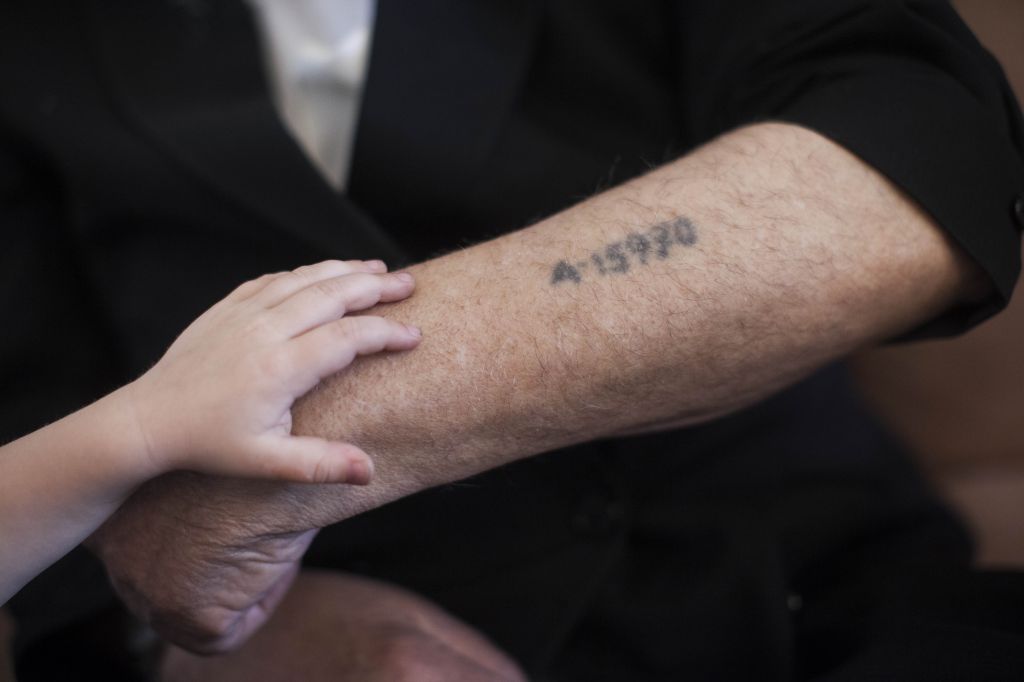
But there are two other reasons Holocaust education is vitally important within our Jewish community. When we reference the Holocaust, we are often referring to the millions of martyrs, the victims who were murdered. But there is another population who should come to mind, maybe even first: our Holocaust survivors. 


The Holocaust is not just a part of history like the Crusades or Inquisition. Israel today has 165,800 living survivors, 950 of them over the age of 100. According to some estimates, America is home to 80,000 survivors. This may be the most heroic population of all time. Their resilience, strength, fortitude, and faith may be unparalleled. There has never been a group more entitled to be bitter, resentful, to feel entitled, or to give up on the world and on people. But instead, overwhelmingly, survivors rebuilt, they worked hard, they maintained positivity, optimism, and hope. Most exude deep faith, determination and a selfless devotion to Jewish continuity, to Jewish community, and to the Jewish state.  


Though we are more prosperous than ever and have more comfort and conveniences than those who have come before us, many are still struggling with finding happiness, hope, meaning and purpose. Find a survivor. Latch on. Draw from their energy, ride their enthusiasm, be carried, and lifted by their heroism. If you struggle with faith, piggyback off their unwavering emunah, be inspired by their dedication to Torah and mitzvos.


We can learn much from the six million martyrs who lost their lives in the Holocaust, but we can learn even more from the 3.5 million who survived and then built thriving, rich Jewish lives.


Lastly, I believe we should use Holocaust education and current campaigns against antisemitism as outreach opportunities. While the majority of American Jews believe that the Holocaust is essential to their Jewish identities, only 15% said that observing Jewish law is an essential element of what being Jewish means to them personally. 


With the rise in antisemitism, the world is presenting us with the opportunity to remind our fellow Jews about why Judaism matters, what it means, and why they should care. With people increasingly hating us for being Jewish and once again excluding us for being Jewish, we should double down on Jewish pride, Jewish practice, Jewish continuity, and a Jewish lifestyle.


We say at the seder, v’hi she’amda la’avoseinu v’lanu, and it has stood for our forefathers and for us. What is the v’hi, what is it? The Netziv, Rav Naftali Tzvi Yehuda Berlin, answers, it is that b’chol dor vador amad aleinu l’chaloseinu, that in every generation they have risen to attack us. While we do not welcome or want antisemitism, it often takes our enemies’ reminder that we are Jewish to inspire us to fight for our people.


A non-observant Jew told me that when there was an antisemitic event at her son’s college, her son, who previously had little to no interest or investment in his Judaism, put a mezuzah on his door and hung a Magen Dovid around his neck. While we confront and combat antisemitism, let us simultaneously leverage it to remind and inspire our fellow Jews about their Judaism.


The only ugly one there the other night was the person who called us ugly Jews. I am sad my children were exposed to that but the harsh reminder that the world’s oldest hatred is being revived even now has motivated us to continue to educate, confront, inspire, and reach out.

Rabbi Efrem Goldberg

Join Our Community

Subscribe to our newsletter or connect with us on WhatsApp.