3 Reasons the Holocaust Still Matters & Must be Taught

One evening this week, my family and I were walking down the street when a person walking in the other direction turned, sneered, and said, “Hey you ugly Jews.”  To be clear, while at no point did we feel physically threatened, that moment was traumatic nonetheless. As we kept walking, somewhat jarred by the experience, I thought to myself that the most remarkable part of the antisemitism we had just been the target of was how unremarkable it was. The person wasn’t a skinhead covered in swastikas or waving the Nazi flag. She wasn’t at a rally or demonstration. She looked ordinary, benign, and she barely broke her stride to spew her poisonous hatred in our direction. 


This is the new face of the current wave of antisemitism. It does not just take the pernicious form of physical threat and harm, nor is it limited to a violent attack or hostage situation, but it also manifests in the casual way in which someone can comfortably spew hate at Jews with impunity. 


This week, we marked International Holocaust Remembrance Day on the anniversary of the liberation of Auschwitz-Birkenau. Nations around the world are called on to remember that hate led to the extermination of six million innocent people, among them one million children. The Holocaust erased two thirds of Europe’s Jewish population, one third of the Jewish people on the globe. 


According to a Pew study from less than two years ago, while more than 84% of American Jews said that remembering the Holocaust was essential to their Jewish identities, among younger respondents (under 30), only 61% agreed.   On the one hand, it is understandable to not want one’s Jewish identity and meaning to be inextricably connected to genocide and hate, it is increasingly important to not allow the Holocaust to be forgotten. Indeed, a different recent Pew study found that while most Americans know that the Holocaust was perpetrated against the Jews, half don’t know that six million Jews were murdered in the Holocaust.  


While the Holocaust is obviously not the only tragic event in our history, it is by far the most heinous and devastating. But it is much more than that, for it remains the symbol and the synonym for antisemitism and in that one word conveys a warning for how the world’s oldest hatred can lead to a democratically elected, “civilized” nation carrying out a genocide.  While Jews were not the only victims of the Holocaust, the term should be reserved specifically to invoke hatred directed towards the Jewish people.


That is why it is so offensive and dangerous when it is invoked flippantly and casually and when it is used in grossly inappropriate contexts. Just this week, in a rally against vaccine mandates, Robert F. Kennedy Jr. compared the threat of 5G cell service and vaccine passports to the Third Reich:  “Even in Hitler’s Germany, you could cross the Alps into Switzerland, you can hide in the attic like Anne Frank did… Today the mechanisms are being put in place that will make it so none of us can run, none of us can hide.”  


This wasn’t his first time invoking Holocaust references when talking about public health policies, but the backlash was so swift and strong that he apologized soon after, tweeting: “I apologize for my reference to Anne Frank, especially to families that suffered the Holocaust horrors. My intention was to use examples of past barbarism to show the perils from new technologies of control. To the extent my remarks caused hurt, I am truly and deeply sorry.”  (This was, of course, a textbook non-apology as he continued to equate the “barbarism” of new technologies to the Holocaust and conditioned his feeling sorry on the extent that his remarks caused hurt instead of categorically saying they were wrong.)


We must continue to confront antisemitism, and Holocaust education to the general public is one critical component. We must create a culture in this country of the same intolerance, hypersensitivity and opposition to antisemitism, Jew hatred, and Holocaust appropriation as we do other forms of hate, bigotry, and racism. “Ugly Jew” should be taken as seriously as the N-word: triggering, traumatic, and simply unacceptable and intolerable. Good-hearted people—not just Jews—must never allow this country to become a place where Jews cannot comfortably and safely walk around in a visibly identifiable way. 


Some argue that Jews should be defended because we are the proverbial canary in the coal mine. When Jews are allowed to be attacked, it is a sign of the collapse of the society. German pastor Martin Niemöller famously wrote: “First they came for the Socialists, and I did not speak out — Because I was not a Socialist. Then they came for the Trade Unionists, and I did not speak out — Because I was not a Trade Unionist. Then they came for the Jews, and I did not speak out — Because I was not a Jew. Then they came for me–and there was no one left to speak for me.”  In her book “People Love Dead Jews,” Dara Horn, a recent guest on Behind the Bima, argues that we should not be grateful for this quote or way of thinking, rather we should be offended.  This sentiment essentially suggests that the only reason to care when Jews are murdered is because it is a warning that later, actual people might be attacked or killed. We obviously should not accept this argument and certainly should not perpetuate it.


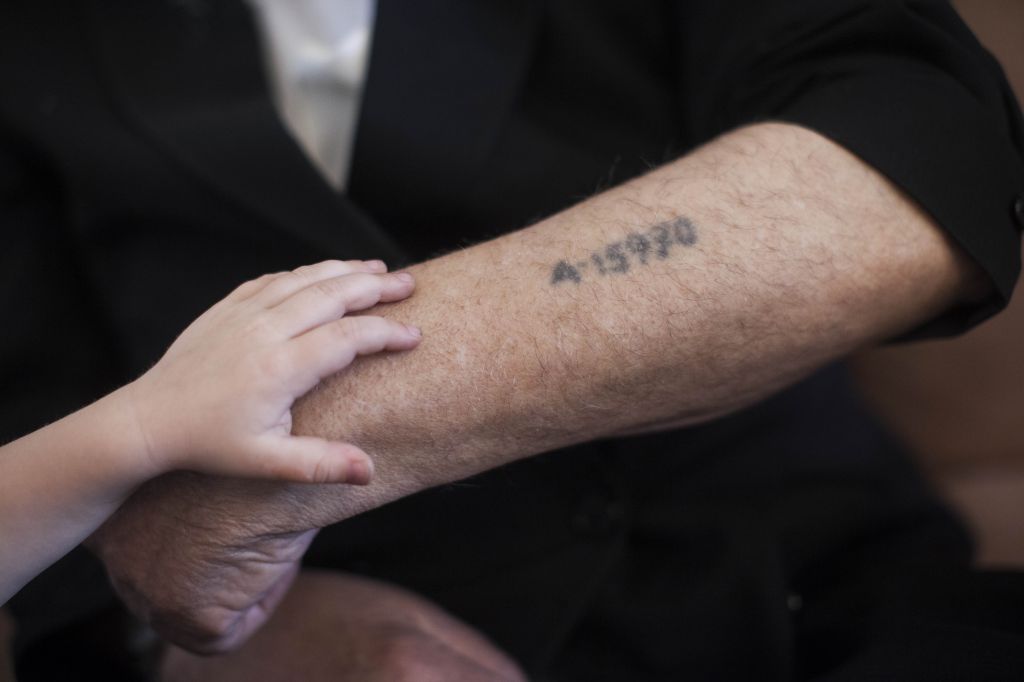
But there are two other reasons Holocaust education is vitally important within our Jewish community. When we reference the Holocaust, we are often referring to the millions of martyrs, the victims who were murdered. But there is another population who should come to mind, maybe even first: our Holocaust survivors. 


The Holocaust is not just a part of history like the Crusades or Inquisition. Israel today has 165,800 living survivors, 950 of them over the age of 100. According to some estimates, America is home to 80,000 survivors. This may be the most heroic population of all time. Their resilience, strength, fortitude, and faith may be unparalleled. There has never been a group more entitled to be bitter, resentful, to feel entitled, or to give up on the world and on people. But instead, overwhelmingly, survivors rebuilt, they worked hard, they maintained positivity, optimism, and hope. Most exude deep faith, determination and a selfless devotion to Jewish continuity, to Jewish community, and to the Jewish state.  


Though we are more prosperous than ever and have more comfort and conveniences than those who have come before us, many are still struggling with finding happiness, hope, meaning and purpose. Find a survivor. Latch on. Draw from their energy, ride their enthusiasm, be carried, and lifted by their heroism. If you struggle with faith, piggyback off their unwavering emunah, be inspired by their dedication to Torah and mitzvos.


We can learn much from the six million martyrs who lost their lives in the Holocaust, but we can learn even more from the 3.5 million who survived and then built thriving, rich Jewish lives.


Lastly, I believe we should use Holocaust education and current campaigns against antisemitism as outreach opportunities. While the majority of American Jews believe that the Holocaust is essential to their Jewish identities, only 15% said that observing Jewish law is an essential element of what being Jewish means to them personally. 


With the rise in antisemitism, the world is presenting us with the opportunity to remind our fellow Jews about why Judaism matters, what it means, and why they should care. With people increasingly hating us for being Jewish and once again excluding us for being Jewish, we should double down on Jewish pride, Jewish practice, Jewish continuity, and a Jewish lifestyle.


We say at the seder, v’hi she’amda la’avoseinu v’lanu, and it has stood for our forefathers and for us. What is the v’hi, what is it? The Netziv, Rav Naftali Tzvi Yehuda Berlin, answers, it is that b’chol dor vador amad aleinu l’chaloseinu, that in every generation they have risen to attack us. While we do not welcome or want antisemitism, it often takes our enemies’ reminder that we are Jewish to inspire us to fight for our people.


A non-observant Jew told me that when there was an antisemitic event at her son’s college, her son, who previously had little to no interest or investment in his Judaism, put a mezuzah on his door and hung a Magen Dovid around his neck. While we confront and combat antisemitism, let us simultaneously leverage it to remind and inspire our fellow Jews about their Judaism.


The only ugly one there the other night was the person who called us ugly Jews. I am sad my children were exposed to that but the harsh reminder that the world’s oldest hatred is being revived even now has motivated us to continue to educate, confront, inspire, and reach out.

A Conversation with the Lord

Interview with Rabbi Lord Jonathan Sacks z”l

January 18, 2018


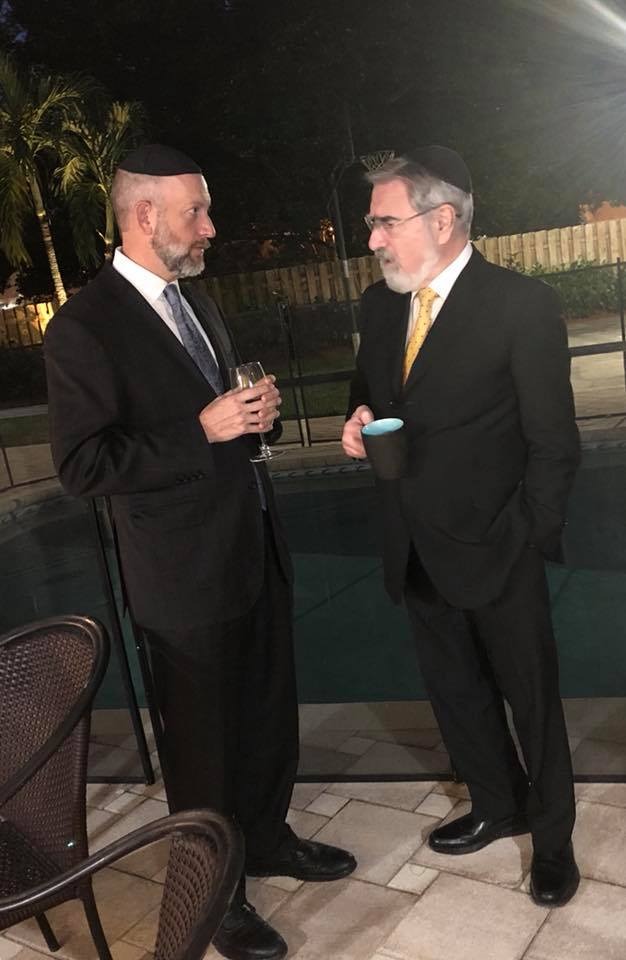
Several years ago, our community was privileged to host Rabbi Lord Jonathan Sacks, zt”l.  Before he addressed the over 1,000 people in attendance at BRS, I spontaneously asked him if I could record a short interview.  He graciously agreed, despite the last-minute request and the fact that he was about to give a major public talk.  That recording sat dormant in my phone until I was moved to share it after we tragically lost Rabbi Sacks last year. This week, to commemorate Rabbi Lord Sacks’s first yahrtzeit, here is a condensed and edited transcript of that conversation.

You are a beacon of faith – you promote faith, you teach faith, and you inspire faith, not only among the Jewish community and Jewish people but around the world. Do you ever struggle with faith? Do you ever feel that you confront doubt? And in those moments of uncertainty, what do you do to overcome it?


Let me be very blunt with you. I have had many crises of faith. But I have never had a crisis of faith in Hakadosh Baruch Hu. I have had many crises of faith in man. One crisis began as soon as I began to understand the Holocaust and to understand that this took place in the heart of civilized Europe, not some third world country in some medieval century.


The biggest question of faith I had was: knowing all this was going to happen, how come Hakadosh Baruch Hu had faith in us? But I never lacked faith in God because I never expected the impossible from Him. I know perfectly well that He placed each of us here for a purpose and we are supposed to discern that and to walk ahead.


For me, the critical moment that defined my faith was achieved when I learned Parshas Chayei Sarah. It begins with the death of Sarah. There is Avraham, having lost his life companion at the age of 137. At that point, he has received from Hashem three promises: Number one –  I will give you the land. He promised that to him seven times. Number two –  I will give you children – He promised that to Avraham four times. I will make you a great nation, they will be as many as the stars in the sky, as the sand on the seashore. And finally, I will make you not one nation but many nations.


But he has only one son.


Where was the father of many nations? Where was the infinite number of descendants? What did Avraham do at that moment when he should have had a crisis of faith?


He understood that God said “Walk on ahead of me” –  התהלך לפני והיה תמים. So, he bought the first plot of land. He then made sure his son got married so he would have Jewish grandchildren. Later, in a strange episode, he takes an additional wife named Keturah and has six more children, who become the fathers of many nations.


In other words, instead of expecting G-d to do it for him, Avrohom realized that God was expecting him to do the hard work for Him. Once I understood that I never ever had a crisis of faith.


What do you do when you run into a rough patch when you’re having trouble connecting with davening, when you feel distant, when it’s not flowing, and you don’t feel as much the presence of the Almighty?


There are several things one can do: Number one I try to listen as I’m davening and be surprised by one phrase or one sentence, and that will be my meditation for the day. I’ll daven on that. It may stay with me for a week.


For example, we say every day in Pesukei D’zimrah: מונה מספר לכוכבים לכולם שמות יקרא, God creates the cosmos and knows the name of every star. That’s God the Creator. Then it says בונה ירושלים ה׳ נדחי ישראל יכנס – God builds Jerusalem and ingathers the exiles. That’s God as the shaper of history. But in between those two verses is a middle verse: הרופא לשבורי לב ומחבש לעצבותם – Who heals the broken heart, administers to their wounds. There is Dovid Hamelech telling us that sometimes healing one person’s broken heart is as important as creating a universe or shaping history. You can live off that one sentence for a year.


Never try to find kavana for the whole of prayer. It doesn’t work, for heaven’s sake. One little thing at a time. The second point is that prayer has to be sung. I’ve said many times that when language seeks to break free of the gravitational pull of earth, it modulates from speech to song. I’ve spent a lot of time in my chief rabbinate encouraging chazzanim to write new liturgical music, to use songs to make the service more participative, and to encourage shul choirs. I’m not an expert in music but I made that a key element. We used a lot of musical creativity I think that music frees the spirit and if you are ever short of kavanah, you need to have the nigun, the song, to daven with.


Thirdly, something might just catch you if you create the silence in your soul to listen. When I’m at a critical point in my life, which is pretty much every day, I just listen: Hashem, what are You telling me? Somehow prayer orients you. I call prayer “Jewish cognitive behavioral therapy.” It changes the way you look at the world; it changes the way you feel about the world.


We are always promoting more Talmud Torah and chessed opportunities. We are involved in activism on behalf of Israel and Israel relationships. Some are involved in social action and social justice. What do you think that the Orthodox community can be spending more productive time promoting that is being overlooked? Are there initiatives and emphases that the Orthodox community should be focusing on that we are neglecting?


I think there are two that are being neglected. The first is, all that goes with the affective dimension of Judaism, the emotional life. There’s some nice Jewish music here, but some of the most popular music is actually non-Jewish pop music set to Jewish words or acapella, which is great. I love it. The Maccabeats – I’m their biggest fan. But I like to see music coming from the Jewish soul. I think we haven’t done enough with the affective dimension, and music is probably the most important.


We write everyone else’s music. Irving Berlin wrote “I’m Dreaming of a White Christmas,”, Mahler’s eighth symphony, Catholic mass. Where do we write our music? I think we are missing the aesthetics of it and music is the most obvious example. Cinema, too, isn’t used enough in this regard. There’s just been a film called Menashe, a very moving film about Charedim in New York. I think we haven’t done enough with that to tell people what the life of faith does for you. I have so many stories that I think ought to be made into film. Stories of ordinary people I know who have done extraordinary things.


Second, I absolutely think the Modern Orthodox community is missing out badly on kiruv. The difference between material possessions and spiritual possessions is that the more you share material possessions the less you have. But when it comes to a spiritual possession, the more you share the more you have. That is why Chabad can send out people all over the world where there is no Yiddishkeit whatsoever, and you or I would lose our Yiddishkeit overnight because there’s no support system. Yet, they are able to keep it, because they share it.

The Modern Orthodox community should be going out on campuses. Do you know how many Jews we lose on campus? 90% minimum! Yet we’re not going out there. Every campus should host a nice modern Orthodox minyan, davening three times a day, Daf Yomi, and everything lemehadrin. But they aren’t taking it out to people who don’t have it. When you don’t give, something in your spirit dies.


A personal question: When we look at your life and productivity, whether the trajectory of ascending to the chief rabbinate, publishing 30 books, 17 honorary degrees, being named a Lord, etc., it just seems that you have had success after success, triumph after triumph. Have you ever experienced failure? Have you ever had any challenges that you couldn’t overcome and what gave you the tenacity to persevere?


Ha! Have I ever experienced failure?! My goodness me! Oooh! [Laughter.]


I nearly failed my first year in university. I nearly failed my second year in university. I was turned down for virtually every job that I applied for. Since I was a kid, I wanted to write a book. I started when I was 20 and I gave it every minute of spare time that I had. Even when Elaine and I went to a concert I would be writing notes during intervals or between movements during a symphony. Yet, I failed for 20 years! From 20 to 40 I had a whole huge file cabinet of books I started and never finished.


What changed is I happened to be reading the preface to “Plays Unpleasant” by George Bernard Shaw. It opens by saying that if you’re going to write a book, write it by the time you’re 40 or forget it. I thought it was Min Hashamayim. Someone is telling me something because I had no idea why I happened to read that passage by that writer at that time. I thought to myself that it was my last chance. So, I wrote my first book at 40 and then I wrote a book a year ever since.


Winston Churchill put it beautifully –  success is going from failure to failure without loss of enthusiasm. The secret was marrying someone who believes in you and then to just keep going. Never stop! All of the things that came much later, most of them unexpected –  very moving but not the עיקר –  it’s just “keeping on going” day after day.


That wonderful Medrash in hakdamah of Ein Yaakov asks what is the main pasuk in the Torah? One [Tanna] said that it’s loving your fellow man, ואהבת לרעך כמוך. A second said שמע ישראל, it’s about accepting the yoke of Heaven. Then, Ben Pazzi says את הכבש אחד תעשה בבקר… bringing the daily sacrifice in the morning and in the evening. It’s about Shacharis, Mincha, Ma’ariv. That’s life! You keep hammering away and eventually you’ll get there.

The only thing that is absolutely necessary is that you have to key into your mental satellite navigation system, your destination. Because if you don’t know where you’re trying to get to, you’ll never get there. I knew I wanted to write a book. It took 20 years of failure until I finally succeeded in the twenty-first year.


Are there specific moments that you felt Hashem’s guiding Hand in your life, that things could have gone in different directions, and those moments specifically stand out that it guided you to where you are now?


I feel that way most of the time! I nearly drowned on my honeymoon. I couldn’t swim and I had just gone under for the fifth time. We were in Italy and there was no one near me. I remember thinking just before I was about to die –  what a way to begin a honeymoon. And, what’s the Italian word for help?


Every day מודה אני – שהחזרת בי נשמתי. I’ve twice suffered life threatening medical conditions, two forms of cancer. Both times I met the people that I needed to meet at the right time. My father a”h, who never had an education, left school when he was 15. But he had an emunah peshutah – a simple faith. He just believed that Hashem would take him where he needed to be. I think I learned that from him. You put your trust in Hakadosh Baruch Hu; He knows better than you. I feel that every single day –  without exaggeration. It’s a mental exercise. I will constantly say to myself or to Elaine –  why did that happen?


I’ll give you the weirdest example: In 2010 I received from Princeton Theological Seminary an award called the Abraham Kuyper Prize, awarded to somebody who has made a significant contribution to Dutch Neo-Calvinist theology. I don’t know how many Rabbeim have such a thing. I was thinking then –  what does Hashem want me to have this for? Two years later the Dutch parliament banned shechita. The Dutch community is quite small, and they asked me to address the Twin Houses of Dutch Parliament. Abraham Kuyper, whose award I won, was Prime Minister of Holland a century ago. He was also Minister of Religion. So, I began my speech by saying that you might be asking what a member of the British Parliament is doing addressing the Dutch Parliament? But I may be the only rabbi that has the prize for his contribution to Dutch Neo-Calvinist theology. It gave me a kind of visiting card and I said, ‘Thank you, Hashem –  now I understand why that happened’.

But it’s a constant discipline.


It takes the simple question – what can I do, or what am I being called on to do, given that this has happened? We are sitting here now in your wonderful community of Boca Raton. And I’m asking myself –  why did I davka have to come to Boca Raton?


I found out the answer only about twenty minutes ago, shortly before we began this conversation when I was given a lift in a car by someone who was telling me all the wonderful ways in which you’re bringing the community together. I suddenly realized that I had to be in Boca Raton because Boca Raton is showing the rest of the Jewish world how it’s done. This is not mindfulness. This is l’havdil Yosef Hatzaddik saying –  why have I been sold as a slave? Why am I here in prison? Eventually he is able to say to his brothers לא אתם שלחתם אותי כי אם אלקים –  I worked it out. It wasn’t you who was doing this to me. It was part of Hashem’s plan. That’s a mental discipline.

On Influencers’ Influence

Yellowstone National Park, which is larger than the states of Rhode Island and Delaware combined, contains its own Grand Canyon, considered by many to be the most breathtaking sight inside the park.  The canyon is 20 miles long, up to 4,000 feet wide and has a 1,200-foot drop.  On our recent trip to Wyoming with the amazing Rustic Elegance, we visited the platform from which you can see the beauty and splendor of God’s magnificent artwork.[1]


Almost everyone else present, ourselves included, stayed behind the low wall at the edge of the platform, protecting us from inadvertently falling and plummeting to a certain death.  As we were admiring the remarkable scene, we suddenly saw a young man and woman stepping over the wall and somewhat carelessly climbing towards the very edge of the cliff.  I couldn’t understand, why in the world would they be risking their lives?  Was the view that much better a few feet over? 


When they reached the very edge, turned around and one of them pulled something out of her backpack, I understood.  With the wind blowing and loose gravel beneath their feet, inches from slipping and falling to a gruesome demise, the girl extended her selfie stick and the two of them posed for a picture.  Though the scenery was among the most beautiful on the planet, all of us couldn’t take our eyes off these two individuals to see what would happen. (I have since learned they are among a special breed called Tourons of Yellowstone—“Touron” being a portmanteau of “tourist” and moron”—and there are websites filled with pictures and videos of such individuals engaged in foolish and dangerous behavior.)


We left before they climbed to safety, so I don’t know their fate.  But, just this month, a 32-year-old woman from Hong Kong died while trying to take a selfie at the edge of a cliff. Every headline that reported on her death described her as an “influencer.”  She, like the aspiring influencers at Yellowstone, was compelled to capture the perfect picture at the perfect angle, but it came at the expense of her life.


Though the word influencer has been used in English since the mid-1600s, it has more recently taken on a new meaning.  Though the term can apply to a wide variety of people, influencers essentially are people who engage their large social media followings by sharing experiences, knowledge and advice.  Influencers get paid for featuring or endorsing products, with some making as much as $1 million for a post.  Indeed, influencer marketing is predicted to be worth $10 billion by 2022.


This term has now made its way into the Jewish vernacular, including the orthodox community. Websites list the top Jewish influencers and Jewish organizations discuss which influencers might be worth engaging in order to spark change.  Social media platforms, most notably Instagram, are filled with Torah-observant young men and women trying to build their followings as they share and promote Jewish products and lifestyle advice. Those with a substantial audience are often treated like Jewish celebrities.


There are some wonderful things that have resulted from this phenomenon including the sharing of Torah ideas and inspiration, spreading modest fashion trends, promoting kosher recipes, and more.  For some, it is a new way to leverage their skill set into a source of honest income. We have also seen the ability of influencers to effect meaningful change in the community: for example, a group of Jewish influencers recently had an enormous impact in bringing attention to the Agunah issue and helping coordinate social pressure that resulted in several men finally giving their wives the get they deserve.


With all the positives, however, I am concerned about potential unintended  consequences that come from fully accepting and embracing what we see online at face value and from craving to find “influence” primarily in that way. 


The Hebrew word for influence is hashpa’ah and those who influence others are mashpi’im.  In Judaism, influence is not determined by social media status, it emanates and flows from being authentic, practicing what one preaches, serving as a role model and example of our values.  While we have all been impacted by things we have read or seen online, our greatest influences have been offline: the personal interactions, relationships, explicit and implicit teachings and lessons that have been shared with us.


The biggest Torah influencers never saw their identity defined by how many followers they had.  They never set out to earn that title and likely wouldn’t be proud to be ascribed it.  In 1975, the New York Times observed Rav Moshe Feinstein explaining to students how he got the position of Posek and “Giant of the Generation.” Typical of his modesty and humility, he told them, “You don’t wake up in the morning and decide you’re an expert on answers.  If people see that one answer is good and another answer is good, gradually you will be accepted.”


Rav Soloveitchik ordained more rabbis than anyone in his time and most any other.  And yet, he often referred to himself not as an influencer, but as “a posheter melamed,” a simple teacher of Torah.  A documentary was just released on the life of Rav Avraham Pam. When he was recruited to sit on the Moetzes Gedolei HaTorah, the Agudah’s board of Judaism’s “greatest influencers,” he resisted, refused and ultimately only gave in because of respect for Rav Yaakov Kaminetsky.  When the sixth Lubavitcher Rebbe passed away, leaving the position of “chief Chabad influencer” open, it took an entire year for the last Rebbe, Rav Menachem Mendel Schneerson, to be convinced to accept the position.  The only influence he wanted was to inspire generations who would selflessly and positively influence all with whom they came in contact.


The greatest, longest-lasting influence on the laws that govern how we daven was not someone with a public following.  The Talmud (Berachos 31a) tells us that our davening is modeled after Chana, who in the privacy of the Mishkan, with what she thought was nobody watching, poured out her heart to Hashem.  She didn’t have a social media handle, but she had a handle on life and her influence is felt every single day, three times a day across the world.


I wholeheartedly believe in harnessing the power and reach of technology to share Torah, build connections, and add value to one another’s life.  I admire and applaud those who have done so and have earned a large following who seek to grow and gain, consistent with a Torah way of life.


Many “influencers” have a carefully crafted and curated profile and presence online but, by design, we know little about how it conforms to their life and impact offline. I am not God-forbid trying to suggest that all influencers are categorically bad people or deliberately showing one side to the world and hiding another. Rather, we must remember that if we aspire to have a genuine influence and meaningful impact in this world, we should start with who we want to be, how we want to live, and what difference we want to make offline.  Our effort to influence strangers online should never come at the expense of spending time with, being fully present for, and impacting loved ones offline.  Falling off a cliff is not the only way to lose your life in the pursuit of fame and influence. 


The word hashpa’ah, influence, comes from shefa, which means that which flows from the Divine. We can enjoy the entertainment and infomercials available on social media, but when aspiring to channel the shefa from Above, remember that the greatest influencers in our illustrious history made their difference without ever looking at or caring how viral they had gone.  Don’t sacrifice your life in pursuit of becoming an influencer, live your life to its fullest and you may just have an impact on others.  


[1]  Indeed, the Gemara (Berachos 10b) quotes the pasuk “אין צור כאלקינו”, there is no rock like our God, and tells us to creatively read it as אין צייר כאלוקינו, there is no artist like Hashem.


38% of All US Jews Have a Connection with Chabad – The Rebbe Passed Away 27 Years Ago & His Influence is Greater Than Ever

On Monday afternoon, the ground in the parking lot at Shaare Zedek Medical Center in Yerushalayim opened up. Thank God the massive sinkhole swallowed only cars and not people.  Korach and his followers were not so lucky.  In response to their nefarious rebellious plans, a miracle occurred, the earth split, and Korach and his followers fell right in, meeting their demise.


While we typically think of Korach as a villain and a scoundrel, the truth is that he may have in fact been a holy rebel.  He challenged Moshe and Aharon’s leadership by asserting that we are all holy, each an expression of Hashem.  What was actually wrong with his argument? It seems very compelling and attractive.  Why should we defer to an authority figure or submit to hierarchal leadership?  Aren’t we all children of Hashem?  Indeed, the Izbitcher Rebbe says that Korach was not simply advancing empty rhetoric or a disingenuous argument; he genuinely saw the holiness in every single Jew. 


So why do the Torah and Jewish history record Korach for posterity as a villain?  Why not see him as the father of grassroots activism, as a leader who simply sought to dissolve centralized authority and empower the people?


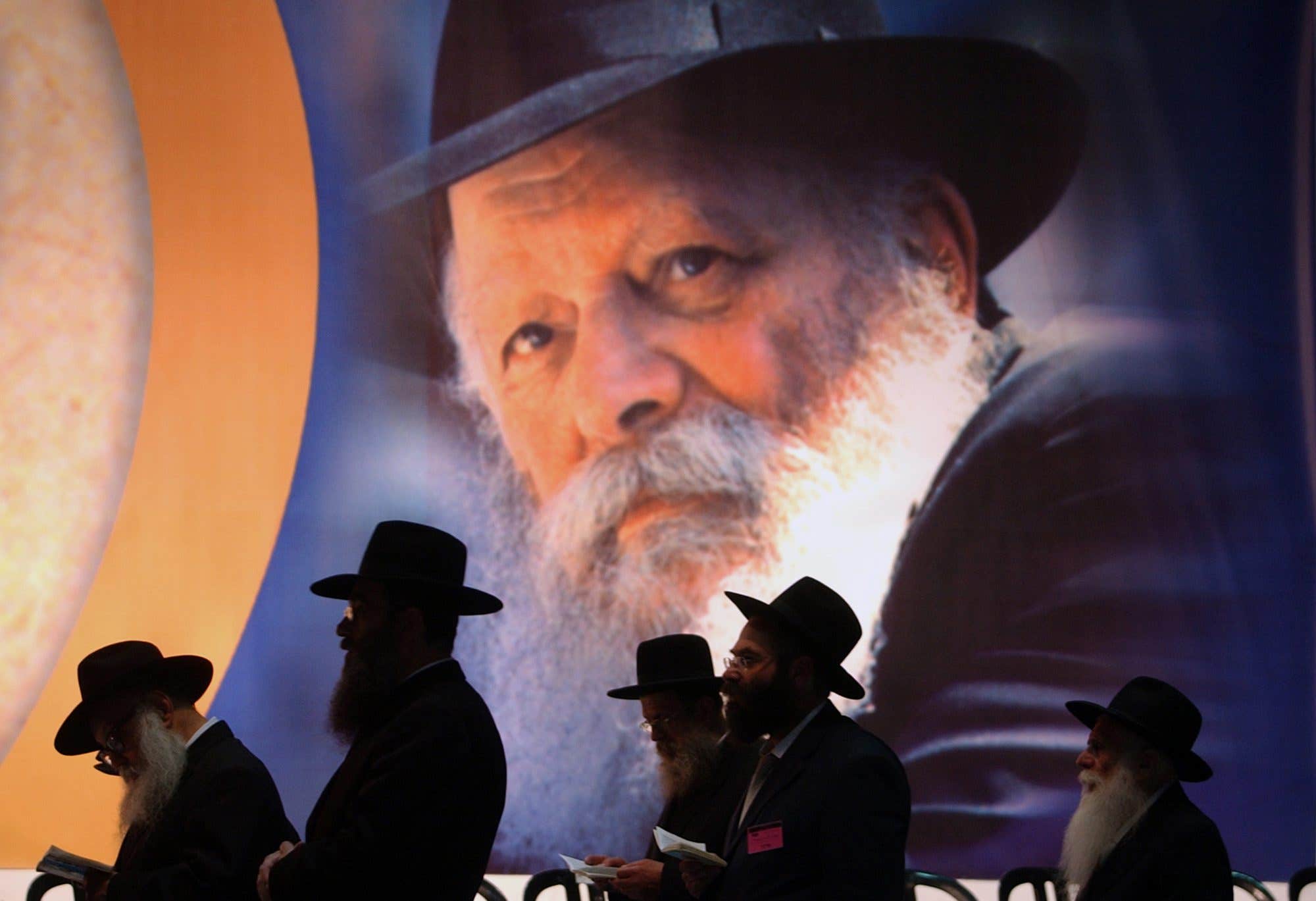
This Sunday, 3 Tammuz, is the 27th yahrzeit of Rav Menachem Mendel Schneerson zt”l, the Lubavitcher Rebbe. The Rebbe launched campaigns, built an army that spread out across the globe, influenced presidents, prime minsters and heads of state, inspired many thousands, shared brilliant and original Torah insights, and left a legacy that is stronger than ever, almost three decades after he is gone with no successor.


At the core of his philosophy and worldview was the attitude of kol ha’eidah kulam kedoshim, every Jew is a precious soul, a holy spark, with infinite potential and deserving of our love, loyalty, support and presence, wherever they may be.  The Rebbe saw the good in people, he believed in people, he empowered people to fulfill their mission on earth.


The new study from Pew reports something astounding. 38% of all US Jews have engaged in some way with a Chabad program.  Chabad is now equal in size to the Reform and Conservative movements.


And yet, all of the Rebbe’s impact, all of his good, almost didn’t happen.  When the Frierdiker Rebbe died in 1950 a vacuum was created that needed to be filled.  The previous rebbe left two sons-in-law and R’ Schneerson was the younger of the two.  He had worked as an engineer, was introverted, shy and extremely private.  When approached about becoming the next Rebbe, the Rebbe objected vehemently.  R’ Yitzchak Dubov of Manchester happened to be in New York at the time and when he stubbornly insisted that the Rebbe must accept the mantle, the Rebbe, like Moshe Rabbeinu before him, turned to Dubov and said, “what do you suppose, that Mendel Schneerson is a Rebbe?”  He felt he wasn’t qualified for such a role and it took a full year, until the first yahrzeit of the previous Rebbe, for him to finally bow to the pressure and accept.  Thank God he did, for the Jewish world until today is so much better off for it.


Why is Korach a villain and not a hero?  Why wasn’t his argument noble, if, after all, it was the same philosophy that drove the Rebbe?  We are introduced to the rebellion of Korach against Moshe and Aharon with the word Va’yikach, Korach took something, but the Torah never tells us what. 


Unhealthy, dysfunctional conflict begins when lakach, someone is on the take, personally benefitting from the encounter. One can have noble goals,  or noble ends, but ignoble means motivated by greed and ego.  In our time we see some politicians or community activists whose only activism occurs when they appear before a microphone and in the spotlight, revealing that what they are advocating may seem noble but their activism is really more about them than about a cause.


The Rebbe saw the greatness in every person and therefore hesitated, resisted, and had to be persuaded to take a position of leadership.  Korach saw the greatness of every Jew and concluded that he should be in charge.  Korach is recorded as a villain, while the Rebbe emerged a transformational leader who succeeded in empowering an army to seek to change the world.


In his fantastic book, “Good to Great,” Jim Collins describes five levels of leadership to take a company or organization from being just good to becoming great. He argues that the key ingredient that allows a company to become great is having a Level 5 leader, which he defines as an executive in whom genuine personal humility blends with intense professional will.  The best leader is one who puts the company, the cause, the mission ahead of himself or herself. 


The Rebbe was undeniably a Level 5 leader.  He did not seek to micromanage others in an effort to bolster himself.  He cared much more about the mission, the cause, the effort to redeem the world and make it a better place filled with Godliness and goodness than he cared about his name, honor or reputation.


The Rebbe once described to Yehuda Avner a’h how he saw his mission:


Reb Yehuda, imagine you are looking at a cupboard, and I tell you to open that cupboard. You open the cupboard, and you see there a candle, but I tell you that it is not a candle—it is a lump of wax with a piece of string inside. When does the wax and the wick become a candle? When one brings a flame to the wick. That is when the wax and the wick fulfill the purpose for which they were created.  “And that is what I try to do—to help every man and woman fulfill the purpose for which they were created.”


Ha-esh, zeh esh ha-Torah—the fire is the fire of the Torah. When one brings the flame to the wick, one ignites the soul—for the wick is the soul—and it gives life to the body, which is the wax. And then the body and the soul fulfill the purpose for which they were created. And that happens through the fire of Torah.”


By the time my meeting with the Rebbe was over, it was past two in the morning.   Finally, I rose and he escorted me to the door. He took hold of both my hands to say goodbye, and I said, “Has the Rebbe lit my candle?” He answered, “No. I have given you the match. Only you can light your own candle.”


The Rebbe’s candle continues to burn bright and ignite new candles, 27 years after he left this world.  How?


The Rebbe was a great optimist who placed tremendous emphasis on the power of positive language and positive thinking.  He encouraged us to say “Tracht gut un vet zein gut” (Think good and it will be good) and he replaced “S’iz shver tzu zein a Yid” (It’s hard to be a Jew) with “S’iz gut tzu zein a Yid” (It’s good to be a Jew).  He didn’t like term “kiruv rechokim” because, he explained, “We cannot label anyone as being ‘far.’ Who are we to determine who is far and who is near? They are all close to God.”  When asked to endorse a new hospital, the Rebbe insisted on it being called a Beit refuah, a place of healing, instead of a beit cholim, a place for sick people.  The Rebbe refused to called injured soldiers disabled veterans, but instead called them “exceptional soldiers.” He taught us to focus on birthdays, not just on yahrzeits. 


Perhaps the most impressive thing about the Rebbe’s legacy was his capacity to empower others. Rabbi Lord Jonathan Sacks once said, “A good leader creates followers. A great leader creates leaders. More than the Rebbe was a leader, he created leadership in others.”


The Rebbe once met a group of boys before their bar mitzvah.  He briefly blessed them that they should grow to become a source of pride to the Jewish people and to family. As they turned to leave, Rebbe surprised the three Americans with the question he addressed to the youngster: “Are you a baseball fan?” The Bar-Mitzvah boy replied that he was.


“Which team are you a fan of — the Yankees or the Dodgers?” “The Dodgers,” replied the boy. “Does your father have the same feeling for the Dodgers as you have?” No. “Does he take you out to games?” “Well, every once in a while my father takes me to a game. We were at a game a month ago.”  “How was the game?”  “It was disappointing,” the 13-year-old confessed. “By the sixth inning, the Dodgers were losing nine-to-two, so we decided to leave.”


“Did the players also leave the game when you left?” “Rabbi, the players can’t leave in the middle of the game!” “Why not? Explain to me how this works.” “There are players and fans,” the young baseball fan explained. “The fans can leave when they like — they’re not part of the game and the game could, and does, continue after they leave. But the players need to stay and try to win until the game is over.”


“That is the lesson I want to teach you in Judaism,” said the Rebbe with a smile. “You can be either a fan or a player. Be a player.”


Don’t just be a fan from the stands.  The best way to observe the Rebbe’s yahrzeit is to commit to not sit on the sideline as spectators, but to get in the game.  He has given us the match, but it is up to each of us to light our candle and to make the world a brighter, better and more Godly place.    

We Can’t Stop Climbing the Mountain (Remarks Delivered at Boca Raton Synagogue on Shabbos Parshas Emor, the day after Lag BaOmer 2021/5781)

Remarks Delivered at Boca Raton Synagogue on Shabbos Parshas Emor,

the day after Lag BaOmer 2021/5781

Did u see the news. We hear tons of ambulances passing. We can’t even leave. This is insane. We are all so scared.” 


On Thursday evening, I got a flurry of texts from my daughter Leora who was in Meron.  Obviously, we immediately found out what happened and were beyond grateful that Leora was not only all right, but she was able to be in touch with us.  We spoke several more times that night.  While we were sleeping, she was still processing what happened and I woke up to the following text:


“Abba, the craziest part was the switch of emotions.  I thought it was the most meaningful thing. I loved the whole night. Everyone was so different yet so dedicated to the day. I was davening so intensely and really felt that this would be a reason Mashiach would come. All Jews of all types were dancing together and there were so many people and there was inspirational music and davening. I literally davened that HaShem should look around at all of his children together, end our tzaros and bring Mashiach. I had such a powerful davening – It really felt so uplifted and then ten minutes later the stretchers were running in and this huge tzara happened.”


My daughter was struggling to make sense of it, to go from feeling Moshiach is imminent to he was never further away. She was struggling and I must admit, so am I.  While most got back on busses, forty-five people, among them children, did not.  Each a world, each a child, a sibling, maybe a husband and a father. Among them was Donny Morris, a grandson of our beloved members Rabbi Joel and Malka Morris, who was learning in Shaalvim for the year.  Donny was a sweet and gentle soul.  He was thoughtful and sensitive and especially kind to those who needed it most.  He was so happy that night.  The picture that went around with his big smile, a picture many of you have seen by now, was a picture he sent his family shortly before he left this world.  How could this be? Lag BaOmer, the night that we mark the end of collective mourning, how could an intense new mourning have begun?


וּסְפַרְתֶּ֤ם לָכֶם֙ מִמָּחֳרַ֣ת הַשַּׁבָּ֔ת מִיּוֹם֙ הֲבִ֣יאֲכֶ֔ם אֶת־עֹ֖מֶר הַתְּנוּפָ֑ה שֶׁ֥בַע שַׁבָּת֖וֹת תְּמִימֹ֥ת תִּהְיֶֽינָה׃

“And from the day on which you bring the sheaf of elevation offering—the day after the sabbath—you shall count off seven weeks. They must be complete.”


Our Parsha contains the mitzvah to count the Omer.  We count from Pesach until Shavuos but the Torah doesn’t give us dates, rather it tells us count seven weeks. And no ordinary weeks, either: seven temimos weeks, complete weeks.  Halachically, we understand “complete” to mean we cannot begin Shavuos until nightfall, otherwise the 49th day is not complete.


But the Midrash (Vayikra Rabbah 28:3) understands it differently:
שֶׁבַע שַׁבָּתוֹת תְּמִימֹת תִּהְיֶינָה, אֵימָתַי הֵן תְּמִימוֹת בִּזְמַן שֶׁיִּשְׂרָאֵל עוֹשִׂין רְצוֹנוֹ שֶׁל מָקוֹם


Seven complete weeks – when are they considered complete? When the people of Israel are fulfilling the will of Hashem.


What does it mean the counting of sefirah is only complete when you do the ratzon of Hashem? If you completed the count, wasn’t that His ratzon? Moreover, Chazal tell us that when Hashem told Avraham, ואתה את בריתי תשמור, if you observe my covenant, He was referring to the mitzvah of the Omer.  Why is Omer called a bris, as opposed to other mitzvos?


Rav Avraham Schorr shlit”a explains that we aren’t just counting and marking days on a calendar.  There is a specific goal, an effort or exercise we are engaged in to improve in a particular area, to better keep a fundamental directive of Hashem.  The Torah (Devarim 18:13) gives us a mitzvah תָּמִים תִּהְיֶה עִם ה׳ אֱלֹקיךָ. You must be wholehearted with Hashem your God. But what does it mean to be tamim with Him? 


Rashi, quoting the Sifrei, explains:

 הִתְהַלֵּךְ עִמּוֹ בִתְמִימוּת, וּתְצַפֶּה לוֹ, וְלֹא תַחֲקֹר אַחַר הָעֲתִידוֹת, אֶלָּא כָּל מַה שֶּׁיָּבֹא עָלֶיךָ קַבֵּל בִּתְמִימוּת וְאָז תִּהְיֶה עִמּוֹ וּלְחֶלְקוֹ:

Walk before him whole-heartedly, put your hope in Him and do not attempt to investigate the future, but whatever it may be that comes upon you accept it whole-heartedly, and then you shalt be with Him and become His portion.


Sefiras HaOmer is an annual 49-day challenge to surrender and submit ourselves to Hashem, to forfeit our capacity to understand, our expectation or entitlement to comprehend.  For seven weeks, one day at a time, we work hard to be tamim, to be whole, to be mevateil ourselves to Him.  Only then, when we have no preconceived notions, no demands, no expectation or entitlement, only then can we stand at the base of the mountain on Shavuos, can we accept His Torah. 


Amalek attacked us in the month of Iyar when we were on that march toward the mountain. The Torah famously describes אשר קרך בדרך, how they “happened” upon us on our journey and tried to make us people who believe everything is happenstance. They continue to attack us today by trying to get us to believe it is all chance, random and coincidence.  There is no meaning, no order, no God and nothing is by design.  Our answer, the antidote, is to count these days and use this time to be more and more tamim, to see Him more and more everywhere and responsible for everything. 


The weeks of Sefira are only fully realized as temimos when we are devoted to retzono shel makom, because the whole goal of the count is to improve on our willingness to be מבטל רצוננו מפני רצונו.  Omer is called a Bris, a covenant, because our commitment and promise is to use this count to draw closer, to think more about Him and less about us, to put His vision and interests ahead of our own, to submit to His plan whether we understand it or not.


This Sefiras HaOmer, our count, our journey towards the mountain has been painfully interrupted.  Our effort to fulfill תמים תהיה is being tested by this inexplicable and incomprehensible tragedy, the greatest non-terror catastrophe in Israel’s history.  So where do we draw our strength? 


Our father, Avraham Avinu, was told התהלך לפני והיה תמים, walk before Me and be tamim.  His commitment to fulfill this charge was put to the test when he was asked to sacrifice and give up his own son.  Even then, Avraham remained steadfast in his faith, unwavering in his convictions. He has passed that fortitude down in our DNA, he has transmitted that capacity to us, his genetic and spiritual heirs.  


Those forty-five neshamos that are no longer here went to Meron to literally and metaphorically climb the mountain, to draw closer to Hashem, to feel His presence, to answer the call ofתמים תהיה .  Their presence there that night tells us that none of them would want their tragic loss to create the question that knocks us off the mountain.  Rather, in a great test of our Sefira count towards temimus, they would want us to continue to climb, albeit after understandably stopping to catch our spiritual breath.  You may have seen the video of the enormous crowd in Meron singing “Ani Ma’amin – I believe with a complete faith in the coming of Moshiach,” just moments before the tragedy.  We sing Ani Ma’amin when we look out and it feels like Moshiach is about to come, and we continue to sing Ani Ma’amin when we look out at events that simply defy words or understanding.


Yes, when we learned that an American in Israel for the year was lost, it became more real, more relatable. When we found out he was connected to our community, it hurt that much more.  But even before then, whose heart didn’t hurt, whose eyes didn’t tear up when first hearing the news, when watching the number of casualties climb? The images contained crowds that for the most part look very different, practice differently than most of us.  The pictures of most of the casualties reflect different communities, hashkafas and lifestyles.  But that didn’t impact the pain, the concern. That didn’t diminish or lessen the hurt.  And so I beg of you this morning, that agony you felt when learning about this tragedy, that ache you felt when seeing pictures of those victims, bottle that feeling and remember it. 


You see, it too often takes these tragedies to feel the connection, to share a common heart.  In Tel Aviv and Haifa, hundreds of secular Jews turned up to give blood to their Chareidi brothers. In Yerushalayim, a blood donation station downtown turned people away – there’s already enough. In Givat Shmuel, a Jew was distributing free food to families with loved ones who haven’t yet made it home, and were too busy to cook for Shabbos.  A funeral took place Friday for a Jew from Montreal with no family in Israel. Hundreds came in intense heat to give final and proper honor his neshama.


Why?! Why must it take tragedy to feel together, why must it take sorrow to recognize we have one heart? Next time you are tempted to see a fellow Jew as the other, as different, you are quick to judge or criticize them, ask yourself if their image were part of a tragic picture would you not cry for their loss, would you not feel the pain of their family?


As we return to climb the mountain, let’s remember what to hold on to and what to let go off.  Let go of the questions that have no answers, but bottle the sense of unity and togetherness that is the solution to a time when Hashem will look down at his children, end our tzaros, and bring Moshiach. 

Count Your Blessings Each Friday Night & Throughout the Week

When most people think of Times Square this time of year, they picture the tremendous New Year’s Eve party usually attended by more than a million people filled with banners, streamers and the ball that drops at midnight.  Less well known, and with much poorer attendance, is an annual event in Times Square that takes place just a few days earlier. It even took place this year, albeit with social distancing and masks.

On Monday, a small group gathered to observe the annual “Good Riddance Day.”  Each year, around New Year’s, visitors and residents of New York write down the problems and disappointments they experienced that year on a piece of paper, toss it in a dumpster, and watch it get shredded. They say good riddance to the aspects of the year they wished to leave behind.

Most years I would say that Good Riddance Day is yet another reminder of the stark contrast between the way the secular New Year is observed and the way we observe Rosh Hashana, the Jewish New Year.  But this year, I join the chorus of those eager to say good riddance to so much of 2020.  Good riddance to Corona. Good riddance to quarantine.  Good riddance to contentious and divisive politics.  Good riddance to 2020.

And yet, with all we are eager to say good riddance to, it is simultaneously more important than ever to focus on what we hold on to.  Indeed, we have a weekly practice of literally counting our blessings. 

Since I have been a small child, each and every week I have looked forward to my father’s Friday night beracha.  When I went off to my year in Israel, I would receive it on the phone and if we missed that, I knew that before my father would begin Kiddush, he would close his eyes, picture me and give the beracha telepathically.  I always knew that geographic distance or different time zones could not stop the flow of that beracha each and every Friday night. 

Even today, as a grown man, I look forward to feeling his hand on my head, his whisper in my ear and his kiss on my cheek.  I may be a grandfather myself, but when he is in Boca and when it is safe to be close and touch, I still cherish when he gives me the same beracha I have been receiving weekly for over four decades. 

Ever since I became a father, I have equally looked forward to giving each of my children their weekly beracha.  Technology has improved and now, with the help of Facetime, I can put my hands on their heads, even if they are thousands of miles away, and utter those same words that were said to me.

Where did this custom come from?  What is its source? 

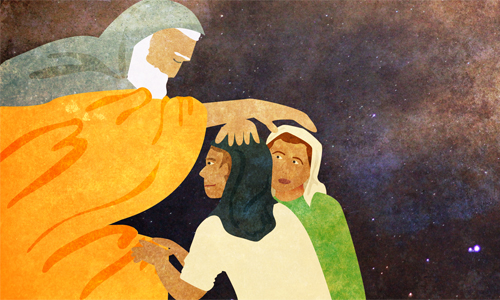
In our Parsha, when Yaakov anticipates his impending demise, he summons his children and grandchildren to not only arrange his material estate, but to communicate his ethical will, his vision and charge to each of them.  He begins with his grandsons, Efraim and Menashe, and bestows upon them opening berachos. 

Afterwards, he tells them:

וַיְבָ֨רֲכֵ֜ם בַּיּ֣וֹם הַהוּא֮ לֵאמוֹר֒ בְּךָ֗ יְבָרֵ֤ךְ יִשְׂרָאֵל֙ לֵאמֹ֔ר יְשִֽׂמְךָ֣ אֱלֹקים כְּאֶפְרַ֖יִם וְכִמְנַשֶּׁ֑ה וַיָּ֥שֶׂם אֶת־אֶפְרַ֖יִם לִפְנֵ֥י מְנַשֶּֽׁה׃

So he blessed them that day, saying, “By you shall Israel invoke blessings, saying: ‘May God make you like Efraim and Menashe.’”

But why Efraim and Menashe, why not Avraham, Yitzchak or Yaakov?  Why not Yosef, Dovid or Shlomo, or one of the other shevatim?  Why mention anyone by name at all, why not a general blessing to be like our Avos HaKedoshim, our holy patriarchs? 

Moreover, the Torah doesn’t tell us when to give this beracha, it just says when the Jewish people will bless children it will be through invoking these names.  Indeed, the custom to use this beracha on Friday nights is relatively recent, only a few centuries old.  Why do we give it Friday night?

Rav Chaim Dovid HaLevi in his Teshuvos Aseh Lecha Rav says he cannot find a source for giving this beracha on Friday night so he offers his own suggestion.  The Magen Avraham  (ריש ס׳ רעד)writes  טוב לנשק ידי אמו בליל שבת, it is good to kiss your mother’s hand on Friday night.  He suggests the minhag developed because when a father witnessed his children bestowing honor on their mother, he couldn’t help but want to give them a beracha.  Witnessing the next generation see themselves as connected to the past and continuing to honor, revere and respect their parents is among the greatest blessings we can have and it elicits from us a desire to reciprocate blessing back. 

That explains Friday night, but why specifically to be like these two?  Many suggest that after several generations of sibling rivalry, conflict, competition and adversarial relationships, Efraim and Menashe are the first generation to not only get along and tolerate one another, but to embody loyalty, love, mutual admiration and respect.  The foundational beracha for our children, even before we can invoke the chesed of Avraham, the gevurah of Yitzchak, the emes of Ya’akov, the piety of Yosef or the passion of Dovid, the wisdom of Shlomo or the virtue of any of our great leaders, is that our children—and by extension our families, our communities and our people—simply get along. 

As we begin our Shabbos meal basking in the light of the Shabbos candles, the symbol of shalom bayis and peace, we offer a blessing of unity, harmony, cooperation, love, loyalty and family.  As we sit down for the Friday night meal, rife with potential for heated exchanges and divisive debate about politics, religion or life, we offer a beracha that our table be like Efraim and Menashe and it be the fulfillment of  מה טוב ומה נעים שבת אחים גם יחד, how wonderful and pleasant when we sit together as unified siblings. 

Others suggest that among Yaakov’s twelve sons and their families, Efraim and Menashe were the only ones raised outside of the Land of Israel, in a foreign culture and with powerful external influences. Despite the pull to assimilate into Egyptian culture, religion and practice, Efraim and Menashe clung tenaciously to the teachings and traditions of their father and were steadfast in their commitment to Torah.

Shabbos provides an oasis from the chaos of the week and from the images, ideas, and temptations we face all week. As we reflect on another week gone by and immerse ourselves in a new Shabbos to energize us for the week ahead, we offer a beracha that our children, our families and ourselves be protected from the forces and pressures we face daily to compromise who we are, the choices we make and the lives we lead.

Rav Moshe Shternbuch (Ta’av V’Daas 265) suggests another answer.  He explains that when the Torah says we give a beracha to be like Efraim and Menashe it doesn’t mean like the two specific people themselves but we should emulate Yaakov to give our children berachos in which we identify their potential, who and what can come of them and guide them to achieve it. 

The mandate is not to give a beracha to be like Efraim and Menashe per se, but to make the time to give a beracha, to interact, to share hopes, dreams and aspirations.  The Sefer Nishmas Shabbos says this is why we give the beracha Friday night.  Our children are not competing for attention with our work, our other obligations, or nowadays with our technology.  The biggest beracha we can give our children, and for that matter all those around us that we care about, is ourselves, our full attention when we are engaging with them.

Reb Moishe Lieb Sassover suggests that the content of the beracha Yaakov gave Efraim and Menashe was to live in the moment, to be fully present in the present.  ויברכם ביום ההוא, he gave them a beracha, “ביום ההוא”, to be in the moment.

On Shabbos we go off the grid, disconnect with no guilt, no second guessing, no FOMO or self-importance, but only the rich possibility of truly being present with those we are engaging.  What a beracha for us and for those around us!

May we merit the fulfilment of the archetypal beracha to Efraim and Menashe – to see our children figuratively kiss our hands and embrace our values and instinctively respond by giving them blessings.  May we experience only harmony, unity, love and loyalty within our families, at our Shabbos tables and in our lives.  May we find the resolve and resiliency to overcome the influences and forces we confront and be uncompromising in our mission as Torah Jews.  And may we be blessed to live ביום ההוא, fully present, living each moment to its fullest.

As we say good riddance to 2020, let’s not forget to count our berachos, on Friday night and throughout the week. 

This Scares Me More Than Antisemitism and It Should Scare You Too

Several years ago, I was standing with our new assistant rabbi, who had just moved here from South Africa, when a stranger came over and engaged us.  In the course of our conversation, the man mentioned something about his non-Jewish wife.  When he walked away, I looked over and the new rabbi was visibly shaken.  I asked what was wrong and he told me it was the first time he had ever met someone who is intermarried.  Coming from a Jewish community in South Africa where even those who aren’t observant are overwhelmingly traditional, he had never personally encountered someone who married out of our faith and it left him startled and shaken.


While my colleague was startled by meeting someone who “married out,” I, too, was startled that day, but for an altogether different reason.  I was startled by how not startled I was. Intermarriage has become so “normal” and “mainstream” in America that we meet or hear about someone married to a non-Jew and we don’t flinch. 


Indeed, I thought about this story recently when I saw a headline, “Kamala Harris and Douglas Emhoff made history for interfaith families. All Jews should celebrate that.”  Politics aside, many have expressed excitement over Kamala’s step-children calling her “Momala” and how Doug broke a glass at their wedding.  Others have kvelled that all of President-Elect Joe Biden’s three children, who are Roman Catholic, married Jews


According to a 2013 Pew survey, 44% of married Jewish respondents, and 58% of those who have married since 2005, are married to a non-Jewish spouse. Shockingly, the rate of intermarriages among non-Orthodox Jews, who make up the majority of the American Jewish population, was a staggering 71%. This data is seven years old and I shudder to think what the numbers look like today.


Correctly, we are all outraged by and concerned with growing antisemitism.  This week, the FBI published its 2019 hate crime report, which found that antisemitic hate crimes rose by 14% last year and once again comprised the overwhelming majority of hate crimes based on religion. (60.2% of all hate crime victims were targeted because they were Jews; next on the list were victims of anti-Islamic bias, who comprised 13.2% of the total.) Last year saw a series of lethal antisemitic attacks in Poway, Jersey City, and Monsey that created understandable concern and worry. 


Nevertheless, as disturbing as these horrific incidents and troubling trends are, when it comes to Jewish continuity, the statistical threat of antisemitism pales in comparison to the damage we are doing to ourselves and our contributions to the disappearance of our people.


In his blueprint for sustainable synagogues, Rabbi Rick Jacobs, president of the Union for Reform Judaism said, “Interfaith families are now the majority of the movement. Audacious hospitality says, ‘You know what? We’re not going to be just nice and let them in. We’re going to say we can’t be who were meant to be without them.’”


“Majority of the movement.”  That phrase is not only exceedingly upsetting, it is terribly scary. Make no mistake, I am not suggesting we make those who choose differently feel rejected, alienated, or marginalized, or believe that they have no place or future in our people.  Perhaps there was a time that such an attitude served to disincentivize and put artificial pressure to marry within the fold, but those days are over, not only outside of orthodoxy, but within it as well.  We should continue to make all Jews feel loved, welcomed, and secure with the knowledge that they always have a place within our people.  We should not only leave the door open but welcome them to walk through it. 


At the same time, we must not provide hospitality by diluting our values, distorting our principles, or worst of all, compromising on our continuity.  The rampant assimilation and growing intermarriage won’t be solved by moving the goal posts, offering a new and convenient definition of who is a Jew or what is a Jewish family, any more than an accountant can solve a bad quarter by cooking the books.  We must find a way to simultaneously be hospitable to all Jews while inhospitable to some decisions. 


We shouldn’t literally or figuratively tear keriah for the purpose of discouraging others; we should do it to sensitize ourselves.  We love all Jews and don’t want them to be hurt by our attitude towards intermarriage, but we must also love the Almighty, feel His pain, fight for His values and vision and pursue His blueprint for the Jewish people in His world. 


In the beginning of our parsha, Toldos, the Torah tells us that Yitzchak was the spitting image of his father Avraham, something divinely designed to respond to the cynics of the generation who challenged Yitzchak’s true parentage. In a talk delivered to Mizrachi and recorded in his Chameish Derashos (3:3), Rav Soloveitchik suggests that the cynics didn’t doubt Avraham’s physical ability to father a child.  Rather, they were doubtful that an old man could successfully communicate his old ideas and lifestyle to a young person from a new generation.  


The leitzanei hador, cynics and skeptics of his time, saw Avraham’s philosophy and ideology as a passing fad, a short-lived trend.  How could an old man with extreme ideas inspire a son who would embrace his legacy and perpetuate his lifestyle?  Instead, they whispered, Yitzchak must be the son of Avimelech, the offspring and follower of the modern society and culture and popular trends. Yitzchak must surely be carrying the legacy of Avimelech rather than the outdated ideas of his biological father.


The Rav writes:


People laughed at the event. They did not believe that Isaac would inherit Abraham. That he, a young lad of the new generation, would continue to carry Abraham’s visions and laws, and that he also would engage in building altars and calling on the name of God. They laughed at Abraham’s dreams that his son would give his life for Torah and fight for the sanctity of Abraham’s house.  The scoffers said: ‘Sarah conceived from Avimelech.’  Others claimed ‘They brought themselves a foundling from the market place.’  It is impossible to pass on Abraham’s outlook, the mitzvot of Abraham, his statutes and laws, to the modern generation, to young Isaac who fights with a rifle, works in laboratories and thinks in modern categories of thought.


When Abraham dies, people said, his entire philosophy will perish, his altars will be dismantled, his Shulchan Aruch will be eaten by moths and all trace of his life will vanish, just as the grass will grow over his grave.


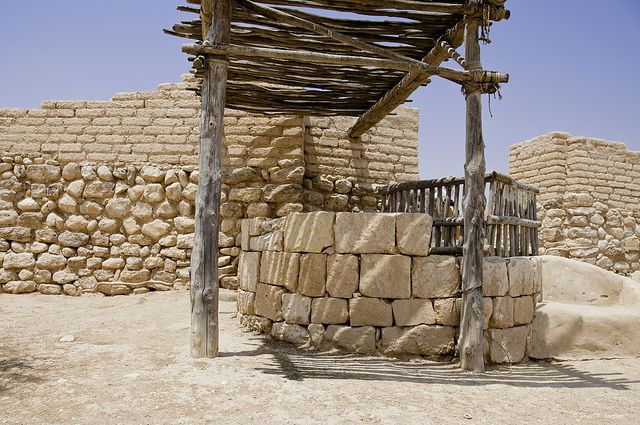
Rav Soloveitchik sees this theme appearing later in the parsha when Yitzchak re-dug the wells of his father and gave them the exact same names in an effort to keep the legacy of his father alive and to declare that rather than abandoning his father’s ways, he was embracing them fully and wholeheartedly. 


Intermarriage is not a Reform or Conservative challenge, it is not the problem of the “unaffiliated” or “secular.”  Too many Orthodox parents have reached out to me about their children who have gone through a robust Jewish education and grew up in observant homes who have met someone non-Jewish and are building a life with them. We are one people, one nation, and we are watching our family hemorrhage.  


This is a time for all of us to dig deep, to draw from the wellsprings of our heritage and our timeless Torah.   The parsha begins by telling us that “Yitzchak is the son of Avraham” but then continues, “Avraham bore Yitzchak.”  Yitzchak didn’t just emerge, Avraham was invested in him, spent time with him, exposed him to the beauty of his values and the meaning and joy of his lifestyle.  We must return to the wells of our forefathers, to bringing God back into the conversations in our homes, to celebrating the joy of being Jewish, and to be willing to sacrifice in our dedication and devotion to Torah lifestyles. 


To be clear, there are parents who are excellent role models, who are deeply and profoundly devoted to Jewish life and living and whose children nevertheless make their own choices about life and about religion.  There are no guarantees in life.  I share these thoughts not to assign blame or promote guilt or cast aspersions on anyone, but to motivate action and inspiration.


Someone once asked me to meet with a man and his son whom I didn’t know.  The son was in a serious relationship with a non-Jew and the father was devastated.  He was hoping I could meet and “talk some sense” into the son.  I will never forget the conversation in my office.  The father began by describing how betrayed he feels, how pained he is and what a mistake his son is making.  When he was done, the son turned to his father and said, Dad, you speak so self-righteously, you claim to care so much about Judaism and Jewish continuity, but what sacrifices are you making for your Judaism?  You have a casual attitude towards Jewish law, you pick and choose as you see fit, you are not consistent about praying or study.  You aren’t willing to give up the foods you love, the things you want to do, your time or energy and you want me to give up a girl I have fallen in love with who will make a wonderful wife and mother?


I was absolutely floored.  The son had made an articulate and compelling case, not in defense of his tragic choice, but rather as an indictment of a father he believed had no right to be surprised or upset.


If we have a casual and selective attitude towards our Judaism, what can we expect from our children and grandchildren.  We need to return to the wells that have sustained us and kept us hydrated throughout our history. We must double down on lifestyles of deep commitment to Jewish law, Jewish life, Torah study, character development and lovingkindness.  We must work to share our treasured Torah with Jews around us making outreach a priority, not only for outreach professionals but the responsibility of every concerned Jew. 


Hearing about intermarriage, whether in the highest office in the land, or anywhere else, is not something to “celebrate” or admire, it is something to grieve, to be pained by, but most of all, to be driven to do something about.  


2 Things Rav Dovid Feinstein zt”l & Rabbi Lord Jonathan Sacks zt”l Had in Common That We Can All Learn From

The world is a darker place this week as two great lights have been extinguished.  While Rav Dovid Feinstein zt”l and Rabbi Lord Jonathan Sacks zt”l achieved greatness in different ways and arguably among different audiences, they had infinitely more in common because they both spent their lives humbly devoted to the Infinite One. 


They were both geniuses, winners of the genetic lottery that endowed them with brilliant minds and memories.  But neither rested or relied on that gift; both were disciplined, diligent and, devoted to the study of Torah and the proliferation of its ideas and ideals. Both were prolific writers, and guidance and advice were sought from each of these luminaries.  Both were profoundly admired and revered, not only for their scholarship, intellect and wisdom, but even more for their humble characters, modest natures, and impeccable middos. 


Rav Dovid, as he was affectionately known, was an extraordinary Talmid Chacham, the final address on Halachic issues, referred to by Rav Elyashiv as the posek of America.  Rabbi Sacks was the Chief Rabbi, not only for the United Kingdom, but for countless around the world, Jew and non-Jew alike, who revered him for his insight, wisdom, and teachings.


When we learn of their achievements, we recoil in awe but unfortunately, many or most cannot relate, can’t imagine being able to accomplish a fraction of what they did.  And yet, with all their greatness in leadership and learning, there were two areas of greatness that every one of us can in fact emulate or learn.  Much has already been written about them, and more will be shared by people much closer and more competent than I.  But in thinking about their lives and legacies, I was struck by two things they had in common that should not go unnoticed, underappreciated or worst of all, under-imitated.


Both Rav Dovid and Lord Sacks, for all their genius and love of texts, were even more devoted and drawn to people. Both extended themselves, sacrificed to help others, gave generously of their time and resources, and were true ba’alei chesed. 


When Artscroll was struggling to survive, Rav Dovid loaned his life savings to their founders, his students, to keep it afloat.  When a Jewish newspaper asked prominent people if they could have three dinner guests for Friday night who would it be, while others answered with great personalities in Tanach, Talmud or from today, Rav Dovid answered he would have three poor people who need a meal.  


Rav Dovid’s gabbai once told Rav Dovid that he wanted to take him to the hat store to get a new hat. When they arrived, he asked Rav Dovid to try on a hat. Rav Dovid replied, “Me? I don’t need a new hat. I thought we came because you needed a new hat and you wanted my help choosing one.”  At his funeral, his son shared that towards the end of his life, when he was frail and infirm, he asked that it be shared that he asks mechila, begs forgiveness from anyone he may have hurt.


I participated in a Zoom call, mostly consisting of rabbis from the UK, reflecting on Rabbi Sacks and so many of them shared how he extended himself for them.  One young rabbi shared that when his father passed away, the very first phone call he got when he returned from the cemetery was from Rabbi Sacks who spent time offering comfort and strength. Rabbi Sacks, an introvert by nature who felt more comfortable sequestered in a library than socializing with others, spent countless hours with others lifting spirits, working to free agunos, resolving conflicts, and advocating for the Jewish people.  Several years ago, when BRS and I were attacked publicly for something that was completely untrue and I was feeling down and somewhat alone, I was shocked to answer the phone one day and find Rabbi Sacks on the other line, calling to simply offer companionship, support, and love.


The Mishna in Pei’ah which we recite each morning says:

אֵלּוּ דְבָרִים שֶׁאָדָם אוֹכֵל פֵּרוֹתֵיהֶן בָּעוֹלָם הַזֶּה וְהַקֶּרֶן קַיֶּמֶת לוֹ לָעוֹלָם הַבָּא. כִּבּוּד אָב וָאֵם, וּגְמִילוּת חֲסָדִים, וַהֲבָאַת שָׁלוֹם בֵּין אָדָם לַחֲבֵרוֹ, וְתַלְמוּד תּוֹרָה כְּנֶגֶד כֻּלָּם

“These are things the fruits of which a man enjoys in this world, while the principal remains for him in the World to Come: Honoring one’s father and mother, acts of kindness, and bringing peace between a man and his fellow. But the study of Torah is equal to them all.”


The simple understanding is that Torah study is so great, so central that it is equal to all the other acts of kindness and good deeds.  However, the Rebbe Reb Zusha explained the final expression differently.  K’neged kulam doesn’t mean Torah study is equal to them all.  Said Reb Zusha, it means, Torah is only valuable when it is k’neged kulam, when one does all the other mitzvos stated before it, such as: honoring parents, doing loving-kindness, hospitality, visiting the sick, etc. 


The second commonality that we could all not only admire but emulate is the way both Rav Dovid and Rabbi Sacks related to their wives and families.  They each received tremendous attention from followers and admirers, but never let it get to their heads or distract them from their families.  I saw a beautiful video this week of an elderly Rav Dovid, despite being surrounded by younger aides and talmidim, opening the front passenger door of a car for his Rebbetzin, helping her in, patiently waiting until she had settled into the seat, closing the door, and only then getting into the back.  He was known to help her on and off with her coat and be attentive to her, not only at home and in private, but at conventions and simchas when the masses were focused on him.  


I witnessed firsthand Rabbi Sacks’ love and affection for Lady Elaine on their visits to Boca Raton.  Indeed, she was always by his side throughout his world travels and packed schedule. He might have been the “celebrity” in any room, but he shared the spotlight with her, acknowledging her in each talk, speaking about her in such admiring ways, making sure she was comfortable and happy and always including her as his equal partner.  A rabbi from England emailed me this week and shared:  “Lady Elaine told me that one of the final things he told her, was ‘I couldn’t have done anything in my life without you.’”


We cannot all be gedolim in Torah, but we can all be gedolim, achieve greatness in chesed, in kindness, and we can be gedolim in humility and how we treat our spouses and families.  The world is severely bereft by these losses; Rav Dovid and Rabbis Sacks were each irreplaceable in their own ways.  While they would be tremendously proud to know we continue to study their works, I believe they would be even prouder to know we are walking in their ways.

Why Were Comments Disabled on My Last Article?

Last week, I wrote about why I believe rabbis should not tell people how to vote. While I feel strongly about why I think the candidate I voted for would bring about the results and policies I value most, I tried hard to communicate my thoughts in a way that wouldn’t indicate which candidate I was pulling the lever for.


Nevertheless, the response came fast and was furious. Indeed, aish.com posted the article and had to disable comments because they were so vicious from both sides. I am always grateful to receive feedback on my writing and was gratified so many chose to reach out to share their thoughts. 


I must admit I was surprised by a theme that emerged.  Many wrote that they agree in principle that rabbis shouldn’t mix religion and politics and shouldn’t endorse candidates or parties.  Nevertheless, they continued, this election is different, it is exceptional, and it is irresponsible for a rabbi not to be forceful in communicating whom to vote for. 


But that is as far as the common theme went, because the emails were then split between those who said this time is different because it is a moral obligation to not vote for Donald Trump while others said this time is different because it is a moral duty to vote for him.  Amazingly, half who reached out challenged how I dare be voting for Trump while the other half were outraged that I would be voting against him.  Shockingly, there were people brazen enough to say they could no longer listen to my shiurim if I was voting for the “other” candidate, without even knowing which way I voted at all!


Whoever wins this election, I fear that we have all lost. We have lost our sense of derech eretz, of civility, of the ability to disagree agreeably and to allow others to come to conclusions different from our own.  This is not who we are, who we are meant to be.  To be clear, this is hardly solely a Jewish or orthodox issue but a reflection of the polarization and division in the world today. 


The problem, though, is we are not meant to be a reflection of the culture in which we live, we are intended to be a model and inspiration for that culture.  The Netziv writes that the book of Bereishis is called Sefer Ha’Yashar because Avraham and his descendants were “yesharim,” they were straight, honest, had integrity and treated all people properly: 


The greatness of the Patriarchs in addition to the fact that they were righteous, pious and lovers of God as much as possible, is that they were straight and honest.  Namely, they interacted with the nations of the world, even repulsive, disgusting idolators, with love and an effort to improve their lives since they too are part of God’s creation.


Avraham, Yitzchak and Yaakov lived before the Torah was given.  We learn about their lives in depth because we are charged with emulating their interpersonal behavior.  Derech eretz kadma la’Torah.  Proper conduct, common courtesy, living with civility, all come before the Torah and are prerequisites to Torah.  Avraham was called “Ivri” because he was me’eiver, on the other side of every issue from the rest of the world.  He disagreed vehemently and passionately with his contemporaries but nevertheless he did so with civility, derech eretz, and graciousness.


Diversity is part of our motto and the dignity of difference is fundamental to our community’s mission.  We can disagree vehemently, see things in polar opposite ways, behave differently, vote differently, daven differently, and root for different sports teams.  What we cannot do is turn differences into divisiveness, or respectful debate and dialogue into bullying, vitriol, and demeaning language. We cannot call names or speak dismissively of others. 


Yes, there will be times that we must take strong positions, or make decisions that will have real consequences and implications, but we must do so with respect, dignity, and civility. Not only is it inappropriate, incorrect and unacceptable to speak harshly, it is also ineffective.  Nobody ever changed an opinion or observance because they were yelled at, called a name, or dismissed. 


Shlomo HaMelech teaches us in Koheles: Divrei Chachamim b’nachas nishma’im.  The more gentle, refined and respectful our communication, the likelier our position will be heard and perhaps even embraced.  It is not a coincidence that the same Avraham who was the “Ivri,” on the other side of every debate, also succeeded in winning over thousands of followers.  His methodology of respectful debate and the power of persuasion proved incredibly effective.


The Arizal writes that before davening each day all of us should recite, Hineni muchan u’mezuman l’kayeim mitzvas v’ahavta l’reiacha kamocha.  Why does the Arizal ask us to say it every day, doesn’t everybody know to love neighbors as themselves?  Isn’t it the “Klal gadol ba’Torah,” isn’t obvious?  And why specifically before davening and not at some other time?  


For the Arizal, when we are about to come to Shul, daven with the community, and interact with a diverse range of people, we must remind ourselves that our talk with God is only welcome after we have committed to talk properly with people.  V’ahavta l’reiacha kamocha.  “Love my children, even the ones you disagree with, even the ones you don’t like, and then – and only then – you can claim to love me,” says God.  “Talk nicely to everyone, even those who you differ from greatly, and then you can talk to me.”


Let’s continue to disagree, but agreeably.  Let’s continue vigorous debate, but respectfully, not divisively.  Let’s truly be the progeny of Avraham Avinu and treat every human being with dignity and honor and thereby, please God, ourselves be worthy of being called yesharim.

Privilege Is Not A Dirty Word

One of the many important national conversations taking place these days involves recognition and awareness of privilege. To some people, privilege is a negative thing and something to be ashamed of. I don’t see it that way at all.

Privilege is not a dirty word. To be clear, it is critical to be aware of whatever privileges one is blessed with, recognize and appreciate that others do not share that blessing, and incorporate that awareness and recognition while demonstrating care and compassion for others. Nevertheless, one needn’t apologize for privilege or be ashamed or feel guilty for having it. Quite the contrary, privilege is, well, exactly that—a privilege. One should be grateful for, appreciative of, and most of all feel tremendously obligated by the privileges we have.

We Jews are particularly privileged, but not in the way you may think.

For some, privilege means receiving the benefit of the doubt, or the assumption of innocence. For others, privilege means having access, entrée, and opportunity. For yet others, privilege means the comfort of feeling safe, protected, and secure.

By these definitions, in the context of history, and even now, Jews are among the most underprivileged people. We have been the target of libel, false accusations, and assumptions of guilt. These aren’t part of ancient history. A blood libel occurred in Massena, New York, in 1928.

We have been denied access and opportunity. As recently as the 1970’s Jews and blacks were unabashedly denied entry into country clubs in South Florida, an area thought of today as “so Jewish.” Many had signs that said “No dogs, no colored, no Jews.” And it wasn’t that long ago that Jews were similarly denied or limited to enter universities and graduate schools. In 1935, a Yale dean instructed his admissions committee: “Never admit more than five Jews.” Harvard’s president wrote that too many Jewish students would “ruin the college.”

Safety and security? The Anti-Defamation League reports that there were 2,107 hate crimes against Jewish people nationwide in 2019, the highest since the ADL began tallying hate crimes in 1979. Antisemitic incidents comprise a majority of reported hate crimes in New York City. According to 2018 FBI data, Jews were 2.7x more likely than blacks, and 2.2x more likely than Muslims to be a hate crime victim.

In the context of recent rioting and looting, the Los Angeles Jewish community recently experienced what one called a “modern-day pogrom” in which Jewish businesses were ransacked and five synagogues and three Jewish schools were vandalized.

The current attention to racism in America and the fight for racial justice is important. As I have said, racism is an evil we must actively, categorically reject. At the same time, we should also be aware, and make others aware, that antisemitism is on the rise globally and there remain entire nations and countless individuals who seek the extermination and elimination of the Jewish people. Just last week, what are widely considered A-list celebrities with large social media presences praised Louis Farrakhan, a vile, unapologetic anti-Semite. In 2018, Farrakhan warned his 335,000 followers on Twitter about “the Satanic Jew.” As recently as October, 2018 Farrakhan told his followers in a widely-attended and shared speech, “When they talk about Farrakhan, call me a hater, you know how they do – call me an anti-Semite. Stop it, I’m anti-termite!”

A high-profile spokesman during this important current conversation on justice, equality, and discrimination is Al Sharpton, a man who once said, “If the Jews want to get it on, tell them to pin their yarmulkes back and come over to my house…All we want to say is what Jesus said: If you offend one of these little ones, you got to pay for it. No compromise, no meetings, no coffee klatch, no skinnin’ and grinning.’ Pay for your deeds.” He has never apologized or offered contrition for those remarks, or for his role in inciting the Crown Heights riots (perhaps he still stands by them), and yet he is consistently given a public platform with no hesitation or qualification.

In many places around the world, including too many right here in the United States, a Jew feels the need to remove a yarmulke or outer Jewish symbols to feel safe. There is no privilege to protect him.

I share this all not to make the argument we are more underprivileged or victimized by prejudice than anyone else, but that even today, access and opportunity, assumption of innocence, and especially safety and security, are not privileges the Jewish people can so readily count on and enjoy.

So what do I mean that we are particularly privileged and should be proud of it?

Privilege is not only about the way you are thought of and treated by others, but about how you think of and behave yourself. Privilege is not how others treat you but how you treat others. It isn’t what others do to you, but what you do with what you have.

רבי חנניא בן עקשיא אומר, רצה הקדוש ברוך הוא לזכות את ישראל, לפיכך הרבה להם תורה ומצות, שנאמר (ישעיה מב, כא) ה׳ חפץ למען צדקו יגדיל תורה ויאדיר. (מכות כב:).

Hashem wanted to give a zechus to the Jewish people so He charged us with an abundance of Torah and mitzvos. What does zechus mean? When we host a distinguished guest or speaker, they are often introduced with “what a zechus it is to have so and so.” Zechus literally means privilege. Hashem wanted us to be privileged so He trusted us and charged us to live virtuous and righteous lives and to transform His world in His vision.

For a Jew, privilege doesn’t mean access, opportunity, or favors. It means responsibility, an awesome responsibility to set an example, to live elevated, meaningful lives, to repair the world in His image, to be of service to others. It means to rise above how we may be treated by others and to treat all with dignity, respect, and honor.

We have the privilege of studying Torah and being inspired by its timeless lessons. We were given the privilege of the instruction manual to life including the 613 mitzvos. We bear the privilege of being asked and expected to be at the forefront of fighting for justice, equality, fairness, and truth.

Rav Yitzchak Hutner, the great Rosh Yeshiva of Chaim Berlin, once stood before a Torah U’Mesorah convention, a gathering of Jewish educators from across the country. He suggested to them that he could summarize their entire duty, their task, in five words. If nothing else, their job, their role, and their mission of inspiring the Jewish future came down to their ability to communicate to the next generation “asher bachar banu mi’kol ha’amim, we are to be exceptional.” If a Jewish child walks away with nothing else from their Jewish education, minimally they must be made to feel that we are exceptional, privileged to be charged with being different.

Our status as a privileged or exceptional people is not intended to make us feel superior. Rabbi Dr. Norman Lamm, z”l pointed out that we don’t recite “asher bachar banu al kol ha’amim,” he has chosen us above all other nations. Rather, we say “mikol ha’amim,” he has chosen us from among all the nations of the world.

Being privileged should make us feel obligated and bound to live more ethically, act more sensitively, conduct ourselves more honestly, and proclaim our faith in the Almighty with pride and distinction, and never with shame or embarrassment.

Part of the responsibility that comes along with our privilege is to use whatever material privileges we have for the good. Despite the many challenges Jews have faced throughout the generations, most of our communities in the 21st century are blessed with the trappings of material and social privilege our ancestors would never dream of. We don’t have to and shouldn’t apologize for that; however, we must recognize that a Jew never focuses on his own entitlement, but rather thinks how his resources can be better used to advance good in the world, including for the “underprivileged.”

Privilege is not a luxury, it’s a legacy; it isn’t a free pass, it is a weighty proposition. Privilege shouldn’t breed entitlement, it should demand exceptional behavior.

I’m proud of my Jewish privilege and I hope my children will be too.

Rabbi Efrem Goldberg

Join Our Community

Subscribe to our newsletter or connect with us on WhatsApp.