Souls Connecting: A Reflection from the Dee Shiva

How does one feel so profoundly connected to someone they never met, they had never spoken to, they had never even heard of?


At the heartbreaking funeral for his two daughters, Maia and Rina H”yd, who were brutally murdered by Palestinian Arab terrorists, Rav Leo Dee mentioned my name and that he drew strength from listening to our shul’s shiurim on Emunah.  When I watched the funeral and heard him say those words for myself, I was overwhelmed with emotion by a feeling of closeness to this man and I burst into tears. 


As I went online to book a ticket to Israel, it wasn’t that I actively decided to travel on behalf of our community to pay a shiva call to Rav Leo and his children, it was that I simply could not stay away.  Two days later, at the funeral for his wife Lucy Lee H”yd who had succumbed to her wounds, once again, Rav Leo quoted a thought from one of our shiurim. This solidified my decision to go to Israel for a day, but I was still puzzled trying to understand what was compelling me to go.


Certainly, representing BRS in an effort to communicate comfort, love, loyalty, unity, sympathy and faith were justifications enough.  But that would apply to every tragic terror event in our holy homeland and yet I had not previously been moved to jump on a plane before.  What was different this time?  Was it my ego, a sense of honor and pride that he acknowledged me so publicly at such a vulnerable moment? It continued to gnaw at me. 


After landing, I made my way to the shiva house where I had coordinated to meet my dear friend and colleague, Rabbi Shay Schachter.  Several people who had attended Shiva told Rabbi Schachter that Rav Leo was quoting him and referencing how much he loved listening to his classes, too.  Rabbi Schachter was also moved to come meet this special man in person and so we coordinated to arrive and visit together.


With thousands of people coming from all over Israel to offer comfort, strength and love, the Dee family sat shiva in a tent in their backyard.  Holy volunteers carefully conducted crowd control, turning over all those assembled in the tent every few minutes.  When we arrived, we were invited to come into the tent before it opened to the public.  Rav Leo was there, but before we could meet, the Yom HaShoah siren blasted throughout Israel and everything screeched to a halt, everyone standing still, taking exactly two minutes to honor and daven for the memory of the six million kedoshim, the martyrs of the Holocaust.  In that silence, I couldn’t help but think that these two tragedies were really one and the same.  As we just sang on Pesach, bechol dor va’dor omdimm aleinu l’chaloseinu, in every generation they rise against us to destroy us. 


That siren at that moment was not just paying tribute to the six million but it was wailing for the three fresh graves that had just been filled, and it was crying out for every Jewish life and light that has been extinguished in our history by enemies that have sought to eliminate us.  But as the wail of the siren was accompanied by the sound of birds chirping, my eyes were drawn to the view from the tent of the magnificent Judean hills and I was struck by the notion that as much as the martyrdom of the Holocaust and the murder of Lucy, Maia and Rina had in common, there was a profound, fundamental difference between them.  The Holocaust was perpetrated against a defenseless Jewish people, strangers in a foreign land, while the Dees had died al kiddush Hashem in the one and only Jewish homeland, under Jewish sovereignty, under the protection of a strong Jewish army and with the promise that those that perpetrated this heinous act would be brought to justice and that we will never leave these hills or this land.


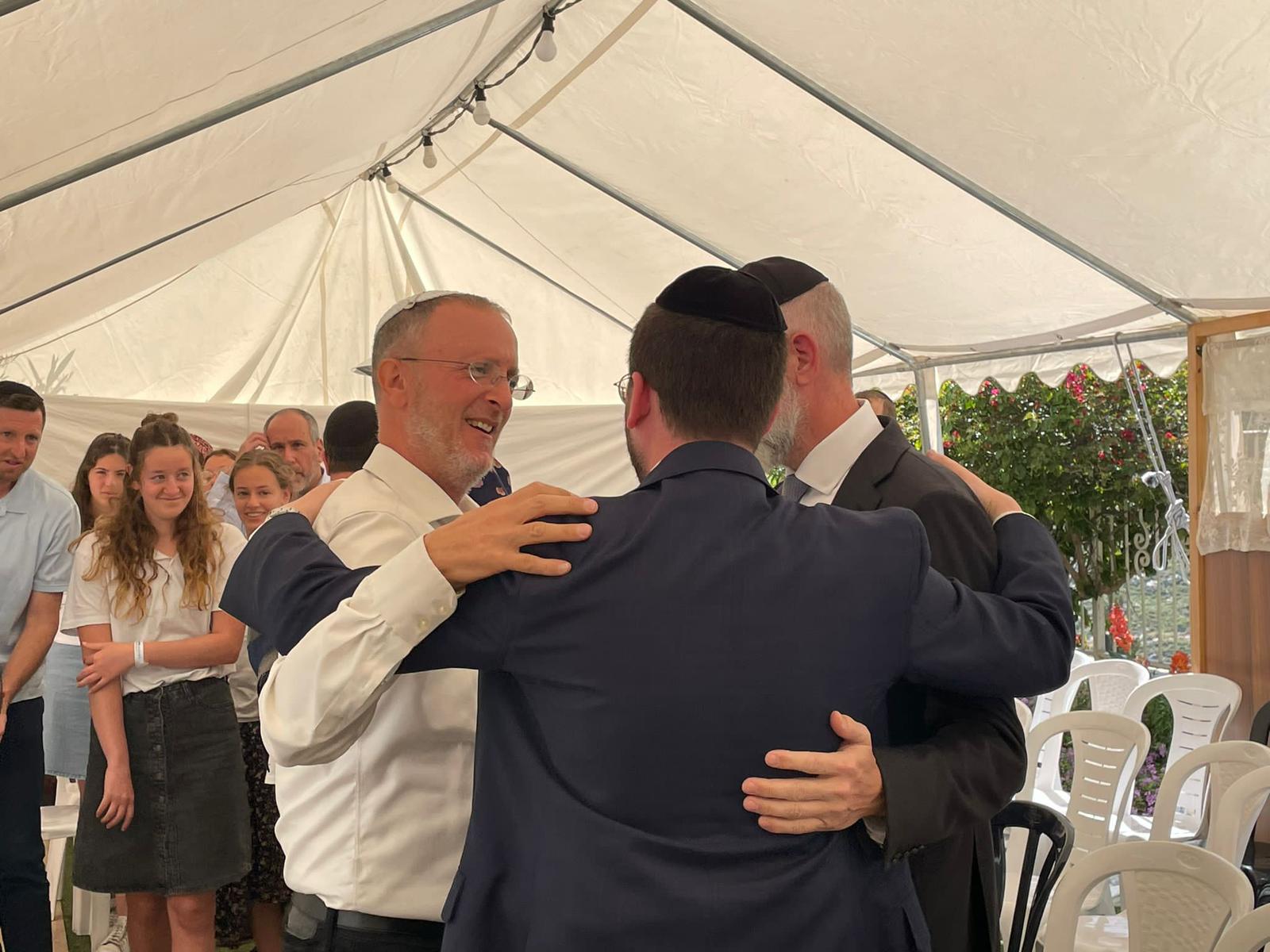
The siren concluded and Rav Leo came directly over to us.  No words were exchanged as we embraced and held onto a meaningful hug that will last a lifetime.  We sat directly in front of the mourners as Rav Leo took the microphone, a necessity so that all who had now packed the tent could hear all he had to say. He thanked us for coming and said, I have been listening to Rav Efrem and Rav Shay’s shiurim for ten years.  For a decade I quote them at my Shabbos table and share their divrei Torah with friends.  He shared a few more thoughts, and once again thanked us for the countless hours of Torah learning together.


Hearing him speak, it became absolutely clear.   It was true that our guf, our bodies had never met, but I now understood that our souls have been talking and connecting and singing together for many years and my soul was craving to be with its good friend and chavrusa at this painful time.


That night, Rav Shlomo Katz invited us to join his Efrat community, which was collectively struggling with this horrific tragedy, for a night of chizuk and to share a few thoughts.  I hope our words resonated and offered comfort but for me, the most moving parts of the night were not when people were speaking but when souls were singing.  Every chair in the room had a physical body in it, but it was the chorus and connection of neshamos that sang together at the beginning, in the middle, and at the end of the night that gave the greatest chizuk.


There are so many powerful moments and poignant lessons from this extraordinary day with an extraordinary family and community that I take home with me.  As I continue to process them I look forward to sharing further reflections.  But as I traveled back to Boca, there is one thought in particular that jumped out at me.  If Rav Leo’s wife and two daughters had not been murdered, would we have ever met in person? Would I ever come to know that we had been learning together all along?  Would I ever discover the impact of the ideas we are privileged to share?


While not everyone publishes Torah shiurim online, all of our neshamos are connected with our brothers and sisters in ways we don’t realize or fully appreciate. There may be a Jew halfway around the world you do not know who is living a more inspired life today because she once crossed paths with you in an airport and saw the way you patiently spoke with the airline staff during a delay. There could be someone learning more Torah every day because he read an article about a learning group you are part of and was motivated to do more. There may well be a Jew somewhere whose name you don’t recognize but who saw your name on a program you sponsored, or a cause you supported, who now supports that same program or cause. We may not ever meet these people physically but we must appreciate they are out there and recognize that every single positive action we do potentially builds a new relationship with another holy neshama.


Rav Leo spent shiva challenging us to leave our comfort zone, to extend ourselves to others, to become better people, and to change the world together.  At davening on Shabbos, he stopped the chazzan before kedusha to offer an interpretation and charge to all who had gathered.  Kadosh, kadosh, kadosh, Hashem Tzevakos melo chol ha’aretz kevodo.  Kadosh Lucy, Kadosh Maia, Kadosh Rina, the three of them are now kedoshim, they have died al kiddush Hashem.  Now, in their memory, in their merit, we carry on their mission of melo chol ha’aretz kvodo, filling Hashem’s whole world with His glory, His teachings and His value.


Every day I wake up and feel beyond blessed to have the greatest and most fulfilling job in the world.  There is no greater privilege and nothing more gratifying than sharing Hashem’s Torah and teachings. It turns out there was a Jew 6,000 miles away who was listening, enjoying, and drawing inspiration for a decade without my ever knowing it or knowing him.


Regardless of our full-time formal position, every single one of us is a teacher and influencer and there are people watching, listening and observing what we say and do. We have no idea if we daven intensely or learn diligently or volunteer generously who will impact, who will seek to emulate us, who might be transformed without our ever knowing it. Indeed, by emulating the Kedoshim, the three beautiful Dee souls who can no longer bring glory to Hashem’s name in this world, we have the ability to melo chol ha’aretz kvodo  – we can literally connect with and fill the entire world with His glory without realizing it. Appreciate the impact you can have on other neshamos, the connections we all share, and the difference you can make in someone’s life.

Do You Put Your Money Where Your Mouth Is?

Much of our attention and concern these days is focused on the explosive increase in antisemitism.  In November alone, there was a 125% increase in antisemitic hate crimes in New York City. Also alarming is the continued increase of intermarriage rates, particularly outside of the Orthodox community.  While 98% of Orthodox Jews marry Jewish, among non-Orthodox, 72% are marrying a non-Jew. 


While resources and efforts are understandably being directed to fighting antisemitism and outreach efforts to stop intermarriage, we must never neglect “in-reach” or take retention in the observant community for granted.  While people leave Orthodoxy for all sorts of reasons, some of which are complicated and difficult to solve, one of them should be relatively easy to eliminate – the inability to afford Jewish education.


As long as there have been Jewish Day schools there have been families struggling to pay tuition.  Fortunately, though, there have also always been remarkable people devoted to Jewish education and Jewish continuity willing to help.


In 1959, due to insurmountable financial stress, the Board of Directors of the Hebrew Academy of Miami instituted a Draconian policy.  If parents didn’t pay tuition, their child could no longer attend the school. One affected family told their young son that he would sadly need to leave the school permanently. The child was devastated. He loved the Academy and was especially enjoying the Torah studies.


The very mature young man boldly wrote a handwritten letter to the dean, Rabbi Alexander (Sender) Gross:


Dear Rabbi Gross,


I would very much like to go to the academy, but even though I cannot, I do not hold anything against you or the board.  I believe that if G-d wanted me to go to the Academy everything would have been arranged so I could’ve gone.  If G-d wants me to be a rabbi I will be and if not I won’t.  Whatever G-d has planned for me to be I will follow faithfully without asking questions or being disappointed.


Rabbi Gross was so touched by the letter that he shared it publicly at the next meeting of the Board of Directors.  They decided to let the child continue at the Academy. He stayed through eighth grade and was the class valedictorian.  He continued his studies in the Telshe Yeshiva in Cleveland and became an accomplished and renowned Talmid Chacham, a prominent Rav and popular author.


The young boy who wrote the letter was Rabbi Zev (then known as Billy) Leff.  Rav Mordechai Gifter, the famed Rosh Yeshiva of Telz, once told Rabbi Gross, “If the Hebrew Academy was created just so that it could produce this one talmid, Rabbi Zev Leff, dayeinu – it would have been worthwhile.”


Rabbi Gross carried the letter of the young Billy Leff in his wallet.  It was with him wherever he went and whenever he had a hard time, he opened the letter and drew strength.  Once, referring to the letter, he told his family, “This is my entrance into Gan Eden.”


That part of the story is known.  What is much less well-known is that while Rav Leff’s letter moved the Board of the Academy, he was able to stay in school only because Rabbi Gross took it upon himself to personally pay his tuition.   Indeed, when he passed away, Rabbi Gross’s family were looking through his personal desk and found a folder that had “מיינע קינדר,” my children, written on the outside. It was a list of children that he personally paid tuition for so that they could stay in the Academy and not go to public school.


Rabbi Gross put his money where his heart and his mouth were.  He dug deep to enable Jewish children to get a Jewish education and among those it impacted for generations was one of the great rabbis of our generation. 


When I heard this story from his own family, I was reminded of a story I read about the great Rav Yitzchak Dovid Grossman, the Disco Rabbi. When he first went to Migdal HaEmek as a young newly married man, he found the city was a center of crime.  Arab men were coming into the city and preying on young Jewish girls.  He said to himself, the only way Arabs could enter the city and behave in that way is if someone was taking money to protect them and allow them to enter.  After inquiring, he found out the crime boss being paid to protect them was an incredibly tough thirty-five year old named Kobi.


Rav Grossman, a young Chassid who had rarely ever left Meah Shearim, decided to pay this crime boss a visit.  He knocked on the door and Kobi, a tall and powerfully-built, frightening figure, answered. He barked at the Chassidish man, “What do you want,” and Rav Grossman responded, “I came to drink a l’chaim with you.”


Kobi was at a loss for words but motioned for him to come in. When they were sitting across from each other, Rav Grossman said to him without preamble, “Kobi, I’m sure you know what I’ve been doing for the youth here in Migdal HaEmek.” Kobi nodded. “Of course I do. All the chevrah (the gang) talks about you and how much they love you.” “Thank you for the compliment. But the truth is I came here tonight to discuss something else – something I saw here in town. Something that disturbed me very much.” Rav Grossman described how he found out that Arabs from the nearby towns were coming there to date the Jewish girls of Migdal HaEmek.


After admitting he had been accepting a fee to let the Arabs enter, and after hearing Rav Grossman’s passionate protest, Kobi responded: “I understand you, Rabbi but this is business. It’s not easy, making money here in Migdal HaEmek, and this is a good moneymaker. For some reason, these Arabs want to marry Jewish girls, and they’re willing to pay money for the opportunity. It’s nothing personal.”


Rav Grossman knew he had to find another source of income in order to get Kobi to stop.  He asked Kobi what he wanted to do and Kobi answered, “If I had my own truck, I could do deliveries around the country and get paid very well for my work. I could make my own schedule and get up when I want and come and go when I please. If you’re asking me what I would want to do with my life, that’s the answer: I’d be very content working as the driver of my own truck.”  Rav Grossman nodded. “I hear you. You just need a truck.”  They drank a l’chaim and Rav Grossman left.


Rav Grossman’s father and father-in-law had purchased the young couple an apartment in Yerushalayim at the time of their marriage.  It was their only asset, it represented essentially their entire net worth.  The Sunday after meeting with Kobi, Rav Grossman traveled to Yerushalayim, where he put his apartment up for sale.  Soon after, with the money received from selling the apartment, he purchased a Volkswagen truck.


Rav Grossman returned to Kobi’s home and knocked on the door. When he was invited in, he placed the keys to the truck on the table and pushed them across the wooden surface toward the speechless Kobi. “You said that your dream is to have your own truck. Well, here it is. Now you have your own truck.”  With that, Arabs lost their protection and no longer entered Migdal Ha’Emek.  The Jewish girls were no longer in danger, their future as proud and practicing Jews more secure.


I find this story simply amazing.  To protect young Jewish girls and keep them part of our faith, Rabbi Grossman, without hesitation, sold his apartment and gave all the money he had.  How many of us would do the same?  How many of us would be bothered and moved enough to give a meaningful gift altogether?


Fighting antisemitism and stemming the tide of assimilation are critically important, but so, too, is ensuring a Jewish education is available to all who seek one.  They say if you want to know what someone cares about, check where they spend their money.  Granted, the cost of tuition for our own children is not small. Simply paying for one’s own family can take great sacrifice and reflects a profound commitment.  But it isn’t enough.  We must go into our pockets and do our part to ensure Jewish continuity.  As it turns out, there is nobody better to confront antisemitism and be the response to antisemites than young, knowledgable, practicing Jews.  


Please consider supporting our BRS Jewish Education Scholarship Fund that enables dozens of children each year to attend a Jewish school.  Please visit brsonline.org/jesf to make a contribution of any amount. Donors of $1,000 or more are invited to a fantastic fun event this Thursday night. If Rabbi Gross believed it was his ticket Gan Eden, maybe it could be ours as well.


Criticize or Cancel? Engage or Estrange? Some Questions About Confronting Antisemitism

One of the more disturbing trends we are experiencing today is the rise of antisemitic attacks, qualitatively and quantitatively, online with words and offline with physical violence.  As we continue to watch and monitor closely, there are many who are confident they know the answer, they understand the correct approach, the appropriate response to each incident. I’m less sure. As each day passes and each new disturbing incident, statement, tweet, or God forbid violent act occurs, the following questions occur to me regarding how to respond, and I share them with you for your careful consideration:

If everything is antisemitism, isn’t nothing antisemitism?  We need to be discerning and judicious in our definition of, and what we call out as, antisemitism.  Not everything that rubs us the wrong way, offends us, or is insensitive or unkind, is necessarily antisemitic.  When we label something antisemitic that isn’t, we lose credibility.  Rabbi Lord Jonathan Sacks z”l explained it as follows:


First let me define antisemitism. Not liking Jews is not antisemitism. We all have people we don’t like. That’s OK; that’s human; it isn’t dangerous. Second, criticizing Israel is not antisemitism…Antisemitism means denying the right of Jews to exist collectively as Jews with the same rights as everyone else. It takes different forms in different ages. In the Middle Ages, Jews were hated because of their religion. In the nineteenth and early twentieth century they were hated because of their race. Today they are hated because of their nation state, the state of Israel. It takes different forms but it remains the same thing: the view that Jews have no right to exist as free and equal human beings.


If nothing is antisemitism, can we survive? Throughout our history, persecution, oppression, expulsion, and attempts at extermination began with the normalization of Jewish stereotypes, slurs, tropes, and promoting distortions and lies about Jewish power and influence.  If we dismiss everything elected officials, athletes, celebrities and public personalities say and post about Jews as benign, comedy, hyperbole or “not what it sounds like/not how they meant it,” we are burying our heads in the sand, shirking our responsibility, and ultimately are accomplices to the spread of this pernicious and dangerous hate.  While we need to be judicious in not labeling everything offensive as antisemitic, we cannot take the opposite approach and let anything and everything slide, either.


Where, by whom, and how should this be decided? After the Saturday Night Live monologue by comedian Dave Chappelle this week, Jewish social media lit up with a debate about how to characterize his rant.  Some slammed it as popularizing and legitimizing antisemitism, while others saw it as humorous and completely ok, while others thought it wasn’t objectively wrong but the timing and environment in which it was shared made it objectionable and irresponsible.  For example, popular Jewish comedian Elon Gold  tweeted: “I’m in Israel and my phone keeps going off about [Dave Chapelle]’s monologue. I watched it 3X. There’s not a joke in there I wouldn’t do myself. Just not as well written/performed as Dave.”  Is social media the place for Jews to debate among ourselves what qualifies as antisemitism?  Is it decided by popular vote, or are there experts, leaders, and organizations dedicated to this cause that we should defer to? If I’m offended and you’re not, or vice versa, is one of us “right”? 


Do we only call out antisemitism when it’s on the “other side”?  Antisemitism is an ideology that transcends political affiliation. There are antisemites on the left, on the right, in both major political parties, and everywhere in between. Yet in this increasingly divisive political climate, there are many who are happy and eager to call out and take action against antisemitism coming from the “other side,” yet remain silent and implicitly tolerant of antisemitism coming from their own. Make no mistake, if the only antisemitism that merits a response from you is antisemitism coming from your political opponent, your credibility is damaged and your ability to be an advocate in this area is compromised. 


Engage or Estrange? Just because we can be offended doesn’t mean we always have to be.  While we often instinctively respond with outrage and calls for condemnation and cancellation, those aren’t necessarily the best strategies or the most prudent responses to serve our greater and more long term interests.  Sometimes, the answer is to engage and dialogue rather than to attack.  If we can educate, inform and turn an adversary into an advocate, we accomplish far more than if we label someone and box them into becoming the very thing we seek to oppose.  In 2017, I shared the story of Derek Black,  a white supremacist who experienced a Shabbos meal and completely turned around his worldview and his activism.  Recently, we hosted NBA veteran Meyers Leonard on Behind the Bima who made a terrible mistake using an antisemitic slur but immediately worked to educate himself, apologized genuinely, unconditionally, and profusely, and has spent 18 months making up for his mistake by being willing to recognize why his mistake was hurtful, learning about and talking to the community he hurt, and educating others to prevent future similar harm.  When is there hope and we should therefore engage, and when is someone beyond repair and we should estrange?


Are all offenses and responses equal? Sensitivity to antisemitism remains critical, but are we nuanced in appreciating the difference between someone who knowingly promotes something inherently antisemitic that renders them an antisemite, versus someone who promotes something hateful, critical, offensive, illegitimate, but not necessarily antisemitic, versus someone who defends someone in either of the first two categories while not directly making antisemitic statements themselves?  Do we treat an antisemite, an unknowing or negligent promoter of antisemitism,  and someone who has a bad “take” about an antisemite the same, or should there be differencs in how we respond? 


Cancel or Criticize? Is there a place between accepting and being indifferent to antisemitism on the one side and seeking to cancel and boycott those who say and post objectionable things?  Can’t we criticize, call out, ask for clarification, and demand contrition without calling to cancel?  Insisting on the termination of employment or of an endorsement contract is the nuclear option.  When and against whom should it be used?  Can we, should we have a more varied tool box of responses, options and approaches? Would we be better served and understood if we offer more than a knee-jerk reaction? And do we recognize there could be different responses based on different degrees of offense? 


My questions and doubts are not an excuse for me or you to withdraw from fighting and standing up to antisemitism. They are, I believe, critically important to consider in developing the best and most effective individual and collective strategy to be successful and to have an impact.  Our goal is not to be “right,” it is to be effective.  


We are at a critical and shocking crossroads, when it is more comfortable to express hate and even violence against Jews in the civilized world than anytime in my life. Whether you found Dave Chapelle’s monologue amusing or offensive, one thing is clear, antisemitism is no laughing matter, we must be thoughtful in our response.


Did Anne Frank Have Privilege? Do You?

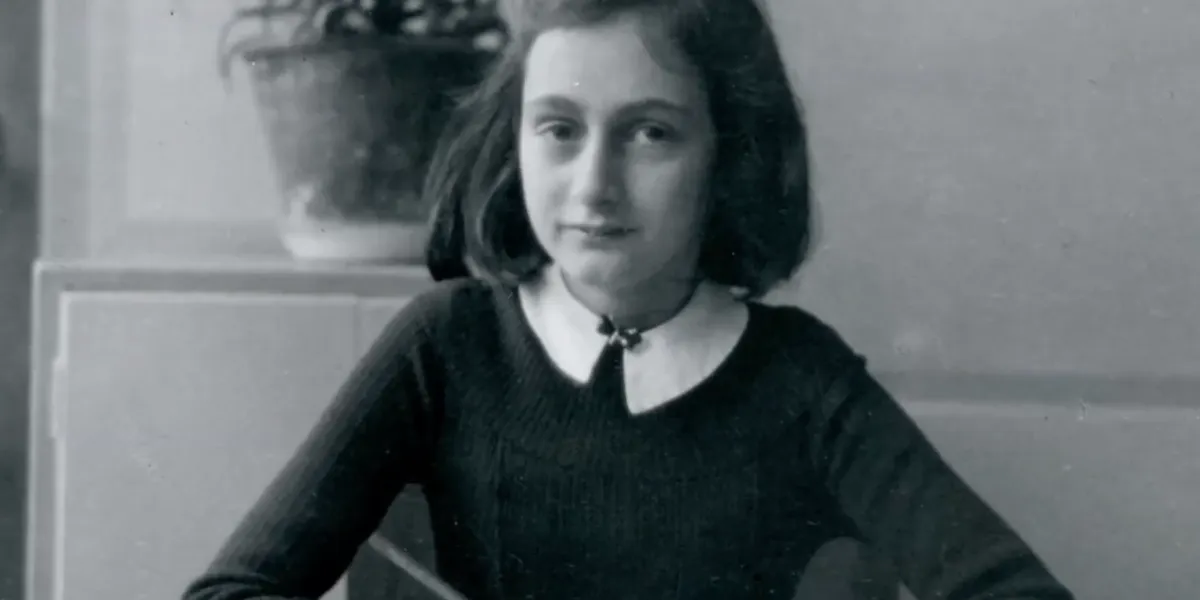
This week, Anne Frank trended on Twitter, not because of her famous diary or because she was a victim of hate. I cannot believe I am actually writing these words, but Twitter users debated whether Anne Frank had “white privilege.” Yes, you read that right.  Thousands of people were debating on social media if the 15-year-old Jewish girl who hid from brutal Nazis in an attic for two years and eventually was murdered at the Bergen-Belsen concentration camp, enjoyed “privilege” because of the color of her skin. 


To some people, privilege is a negative thing, something to be ashamed of and apologetic for but I don’t see it that way at all.  We Jews are in fact particularly privileged, but not in the way you may think.


Privilege is not a dirty word. To be clear, it is critical to be aware of whatever privileges one is blessed with, recognize and appreciate that others do not share that blessing, and incorporate that awareness and recognition while demonstrating care and compassion for others. Nevertheless, one needn’t apologize for privilege or be ashamed or feel guilty for having it. Quite the contrary, privilege is, well, exactly that—a privilege. One should be grateful for, appreciative of, and most of all feel tremendously obligated by the privileges we have.


For some, privilege means receiving the benefit of the doubt, or the assumption of innocence. For others, privilege means having access, entrée, and opportunity. For yet others, privilege means the comfort of feeling safe, protected, and secure.


By these definitions, in the context of history, and even now, Jews are among the most underprivileged people. We have been the target of libel, false accusations, and assumptions of guilt. These aren’t part of ancient history. A blood libel occurred in Massena, New York, in 1928.


We have been denied access and opportunity. As recently as the 1970’s Jews and blacks were unabashedly denied entry into country clubs in South Florida, an area thought of today as “so Jewish.” Many had signs that said “No dogs, no colored, no Jews.” And it wasn’t that long ago that Jews were similarly denied or limited to enter universities and graduate schools. In 1935, a Yale dean instructed his admissions committee: “Never admit more than five Jews.” Harvard’s president wrote that too many Jewish students would “ruin the college.”


Safety and security?  In 2021, Antisemitic incidents reached an all-time high, with a total of 2,717 incidents of assault, harassment and vandalism reported to ADL.  There were more than seven incidents per day of Jews in America being attacked, a 34 percent increase year over year.  Antisemitic incidents comprise a majority of reported hate crimes in New York City. According to 2019 FBI Data, Jews Were 2.6X More Likely Than Blacks and 2.2X More Likely Than Muslims to Be Victims of Hate Crimes.


The current attention to racism in America and the fight for racial justice is important. As I have said, racism is an evil we must actively, categorically reject. At the same time, we should also be aware, and make others aware, that antisemitism is on the rise globally and there remain entire nations and countless individuals who seek the extermination and elimination of the Jewish people.  


Two years ago, what are widely considered A-list celebrities with large social media presences praised Louis Farrakhan, a vile, unapologetic anti-Semite. In 2018, Farrakhan warned his 335,000 followers on Twitter about “the Satanic Jew.” As recently as October, 2018 Farrakhan told his followers in a widely-attended and shared speech, “When they talk about Farrakhan, call me a hater, you know how they do – call me an anti-Semite. Stop it, I’m anti-termite!”


In many places around the world, including too many right here in the United States, a Jew feels the need to remove a yarmulke or outer Jewish symbols to feel safe. There is no privilege to protect him.


I share this all not to make the argument we are more underprivileged or victimized by prejudice than anyone else, but that even today, access and opportunity, assumption of innocence, and especially safety and security, are not privileges the Jewish people can so readily count on and enjoy.


So what do I mean that we are particularly privileged and should be proud of it?

Privilege is not only about the way you are thought of and treated by others, but about how you think of and behave yourself. Privilege is not how others treat you but how you treat others. It isn’t what others do to you, but what you do with what you have.


The Mishna that we recite daily teaches, Rebbe Chananya ben Akashya omer, ratza Hakadosh Baruch Hu l’zakos es Yisroel, l’fichach hirbah lahem Torah u’mitzvos… The Holy One, Blessed Be He, wanted to bestow merit upon the Jewish people therefore He bestowed a vast Torah with a plethora of mitzvos.


What does zechus mean? When we host a distinguished guest or speaker, they are often introduced with “what a zechus it is to have so and so.” Zechus literally means privilege. Hashem wanted us to be privileged so He trusted us and charged us to live virtuous and righteous lives and to transform His world in His vision.


For a Jew, privilege doesn’t mean access, opportunity, or favors. It means responsibility, an awesome responsibility to set an example, to live elevated, meaningful lives, to repair the world in His image, to be of service to others. It means to rise above how we may be treated by others and to treat all with dignity, respect, and honor.


We have the privilege of studying Torah and being inspired by its timeless lessons. We were given the privilege of the instruction manual to life including the 613 mitzvos. We bear the privilege of being asked and expected to be at the forefront of fighting for justice, equality, fairness, and truth.


Rav Yitzchak Hutner, the great Rosh Yeshiva of Chaim Berlin, once stood before a Torah U’Mesorah convention, a gathering of Jewish educators from across the country. He suggested to them that he could summarize their entire duty, their task, in five words. If nothing else, their job, their role, and their mission of inspiring the Jewish future came down to their ability to communicate to the next generation “asher bachar banu mi’kol ha’amim, we are to be exceptional.” If a Jewish child walks away with nothing else from their Jewish education, minimally they must be made to feel that we are exceptional, privileged to be charged with being different.


Our status as a privileged or exceptional people is not intended to make us feel superior. Rabbi Dr. Norman Lamm, z”l pointed out that we don’t recite “asher bachar banu al kol ha’amim,” he has chosen us above all other nations. Rather, we say “mikol ha’amim,” he has chosen us from among all the nations of the world.


Being privileged should make us feel obligated and bound to live more ethically, act more sensitively, conduct ourselves more honestly, and proclaim our faith in the Almighty with pride and distinction, and never with shame or embarrassment.


Part of the responsibility that comes along with our privilege is to use whatever material privileges we have for the good. Despite the many challenges Jews have faced throughout the generations, most of our communities in the 21st century are blessed with the trappings of material and social privilege our ancestors would never dream of. We don’t have to and shouldn’t apologize for that; however, we must recognize that a Jew never focuses on his own entitlement, but rather thinks how his resources can be better used to advance good in the world, including for the “underprivileged.”


Privilege is not a luxury, it’s a legacy; it isn’t a free pass, it is a weighty proposition. Privilege shouldn’t breed entitlement, it should demand exceptional behavior.


I’m proud of my Jewish privilege and I hope my children will be too.


A Miracle Instead of a Massacre: Why You Should Celebrate Yom Yerushalayim

The Klausenberger Rebbe lost his wife and eleven children in the Holocaust.  He survived and subsequently gathered a small community of followers who were also survivors; from this small group, he eventually rebuilt the whole community.  Rabbi Riskin describes a visit to the Beis Medrash of the Klausenberger Rebbe in the summer of 1952 when he was just 12 years old:


Then came the Torah reading. In accordance with the custom, the Torah reader began to chant the Warnings in a whisper. And unexpectedly, almost inaudibly but unmistakably, the Yiddish word “hecher – louder,” came from the direction of the the lectern upon which the rebbe was leaning at the eastern wall of the synagogue.


The Torah reader stopped reading for a few moments; the congregants looked up from their Chumashim in questioning and even mildly shocked silence. Could they have heard their rebbe correctly? Was he ordering the Torah reader to go against time-honored custom and chant the tochacha out loud? The Torah reader continued to read in a whisper, apparently concluding that he had not heard what he thought he heard. And then the rebbe banged on his lectern, turned to face the stunned congregation and cried out in Yiddish, with a pained expression on his face and fire blazing in his eyes: “I said louder! Read these verses out loud! We have nothing to fear, we’ve already experienced the curses. Let the Master of the Universe hear them. Let Him know that the curses have already befallen us, and let Him know that it’s time for Him to send the blessings!” The rebbe turned back to the wall, and the Torah reader continued slowly chanting the cantillation out loud. I was trembling, with tears cruising down my cheeks, my body bathed in sweat.


I could hardly concentrate on the conclusion of the Torah reading. “It’s time for Him to send the blessings!” After the Additional Service ended, the rebbe rose to speak. His words were again short and to the point, but this time his eyes were warm with love leaving an indelible expression on my mind and soul. “My beloved brothers and sisters,” he said, “Pack up your belongings. We must make one more move – hopefully the last one. God promises that the blessings which must follow the curses will now come. They will come – but not from America. The blessings will only come from Israel. It is time for us to go home.”  And so Kiryat Sanz – Klausenberg was established in Netanya where the rebbe built a Torah Center as well as the Laniado Medical Center.


The tochecha describes the result of siluk haShechina, when God removes and withdraws His countenance and providence.  The results are devastating.  The Rebbe described living through the tochecha, but it wasn’t just the Holocaust which was the fulfillment of the tochecha. In many ways, the Jewish condition during the last 2,000 years, including pogroms, crusades, the Inquisition, and countless expulsions, were all the embodiment of this harsh and devastating description.   


In the middle of the tochecha, the Torah says:

וַהֲשִׁמֹּתִ֥י אֲנִ֖י אֶת־הָאָ֑רֶץ וְשָֽׁמְמ֤וּ עָלֶ֙יהָ֙ אֹֽיְבֵיכֶ֔ם הַיֹּשְׁבִ֖ים בָּֽהּ

I will make the land desolate, and your enemies who dwell in it will be desolate upon it.  Chazal see a silver lining, a message of hope within even this harsh promise.  The Sifra writes that when we are exiled from our land and it is occupied by others, it will remain desolate and they will not succeed in making it bloom.  It is astounding to see how accurate this promise of our Parsha has been.  Over the last two millennia, Eretz Yisroel was in a virtual state of ruin. The Crusaders, the Mamelukes, the Ottomans, the Turks, the Arabs, and the British all tried to settle the Land and make it blossom.  Some made more progress than others, but all failed to make it truly flourish. 


In the mid 1800’s, Mark Twain traveled the world and wrote a book recording his impressions and experiences called “The Innocents Abroad.”  His experience in then-Palestine stands in stark contrast to the vision we have when we think of traveling around Israel.  Twain writes:


Of all the lands there are for dismal scenery, I think Palestine must be the prince.  The hills are barren, they are dull of color, they are un-picturesque in shape.  The valleys are unsightly deserts fringed with a feeble vegetation… It is a hopeless, dreary, heartbroken land…Palestine sits in sackcloth and ashes.  Over it broods the spell of a curse that has withered its fields and fettered its energies.  Renowned Jerusalem itself, the stateliest name in history, has lost all its grandeur, and is become a pauper village.


Six hundred years before Twain, in his commentary on our Parsha, the Ramban writes:


And your enemies will be desolate upon it is a good tiding.  It proclaims in every generation that our land does not accept our enemies.  This is a great proof and promise for us, for you will not find in the entire world another land that is so good and spacious and was always inhabited but is now in such a state of ruin.  Ever since we left it, it has not accepted any other nation; and they all try to settle it, but are unsuccessful.


Indeed, the Gemara (Sanhedrin 98a) quotes Rebbe Abba who teaches – ein lecha keitz megulah mi’zeh, you have no more explicit manifestation of the end of days than when produce will grow in abundance in Eretz Yisrael; it is an indication that the Moshiach will be coming soon. 


R’ Yoel Bin Nun, the great Tanach teacher in Israel today, was a member of the now-famous 55th brigade of paratroopers who liberated Yerushalayim.  When his commander, a shomer ha’tzair ha’kibbutznik, asked him how he felt after taking Har Ha’Bayis, he responded “Alpaim shnot galut nigmeru, two thousand years of exile are now over.”


If, for the Klausenberger Rebbe, the Holocaust represents the fulfillment of the tochecha, the consequences of siluk haShechina, Divine withdrawal and hiddenness, then 1967, the miracle of the Six-Day War, and the reunification of Yerushalayim represents nothing short of genuine giluy haShechina, the intense presence and the powerful revelation of the hand of the Almighty. 


Those of us with no memory of May 1967 and earlier don’t know what it means to feel truly fragile and vulnerable as a people. Those of you who do remember will confirm that just over 20 years after losing 6 million of our people there was a collective panic and sense of urgency that there was going to be another Holocaust. NCAA coach Bruce Pearl recently described on Behind the Bima how his grandfather, a secular American Jew, could not go to sleep at night and was glued to the TV, saying, “I’m afraid to go to sleep and wake up and find out there is no more Israel.”


Rav Yehuda Amital recounted that before the Six-Day War there were American Jewish leaders who pleaded with the Israeli government to evacuate the children from Israel, since the annihilation of Israel was expected. The Chief Rabbinate of Israel had designated public parks as burial sites and almost 100,000 graves had been dug in preparation for casualties. 


Instead of a massacre, a miracle occurred.  On June 5, Israel launched a preemptive strike. In a single day, it destroyed almost the entire Egyptian air force. Jordan and Syria both declared war. In six days, Israel defeated all three armies, each larger than the size of its own. The Israelis retook Sinai, captured the old city of Jerusalem and Yehuda and the Shomron and the Golan Heights.


This sweeping military victory against all odds continues to leave experts confounded.  Rav Berel Wein tells the story of a cadet at West Point who asked why the Six-Day War was not part of the curriculum.  The high-ranking teacher silenced the questioner and demanded he speak to him following the class.  The soldier approached the general and again wondered why Israel’s victory in the Six-Day War wasn’t studied.  The teacher explained that the Six-Day war is not studied because at West Point they study strategy and tactics, not miracles.


Yossi Klein HaLevi tells the powerful story of his father who was from a very religious, chassidishe family and gave up on God and on religion after surviving the Holocaust.  Even after the founding of the State of Israel, he was still so traumatized from his devastating loss he couldn’t find God.  In June 1967, however, after witnessing with the world the miracle of Israel not only surviving but thriving, he took his family to Israel and went directly to the Kotel.  After seeing the hand of God he was ready to forgive Him and to have a relationship once again.  They moved to Israel and his father came back to religion. 


HaLevi explains that 1967 turned Israel from a secular to a sacred landscape.  Yes, in 1948 we got a country, but we had no holy sites.  After the miracle of 1967, overnight, we returned not only to the Kotel and Har HaBayis, but to our Mama Rochel Imeinu, to Chevron and Ma’aras Ha’Machpeila, to Tzefat, and to Teveria.


Following the Six-Day War, Jews around the world felt they were seven feet tall, confident, proud, almost invincible.  Everyone wanted a piece of this special nation, a connection to the Jewish people.  And the Jewish people felt a giluy haShechina, revelation of God Himself. 


Every single time I visit Israel I find a way to spend a few minutes sitting in one of the squares in the Old City of Yerushalayim.  I simply watch and listen.  I watch the people walking through and I listen to the sounds of the children playing and I pinch myself that we merit to live in the generation that is literally seeing the fulfillment of prophecy.


In fact, in one of the squares the words of Zecharia Ha’Navi are etched in the stones:

עֹ֤ד יֵֽשְׁבוּ֙ זְקֵנִ֣ים וּזְקֵנ֔וֹת בִּרְחֹב֖וֹת יְרוּשָׁלָ֑͏ִם וְאִ֧ישׁ מִשְׁעַנְתּ֛וֹ בְּיָד֖וֹ מֵרֹ֥ב יָמִֽים׃

וּרְחֹב֤וֹת הָעִיר֙ יִמָּ֣לְא֔וּ יְלָדִ֖ים וִֽילָד֑וֹת מְשַׂחֲקִ֖ים בִּרְחֹֽבֹתֶֽיהָ


“Thus said the Hashem: There shall yet be old men and women in the squares of Jerusalem, each with staff in hand because of their great age. And the squares of the city shall be crowded with boys and girls playing in the squares.”


This week when we mark Yom Yerushalayim, that summer of Divine revelation and God’s miracles, we must awaken ourselves with a sense of hallel v’hodaah, profound gratitude and boundless appreciation.  We must not stop feeling we experienced Yad Hashem, the guiding hand of God. 


V’ha’aretz ezkor – We are in a generation that has witnessed God remembering His people and His land.  Will you remember Him?

Is Judaism Pro-Choice or Pro-Life?

The country was stunned this week when the draft of a Supreme Court decision overturning Roe v. Wade was leaked.  The sharing of something private is not only a potentially legal breach, but Judaism views it is an egregious moral and ethical violation.  The Talmud (Sanhedrin 31a) teaches that when judges arrive at the conclusion of a case, it is forbidden to disclose the confidential deliberations.  It is a violation of the wise words of Shlomo HaMelech who said, “Holeich rachil megaleh sod, a base person reveals secrets.” 


While the American legal system not only allows for but requires transparency as to judges’ votes and reasoning, sharing and revealing drafts that are not final, likely with the intent to influence the outcome, is base, repugnant, and corrupts justice.


Not surprisingly, the public outcry erupted in both directions, with some celebrating and many others calling the upcoming decision an atrocity and a gross violation of women’s rights. 


There are legitimate debates to be had surrounding the legal, moral, and religious implications of abortion, but sadly, instead of those conversations, media and social media have lit up with both sides using this topic to score political points and advance other interests that only barely intersect with this topic.


Fundamentally, abortion comes down to two questions: when does life begin and who gets to determine when life begins?  Leaving faith aside for the moment, from a strictly legal standpoint, one could argue the determination of this question should reflect the will of the people, as defined by the people elected at the federal, state, or local level. Or, one could argue the woman who carries the child, or the man who contributed half the genetics and bears financial responsibility for that child, or maybe the two together, get to follow their definition.  You could argue life begins at conception, at forty days after conception, at three months or six months or even birth; the exact moment can be debated. 


But, whatever one concludes is the correct answer, one’s position on abortion should not be, nor should it be seen as, maintaining a supportive attitude towards women or trying to deny them autonomy, it cannot be about left or right or political affiliation, it should be purely about the definition of life and by extension the question of when is one considered to have ended a life. 


Despite the irresponsible way many have portrayed it, Judaism and Jewish law are far from monolithic in answering these very questions and addressing this fundamental issue. One thing all opinions agree on is that the definition of life is not relative, not subject to a vote, or popular opinion.  It is not the result of a feeling or a desire.  It is not a matter of choice. And it certainly does not change based on whatever modern social norms dictate. 


The well-known Gemara in Shabbos mentions that one of the questions we are asked upon entering the next world is “Kavata Ittim L’Torah, did you establish time for Torah study?” Some commentators understand the question homiletically: Did you properly maintain the immutability of Torah no matter the time period or, conversely, did you kovea, establish the Torah l’ittim, reinterpret the Torah based on the time, on what society deemed acceptable.


As people of profound faith not only in God but in His authoritative, objective, and immutable laws, the question of abortion and its many implications must reflect our best attempt to understand His will, not ours.


In answering the question of when life begins, there are authorities of Jewish law (Igros Moshe c.m. 2:69) who see a fetus as having a life, and abortion therefore as murder.  Even those authorities still hold abortion is, in rare circumstances, still permissible to save the life of an innocent person who is threatened; as a result, even those who see the fetus as being alive will allow it to be aborted if the mother’s physical, and at times mental health, is in danger. 


Others (Chavas Yair 31) see the prohibition of abortion not as extinguishing a life but aborting a potential life and prevented it from developing into a full life, essentially a prohibition of wasting seed.  The diversity of positions is reflected in varying Halachic conclusions among revered decisors regarding cases of severe disease, psychiatric illness, rape, mamzerus, multiple pregnancy, fetal reduction, and more. 


And so there are legitimate debates and robust conversations worth having in the general public sphere and within the Halachic one.  What is not legitimate is to hijack Judaism or our sacred Torah to distort and oversimplify its view and to present it as clear cut when it is anything but.  In Pirkei Avos, our rabbis warned us not to turn Torah into a kardom lachpor bahem, a spade to dig with, a weapon to beat others with, or an instrument to manipulate the world with. Brazenly presenting an inaccurate view of the Torah’s approach to abortion is more than just a disservice to Hashem and His people, it is a violation of being megaleh panim b’torah shelo k’halacha, misrepresenting Torah, something R’ Shlomo Luria (Yam Shel Shlomo, Bava Kama) saw as a capital crime.


The reality is that Judaism and the Torah don’t fit neatly into either the pro-life or pro-choice camp.  Most certainly, the Torah recognizes the inestimable value of both life and even potential life.  It therefore sees a gestating fetus post forty days as much more than embryonic fluid that can casually be disposed of because of convenience, comfort, or regret.  It, and we, are morally obligated to fight for life and potential life, to protect the most vulnerable including the unborn who cannot advocate and fight for themselves. 


In an article on abortion, Rav Aharon Lichtenstein writes:


Judged by the standard prevalent today in most of the world, at least in the Western world, the Halakhic approach presented here appears rather stringent.  This requires no apologetics.  But it is worth making clear, certainly to those who, in seeking a humane approach, are liable to adopt slavishly an overly liberal attitude in this area, that from the perspective of the fetus and those concerned with its welfare, liberality in this direction comes at the expense of humanity, insofar as the caution of Halakha is tied to its intimate concern for the values of kindness and mercy.  It is not only the honor of God which obligates us, regardless of the cost to avoid what is prohibited  and to obey the commands of the Almighty that are expressed in this Halakha.  It is also the honor of man in Halakha, the humane and ethical element which insists on the preservation of human dignity and concern for human welfare, that rises up in indignation against the torrent of abortions.


And yet, as we mentioned, the Torah and Jewish law unequivocally see exceptions, extenuating circumstances in which conflicting values or realities may lead to the conclusion that abortion, at rare times, is not only permissible but obligatory.  I have personally dealt with several cases in which some of the greatest Halachic authorities of our generation ruled that abortion was the correct, appropriate course of action.


And so, because Judaism rejects the notion of pure choice while strongly embracing protecting life with rare exceptions, it  ultimately is neither pro-life or pro-choice in the classic political sense. The Halachic approach to abortion is nuanced, complex, and responds to the specifics and sensitivities of particular situations. 


When it comes to Roe v Wade, by all means have your political position and please pursue what your religion says, but I beg you, don’t hide behind your religion to advance your politics.


Who Took the Suitcase?

Early one morning shortly before Pesach, I went to Miami Airport to pick up my daughter and her family who had just traveled for 14 hours with two little children.  We quickly loaded the children and suitcases in the car and got back on the road, trying to beat the morning traffic.  We made good time to Boca, unloaded the car, and came into the house to huge greetings and lots of excitement.  After a few minutes, when it was time to put the suitcases away, my daughter began to panic.  


The large suitcases were all accounted for, but a small carry-on was nowhere to be found.  We went back to the car and it wasn’t there.  We looked around the entrance of the house and it wasn’t there.  The missing bag had more than just Bamba and Bisli.  It had a sheitel, Tallis and Tefillin, a laptop, jewelry, and other expensive and irreplaceable items.  My daughter called the airport but didn’t get through to anyone who could help so despite just having taken an arduous and exhausting journey, she got back in the car to head back to the airport to try to track down this lost bag.  


When she got there, it wasn’t on the curb where had last seen it.  She parked and went inside, and it wasn’t in the lost and found. She was told to file a police report, which she did. She asked if they could review the security cameras to see what had happened and maybe who had taken it, but they said that wouldn’t be possible for a few days.  Through actual tears, and a mix of dejection, exhaustion, and frustration, she made her way back to Boca, trying to reconcile herself to these lost and irreplaceable items being truly gone.  


After a few hours, they had all but given up hope of recovering their things when they remembered it wasn’t only the carry-on that was lost, there was a hat box sitting on top of it that was also left behind.  As a last-ditch effort, a true longshot, they had an idea and asked two people they know from Miami to post in group chats asking if anyone saw the bag and box at the airport.  One of them, an educator, happened to be on a plane herself and had already put her phone away for takeoff. But when she got a call and took her phone out to answer it, she saw the text asking her to post about the lost bag and hat box.  


A moment later, she received another call, from one of her students whom she hadn’t spoken to in a year. The young lady had just returned from seminary in Israel.  They made small talk for a bit and she shared how she wasn’t supposed to come home for Pesach but last minute had arranged to return.  The woman asked her, it is great to hear from you but why are you calling? 


The young lady said, the very last thing I learned about in seminary before our Pesach break was the laws of hashavas aveida, the responsibility to return a lost object. I just came back from Israel and I found something, I figured I should take it so I could try to return it but I am not sure what to do now.  The woman’s ears perked up and she asked, what did you find?  The young lady said, I found a small suitcase and I figured it belongs to a Jewish person because there was a hat box on top of it.  The woman was stunned, she said, what did the suitcase look like and when the young lady described what she had found, it was a perfect match with the description in the text message.  She knew exactly whom it belonged to and within a few hours, my children had everything back. 


The hashgacha pratis, the Divine Providence in getting everything back, was tremendous.  A girl who hadn’t planned to come back from Israel was on the same flight and happened upon the bag. She just so happened to have learned something right before that inspired her to take it.  She happened to call the very same person that my daughter had texted.


As extraordinary as the guiding hand of Hashem was, there was another thought that overwhelmed me while thinking about the story’s happy conclusion.  A Jewish girl saw a hat box and immediately concluded, I have no idea to whom these things belong but I am sure we overlap in some way, I am confident I can find them.  If a Christian or Muslim saw someone leave a suitcase behind, if an Asian or African American saw someone leave a suitcase who looked like or practiced the same religion as them, would they grab it and say there is no question I will find a connection with the owner?


This is what it means to be part of Am Yisrael.  We are one people, one family, all interconnected and intertwined. Mi k’amcha Yisrael.  We are Am Yisrael, the Jewish people. Rav Soloveitchik teaches that the word am, nation, comes from the word im, together.  We are only an am, when we live with an attitude of im, togetherness and unity. 


In Russia in 1913, in what was known at the time as the “Trial of the Century,” Mendel Beilis was tried for murdering a Christian child to use his blood for Pesach. The lawyer representing him was concerned that the prosecutor might quote particular Torah teachings as evidence that Jews are supremacists who discriminate against other religions and therefore would commit murder against them.  One such teaching comes from Rav Shimon bar Yochai who says that only Jews are called “adam,” other nations are not.  The lawyer visited the Chortkover Rebbe to ask what to do if the prosecution quotes the teaching.


The Chortkover told him, “If the prosecutor brings it up, ask the court to consider what would happen if an Italian man would be arrested and tried in court. Would all other Italians congregate and pray for his safety?  What about if a Frenchman was on trial — would all of his countrymen interrupt their lives to pray for his safety, would they even follow his trial?”  The Chortkover continued, “The Jewish people are unique in this regard: one Jew is arrested and put on trial, and Jews around the world stop their lives and pray for his safety.”  Explained the Chortkover, “This is what Rav Shimon bar Yochai meant.  We have many words for person in Hebrew.  Ish and gever have plural forms but the word adam has no plural. Only the Jewish people are called adam because we are united, and we can be accurately be described as one person.”

We are currently in the period of mourning for the 24,000 students of Rebbe Akiva who were struck down in a pandemic that occurred during this time of year.  Our rabbis teach that the cause was she’lo nahagu kavod zeh ba’zeh, they didn’t treat each other with respect.  Indeed, many explain that is why the Talmud tells us about 12,000 pairs of students rather than tell us 24,000 students. They were not acting like pairs, connected, or bound together as one, but rather they took the posture of adversaries, competitors, and rivals.

Our mission and mandate, the key to transform this period of mourning into joy is to honor one another, to recognize our unique designation as adom, one united entity.  Only when we are im together, can we truly achieve am Yisroel Chai.

Our Unrecognizable World

The world we live in is becoming less recognizable every day. Assumptions, designations, and policies we took for granted are regularly challenged, with new definitions emerging frequently. If I told you just a few years ago about a question posed in a hearing to a nominee for the United States Supreme Court, a new categorization on passport applications, or a raging debate about what is appropriate for teachers to talk to young children about, you simply would not believe me. These changes are happening all around us, but should they be happening with us?  Are we even mindful of them and are we comfortable with their impact on us and our children?  


There are two seemingly conflicting lessons that emerge from Pesach.  While some might see them as contradictory, I believe that the synthesis of the two—and the nuanced conclusion that emerges—is not only true and authentic, but is our responsibility to embrace and model for the world.


In no less than thirty-six places (forty-six according to some), the Torah emphasizes our responsibility to be kind to the ger, the stranger, reminding us that we were strangers in the land of Egypt (Bava Metzia 59b).  Commenting on this Mitzvah, the Ramban writes:


The correct interpretation appears to me to be that He is saying: do not wrong a stranger or oppress him, thinking as you might that none can deliver him out of your hand; for you know that you were strangers in the land of Egypt and I saw the oppression with which the Egyptian oppressed you, and I avenged your cause on them, because I behold the tears of such who are oppressed and have no comforter… Likewise you shall not afflict the widow and the orphan for I will hear their cry, for all these people do not rely upon themselves but trust in Me.


While this Mitzvah, the one most often repeated in our Torah, is technically referring to a halachic ger, a convert, we have been encouraged to expand the definition to others who feel invisible, vulnerable, estranged, or isolated from the community. 


Rabbi Lord Sacks z”l writes that Klal Yisrael in particular is enjoined to be sympathetic and kind to the stranger, because we know from our own experience what it is like to feel like an outsider, as if we don’t belong.  He writes:


To be a Jew is to be a stranger. It is hard to avoid the conclusion that this was why Avraham was commanded to leave his land, home and father’s house; why, long before Yosef was born, Avraham was already told that his descendants would be strangers in a land not their own; why Moshe had to suffer personal exile before assuming leadership of the people; why the Israelites underwent persecution before inheriting their own land; and why the Torah is so insistent that this experience – the retelling of the story on Pesach, along with the never-forgotten taste of the bread of affliction and the bitter herbs of slavery – should become a permanent part of their collective memory.


The first lesson of Pesach is that Torah Jews and observant communities must model environments that are actively warm and welcoming, that never bully, mistreat, call names, marginalize or God-forbid abuse anyone, especially those that feel, identify, observe, or act differently. 


But there is a second lesson of Pesach that doesn’t conflict with but rather complements the first.  Hashem liberated us from slavery not only to provide freedom from tyranny, but freedom to become a mamleches kohanim v’goy kadosh, a nation of priests and a holy people.  We weren’t taken out of bondage to live as any other secular entity.  Miracles were provided and the rules of nature were suspended to give birth to a nation that would represent, teach, and defend the Almighty’s vision for His world, His prescription for life, and His definitions and laws.


Rav Meir Shapiro, the great Rosh Yeshiva of Chochmei Lublin and founder of the Daf Yomi, visited the United States in the 1920s.  It is said that when he returned to Europe, he was asked about his opinion of American Jews. He profoundly and presciently stated: “American Jews know how to make kiddush, but they do not know how to make havdallah.”


Rav Shapiro saw almost prophetically how we excel at making kiddush, at sanctifying Hashem through the Torah, Mitzvos and extraordinary acts of chesed, but that we struggle with making havdallah, differentiating ourselves from society when beliefs, social mores, and lifestyles are simply incompatible and in conflict.   


The world is complicated and people are searching for answers. All kinds of feelings, instincts, labels, names, and ideas are penetrating and infiltrating into our conversations, identities and relationships, including into spaces that were once assumed to be relatively innocent and pure. There is a lot of confusion, dysfunction, and pain all around us.


While we don’t have the solutions to every problem, how fortunate and blessed we are to be heirs to a rich Torah legacy that provides us with vocabulary, language, laws, and definitions that enable us to navigate through many modern challenges.


Let there be no mistake: Our Torah definitions must be used to educate, elevate, enrich, empower, and inspire, never to bully or mistreat those who view or define things differently. But at the same time, our ideals, carrying the authority of the Almighty, should give us the confidence, pride and strength to refuse to be bullied into abandoning or being defensive of our Torah definitions either. We should never call others names, but we must also not tolerate being called names, being labeled, or looked down upon because we maintain our traditional values, or because we stand by and defend what we believe to be ontological truths. We must not accept a culture where we have to fear social consequences for publicly proclaiming, celebrating, and standing by our values.  


While there are many legitimate disagreements and differing opinions within our Torah tradition, there are some things that are abundantly clear, truths that are non-debatable.  Even then, discussing and applying the Torah’s positions to the realities on the ground can be complicated and typically demand nuance. To be sure, we don’t avoid or run away from difficult topics (for an example, see a talk I gave several years ago here).  But while we address them with a commitment to sensitivity, we also must address them with just as firm a commitment to Hashem’s truth.


We believe genders are not social constructs; they are Divine designations. Much of Jewish law is predicated on that fact, such as the laws of marriage, divorce and familial relationships generally, obligation or exemption from certain mitzvos, and much more.


It wasn’t only humanity that God created with two genders — zachar u’nekeiva bara osam, male and female He created them (Bereishis 1:27) — the Gemara (Bava Basra 78b) tells us that kol mah she’bara Ha’Kadosh Baruch Hu b’olamo zachar u’nekeiva b’raam, every creature that the Holy One, Blessed is He, created in His world, He created them male and female. (Yes, our Torah recognizes there are highly unusual cases of tumtum and androgynous, but they are the rare exceptions, determined by technical criteria.)


We can and must love and support those that feel differently on these issues, but we also should know clearly, and not need to be afraid to say, what is a man, what is a woman, and that the Torah mandates that only a man and a woman can marry.


As the world becomes less recognizable, I believe it is our responsibility to hold on to and communicate to our children what we all once took for granted. We must not be hesitant, embarrassed, or feel guilty to speak the Torah’s truth.  Our silence or avoidance on central issues or core definitions may be convenient and comfortable, but they are not neutral; they contribute to confusion, they perpetuate distortions, and they are part of the very failure to make havdallah that Rav Meir Shapiro warned about.


Our children are desperate for rootedness, for boundaries, and for clarity of beliefs. The more they engage blurred lines in culture and pop culture, in university and professionally, on billboards and in banner ads, the more they need us to be their solid anchor, to hold them steady, to speak an authentic language and to protect what we believe are proper definitions (of course, with sensitivity and nuance).


The Sefas Emes (among others) writes that our Egyptian oppressors didn’t only deprive us of physical freedom in Egypt, they deprived us of the right to maintain our opinions, our values and to express our views.  Dibur and daas, speech and thought, were in galus, were in exile.  The Egyptians had canceled us, silenced our traditions and our values. 


When Hashem took us out, He didn’t just liberate us physically, He gave us a language and a vocabulary and made us ambassadors to speak His truth.  The Sefas Emes says that the holiday of redemption is called Pesach from the words peh-sach, the mouth speaks.  Redemption and freedom are related to speech, to the power, courage and capacity to speak the truth. 


No matter what happens in the world at large, in the world of our Shuls and schools, around our tables and in our homes, even if it gets uncomfortable, we must keep it recognizable, we must share what is true, always with dignity, respect and sensitivity. 


We and our children must continue to make kiddush by treating everyone appropriately. But if we want redemption, we must also not be afraid or apologetic to, when necessary, like our ancestors, make havdallah.

Assimilation is Not the Answer to Antisemitism: Be an Ish Yehudi, a Proud Jew!

In its “Audit of Antisemitic Incidents,” the ADL recorded over 2100 acts of assault, vandalism and harassment  against Jews last year, a 12% increase from the previous year and the highest total since tracking began in 1979.  An  AJC survey found that 90% of Jewish Americans believe antisemitism is either somewhat or a very serious problem.  So, antisemitism is rising and overwhelmingly we claim to be concerned about it.  But what are we willing to do about it? 

When Haman approached Achashveirosh with his diabolical, genocidal plan to exterminate the Jews, he said, “there is a nation scattered abroad and dispersed among the nations.” The Talmud (Megillah 13b) expands on this conversation.


When Haman targeted the Jews for annihilation, he said to Achashveirosh, “Let’s destroy the Jews.” Achashveirosh replied, “Not so fast. I am afraid of their God, lest He do to me what He did to my predecessors.”


Haman relieved the King of that fear when he said, “Yeshno am echad,” which translates literally as “there is a certain nation.” The Talmud quotes Rava, who explains that Haman was telling the King something much more strategic and insightful. Not yeshno am echad, there is a certain nation, but rather yoshnu am echad, there is a sleeping nation. Said Haman, “They have been negligent of mitzvos, they are divided, fighting with one another. They are arguing amongst themselves but at the same time they are fast asleep as to what we want to do and how we threaten them.”


We were on the brink of extinction as a people because we were asleep.


We were vulnerable and literally on the brink of elimination and extinction as a people because we were asleep. Our eyes were closed to what was happening around us. We didn’t take the threats seriously and we didn’t stand up for our right to simply exist.


Haman recognized and took advantage that there is a nation that is sleeping. All he had to do was continue to lull the Jewish people into a false sense of security, to breed complacency and apathy, and at that moment he could accomplish his goal of ridding the world of our people.


Indeed, Rabbi Soloveitchik suggested that the true miracle of Purim is that an anti-Semite rose, threatened us, and we believed him. We didn’t excuse him, accept his bogus apologies or say he didn’t really understand what he was saying. We didn’t just reject his tropes, we confronted him, we took him at face value, and we were determined not to let him threaten our people.


Identifying an anti-Semite, taking him or her seriously and doing something about it is nothing short of a miracle.


So how did we survive? What spoiled Haman’s plan? Why did we ultimately triumph over Haman such that we are here today and he is a distant memory? The answer is simple: Mordechai and Esther.


We understand Esther’s heroism. She risked everything: her life, her family, her people, to go out on a limb and confront the king without permission. But what made Mordechai a hero? If you think about it, Mordechai may actually be a villain, a perpetrator in the story, responsible for initiating the decree to exterminate the Jews of Shushan and beyond.


Would it have been so terrible for him to just bow down? Just once? Not only does Mordechai refuse to bow down to Haman, he insists on antagonizing him by camping out on Haman’s route so that Haman would see him every day and be bothered by the one Jew who refuses to show him honor. Mordechai’s behavior provokes Haman and he responds by declaring his intention to destroy not only Mordechai, but all of Mordechai’s people, the Jews. Even after Haman’s plan has been pronounced, Mordechai continues to snub him.


When Achashveirosh remembers what Mordechai had done to save his life and sends Haman to reward him by parading around publicly, Mordechai could have declined the honor. Instead, he accepts, humiliates Haman and infuriates him further!


And this is the person we consider a hero of Purim? Why? A closer look seems to indicate that Mordechai’s ego put the Jewish people at risk. What was the source of Mordechai’s intransigence?


You might think it’s simple – bowing down was idolatry, one of the three cardinal sins for which we must give up our lives rather than violate. Indeed, the Ibn Ezra suggests that Haman was wearing idolatrous symbols. Rashi comments that Haman had declared himself a deity. Either way, it would seem Mordechai was right not to bow down, he was simply following Jewish law and it was his peers who were wrong for bowing, even if not doing so would mean risking their lives.


But that’s not the whole story. The Talmud (Sanhedrin 61b) says that the law of sacrificing your life rather than engaging in idolatry applies if in fact one is buying into the divine nature of the idol. If one is bowing simply out of fear, one is not liable.

So why didn’t Mordechai simply bow down in an effort to save the Jewish people?

Yes, Mordechai would have been entitled to bow down. To save his life, he could have been apologetic for his Jewishness and submitted to a virulent anti-Semite, bowing down to Haman and his worldview that wants a world without Jews. But Mordechai understood what was at stake.


Mordechai understood the antidote: To stand firm, to stand strong, and to stand as a proud Jew, a Torah Jew.


Mordechai, a humble scholar and righteous sage witnessed the growing antisemitism of Haman and his desire to see Jews and Judaism erased and he understood the antidote. If Jews were fast asleep, excusing away even the anti-Semitic “tropes” of their time, the answer was not to bow down, even if it was technically allowed. The answer was exactly the opposite. To stand firm, to stand strong, and to stand as a proud Jew, a Torah Jew.


The answer was to not apologize for being a Jew, but rather to be the proudest and most tenacious Jew, and that is exactly what he did. And this is how is Mordechai is known in the Megillah: “Ish Yehudi haya b’Shushan ha’bira – There was a Jewish man in Shushan the capital.” What do you mean a Jewish man; there was only one? There was a large Jewish population in Shushan!


The Megillah is telling us that true, there were many Jews, but some were abandoning their Judaism and others were failing to stand up for it. The Jewish community was asleep; there was only one Ish Yehudi, an unashamed, unembarrassed, unapologetic Jew.

What happens when Jews stand up for ourselves, when we call out and confront anti-Semitic song lyrics, tropes and yes, call out antisemites themselves? By the end of the story, the Megillah tells “fear of the Jew had fallen on them and so no man could stand up against them.” Why? “Because Mordechai, the proud, unashamed, unapologetic and fearless Jew earned the respect of his multitude of brothers, he sought the good of his people and spoke for the welfare of the next generation.”


One of the critical, but too often neglected, lessons of Purim is that the answer to our enemies is not to hide, apologize, or erase our Jewishness. To the contrary, it is to swell with and share our Jewish pride. When we act with confidence and pride, we gain respect. It is no coincidence that Mordechai emerges as a leader not only of the Jewish people, but a dignitary in the Persian government.


The mitzvah of Purim is to get to a point that we can’t tell between cursed is Haman and blessed is Mordechai. We are very good at the blessed is Mordechai. We look to explain, excuse, justify and see everyone as a blessing. But we need to get to a point of remembering that identifying a Haman and cursing him is as important as blessing a Mordechai. We have to call out an anti-Semite, hold them accountable, hold those whose silence makes them accomplices accountable.


This Purim, don’t just dress up like Mordechai; act like Mordechai.


If you share concern about growing antisemitism, the question is: what will you do about it? Certainly we have to write letters, make phone calls, attend rallies and hold antisemites and those who fail to condemn them accountable. But there is something else we must do.  I can’t help but notice that assimilation and intermarriage are at record highs, even as antisemitism is as well. Clearly blending in entirely and erasing our differences altogether is not only dangerously wrong theologically, it has no correlation to being safer and more secure.  It is as if just when Jews try to downplay their Jewishness, our enemies will not let us forget.


We must appeal directly to the American people, to carry ourselves with pride, but also with dignity, honesty, integrity and righteousness. If like Mordechai our neighbors come to know and respect us, they will be intolerant of leaders who dare promote anti-Semitic rhetoric or tropes. If we carry ourselves properly, those we work with, work out with, shop with, or live near will speak out and stand up to demand resolutions of condemnation and removal of voices of hate from critical committees.


This Purim, don’t just dress up like Mordechai; act like Mordechai.


Be an Ish Yehudi.


The View From the Pew – Observations and Recommendations

Back in 2013, when the Pew Research Center released its landmark study entitled “A Portrait of Jewish Americans,” Jewish Action asked me among other contributors to offer observations and recommendations. With the release of Pew’s latest report some months ago, they again asked to analyze the newest findings while reflecting back on their suggestions from eight years ago.  This article appeared in the Winter 2021(5782) Jewish Action.


In 2013, the Pew Research Center published a thorough demographic study titled, “A Portrait of Jewish Americans.” I suggested at the time that the report yielded two clear conclusions and mandates for our Orthodox community. Firstly, to stem the precipitous and catastrophic rise of assimilation and intermarriage, we would have to recruit a greater swath of our community to meaningfully engage in outreach and not rely on outreach professionals alone. Our Orthodox communities would need to become more welcoming and friendly, more accommodating and sensitive to those without an observant background, and our communal budgets would need to prioritize funding outreach efforts, programs and personnel.


Secondly, I suggested that the Pew report’s findings regarding our Orthodox community should move us to immediately evaluate our assumptions regarding the commitment of our Orthodox youth and their experiences both in our homes and in our schools.


A few months ago, Pew released its latest report with updated findings and an opportunity to measure how well we have done. Tragically, intermarriage outside of the Orthodox community continues to be sky high at over 70 percent, effectively threatening the very future and continuity of a significant segment of the American Jewish community. Among other findings, the report found that “twice as many Jewish Americans say they derive a great deal of meaning and fulfillment from spending time with pets as say the same about their religion.”


Correctly, we are all outraged by and concerned with growing anti-Semitism. Nevertheless, as disturbing as those horrific incidents and troubling trends are, when it comes to Jewish continuity, the statistical threat of anti-Semitism pales in comparison to the damage we are doing to ourselves and our own contribution to the disappearance of our people.


It is evident we have not succeeded in moving the needle on assimilation and intermarriage. The question is, have we really even tried?


There is so much to unpack and analyze from the latest report, but one contrast in particular jumps out at me and, I believe, offers a mandate and charge going forward. Sadly, the report found that members of different denominations of American Judaism generally don’t feel they have “a lot” in common with one another. About half of Orthodox Jews say they have “not much” (23 percent) or “nothing at all” (26 percent) in common with Reform Jews. Similarly, most Reform Jews say they have “not much” (39 percent) or “nothing at all” (21 percent) in common with the Orthodox.


Despite our common history and shared destiny, notwithstanding our overlapping culture, calendar and commitment to Israel, Jews of different streams not only do not feel connected, they don’t even feel they have commonality. This likely results from the increased general American trend towards polarization from, and negative associations with, those who are different than us.


There is a significant and startling exception to the rule. Pew reported a denominational shift, particularly among the younger demographic. Chabad, analyzed for the first time as its own denomination and not an Orthodox subgroup, is now the same size as the Reform and Conservative denominations. Thirty-eight percent of all American Jews have engaged in some way with Chabad programs. Forty percent of those are active on a regular or semi-regular basis. Seventy-five of those who are involved with Chabad do not self-identify as Orthodox.


Reform and Conservative are losing members. While certainly some are walking away altogether, it turns out a significant amount still want to feel connected to their Judaism, and Chabad is where they feel most at home. If we want the next Pew study to report improvements in the statistics regarding intermarriage and assimilation as well as disaffection among the Orthodox, we must take a page out of Chabad’s playbook.


The Lubavitcher Rebbe, zt”l, successfully inculcated a feeling of duty and responsibility into generations, including a growing number who were born after he had already left this world. As fundamental as any other part of their identity, those associated with Chabad feel a powerful sense of shelichus, that they are on a mission and have a mandate to connect and feel commonality with all Jews, to bring them closer to a relationship with Hashem, and for Judaism to inform and inspire their lives. Their approach is non-judgmental, warm and welcoming, they make Torah and Judaism accessible, relevant and contemporary. And they do it all without compromising on a strict commitment to Torah, halachah and Lubavitch practices and minhagim.


The success, as demonstrated in the latest data, is the result of not relying on rabbis and rebbetzins alone, but the force and focus of an entire movement. Those touched and inspired by Chabad are not the only beneficiaries of Chabad’s approach. Rather than feel lost, invisible or inconsequential, young people in Chabad feel they have a purpose, they are here for a reason, and that the world is waiting for a difference only they could make.


My intent here is not to glorify or romanticize Chabad as perfect or for everyone, but rather to use their success as a springboard for us to learn from the combination of these two data points in the Pew report. We can both make a measurable impact on stemming the tide of assimilation, as well as inspire our children to be ambassadors of Torah and Yiddishkeit if we embrace taking responsibility for Jewish continuity as a core value of our movement and our lives. Let’s learn and utilize the language of shelichus, being on a mission in our schools, at shuls, and around the Shabbos table. Let’s develop and teach a curriculum of responsibility for the Jewish future and how practically we can better reach out, invite, engage and relate with Jews who don’t have our background or level of observance.


After the last Pew report I suggested we need to work on combating intermarriage and inspiring our Orthodox youth in parallel, side by side. Perhaps a major takeaway of this latest study is that we can impact both groups with one campaign and focus.

Nobody is better positioned to make Judaism alive, attractive and relatable than those who are both uncompromising on halachah while simultaneously engaged in society and participating in the greater world. We have the best platform and are poised to have the greatest success, we just need to care enough to try.


In response to the 2013 Pew report, I shared that our shul, Boca Raton Synagogue, has a dedicated outreach rabbi, Rabbi Josh Broide, on our rabbinic team. Given the catastrophic threat of assimilation and intermarriage, we consider his position and efforts a necessity, not a luxury and that is why we prioritize it in our budget. His tireless efforts have yielded significant success measured by the quantity of otherwise unaffiliated people who have participated in his programs, classes and services and by the meaningful changes many have made to their lives.


Until now, we have considered the outreach role and efforts as complementary to our shul and supplemental to our community. The most recent report has driven us to reconsider that perspective and the focus from exclusively directed at the unaffiliated to working with and inspiring our members to create a movement, to feel they are part of a mission. We will only move the needle on the formidable threat of assimilation if we recruit those who are already committed to not only participate in outreach efforts, but to lead them.


A movement requires strategic thinking, intentional programming and mindful messaging from the pulpit, in shul literature, through the youth department and adult education. Themes of taking achrayus, personal responsibility, mesirus nefesh, community, Klal Yisrael and continuity should be emphasized again and again. Tools and training should be provided to help overcome inhibition and to provide skills in engaging the unaffiliated meaningfully.  These ideas, ideals and efforts must be shared with and stressed to teens and youth. We must involve them, empower them and enable them to see themselves as instrumental to our movement, not only in their youth but throughout their lives.


Let us pray that with our renewed efforts coupled with siyata d’Shmaya, Divine assistance, the next Pew survey will report an inspired, flourishing Jewish people steeped in Jewish values and Torah and feeling a tremendous connection and commonality with one another.


Rabbi Efrem Goldberg

Join Our Community

Subscribe to our newsletter or connect with us on WhatsApp.