

See Yourself as a Cast Member of the Happiest Place on Earth

Disney World’s slogan is “The Happiest Place on Earth.”  Perhaps the greatest part about the Magic of Disney is not the souvenirs, the rides, the characters, or even the memories. To me, the most magical part of Disney is simply how nice everyone is to one another and how happy everyone seems.


It is hard to think of another place where such a large quantity of people all seem so courteous, kind, pleasant, and polite. Generally speaking, one doesn’t find pushing or shoving, short tempers, a culture of criticism, or impolite and impatient people at Disney, despite having to wait on lines, pay large fees, endure the hot sun, and spend hours on one’s feet.


Wouldn’t it be amazing if our Shuls and Jewish communities could be more like Disney? Wouldn’t it simply be incredible if Orthodox synagogues and communities were known as the happiest places on Earth, and that guests to our buildings couldn’t wait to come back and to visit as often as they could?


How does Disney do it and what could we learn for creating a culture of happiness? A few years ago, I had the privilege of participating in a behind-the-scenes tour of Disney arranged by Yeshiva University. The design and layouts of the parks, the placement of vendors, and the timing of the shows are all meticulously and brilliantly strategized and arranged. But what struck me most was the employee culture and how the attitude of the Disney’s tens of thousands of workers impacts each and every one of their guests.


In every employee only area, there are signs listing the Disney credo. It includes: “I project a positive image and energy. I am courteous and respectful to all guests including children. I go above and beyond.” Disney understands a fundamental psychological principle supported by extensive research – happiness is contagious. Just as if one person yawns others will follow suit, so too, if a person smiles, others around him will start smiling as well. A happy disposition, a positive spirit, and a pleasant countenance are simply contagious.


Whose responsibility is it to spread the smiles? Whose job is it to maintain the happiness effect? There are roughly 60,000 employees at Disney World in Orlando. All members of the staff, from custodial and maintenance, to the ride operators and people who wear the Mickey costumes, are referred to as “cast members.” How many of the 60,000 cast members do you think are responsible for picking up the garbage? The answer is all 60,000. How many are responsible for helping someone find directions or return a lost child to their parents? 60,000. How many are required to smile and spread the happiness? That’s right, all 60,000. At Disney, the cast members know that they each have different tasks, but they are taught that they all have the same purpose: spreading happiness.


Disney has a regular contest among the employees to identify and reward “great service fanatics.” These individuals are nominated by their peers and are celebrated for going above and beyond in being kind, helpful, and spreading happiness.


Vayehi ha’am k’misonenim rah b’aznei Hashem.” Our parsha describes Moshe’s harsh reaction and response to the complaints of the people. Misonenim is the hitpa’eil form of the verb, which means reflexive or done to oneself. The Torah does not describe good people with legitimate complaints. Rather, Moshe is so strong because he observes that they had transformed themselves into complainers and that was not tolerable.


How do we go from a culture of complaining to creating the happiest place on Earth? The answer, I submit, is to tap into Disney’s magic and to promote a mandate in which every single Jew is a member of ‘the cast.’ If we want to be a place that attracts and inspires non-observant and disaffected Jews, we ALL need to be leaders in making happiness contagious in our environs.


In our Shul and community, like in every other one, we all have different tasks. Some are Jewish communal professionals; others are lay leaders. Some are working and some are retired. Some are professionals, while others own businesses, and others are stay at home Moms and Dads. But, while we all have different tasks, we need to see ourselves as sharing the same purpose if we are going to change a culture.


Like Disney we must reward and celebrate those that provide service with a smile and go above and beyond. It isn’t enough to highlight and commend those that excel in learning or in piety. We must reward the “great service fanatics,” among our adults and children who excel at being nice, kind, and thoughtful, and who smile contagiously.


Let’s taste the sweetness of life, make an effort to always have a smile, and be active members of the Jewish people’s cast, thereby converting our Shuls and communities to the happiest places on Earth.

 

Turn Your Shabbos Table into an Informal Classroom

Each week I look forward to the coming Shabbos and the opportunity to enjoy a beautiful meal filled with my wife’s delicious delicacies and surrounded by my family and usually lots of guests. When else in this hectic world of obligations and distractions do we sit for hours on end completely disconnected from technology and entirely focused on the people with whom we are dining and conversing?


Hachnasas orchim, hosting guests, is a basic Jewish value and Torah imperative. Whether deepening the relationship with existing friends, making new friends or hosting those who need a place for a meal, offering hospitality is not only a chesed for others, but is enriching for ourselves and importantly for our children.


That said, too much of even a good thing often comes with a downside. When we host guests, from the way we arrange the seating to the topics of conversation at the table, we often make them our priority and unintentionally, neglect our children in the process, missing out on a crucial educational platform and opportunity.


Many people approach Shabbos as the time to let go, relax and shut down when in truth, in some ways it is the time we should be most on, energized and focused on our goals. I recently had a conversation with a childhood friend who currently lives in Los Angeles.   Impressed by the devotion and religious passion of his children, I asked him why he thought they were doing so well? His answer left a great impression upon me.


While most people come to the Shabbos meal utterly exhausted and somewhat dispirited, he makes sure to use his Shabbos table as the ultimate classroom for his children. He approaches each meal with a predetermined agenda including a compelling dvar Torah, a stimulating question, a relevant story that his children can relate to and the zemiros they will sing. He has a series of values, ideals and lessons that he desperately wants to impart to his children before they graduate his home and he feels strongly that there is no better place or time than the Shabbos table to communicate them.


Rabbi Paysach Krohn tells a story he heard from a cheder (kindergarden) teacher. One Friday, the class was hosting their weekly Shabbos party. The designated Shabbos Abba took his place at the head of the table and after pouring him his cup of grape juice, the teacher indicated that he should begin to recite Kiddush. The little boy took a deep breath, wiped his brow and declared, “Oy have I had a hard week” and only then made Kiddush. Clearly the child was emulating what he had become accustomed to see in his home.


Whether we recognize it or not, our Shabbos table is perhaps the most impactful classroom in our children’s lives and we are their most influential teachers. Will they come to their Shabbos table with a krechtz and a sigh or be energized and enthusiastic? The answer depends largely on what they see from us.


It is important to continue to host guests and practice hachnasas orchim. However, I submit to you that it is even more important to spend at least one meal each Shabbos alone with our children, prepared and equipped with a lesson plan for our informal classroom.


Prejudice Enslaves; Confronting it Liberates

The holiday of Pesach in general and the Seder in particular are not just about recounting a seminal event in Jewish history. Each year, Pesach is a time designated to focus on that which enslaves us and holds us in bondage today and to seek in our own lives the freedom and liberty that our ancestors achieved. For example: Selfishness enslaves, and selflessness liberates. Unregulated use of technology enslaves; the capacity to disconnect liberates. Addiction enslaves, and sovereignty liberates. Stinginess enslaves, and generosity liberates. Chaos and disorder enslave; rules and boundaries liberate.


This year, a new form of captivity and freedom occurred to me as a result of a very unfortunate development in Boca Raton. Prejudice and hate enslave, but love and broadmindedness liberate.


My good friend and colleague Rabbi Ruvi New, together with his shul, is seeking to build a new Chabad center in East Boca at 770 Palmetto Park Rd. Their application is fully compliant with city codes, recommended for approval by city staff, and has been unanimously approved by the Planning and Zoning Commission. The new location is zoned as a commercial property and doesn’t interfere with any residences in the area. Rabbi New is an outstanding leader with impeccable integrity. He and his shul members are kind, considerate, respectful, welcoming, and very committed to both the greater Jewish community and to the greater Boca community at large.


Despite the shul’s receiving unanimous approval following an open hearing, there continues to be a voice of opposition (hopefully small) that is rooted in nothing other than prejudice, bias, and bigotry.


According to a website called www.bocawatch.org, “a group of concerned citizens established Boca Watch to provide Boca’s citizens with information to increase the voice of citizen in City Government.” A post this week begins by stating that it wants to “discuss the elephant in the room.” The author, who chooses to remain anonymous other than identifying himself or herself as a Reform Jew, goes on to state, “I have lived through and witnessed what happens when an Orthodox Jewish synagogue comes to an otherwise diverse town filled with all religions. This is not a slow progression. It is swift and pervasive. The beach town that you know now will not look or feel at all the same.”


He or she continues by explaining exactly how: “It will be located within walking distance to several upscale neighborhoods that will undoubtedly become predominantly more Orthodox in nature… The Orthodoxy practice modesty, meaning, there is a strict conservative dress code for both the women and men. Remember, this is a beach community with half clothed people walking up and down the street.”


The author describes the impact to housing and says, “Certain ritualistic practices, such as taking ‘mikvah’ will need to be available, housed in close proximity to the Shul, perhaps even in a private home that will be converted for that specific use. Essentially, mikvah is a cleansing bath-house for women.” He or she continues, “Large families with many young children, carriages and the like will be walking through the neighborhoods to get to temple. The neighborhoods which do not have sidewalks will soon have large groups of walkers on the already narrow streets, getting to and from temple. Walking to temple will require an ‘eruv’ around the community and one will need to be installed.”


Whether or not the post accurately depicts demographic trends in the growth of Orthodox Jewish communities is entirely irrelevant. What matters is that Chabad of East Boca has both a legal and moral right to pursue its dream of a new home, and posts like this are nothing short of bigoted, prejudiced, and intolerable.


Can you imagine if an African American Church submitted an application to build, and a blog post described what would happen to the neighborhood if all these African Americans moved in and how because of their culture and practices, “The beach town that you know now will not look or feel at all the same.” There would rightly be outrage and indignation. This post is no less deserving of the same reaction and response.


We are blessed to live in a country that provides religious freedom and invites diverse religious practice, as long as it is consistent with American law. Building an Orthodox synagogue, purchasing homes in its vicinity, dressing modestly, walking with children to services, constructing a mikvah and building an eruv are all lawful and legitimate. Efforts to stifle or thwart the growth of an Orthodox Jewish community should be unconscionable and intolerable to all who believe in America’s foundational beliefs and principles.


Boca is remarkable for its cross-denominational sense of Jewish community and for the genuine friendships shared by its rabbis. This sentiment, so disturbingly expressed by a fellow Jew, is truly an aberration and disruption of the unity we work so hard to achieve.  To be clear, the author absolutely represents only themselves and not all Reform Jews just like when an Orthodox person says or does something reprehensible they don’t speak for all Orthodox Jews.  I am confident that my rabbinic colleagues of all denominations will show their support to Rabbi New and reject the sentiments in this post that run counter to our shared values and contribute to division and conflict among our people. Commenting on V’hi she’amda in the Haggadah, the Sfas Emes says, “She’lo echad bilvad amad aleynu l’chaloseinu“—when the Jewish people are not echad (one), when we are divided, that alone stands to destroy us.


This unfortunate episode provides not only an opportunity to fight bigotry, but a reminder of how it is incumbent on observant Jews to carry ourselves with dignity, love, openness, respect, and honesty in a way that would make people feel fortunate to have Orthodox Jews live among them and not the opposite.


In the Pesach spirit of seeking freedom, I urge you to take a moment and contact Mayor Susan Haynie at shaynie@myboca.us and members of the City Council to communicate our tremendous disappointment with the rhetoric being used against Chabad and to call on them to both reject that rhetoric and support the unanimous decision of the Planning and Zoning Commission.


rweinroth@myboca.us


jrodgers@myboca.us


mmullaugh@myboca.us


ssinger@myboca.us


aprice@myboca.us


iallen@myboca.us


bocacm@myboca.us


gbrown@myboca.us


This Pesach, may we all be liberated and freed from that which holds us in bondage!


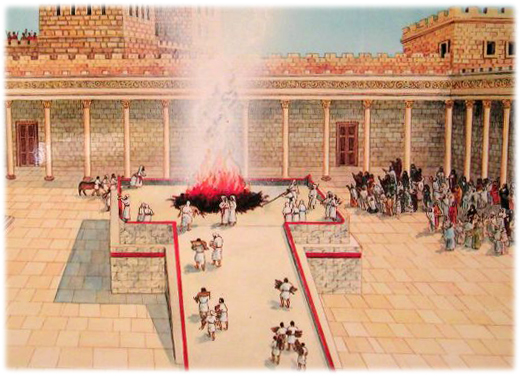
Korbanos (Sacrifices) are More Relevant Than Ever and We Should Pray for their Return

In a recent, highly controversial blog post, “Please G-d, Help me to understand why we must pray for a Third Temple!” the author offers arguments in the form of a prayer to God against the reinstatement of animal sacrifices and bluntly asks, “Is the rebuilding of the Holy Temple in Jerusalem what is best for us?” As a basis for his position and plea, the rabbi contends that both the Rambam and Rav Kook believed that the third Temple will not include korbanos (animal sacrifices).


In his usual scholarly and compelling fashion, Rabbi Dr. Ari Zivotofsky already rebuffed such an assertion in a compelling and conclusive way. He concludes his article by saying, “So will there be sacrifices in the Third Temple? The overwhelming majority opinion is that there will be. Rambam and Rav Kook seem to share this view.”


Many responses to the blog post correctly point out how absurd such a personal “prayer” is, given the centrality of longing for the third Temple in general, and pining for the return of sacrifices in particular, are to our liturgy, observances, and Jewish consciousness. They bring countless sources from Tanach, our siddur, and ma’amarei chazal (statements of our sages) that see redemption and the eschatological era as synonymous with the building of a third Temple and the return of the system of sacrifices.


Rather than seek to contribute to the conversation from the perspective of scholarship or theology, I would like to offer a thought from the perspective of symbolism and meaning. The author of the controversial post argues, in the form of a letter to God:


While livestock was once our primary resource and a meaningful sacrifice, today Your world operates in a different model of commerce. We would have new and more powerful contributions to sacrifice. Your people must be a light to the nations, not a source of darkness by returning to a practice once deemed honorable but now perceived by the global masses as barbaric. The Jewish people have transitioned in our own existential consciousness and our spiritual relationship to our animal’s slaughter has been altered irrevocably.


There is no question that the notion of animal sacrifice seems bizarre and inexplicable to us. Indeed, as the author suggests, offering sacrifices seems to modern man barbaric, archaic and brutal. However, it seems to me the discomfort we have with offering sacrifices is not so much an expression of moral opposition or protest, but rather a direct result of our unfamiliarity and inexperience with them.


Why do I say that? Because we bind ourselves with animal parts every morning when we don our tefillin, we kiss animal skin hanging from our doorposts when we reach for our mezuzas, and we have regular public readings from our Torah scrolls made of animal skin and tied together with animal sinews and veins, all of which we feel is normal and mainstream. Observant Jews recognize these mitzvos as non-negotiables: obligations that are incumbent upon us. Though we may find them strange or peculiar, our devotion to them leads us to study their symbolism, meaning, and purpose and thereby to seek inspiration and fulfillment through their mandated performance.


Animal sacrifices seem strange or even offensive because we have never performed them or even observed them. For the last two thousand years, since the destruction of the second Temple, not only are we not commanded in sacrifices, but we are prohibited from offering them.


While we don’t offer actual sacrifices today, our prophets ensured that their theme and purpose would not be forgotten or neglected in the absence of the Beis Ha’Mikdash. “U’neshalma parim sefaseinu,” said the prophet Hoshea (14:3). “And let our lips replace the (sacrificial) bulls.” The Midrash (Shir HaShirim Rabbah 4:3) teaches that when we are precluded from offering physical sacrifices, Hashem considers our recitation of the sections that describe them as a substitute. Though, sadly, few are there in time or pay it the proper attention, in fulfillment of the prophet’s charge, our davening each and every day begins with a reading of the korbanos.


Why do korbanos play such a central role, even today, when we can only speak of them, in achieving atonement, personal growth, and closeness to Hashem? In his commentary on the Siddur, Rabbi Samson Raphael Hirsch offers a magnificent insight into the symbolism and purpose of korbanos. We offer animals not as an act of barbarism or to satisfy carnivorous cravings. Rather, says Rav Hirsch, we purchase an animal, bring it to the Temple, and have it sacrificed, to make the statement to the Almighty and to ourselves that we are eager and willing to sacrifice the animal inside us.


In Jewish thought, man lives in two dimensions simultaneously. On the one hand, the Talmud observes, we are members of the animal kingdom who share in common the three basic physical activities of animals: eating, elimination, and reproduction. On the other hand, we have been endowed with a tzelem Elokim, a Godly soul, providing us the capacity to be disciplined, exhibit self-control, and reign sovereign over our instincts and impulses. Life is a perpetual battle between our animal urges that draw us to worldly pleasures and our Godly soul that yearns for higher purpose and satisfaction. A korban, ritual animal slaughter, is a pledge to suppress and control the animal in us and do more to have our tzelem Elokim triumph in its battle.


Rav Hirsch continues by explaining that the practice of sprinkling the blood of the sacrifice corresponds with our commitment to direct our passions to Hashem. The burning of the fats represents our efforts to eliminate gratuitous indulgences. The offering of soles (flour) and shemen (oil) remind us that all our sustenance and wealth are granted only with the consent of the Divine, and therefore must be directed to Him in the form of an allegiance-gift (mincha).


Herein lies the great irony in the controversial blog post. The author essentially argues that we have progressed, become more advanced, sophisticated, and cultured, and therefore sacrifices are not only irrelevant to us but they should be repulsive to us. In light of Rav Hirsch’s insights, I would suggest the exact opposite. Yes, we have progressed in so many meaningful ways.


However, in the area of the battle between the animal and the Godly soul, the temptations of the physical world versus the quest for spirituality, we not only have not progressed, but a survey of advertisements, websites, themes of movies and TV, and behavior of politicians and celebrities shows that we have regressed. The world of marketing seeks to exploit the animal impulse inside us all with messages like “Obey your thirst” and “Just do it.” Look at the infidelity rates and the obesity statistics and you cannot help but conclude that for many modern people, the animal instinct is defeating the Godly, disciplined soul.


And it is not just in the “outside” world that the battle is being lost. Within our own community and if we are to be honest, within ourselves, the battle is raging and victory for the tzelem Elokim is far from a foregone conclusion. Challenges with ostentatiousness, excess, modesty in all forms, food indulgence, unhealthy competitiveness and the race to keep up with others is evidence that while we the Orthodox community have made progress in so many remarkable ways, we too have regressed when it comes to the pursuit of the piety that results in the defeat of the animal instinct to the will of the Godly spirit.


The message and symbolism of animal sacrifices are in fact more relevant than ever for our generation and our culture, not less. Our prayers and pleas should not be in protest of a third Temple or in opposition to the notion of sacrifices but in desperation for them and their assistance in helping us realize our potential as Godly souls over our endless animal temptations.


My prayer is not that God nullify sacrifices, but that we, His people, renew our efforts to study them, to recite them with deep kavannah (intent), and to find in them the strength to begin each day with a pledge to slaughter the animal inside us so that all of our behavior and actions be at the direction solely of our sacred tzelem Elokim.


The Question We Desperately Need an Answer To

“Intermarriage is a fact of life and we should be more welcoming when it happens.” That was part of the reaction of the chief executive officer of The United Synagogue of Conservative Judaism to a recent controversial decision made by the leadership of the youth wing of the movement, United Synagogue Youth. At the annual international convention of USY last week, the board voted to relax its rules barring teenage board members from dating non-Jews.


The decision drew strong reactions with some suggesting that the media exaggerated the significance of the vote for sensationalism on the one hand, and on other, one young man authoring an article entitled, “Why I’m now a former Conservative Jew.” In it, he argues, “The addition of Hebrew words in the language which adopts the permissibility of interdating is truly laughable. Saying that recognition of all humans being created betzelem elohim serves as a justification for interdating and eventually intermarriage, makes about as much sense as me arguing I should be eating delicious bacon in my Sukkah because the Torah says v’samachta b’chageicha, v’hayita ach sameach (we should rejoice in our holiday and we should feel nothing but total happiness).”


One article on the issue declared that, “The [Conservative] movement is in the midst of a major identity crisis.” I don’t know enough to know if that is true. My interest is not in commenting on another denomination or their youth. Indeed, if anything, the passion and dedication of the USY youth leaders is commendable and hopeful though it does compound the concern that even affiliated youth can come to such a decision. My concern is for the attitude and trends towards intermarriage in orthodoxy.


It is not only the CEO of United Synagogue who sees intermarriage as a fact of life. Though the orthodox community may not be seeing more intermarriage in their nuclear families, there is hardly a family not exposed to or affected by intermarriage in their extended family in some way. Getting that call and being informed that a loved one is engaged to, or married to, someone outside our faith is incredibly painful. Trying to strike the delicate balance of communicating displeasure and terrible disappointment with their decision while maintaining love for them as a person is tremendously complicated and difficult to achieve.


While for centuries the response of Torah Jews to intermarriage was to sit shiva, disassociate, and ostracize those who married outside the faith, today not only is there no rejection, but there is often too much tolerance towards the intermarried and even gestures of welcoming, in an effort to maintain a connection and an avenue of Jewish influence.


Many poskim, understanding that intermarriage is becoming a fact of life, recognize that rejection will alienate and erase any possibility of interest in authentic conversion. Besides, in half the circumstances of intermarriage, the grandchildren will be Jewish and will benefit much more from the Torah influence and love of their family, rather than denunciation and estrangement.


A few years ago, I was standing with a friend who had recently moved from South Africa when we met someone who shared in passing that his wife was not Jewish. I vividly remember that when the person walked away, my friend was visibly shaken. When I asked him what was wrong he told me that coming from South Africa he had never actually met someone who married outside of Judaism and he was overwhelmed with sadness. At that moment, I too became terribly sad not because of having met someone who was intermarried, but rather because of the realization of just how numb and desensitized to intermarriage I had become.


One result of the growing number of intermarriage is a more casual attitude towards the phenomenon from our orthodox youth. When informally polled, most wouldn’t even consider distancing themselves from a friend who was dating a non-Jew and many don’t hesitate to say yes when asked if they would attend an intermarriage of a close friend. The more intermarriage grows and the closer it chas v’shalom hits to our homes, inevitably the more casual an attitude towards it we and our children will have.


I taught a class of high school boys this week and asked them for their reaction to the USY decision. While most were bothered by it, they struggled to articulate exactly why. I then challenged them with the following question: Why be Jewish at all? Why not just identify as a person, a kind human, a good American? Why differentiate ourselves? Why does being Jewish matter?


For the believer, the answer is obvious and simple. God created the world, He charged the Jewish people with a mission and mandate, and we entered a covenant in perpetuity to fulfill His commands and vision for our role in society. That answer is absolutely true and halevai it would satisfy all who ask. But what is the answer for those who waver and who are unsure? Why should a young Jewish man or woman who is unconvinced about either God’s existence or the divinity of His Torah, or who is confident in both but disaffected by the way religious Jews behave, continue to be Jewish?


For millennia, Jews didn’t have the luxury of asking why be Jewish. We had no other choice as our hostile host countries, through persecution and oppression, reminded us we were different. When we tried to retreat and segregate they didn’t leave us alone. When we tried to assimilate and integrate, they isolated us nonetheless. The United States, the great melting pot, has provided an opportunity heretofore thought impossible. A Jew in America can wake up one day, simply shed his or her Jewish identity, and society will welcome them with open arms, with no discrimination, and with no reminders of their roots and origins.


It would be easy, I explained to the teenage boys, to argue that we owe it to our grandparents who suffered through the Holocaust and lost so much in the name of Judaism to remain Jewish. But, as Rabbi Korobkin demonstrated so importantly in a recent article, teenagers and millenials are not moved, convinced or inspired by what they perceive as clichéd answers. Anti-Semitism as a motivating factor for Judaism is simply not compelling today and perhaps never was.


Which brings us back to the question, why be Jewish? Why does the world need the Jewish people? Why should young Jews feel a responsibility to continue, promote and drive Judaism forward?   If you were in the room for that USY vote, what would you say?


If our goals are to both change the statistics of intermarriage and the growing comfort level we seem to be having towards it, we need to formulate compelling, meaningful and convincing answers to precisely this question. Our answers cannot be clichéd, judgmental, or trite. This question needs to be addressed at our Shabbos tables, in our children’s classrooms and from the pulpit. While I have thoughts on this issue, I prefer hearing your answers before suggesting my own. Together, we can make a difference by simply generating this critical conversation.


Persuade, Don’t Preach

Earlier, this week, Rabbi Lord Jonathan Sacks addressed an assembly of the high schools of our community. He was introduced beautifully by ninth grader Jonah Tripp who said, “To me, Rabbi Sacks is known as a permanent fixture in my home. His books line our shelves and our family so often quotes him at our table; his perspectives, Divrei Torah and thoughts are so pervasive throughout my home that it seems as though Rabbi Sacks spends every Shabbos meal with us.” Jonah went on to articulate the excitement and enthusiasm that not only he, but also his classmates and friends, felt in anticipation of hearing Rabbi Sacks. “I want to thank my Bubbies and my Zaidies and my parents for showing me that it is not a sports star nor a political leader, but rather the meeting of a Torah scholar of our generation that ignites such excitement.”


Last year I spoke with a young man who proudly identifies as a Jew and a staunch Zionist but has abandoned most of an observant lifestyle, despite having completed twelve years of Jewish education and having been raised in an observant home. During our fascinating exchange I asked him what, if anything, would change his mind about the direction of his life. He answered, “The only person in the universe who I think could inspire me to keep Shabbos once again is Rabbi Sacks. After a meeting with him, I would likely return to an observant life.”


There is no question that Rabbi Sacks is brilliant. He has written twenty-five books, holds sixteen honorary degrees, has a seat in the House of Lords, was knighted by the Queen, is a regular on the BBC, and his thoughts on the Parsha are quoted at Shabbos tables and from pulpits in shuls around the world every single Shabbos. Rabbi Sacks is not only revered in the Jewish world, he is highly acclaimed and admired in the United Kingdom and around the world.


At a gala dinner marking his retirement from serving as Chief Rabbi, Tony Blair described him as “an intellectual giant … He is somebody who … has made an extraordinary, outstanding contribution, not just to British and International Jewry, but to British and International public life.” Gordon Brown asked, “How do you sum up someone who is the greatest scholar you know, the greatest philosopher, the greatest writer you know, one of the greatest thinkers in the world?”


What is so special about Rabbi Lord Jonathan Sacks that inspires incredible excitement from a ninth grader and his classmates? What is it about the former Chief Rabbi of the United Kingdom that makes a young man confident that after one interaction he would be motivated to transform his lifestyle and to grow spiritually? Why do so many in the Jewish and non-Jewish world alike find him so intriguing, compelling, and inspiring?


In September of 1991, at his Installation address as Chief Rabbi, Rabbi Sacks called for a decade of renewal based on five central values: “love of every Jew, love of learning, love of God, a profound contribution to British society, and an unequivocal attachment to Israel. Indeed, looking back over twenty years later, these are exactly the themes that have permeated Rabbi Sacks’s writings and have attracted so many to follow him.


I submit to you that Rabbi Sacks’s great impact and influence are not the result of his profundity, perspicacity and scholarship alone, but as or more importantly, result from his consistently positive messaging, optimistic outlook, and highly attractive vision.


Our rabbis have taught, divrei Chachamim, b’nachas nishma’im, the words of the scholars are embraced when delivered softly and gently. Additionally, they taught, Chachamim hizharu b’divreichem, scholars must be exceedingly measured with their words. Rabbi Sacks is an outstanding role model in heeding this wise advice and as a result, his messages are consistently heard.


Chazal understood that people are never motivated to change their minds or behaviors because of rhetoric, name-calling, vitriol, condemnations, or sweeping generalizations. When that language is employed, nobody is swayed. Those who were previously in agreement with the position being presented are already on board. Those that don’t agree, upon hearing the manner in which the idea is presented, simply disengage and stop listening, thereby precluding any possibility of being persuaded.


Communicating effectively and meaningfully requires dignity, nuance, refinement and words that are both measured and delicately scripted. Rabbi Sacks has mastered this style and the results are astounding. When we have the privilege of hearing him speak in our Shul this Shabbos, I urge you to not only listen to the content of his talks, but to pay close attention to the manner in which he delivers them..


Each week brings with it unfolding events that draw strong feelings and thoughts from us all. Who doesn’t have opinions about issues ranging from the announcement of executive action on immigration, the recent horrific terrorist attack in Israel, the events in Ferguson, the failed negotiations with Iran, to the setting of the thermostat in Shul.


If we want to not only talk, but to be persuasive and have our words considered in shaping others opinions, we would do well to follow the advice of chazal and the example of Rabbi Sacks and be thoughtful, careful, measured, and dignified when sharing all of our opinions.


Infertility Etiquette

Many of our young men and women of marriageable age assume that when a couple decides it is time to start a family, it is simple to conceive and bring a healthy baby into the world. In fairness, they have good reason for making that assumption. Growing up they often hear “mazel tov”s and see birth announcements, they attend brises and baby namings and they witness the growing families around them. Children are a central focus of Jewish life and living, and our young people understandably assume that having them is fairly easy and straightforward.


But they are wrong. What they don’t hear about, because we don’t talk about it, are those suffering and struggling in silence and privacy, desperate to bring a baby into the world and eager to become a mother and father for the first time, or once again. There are more than seven million people of childbearing age in the United States currently struggling with infertility. Up to twenty percent of those who do become pregnant experience a miscarriage. Eighty percent of those miscarriages occur within the first trimester, when the couple is unlikely to have told anyone they were expecting and before the woman begins to show.


Infertility and the pain associated with it are unfortunately nothing new. The Gemara (Yevamos 64a) teaches that our matriarchs and patriarchs struggled with barrenness. The Seforno on our parsha points out that Yitzchak was forty when he got married and the Torah says he was sixty when Yaakov and Esav were born. Together, Yitchak and Rivkah suffered with infertility for twenty long years, praying, longing, and waiting to see the fulfillment of God’s promise to build a nation.


Rachel, too, knew the pain of childlessness. She screamed out in pain, “im ayin, meisa anochi, if I don’t have a child I am already dead,” from which the Gemara (Nedarim 64b) teaches that to live without children is to experience a form of death.


Resolve, the National Infertility Association, writes on its website:


Infertility can feel like a death, like a prolonged mourning process as dreams die and hopes are dashed… The pain is similar to the grief over losing a loved one, but it is unique because it is a recurring grief. When a loved one dies, he isn’t coming back. There is no hope that he will come back from the dead. You must work through the stages of grief, accept that you will never see this person again, and move on with your life.


The grief of infertility is not so cut and dry. Infertile people grieve the loss of the baby that they may never know. They grieve the loss of that baby who would have had mommy’s nose and daddy’s eyes. But, each month, there is the hope that maybe that baby will be conceived after all. No matter how hard they try to prepare themselves for bad news, they still hope that this month will be different. Then, the bad news comes again, and the grief washes over the infertile couple anew. This process happens month after month, year after year. It is like having a deep cut that keeps getting opened right when it starts to heal.


This week, I met with three women whom I don’t know and who themselves only know each other from attending an infertility support group in Boynton Beach. They came with difficult and complex halachic questions about IVF, surrogacy, the use of gestational hosts, and Jewish status. I explained to them that I am far from an expert in these areas, but I am absolutely committed to researching their questions and helping them in every way that I can.


We then got into a discussion of the challenges of struggling with infertility and the acute pain, financial hardship, and intense loneliness that they have each felt. The women shared the often-prohibitive cost of treatments, with one of them having spent over half a million dollars and the others depleting their savings to cover bills totaling a quarter of a million dollars. Two of the women have babies as a result and I pray that the third will have her dreams of being a mother realized in the near future.


A common theme of the agony they described was the loneliness of going through this hardship without the explicit knowledge, awareness, support, love, or assistance of others. Those with infertility or who have suffered a miscarriage are grieving without anyone even knowing. They are forced to spend their days interacting with others as if all is well, when in fact it isn’t.


Worse than the indifference of friends and acquaintances, these women described, is the unintentional insensitivity of so many who have been blessed with healthy children and who make comments, tell stories, share pictures, or complain about their kids.


I walked away from the conversation pledging to myself and committed to encourage others to be better, more sensitive, and more aware of the comments and passing remarks we make at Shabbos tables, in shul, and on Facebook. If it were our son or daughter, or our brother or sister suffering with infertility, we would measure our words, think carefully about what we say, and anticipate the potential impact of all we do. When planning our simcha we would think about how we could be sensitive to our loved one who may never be in a position to make a bar or bat mitzvah or a wedding.


Well, those suffering are our loved ones. They are our brothers and sisters and we must bring that level of vigilance and mindfulness to our behavior to ensure that we don’t even unintentionally contribute or compound their already unbearable pain. When hosting a simcha or sharing about our children or grandchildren, minimally, we should always reference how fortunate and blessed we feel, that we don’t take it for granted and that we pray for those who don’t have children.  We should mention the challenges of infertility in Chassan and Kallah classes, not to God forbid scare the young bride and groom, but to responsibly manage their expectations.


Resolve has a helpful page on its website called infertility etiquette in which they remind us not to be nosy, ask inappropriate questions, make assumptions, gossip, or minimize someone’s challenge. Instead, they say “The best thing you can do is let your infertile friends know that you care. Send them cards. Let them cry on your shoulder. If they are religious, let them know you are praying for them. Offer the same support you would offer a friend who has lost a loved one. Just knowing they can count on you to be there for them lightens the load and lets them know that they aren’t going through this alone.”


In the near future, we hope to start a support group for infertility and a support group for miscarriage and stillbirth. For more information or to share ideas of how we can be promote more sensitivity or be helpful, please contact me at reg@brsonline.org.


Our matriarchs and patriarchs ultimately saw their dreams fulfilled and we are here today as a result. May all those yearning for healthy children see their hopes and aspirations come true and may we all get only yiddishe nachas from the children whom we are so blessed and fortunate to have.


A Good Reason Not to Lose Faith in the Rabbinate – the Rebbetzins (Guest Post)

(Guest Post by Rebbetzin Yocheved Goldberg)


In the wake of the recent horrific rabbinic scandal there has been a loud call for the inclusion of more women’s voices in the administration of the Mikvah, involvement in conversion protocols, oversight of the rabbi, and leadership of the Jewish community. There is no doubt that women have a distinct perspective, great wisdom, and much to offer in these areas and many others, and their continued participation should be encouraged.


However, it should not go unsaid that in almost every single Jewish community, there already is a woman in a position of great leadership who helps shape the vision and agenda of the community, who has full access to the rabbi and is uninhibited to speak with him freely: the Rebbetzin. I recognize that not every rabbi’s wife has an interest in serving in the traditional role of rebbetzin, nor is she required to. However, the position of rebbetzin, while unofficial and unpaid, affords tremendous opportunity to impact the community with a woman’s perspective and priorities.


As rebbetzins, we learn with bat mitzvah girls, kallahs, and conversion candidates, we are often involved in the supervision and maintenance of the mikvah, we teach classes, field questions, host people at our Shabbos and Yom Tov tables and partner with our husbands in leading the community. Additionally, rebbetzins are charged with keeping their husbands humble, reminding them that at home they are not rabbi, but father and husband.


Rebbetzin is a role that I cherish and feel blessed to fill. It is not an easy job, and I’m sure there are times when I don’t do it well, but it is deeply rewarding and extremely meaningful. It impacts my children in a positive way and I feel enriched from my involvement in the community and from my interaction with its members.


Although there is no formal schooling or graduate program for this unique position, we are so fortunate that Yeshiva University, and Rebbetzin Meira Davis who runs the program each year, deeply value the role of the rebbetzin and find it necessary to nurture our growth and inspire us in our roles. It is for this reason that for the last number of years, they have organized a two-day conference for rebbetzins, the Rebbetzin Esther Rosenblatt Yarchei Kallah. Every year, I look forward with great anticipation to gathering with other rebbetzins from all over the world to study together, hear thought-provoking presentations, and enjoy the camaraderie of mentors, peers, and friends.


This year’s conference, which was held earlier this week, focused on the goal of “Nurturing Our Strengths and the Appreciation of our Role as Rebbetzin.” The themes and ideas that were presented were vast and touched upon many different aspects of our rebbetzin role. We started out with a session about how we can best attempt to inspire today’s youth and bring them closer to spirituality and a love of Hashem. We had a frank discussion with Rabbi Dr. Abraham Twerski on addiction and substance abuse in our communities. We learned from tremendous role models about resiliency and how to stay strong during the most difficult times.


Dr. David Pelcovitz taught us about the Jewish and psychological approach to happiness.  He explained how there are three techniques to bring us Simcha. First, we need to count our blessings, because when you start to count them you realize that there are many. Second, we must set real and attainable goals for ourselves. Lastly, we should always attempt to savor every moment of our lives. He reminded us not to waste time on the phone and to always rush through our days, but to slow down and enjoy the little things in life and all that Hashem has given us. We were coached on how to help couples who are having a difficult time communicating with each other, and advised about the best methods for resolving conflicts in relationships.


One of the most important qualities of a successful rebbetzin is empathy and the capacity to feel the pain of others. Towards that end, we heard from a single woman about her experience in the singles scene. She explained in great detail about the hurtful things people said to her and the way she was treated and judged, and she gave us advice on how we can best help the singles in our communities. A very courageous and special woman who struggled with infertility explained her ordeal and the challenges she faced living in the Jewish community without children. In a timely session we had an open and frank discussion with a well-known therapist on what to do when confronted with crisis or scandal in general and we focused in particular on how we can best respond to the most recent scandals that have rocked the Jewish world. There were many other shiurim and sessions that were presented and each one gave me tremendous insight into who I am as a person first and foremost, and what I can accomplish as a leader within the community.


Each year I leave the conference with so much to think about and to incorporate into my life and role as rebbetzin. I return home with renewed excitement and enthusiasm to do more, be better, and serve you as best as I can.


Unfortunately, we have seen a crisis of faith in the rabbinate in the last few weeks and though the reason is understandable, the sweeping suspicion of all rabbis is unjust and undeserved. In fact, I left this conference feeling a strengthening of faith in our rabbis because I met and got to know many of their rebbetzins. The close to one hundred women who gathered together this past week are selfless, educated, spiritual, wise, nurturing, caring, remarkable people who voluntarily fill a role that is demanding, stressful, and often underappreciated. This conference reminded me that Jewish communities around the world are so fortunate to have exceptional women in the highly influential leadership position of rebbetzin and their husbands are lucky to have them at their sides, guiding them, advising them, and helping them reach their greatest potentials.


These outstanding women inspired me and spending time with them reminded me how fortunate and blessed my family and I are to be part of the Boca Raton Synagogue family. Being rebbetzin of a community filled with warmth, love, unity, gratitude and opportunity is something I will never take for granted. Though it is not always easy to balance communal responsibilities with family obligations, and I recognize that I cannot be both rebbetzin and mommy 24/7, I hope to continue to learn, grown and develop in this sacred role for years to come.


Women can be and should be in leadership positions. Thank God we are fortunate to have strong and committed women working hard for our communities each and every day, to insure a bright future for the Jewish people.


Is Challahween the Sequel to Thanksgivukkah or Totally Different?

Last year, due to a very rare intersection of the Jewish and Gregorian calendars, Thanksgiving coincided with the first day of Chanukah resulting in a day that was popularly referred to as Thanksgivukkah. This week a different overlap which occurs much more often will take place as Halloween falls on Friday Night. While Thanksgivukkah was widely embraced and broadly celebrated by many in the observant community, Challahween will go by without recognition or fanfare for what we think are obvious reasons, obvious until we try to articulate them.


In contemporary times, Halloween seems to lack religious significance and serves only as a platform to have fun, dress up and collect candy. What is wrong with putting on a costume, being friendly with the neighbors and satisfying our sweet tooth?


Unlike Thanksgiving, whose origins are consistent with our religious beliefs, Halloween began as the pagan Celtic festival of Samhain, a day on which the devil was invoked for various divinations. Encyclopedia Britannica says, “The souls of the dead were supposed to revisit their homes on this day and the autumnal festival acquired sinister significance, with ghosts, witches, hobgoblins…and demons of all kinds said to be roaming about.”


Today, the overwhelming majority of those trick or treating and dressing up, not only have no pagan thoughts or intent, but don’t even know Halloween’s historical background. So again, if all my children or I want to do is put on a fun costume and knock on neighbors’ door to collect candy with no religious association, what is the problem?


The Torah (Vayikra 18:3) cautions us from imitating chukas ha’akum, foreign practices and customs, not because we discriminate against non-Jews, but rather in an effort to preserve and support Jewish values, ideals and a distinctly Jewish lifestyle with pride.   The Rama, Rav Moshe Isserless, on his gloss on Shulchan Aruch (y.d. 178:1) rules that it is forbidden to observe a custom that has pagan origins, even in a secular context devoid of religious significance and meaning.


Dressing up for Halloween and trick or treating are a perfect example of the Rama’s ruling and perforce are forbidden. The issue is not judging or rejecting the practices of our non-Jewish neighbors as much as seeking to reinforce distinctly Jewish practices and Torah values in our families and communities.


Fascinatingly, despite Halloween’s designation as having pagan roots, several gedolim proudly distributed candy to those who knocked on their door trick or treating. The Artscroll biography of Rav Yaakov Kaminetsky describes how Rav Yaakov cheerfully handed out candy to all those who knocked on his door on Halloween.


Rabbi Akiva Males recounts his father- in- law’s memory of being in Rav Pam’s home on Halloween night.


“When my wife’s older sister became engaged in the 1990s, my in-laws took my (future) sister-in-law and my (future) brother-in-law over to meet Rav and Rebbitzen Pam and receive their bracha and good wishes. What’s the most vivid memory they all have of that evening? It was October 31st. In contrast to the many Jewish homes around the Pams who had turned off their lights to discourage trick-or-treaters, the Pams left their front light on. While they all chatted with Rav Pam in the dining room, his Rebbitzen was in the kitchen working the hot-air popcorn popper and preparing plastic baggies of popcorn to give out with a smile to all the local non-Jewish kids who knocked at their door.”


How do we reconcile the prohibition of observing Halloween with the stories of great rabbis responding so positively to trick or treaters?


Avraham Avinu, the founder of ethical monotheism and the father of our people, when purchasing a grave for his wife, described himself as “ger v’toshav anochi imachem, I am a stranger and a resident together with you.”


Rabbi Yosef Dov Soloveitchik zt”l explains that in this introduction Avraham captured the tension that every Jew is destined to live with forever.  On the one hand, we are toshavim, residents and inhabitants of the great countries in which we live.  We function as active citizens participating in the fullness of the society around us.  And yet, at the same time, we must remain geirim, strangers: different, apart, distinct and dissimilar.  Ger v’toshav – we are to simultaneously be part of, and apart from, the general world around us.  Striking the proper balance and equilibrium between our dual identities and roles is the mission of the Jew at every time and in every place that he or she has ever lived.


There have been periods in our history in which we didn’t need to work hard to remember that we were different.  Through their anti-Semitism, persecution and oppression, our hosts have often reminded us that we were geirim, we were not the same.  As badly as we tried to blend in, as hard as we tried to assimilate and as much as we sought to merge with those around us, we were denied the opportunity to be toshavim, equal residents and citizens.  Indeed, the imbalance which tilted towards being geirim, towards being different, was our default status for the bulk of our history.


And yet, at this moment in history, blessed to live in this great country, a truly exceptional place that has afforded us extraordinary opportunity, once again our balance is off, our equilibrium between ger v’toshav, stranger and resident, is out of alignment. This time, it is in the opposite direction with devastating results, as evidenced by the recent Pew study.


The observant community is not immune from the draw of assimilation and the temptation to do what everyone around us is doing, particularly when it seems as innocuous as dressing up and collecting candy. But it is specifically when things seem innocuous that in some ways they are the most threatening.


As part of a general movement in America away from particularism and towards universalism, there has been a shift in recent years from December greetings of Merry Christmas to a more generic Happy Holidays. At first blush, as Jews one might think we should be grateful for the nonspecific greeting which seems more sensitive to those who don’t practice Christmas.


However, I submit to you that, in fact, changing the greeting to Happy Holidays combined with the overall secularization and commercialization of much of Christmas doesn’t serve the Jewish people; it threatens to blur the lines that we rely on to distinguish us. The more secular Christmas becomes, the more accessible and inviting it will be to Jews who may someday have a tree and leave gifts under it, arguing that it has no religious significance to them.   It is just fun, like Halloween.


All one has to do is survey the young people who are struggling mightily with the rigorous expectations of observant Judaism and the traditional viewpoints of Torah towards many social issues of the day to realize how threatening the allure of being a toshav is and its impact on our religious community. Our generation needs to place a greater emphasis on the ger aspect of our identity, not out of a sense of retreat, isolationism or defensiveness, but with pride, excitement and enthusiasm for our Jewish holidays, practices and customs.


Recognizing our role as geirim, different and distinct, Rav Yaakov and Rav Pam most certainly would never endorse or permit Jews to trick or treat or dress up for Halloween. Yet, they understood that, at the same time, our identity as toshavim demands that we not turn out the lights, literally or metaphorically, when our non-Jewish neighbors knock on our door, but instead we greet them with warmth and cheerfulness.


On Challahween this year, I suggest we follow the example of our great leaders. We should graciously give candy to those who knock on our doors, while abstaining from dressing up or trick or treating ourselves.


Let’s use this Friday night around our Shabbos tables for a meaningful dialogue about the challenges of being geirim and toshavim at the same time. Let’s share ideas and strategies about how we can best preserve our Jewish identity and practices with pride, without having to forfeit our participation in and concern for the society around us.


Responding to Scandal With Nuance

Shocked, devastated, pained, violated, outraged, and anxious are just some of the understandable reactions to the despicable scandal that broke last week.  As has been pointed out, the mikvah is the most sacred space in a community: a place of purity, vulnerability, and exposure.  If the allegations are true, the conduct of the rabbi who is alleged to have placed cameras in his community’s mikvah is not the result of illness, and must not be excused as a rabbi having human fallibility and temptation.  Such egregious behavior, premeditated by definition, is evil and wicked, plain and simple, and he must be held accountable for his actions.


The list of those violated as a result of his behavior is long.  Obviously, the people videoed are the greatest victims for whom our sympathy and support must know no bounds.  The righteous converts who underwent a life transformation under his supervision have suffered unnecessary worry and angst about their status.  The members of his Shul, who placed their trust and faith in their Rabbi, have been unfairly drawn into the spotlight and forced to confront an unimaginable, terrible and distasteful scandal concerning their rabbi.  More broadly, among those suffering are women everywhere who use the mikvah, many of whom will now hesitate, pause or immerse anxiously and hurriedly and while distracted.  And of course, we can’t imagine the pain of his innocent family.


It is incumbent on the Jewish community to use this scandal to motivate us to evaluate our policies and procedures as they relate to mivkah, to review how our mikvaos function, and to identify ways that we can do more to preserve modesty and integrity, and provide comfort and reassurance to those who rely on us.  Undoubtedly, there are improvements that can be made and safeguards that can be put in place within our Jewish organizations and institutions and some of them are already being implemented.


As a Vice President of the Rabbinical Council of America, I am proud of our swift action to unanimously suspend the perpetrator from our organization and to state publicly that “conversions performed by the perpetrator prior to his arrest remain halachically valid and prior converts remain Jewish in all respects.” Moreover, the RCA announced that “every Beit Din assembled under their Geirus Protocol and Standards (GPS) will appoint a woman (or group of women) to serve as ombudsman to receive any concerns of female candidates to conversion.” Additionally, “This week, the RCA will appoint a commission composed of rabbis, lay leaders and mental health professionals (including men and women) to review the current GPS conversion process and suggest safeguards against possible abuses.”


But, there is one more group that has been violated by the unconscionable behavior of the accused rabbi: namely, we his colleagues.  His behavior has placed a stain on the rabbinate and given rise to an atmosphere and mood of suspicion and distrust towards rabbis in general.


I understand the pain and I recognize the devastating hurt.  I share it.  While women are the primary victims, one does not have to be a woman to feel outrage.  The suspicion and distrust of leaders, particularly of rabbis that has rapidly swelled is understandable. After all, the perpetrator was trusted, admired and respected. Who would have believed he was capable of what he allegedly did? And therefore, who knows what my rabbi or community leader might be doing as well?


A survey of articles, blog posts, and social media comments reveals an almost wholesale, sweeping condemnation of rabbis, members of rabbinical conversion courts, mikvah caretakers, and, in some cases, all men.  The cynicism, skepticism and distrust are understandable. But are they healthy for the Jewish community? Are they fair to its leaders? And will these attitudes ultimately be helpful and productive in fostering the safe environment and positive changes that we all seek?


The Gemora tells us and the Shulchan Aruch quotes: “rov metzuyin eitzel shechita kesheirim heim.”  There is a chazaka, an established assumption, that the majority of those that engage in shechita, ritual slaughter, are trustworthy, honorable and faithful.  For centuries, the shochet of the community had the confidence of the community.  The butcher shop didn’t have supervision or a mashgiach.  The butcher unlocked and locked the shop.  He wasn’t suspected and his integrity was not challenged.


But that changed. Enough scandals and too many violations caused the global Jewish community to require supervision, checks, balances and oversight. Did the butcher lose his chezkas kashrus, his assumption of trustworthiness? Do we now assume that all butchers are liars and thieves such that we must vigilantly supervise them? No. Their intrinsic and assumed trustworthiness remains, but circumstances require us to take precautions and institute reasonable safeguards in order to eliminate and protect the community from the rare individuals who seek to perpetrate fraud.


The behavior of one revealed to be corrupt and immoral, even if it is the exception, can and should motivate us to improve our systems and governance. This improvement does not represent a concession that corruption and immorality are the new status quo and therefore leave anyone justified in slandering and vilifying others.


Our reaction to this horrific revelation must be swift, strong and unwavering. But it also must be thoughtful and nuanced. In our pursuit of justice we must be just towards those whose presumption of innocence and whose integrity remain.


To be clear – this scandalous behavior did not happen because the perpetrator was a rabbi or a man.  It happened because the perpetrator is an immoral, depraved pervert.  This crime could have been committed by a female mikvah attendant, a corrupt rebbetzin, or a degenerate maintenance man.  It could have happened in the women’s bathroom in shul, in the changing room at the “frum” women’s clothing store, or in the locker room at the women’s only gym.


Calls for safeguards, improved supervision, and greater input and leadership by women are important and welcomed. However, sweeping indictments of rabbis and promoting a culture of suspicion towards all leaders is an unfair and counterproductive injustice. Opportunistic calls promoting various agendas that in truth are totally disconnected from this scandal are distracting from the real changes and unifying efforts that we need to be working on together.


Rabbis are not perfect, not above the law, and in need of feedback, supervision, and accountability. But make no mistake, this scandal did not happen because rabbis form the batei din of conversion or because rabbis hold the “keys to the mikvah” or because rabbis don’t have annual reviews. It happened because a disturbed individual behaved in a deplorable and unforgivable manner. It is fair to explore what safeguards can prevent such behavior in the future. However, it is not fair to impugn the reputation of rabbis everywhere, many of whom work tirelessly, selflessly, and at great personal sacrifice with integrity, honesty and sensitivity.


In July, Johns Hopkins Hospital agreed to pay $190 million to 8,000 patients of a gynecologist who worked for them and was found to have been recording his patients with a spy pen.  It was found that the doctor often did not have a nurse in the room during examinations, something that should be done consistently.  Certainly, there are lessons to be learned for the medical community from this episode.  But would it be reasonable or responsible to suggest that all male doctors are somehow suspect or that only women should be ob-gyns, with no men in that specialty at all?


Our tradition teaches us, hevei mesunim b’din, be cautious and careful when issuing judgments.  Understand the ramifications and unintended consequences of how we react when a scandal breaks and the damage we may cause to those who don’t deserve it.


Above all, I pray that those victimized find healing, comfort, and the strength to maintain faith in leaders, and in the beauty of Judaism, Torah, community, and Mikvah.


I pray that my colleagues and I will all have the courage, commitment, integrity and conviction to evaluate how we can improve our institutions, organizations, Shuls, communities, and mikvaos, because we can always get better, without having to accept guilt for something we have not done.


And I pray that all of our responses and reactions, in print, on the internet and around our Shabbos tables, be nuanced, thoughtful, fair and just.


Rabbi Efrem Goldberg

Join Our Community

Subscribe to our newsletter or connect with us on WhatsApp.
