Beyond Blue and White and Daglanut: What Does it Mean to be a Religious Zionist in America?

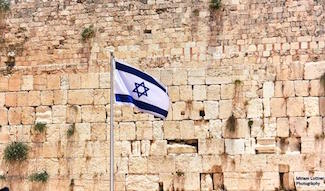
Image result for israeli flag kotel

A few weeks ago, we marked Yom Ha’atzmaut, Israel’s Independence Day, celebrating a return of Jewish sovereignty to our homeland after nearly 2,000 years of longing and praying for it.  Our community held a Yom Hazikaron/Yom Ha’atzmaut program with approximately 250 people in attendance.  By most measures, that number indicates a successful event.  But, when one considers how many members we have and how many more regularly participate in other Shul programs, one would expect a much higher attendance, especially given our community’s strong connection to, and passion for, the State of Israel.  Unfortunately, low attendance at events such as the one held in Boca seems to be the norm in many other religious Zionist communities as well, with many rabbis reporting empty seats at similar events.


For many people, Hallel on Yom Ha’atzmaut and Yom Yerushalayim are the measure of whether someone is a religious Zionist.  There is a lot of discussion and emotion in the debate about Hallel with a beracha, without a beracha, during davening, or after davening.  Every rabbi interviewing for a job in a modern orthodox community is guaranteed to receive that question and in many communities, his answer can make or break his pruba.


And yet, the absence of those who identify as “religious Zionist” from both Yom Ha’atzmaut and Yom Yerushalayim programs as well as from the morning davening with Hallel has left me wondering exactly what it means to be a religious Zionist in America today.  If one’s Zionism isn’t expressed through participating in these opportunities, where and how does it show?  Sending your children to a school that serves blue and white cookies or choreographs daglanut does not alone make you a religious Zionist.  So what does?  While I have not arrived at a definitive answer, it seems to me that the following factors are key ingredients:


Belief in the centrality of Israel


The Torah is replete with references to the centrality of Israel in the realization of our national destiny and the fulfillment of our people’s purpose and mission in the world.  Hashem’s vision is for Am Yisroel, the Jewish people, to observe Toras Yisroel, His sacred Torah, in Eretz Yisroel, His singular land.  While we may feel comfortable or even have a sense of patriotism elsewhere, a Jew must always recognize and be mindful of the centrality of Israel to our religious lives, individually and collectively.


Gratitude


If one truly appreciates the singularity and centrality of Israel and connects with our national longing to return to our land, he or she will not only be overwhelmed with gratitude for the miracles of the modern State of Israel, but see this reality as religiously and theologically significant.


We are called “Yehudim” because we are characterized by the quality of hoda’ah, gratitude.  To be a Yid, a Yehudi, is to be filled with gratitude to Hashem for the blessings in our lives.  Meriting to live in the generation that can travel the width and breadth of Israel, daven at its holy sites, and visit its special places, is among the greatest blessings our ancestors could have only dreamt of, and certainly deserves our regular appreciation and gratitude.


Israel Consciousness


While we care about our fellow Jews around the world, our relationship with and connection to our brothers and sisters in Israel is qualitatively different.  In the laws of tzedaka, there is a hierarchy to our giving priorities that includes giving to the indigent in our community first.  Yet, wherever one lives in the world, one must prioritize giving to Israel because even though we may not live there yet, in a real way we are all potential residents of the country.


Feeling like a resident of Israel even while living in the diaspora means following the news from Israel closely, sharing in its successes, and being pained by its challenges.  It means advocating and lobbying on behalf of Israel.  It means contributing our resources in a meaningful way to Israel.  It means raising our children to think about Israel like their hometown, rather than like another foreign place they don’t live.  It means connecting regularly with family and friends who live in Israel and communicating our sense of identification with all that is happening in Israel.


Aliyah


At any given moment, there are many legitimate reasons not to make Aliyah, but there are no legitimate reasons not to struggle with it.  According to Rav Moshe Feinstein, living in Israel is not just an ideological and historical reality, it is the fulfillment of a mitzvah.  The Ramban writes that, in fact, all mitzvos are only truly fulfilled in Israel.  Mitzvah observance outside the land is obligatory, but serves only to habituate us and prepare us for when we will fulfill them in Israel.  This insight should generate a discomfort and sense of impermanence with living in America, even if our being here is warranted at the present time.


Community


You can subscribe to the centrality of Israel, feel gratitude for the gift of Israel, struggle with Aliyah, and be mindful of our brothers and sisters there, all without coming to Shul.  Nevertheless, there is one aspect of practicing a love of Israel that is lacking at home.  Shlomo HaMelech taught us that “B’rov am hadrat melech, In the multitude of people is the king’s glory.” (Mishlei 14:28)


The importance of community is axiomatic to Jewish life. For a mourner to say Kaddish and be comforted, there must be people who are present and can respond.  For a couple to be blessed with the recitation of sheva berachos at the meals that occur during the week following their wedding, there must be not only a minyan, but panim chadashos, new faces, guests who physically come to share in their joy.


Milestones and special moments, both happy and sad, cannot be adequately observed in an online community, even with the incredible help of Skype or FaceTime.  Imagine a wedding where the bride and groom stand all alone under the chuppah with all their friends and family Skyping in or “liking” the Livestream, or a funeral where the loved ones physically stand by themselves, even if people are watching it online.


Valuing, cherishing and loving Israel means participating in, and being counted among, a community of people who love Israel.  Many self-identify as religious Zionists even though they have no desire or intention to make Aliyah, are not connected to the news from Israel and don’t participate in Israel advocacy or philanthropy.  For such people, the only thing left to be practicing Zionists is to at least show up at and participate in Yom Ha’atzmaut and Yom Yerushalayim celebrations.  Can those who fail to put in this minimum effort, and instead abstain from the opportunity to join with a community who do, truly call themselves religious Zionists?


Yom Yerushalayim


We will imminently mark the 50th anniversary of the miraculous reunification of Yerushalayim, but it almost didn’t happen.  At 4:00 in the morning a few days into the Six-Day War, then-opposition leader Menachem Begin awoke with a premonition and turned on the radio. He heard on the BBC that a vote was occurring at the UN to pressure Israel into a cease fire with its enemies who had been swiftly decimated. In the middle of the night, he called Prime Minister Levi Eshkol and begged him to call a special cabinet meeting to approve going into the Old City and conquering the remainder of Jerusalem. The meeting was called and Begin argued this could be an unique moment that history would not provide again. They would have to reclaim Jerusalem from the Jordanians before the international community pressured Israel to a cease fire.  A unanimous vote approved the military operation and just three hours later, the now famous statement, “har ha’bayit b’yadeinu, the Temple Mount is in our hands” was uttered.


After visiting the Kotel for the first time under Jewish sovereignty, Begin was asked what went through his mind.  “When I touched the Wall today I cried.  I suppose everyone had tears in their eyes.  Nobody need be ashamed.  They are men’s tears.  For the momentous truth is that on this day we Jews, for the first time since the Roman conquest of 70 C.E., have regained ownership of the last remaining remnant of our Temple site, and have own for ourselves free and unfettered access to pray there.”


Next week, Jews from around the world will be traveling to Israel to celebrate Yom Yerushalayim.  Will you travel to your Shul that morning to daven in a minyan?  Will you make your way to your Shul’s program and connect with the community of those who value the singularity and uniqueness of Yerushalayim and Eretz Yisroel?


I believe that for all of us who consider ourselves proud religious Zionists, these questions and considerations must remain front and center at all times, but especially on days of communal commemorations.  What a strong, powerful message of identification with, and appreciation of, the miracle of the State of Israel and a united Yerushalayim it would be if the upcoming programs across the country are standing room only with lines out the door to get in.


Visit Chalutza and Witness the Fulfillment of God’s Promise

Related imageWhatever one’s politics or perspective on the evacuation of Amona may be, the pictures and videos of Jews pulling other Jews out of their homes and Shul were indisputably heart- wrenching.  Though the circumstances were not identical, the images were reminiscent of the 2005 Gaza withdrawal and the painful evacuation of 10,000 Jews from their well-established communities.

Over Sukkos, my family and I participated in a one-day JNF tour led by Yedidya Harush, a young man who grew up in Gush Katif.  When there was a call for settling the Sinai, his parents moved there, only to be later evacuated from their home in Yamit.  They later settled in Gush Katif, responding once again to the call for settling a specific region of our ancient homeland.


In 2005, having now been asked to settle twice and subsequently forced to move, one might have expected the Harushes to move from Israel altogether, or at least retreat to another community with great anger, resentment, and disappointment.  But, rather than be disillusioned and disaffected, Yedidya, and many of those forced to give up their homes, responded very differently.  He described how they went to the government and said, “We are devastated by your actions and couldn’t disagree with them more.  Nevertheless, we want to know what you need us to do next. Where do you need us to go and what area needs settlement now?  What is our next mission?”


The government immediately pointed to Chalutza, an area located in the remote corner of the northwest Negev.  This area of the desert, which borders Gaza, Egypt, and Israel, had never been inhabited, settled, or farmed.  In fact, when Prime Minister Ehud Barak and Yasser Arafat were negotiating, Barak offered the area of Chalutza to the Palestinians.  Arafat took one look at the vast sandy desert and turned it down, claiming nobody could possibly make it blossom or bloom or produce anything of value there.


This statement brought to mind a maxim I’m fond of: “If you say it can’t be done, you’re right—YOU can’t do it.”  Arafat was right that he and his people could not have made the desert bloom.  However, Yedidya and other modern-day pioneers are not ordinary.  With vision, dedication, eternal optimism, and a deep sense of mission, over 100 families have already built new homes, founded magnificent communities, and planted acres of growing organic crops, all sitting amidst sand dunes and desert.  And 30 new families are scheduled to move into temporary homes and found a third town of Shlomit, in the Chalutza region.


Like many, I had been mistaken in thinking that JNF was only about planting trees, blue tzedaka boxes, and planting more trees.  That day, visiting numerous JNF projects, including the revamped Ammunition Hill, the indoor bomb-proof playground in Sderot, and a tour of Chalutza, we began to realize what JNF does and how indispensable it is to Israel’s past, present, and future.


JNF has supported Chalutza’s growth from the very beginning by clearing land for housing and farming, purchasing temporary prefabricated homes, laying basic infrastructure, and paving roads. As the region grows, it has been instrumental in providing social, medical, and educational services.


I have come to love, admire and support JNF because they are apolitical, uninterested in staking political positions, or directing policy.  Instead, they are singularly invested in helping residents across the width and breadth of Israel, by providing crucial assistance to the new Gush Etzion visitor center, Nefesh B’Nefesh, lone soldier programs, and so much more.  Look at a JNF map and you will see projects everywhere, with no lines being drawn to differentiate or distinguish between parts of our homeland.


It is so appropriate that we host a JNF weekend at BRS specifically this Shabbos as we celebrate Tu B’Shevat, but not for the reason you may think.  True, JNF is invested in planting trees and forests in Israel, but even more it is involved in planting and building communities, reuniting the Jewish people with and through our precious land.


R’ Eliyahu Kitov, in his Sefer HaToda’ah, writes regarding Tu B’Shevat, “It is customary to eat fruit which comes from the Land of Israel… The reason for the festive mood of the Rosh Hashanah of trees is that the 15th of Shevat bespeaks the praise of the Land of Israel, for on this day, the strength of the soil of the land is renewed.  When the soil of the Land of Israel renews its strength to give forth its riches, the people of Israel who love the land and yearn for it, also rejoice.”


The Talmud (Sanhedrin 98a) says, “There is no clearer indication of the ‘end of days’ than the blossoming of the land of Israel, as it says in Yechezkel, ‘But you, O mountains of Israel, you shall shoot forth your branches and bear your fruit for My people Israel when they are about to come.’”  Rashi explains that there is no greater sign of the redemption than when the land gives forth succulent fruit.


On the fourth day of the Fifth Zionist Congress in Basel, Switzerland in 1901, a Viennese journalist named Theodor Herzl stood up and made a passionate plea to create a fund that would purchase land in what was then Palestine.  The motion passed and the congress resolved that a fund, to be called Jewish National Fund (Keren Kayemet L’Yisrael), should be established and that “the fund shall be the property of the Jewish people as a whole.”


A visit to Chalutza is not a favor to its residents, though it does provide great moral and material support.  It is an opportunity to witness the fulfillment of God’s promise – that after 2,000 years of barrenness and desolation, our people would return to our land and our land would return to yielding its precious fruit and produce, something it had held back from doing for over two millennia.


Tu B’Shevat, long celebrated in exile with the hope and longing of returning to the Land and seeing it transformed from rocks and sand to green and lush fields, is celebrated today with the fulfillment of that promise and prophecy.  It is not a coincidence that many of Israel’s major institutions chose Tu B’Shevat as the day for their inauguration.  The cornerstone laying of Hebrew University took place on Tu B’Shevat 1918, the Technion on Tu B’Shevat 1925 and the Knesset on Tu B’Shevat 1949.


As we mark our annual JNF weekend this Shabbos, it is an opportunity like Yedidya to ask Israel, what do you need from me?  What is my next assignment to advance the mission of the Jewish people and how can I do my part?


This Shabbos, make a point of eating fruit of the seven species of Eretz Yisroel and celebrate how fortunate and blessed we are to be living in a time in which Tu B’Shevat is not about longing for the opportunity to return to our land, but having the privilege and chance to do so.


Their Job is to Look After Israel, our Job is to Look After Them


The emotionally charged expression “Sharing the Burden” means different things in different contexts.  In the context of the Jewish Day School tuition crisis conversation, sharing the burden means helping families find relief from the debilitating levels of tuition. In the presidential election season, sharing the burden is code for raising taxes. When it comes to serving in the IDF, sharing the burden refers to every segment of Israeli society participating in the army.  But sharing the burden when it comes to the IDF means something more and is not just about Israelis.


Israel is not the Israeli homeland; it is the Jewish homeland. The law of return states that all Jews have the right to return to, to live in, and to be a citizen of Israel. Most remarkably, Israel feels a responsibility not only to its citizens and residents, but has exhibited extraordinary steps to help protect and rescue Jews everywhere including Ethiopia, the former Soviet Union, and Argentina. Do we doubt for a moment that if, God forbid, a Jewish community were in danger or at risk anywhere in the world, Israel would step up and do whatever necessary to protect them or us?


Israel belongs to all Jews, not only all Israelis, and all Jews, not only all Israelis, must share the burden of protecting her. The question, then, is what are diaspora Jews doing to share the burden? I am not naïve or foolish. I understand that there are different rights and different obligations for those who live in the land and are legal citizens of it than for those who live outside. Our share in the rights is not as great: we cannot vote, for example. And our share in the burden is obviously not as great, as we in the diaspora are not conscripted into the IDF. However, what is not debatable or deniable, it seems to me, is that we have at least some share of the burden.


The obligation of Jews outside of Israel to share the burden of protecting her is not only a philosophical or ideological statement, it is a halachic one. The Talmud tells us that in the circumstances of milchemes mitzvah, a mandated war, all must participate, even a bride and groom who were standing under their chupa. The Rambam defines a milchemes mitzvah as “war against the Seven Nations, war against Amalek, and assisting Israel in defending herself from the enemy who descends upon them.” (Hilchos Melachim 5:1) His last definition certainly seems like an apt description of Israel’s condition today. The halacha doesn’t differentiate between those that live in Israel or outside her boundaries. Rather, in the circumstance of defending Israel from her enemies, halacha demands that all Jews, wherever they may live, must share the burden and participate in protecting the people. Technically, we should all be drafted into service, no matter where we may live.


And so, while in Israel they debate the question of Yeshiva students exemptions from army service, I propose that we in the diaspora ask ourselves how can we do more towards fulfilling our share of the burden?


The first and foremost suggestion is to consider aliyah. There are legitimate and valid reasons not to make aliyah right now. But, there are no excuses not to consider, struggle with, and plan for a time that we can move to Israel, the Jewish homeland and be part of the Jewish destiny.


Secondly, though we lack a legal obligation to serve in the IDF, we don’t lack a moral obligation to support the members of the IDF in every possible way that we can. I hear regularly from those serving in the IDF whose units have needs that cannot be met by the Army itself. Partaking in a small share of the burden means generously supporting organizations like Friends of the IDF (www.fidf.org) whose motto is “Their job is to look after Israel, our job is to look after them.”


This weekend is our annual Shabbat Ha’Chayal in partnership with Friends of the IDF.  Please consider supporting them directly, or through the Boca Raton based Helping Israel Fund who supports FIDF.  Additionally, while we don’t protect soldiers in the field, we can seek to protect them with our heartfelt prayers by always thinking of them, each and every time we pray.


Thirdly, sharing the burden means advocating for Israel and seeking to influence America’s policy towards Israel on a regular basis and in meaningful ways. Minimally, being a member of AIPAC, (www.aipac.org) and hopefully being active and involved, positions AIPAC to successfully lobby on behalf of Israel’s interests and to be the strongest voice influencing the policies of the US-Israel relationship in the world.


There are countless other ways we can share the burden even from the diaspora, such as by investing in Israel through Israel Bonds (www.Israelbonds.org), supporting organizations that care for IDF veterans (www.zdvo.org), and much more.


As we mark Yom Ha’Zikaron and celebrate Yom Ha’atzmaut this week, let us neither forget nor neglect our obligation to share the burden and let us pledge to do more for Israel this year than ever before.


Light the Candles and Be Inspired to Light Up the World

If Tisha B’av or Yom HaShoah represent days that commemorate dying al Kiddush Hashem, sanctifying God’s name, Chanuka is the holiday that celebrates living al Kiddush Hashem. Overcoming enormous pressure and persecution, the Maccabees refused to abandon their Torah way of life and to assimilate into the culture and religion that surrounded them. While facing persecution and oppression, they not only maintained their values, practice, and identity, but with great courage and resolve, they fought a much greater force both in number and strength, and ultimately triumphed in protecting our right to continue to live al Kiddush Hashem until today.


Each night that we light the menorah and seek to literally and figuratively illuminate the world and dispel the darkness, we follow in the Maccabees’ footsteps in making a Kiddush Hashem. As we gaze at the Chanuka lights, we are to remember that our mission and mandate as a people and as a community is to be a light unto the nations.


Last Shabbos, we had the privilege of celebrating Tani Gross’s bar mitzvah. Tani’s non-Jewish tennis instructor, Eon, was invited to be part of this major milestone in Tani’s life and he gladly accepted. He was nervous about attending a Synagogue and anxious about how he and his wife would feel. This week, he sent me the following letter describing the experience:


I have to be honest and tell you that I was really nervous about going to a place I have heard so much about. But I had no idea what to expect. Will I be treated as an outsider? Will people look at me and know that I don’t belong? Also what do I wear? Where do I sit? What does Jillian do? What if I do something wrong? As you can see I had lots of question and concerns. Luckily I had a few club members and friends help me out.


Once inside Gary [Krasna] showed me where to go, what to read, and was my personal guide. Not once throughout the service did I feel like I didn’t belong. I was out of my element, and a little lost most of the time. But I can honestly say that I was treated like family. Rabbi Goldberg even worked his way over to me before his sermon and wanted to make sure I was okay. And what a fitting sermon it was. The Rabbi talked about Joseph and how his brothers treated him. They hated him and could not speak a kind word to him. Rabbi Goldberg talked about how we treat people. Just because someone thinks different, looks different or in my case believes in something different, doesn’t mean we can’t be friends. One day our goal should be to even love that person.


Sunday was the big party and I felt much more comfortable by now. There was dancing and food, and more dancing and more food. Once again as the only two people at the party that were outsiders, you would never know it… So we ate, we danced, we laughed and never felt like anyone was judging us. It was a great night. I am so fortunate and blessed to have been part of Tani’s special day.


As I sit here now reflecting on my busy weekend I can’t help but feel a little sad that it’s all over. What I saw this weekend wasn’t just a Bar Mitzvah but rather a strong and loving community. It was a feeling of belonging to something that I really don’t. It showed me that the Rabbi was right. We may be different but doesn’t mean we can’t get along and can’t build better friendships. As Christians and Jews we believe in the same God; we are all God’s children and should treat each other in such a way. I would like Rabbi Goldberg to know that his congregation really does “value diversity and celebrate unity.”


Rav Wolbe explains that when the Chashmonaim risked their lives to fight a war for the sake of Hashem, they were, in effect, endeavoring to “make His Name great and holy in the world” (Al Hanissim).


Please God, we will never be challenged to have to fight an actual war to make His Name great, but we will face opportunities each day from the way we welcome the “outsider” to shul, to the way we interact at work, the supermarket or the gym.


May the lights of Chanuka inspire us to make His Name great and to light up the world with our actions, each and every day.


We May Be In The West, But Our Hearts Are In The East

Friends and family carry the body of Aharon Banita during his funeral at Har HaMenuchot Cemetery in Jerusalem on October 4, 2015, Banita was killed last night by a Palestinian youth in a stabbing terror attack in the Old City. Photo by Yonatan Sindel/Flash90


Almost every time I interact with individuals who have close family living far away who are going through a difficult time, they say something along the lines of, “It is so hard to know they are suffering and to be so far away. I think about them all day and only wish I could be there to show support at this time.” Feeling that way is a reflection of a healthy and close family. Conversely, not feeling that way may be a sign of dysfunction and an indication that the relationship needs work.


Our brothers and sisters in Israel are going through an incredibly difficult time. The “random” acts of terror throughout the country have left Israelis understandably terrorized, filled with angst, anxiety and constant worry.


I have been struggling for the last few days trying to identify what we, the Diaspora Jewish community, can be doing and should be doing to help. Of course we must daven, and our advocacy for a strong US-Israel relationship remains critical, but what can we be doing in this acute situation to ease the pain and provide support for our family going through this horrific period?


Rather than speculate or continue to wonder, I posed this question to members of my family who live in Israel. My sister-in-law Shayna, who lives in Alon Shvut (Gush Etzion) poignantly wrote back the following:


Over the last week I have gotten various emails from family, friends, and students in the US reaching out to tell me that they are thinking of me and my family during this horrible and very difficult time in Israel. It means a lot to me and to everyone here to know that we are being thought about. That other people are thinking about us and thinking about what it must be like to live here right now.  No one here wishes that our loved ones would truly understand what we are going through. But when someone writes and says that it is hard for them to just go about their normal life in America because they can’t stop thinking about the changes in our day-to-day life here in Israel–it means A LOT.  It means that you really care.  It means that you don’t just sympathize but you empathize.  It means that you are really imagining the thoughts that are running though our minds round the clock and the little things that we just can’t believe are part of day to day life right now.


It means you might have realized that:


I drive to work with my doors locked, my windows closed, my cell phone set on the number of the moked (the local security command center) and my pepper spray next to me in the car.


I sleep with a knife in my night table drawer.


I had a conversation with my husband about what should happen with our kids, G-d forbid, G-d forbid… and then wrote it down in my file cabinet because we don’t yet have a formal will. I thought I was crazy until I heard that lots of other people have done similar things.


I was sent a short movie by MDA (Magen David Adom) about how to treat a stab wound.


I watched a video on ynet (Yedidot Achronot) on how to defend yourself against someone stabbing you… and then sent it out to everyone I know.


I was sent protocol from the yishuv about what to do if someone is trying to shoot at your car. (Brake suddenly so that the bullets don’t hit and then do a quick U-turn.)


I haven’t shopped at my typical supermarket in two weeks because I can’t yet bring myself to enter a store where Palestinians shop freely.  I don’t want to pick out my potatoes with one hand on my pepper spray.


I thought twice and three times about whether I should let my third grader go on his class trip today.  I watched him leave my house, gave him extra kisses and had extra kavana in my tefila but I don’t want to raise him to be scared.


I’ve wondered whether the various Israeli Arabs that we have worked with in different capacities over our time here and had such nice relationships with are going to appear in the news any day. We thought they were peaceful until we saw that one of them had a whatsapp picture of the lightrail being stoned.


I had to share with my son more than I would have because Nechemia Lavi was his classmate’s uncle and the school let us know that the psychologist would be meeting with the class.


I have a sister who now has doubled her driving time to Yerushalayim, because the old route she took is more concerning.


I just wish that I could stay in Alon Shvut all day.  Ironically, the well-secured yishuvim are the safest place you can be right now.


And yet if you also thought hard and you know me well you might have also realized that:


I don’t regret our aliya decision for a second.


I feel a zechut to be living in the place where Jewish destiny plays out before our eyes.


I know I am in the place where I am supposed to be.  My kids know it too. They have not once asked to go back. They live with a fierce commitment to the values our ancestors lived and died for. They actually understand the Hebrew words they daven daily and thank us for bringing them here, the place they mention in tefila all the time.


I have bitachon that I am in G-d’s hands.  That He is in control.  That if He wants something to happen or not happen, it doesn’t matter where I am.  That He knows what is best even if we don’t always understand.


I have emuna that eventually things will improve. That this will also pass and that we will wake up to a brighter day.


The people of Eretz Yisrael are strong.


I smiled and then I cried today when I saw two teenage girls standing in the middle of the big traffic circle at Tzomet Hagush– all alone– just swinging huge Israeli flags out there in the exposed open–because they wanted to send a message.


For many of us, it is our kids who keep us strong.  Some of us have kids who are chayalim–who couldn’t come home for Shabbat when they were supposed to because of the matzav yet they go out and serve their country proudly and bravely and without complaint.


I have younger kids but today I heard one kid tell another that we need to be working on our middot so that Hashem looks upon us and all of Am Yisrael favorably.  That gave me chizuk.  It made me feel a little stronger.  It gave me something to do. Because there is not much else we can do.


So if you are thinking about us:


Daven a little harder, learn a little extra, be a little nicer, give a little more tzedaka, work on your middot a little….and let us hope that Hashem looks upon us favorably and says, “Enough is Enough.”


Thank you for thinking about us. It means a lot.


Her answer is both simple and profound. What would you do if your loved one who was far away was God forbid going through a very hard time? You would check in on them as often as you could, remain apprised of their situation, and consistently let them know you were thinking of them.


That is exactly what we need to be doing now as well. We cannot stop knife- and gun-wielding madmen. But even, or especially, from six thousand miles away, we can and must think about our family in Israel often each day and let them know we care as often as we can. Stay closely informed of what is happening in Israel, not because you are a news junkie, but because each update is about members of your family and you should be desperate to know what is going on with them. Reach out to friends and family just to check in. Let them know you are all thinking of them and that as long as their lives are disrupted, so is yours.


As with our immediate family, we hope and pray that our extended family is only healthy, safe, and secure and that we only share good news.


Shabbos Nachamu – Comfort Through Unity

This was supposed to be the week of nechama, of comfort and consolation. We just got up off the ground where we were mourning the tragedies and atrocities of the last 2,000 years and reflecting on the root cause of our suffering, specifically baseless hatred. In the very week in which we were to learn the results and consequences of infighting, intolerance, and conflict among our people, a Jew in the holy city of Jerusalem stabbed six fellow Jews simply because he objects to their lifestyle. Compounding the severity of the chillul Hashem caused by his actions is the fact that the individual identifies as Orthodox and as Torah observant.


The Orthodox community does not deserve to be measured or judged by the repulsive, abhorrent, and detestable actions of a sick and crazy man. We do, however, deserve to be measured and judged by how loudly and clearly we proclaim how intolerable and repugnant such behavior is.


Loyalty and devotion to Torah values and laws are absolutely never license for aggression, abuse, harassment, or violence. Truly observant Jews don’t raise their voice, their pen or their fists aggressively against those with whom they disagree. Authentically observant Jews must pursue God’s path of deracheha darchei noam, inspiring, motivating, and persuading others to embrace Torah values with pleasantness and peacefulness. Our thoughts and prayers are with the victims, their families and all traumatized by this horrific event.


How can we in fact find comfort on the Shabbos of comfort in the wake of this latest horrific incident?


Nachamu nachamu ami, yomar Elokeichem.” This Shabbos we read the first of the seven haftorahs of comfort and consolation that bring us to Rosh Hashana. Yeshayahu seeks to ease our pain by relaying Hashem’s promise of comfort. The question begs itself: What is different this coming Shabbos from this past one? Just one week ago on Shabbos Chazon and continuing into Tisha B’av we cried and lamented the horrific slaughter of our people throughout the ages. We relived the Crusades, the Inquisition, the burning of our Talmud, the Holocaust and the threats Israel faces yet today. Nothing has changed and nothing is any different now, one week later. So where is this comfort the prophet promises?


Perhaps the answer can be found in an ancient and mysterious text called Perek Shira. Many believe that it was written by Dovid HaMelech after he completed the book of Tehillim. Perek Shira is referred to by many of our greatest sages including the Ramban. It lists 84 elements of the natural world including the sky, the earth and all kinds of animals and shows how the natural world sings God’s praises by attributing a Biblical verse to each one. The message of this magnificent work is that the whole world is a symphony and we can learn from what each aspect of the world contributes to God’s song.


Perek Shira states: “Retzifi omeir: nachamu nachamu ami, yomar Elokeichem.” The Retzifi is a certain type of bird and through its life we learn about nachamu nachamu ami. What does this cryptic statement mean? What does the Retzifi do and what did Dovid HaMelech mean to suggest about what we can learn from it?


The Knaf Renanim, written by the great 17th-century Moroccan Kabbalist Rabbi Avraham Azulai, explains that this bird lives in the North and does not like the cold. Other species of birds fly south for the summer, but the Retzifi stays behind because he does not want to miss the beginning of the spring. So how does this species of bird survive the cold and harsh winter? Rav Azulai explains that they descend into a bottom of a ditch and they form a tight circle there. Each bird puts its head under the feathers of the one next to it. The Retzifi survives the winter and stays warm only by connecting with his fellow birds. Remarkably coordinated, these birds take care of themselves by finding cover and simultaneously provide cover for the one next to them under their wing. It is from this behavior that we learn the meaning of Nachamu Nachamu Ami.


According to this interpretation, Dovid HaMelech was suggesting that if we want to know how to weather the cold, survive the darkness, and endure through the harsh exile we must follow the model of the Retzifi. Survival and comfort are all about practicing achdus – unity and togetherness. If we confront our challenges with empathy, kindness and a desire to draw closer together, we will not only survive, but we will thrive.


True, nothing is different one week later than it was on Tisha B’av. Nothing has changed about our circumstances or our standing in the world. And yet, there is one thing different. Through sitting on the floor together, through crying on one another’s shoulder and through feeling each other’s pain we have become closer, more cohesive and more of a people. That is the comfort that Yeshayahu promised. Nachamu, nachamu ami…if you feel a sense of ami, my united people, if this hardship brings you closer instead of driving you farther apart, then indeed, nachamu nachamu you have found comfort despite the difficulty.


Nachamu nachamu ami. When we come together as a people with a sense of togetherness and unity, when we feel the pain of one another and genuinely empathize with our brothers and sisters no matter what differences we may have, we find nechama. We cannot necessarily control the harshness of the exile, but we can make sure that it never drives a wedge between us.


There are legitimate issues that divide us from one another. We must remain steadfast in our commitment to uphold and defend our immutable Torah and its timeless values. But we must never confuse our efforts to inspire and teach ideas and principles with a justification or excuse to be harsh or cruel to people.


Rav Aryeh Levin, the great tzadik of Yerushalayim, was once walking when he sensed that a boy from his neighborhood was trying to avoid him. Rav Aryeh caught up with the boy and asked about his wellbeing. The boy admitted that he was avoiding the Rabbi because though he was raised religious he had taken off his kippa and was no longer observant. He was embarrassed and afraid to be engaged by the Rabbi so he tried to avoid him. When he heard this, Rav Aryeh turned to the boy and said, you know, I am a short man. I cannot see what is on your head. I can only see what is in your heart.


Iran’s leaders have consistently called for the destruction of Israel and the genocide of the Jews. Like so many of our past enemies, they have never distinguished between religious and secular, between orientation, political affiliation, or denomination. In their desire to bring about our extermination, all Jews are equal and the same. They see us as one, it is time for us to see ourselves as one, united and undivided.


The Talmud states, “ilmalei meshamrim yisroel shtei shabbasos mi’yad hayu nigalin. If only the Jewish people would observe two Shabbosos they would immediately be redeemed.” Why only two Shabbosos and why does Shabbos specifically have the power to reverse the lot of the Jewish people and usher in the era of redemption?


I once saw a beautiful explanation. The Gemara doesn’t mean just any two Shabbosos. Rather, it means if the Jewish people would observe Shabbos Chazon the week before Tisha B’av and Shabbos Nachamu the week after it, Moshiach would come. If we used the week of Chazon to feel the pain, mourn the loss, and acknowledge our shortcomings, and we then observe Shabbos Nachamu to repair ourselves by uniting together as one, redemption would finally arrive.


In the merit of a speedy recovery for the stabbing victims and all of those who are ill, let us all be more cautious and vigilant with our rhetoric towards one another. We don’t have to agree with one another, but we must be kind, respectful and pleasant towards one another if we are to find the strength to endure until Moshiach arrives.


Lobbying Those Below as a Prayer to the One Above

Despite suffering the catastrophic calamities and tragedies of the last two thousands years, we nevertheless remain an eternally optimistic people always wanting to believe that somehow regardless of the most recent enemy declaring his intent of wiping our people and our homeland off the map, everything is going to be alright. Optimism has served our people well, giving us the strength, courage and faith to endure in the face of relentless attempts to annihilate and exterminate us. And yet, unbridled optimism is extremely dangerous when it breeds apathy, complacency and indifference.


Despite the countless warnings and portents of the impending disaster, the generation that experienced the destruction of the Temple refused to see it coming. The first word of the first Kinnah we recite on Tisha B’av morning is shavas, which means to cease. Our Rabbis emphasized that shavas doesn’t just mean everything stopped, it means it ceased suddenly or unexpectedly.


Rabbi Soloveitchik explained:


Although the people were told that the Churban (destruction) would occur, they did not really believe the warnings and did not expect that it would ever happen. But when the people arose in the morning, lo and behold, contrary to everyone’s expectations, the Temple, the Beis Ha’Midash, was gone, Jerusalem was in ruin and the people were in captivity. The realization that the Churban had occurred struck suddenly. It had the emotional and psychological impact of a sudden disaster.


For those who trust neither Iran nor the effectiveness of this deal to curb their nuclear ambition, the warnings and portents of potential devastation for our people are once again here. It is not surprising that Prime Minister Netanyahu has declared the deal a historic mistake. Less expected has been the reaction of political leaders on the left who are consistently dovish. Opposition leader Isaac Herzog denounced the Iran deal as a “bad agreement that endangers our security interests” and pledged to lobby Congress to vote against it. Fellow opposition leader, Yair Lapid, condemned the Iran deal, declaring it a “bad day for the Jews.”   Normally bi-partisan pro-Israel groups and consistently apolitical Jewish organizations have uncharacteristically come forward, publicly condemning the deal and pledging to mobilize their constituents to fight it.


And yet, like at the time of the Churban, too many people do not believe the warnings and do not expect that a nuclear Iran attacking Israel will ever happen. I was heartened by the ten thousand people in attendance at the rally in Times Square this week and was uplifted to be part of a community of people raising our voices in an effort to encourage elected officials to oppose this deal. This is not a Jewish or Israel issue alone, however it should hit close to home for the Jewish community, given the countless calls from Iran for genocide against our people. It is therefore incredibly disheartening to think that though New York is home to over two million Jews, only ten thousand took time and made the effort to participate. Assuming the accuracy of a recent poll that states that the 49% of American Jews are in favor of the deal, the questions remains, are the other million opposed enough to make a phone call, send an email or attend a rally?


A recent article by William Kristol, “Fait Non-Accompli” asks, “Is it really possible that over a dozen Senate Democrats and almost 50 House Democrats will defect from the president and vote both to disapprove and then to override his veto? Yes. It’s possible, if not yet likely. And the possibility will grow if opponents energetically press their case.”


Influencing the outcome of a deal with a sworn enemy of Israel is possible, but it rests on us energetically pressing our case. Are we up to the challenge? Are we prepared to mix a healthy dose of realism into our eternal optimism and to heed the warnings and predictions of our day? Will we be troubled enough to mobilize, lobby, advocate and do all we can to effectively persuade our representatives? If you choose to be indifferent, apathetic or hopelessly fatalistic, look back at two thousand years of Jewish suffering and know that for those who refuse to accept the warnings, the unimaginable becomes imaginable and the unthinkable becomes thinkable in shavas, suddenly, in an instant.


Al tivtechu b’nedivim, said King David. Don’t place your faith in princes and diplomats. As believing Jews, we recognize that ultimately it is the Master of the Universe who is the arbiter of our destiny and who alone will determine if Iran is successful in their stated goals. Prayer, in Judaism, takes two forms, with words and with deeds.


When we stood opposite the sea with the Egyptians in pursuit and no place to go, we instinctively turned to prayer, a laudable reaction, one would think.   And yet, God is critical and through Moshe declares, “mah titz’ak eili, daber el b’nei Yisroel v’yisa’u.” God sought to teach a developing nation that to truly be a faith community, you must in addition to prayer take initiative and action. A nation must never be passive, complacent and or act as spectators to their own destiny. Trust in God is not displayed by praying and doing nothing more. It is exhibited by coupling our heartfelt prayers with enthusiastic and energized action. It is recognizing that He measures the sincerity of that which we ask for by our willingness and eagerness to take initiative and do our part to achieve it.   As we lobby our elected officials, we must know that God Almighty is in the audience collecting our efforts as prayers to Him.


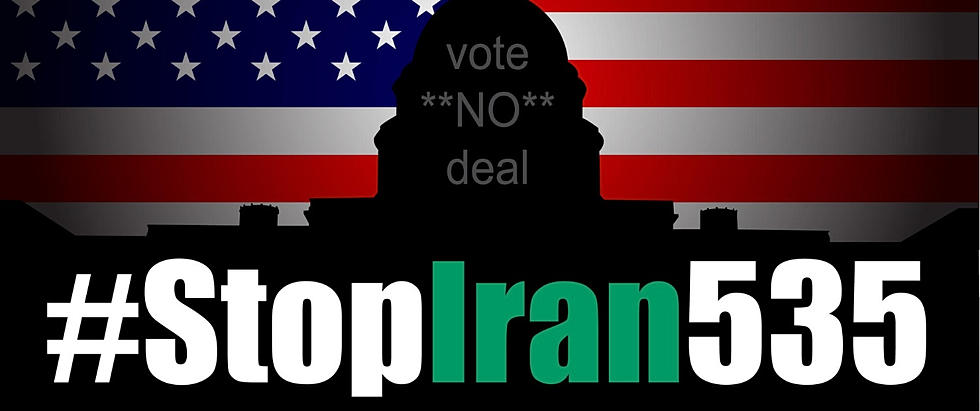
Towards that end, we are working on an initiative called StopIran535, coordinated rallies outside the home offices of all 535 members of Congress, Senators and Representatives, at 5:35pm on August 29, shortly before they vote on the deal. Some rallies will thank those that have pledged to oppose the deal and others will seek to encourage and persuade those that have pledged to support the deal to change their minds. Our goal is for every elected official and even more importantly for God Almighty, who as always is listening closely, to know that this monumental issue matters to us and that we are doing everything we can to impact it. To learn more about it or to get involved, please see the website http://www.stopiran535.com


Stepping up and answering the call to protect our people at this time may just have Messianic implications. Though far be it from me to fully understand or apply this statement in the Midrash Yalkut Shimoni (Yeshayahu 499), compiled in the 13th century, it is hard to ignore it:


א”ר יצחק שנה שמלך המשיח נגלה בו כל מלכי אומות העולם מתגרים זה בזה, מלך פרס מתגרה במלך ערבי והולך מלך ערבי לארם ליטול עצה מהם וחוזר מלך פרס ומחריב את כל העולם וכל אומות העולם מתרעשים ומתבהלים ונופלים על פניהם ויאחוז אותם צירים כצירי יולדה, וישראל מתרעשים ומתבהלים ואומר להיכן נבוא ונלך להיכן נבוא ונלך, ואומר להם בני אל תתיראו כל מה שעשיתי לא עשיתי אלא בשבילכם מפני מה אתם מתיראים אל תיראו הגיע זמן גאולתכם, ולא כגאולה ראשונה גאולה אחרונה כי גאולה ראשונה היה לכם צער ושעבוד מלכיות אחריה אבל גאולה אחרונה אין לכם צער ושעבוד מלכיות אחריה שנו רבותינו בשעה שמלך המשיח בא עומד על גג בית המקדש והוא משמיע להם לישראל ואומר ענוים הגיע זמן גאולתכם. ואם אין אתם מאמינים ראו באורי שזרח עליכם שנאמר קומי אורי כי בא אורך וכבוד ה’ עליך זרח


R’ Yitzchak states, in the year that Moshiach will be revealed, the leaders of the nations of the world will provoke one another. The king of Persia (Iran) will provoke an Arabian king and the Arabian king will go to Aram to seek counsel from them. The leader of Persia (Iran) will seek to destroy the entire world and all the nations of the world will frighten and scatter and fall on their faces. The Jewish people too will frighten and says where can we turn, where can we go. God will say, my children, don’t fear. All that I have done, I have done for you. Why are you afraid? Now is the time of your redemption.


May we indeed rise to be the catalysts of redemption and merit to usher in Moshiach, speedily in our days.


Heaven is Knocking; Are You Answering?

On Yom Ha’Atzmaut 1956, Rabbi Soloveitchik delivered a lecture in Yiddish at Yeshiva University in which he sought to put the extraordinary events that had occurred less than a decade earlier into a context and perspective. In his opinion, the remarkably close proximity of the worst atrocity and darkest period in Jewish history to the unimaginable blessing and bright light of the Jewish return to our homeland simply could not be dismissed as coincidental or random.


In his address that day, later translated and published as Kol Dodi Dofek, the Rav compared the condition and mood of the Jewish people to the unfolding of the love story in Shir Ha’Shirim: “What is the essence of the story of the Song of Songs, if not the description of a paradoxical and tragic hesitation on the part of the love-intoxicated, anxiety-stricken Lover, when the opportunity, couched in majestic awe, presented itself?”


In this majestic love story, Shlomo Ha’Melech describes the longing and desire of the Ra’aya (the Lover) for her beloved Dod. She chases Him, pursues Him and yearns for Him, but alas, He is elusive and inaccessible. Finally, the Dod comes knocking on the Ra’aya’s front door in search of her, but she is exhausted, has undressed and has retired for the night. The moment she had been waiting and hoping for has arrived. The Dod wants to recount to her His mighty love and His longing for her. Yet for some inexplicable reason, at that moment, she becomes lazy and stubborn; she is too tired and spent to respond. The Rav summarizes, “The Lover did not respond to the voice of the Beloved. The door to her tent was locked shut. The opportunity was lost and the vision of an exalted life died.”


The Rav suggested that on the heels of the Holocaust, in the shadow of incomprehensible loss and devastation, just when the Jewish people were tired and spent, Kol Dodi Dofek, our Beloved came knocking on our door.  He called for us, and the echoes of His voice reverberated through history. The Rav enumerated six “knocks” that he discerned in the events that surrounded the founding of the State of Israel:


  1. Political: “First, the knock of opportunity was heard in the political arena. No one can deny that from the standpoint of international relations, the establishment of the State of Israel, in a political sense, was an almost supernatural occurrence.”
  2.  

  3. Military: “Second, the knocking of the Beloved could be heard on the battlefield. The small Israeli Defense Forces defeated the mighty armies of the Arab countries. The miracle of “the many in the hands of the few” took place before our very eyes.”
  4.  

  5. Theological: “Third, the Beloved began to knock as well on the door of the theological tent, and it may very well be that this is the strongest knock of all…All the claims of Christian theologians that God deprived the Jewish people of its rights in the land of Israel, and that all the biblical promises regarding Zion and Jerusalem refer, in an allegorical sense, to Christianity and the Christian Church, have been publicly refuted by the establishment of the State of Israel and have been exposed as falsehoods, lacking all validity.”
  6.  

  7. Assimilation: “Fourth, the Beloved is knocking in the hearts of the perplexed and assimilated youths. The era of self-concealment (hastarat panim) at the beginning of the 1940’s resulted in great confusion among the Jewish masses and, in particular, among the Jewish youth…once a Jew begins to think and contemplate, once his sleep is disturbed—who knows where his thoughts will take him, what form of expression his doubts and queries will assume?”
  8.  

  9. Self-defense: “The fifth knock of the Beloved is perhaps the most important of all. For the first time in the history of our exile, divine providence has surprised our enemies with the sensational discovery that Jewish blood is not free for the taking, is not hefker!”
  10.  

  11. Refuge: “The sixth knock, which we must not ignore, was heard when the gates of the land were opened. A Jew who flees from a hostile country now knows that he can find a secure refuge in the land of his ancestors…Now that the era of divine self-concealment (hester panim) is over, Jews who have been uprooted from their homes can find lodging in the Holy Land.”
  12.  


Each of these ‘knocks’ was nothing short of a miraculous aspect of the founding of the State of Israel. One shudders to speculate what the outcome would be today if the United Nations were asked to vote on awarding the Jewish people a sovereign state in the Middle East.


In 1948 and many times since, Heaven has indeed been knocking on our door. In Kol Dodi Dofek, Rabbi Soloveitchik challenged us to ask ourselves: Are we answering? As we prepare to read Shir HaShirim shortly and celebrate Yom Ha’Atzmaut in just a few weeks, now is a good time to remind ourselves of this question. Are we going to be like the Ra’aya, too tired and exhausted, too beaten down from the long exile and the seemingly endless persecution to be able to get up and answer the door? Or, will we embrace the moment and recognize the opportunity that we have been longing and yearning for?


Obviously, making Aliyah, picking up and moving to Israel, is the ultimate answer to the knock. For Jews living in the Diaspora, the question of Aliyah should not be if, but when. As has been said, there are legitimate reasons not to make Aliyah, but there are no legitimate reasons not to struggle with making Aliyah. However, for a variety of reasons, the reality is that not everyone can or will move to Israel. But make no mistake. There are many ways to both hear and answer God’s knock, wherever one may be.


Hungarian born R’ Yisachar Shlomo Teichtal Hy”d was staunchly anti-Zionist. When running and hiding from the Nazis, everything changed for him and he saw a return to Israel as Hashem’s true plan for His people. In his incredible book Eim Ha’Banim Semeicha, written by memory and while in hiding, he shares these prescient words:


“Now, even though all of Israel will not return right away, it seems to me that the Land will become a universal center for the entire Jewish nation, by the very fact that there will be an assembly of Jews in Jerusalem and Eretz Yisrael. Even those who remain in the Diaspora will keep their eyes and hearts on the Land. They will be bound and connected with all their souls to the universal center, which will be established in Eretz Yisrael. It will unite them even in the Diaspora, and they will not be considered dispersed at all…”


Kibutz Galiyos, the ingathering of the exiles, is certainly a physical phenomenon. But according to R’ Teichtal, it is a meta-physical one as well. When we dedicate our attention, our efforts and our resources towards Israel, the Jewish people unite as one, no matter where they may be found on the globe.


World-wide Jewry is in the midst of elections for the World Zionist Congress which controls the funding of the World Zionist Organization and decides how millions of dollars are allocated. Decisions on distributions of funds are based on the size of each Zionist group represented in the Congress.


Every Jewish resident of the United States who registers to vote has a chance for his/her voice to be heard. Many of the Religious Zionist organizations in America including OU, National Council of Young Israel, Yeshiva University, Touro College, AMIT, Bnei Akiva and more have joined together under the banner of VOTE TORAH.


By voting for the Religious Zionist Slate, you will seat delegates who will focus on:


  • Building bridges and increasing unity within Am Israel;
  •  

  • Preserving and enriching Torah values and Jewish life in Israel and around the world;
  •  

  • Securing a significant amount of the billion dollar programming budget for informal education and outreach programs worldwide that exemplify true Torah values;
  •  

  • Ensuring the future of Religious Zionist ideals.
  •  


Please, do what you can to answer the ‘knock’ and take 5 minutes RIGHT NOW to cast your vote for the Religious Zionist Slate (SLATE #10) – www.VoteTorah.org.


From Mordechai & Esther to PM Netanyahu: Sounding the Alarm on Persia/Iran

The seventy year reprieve from anti-Semitism that the nations of the world have given our people, perhaps out of pity and sympathy in the aftermath of the Holocaust, seems to be coming to an end. Our default status in the world – scapegoat, and object of blame, hatred, anti-Semitism, and de-legitimization – is being restored as Israel is no longer the underdog and victim in the world’s eyes, but rather somehow has become the aggressor and the perpetrator.


Mi’shenichnas Adar, marbim b’simcha, we sing with great enthusiasm. When the month of Adar begins, we increase, expand, and intensify our sense of joy. But how can we be happy right now when we reflect on the Jewish condition in the world? What does Adar contain that would allow us to overlook and disregard the threats that Israel confronts, the isolation it experiences, and the challenges our people face?


When Haman approached Achashveirosh with his diabolical, genocidal plan to exterminate the Jews he said, “yeshno am echad mefuzar u’mefurad bein ha’amim…there is a nation scattered abroad and dispersed among the nations.” Rav Dovid Miller, Rosh Kollel of YU’s Gruss Kollel in Israel, pointed out the Gemara in Megillah 13b, which expands on their conversation, is very instructive for us today.


When Haman targeted the Jews for annihilation, the Gemara records, he said to Achashveirosh, “Let’s destroy the Jews.” Achashveirosh replied, “Not so fast. I am afraid of their God, lest He do to me what He did to my predecessors.” Haman relieved the King of that fear when he said, “yeshno am echad,” which translates literally as there is a certain nation. The Gemara quotes Rava, who explains that Haman was telling the King something much more strategic and insightful. Not yeshno am echad, there is a certain nation, but rather yoshnu am echad, there is a sleeping nation. “They have been negligent of mitzvos, they are divided, fighting with one another and divisive. They are asleep as to what is important and what threatens them,” said Haman.


We were vulnerable and literally on the brink of elimination and extinction as a people because we were asleep. Our eyes were closed to what was happening around us. We didn’t take the threats seriously, and we didn’t stand up for our right to simply exist. Haman, like so many of our shrewd enemies throughout Jewish history, understood that going about business as usual, living with our eyes closed and sleepwalking through life exposes us and makes us particularly vulnerable and susceptible to attack.


Haman recognized and took advantage of yoshno am echad, there is a nation that is sleeping. All he had to do was continue to lull the Jewish people into a false sense of security, to breed complacency and apathy and at that moment he could accomplish his goal of ridding the world of our people. So how did we survive? What spoiled his plan? Why did we ultimately triumph over Haman such that we are here today and he is a distant memory? The answer is simple: Mordechai and Esther, two heroes stood up and, like an alarm, rang and rang until they woke up our people from their practically comatose sleep.


Mordechai understood that the antidote to yoshno am echad, there is a nation that is sleeping, is lech knos kol ha’yehudim, go and wake them up. He understood that the response to heim am mefuzar u’mefurad bein ha’amim, they are weak because they are scattered, is to bring them together in fasting and praying. That wakeup call saved our people and ignited a response that provided not only the spark that led to military victory, but attracted people of Shushan to want to join the Jewish people.


Yoshno am echad. Too many of us have been lulled asleep and into a false sense of security and are therefore vulnerable at this time. Our enemies are no less evil than Haman, their plans no less nefarious, and their goals no less threatening to our very existence. And yet, for so many, it is business as usual, apathetic and indifferent to the threats we face.


The story of Purim is unfolding again right before our very eyes. Last week, Iran marked the 36th anniversary of its 1979 Islamic Revolution with rallies and gatherings in which participants chanted “Death to Israel.” Iran is modern day Persia and its leaders are modern day Hamans sharing the same explicitly stated goal of wiping out our people. If they are successful, they can accomplish in minutes what it took the gas chambers years, to kill 6 million Jews and with it the Jewish homeland. We must not allow that to happen.


Like Mordechai and Esther before him, on the eve of Ta’anis Esther this year, the Prime Minister of Israel will speak before a joint a session of Congress and seek to sound the alarm, to awaken from their sleep the decision-makers who can stop the wicked plans of modern day Persia. You don’t have to agree with the decision to invite Prime Minister Netanyahu, and you don’t have to agree with his decision to have accepted.


But now that he is scheduled to speak, as Holocaust survivor and Nobel laureate Elie Wiesel said, “On the day before Purim the Prime Minister of Israel will address Congress…I intend to be there. Should we not show our support for what might be the last clear warning before a terrible deal is struck?” Democratic Senator Charles Schumer called on his fellow Senators, Republican and Democrat alike, to attend Prime Minister Benjamin Netanyahu’s speech in Congress, saying the Israel-US relationship should “transcend” any political differences.


Earlier this week, I had the privilege of attending a private event with Senator Mark Kirk of Illinois, leading sponsor together with Senator Robert Menendez, of the new Iran sanctions legislation. Senator Kirk spoke bluntly and directly of the threat that Iran poses not only to Israel, but also to the United States and the entire free world. He turned to those gathered and after invoking the story of Purim challenged us, will you rise to your Esther moment? Will you do all you can to make sure Iran’s nuclear ambitions are stopped? When he graciously took questions and called on me, he joked, “Rabbi, are you going to correct my quote from Esther?” “Quite the contrary,” I responded, “I want to expand on your parallel and share an incredible insight of Rabbi Soloveitchik with you.”


We all study and celebrate the story of Purim as commemoration of a miracle, the triumph of the Jewish people over evil tyrants. Do you know what the real miracle was, explained the Rav? A madman rose and articulated his intentions to destroy the Jewish people. The miracle was that we didn’t ignore him, we didn’t excuse him, and we didn’t seek to reinterpret him. The miracle was that we actually believed him and sought to do something about it.


I thanked Senator Kirk for being our miracle and taking the bold steps to protect Israel from an existential threat, but Senator Kirk told us that the work is not nearly complete. He challenged us that if we care about Israel and if we care about America’s national security, we must take the time to contact Senators across the country and ask them to commit to both attending Prime Minister Netanyahu’s address and voting in favor of the sanctions bill. He told us to take out a pen and paper, write down the number for the Senate switchboard (202) 224-3121 and make calls every day.


With the Iran negotiations deadline looming and the new Iran sanctions bill in Congress, now is the time to wake up, now is the time for lech k’nos kol ha’yehudim, to come together in prayer, and in fasting, in letter writing, phone calls, advocacy, lobbying and any way that we can raise our voice on behalf of our people.


Perhaps the joy of Adar is the happiness of waking up, of rising from our sleep and recognizing what we confront and stepping up to make a difference. Rav Miller suggested that simcha is being alive, responsive and alert, ready to face whatever challenges may come and to be confident that we will be triumphant as we ultimately have been throughout our illustrious history. Mi’shenichnas adar, marbim b’simcha. When Adar begins, we remember enemies past like Amalek and Haman and we focus acutely on our present enemies and stopping them. When we wake up and confront them, marbim b’simcha, that in itself is a source of joy.


On Sunday, June 7, 1981, on the eve of Shavuos and under the order of then Prime Minister Menachem Begin, Israel unilaterally attacked the Iraqi nuclear reactor in Osirak and carried out a perfect mission that afterwards, even the U.S. military could not believe was possible. In his incredible book “The Prime Ministers,” Ambassador Yehuda Avner recalls that moments after they received the phone call saying the mission was a complete success and the boys are on their way home, Begin dictated a communique to President Reagan that he concluded: “Let the world know that under no circumstances will Israel ever allow an enemy to develop weapons of mass destruction against our people. If ever such a threat reoccurs, we shall take whatever preemptive measures are necessary to defend the citizens of Israel with all the means at our disposal.”


On the eve of Ta’anis Esther, the Prime Minister of Israel will seek to ring the alarm and wake up many of our elected leaders from their sleep. Let us do our part by taking the few moments to contact them and encourage them to attend. Let us pray that they have the fortitude, tenacity and resolve to do all that is necessary to protect not only Israel, but the interests of the entire free world.


Is There a Place in Zionism for the Diaspora Jew?

In July of 2004, then-Prime Minister Ariel Sharon told a gathering of North American Jewish federation leaders: “If I have to advocate to our brothers in France, I will tell them one thing: Move to Israel as early as possible… I say that to Jews all around the world, but there I think it’s a must and they have to move immediately.”


After the horrific Islamic terrorist events that struck France last week, and the Jewish community in particular, current Prime Minister Binyamin Netanyahu once again articulated the call for French Jews to move to Israel: “This week, a special team of ministers will convene to advance steps to increase immigration from France and other countries in Europe that are suffering from terrible anti-Semitism. All Jews who want to immigrate to Israel will be welcomed here warmly and with open arms.”


With hostility towards Jews growing in many parts of Europe, the blessing and miracle of the existence of the modern State of Israel as a place of refuge and a safe haven for all Jews is perhaps more pronounced than ever. The Jew experiencing anti-Semitism no longer has to rely on the protection of his or her host country alone. They need not live gripped by the fear of being expelled with no place to go. Today, for the first time in two thousand years, our homeland is back in our hands, under our sovereignty, and serving as a source of protection and security not only for those that inhabit its borders, but also for Jews around the world.


As the Jews of France, England and elsewhere are unfortunately learning the hard way, Israel is indeed a safe haven and place of refuge, not just in theory, but also in practice. However, it would be a terrible mistake to reduce Israel to that alone.


In 1903, at the sixth Zionist Congress, Theodor Herzl dropped a bombshell. While the British refused to allow a Jewish state in Palestine, they were offering another territory in East Africa where Jews could enjoy home rule as a British protectorate. A mere six years after the founding of political Zionism, the Uganda Plan was considered a major breakthrough. Herzl expected the proposal to pass easily, but instead a bitter debate ensued.


In his wonderful book, “Jabotinsky: A Life,” Hillel Halkin describes what took place and I was shocked to learn who voted in favor of setting up a Jewish state in Africa.


The Mizrachi voted with Herzl; under attack by the anti-Zionist Orthodox establishment for supporting a Jewish return to the Land of Israel without divine sanction, it sought to demonstrate that it was motivated solely by a desire to relieve Jewish suffering that was untainted by messianic fantasies. Nearly all of the secular Zionists of the “democratic faction,” on the other hand, were fiercely opposed; products of the shtetl and its value even after having revolted against them, they could not imagine a Jewish homeland that was not the land Jews always had longed for.


The vote was tallied. 295 delegates voted in favor, 176 were against, and 143 abstained. Without a true majority, the plan was abandoned and focus was returned to achieving a Jewish state in the Jewish homeland, the Land of Israel.


Israel cannot be in Uganda or Teaneck, the Five Towns, LA Los Angeles, or Boca Raton. Perhaps a Jewish state solely to provide refuge and a safe haven could take root in any of those places. But Israel is so much more than a place to find sanctuary. Only that land possesses unique spiritual qualities, what Rabbi Soloveitchik called “singular.” In “Reflections of the Rav” (volume 1), Rabbi Soloveitchik writes:


The word “singular” means “being one,” “exceptional,” “extraordinary” and “separate.” The word segulah in Hebrew similarly connotes singularity. In Exodus (19:5), the Torah enunciates the doctrine of the election of Israel as a cardinal tenet of our faith. “And you shall be to Me a segulah from all other peoples.”


A segulah people inhabits a segulah land. It is “a land which the Eternal your God looks after; on which the Lord your God always keeps His eye, from year’s beginning to year’s end” (Deut. 11:12). Rashi adds that, although God cares for other lands too, His relationship with Eretz Yisrael is special… Jewish destiny is linked with this land; we have no other. Only in this land, our Sages say, does the Shekhinah dwell and only therein does prophecy flourish. This segulah attribute of the land is no more rationally explicable than the segulah of the people. These are qualities certified by our faith, and history has corroborated the singularity of both people and land.


The reaction to Prime Minister Netanyahu’s call for French Aliyah has been mixed. Many Zionists are thrilled to see more Jews coming home, regardless of whether their motivation is running towards, or just running away. However, others have shared grave concern for the implications of an Aliyah inspired by anti-Semitism and hatred. Fleeing the diaspora, they argue, only incentivizes and rewards Islamic terror, anti-Semitism, and thereby inadvertently promotes more extremism.


One op-ed in Israel put it this way: “Patriotic Israelis will welcome French immigrants to Israel, but that does not contradict the fact that Israel has no interest in promoting the eradication of over two millennia of Jewish presence in Europe. ‘France without its Jews would not be France,’ the country’s prime minister has said, but Israel without its Diaspora might not be the Israel that many of us are still hoping for either.”


Which begs the question: What would Israel look like without its Diaspora? Is there a role in Zionism for the continued existence of the Diaspora Jew? How would the French policies towards Israel be different if the French people and leadership had never met a Jew, known a Jewish colleague or friend, or felt the contribution of Jewish people to France? To be clear, I am certainly not advocating for French Jews to remain in France or for that matter for American Jews to remain in America, but I do believe these questions don’t have simple answers.


If Jews are going to remain in the Diaspora, there is no doubt that there is much important work to be done on behalf of Israel from there. Would America’s three billion dollars of aid, the funding for Iron Dome, military cooperation, and the willingness to utilize the veto at the UN all be givens if there were no Zionist Jews living in America lobbying, advocating and seeking to influence the U.S. policies towards Israel? Would the religious Zionist community be better served if every rabbi and community leader that cares passionately about Israel stopped leading missions, gave up preaching and teaching Aliyah, ceased organizing pro-Israel rallies, no longer promoted greater participation in AIPAC, ZOA, EMET, etc. because they all picked up and made Aliyah? So long as there are Diaspora Jews, there is a need for passionate Zionist Diaspora leadership.


While every Jew should be considering and struggling with Aliyah, to be fair, Aliyah is not a simple matter. Each individual must struggle with it in his or her own way. What is simple is that if one chooses to remain in the Diaspora, they must feel a connection to Israel emotionally, financially and spiritually as a part of their daily lives.


Hungarian born R’ Yisachar Shlomo Teichtal Hy”d was staunchly anti-Zionist. When running and hiding from the Nazis, everything changed for him and he saw a return to Israel as Hashem’s true plan for us. In his incredible book Eim Ha’Banim Semeicha, written by memory and while in hiding, he shares these prescient words:


Now, even though all of Israel will not return right away, it seems to me that the Land will become a universal center for the entire Jewish nation, by the very fact that there will be an assembly of Jews in Jerusalem and Eretz Yisrael. Even those who remain in the Diaspora will keep their eyes and hearts on the Land. They will be bound and connected with all their souls to the universal center, which will be established in Eretz Yisrael. It will unite them even in the Diaspora, and they will not be considered dispersed at all…


Diaspora Jews should make as many trips and spend as much time in Israel as possible. If you can afford it, don’t go to exotic locations for Pesach, go to Israel. Don’t go on summer excursions and tours around the world, go to Israel. But it is in between those trips that Diaspora Jews make their unique contribution to Israel, by using their presence in the Diaspora to advance Israel’s interests and well-being.


Israel certainly does not need Diaspora Jews disengaged from Israel. If Zionistic Jews have a role in the Diaspora we must be devoted and dedicated daily to serving Israel through financial support, lobbying, and advocating on social media, traditional media, and among coworkers and friends.


There is something practical every religious Zionist Jew in the Diaspora can do right now. The Uganda Plan is a distant memory, but the World Zionist Congress continues to meet and will hold its next assembly this year. The Congress’ 525 delegates from all over the world will include 145 delegates from the United States, elected from competing slates with different interests towards Israel’s policies and how funding should be allocated.


The Religious Zionist Slate is a party in the World Zionist Congress comprised of delegates from America’s foundational religious Zionist organizations who provide a religious voice for world Jewry by championing programming and policies that promote Jewish unity and continuity, as well as the preservation and enrichment of Torah values and Jewish life in Israel and around the world.


With every national election, Israeli citizens cast their votes to seat a new Knesset, the men and women who will chart a new path for the State of Israel. By voting in the upcoming elections for the World Zionist Congress, we in the Diaspora also have a voice in deciding Israel’s future as well as the future of Jewish life globally.


You can register and vote simultaneously by visiting www.voteTorah.org. As we are witnessing the rise of Islamic terror and anti-Semitism worldwide, we are amazingly fortunate and blessed to have the miraculous modern State of Israel as a place of refuge and safe haven for all Jews.


However, as Torah Jews and religious Zionists we must remember that Israel is much more than just a place to run to when the heat is turned up in the Diaspora. It is the singular Land for a singular people to bring the singular Torah to life.


Do your part for Israel, even from the Diaspora, by taking a moment to register and vote today.


Rabbi Efrem Goldberg

Join Our Community

Subscribe to our newsletter or connect with us on WhatsApp.