Stay Humble or Be Humbled

Of the many lessons we have been taught over the last seven months, one critical one is humility.  I will leave for those in Israel to explore at a later date how the horrific and unexpected events of October 7 should humble elected leaders, the military and intelligence establishments, and all of us.  Instead, I want to focus on how these last months in America have humbled me. 


Earlier this year, the great behavioral economist, best-selling author Daniel Kahneman, passed away.  He taught at Princeton, UC Berkeley and the University of British Columbia, and in 2002, he won a Nobel Prize in Economics. He was the nephew of Ponevezh Rosh Yeshiva Rav Yosef Shlomo Kahaneman and was considered one of the greatest thinkers of the 20th century.


Kahneman once said: “We’re blind to our blindness. We have very little idea of how little we know. We’re not designed to know how little we know.” Indeed, when asked what he would eliminate in the world if he had a magic wand, Kahneman answered with one word: overconfidence.


It is instructive that one of the brightest minds of our time thought overconfidence was even more dangerous than ignorance. Indeed, overconfidence is to blame for the sinking of the Titanic, the nuclear accident at Chernobyl, the loss of Space Shuttles Challenger and Columbia, the subprime mortgage crisis of 2008, the Great Recession that followed, and the oil spill in the Gulf of Mexico, among countless other things. Overconfidence has brought personal financial disaster, imploded relationships, and ruined lives.


Overconfidence comes from hubris, from a feeling of arrogance that we see the whole picture, know all the relevant facts, can draw the proper conclusions, and have a monopoly on the truth.  One would think the recent pandemic that brought us to our knees would have softened our confidence, tempered the strength of our views, made us admit the limits of our knowledge and understanding.


And yet, when it comes to politics (and other areas of life), we have remained as convinced, as confident, and strident as ever.  We know exactly whom we are aligned with, whom we should support and vote for, which party is the future of Israel and will always stand up for the Jews. Many speak in absolutes, with generalizations and overconfidence about politicians, parties, and the political landscape.


And yet, not surprisingly, they were wrong again.  Reading, watching and following who has stood with us and who hasn’t over these last seven months should humble us,  cause us to reconsider entrenched positions, and to be more open, interested, curious, and persuadable going forward. 


On October 6, we thought we understood the political landscape, which party was exclusively the future of the US-Israel relationship, and who would stand with the Jewish people if they were under attack. For example, many were cynical at best about Senator John Fetterman, with criticisms of his progressive policy ideas, his bizarre and inappropriate wardrobe, and even his physical and mental fitness to serve while recovering from a stroke.  Little did we know or appreciate that he would emerge as one of the most passionate, eloquent, and outspoken advocates for Israel and of the Jewish community, that he would courageously confront our enemies and haters without backing down or cowering for a moment.  We could not have predicted he would speak up and speak out against his own party and even the president when it came to defending Israel.  On October 6, I think only a tiny minority of members of our greater community would have contributed to Fetterman’s campaign.  Today, I don’t know a shul that wouldn’t embrace the opportunity to honor him at their dinner.


Previously, we may have thought a congressman who describes himself as a liberal progressive may not be aligned with us, our values, or interests.  But we would be terribly mistaken to reduce him to those labels or components of who he is or what he believes in.  Most important for us, Rep. Ritchie Torres has paid a heavy price for being among our greatest friends in Congress, standing up, posting, advocating and passing legislation for Israel and to protect the Jewish community when it isn’t easy or popular in segments of his party or his base. 


When our new congressman, Rep. Jared Moskowitz, was campaigning and ultimately elected, were we only distracted by policies or positions we disagreed about, or did we bother to focus on the fact that on what matters most to us, he would become a true champion of our cause, a relentless fighter of our people?


Last week we interviewed an extraordinary young man named Shabbos Kestenbaum on Behind the Bima.  He has been on the front lines of defending the Jewish people at Harvard, including contending with a death threat from a faculty member of the university that resulted in a need for private security and the filing of a lawsuit against what was long considered the most prestigious university in the country, maybe the world.  Shabbos (yes that is his name) is a student of Chassidus, loves the Kotzker Rebbe, considers Rav Aharon Leib Steinman one of his heroes, and has defiantly remained not only fully and publicly observant on a campus filled with hate and genuine threats, he has emerged a heroic spokesperson of our people, testifying before Congress proudly wearing his yarmulka and clinging to Torah. 


But if terrorist sympathizers and supporters hadn’t essentially taken over Harvard, would we ever come to know that about Shabbos, would we have learned about what we have in common and how much admire him, or would we have remained focused on other passions of his, like his rallying for progressive causes and policies?


There are many more examples in every direction, but the bottom line is that we must not be overconfident or arrogant in assuming we can reduce people to their political party or one component of who they are. Doing so not only deprives us of friendships and relationships we can gain from but alienates those who could and would be our friends. 


There are many issues, policies, and positions we care about but they are not all equal and we must not get confused about how we prioritize them and which matter most.  If we didn’t know it already, the last seven months have taught us that for us, the top three issues that should influence or vote and political giving are Israel, antisemitism and Israel. This does not mean being overconfident, or screaming from the rooftops that we are certain the person we are voting for is going to be the best candidate for any issue, including Israel. It does mean, however, that we have the responsibility to make the best decision with what we know at any given moment, with the humility and understanding that we may be wrong.


There are many others who can focus on the other issues, but as of 2023, we are only 0.2% of the 8 billion worldwide population and by some estimates 2.2% of the population in the United States.  Nobody is going to fight for, prioritize, and care about Israel and antisemtisim like we do.  Does that mean we may find ourselves contributing to and voting for people whose other policies, or whose character is alien to us or repulsive? Or that we may find ourselves voting for someone in a party we feel no affinity for but believe the person on the ballot will be loyal to our interests?


It might, but when you are in a burning building and the fireman comes to save you or you are being chased by an armed madman and a policeman comes to save you, you don’t have the luxury of making sure you are in alignment in your beliefs and lifestyle, or you approve of their character and behavior.  You embrace their sacrifice and efforts towards your safety and security with gratitude and appreciation.  Maybe in a perfect world you’d prefer another policeman or fireman to intervene who better aligns with your values and general worldview, but in a crisis, you don’t get that choice, and we are in a state of perpetual crisis. 


There are many lessons that we have learned, and still are learning, from this painful and difficult period for our people.  Let one of them be humility.  Let’s never be overconfident, let’s not put our faith in ourselves or overly in anyone else. It was just this past week’s Pirkei Avos in which Rabban Gamliel cautions us to be careful with and not put too much faith in government. Let’s remember that Hashem is in control and in charge, and that as our rabbis say, harbei sheluchum la’makom, Hashem has many agents and emissaries He can act through.  Let’s do our best to identify them not by the party they belong to or the ways they are different than us, but by us prioritizing what matters most and making sure we share that in common.  


Chosen, But for What?

We just finished celebrating a Yom Tov during which we said in davening and Kiddush, over and over again, Asher bachar banu mi’kol am, You have chosen us from all the nations.  We may have said it, but it sure doesn’t feel like it.


If you consider the current condition of the Jews in the world, you can easily fall into despair. Israel’s ongoing war against Hamas, the continued captivity of our precious hostages, and the unrelenting threat of Iran, are exhausting first and foremost for our brothers and sisters in Israel, but also, in a smaller but significant way, for all who care desperately about our homeland and our people. The metastasizing antisemitic cancer rapidly spreading throughout college campuses, the systemic hate of the Jew even among professors and administrators of institutes of “higher” learning, the distortions and lies of the media, the bias and discrimination of Jews by members of Congress, can easily breed a sense of hopelessness. When “friends” and “allies” use the right words and issue eloquent statements but fail to take meaningful action, you can’t help but wonder, how will this end? 


The post-October 7 energy of being part a united, tenacious people, determined to defeat our enemies, restore security and fight for peace for all decent people feels like it is dissipating and giving way to the cruel reality of what feels like an endless existential loneliness and isolation.  The adrenaline that powered our soldiers and their families in Israel, that energized protests and advocacy in America, and that inspired contributions and donations from all over, is draining, potentially leaving in its place fatigue, fear, and despondency.   


One expects the UN to unfairly condemn Israel, and it would be upsetting but certainly not surprising if the International Criminal Court (ICC) issues an arrest warrant for Prime Minister Netanyahu, but when America withholds a weapons shipment to Israel while the IDF is bearing the burden and paying the human price of fighting a shared savage enemy, it leaves Jews and those who love Israel wondering if we have anyone to turn to or count on. 


If this is what being the chosen people feels like, maybe we can be less chosen and more safe and secure.


As we were marking Yom HaShoah, the day designated to remember the six million Kedoshim, the martyrs of the Holocaust, and to honor the survivors on whose shoulders we stand, the IDF began a long-awaited invasion of Rafah to battle our current enemy and to rid the world of the modern continuation of the ideology of the Nazis. 


Reflecting on the confluence of these two events, I thought about the Jewish condition in the world 80 years ago, what it is today, and how one may be able to educate us about the other.


The Klausenberger Rebbe, Rav Yekusial Yehuda Halberstam (1905-1994), was taken to Auschwitz, where his wife and 11 children perished. He survived the war and came to America, where he remarried, had more children, and built a grand Chassidic movement. He moved to Israel where he built a thriving community in Netanya and established the Laniado hospital. He was a truly extraordinary individual and a brand new Artscroll biography tells his remarkable life story. 


I have seen different versions of the following story, but the way it is told by Rav YY Jacobson,  in the concentration camp, the SS guards began taunting and teasing the Klausenberger Rebbe, pulling his beard and pushing him around. The vile soldiers trained their guns on him as the commander began to speak. “Tell us, Rabbi,” sneered the officer, “do you really believe that you are the Chosen People?”


The soldiers guarding the crowd howled in laughter. But the Rebbe did not. In a serene voice, he answered loud and clear, “Most certainly.” The officer became enraged. He lifted his rifle above his head and sent it crashing on the head of the Rebbe. The Rebbe fell to the ground. There was a rage in the officer’s voice. “Do you still think you are the Chosen People?” he yelled.


Once again, the Rebbe nodded his head and said, “Yes, we are.” The officer became infuriated. He kicked the rebbe in the chin and repeated. “You stupid Jew, you lie here on the ground, beaten and humiliated, in a puddle of blood. What makes you think that you are the Chosen People?”


With his mouth gushing blood, the Rebbe replied, “As long as we are not the ones kicking, beating, and murdering innocent people, we are the chosen people.”


Before our precious soldiers entered Rafah, they did several things that no other army in the world does.  American leaders and the media told us that it would take weeks to evacuate the refugees from Rafah, but within three hours, over 100,000 refugees from East Rafah were safely relocated. They said it would take weeks for the IDF to enter Rafah from the moment the evacuation began but the IDF, in a staggered operation, entered Rafah within a few hours with no civilian casualties.


The IDF did this by not only announcing they were coming, they not only notified civilians to relocate, but helped them.  The IDF dropped leaflets, sent text messages, and made phone calls.  A recording of one of those calls was released and it reflects the contrast of our peoples: 


IDF: We must do everything within our means to prevent any fatalities.

Gazan: We want to die and our children also must die.

IDF: No, God forbid.

Gazan: We love death the way you love life.


As long as we love life, even while they celebrate death, we are the chosen people.  As long as we have the most moral and ethical army in history and are fighting the most moral war ever, despite opposing vicious, savage, immoral monsters, we are the chosen people. 


Before the soldiers entered, they gathered to do what the Torah instructs Jews to do before going out to battle: they prayed, asking Hashem for victory and for peace.  As long as while our enemies pray for war, we pray for peace, we are the chosen people. 


We don’t rely on the media, America, the international community, or the UN to know or feel that we are the chosen people.  It is up to our rising to the moment, to be proud, practicing, moral, ethical, Torah Jews, to demonstrate we are indeed the chosen people. 


The Klausenberger Rebbe suffered devastating loss.  He was knocked down, but far from out.  He never lost his faith in Hashem, his resolve, or his mission.   Yes, he suffered and he grieved, but then he put one foot in front of the other and he not only survived, but he thrived.  He did it by never doubting for a moment that he was a member of the people chosen by Hashem. We grieve as well now, we have suffered, but as members of that same people, that same Father, with that same mission, we too will thrive, no matter who stands with us, supports us, or understands us.


It’s None of Your Business…or Is It?

Recently, the Princess of Wales announced that she has cancer. In a video recorded in Windsor, the former Kate Middleton disclosed her diagnosis in order to put an end to speculation and gossip that began online but was then embraced and promoted by mainstream media about the state of her health and marriage.  One of the perpetrators responsible is popular television host Stephen Colbert, who promoted unsubstantiated rumors about the princess and her husband. 


When she revealed her diagnosis and the reason for her absence from public life, Colbert said on his show:  “For the last six weeks, everyone has been talking about the mystery of Kate Middleton’s disappearance from public life and two weeks ago, we did some jokes about that mystery and all the attendant froufrou in the reporting about that, and when I made those jokes, that upset some people even before her diagnosis was revealed… I don’t know whether her prognosis is a tragic one, she’s the future queen of England and I assume she’s going to get the best possible medical care, but regardless of what it is, far too many of us know that any cancer diagnosis of any kind is harrowing for the patient and for their family, and though I’m sure they don’t need it from me, I and everyone here at ‘The Late Show’ would like to extend our well wishes and heartfelt hope that her recovery is swift and thorough.”


Besides for his monologue being a textbook example of a lame non-apology, the damage was already done.  A woman was essentially bullied into disclosing something personal and private because enduring the gossip and conspiracy theories were worse and even harder to deal with.


It happened because people felt they had the right to know something that was actually none of their business. Colbert and members of the media weren’t the only ones who inquired where they didn’t belong.  Three staff members at the prestigious private London hospital in which she had her surgery are accused of accessing her private medical records to satisfy their curiosity about what was going on in her life. 


The Torah places great value on people’s right to privacy. Jewish law demands that we conduct ourselves with the presumption that all that we are told, even in pedestrian, casual conversation, is to be held in confidence unless it is explicitly articulated that we are free to repeat what we heard. The laws of hezek re’iyah forbid a person from looking into his or her neighbor’s property in a way that violates their privacy. We are instructed not to speak lashon ha’rah or rechilus and spread gossip, even if the information is absolutely true and entirely accurate. The Talmud (recent Daf Yomi – Bava Metzia 23b) goes so far as to tell us that we are permitted to distort the truth in circumstances where someone is prying for information that is none of their business and that they are not entitled to have.


This phenomenon expresses itself in many scenarios. When some hear about a couple getting divorced, their first response is, “What happened?” as if they are entitled to a full report about the most personal and private details of a couple (and often their children) going through a difficult time. Many pay a shiva call and feel a need to ask, “How did he/she die?” Certainly the mourner is free to volunteer the cause of death if they like, but is it really our business and do we truly need to know? When we ask, “Why did he lose his job?” or “Why did they break their engagement?” or “Why is she still single?” are we asking because we care about them, or is finding out somehow satisfying something in ourselves?


For some, the need to know stems from a sense of information as a source of power. Information is social currency and the more we know, the richer and more powerful we are. For others, the need to know stems from an inability to live with tension or mystery. And yet, for others, the need to know is similar to whatever draws us to slow down and look at the accident on the highway even though it has nothing to do with us at all and only creates traffic for others.


If we are really curious and want to inquire about something, it shouldn’t be about private information that doesn’t belong to us, it should be about the well-being of people who are eager for us to care enough to ask about it. 


As the war continues to rage in Israel and the lives of our brothers and sisters remain radically interrupted, one of the things that compounds pain is a sense that those in chutz la’aretz have moved on.  I have heard from Israelis how meaningful and powerful it is when people check in, inquire how they are doing, ask about their children who are serving and fighting.  Conversely, when they receive a text or a phone call asking for advice about where the best restaurant is in Yerushalayim or about an activity for Pesach or upcoming trip without even mentioning how are you doing, how are your children, it hurts and it stings.  Similarly, there are people living in our communities who have children and grandchildren living in Israel or fighting in Gaza.  When they come to shul or meet not just acquaintances but friends in the supermarket or at an event and they aren’t asked about how their family is coping and how they are managing, they feel isolated and alone.


There are things that are none of our business, we aren’t entitled to know and we shouldn’t ask, push or bully others into disclosing or sharing with us.  And then there are things we should feel are all of our business, all of our responsibility, the well-being of people we love and care about. 


Let’s always remember the difference and channel our curiosity into the questions that will lift people up instead of making them feel down. 

Much More than a Costume

When a convert stands in the mikvah about to immerse, undergo a radical transformation, and be born anew, the Beis Din asks a series of questions. One of the most poignant is one that long seemed to many of us to be an antiquated question: “You know that Jews have been subject to persecution, antisemitism, and attempted extermination throughout the millennia. If you become a Jew, you will join this hated, targeted people. Are you prepared to share in the destiny of the Jewish people both for good and for bad?”


At every single conversion I have had the privilege to be involved with, the candidate responded to this hypothetical question in the affirmative. Until recently, this question has felt like a technicality, something we must confirm in theory but would likely never be relevant in practice.  After all, while joining the Jewish people means giving up cheeseburgers and bacon and other physical pleasures, it wouldn’t likely mean giving up one’s life.


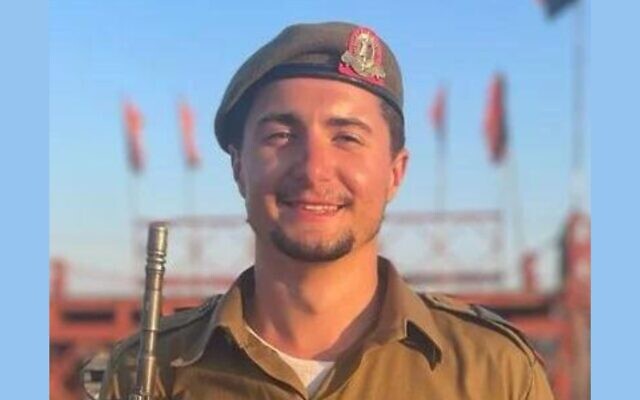
On December 8th, Staff Sgt. Yonatan Chaim H”yd, 25, was killed fighting in Gaza.  He died a Jew, but he wasn’t born that way.  Yonatan Chaim, originally from Hilton, New York, was born Jonathan Dean, Jr.  After studying the Holocaust in college, he converted to Judaism and in 2020 he moved to Israel.  His cousin, Joelle Marie Muscolino, described him as “sweet, amazing, loving, smart, caring, talented, passionate, uniquely fabulous.” She said that he had “lived in Israel for a bunch of years now and had made it his home, a home where he was loved and celebrated for everything that he was, without judgement, to live freely and happily as Yonatan Chaim, just as his loving heart, soul, and body so deserved to…He felt compelled to protect Israel, the land who had given him so much, from the brutality of the terrorist, evil, savage attacks by Hamas and Islamic Jihadists. He died bravely fighting to defend Israel’s Democracy, the Jewish People that call her home just like he did, and for Judaism around the entire world.”


When Yonatan Chaim stood before the Beis Din to convert and was asked if he understood that by becoming a Jew he too would be the target of antisemitism, subjected to hate, he likely never dreamt how serious and real a question that would become, that it would in fact become for him a question of life and death. 


Antisemitism is the world’s oldest hatred.  It has existed since the inception of our people.  In different generations it takes different forms, today manifesting in both its classic forms and in its expression as “anti-Israel” sentiment. For 2,000 years our enemies have sought our demise, they have systematically attempted to exterminate us and, aside from rare exceptions, for the most part we were passive victims and martyrs to their plots and plans. 


But we are living in a new era, we are living with the miraculous modern State of Israel.  No longer will our people go like sheep to the slaughter. No longer are Jews defenseless and helpless.  Israel has one of the strongest armies in the world and like Staff Sgt. Yonatan Chaim, the selfless, brave and tenacious soldiers fight to defend not only our brothers and sisters in Israel, but Jews around the world.


As Purim approaches, a time ordinarily characterized by tremendous joy, happiness, and light, many are struggling with how to observe it against the backdrop of sadness and darkness as one war continues to rage on and another one looms.  One of the specific questions that has arisen concerns dressing up as Israeli soldiers for Purim this year.  On the one hand, what a demonstration of who our heroes are, what a way to show whom we admire, respect, and want to emulate.  On the other hand, it might be perceived as insensitive that those who put on the uniform as a costume wear it for one day and have the luxury to take it off, while others must wear it for weeks or months on end, fighting in it and risking their lives in it on the front lines.  It has further been suggested that yet another consideration for Americans might be the impression it could leave on our neighbors if we seem to be glorifying or celebrating war by “dressing up” in an army uniform.


Several years ago, in his responsa, She’eilas Shlomo (4:87), Rav Shlomo Aviner, Rosh Yeshiva of Ateret Cohanim and Rav of the community of Beit El, addressed the following question: Is it proper to recite the beracha of Shehechiyanu on purchasing a new gun? Rav Aviner provides a long Halachic explanation and defense of why he feels a shehechiyanu is warranted while conceding the need to own a gun is sad and unfortunate. His closing argument touched me deeply and I share his words with you:


The fact that we have guns shouldn’t elicit sadness that we still have wars and conflicts. Indeed, the opposite is true, it should elicit happiness that we have merited to be an am chofshi b’artzeinu (free nation in our homeland), that we have an established Jewish government, we have an army and a police force, that we are no longer the punching bag of the wicked nations, but rather we have the capacity to protect ourselves. Would it even occur to you that when the War of Independence began and we had weapons in our hands to defend ourselves after 2,000 years of Jewish blood being spilled freely, that one shouldn’t recite shehechiyanu with joy and gladness?! That joy continues to carry us and protect us from then until now. And for that reason, a Shehechiyanu should be recited when an Israeli soldier puts on his or her IDF uniform for the first time.


Rav Aviner ends his responsa by quoting his Rebbe, Rav Tzvi Yehudah Kook zt”l who wrote:  “Fighting to protect our homeland is a mitzvah, the mitzvah of all Klal Yisroel. Therefore, everything connected with it, every gun and every weapon that is our response to our enemies, everything associated with establishing and protecting malchus Yisroel, Jewish sovereignty, it is all kodesh.”


Similarly, Rav Aharon Lichtenstein related that once when he returned to America and was visiting with his father-in-law, Rav Soloveitchik, he posed a series of questions from students who were serving in the IDF. One student worked in the tanks division and his job was cleaning out and maintaining the tanks. Often his uniform got covered in oil and grime and he wanted to know if he needed to change before davening Mincha, something that would be terribly inconvenient and difficult. The Rav looked at Rav Lichtenstein and wondered out loud, “Why would he need to change when he is wearing bigdei Kodesh (holy clothing)?”


I have heard from some in Israel who believe Americans should abstain from wearing an IDF uniform this Purim and I have spoken to others who think nothing would show more love, identification, and support.  Each person and each community will decide for themselves but one thing should be clear: The IDF uniform is not simply a costume, and it should never be confused with a symbol of warmongering.  It is the holy garb of a holy nation charged with a holy mission.  It is worn by the defenders of a people that pray for peace more than any, by those who value and celebrate life more than any, who fight with a moral clarity and go to extreme measures to protect innocent lives, more than any other army or people. 


We daven for the fulfillment of the words of our prophet Yeshaya: וְכִתְּת֨וּ חַרְבוֹתָ֜ם לְאִתִּ֗ים וַחֲנִיתֽוֹתֵיהֶם֙ לְמַזְמֵר֔וֹת לֹא־יִשָּׂ֨א ג֤וֹי אֶל־גּוֹי֙ חֶ֔רֶב וְלֹֽא־יִלְמְד֥וּ ע֖וֹד מִלְחָמָֽה׃
, “And they shall beat their swords into plowshares and their spears into pruning hooks: Nation shall not take up sword against nation; They shall never again know war.”


But until then, Shehechiyanu v’kiymanu that we merit to live in a time that with the help and protection of Hashem, just like the Jews we will read about this week, we can fight for and protect ourselves. 


Is Aliyah All or Nothing?

The hardest part of coming to Israel is leaving.


A visit to Israel these days involves connecting with the heroic and courageous soldiers of the IDF, engaging with the seemingly ordinary but in truth, truly extraordinary people, absorbing the tremendous energy and unity of our people, tapping into the spiritual awakening of so many, and much more. 


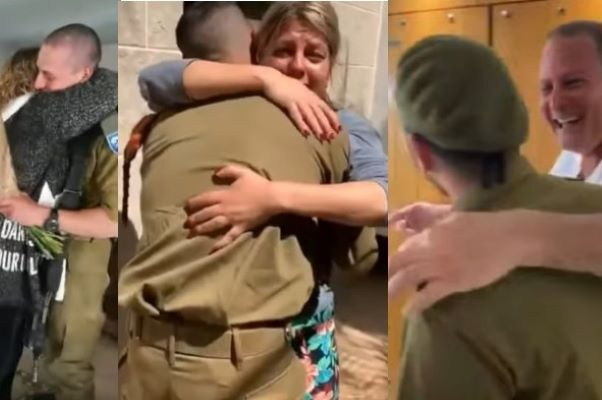
I came to Israel for a few days this week to participate in the weddings of two young members of our community who have placed their lot and destiny in our homeland.  Each wedding was extraordinary in its own right.  Didi went to Israel for a year of seminary and decided to stay forever.  She married Rafi, who followed Yeshiva by joining the Israeli Air Force, where he continues to serve faithfully during this war.  The singing under the chuppa of the Mi SheBeirach for Tzahal, as the Chosson and many of his friends in attendance continue to fight on the Jewish people’s behalf, was deeply moving and brought goosebumps. The Israeli and Tzahal flags that draped those dancing reflected the enormous pride in our people and the boundless loyalty and selflessness to our homeland and nation, especially during this difficult time. 


The second wedding celebrated the marriage of Yosef and Gavriella, two righteous converts who each joined our people at a young age.  Their souls were both at Sinai, destined to join our people and that night, under the stars, their souls united as one.  Together they began a new song and a new saga, building a future and a family in our fateful land.


At both weddings I was in awe, filled with admiration for the courage, faith, and fortitude of these four young people who walked away from what might be an easier road of life, to walk the path of our forefathers, placing their lot in the land of our people. 


These two magnificent weddings, combined with the many locations we visited, including the army outpost on the northern border, to the army headquarters in the south, from Shlomit to Nachal Oz, from Shuva Junction to volunteering on a farm, from walking Sderot to touring the Galilee Hospital, and so much more, this trip, like the three others I have been privileged to be part of since October 7, were life-changing, making it harder than ever to leave.


So why leave?  Why not stay, announce Aliyah, and call on the entire community to join?  Indeed, this is a question I receive regularly online and offline, on every trip to Israel and when engaging Israelis who visit America. Without exaggeration I have been told more than once, “Rabbi Goldberg, you are among the reasons Moshiach isn’t coming. If you would simply announce you are making Aliyah and tell the community to come with you, certainly they would.” I appreciate this encouragement comes from the best place, from those with the best intentions, many of whom have themselves taken this tremendous step. (As an aside, it is important to dispel the myth and fantasy that if American rabbis would simply declare Aliyah, their communities would most certainly pack up and come with them.  From the time of Ezra and Nechemia until this very day, from Rabbi Riskin to the Klausenberger Rebbe, to the best of my knowledge, never has a community picked up and moved with their rabbi.) 


So if it is so hard to leave each time we come, why not stay, why not finally move?  That question plagues me regularly and nobody asks it more forcefully than I do to myself. 


To be clear, I am deeply and profoundly inspired by, and envious of, family members, my rabbinic colleagues, and so many friends who have made Aliyah, many of whom are building new communities in Israel and bringing their unique voices to the symphony of our people on the greatest and most important stage we have. Their courage, faith, leadership, and example are enormous, and they and their leadership are being inscribed in the book that captures the story and destiny of our people.


However, if we can be honest and non-judgmental for a moment, the reality is that not everyone can or should make Aliyah at this moment.  There are compelling reasons that make it the correct and responsible decision to remain outside of Israel for the time being. 


There are legitimate reasons not to make Aliyah at the moment.  But there are no legitimate reasons to not be struggling and wrestling with when, not if, to move oneself and one’s family to Israel permanently.  Doing so is not a favor or gift to others, and it shouldn’t come from guilt, shame or fear.  It should be an expression of understanding Hashem’s will for His children, of embracing our responsibility to our mission and our destiny. 


Many, like the young people whose weddings we just celebrated this week, uproot themselves and move to Israel. Each year, at BRS we honor those families, and our community and its leadership continues to unabashedly and unapologetically push and promote Aliyah regularly.


But Aliyah at any given moment is not for everyone. The question that has been on my mind lately is does Aliyah have to be all or nothing?  Are you either physically living and spiritually identifying exclusively in Israel or completely outside of it? Or is there some area in between, in which you fully believe in your current decision to reside outside of Israel but also genuinely feel your heart is in Israel and your feet are there as often as possible?


Again, making Aliyah – moving permanently including taking on citizenship, settling the land, paying taxes, and participating fully – that is the ultimate goal, without question.  But if we make Aliyah binary, if we set up a paradigm in which you are either in or you are out, either you are here permanently and if you’re not you don’t really care, are we serving the greater goal of connecting our people and our land? 


Taking delight in living in the Diaspora, not caring enough to make the effort to visit, having moving be the last thing on one’s mind, is not only shameful, it runs counter to authentic Torah values.  But coming as often as possible, regularly thinking about, advocating for, fundraising on behalf of, and putting one’s efforts and energies towards Israel counts, it matters, it means something.  These are the stepping stones to being there permanently one day, but they also have value in the meantime, both for the individual and for Israel. 


To those who have made Aliyah – you are heroes, you have cemented your place in history, you are living the Jewish dream.


To those who regularly consider Aliyah but feel now is not the time, don’t stop thinking about it and struggling with it.  Keep the dream alive, keep the goal in view, keep Israel at the forefront of your mind, and keep going as often as you can.


To those who are happy where they are, would never consider moving to Israel, haven’t visited in forever and have no plans to go in the near future, I beg you to reconsider and to radically change your attitude, not for anyone else, but for yourself.


On our trip this week was someone who hadn’t been to Israel in a very long time.  After the experience, he shared the following:


As you know it’s been some time since I’ve been to Israel – 25 years. It was a real struggle to decide if I would come on this trip. Was this how I wanted my first time in Israel in a quarter of a century to be? Without my family? For such a short visit? War time tourism? It seemed macabre and voyeuristic. It’s not what I imagined it would be for my return to the holy land. But thankfully, my wife pushed me and I relented.


There are many legitimate reasons why a person cannot travel to Israel. For 20 years I could never take time off from work, using every vacation day for Yom Tov. Also financially it’s a huge expense for so many. But there is another reason that people have – I know I did – in the back of their minds: I want my Israel trip to be perfect. When the weather is good, when the crowds are small, when flights are cheap, when the kids are off, etc. and with that in mind it took an extra four years for me to just come home.


This is what was running through my mind on the flight. I felt like it was a mistake, I shouldn’t come to gawk at the soldiers or the displaced families like going to a museum or sideshow. I should come when I can be with my entire family and do all the things that people do: Kotel, Masada, tunnel tours, Ein Gedi, Eilat, etc.


But I was wrong. This experience was something that I will never forget. Not only because of the incredible access, the people we met, or the places we went, but because we were able to be with Israel instead of just going to Israel…


That’s my take away. If you can afford to go, don’t put it off. Don’t put your trip to Israel on a pedestal that it needs to be perfect or you won’t go. Because before you know it, 25 years will go by, and you’ll wonder what could have been.


Israel is not just another place; it is not where others go to live or visit.  It is core, central, and fundamental to what it means to be a Jew, to who we are, and how we identify.  Think of Israel as a parent.  When they can’t travel to you, you don’t save up to go on vacation elsewhere and neglect seeing them.  You aren’t satisfied checking in on them occasionally from afar. You make it a priority to show up whenever you can, to be present, to connect and experience what it means to be together and spend time.  Your focus is fixated on their well-being, you remain eager to hear and learn how they are, you visit as often as possible and even though there are legitimate reasons to be apart, you can’t wait to next be together.


Whatever the reason, stop waiting. Plan your trip now, start saving up and taking steps necessary to make it a reality.  It isn’t Aliyah, but it matters to those in Israel and it will forever change you.

It Doesn’t Do Anything for Me

At the request of his parents, I recently met with a young man who had stopped going to Shul on Shabbos morning.  (People think when we get semicha, Rabbis get a magic wand that we can wave and make their spouse or children or neighbor or friend do exactly what they want.) I asked the young man, someone who keeps Shabbos and Kosher and is observant, why he stopped going to Shul on Shabbos morning.  He told me, “I only get to sleep late one day a week and I don’t want to wake up early.” I told him we have a Teen Minyan that begins at 9:45, he could at least come at 10:30 and catch Mussaf and the Kiddush and still sleep in.  He said, “10:30 am? That’s not sleeping late.  I want to sleep until 1:00 or 2:00 pm.” 


I pressed on. “I understand you want to really sleep in but isn’t coming to Shul on Shabbos important to you, doesn’t it matter?” He answered, “Rabbi, the bottom line is this – I don’t go to Shul on Shabbos morning because it doesn’t do anything for me.”  I was somewhat stumped. 


“It doesn’t do anything for me” and so I don’t do it. 


For a long time, Jews didn’t have the option of saying “it doesn’t do anything for me.”  Some did “it” – whatever “it” was at the time – because their father or mother said so and some did it anyway because their Father in Heaven said so.  For a big part of our history, for most of my lifetime, “doing something for me” was not part of the consideration.  Responsibilities were obligations, not options.


But we live in a different world, we live at a different time.  We live with different expectations, different assumptions, and different entitlements.  In today’s world of on-demand and instant gratification, of comfort and convenience, young people and adults alike bring a mentality to relationships with spouses, friends, and with Hashem of “what does this do for me” and the impact is showing.


Had our ancestors considered this question, we may not be here today.  When they confronted pogroms, extermination attempts, expulsions and forced conversions they didn’t ask what does this Judaism do for me.  When our grandparents came to America and often were forced to choose between keeping Shabbos and keeping a job, they didn’t consider what this observance does for them.


Make no mistake, this isn’t just a question of the non-religious or unaffiliated, nor is it the challenge of the “modern.” It is a question that affects every segment of the Jewish community, including those who outwardly keep Torah and mitzvos but inwardly are deeply disaffected and barely holding on. 


So how would you answer?  What would you say to someone who doesn’t want to do a mitzvah or keep a Halacha, doesn’t want to sacrifice or compromise for his or her Yiddishkeit, isn’t truly invested in the lifestyle they are living, because it doesn’t do anything for them? 


Why be committed to a life and lifestyle that don’t do anything for me? Why does Judaism even matter, why continue to fight for it? Why does Israel matter, why not pack it in, set up shop in Uganda or accept the invitation of America and the West to assimilate, integrate and leave our separateness and apartness behind? 


These questions have been brewing for some time and our failure to formulate a meaningful, compelling and persuasive response have been a growing challenge.  But then October 7th happened and it woke something up inside us, it stimulated a feeling and connection.  In some ways it provided an answer without words.


As Hamas attempted to eliminate Israel, as antisemitism rises and pledges to extinguish the fire of Torah, an identity that had been suppressed or struggling became firm and proud.  For some it is simply a Jewish identity while for others it is the central role of Torah and proudly bringing a fervor and feeling to davening and learning that had become stale or sour. 


This war has awakened something inside us, from the secular to the Satmar, from the elderly to the young, from the unaffiliated to the fanatic, something bigger than us is happening, something that we feel part of and connected to, something that matters and that means something and that is in fact doing something for us, or better yet, it doesn’t even need to. 


This is an important moment for our generation, this is a window that won’t remain open forever or even for long.  Some segments of the Jewish people are realizing they had confused other movements and ideologies with Judaism and while environmentalism, feminism, or social justice may matter to them, their Judaism must return to its roots, be true to itself, stand alone for what it is and not be defined by or associated with people and movements that betrayed Israel and the Jewish people in our moment of truth. 


For others, it is the recognition that it isn’t enough to be Jew-ish, we must be strong Jews, proud, practicing and passionate.  The rise of the y’dei Eisav, the threat of the hands of our enemies, has made us lean into the power of our Kol Ya’akov, the influence, impact and responsibility of using our voices for Torah, Tefillah and our traditions. 


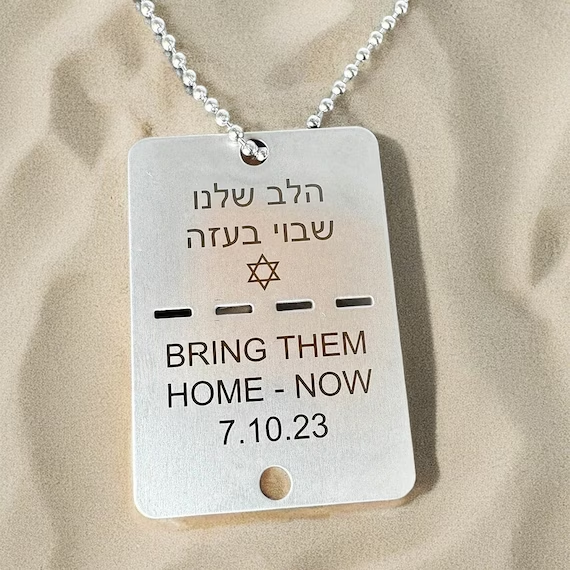
Some have put flags on their cars and others dog tags around their necks.  But, please God, this war will be won and the hostages brought home, those flags and necklaces will come off… and then what?  So many have started putting tefillin on their arms or tzitzis under their clothing, they have started lighting Shabbos candles or practicing something meaningful, but will it continue?


We have unaffiliated brothers and sisters all around us who feel betrayed by movements they stood with and who feel connected to a heritage and a homeland in a way they haven’t before.  What are we doing about it?  Are we reaching out and reaching in with the goal of all of us better reaching up?  Are we making Torah more accessible and available to them than ever? Are our communities warm, welcoming, accessible and supportive of those who have more limited education and background? 


If these feelings are to endure, if these changes in our identity, our mission and our lifestyles are to last, we must take advantage of this moment, capture the pervasive sentiment, not of what does this do for me, but what can I do for my people, my country, my Torah, and my Creator.   We need to have these conversations, find the vocabulary and language for why being Jewish, keeping Torah, remaining in our land matter, why we must do even that which doesn’t do anything for us.


It is time for us to focus not only on how do we get out of this situation, but also on what can we get out of this situation.  Hopefully the answer is a renewed passion, commitment, connection, and unity that endures. 


How You Can Turn $1,000 into $14 Billion for Israel

If you could give $1,000 and turn it into $14 billion for Israel, wouldn’t you?  If you could prevent anti-Israel/antisemitic candidates from getting elected to Congress, wouldn’t you?  Well, you can!


In the first month following October 7th, American Jewry raised over $1 billion for Israel.  Since then, the generosity and donations have continued.  While incredibly important and certainly impactful, the current amount of donations to Israel is a small fraction of what is needed to fight this war, to address the economic impact of it, and to fund the expense of recovery from it.


Since the inception of the modern state, Israel has been dependent on United States support.  Indeed, Israel has been the largest cumulative recipient of US aid since its founding, having received about $300 billion (adjusted for inflation) in total economic and military assistance. 


Of course, America’s commitment to Israel’s military superiority is not a favor or a gift, it is in the United State’s security interest.  As the only liberal democracy in the Middle East that shares values and foreign policy interests, a strong, intimidating Israel is an American interest.  The United States has an expanding military base in Israel but in some ways, all of Israel serves as a US presence in a complicated and dangerous region of the world, one that threatens American values and Americans themselves. In a Republican Presidential debate, Nikki Haley put it well when she said, “The last thing we need to do is to tell Israel what to do. The only thing we should be doing is supporting them in eliminating Hamas. It is not that Israel needs America. America needs Israel.”


There is no doubt that the US military aid to Israel is significant but often unappreciated is that most of the aid, approximately $3.3 billion a year, is provided as grants that Israel must use to purchase U.S. military equipment and services.  In other words, American gives billions of dollars to Israel that Israel must spend buying military equipment from America, stimulating the American economy while helping Israel.


While we long for a time that Israel is financially, politically and security independent, currently, US aid accounts for about 15 percent of Israel’s defense budget. Moreover, from a foreign policy standpoint, Israel relies on America providing diplomatic cover at the UN and elsewhere.  While there are greater steps Israel can take to gain independence in these areas, that dependance reality is part of the galus we still find ourselves in and, given Israel’s relatively small size, it is hard to believe that will change entirely before Moshiach comes. 


The cost of replenishing munitions to continue to eliminate Hamas in Gaza and the expense of being prepared for a prolonged war in the north are enormous.  It is for that reason the Senate just passed a special $14.1 billion aid package for Israel.  While it passed 70-29, there were Democrats and Republicans who voted against it and it still needs to pass the House where it may well encounter resistance.


Bernie Sanders voted against the aid and said, “As I have said many times, Israel has the right to defend itself against Hamas’ terrorism, but it does not have the right to obliterate an entire people.”


Peter Welch of Vermont opposed the package saying, “I have always supported the free, secure, and democratic State of Israel. I still do. The Netanyahu government’s destruction of Gaza won’t make Israel more secure or more free.”


Jeff Merkley of Oregon explained why he voted against the aid, saying, “I cannot vote to send more bombs and shells to Israel when they are using them in an indiscriminate manner against Palestinian civilians.” 


Only 22 Republicans, less than half of the membership, voted in favor of the aid package, likely more to do with the allocation to Ukraine and their concern regarding the dangers of an unsecured US border, but their votes are still troubling. 


Here is the bottom line.  For better or worse, Israel needs American support more today than it has since the Yom Kippur war and American support for Israel is less of a given than it has been perhaps since Israel’s inception. 


Since October 7th, American Jews have been working to find our place in this war.  Certainly davening, learning, financial support, visits and missions are important, they matter and make a difference.  But, what has not been as widely focused on or emphasized is our role in ensuring formal, state-sanctioned US support for Israel.


While soldiers are fighting on the front lines of Gaza and the North and every Israeli is holding down the fort on the front lines of everyday life, our front line in America is urging, advocating and using our support to positively influence US-Israel policy. 

Here are some things we can, and must do:

·   Political Giving: Recently, AIPAC shifted strategy significantly and, through their PAC, now rate, endorse and financially support pro-Israel candidates.  In the last election, this effort helped defeat 13 candidates who would have undermined the US-Israel relationship.  AIPAC has created a tool called the Detractor’s Fund to push back against The Squad and those who seek to isolate and undermine Israel in Washington by funding candidates looking to defeat detractors of Israel in Congress.  Please contribute any amount – www.aipacpac.org – and be part of determining who determines US policy towards Israel.  The money you spend supporting candidates can be the difference of $14 billon of aid to Israel.  Where else can you get that kind of return?


·      Advocacy: AIPAC, ZOA, OU, and Agudah regularly send out action alerts asking people to send emails and make calls to lobby for different pieces of legislation having to do with Israel.  Don’t unsubscribe, delete the email, or assume someone else will take the time because you are too busy.  Stop what you are doing, spend a few moments taking action and make your voice heard. Congressional staff keep an account of how many calls and emails they get supporting and opposing proposed legislation.  Even those representatives who will certainly vote with Israel need to be contacted to express gratitude and appreciation.  Your emails and calls matter, take the time to make and send them. 


·        Primaries: Due to gerrymandering, the overwhelming majority of Congressional districts are predominantly Republican or Democrat, and there are relatively few genuine swing districts.  That means most elections are decided in the primary.  Don’t ignore primary elections and stay home. No matter your true political affiliation or identification, register with the majority party in your district so that you qualify to vote in the primary and can influence who will vote in Congress. You can still vote for either party’s candidate in the general election but by registering with the majority party you ensure you will have a say in the election that is more likely to determine the ultimate member of Congress.


When Yaakov confronted Esav he prepared in three ways – prayer, gifts and war.  Our brothers and sisters in Israel are fighting this war.  We can and must contribute the prayer and gifts/contributions.


The war with Hamas is not Israel’s war alone.  Defeating evil, defending our homeland, is the responsibility of every Jew.  There is much work to do fighting for Israel in the US. This is our front line and each of us is being called upon to serve faithfully.  Soldiers in Israel are asked to be willing to sacrifice their lives.  Their families are sacrificing with severely disrupted lives.  Our sacrifice is to give the time it takes to make a phone call and send an email and the cost of being considered for contributing to a campaign. 


In Israel, they have reported to reserve duty at over 100%.  Will we report to fulfill our duty?


Grateful or Not Good Enough? The Grammys Tribute to the Victims of the Nova Music Festival

The Grammy Awards, presented by the Recording Academy of the United States, are regarded as the most prestigious and significant awards in the music industry worldwide. As far as awards shows are concerned, the Grammys couldn’t be a more appropriate and prominent event to pay tribute to the barbaric and horrific murder of hundreds of people and the kidnapping of 40 more at the Nova Music Festival in Israel on October 7th.  For that reason, our friend, former Congressman Ted Deutch, now CEO of the AJC, published an op-ed calling on them to honor the victims and advocate for the hostages. 


The 66th annual Grammys took place this week and indeed, it drew an enormous audience of 16.9 million viewers, up 34% from last year.  To his credit, Recording Academy CEO Harvey Mason Jr. did use the enormous platform to acknowledge the historic atrocity at the Supernova Festival, saying:


Every one of us, no matter where we’re from, is united by the shared experience of music. It brings us together like nothing else can, and that’s why music must always be our safe space. When that’s violated, it strikes at the very core of who we are.  We felt that at the Bataclan concert hall in Paris. We felt that at the Manchester Arena in England. We felt that at the Route 91 Harvest Music Festival in Las Vegas. And, on October 7, we felt that again, when we heard the tragic news from the Supernova Music Festival for Love, that over 360 music fans lost their lives and another 40 were kidnapped.


That day and all the tragic days that have followed have been awful for the world to bear as we mourn the loss of all innocent lives.  We live in a world divided by so much, and maybe music can’t solve everything, but let us all agree that music must remain the common ground upon which we all stand, together in peace and harmony. Every song that we’re honoring or hearing tonight moved someone, no matter where they were from, what they believed, it connected us to others who were moved in the same way. Take this string quartet: As individuals they sound really good, but together they achieve something beautiful they could never do apart. These musicians of Israeli, Palestinian and Arab descent are here, playing together.  Now is the time for us, for humanity, to play together, to come together.


On the one hand, in a world of growing antisemitism, anti-Israel sentiment, moral equivalency and political considerations, we should feel gratitude to Mason for the moral clarity to use the awards show to address the darkest day the Jewish people have had since the Holocaust.  While obvious to us, addressing the Supernova atrocity was likely complicated for him. 


But while Mason showed courage in some ways by addressing the atrocity, he fell way short of truly honoring those murdered, advocating for the victims, and hostages or standing for the truth when he omitted who they were, where they lived, and why they were killed.


Look at his words more carefully.  Notice that the Bataclan concert hall is in Paris. Manchester Arena is in England.  Route 91 Harvest Music Festival is in Las Vegas. What about the Supernova Music Festival, where did it take place, where did that tragedy occur?  No mention, as if Israel, the one and only Jewish state, is a dirty word, a political football, a divisive or taboo term.    


Mason goes on to describe, “over 360 music fans lost their lives,” as if they died in an accident or natural disaster.  They didn’t lose their lives, they were murdered. Brutally, barbarically, viciously.  They were raped, tortured, and massacred and it was not because they were “music fans,” it was because they were Israelis, because most of them were Jews.


The “tragic days” that have followed and the loss of “all innocent lives” are not because of a conflict that has two legitimate sides, but entirely and only because a barbaric terrorist organization, Hamas, attacked the innocent civilians of Israel.


While the symbolism evoked by the string quartet is meaningful, it is empty if not accompanied by substance. Peace won’t come from Israelis and Palestinians simply playing music together. It will come when we can call evil by its name, when we can say out loud the difference between perpetrators and victims and when we don’t have to wordsmith statements to make them politically correct.


Maybe you will say I am being unfair, hypercritical, or expecting too much.  Maybe by so closely analyzing his words I am being ungrateful for the courage it took to share them at all.  Perhaps.  But I ask you to consider this.  Forty participants at that Festival for Love were kidnapped, many still being held hostage against all international law, human rights, and basic morality.  Could Mason not have used that moment, that stage, to say before nearly 20 million people, “Let them go,” or “Bring them home”?  Is calling for the release of innocent women and children controversial?  Is it politically incorrect or divisive?  Is it too much to ask or expect?


Yes, we should be appreciative and yes, we should express our gratitude, but we also must simultaneously not sell ourselves short, settle for less than we deserve or are entitled to.  Are we so insecure, do we lack confidence in who we are, our story, our right to exist and live in peace and harmony?


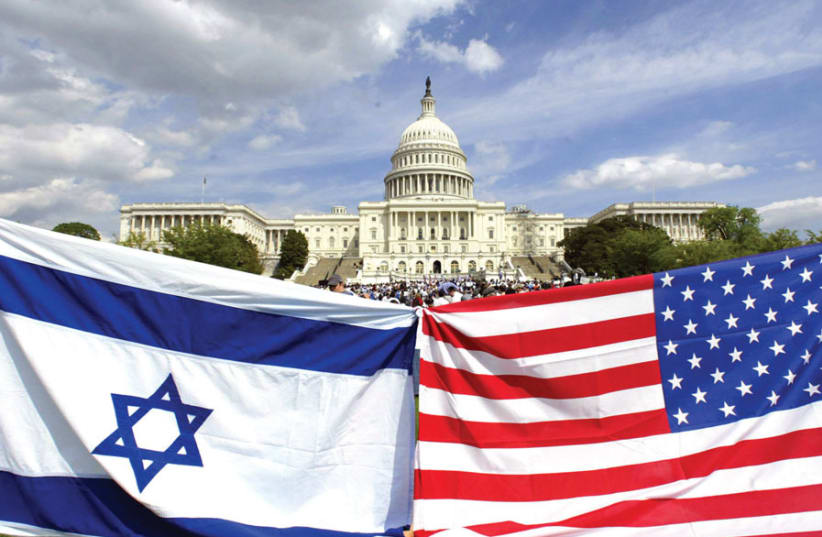
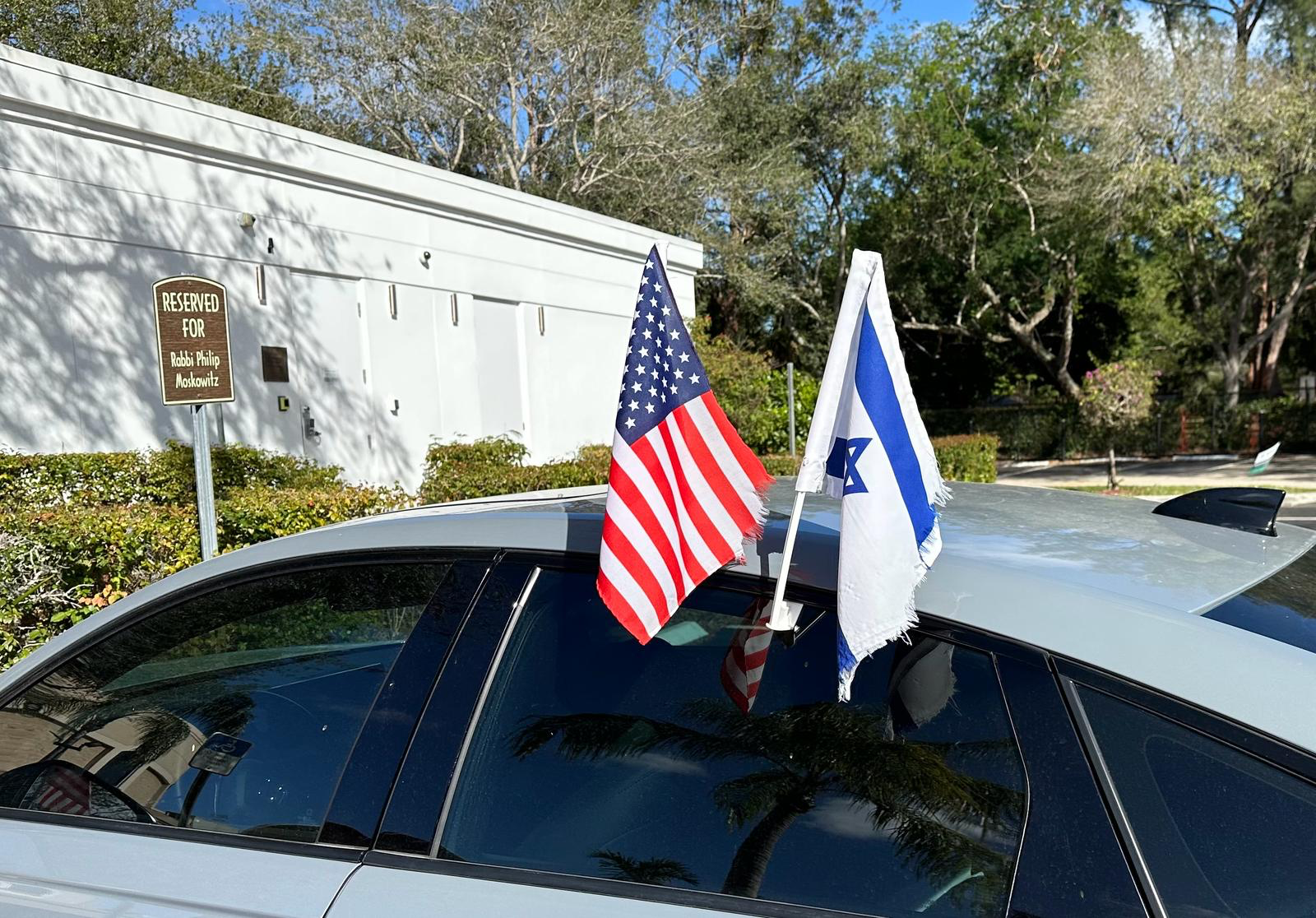
After October 7th, Boca Raton Synagogue distributed 1,000 car flags.  We didn’t only encourage Israeli flags but we also provided and encouraged people to display American flags (and IDF flags).  While pro-Palestinians rallies have only included American flags as objects to burn, we wanted to communicate the shared values and close connection of Israel and America. 


I proudly display the flags on my car.  A few weeks ago, I was driving down Palmetto Park Road, a busy street in our area, when someone tried to cut me off, almost pushing me off the road.  I slowed down to avoid a collision or an escalation when he lowered his window, pointed to my flags, starting yelling and gesturing obscenely in my direction.  He was cursing Israel and me wildly.  I slowed significantly and avoided further interaction but those moments truly shook me.  I couldn’t believe that right here in Boca Raton, a community that is more than fifty percent Jewish, such hatred and public antisemitism could be displayed so brazenly. 


When I shared the story with someone I am close with, their response as to encourage me to take off the flags.  Why identify so publicly with Israel, they asked?  Why put it in people’s face?  Why drive around with a target on your car?


To be honest, I was shocked.  The answer is to hide my pro-Israel feelings?  The response is to take down my American and Israeli flags?!  When I was in Yeshiva in Washington Heights, I vividly remember seeing Puerto Rican flags around the neighborhood and feeling admiration for the patriotism, pride, and connection my neighbors felt for where they are from.  


My children were recently in Los Angeles.  My son-in-law was walking to Mincha with his 4-year-old son when a car slowed down, the window lowered, and the driver gestured obscenely and screamed out at them, “wrong way to the tunnels.”  Are they not entitled to walk down the street safely?  Must a Jew in Los Angeles, New York, or Boca Raton take off their yarmulka, remove any display of their Jewishness when in public? 


In this moment, more than ever in our lifetimes, we need to stand tall and firm, with pride, unapologetically, without defensiveness or insecurity about who we are, what we deserve, what we stand for, and who we stand with.  We must not be satisfied with universalized messages against “all hate” instead of specifically calling out antisemitism.  We must not be content with a minimal acknowledgement when it fails to say Jew or Israeli.  We must not tolerate moral equivalence, a lack of clarity of who is the aggressor and who is the victim.  We must demand those who display hate against us be prosecuted to the full extent of the law.  We must urge decent people everywhere to advocate for the release of our hostages immediately.


When we were liberated from Egypt, we were first instructed to go to our neighbors and respectfully, but firmly, ask for gold and silver, the compensation for our years of slavery.  Hashem wanted us to walk out with resources and wealth but He wanted us to leave with something even more important.  A slave feels like a passive spectator to their own lives.  They must meekly accept whatever they get and whatever happens to them.  The only way for a slave to gain true wealth is to be liberated from that mentality and to proclaim, I know what I am worth, I know what I deserve, I know what I am entitled to, and I demand it now.  When asked boldly and confidently, the Egyptians complied with the Jews request. 


We left Egypt with more than gold and silver, we left with pride and confidence, the knowledge of who we are and what we deserve.  The time has come to free ourselves from an apologetic, fearful mentality and posture and to stand up for who we are.  When we respect ourselves we will find others have greater respect for us as well. 

An Open Letter to Those Visiting Israel

Dearest fellow visitors to Israel,


One of the more popular refrains I have heard from people considering going to Israel during these challenging times is something along the lines of: “Does it really make a difference if I come?  Aren’t I just in the way?  Does my presence or my volunteering really matter or make a difference?  Are Israelis just humoring the visiting Americans and making them feel good about coming? 


Having been to Israel twice since October 7th and with another trip planned, I can tell you based on my personal experiences, the answer to whether or not to go is an unequivocal and resounding YES.  Yes, our visits matter.  Yes, our showing up while Israel is in a war means something.  No, it doesn’t begin to compare and isn’t in the same universe as the extraordinary sacrifices of the most ordinary Israelis during this time.  But our trips, our support, our barbecues, our gifts, our hugs, and our genuine expressions of love and support are not mere photo ops or empty gestures, they are demonstrations of love, loyalty, connection, they mean something to our brothers and sisters in Israel, and they mean even more for us.


As I head back to Israel I am trying to process and think about different pointers I have heard from friends there about sensitivities that are critical for us to have when visiting.  I have heard from them that at times, even those with the best intentions and who certainly mean no harm might not be fully mindful of how something we say or do will land or be received.  The following is not to God-forbid judge but simply to share what I have heard, what I am thinking about and what I will try to be mindful of on my trip:


Don’t Just Show Up or Walk In:

Wanting to visit army bases, hospitals, displaced communities and family and friends is beautiful.  However, it must be about them, not us, on their schedule, not ours, when convenient and appropriate for them, not when works best for us.  Don’t just show up or walk into a hospital room, a base or someone’s home.  Communicate, coordinate, and only come if it will indeed contribute.


Sharing Resources and Gifts:

Remarkably, North American Jewry raised $1 billion for Israel in the first month of the war through major organizations entrusted with allocating it in prioritized and transparent ways. Additionally, on organized missions and individual trips, monies have been generously given to help bereaved families, displaced communities, and injured soldiers in a small way.  Many have brought toys and gifts to bring a bit of joy to children or women whose husbands have been called up. 


It is important to be mindful of the best way to distribute money and gifts.  How can it be done in a way that doesn’t make others feel like a chesed project or like they are needy, indigent, or underprivileged?  Should it be distributed directly or through someone on the ground more connected to the recipients?  Can it be given privately or modestly and not with fanfare or attention? 


Pictures and Videos:

The experiences and people you meet will certainly move you to take pictures and videos, whether for yourself or to share with others. But there are critical considerations to keep in mind. Is this person or is this group of people comfortable being photographed or videoed?  Should they even be asked and put on the spot, or only if they offer?  Instead of taking or sharing a video from the sidelines as a spectator, can we engage someone and ask if they have a message they want to share?  Would we want to be the subject of someone’s “this is what we just did for Israelis” Instagram post or would we prefer to be asked if we want to communicate the context and share a message? The heroic people of Israel, soldiers in uniform, army bases, and certainly scenes of destruction or devastation – these aren’t photo ops or tourist attractions. Take a picture to tell a story or advance a cause, but do so mindfully and sensitively.


Personal Connections and Relationships:

Instead of watching as a tourist, can we engage directly, maybe break into small groups to genuinely share, listen, and connect? Instead of, or in addition to, capturing a presentation that we may record and share on Whatsapp or elsewhere online, can we disconnect to connect in a way that communicates showing up, that conveys empathy, love, and listening? 


Ordinary People in Extraordinary Times:

We must keep in mind throughout our visit that everyone we meet, those displaced, farming, injured, fighting, on their own at home, volunteering, almost all of them are really just regular people who have been thrown into the middle of a crazy time that they themselves are still processing. They are not objects of our chavaya, they are real people, with real feelings, real experiences, real worries, concerns.  Can we relate and speak in genuine ways, in normal tones? Our brothers and sisters are not museum pieces, they are not a piece of history, they are not here so that our kids can have an educational experience or we can have an amazing and meaningful chavaya. They are not part of a photo op or a vacation memory.  We are coming because we are Jews who care about or fellow Jews and we just want to connect to what they are experiencing and we can tell them how we are feeling. 


This Isn’t Over Yet:

Be mindful that these trips are not to see, pay witness to or help with a situation that is over.  This is not a modern version of March of the Living or Heritage Trip. We are very much still in this war and we don’t know when it will be over. The war is not a closed event, something that happened in the past. It’s something that people are very much still living every day, will continue to be living after you leave, and it must not be related to as something that was.  At Shabbos tables, around family, friends, and strangers, don’t take anything for granted, be careful and sensitive how you speak, what you speak about, and before whom you are speaking.


Not Just an Itinerary:

The daily life of every Israeli has been impacted since October 7 with no clear end date.  From significant interruptions to businesses and universities, to the fear that a husband, father, son or brother won’t return home, life has been turned upside down.  Israelis are just trying to cope and manage their day-to-day. Most haven’t gotten to go see Be’eri, or visit hospitals or displaced people at hotels, they haven’t made a barbecue at an army base or been briefed by politicians or military. They are genuinely happy that Americans are coming to visit, show support and that we care.  We must be careful not to commercialize or sterilize our loving trips to connect with our greater family and turn them into a tourist experience, a great “war trip” experience. The itinerary should not distract or blind us to the love, kindness, support we can show the cab driver, the makolet owner, the restaurant server, and our family and friends who have made Aliyah.  The purpose of our trip is not the collage we can create, the photobook we will produce, or the video we can compile. It is the people we will connect with, the love we can share, the energy we can contribute to.   Our trip should be informed not only by what we want to do, but how we are needed and where we can be most of service. 


Comfort In, Dump Out:

No matter how little you slept on the flight, how exhausting the itinerary is, don’t tell a soldier who hasn’t slept or a mother caring for a home all alone how tired you are.  If seeing or experiencing something is emotionally difficult or draining, don’t process or seek comfort from those who are more closely connected or bearing the brunt of this war.  Be mindful to only comfort in and dump out


Caring and Compassionate, Not Condescending:

Find a way to be caring and compassionate without being pitying or condescending.  It is hard enough to be thrust into a difficult situation, being made to feel like a nebuch, weak or helpless makes it worse.


The penultimate plague on Egypt was choshech, darkness.  We have all lived through blackouts or woken in the middle of the night to a dark room while trying to find our way to the light or door.  What was so devastating about this plague that it deserved to be placed right before the final blow of makas bechoros?  The Chidushei HaRim explains homiletically.  Light is the capacity to know that there are other people in the world and that life is not just about us.  Darkness falls when we turn exclusively inward and live a life of egocentricity.   When we care only about ourselves, our interests, our success, our needs, our happiness, we are cloaked in darkness.   


When the Torah describes darkness it says: V’lo ra’u ish es achiv, no person could see his brother.  Says the Chidushei HaRim, when you live life without even seeing the person next to you, you are covered in darkness and you are blind to what life is really all about.  Being trapped in a life of self-centeredness, only caring about yourself and not helping or even seeing others around you, is a life of darkness, it  results in pain and suffering like a plague.    


It is wonderful to go to Israel anytime, it is particularly meaningful to go during this time.  As you plan your trip, as you experience each visit and interaction, simply ask yourself, if you were in the other position, how would you want to be related to, spoken to, and thought about.


Let us all go selflessly, not selfishly, let’s dispel all the darkness and contribute enormous light. 

Don’t Vote Republican or Democrat, Vote Israel

For most of the 20th century, the vast majority of Jews in the United States identified with the Democratic Party and voted for Democratic candidates. Even now, according to Pew, seven in ten Jewish adults identify with or lean toward the Democratic Party, and half describe their political views as liberal. Orthodox Jews stand out as an exception: 60% of Orthodox Jews describe their political views as conservative, with 75% identifying with or leaning towards Republican. 


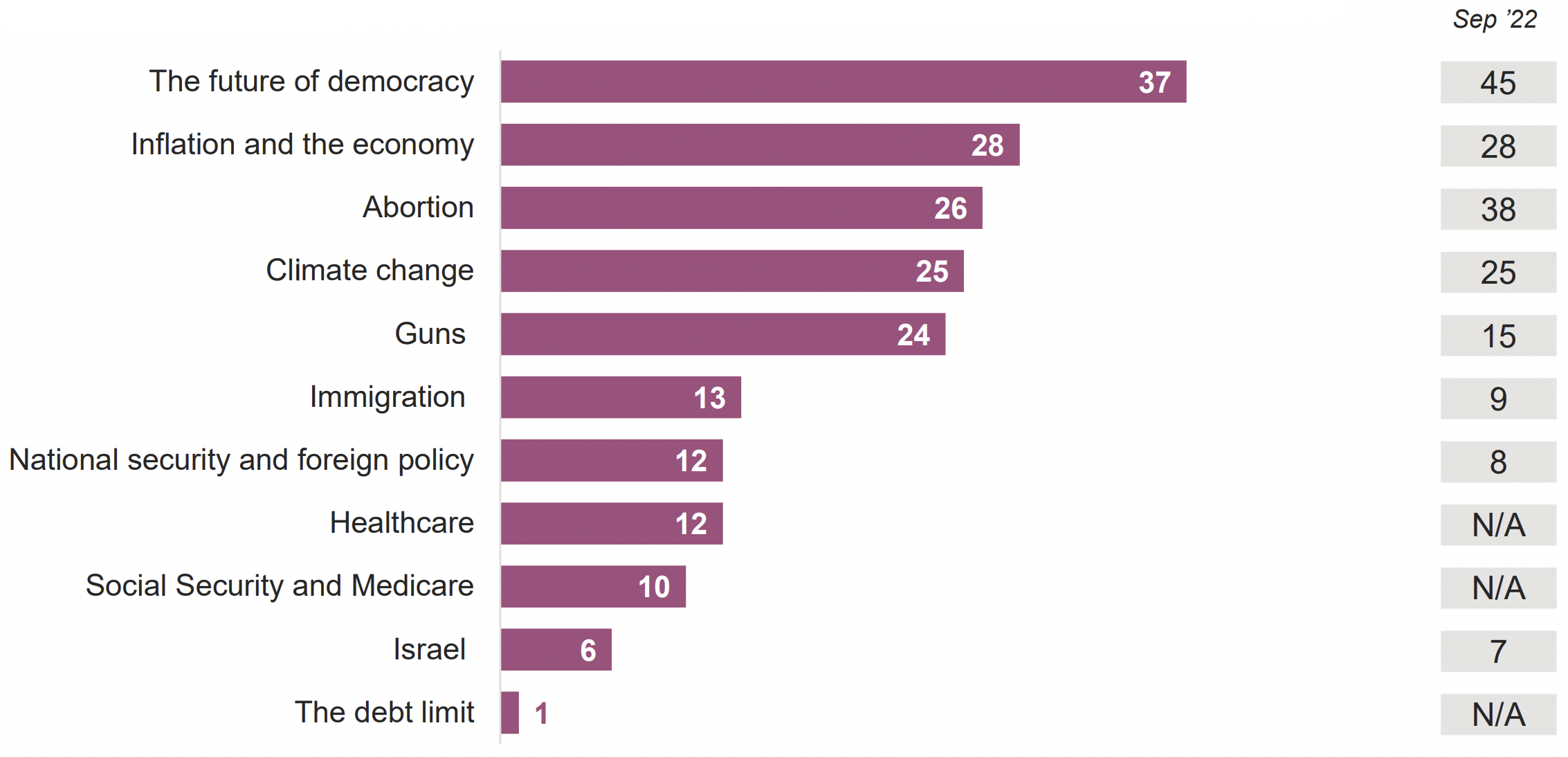
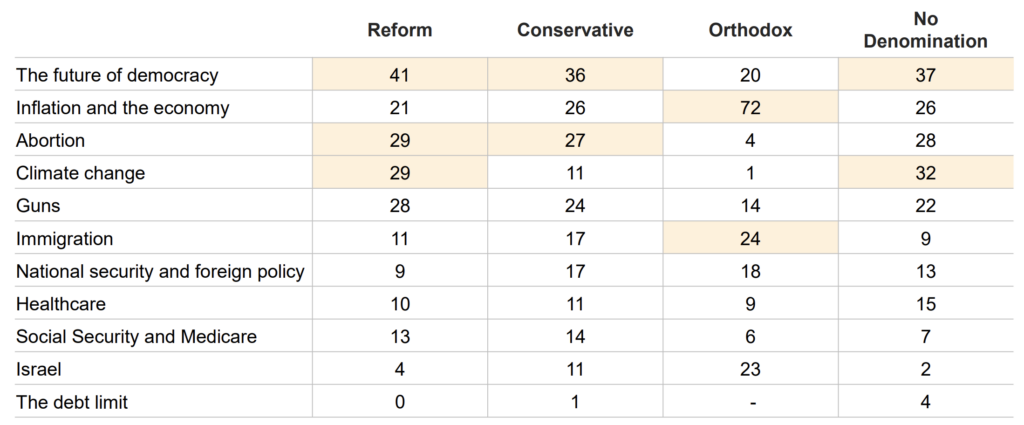
The non-partisan Jewish Electorate Institute (JEI) released its annual national survey of Jewish voters in November 2023. The poll found that Jewish voters remain very focused on cultural issues such as democracy, abortion, guns, inflation, and climate change.  The data was published before the atrocity of October 7th and before the current war but, how low Israel ranked as a priority in voting was upsetting even then.  


Even among the Orthodox, Israel ranked behind inflation and the economy and immigration: 


The pogroms, mass murder, and atrocities of October 7th stunned Israel and those who love her. Reeling from the unimaginable attack, grieving from the horrific loss, worried about the staggering number of hostages, Israel felt isolated and alone and highly uncertain.  Immediate statements of strong support from American political leaders and elected officials, coupled with real demonstrations of loyalty to Israel’s security, were critical. 


At that time, and in the moments that have followed, we have learned who are true friends of Israel and the Jewish people and who are not.  In many cases, the answer is not who we would have predicted.  Some of the most vocal and vociferous voices are politicians the pro-Israel community was not very confident about.  Take Senator John Fetterman.  In the 2022 election, the Orthodox community of Pennsylvania did not exactly embrace Fetterman, a progressive Democrat, or celebrate him as a champion of our causes.  And yet, since October 7th, you would be hard-pressed to find a more outspoken, unequivocal, even defiant supporter of Israel. Consistently rejecting the call for a ceasefire and defending Israel’s efforts to destroy Hamas, he recently said, “I would be the last man standing to be absolutely there on the Israeli side on this with no conditions.”


And so, among the many things that have changed as a result of October 7th, I would humbly recommend that the Jewish community would do well to no longer identify with a single party, Republican or Democrat, but to look carefully at every candidate’s position and record on Israel.  When we step in a voting booth, we shouldn’t look for an (R) or a (D) but for moral clarity and loyalty on Israel.  Understanding how critical support for Israel is militarily, diplomatically, and financially, our top three issues in any election ought to be Israel, Israel, and Israel.  As important and meaningful as other issues are, without a strong Israel, Jews are not safe or secure. 


We must not fall in love with or identify too closely with either party. We must not be blinded or enticed by how much we may have in common on social or domestic issues with one side or the other, one candidate or another.  The pro-Israel community must keep our eye on how pro-Israel a candidate is, with their words and statements and even more importantly, with their practice.  We must do a better job at rewarding our friends and calling out our adversaries.  We must not ignore or discount the support of an elected official on the basis that they are simply doing what is obvious and right to us.  If that senator, member of Congress or the administration as a whole receives much greater feedback, letters and calls against Israel than for it, their vote and voices can easily change. 


Our exile in Egypt and the harsh suffering and servitude there began with the fact that  וַיָּ֥קם מֶֽלֶךְ־חָדָ֖שׁ עַל־מִצְרָ֑יִם אֲשֶׁ֥ר לֹֽא־יָדַ֖ע אֶת־יוֹסֵֽף , a new king arose over Egypt who did not know Yosef.  Chazal debate if it was literally a new king, or the same king who had chosen to forget Yosef’s contribution to saving the Egyptian economy.  Some commentators point out that the Jewish people had retreated to live in Goshen, neglecting the relationship with the king and leadership of Egypt.  Absent that connection, the king was able to forget, overlook and disregard what the Jews had done to save Mitzrayim. 


This lesson of the centuries of servitude is clear.  We must never take for granted any relationships with people in positions of power.  We must build them, nourish them, educate them, and hold them accountable when it comes to Israel and issue of Jewish concern.  Contribute to and be grateful towards those who stand with Israel and against antisemitism.  Take the time to write a letter or make a donation.  Don’t look for a particular party, look for the heart and soul of those who “get it” on the issues that matter to us.  AIPAC is one great resource to track candidates, their positions on Israel, and to take action by writing letters and being in touch, specifically with those who need to hear it to reinforce their correct position or call them out on having the wrong one. 


We are blessed to currently have a president, administration, and overwhelming majority of Congress who firmly stand with Israel.  While they aren’t perfect and there are positions or statements we wish were different, they fundamentally have Israel’s back, often when it isn’t politically advantageous or comfortable for them.  Don’t take that for granted and wait for a  new king to arise who doesn’t know us or care about the issues that matter most to us. 

Rabbi Efrem Goldberg

Join Our Community

Subscribe to our newsletter or connect with us on WhatsApp.