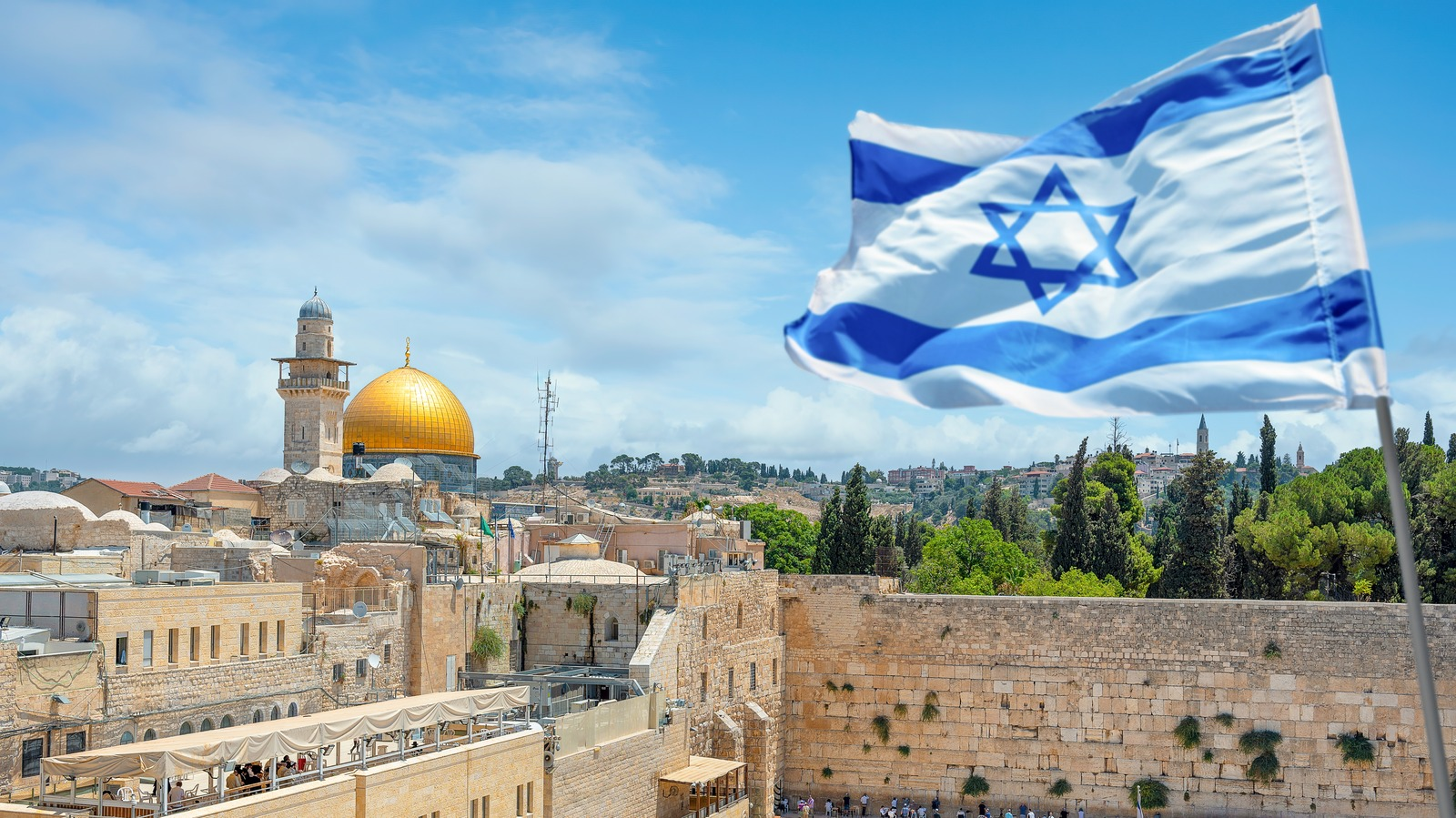
Simchas Torah One Year Later: A Day of Death, an Opportunity for Rebirth

Simchas Torah, October 7, will forever be etched in our hearts and minds as the day of the greatest massacre of our people since the Holocaust.  The brutal, cold-blooded murder of innocent men, women and children, young and old, entire families, over 1,200 people, rocked our worlds, broke our hearts, and shattered our collective illusion of safety.  The events of that day launched a war in which our people have sustained even more casualties, more parents bereft of children, children orphaned from parents.  For over a year, we have been a nation in a perpetual state of grief, mourning, and sorrow.


Any look back at a year ago, and all the days since then, begins with honoring the memory of the fallen, learning each of their unique and individual stories, gaining an appreciation for who and what was taken from us. Simchas Torah, heretofore one of the happiest and most joyful days on our calendar, is now forever complicated by the competing feelings of sadness and loss.


Additionally, beyond the unimaginable loss of life, on Simchas Torah a year ago, many of our ideas and assumptions died as well.  We lost more than 1,200 irreplaceable lives, but we also lost our innocence, in some cases our confidence, our optimistic view of the Jewish condition in America and the world, and for some, communities of association or identification.  A year ago, so much died.


But a year later, as we reflect, we can look back and see that on Simchas Torah, October 7 of last year, so much was also born.  On the brink of a civil war over judicial reform and religious differences, overnight a sense of unity, togetherness, and shared destiny was reborn. 


From the resolve of the devastated communities on the Gaza border, driven by displaced families from the north and the south, powered by a record response to the IDF call up, the Am HaNetzach, the determined, tenacious nation of eternity was reborn.  From the ashes of the Gaza communities, an unprecedented chesed effort to provide for chayalim, support families of reservists, comfort mourners, visit displaced families and provide provisions was born, with leadership and participation from diverse communities literally around the world. 


A spiritual awakening, a Jewish pride burst forth in people who had never experienced their Jewish soul before or in whom it had been dormant for a long time.  Throughout this year, I have regularly been “bageled,” approached by Jews simply signaling their Jewishness to a fellow Jew (and signaling their desire to signal that Jewishness) in airports and on airplanes, in supermarkets and at stores, at a baseball game and even in a bathroom. Jews are returning to study, practice, proudly display their identity  The Jewish people are alive, reborn, proud, practicing, growing and united.


To be sure, things are far from perfect. There are important differences and disagreements and there are forces seeking to divide us again.  The war continues to rage, our heroic soldiers are still fighting on multiple fronts, and our precious hostages are still not home. 


But with all the problems and challenges, with all the lives that were prematurely and tragically snuffed out, so much has come alive.  Moshe Naaman, a soldier in the IDF, wrote the following inspiring story (Translated from Hebrew):


Two weeks ago, we were called up by Order 8 to the northern border. Today, we had the privilege of holding Yom Kippur prayers at Kibbutz Beit Zera. For 93 years, the kibbutz existed without agreeing to have a Yom Kippur minyan. But we, as soldiers, set one up in the company area at the kibbutz.


There were 12 religious soldiers among us. We sent a casual WhatsApp invitation to the kibbutz members. When the holiday started, we were shocked—dozens of members came for Kol Nidrei and Maariv. In the morning, elderly members came for Yizkor. The climax came with many dozens of people, including children, women, and toddlers, arriving for Neilah and shofar. People were moved to tears.


What can I say? I never imagined this would happen. The verse “Master of Wars, Sower of Righteousness” took on a new meaning for me today. Two weeks ago, I never imagined I wouldn’t be in the beit midrash for the High Holidays. I found myself as the shofar blower, gabbai, cantor, and speaker… The members kept thanking us after Yom Kippur and tearfully asked us to return next year…


Last year, I had tears of pain and sorrow at the end of Yom Kippur, but this year, those tears turned into excitement and joy.


“And seal all Your people for a good life.”

Moshe Naaman  –   גדוד הבוקע 5035


To mark the year since October 7, Danny Wise of Ami Magazine conducted 38 interviews focusing on the rebuilding efforts of the Israeli communities in the Gaza envelope.  Among his interviews, he met with a woman named Dafnah from Kibbuz Re’im. She had been the cultural director of the kibbutz and was one of the organizers of the Nova Festival. 


Touring the kibbutz, she showed him her charred house and the room in which her mother and children, Shira and Meir, were found murdered together.  She is the lone survivor of her family.  Wise writes that throughout the conversation he thought of Kristallnacht and the destroyed shuls.  He asked her if the terrorists destroyed any shuls in the communities along the Gaza envelope.


Dafnah responded, “Of course not. Not a single beit knesset was damaged in all 21 Gaza kibbutzim.”  Wise didn’t understand, how could no shul have been attacked, no Sefer Torah burned?  She explained, “It wasn’t a miracle. How could they damage something that doesn’t exist?” Most of the communities didn’t have designated or active shuls.  Dafnah, went on to explain, “If you want to understand the day after, you have to understand the day before.”


Wise writes:


Rabbi Shlomo Raanan runs an organization called Ayelet Hashachar which seeks to bring outreach to irreligious kibbutzim. He came up with the idea of a basketball game between yeshivah bachuram and the kibbutzniks of Reim. The game was set to take place on Chol Hamoed, October 2, just days before the massacre. Dafnah had led the charge to cancel the game. To her, the match wasn’t just a friendly contest; it was a Trojan horse, a way for religious influence to creep into the kibbutz. “I was furious,” she told me. “This was outrageous. We didn’t need outsiders telling us who a good Jew is,” she said, pulling out her phone and scrolling through old messages. She showed me the texts she had sent to Rabbi Raanan, warning him not to bring his religious mission to her doorstep. “Cancel this game immediately,” she wrote. “If you don’t, we’ll all block the entrance with our bodies.” In the spirit of peace, Rabbi Raanan canceled the game.


But five days later, the massacre came. Just over the border, in the tunnels of Gaza, Dafna found herself held hostage, face to face with the forces that had torn her world apart. “I said to an older guard in Arabic, why do you torture me? For 20 years, I’ve made programs for Arab and Jewish. The Jews are your cousins.” As she pleaded in the darkness for some recognition of their shared humanity, she was met not with empathy but with a cold dismissal.


“You are not a descendent of Ibrahim! You are not a Jew!” he spat. “You are a European colonialist who stole our land! It was in that moment, Dafnah said, that something broke. Or perhaps, something began to be repaired. The accusation hit hard. Like many in the kibbutz movement, Dafnah had spent her life defining herself more as an Israeli than a Jew, and more dedicated to reconciling Arabs and Israelis than healing the divides between different groups of Jews.


Religion had always been secondary to her identity. But now, in the depths of that tunnel, being denied her Jewishness by a Hamas fighter, she experienced a crisis of self. “I started screaming, Ana Yahudiun, Ana Yahudiun, I am a Jew I am a Jew!” The guards restrained her, taping her mouth. But for Dafnah, the internal shift had already occurred. “For the first time in my life I saw my soul; I saw that I am a Jew. “All my life,” Dafnah reflected, “I’ve been part of this community. We didn’t see ourselves as Jews, in the traditional sense. When I traveled overseas and someone asked if I was Jewish, I’d correct them. “No, I’m Israeli”; I’d say.


But when he called me a colonialist, it hit me. He didn’t see me as a Jew because I didn’t see myself as a Jew.


Dafnah paused for a moment, her eyes wandering over the ruined landscape. “Every Arab village has a mosque. Christian settlements build churches. And here, we have nothing. Nothing to say that we are Jews. And in that moment, realized that if we were going to rebuild, we needed to reclaim our identity.”  “I will tell you,” Dafnah said, “I took upon myself the new beit knesset project. When we rebuild, our beit knesset will be the most beautiful structure on the kibbutz.”


On Simchas Torah, Dafnah lost her family, but she found herself.  They died, but her Jewish identity was born. 


The holiday and festivities of Simchas Torah are unusual in their origins. They are not mentioned in the Torah or in the Talmud. It was never enacted as a full rabbinic holiday like Purim or Chanukah.  Rabbi Lord Jonathan Sacks z”l writes:


On Simchas Torah, without being commanded by any verse in the Torah or any decree of the Rabbis, Jews throughout the world sang and danced and recited poems in honor of the Torah, exactly as if they were dancing in the courtyard of the Temple at the Simchas Beis HaSho’evah, or as if they were King Dovid bringing the Ark to Jerusalem. They were determined to show God, and the world, that they could still be ach same’ach, as the Torah said about Succos: wholly, totally, given over to joy. It would be hard to find a parallel in the entire history of the human spirit of a people capable of such joy at a time when they were being massacred in the name of the God of love and compassion.


A people that can walk through the valley of the shadow of death and still rejoice is a people that cannot be defeated by any force or any fear…Simchas Torah was born when Jews had lost everything else, but they never lost their capacity to rejoice. Nechemiah was right when he said to the people weeping as they listened to the Torah, realizing how far they had drifted from it: “Do not grieve, for the joy of the Lord is your strength” (Nechemiah 8:10). A people whose capacity for joy cannot be destroyed is itself indestructible.


The year since Simchas Torah has been a fulfillment of the saying, “They Tried to Bury Us; They Did Not Know We Were Seeds.”   Simchas Torah was born against a backdrop of hate and tragedy.  A year ago, we lost so many, we buried heroes of our people.  But over this year, we birthed a new era, a new chapter for our people.  It is still being written and we determine what it will say next. 


The world has changed enormously since Simchas Torah of last year, have you?  How can we honor all those who died?  On a day marked by so much death, the only proper response is to birth a better version of ourselves and our people. 

Exploding Pagers, Exploding Memes

If you submitted the script to Hollywood, it would be rejected for being too outrageous and unbelievable.  If you proposed it as a plan, it would likely be dismissed for being too high risk, with too many things that could go wrong.

And yet, in a bold, brave and brazen scheme, Israel spent years planting more than 5,000 pagers that were distributed to Hezbollah leaders and that were capable of being remotely detonated. One day last week, the pagers exploded. The next day, more electronic devices detonated in Hezbollah hands in a second wave of the genius targeted attack.  By the third day, when the wicked terrorists had no choice but to abandon technology altogether, Israel eliminated 20 commanders who were meeting in person to plan an October 7-style infiltration and attack from the north. 


How did they pull it off? We likely will never fully know but what we do know is that a Hungarian shell company was formed that signed an agreement with a Taiwanese manufacturer. The pagers were new, a brand that the group had not used before.  They were brought into the country about five months ago.  


This operation that interfered with the supply chain and introduced very small explosive devices built into the pagers prior to their delivery to Hezbollah, and then remotely triggered them simultaneously, is nothing short of a miracle for which we must be incredibly grateful. We are thankful to the young woman who allegedly introduced the scheme, the leadership who green-lighted it, the operatives who carried it out, and most of all the Almighty whose providence pulled it off. 


Not surprisingly, the usual cast of Israel haters and antisemites, instead of praising the targeted operation that was specifically designed to target and eliminate evil terrorists while sparing civilians, criticized and condemned Israel, with some going so far as to label the operation terrorism. 


United Nations Secretary-General 
António Guterres said he was “deeply alarmed” by the beeper attack.  UN High Commissioner for Human Rights, Volker Turk, said the attack “violates international human rights law.”  Having been silent about Hezbollah’s 8,500 rockets fired at civilians in Israel in the last 11 months that took the lives of dozens of Jews and non-Jews alike, Congresswoman Alexandria Ocasio-Cortez commented, “This attack clearly and unequivocally violates international humanitarian law and undermines US efforts to prevent a wider conflict. Congress needs a full accounting of the attack, including an answer from the State Department as to whether any US assistance went into the development or deployment of this technology.” The New York Times published an opinion piece titled, “Israel’s Pager Bombs Have No Place in a Just War,” with the author, Michael Walzer, calling the operation “likely war crimes” “terrorist attacks.”


Like Hamas, Hezbollah has long harbored genocidal intentions to annihilate Israel and kill Jews around the world, intentions they act on constantly.  The devices that exploded were not sold at retail stores—they were specifically deployed to communicate regarding terror activities and they were carried by terrorists who were dedicated to perpetrating them.  There is nothing more moral than defending your country and the innocent men, women, and children who rely on you.


Instead of condemning or criticizing Israel, AOC and all Americans should be expressing gratitude and praise for eliminating Ibrahim Aqil, wanted by the United States for decades for his role in the devastating 1983 attacks at the U.S. Embassy and Marine barracks.  America had been trying to get him for 41 years and had a $7 million bounty on his head. 


As I followed the story of Hezbollah’s devices, and the technology they paid for blowing up in their faces, I shared in the gratitude, admiration, glee and hope that we are one step closer to eliminating this enemy for good. 


As quickly as the pagers blew up, the funny memes, gifs, and jokes were exploding all over the internet, in WhatsApp groups, and on social media.  The creativity and wittiness made me smile and sometimes even laugh.  But as the jokes went increasingly viral, in addition to the smile, they made me concerned because they weren’t only drawing the attention of Israel’s friends, they were attracting the focus and comments of our enemies.


Make no mistake – we can be and must be absolutely grateful and even celebrate the defeat and demise of enemies who seek to destroy us. However, in the modern world where things spread far and wide with unprecedented ease, I believe we need to be thoughtful and intentional with where, and when, and how we “celebrate.”  These questions concern me not because I hesitate to be glad and even gleeful over the elimination of evil people. Shlomo HaMelech teaches in Mishlei 24:17, “When your enemy falls, do not rejoice,” but as Rav Aviner writes, “there are enemies, and there are Enemies.”  The Talmud (Megillah 16a) teaches that when Mordechai was led around on a horse by Haman, Haman challenged, “Doesn’t your Torah instruct that you are not supposed rejoice in your enemies fall.” to which Mordechai responded: “This does not refer to you.”  Today’s enemies are no better than Haman and worthy of the same celebration when they are taken down.


There is a well-known Gemara (Sanhedrin 39b) that describes how when the angels wanted to sing and join with the Jewish people’s celebration after the Splitting of the Sea, the Almighty rebuked them saying, “My handiwork is downing and you are singing a song before me?”  The Angels were silenced, yet the Almighty allowed and welcomed the Jewish people raising their voices in song.  Do we not strive to be like angels? Why was it ok for us to sing?


The Piazetna Rebbe, R’ Kalman Kalonymous Shapira Hy’D, wrote during the Holocaust: “Was an angel ever hit? Was an angel ever murdered?  Was an angel ever humiliated?  We were! The angels did no suffer as we did in Egypt, so they could not sing.  But we did suffer – suffered immensely – and therefore, during the the Exodus from Egypt, ‘Moshe sang.’” 


And so yes, when learning of news of the destruction of Hezbollah terrorists, prayers of gratitude and appreciation in the community are appropriate and warranted. A l’chaim among friends and family to mark the miracle of the courageous pager attack and for each evil that is eliminated is reasonable.  (The same is true of the beautiful videos of singing and dancing that took place in several Israeli yeshivas, which were expressions of gratitude to Hashem and joy in His salvation.) And there is nothing wrong with sharing memes or jokes among ourselves, even if they are irreverent and humorous.  However, I think all would agree handing out candies at the local mall to celebrate would be a mistake and inappropriate.  They could and would easily be perceived (and gleefully covered by the media) as Jews celebrating and glorifying death, as being no different than our enemies.  Where do the internet and social media fit in?  Are they a more public extension of our private community or WhatsApp group, or is it the equivalent of publicly displaying memes and gifs at the local mall or town square?


Some are hesitant to gloat because they are uncomfortable with the Jewish state being in the role of aggressor, the mighty, strong, and capable independent nation standing up for themselves.  This kind of thinking is just wrong and an entirely illegitimate reason on which to base our behvaior. But, it has been suggested that spreading funny and embarrassing memes and gifs should be considered part of the online war effort, publicly humiliating our enemies.  Perhaps. Others feel that the world will never love us or be fair to us and so who cares what they will think. There is merit to that. Still others feel the messaging and impression we leave in public matters and we should be thoughtful and strategic what, how and where we post and share.  There is definitely merit to that. 


This, like most questions about the war (among many other things) is nuanced, multifaceted, and complicated.  There are different reasonable conclusions.  What I hope we can all agree on is that we shouldn’t simply react and act mindlessly and get swept up in what is spreading around us. If we are choosing to post, to share, to comment publicly, it should be done mindfully and thoughtfully. The stakes are too high, the implications to great to be carried by momentum or by the forces of external actors. 


Please God, we will have many, many, more chances in the very near future to react to the destruction and elimination of our enemies. Let’s be as strategic, thoughtful and judicious in how we fight online as the fight is happening offline.

Missing Apologies to the Hostages

“Ok, sweet boy, go now on your journey, I hope it’s as good as the trips you dreamed about, because finally, my sweet sweet boy, finally, finally, finally, finally you are free.  I will love you and I will miss you every single day for the rest of my life.”


It was hard to not be brought to tears listening to these piercing words, uttered by Rachel Goldberg-Polin as she bid farewell to her beloved son Hersh.  After his arm was blown off on October 7, Hersh survived 11 months in captivity, held hostage by barbaric and brutal terrorists, but before he could be rescued or released, Hersh and five other hostages were executed in cold blood, their bodies discovered soon after by heroic IDF soldiers.


Rachel shared a message of love and of gratitude but also included an apology. “At this time, I ask your forgiveness. If ever I was impatient or insensitive to you during your life, or neglected you in some way, I deeply and sincerely request your forgiveness, Hersh. If there was something we could have done to save you, and we didn’t think of it, I beg your forgiveness. We tried so very hard, so deeply and desperately. I’m sorry.”


She wasn’t the only one to react to this horrific outcome with an apology.  At Hersh’s funeral, President Isaac Herzog also expressed a request for forgiveness from Hersh and his family and from all of the hostages: “Beloved Hersh, with a torn and broken heart, I stand here today as the president of the State of Israel, bidding you farewell and asking for your forgiveness, from you, and from Carmel, from Eden, from Almog, from Alex, and Ori, and from all your loved ones.  I apologize on behalf of the State of Israel, that we failed to protect you in the terrible disaster of October 7, that we failed to bring you home safely. I apologize that the country you immigrated to at the age of 7, wrapped in the Israeli flag, could not keep you safe. Rachel, Jon, dear Leebie and Orly, grandparents, and the whole family – I ask for your forgiveness, forgiveness that we could not bring Hersh back home alive. Your special light, Hersh, captivated all of us from the first glance, even through the posters crying out for his return.”


In a press conference later that day, in the context of pressure on him to reach an agreement, Prime Minister Bibi Netanyahu also joined the chorus of apologies.  “To the families of the six hostages, I ask for your forgiveness that we did not succeed in bringing them home alive. We were close, but we did not make it.”


Certainly cynics and critics will challenge the sincerity of politicians’ apologies, why and when they are offered and if they should be accepted if there was, in fact, more that they could have done.


On that day of apologies what struck me was not who offered them, but who did not. Make no mistake – the biggest apologies should be issued by the evil perpetrators who committed and continue to commit these atrocities, their associates, supporters, and backers. Of course, we are not holding our breath for these apologies. Yet there are plenty more that also are notable in their absence.


Hersh was an American citizen and was also failed by the country of his birth.  In all the statements released by members of the US Administration there was no apology, not even a lip-service request for forgiveness for a failure to bring him home.  Were they really “working day and night” non-stop? Could overwhelming pressure not have been applied with increased sanctions on Iran, pressure on Qatar with the threat of withdrawing our bases there, withholding aid to Lebanon and Egypt, pressure on Turkey and more?  Where is the apology for pressuring Israel not to go into Rafah, a decision that may well have contributed to this horrific result?  Where is the apology for withholding arms to support Israel’s effort against Hamas?


Where is the apology from the Red Cross, who failed to visit or protect Hersh or any of the hostages even once?


Where is the apology from humanitarian organizations who are outspoken about innocent civilians in Gaza but failed to protect and secure the release of Israeli hostages?


Where is the apology from the UK who, while five British citizens are still being held hostage in Gaza, and days after Hamas executed six hostages, suspended thirty arms licenses to Israel?


Where is the apology from Canada who took over 24 hours to condemn the murder of the hostages by Hamas in Gaza and then proceeded in the same statement to call for an immediate ceasefire?


Where is the apology from the members of the media who referred to the hostages as “having died” rather than accurately reporting their murder, who refer to civilians in captivity as “prisoners” rather than “hostages,” who write about other hostages being “freed” when the reality is they were rescued?


Where is the apology from the world who, less than a century removed from after the most heinous genocide in history, yet again failed to protect the Jewish people and, in the time that has followed, still fail to truly support our full right and ability to protect ourselves?


While everyone seems to have fairly strong opinions on the matter, the question of whether the leaders of Israel could have or should have made more compromises to reach a deal that would have brought these hostages home is incredibly complicated and difficult with grave consequences in both directions.  Though they certainly aren’t directly guilty for the murder of innocent Israelis, ultimately leaders are responsible for the safety and security of their people. President Herzog and Prime Minster Netanyahu were right to take ask for forgiveness for having failed in that role.


What I’m thinking about most, though, is that while some have apologized, and we are waiting for others to ask forgiveness, there is one more group who needs to reflect and should be expressing responsibility.


Our Parsha, Shoftim, tells the story of a corpse found in the field with no indications or evidence as to who the murderer is. The Sanhedrin justices are charged with the task of measuring to determine which is the closest city to the scene of the crime.  An eglah, a calf in its first year that has not worked and is not blemished, is executed in the valley.  The leaders of the city and the Kohanim are present and a declaration ensues. 


The elders of the city proclaim:

יָדֵ֗ינוּ לֹ֤א (שפכה) [שָֽׁפְכוּ֙] אֶת־הַדָּ֣ם הַזֶּ֔ה וְעֵינֵ֖ינוּ לֹ֥א רָאֽוּ׃ כַּפֵּר֩ לְעַמְּךָ֨ יִשְׂרָאֵ֤ל אֲשֶׁר־פָּדִ֙יתָ֙ יְהֹוָ֔ה וְאַל־תִּתֵּן֙ דָּ֣ם נָקִ֔י בְּקֶ֖רֶב עַמְּךָ֣ יִשְׂרָאֵ֑ל וְנִכַּפֵּ֥ר לָהֶ֖ם הַדָּֽם׃

“Our hands did not shed this blood, nor did our eyes see it done. Absolve, Your people Israel whom You redeemed, and do not let guilt for the blood of the innocent remain among Your people Israel.” And they will be absolved of bloodguilt.


The Ibn Ezra explains this seemingly unusual process, the Egla Arufa, as a procedure designed to achieve atonement not so much for the murder, as for the sins of the townspeople which, metaphysically, allowed a murder to take place in their vicinity.  If a tragedy unfolds in a community, it is cause for introspection to examine what did they do wrong and how could this have happened there.


The Jewish people collectively owe an apology to the victims of October 7, to the heroic soldiers who have been at war since then, to the hostages, and to all of those suffering during this difficult time.  We aren’t the perpetrators and would never directly harm a fellow Jew, but if these monumental events are happening under our watch and in our backyard, we are responsible both metaphysically and spiritually.  We could and should be bigger and better to one another and to Hashem.


If only we were worthy, if only we truly woke up, if only we changed how we treat one another, how we represent Hashem in this world, following His word and repairing the world in His image, this Galus and this suffering would end.  


To Hersh, Carmel, Eden, Almog, Alex, and Ori, to the 1,611 who have died and the 101 still being held hostage, from the bottom of our hearts and from the depths of our beings, we apologize.  We are sorry we haven’t learned the lessons of our history. We are sorry we didn’t do all we could and should to create a different destiny.  We ask for your forgiveness and we promise to be better and to do more until we live in a way that is worthy of finally changing our condition forever with the coming of Moshiach. 


Do You Know What to Answer?

This week, a Jew hater with 1.6 million Twitter followers posted an image consisting of a collection of supposed passages from the Talmud that paint Jews as disparaging towards and discriminating against non-Jews, seeing them as inferior, and treating them with a bias and double standard.  The image isn’t new but this was likely the biggest audience it had ever been published to. Some of the quotes don’t exist altogether, others are taken out of context, and others are intentionally misrepresented or misquoted.  No matter, the post was viewed more than 5.9 million times, liked more than 33,000 times and shared 8,300 times. 


I posted the following in response:


Since the Talmud was written it has been misquoted, twisted and used to fuel and justify antisemitism. Those who hosted “disputations” disappeared into oblivion while the Talmud is alive, well and studied more than ever around the world. @DanBilzerian and  @RealCandaceO – you don’t scare us. You will long be gone and the Talmud will continue to light up the world.


Putting Judaism on trial goes back to our very beginning.  Avraham holds a religious debate with Nimrod. The Talmud records stories of disputations between Jews and Roman tormentors. In the Middle Ages, Jews were forced to defend the Talmud against Christians authorities who accused it of containing blasphemy and anti-Christian sentiments.  Some famous incidents include Nicholas Donin, a Jewish apostate, disputing R’ Yechiel of Paris in 1240 that resulted in the burning of 24 wagonloads of hand-written volumes of Talmud (which was memorialized in a Kinnah we recited last week).  In 1263, King James I of Spain ordered the Ramban to debate with apostate Pablo Christiani at a disputation in Barcelona. In the 15th century, R’ Yosef Albo participated in the disputation of Tortosa.  In 1757 in Kamenets, Polish Jewry was tasked with defending Judaism and the Talmud against Jacob Frank that included the spurious blood libel charge, the false accusation that Jews baked their matzahs with the blood of murdered Christian babies.   The list could—and sadly does—go on and on.


The more things change, the more they stay the same.  Who would believe that in 2024, public personalities with large platforms could continue to shamelessly promote blood libels and unfounded accusations about the Talmud to an audience eager to hear it. 


The response to my post was predictable, but it was nonetheless jarring.  A torrent of antisemitism, including hundreds of hateful comments, were unleashed in my direction. A small sample of some of the ones I can print here:


·      “The only lighting up the Talmud should do is when it’s drenched in gasoline and set fire to.” 

·      “Nicholas Donin was a hero” 

·      “The Talmud is satanic garbage”


An educator named Rabbi Yisrael M. Eliashiv wrote a detailed thread addressing each of the alleged Talmudic statements, finding and posting original sources, and debunking the lies in the offensive image. He introduced it by saying, “Preface: None of this is new; most of these fake quotes originate from a couple of antisemitic German books that are over a hundred years old and they’ve been debunked over and over in many places. Sadly, most of them are not so accessible so I’ll go over them myself.”


Impressively, the response has been viewed 2.1 million times. While it does set the record straight for those who are willing to read it and be open to the truth, sadly, that number is less than half of the number who read the original, hateful post. 


The Jewish people are under attack. We are the target of false accusations and distortions of our Torah, of our country, and of our people.  Ignorance is not bliss, it is irresponsible.  How can we expect others to defend us if we are unaware and unfamiliar with the facts and truths ourselves?  We may well encounter a hateful antisemite, or even someone well-intentioned who came across a post that made them question what we believe, who saw something that makes them ask us about our sacred texts. When the moment arises at the watercooler at work, on the checkout line of the supermarket, or with our seatmate on the plane, will we be ready, armed and informed with the facts?  Are our children sufficiently literate on the basics of our people, our history, our Torah, and Israel to stand up and defend if they are ever under attack?


Our rabbis teach (Pirkei Avos 2:14):


רַבִּי אֶלְעָזָר אוֹמֵר, הֱוֵי שָׁקוּד לִלְמֹד תּוֹרָה, וְדַע מַה שֶּׁתָּשִׁיב לְאֶפִּיקוֹרוֹס.

Rebbe Elazar said: Be diligent in the study of the Torah and know how to answer an apikores, a heretic.


Commentators wonder, why doesn’t Rebbe Elazar command us tashiv, answer the apikores, the disputer, why is the instruction dah, know what to answer?  They answer that the greatest response to our enemies and attackers is not necessarily to engage and debate but to be knowledgeable, literate, informed, passionate and practicing.  That is why the Mishna begins by telling us to be diligent in studying Torah. How much? Until you are armed with the knowledge, confidence, and clarity to not be threatened or challenged by the apikores and instead to live a passionate, rich Jewish life. 


Just like the antagonists and disputants who came before, Dan Bilzerian, Candace Owens and the raging antisemites of our time will not be effective and will not be remembered, but our sacred Torah and our timeless Talmud will continue to be learned around the world. 


If they are looking into the Talmud to discredit it, we must be inspired to look more often and more deeply into our Talmud to be informed, inspired and guided by it.


We must continue to confront and stop antisemites, but the most important response we can offer is to not only never apologize, be ashamed or defensive of our Talmud or tradition, but to channel their hate into a greater love and commitment for our wisdom and our way of life.


They want us to stop learning and living Torah? The response must be to learn it and live it more.  They want us to abandon our values? Lean into them, hold on to them stronger, tighter.  They want you to hide your yarmulka, tuck in your tzizis? Get a bigger yarmulka, longer tzitzis. 


Someone asked me, if I had $100 million to fight antisemitism what would I do? I said I wouldn’t buy ads on television or hire lobbyists in Congress.  I would put every penny into reaching out to our Jewish brothers and sisters to stand taller, prouder, to live more Jewishly.  I would send a mezuzah for every Jew and every Jewish student on a college campus to hang on their door. I would send candles for every Jew to light Friday night or for Chanukah. 


We cannot win if we don’t know what we are fighting for.  Become a better, bigger, and more practicing and learned Jew. 

Show Parents & Grandparents of IDF Soldiers That You Care

For many in Israel, on the surface, life is going on as normal. Children are in camp, coffee shops and malls are full, families are taking vacations, some within Israel and others abroad.  And yet, beneath the surface, as the war continues to rage in the South and the threat of war erupting in the North looms, nothing is truly normal. 


That is true for all who live in our homeland, but it is most true for those with family members serving in the IDF.  At the beginning of the war, several people commented that when asked if they have relatives in Israel they answered, yes, seven million.  If you are part of Am Yisrael, the Jewish people, then you must be Im Yisrael, connected to our brothers and sister and caring about them.  That makes every soldier our son or daughter, our brother or sister. 


And yet, while we must have concern and unease for all of our family, we cannot begin to compare to actual parents and grandparents of soldiers, many of whom haven’t exhaled or slept in nine months.


This past week, we hosted a dessert reception for parents and grandparents of IDF soldiers in our BRS community to gather, shmooze, enjoy delectables and, most importantly, give chizuk, strength, to one another.  I listened intently to the reflections, thoughts, stories, fears,, worries and tremendous faith of this wonderful group as they went around introducing themselves and describing who they have in Israel and what they are doing in the IDF. 


It hurt to hear how many described their children or grandchildren losing commanders, fellow soldiers in their units, and living with the loss while continuing to fight.  Many described incidents in which their child or grandchild survived situations in combat that could have cost them their lives. 


All talked about trying to live ordinary lives and go about their business while in the background of their minds there is the constant worry and fear, concern for their child or grandchild.  They wake up several times a night, they incessantly check the news.  Each time the phone rings or buzzes their heart skips a beat.  Every Shabbos they are anxious for Havdallah and to be in touch with what is happening and to confirm their loved ones are ok.  Parents described worrying not only about their child in the IDF but about their own parents and how they were dealing with it.  Grandparents shared how concerned they are not only for their grandchild serving but for their children and how worried they are. 


I was asked to wrap up the evening with a thought and to give some chizuk.  Despite feeling utterly unqualified, I shared the following: I told these parents and grandparents how much I am in awe of them and their families.  That they all clearly did something incredibly right and righteous in producing progeny who would voluntarily move to Israel or who courageously serve as lone soldiers in the IDF and who are putting the safety, well-being, and future of Am Yisrael on their shoulders.  They should be overflowing with pride and satisfaction. 


I mentioned that for 2,000 years Jews gathered to give chizuk to one another as we were helpless and passive victims of persecution and oppression, of being exiled and surviving extermination.  The gathering this night is to strengthen each other as children and grandchildren have the honor to don the uniform of the Jewish army that is not waiting for others to determine our fate but who are courageously and bravely fighting, eliminating enemies, purging the world of evil. 


I mentioned that Rav Shlomo Aviner, Rosh Yeshiva of Ateret Kohanim and Rav of Beit-El, was asked about soldiers reciting a beracha of Shehechiyanu when receiving their weapon. He provides a long Halachic explanation and defense of why he feels a Shehechiyanu is warranted while conceding the need to own a gun is sad and unfortunate. His closes his argument by saying:


The fact that we have guns shouldn’t elicit sadness that we still have wars and conflicts. Indeed, the opposite is true, it should elicit happiness that we have merited to be an am chofshi b’artzeinu (free nation in our homeland), that we have an established Jewish government, we have an army and a police force, that we are no longer the punching bag of the wicked nations, but rather we have the capacity to protect ourselves. Would it even occur to you that when the War of Independence began and we had weapons in our hands to defend ourselves after 2,000 years of Jewish blood being spilled freely, that one shouldn’t recite shehechiyanu with joy and gladness?! That joy continues to carry us and protect us from then until now. And for that reason, a Shehechiyanu should be recited when an Israeli soldier puts on his or her IDF uniform for the first time.


Rav Aviner ends his responsa by quoting his Rebbe, Rav Tzvi Yehudah Kook zt”l who wrote:  “Fighting to protect our homeland is a mitzvah, the mitzvah of all Klal Yisroel. Therefore, everything connected with it, every gun and every weapon that is our response to our enemies, everything associated with establishing and protecting malchus Yisroel, Jewish sovereignty, it is all kodesh.”


I told these parents and grandparents their children are holy people engaged in the holy endeavor of protecting the Jewish people and as the ones who produced such holiness they should be filled with pride. 


Most of the observations they shared that night were understandable and even predictable. But there was one more theme that emerged from many of the participants that evening that I hadn’t fully appreciated until then and it is something we can all make an effort to do better on. 


While here in Boca Raton, though these parents and grandparents look like they are living normally, nothing in their lives feels normal right now.  It is hard enough to live with constant worry and fear, but it makes it much worse to do so feeling alone or that others don’t acknowledge or care. 


Several described that when they interact with friends in shul or elsewhere in the community, and aren’t even asked how are their children and grandchildren in Israel, what is the latest they’ve heard from their child or grandchild serving in the IDF, it is hurtful and leaves them feeling alone.  Loneliness compounds the tension and pain of navigating these difficult times.  Some mentioned foolish and even hurtful questions or comments that are made, worse than not saying anything at all.


The Mishna in Pirkei Avos (6:6) tells us that one of the 48 ways that Torah is acquired is nosei b’ol im chaveiro, carry the burden with your friend. When someone we know and love is struggling, our mandate is to lessen their burden, to carry it with them and ensure they don’t feel they bear it alone.  When we demonstrate that we care, when we are mindful to acknowledge difficulty, we are nosei, we lift the burden which makes it just a bit lighter for the one who has to carry it with them constantly. 


In our Weekly, we have a list of children and grandchildren of members of our community currently serving and fighting in the IDF.  Take the time to read it. Daven for them. When you see their parent or grandparent, say something, ask how they are doing, and show that you care.  It is the least we can do to lift the burden and make it just a bit lighter.


This beautiful group of special people will continue to gather to give and receive chizuk.  May the next gathering be a seudas hoda’ah to celebrate the victory over our enemies, the return of the hostages, and all of our soldiers being safe and secure. 

Don’t Let Them Suffer in Silence: PTSD and the IDF

Visits to Israel used to be highlighted by sitting at the Kotel, going on tiyulim up north, shopping in the shuk, and eating shwarma throughout the country.  For my past five visits since Simchas Torah, however, they have included something I had never done before: spending time at Tel HaShomer hospital visiting injured soldiers.  Each time, we came to give chizuk, the bring good and positive energy, gifts, love, support, and boundless gratitude. Each time we left having in fact received the chizuk, in awe of young men missing limbs, battling wounds, forming what will be everlasting scars. 


On my trip to Israel this week I visited Tel HaShomer again, but this time to a unit I hadn’t been to previously and to visit soldiers with injuries that while certainly severe, are altogether different from what I had previously seen.  Indeed, they are not visible at all. 


In addition to IDF soldiers in my family and our community, I have developed a relationship with several heroic soldiers over our visits the last nine months.  A reservist who was full of life, energy, love, tenacity and faith when I met him, someone I have sung and danced with on his base, called me to say he is suffering and struggling.  For the last couple of months, he has been crying and sobbing uncontrollably, having panic attacks, and feels filled with uncharacteristic anger and rage.  He hasn’t slept or eaten properly.  He is struggling at work and in his personal life.  At the bris of his son, as he held the baby, he was suddenly transported back to his duties at the very beginning of the war and was shaken by the feeling that he was holding a dead body rather than his living newborn son.


I visited him at Tel HaShomer where he had been admitted to the psychiatric ward with a diagnosis of PTSD.  Once known as Shell Shock, Soldier’s Heart or Battle Fatigue, the condition we now know as Post-Traumatic Stress Disorder (PTSD) affects countless veterans of war. When I saw him, he was a shell of himself, a shadow of the person I first met.  He was in pain from his condition, but he was also suffering from deep shame and embarrassment.  He hadn’t shared with others, including those with whom he is very close, where he was or why.  The unit he is in is filled with soldiers suffering with PTSD, most of whom battle it with shame and embarrassment.  Many have turned to alcohol or drugs to numb them from the pain and emptiness.  PTSD impacts not only the one diagnosed with it but their spouse, children, and entire family. 


I asked him, if you God forbid had an injury to a limb or organ, if in this war you were shot, or physically wounded, would you keep it to yourself?  Would there be any shame or disgrace associated with your hospitalization or recovery?  You would be a gibor, a hero of our people, deserving of endless support and boundless gratitude. 


Why should it be any different just because your wounds are invisible to the naked eye?  They are no more your fault, no more a source of shame, no less deserving of love, support, care, and recognition.  Don’t feel obligated to share or tell others, I told him, but if you would benefit from love and support and the only reason you are keeping it to yourself is fear of stigma, I beg you to reconsider.  He told me that unfortunately, it is simply not the way others see it for now and so he feels has no choice but to do it this way.


I called his wife, whom we have come to know as well.  She is home caring for their young children by herself.  I begged, let me arrange with your community to provide meals, to help with childcare, to be a source of support during his recovery from an injury sustained while fighting in the Jewish people’s war.  Isn’t that exactly what we would do if a heroic soldier was physically injured, recuperating in the hospital and the family needed help?  She appreciated the concern but said that sadly, that isn’t the way others see it and so she has no choice but to deal with this privately. 


My heart broke not only from what they are going through in dealing with his trauma, injury, and wounds but how their pain and agony is compounded by the loneliness with which they are experiencing it. 


My young friends are far from alone.  In the two months following October 7, an alarming 8,000 soldiers reported experiencing trauma. Recently, researchers from the Hebrew University of Jerusalem, Columbia University, Shalvata Mental Health Center in Hod Hasharon, and the Effective Altruism organization, published a study that predicts that 520,000 — or 5.3 percent of the Israeli population — could develop PTSD as a result of October 7 and Israel’s ongoing war.


Prof. Yair Bar-Haim, head of the National Center for Traumatic Stress and Resilience at Tel Aviv University, believes a more realistic number is 30,000 new cases of PTSD among Israelis as a result of the October 7 terror attacks and the war.


Historically, Israeli soldiers have much lower rates of PTSD than other countries.  According to the U.S. Department of Veterans Affairs, 30 percent of Vietnam veterans have had PTSD at some point in their lifetime. As much as 20 percent of veterans who served in Operations Iraqi Freedom or Enduring Freedom have PTSD. A variety of reasons have been suggested such as Israel having a civilian army, the whole country being exposed to terror, the visibility of soldiers in society regularly, and more. 


Whatever the true number of PTSD cases in Israel as a result of October 7 and the war, it is startling and is going to need tremendous treatment and support.  The Jewish community responded swiftly and generously to help our heroic soldiers with equipment and supplies when the war began.  But what will be needed next can’t get packed in a duffle bag and doesn’t get served at a barbecue. 


In Israel and abroad we must recognize that invisible injuries are just as real as physical ones.  We must work to eliminate the stigma of mental and emotional illness and to create a culture and condition in which there is no shame or embarrassment and in which the community responds with love and support. 


My friend in Tel HaShomer shared with me: “A person like me suffering from PTSD doesn’t want people to look at them and treat them with pity and doesn’t want them asking all the time how I am and why I look upset or why I am not smiling.  Just understand that they are going through a hard time and be there if they need.”


Paid leave must be granted from work for those recovering from PTSD or mental illness, just as they would for those physically injured.  Meals, childcare, financial help must be given for those with invisible wounds, just like they would for the family of a physically wounded soldier.  Massive contributions must be collected to provide treatment and support for those recovering from PTSD. The names of soldiers and civilians struggling with PTSD or mental illness should without shame or stigma be included on Tehillim lists and added to MiShebeirachs. And people must be sensitive to this very real condition, and not minimize it by using the term to describe what it feels like when they were stuck in traffic or when Starbucks messed up their order.


As Israel is still fighting the longest war in its history, the risk of fatigue setting in is real and concerning.  When it comes to the mental health and wellness of our soldiers and brothers and sisters, we may just be at the beginning.  May my dear friend whom I truly love, together with all those needing physical, mental and emotional refuah shleimas, have a speedy, painless and complete recovery.

They Bageled, I Blew It

I was speaking with a nurse in a doctor’s office last Friday when mid-conversation, responding to something I said, she used the word “bashert.”  The word made no sense in context and it was clear as she said it that her excitement to use the word in conversation with me far surpassed her understanding of what it meant. 


My appointment concluded and I took the elevator down to exit the building.  As it reached the ground floor, I turned to the other man in the elevator and wished him a good day.  He responded, “you too,” and quickly added, “You are probably running to be home before sundown.”  I checked the time, and it was 11:00 in the morning.  I smiled and said, “Yup, need to head out,” wished him a great weekend, and went to my car.


As I drove back to Shul, I was reflecting on what happened and became riddled with guilt and shame. Two Jews had just “bageled” me, they used lingo or references to signal to me they are members of the tribe and what did I do?  Nothing.  I wasn’t rude, but I also didn’t jump on the opportunity, I didn’t follow through, create a connection, or plug them in. 


The Gemara (Nidda 30b) teaches that throughout our gestation in the womb, we are studying Torah with a designated angel.  When we are born, we are tapped on the lip and caused to forget what we learned.  The Beis HaLevi explains that Torah can’t be spoon-fed to us, it can’t be casually downloaded into our brain or come easy.  We have to work hard, toil, and earn our Torah knowledge.  And so we are caused to forget and start from scratch when we are born. 


But why be taught Torah in the womb to begin with if we are only going to be caused to forget? Rav Soloveitchik explains that while we forget the specifics of what we learned, the Torah that every Jew studied leaves an imprint and impression on the Jewish soul.  It plants a pintele yid, a Torah spark, a Jewish identity inside us.  When we are later exposed to Torah, it feels familiar, it seems like something we have studied before. 


Without being overly dramatic, as I reflected on the interactions, I realized that two yiddishe neshamos, their holy Jewish souls, were screaming out, seeking a connection, and because of my reaction (or lack thereof), they came up empty. 


These interactions were not isolated, they have been happening more and I don’t believe it is a coincidence.  The events of October 7, and Israel’s ongoing war since, has awakened many Jews.  The hearts of even the most secular Jews were broken.  The pain all Jews share and the concern for the hostages and soldiers we have in common have made us feel connected not only with our Jewish and brothers in Israel and around us, but with the Jewish soul inside us.  As antisemitism has exploded and Jew hatred has proliferated, some are asking themselves, what does it mean to be a Jew. 


In concerning ways, the Jewish people are in crisis, but every crisis also creates an opportunity.  We have a window now, but we don’t know how long it will stay open.  We can and we should engage our fellow Jews, our brothers and sisters who are equally targeted with hate, to lean into their Judaism, learn more, explore more, practice more, live with more Jewish pride.  Our enemies have created a Jewish awakening, and we must leverage it and take advantage of it. 


The time is ripe for a campaign and coordinated effort to challenge our fellow Jews: If they hate us for being Jewish, find out more about what it means to be Jewish, why it matters, and what Jewish values and a Jewish life looks like. 


The pintele yid, the beautiful, holy Jewish souls around us are waking up, feeling physically threatened but also spiritually dehydrated and malnourished.  Our Jewish brothers and sisters are thirsty and hungry.  They are increasingly “bageling” us.  Their neshamas are screaming out to us.  The question is are we ready, what will we respond, will we take advantage of the opportunity, and rise to the moment?


What could I have done when the nurse and man in the elevator were so interested in conveying to me that they are Jewish?  I could have spoken to them about their Jewish identity and background and learned more about their upbringing and education. I could have engaged them on Israel and antisemitism.  I should have connected them with our BRS Outreach Rabbi.  I regret not inviting them to our Friday Night Live, to our Partners in Jewish Life, or to my home for a Shabbos meal. 


If we don’t have a plan, if we don’t know what we would do or who we would connect someone with, when we are pitched by a fellow Jew we are going to strike out.  Be thoughtful and plan. If you don’t have the vocabulary to engage a fellow Jew who is not affiliated or practicing, learn it.  The number one reason our fellow Jews haven’t experienced a Shabbos meal is because they were never asked.  Don’t wait to be bageled.  Think of a co-worker, neighbor, family member and invite them. Gain greater understanding of what we do at our Shabbos tables so you can confidently host and answer the natural questions that will arise about why we say kiddush, wash before bread, and why we aren’t on our phones.


How can we say Avinu Malkeinu, address Hashem as our Father, and not feel his pain that the overwhelming majority of His children are estranged from Him.  We must feel the pain of the Shechina, we must feel our pain that our people are not whole, and we should feel the pain of our fellow Jews who don’t even know they are in pain.


As threatening and dangerous as antisemitism has become, it pales in comparison to the negative and destructive impact of assimilation and intermarriage.  Israel, antisemitism, and the Jewish people are in the headlines daily.  We have an opportunity to do something about it.  Next time you are “bageled,” what will you do?


When is Your Next Trip to Israel?

Not everyone can travel this summer.  For some, it is difficult to take time off, for others the high cost is a barrier, and for others, there are physical or health challenges that make it impossible. 


However, there are many people who will take advantage of children being off from school, of life slowing down, and of accumulated vacation days to travel.  The question is: to where?


When a person is blessed to have living parents, he does not use each vacation to visit them at the exclusion of everywhere else.  When one’s parents are healthy and well, it is perfectly appropriate to balance seeing and visiting parents with travelling to other places and gaining new experiences.  But if a person’s parent was sick, convalescing and recuperating, it would be inappropriate, insensitive, and unthinkable to travel elsewhere or go on a vacation without having at least visited the sick parent at the first available opportunity.  


Israel is our mother.  For the last eight months she has been recovering from a significant trauma and she isn’t out of the woods yet. It is incumbent on us to visit her if we haven’t already. 


The 5th bracha of the Sheva Berachos we recite under a chupa is “Sos tasis v’sageil ha’akara b’kibutz baneha l’socha b’simcha. Baruch atah Hashem, m’sameach Tzion b’vaneha – May the barren one rejoice and be glad as her children are joyfully gathered to her. Blessed are You, Hashem, Who gladdens Zion with her children.”


What is the connection between the Chosson and Kallah and Yerushalayim?  Former Chief Sefardi Rabbi of Israel Rav Eliyahu Bakshi-Doron writes (Binyan Av) that the source of this Beracha is the pasuk in Yeshayahu (54), “rani akara lo yalada, shout baren one who has not born a child.”  Yerushalayim in its state of destruction is likened to a woman who has not given birth but whose happiness will come when she welcomes children into her midst.


At that milestone moment, as two individuals enter a covenant binding them together, they are to have an awareness not only of their biological parents, of their physical origins, but of their spiritual mother, Yerushalayim, and their metaphysical origins.  Just as the bond with parents is permanent and can’t be broken, so too our connection with our spiritual mother, Yerushalayim, is eternal. 


The gemara (Kesubos 75a) teaches:

״וּלְצִיּוֹן יֵאָמַר אִישׁ וְאִישׁ יוּלַּד בָּהּ וְהוּא יְכוֹנְנֶהָ עֶלְיוֹן״. אָמַר רַבִּי מְיָישָׁא בַּר בְּרֵיהּ דְּרַבִּי יְהוֹשֻׁעַ בֶּן לֵוִי: אֶחָד הַנּוֹלָד בָּהּ, וְאֶחָד הַמְצַפֶּה לִרְאוֹתָה.

The pasuk states: “And of Zion it shall be said, this man and this man were born in her, and the Most High shall establish her” (Psalms 87:5). Rabbi Meyasha, son of the son of Rabbi Yehoshua ben Levi, said: Both the man who was actually born in Zion and the one who looks forward to seeing her are equally considered sons of Zion.


Rav Bakshi-Doron writes: “It is not the geographical place where one is born that determines if someone is a ben Yerushalayim, but it is the existential spiritual identity. Therefore, whoever longs to see her, it is as if they were born to her.”


As families of soldiers tragically continue to sit shiva, as hostages remain in enemy hands, as thousands remains displaced from their homes and as countless soldiers are still recuperating in hospitals and rehab facilities, the question for those who don’t live in Israel is, are you a מְצַפֶּה לִרְאוֹתָה, do you long to see her, to visit her, to be with her?


Some have had the chance to be in Israel since October 7th, others have longed to go but haven’t been able to pull it off yet, but all of us should be thinking about and planning for when we can go next.  Not “if” we will go but when and what it will take to make it happen. 


I received the follow note from someone I went to Israel with in March:


Just wanted to start by saying thank you. Thank you for putting this together and getting me involved.


As you know it’s been some time since I’ve been to Israel – 25 years. It was a real struggle to decide if I would come on this trip. Was this how I wanted my first time in Israel in a quarter of a century to be? Without my family? For such a short visit? Wartime tourism? It seemed macabre and voyeuristic. It’s not what I imagined it would be for my return to the holy land. But thankfully my wife pushed me and I relented.


You asked how some would respond to a drasha about telling people to come here, and I’ll tell you this: there are many legitimate reasons why a person cannot travel to Israel. For 20 years I could never take time off from work, using every vacation day for Yom Tov. Also financially it’s a huge expense for so many. But there is another reason that people have – I know I did – in the back of their minds: I want my Israel trip to be perfect. When the weather is good, when the crowds are small, when flights are cheap, when the kids are off, etc. and with that in mind it took an extra 4 years for me to just come home.


This is what was running through my mind on the flight up. I felt like it was a mistake, I shouldn’t come to gawk at the soldiers or the displaced families like going to a museum or sideshow. I should come when I can be with my entire family and do all the things that people do: Kotel, Masada, tunnel tours, Ein Gedi, Eilat, etc.


But I was wrong. This experience was something that I will never forget. Not only because of the incredible access, the people we met, or the places we went, but because we were able to be with Israel instead of just going to Israel.


Being here, with the people, in the land, helping and bringing smiles, was all the experience I really ever needed. Driving through didn’t feel like the endless orange groves on the way to Disney because everywhere you turn, the land comes alive. Efes Damim, Kiryat Yereim, Har Hacarmel. These are real places that carry significant value to us. Coming here, even now, is truly meaningful. Even if I can’t splash around in Ein Gedi with my kids.


But not just for me, the trip was meaningful for those we visited and met. We sat in the van with our guide, Eli, when everyone had left and we talked to him about us visiting and being here. How did he view this kind of “tourism”? He got a little emotional and told us we had no idea what it means to him, his family, and everyday Israelis. Forget that it gives him parnasah, he said that after spending a few days with us, that he now knows that we CARE. And not just about soldiers and memorials, and the horrors, but about Am Yisrael, be’eretz Yisrael, al pi torat yisrael. That it’s not like going to the zoo to see, but we are checking in on something we love, on our brothers, on our people. He talked about our group every night with his wife and she said to him that she loves us for what we gave him. She pointed out that after 5 months of being unable to express himself he was finally opening up and talking. He felt like he was spending the days with family. The cynical part of everyone wants to believe this trip is selfish, and I did too. But it’s not true. It really is a give and take.


I know you wanted to know through my eyes how this would feel. But to be honest, I don’t recognize anything. Literally everything is different. But I knew it would be. Time and change don’t wait for anyone, even me.


And that’s my takeaway. If you can afford to go, don’t put it off. Don’t put your trip to Israel on a pedestal that it needs to be perfect or you won’t go. Because before you know it, 25 years will go by, and you’ll wonder what could have been.


When you mother needs a visit, you don’t wait for everything to be perfect, you figure out a way to show up.  It isn’t easy for everyone.  Many don’t have family, a place to stay, a way to get around, connections to volunteer or the finances to go.  Those are not small things and shouldn’t be minimized.  But if there is a will, there will be a way, maybe not tomorrow or next month but a plan for somewhere down the line, hopefully in the not-too-distant future. 


If you can, go because our mother needs us.  But much more importantly, go because we need our mother.  

Turn Your Rage into Outrage

The internet has become a very angry place and “rage bait” influencers are in large part to blame.  More clicks means more money and the more enraged you can make people, the more they will click. If you’re not familiar, “rage-baiting” is described as posting “a video specifically designed to make you mad so that you interact more with the video.” Social media platforms design algorithms that prey on the temptation towards rage and then draw people into rage loops that continuously present anger-inducing material (and keep users engaged with their platforms).  Research shows that people are far more likely to share or echo angry sentiments than content that elicits any other emotion, including joy. Some suggest our generation is addicted to rage manifesting itself on our roads, in our relationships, and in our mental and physical health.


Since October 7, if you love Israel and the Jewish people, you don’t need an internet connection or access to social media to be filled with rage.  It isn’t manufactured or manipulated or ‘baited”; it is quite merited. Indeed, over the last seven months, there have been so many rage-inducing comments, people, events, and things it is hard to know which is worst. 


For example, consider the last ten days alone:


·      The UN held a moment of silence for the Butcher of Tehran.

·      The US Senate Chaplain offered prayers for Iran for the same loss.

·      The US State Department also sent condolences to Tehran.

·      The ICC equated evil Hamas leader Yahya Sinwar with Prime Minister Bibi Netanyahu.

·    Germany, the country that perpetrated a genocide and the greatest atrocity in history, said they would issue an arrest warrant for Prime Minister Bibi Netanyahu.

·      The IJC ordered Israel to stop its Rafah operation.

·      Nobel laureate Maria Ressa delivered Harvard’s commencement speech filled with vile, explicit antisemitic tropes.

·      New, horrific video was released of female IDF soldiers being taken by Hamas on Oct. 7.

·      Bodies of hostages who were killed on October 7th were recovered.

·   Israel continues to be accused of causing a famine in Gaza despite a new study that found food supply to Gaza is more than sufficient for the population’s needs and only 54 percent of the pallets transferred into Gaza were dispatched by UN and humanitarian agencies operating in Gaza.

·      Ireland, Spain and Norway said they will recognize a Palestinian state.

·   Israel was falsely accused of intentionally targeting civilians in a refugee camp in Rafah even though they struck two senior Hamas in the Tel Sultan area of western Rafah which is outside of the “humanitarian zone.”  Moreover, the IDF released an intercepted phone call between two Gaza residents in which they suggest that shrapnel from an Israeli airstrike caused the detonation of Hamas munitions hidden inside or near the refugee camp.


Sadly, there is no shortage of things to be enraged over.  But here is the thing – rage isn’t productive, rage is never the solution.  Rage is forwarding videos and ranting at the Shabbos table.  It may make you feel better (it likely won’t), but it surely won’t actually change anything.


Don’t feel rage.  Instead, get outraged.  What is the difference? Rage destroys, it consumes, it obliterates.  Outrage is constructive, it produces, it repairs.  Rage is a lower brain reaction, it is a pure emotion with no intellectual or cognitive driver.  Outrage is a healthy reaction to an outrageous event or outrageous behavior that calls for a response, for action.  Rage demolishes and outrage builds.  Rage is part of the problem.  Outrage leads to the solution. 

Don’t indulge the emotion of rage. Channel your outrage into taking action, into being part of the response. You don’t need to pick up a weapon and enter Gaza or walk through a Hamas homeless shelter at Harvard to be doing something.  For example, write letters. This matters.  We recently hosted Congressman Ritchie Torres on Behind the Bima and he shared how important writing, even to our friends and allies, is:


Look, members of Congress are human. You know, we have morale and we need motivation. You know, we’re flooded with hateful calls because of our support for Israel.  And so I feel like those of us in the pro-Israel community have to be as visibly and vocally pro-Israel as the other side is anti-Israel.


We have to match the intensity of the other side because in politics, intensity is often destiny. And so I would encourage people to engage with their members of congress. Lobby their members of congress and attempt to persuade them if they’re wavering or if they’re on the wrong side of the issue and then provide moral support to to your allies.


You know were it not for the moral support that I’ve gotten from the Jewish community, this moment would be an emotional struggle for me because I paid a heavy political and personal price.


There is a wonderful WhatsApp group called Letters and Emails that posts sample texts, links or email addresses of whom we should thank each day for standing with the Jewish community and Israel and whom we should protest.  You can shoot off letters and emails while waiting at carpool, over your lunch break, on the checkout line at the supermarket.  It is easy and organized and there is no excuse not to be part of the movement that is making a real difference.  Join it here.


Two examples just from the last week:


Ms. Rachel, a popular YouTuber and social media personality with 10 million subscribers, put out a video last week announcing she would be sending money to help the poor children of Gaza without any mention of Israel, Oct 7, or the hostages.  She was bombarded with letters and a few days later put out a new video praying for all children and innocent people, including in Israel and including the hostages.  


The Mayor of Doral, Christi Fraga, proposed a resolution calling for a ceasefire in Gaza.  She got a deluge of letters and online attention, much of it organized by a BRS member.  Soon after she held a press conference to correct the resolution and now stands with Israel.  Her turnaround earned headlines like, “Florida mayor praised for ‘courage, character’ after apology for supporting permanent ceasefire.” These are but a few examples of how channeling outrage into advocacy and outspokenness can make a difference.


In the introduction to Chovos HaTalmidim, the Piascentzner Rebbe, Hy”d writes to parents and educators about how qualities and characteristics aren’t inherently good or bad but rather need to be directed positively.  He pleads with them not to extinguish or eliminate the fire inside young people but to channel it productively:

Are the principal and teacher able to imagine the great benefit they can bring out from the bad temper of the angry child when they delve inside him and draw him near, so that his heart and soul burn with self-sacrifice for God? His anger will turn into holy fire – every act of service will burn like glowing coals; all of his words spoken for God, in Torah study and prayer, will be with a voice that thunders and draws out fiery flames. And see the explanation of the Alter Rebbe, R. Shneur Zalman of Liadi in his Siddur on Kegavna – and these are his words: The passion of anger that spins off from the passion in the heart, and any man that is angry by nature, are prone to be enthused with the glowing fire of fervor for God’s service.

No matter what is happening in the world, no matter who or what tries to bait you, always remember, rage is not all the rage.  Take that fire in your belly and instead of indulging the feeling of rage, channel it into outrage and action.  Be enthused with the glowing fire of fervor to fight for the Jewish people, to stand with Israel and to proudly practice and promote Hashem and His Torah.


Write letters, make phone calls, donate money.  If we refuse to be indifferent or apathetic, if we find our voices and our influence, if we are on fire, we can dispel much of the darkness and light up the world together. 


Keep the Fire Burning

I was once talking to a mother in our community who has several significant challenges in her family.  I asked her an innocuous question, something like, how are you doing or how is your day.  Her response has stayed with me ever since.  She said, “Rabbi, any day which ends with the same head count in my home as it began is a good day, no matter what else is going on.”  


We can sometimes be so caught up in insignificant and even significant things going on, we forget to be grateful for the simple fact of ending the day with the same head count in our home as when it began.  Tragically, October 7 and the last seven months have taught us, that isn’t a given.


This week we will celebrate Lag B’Omer, the 33rd day of the Omer. Each day of the Omer is characterized by another kabbalistic attribute. Lag B’Omer is Hod sh’b’hod, the glory of glory, reflecting our appreciation of God’s greatness and glory. The Hebrew word hod can be understood as coming from the same word as hodu, or modeh, meaning thanks. Lag B’Omer is a day characterized as “thankfulness within thankfulness,” or a day to celebrate gratitude.


The Chassam Sofer, Rav Moshe Sofer says that the miraculous mann that fell from Heaven began to descend on Lag B’Omer. On the first day, the mann was undoubtedly greeted with great enthusiasm and appreciation, but as time went on and there was an increasing expectation the heavenly bread would descend, it became much easier to take it for granted and to forget to be appreciative for it at all.


Therefore, Lag B’Omer is a time that we identify and say thank you for all of the blessings that regularly descend into our lives, but unfortunately, like the manna, that we take for granted.


It is so easy to fall into a sense of entitlement and to forget to be grateful. Why should I thank my children’s teachers? They’re just doing their job. Why should I be so appreciative to the waiter, or the custodian, or the flight attendant? Isn’t that what they are supposed to do? When was the last time we said thank you to the person who cleans our dirty laundry? Do we express gratitude regularly to our spouse who shops, cooks dinner, or who worked all day to pay for dinner, or in some cases did both?


As we celebrate Lag B’Omer, let’s remember to say thank you to the people who do extraordinary things in our lives. But even more importantly, let’s especially express gratitude to the people and to Hashem for the ordinary things that make our lives so filled with blessing, like having the same head count in our home at the end of the day.


There is another theme of Lag B’Omer that is particularly relevant this year.  The Pri Chadash in his commentary on Shulchan Aruch asks, why do we celebrate it as a happy day?  Most would answer, because on that day the students of Rebbe Akiva stopped dying.  But who makes a party because people stopped dying? And moreover, they only stopped dying because there were none left.  Why would we celebrate it as a joyous and festive day?


He answers, we don’t celebrate because the dying ended, we are marking what came next.  Rather than be defeatist or despondent, rather than give up or give in, despite all the loss, Rebbe Akiva didn’t walk away or close up shop.  When the funerals were over and the shivas concluded, Rebbe Akiva identified five new students and he began again.  He remained optimistic, positive and resolute in forging forward with the future of the Jewish people.  He took the time to mourn and grieve and then he began to build again.  Lag B’Omer celebrates our commitment and resolve to continue to light up the world, to dispel the darkness, to be true to our mission and our purpose, even after horrific loss and tragedy. 


October 7 was the most tragic day for the Jewish people since the Holocaust.  In the months that followed we have buried too many of our heroic soldiers who paid the ultimate price to defend our people.  But like Rebbe Akiva, rather than cower or fold, rather than flee or give up, the people of Israel and the Jewish people as a whole are tenacious and determined, fully committed to continue to light up the world. 


Like all of the holidays since Simchas Torah, each community and individual needs to navigate how to observe and experience Lag B’Omer while a war rages in our homeland.  But this year, whether Lag B’Omer for you means only omitting tachanun or means a bonfire or a tisch, pause to be grateful for what we too often take for granted and further consider what you can contribute to keep the fire of our people burning stronger than ever.   

Rabbi Efrem Goldberg

Join Our Community

Subscribe to our newsletter or connect with us on WhatsApp.