
 Apr 13, 2020 | י״ט בְּנִיסָן תש״פ
11 min read
Apr 13, 2020 | י״ט בְּנִיסָן תש״פ
11 min read
Resilience and Tenacity: Finding the Strength to Split our Sea

The phrase is practically a cliché at
this point, but it is inescapably true that we find ourselves in very difficult
times. These are times that challenge
those who have lost a loved one in the most unimaginable ways and circumstances
that challenge us all to adjust to a new “normal,” one that leaves us confined,
concerned, and in some cases unemployed.
Even those fortunate not to be grieving that which is irreplaceable are
all grieving so much that we took for granted that is unavailable to us now and
for an unknown and undetermined amount of time.
This is a time we are all being challenged to dig deep, not only into
our wallets but into our faith, and into our character. This is a time that demands tenacity,
resiliency, and forbearance, but it isn’t the first time.
The last days of Pesach are a celebration
of the culmination of the miracles of our exodus when we were stuck between the
Egyptians and the sea, the proverbial rock and hard place. The Midrash
describes that when Hashem told the sea to split, the sea protested and said, “What
do you mean split! God, You created me
and designed me to flow to the lowest point and to be one sea. Splitting would violate the nature with which
you created me.”
The Midrash relates that Hashem responded,
“Do you see that coffin on the shoulders of Moshe standing on the shore? It holds the remains of Yosef. I created him, too, with a natural instinct, with
impulse and desire, and yet when the wife of Potiphar orchestrated things so
she could be alone with him, when she did everything in her power to seduce
him, though he was ready to give in, he transcended his nature, said no,
stopped himself and, as the pasuk says, Va’yanas ha’chutza, he fled
outside.” The sea was thus convinced it,
too, could overcome its nature and as we now say in Hallel, hayam ra’ah va’yanas,
the sea saw and it fled. It saw the coffin
of Yosef and then, like Yosef, va’yanas, it went against its nature and
split.
Though it was convinced it was ready
to split, the sea still needed something or someone to be the catalyst. When everyone else was standing there dejected,
hopeless, or perhaps deliberating what to do, one Jew, Nachshon ben Aminadav,
didn’t feel down, he didn’t debate, he didn’t give up; he started walking. As the water reached his nose, he shouted, “הושיעני כי באו מים עד נפש, save me because the
water is covering my soul,” but he kept walking. He went against his instinct to freeze, to
wait for a miracle, or to give up altogether.
The sea saw Yosef go against his nature, felt Nachshon go against his
nature, and the sea, too, agreed to go against its nature and split.
The Tzemech Tzedek says the last
days of Pesach are the Rosh Hashanah for mesirus nefesh, the new year
and days of judgment with regard to our willingness to sacrifice and for our
courage to overcome, to rise to the occasion.
These are the days that we remember the strength of Yosef Ha’Tzadik, the
courage of Nachshon ben Aminadav, the miracle of the sea transcending its
nature and we recall our capacity to be moseir nefesh, to overcome our
natural instinct and inclination and show the strength and character to do what
is right, to do what is expected of us, to bring out the best in us.
Mesirus nefesh
doesn’t only mean the willingness to die or endure something devastating or
catastrophic. It also means taking time during
our everyday decisions to consistently ask ourselves what does Hashem want me
to do right now, what is ethical, moral and correct, what does this situation
demand—and then staying committed to doing it, even if it takes compromise,
effort or sacrifice, even if it is inconvenient or uncomfortable.
A few years ago, I read a story
that disturbed me deeply at the time, and reading it now highlights an absurd
contrast to what so many were asked to give up for their sedarim this year. The author writes:
I love spending Passover with my family. I love the seder. I love the homemade seder guides that my family uses… I even love matzah. So it was a total no-brainer when I booked tickets back in January to come home for Passover. But this year, I learned, will be different from all other years. Why? Because this year, the first night of Passover happens to fall on opening night at Wrigley Field — where, for the first time in 108 years, the Chicago Cubs will play on their home turf as World Series champions.
So instead of hard-boiling massive amounts of eggs and hiding the afikomen in the piano bench, my parents and I will be making the trek to the Friendly Confines for a different kind of spring festival — one that may not be religious in the traditional sense, but just as significant to my family’s spirituality and identity.
Last fall, as the Cubs made their historic run to the World Series, I became even more aware of just how integral Cubs fandom is to my family’s culture — and how much being a Cubs fan is a lot like being a Jew. From the superstitions we habitually follow to the rituals passed down from generation to generation, one tribe starts to look a lot like the other. And so, when we realized the Cubs-Passover scheduling conflict this year, my parents and I didn’t think twice about “doing the right thing.” For us, the choice was clear.
My dad admitted to feeling just a smidge of guilt. “I hope God understands as I dine on hot dogs at Wrigley Field with Theo Epstein,” he said.
I wonder if the author now
reconsiders or regrets her decision from just a few years ago. Missing a Cubs game is not, and was never, mesirus
nefesh. Having children and
grandchildren, in some cases only a few towns or even a few blocks away, and
yet sitting alone, experiencing a seder by oneself, is sacrifice and
commitment.
If we are honest with ourselves,
while we may not publish essays about our failure to be moseir nefesh, all
of us, too, sometimes put our own desires, wants, needs, or cravings ahead of
what is right, what is expected of us, or what we should be doing. These last days of Pesach are the Rosh
Hashanah of mesirus nefesh. It is
the time that we admit we can do better and we accept that we have the capacity
to do what is right, even when it demands that we go against our nature.
Where did Yosef get the strength to
resist? After all, he was alone,
abandoned by his family, working as a slave in a foreign, unfamiliar land. Day after day, this beautiful woman literally
threw herself at him and circumstances were such that on this day, nobody was
around, nobody would ever know. He thought about it, he was tempted by the
opportunity, he was stirred to act, and suddenly, at the last minute, he found
the strength to be moseir nefesh, to resist and overcome. How?
Chazal say demus deyukno shel
aviv, at that moment Yosef saw the image of his father, he heard his voice
echoing in his ears teaching him right from wrong and reminding him of who he
could be. The Izbitzer Rebbe adds that
while his father’s lessons indeed were powerful and stayed with Yosef all throughout
his time Egypt, Yosef’s real strength came from remembering his mother. After all, it was Rachel Imeinu who performed
one of the greatest acts of mesirus nefesh of all time. She was scheduled to be married to the love
of her life for whom she had waited seven years. To avoid being tricked by her father, she had
devised a series of signs with Yaakov so he would know it was her. And yet,
when she learned how embarrassed her older sister would be, Rachel graciously
and generously gave her the signs and allowed her sister to take her place
under the chuppah, not knowing in that moment if she would ever be able to
marry her beloved.
When Yosef faced his battle, when he
confronted his moment to do the right thing, it was his parents who gave him
strength. Yosef heard his father’s
voice, but he also undoubtedly remembered his mother’s amazing mesirus
nefesh and the combination of the two convinced him that he could overcome
whatever challenge lay in his path.
This past month, to preserve and
promote the health and wellbeing of the many, we have been asked to be moseir
nefesh, to make sacrifices. We have
gone without our beloved shuls, our school campuses have been closed, many have
shut their businesses. Many have been
asked to serve in roles and capacities they didn’t train for and never felt
capable of, such as partnering with teachers to supervise children at home all
day. We are living for extended periods
in close quarters that try our patience and test the limits of our
forbearance. This is our moment to
shine, this is when we can and must discover strengths and capacities we didn’t
know we have.
We have been able to succeed in
being moseir nefesh before this crisis. For example, until this pandemic
began, many struggled with sleeping in and getting to shul late, or missing
minyan altogether. We thought it is just
who we are, but it doesn’t have to be.
Yosef planted within each of us, his progeny, the ability to overcome
our instinct and to be in control. He
passed onto us the tenacity, resolve and will to overcome, to endure, to rise
to the occasion and to be our best when the situation demands it. And now that
we are currently unable to be moseir nefesh to get to shul, or be on
time, or talk less during davening, we have the opportunity to apply our mesirus
nefesh to these new, challenging circumstances.
We must be moseir nefesh to daven
more genuinely than ever before, despite not having the tools and instruments
that normally enable and promote it. (Others
who may be tempted to organize a backyard or driveway minyan must overcome their
temptation, even if well-intentioned, and be moseir nefesh to daven
privately.) We must be moseir nefesh to continue to learn, grow and
achieve even while out of our normal routines and patterns. This is when we must be the most patient
parents, most devoted spouses, most loyal friends, most faithful servants of
Hashem, even when for some it has never been harder.
We all have battles, challenges, temptations, conflicts and moments of truth that we face. Doing what is right and doing what we must do is not always compatible with doing what we want. The right choices are not always consistent with what are the most convenient choices. Like Yosef, we can find the strength when we remember those who came before us.
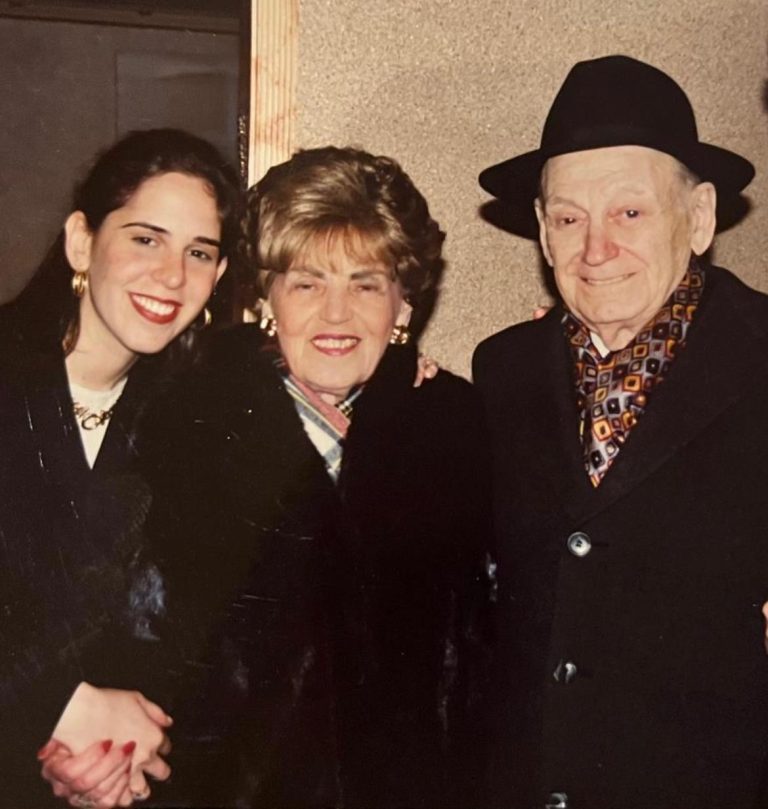
We won’t be saying Yizkor together,
but as you say it individually or even if you don’t say it at all, as you
remember the loved ones who came before, feel their fingertips on our back,
pushing us forward to persevere and do the right thing. The fingertips of Mama Rochel and Yaakov
Avinu, but also those of our mothers and fathers, Bubbes and Zaydas who
confronted great obstacles and formidable challenges and exhibited tremendous mesirus
nefesh in their lives and give us the courage to know we can in our lives
as well.
As we enter Rosh Hashanah for mesirus nefesh, let us take to heart the lessons of Yosef and Nachshon, spend some time reflecting on what urges and natural inclinations we need to work to overcome in these circumstances, what changes we want to see in ourselves in the “new year,” and how we can use this period to emerge stronger and more resilient than ever.



 4 min
4 min