Making Courtesy in Shul Common

The observance of the annual National Common Courtesy Day on March 21 is not so common, but then again, neither is common courtesy itself these days.  Some behaviors and conduct that used to be considered rude and uncouth have become commonplace.  This is true in life in general, such as holding doors, saying please and thank you, looking up from a phone when talking to someone, among many more examples.  And it is also sadly true in shul, a place in which we are expected to be even more mindful and aware of our conduct, both towards Hashem and towards others. 


We must not allow courtesy to become uncommon.  We must not accept rudeness or discourtesy as a new normal.  On the whole, we are blessed to live in beautiful communities filled with sensitivity and kindness, but there are areas in derech eretz, kindness and courtesy, which we as a community can work on. I want to call attention to several shul-specific behaviors that, while not malicious or poorly intended or necessarily reflective of a rude attitude, nevertheless lack the consistent derech eretz we aspire to.  Some feel almost silly to list but all are real issues that arise all too often. These are not particular to our community; indeed, I can confidently say most are ubiquitous in shul life. 


Parking:  Parking lot boundaries are not suggestions or recommendations.  Please don’t park on the line or over it.  Park evenly spaced between the lines so others can comfortably and safely park alongside you and get in and out of their cars. If you accidentally parked over the line, go back into your car and park properly. Don’t park in handicapped-accessible parking or reserved spots if they aren’t meant for you no matter how late you are for davening or how important it is for you to get there.


Talking: “If you come here to talk, where do you go to daven?” This somewhat famous sign discouraging talking during davening hangs in many shuls and appeals to our spiritual conscience and ambition not to talk.  But there is an even more basic, Bein-Adom-L’chaveiro reason to refrain from conversation during shul:  It is rude.  Even if we struggle to connect with prayer and are willing to exchange a conversation with the Almighty for a conversation with our neighbor, it is unkind to someone within earshot who isn’t undergoing that struggle.  People who talk aren’t bad people.  They are often outgoing, social, warm, and gregarious.  But without even being aware, they are acting unkind.  There are people all around shul davening who are utilizing a safe space to experience an intimate conversation with Hashem.  We have been socially conditioned not to talk while someone is trying to watch a show, we wouldn’t talk while someone is swinging on the golf course or tennis court, and we shouldn’t talk and cause a distraction l’havdil, when people are trying to daven.  Even if it is hard to rise to the standard of not speaking at all, there are critical times where it is particularly rude to talk (even if you think you are whispering), such as during Kaddish, which people are saying in memory of loved ones, while waiting for chazaras Hashatz to begin while others are still davening, or when those around us are trying to follow the Torah or Haftorah reading.  We can and we must do better.


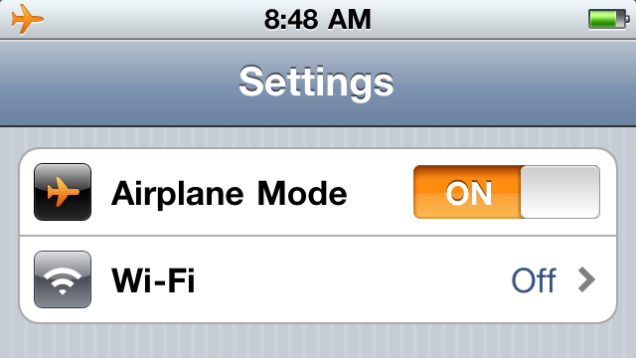
Phones, candies, throat clearing:  It can be and should be simple – turn your phone to silent or off when in shul.  Period. Make a habit or ritual of putting it on airplane mode when walking in to our situation room that needs our full attention.  It goes without saying not to answer a phone during davening, even—or especially—to say, “I can’t talk now, I’m in shul.”  Don’t open or unwrap candies that make a lot of noise during davening or a shiur.  Do it before you walk in or step outside.  It is disturbing and distracting to the people around you.  If you need to clear your throat excessively or consistently, step outside, get a drink of water, take your time, but be aware of how it impacts others.


Coughing, Nose Blowing, Illness: If you don’t feel well, have signs of a contagious illness, or symptoms that disturb others like coughing, sneezing or nose blowing, stay home.  It is more than unkind; it is downright cruel to expose others to illness, including and especially vulnerable populations among us. Your righteousness or desire to socialize doesn’t supersede other people’s safety, health, and wellbeing. 


Kiddush:  Kiddush is meant to be a social event, not a contact sport.  No matter how appetizing the cholent or kugel looks, please remain vigilantly aware of your surroundings.  Be patient and careful not to elbow, knock over, or spill on others.  With diverse age groups in our communities and attending our kiddushes, it is critical to supervise children and to ensure they are careful.


Children Interrupting a Derasha or Guest Speaker: When I was young, if a child walked across a room while someone was speaking, the child’s parent would be mortified, grab the child to come sit until the talk was over, and would strongly instruct the child never to walk into a room while someone is speaking again. If not the parent, another adult would stop the child and direct them not to walk through the room at that time. Our sweet, precious children rely on us to place boundaries and condition proper behavior. Children who come into shul during a sermon or lecture to speak with a parent, or to collect candies, or deliver a message, should gently be instructed that this is not an appropriate time to do so. If we don’t teach them derech eretz, who will?


Standing When it Distracts Others: It is understandable that it isn’t always possible for everyone to be in shul on time, particularly women. While catching up with davening, it is important to be thoughtful and considerate when saying Shmoneh Esrei.  If you are davening at your seat during the derasha, standing and swaying may block others from seeing the speaker and distracts the person speaking. It is better to move to the side or back, or even step into the hall, to recite the Amida and catch up.


Late to a Shiur or Early for Mincha:  We have a wonderful community of learners who come each Shabbos for the class before Mincha. Even many people coming for Mincha arrive early to catch the end of the class.  If we aren’t there in time, the proper thing is to find the first available seat. If we are early for Mincha, we should wait quietly in the back.  Arriving towards the end of class and walking through the room is discourteous to both the speaker and those attending the shiur.


Picking Up Garbage: We are blessed to celebrate many simchas in our community. They are often marked with the throwing of or distribution of candy, which in turn generates lots of garbage. Often, wrappers can be found on the floor of the shul.  Children drop them or walk right past them without anyone saying anything.  We wouldn’t allow a child to leave garbage on the floor of our home and we shouldn’t let them walk past garbage on the floor of our sanctuary.  Stop a child and (kindheartedly) teach them to pick it up or pick it up yourself so they see it isn’t beneath adults to keep Hashem’s home as clean or cleaner than our own.


Putting Siddurim and Chumashim Back: Each week, when shul is over, our wonderful custodians spend considerable time collecting Siddurim and Chumashim and returning them to the shelves with great care and respect. But why should they have to? Isn’t it basic derech eretz to put something back on the shelf when we finish using it?  Being “people of the book” means not only learning what is in them, but modeling what we literally do with them and how we treat them.


Turning Your Back on a Speaker: It is one thing to not go to a shiur, but it is an altogether different thing to get up and choose to walk out of one.  Over Yom Tov, and daily between Mincha and Maariv, someone gives a short Dvar Torah. Sometimes, a person may have an obligation or responsibility at home or elsewhere that necessitates their leaving shul. On the other hand, some people leave to stand in the lobby and shoot the breeze, share the latest gossip, or simply pass the time.  Others make an exit for what they consider a noble reason—to go to the Beis Midrash for “real” learning.  Some remain in shul and brazenly open a sefer to study, oblivious to the impression it leaves and the message it sends.  Whoever is speaking in the front of the room worked hard to prepare, is putting in effort, and is making themselves vulnerable by speaking.  Walking out, opening a sefer, or staring at or texting on a phone, isn’t menschlich and is unintentionally hurtful.


The famous Midrash (Vayikra Rabba 9) tells us, “Derech eretz kadma laTorah,” derech eretz preceded Torah by 26 generations and it must be the prerequisite or precursor to our Torah.  Derech eretz, basic courtesy, must be common in shul and everywhere we go.  One has to be a mensch in order to be a vessel to receive Torah, as the Mishna in Avos (3:17) teaches: im ein Torah, ein derech eretz v’im ein derech eretz, ein Torah, If there is no Torah, there is no derech eretz and if there is no derech eretz, there is no Torah.  On this Mishna, Rabbeinu Yonah writes, “One must first improve one’s own character traits and with that, the Torah can endure with him because it cannot endure with a person that doesn’t have good character traits. One cannot learn Torah first and then acquire good character traits because this is impossible.”


Shul is perhaps the most powerful classroom our children attend.  They are watching and learning what we do to see if it matches what they hear us say.  With a little more thoughtfulness and effort to be mindful of the unintended consequences of our behavior, we can make courtesy common again each and every day, not only one day a year. 

 

Do Something by Saying Nothing

A few weeks ago, I was travelling and davened in a shul in another community.  In the middle of davening, I was trying to concentrate on my conversation with Hashem when I heard a voice loudly say, “Hello.”  It caught me off guard and I wondered if Hashem was acknowledging my prayers when I looked up and saw there was someone wearing a tallis and tefillin talking loudly on his phone.


Over the last five months, we have been focusing on doing things in the zechus of our brothers and sisters in Israel, but perhaps in the merit of our brothers and sisters in Israel we have been neglecting something that we should not be doing.


Most communities have added Tehillim at the end of davening, some have been saying Avinu Malkeinu, others have taken on a new practice or positive change.  But possibly, instead of going directly to adding, we should focus on subtracting.   The idea should be simple: Let’s stop talking during davening, let’s eliminate conversations among one another, when we are supposed to be talking to Hashem.  Let’s leave our phone in the car or put it on airplane mode when we walk into shul so we can truly be present and focused, especially in these moments that our tefillos matter so much.


In the early 1600’s, Poland functioned as a feudal land with landlords ruling over the peasants who served them, causing great resentment.  Beginning in 1648, Bogdan Chmielnicki led a rebellion against the magnates and nobility claiming freedom and territory for the Cossacks, peasants, and outlaws he represented and led. In that period of upheaval between  1648 and 1653, it is estimated that some 300,000 Jews were killed, representing 30% of the total Jewish population of Eastern Europe. (Despite the calls for cancellation and removing statues, Chmielnicki remains a hero of the Ukrainians, with a statue dedicated to him in Kiev).


Those massacres are known in our literature as Gezeiras Tach V’tat, the decree of years 5408 and 5409.  They are considered among the most devastating in all of Jewish history.  Rav Yom Tov Lippman Heller (1579 – 1654), known best for his commentary on Mishna called Tosfos Yom Tov, lived during that time  in Prague and in Poland.  The Chida writes that it was revealed to the Tosfos Yom Tov from Heaven that the terrible tragedy and loss of life was associated with the talking that was taking place during davening and the general disrespect for Shul. 


To be clear, we aren’t God and cannot and should never engage in an effort to categorically explain why things happen, but the tragic and devastating loss of his day inspired the Tosfos Yom Tov to suggest that his generation reflect on how they could improve their decorum and general respect for davening and shul. In an effort to motivate and incentivize his contemporaries to be more vigilant about not talking during davening, the Tosfos Yom Tov composed a MiShebeirach to be recited for the benefit of those who don’t speak during davening. 


The Tosfos Yom Tov’s generation was in crisis and rather than introduce something new like saying extra Tehillim, he thought it was critical to return to something old, eliminating talking during davening. 


While Baruch Hashem it is not of the magnitude of Tach V’Tat, our generation is confronting a profound crisis, fighting a real war, and facing enemies around Israel and embedded in countries around the world.  We can and we should add things in the hopes of meriting the outcomes we desperately want, but we must not forget to also subtract, to remove, and eliminate our talking during davening.


There are two reasons that now is the time to be more careful with this.  Firstly, as has long been said, if you come to shul to talk, where do you go to daven?  With all our initiatives and efforts, ultimately, we will only merit to see the hostages come home, to win this war and defeat the wishes of antisemites when Hashem consents and enables.  Each time we daven, we are meant to genuinely and desperately pour out our heart to Him, beg and beseech Him to shower us with compassion, hear our heartfelt pleas and intervene on our behalf.  The stakes are high, the moment is great, and we cannot afford to be distracted or unfocused.


Several centuries after the Tosfos Yom Tov, the Chafetz Chaim, (Mishna Berura 124:27) quoting the Kol Bo, warned us further of the danger of speaking during davening: “Woe to the people who speak during davening.  We saw several Shuls destroyed because of this sin.  There should be people appointed to work on this issue.” The Shulchan Aruch, (OC 124:7) discussing the terrible aveira of talking during Chazaras Hashatz uses the expression, “v’gadol avono mi’neso — his sin is too great to bear,” the only place in his extensive code of Jewish law that he uses that phrase.  


The Chasam Sofer (Derashos 2:309) writes that only Shuls that are homes of prayer, not conversation, will be rebuilt in Israel when Moshiach comes.  The Tzlach, R’ Yechezkel Landau, writes, “There is no greater rebellion against the King of the world than to speak in His sanctuary, in His presence.  Speaking during davening is like placing an idol in the Temple.”


The Piskei Teshuvos (124:7) tells us that when one speaks during during Chazaras Hashatz, not only has one caused that his own tefillos will not be accepted, but one has also caused that the tefillos of others will not be accepted. Therefore, if one knows himself; that he will be unable to remain silent, it is better that he should not come to shul at all, rather than be “a sinner who causes others to sin.”


Have you ever been talking to someone and they pull out their phone and start typing or reading something they received?  Forcing someone to compete for your attention is aggravating, obnoxious, and rude. While Hashem doesn’t have human feelings, we demonstrate our attitude in our relationship with Him if we make Him compete for our attention, if we are talking to others while He is “standing” before us in the middle of a conversation with Him. 


There is a second reason for us to be careful right now.  Putting a bigger-picture spin on the old phrase mentioned above: If you come to shul to talk, where should your friends and neighbors go to daven? The place we come to daven is called a בית כנסת, a hall to assemble and congregate.  We draw energy from one another, we come to connect with one another.  But there are times to greet one another, moments to connect and commune, and there are times to be focused exclusively on our conversation with Hashem.


There are two parts of davening in which talking is prohibited altogether, and at a minimum, now more than ever, we should make great efforts to stay silent during these times:


  • One may not talk from Borchu until the end of the chazzan’s repetition at Shacharis and from the beginning of the silent Amidah through the repetition at both Mussaf and Mincha.


  • Kaddish is among our holiest prayers. It can only be said in the presence of a minyan and is so significant that if given the choice between answering Kedusha or Kaddish, the Mishna Berura (56:6) says one should choose to answer Kaddish.  The Talmud (Berachos 57a) teaches that one who replies “Yehei shmei rabbah…” can rest assured that he has a place in the Next World.


Not talking during these parts of davening is mandated by Halacha and non-negotiable.  But, even for those who don’t connect to davening, don’t feel they are in the presence of the Almighty, or don’t feel bound by these particular laws, not talking during these parts of davening is simply what any decent person would do.


Talking during these parts of davening is not only disrespectful to God, it is also unkind, insensitive, and even cruel to those trying to offer heartfelt and focused prayers. It is a gross bein adom l’chaveiro violation.  Social norms have trained us not to during a show, an opera, or a movie, no matter how bored or distracted we might be. How could we entertain talking when people around you are in the middle of a conversation with Hashem, even if you are done?  It is hard enough to connect with our prayers, to concentrate on the words and to feel we have experienced an intimate rendezvous with our Creator in the best of circumstances.  To do it while people in our vicinity are chatting away is nearly impossible.


Not talking until the conclusion of Chazaras HaShatz, including the time between when we finish our silent Amidah and we are waiting for the chazzan, is doable, it is realistic, it is a fair expectation of those attending and it is the minimum to be respectful of our friends and neighbors.


When mourners recite Kaddish, they are paying tribute to their lost loved one.  When others around them are talking, it is not only rude and unkind, it is an affront to the memory of their family member. We can and must all make an effort to listen quietly and answer enthusiastically when Kaddish is being recited.


Right after October 7, one of our BRS members, Yudi Arem, created a WhatsApp group (click to join) for those who have committed to not talk during davening in the merit of our brothers and sisters in Israel.  Originally, he was hoping for 40 to sign up but the group quickly maxed out at over 1,000 members and other groups have opened to accommodate the now thousands of people all over the world who have made this pledge and are part of a holy effort to strengthen theirs and each other’s davening through taking on this commitment. Join, if not forever, certainly for now. 


The bottom line is this – klal Yisroel needs your help.  Please join the movement and commit to not talk minimally during these points of davening.  Turn off your technology and turn on your connection to Hashem.


In that merit, may all our prayers be answered for good and may we merit only Hashem’s greatest blessings.

The Virus of Playing God

Last Shabbos, at the early Mincha at BRS, the Torah rolled off the bimah and onto the floor.  Like many shuls that have adjusted during the pandemic, we currently don’t position Gabbaim on either side of the bimah, so the ba’al koreh is up there alone, with only those who receive aliyos standing on the other side of a plastic divider.  The Torah normally remains still but for some reason, in this case, one of the sides began to roll and it wasn’t detected in time.  Though I wasn’t there when it happened, if anyone is at fault it is me for not arranging to modify the bimah with a bracket on either end to prevent this from happening.


Those present were understandably shaken.  Indeed, as soon as Mincha ended there were knocks at both my back and front doors from people who were there and desperate to know what it means and what they need to do.  In this particular circumstance, Rav Shlomo Zalman (Halichos Shlomo 1:12:39) and others write that a public fast is not necessary since the Torah was not dropped by any individual, nor was there any action or event that seemed to precipitate its fall.  (You can read more about the laws of when a Torah falls here.)


Feeling traumatized by witnessing a Torah fall is appropriate.  As believing Jews, we know that everything that happens comes from Hashem and that He is communicating with us through events that we participate in, witness, or are otherwise part of.  Asking oneself why I was meant to observe this, what can I learn from it, and how can the experience inspire me to grow as a result, is fitting and commendable.


One rabbi from outside of Florida decided that he knows why this happened. Referring to BRS and its rabbis, he wrote on Facebook:


Of course, the traumatized congregants were all wearing masks, so no one could see their pained expressions when the Torah fell to the floor. Not a single unmasked face has been seen at that synagogue for many months. And everyone stood far apart from one another in fastidious observance of social distancing. Consequently, no one was standing close enough to catch the falling Torah.


In fact, this congregation is rather extreme in its enforcement of “public health policy.” Even before covid, the rabbis at this shul were most fanatic in enforcing total compliance to mandatory vaccine schedule. Children who hadn’t been vaccinated… were banned from attending local Jewish schools under the guidance of these rabbis, and families who hadn’t complied with vaccine requirements were banned from synagogue…


Once covid started, this synagogue went to extremes to comply with every single dictate and recommendation of the CDC. Congregants who weren’t in total compliance were banned from shul and in some cases, banned from ever joining the shul again!…


Is it a coincidence that the Torah fell off the bima in THIS shul?

Is the holy Torah trying to tell them something?

Is the Torah’s sudden fall an act of Heavenly protest?


By ousting children from Talmud Torah and banning Jews from shul or even from congregating in their own homes, have they effectively defiled, betrayed, and neglected the holy Torah… to such a degree that the Torah no longer feels comfortable on their bima?


How can we help this deeply-misguided congregation repent from their wicked ways? How can we impress upon this errant community to demand competent Torah leadership from their rabbis? Who can explain to them that their “covid policies” are an egregious violation of Judaic law, and that every Jewish man, woman, and child, must be welcome in every shul, with or without a mask… and if not, then the Torah doesn’t feel welcome there either? When will they wake up to the reality that covid policy is a modern-day idolatry, an unprecedented assault on G-d and His Torah?


Let’s pray that the Torah’s shocking fall will rouse them from their reverie of indifference and indoctrination.


I don’t know what is more disturbing, that someone would think this and write it, or how many people agreed with it, liked it, and shared it.  I wonder if he also tells the family of each person who died of coronavirus why their loved one was taken from this world or if he can explain the Holocaust to our survivors. 


To be honest, when I read it, I was somewhat relieved.  A friend had told me that a rabbi had written about why the Torah fell at our Shul.  To state the obvious, I am imperfect and so is BRS so I feared highlighting one of my or our faults would be profoundly embarrassing and humiliating.  When I read it, rather than feel shame, I felt proud of our community’s efforts to be compliant, to be safe, and to protect the health and wellbeing of our members in a manner consistent with accepted science and medical guidance.


So what does the falling of the Torah mean for our community and for those who were present?


The Mishna in Pirkei Avos teaches: “Histakeil b’shelosha devarim v’ein atah bah liydei aveira: dah mah l’maaleh mimecha, ayin ro’eh, v’ozen shoma’as, v’chol ma’asecha b’sefer nichtavin – Look at three things and you will avoid misbehaviors – know Who is above you: an eye is watching, an ear is listening and all of your actions are being recorded.”


The Baal Shem Tov interpreted this teaching differently.  He said, know what is above you – there is a God, an omnipotent, infinite Being controlling the universe.  Therefore, ayin ro’eh – what you see, you were meant to see.  V’ozen shoma’as – and what you hear, you were meant to hear.  V’chol ma’asecha b’sefer nichtavin –how you react and how you respond to what you see and what you hear will be recorded and reflect who you are.  


We certainly have a tradition of learning from all that we experience and encounter, particularly the most unusual experiences and interactions.  However, the onus and responsibility are on us to introspect, reflect and determine what we want to change or improve as a result of what we have seen or experienced.  Even among those who consult rabbis and rebbes about what particular events mean, the response is to consider taking on something new or to improve a personal practice, not to correlate the two in the form of blame. (For example, if someone receives bad news, the appropriate response is not, “This happened because I didn’t daven with enough consistency or focus,” but an appropriate response would be, “Now that I have received this news, I should respond by working on davening with more consistency or focus.”)


Whether reacting to a fallen sefer Torah in a community or someone’s personal illness, we are never in a position to tell people why things are happening to them.  To do so, particularly with confidence and surety, is not only arrogant, it is to play God and compete with the Divine. It borders on heresy, even if you have “rabbi” before your name.


At the same time, to casually dismiss or ignore Hashem’s messages to us is to mute the Divine, to ignore the One Who is speaking to us, which is cruel both to Him and to ourselves. 


Perhaps the message of a Torah falling in BRS is to be stricter with coronavirus guidelines, not less.  Maybe it is a message about paying closer attention to Torah reading, showing great honor to Torah, being more punctual to davening, or treating others with more sensitivity, respect and love.  It is up to us to take time to reflect.


Let’s use the Torah’s fall to inspire all of us to rise. 

Do You Come When Davening in Shul is Just Davening, in Shul?


I spoke to several rabbinic colleagues across the country this week who have all noticed a similar phenomenon.  Despite shuls having re-opened in safe and cautious ways, only a fraction of those “eligible,” i.e., those without specific vulnerabilities, secondary conditions, and are not considered “high risk,” have come back.  Some rabbis are panicking about what this means for the future and what our communities look like post-corona.  Personally, I do not share that fear.  I have confidence in our community, the people who comprise it, and what being together has to offer. 


There are likely many factors contributing to decreased participation since re-opening, which includes people who are not “locking down” in other areas of life, but it occurs to me that one of the fundamental reasons is that davening at shul has been reduced to, well, just davening at shul.  Let me explain.


There are many reasons people came to shul, all legitimate and meaningful, even if not equally so.  Some, of course, come to connect and open their hearts to Hashem, others to socialize, others to be part of community, yet others to enjoy kiddush or shalosh seudos.  With significant distancing, mask requirements and no food, the only reason to come to shul right now is to daven.  The beautiful byproduct, of course, is essentially no talking during davening whatsoever.  The awful unintended consequence is missing so many of our beloved members. 


While I am sure that the people who are not returning to shul are davening either at home or elsewhere, I believe the absence of a desire to come back to a shul that lacks anything other than davening is a sign that people are struggling with connecting to davening itself.


I am saddened not only to miss so many friends and members of our BRS family, but truly devastated by the reality check of how many people seem to be dealing with this struggle, to get enough out of davening that they would continue to come to shul even if the basic prayer services are all that is happening currently.  To be clear, I am not blaming anyone or issuing judgment as much as sharing this observation in hopes we can bring a change.


I recently listened to an interview with Naval Ravikant, an Indian-American entrepreneur and the co-founder, chairman and former CEO of AngelList. He was reflecting on how doing daily meditation has radically improved his life.  His description jumped out at me for several reasons:


You sit there for 60 minutes. So unfortunately, not less than an hour at a time, because it takes 30 to 40 minutes to sink in past the initial chattering. So you get to the good part or the so-called runner’s high equivalent. And you sit for 60 minutes every day and you do it for at least 60 days. And you do it first thing in the morning. When your mind is clear and you’re alert and you’ve had a good night’s sleep.


And you sit up with your back straight and you can use cushions, or you can use a chair or whatever. There’s no magic position. And just whatever happens, happens, whatever your mind wants to do, you just let it do. If it wants to talk, you let it talk. If he wants to fight, you let it fight. If it wants to be quiet, you let it be quiet. If it wants to chant the mantra or pay attention to breathing, you can do that, but you don’t force anything.


You just kind of let it happen. And so you don’t fight it. You don’t resist it. You don’t argue with it. You don’t double down on it. You just kind of let things happen. And when you do that for at least 60 days, my experience has been that you kind of clear out your mental inbox and all the craziness that was going on. All the chattering will come out. Some problems will get resolved. You will have some epiphanies. You will make changes to your life.


Some will be self-examination, some of it, you just get tired of, some of it just needs to be heard once, and then it goes away. And eventually you will get to a mental state of inbox zero, where now you’re just thinking about what happened yesterday. You’re kind of caught up and your mind is relatively clear and just your anxiety level goes down. You’re living more peacefully. And I’ve been doing this for about two and a half years now.


And I’ve probably missed about a dozen days total. But there are some days where I’ve done two hours a day or more. And I will tell you that is the single most important thing that I do. It is a sheer joy. Much of it is highly entertaining, pleasurable. Sometimes it’s just flat. It’s nothingness. I can’t even tell you why I do it. I can’t even tell you what’s going on in that state, but I will tell you that time spent by myself is the most important time that I have.


And thanks to that, I am now much more self-contained. I don’t feel like I need other people. I don’t need external sources of pleasure or happiness all the time. I drink less. I’m not attracted to trying any drugs whatsoever. It’s just, life is easier. It’s more pleasant. I don’t take things as seriously. I’m not afraid of my mortality as much anymore. I don’t fear aging. I don’t lust after things.


I don’t have this constant pervasive need to find something outside of me to make my life better. When the best hour of my day is spent by myself, then the world has very little to offer me and I can still participate in it, but it doesn’t have that grip on me that it used to. I don’t fear solitary confinement. And I think that is a superpower. And I think everyone should have it. Everyone does have it. It’s easy.


It requires doing nothing. It’s your birthright. You can’t fail at it. There’s no way to fail at it. Literally all you have to do is just sit down and close your eyes and just be by—give yourself a break for an hour every day. Just take the time off from the world.


I appreciate that davening is meant to be very different from meditation.  But it is a misnomer to think the entire davening is spent talking to Hashem.  In fact, only during the Amidah are we standing before our Creator in conversation.  For that conversation to be meaningful, intimate and effective, we spend the rest of “davening,” both before and after the Amidah, in conversation with ourselves about Hashem and about His role in our world and our lives. 


Ideally, we should be present with our thoughts and feelings for every word of davening from beginning to end.  Nevertheless, the Shulchan Aruch (Orach Chaim 1:4) writes that it is preferable to daven less with more meaning than to daven the entire text without any concentration or mindfulness.  We are meant to be transformed from davening, enriched, invigorated and elevated. 


For many people, davening is the only time of day not connected or attached to technology, anything or anyone else.  It is our alone time, lost in our thoughts, in the words that are designed to calibrate our priorities and to stimulate us to think about what matters most and evaluate who we are and how we are doinig.  Shemoneh Esrei is called the personal Amidah because each one says it privately, on their own, adding their own words and coming from their own specific place.  


When I shared Naval’s words from the interview with a friend, he wrote back, “1 hour, wow.”  I reminded him that if you add up Shacharis, Mincha and Ma’ariv daily, we are already there, we just don’t think of it in that way or sadly anticipate getting that benefit from it. 


Wearing a mask for davening is miserable, but it also provides an opportunity.  Even in a room filled with people, it enables a sense of privacy; nobody knows when your lips are moving and when they are still.  Behind the mask, we can stand or sit with our eyes closed,  with only our thoughts, dreams, hopes, aspirations, concerns, needs and wishes.  The mask eliminates the inhibition and awkwardness of being lost in true prayer, while not saying any words. 


If safety and health are not holding you back from coming to shul regularly and yet you have not returned, ask yourself why not, and what does it mean about your relationship with davening for davening’s sake?  If you are coming back, you are already allocating significant time each day to not only fulfill a mitzvah but engage in an activity meant to meaningfully impact us.  Why not figure out how?


I long for and look forward to the time we will all be back together, on campus, as a unified community.  I sorely miss the symphony of voices produced from sections of our orchestra noticeably absent, including children and our older population.  We and our davening are simply not the same without you. 


Until then, let’s pass this most unwelcome litmus test about why we daven at shul with flying colors and transform our davening into the type of experience that leaves us inspired. As Naval said, “It’s your birthright… give yourself a break for an hour every day. Just take the time off from the world.”

Whether You Come to Talk to God, to Your Friends or to Both, Shul is a Place For You: A Measured Call Regarding Talking in Shul

There is an old joke about an atheist who goes to shul every Shabbos and sits next to his friend Ginsburg. One day, someone asks the atheist why he keeps coming to services if he doesn’t believe in God. He replies, “Ginsburg goes to shul to talk to God. I go to shul to talk to Ginsburg.”

The truth is there are many believers who come to shul to talk both to God and to their friends, most of whom they haven’t seen the entire week.  This is understandable, and it is why most campaigns to stop the talking in shul either fail to launch or fail to succeed long term, even if they do have an impact for a short time.


So what can be done to improve this epidemic?  Some wish for a massive crackdown, a zero-tolerance policy.  Others cynically dismiss the issue altogether and react with great indignation to the suggestion that anyone has a right to call for them to stop talking or to institute policies towards that end.  But, like most topics, the issue of talking in shul needs to be addressed with nuance and realism and at the same time with resolve and optimism.


The place we come to daven is called a בית כנסת, a hall to assemble and congregate.  We draw energy from one another, we come to connect with one another and it is an unreasonable expectation that we would do so without exchanging a greeting or being drawn to engage in at least a brief conversation.


Halacha recognizes that when people see each other, even if one is in the middle of davening, a greeting is not only tolerable or acceptable, it is permissible.  Though the Mishna Berura (66:3) is clear that we don’t follow this practice today, the Mishna in Berachos 13a states that when transitioning between paragraphs of Shema, one can not only interrupt and respond out of fear (for example, to respond to the greeting of a king who could sentence him to death should the greeting go unanswered), but one can even initiate a greeting out of respect.  (The Rambam understands out of respect as referring to one’s parents, but Rashi understands adam nichbad more broadly.)


And so any effort to address the epidemic of excessive and disrupting talking in shul must begin with the recognition that people come to shul for many different reasons and that while most come to talk to God, they also show up to connect with their friends.


Moreover, a shul that encourages and promotes outreach and aspires to create a warm and welcoming atmosphere for newcomers and the uninitiated simply cannot have a zero-tolerance talking policy which will be perceived as cold, heartless and off-putting.


So what can be done?  Do we simply accept that people will talk in shul and during davening as they have since davening was first instituted?


We cannot!  There is too much at stake, too many things to daven for, too many people relying on us for our heartfelt prayers, too many children who are watching us and learning from us. I promise you, in your section, perhaps even in your row, is someone desperately davening for a child, someone struggling with a serious diagnosis, someone feeling lonely, someone whose marriage or finances are in crisis, someone struggling with anxiety or depression, or a family member of one of these individuals pouring their heart out to Hashem to intervene and intercede.


The saying goes, if you come to shul to talk, where do you go to daven?  However, it could be emended to read, if you come to shul to talk, where should your friends and neighbors go to daven?


The Chasam Sofer (Derashos 2:309) writes that only Shuls that are homes of prayer, not conversation, will be rebuilt in Israel in the Messianic era.  The Tzlach, R’ Yechezkel Landau writes, “There is no greater rebellion against the King of the world than to speak in His sanctuary, in His presence.  Speaking during davening is like placing an idol in the Temple.”


The Chafetz Chaim (Mishna Berura 124:27) quotes the Kol Bo: “Woe to the people who speak during davening.  We saw several Shuls destroyed because of this sin.  There should be people appointed to work on this issue.”


We cannot and must not concede that talking is a given and that is why this Shabbos we are launching a campaign to minimize talking in davening.   Following the advice of the Chafetz Chaim, a diverse committee under the leadership of its chair, Dr. Jonathan Winograd, has been working on a nuanced, measured campaign to identify segments of davening that we can collectively agree to make an effort not to disrupt with talking, while being open and tolerant that people may exchange greetings at other times.


We have identified two parts of davening in which we are appealing to refrain from talking altogether:


  • The Shulchan Aruch writes that one who talks during Chazaras HaShatz, the chazzan’s repetition of the Amidah, will suffer a consequence “too great to bear.” We can all commit not to talk from Borchu until the end of the chazzan’s repetition at Shacharis and from the beginning of the silent Amidah through the repetition at both Mussaf and Mincha.
  •  

  • Kaddish is among our holiest prayers. It can only be said in the presence of a minyan and is so significant that if given the choice between answering Kedusha or Kaddish, the Mishna Berura (56:6) says one should choose to answer Kaddish.  The Talmud (Berachos 57a) teaches that one who replies “Yehei shmei rabbah…” can rest assured that he has a place in the Next World.
  •  


Not talking during these parts of davening is mandated by Jewish law.  But, even for those who don’t connect to davening, don’t feel they are in the presence of the Almighty or don’t feel bound by these particular laws, not talking during these parts of davening is simply what any decent person would do.


Talking during these parts of davening is not only disrespectful to God, it is also unkind, insensitive, and cruel to those trying to offer heartfelt and focused prayers. It is a gross violation of bein adom l’chaveiro.  If you wouldn’t talk during a show, the opera or a movie, no matter how bored or distracted you might be, how could you entertain talking when people around you are in the middle of a conversation with Hashem, even if you are done?  It is hard enough to connect with our prayers, to concentrate on the words and to feel we have experienced an intimate rendezvous with our Creator in the best of circumstances.  To do it while people in our vicinity are chatting away is nearly impossible.


Not talking until the conclusion of Chazaras HaShatz, including the time between when we finish our silent Amidah and we are waiting for the chazzan, is doable, it is realistic, it is a fair expectation of those attending and it is the minimum to be respectful of our friends and neighbors.


When mourners recite Kaddish, they are paying tribute to their lost loved one.  When others around them are talking, it is not only rude and unkind, it is an affront to the memory of their family member. We can and must all make an effort to listen quietly and answer enthusiastically when Kaddish is being recited.


To help us be mindful of these efforts, we have produced bookmarks that will be on each seat and will be placed in our siddurim going forward.  When Kaddish is being recited, volunteers around the minyan will be holding up signs reminding us that if we wouldn’t talk during someone’s backswing or during a tennis point, we must not talk when our friend is honoring their loved one and affirming their love of Hashem.


Two and a half hours in a room full of friends is a very long time to refrain from talking.  Sometimes we see someone and we have a message to deliver, something important to share, maybe even some love or support to offer.  We invite anyone who is driven to talk, to step into the lobby, socialize and shmooze.  One who steps out to have a conversation shouldn’t be judged, they should be admired.


But someone who engages in conversation when their neighbor is communing with Hashem or talks while our community’s mourners are saying Kaddish in memory of their loved ones, deserves judgment, not for their lack of religious commitment, but for their lack of caring for his or her fellow community member.


The bottom line is this – our community needs your help.  Please join the movement and commit to not talk minimally during these points of davening.  In that merit, may all our prayers be answered for good and may we merit only Hashem’s greatest blessings.


BRS Siddur Party: Why Are We Transitioning to the New RCA Siddur?

Image result for rca siddurWhen R’ Yosef Mendelevitch was sent to a Soviet prison, among his most precious possessions was a small Rinat Yisrael siddur he smuggled in.  He did not know the words of the prayers, and barely knew how to read Hebrew, but the siddur was his connection to God, and he consequently lived in constant fear that the siddur would be discovered and destroyed.
In his autobiography, “Unbroken Spirit: A Heroic Story Of Faith, Courage and Survival,” he writes:


Then I hit upon an idea. I would copy the prayer book into an inconspicuous notebook. I volunteered that night for the night shift, knowing that when I returned in the morning the barracks would be empty, giving me a few precious hours while everyone else was at work to do the copying. This I did eagerly, knowing that in the case of a search, I wouldn’t stand a chance. After several weeks of my new daily ritual, I finished copying out the daytime prayers, and began to pray properly. Still, I feared that notebooks full of Hebrew letters might draw undue attention, so I copied the prayers once more, this time to small pieces of paper that, like my vocabulary words, I could hide in matchboxes. I copied out two sets of prayers like this, wrapping the matchboxes in plastic and burying them.


And then something surprising happened. I discovered that I knew the prayers by heart – that in all this covert copying the words had become a part of me. The discovery felt like I had acquired another freedom; I could now pray anytime, anywhere, whether it be at work or in solitary confinement. Prayer could never again be taken from me.


While the recitation of Shema is a Torah commandment and the Shemoneh Esrei was adopted by the Anshei Knesses HaGedola around the time of the destruction of the Beis HaMikdash, the first formal siddur was curated by Rav Amram Gaon around 850 CE.  In the 11th century in France, the siddur known as Machzor Vitry was printed based on the teaching of Rashi.  The Rambam had his version of the siddur and appended it to the laws of prayer in his Mishneh Torah.  Rav Yaakov Emden published a siddur, and we have siddurim based on the views of the Gra, Arizal, and countless others that reflect different times, places, traditions, and hashkafos, worldviews.


In 1984, the Rabbinical Council of America collaborated with ArtScroll to publish an RCA edition of its then-new, amazing siddur.  Since that time, it has become a staple in many of our shuls and schools.  Although our prayers and liturgy are essentially fixed, over time new commentaries emerge, and our community has particular observances and sensitivities that demand an updated edition of the siddur.


The RCA has just published a new siddur, this time in collaboration with Koren.  R’ Basil Herring, the project’s editor-in-chief, did an outstanding job providing commentary throughout the siddur from Rav Soloveitchik, Rav Kook, Rav Lichtenstein, and many others. The detailed halachik instructions were written by our own Rabbi Josh Flug, and were reviewed and approved by Rav Herschel Schachter.


Just some of the features of the new siddur are:


  • A contemporary, relatable translation
  •  

  • Additional prayers for life cycle events
  •  

  • Prayers for the observance of Yom Hashoah, Yom Ha’atzmaut, and Yom Yerushalayim
  •  

  • Full Tehillim with translation
  •  

  • All five Megillos
  •  

  • Sensitivity to gender-specific prayers and practices
  •  

  • Essays on history, halacha, kavana and background to specific prayers
  •  


With the encouragement of the Rabbis, our board of directors voted to make the new RCA Siddur the standard at Boca Raton Synagogue and ordered 1,000 copies. As the new siddur was published, we had a special opportunity to print a BRS edition which includes a personalized dedication page and an embossed “Welcome to Boca Raton Synagogue” on the cover.  I am deeply grateful to our sponsors who dedicated our edition of the siddur in memory of their parents and sisters; may their neshamos all have Aliyos through the prayers that will be offered and generated in their memory.


With so many minyanim throughout our campus, we have a continued need for most of the old siddurim.  The bookcases in the lobby, however, will only contain the new siddur and the page announcements in the Rand Sanctuary will be based on its pagination.


Anyone who dedicated a siddur in the last few years will have the sponsorship sticker inserted in the inside cover of the new siddur.  To sponsor a new siddur in memory or in honor of someone for $54, please contact Gloria at gloria@brsonline.org.


Image result for shulem lemmerAt their Siddur Party, when children receive their siddur, there is a palpable excitement, energy and enthusiasm and we look forward to those same feelings at our BRS Siddur Party when we welcome the new siddurim on Shabbos Chanukah.  That Shabbos, thanks to the generosity of George and Stephanie Saks, we will have the privilege of hosting world-renowned chazzan and singer, Shulem Lemmer, a Belzer chassid who recently signed a record deal with Universal Music Group, one of the country’s largest music corporations.   We look forward to his magical voice leading us in tefillah from our new siddur for the first time.

Additionally, timed with the new siddur’s arrival, I look forward to beginning a new series called “Siddur Snippets.”  Each day, between Mincha and Maariv we will spend a few minutes exploring the words of our siddur in an effort to better understand and inspire our prayer experiences.  (The series will be recorded and shared in the weekly compendium of audio shiurim.)


The Gemara (Berachos 32b) says that four things need daily chizuk, strengthening, and one of them is prayer, which can easily become stale and rote.  Unlike Yosef Mendelevich, we don’t have to fear that our siddurim will be confiscated.  Nevertheless, we, too, can literally or figuratively annotate and personalize our prayers to acquire them and make them our own.


I hope and pray that the transition to our new siddur brings a renewed study of our tefillos and an reinvigorated excitement and inspiration to our prayers.


Impolite Things Otherwise Polite People Do in Shul – Improving Shul Etiquette

Related imageThe long Yom Tov season is over and our children are back in school.  But what did they learn while they were off?  There is no question that young people gain formal education and amass information from their teachers and schools, but the most powerful influence on their character is the model they see from those around them. Ralph Waldo Emerson once said, “Your actions speak so loudly, I cannot hear what you are saying.”

We are blessed to live in an amazing community with kind, sensitive, courteous people.  I get regular feedback praising our members and our community as warm and welcoming.  I am always proud when people comment how refreshing it is to interact and engage with the people in our shul and not to experience some of the rude behavior that unfortunately is commonly associated with our brothers and sisters in other communities.


I still think, however, that there are areas in derech eretz, kindness and courtesy, which we as a community can work on. Having spent so much time in Shul over the last several weeks, I observed several patterns of behavior that, while not malicious or poorly intended or reflecting a rude attitude, nevertheless lack the consistent derech eretz we aspire to.  These are not particular to our community; indeed, in consultation with my colleagues from around the country, I can confidently say most are ubiquitous in shul life.  And I want to be very clear: while pointing some of these out may seem self-serving, I really don’t believe any of this is about me or protecting rabbis’ honor generally.  This is about all of us and the sometimes unintended consequences and messaging resulting from what feels like benign behavior.  If we make these minor adjustments and remain sensitive in these areas and others, we can raise the level of courteousness and consideration in shul and everywhere we go.


  • “If you come here to talk, where do you go to daven?” This sign discouraging talking during davening hangs in many shuls and appeals to our spiritual conscience and ambition not to talk.  But there is an even more basic reason to refrain from conversation during shul:  It is rude.  Even if we struggle to connect with prayer and are willing to exchange a conversation with the Almighty for a conversation with our neighbor, it is unkind to someone within earshot who isn’t undergoing that struggle.  People who talk aren’t bad people.  They are often outgoing, social, warm, and gregarious.  But without even being aware, they are acting unkind.  There are people all around shul davening who are utilizing a safe space to experience an intimate conversation with Hashem.  We wouldn’t talk while someone is trying to watch a movie or Broadway show, we wouldn’t talk while someone is swinging on the golf course or tennis court, and we shouldn’t talk and cause a distraction when people are trying to daven.  Talking in our shul generally is not bad, but that is not the standard we strive for in any other area and we shouldn’t be satisfied with it regarding this.  We can do better; we owe it to ourselves and to those around us.
  •  

  • When I was young, if a child walked across a room while someone was speaking to a crowd or congregation, the child’s parent would be mortified, grab the child to come sit until the talk was over, and would strongly instruct the child never to walk into a room while someone is speaking again. If not the parent, another adult would stop the child and direct them not to walk through the room at that time. Our sweet, precious children rely on us to place boundaries and condition proper behavior. Children who come into shul during a sermon or lecture to speak with a parent, or to collect candies, or deliver a message, should gently be instructed that this is not an appropriate time to do so. If we don’t teach them derech eretz, who will?
  •  

  • We have a wonderful community of learners who come each Shabbos for the class before mincha. Even many people coming for mincha arrive early to catch the end of the class.  If we aren’t there in time, the proper thing is to find the first available seat. If we are early for mincha, we should wait quietly in the back.  Arriving towards the end of class and walking through the room is discourteous to both the speaker and those attending the shiur.
  •  

  • We are fortunately blessed to enjoy the presence of many young children in shul. Shul should be a place children feel excited to come to and be part of. That said, parents must use judgment when bringing younger children into shul during davening. If the child begins to make noise, the “shushing” that follows is almost always ineffective and only serves to make the disruption worse. Parents—men and women—should be aware that the best solution to their child making noise is to immediately take the child out of shul. Even if one is in the middle of Shmoneh Esrei, it is Halachically preferable to pause, walk out of shul with the child, and continue the prayer outside, than to ineffectively shush the child or allow him or her to continue to disrupt others.
  •  

  • It is understandable that it isn’t always possible to be in shul on time, particularly for women. While catching up with davening, it is important to be thoughtful and considerate when saying the Shmoneh Esrei (Amida). If you are by your seat during the derasha, standing and swaying in davening blocks others from seeing the speaker and distracts the person speaking. Better to move to the side or back, or step into the hall to recite the Amida.
  •  

  • We are blessed to celebrate many simchas in our community. They are often marked with the throwing of or distribution of candy, which in turn generates lots of garbage. Often, wrappers can be found on the floor of the shul.  Children drop them or walk right past them without anyone saying anything.  We wouldn’t allow a child to leave garbage on the floor of our home and we shouldn’t let them walk past garbage on the floor of our sanctuary.  Stop a child and (kindheartedly) teach them to pick it up or pick it up yourself so they see it isn’t beneath adults to keep Hashem’s home as clean or cleaner than our own.
  •  

  • Each week, when shul is over, our wonderful custodians spend considerable time collecting siddurim and chumashim and returning them to the shelves with great care and respect. But why should they have to? Isn’t it basic derech eretz to put something back on the shelf when we finish using it?  “Being people of the book” means not only learning what is in it, but modeling what we literally do with it.
  •  

  • It is one thing to not go to a shiur, but it is an altogether different thing to get up and choose to walk out of one.  Over the holidays, and daily between Mincha and Maariv, someone gives a short Dvar Torah. Sometimes, a person may have an obligation or responsibility at home or elsewhere that necessitates their leaving shul. On the other hand, some people leave to stand in the lobby and shoot the breeze, share the latest gossip, or simply pass the time.  Others make an exit for what they consider a noble reason—to go to the Beis Midrash for “real” learning.  Some remain in shul and brazenly open a sefer to study, oblivious to the impression it leaves and the message it sends.  Whoever is speaking in the front of the room worked hard to prepare, is putting in effort, and is making themselves vulnerable by speaking.  Walking out, opening a sefer, or staring at or texting on the phone, isn’t menschlich and is unintentionally hurtful.
  •  


The Torah and its many laws and directives isn’t given until Sefer Shmos, the second book. Yet, we have an entire first book preceding it to teach us about proper character, respectful behavior, and fine qualities.  Indeed, the famous midrash (Vayikra Rabba 9) tells us “Derech eretz kadma laTorah,” derech eretz preceded Torah by 26 generations.


In his introduction to his commentary on Bereishis, the Netziv writes that the first book of the Torah was referred to by our rabbis as Sefer HaYashar, the book of the upright, because it tells the story of our patriarchs and matriarchs who lived honest, respectful, kind lives.  One has to be a mensch in order to be a vessel to receive Torah, as the Mishna in Avos (3:17) teaches: im ein Torah, ein derech eretz v’im ein derech eretz, ein Torah, If there is no Torah, there is no derech eretz and if there is no derech eretz, there is no Torah.  On this Mishna, Rabbeinu Yonah writes, “One must first improve one’s own character traits and with that, the Torah can endure with him because it cannot endure with a person that doesn’t have good character traits. One cannot learn Torah first and then acquire good character traits because this is impossible.”


Shul is perhaps the most powerful classroom our children attend.  They are watching and learning what we do to see if it matches what they hear us say.  With a little more thoughtfulness and effort to be mindful of the unintended consequences of our innocent behavior, we can teach them to emulate our ancestors and to earn the label yashar, to be counted among the upright, honest and menschlich.


We are All in the Cone of Uncertainty Always and Should Pray Like It

If you live in South Florida, when you hear the word cone this time of year, you don’t think of ice cream, but hurricane highway.  When a new storm develops and begins heading towards making landfall, the experts offer their best projections of where it is going and when it will get there.  The “cone of uncertainty” is formed, and with each periodic update the communities and people in its path desperately look to see if they are still projected to sustain a hit.  As long as one remains in the cone of uncertainty, there is an unavoidable angst and the tortuous process of waiting and anticipating what is to come.


Just a week after Harvey devastated Houston, Irma threatens our Boca Raton and South Florida communities.  Larger than the country of France, this massive and powerful storm has elicited and inspired a sense of urgency and a tremendous response.  Gas lines are endless, many stores have sold out of supplies, and people are panicking and legitimately afraid.  A sizeable segment of our community has left.  Some flew, others took the Auto Train, and many have just gotten in the car and driven north.  The Jewish community of Atlanta, led by Rabbi Adam Starr and Rabbi Ilan Feldman, has been absolutely incredible and has taken in several hundred families.  They mobilized rapidly and extended themselves to us generously and we couldn’t be more grateful to them.


The shaylos have been pouring in.  Can I leave my radio and TV on over Shabbos?  How will I know if the eruv is down?  If we lose power can I carry a lit candle or flashlight?  Can I add fuel to my generator on Shabbos?  What if I am powering a refrigerator holding someone’s critical medicine?  Fascinating and sad questions, to be sure, but the most moving question I received came this afternoon from a man in our shul whose neighbor is an elderly woman, with no family, living in an old home with an old roof.  His family invited her to stay with them but she stubbornly insists on riding out the storm in her house by herself.  With great concern in his voice, he called to ask me if it would be appropriate to physically pick her up and take her to his house since once the storm comes, nobody would be able to come rescue her should something God forbid happen.


The preparations are enormous, but they are only about protecting ourselves; unfortunately, we can’t actually do anything to prevent or redirect the storm.


Shortly after creation, God told Adam to multiply and to conquer His world.  Indeed, He has given us the keys to understanding His universe and with each scientific, medical or technological breakthrough, we come closer to conquering it.  But, there are three keys that God kept on His keyring and refused to share with us.  “Rebbe Yochanan said: Three keys the Holy One blessed be retained in His own hands and Has not entrusted to the hand of any messenger, namely, the Key of Rain, the Key of Childbirth, and the Key of the Revival of the Dead” (Ta’anis 2a).  In truth, the three exceptions are really one.  God has held onto the ability to provide, sustain and resurrect life.


This insight of our rabbis nearly two thousand years ago stands out as profoundly true today.  With all that we can master, manipulate and control, the weather remains an enigma and a mystery.  We identify that a catastrophic storm has formed, but not only do we lack the capacity to dissolve, disrupt or redirect it, we cannot even predict where it will go with any true sense of accuracy or precision.


There is a whole lot we can and should do to prepare for the storm – buy batteries, water, flashlights, take in outdoor furniture, put up shutters – but we are powerless from directly influencing the storm.  The meteorologists and media can talk about the storm, but they cannot impact it.  Nobody can, not scientists, not the Army or Air Force, not even great kabbalists.  The key to the strength and trajectory of hurricane Irma belongs exclusively to the Almighty and nobody else.


When it comes to other crises or emergencies, there is hishtadlus, effort and initiative we can take to solve and resolve the challenge.  The effort and impact we make fool us into thinking that the doctor alone healed the patient or the shadchan deserves the full credit for making the shiduch.  With a hurricane, because the only initiative anyone can take is to protect themselves, not to direct the storm, it should be more obvious and easier to recognize the importance and need to turn to the Key Master and beseech Him to send the storm elsewhere, in a way nobody is threatened or hurt.


On all the checklists and preparation charts provided by agencies and organizations, prayer never appears.  Nevertheless, it should be at the top of our list, not in place of other preparations but certainly in addition to them.  I urge everyone to do what should come naturally at this critical time – ask Hashem from the bottom of our hearts to turn the storm out to the ocean and spare us, our community, and all humanity.


L’Dovid Mizmor, Tehillim 27 that we recite in the morning and evening from the beginning of Elul until Simchas Torah ends with the pasuk “kavei el Hashem, chazak v’yameitz libecha v’kavei el Hashem — put your hope in Hashem, strengthen yourself and get the courage to put your hope and faith in Hashem.”  Why the redundancy?  If we have placed our hope in Hashem, why does the pasuk call on us to do it a second time?  Our rabbis (Berachos 32b) explain: “if a person sees that they prayed but they were not answered, let them return and pray again.”


In his new sefer on Emunah and Bitachon, Rav Asher Weiss explains that we learn from this pasuk that when our prayer doesn’t immediately yield the results we want, it doesn’t mean we received a no, it means we need to go back and pray again, with more fervor and greater concentration.  One must never give up on prayer, never concede that it wasn’t answered, or stop believing that there is someone worth praying to.


Our rabbis teach (Berachos 2b) that one who recites the Amidah right after saying Ga’al Yisrael, the blessing on redemption, is guaranteed the world to come.  Why is connecting the two themes with no interruption so important?  Rabbeinu Yonah explains that the prerequisite to sincere prayer is the belief that there is someone listening and that He, and He alone, determines if our prayers are heard and what our future brings.  Before we say the Amidah, we recite the blessing that recalls a time when the Jewish people called out to Hashem and He responded by redeeming them.  On the heels of that precedent we pray that we, too, will be heard and that Hashem will intervene on our behalf as He did for our ancestors.


Says Rav Asher Weiss: “Prayer and faith depend on each other.  Prayer is the highest expression of faith and faith obligates prayer, for if in fact a person believes that Ein od milvado, there is nothing in the world but Him, and that He is all powerful and all knowing, that person will put his faith in Him and will feel compelled to pray to Him with all his heart.”


As we in South Florida prepare for Hurricane Irma, it occurs to me that in truth, we aren’t the only ones in a cone of uncertainty.  True, if you don’t live on the East Coast or in the gulf area, you can be confident you won’t be hit by this hurricane. But who knows what could hit you personally or collectively with little warning or projection.  We all live in a cone of uncertainty at all times and should channel our sense of vulnerability and mortality into turning towards Hashem, the only certain in this world.


While Irma is unwanted and should go elsewhere, the renewed intensity of prayer that she is inspiring is most welcome, especially this time of year as we gear up for sitting before the Almighty in judgement.


Kavei el Hashem, we put our hope in Hashem and then we check the next advisory and when we see ourselves still sitting in Irma’s path, chazak v’yameitz libecha, we strengthen ourselves and find the courage to once again v’kavei el Hashem, put our faith and hope in Hashem.


We pray that in the merit of our turning towards Hashem at this urgent time, the next advisory will show Irma turning away from us.


Are You as Offended as the Conductor? Eliminating Disruptions and Distractions in Davening

Photo Credit: Hiroyuki Ito for The New York Times

A few years ago, Alan Gilbert, the Conductor of the New York Philharmonic made history, but not for something you would expect. Conductors almost never interrupt a performance, other than truly exceptional circumstances. Gilbert not only stopped the performance, he did something even more. Towards the end of the Philharmonic’s performance of Mahler’s Ninth Symphony, someone’s cell phone began to ring, and ring, and ring endlessly. Before every performance in that hall, a recorded voice reminds people to turn their cell phones off, but apparently at least one patron had forgotten.


The Conductor didn’t just pause the performance, he turned towards the corner of Avery Fisher Music Hall where the sound was coming from and with the help of the audience narrowed down the possible violators until he identified the perpetrator. He then stared him down for what felt like a significant amount of time and refused to continue with the Symphony until the individual verbally acknowledged that his phone was now off and wouldn’t interrupt again.


The story itself is interesting. But it was an interview with the Conductor, Alan Gilbert, following the performance that really struck me. Mr. Gilbert said: “It was so shocking what happened. You’re in this very far away spiritual place in the piece. It’s like being rudely awakened. All of us were stunned on the stage.”


In reading this story, I was actually moved by the intolerance of the Conductor and his protest against someone’s callousness and lack of courtesy compromising his spirituality. Indeed, contrast what happened at the New York Philharmonic and what happens almost daily in Shul. Three times a day we gather for a symphony not of classical music, but of prayer. When davening, we are to get lost in a very far away spiritual place such that the sound of a ringing cell phone would rudely awaken us and bring us back down to earth. And yet, sadly, most of us are unfazed and frankly unbothered when a cell phone goes off. In fact, if anything, for many the ring serves as an alarm to interrupt our day dreaming and bring us back to the fact that we are actually in the middle of davening.


After interrupting the performance, the conductor apologized to the audience for stopping, saying that usually, it’s best just to ignore such a disruption, but this case was simply too much and had crossed the line. The audience then cheered and applauded clearly showing support for his intolerance of such a rude disruption.


Of course, we should not be rude or embarrass someone who innocently forgot to turn their ringer off.  My point is not to suggest we ought to call people out and publicly shame them.  Rather, I am suggesting that we reflect on why the interruption to our davening is not as offensive or disturbing to us as the interruption of the performance was to Gilbert.


When a cell phone goes off in shul and nobody says anything, it is not only an indictment of the perpetrator, but of the rest of the Minyan as well. Our davening should mean to us minimally what Mahler’s Ninth Symphony means to Conductor Alan Gilbert.  Let’s together, with great sensitivity, create an environment that does not tolerate talking or cell phones ringing during davening and through a sense of reverence and serenity find ourselves “in a far away spiritual place” in the siddur.


How Using Airplane Mode While on the Ground Can Change Your Life

Image result for airplane modeA few weeks ago, I was in the middle of davening Mincha with unusually-focused kavana, when I suddenly heard a bas kol, a heavenly voice proclaim, “Message received.”  I was reveling in the news that the combination of my heartfelt expressions of praise, personal requests, and gratitude had in fact been received by the Almighty, when suddenly I heard it again, “Message received.”  At that point I realized it was no heavenly voice; it was someone’s cell phone with an alert set for each text message received.  I must admit that for the rest of that Amidah, I struggled to overcome my resentment and frustration and return to the level of focus and concentration I had previously achieved.

A few days before this incident, a friend shared with me an experience at a tragic funeral he had attended.  A young man passed away and throngs came out to pay him kavod acharon, final respect.  As the crowd became silent and the officiating rabbi was about to begin, the chilling words “You’ve arrived at your destination,” were proclaimed.  The person sitting next to my friend immediately commented, “final destination.”  Someone had used a GPS app to direct them to the funeral and had failed to silence his phone, rudely disrupting the beginning of a tragic funeral.


Technology has enhanced our lives in countless ways, but it has also compromised and challenged the very foundation of existence, a sense of mindfulness and consciousness in all that we do. A recent study shows that the average person checks his or her phone every six and a half minutes.  Half of teens say they are addicted to their smartphones.  Other research shows that smartphones are actually making us stupid, not smart. Indeed, for super successful people like Warren Buffett, the “flip phone” is making a comeback.


In his essay, “Menuchas Ha’Nefesh,” Rav Chaim Friedlander writes, “The truth is, menuchas ha’nefesh, peace of the soul, is a fundamental and critical attribute upon which all success in every aspect of life rests…A person who is scattered, distracted and fragmented cannot achieve anything fully or in fullness.”


We all see the difference between the quality of our conversations, interactions, and experiences on Shabbos when we are liberated from and free of technology, from those that take place during the week, when whatever we are doing is competing with the alerts, notifications, vibrations and sounds that are relentlessly bombarding us.  The Zohar (3, 29a) says, “a scholar is called Shabbos.”  R’ Chaim Friedlander explains that it is because the scholar and righteous are able to experience the entire week with the menuchas ha’nefesh, the peacefulness of the mind and soul, that Shabbos provides.


I recently spent time in Israel and unlike in the past, I intentionally did not rent a SIM card to power my smartphone.  As a result, I only had access to the usual barrage of emails and texts when I was near Wi-Fi.  That meant every time I davened on the trip, I was entirely disconnected from technology and exclusively connected to my conversation with Hashem.  When I was out with my family, I was entirely immersed in whatever activity or conversation we were having, and utterly inaccessible and disconnected from all others.


The experience was enlightening.  My davening, conversations, and experiences were energized and experienced more fully than ever.  When I returned, I was depressed by the thought that I had left my mindfulness and menuchas ha’nefesh behind.  But then it dawned on me: I didn’t have to leave it behind at all. Each time we fly, we have to put our phones in airplane mode which disables the ability to receive calls or messages or be connected online.  (Although it seems the era of being disconnected while flying is coming to an end, too.) It dawned on me that airplane mode works, even while on the ground.


Even if we are unable to switch to a flip-phone, or to turn our phones off, we can disconnect at will.  When we walk into davening or begin a conversation we want to be fully present for, we can form the habit and ritual of switching to airplane mode.  We can have Shabbos during the week and experience menuchas ha’nefesh by simply adjusting one setting when we want to connect to what we are doing.


The Chovos H’Levavos writes that he knew a righteous man who used to pray “Ha’Makom yatzileini mipizur ha’nefesh, May God spare me from the scattering of the soul.”  Let us pray that we maximize our use of technology without scattering our souls and that we successfully maintain a sense of mindfulness in a world of mindlessness.


Rabbi Efrem Goldberg

Join Our Community

Subscribe to our newsletter or connect with us on WhatsApp.