Do You Have 8 Minutes?

In his book, “The Anatomy of Hope: How People Prevail in the Face of Illness,” Dr. Jerome Groopman shares the following story:


Barbara received another three courses of chemotherapy, but the tumor seemed to shrug off the drugs. The deposits grew in her liver and in her bones. She lost weight and spent most of the time in bed. After the last cycle of chemotherapy, I admitted her to the hospital with a high fever. Antibiotics stemmed an early bacterial infection.


As Barbara slowly recovered from the infection, I told myself knew of no drugs, either standard or experimental, that stood a real chance of ameliorating her condition. The time had come for me to tell her.


I chose to visit in the early evening, when the hubbub of the hospital had settled down, so there would be less chance of distraction and interruption. Barbara greeted me warmly, as she always did. I moved a chair close to the bedside and grasped her hand. She returned the gesture, but it had little force. After we chatted for a short time about several articles in the day’s newspaper, I began to break the bad news.


“Barbara, we’ve known each other for well over a year, and we’ve been honest with each other every step of the way.” Briefly, her lips trembled, and then she regained her composure. Her eyes told me she knew what I was about to say.


“I know of no medicines that I can give at this point to help you.”


We sat in heavy silence.


Barbara shook her head. “No, Jerry,” she said.  “You do have something to give. You have the medicine of friendship.”


I shared this story recently at the Chemed Medical Ethics Florida Summit in an effort to encourage medical practitioners to see their work as much more than a profession or source of income, but rather as a remarkable platform and opportunity to do chesed, to the share the medicine of friendship on a daily basis.  


Indeed, according to Halacha, doctors are not even permitted to be paid for treating or healing patients.  The Gemara (Bechoros 29a) rules that one may not be compensated for performing a mitzvah.  Hashem says, in essence, “Just as I share Torah and heal people without compensation, so too those who emulate Me must provide those services at no cost.” 


So how do doctors, educators, or rabbis Halachically charge or receive payment?  Our rabbis rule that it is permissible to collect a fee, not for the healing or teaching, but for schar batala, the time spent on the noble activity that could have been used to earn a different income instead.  Or they are paid for schar tircha, compensation for the trouble or effort exerted.  Alternatively, for schar halicha, the travel expense incurred. 


While Halacha provides a legal mechanism to be paid, medical providers should still be mindful that the renumeration is not coming for their healing and treatment, which must remain sacred acts of chesed, gestures of lovingkindness.


Following my presentation, one of the participants, a gastroenterologist, shared with me the following story:  When he was in in 40’s, he developed regional migratory osteoporosis, a rare condition where a person experiences severe, excruciating, migrating joint pain.  A flare-up would hit, last eight to nine months, and then go away.  There is no treatment for the condition and during an episode it is nearly impossible to find relief. 


He had suffered for nine years on and off from the condition and one time found himself going through a bout.  The pain was so severe and his joints so compromised that he could only get around with crutches.  “It was motzei Yom Kippur,” he told me.  “I was in unbearable pain, truly suffering.  We were supposed to go to Israel for Sukkos and I could barely get around.  After breaking the fast, I went up to my bedroom and just cried.  I was so low, depressed, frustrated, angry, and I called out to Hashem asking Him, why would you give me this rare condition?  Why would you put me through such pain?  What are you trying to tell me?”


Just then, a Gemara (Bava Metzia 85a) he had previously learned popped into his head.  Rebbe Yehuda HaNasi, the great direct descendant of Dovid HaMelech and the editor of the Mishna, was minding his own business when a calf that was being led to slaughter came running toward him to hide. The calf nuzzled inside Rebbe’s robe and began to weep in fear.  Instead of protecting or comforting the calf, Rebbe scolded it and said, “This is why you were created, go back to your owner.” He then sent it on its way to meet its demise. 


At that moment, it was decided in Heaven that since Rebbe hadn’t shown compassion toward the calf, he wasn’t worthy of compassion and would suffer great pain.  Beginning then, Rebbe suffered six years of kidney stones and seven years of scurvy.  The pain was so intense, the Talmud relates, that Rebbe’s scream could be heard by the sailors out at sea. 


One day, Rebbe’s maid was sweeping the house when she encountered young weasels.  She was disposing of them when Rebbe said to her, “Let them be, after all, the pasuk says, v’rachamav al kol ma’asav, Hashem has mercy on all of His creations.”  At that moment, it was determined in Heaven that since Rebbe was compassionate, he would receive compassion and his suffering ceased. 


The doctor shared with me that it occurred to him, maybe his suffering from this rare disorder was meant to teach him to have more compassion for his patients.  He realized that night that for his whole career, he had practiced very clinically, impersonally, quickly going from patient to patient, expediting their visits as quickly as possible.  That night, in his bedroom, he wiped away the tears and felt Hashem had answered his question, He gave this physician insight into his suffering and he knew what he had to do differently.


The very next morning, someone stopped him in shul and asked for his help with a GI issue he was having.  Instead of blowing him off or answering on one foot, he sat down with the person, looked him directly in the eye, listened to his issues, felt empathy for his situation, and recommended a remedy. 


Almost immediately, his own pain began to dissipate and disappear.  He returned to his practice a transformed man, intentionally connecting with and feeling sympathy for those in his care, not just seeing them as a patient but as a person.  He healed not only from that particular episode of regional migratory osteoporosis, but the condition went away entirely and never came back again.   


He finished the story by suggesting that maybe this is what Dovid HaMelech means in the pasuk (Tehillim 94:12): Ashrei ha’gever asher teyasrenu Kah u’mitorasecha selamdenu, “Happy is the man whom You discipline with yissurin, with suffering, the man You teach from your Torah.” He had looked in the Torah to make sense of his situation and he walked away having learned a lesson that changed his life.    


Early this year, a study was published in the Journal of General Internal Medicine showing that meeting a patient’s eye level while talking about their diagnosis or care make a huge difference. Making the effort to sit in the office or hospital when speaking with a sitting patient, being on the same level and looking them in the eye, brought about a better outcome and helped patients recover quicker and better.  


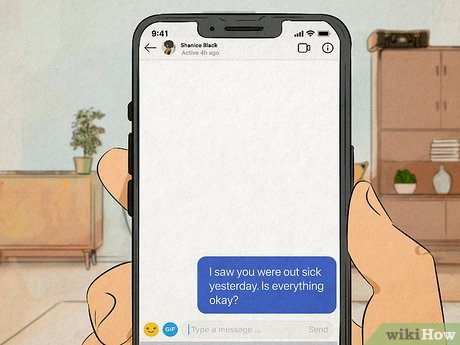
A recent study showed that all it takes is eight minutes with a caring friend to significantly decrease anxiety, depression, and loneliness.  Eight minutes of a conversation, visit, or even text exchange. 


You don’t need a medical license or the ability to prescribe to dispense the medicine of friendship.  You simply have to care, to literally or metaphorically get to someone else’s eye level for eight minutes, look them in the face, make them feel seen, and care to show the kindness of companionship.
The Greatest Threat Americans Face

Ask Americans what the greatest threat we face is and you will get a range of answers.  Some will say it is global warming and climate change.  Others think it is the issue of illegal immigration and unsecured borders.  Still others say it is the threat of terrorism or a nuclear war. The truth is it is none of the above.


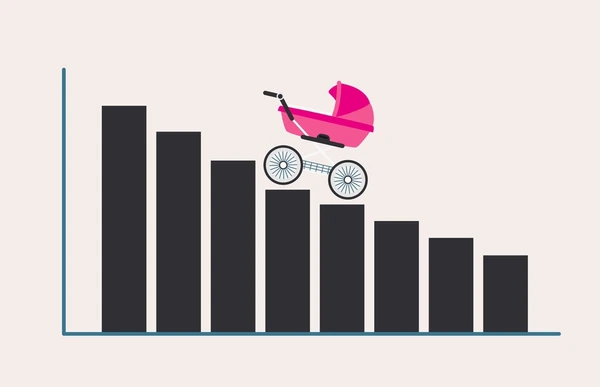
Our greatest threat is extinction. The National Center for Health Statistics reported the total fertility rate in the United States was 1.62 in 2023. That’s the lowest rate ever recorded in the United States and well below the rate needed to maintain a growing population.  Recently, the EU reported another declining birth rate, their lowest in 60 years.  Many developed countries’ birth rates are below the rate needed to maintain and grow the population. Projections suggest that by century’s end, a shocking 93% of countries, including the UK and the US, will confront underpopulation given the present trajectory.  The statistics seems clear – extreme birth rate collapse is the biggest danger to human civilization by far.


The Jewish people are doing our part with a birth rate of 1.7 overall, an average of 3.3 for Orthodox Jews, 1.4 for non-Orthodox Jews, and 6.6 for “Ultra-Orthodox” Jews.  Israel’s birth rate remains the highest among countries in the Organization for Economic Cooperation and Development and is the forum’s only member state reproducing above replacement rate.


The Talmud (Shabbos 31a) reports that each of us will be asked a series of questions by the heavenly court at the end of our lives.  One of them is Asakta b’pirya v’rivya, did you occupy yourself with populating the world?  The Maharsha points out that we will not be asked whether we fulfilled the mitzvah to have children, because that is beyond our control.  We will be asked, asakta, were you oseik, did you take responsibility for continuity, did you contribute to creating a better future, irrespective of whether you had children.  The Chochmas Shlomo, Rav Shlomo Kluger, rules that one can fulfill the mitzvah of pru u’rvu, to have children, by caring for children, even if not biologically their own.  (It goes without saying that we daven daily that all who want children and who are waiting should be blessed with healthy children who give them nachas.) 


One can have no biological children but still be the proud progenitor of generations by living for and being dedicated towards the future. And one can have a large biological family but be entirely consumed with themselves and their own pleasure, indifferent and apathetic to creating continuity and to the next generation.


The Lubavitcher Rebbe and Rebbetzin had no biological children, but they were the parents and grandparents of generations, of worlds of spiritual heirs.  Two weeks ago, over 6,500 rabbis who each see and feel the rebbe as a father gathered for the annual Kinus Hashluchim. 


As an American, the birth rate collapse is a genuine concern but as a Torah Jew, what it reflects about our society is even more concerning.  The world around us is increasingly more concerned with the here and now, with pleasure, comfort, and convenience rather than in the effort, sacrifice, faith, hope, and optimism it takes to bring and raise children in this world.  Is it any surprise that we are suffering from a population threat when many states have laws that require insurance companies to cover birth control while simultaneously refusing to cover fertility treatments such as IVF, leaving many couples with the burden of exorbitant expenses when trying to have a child privately?


Soon, in Sefer Shemos, we will read how Moshe Rabbeinu was commanded to make the boards of the Mishkan out of shittim wood. Rashi says that the wood used for the Mishkan came from special trees that Yaakov Avinu planted in Egypt.  Just prior to his death, he instructed his children to remove these trees and take the wood with them when they left Mitzrayim.  Where did Yaakov get the wood? The Midrash on Vayigash tells us that on his way down to Egypt, Yaakov stopped in Beer Sheva and he gathered cedar wood that his Zayda, Avraham, had planted there years earlier.  This wasn’t ordinary wood from ordinary trees. This was intergenerational.  It represented and reflected the effort, sacrifice, forethought, and investment of earlier generations.


Are you planting the trees that your great-grandchildren will be nourished by and will build their religious lives from?  Do you prioritize building the future over indulging in the pleasure of the present?  Is Jewish continuity a concern for you and what are you doing to educate, enrich, empower, and inspire future generations?


Chanukah begins this week and ironically, though it is not even a Biblical holiday, it is perhaps the most observed Jewish holiday, including by those who would not define themselves as observant.  Rav Samson Raphael Hirsch writes that the root of the word Chanukah is chinuch because at its core, the battle against the Hellenists was about the continuity of Jewish identity and who would define our future..


A couple of years ago, Yeshivas Rav Yitzchak Elchanon (RIETS/YU) celebrated the 50th anniversary of Rav Hershel Schachter Shlita serving as Rosh Yeshiva. In an interview, he was asked: “What are you most proud of accomplishing in these 50 years?”  Rav Schachter responded: “Over this 50-year period I am most proud of raising together with my eishes chayil a wonderful family. To me, that comes way before anything else I accomplished.”


What is your greatest source of pride? How do you define success?  Do your calendar and credit card statements reflect a commitment to the future or the present, to others or to yourself, to ensuring our continuity or to prioritizing the here and now?


This Chanukah, let’s touch our candle to others to pay the flame forward, to make our Menorah shine with the light that illuminates the world. 

I Didn’t Know How Much They Love Us

Antisemitism is the world’s oldest hatred. Rabbi Lord Jonathan Sacks zt”l described it as follows:


Antisemitism is not a unitary phenomenon, a coherent belief or ideology. Jews have been hated because they were rich and because they were poor; because they were capitalists and because they were communists; because they believed in tradition and because they were rootless cosmopolitans; because they kept to themselves and because they penetrated everywhere. Antisemitism is not a belief but a virus. The human body has an immensely sophisticated immune system which develops defenses against viruses. It is penetrated, however, because viruses mutate. Antisemitism mutates.


Jews comprise only 2.4% of the US population but in 2023 were the targets of 68% of religiously motivated hate crimes, a 63% increase from 2022.  Following October 7, 2023, hate incidents against Jews spiked 400%. 


Just this week, Hadassah published the results of a two-year survey on antisemitism.  It found that 64% of those polled reported that hate and discrimination have directly impacted their lives, relationships, and professional environments; additionally, more than half felt compelled to conceal their Jewish identity.


As Jews, we have always known that there are people who hate us, but it isn’t until this past year that we realized how much they hate us.  That hate is so strong, so loud, and so threatening, that it is easy to not appreciate how many love us.


This week, I had the privilege of offering remarks and a prayer at a large gathering that was overwhelmingly attended by a non-Jewish audience.  I concluded by saying:

Master of the Universe – do not allow us to remain apathetic or silent.  Grant us the faith in You, and the faith in ourselves, to believe that we can make a difference in securing a bright future for the United States and for Israel.  


Our Father in Heaven, let the hostages, Americans and Israelis be released and return home. Let Israel be victorious over her enemies. Guard the courageous members of the United States military and the Israeli Defense Forces as they guard us and protect freedom and democracy around the world.


Dear God – We ask that you grant peace and prosperity to the United States, to the State of Israel and to the entire world, and let us respond, Amen.


I received a few handshakes on my way back to my table, but what happened the rest of the evening truly surprised me.  When I made my way around the room, I was stopped over and over again by people telling me how much they pray for Israel, for the release of the hostages, and for the Jewish people as a whole.  Non-Jews from all over the country sincerely and genuinely expressed their care and their concern for our people. 


One young man who was attending with his mother found me to share that though he isn’t Jewish, he feels connected to Israel and desperately wants to help.  He took my contact information and asked if would be alright to follow up and if I could introduce him to an organization or effort in Israel that he can work on from his home in Houston.  A member of the security team at the event saw my yarmulka and said “Shalom.”  He shared that he has been to many parts of the world providing protection but the place he really wants to go is Israel.  A veteran of the United States Army who fought for many years for our country came over to proudly share that when he was first training, he went to Israel to practice with the IDF and told me about the gratitude he has had for the many years since. 


The examples could go on and on, but they all left me with a feeling that while we know there are people who hate us and have come to learn how much they hate us, we also need to know that there are people who love us and just how much they love us.


During his recent visit to our community, when Rabbi Dr. Meir Soloveichik was asked about his concerns regarding the state of antisemitism in American and particularly on college campuses and among academic elites, he responded that he is steadfastly optimistic. While he agreed that rising antisemitism is cause for legitimate concern, he explained that there is no time in Jewish history where we have had more support from the non-Jewish world and we should recognize and appreciate that.


When that care and concern are communicated, when we are strengthened by a simple sentence or supportive gesture, we should think to ourselves, how can I pay it forward?  Is there a community, a nationality, or a people who are feeling hated and to whom I can communicate some camaraderie and concern?  Are there individuals who are feeling abandoned, forsaken, or forgotten to whom I can express support, and heartfelt prayers?


Commenting on our Parsha and the complicated relationship between Esav and Yaakov, our rabbis predict and foretell that “Esav sonei es Yaakov,” the descendants of Esav will hate and haunt the offspring of Yaakov.  Interestingly, the Talmud introduces this observation with the words, “Halacha b’yaduah,” it is a well-known halacha. 


Commenting on this phrase used only once in rabbinic literature, Rav Moshe Feinstein in a teshuva in the 1970’s writes:  


I have already explained concerning Rashi’s language in his Torah commentary… on the word וישקהו: Rabbi Shimon bar Yochai says: “It is a well-known halacha that Esau hates Jacob.” And why is the word halacha relevant here? It is because just as halacha never changes, so also Esav’s hatred of Yaakov never changes. Even in those [nations] that behave well [toward Jews], their hatred [of Jews] is actually strong. 


Essentially, antisemitism is a fact that they hate us—it is a given that will not change.  The fact that some love us, though, is not and should never be taken for granted.  We should recognize it, appreciate it and pay it forward in showing love to others who could use it.


A study conducted a few years ago concluded that casually reaching out to people in our social circles means more than we realize. As one of the researchers explained, “Even sending a brief message reaching out to check in on someone, just to say ‘Hi,’ that you are thinking of them, and to ask how they’re doing, can be appreciated more than people think.”


Hearing people I didn’t even know tell me, “I’m thinking about Israel and I’m praying for your people,” filled me with comfort and delight. Contacting someone you know, even if you don’t know them well, to tell them they are on your mind can  make an impact you could not have imagined.

Who Left the Flowers at Our Door?

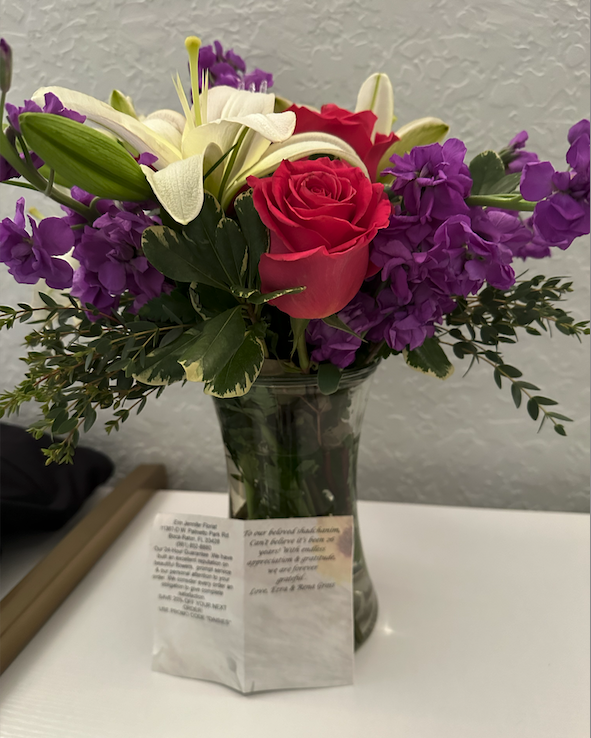
Last week, my doorbell rang but when I answered it, there was nobody there. Instead, I found a vase of flowers outside the front door with a note.  Flowers on a random weekday?  There wasn’t a birthday or anniversary to mark. Who could they be from?  I opened the card:


To our beloved shadchanim – can’t believe it’s been 26 years! With endless appreciation, we are forever grateful, Love, Ezra and Rena.


Twenty-six years ago, Yocheved and I set up mutual friends and now, for no particular reason, out of the blue, they sent flowers to say thank you.  This wasn’t the first time they expressed their gratitude, it isn’t that they remembered a debt they had never repaid.  They had thanked us numerous times before. Yet, because their gratitude had not diminished, they felt compelled to still say thank you again.


Most people don’t realize how much a simple gesture of thanks can mean to the recipient of it. In 2018, Psychological Science published a study of 300 participants who were asked to write a letter of gratitude to someone who positively impacted them from long ago. Participants wrote to their parents, friends, coaches, or teachers. The writers were asked to predict the degree of surprise, happiness, and awkwardness the recipients would feel after receiving their gratitude.  The study found that those writers expressing gratitude consistently underestimated how much people appreciate being appreciated.  The recipients of the letters reported feeling less awkward and in fact much more appreciative than the letter writers predicted.  Being appreciated and receiving gratitude proved to make someone’s day much more than those expressing thankfulness thought it would. 


In our Parsha, when Leah names her fourth son Yehudah, the Torah tells us she did so because הפעם אודה את ה׳, it was an expression of gratitude to Hashem.  The Gemara (Berachos 7b) goes so far as to say that, in fact, Leah was the first person in history to say thank you to Hashem.  This doesn’t seem to make sense. Adam HaRishon said, “Tov l’hodos laShem.”  Noach thanked Hashem, Malkitzedek expressed gratitude to the Almighty.  Eliezer communicated appreciation for Divine assistance, and the pre-Leah list could go on.  How could the Gemara make such a bold assertion when it seems from the Torah not to be true?


Rav Yeruchem Levovitz explains: most people say thank you in order to pay off a debt of gratitude.  Someone does something nice for us and, as part of an unofficial quid pro quo, we say “thank you” to them in an effort to settle up the score.  Each of the earlier people who said thank you did it once, one time, to pay a debt. Leah was the first to understand that gratitude doesn’t conclude, it doesn’t end.  If we see gratitude as more than a debt, we never stop expressing it. 


Leah named her son Yehudah, literally meaning thank you.  Every time she called out his name – “Yehudah come for supper, Yehudah did you do your homework, Yehudah get ready for bed,” every time she called his name, she reawakened her sense of appreciation and fulfilled her commitment to never take him for granted.  Unlike the others who said thank you and paid off their debt of gratitude, Leah formulated a thanks that was felt and expressed each and every day on a consistent basis.  


Rav Yeruchem explains that Leah expressed this committment when she gave Yehudah his name.  We normally read הפעם אודה את ה׳ as an explanation for why the new son was called Yehudah.  Rav Yeruchem suggests that we read Leah’s expression with a question mark –  הפעם אודה את ה׳?  Should I only thank Hashem this one time and then move on?  No way, I will continue to thank Him over and over again.


A shadchanus gift represents paying off a debt of gratitude once and done.  Flowers twenty-six years later for no reason demonstrate that the appreciation never ended, or as they wrote, feeling forever grateful.


The Torah endorses, encourages, and urges us to be grateful. We are call Yehudim, says the Chiddushei HaRim, because we are a people of gratitude.  We don’t just pay a debt of gratitude, like Leah, we say thank you over and over, we feel endless thankfulness and boundless gratitude for the good things in our lives.  


Charles Plumb, a U.S. Naval Academy graduate, was a jet fighter pilot in Vietnam. After 75 combat missions, his plane was destroyed by a surface-to-air missile. Plumb ejected and parachuted into enemy hands. He was captured and spent six years in a Communist prison. He survived that ordeal and one day, when Plumb and his wife were sitting in a restaurant, a man at another table came up and said, “You’re Plumb! You flew jet fighters in Vietnam and you were shot down!”


Plumb did not recognize this man and was perplexed. “How in the world did you know that?” asked Plumb. “I packed your parachute,” the man replied, “I guess it worked!”


That night, Plumb couldn’t sleep. He kept wondering what this man might have looked like in a sailor uniform. He wondered how many times he might have passed him on the ship without acknowledging him. How many times he never said hello, good morning, or how are you. Plumb was a fighter pilot, respected and revered, while this man was just an ordinary sailor. Now it grated on his conscious.


Plumb thought of the many lonely hours the sailor had spent on a long wooden table in the bowels of the ship carefully weaving the fabric together, making sure the parachute was just right and going to great lengths to make it as precise as can be, knowing that somebody’s life depended on it. Only now did Plumb have a full appreciation for what this man did. After that encounter, Plumb began travelling around the world as a motivational speaker asking people to recognize who is “packing their parachute.”


Have we thanked those who contributed to the lives we are blessed to live? Imagine if our kindergarten teacher got a note from us thanking her for nurturing us with love. Imagine if our high school principal, our childhood pediatrician, our housekeeper who cleaned our childhood room, out of the blue got a gesture of gratitude showing that we cared enough to track them down and say thank you after all of these years. Did we express enough appreciation to the person who set us up with our spouse, gave us our first job, safely delivered our children?


Research shows that expressing gratitude has mental and physical health benefits, including lower rates of depression and better sleep, improved relationships, and success at work.  


Be thankful. Stay thankful. And keep demonstrating gratitude, for your own benefit and for the benefit of someone who will be thrilled to know you still appreciate their role in your life.

There Is No Other Hand

Can I deny everything I believe in?


On the other hand, can I deny my own child?


On the other hand how can I turn my back on my faith, my people? If I try to bend that far I will break.


On the other hand…


There is no other hand.


— Fiddler on the Roof


If you are familiar with my speeches, classes, and writings, you know I am a big believer and fierce advocate of the importance of nuance and using more careful language in our conversations, debates, and dialogues. Much of our divisiveness and disunity is the result of speaking in absolutes with too much confidence, too little nuance, and the inability or unwillingness to look at other perspectives.


And yet, there are certain issues, events, and people that are clear as day, and the introduction of nuance or the use of a tolerant approach isn’t noble or righteous, it is cruel and irresponsible. As Tevye memorably puts it, there is no other hand.


Most of the time we should strive to live in the gray, to respect that there are opinions and approaches we may vociferously disagree with but are still legitimate, within bounds, and espoused by those who genuinely believe in the safety, security, unity and eternity of our people.  One can disagree determinedly with the Satmar philosophy and its approach to the State of Israel, but you can’t argue that they work against the future or fate of our people.  The Satmar community has said Tehillim daily since the start of the war and I personally witnessed the Rebbe gave a member of our community a beracha that his son serving in the IDF be safe, secure and successful in defending our people.


But there are also rare times that call for a black-and-white view, to recognize that being open, thoughtful, respectful of other opinions and approaches doesn’t mean tolerating or accepting the opinions and activism of those who are working against our people, who don’t share in our fate, who aren’t consumed by our safety and well-being, even if they are Jewish. 


While Israel is fighting a war on seven fronts, seeking to defend millions of innocent civilians against evil enemies who seek the destruction of Israel and the death of all Jews, Senator Bernie Sanders, who is Jewish, sponsored and led a campaign in support of a resolution aiming to block $20 billion in sales of U.S. arms to the Jewish state.  While he stopped short of declaring Israel of perpetrating a genocide (though he had no problem calling Israel’s actions “atrocities”), he asserted that military aid to Israel violates U.S. law prohibiting weapons sales to “countries that violate internationally recognized human rights.” 


Despite the Biden administration rejecting the claim and actively lobbying against the resolution, nearly half the Senate majority caucus voted in favor, smearing Israel’s war of self-defense and casting Israel as a villain on the world stage. This group included two Jewish senators: Sanders and Jon Ossoff.


I have spoken and written about not using my pulpit or platform to campaign for or against political officials. Again, there are times that call for a different approach. Remember these senators’ names, work to ensure they are not re-elected, and hold them accountable for slandering the Jewish state and compromising the safety and security of our people around the world:


Sens. Dick Durbin (D-Ill), Martin Heinrich (D-NM), Mazie Hirono (D-Hawaii), Tim Kaine (D-Va.), Ben Ray Lujan (D-NM), Ed Markey (D-Mass.), Jeff Merkley (D-Ore.), Chris Murphy (D-Conn.), Jon Ossoff (D-Ga.), Brian Schatz (D-Hawaii), Jeanne Shaheen (D-NH), Tina Smith (D-Minn.) Chris Van Hollen (D-Md.), Raphael Warnock (D-Ga.), Elizabeth Warren (D-Mass.), Peter Welch (D-Vt.), George Helmy (D-NJ) as well as Angus King (I-Maine) and Sanders each voted in favor of at least one of the three bills, while Sen. Tammy Baldwin (D-Wis.) voted “present.”


Is it a coincidence that soon after the vote got the support of more than one third of the democrats in the Senate, the illegitimate International Criminal Court (ICC) issued arrest warrants for Benjamin Netanyahu, Israel’s prime minister, and Yoav Gallant, Israel’s former defense minister, for war crimes committed in Gaza?  Is it random that a few days after a prominent Jew holding high political office led an effort to demonize the Jewish state a Chabad Rabbi in the UAE, Rabbi Zvi Kogan Hy”d was kidnapped and brutally murdered by emboldened agents of Iran?  Is it a stretch to draw a line connecting the dots between prominent Jews not only failing to support but working against Israel, and enemies of Israel acting in outrageous and despicable ways?


There must be no nuance in recognizing that Bernie Sanders, Jewish or not, is dangerous and his views are entirely illegitimate. In fact, one can make a reasonable argument that his Jewishness actually provides cover for non-Jewish antisemites and other bad actors, who can (and often do) point to Sanders and say, “he’s Jewish and he agrees with me.” Failure to call things as they are would be putting ourselves in danger. 


This danger is not limited to secular Jews. Neturei Karta, Aramaic for “guardians of the city,” are anything but protectors of our people.  Despite their external religious garb and presentation as observant Jews, they are dangerous extremists whose behavior—meeting with and hugging world leaders who seek Jewish blood, rallying in the streets to support perpetrators of evil, to name a few lovely examples—has excluded them from our people and ensured they have no portion in the World to Come.  They, too, use their Jewishness in dangerous ways and provide useful cover for antisemitism. There is no nuance in rejecting, disassociating and marginalizing them.


There is no other hand when it comes to the extreme progressive groups like Jewish Voice for Peace and Rabbis for Ceasefire. These groups don’t claim to be Orthodox and certainly don’t look it but they are no less dangerous and illegitmate than Neturei Karta. They use their Jewishness as a convenient tool to advance their goals of supporting Hamas and their enablers. Like Neturei Karta, they provide terrific cover, as evidenced by Rashida Tlaib and other members of the Squad being all-too-happy to rally with them, meet with them, and attend their disingenuous prayer services.


J-Street, a self-described “pro-Israel, pro-peace” organization, has advocated for the Biden administration to withhold weapons from the Jewish state, arguing that the United States needs to hold Israel accountable for alleged human rights “violations” before President-Elect Donald Trump takes office in January.  Instead of educating the world about how Israel has gone to unprecedented lengths to avoid civilian casualties, this “pro-Israel” organization, led by “proud Jews,” has been among the loudest voices of disinformation, miseducation, and distortions about Israel in the world.


Peter Beinart, a prominent writer and observant Jew who keeps kosher and learns Daf Yomi, has written shocking and shameful anti-Israel articles and columns for years, most recently taking to the New York Times to slander and attack Israel, describing the war as, “Israel’s slaughter and starvation of Palestinians — funded by U.S. taxpayers and live-streamed on social media.”  He went so far as to blame the election results on Israel and by extension the Jews. 


To be clear, I am not interested in name-calling. There has been endless debate since October 7 (and of course before then, too) about who is a “self-hating Jew,” whether certain politicians are “kapos,” and the like. To engage in those debates is to miss the forest for the trees. Coming up with the right term or label, and arguing whether or not Bernie Sanders is a self-hating Jew, an antisemite, or neither, is time not well spent. The focus should be in recognizing the behavior, calling it out, and working hard to counter any influence or voice these people have.


Since there have been Jews, there have been traitors to the Jewish people, including famous converts who led disputations and defectors who collaborating with enemies.  In her article, The Jews Who Fought for Nazi Germany, Ellen Feldman writes: “What was the safest place for a Jew in Hitler’s Germany? A cellar or an attic? A forest? At home with a well-connected Aryan spouse? The answer was in Hitler’s military—in the Wehrmacht, the Kriegsmarine, or the Luftwaffe—at least until the tide of war turned and all three began to suffer staggering losses.”  She documents Jews who fought alongside the Nazis against the Jews for diverse motivations and for different reasons. 


While their behavior is inexcusable, Jews who conspired with or aided the Nazis could at least argue they were trying to save their lives.  What could Bernie Sanders, Jon Ossoff, Neturei Karta, J-Street, Rabbis for Peace, or Peter Beinart say compels them to vilify of the Jewish state and justifies their efforts to hamper its ability to defend its people?  It is disingenuous and dangerous for these people and groups to blame Israel for the suffering—including the suffering inflicted on the Palestinian civilians whom they claim to care about—that is caused by Hamas, who started this war with a heinous, bloodthirsty pogrom, and can end it immediately by returning hostages and laying down their guns. 


We read every Friday night, “ohavei Hashem sin’u rah,” those who truly love Hashem hate and reject evil and wrongdoing. Dovid HaMelech does not encourage us to hate the individual, but rather his choices. However, there are times when we can’t and shouldn’t separate the person from the choices they make and if we truly love Hashem, justice, and the Jewish people then we cannot and must not tolerate or accept the perpetration of that wrongdoing.  There are times for nuance and balance and time for moral clarity and clear lines. 


In the days of Rabban Gamliel, Jewish traitors posed a threat to the nation.  Shmuel HaKatan was recruited to author a prayer, a 19th blessing to be added to the Amidah that their nefarious and slanderous plans be unsuccessful.  Shmuel was called “HaKatan” because he maintained his childlike innocence, purity and love.  He was chosen to write this blessing because he had no ulterior motive or agenda in doing so.  It didn’t serve him politically, financially, or socially.  Indeed, he is the one quoted in Pirkei Avos who most embodied the dictum in Mishlei (24:17), “Do not take joy in the downfall of your enemies.” He was chosen because his intent was pure and unblemished. 


We must remain committed to nuance in our discussions, conversations, debates, and dialogues with one another. Indeed, Shlomo HaMelech taught (Mishlei 18:21), “Maves v’chaim b’yad lashon, Death and life and in the power of the tongue.”  Our language matters and it can be the difference between life and death. 


But in these times when the future and wellbeing of our people is at stake, we must also have moral clarity, to hate evil, call it out, work against it, even when it is from within our people. To recognize when there is no other hand.


When you say V’lamalshinim, mean it. 


Hypocrisy or Healthy? Meeting with the Vilified

After a vicious campaign season with billions of dollars spent vilifying one another, name-calling, and competing who could label the other the bigger threat to democracy, the election has finally been decided and whatever outcome you were hoping for, we should all be relieved it’s over.


Given the rhetoric leading up to the election, one would have expected to see the vitriol kicked up a few notches higher after it, if that is even possible.  But instead of escalation and increased warnings and predictions, refreshingly, there are reasons to be hopeful and optimistic that we can learn to get along even through disagreement.


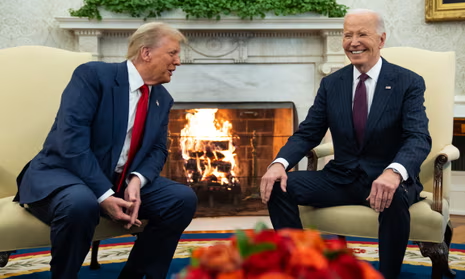
If you didn’t know the history and just saw the smiles, enthusiasm, and spirit of cooperation when President Biden welcomed President-elect Trump to the Oval Office last week, you might have thought it was a reunion of two old friends rather than two bitter enemies observing protocol.  The two men seated in front of a roaring fire smiled, shook hands, and pledged a smooth and cooperative transition.  They then met for two hours for a discussion that the press secretary described as “very gracious and substantive.”


Two men who had spent months—if not the last few years—calling each other names and railing about the disasters the other is responsible for, found a way to shake hands, smile, and make us believe it was more than just for the cameras. 


While the presidents were following protocol, an even more surprising meeting took place this week that didn’t need to happen.  Two of Trump’s fiercest critics, MSNBC anchors Joe Scarborough and Mika Brzezinski, opened their show by reporting that they had visited Mar-a-Lago to essentially extend an olive branch to the president- elect.  


The meeting was the first time they had seen or spoken to Trump in seven years.  Scarborough shared that while they don’t see “eye to eye on a lot of issues, and we told him so,” they discussed such topics as abortion, mass deportation, and threats of retribution against political opponents and media outlets.


Clearly braced for strong criticism, they shared: “For those asking why we would go speak to the president-elect during such fraught times, especially between us, I guess I would ask back – why wouldn’t we? Five years of political warfare has deeply divided Washington and the country. We have been as clear as we know how in expressing our deep concerns about President Trump’s actions and words in the coarsening of public debate.  But for nearly 80 million Americans, election denialism, public trials, January 6, were not as important as the issues that moved them to send Donald Trump back to the White House with their vote. [We] realize it’s time to do something different, and that starts with not only talking about Donald Trump, but also talking with him.”


President Trump was also positive about the meeting and their commitment to restart communication. He said, “I received a call from Joe Scarborough requesting a meeting for him and Mika, and I agreed that it would be a good thing if such a meeting took place.  Many things were discussed, and I very much appreciated the fact that they wanted to have open communication … In many ways, it’s too bad that it wasn’t done long ago…The meeting ended in a very positive manner, and we agreed to speak in the future.”


While many applauded the effort to heal our country and its discourse, some cynically suggested that the meeting was driven by fears of retribution and governmental and legal harassment from incoming administration.  Others were outright critical of the hosts, labeling it “disgusting” and calling for a boycott of their show, asking,  How can you call a man a fascist, imply he is a Nazi and then go meet with him and make nice?  One person wrote on X, “Bend the knee to the King in order to save their careers.” Another tweeted, “Total capitulation after years of railing about his lack of fitness. Not even an interview to show their ‘journalistic integrity.’ Just a pure kiss-the-ring session. Disappointed and done with them and their show.”


While many of their fans felt that the hosts were hypocritical, I actually came to the opposite conclusion.  The approach should not be to avoid meeting with someone you have called names, labeled the enemy and described as the greatest threat to democracy.  The approach should be to avoid the name-calling and labeling in the first place.


One lesson of this election cycle and the meetings of the last few weeks is to think before calling someone a name, assigning them a label, or framing them in an overly negative light. Consider what would happen if the opportunity presented itself to meet with that person. Would you be a hypocrite, based on your prior comments?  Disagree, argue, advocate, debate. Do so vociferously and determinedly.  But do so civilly.  Do so by arguing about policies and positions, reject behaviors and choices.  Don’t call names and make comparisons you can’t walk back.  Express concerns; don’t offer prophecies.


There are powerful debates taking place now in America and Israel.  From abortion to combatting antisemitism, judicial reform to IDF service, emotions are high and feelings are strong.  Dialogue and debate are healthy and helpful but drawing firm lines in the sand, setting up paradigms of people being either with us or against us, getting to a point that we cannot find any commonality, is destructive and dangerous. 


The Torah tells us that Yosef’s brothers hated him to the point that v’lo yachlu dabro l’shalom.”  The Ibn Ezra explains, “v’lo yachlu dabro l’shalom – afilu l’shalom.”  It isn’t that they just couldn’t talk about the issues they disagreed about.  It isn’t just that they didn’t want to be close, loving brothers.  It isn’t just that they couldn’t debate respectfully.  “Afilu l’shalom” – they couldn’t even give each other a shalom aleichem.  The hatred and intolerance had grown so deep that they couldn’t stand to even extend greetings to one another or to be in a room together.


Rav Yehonasan Eibshitz in his Tiferes Yonasan has an additional insight.  When we disagree with people, we withdraw from them and stop speaking to them.  We see them as “the other,” different from us and apart from us.  As our communication breaks down, the dividers rise up stronger and stronger and we can’t find a way to break through them.


If there is a person who you more than simply disagree with, but their opinion or practice repulses you, and that person were in a position to help you when you needed them, would you not reach out them? Would you not go meet with them?  If they lost a family member in a terror attack or tragedy, would you not cry for them or feel their pain? 


Yeshaya HaNavi said: ועמך כלם צדיקים לעולם יירשו ארץ, “And your people, all of them righteous, shall possess the land for all time.”  Commentators interpret: when we are “kulam tzadikim,” all righteous and worthy of the land? V’Ameich.  When we are part of one nation, united, unified and getting along. 


By the time you read this, the reset on civility and communication may have been short-lived and ended.  But the lesson for us should endure.  Disagree, debate, reject opinions or practices but don’t vilify or call names that would make you a hypocrite or cause you to not be able to meet with them or be in a room.

She is the Only Reason I am Here

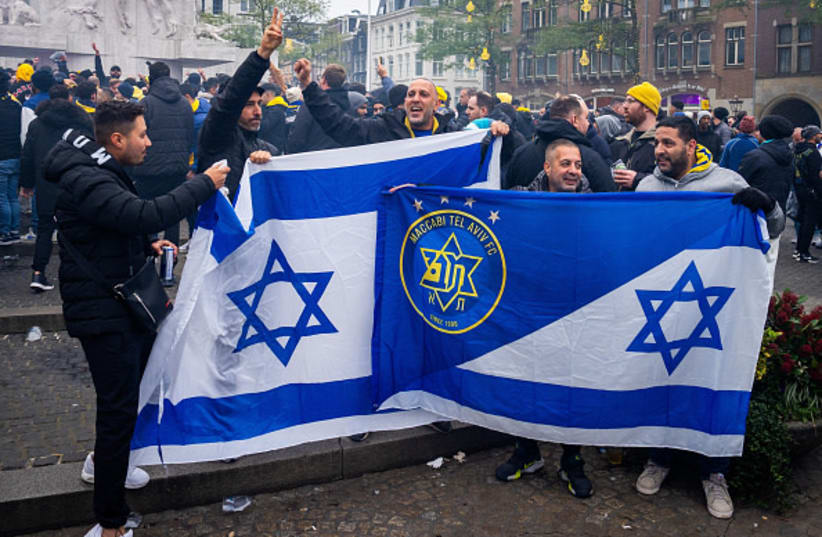
After spreading a call to “hunt Jews” in a premeditated attack, vile Arab gangs chased, beat, and indeed hunted Jews in the streets of Amsterdam.  Some were rammed with cars, others kicked and spit on, still others forced to jump into freezing rivers to escape. 


The pogrom in Amsterdam, which took place two days before the anniversary of Kristallnacht, was a harsh and painful reminder that the more things change, the more they say the same. 


Eighty-six years after the night of broken glass, Jews in Europe were once again abandoned and unprotected, forcing some to again try protect themselves by crying out, “I’m not Jewish.”  The same country in which Anne Frank was forced to hide and that failed to protect or hold perpetrators accountable then, once again had Jews hiding and left unprotected.  Nearly nine decades after Anne Frank, the media continues to downplay Jew hatred with the New York Times, Reuters, and the Associated Press describing the incident as “violence tied to a soccer game.”  Now, as then, Jews are made to feel alone, isolated, needing the courage to take care of ourselves.


While Kristallnacht is probably the most famous day of rage against the Jews of Europe in the 1930’s, it wasn’t the first and was far from an isolated event.  My grandfather operated a stand selling women’s garments in the outdoor Spandau market in Berlin, Germany. One day (not on Kristallnacht), Nazis attacked the market, destroying his merchandise and beating him.  My grandparents were living in Germany but my grandfather was a Polish national.  The Nazis passed a cruel law expelling all those living in Germany who were not German nationals.  He and his father-in-law had Polish passports, but Poland wasn’t letting anyone in, leaving them deported to “no man’s land,” along the border between Poland and Germany.  He had family who had immigrated to America who agreed to sponsor him and his family, but my grandfather was still waiting for the papers to arrive that would allow them to emigrate to America.


In the meantime, my grandmother moved in with her mother in Berlin, helping them run the family clothing business.  On November 9, 1938, Herschel Grynszpan, a 17-year-old German-born Polish Jew living in Paris, assassinated a German diplomat, Enst vom Rath.  This set off one of the worst pogroms in our history, a “night of broken glass,” with rioters destroying 267 shuls throughout Germany, Austria, and the Sudetenland. Seven thousand Jewish businesses were damaged or destroyed and 30,000 Jewish men were arrested and sent to concentration camps. 


My grandmother’s maiden name was Grynszpan and she was therefore immediately arrested along with her baby and mother.  They were interrogated until it could be ascertained that she was not related to the perpetrator.  They were released but shaken from the experience.


Finally, the papers from the family in America arrived but my grandfather was still in No Man’s Land.  Only the Gestapo could give the approval for him to return so they could emigrate as a family.  Against all odds or reason, my grandmother was determined to save her family.  She identified the office she needed to visit and the Gestapo officer who could stamp the required papers.  She ran around the block several times until she was out of breath and she pinched her own checks until they were bright red.  She rushed past the guard at Gestapo Headquarters saying she was late for an important meeting and ran up the stairs to his office, pretending to have an appointment.  She pushed her way into his office and with all 4 foot 10 inches of her being, pled with the officer to stamp the paper, bring her husband home and allow them to emigrate with their baby to America.  Not surprisingly, he refused.  She walked over to the window and pointed out towards a bridge over a river.  She said, “if you don’t stamp the papers, you will have to look out this window and watch me  jump off the bridge with my baby, killing ourselves, as there is no point to living if my husband doesn’t come home.” 


That moment could have gone several ways and could have easily cost her her life, but the otherwise cruel officer was caught off guard by the courage, brazenness and “chutzpa” of this tiny woman and he agreed.  He stamped the papers which enabled them to sail on the SS Manhattan in April 1939.  The parents and siblings (other than one brother who had already moved to Palestine) they left behind were all murdered in the Holocaust; I carry the names of two of my grandfather’s brothers, Efraim and Chaim.  Grateful to have escaped with their child but traumatized by what they had been through, my grandparents didn’t intend on having any more children.  But after settling in Jersey City, one night my grandmother heard her daughter looking out the window davening to Hashem for a sibling.  Together with my grandparents, He answered her prayer and my father was born.


Of course, countless victims of the Holocaust didn’t have the opportunity to advocate for themselves and their family and countless others were brutally murdered for trying.  But after seeing the images out of Amsterdam this week, I was thinking about my grandmother, Rose Goldberg a”h, her bravery, conviction, tenacity and boldness. She was determined and stubborn.  She was courageous and daring.  She didn’t relinquish her fate or future to others, she was resolute in protecting and securing  herself and her family.  She is the reason I am here. 


Fast forward to today. I am the only one of her grandchildren who doesn’t yet live in Israel.  Her great-grandchildren, armed with her courage, conviction and resolve, have been among those heroically serving in the IDF, fighting in Gaza and defending our people.


Much of what happened in Amsterdam parallels our past but there is a fundamental and glaring difference.  This time, the Jews abandoned by the Dutch government were not alone.  IDF International Spokesperson Lieutenant Colonel Nadav Shoshani announced: “The targeted attacks against Jews and Israelis in Amsterdam tonight are horrific and barbaric. The images of the violence toward Jewish people in Europe are a painful reminder of our history. The IDF has an historic duty of protecting our people, wherever they are. We are preparing to deploy a mission to rescue Israelis from Amsterdam.”


Indeed, two rescue planes, funded by El Al, went to Amsterdam to bring home to Israel those who were targeted, attacked, and forced into hiding.  Jews around the world are not alone, never abandoned, or on our own.  We are living in miraculous times in which Hashem has granted us a country, one of the strongest and smartest militaries in the world, and an indomitable will to ensure “Never Again” truly means never again.


Our people’s existence is due to strong-willed, courageous people who didn’t surrender to circumstance or cower to enemies.  Avraham went to war against powerful kings to liberate his nephew. Moshe took on the Egyptian empire with demanding that its leader Pharoah let his people go. What if the Macabbees had considered the odds and facts on the ground and never revolted against the Greek oppressors?  What if Rabban Yochanan ben Zakkai simply observed the power of Vespasian and never asked for Yavneh and its sages?  What if in 1948 and 1967 the brave men and women of Israel had truly accepted the impossible chances of overcoming the many nations, people, and resources that sought to obliterate them?


The past 13 months have taught us that the world respects us and fears us when we show strength, might and Jewish pride, not when we cower, apologize, or take orders from others. 


Perhaps, instead of instructing Jews to avoid Paris or “dangerous” European cities, hiding Israeli real estate events in America or moving them to Zoom, or taking off yarmulkas in public places, we should be demanding that police in every city protect us. Maybe it is time to coordinate with law enforcement to protect ourselves. 


Don’t post and share images of Jews being beaten up, kicked, and spit on.  Make images of IDF soldiers eliminating evil terrorists viral.  Tell the story of the pager attack on Hezbollah over and over to anyone who will listen. Remind others of the targeted assasination of Deif, Nassrallah and others whom America couldn’t find or take out. Make sure everyone knows that Israel flew into Iran and took out their missile defense throughout the country with seeming ease. Let the picture of Israel’s rescue planes landing in Amsterdam be seared in the mind of any country that won’t protect us. 


Don’t hide your Jewishness. Don’t cower or live in fear. Be responsible but be a proud and practicing Jew. 


Let antisemites pay a price and face legal consequences for attacking a Jew. Instead of our fearing them, let them fear us.


A House of Celebration and Houses of Mourning

When my cousin’s daughter asked me to officiate her wedding in Israel the week after Sukkos, how could I say no?  Her mother, my beloved first cousin, passed away at a young age from cancer.  She loved Israel and at several points in her too-short life wanted to live there but never had the chance to realize that dream.  Her daughter, passionate about Torah, the Jewish people, and Eretz Yisroel, moved to Israel shortly after getting up from shiva.  She enlisted, rose to be an officer in the IDF, and proudly wore her olive green IDF skirt throughout.  She met her husband, an amazing young man who, like her and like Avraham Avinu before them, got up, left his family to answer the call of Lech Lecha, and went to settle in Hashem’s land.  After learning in Yeshiva he too served in the IDF.  These two beautiful souls finding each other and committing to building the Jewish people in the Jewish homeland was truly a special occasion not to be missed.


And now, at a magnificent chuppa with the hills of Yerushalayim as the backdrop, I had the tremendous honor and privilege to marry them. But there was something I needed to do first.


In Koheles (7:2), Shlomo HaMelech, the wisest of all men, taught, טוֹב לָלֶכֶת אֶל בֵּית אֵבֶל מִלֶּכֶת אֶל בֵּית מִשְׁתֶּה בַּאֲשֶׁר הוּא סוֹף כָּל הָאָדָם וְהַחַי יִתֵּן אֶל לִבּוֹ, “It is better to go to a house of mourning than to a house of celebration; for that is the end of every man, and a living one should take it to heart.”


As Israel’s longest war in its history continues to rage on across multiple fronts, we tragically, regularly continue to see and hear the most dreaded words: “Released for publication.”  Heroic, seemingly ordinary but truly extraordinary soldiers continue to make the ultimate sacrifice, their families paying the ultimate price to protect, defend and fight for the Jewish people.  Indeed, as our rabbis taught two thousand years ago (Berachos 5a), Eretz Yisroel nikneis b’yesurin, the land of Israel is acquired and held with sacrifice and struggle.


I paid a shiva call to the family of Rav Avi Goldberg Hy”d.  A tent was set up to accommodate the countless visitors who came from all over: friends, family, political leaders, and “strangers” like me who came to comfort, share in the pain and pay tribute to this incredibly special man.  It was heartbreaking to see his children clutch framed pictures of him.  It was moving to hear his wife Rachel talk about him and offer a heartfelt plea for all segments of Am Yisroel to share in the burden of this war.  R’ Avi loved and excelled at music, using it to arouse the souls of many, and so the family requested music be part of the shiva.  Accompanied by a guitar and a violin, the many packed in the tent joined in a slow, stirring niggun.  At that moment, eyes closed and swaying in unison, all those gathered were singing the song of the Jewish people, the song of pain and of joy, a song of eternity.


That day, I was scheduled to meet with R’ Avi’s brother Eliezer about another matter.  We indeed met, but instead of at a coffee shop or in an office, it was with him sitting in a low chair and my desperately trying to find words that would be meaningful.  He shared about his brother’s special character and impact and I communicated that I represented not only myself, my family and our community, but I was there on behalf of all Am Yisrael around the world sharing in their pain and expressing our boundless gratitude. 


I shared the same message at the second shiva call, to the family of Sammy Harari Hy”d.  Sammy came to yeshiva for his gap year and decided to stay and serve in the IDF and build his life in Israel. His dedication to our people and to our country was unwavering.  He was 35 years old and lived in Tzefat with his wife, Anna, and their three children.


“It is better to go to a house of mourning than to a house of celebration.” Commentators explain that Shlomo HaMelech encouraged going to a shiva home over a simcha because a simcha is prospective.  We share our hope, dreams and ambitions for the future of this new couple, this Bar Mitzvah boy or Bat Mitzvah girl, this new baby.  A shiva home is retrospective, reflective of the legacy, influence and impact the person made.  Each of these precious soldiers, our kedoshim who are now sitting next to the Kisei HaKavod, directly adjacent to Hashem’s throne, leave the highest legacy of having been moseir nefesh for the Jewish people. 


On this short trip, I also visited Hadassah Hospital to spend time with injured soldiers.  Unlike previous trips in which the injured were young soldiers in the middle of their mandatory service, each of those I visited this time was a reservist, these were people who had left their family multiple times to fight, often on different fronts. 


In one room were three men who had been injured less than a week before in Lebanon.  Hezbollah fighters saw them coming and released gas in the house they were entering.  In many countries, gas companies add a chemical with a distinctive smell to alert people to a gas leak but natural gas has no odor and so these soldiers had no idea they were entering a home filled with gas.  Protocol calls for opening fire when entering an area with terrorists.  When these soldiers entered the home and the first one opened fire, it ignited the gas, causing an explosion.  The terrorists were positioned nearby and opened fire after the explosion.  One of the soldier’s legs was literally on fire while he continued to shoot back and fight the terrorists. 


Hanging next to his hospital bed are the remnants of the uniform, a testament to the miracle of his being alive.  These soldiers had bandages on their legs, fingers and one had burns on his face.  One of them has four children, the youngest two months old, born during his service.  Another got married in between serving his reserve duties.  They all spoke with faith, determination, gratitude, positivity and a message to Jews everywhere that it is time to come home and be part of this destiny. 


In another room was a soldier who was injured on Yom Kippur night in Lebanon.  His father shared that he was so badly compromised, losing so much blood, that at one point they felt he wouldn’t survive and no more resources or time should be spent on him.  Nevertheless, they continued and there he was recovering and improving, eager to return home to his wife and children.  The soldier mentioned that in his life he had donated a lot of blood, never knowing that he was actually making a deposit for one day needing to take a withdrawal to save his life. As hashgacha had it, his uncle is a friend of mine, someone I went to Yeshiva with. 


In a third room was a soldier injured on the border with Syria.  He was the quietist, and seemed to be struggling the most physically and emotionally, but after spending a few minutes, showering him with love, as we were leaving his room, he perked up to call to us and say, “Am Yisrael Chai.”


On this trip, I spent time with my heroic friend who fought in Gaza, saw and experienced horrific things, and has been suffering with diagnosed PTSD.  Despite support, medication, and therapy, he continues to have panic attacks, and it isn’t unusual for him to wake up in the middle of the night from a nightmare, drenched in sweat and with a racing heart. 


He shared with me that he had recently been in the park with his children when they saw a young boy on the playground crying.  He approached the boy asking what is wrong, is he hurt.  The boy responded, no I am angry and there is nothing you can do about it. He asked the boy what happened and the young boy explained that his father is back in milu’im, reserve duty, and his uncle picked him up from school instead of his father and he is very upset about it.  My friend said, are you hungry, let’s go buy a treat and the boy said, no I am not eating.  He asked, why not and the boy said, I don’t want to eat until my father comes home and we can eat together.  After spending some time showing some love and support, the boy calmed down and went home to get something to eat. There are literally thousands of children in Israel like this young boy, some expressing their feelings, many not, and we cannot lose sight of how many families continue to feel the impact of this war on a daily basis.


This past year I have been fortunate to have gone to Israel for numerous missions, visiting army bases, hospitals, hostage families, displaced families, and doing all kinds of volunteering. As Yom Tov here ended and I prepared for this trip, I thought, perhaps naively, that I was going for a wedding and to see my family.  I thought that the chamals, cheder milchamah, the wartime volunteer command centers were closed, the volunteer opportunities had grinded to a halt, but I was terribly wrong.  There is still so much to do, so much love to show and share, so much support, financial, emotional to provide, so many people to spend time with.


The director of Hadassah hospital told me that visits have slowed down but there are still so many soldiers recovering and in rehab who cherish the chance to tell their story, to receive some love and to connect with Jews, particularly from outside of Israel.


It has now been more than a year. Fatigue may have set in for many, but it can’t for our soldiers.  They are still fighting on multiple fronts, their families continue to have to experience and navigate their absence while they serve.  For the new orphans and widows there is nothing old about this war. 


They are doing their part.  We must continue to do ours.  A member of our community visited an army rest area outside Gaza over Sukkos. One of the tables still holds a letter a child wrote that we delivered back in March. 


Continue to write letters to soldiers.  Continue to learn and daven for those serving and all those injured physically and emotionally. When planning winter vacation or your next trip, consider going to Israel to visit hospitals, those still displaced from the north, or army bases. 


We daven and long for the day that we go to Israel only to attend simchas and happy occasions. 


Simchas Torah One Year Later: A Day of Death, an Opportunity for Rebirth

Simchas Torah, October 7, will forever be etched in our hearts and minds as the day of the greatest massacre of our people since the Holocaust.  The brutal, cold-blooded murder of innocent men, women and children, young and old, entire families, over 1,200 people, rocked our worlds, broke our hearts, and shattered our collective illusion of safety.  The events of that day launched a war in which our people have sustained even more casualties, more parents bereft of children, children orphaned from parents.  For over a year, we have been a nation in a perpetual state of grief, mourning, and sorrow.


Any look back at a year ago, and all the days since then, begins with honoring the memory of the fallen, learning each of their unique and individual stories, gaining an appreciation for who and what was taken from us. Simchas Torah, heretofore one of the happiest and most joyful days on our calendar, is now forever complicated by the competing feelings of sadness and loss.


Additionally, beyond the unimaginable loss of life, on Simchas Torah a year ago, many of our ideas and assumptions died as well.  We lost more than 1,200 irreplaceable lives, but we also lost our innocence, in some cases our confidence, our optimistic view of the Jewish condition in America and the world, and for some, communities of association or identification.  A year ago, so much died.


But a year later, as we reflect, we can look back and see that on Simchas Torah, October 7 of last year, so much was also born.  On the brink of a civil war over judicial reform and religious differences, overnight a sense of unity, togetherness, and shared destiny was reborn. 


From the resolve of the devastated communities on the Gaza border, driven by displaced families from the north and the south, powered by a record response to the IDF call up, the Am HaNetzach, the determined, tenacious nation of eternity was reborn.  From the ashes of the Gaza communities, an unprecedented chesed effort to provide for chayalim, support families of reservists, comfort mourners, visit displaced families and provide provisions was born, with leadership and participation from diverse communities literally around the world. 


A spiritual awakening, a Jewish pride burst forth in people who had never experienced their Jewish soul before or in whom it had been dormant for a long time.  Throughout this year, I have regularly been “bageled,” approached by Jews simply signaling their Jewishness to a fellow Jew (and signaling their desire to signal that Jewishness) in airports and on airplanes, in supermarkets and at stores, at a baseball game and even in a bathroom. Jews are returning to study, practice, proudly display their identity  The Jewish people are alive, reborn, proud, practicing, growing and united.


To be sure, things are far from perfect. There are important differences and disagreements and there are forces seeking to divide us again.  The war continues to rage, our heroic soldiers are still fighting on multiple fronts, and our precious hostages are still not home. 


But with all the problems and challenges, with all the lives that were prematurely and tragically snuffed out, so much has come alive.  Moshe Naaman, a soldier in the IDF, wrote the following inspiring story (Translated from Hebrew):


Two weeks ago, we were called up by Order 8 to the northern border. Today, we had the privilege of holding Yom Kippur prayers at Kibbutz Beit Zera. For 93 years, the kibbutz existed without agreeing to have a Yom Kippur minyan. But we, as soldiers, set one up in the company area at the kibbutz.


There were 12 religious soldiers among us. We sent a casual WhatsApp invitation to the kibbutz members. When the holiday started, we were shocked—dozens of members came for Kol Nidrei and Maariv. In the morning, elderly members came for Yizkor. The climax came with many dozens of people, including children, women, and toddlers, arriving for Neilah and shofar. People were moved to tears.


What can I say? I never imagined this would happen. The verse “Master of Wars, Sower of Righteousness” took on a new meaning for me today. Two weeks ago, I never imagined I wouldn’t be in the beit midrash for the High Holidays. I found myself as the shofar blower, gabbai, cantor, and speaker… The members kept thanking us after Yom Kippur and tearfully asked us to return next year…


Last year, I had tears of pain and sorrow at the end of Yom Kippur, but this year, those tears turned into excitement and joy.


“And seal all Your people for a good life.”

Moshe Naaman  –   גדוד הבוקע 5035


To mark the year since October 7, Danny Wise of Ami Magazine conducted 38 interviews focusing on the rebuilding efforts of the Israeli communities in the Gaza envelope.  Among his interviews, he met with a woman named Dafnah from Kibbuz Re’im. She had been the cultural director of the kibbutz and was one of the organizers of the Nova Festival. 


Touring the kibbutz, she showed him her charred house and the room in which her mother and children, Shira and Meir, were found murdered together.  She is the lone survivor of her family.  Wise writes that throughout the conversation he thought of Kristallnacht and the destroyed shuls.  He asked her if the terrorists destroyed any shuls in the communities along the Gaza envelope.


Dafnah responded, “Of course not. Not a single beit knesset was damaged in all 21 Gaza kibbutzim.”  Wise didn’t understand, how could no shul have been attacked, no Sefer Torah burned?  She explained, “It wasn’t a miracle. How could they damage something that doesn’t exist?” Most of the communities didn’t have designated or active shuls.  Dafnah, went on to explain, “If you want to understand the day after, you have to understand the day before.”


Wise writes:


Rabbi Shlomo Raanan runs an organization called Ayelet Hashachar which seeks to bring outreach to irreligious kibbutzim. He came up with the idea of a basketball game between yeshivah bachuram and the kibbutzniks of Reim. The game was set to take place on Chol Hamoed, October 2, just days before the massacre. Dafnah had led the charge to cancel the game. To her, the match wasn’t just a friendly contest; it was a Trojan horse, a way for religious influence to creep into the kibbutz. “I was furious,” she told me. “This was outrageous. We didn’t need outsiders telling us who a good Jew is,” she said, pulling out her phone and scrolling through old messages. She showed me the texts she had sent to Rabbi Raanan, warning him not to bring his religious mission to her doorstep. “Cancel this game immediately,” she wrote. “If you don’t, we’ll all block the entrance with our bodies.” In the spirit of peace, Rabbi Raanan canceled the game.


But five days later, the massacre came. Just over the border, in the tunnels of Gaza, Dafna found herself held hostage, face to face with the forces that had torn her world apart. “I said to an older guard in Arabic, why do you torture me? For 20 years, I’ve made programs for Arab and Jewish. The Jews are your cousins.” As she pleaded in the darkness for some recognition of their shared humanity, she was met not with empathy but with a cold dismissal.


“You are not a descendent of Ibrahim! You are not a Jew!” he spat. “You are a European colonialist who stole our land! It was in that moment, Dafnah said, that something broke. Or perhaps, something began to be repaired. The accusation hit hard. Like many in the kibbutz movement, Dafnah had spent her life defining herself more as an Israeli than a Jew, and more dedicated to reconciling Arabs and Israelis than healing the divides between different groups of Jews.


Religion had always been secondary to her identity. But now, in the depths of that tunnel, being denied her Jewishness by a Hamas fighter, she experienced a crisis of self. “I started screaming, Ana Yahudiun, Ana Yahudiun, I am a Jew I am a Jew!” The guards restrained her, taping her mouth. But for Dafnah, the internal shift had already occurred. “For the first time in my life I saw my soul; I saw that I am a Jew. “All my life,” Dafnah reflected, “I’ve been part of this community. We didn’t see ourselves as Jews, in the traditional sense. When I traveled overseas and someone asked if I was Jewish, I’d correct them. “No, I’m Israeli”; I’d say.


But when he called me a colonialist, it hit me. He didn’t see me as a Jew because I didn’t see myself as a Jew.


Dafnah paused for a moment, her eyes wandering over the ruined landscape. “Every Arab village has a mosque. Christian settlements build churches. And here, we have nothing. Nothing to say that we are Jews. And in that moment, realized that if we were going to rebuild, we needed to reclaim our identity.”  “I will tell you,” Dafnah said, “I took upon myself the new beit knesset project. When we rebuild, our beit knesset will be the most beautiful structure on the kibbutz.”


On Simchas Torah, Dafnah lost her family, but she found herself.  They died, but her Jewish identity was born. 


The holiday and festivities of Simchas Torah are unusual in their origins. They are not mentioned in the Torah or in the Talmud. It was never enacted as a full rabbinic holiday like Purim or Chanukah.  Rabbi Lord Jonathan Sacks z”l writes:


On Simchas Torah, without being commanded by any verse in the Torah or any decree of the Rabbis, Jews throughout the world sang and danced and recited poems in honor of the Torah, exactly as if they were dancing in the courtyard of the Temple at the Simchas Beis HaSho’evah, or as if they were King Dovid bringing the Ark to Jerusalem. They were determined to show God, and the world, that they could still be ach same’ach, as the Torah said about Succos: wholly, totally, given over to joy. It would be hard to find a parallel in the entire history of the human spirit of a people capable of such joy at a time when they were being massacred in the name of the God of love and compassion.


A people that can walk through the valley of the shadow of death and still rejoice is a people that cannot be defeated by any force or any fear…Simchas Torah was born when Jews had lost everything else, but they never lost their capacity to rejoice. Nechemiah was right when he said to the people weeping as they listened to the Torah, realizing how far they had drifted from it: “Do not grieve, for the joy of the Lord is your strength” (Nechemiah 8:10). A people whose capacity for joy cannot be destroyed is itself indestructible.


The year since Simchas Torah has been a fulfillment of the saying, “They Tried to Bury Us; They Did Not Know We Were Seeds.”   Simchas Torah was born against a backdrop of hate and tragedy.  A year ago, we lost so many, we buried heroes of our people.  But over this year, we birthed a new era, a new chapter for our people.  It is still being written and we determine what it will say next. 


The world has changed enormously since Simchas Torah of last year, have you?  How can we honor all those who died?  On a day marked by so much death, the only proper response is to birth a better version of ourselves and our people. 

Sukkah and Sleeplessness

When most of us think about or talk about the mitzvah of Sukkah, it’s about eating in the Sukkah.  Indeed, that is the activity in which we recite the beracha of Leishev BaSukkah.  We don’t make a leishev b’sukkah when hanging out, playing a game, learning Torah, or going to sleep in a Sukkah.  And yet, the Halacha is clear that eating is not the most significant thing one does in a Sukkah.  To illustrate, one is allowed to eat achilas arai, an “insignificant” eating like a snack, outside of a Sukkah, but even sheinas arai, a short nap, is forbidden outside of the Sukkah.  (The Rama rules that we are lenient today about sleeping in the Sukkah because of weather and the elements).  When we sleep in a Sukkah, sleep goes from a mundane necessity to a mitzvah, a means of connecting with Hashem.  


In his Emunas Itecha on Sukkos, Rav Moshe Wolfson points to an interesting Halacha.  In instructing the Jewish people about bringing Korbanos to the Beis HaMikdash on the Shalosh Regalim, the pasuk tells us, “וּבִשַּׁלְתָּ֙ וְאָ֣כַלְתָּ֔ בַּמָּק֕וֹם אֲשֶׁ֥ר יִבְחַ֛ר ה׳ אֱלֹקיךָ בּ֑וֹ וּפָנִ֣יתָ בַבֹּ֔קֶר וְהָלַכְתָּ֖ לְאֹהָלֶֽיךָ׃, You shall cook and eat it at the place that your Hashem will choose; and in the morning you may start back on your journey home.”  When offering a korban in Yerushalayim you have to fulfill a mitzvah of leena, you have to stay over, you can’t leave until the morning.  Rav Wolfson suggests that there is a relatable social principle here: coming to eat and drink and then not staying over is rude.  When we come to the holiest place in the world, into Hashem’s home, we don’t eat and run, we stay over.  Similarly, he says, the Sukkah, wherever it is, is a mini-Mikdash, an embassy of Shechina.  Eat and drink like we would a korban, and then perform leena, stay over, sleep.  Sleeping in the Sukkah is experiencing Divine hospitality and being a gracious guest.  Perhaps we can build upon this idea.

Sleep is necessary, it is non-negotiable.  The world record for staying awake is eleven days. More precisely, the record is 264 hours and 24 minutes without sleep. If you stay up the night of Shavuos and know how you feel in the morning, you can only imagine doing that for 11 days straight.  The record was set in 1965 by Randy Gardner, who was then seventeen years old and apparently wasn’t harmed from the experience.  However, staying awake that long straight is actually dangerous and can cause irreparable harm to the brain which is why the Guinness Book of Records stopped accepting entries for staying awake. 


The Gemara in Nedarim (15a) tells us והא”ר יוחנן שבועה שלא אישן שלשה ימים מלקין אותו וישן לאלתר…Rabbi Yochanan said “An oath that I will not sleep for three days” – we punish him since he took an oath in vain and he may sleep immediately.  In other words, the Gemara implies that one can’t stay away for even three straight days.


In January of 1788, because of efforts regarding a young Jewish man who had converted to Christianity, the Vilna Gaon was arrested on charges of kidnapping.  On September 15, 1789, the Gaon and others were sentenced to twelve weeks in prison, leaving him incarcerated over Sukkos.  As you can imagine, the Lithuanian prison did not provide a Sukkah.  As mentioned, the Halacha is one cannot even take a nap outside of the Sukkah so what was the Vilna Gaon to do?  Simple.  He decided he wouldn’t sleep the week of Sukkos. Indeed, the sefer Tosefes Ma’aseh Rav, published in 1892, describes that he “walked from one place to another, and held his eyelids open, and made an extraordinary effort not to sleep outside the sukkah – not even a brief nap – until the authorities released him to a sukkah.”


Did the Gra really stay awake for a week?  Randy Gardner did for 11 days so who knows, it does appear possible. Without exception, we have all had days, or weeks, or periods where we felt there was so much to do we wish we didn’t have to use time to sleep. No matter how hard we try – maybe we could go three days, eleven days, or somewhere in between, but eventually we all need to sleep.  Why?


In Tehillim (3:6) Dovid HaMelech says: אֲנִ֥י שָׁכַ֗בְתִּי וָאִ֫ישָׁ֥נָה הֱקִיצ֑וֹתִי כִּ֖י ה׳ יִסְמְכֵֽנִי׃ , I lie down and sleep and wake again, for Hashem sustains me.  In the next Perek (4:9) he says, בְּשָׁל֣וֹם יַחְדָּו֮ אֶשְׁכְּבָה וְאִ֫ישָׁ֥ן כִּֽי־אַתָּ֣ה ה׳ לְבָדָ֑ד לָ֝בֶ֗טַח תּֽוֹשִׁיבֵֽנִי׃ , Safe and sound, I lie down and sleep, for You alone, Hashem, keep me secure. 


Do you know who doesn’t need sleep?  Hashem.  הִנֵּ֣ה לֹֽא־יָ֭נוּם וְלֹ֣א יִישָׁ֑ן שׁ֝וֹמֵ֗ר יִשְׂרָאֵֽל, The guardian of Israel neither slumbers nor sleeps.  He is infinite, omnipotent, and perfect.  He has no need for sleep, but we do. For Dovid HaMelech, sleep is not a mundane act, but an act of faith.  Sleep is surrender, submission, it reflects the ability – the necessity – to stop working, solving, thinking, perseverating, worrying.  Sleep is our admission, our concession that we cannot constantly be in motion, be productive, be doing.  When we are awake and active, we are wrestling with Hashem, competing for who is in charge, who is in control.  When we go to sleep, we are giving Him the victory, we are relinquishing control and implicitly admitting that we are passengers along for the ride, He is driving the plane.   Sleep is the ultimate act of bitul, of nullification of the self and a beautiful daily act and demonstration of letting go and letting God with the faith that one will wake up and start again. 


The Mishna (Avos 3:4) teaches, רבי חנינא בן חכינאי אומר הנעור בלילה … הרי זה מתחייב בנפשו one who stays awake at night “is liable with his life.” We need sleep because we need to let go, we need to stop, we need to rest and we need to believe. 

Sleep is a daily reminder we are not Him and He is not like us. Sleep is a gift from Hashem, it is an expression of love and affection.  Sleep is an invitation to let go, put everything down, be at peace. Trust in Him, lay your head on the pillow, close your eyes and for a few hours, let go. 


This feels particularly important in a time where too many families, too many of our brothers and sisters around the world are experiencing sleepless night after sleepless night. Has a hostage or one of their loved ones slept a full night in a year? How many soldiers are fighting for our freedom and being deprived of sleep because of the physical, mental, and emotional obligations and pressures of war? How many families can’t sleep because they have loved ones on the front lines, or have to wake up in the middle of the night to run to a shelter?


There are times to wake up and times we need to embrace sleep, not only the health value but the spiritual and religious value.  On Rosh Hashana, our job was to stop sleepwalking, to wake up, to become active in transforming ourselves. Indeed, the Rambam describes the Shofar as our alarm clock that aroused us from sleep.  The Rama quotes the custom that it is forbidden to sleep during the day on Rosh Hashana.  Now, on Sukkos, we leave the comfort and protection of our home and move into the Sukkah, the shade and shelter of Hashem. 


On Sukkos we don’t just sit under the Schach as a demonstration that our faith is in Him, we lie down there, look up through the cracks in the schach to see the stars and the Heavens, we close our eyes, declare, Hashem you win, You are in charge, I am letting go and letting God and we fall asleep.

Elul, Rosh Hashana, Aseres Ymei Tshuva and Yom Kippur we pushed ourselves to wake up.  May we now merit to enjoy righteous acts of sleep, and may Hashem put an end to the sleepless nights too many are experiencing, through a full, complete victory and salvation.

Rabbi Efrem Goldberg

Join Our Community

Subscribe to our newsletter or connect with us on WhatsApp.