It’s None of Our Business

According to the National Center for Missing and Exploited Children, approximately 800,000 children younger than 18 are reported missing each year.  That means close to 2,200 children a day or 91 children every hour are reported missing in the United States.  And yet, I don’t remember a story catching the attention of the Jewish community like the report that this past Monday, 16-year-old Caleb Jacoby from Boston was missing.


By the time Caleb was found on Thursday night, the news had spread to Jewish communities across the globe that had been praying for his safe return.  Jewish organizations and Synagogues sent out email alerts asking people to look for him.  The report of Caleb’s disappearance united incredibly diverse segments of the Jewish community who rarely come together in such a cohesive way.  People from all different ages, backgrounds, denominations and levels of observance shared in the pain of the Jacoby family and expressed it by posting the missing person poster on their Facebook statuses and tweets.


The unusual reaction to the missing Jewish teen was not lost on the Brookline Police Department.  The Atlantic described, “Police have told Maimonides parents that they’ve never seen this degree of interest in a missing person. They’ve received calls from strangers in Israel who are ready to fly over and carefully comb the streets of Brookline with the Maimonides classmates who are searching for him, house-to-house, in below-freezing weather.”


The fact that Caleb is the son of Jeff Jacoby, a prominent conservative columnist for the Boston Globe, certainly added to the intrigue of the story, but I would like to believe the same attention and efforts would have be extended to the news of any Jewish child who had gone missing.


The news that Caleb had been found spread just as quickly as the news of his disappearance.  Jewish communities everywhere breathed a collective sigh of relief that this story has a happy ending.  Hearing Caleb is safely back with his family should be more than enough for us to close this story out, but remarkably, most people are not satisfied.


“What happened?” you saw people post moments after the news of his being found was announced.  Did he run away from home?   Who found him and how did he make his way to New York City?  What will his parents say to him when they first see him?  Will he be in trouble?  Somehow, people feel entitled to know the answers to these questions and that they deserve an explanation of what happened.


But the truth is, it is absolutely none of our business!


Caleb Jacoby’s disappearance was not some episode of a reality TV show.  It was a horrific ordeal for a wonderful family who were tortured for four days not knowing where their precious son was and what his fate would be.  We cannot imagine the acute pain, anguish, fear, worry or doubt they were forced to endure.   Though we all were moved by their pain and offered our prayers, ultimately this is their story and their experience.   The answer to the question of what happened belongs to them, and them alone.   It is absolutely none of our business and we are not entitled to find out, no matter how desperately curious we may be.


If there is something we can learn from what happened to better protect our children, we can be confident the family will let us know.  If they choose to go public with what happened, that is certainly their prerogative.  In the meantime – he was missing and now he is safe is all that we need to know, if our concern was really about him.


In fact, being satisfied with knowing he is ok versus expressing a desire to find out exactly what happened reveals whether this issue was really about Caleb or more about us, and our voyeuristic spectatorship all along.  If we genuinely care about someone who was missing, all we need to know is they are now safe and healthy.  The craving for salacious details and the appetite to know the entire story emanates from a terribly unhealthy sense of nosiness, inquisitiveness and our insatiable need to be in the know.


This phenomenon expresses itself in many scenarios.  When some hear about a couple getting divorced, their first response is “what happened?” as if they are entitled to a report about the most personal and private details of a couple and often children going through a difficult time.  Many pay a shiva call and feel a need to ask, “How did he or she die?”  Certainly the mourner is free to volunteer the cause of death if they like, but is it really our business and do we truly need to know?  When we ask, “Why did he lose his job?” or “why did they break their engagement?” or “why is she still single?” are we asking because we care about them, or is finding out somehow satisfying something in ourselves?


For some, the “need to know” stems from a sense of “information is power.”  Information is social currency and the more we know, the richer and more powerful we are.  For others, the “need to know” stems from an inability to live with tension or mystery.  And yet, for others, the “need to know” is similar to whatever draws us to slow down and look at the accident on the highway even though it has nothing to do with us at all and only creates traffic for others.


The Torah places great value on people’s right to privacy.  Jewish law demands that we conduct ourselves with the presumption that all that we are told even in pedestrian conversation is to be held in confidence unless it is explicitly articulated that we are free to repeat what we heard.   The laws of hezek re’iyah forbid a person from looking into his or her neighbor’s property in a way that violates their privacy.  We are instructed not to speak lashon ha’rah or rechilus and spread gossip, even if the information is absolutely true and entirely accurate.  The Talmud (Bava Metzia 23b) goes so far as to tell us that we are permitted to distort the truth in circumstances that someone is prying for information that is none of their business and that they are not entitled to have.


Soon after Caleb was found, a member of our Shul emailed me the following: “Baruch Hashem.  This is one time when we don’t need details.  We need to follow up with thanks to the Almighty. The experience has ended positively for Caleb and his family and has created an increased sense of oneness and faith among Jews.”


I couldn’t agree with her more.  The greatest respect we can show the Jacobys now is to give them the privacy they deserve as they are undoubtedly continuing to go through a difficult time.  Let’s make this unfortunate episode productive and meaningful by channeling our “need to know” into a need to thank Hashem that Caleb is alright.


Anything more than that is simply none of our business.


Just Because it is Permissible, Doesn’t Mean it is Right

index

Last month, the United States Supreme Court heard the case of a rabbi who was suing Delta airlines for revoking his Platinum Elite Status after he complained 24 times in 8 months and negotiated his way to $1,925 in travel credit vouchers, 78,500 extra bonus miles, a travel voucher for his son and $491 in cash reimbursements.  The court has yet to render its decision but it was clear that the justices were less than impressed with the complaint.


A good friend of mine who used to own two kosher restaurants found that customers regularly tried to convert their complaints into a free meal or at least a complimentary dessert or drink.  In an attempt to reproach his customers in a humorous fashion he actually printed on the bottom of the restaurant bills, “Thank you for coming.  Was anything ok?”  I am not sure the message got across, but Jay Leno found it funny enough to feature on his “Headlines” segment one evening.


While often dismissed as an unfair stereotype, it seems that in truth, our people have a special affinity for cutting a deal and negotiating a discount.  Indeed, there is an incredibly popular and successful overtly Jewish website dedicated to teaching the art of the deal.  The site provides a straightforward service by linking to sales and coupon codes, but it also gives tips and advice on how to work credit card reward programs and manipulate airline mileage programs.


The website provides a great service and I myself have taken advantage of some of its links and promotions.  However, there is an undertone to the website and its forum that I find distasteful at best and possibly even outright inappropriate.  Last year, due to a computer glitch, El Al Airlines was briefly selling tickets from New York to Israel for under $400.  This website noticed the glitch and promptly promoted it widely.  As you would imagine, word spread quickly and many took advantage of the extraordinary “discount.”  When El Al learned of the problem they announced they would honor the tickets even if it meant swallowing a tremendous loss.


Last week, Delta airlines experienced a similar computer glitch and for two hours was selling roundtrip tickets for as far as New York to Hawaii or Los Angeles for only $25.  Social media lit up and a number of websites promoted the mistake including the popular Jewish deal site.  Like El Al a year ago, Delta decided to swallow the loss and honor the tickets.


I believe El Al and Delta did the right thing in honoring the tickets, but, I am deeply troubled by the question of whether it was right to purchase them knowing it was likely a mistake.  If we saw jewelry in a store that we knew to be worth a thousand dollars mistakenly marked as one hundred dollars, would we quickly pay for it without asking questions and rush to exit the store, or would we inquire as to the accuracy of the price so as not to hurt someone by taking advantage of their mistake?  Was it correct to share the error with others prompting many more to take advantage and causing the airline an even greater loss (which undoubtedly they just passed on to future customers)?


The debate centers around the biblical prohibition of ona’ah, over- or under-charging the market price.  Does ona’ah apply if the seller agrees to the exaggerated price?  Does ona’ah apply only to goods or even to services and is an airline ticket a good or a service?  Does ona’ah apply if there was a third party involved such as a travel agency?  Does ona’ah apply to Jews and non-Jews equally?  The answers to these questions are not clear-cut and arguments can legitimately be advanced on both sides.


While halacha, Jewish law has a technical approach to these questions, I strongly encourage us to think about this issue from a totally different angle.   To me, the question is not whether it is permissible to take advantage of a company’s misfortune and purchase a ticket at a price that wasn’t intended.   The question for us as God-fearing, ethical and moral people is, even if it is technically permissible, is it right to do?


The Torah tells us (Devarim 6:17) “V’asisa hayashar v’hatov b’einei Hashem, Do what is right and good in the eyes of Hashem.”  What does this generic statement mean?  How do I fulfill this command?  The Ramban explains:


“This is a great concept, for it is impossible to mention in the Torah all of the modes of behavior for a person to follow with his neighbors and acquaintances, and all of the details of his business dealings and all the regulations for the betterment of society and of states.  However, after mentioning many of them such as don’t gossip, don’t take revenge…it goes on to say here in a general manner that one should do what is good and right in every situation.”


In other words, the Ramban is telling us that as limitless as the Torah is, it is impossible to imagine and legislate for every single scenario man is destined to confront.  Therefore, in addition to the detailed laws, the Torah charges us to always ask ourselves a simple question: is what I am about to do right and good?  Would God want me to do it?  Would I do it if I could see God standing next to me?


We spend a tremendous amount of time studying, analyzing and focusing on the rules and laws.  We have too often neglected to teach and model the essence of a Torah way of life, which is to engage every decision in our lives by asking, is this what God wants me to do?  Am I bringing Him nachas, joy and pride?  Am I advancing His vision for society?  Does this pass the test of ha’yashar v’hatov, the right and the good?


Taking advantage of others’ mistakes and misfortunes such as buying those tickets on El Al and Delta may technically be permissible, but does it measure up to ha’yashar v’hatov, is it right and good?  To be clear, using a coupon code, taking advantage of a sale, collecting airlines miles or opening credit cards are, to me, honest, just and fair.  However, gaming the system, kvetching out an upgrade, working a discount or negotiating a free voucher at times may work or even be legitimate, but are they right and good.


Perhaps most shocking to me is the brazenness and shamelessness with which many show off about how they gamed the system or worked a deal.  As mentioned, according to some it was halachikly legitimate to take advantage of those airline’s mistakes and buy tickets at mislabeled prices.  But even if one relied on that opinion, is the question of the moral appropriateness not compelling enough to at least cause us to be modest and quiet about the purchase, not to mention the potential chillul Hashem?


It is hard for me to see postings on social media or in conversations showing off to friends about how much we took advantage of another’s mistake as being in fulfillment of v’asisa ha’yashar v’hatov, always do what is right and good.  It is difficult to watch people go even farther and actively encourage others to act similarly and take advantage “now, before they realize the mistake.”


While there is nothing wrong with enjoying a bargain or good deal, not all deals are proper to manipulate or take advantage of.  When in doubt, always ask yourself:  What would God want me to do?


Practicing Savlanut Makes for Perfect Patience

Given the frigid weather and snowfall elsewhere in the country, it is hard to complain in December about life in South Florida.  And yet, if there is a complaint it is this: with the influx of snowbirds who come south for the winter, it becomes exceedingly difficult to find parking or get a decent reservation at a restaurant.   In fact, if I ever ran for public office in Boca, my platform would be legislating reserved parking and reserved tables for full-year residents.  Sometimes, patience is more than just a virtue; it is a key to survival.


People who are quick to anger, lose their cool, get bent out of shape, grow impatient, and blow their top cannot hope to find happiness or joy in life.  Indeed, the Alter of Kelm, Rav Simcha Zissel Ziv writes that we must make great efforts to become patient, for it is the root of all positive character traits and ultimately of experiencing serenity.


Patience is an absolutely necessary ingredient in life and one cannot live without it.  Invariably and inevitably we encounter situations, people, and circumstances that will test our patience.  Whether or not we have patience in those situations can have the greatest consequences for the remainder of our lives.  As a Chinese proverb astutely notes, “One moment of patience may ward off great disaster. One moment of impatience can ruin a whole life.”


Why is patience so critical and how do we improve ours?   Rav Shlomo Wolbe explains that the root of the word savlanut is sovel which means to carry a heavy load or to bear a burden. For example, towards the beginning of this week’s parsha, Hashem promises to redeem us: “V’hotzeisi eschem mi’tachas sivlos mitzrayim, I will take you out from under the burdens of Egypt.”  Sivlos, the burdens of Egypt, is the same word as savlanut, patience.  A patient person bears the burden or endures the suffering, but never reacts with impulsiveness or impetuousness.  A more literal translation of savlanut is actually sufferance as one who is patient can live with suffering, a little discomfort or inconvenience.


Every single one of us in life will confront difficulties and challenges.  We cannot control what happens to us, but we absolutely can control how we react and in fact, it is how we react that says everything about us.  We inevitably will be soveil, burdened, with different forms of hardships, but will we react and respond with savlanut?


The ability to cultivate a sense of forbearance and to live with great patience, particularly in the face of relatively small challenges, is actually the source of great spiritual growth and development.  After all, why do people get impatient?  When stuck sitting in traffic, waiting in the doctor’s waiting room, waiting for your spouse to get ready, or for the webpage to finish loading, doing homework with our kids or explaining something for the millionth time to someone, our physiology actually begins to change.  Our heartbeat quickens, we begin to sweat, the blood rushes to our faces and our impatience grows and with it our lack of control and sound judgment.


If you think about it, impatience is never a solution and never actually improves any situation.  In fact, when we become impatient, time doesn’t speed up, it slows down, actually causing us to suffer more.  So what is the source of impatience which is so self-destructive that it often leads to us yelling at the people we claim to love most or to embarrassing ourselves by overreacting or making a scene?


Impatience comes from being egocentric.  I want it this way, at this time, in this place, at this pace.  We absolutely eliminate other people or even God as having roles in our lives and fully expect life to unfold the way we drew it up.  When it doesn’t and we are forced to wait for someone or to be in an uncomfortable position, our egos force us to grow impatient and ultimately to become angry.


Patience is actually an expression of humility and of our recognizing that we cannot control and manipulate every circumstance.  When we display impatience we are implicitly saying that the world revolves around us, but when we cultivate a strong sense of patience, we are making room for other people and most especially for the Master of the Universe and His divine plan, even when it doesn’t match up with ours.


On a very real and everyday level, patience with others means accepting and tolerating other people in our lives.  Having savlanut, patience, means a willingness to be soveil, to bear the burden of things not going exactly as we planned or wanted and being okay with that.


Patience will make our lives so much more pleasant and allow for the peace, serenity, and calm we all crave and desire.  Adjust your expectations.  If you know you are traveling in rush hour, leave early so when you run into traffic you won’t grow impatient.  When you go to the doctor, have the expectation that you are going to wait.  As one comedian points out, that is the name of the room, after all.  When you are getting together with someone whom you know tries your patience, prepare yourself in advance and remember, that while you cannot control him or her you can control how they make you feel.  Learn to expect and plan for things not always going smoothly or your way so you are prepared when it happens.


So next time you are circling around the parking lot or waiting for a table endlessly, remember what’s truly important.  Keep life in perspective and focus on what truly matters.  When you start to feel anxious and impatient, your blood boiling, and your muscles tensing, take a few deep breaths and try to relax.  Recognize that ‘gam zeh ya’avor,’ this too shall pass.  As annoying and frustrating as it is at the moment, life will move on, unless we react in a way that won’t let it.


Struggling With Intellectual Dishonesty

When King Solomon, the wisest of all men, said, “It is better to go to a house of mourning than a house of celebration,” he probably didn’t have in mind three funerals in two days.  All three funerals I participated in this week were of special individuals from whom we can learn so much as King Solomon intended.  However, the juxtaposition of two in particular was incredibly powerful.


A 19-year-old boy, son of members of our Sephardic Minyan, tragically died from a horrific motorcycle accident.  His funeral on Monday was attended by hundreds of people, many of them his peers.  Their outpouring of love and their palpable ache from the acute sense of loss of their friend was heartbreaking.  The unspoken question that permeated the air was, simply, how?  How and why would God do such a thing?  Jeremy was a special person, a ball of energy who wasn’t just the life of the party, he was the party.  His friends described that he would engulf you in his hugs, he would shower you with his love, and lift your spirits every time you were with him.  One could not leave his funeral without confronting the question and feeling a need to understand – why?


Perhaps the response had come a day earlier.  On Sunday, our community said goodbye to an extraordinary individual, a beloved member and a man of remarkable faith, Chazzan Lazar Wax.  Chazzan Wax had survived nine concentration camps, had witnessed the murder of his father, came to America by himself, learned a new language and made a new life, all without ever asking why.  If anyone were entitled to challenge, doubt, wonder or even walk away, it would have been him.  But he didn’t.  Not only did he not walk away, he walked closer and closer to God and His Torah throughout his life and held our hands as he brought us with him.


It is impossible to believe that Chazzan Wax never thought about how the Holocaust could have happened.  It is completely understandable that in the aftermath of a tragedy like the loss of a teenager we wrestle with God.  But Chazzan Wax put one foot in front of the other and despite the questions or challenges he may have felt inside, he faithfully embraced a Torah way of life with fidelity to halacha and a desire to fulfill God’s will as articulated by our sacred tradition.  He may have suffered and at times struggled to see God, but you would never know it when you heard him daven or watched as he said every word slowly and with great concentration.


Chazzan Wax’s funeral was terribly sad not only for the loss of the individual, but because we are losing a generation, losing our connection to another world and an altogether different category of human beings called survivors.  Holocaust survivors endured unfathomable suffering and incomprehensible conditions, and yet many of them maintained their belief.  In losing our survivors, we are losing role models of simple faith, living examples of accepting God in our lives, even when what He wants from us or does to us seems incompatible with our understanding and comprehension.


Paradoxically, the previous generation was entitled to demand answers and rarely, if ever, asked questions.  Our generation, which has for the most part been blessed in so many ways, nevertheless seems plagued by questions and an insatiable appetite for answers.   That is not a judgment, rather an observation, and one that demands a new approach to how we communicate a living, compelling Judaism.


Many of our parents and grandparents, not just survivors but those that came from a less privileged and less assimilated time, certainly studied and searched for the reasons and deeper meaning of mitzvos.  But ultimately, if asked why they observe, their answer was concise, simple and clear – “Because this is what my parents, grandparents and people has always done and how we have always lived.  This is what Hashem wants from me and He knows best.”  For better or worse, the “because God said so,” of the past, or “that’s just the way it is,” which may have worked in earlier times, clearly no longer suffice and we are going to need to do a better job of articulating the “whys” of a Torah way of life, if we want to retain our rank and file, let alone attract new people to an observant way of life.


This week, Tablet magazine had an article entitled, “Why One Orthodox Woman Stopped Covering Her Hair.”  While the article is interesting in its own right, it was the comments generated after I shared it that really caught my attention.  It was refreshing to see the honesty of those who commented publicly or wrote to me privately to share their own struggles with covering hair or observing some other Jewish law when it just doesn’t make sense to them to them.  One person even described feeling “intellectually dishonest” observing a mitzvah that they could not intellectually understand or explain.


Blind faith and simple obedience seem to rapidly be becoming things of the past.  The pendulum has swung so far that today’s generation demands understanding and comprehension, and when they run into a wall or come up short from being satisfied, many feel more noble not observing that particular law, than continuing observance while being dishonest to their intellect.


Assumptions of the past are far from givens in the present.  Is that good or bad, progress or regress?  Were our grandparents intellectually dishonest?  Are we better off or worse off than them?  I don’t know.  What I do know is that our explanations of mitzvos and Jewish outlook must be increasingly sophisticated, nuanced, and compelling if they are going to resonate with many of us and certainly with the next generation.


A friend this week described an incident with his young daughter.  Her teachers sent an email saying she was tuning out in class and didn’t seem interested.  My friend and his wife confronted their young daughter asking why she was tuning out in her Judaic studies when she seemed totally engaged in her secular subjects?  Her answer was troubling and reassuring at the same time.  She explained that what the teacher was saying just didn’t make sense to her and so she had no interest in listening.


“My teacher said Rivkah got married at 3 years old, but that just doesn’t make any sense.  My teacher said that Hashem is always with me but I can’t see Him or feel Him and never hear Him and so that makes no sense.  My teacher said I need to be tzanuah, modest, and have my legs covered.  But my face is much prettier than my legs and I don’t have to cover it at all.  It just doesn’t make sense Mommy and Abba, and so I just tune out and start doodling.”


Her words are troubling, particularly for a young girl, as they indicate the beginning of a path that could lead to a very unwelcome destination.  On the other hand, her questions are reassuring as they reflect a thoughtful, insightful and searching young mind looking to understand instead of following blindly without ever asking why.


While it is helpful to draw from Chazzan Wax’s faith when confronting the death of a 19 year old, I don’t believe it to be an effective strategy in evading the genuine search for answers to difficult questions of the younger generation.  Like Rav Hirsch and others before us, we need to adapt to a new language to communicate Torah and mitzvos if we are going to keep people engaged, enriched, and committed.


Together we can strive and aspire for the unconditional faith of our ancestors while at the same time searching for a dialect and a language that will keep our Torah lifestyle relevant, compelling and inspiring.   Our schools and our shuls must create opportunities to dialogue on this growing challenge, validate those struggling with it and provide an outlet for respectful questioning and inquiry.


Towards that end, for the first time ever, I will be hosting a question and answer session at the Rabbis class welcoming questions on halacha, Jewish philosophy, contemporary issues or anything else on people’s minds.  I certainly won’t have all the answers, but I will do my best to honor your questions and to create an environment where it is comfortable to ask.


I hope you will join me for the first installment of “Unscripted and Unplugged: You Bring the  Questions, Together We Will Look for Answers” at 4:00pm in the Rand Sanctuary of BRS.


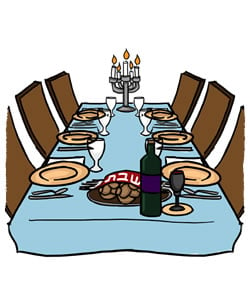
Simplifying Shabbos Meals

I recently spent a couple of days at Disneyworld with my sister and brother and their families, who were visiting from Israel.  As we walked through the parks, a few of my nephews and nieces independently shared the same observation: “Why are people in America so fat?”  While their comment may not be politically correct or sensitively articulated, it is accurate.  According to the Center for Disease Control and Prevention, over one third of adults in America are clinically obese.


In fact, a few years ago Disney had to shut down its signature “It’s a Small World” ride for major renovations.  Interestingly, when it reopened, it looked exactly as it had beforehand.  So what did they renovate?  It turns out, Disney had to widen the boats and deepen the ride’s channel in order to accommodate for the weight increase in the average visitors to Disney.


The ride was originally designed and built in 1963 on the statistics of the time that indicated an average adult male rider would weigh 175 pounds and a female rider 135.  However, with the increase in fast food, junk food, and “super-sized” food, adults today frequently weigh north of 200 pounds.  Increasingly, over-weighted boats would get to certain points in the ride and bottom out, becoming stuck in the flume.


Forbes magazine reported at the time that, ironically, customers whose boats got stuck and whose rides needed to be aborted were given free vouchers for the food court to compensate them.  It may be a small world after all, but we, the inhabitants of that world, are getting larger and larger, heavier and heavier, every single day.


Safeguarding our health and preserving our wellbeing are fundamental Torah values.  “V’nishmartem m’od l’nafshoseichem.” Though the verse in context is actually referring to something else, our Rabbis have encouraged us to interpret it to mean, “be exceedingly cautious regarding your well-being.”  The Rambam (Hilchos Dei’os 4) writes: “For the body to be healthy and wholesome is among the ways of Hashem…therefore a person must distance himself from those things that cause his body damage.”


Many explanations and reasons are suggested for the Torah’s kashrus laws, though ultimately they remain a chok, a divinely ordained diet.  Whatever the reason, it is clear that a commitment to a rigorous kosher lifestyle is to ingrain within us a sense of discipline, self-control, restraint, and the capacity to honor limits and boundaries.  These are the exact same attributes and qualities necessary to have healthy eating habits.


It is ironic, therefore, that many of us who are strict and disciplined adherents to the laws of kashrus, struggle greatly to apply the same vigilance and mindfulness to portion control and eating only healthy foods.  I know first hand the challenge of healthy eating habits as I have struggled personally and every time I think I have changed my eating lifestyle permanently, I find myself reverted back to bad habits and bulging belt.  My intent is not to be judgmental or critical.  For some, weight is a function of genetics and factors beyond just self-control.  I am also very sensitive to the issues of body image and eating disorders and the danger of overemphasis on weight and diet.  I am simply trying to call our attention to an unintended consequence of elaborate and endless shabbos and yom tov meals.


This week, our local JCC and Winn Dixie supermarket hosted Susie Fishbein, author of the Kosher by Design cookbook series.  The room was overflowing for her demonstration as her fans turned out in droves to learn more about her techniques, recipes and presentations.  The event was a phenomenal success and we are indebted to her for coming down to promote kashrus in our community.  In 2008, the Forward listed her as one of the 50 most influential Jews in America.  There is no doubt that Susie and authors of cookbooks of a similar genre have done a great service to our community by raising the level of sophistication of Kosher recipes and food.  However, I worry that there is an unintended consequence of advances in kosher recipes also raising the levels of expectation, competition, effort, cost, and consumption at today’s typical Shabbos and yom tov meals.


Do you remember when a shabbos meal consisted of a piece of fish or a slice of melon, or a bowl of soup followed by one main dish, one side dish, and one kugel and ending with dessert of fruit or one cake?  Now our meals have endless courses, multiple main dishes, countless side dishes, and practically a Viennese table of dessert.  Our Bubbie’s gefilte fish, chicken and matzah ball soup and simple recipes are not sophisticated enough for us.  We need tri-colored gefilte fish, tri-colored matzah balls, and menus that would challenge the Next Iron Chef.


Of course I am not blaming Susie Fishbein or authors of similar kosher cookbooks.  To her credit, Susie has written a cookbook on healthy living called Kosher by Design Lightens Up.  The Kosher by Design series is an indispensable part of every kosher cook’s library and Susie deserves to be commended and praised for what she has provided us.  She gave us incredible recipes.  How many of them we make at a time, the portions of them that we eat, the money we spend on them is entirely up to us.  Scaling back Shabbos and yom tov meals, is our responsibility and changing the culture of expectation and competition lies solely with us having nothing to do with her.


Ultimately, the responsibility falls to us to limit our menus, choose healthy recipes and bring the same mindfulness to the health impact of what we eat that we do to the kashrus of what we eat.  Together, we can create a new culture of simplified meals presented in a healthier fashion.  It begins in our homes, at our kitchen and dining room tables, but it extends to the menu and options at kiddushes at shul and the snacks we provide through the youth department.


Fewer courses and fewer options at our Shabbos meals will lessen the financial burden, physical drain and even emotional stress on those shopping for and preparing the meal. Setting food up on a buffet rather than leaving it on the table will eliminate mindless nibbling and noshing at endless meals. Being forced to get up to get more food will likely increase thoughtfulness about whether or not we are really still hungry.  Even if we enjoy spending all evening or afternoon with friends, we should bentch as soon as the meal is done and enjoy each other’s company on the couch or around an empty table, rather than sit there and continue to eat, even though we are beyond full.


This past Sunday, our wonderful BRS Sisterhood sponsored an incredible Women’s Health and Halacha Day.  Close to 150 women from all over South Florida gathered to address topics such as genetic testing, birth control, the agunah crisis, domestic violence and intimacy.  Programs such as this can effectively inspire our community to elevate our commitment to living healthier lives.  We are already working on next year’s program that will focus on nutrition, raising healthy children, health challenges of aging and more.


A good friend, Rabbi Zvi Engel recently wrote a message to his congregation about Friday’s fast, Asara B’Teives.  He began:


“A friend recently sent me the following line now making the rounds:  Black Friday: Because only in America do people trample over others for sales, exactly one day after being thankful for what they have.


Tomorrow we observe a Black Friday of another kind, as we recall the dark day when the Babylonians laid siege to Yerushalayim, a precursor to what we would soon lose with the churban, the destruction of the First Beit HaMikdash. If we ever take Yerushalayim for granted, this date calls us to remember a time when our nation was on the brink, about to lose its central address as a people, and to recognize that a Yerushalayim isolated and besieged ought to cause us discomfort, an awareness of hunger in an empty stomach that longs for sustenance.”


Upon seeing the message, a mutual good friend, Rabbi Shalom Baum remarked, “And how will we behave at kiddush the day after our black Friday.”  The truth is, we don’t even need to wait until Kiddush on Shabbos morning to determine if we have retained the lesson of Friday’s fast.


Changing eating habits is incredibly hard if we do it alone.  However, if we work together to create a culture of simplicity and healthy choices at our shabbos and yom tov meals, we can radically improve the well-being of our community.  At dinner tonight, after breaking our fast, which was designed to remind us that we can live without food, let’s show that for now on we eat to live instead of living to eat.


History or Memory? Knowing Our Story

How do you say the word history in Biblical hebrew? What word does the Torah use for history? It doesn’t, and there is none. We have a word in modern Hebrew – historia, but there is no Biblical word for history. Instead, the word the Torah uses is zecher – memory. The pasuk in Ha’azinu reminds us: zechor y’mos olam, remember the days of old. Elsewhere it says, Zachor eis asher asah l’cha Amalek, remember what Amalek did to us. In fact, while there is no Biblical word for history, the term zachor in one form or another appears in Tanach 169 times.


What is the difference between history and memory; is it not just semantics? In his haggadah, Rabbi Lord Jonathan Sack suggests that history is “his story” – an event that happened sometime else to someone else. Memory, is about me, my story – something that happened to me and is part of who I am. History is information. Memory, by contrast, is part of identity. I can study the history of others, but it is academic and has no impact on me. Memory is not about the past, but it is about the present.


This Shabbos, Boca Raton Synagogue celebrates our 30th Birthday and there is no better way than by invoking our memory. Jewish holidays have taught us that we can have memory of events from centuries or millennia ago, memories of events and places we never were. When we identify as part of a special group and see ourselves as full members of a community, history is transformed into our collective memory.


Please take a few moments over this celebratory weekend to review our important history and have it become part of your memory. Share our story with your children, talk about it with your friends, and most importantly, join with us in recognizing and appreciating the incredible people whose vision, hard work and generosity gave us the wonderful community we benefit from today.


THE HISTORY OF BOCA RATON SYNAGOGUE


historycol

The story of Boca Raton Synagogue begins in May 1983, when three couples had a vision. Issy and Riwella Bruk, Albert a”h and Tamar Nawy, and Neville and Britt Ziff met to explore the possibility of establishing an orthodox synagogue in Boca Raton.


By the fall, other key founders joined in these discussions. They included Leonard and Trudy Sponder, Jonathan and Marion Santhouse, Stephen and Linda Marcus, Walter and Lillian Gettinger, Louis and Sylvia Thaler, Jerry and Gail Herbst, David and Carol Sclove, William and Debbie Rand, Yacov and Linda Shamash, and Jonathan and Patricia Stein.


On October 23, 1983, the first general membership meeting took place with some 60 people in attendance. Dr. Issy Bruk was named president, Neville Ziff, vice president and Jonathan Santhouse, treasurer.


Chanukah 1983 marked the official opening of the Boca Raton Synagogue. Its first service was held on Friday, December 2, 1983, with 21 member families at the South County Jewish Community Day School. The original Sefer Torah used was loaned to BRS from Temple Beth El by Rabbi Merle Singer. The service was followed by a family Chanukah party on December 4 at the home of the Ziffs.


In 1984, Rabbi Mark Dratch, from Yeshiva University, was hired to become the first Rabbi of BRS and moved to Boca Raton with his wife, Sarah a”h. This was his first pulpit and he began from scratch without even a Shul building. He initiated weekly study groups and weekly Talmud classes.


The first High Holiday services were held in the Boca Teeca clubhouse with rooms available to stay next door at the hotel. Approximately 150 people attended. Martin Judovits and Joseph Rath led the services with Rabbi Dratch presiding.


With a significant number of families committed to the growing Synagogue, Issy Bruk and Neville Ziff decided to explore options for buying land. This was an enormous and ambitious undertaking for such a small group.


What a deal they bargained for! Though Lago Del Mar land had just sold for $250,000 an acre, the Shul land was purchased from Texaco for only $150,000 for all 5 acres. Signing as guarantors for the land were Issy Bruk, Neville Ziff, and Jonathan Santhouse. Steven Marcus provided significant legal support for the land purchase. We are indebted to them today for their foresight, vision, and generosity.


In order to encourage people to buy homes near the future Shul on Montoya Circle, during the next few years, Shabbat services were held at the homes of Gary and Mindy Lieber, Rick and Sue Andron, Steve and Linda Marcus, and Ella Samuels and Yaakov Kronfeld. Shabbat services were also held in the Verde Elementary School. Albert Nawy prepared the laining of the Torah almost every Shabbat. High Holiday services continued to be held at the Boca Teeca Club house and at a model home in Montoya Estates. Holiday services and celebrations, such as Purim, were also celebrated together. 1984 also marked the year when the BRS Chevra Kadisha was formed, with Martin Judovits serving as its first chairman.


March 31, 1985, marked the historic groundbreaking ceremony for the first Orthodox Synagogue in Boca Raton. After securing the land, Issy Bruk, Neville Ziff and Albert Nawy formed a committee to draw up building plans for the synagogue, choose an architect, obtain a mortgage, and raise the funds to build. They raised $60,000 and obtained a mortgage for the remaining $100,000. However, it took 20 months, due to zoning issues and approvals from numerous agencies, to complete the process.


In February, 1987, BRS moved into its first building at 7900 Montoya Circle. This original building is now known as the “old shul” and is now utilized by the Sephardic Minyan, WYHS, and the Shul offices. There was no furniture, not even a chair to sit on. Leonard and Sima Rubin came to the rescue and donated 150 chairs. A small portable Torah ark was given to BRS from Anshei Emuna which was used until the funds were raised for an ark designed by Martin Judovits.


The dedication of BRS’s campus included a Torah procession from Captiva to the Shul with dancing and singing. Prominent rabbis from South Florida such as Rabbi Yochanan Zweig were present for this dedication ceremony.


In the spring of 1987, Rabbi Dratch moved on from BRS to pursue other endeavors. Today, Rabbi Dratch serves as the Executive Vice President of the Rabbinical Council of America (RCA). Dr. William Rand was elected president and assisted the Shul through some significant financial challenges. In August of that year, Rabbi Mordechai Winiarz was hired as rabbi for the High Holidays. In 1988, he was hired as Rabbi of BRS and remained only until early 1989.


In February 1989, Chani Salamon, Rick Andron, and Michael Friedson began the process of obtaining an eruv for the Boca Raton community. After much work, the eruv was first utilized on Shabbat Nachamu, the first Shabbat after Tisha B’Av, in August 1989. Since that time the eruv has been expanded several times as the community has grown. Rabbi Blumenkranz z”l was instrumental in the design and supervision of the eruv.


In August 1989, during the presidency of Dr. Aaron Kaweblum, Rabbi Mordechai Neuman became the third rabbi of BRS. In the summer of 1990, Rabbi Neuman left BRS to continue his advanced education. Today, he is a prominent psychotherapist and counselor who has written numerous books and has appeared regularly on Oprah.


In the summer of 1990, a rabbinic search committee was formed with Jeffrey Klein and Jack Berkowitz as co-chairmen. After losing three Rabbis in just six years, the search committee worked diligently to find BRS a Rabbi who could lead them for the long-term. During the year the search was conducted, several retired rabbis, including Rabbi Meyer Strassfeld and Rabbi Gene Klein z”l, provided the necessary rabbinic leadership.


In June of 1991, Rabbi Kenneth Brander was hired and he moved to Boca with his wife, Ruchie and their two children, Tuvia and Yoni. Rabbi Brander came to BRS after serving in Lincoln Square Synagogue in NY as the Assistant Rabbi and later Acting Rabbi.


With 85 families in the Shul, he immediately set out to transform BRS into a community that would attract people both locally and from around the country. During Rabbi Brander’s tenure the community grew tremendously, both in membership numbers and in breadth of programming.


The Helen and Julius Reiter Institute of Judaic Studies was formed, offering classes and programs, as well as bringing in Scholars in Residence from around the country and around the world. To further adult education, Rabbi Brander, together with a group of lay leaders, formed the Boca Raton Community Kollel which became home to a number of Rabbis who taught classes, learned with BRS members, and were involved with Outreach Initiatives. During the years of its existence, the Kollel served as a “farm system” that brought Rabbis and Rebbetzins who would go on to serve the community in other capacities such as in Jewish education and in the pulpit. Many of them continue to serve our community today, including Rabbi Ben Sugerman, Rabbi Efrem and Rebbetzin Yocheved Goldberg, Rabbi Moshe and Mrs. Michal Schochet, Rabbi Allan Houben, Rabbi Chaim and Mrs. Rina Lanner.


In 1998 The Weinbaum Yeshiva High School (WYHS), the first Jewish High School between North Miami Beach and Atlanta, Georgia, was formed. In partnership with Rabbi Brander as Dean, Rabbi Perry Tirschwell worked tirelessly to found the school and to grow it into a thriving center for Jewish education. Rabbi Tirschwell left the school in 2012, and now serves as the Executive Vice President of the National Council of Young Israel. Still housed on the campus of Boca Raton Synagogue, WYHS today has more than 250 students and is led by its second Head of School, Rabbi Jonathan Kroll.


Under Rabbi Brander’s vision, coupled with the hard work of community leaders, the Shul membership was rapidly growing and it was evident that a new building addition would be needed. Thanks to the generosity of Billy and Debbie Rand, on September 20, 1992, the ground-breaking for the new Rand Sanctuary took place. Martin Judovits was the Chairman of the building committee and Elaine Trachtenberg headed the effort to chose the décor and supervise the building process.


The Boca Raton Community Mikvah, the first Mikvah complex in Palm Beach County which includes a Women’s Mikvah, a Men’s Mikvah, and a Keilim Mikvah, was built at the same time.


The Hahn Campus was dedicated on February 21, 1999, when Jerry a”h and Lynn Hahn donated one million dollars to BRS in order to “burn” the mortgage. To accommodate the tremendous growth of the community youth, Lenny a”h and Sima Rubin and Merv and Elaine Jacobs graciously donated the Youth and Senior Center in 1999. We are grateful to Elie a”h and Guila Berdugo who built the wing and graciously dedicated the Berdugo Beit Midrash. In 2004, the second floor known as the Education Center was added to the Youth and Senior Center. We are grateful to Hommy Tannenbaum for his help and supervision in the construction of the second floor, and he was ably assisted by Esther Gomlin and Daniel Katz.


BRS’s first Youth Director was Avi Frier, who was hired in 1992 with his wife Sharon. The Youth Department has grown tremendously over the years, under the leadership of Youth Directors – Yocheved Hande, Laura Welch, Joseph Stansky, David Orbach, Zvi Goldfischer, Cheryl Mirsky, Rabbi Josh and Simone Broide, Tziporah Gelman, Rabbi Yaakov Green, Betty Maikhor, and Gwenn Lerman. Today, the BRS Teen and Youth Department is led by Rabbi Uri and Aliza Pilichowski.


The Sephardic Minyan was first organized in 1993 by a diverse group from Iran, Iraq, Yerushalayim, Morocco, and more. The Sephardic minyan has grown and today has two daily morning minyanim, an evening minyan, and two minyanim on Shabbat morning. Moshe and Gali Nadav came in 2008 from Israel; Moshe serves as the Chazzan of the BRS Sephardic Minyan.


The Hashkama Minyan was initiated by Dr. Roni Raab on Shabbat Bereishit, October 1993, for those looking to learn, spend time with their children or work at Youth Groups. The Hashkama Minyan has grown rapidly and today enjoys a weekly Kiddush, followed by a weekly men’s Chaburah organized by Rabbi Chaim Lanner.


In 1999, a young Kollel Rabbi, Efrem Goldberg launched the Lome Explanatory Service. It was an incredible opportunity for people of all backgrounds to learn about Tefilla: the meaning behind the words, and to enjoy a slower paced service with singing, divrei torah, and of course, its own Kiddush at the end. After Rabbi Goldberg became Assistant Rabbi it was led by Rabbi Yechiel Morris, Rabbi Avi Heller, Rabbi Shanan Gellman and today it has morphed into Friday Night Live, led by Rabbi Josh Broide.


In 1998, it was determined that BRS needed an Assistant Rabbi. Rabbi Josh Fass, one of the Kollel rabbis at the time, emerged as the clear choice. Rabbi Fass, together with his wife Batsheva, took on a large role within the community and touched many lives. In 2002, he realized his own dream and launched the now-famous Aliyah organization Nefesh B’Nefesh with his partner, BRS member Tony Gelbart. Since that time, NBN has helped over 30,000 people make Aliyah.


Following Rabbi Fass, BRS has been blessed to have many outstanding Assistant Rabbis who have each contributed in their unique way to our community. Rabbi Efrem Goldberg followed Rabbi Fass and today serves as BRS’s Morah D’Atra. After serving as Assistant Rabbi, Rabbi Aaron Levitt taught at Hillel Day School and today serves as Assistant Principal at the Robert M. Beren Academy in Houston, Texas. Rabbi Ovi Jacob served as Sephardic Rabbinic Intern before becoming Assistant Rabbi and today is an entrepreneur working in New York. He was succeeded by Rabbi Barak Bar Chaim, who now serves as the Rabbi of the Daniel Abraham Synagogue in Palm Beach.


We take special pride in our Satellite Minyan, BRS West. The synagogue, located on the Hillel Day School campus, was organized by Hindy and Zev Friedus, Steven Berkeley, and small group of lay leaders in 2002 in coordination with Boca Raton Synagogue; conducted its first weekly shabbat minyanim in 2003; and has since quadrupled in numbers. In 2005, the Shul hired Rabbi Avi Heller to serve as the Rabbinic Intern and in 2006 hired Rabbi and Rebbetzin Mordechai and Hadassah Smolarcik to lead the congregation. Rabbi and Rebbetzin Smolarcik continue to serve this growing synagogue that now proudly offers all shabbat and yom tov ser-vices; youth programming; daily daf yomi classes; a womens’ shiur; and shabbat divrei torah and classes.


In 2005, Rabbi Brander left BRS to assume the position of inaugural Dean of the Center for the Jewish Future at Yeshiva University. In appreciation for his vision and leadership during a transformative time, the Board bestowed Rabbi Brander with the title of Rabbi Emeritus.


Rabbi Efrem Goldberg, who had been serving as Assistant Rabbi and oversaw much of the daily operation of the Shul at the time, assumed the position of Senior Rabbi for one year. Midway through that year, the Congregation voted unanimously to bestow a five year contract to its new young Rabbi.


Under Rabbi Goldberg’s leadership, BRS continues to grow, having gone from 450 families to over 700. Our motto “Valuing Diversity, Celebrating Unity,” was developed and continues to inspire the programs, activities, and philosophy of our community. The Adult Education program has expanded and today offers incredible programs such as “People of the Book,” advanced Chaburas, three daily Daf Yomi’s, and much more. The Chevra Kaddisha, led by Yvette Kaweblum, has over fifty volunteers and provides tahara needs at two local funeral homes.


In 2010, Rabbi Philip Moskowitz joined BRS as Assistant Rabbi. Together with his Rebbetzin, Arielle, the Moskowitzes play an invaluable role in our community and have contributed greatly to our growth and programming.


BRS has had numerous administrators through the years, including Hommy Tannenbaum, who faithfully filled that position voluntarily for four years. In 2010, Matthew Hocherman joined the BRS team as the Synagogue Administrator.


In 2010, under the leadership of Alan Berger, the K.A.D.I.S.H. (Keeping Alive with Dedication the Interest in, and the Study of the Holocaust) committee completed the building of a Holocaust Memorial, designed by Martin Judovits. The dedication was attended by hundreds of people and was highlighted by a keynote speech from Chief Rabbi Yisroel Meir Lau.


Rabbi Goldberg’s Shabbos Shuva Derasha in 2010 launched the BRS commitment to help create an Outreach Revolution in Boca Raton through the first annual “Share One Shabbos.” With the leadership and support of Rabbi Broide’s Boca Raton Jewish Experience, BRS members are active in reaching out to the greater Jewish population in our area and spreading the message and values of Torah.


BRS has become a flagship AIPAC Synagogue, bringing a large Synagogue delegation to AIPAC’s Policy Conference each year. Additionally, Boca Raton Synagogue is proud to host annual partnership weekends with the Orthodox Union (OU), Yeshiva University (YU), AIPAC, Friends of the IDF, and Yachad. In an effort to grow larger and smaller at the same time, the BRS Chevras program began. Today, the Empty Nesters, Mommy and Me, Zumba, Music Chevra, Sunrise Minyan at the Beach, Maimonides Society, and more all meet regularly and enjoy belonging to a small group within a large community.


Stan Smith began the Bikur Cholim Society to allow dozens of BRS members to visit Jewish patients at Boca Regional Hospital daily. In 2010, the Shabbos Room was dedicated at the hospital so that observant family members have a place to stay and their food needs met over Shabbos and holidays. The Chesed committee led by Michal Marcus serves the Chesed needs of the community including providing bereavement meals, new baby meals, rides to doctors and more.


Under the leadership of Rabbi Simcha Freedman and Sarah Brudnoy, the BRS Social Action Committee has been active and vocal in advocating for Israel through programs, rallies and letter writing campaigns. In 2008, the BRS Men’s Club held its first annual Hodu Bowl flag football tournament. The Sisterhood contributes greatly through organizing the annual Mishloach Manot, providing Bar and Bat Mitzvah gifts, and running social and educational programs.


While the history of Boca Raton Synagogue is relatively short in years, it is long in accomplishments. We are all deeply indebted to our past Presidents, Officers, Board Members, Committee Chairs, and Pillar Society Members who have made it all possible and whose commitment makes our future so promising.

 

Celebrity or Somebody? Be a Person Who Matters

I was sitting at the gate recently, waiting to board a plane, when a man walked right past me.  Something about his look and walk made him seem like he was a “somebody.”  I didn’t think anything of it until a few minutes later when I noticed that people were beginning to approach him for autographs and then stood in line to take a picture with him.


I asked a fellow passenger sitting near me if he knew who the person was.  He said somewhat incredulously, “You don’t know who that is?!  That is Jeremy Wade, the extreme fisherman and host of Discovery Channel’s show ‘River Monsters.’”  He jumped up to get in line to take a picture he could put on his Facebook page with a celebrity and thereby prove that he too was a “somebody” by association.


I have a confession to make.  For a brief second—and I mean really just a millisecond—I contemplated going over to say hello and get a picture as well.  Thankfully, my sanity was immediately restored and I realized, “Why in the world would I take a picture with someone who may be a very nice man, but moments ago I had no idea who he was?”


The experience humored me until I boarded the plane.  Here I have a second confession to make.  I actually read the airline’s American Way magazine and I was glad that I did.  It contained an article that substantiated the experience I had just had.   Celeb 4 A Day (celeb4aday.com) is a service that offers non-famous people a chance to experience life as a celebrity for a few hours.  For a fee, the company arranges to have mock paparazzi follow you around snapping pictures and calling your name as you come out of a restaurant or store.


You probably don’t recognize the name Larry Dobrow and it is even less likely that you would recognize his face.  He is a writer for American Way who decided to test this company and see if, in fact, having photographers follow him would fool anyone into thinking he is a celebrity.  He describes himself as having, “ a face best suited for AM radio in rural areas, with skin tone that falls somewhere between pale and translucent…The notion that anyone would buy me as a celebrity seemed comically far-fetched.”


He arranged with the company his approximate schedule that morning, but to keep the element of surprise, didn’t know exactly where or when they would descend upon him.  He was crossing 44th Street in Manhattan when it happened.  “It came in the form of four photographers.  They darted out from behind an illegally parked truck and, before my brain registered their presence, positioned their cameras inches from my face.  As if this alone wouldn’t command my complete attention they affirmed it with a persistent chirp: ‘Larry! Hey, Larry” Here, Larry!’”


Larry goes on to describe that moments later, people started to ask him for a picture together.  In total, he estimates more than 30 people approached him for autographs or pictures simply because they had seen the fake paparazzi snapping away.  They had no idea who he was and frankly he wasn’t anyone they would likely care about and certainly would never take a picture with.  But that didn’t matter.


Why are so many people infatuated with the lives of celebrities?  Why is our first instinct when seeing someone famous to take a picture with him or her or to interact at all given that in reality we are complete strangers to one another?  Larry Dobrow suggests, “Being in the presence of ‘Someone Who Matters’ is emotionally validating” and “a memento of that encounter posted on Facebook is the social currency of our time.”


Someone Who Matters. It all comes down to how we define that expression.  Does appearing on TV or in movies automatically mean that you matter?  Does having great athletic ability translate into being someone who matters?  Does having lots of Facebook friends or millions of followers on Twitter mean that you matter?  What does it mean to matter and doesn’t Judaism answer that question differently than pop culture?


The original location prescribed for the Chanukiah to be lit on Chanuka is outside of the home, al pesach beiso mi’bachutz.  Halacha allows for it to be lit inside during what it calls sha’as sakanah, times of danger.  The Chassam Sofer, Rav Moshe Sofer of Pressburg, who lived 200 years ago asks, why do we still light inside the home when it is often completely safe to light outside?  What exemption are we relying on today?


He explains that the light of the Chanukiah, like that of the Menorah in the Temple, symbolizes Torah, and its values, lessons, and teachings.  Torah dispels the darkness and illuminates the world with its timeless messages and enduring ideals.  Says the Chassam Sofer, in the past, the Jewish home was a pure, pristine, insulated place whose identity and practices were informed by Torah alone.  The Chanukiah was placed on the outside in order to illuminate the darkness out in the world and to dispel the unwelcomed foreign influences from penetrating into our houses.


Today, foreign influences, pop culture and alien values have made their way into our Jewish homes.  We subscribe to magazines and newspapers, have smartphones and tablets, TVs, DVD players and DVRs, and web access everywhere.  These bring with them powerful and destructive images, ideas and temptations.  Now that the darkness has come into our homes, says the Chassam Sofer, it is a sha’as sakana, not of anti-Semitism, but of assimilation, and therefore, we light the candles inside.


Infatuation with pop culture, obsession with celebrities, and mistaking people who make headlines for people who matter are symptoms of darkness.  Our celebrities who truly matter should be great Torah scholars and righteous men and women of impeccable character.  We should be obsessed with real heroes like members of the IDF, coordinators of Chesed, and simple ehrlich (honest) people who work tirelessly for their families so their children can receive a Jewish education.  They may not make headlines and aren’t followed around by the paparazzi, but they are leading lives that truly matter and being able to say we know them or having a picture with them should be the social currency of members of a Torah community.


Our children have all heard of Lebron James and they are likely familiar with Oprah, but have we made sure they know the name Rabbi Noah Muroff?  A few weeks ago, Rabbi Muroff purchased a desk on Craigslist for $150.  It wouldn’t fit in the spot he had designated for it so he took it apart in order to try to make it smaller.  When he lifted off the top, he discovered $98,000 in cash.  With his wife’s encouragement, it took less than 20 minutes to call the previous owner of the desk, a woman named Patty, to tell her they had found her money.  She was speechless and later wrote in a thank you note, “I do not think there are too many people in this world that would have done what you did by calling me.”  The Muroffs specifically brought their four children with them to return the money the next day, with the goal of teaching them in his words, “the message of honesty and integrity.”


Let’s teach our children to celebrate people like the Muroffs.  Let’s inspire them to become tomorrow’s celebrities, not by hiring paparazzi or even by becoming famous, but by becoming people who truly matter.


Selfies and Na’arcissism

(Adapted from Sermon, Parshas Vayeishev 2013)


This week, the most prestigious dictionary in the world, the Oxford Dictionary, released its word of the year.  You see, every year they choose a word that best captures the ethos and culture of that year.   In a sad statement about contemporary society, the guardian of the English language, the Oxford Dictionary, has chosen the word for 2013 and it is “selfie.”   A selfie is a picture one takes of himself or herself with a camera or smartphone and then immediately shares with friends or posts on the internet.  I recently read an article about the trend of young people taking selfies at funerals of their loved ones.


This new phenomenon reminds me of the old saying, “Enough about me, what about you?  Tell me, what do you think about me?”  They might as well have chosen “narcissism” for the word of the year, as it seems that is exactly what selfies are, a cry for attention and an absorption with one’s self.


Va’yomru ish el achiv, hinei ba’al ha’chalomos ha’lazeh bah.  V’atah, lechu v’nahargeihu…”


The brothers had grown tired of hearing about Yosef’s dreams and his aspiration to rule over them.  They had lost their patience with him and so when they saw him coming they plotted to kill him.  Ultimately, Reuven interceded and they threw him in a pit instead.  Later, Yehudah intervened and rather than leave Yosef in the pit to die, they sold him into slavery.


The Midrash Eleh Ezkera tells us the story with which we are all familiar from Yom Kippur davening and from the Kinah we recite on Tisha B’av entitled Arzei Ha’Levanon.  The Roman Governor was studying the Bible when he came across the story of the sale of Yosef.  He was terribly disturbed by the lack of accountability and consequences for their actions.  He decided that he would put the ten greatest Rabbis of the generation on “trial” for this horrible occurrence and they would bear the consequences of their ancestors.  The Rabbis, including the great Rebbe Akiva and other transmitters of our sacred Mesorah, were found guilty and were brutally murdered.


Ten Rabbis killed for the action of the ten brothers who sold Yosef.  There is only one problem:  there weren’t ten brothers that sold Yosef; there were nine.  Binyamin was too young at the time and didn’t participate.  And Reuven had excused himself and wasn’t present when Yosef was sold.  So why did ten Rabbis suffer martyrdom when only nine perpetrated the injustice?


The Shelah Ha’Kadosh, Rav Yeshaya Horowitz, provides an incredible answer.  Do you know who the tenth brother was, responsible for the sale of Yosef and the descent of the Jewish people into Egypt, ultimately bringing us into servitude?  It was none other than Yosef himself.  Says the Shelah, Yosef contributed to this historic injustice because he instigated the rivalry with his self-absorption.  The Torah tells us that he acted as a na’ar, an immature and unsophisticated kid.  Rashi explains that Yosef was consumed by looking in the mirror, fixing his hair, beautifying his appearance, and drawing attention to his attractiveness.  The brothers were tired of his dreams and they were uninterested in his selfies.  The brother’s behavior was unconscionable and inexcusable, but it was at least partially precipitated by Yosef’s egocentricity.


If we skip to the end of the parsha, we can clearly see that Yosef has grown up and learned the lesson of caring about others.  At this point, Yosef had been sold into slavery by his brothers, separated from his beloved father, falsely accused of impropriety by the wife of Potifar, and now finds himself languishing in prison.  He has every right to focus on himself, his situation and his misery.  He is entitled to feel depressed, despondent, and wallow in his own suffering.


Instead, from the corner of his prison cell, Yosef notices two other gentlemen who look somewhat down.  He approaches them and asks “ma’duah pneichem ra’im ha’yom, why are you so sad today?” They take him up on his offer, share their troubling dreams, and we know the rest is history.  He accurately interprets them, the wine steward later remembers his prowess, and Yosef goes free.  He emerges as viceroy of Egypt, saves the country’s economy, and our people migrate to Egypt.


Not only did Yosef impact his own life, but the destiny of our entire people and arguably all of humanity changed because of a simple, small act of chesed, of taking an interest in another.  This na’ar had now grown up and instead of taking a selfie in prison and burdening others with his troubles, he recognizes their plight and seeks to help them.


Pirkei Avos teaches, “Hevei Makdim B’Shalom Kol Adom, be the first to greet and take interest in others.”  Don’t make every conversation and interaction about you.  Like Yosef, take an interest in others and seek to make a positive difference in their lives.


A sociologist, Dr. Charles Derber, did a study of face-to-face interactions and watched 1,500 conversations unfold.  He looked for trends and themes and recorded how people vied for attention.  In his book, “The Pursuit of Attention,” Dr. Derber shares his conclusions.  Despite the best intentions and without even realizing it, he noticed that most people inevitably and invariably bring conversations back to themselves, practicing what he calls, “conversational narcissism.”  “Oh, that happened to you, you will never believe what happened to me.”  “Let me to tell you what is happening in my life or with my kids.”  “Can you believe what this person said to me?”


Many of us are taking selfies with our cameras and others are taking selfies with our conversations.  The common denominator is narcissism, whose root is being a na’ar: immature, self-absorbed, and egocentric.  Oxford Dictionary’s choice of the word of 2013 simply confirms what many of us suspect, that the burst of technology and social media is encouraging greater narcissism and more of a focus on ourselves.  We update our Facebook statuses with verbal selfies – how we feel, what we are doing, what is wrong with our lives or what couldn’t be better with our lives.  Like Yosef, we flaunt our dreams and are obsessed with looking in the mirror.  But like Yosef, we, too, can mature, and learn to take an interest in others.  When we see friends, family members or co-workers, instead of sharing our status or selfie with them, let’s ask, ma’duah pneichem ra’im ha’yom?


Yosef’s freedom from prison came as a result of initiating a conversation about others, not himself.  Our freedom from the prison of our egos will come the same way.  Rather than share selfies and practice conversational narcissism, let’s show an interest in others and bring about a personal and collection redemption.


Should We Judge Judaism By the Jews?

This week brought the latest in the string of scandals among so-called Orthodox Rabbis.  The former Chief Rabbi of the State of Israel was arrested for committing fraud, bribery, money laundering, breach of trust, witness tampering, and obstruction of justice.  A few days later, a Chassidic Rebbe from Yerushalayim was arrested in New York for not revealing on his visa application that he had previously been convicted for abusing a child relative.


As I have written about in the past (http://rabbisblog.brsonline.org/state-of-the-rabbinate/), one can’t help but read these stories and wonder if there are any Rabbis left worth admiring and holding in high esteem, or whether it is only a matter of time before their skeletons come out of the closet.  Some have a tendency to learn about these individuals and to lose their faith in leadership and religious personalities altogether.


In watching the reaction on social media and blogs to the latest revelations, it seems to me the most dangerous and, frankly, self-damaging response is sarcasm.  One person linked to the story of the Chief Rabbi on Facebook with the comment, “But he has a white beard and learns.”  Another wrote, “but at least he wears a black hat.”  Just because someone who happens to have a beard or wears a hat turns out to be a corrupt, dishonest crook, doesn’t mean that these religious traditions are meaningless, or that all who follow them are likely criminals as well.  To cynically draw either conclusion is unfair to others and serves as a tremendous obstacle to religious growth for the one who says it.


Human beings are and have always been imperfect, and vulnerable to temptation.  Great individuals, too, are not immune to struggling and wrestling with their inclinations and urges.  In fact, the Gemara teaches us that ha’gadol mei’chaveiro, yitzro gadol hei’menu, the greater a person is, the greater the inclination he must struggle with.  All people are still human and rabbis, too, are susceptible to judgment being impaired and character becoming corrupt.


Frankly, while disappointing and deeply disturbing, we should not be surprised that these scandals occur.  The truth is, the likelihood is that they have always occurred throughout our history, but most people simply didn’t hear about it or find out the details.  Today, with the proliferation of the internet, blogs and social media, news travels fast and the more scandalous and salacious the information, the faster and more widespread it travels.  In some ways the advent of these media allow corruption to be exposed and injustices to be held accountable and for that it is an important tool.  However, to the extent it is a platform to gossip, lament, gloat, blame or excuse, it is dangerous and destructive.


To be clear, there is no excuse or justification for people in positions of influence and leadership who are corrupt, dishonest, or abusive.  They must be held accountable and there must be consequences for their poor judgment and poor character.  However, to draw generalizations or perpetuate stereotypes of all religious people, or people who have a similar appearance, is destructive, divisive and most of all, damaging to one’s self.


The worst response to rabbinic scandal is to allow cynicism to disturb our own personal observance or religious ambition.  There seems to be a tendency to point to the rabbinic scandal and use it as a justification and excuse for laxity in observance.  It is tempting to see the hypocrisy and duplicity of supposedly observant individuals and cynically conclude that Torah and its values are not in fact authentic, binding, or valuable.  Those who have already abandoned observance or a religious lifestyle for different reasons altogether will often revel in a frum scandal and gleefully and gloatingly bring the scandal as evidence for the ineffectiveness and inauthenticity of a rigorous religious life.


Such reactions are foolish and self-destructive.  Imagine you go to the gym to exercise and work out because you are determined to improve your health and physical well-being.  You then discover some of the people that you most admired and looked up to for their commitment to healthy living eating donuts and cake.   Even if you discovered your trainer himself, the role model and teacher of proper nutrition, eating unhealthily, it would be foolish to declare, “That’s it, I am done working out and eating right.  This whole thing is a sham and pointless.”  A much more appropriate and productive reaction would be to find a new gym, hire a new trainer, and surround yourself with people who are committed, consistent, and genuine.


Judaism is the framework for us to pursue spiritual and emotional wellbeing.   The Shul is our spiritual gym and our rabbis and teachers are our trainers.  It would be foolish upon learning of their hypocrisy to declare that spiritual wellbeing is itself meaningless and Torah must not be the authentic mechanism to achieve it.  Instead, we should find a shul and rabbis and teachers who are consistent, genuine, and dependable.  The Navi Malachi (2:7) says, “Ki sifsei Kohen yishmeru daas v’Torah yevakshu mipihu, ki Malach Hashem tzivakos hu.” The gemara learns that if your Rebbi is like a Malach Hashem, an angel of God, then you should learn from him, but if he is not like angel, you should not seek to learn from him.


We should specifically participate in a minyan and community of those truly working on themselves to achieve the desired spiritual results and that are not ‘cheating’ when they are out of the spiritual gym.  At the same time, we must recognize that nobody is perfect and when we encounter those who disappoint us with their behavior, we must not use it as an excuse to lose our inspiration or to stop frequenting the “gym.”


Perhaps there is nobody in our history who was more entitled to walk away from Judaism than Yosef Ha’Tzadik.  Think about it.  Yosef was raised with his brothers in his father’s home.  Together, they learned about ethical monotheism and moral living from their father Yaakov and from their grandfather Yitzchak.  These brothers were to be the transmitters of a sacred tradition that would contain God’s plan for the world.  And what did these brothers do?  They threw him in a pit and ultimately sold him into slavery.


Living in Egypt, Yosef would have been entirely entitled to say, “My brothers’ behavior was scandalous, hypocritical, and disgraceful.  They are supposed to stand for this new philosophy and improved worldview called Judaism., and look how they behaved  Forget about it, I want absolutely nothing to do with this.”  It would be perfectly understandable for Yosef to fully embrace and assimilate into the Egyptian lifestyle and way of thinking and to abandon the experiment of his father, grandfather, and great-grandfather.


But Yosef doesn’t walk away just because he is disappointed by the behavior of those he trusted and admired.  He saw the benefit and truth of a life committed to God and His values, regardless of whether the other supposed adherents were in fact consistent and reliable or not, and so must we.


It has often been said, “Don’t judge Judaism by the Jews.”  This statement is only partially true.  Of course we can’t help but react when we are either impressed or disappointed by fellow Jews.  Their and our behavior speaks volumes about the efficacy of Torah in shaping us to be good, moral, kind and religious people.  Judaism and God are very much judged by the Jews and how we behave, and that is an awesome responsibility.


However, at the same time, we cannot allow the scandals in the “frum” community to influence our religious identity and growth.  Like Yosef Ha’Tzadik, we are best served by embracing the truth and the Torah, despite, not because of some of its other so called adherents.


Quieting the Noise in our Lives to Find what Really Matters: My Reflections from the Rebbitzen’s Yarchei Kallah

yocheved.jpg

Guest Post: Rebbetzin Yocheved Goldberg


“Quieting the Noise in our Lives to Find what Really Matters: My Reflections from the Rebbitzen’s Yarchei Kallah”


This past week I attended the annual Yeshiva University Yarchei Kallah conference for Rebbetzins.  Each year, I cherish the opportunity to gather with women from around the United States and beyond, and work together to grow in our roles in the community as Rebbetzins. As I interact with the other women and hear about their challenges and frustrations, I am reminded of how fortunate and truly blessed I am to be part of our wonderful BRS community, one that I am extremely proud to represent each year at the conference.


The theme of this year’s two-day gathering was, “Nurturing the Private ‘I’ to Better Serve in the Public Eye.”  Sessions ranged from “Instilling positive self-esteem in our teenage girls,” to “Making decisions efficiently, effectively, and peacefully.”  There were lively discussions on the challenges of the Rebbetzin’s role and the difficulty in balancing communal leadership with private responsibility.


Two sessions in particular really resonated with me and inspired me in a way that I hope will be meaningful to you as well.  It is clear that we live in a world filled with much noise and commotion.  We are bombarded by the sounds of the phone ringing, email alerts beeping, music blaring, our children interacting, or simply the internal humming of the to do list that never seems to end.  The combination of the outer noise and inner noise, the total lack of silence in our lives, has the serious consequence of preventing us from knowing and being comfortable with ourselves.  We are too occupied with absorbing the sounds from all around us that we fail to discover and cultivate our true selves.


When Yaakov goes back to retrieve the vessels he had forgotten in this week’s parsha, he encounters the angel with whom he wrestles.  According to many, the angel was none other than himself, his alter ego. Yaakov struggles and emerges triumphant.  What allowed for Yaakov’s growth at that particular moment?  Vayivaser Yaakov levado – it was the fact that Yaakov was alone, in the quiet of his own mind, truly by himself, that allowed him to wrestle with himself.


At the conference, Dr. David Pelcovitz gave a powerful lecture on “The Elusive Search for Spirituality: Practical Tips to Use and to Share.”  In it he explained that in a survey he conducted on the greatest impediments to spirituality, he found that number one on the list was our lack of stillness.  We are always rushing and we never have time to reflect and to think about our priorities, our values, and what’s important in our lives.  In essence, in today’s world even when we’re alone, we’re really not alone because we are still connected to our technology and surrounded by noise.


It’s impossible for us to truly connect to Hashem and to ourselves when connected to our smartphone, a friend, a song, or the Internet.  Dr. Pelcovitz mentioned that in Shema we say, “Ve’avadtem mehaira,” literally translated as, “you will quickly be abandoned.” The Ba’al Shem Tov interpreted those words not as a threat but as a command: “get rid of the rush in our lives.” Please Hashem, take away the chaos and constant noise, and enable us to refocus and turn our attention to our relationship with you, Hashem, and with what’s truly important and matters most.


There was another speaker, Judge Danny Butler, who delivered such a moving speech that there was not a dry eye in the room.  He spoke about his son Mikey, who died a few years ago at the age of 24 from the terrible disease cystic fibrosis that he had been fighting his entire life.  Mikey and I overlapped on a Yachad Shabbaton when I was an advisor and we connected through the fact that we both play the drums.  I remember then being amazingly impressed by his courage and faith, but what I learned about from his father regarding the last few years of his life truly blew me away.


Mikey Butler did not have one normal day in his life.  Every day he struggled to breathe and both he and his family never knew if it would be his last.  His motto was to live every day to the fullest and always chase after your dreams because you never know if it will be your last day on earth.  His father ended his speech with three messages that life with Mikey taught them all.


First is to always make a Kiddush Hashem, which the Butler family did throughout the hospital stays and other difficult situations they had to deal with.  Second is to always reach out to your fellow Jews and do whatever you can to enhance their lives.  Chessed brings the Jewish community together and helps relieve the pain and suffering of a fellow Jew.


Third and most importantly, is to just be happy for simply having a normal day. If you stop to think about it, we are so busy running around and dealing with the chaos in our lives, that we never realize just how lucky we are to be alive and, moreover, to just have a day in which nothing catastrophic happens and in which we functioned normally and made it through without crisis.  An uneventful day is not something we should ever take for granted and we should appreciate each day that is in fact normal and routine.


What I took away from Dr. Pelcovitz and Judge Butler’s talks was not to get lost in the momentum and chaos of life.  Pause, reflect, be grateful, take stock, and make space to think, grow, set goals, and become a better person.


For me, attending the Rebbetzin conference was an opportunity to get off of the roller coaster ride that is my life, and reflect upon my goals and aspirations as a mother, wife, Rebbetzin, and woman. It was a welcomed time to take a step back, out of the chaos and craziness that each day brings, and reconnect with what matters most in my life and how to step it up a notch and do it even better than before.  Whenever I leave the conference, I always feel so grateful for what I have and what I can accomplish and I feel empowered and inspired to try to do more.


I hope everyone in our wonderful BRS community knows that I am here for you and I truly love and value the role I play.  It’s not a bother when you call and I’m never too busy for any of you.  You are important to me and I want to be a part of your lives.  However, I must balance my desire to be the most accessible and available Rebbetzin with my obligations and responsibilities to my children and family. Please forgive me if I have missed an important occasion in your life or did not show up at your simcha, shiva, or event.  Part of this balancing act is going to include making tough decisions and prioritizing.  As I wrote last year, there will be times that I am in a rush and don’t engage in conversation with you at the supermarket or I’m busy running around shul gathering up my children and don’t acknowledge you at the Kiddush. It’s certainly not because I don’t care about you.  I’m just “juggling” and trying to do the best I can without dropping any of the balls.


May we all be zoche to find the right balance in our lives of spirituality, chesed, gratitude, closeness to Hashem, and closeness to one another.


Shabbat Shalom!


Rabbi Efrem Goldberg

Join Our Community

Subscribe to our newsletter or connect with us on WhatsApp.