Lobbying Those Below as a Prayer to the One Above

Despite suffering the catastrophic calamities and tragedies of the last two thousands years, we nevertheless remain an eternally optimistic people always wanting to believe that somehow regardless of the most recent enemy declaring his intent of wiping our people and our homeland off the map, everything is going to be alright. Optimism has served our people well, giving us the strength, courage and faith to endure in the face of relentless attempts to annihilate and exterminate us. And yet, unbridled optimism is extremely dangerous when it breeds apathy, complacency and indifference.


Despite the countless warnings and portents of the impending disaster, the generation that experienced the destruction of the Temple refused to see it coming. The first word of the first Kinnah we recite on Tisha B’av morning is shavas, which means to cease. Our Rabbis emphasized that shavas doesn’t just mean everything stopped, it means it ceased suddenly or unexpectedly.


Rabbi Soloveitchik explained:


Although the people were told that the Churban (destruction) would occur, they did not really believe the warnings and did not expect that it would ever happen. But when the people arose in the morning, lo and behold, contrary to everyone’s expectations, the Temple, the Beis Ha’Midash, was gone, Jerusalem was in ruin and the people were in captivity. The realization that the Churban had occurred struck suddenly. It had the emotional and psychological impact of a sudden disaster.


For those who trust neither Iran nor the effectiveness of this deal to curb their nuclear ambition, the warnings and portents of potential devastation for our people are once again here. It is not surprising that Prime Minister Netanyahu has declared the deal a historic mistake. Less expected has been the reaction of political leaders on the left who are consistently dovish. Opposition leader Isaac Herzog denounced the Iran deal as a “bad agreement that endangers our security interests” and pledged to lobby Congress to vote against it. Fellow opposition leader, Yair Lapid, condemned the Iran deal, declaring it a “bad day for the Jews.”   Normally bi-partisan pro-Israel groups and consistently apolitical Jewish organizations have uncharacteristically come forward, publicly condemning the deal and pledging to mobilize their constituents to fight it.


And yet, like at the time of the Churban, too many people do not believe the warnings and do not expect that a nuclear Iran attacking Israel will ever happen. I was heartened by the ten thousand people in attendance at the rally in Times Square this week and was uplifted to be part of a community of people raising our voices in an effort to encourage elected officials to oppose this deal. This is not a Jewish or Israel issue alone, however it should hit close to home for the Jewish community, given the countless calls from Iran for genocide against our people. It is therefore incredibly disheartening to think that though New York is home to over two million Jews, only ten thousand took time and made the effort to participate. Assuming the accuracy of a recent poll that states that the 49% of American Jews are in favor of the deal, the questions remains, are the other million opposed enough to make a phone call, send an email or attend a rally?


A recent article by William Kristol, “Fait Non-Accompli” asks, “Is it really possible that over a dozen Senate Democrats and almost 50 House Democrats will defect from the president and vote both to disapprove and then to override his veto? Yes. It’s possible, if not yet likely. And the possibility will grow if opponents energetically press their case.”


Influencing the outcome of a deal with a sworn enemy of Israel is possible, but it rests on us energetically pressing our case. Are we up to the challenge? Are we prepared to mix a healthy dose of realism into our eternal optimism and to heed the warnings and predictions of our day? Will we be troubled enough to mobilize, lobby, advocate and do all we can to effectively persuade our representatives? If you choose to be indifferent, apathetic or hopelessly fatalistic, look back at two thousand years of Jewish suffering and know that for those who refuse to accept the warnings, the unimaginable becomes imaginable and the unthinkable becomes thinkable in shavas, suddenly, in an instant.


Al tivtechu b’nedivim, said King David. Don’t place your faith in princes and diplomats. As believing Jews, we recognize that ultimately it is the Master of the Universe who is the arbiter of our destiny and who alone will determine if Iran is successful in their stated goals. Prayer, in Judaism, takes two forms, with words and with deeds.


When we stood opposite the sea with the Egyptians in pursuit and no place to go, we instinctively turned to prayer, a laudable reaction, one would think.   And yet, God is critical and through Moshe declares, “mah titz’ak eili, daber el b’nei Yisroel v’yisa’u.” God sought to teach a developing nation that to truly be a faith community, you must in addition to prayer take initiative and action. A nation must never be passive, complacent and or act as spectators to their own destiny. Trust in God is not displayed by praying and doing nothing more. It is exhibited by coupling our heartfelt prayers with enthusiastic and energized action. It is recognizing that He measures the sincerity of that which we ask for by our willingness and eagerness to take initiative and do our part to achieve it.   As we lobby our elected officials, we must know that God Almighty is in the audience collecting our efforts as prayers to Him.


Towards that end, we are working on an initiative called StopIran535, coordinated rallies outside the home offices of all 535 members of Congress, Senators and Representatives, at 5:35pm on August 29, shortly before they vote on the deal. Some rallies will thank those that have pledged to oppose the deal and others will seek to encourage and persuade those that have pledged to support the deal to change their minds. Our goal is for every elected official and even more importantly for God Almighty, who as always is listening closely, to know that this monumental issue matters to us and that we are doing everything we can to impact it. To learn more about it or to get involved, please see the website http://www.stopiran535.com


Stepping up and answering the call to protect our people at this time may just have Messianic implications. Though far be it from me to fully understand or apply this statement in the Midrash Yalkut Shimoni (Yeshayahu 499), compiled in the 13th century, it is hard to ignore it:


א”ר יצחק שנה שמלך המשיח נגלה בו כל מלכי אומות העולם מתגרים זה בזה, מלך פרס מתגרה במלך ערבי והולך מלך ערבי לארם ליטול עצה מהם וחוזר מלך פרס ומחריב את כל העולם וכל אומות העולם מתרעשים ומתבהלים ונופלים על פניהם ויאחוז אותם צירים כצירי יולדה, וישראל מתרעשים ומתבהלים ואומר להיכן נבוא ונלך להיכן נבוא ונלך, ואומר להם בני אל תתיראו כל מה שעשיתי לא עשיתי אלא בשבילכם מפני מה אתם מתיראים אל תיראו הגיע זמן גאולתכם, ולא כגאולה ראשונה גאולה אחרונה כי גאולה ראשונה היה לכם צער ושעבוד מלכיות אחריה אבל גאולה אחרונה אין לכם צער ושעבוד מלכיות אחריה שנו רבותינו בשעה שמלך המשיח בא עומד על גג בית המקדש והוא משמיע להם לישראל ואומר ענוים הגיע זמן גאולתכם. ואם אין אתם מאמינים ראו באורי שזרח עליכם שנאמר קומי אורי כי בא אורך וכבוד ה’ עליך זרח


R’ Yitzchak states, in the year that Moshiach will be revealed, the leaders of the nations of the world will provoke one another. The king of Persia (Iran) will provoke an Arabian king and the Arabian king will go to Aram to seek counsel from them. The leader of Persia (Iran) will seek to destroy the entire world and all the nations of the world will frighten and scatter and fall on their faces. The Jewish people too will frighten and says where can we turn, where can we go. God will say, my children, don’t fear. All that I have done, I have done for you. Why are you afraid? Now is the time of your redemption.


May we indeed rise to be the catalysts of redemption and merit to usher in Moshiach, speedily in our days.



Don’t Put Off Having the Talk

When I was a kid, the most difficult and awkward conversation between parents and children was the talk about “the birds and the bees.” Due to the Internet, increasingly graphic pop culture and explicit billboards and ads, today’s children can be considered precocious in this area and likely know a great deal about the topic before “the talk” ever even occurs.


Instead, the most difficult talk today between parents and children is one that is unfortunately not taking place enough. While the world is generally a safe place and the people our children are exposed to are almost always appropriate and safe, sadly the threat of abuse is real. Research has consistently shown that the most important and effective tool to protect our children is education. As loving and trusted parents, we have the capacity to safeguard our children, but it means having a difficult and uncomfortable conversation.


Rabbi Yakov Horowitz, a respected voice on the topic of child safety education, identifies four points to communicate to our children in order to empower them to protect themselves and to transform them into difficult targets for predators.


  1. No secrets from parents – In a non-anxious, calm conversation we must remind our children that we love them beyond words and that they can feel confident confiding in us about absolutely anything. We must make them recognize that we take them seriously, we will honor their concerns and fears, and we will always do everything in our power to serve their best interests.
  2.  

  3. Your body belongs to you – It is crucial for children to understand the concept of personal space and that our bodies belong to us, and us alone. Our private parts are ours and absolutely nobody, not a friend, family member, or person in any position of authority can have access to them.
  4.  

  5. Good touch/bad touch – Not every touch is bad and qualifies as abuse. However, there is touch that is categorically wrong and should set off an alarm for our children. They must understand the difference so that they can be aware and respond appropriately.
  6.  

  7. No one should make you feel uncomfortable – Lastly, we must communicate to our children that no one should make them feel uncomfortable. If they do, they have a right to walk away and tell someone they trust.
  8.  


Too many parents are avoiding this talk because they think they will introduce their children to a topic that will make them fear adults and worry excessively. However, the experts explain that rather than fear adults, children will feel safer knowing they can trust their parents and they will feel empowered to protect themselves going forward. While it is never comfortable to broach this subject, good opportunities for bringing it up can be bath times for young children, clothes shopping for older children, or at the time of a doctor’s appointment.


Should God forbid an issue arise, the best way to respond to our children is to tell them that we believe them and that we will react swiftly and appropriately. Halacha (Jewish law) is clear that safety concerns must be reported to the appropriate authorities and all mandated reporting laws must be observed. Remaining silent, covering up, or excusing inexcusable behavior leaves other children vulnerable to abuse and trauma that will haunt them their entire lives and do what can be irreparable damage.


With our children off from school, many of them heading off to camp and others having more leisure time roaming the neighborhood, there is no better time to rededicate ourselves to best practices for safety for our family and community in general.


Review stranger danger. Have proper and working smoke detectors & carbon monoxide detectors in appropriate locations (If anyone cannot afford them, please contact me). Lock the doors to your car and home, no matter how safe you feel. Make sure your pool fence is sturdy and closed. Don’t let children swim unsupervised or alone. Be vigilant with reviewing with your children where they are going, what they are doing, who is driving them, who else will be there, what movie they are seeing, etc.


May our children remain safe and may Hashem grant us the courage and strength to be vigilant in protecting them.


A Miraculous Bar Mitzvah You Don’t Want to Miss

Five years ago, I was in a store when an eight-year-old boy from our community saw me, came over, and said one word: “Rabbi.” The encounter not seeming all that unusual, I didn’t think anything of it until later that evening when the boy’s mother texted me to say that I had witnessed a miracle. I honestly didn’t know what she was referring to until she explained. She had heard about her son coming over to me and saying “rabbi” and she wanted me to appreciate that in fact, while that simple gesture would be unremarkable and ordinary for almost every boy his age, the fact that her son recognized me and called me rabbi was nothing short of miraculous.


That boy was Joe Greenbaum and he is autistic. Autism is a neurodevelopmental disorder that often includes social impairment, challenges with communication, and repetitive patterns of behavior. On top of that, Joe also has a form of apraxia, an uncommon speech disorder in which the brain struggles to develop plans for speech and as a result has difficulty making accurate movements when speaking.


The combination of autism and a form of apraxia meant that for Joe, learning to speak and communicate would be nearly impossible. And yet, through incredible tenacity on his part, and with the boundless love, encouragement, and support of his family, at eight years old, Joe successfully learned how to speak. When he said the word “Rabbi” that day, what would have been for almost anyone else utterly unmemorable and insignificant, was in fact for Joe and his family an absolute miracle.


Interacting with Joe, it is clear that he understands that there is a world around him that he is connected to, but yet not fully part of. He desperately wants full access and full interaction, but his primitive receptive language skills simply hold him back and deny him that full access.


While at times it can be hard to fully know what Joe is thinking or feeling, there are times when it is clear what he loves and cherishes. At the top of that list are his beloved family members, who have shown incredible devotion, dedication, patience, love, and care to him and his siblings, including two others with autism, throughout his life. In a close second place is Joe’s love for Judaism. Since his early childhood he has been drawn to the sound of the Shofar, enjoys listening to Jewish music (Shlock Rock in particular), loves coming to Shul and kissing the Torah, and most recently puts on his Tefillin with more enthusiasm and excitement than most Bar Mitzvah boys.


This coming Shabbos is Joe’s Bar Mitzvah. While other parents struggle to choose a venue for the party, select a caterer, narrow down the invite list, and finalize a menu, for the last few years, Joe’s parents were struggling with the question of if—and how—he would have a Bar Mitzvah altogether. It is hard enough for an autistic child with apraxia to learn one language, but to read and speak a second is practically unthinkable and unimaginable.


And yet, rather than be fatalistic or resigned to their son not being a candidate for a public Bar Mitzvah, Joe’s parents chose to imagine, to envision, to dream, and ultimately to make the impossible possible. With the help of Dr. Harold Landa as a Bar Mitzvah teacher, and Joe’s Aunt Nina, who worked tirelessly to help him learn Hebrew, they set a goal of Joe receiving an aliyah on the Shabbos of his Bar Mitzvah. Almost everyone around this devoted group told them it was impossible, unattainable, and an unrealistic and perhaps even unfair expectation to set, as receiving an aliyah involves the recitation of two berachos on the Torah. Nevertheless, with the support of Joe’s team, which includes his amazing grandparents, incredible therapists, as well as Rabbi Gershon Eisenberger and Rabbi Matan Wexler, Joe’s parents defiantly shut out the voices of negativity and of defeatism and tenaciously persisted towards the goal of Joe learning how to receive an aliyah and recite the berachos on the Torah.


The next piece of the puzzle was Joe’s cooperation. An autistic young man will typically not do something that he doesn’t want to do. Over the last few months, Joe not only cooperated in the pursuit of his parents’ goal, but he has far surpassed it. With God’s help, this young man, who did not learn to speak until he was eight years old, will not only receive an aliyah this coming Shabbos, but will lain the maftir aliya as well. Having had the opportunity to watch Joe practice, kiss the Torah, say the first beracha, recite the laining, and articulate the second beracha like any other Bar Mitzvah boy was to literally witness a miracle before our very eyes.


There is so much for us to learn from this extraordinary family and their outstanding son. Firstly, as the Chida famously taught, “Ein davar ha’omeid bifnei haratzon — nothing stands in the way of will.” Joe has worked relentlessly overcoming all odds to be able to achieve what almost all of us take absolutely for granted. He has taught us that if we dedicate ourselves to achieving a dream, we can make the impossible a reality.


Assuming he performs smoothly on Shabbos morning—and even if he doesn’t—this accomplishment for Joe far surpasses almost anything any of us have done far beyond the age of thirteen. The Chazon Ish and the Steipler Gaon stood up in honor of special children as they entered a room. While others saw children with special needs labeled by society as disabled or even handicapped, these Torah giants saw only special souls capable of extraordinary things whose lives brought out the best of those around them.


Joe’s team has taught us to never stop believing in every single child, no matter his or her limitations. They have modeled how to never stop dreaming or setting the bar high, even when others tell you it is impossible, unrealistic, and unachievable. They have taught us how to persevere, despite being physically and spiritually tired, how to keep going, even when at times you desperately want to give up. They regularly remind us how to be grateful for the things that almost all others take for granted.


And now, this coming Shabbos, there is one last piece of the puzzle necessary to complete the picture for Joe and his family: the role played by us, his community and Shul. Enabling Joe and anyone like him to experience his Bar Mitzvah is not only the responsibility of his family, but is a duty of our entire community. Facilitating a Bar Mitzvah for an autistic young man requires patience, flexibility, and cooperation. We adults can learn from Joe’s classmates who just completed 7th grade at Hillel Day School. They, too, are part of his loving team and regularly make accommodations to enable his participation.


While I have highlighted Joe’s story here, it should not be lost on us that Joe is not the only one in our community with special needs. Every special needs child and their families deserve our unwavering support, love, patience, inclusiveness, and, when necessary, accommodations. Raising special children requires superhuman strength and sacrifices that are beyond our imagination. Lessening their challenges, being supportive and encouraging, are not extra acts of chessed. It is our responsibility, duty, and obligation to fill in our piece of the puzzle.


If you don’t believe in miracles, I implore you to come to BRS this Shabbos and please God see one for yourself.


See Yourself as a Cast Member of the Happiest Place on Earth

Disney World’s slogan is “The Happiest Place on Earth.”  Perhaps the greatest part about the Magic of Disney is not the souvenirs, the rides, the characters, or even the memories. To me, the most magical part of Disney is simply how nice everyone is to one another and how happy everyone seems.


It is hard to think of another place where such a large quantity of people all seem so courteous, kind, pleasant, and polite. Generally speaking, one doesn’t find pushing or shoving, short tempers, a culture of criticism, or impolite and impatient people at Disney, despite having to wait on lines, pay large fees, endure the hot sun, and spend hours on one’s feet.


Wouldn’t it be amazing if our Shuls and Jewish communities could be more like Disney? Wouldn’t it simply be incredible if Orthodox synagogues and communities were known as the happiest places on Earth, and that guests to our buildings couldn’t wait to come back and to visit as often as they could?


How does Disney do it and what could we learn for creating a culture of happiness? A few years ago, I had the privilege of participating in a behind-the-scenes tour of Disney arranged by Yeshiva University. The design and layouts of the parks, the placement of vendors, and the timing of the shows are all meticulously and brilliantly strategized and arranged. But what struck me most was the employee culture and how the attitude of the Disney’s tens of thousands of workers impacts each and every one of their guests.


In every employee only area, there are signs listing the Disney credo. It includes: “I project a positive image and energy. I am courteous and respectful to all guests including children. I go above and beyond.” Disney understands a fundamental psychological principle supported by extensive research – happiness is contagious. Just as if one person yawns others will follow suit, so too, if a person smiles, others around him will start smiling as well. A happy disposition, a positive spirit, and a pleasant countenance are simply contagious.


Whose responsibility is it to spread the smiles? Whose job is it to maintain the happiness effect? There are roughly 60,000 employees at Disney World in Orlando. All members of the staff, from custodial and maintenance, to the ride operators and people who wear the Mickey costumes, are referred to as “cast members.” How many of the 60,000 cast members do you think are responsible for picking up the garbage? The answer is all 60,000. How many are responsible for helping someone find directions or return a lost child to their parents? 60,000. How many are required to smile and spread the happiness? That’s right, all 60,000. At Disney, the cast members know that they each have different tasks, but they are taught that they all have the same purpose: spreading happiness.


Disney has a regular contest among the employees to identify and reward “great service fanatics.” These individuals are nominated by their peers and are celebrated for going above and beyond in being kind, helpful, and spreading happiness.


Vayehi ha’am k’misonenim rah b’aznei Hashem.” Our parsha describes Moshe’s harsh reaction and response to the complaints of the people. Misonenim is the hitpa’eil form of the verb, which means reflexive or done to oneself. The Torah does not describe good people with legitimate complaints. Rather, Moshe is so strong because he observes that they had transformed themselves into complainers and that was not tolerable.


How do we go from a culture of complaining to creating the happiest place on Earth? The answer, I submit, is to tap into Disney’s magic and to promote a mandate in which every single Jew is a member of ‘the cast.’ If we want to be a place that attracts and inspires non-observant and disaffected Jews, we ALL need to be leaders in making happiness contagious in our environs.


In our Shul and community, like in every other one, we all have different tasks. Some are Jewish communal professionals; others are lay leaders. Some are working and some are retired. Some are professionals, while others own businesses, and others are stay at home Moms and Dads. But, while we all have different tasks, we need to see ourselves as sharing the same purpose if we are going to change a culture.


Like Disney we must reward and celebrate those that provide service with a smile and go above and beyond. It isn’t enough to highlight and commend those that excel in learning or in piety. We must reward the “great service fanatics,” among our adults and children who excel at being nice, kind, and thoughtful, and who smile contagiously.


Let’s taste the sweetness of life, make an effort to always have a smile, and be active members of the Jewish people’s cast, thereby converting our Shuls and communities to the happiest places on Earth.


Dealing With Depression

When I was a young rabbi and I first encountered someone with depression, I vividly remember thinking to myself, why can’t he just snap out of it? What does he mean when he says he sleeps most of the day and can’t concentrate on anything? We are all tired and dealing with stress. Just resolve to get out of bed and get going. I remember not being able to understand why he was so depressed. After all, by all measures, his life was pretty good. If he were to just focus on the blessings and simply choose to be positive, he wouldn’t be depressed at all.


Looking back, I am incredibly grateful that I didn’t articulate any of these sentiments to him, but nevertheless, I feel ashamed and even guilty for having been so ignorant and insensitive to what depression is all about.


We perpetrate a terrible disservice by using the exact same word to describe how we feel when our favorite team gets knocked out of the playoffs or when our cell phone breaks, and a chemical, clinical illness that can be debilitating and incapacitating. Clinical depression is not about feeling blue, or down in the dumps or terribly sad. It is a serious illness that can be the result of a combination of genetic, biological, environmental, and psychological factors.


Over 800 years ago, Rabbeinu Yonah wrote: “Although there is a beneficial aspect to sadness in that it prevents people from becoming overly joyous over the pleasures of this world, nevertheless, one should not pursue the state of sadness, since it is a physical disease. When a person is despondent, he is not able to serve his Creator properly.”  The Talmud (Shabbos 30b) tells us about an evil spirit that is so dangerous it can be lethal and therefore, one can extinguish a candle on Shabbos to calm it. The Rambam (commentary on the Mishnah) explains, “The Evil Spirit is referring to melancholy. There is a type of melancholy that will cause the ill person to lose his mind when he sees light or when he is amongst other people. He finds peace only in darkness, in solitude, and in desolate places.”


Depression is no more the fault of the person suffering with it than cancer or Alzheimer’s are the fault of someone suffering with one of those conditions. Just as the patient with cancer cannot simply will his or her cancer away and the individual with Alzheimer’s cannot simply determine to stop forgetting, the person with depression cannot just decide to not feel anxious, worthless, or exhausted. It is terribly unfortunate and unacceptable that depression remains stigmatized even today. Having a physical illness can be awkward, but should not be a source of embarrassment or guilt. Similarly, having depression, equally out of one’s control, should not be a source of shame or inadequacy.


If you are experiencing the symptoms of depression like decreased appetite, inability to sleep or excessive sleeping, restlessness, fatigue, difficulty concentrating, or thoughts of death, I urge you to seek support. If you recently had a baby and despite the newfound blessing you just can’t get yourself out of your rut, you may be suffering from postpartum depression. You are not the first person to experience this, and you have nothing to be embarrassed or ashamed about. Please don’t hesitate to reach out to one of the BRS Rabbis, Rebbetzins or our wonderful Social Worker and we will guide you to the resources and people that can help you without judgment.


Like any illness, depression requires diagnosis, intervention, and treatment. Like all illnesses it also requires the love, patience, understanding, and support of family and friends. However, for the most part, while people extend themselves remarkably to cook meals, shop for groceries, babysit children, or even just send a thoughtful text to check in on someone recovering from cancer or another physical condition, the person with depression or another mental health diseases often feels isolated, alone, neglected, and ignored.


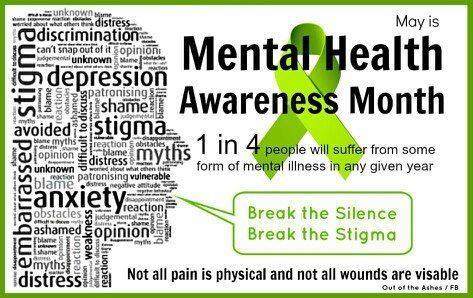
May is Mental Health Awareness Month, a perfect time to educate ourselves. As we resolve to be more sensitive, please consider the following:


  • Don’t use the term “depressed” unless it is clinically appropriate. Find another way to say you are sad, bummed out, disappointed or feeling blue. Saying you are depressed over a relatively minor issue minimizes the suffering of someone struggling with true depression.
  •  

  • When someone you know is acting differently or unusual, don’t judge them or jump to assumptions about them. Ethics of the Fathers (2:4) quotes Hillel who said: “Do not judge another until you have stood in his place.” Since it is impossible to stand in another person’s place, to be them, to have their baggage or to live their struggles, we can never judge another. Instead, we should be kind, sensitive, supportive and understanding of everyone around us.
  •  

  • Never assume you know everything going on in someone’s life or what motivates his or her behavior. Ian Maclaren, the 19th-century Scottish author once said, “Be kind, for everyone you meet is fighting a battle you know nothing about.”  Cut others slack; give people the benefit of the doubt.
  •  

  • When you know a friend or family member has depression or other mental illness such as bi-polar, anxiety disorder, etc., be as supportive as you would be with someone suffering with a physical illness or disability. Offer help and assistance, check in, and let them know you are just thinking of them. Unlike acute illnesses, most of the time, depression is chronic. Once diagnosed, it can be controlled, lessened, or perhaps, even go into “remission.” But it is never cured. Support will be needed in some form always.
  •  

  • When reaching out to someone with depression, never judge, criticize or make comparisons. Don’t offer advice or minimize the person’s suffering. Simply listen, be present, and be a friend.
  •  

  • When someone has depression it places a tremendous burden on other members of the family who often need to take over chores, responsibilities and even produce greater income. Go out of your way to be inclusive of them, to check in on them and seek to unburden them.
  •  


In 2001, Rabbi Nathaniel Helfgot courageously wrote publicly about his own experiences with depression. He concluded his article with a call that unfortunately remains as relevant today, fourteen years later:


“It is long past time for us all to break the silence and speak openly about mental illness, not just at conferences of Orthodox mental health professionals, but in the public forums of our schools and yeshivot, our conventions and fora, and in the pages of our newspapers and publications. In much of our frum world, despite the fact that significant progress has been made, the vestiges of these stigmas linger on. It is time for this last stigma to fall and fall quickly in the spirit of menshlichkeit, rachmanut, and the recognition that we are all created b’tzelem Elokim.”


Sharing is Not Always Caring: Being Judicious With What We Share

A number of years ago, shortly before I was scheduled to travel, I remembered that my passport had expired. When I called to make an appointment for an expedited renewal, the woman offered me a date that I quickly realized coincided with Shavuos.  I told the woman I couldn’t come then because it was a Jewish holiday.  She asked me to wait a and when she returned informed me that she checked with a “very Jewish” co-worker who said there is no Jewish holiday on that date and that neither she nor he have ever heard of Shavuos.


Of all of the Jewish holidays, Shavuos is probably the least well-known and definitely the least observed among the Jewish community. This is particularly sad in light of the theme of Shavuos, namely the camaraderie, kinship, and bond our people forged as we received the Torah that unites us together as one. Shavuos should be a time that we re-connect, re-bond, and remember the fraternal nature of being a Jew.


Rosh Hashana, Chanukah, and Pesach are very public holidays that are often noted even in the non-Jewish world.  Companies take out ads with holiday greetings to the Jewish community, television newscasts wish happy holidays to their Jewish viewers, and Presidents release holiday messages directed at the Jewish people.  Shavuos is an orphan holiday with our own people barely taking notice, let alone the world.  If only it weren’t such a well-kept secret and more widely celebrated and observed.


And yet, there is an aspect of the privacy and secrecy of Shavuos that is completely appropriate.  On Shavuos, we commemorate the experience of receiving the luchos, the tablets at Har Sinai, and with them the whole Torah.  However, the luchos that were to last, the ones that survived and endured, were not the original set that Hashem gave to Moshe publicly.  Rather, the luchos that remained intact and that protected our people at war were the ones that Hashem gave Moshe privately at a later time.


The Midrash tells us that this is not a coincidence but, in fact, is a reflection of a broader principle.  The Tanchuma teaches that because the first set of luchos were gifted at a very public ceremony with pomp and circumstance and the world watching, they were susceptible to ayin harah, the jealousy, envy, and ill wishes of others.  The second set, given privately in an understated, under-the-radar-manner, endured. They were protected from the negative aspirations of some who would be watching.


What is ayin harah and how does it work?  Shouldn’t what happens to us in life correlate with our personal merits and not to some extraneous force that comes from jealousy?


Ayin harah is not a kabbalistic, mystical, or irrational concept.  When we boast openly, carry on ostentatiously, brag showily, or even simply celebrate our success publicly, we invite others to look jealously upon us and to wonder why we deserve good fortune when they don’t have it.


The Maharal explains, that this curiosity, this wonder, and the question that others have when they observe our good fortune is a type of prayer, intended or unintended, that elicits God to wonder as well.  God hears the pain of the one who is lacking and has our good fortune cast in his or her face and He reacts by taking a closer look at whether or not in fact we deserve the blessing we are boasting in the first place.


Perhaps it is with the force of ayin harah in mind that the Gemara (Bava Metzia 42) observes: Amar Rebbe Yitzchak, ein ha’beracha metzuya elah b’davar ha’samuy min ha’ayin – Blessing is not found except in something that is hidden from the eye.


The force of ayin harah is stronger today than ever because we have more platforms to talk, show, and share than ever.  Facebook, Instagram, Twitter, Snapchat, and to a certain extent even text messages and email are all designed to entice us to share pictures, spread information, and boast about things going on in our lives.


Let me be clear.  There is nothing wrong with sharing and connecting with family and friends using these mediums.  However, we must be extremely judicious and cautious with what and how we share publicly, and what remains protected by the veil of privacy.  Not every picture needs to be posted.  Not every stock market success needs to be flaunted.  Not every intimate experience needs to be shared, online or offline.


Ein ha’beracha metzuya b’davar ha’samuy min ha’ayin.  Showing off about a vacation we took, how smart or adorable our children or grandchildren are, which famous person we met, or what we just bought, invites others to place their jealous and prosecuting eyes upon us.  I am not calling for a blanket ban on sharing, but simply calling for us to struggle a little more with what, how, why and where we share.


How do you protect yourself from ayin harah?  You can’t tie a red string around your Facebook profile and even if you could, it wouldn’t help whatsoever.  Says Rav Dessler, the antidote to ayin harah is simple – be modest, humble, understated, low-key, inconspicuous, and unassuming.  Preserve your capacity for privacy. If something good happens to you, be happy and even be proud. Share it with trusted family members or friends, but keep it samuy min ha’ayin, under the radar, not posted, shared, linked, and texted everywhere and for all to see. Use social media to connect, never to self-promote.


Last year, CNN had an article about a Prep School headmaster whose contract wasn’t renewed. He had sued his former employer for age discrimination and won a settlement of $80,000. The agreement contained a standard confidentiality clause, prohibiting him or the school from talking about the case.


However, his daughter couldn’t resist bragging about the case on Facebook. “Mama and Papa won the case against Gulliver,” she wrote. “Gulliver is now officially paying for my vacation to Europe this summer.” She had over 1,000 Facebook friends, many of whom were connected with Gulliver and so news of the post made its way back to the school’s lawyers. After they appealed the verdict, the Third District Court of Appeal tossed out the $80,000 settlement. Not keeping their beracha samuy min ha’ayin cost her family a lot of money.


As we celebrate Shavuos and commemorate the giving of the luchos, let’s remember that those that were accompanied by pomp and circumstance quickly came crashing to the ground, while the tablets that were given privately persevered and endured.


Turn Your Shabbos Table into an Informal Classroom

Each week I look forward to the coming Shabbos and the opportunity to enjoy a beautiful meal filled with my wife’s delicious delicacies and surrounded by my family and usually lots of guests. When else in this hectic world of obligations and distractions do we sit for hours on end completely disconnected from technology and entirely focused on the people with whom we are dining and conversing?


Hachnasas orchim, hosting guests, is a basic Jewish value and Torah imperative. Whether deepening the relationship with existing friends, making new friends or hosting those who need a place for a meal, offering hospitality is not only a chesed for others, but is enriching for ourselves and importantly for our children.


That said, too much of even a good thing often comes with a downside. When we host guests, from the way we arrange the seating to the topics of conversation at the table, we often make them our priority and unintentionally, neglect our children in the process, missing out on a crucial educational platform and opportunity.


Many people approach Shabbos as the time to let go, relax and shut down when in truth, in some ways it is the time we should be most on, energized and focused on our goals. I recently had a conversation with a childhood friend who currently lives in Los Angeles.   Impressed by the devotion and religious passion of his children, I asked him why he thought they were doing so well? His answer left a great impression upon me.


While most people come to the Shabbos meal utterly exhausted and somewhat dispirited, he makes sure to use his Shabbos table as the ultimate classroom for his children. He approaches each meal with a predetermined agenda including a compelling dvar Torah, a stimulating question, a relevant story that his children can relate to and the zemiros they will sing. He has a series of values, ideals and lessons that he desperately wants to impart to his children before they graduate his home and he feels strongly that there is no better place or time than the Shabbos table to communicate them.


Rabbi Paysach Krohn tells a story he heard from a cheder (kindergarden) teacher. One Friday, the class was hosting their weekly Shabbos party. The designated Shabbos Abba took his place at the head of the table and after pouring him his cup of grape juice, the teacher indicated that he should begin to recite Kiddush. The little boy took a deep breath, wiped his brow and declared, “Oy have I had a hard week” and only then made Kiddush. Clearly the child was emulating what he had become accustomed to see in his home.


Whether we recognize it or not, our Shabbos table is perhaps the most impactful classroom in our children’s lives and we are their most influential teachers. Will they come to their Shabbos table with a krechtz and a sigh or be energized and enthusiastic? The answer depends largely on what they see from us.


It is important to continue to host guests and practice hachnasas orchim. However, I submit to you that it is even more important to spend at least one meal each Shabbos alone with our children, prepared and equipped with a lesson plan for our informal classroom.


Start a Gratitude Journal Today


gratitude

Years ago, someone gave me a Tony Robbins CD to listen to. I was excited to hear what one of the most inspirational people of modern times would have to say and how it could change my life for the better. He started his talk by saying that he has the secret to both happiness and success. If you follow his advice and begin each and every day of your life exactly as he prescribes, he can all but guarantee you will find yourself both happier, and achieving your goals and dreams.


I was very eager to hear what his secret is.


What Tony Robbins said is correct, but for me, and for you, and for Jewish 3-year-olds around the world, it was nothing new. The secret to happiness and to achieving success, he said, is to start every day of your life by expressing gratitude. As soon as you wake up, before doing anything else, say thank you. Be grateful and appreciative for being alive, having a roof over your head, having your health if you are lucky, your family, etc.


He continued that it isn’t enough to think appreciatively, but you need to start your day by verbalizing and actually saying thank you out loud. If you do, the rest of your day is guaranteed to be successful and happy.


What Tony Robbins is teaching in the 21st century, Judaism has taught since its inception thousands of years ago. From an early age, we teach our children to wake up saying Modeh ani lefanecha, I am grateful to you God for the fact that I woke up, that I am alive to see another day, for the wonderful blessings in my life and for my relationship with You. It has been inculcated within us from our youth that we don’t wake up feeling entitled, deserving and demanding. Rather, we wake up with a deep and profound sense of gratitude, appreciation and thanks.


In my experience, Tony Robbins is right. How we start our day has an incredible impact on how the rest of it will go. This coming week we will celebrate Lag B’Omer, the 33rd day of the Omer. Each day of the Omer is characterized by another kabbalistic attribute. Lag B’Omer is Hod sh’b’hod, the glory of glory, reflecting our appreciation of God’s greatness and glory. The Hebrew word hod can be understood as coming from the same word as hodu, or modeh, meaning thanks. Lag B’Omer is a day characterized as “thankfulness within thankfulness,” or a day to celebrate gratitude.


The Chassam Sofer, Rav Moshe Sofer says that the miraculous manna that fell from Heaven began to descend on Lag B’Omer. On the first day, the manna was undoubtedly greeted with great enthusiasm and appreciation, but as time went on and there was an increasing expectation the heavenly bread would descend, it became much easier to take it for granted and to forget to be appreciative for it at all. Therefore Lag B’Omer is a time that we identify and say thank you for all of the blessings that regularly descend into our lives, but unfortunately, like the manna, that we take for granted.


It is so easy to fall into a sense of entitlement and to forget to be grateful. Why should I thank my children’s teachers? They’re just doing their job. Why should I be so appreciative to the waiter, or the custodian, or the stewardess? Isn’t that what they are supposed to do? When was the last time we said thank you to whomever cleans our dirty laundry? Do we express gratitude regularly to our spouse who shops, cooks dinner, or who worked all day to pay for dinner, or in some cases did both? Are we appreciative of the small things like finding a parking spot, recovering from a cold, having a beautiful day, or tasting the sweetness of an apple?


Dr. Robert A. Emmons of the University of California is pioneer in research on gratitude.  In one study he and his colleagues divided participants into three groups, each of which made weekly entries in a journal. The first group identified and wrote five things they were grateful for.  The second group made a daily list of five irritations and a third control group listed five events that had affected them in some way.  The study concluded that those who kept a daily gratitude list  felt better about their lives overall, were more optimistic and reported fewer health problems or doctor visits than the other participants.


There are numerous apps for keeping a gratitude journal that will remind you to spend time identifying things for which to be grateful.   We may be almost 33 days into the omer, but it is not too late to make it day #1 of keeping a gratitude journal.


As we celebrate Lag B’Omer, let’s not just say modeh ani in the morning and then quickly transition to feelings of entitlement. Let’s remember to say thank you to the people who do extraordinary things in our lives. But even more importantly, let’s especially express gratitude to the people who do the ordinary things that make our lives so filled with blessing.


The Strength to Survive

A man once approached the Klausenberger Rebbe, R’ Yekusiel Yehudah Halberstam zt’l and asked him the following question: “Tell me, how is it that so many of the survivors found the courage and the strength not only to survive but to rebuild, to start families, to remain positive and to have faith in society and humanity?” The Rebbe was the correct person to ask, for he had lost his wife and eleven children in the gas chambers and went on to rebuild a chassidic dynasty of thousands.


The Rebbe answered with two words: b’damayich chayi. The young man was startled, but thought he understood. These two words that come from the prophet Yechezkel mean “in your blood, live.” The full verse, which is recited at every bris of a Jewish baby boy, is an allusion to the time in Egypt just prior to the Exodus when Israel was commanded to circumcise its males and to bring the Pesach offering. In the merit of these two commandments, both involving blood, the nation would earn redemption and eternal life as God’s chosen people. “B’damayich Chayi. Through your blood of these commandments, live.”


So the young man commented out loud, thinking he understood that the Rebbe was hinting to the ability to move on after the mesiras nefesh, the incredible sacrifice and efforts they made. Literally they had bled, they had lost their flesh and blood, and that mesiras nefesh earned them the ability to go on.


But the Rebbe corrected the young man. That is not at all what he had meant when he said b’damayich chayi. The secret, the formula to the courage of the survivors, came from someone else, said the Rebbe.


In this week’s parsha, Shemini, we read of the tragic, seemingly premature death of Aharon’s sons Nadav and Avihu. Moshe, feeling the profound pain of his brother, tried to comfort: “vayomer Moshe el Aharon hu asher dibeir Hashem leimor bikrovei ekadeish v’al p’nei chol ha’am ekaveid, this is what God meant when He said, with those closest to Me will I be sanctified.” Rashi comments that Moshe was telling Aharon, I knew that this Mishkan was going to be sanctified by those closest to Hashem and I thought it would be me or you. Now I see that they, your sons are greater than both of us.”


Moshe tries to give some meaning, some context. He attempts to provide an answer or explanation to this profound tragedy and loss.


And what was Aharon’s response? The pasuk concludes, “Va’yidom Aharon, and Aharon was silent.” Moshe’s words were met with silence—complete, utter, and total silence.


We don’t know the source or root of the silence. Perhaps, Aharon was so devastated he had nothing to say. Perhaps, he had such deep faith that he felt no need for answers. We don’t know.


But, said the Klausenberger Rebbe, we do know that Aharon’s silence allowed him to continue to function, to be positive and to do good. He turned to the man and said you asked how we rebuilt our lives – it is simple. B’damayich chayi, with damayich, with the va’yidom of Aharon, with silence we continued to have a life. There are no answers or solutions to devastation and unthinkable tragedy, but the silence allows us to be positive, to be upbeat, to have faith in the world and to go on. For some of us it is a silence of submission. For others a silence of doubt. And for yet others a silence of protest.


Elie Wiesel was once asked, “Is there a tradition of silence in Judaism?” “Yes,” he answered. ”But we don’t talk about it.”


When we recall the horrors of the Holocaust, when we face tragedies in the world today, let us find strength in the beautiful words of the Klausenberger Rebbe, b’damayich chayi, let us find life, and let us find the courage to move forward, with silence.


Heaven is Knocking; Are You Answering?

On Yom Ha’Atzmaut 1956, Rabbi Soloveitchik delivered a lecture in Yiddish at Yeshiva University in which he sought to put the extraordinary events that had occurred less than a decade earlier into a context and perspective. In his opinion, the remarkably close proximity of the worst atrocity and darkest period in Jewish history to the unimaginable blessing and bright light of the Jewish return to our homeland simply could not be dismissed as coincidental or random.


In his address that day, later translated and published as Kol Dodi Dofek, the Rav compared the condition and mood of the Jewish people to the unfolding of the love story in Shir Ha’Shirim: “What is the essence of the story of the Song of Songs, if not the description of a paradoxical and tragic hesitation on the part of the love-intoxicated, anxiety-stricken Lover, when the opportunity, couched in majestic awe, presented itself?”


In this majestic love story, Shlomo Ha’Melech describes the longing and desire of the Ra’aya (the Lover) for her beloved Dod. She chases Him, pursues Him and yearns for Him, but alas, He is elusive and inaccessible. Finally, the Dod comes knocking on the Ra’aya’s front door in search of her, but she is exhausted, has undressed and has retired for the night. The moment she had been waiting and hoping for has arrived. The Dod wants to recount to her His mighty love and His longing for her. Yet for some inexplicable reason, at that moment, she becomes lazy and stubborn; she is too tired and spent to respond. The Rav summarizes, “The Lover did not respond to the voice of the Beloved. The door to her tent was locked shut. The opportunity was lost and the vision of an exalted life died.”


The Rav suggested that on the heels of the Holocaust, in the shadow of incomprehensible loss and devastation, just when the Jewish people were tired and spent, Kol Dodi Dofek, our Beloved came knocking on our door.  He called for us, and the echoes of His voice reverberated through history. The Rav enumerated six “knocks” that he discerned in the events that surrounded the founding of the State of Israel:


  1. Political: “First, the knock of opportunity was heard in the political arena. No one can deny that from the standpoint of international relations, the establishment of the State of Israel, in a political sense, was an almost supernatural occurrence.”
  2.  

  3. Military: “Second, the knocking of the Beloved could be heard on the battlefield. The small Israeli Defense Forces defeated the mighty armies of the Arab countries. The miracle of “the many in the hands of the few” took place before our very eyes.”
  4.  

  5. Theological: “Third, the Beloved began to knock as well on the door of the theological tent, and it may very well be that this is the strongest knock of all…All the claims of Christian theologians that God deprived the Jewish people of its rights in the land of Israel, and that all the biblical promises regarding Zion and Jerusalem refer, in an allegorical sense, to Christianity and the Christian Church, have been publicly refuted by the establishment of the State of Israel and have been exposed as falsehoods, lacking all validity.”
  6.  

  7. Assimilation: “Fourth, the Beloved is knocking in the hearts of the perplexed and assimilated youths. The era of self-concealment (hastarat panim) at the beginning of the 1940’s resulted in great confusion among the Jewish masses and, in particular, among the Jewish youth…once a Jew begins to think and contemplate, once his sleep is disturbed—who knows where his thoughts will take him, what form of expression his doubts and queries will assume?”
  8.  

  9. Self-defense: “The fifth knock of the Beloved is perhaps the most important of all. For the first time in the history of our exile, divine providence has surprised our enemies with the sensational discovery that Jewish blood is not free for the taking, is not hefker!”
  10.  

  11. Refuge: “The sixth knock, which we must not ignore, was heard when the gates of the land were opened. A Jew who flees from a hostile country now knows that he can find a secure refuge in the land of his ancestors…Now that the era of divine self-concealment (hester panim) is over, Jews who have been uprooted from their homes can find lodging in the Holy Land.”
  12.  


Each of these ‘knocks’ was nothing short of a miraculous aspect of the founding of the State of Israel. One shudders to speculate what the outcome would be today if the United Nations were asked to vote on awarding the Jewish people a sovereign state in the Middle East.


In 1948 and many times since, Heaven has indeed been knocking on our door. In Kol Dodi Dofek, Rabbi Soloveitchik challenged us to ask ourselves: Are we answering? As we prepare to read Shir HaShirim shortly and celebrate Yom Ha’Atzmaut in just a few weeks, now is a good time to remind ourselves of this question. Are we going to be like the Ra’aya, too tired and exhausted, too beaten down from the long exile and the seemingly endless persecution to be able to get up and answer the door? Or, will we embrace the moment and recognize the opportunity that we have been longing and yearning for?


Obviously, making Aliyah, picking up and moving to Israel, is the ultimate answer to the knock. For Jews living in the Diaspora, the question of Aliyah should not be if, but when. As has been said, there are legitimate reasons not to make Aliyah, but there are no legitimate reasons not to struggle with making Aliyah. However, for a variety of reasons, the reality is that not everyone can or will move to Israel. But make no mistake. There are many ways to both hear and answer God’s knock, wherever one may be.


Hungarian born R’ Yisachar Shlomo Teichtal Hy”d was staunchly anti-Zionist. When running and hiding from the Nazis, everything changed for him and he saw a return to Israel as Hashem’s true plan for His people. In his incredible book Eim Ha’Banim Semeicha, written by memory and while in hiding, he shares these prescient words:


“Now, even though all of Israel will not return right away, it seems to me that the Land will become a universal center for the entire Jewish nation, by the very fact that there will be an assembly of Jews in Jerusalem and Eretz Yisrael. Even those who remain in the Diaspora will keep their eyes and hearts on the Land. They will be bound and connected with all their souls to the universal center, which will be established in Eretz Yisrael. It will unite them even in the Diaspora, and they will not be considered dispersed at all…”


Kibutz Galiyos, the ingathering of the exiles, is certainly a physical phenomenon. But according to R’ Teichtal, it is a meta-physical one as well. When we dedicate our attention, our efforts and our resources towards Israel, the Jewish people unite as one, no matter where they may be found on the globe.


World-wide Jewry is in the midst of elections for the World Zionist Congress which controls the funding of the World Zionist Organization and decides how millions of dollars are allocated. Decisions on distributions of funds are based on the size of each Zionist group represented in the Congress.


Every Jewish resident of the United States who registers to vote has a chance for his/her voice to be heard. Many of the Religious Zionist organizations in America including OU, National Council of Young Israel, Yeshiva University, Touro College, AMIT, Bnei Akiva and more have joined together under the banner of VOTE TORAH.


By voting for the Religious Zionist Slate, you will seat delegates who will focus on:


  • Building bridges and increasing unity within Am Israel;
  •  

  • Preserving and enriching Torah values and Jewish life in Israel and around the world;
  •  

  • Securing a significant amount of the billion dollar programming budget for informal education and outreach programs worldwide that exemplify true Torah values;
  •  

  • Ensuring the future of Religious Zionist ideals.
  •  


Please, do what you can to answer the ‘knock’ and take 5 minutes RIGHT NOW to cast your vote for the Religious Zionist Slate (SLATE #10) – www.VoteTorah.org.


Rabbi Efrem Goldberg

Join Our Community

Subscribe to our newsletter or connect with us on WhatsApp.