What Sleeping Bats Can Teach Us About Making Amends With Ourselves

A few years ago, I had the privilege of awarding someone a medallion at an AA meeting, a celebration of a significant milestone of sobriety.  This wasn’t my first time doing so and I have shared before how inspired I have been from being among people who have the courage to admit their addiction, name their enemy, and confront it on a regular basis. 


The recovery program is made up of 12 steps and from what I understand, different meetings highlight different steps for participants to share and reflect upon.  The meeting I attended addressed Step 8, which is “to make a list of all persons we had harmed, and become willing to make amends to them all” and Step 9, “to make direct amends to such people wherever possible, except when to do so would injure them or others.”


People reflected on the experience of being willing to make amends with people, some whom they hurt and others they were hurt or injured by.  Then one person got up and said something I found fascinating.  She said that when she arrived at this step in her recovery, she realized one of the people she most needed to make amends with was… herself.  The mistakes she had made, the excuses, missed opportunities, damaged relationships, sabotaged success she had caused herself, left her needing to be willing to forgive herself, to make amends with herself. 


The next person who spoke disagreed and pointed out making it about ourselves is what got us into trouble to begin with. Amends is about others, it doesn’t always have to be about the “I,” and that kind of thinking is misguided and can lead to bad outcomes.   


I walked out of the meeting really moved by both sides, really thinking about this question.  Who was right?


אמר ריש לקיש גדולה תשובה שזדונות נעשות לו כשגגות… איני והאמר ריש לקיש גדולה תשובה שזדונות נעשות לו כזכיות… לא קשיא כאן מאהבה כאן מיראה


The Gemara in Yoma (86b) reconciles two different statements of Reish Lakish. The first: גדולה תשובה שזדונות נעשות לו כשגגות – Great is teshuva as the penitent’s intentional sins are counted for him as unwitting transgressions. The second: גדולה תשובה שזדונות נעשות לו כזכיות  – Great is repentance, as one’s intentional sins are counted for him as merits. The Gemara explains the seeming contradiction: When one repents out of love, a higher level of repentance, his sins become like merits, but when one repents out of fear, a lower level, his sins are counted as unwitting transgressions.


One of these conclusions seemingly makes much more sense. I understand how the power of teshuva can transform my mistakes, indiscretions, poor judgment, and intentional violations into accidental, careless ones.  Picture a judge lightening a sentence because of good behavior and still putting criminal charges on the record, but lesser ones. But what does it mean that my intentional mistakes can become zechuyos, merits?  Put differently, the Maharsha asks, don’t we have a principle that אין חוטא נשכר, we don’t reward people for their wrongdoing? How, even with teshuva, can those mistakes be turned into merits, virtues, assets, acting in one’s favor?


The Maharsha suggests an answer, but I would like to offer a different interpretation, one that can help us experience Yom Kippur very differently and perhaps settle the debate I heard at the AA meeting.


Many people know that bats sleep upside down but few know the reason. While bats can fly, they can’t take off. Some birds can take off from a dead stop by simply flapping their wings, but bats can’t.  Birds’ wings are long and feathered and can generate enough thrust to achieve liftoff, but bats’ wings, as ScienceFriday explains, are basically large, webbed hands. Once airborne, a bat can use these webbed hands to sustain the flight over long distances and steer seamlessly, but they have a problem: they can’t do the necessary flapping to take off.  


So what do bats do if they can fly but can’t take off?  The answer is they don’t take off — they fall down.  During the night, they use their claws to climb up a tree. Once they get high enough off the ground, they drop, using gravity to gain momentum and they use the momentum from falling to take flight. Perhaps this is exactly what Chazal mean.  The Gemara said it is a contradiction, on the one hand Reish Lakish teaches if you make mistakes but then do teshuva, then even intentional acts are considered accidental occurrences.  But on the other hand, he said, if you do sincere teshuva, intentional violations can be transformed into zechuyos, merits.  The Gemara answers this contradiction by explaining that not all types of teshuva are equal. If you do teshuva מיראה, if the only reason you want to take responsibility is because of fear of punishment, you don’t want to suffer the consequence, then your fall can be considered accidental. But if you do teshuva מאהבה, you aren’t afraid, rather with love, enthusiasm and excitement you are ready to fly, then you can use the momentum generated from your fall to give you lift, to take off, to discover things and achieve things you previously couldn’t. 


For many, Yom Kippur is a dreaded day, not only because of the physical pleasures we are denied and deprived of but because they think it is a day to beat ourselves up, to rack ourselves with guilt, blame, fault, fear and dread. 


My friends, that couldn’t be farther from the truth.  The Mishna lists Yom Kippur as one of the two happiest days of the year.  Yom Kippur is not a day to beat ourselves up, to knock ourselves further down.  We are here to confront our mistakes, to think about failures and the times we have fallen, but to use them to give us the momentum, the energy, and the knowledge of how to fly.  שזדונות נעשות לו כזכיות, your fall turns into your lift, into flight. 


One of the al cheits we say in the confession is על חטא שחטאנו לפניך בוידוי פה, for the mistake we have made before You through confession.  Doesn’t it strike you as ironic that we are confessing about confessing? If we are saying it, we are indeed confessing, so what are we apologizing for?  The simple answer would be, we are confessing and apologizing for being insincere, but I think it goes deeper. 


Hashem – על חטא שחטאנו לפניך בוידוי פה, I am so sorry for using vidui to beat myself up, to knock myself down instead of for gaining momentum to give me flight. 


In Steve Jobs’ Commencement Speech to Stanford’s Graduating Class of 2005, he retold his story of getting fired from the company he created at the age of 30. It was the most devastating setback of his life. He fell and he fell fast. Though it could have destroyed him, Jobs explained to the graduates that getting publicly fired turned out to be the best thing that could have happened to him. Losing his position and success as the leader of Apple opened him up to express his creativity more freely. He started a company called NeXT, helped launch Pixar, reclaimed his role as CEO of Apple, and the rest is history. Failure opened Steve Jobs up to express himself more freely and forced him to create his way out of his rock-bottom into the mega-stardom and super-success he enjoyed at Apple. As he explained to the graduates: “It was awful tasting medicine, but I guess the patient needed it.”


J.K. Rowling has sold more than 500 million books and is one of the wealthiest women in the world, but in a commencement speech of her own she described that she needed to fall before she was able to fly.  She described how at the time of her own graduation from college, her greatest fear was failure—a fear that became reality seven years later as she struggled through single-parenthood, unemployment, and poverty all at the same time. Failure, she said, revealed her true character: “I stopped pretending to myself that I was anything other than what I was, and began to direct all my energy into finishing the only work that mattered to me… I was set free, because my greatest fear had been realized, and I was still alive, and I still had a daughter whom I adored, and I had an old typewriter and a big idea. And so rock bottom became the solid foundation on which I rebuilt my life.”


L’Havdil, Rebbe Akiva watched his entire life’s work, his 24,000 students, disappear, die from a horrible plague. His dream, his legacy were shattered.  He didn’t stay down, he used the momentum of attending 24,000 funerals into starting again, into finding five new talmidim, a new way of teaching and it gave him and them flight. And we are still riding their wings until today.   


We make amends with ourselves not by excusing our fall but by transforming it into momentum to give us lift. The world gives us our fill of yirah, of fear, worry and anxiousness. Let’s resolve to do teshuva mei’ahava, from love and longing, from lift.


We have made mistakes, we have fallen down sometimes in anger or outrage, sometimes in judgment and sometimes in envy.  Yom Kippur is not about beating ourselves up, staying down, feeling sad, somber or guilty.  Consider what went wrong, why it went wrong, and use that knowledge to learn from it, to gain lift, to take flight and to ensure it not happen again.  We don’t need to sell that many books or build a company of that size or even l’havdil leave the legacy of Rebbe Akiva to achieve success in our lives. All we need is to not only to get up after we have fallen, but to take flight.


 

The King’s Coronation: 5 Ways We Can Prepare

Immediately upon his mother’s passing, Prince Charles became King of England and the wheels of tradition were set in motion for his coronation ceremony, although it won’t take place for several months. The death of Queen Elizabeth and the transition of power has gripped not only citizens of the United Kingdom, but people around the world. 


What is so intriguing and captivating about the royal family that draws such enormous attention, focus, and even obsession? 
Dr. Donna Rockwell, a clinical psychologist who specializes in celebrity and fame, suggests that the answer is the royal family’s strict adherence to procedure and tradition. She explained: “Life by its very nature is tumultuous and dislocated… [T]he royal family represents order, discipline, stability and a sort of calmness in communication with one another that actually physiologically settles a person.” 


Dr. Rockwell believes the royal family represents an escape from an unsettling world: “So in the same way, I think that when an adult is feeling a sense of inner chaos, it’s comforting, even neurologically speaking, to be able to observe something of structure,” she said.  “The universe is profoundly chaotic so whenever we can anchor ourselves into a sense of order and safety, really, we tend to relax. And that generates the reward center of the brain.”


While none of us will be invited to King Charles coronation, all of us are not only invited, but eagerly wanted, at a much greater, much more prestigious coronation. The installation of the ultimate King, the King of Kings, will take place in just a few days on Rosh Hashana.


We associate Rosh Hashana with judgment, but the Torah itself never mentions this theme. Rosh Hashana corresponds with the creation—not of the world, the first day of creation, but with the birth of man, the sixth day. Zeh hayom techilas ma’asecha, this is the day it all began. 


How do we recognize our creation, how do we commemorate our being brought into this world? The answer is through annually coronating Hashem, the Creator of the Universe as King, as Monarch and Sovereign over us, the world and everything in it. The Vilna Gaon explains that the shofar on Rosh Hashana serves in the role of trumpets at the King’s coronation, producing blasts of joy, celebration, and allegiance.   


If connecting with the procedure and tradition of human royalty bring calm and comfort, all the more so when we coronate and celebrate Hashem’s Monarchy with our rich practices and customs and with it accept the order, discipline, and stability that a life of loyalty to Him provides.  


We don’t need to look elsewhere for majesty and pageantry. While our annual Coronation ceremony is familiar and well-known to us, make no mistake, the transfer to white Torah covers and paroches, the reverberating sounds of the shofar, and the stirring traditional melodies, are nothing short of grand, regal, and royal. 


Here are five things to keep in mind for this week’s Coronation of the King of Kings:


1.    Loyal Member of the Kingdom – While a coronation is about establishing and celebrating a monarch, it generates a period of evaluation and judgment.  Following the coronation, the re-established monarch takes stock of His kingdom, evaluating the role and service of everything in it.  That is why Chazal teach that on Rosh Hashana, kol ba’ei olam ovrim lefanav, everything in the world comes before the King to be assessed and considered.  In anticipation of the Coronation, ask yourself if you are fulfilling the purpose for which you were created?  Are you living a mission-driven life, advancing the vision and values of the King?  Are you making the unique contributions that only you can make?


2.    Prepare and be Punctual – One could not imagine attending the Coronation of King Charles dressed in anything less than their most formal and finest garb,  pressed, shined and making the best impression.  One would never show up late, and arrive when the coronation was already underway.  The coronation of the King of Kings deserves no less preparation, attention to detail, and effort.  If we want to feel like we were in the presence of the King of Kings, we need to dress for and act as we would for a human King.


3.    Avinu Malkeinu – In our case, the King is also our Father.  While the image of Him as Monarch intimidates, imposes and instills fear and judgment, the description of Him as our Father reflects His love, affection, and fighting on our behalf.  While both are true, we refer to Him first as our Father reflecting that while to the rest of the world He is only a distant King, we are blessed to feel the closeness that He is our Father.  


4.    Don’t Sleep Through the Coronation – The Rama quotes the Yerushalmi that “nohagin she’lo lishon b’yom Rosh Hashana u’minhag nachon hu,” it is a proper practice not to sleep on Rosh Hashana day.  On Coronation Day we should be so excited and exhilarated, so joyous and celebratory that we have no time or interest to take a nap.  But more significantly, being royalty demands that we don’t sleep through life, let it pass us by or be carried by momentum.  The Shelah explains that the custom of Tashlich is to go to a body of water to see fish. Fish don’t have eyelids and therefore don’t ever close their eyes.   On Rosh Hashana we are meant to remain awake and aware, fully conscious, and present, not only physically, but spiritually. 


5.    Coronation and Community – Dr. Rockwell notes that the royals have the ability to make us feel like we’re part of one big happy family.  When we connect and care about the other members of the Kingdom, it brings honor to the King.  Shlomo HaMelech taught (Mishlei 14:28), B’rov am hadras Melech,  the glory of the King is revealed when the masses are unified in their acceptance of His sovereignty.  Prepare for Coronation Day by connecting with fellow subjects of the King, showing them care and concern, feeling a sense of unity, a shared history and a shared destiny. 


In the Mussaf of Rosh Hashana we will recite, “V’yishme’u rechokim v’yavo’u, v’yitnu lecha keser melucha – And those from afar will hear and will come, and they will bestow on You the crown of kingship.”   “Afar” can be a geographic description or a spiritual one.  Even if you feel disconnected and far away, coronation is the time to come close and reconnect.


The royal website states that the coronation ceremony “has remained essentially the same over a thousand years,” so we can expect many of the same events from Queen Elizabeth’s coronation to occur at the coming one for King Charles, even though more than 90% of the current population was not alive to see it.  In a world of constant upgrades and improvements, it is important to remember that new is not necessarily better and there are traditions that are meant to remain unchanged.  We are blessed to be heirs to a uniquely rich tradition, one that goes back much further than 1,000 years.  While our coronation ceremony remains unchanged, may each of us use this time to change for the better.

Does Your Schedule Reflect Your Priorities?

Here’s a simple test to see if what you claim are the most important relationships, people and activities in your life, are actually priorities in your life. Pull out your calendar and review your typical day, week or month. Does your schedule reflect your priorities?  Our real values are communicated in our schedule and what our calendar says is often frightening. Your calendar never lies. You can’t say one thing and schedule another. Where you spend your discretionary time is where your values are.  What you make time for shows what matters to you.


Stephen Covey, author of the Seven Habits of Highly Effective People, writes, “The main thing is to keep the main thing the main thing.”  We talk about our family being the main thing in our lives, or our Judaism, or some other value.  But do we keep the main thing the main thing, or does what was supposedly the main thing become just another thing?  If you want to know the answer, look at your schedule or calendar and see how much time you allocate to the “main thing,” or if the “main thing” even appears on your calendar at all.  Covey captured this well elsewhere when he wrote, “The key is not to prioritize your schedule, but to schedule your priorities.” 


There are many things that legitimately take us away from the “main things” of our lives. We can’t spend time with our children or expanding our minds or nourishing our souls when we are working, or shopping, or cooking. But what about when we aren’t, how do we use that time?  Is it filled with meaning, or meaningless activities?  Do we fill out our schedule with a purpose or is time taken up with purposelessness?  Are we in control of our schedules, or are our schedules controlling us?  


At the beginning of the Parsha, the Torah describes how the farmer would bring his Bikkurim, his first fruit to Yerushalayim.  When presenting them, he would recite the Mikra Bikkurim, which included a short history of our people.  In that context he would describe how, when we were slaves in Egypt, “We cried to Hashem, the God of our fathers, and Hashem heard our anyeinu, amaleinu and lachatzeinu.” These words are familiar to us both from the Parsha and from the Haggadah. But what are these words of suffering we describe?


Anyeinu is personal, internal anguish.  The Egyptians purposely separated husbands and wives to create loneliness and pain.   Amaleinu is hard work.  The Egyptians had a strategy to literally break our backs with endless toil.  What is lachatzeinu?  Lachatz, still today in modern Hebrew, means pressure. The Egyptians applied enormous pressure in an effort to break us.  What was that pressure?  Our rabbis explain the Egyptians filled our time, occupied and preoccupied us, denied us the ability to even catch our breath.  The greatest pressure is a packed schedule with no margin, no down time, no room to think, to experience, or to dream. 


We may not have Egyptian oppressors but we, too, are captives to busyness, to our “crazy” schedules, to noble and ignoble tasks and activities that pull us in so many directions and deny us the chance to even breathe, to live, to experience, to dream.  It is up to us to take control, to make the main thing the main thing, to have our schedules reflect our values.  


Greg McKeown, the author of Essentialism, says, “If you don’t prioritize your life, someone else will.”  Having our breakthrough year, our best year yet, begins with prioritizing our own lives. 

When is the Last Time You Had Goosebumps?

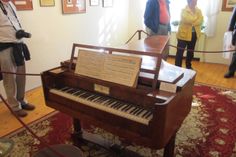
The home of the great composer Ludwig van Beethoven has been preserved and serves as a museum in Bonn, Germany.  One historical gem in the museum is the piano upon which Beethoven composed most of his renowned works.  The piano is estimated to be worth more than $50 million and is understandably roped off and out of the reach of the thousands of visitors who pass it by each day.


The story is told about a group of students from Vassar College who were once visiting the Beethoven museum. One of the students came to the room that held the piano and couldn’t resist the temptation to ask a museum guard if she could play it for a moment.  The guard allowed himself to be influenced by her generous tip and let the young woman beyond the ropes for a few moments.  She sat at the famed piano and knocked out several bars of Moonlight Sonata.  When she finished, her classmates applauded.


As she stepped back through the ropes, the young woman asked the guard, “I suppose over the years, all the great pianists that have come here have played the piano?”  “No, miss,” the guard replied.  “In fact, just two years ago I was standing in this very place when Ignacy Paderewski visited the museum.  He was accompanied by the director of the museum and the international press, who had all come in the hope that he would play the piano.


“When he entered the room he stood over there, where your friends are standing and gazed at the piano in silent contemplation for almost fifteen minutes.  The director of the museum then invited him to play the piano, but with tears welling in his eyes Paderewski declined, saying that he was not worthy even to touch it.”


Non-human mammals get what we call goosebumps, the constriction of skin surrounding hair follicles, when they feel threatened or attacked.  Only human beings get goosebumps for a different feeling: awe.  Awe is the feeling of being in the presence of greatness, of being exposed to that which is transcendent or extraordinary.  Paderewski was in a room with Beethoven’s piano and was frozen with awe.  The young student saw the piano and thought it would be cool to casually play it.


Researchers believe that we are living in a time of awe deprivation.  Technological advances have made things once thought impossible not only real, but normal, expected, even mundane and unimpressive.  We FaceTime with people on the other side of the globe without another thought, we have search engines that access millions of pages of information in nanoseconds, we instinctively use global positioning satellites to find the quickest route and avoid traffic.  The result of the speed with which breakthrough, change, and advance happens leaves us struggling to be impressed with anything.


We have gone from calling everything “awesome,” to reacting to everything by saying (or thinking) “eh.”  The byproducts of being awe-deprived are increased arrogance, decreased empathy, greater challenge to find meaning, and even failing health.


A Wall Street Journal article describes how current research shows that the capacity to feel awe makes people more empathetic, generous, kind, and humble.  The actual feeling of awe and the experiences that inspire it make us healthier, improve our relationships, and give more meaning to our lives.  The author writes, “Awe is an emotional response to something vast, and it challenges and expands our way of seeing the world.  It might be triggered by an encounter with nature, a religious experience, a concert or a political rally or sports event.  We’re not likely to find it on a treadmill at the gym.”


She goes on to describe that some experienced awe at the birth of a child, others watching a meteor shower, others visiting the Pine Forest in California, and interestingly, others who found it awe-inspiring to work with homeless people and witness their resilience and kindness.  Dr. Dacher Keltner from UC Berkeley found that feeling awe can help fight depression and can even help reduce inflammation in the body.  Dr. Paul Piff from UC Irvine explained that “awe minimizes our individual identity and attunes us to things bigger than ourselves.”


We are currently counting down towards the Yamim Noraim, the Days of Awe.  On Rosh Hashanah we will coronate God as King of the Universe and remind ourselves of His awesome omnipotence and omniscience.  On Yom Kippur, we will be evaluated and judged to determine if we are fulfilling our role in His renewed kingdom and the purpose for which we were created.  As described in U’nesaneh Tokef, these days are in fact, norah v’ayom, they are simply and literally awesome.


But we will only be moved by the awesomeness of these days if we still have the capacity for awe, reverence, and veneration.  If everything is so utterly unimpressive, uninspiring, and ordinary, these days will be ritualistic and ceremonial, empty and devoid of meaning and transformation.


Rav Yitzchak Hutner z”tl explains that Amalek is the archrival of the Jewish people because their philosophy is the very antithesis of ours.  When recounting Amalek’s attack on the Jewish people, the Pasuk in our parsha says, “Asher karcha baderech – they happened upon you.” Amalek believes in mikreh, in chance, randomness, and happenstance.  They see nothing as chashuv, nothing as significant, meaningful, or worthy of awe.  As a result, Amalek’s attitude is to denigrate, to knock down, to destroy, to be cynical, and sarcastic.  Amalek mocks and makes fun, they look at something or someone others are in awe of and they seek to demolish, to degrade, to vilify.


We, the Jewish people, are charged to live life with the opposite attitude and approach.  Our mission is to live life with awe, to see ourselves as a small part of something much greater.  Our charge is to see and create meaning and purpose, to lift up, to build, to admire, to revere, and to venerate that which is worthy and important in the world.


Rav Hutner describes that the battle between the attitude of Amalek and the attitude of the Torah is the battle between what he calls the ko’ach ha’chillul and the ko’ach ha’hillul.  The ko’ach ha’chillul is the power of skepticism, the influence of that little voice inside each of us that, like Amalek, tries to get us to be cynical, to mock and belittle, rather than to respect and be filled with awe.  The ko’ach ha’hillul is the capacity to praise, honor, identify and admire the beauty and the greatness which is sometimes beneath the surface.


Preparing for the Days of Awe includes working to defeat the Amalek inside us.  It demands we weaken and eliminate the ko’ach ha’chillul, our tendency or inclination towards cynicism and skepticism, and strengthen and build up our capacity for ko’ach ha’hillul: to see that which is impressive, remarkable and praiseworthy in people, places, and things all around us.


The WSJ article suggests that to preserve and expand our capacity for awe, we must make an effort to have three awe experiences a week.  For the remainder of Elul, look at something, study something, contemplate something, admire someone, experience something that makes you feel “Wow! That is awesome.” “That is incredible.” “That is humbling.”


Albert Einstein is quoted as saying, “There are only two ways to live your life.  One is as though nothing is a miracle, the other is as though everything is a miracle.”  As we prepare for the Days of Awe, let’s choose to see everything as a miracle and be filled with awe as a result.


They Can Knock, But You Don’t Have to Let Them In

A chassid was once plagued by negative thoughts relentlessly intruding upon him.  He was sidetracked by temptations and fantasy, he was distracted by worry and anxiety.  One particularly difficult evening he couldn’t stop having negative and inappropriate thoughts.  He couldn’t take it anymore so he went to his Rebbe’s house to get advice.  He knocked on the front door, but nobody answered.  He knocked harder, but still no response.  Brazenly, he walked around to the side and looked through the window.  He saw the Rebbe sitting at the dining room table learning and so he knocked on the window.  Sure enough, the Rebbe didn’t look up and his efforts to get the Rebbe’s attention continued to fail.  Disappointed and frustrated, the chassid went home.  


The next morning after shul, he waited patiently until it was his turn, and he finally had the attention of the Rebbe. Somewhat exasperated, he said, “Rebbe!  I desperately needed you last night.”  The Rebbe replied, “I know. I know what you wanted to ask, and I already gave you an answer.” Bewildered, the chassid said, “What do you mean?  I knocked and knocked but you never answered, and I didn’t even get a chance to ask my question.”  The Rebbe looked at him and explained.  “Last night you came over to my house.  You knocked on the front door, and then you knocked even harder.  You came around and knocked on my window.  You kept knocking, but the choice was mine whether or not to let you in.  These thoughts, these questions, doubts, temptations, worries, they can knock all day on the door of your mind, but never forget, the choice remains yours whether or not to let them in.”  


I love this story because it is so much more than a story; it is a strategy, it is a solution.  Thinking about our thoughts and mind in this way has helped me personally and countless others I have shared it with. Like the chassid, so many of us are plagued by unwanted and unwelcome thoughts.  They could be of temptation, of doubt, of our unworthiness or simply of being overwhelmed.  We can’t control what knocks, but never concede that we have control over what we let in.


This week’s Parsha begins:

 שֹׁפְטִ֣ים וְשֹֽׁטְרִ֗ים תִּֽתֶּן־לְךָ֙ בְּכָל־שְׁעָרֶ֔יךָ אֲשֶׁ֨ר ה׳ אֱלֹקיךָ נֹתֵ֥ן לְךָ֖ לִשְׁבָטֶ֑יךָ וְשָׁפְט֥וּ אֶת־הָעָ֖םמִשְׁפַּט־צֶֽדֶק׃

Place judges and policemen at all your gates.


The Torah is not just talking to us as a people, a nation, or a community.  The Torah is telling us that we can have judges and policemen at the gates, the entranceways into our soul, our eyes, our ears, our mouth.  We can and must be judicious with what we let it in and when we do so, and we must police and regulate the gateways into our being to ensure we aren’t overloaded, distracted, or sabotaged from success.  


Stop saying that you cannot control your mind from racing.  You don’t have to perseverate, marinate, stew in a thought, fear, concern, or regret.  Of course, I am obviously not talking about diagnosed, serious illnesses or challenges that need therapy and at times medication.  I am referring to everyone else.  You are the judge, and you are the policeman of the gates into your mind.  Decide what to let in, what to think about, what to focus on, what is productive, healthy, and positive and what you are going to lock out, what is a distraction, destructive, negative, and unwelcome.  


Our minds run wild on overdrive all day long in ways that sabotage our own success.  Some are constantly thinking about every possible problem that could arise, every reason they won’t succeed, everything that could go wrong.  For others, the mind is filled with the noise of trying to juggle a million things, emails to return, phone calls to make, people to visit, tasks to get done, people to make happy.  For yet others, the mind is overloaded with keeping up with the news cycle, with social media, pop culture, work, home and more.  The common denominator is a cluttered mind, a distracted existence. We cannot control what knocks, but we absolutely can control what and when we let them in and that too is a powerful message of our Parsha.


The stakes are high. We cannot be our best selves if we let any thought, image or idea storm our gates and take up precious real estate in our mind. Shoftim v’shotrim, let them come, let them try to knock, but make the conscious choice, the powerful decision not to let them in. If and when the thought comes, pivot, redirect, go to a different thought, a positive one, or train yourself not to think at all. Spend a few minutes each day with your technology off, working out your mindfulness muscles. Practice hisbodedus, meditation, sitting silently and grow comfortable not only in your own skin but managing your own mind.  David Allen, the great architect and author of an amazing book and system called Getting Things Done, says, “Your mind is for having ideas, not holding them.”  Let them go, put them down, control them, don’t let them control you.

Do You Have a Spiritual Compass?

Once, when I met with the Skverer Rebbe, he asked me a lot of questions about the community, truly curious about what it is like here.  At the end of ten minutes, he said he had one more question.  He turned to me and he said, Rav Goldberg, are there mevakshim in Boca Raton?  Does your community have seekers, people who are looking for Hashem?  I was so proud to give him a resounding yes, but I found it fascinating that this was his pressing question and it struck me, it should be our question of ourselves as well.


This week’s Parsha informs us about a special place of complete holiness:

כִּ֠י אִֽם־אֶל־הַמָּק֞וֹם אֲשֶׁר־יִבְחַ֨ר ה״ אֱלֹֽקיכֶם֙ מִכָּל־שִׁבְטֵיכֶ֔ם לָשׂ֥וּם אֶת־שְׁמ֖וֹ שָׁ֑ם לְשִׁכְנ֥וֹ תִדְרְשׁ֖וּ וּבָ֥אתָ שָֽׁמָּה׃

“But look only to the site that the Hashem your God will choose amidst all your tribes to set His name there, you shall inquire after His dwelling and come there.”


The only problem is we are not told explicitly where it is. What is this mysterious place that Hashem wants us to find?  Why doesn’t Hashem provide the coordinates for it?  Why not give an address for Moshe to plug into his GPS?


The Chizkuni explains that it took time for the Beis HaMikdash to finally be built in Yerushalayim and its precursor, the Mishkan, moved around quite a bit, so a specific place to find Hashem’s presence was not clearly provided.  In fact, Rashi comments that the שמה, come to “there” is not talking about the Beis HaMikdash but the Mishkan, which would be housed in Shiloh for 369 years.


The Ramban, however, has an entirely different way of understanding what שמה, “there,” the pasuk refers to.  Firstly, suggests, the Ramban, the adverb “there” is indeed referring to the Beis HaMikdash.  If that is the case, why not give the specific location it is meant to be?  The Ramban says this is by design.  Hashem wants us to seek it, to calibrate our compass towards holiness and to find it.  Rather than give a location, Hashem wants us to intuit the location of the holiest place on earth and then confirm it with a Navi, a prophet. 


Sure enough, that is what happens. Chazal tell us that Dovid HaMelech first studied the Torah text and the geography of the land and with that information posited that the future location of the Beis HaMikdash would be on Har HaMoriah.  Later, Gad HaNavi confirmed that Dovid was correct. 


The Ramban offers a second understanding that the word שמה, “there” is not referring to a geographical location but to לשכנו, to feeling Hashem’s presence and influence.  The Torah is saying תדרשו, if you want to feel Hashem in your life, seek Him, look for Him, reveal Him, connect with Him. 


Rabbi Soloveitchik suggests that the Ramban’s two understandings are really one.  Whether it is the geographic location of the Beis HaMikdash or the spiritual experiences and moments we long for, the coordinates are not provided to us, we aren’t given a map to arrive at the destination, we have to calibrate our own spiritual compass and find it.  We have to ask questions, have our spiritual antennas extended, and be receptive to picking up the signal. תדרשו, we have to look for Hashem.


The Kotzker Rebbe disagreed with Uncle Moishe.  Once, when asked, where can Hashem be found, the Kotzker Rebbe did not answer Hashem is here, there and everywhere. He answered, Hashem is only where you let Him in.  It is up to us to have that relationship to make that connection, to see behind the curtain that Hashem is there all along. 


In Havdalah, we distinguish between several things: בין אור לחושך בין ישראל לעמים בין יום השביעי לששת ימי המעשה, between light and dark, Jews and gentiles, the seventh day and the first six.  The Rav points out that light and darkness are clear for all to perceive. Even animals respond to the difference in these stimuli. 


But the Havdalah between kodesh and chol, what is holy and what is profane, is much different.  It cannot be perceived or measured by the naked eye.  A person needs to have a special intuition, to see with his or her heart, as this separation can only be sensed, not seen. 


The Midrash (Tanchuma Vayera) says when Avraham went with his entourage to the Akeida, he saw Har HaMoriah from a distance and turned to Yitzchak and asked, what do you see? Yitzchak answered, I see a beautiful and praseworthy mountain and a cloud envelops it.  He asked Eliezer and Yishmael, what do you see?  They said, we see a barren desert.  He said to them, שבו לכם פה עם החמור, stay here with the donkey, for the donkey does not see and you do not see, and ואני והנער נלכה עד כה, Yitzchak and I will go until there.


The “there,” was Har HaMoriah, the future place of the Beis HaMikdash. Avraham intuited holiness, Yitzchak was drawn to holiness, the others saw mundane, they saw a barren desert. 


To be a Jew, is לְשִׁכְנ֥וֹ תִדְרְשׁ֖וּ וּבָ֥אתָ שָֽׁמָּה, to be able to make Havdalah, to distinguish between holy and profane, spiritual and mundane and be drawn to holiness, seek spirituality.  A donkey sees everything as superficial, only at its surface level.  A donkey wants to satisfy its appetite and to be happy. If we fail to understand certain images, ideas, media, language, behaviors are profane, they are the opposite of holiness, we are no better than a donkey.  Our mission is to see beneath the surface, to distinguish between what is holy and profane, what brings out the best in us and what satisfies a craving that is only skin deep.  We don’t strive for happiness, we strive for and are to be drawn to holiness.  To be the progeny of Avraham is to intuit holiness, to calibrate our compass of kedusha and ובאתה שמה, go to it. 


To go to “there” is to see Hashem in everything.  Search for Hashem’s presence in the here and now.  Search and you will find Him.  In every bite of an apple, every sunrise, every meaningful experience and every contact with kindness, you can feel Hashem.  In the words of the Kotzker, let Him in, make room, invite Him into a relationship.


This weekend is Rosh Chodesh Elul, which we all know is an acronym for Ani L’dodi V’dodi Li – I am to my beloved and my beloved is to me.  When we are in a period of courtship, of falling in love, we are tidreshu, we are drawn to the other.  We keep checking our phone to see if they have called or texted, we count down until the next time we will be together, and we struggle to hang up the phone, no matter what time of night. 


Dr. John Gottman, the marriage expert who spoke here a few years ago, explains what we were doing when we stayed up all night talking or finding it hard to get off the phone.  He says we were drawing love maps, learning about one another, being inquisitive, in the process of discovery and that creates electricity, excitement, and brings romance and love. 


But then we get married, life, children, responsibilities get in the way and we stop drawing love maps.  We have no time or emotional energy to discover, to learn, to ask about the other’s inner world, hopes and dreams.  This is why many marriages struggle. Gottman says continuing to draw love maps is critical to a healthy marriage.  In fact, you can get a deck of cards (actual cards or digital ones from any of several apps) with great questions couples can use to ask one another and continue to learn about one another deep into marriage. 


לְשִׁכְנ֥וֹ תִדְרְשׁ֖וּ וּבָ֥אתָ שָֽׁמָּה׃, Hashem doesn’t provide the coordinates or the address, He wants us to draw the map in our relationship, to use our spiritual intuition to find Him, and to let Him in.  How?  The same way as in marriage. By learning, inquiring, being curious about Hashem’s “inner world.” 


In this month we renew our relationship with Hashem, we bring ourselves back to a time when we struggled to hang up with Him and just wanted to talk all night, finding out more, experiencing more. Relationships, human and with Hashem, need nurturing.  They are fed with a diet of time, communication and attention.  Our relationship with Hashem needs all three. 


Are we mevakshim, are we dorshim, are we searching Hashem by learning about Him, talking to Him, listening to Him.  In these next 40 days, set aside time to learn daily, challenge yourself to listen and think, talk to Hashem in davening in a way you haven’t in a long time.  Draw your new love maps, reignite the energy and don’t let your relationship be stale. 

Social Media & Mental Health, Not Just the Problem of the “Ultra-Orthodox”


Last month, over two consecutive nights, almost 50,000 women gathered at the Prudential Center in Newark, New Jersey with an overflow crowd watching via a live hookup in a nearby hall.  Why did they gather, and what brought them together? 


The events were hosted by Technology Awareness Group (TAG), an organization that educates about the challenges of technology and offers a service to install filters on computers, tablets, and phones. 


The events were referred to as the “Nekadesh (let us make holy) rallies,” and organizers spent millions of dollars, not only to rent the arena but to offer hundreds of buses from communities around the New York metro area. The rallies, one in English and the other in Yiddish, featured prominent Rabbis and Rebbetzins and included collective singing.


While the overall message was intense and strident in raising objections to and concerns with technology, it was reported that the gatherings didn’t call for a blanket, wholesale rejection of technology, but rather for a far more selective, scaled down, cautious and judicious approach, including not participating in social media. 


Among those who not only listened carefully but acted immediately was Shaindy Braun, who over nine years had amassed 40,000 followers to her sheitel business, Sary Wigs, on Instagram.  Following the rally, she announced her departure right before deleting her profile: “I choose to leave this world of likes, followers and filters. I will be leaving Instagram to live in the real world. I want to focus on curating my real life, filtering my thoughts and speech and sending love and likes to the important people in my life…I am making this choice to close this page in order to make space for something higher. I want more אמת and more קדושה in my life and by extension for all of you my dear followers.”


While many were moved and inspired by the unprecedented rallies, others found them objectionable and even offensive and disturbing. The event was organized by and marketed to what many call the ultra-orthodox community. Some of the public criticism came from members of that community but much of it was from those outside of it who cynically saw the gatherings as misogyny on the part of the rabbis who participated, or part of a larger, methodical attempt to isolate, cut off, and disadvantage women.


I didn’t hear the speeches and don’t know the entirety of what was said at the event.  I have no doubt there were messages and themes conveyed that I wholeheartedly agree with and would echo, and other messages or messaging that I may not agree with entirely.


But as I read about reactions and criticisms of the gathering, I was struck by a thought.  If you don’t like the way this particular group is talking about technology, why not do it better.  If you think this group is extreme, go do it with moderation.  If you are offended because you believe it shouldn’t only be directed at women, organize rallies for men too. 


While many are quick to criticize, perhaps legitimately, are they leading an alternative effort to raise awareness of the dangers of technology and to promote healthier and safer practices?


Being mindful of the minefield that is technology and aware of the issues with social media is not a “frum” thing or a problem confined to the “ultra-orthodox.” The challenges and dangers don’t care what type of yarmulka you wear or don’t wear, what level of kashrus you keep, or where you send your children to school.


We are currently experiencing a mental health crisis of drastic proportions, with almost every measure of mental health getting worse for every teenage demographic, and it’s happening all across the country. The CDC reported that from 2009 to 2021, American high school students who say they feel “persistent feelings of sadness or hopelessness” rose from 26 percent to 44 percent.  Even before the pandemic, depression among adolescents had doubled.


What is the cause of this crisis, what explains this phenomenon? Experts say technology and social media are the culprit. Last year, researchers at Instagram itself published disturbing findings. “Thirty-two percent of teen girls said that when they felt bad about their bodies, Instagram made them feel worse…They often feel ‘addicted’ and know that what they’re seeing is bad for their mental health but feel unable to stop themselves.”


Facebook, which owns Instagram, also investigated the app’s effects on its users, and found, “We make body image issues worse for one in three teen girls. Teens who struggle with mental health say Instagram makes it worse.”


Researchers from NYU, Stanford, and Microsoft published a paper with the title “Digital Addiction.” In their conclusion they reported that “self-control problems cause 31 percent of social media use.”  In other words, one in three minutes spent on social media is time we neither hoped to use beforehand nor feel good about afterwards.  What is the impact on our mental health?


A recent Gallup poll shows that 58% of U.S. adults believe they’re using their smartphones “too much.” In response to a new question this year, 64% say they check their smartphone as soon as they wake up in the morning.  Research shows we receive a  dopamine rush, not unlike the one provided by drugs, when our phone rings or buzzes or when we get a like, friend, or follow.  I recently deleted (again) social media apps from my phone and I can personally testify that the impact can be felt immediately, not only on time wasted, but on clarity and presence.


If others organized an Asifa, would they have the courage to ask ourselves hard questions (and would anyone show up, let alone 50,000 people)? And what would those questions be? Certainly as a starting point we need to be careful and conservative as to when children should be getting devices, and then, when they do get them, filtering the devices and monitoring the time and activity spent on them, but what else? What about encouraging adults to be mindful of the time they are spending on social media, even if the content is completely appropriate? Does the anonymity or superficial barrier offered by certain parts of the internet work in our favor, or do we take advantage of these things to talk and act in a way that is inconsistent with how we present ourselves in “real life”? Are we capable of having an honest conversation about the effects social media is having on our self-esteem, our relationships, our anxiety, our spiritual well-being, or our overall mental health? And most importantly, are we creating a culture that believes in appropriate and healthy internet and social media use and putting up boundaries, and backing up those beliefs with real action?


Thinking these questions are only asked by the ultra-orthodox, a community you may not identify with, is a cop-out, an excuse. In fact, these questions are being asked regularly by people around the globe, many of whom are struggling with these issues, some of whom are comfortable proposing what might seem like radical responses, such as regulating social media, much like drugs or alcohol. 


There is not only a lot to consider from the “consumer” perspective, but from the producers as well.  Are Jewish “influencers” contributing to these statistics and to the damaging results?  Are we being thoughtful and intentional with who we and our children choose to be “influenced” by, about what, and how often?  Even if Jewish influencers are contributing meaningful and positive content, are they a gateway “drug” into other parts of social media and the internet that are far less valuable and far more pernicious? 


There aren’t clear answers, and most certainly different communities and different individuals will come to different conclusions, but these questions deserve to be asked, these topics need to be tackled.  Awareness about these dangerous statistics and trends needs to be promoted and healthy policies and practices need to be strengthened.


So while you may not agree with the Nekadesh rallies, you should be impressed by how many attended and left at least thinking about and talking about the role of technology in their lives.  There is no denying that there is a lot to talk about, no matter which community you identify with, so instead of only being critical about one approach, offer an alternative, and see if 50,000 people can be more thoughtful in this area. 

Why Get Married?

*A version of this article was written for Aish.com


After rising for many years, the divorce rate in the United States today is lower than it was a decade ago.  But before you celebrate, the reason is not because of a sudden increase in blissful marriages; it’s because fewer are choosing to marry to begin with. 


Indeed, the marriage rate today is at its lowest level since the U.S. government began keeping national marriage records in 1867.  Of those who do marry, 50 percent will divorce, with the average length of marriage lasting just 8.2 years.  


With those odds, it’s no surprise that fewer and fewer young people are subscribing to the entire institution of marriage or seeing any significance to it. 

Now to be clear, marriage is not for everyone.  Additionally, there are individuals who sincerely want to be married but haven’t yet found their bashert.  For legitimate reasons and due to many factors, we aren’t necessarily always in control of being married.  However, we don’t have to be married to cherish and fight for and defend the institution of marriage.  As the marriage rate continues to fall and cynicism towards marriage continues to rise, it is important to articulate the Jewish view of and value of marriage so we can best understand ourselves and advocate to others.

So, if two people love each other, isn’t marriage just a piece of paper, an outdated tradition, a social construct?  And if someone is happy alone, why consider marriage at all?


Working on Yourself


Adam HaRishon was originally created alone. An essential part of the core of a person is to be by himself, feel comfortable being alone, and pursuing his own interests.  But soon after, God says, “It is not good for the Human to be alone; I will make a fitting counterpart for him.” Alone, man is a taker; God wants man to become a giver, and so He creates marriage, the need to compromise, to prioritize a partner, and to make room for another. Marriage forces us to grow and helps us become better versions of ourselves.   

That is why the Torah (Bereishis 2:24) says when the time is right, “A man must leave his father and mother and cling to his wife, so that they become one flesh.” A child is a receiver, focused on himself and dependent on others. When a person clings to a spouse and they become one, they grow to be independent together, they must be concerned with and responsible to and for one another. Marriage fosters maturity, dependability, and trustworthiness. Rabbi Chaim Vital, a great 16th century mystic, said: “A person’s character traits are primarily measured based upon how they are to their spouse.” 

Becoming Whole


The Torah teaches that on the sixth day of creation, God fashioned one figure comprised of man and woman, and then He split them in two, Adam and Chava. If Hashem is Omnipotent and Infinite, if He knew He would ultimately create two, why didn’t He make them that way to begin with? 


Had Hashem created Man and Woman separate and apart, their union would have been a case of one plus one, a collaboration of two.  Instead, He wanted us to realize that alone, we are a half and when the time is right, we must search for our other half, the person who completes us so that we can become whole. That is why the Talmud (Yevamos 62a) comments, “Any man who is without a wife is not a complete man,” and continues, “One’s wife is as one’s very own body.” 


In a healthy marriage, one’s spouse is not just a roommate or someone to divide responsibility and chores with. Marriage is not for convenience or comfort. A spouse complements one’s personality, completes one’s soul, and is the exclusive person who combines to be one flesh.


Two of the Sheva Berachos end with the words, “yotzeir Ha’Adam,” Creator of man.  But creation took place significantly before marriage, so wouldn’t that beracha be much more appropriate at a celebration of birth?  Understanding the fundamental purpose of marriage provides the answer. When a baby is born, we know very little about them.  A person is only truly entirely born or fully created when they find their other half and becomes whole.  We learn who someone is, what they value and what kind of life they want to lead, not when they are a newborn, but when they are newlywed.  When we see who someone chooses to marry, we learn who they are and who they want to be.  Under the Chuppa, “Yotzeir Ha’Adam,” a person is fully created.


On one occasion, Rav Aryeh Levin accompanied his wife to a Jerusalem clinic.  The physician inquired what was wrong to which he responded, “Doctor, my wife’s foot is hurting us.”  Another time, Rav Aryeh Levin was traveling in a cab and the driver asked, “What’s your home address?” Rav Aryeh told him I used to have a home but my wife passed away and now all I have is an address.”


Countless research shows the mental, physical and emotional benefits of marriage.  Studies show that married couples are the happiest on the whole, even though they are no longer living life only on their own terms. In contrast, half of the couples who cohabitate break up and people who cohabitate before marriage are more likely to get divorced. 


So in Judaism, marriage isn’t just a tradition or a living arrangement; it is a holy institution (this explains why it’s called Kiddushin in Hebrew, from the root kadosh, holy).  Holy means distinguished, separate and apart.  Marriage is an exclusive bond and commitment; it is a unique relationship shared by husband and wife to the exclusion of all others. 


Rebbe Akiva teaches (Sotah 17a) If a man [ish in Hebrew] and woman [isha] establish a faithful marriage, the Divine Presence rests between them. The Hebrew words ish and isha are almost identical; the difference between them is the middle letter yud in ish, and the final letter heh in isha. These two letters joined form the name of God. Marriage promotes selflessness, compromise, responsibility, and faithfulness, all attributes that imitate and attract the presence of the Shechina, the Divine.

The act of marriage uniquely creates union of complete oneness. Marriage isn’t just a piece of paper. The mystical unification forged through the bond of marriage, making two halves into a whole, creates a concretized commitment.  It’s investing oneself in the deepest, most meaningful, and consequential way. It means the relationship is anything but casual; it isn’t disposable and cannot be dissolved without consequences.

Judaism teaches that one should go into marriage with the mentality of until death do us part, as evidenced by Avraham’s commitment to Sarah that lasted through their lifetime and continued even after Sarah’s demise. We derive the mechanism of marriage, the giving and receiving of a ring from husband to wife, from the way Avraham secured a burial place for Sarah. This source isn’t a mere coincidence; it communicates that a healthy marriage is built on a commitment until the very end. We don’t leave or abandon a relationship when the going gets tough. Marriage is not disposable, doesn’t have scheduled upgrades to newer versions.  While divorce is also a mitzvah and not only legitimate at times, but fully appropriate and correct, marriage is a cherished commitment that should be honored until all options and efforts have been exhausted.

Good for Society

But marriage is not only good for individuals to realize their potential and to become better versions of themselves, marriage benefits society as a whole. A society made up of distinct individuals living for themselves, pursuing their own happiness and seeking to take the most out of life, is a splintered, divided society of those prioritizing their self-interests. 

A society comprised of people who have learned to prioritize others, to give in addition to taking, who have entered a meaningful and consequential covenant and contract with each other is an elevated society, a more noble community. The lessons and growth inherent in marriage improves people, yielding a better functioning, more committed, and selfless society and community. A society made up of physically, emotionally and mentally happier and healthier people is a happier and healthier society and better for everyone.

Marriage is not just a mitzvah, it is good for individuals, it is a sacred and indispensable institution that benefits all, and it is valuing and defending. 


Did Anne Frank Have Privilege? Do You?

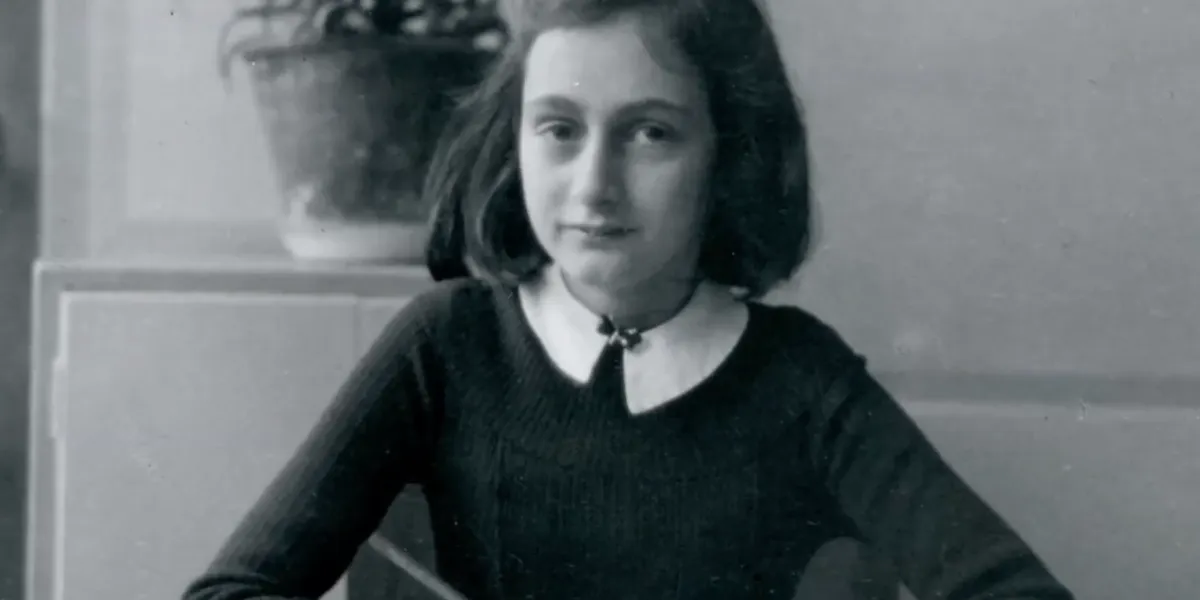
This week, Anne Frank trended on Twitter, not because of her famous diary or because she was a victim of hate. I cannot believe I am actually writing these words, but Twitter users debated whether Anne Frank had “white privilege.” Yes, you read that right.  Thousands of people were debating on social media if the 15-year-old Jewish girl who hid from brutal Nazis in an attic for two years and eventually was murdered at the Bergen-Belsen concentration camp, enjoyed “privilege” because of the color of her skin. 


To some people, privilege is a negative thing, something to be ashamed of and apologetic for but I don’t see it that way at all.  We Jews are in fact particularly privileged, but not in the way you may think.


Privilege is not a dirty word. To be clear, it is critical to be aware of whatever privileges one is blessed with, recognize and appreciate that others do not share that blessing, and incorporate that awareness and recognition while demonstrating care and compassion for others. Nevertheless, one needn’t apologize for privilege or be ashamed or feel guilty for having it. Quite the contrary, privilege is, well, exactly that—a privilege. One should be grateful for, appreciative of, and most of all feel tremendously obligated by the privileges we have.


For some, privilege means receiving the benefit of the doubt, or the assumption of innocence. For others, privilege means having access, entrée, and opportunity. For yet others, privilege means the comfort of feeling safe, protected, and secure.


By these definitions, in the context of history, and even now, Jews are among the most underprivileged people. We have been the target of libel, false accusations, and assumptions of guilt. These aren’t part of ancient history. A blood libel occurred in Massena, New York, in 1928.


We have been denied access and opportunity. As recently as the 1970’s Jews and blacks were unabashedly denied entry into country clubs in South Florida, an area thought of today as “so Jewish.” Many had signs that said “No dogs, no colored, no Jews.” And it wasn’t that long ago that Jews were similarly denied or limited to enter universities and graduate schools. In 1935, a Yale dean instructed his admissions committee: “Never admit more than five Jews.” Harvard’s president wrote that too many Jewish students would “ruin the college.”


Safety and security?  In 2021, Antisemitic incidents reached an all-time high, with a total of 2,717 incidents of assault, harassment and vandalism reported to ADL.  There were more than seven incidents per day of Jews in America being attacked, a 34 percent increase year over year.  Antisemitic incidents comprise a majority of reported hate crimes in New York City. According to 2019 FBI Data, Jews Were 2.6X More Likely Than Blacks and 2.2X More Likely Than Muslims to Be Victims of Hate Crimes.


The current attention to racism in America and the fight for racial justice is important. As I have said, racism is an evil we must actively, categorically reject. At the same time, we should also be aware, and make others aware, that antisemitism is on the rise globally and there remain entire nations and countless individuals who seek the extermination and elimination of the Jewish people.  


Two years ago, what are widely considered A-list celebrities with large social media presences praised Louis Farrakhan, a vile, unapologetic anti-Semite. In 2018, Farrakhan warned his 335,000 followers on Twitter about “the Satanic Jew.” As recently as October, 2018 Farrakhan told his followers in a widely-attended and shared speech, “When they talk about Farrakhan, call me a hater, you know how they do – call me an anti-Semite. Stop it, I’m anti-termite!”


In many places around the world, including too many right here in the United States, a Jew feels the need to remove a yarmulke or outer Jewish symbols to feel safe. There is no privilege to protect him.


I share this all not to make the argument we are more underprivileged or victimized by prejudice than anyone else, but that even today, access and opportunity, assumption of innocence, and especially safety and security, are not privileges the Jewish people can so readily count on and enjoy.


So what do I mean that we are particularly privileged and should be proud of it?

Privilege is not only about the way you are thought of and treated by others, but about how you think of and behave yourself. Privilege is not how others treat you but how you treat others. It isn’t what others do to you, but what you do with what you have.


The Mishna that we recite daily teaches, Rebbe Chananya ben Akashya omer, ratza Hakadosh Baruch Hu l’zakos es Yisroel, l’fichach hirbah lahem Torah u’mitzvos… The Holy One, Blessed Be He, wanted to bestow merit upon the Jewish people therefore He bestowed a vast Torah with a plethora of mitzvos.


What does zechus mean? When we host a distinguished guest or speaker, they are often introduced with “what a zechus it is to have so and so.” Zechus literally means privilege. Hashem wanted us to be privileged so He trusted us and charged us to live virtuous and righteous lives and to transform His world in His vision.


For a Jew, privilege doesn’t mean access, opportunity, or favors. It means responsibility, an awesome responsibility to set an example, to live elevated, meaningful lives, to repair the world in His image, to be of service to others. It means to rise above how we may be treated by others and to treat all with dignity, respect, and honor.


We have the privilege of studying Torah and being inspired by its timeless lessons. We were given the privilege of the instruction manual to life including the 613 mitzvos. We bear the privilege of being asked and expected to be at the forefront of fighting for justice, equality, fairness, and truth.


Rav Yitzchak Hutner, the great Rosh Yeshiva of Chaim Berlin, once stood before a Torah U’Mesorah convention, a gathering of Jewish educators from across the country. He suggested to them that he could summarize their entire duty, their task, in five words. If nothing else, their job, their role, and their mission of inspiring the Jewish future came down to their ability to communicate to the next generation “asher bachar banu mi’kol ha’amim, we are to be exceptional.” If a Jewish child walks away with nothing else from their Jewish education, minimally they must be made to feel that we are exceptional, privileged to be charged with being different.


Our status as a privileged or exceptional people is not intended to make us feel superior. Rabbi Dr. Norman Lamm, z”l pointed out that we don’t recite “asher bachar banu al kol ha’amim,” he has chosen us above all other nations. Rather, we say “mikol ha’amim,” he has chosen us from among all the nations of the world.


Being privileged should make us feel obligated and bound to live more ethically, act more sensitively, conduct ourselves more honestly, and proclaim our faith in the Almighty with pride and distinction, and never with shame or embarrassment.


Part of the responsibility that comes along with our privilege is to use whatever material privileges we have for the good. Despite the many challenges Jews have faced throughout the generations, most of our communities in the 21st century are blessed with the trappings of material and social privilege our ancestors would never dream of. We don’t have to and shouldn’t apologize for that; however, we must recognize that a Jew never focuses on his own entitlement, but rather thinks how his resources can be better used to advance good in the world, including for the “underprivileged.”


Privilege is not a luxury, it’s a legacy; it isn’t a free pass, it is a weighty proposition. Privilege shouldn’t breed entitlement, it should demand exceptional behavior.


I’m proud of my Jewish privilege and I hope my children will be too.


What Exactly Happened? It May Be None of our Business

In his book “Other People’s Money and How Bankers Use It,” Supreme Court Justice Louis Brandeis famously wrote, “Publicity is justly commended as a remedy for social and industrial diseases. Sunlight is said to be the best of disinfectants.” Shining a spotlight on an issue can expose and reveal corruption, dishonesty, fraud or abuse that otherwise might go unnoticed, ignored, or even excused.  Brandeis wrote these words well before the Internet was a thought in anyone’s mind and he likely could not have even dreamt of the sunlight it would shine and the accountability it would generate.


The capacity for instant access to information also makes us better informed, allows us to think more critically, and empowers us to ask crucial questions that make us safer, healthier, and stronger.  If you want to know more about your doctor’s education, read reviews of your landscaper, or see what your child’s teacher posts on Facebook, the endless information is now just a click away.


Brandeis was absolutely correct.  Sunlight is indeed a great disinfectant.  The internet has sanitized our world in wonderful ways by holding people accountable for their behavior, choices, actions, positions, and writings.  But what Brandeis didn’t mention is that unfiltered sunlight can also be harmful, toxic, and cause cancer.


There has never been a greater vehicle to disseminate lashon ha’rah, gossip and slander, than the internet.  Lives have been literally destroyed because of false accusations, innuendo, distortions, and untruths.  Once upon a time thoughts, ideas, and opinions were only printed if they had merit and were deemed worthy and carefully screened by a publisher.  Journalists had to vet their stories and fact checkers confirmed all assertions before an article went to print.  While the system wasn’t perfect, the result was authors gained credibility and readership based on their education, expertise, experience, and peer review.


Today, anyone with internet access can publish his or her ideas and opinions and even his or her version of facts with no expertise or credentials and with no consequence or accountability.  Readership and popularity are often a function of salaciousness and sensationalism, not truth and accuracy.


In his book, The Death of Expertise: The Campaign Against Established Knowledge and Why it Matters, Thomas M. Nichols elucidates this concept: People are now exposed to more information than ever before, provided both by technology and by increasing access to every level of education. These societal gains, however, have also helped fuel a surge in narcissistic and misguided intellectual egalitarianism that has crippled informed debates on any number of issues. Today, everyone knows everything: with only a quick trip through WebMD or Wikipedia, average citizens believe themselves to be on an equal intellectual footing with doctors and diplomats. All voices, even the most ridiculous, demand to be taken with equal seriousness, and any claim to the contrary is dismissed as undemocratic elitism.


All of this places an enormous burden on us, the readers and consumers of information, to be vigilant and judicious before blindly accepting everything we come across in print, online, or in person.  Especially in the information age, we must ask ourselves, who is the author or speaker of these words?  What authority or credibility do they have?  How does what they are saying match up with what I know about the person, place, or issue being discussed?  Is there another side to this story?  Do I have all the facts and information to draw a conclusion?


The Torah instructs us – mi’dvar sheker tirchak, distance yourself from falsehood.  The Gemara (Shabbos 55a) tells us that God’s signature, his insignia, is emes, truth.   To be Godly and God-like one must have ferocious loyalty and fidelity to the truth.  Exaggerating, distorting and bending the truth distance us and alienate us from the Almighty. The Sefer HaChinuch (Mitzvah 74) writes that the Torah does not include the obligation to “distance” ourselves when it comes to any other mitzvah or law.  When it comes to lying, it isn’t enough to be committed to the truth and devoted to never lying, but one must distance themselves completely from lies and from liars.  He writes that not only is the one who lies accountable, but the one who listens to lies, who provides a platform, or who explicitly or implicitly allows the liar to spread his or her lies, is also answerable.


Shlomo HaMelech, the wisest of all men, wrote in Mishlei (18), “maves v’chaim b’yad lashon, death and life are in the hand of the tongue.”  Perhaps his wisdom can be amended today to read death and life are in our fingertips on the keyboard.  Not everything appearing in our inbox or on our Facebook timeline are authoritative or even true.  Just because someone rants about a bad meal or poor service he had at a restaurant doesn’t mean you shouldn’t try it out.  Just because someone got his or her thoughts posted to The Huffington Post or The Times of Israel doesn’t mean he or she is a journalist or someone with a command of facts, the definitive position, or even a reliable perspective at all.


The burden of making sure that the internet functions as a disinfectant and not as a toxin is on the readers and consumers of its content.  We must be judicious, careful, and extremely vigilant, not only in what we write, but as importantly, in how we process and accept what we read.

There is another danger of non-judicious consumption of what is available on the internet.  Even when what is being reported is true, is it our business, do we need to know, will the knowledge help us or hurt others? The craving for salacious details and the appetite to know the story emanates from a terribly unhealthy sense of nosiness, inquisitiveness and our insatiable need to be in the know.


This phenomenon expresses itself in many scenarios. When some hear about a couple getting divorced, their first response is “what happened?” as if they are entitled to a report about the most personal and private details of a couple and often children going through a difficult time. Many pay a shiva call and feel a need to ask, “How did he or she die?” Certainly the mourner is free to volunteer the cause of death if they like, but is it really our business and do we truly need to know? When we ask, “Why did he lose his job?” or “why did they break their engagement?” or “why is she still single?” are we asking because we care about them, or is finding out somehow satisfying something in ourselves?


For some, the “need to know” stems from a sense of “information is power.” Information is social currency and the more we know, the richer and more powerful we are. For others, the “need to know” stems from an inability to live with tension or mystery. And yet, for others, the “need to know” is similar to whatever draws us to slow down and look at the accident on the highway even though it has nothing to do with us at all and only creates traffic for others.


The Torah places great value on people’s right to privacy. Jewish law demands that we conduct ourselves with the presumption that all that we are told even in pedestrian conversation is to be held in confidence unless it is explicitly articulated that we are free to repeat what we heard. The laws of hezek re’iyah forbid a person from looking into his or her neighbor’s property in a way that violates their privacy. We are instructed not to speak lashon ha’rah or rechilus and spread gossip, even if the information is absolutely true and entirely accurate. The Talmud (Bava Metzia 23b) goes so far as to tell us that we are permitted to distort the truth in circumstances that someone is prying for information that is none of their business and that they are not entitled to have.


Certainly the internet can be a great resource and blessing in our lives but the burden is on us to remain vigilant not to assume everything we read is true, or to read even things that are true, just because they are available to us.


Rabbi Efrem Goldberg

Join Our Community

Subscribe to our newsletter or connect with us on WhatsApp.