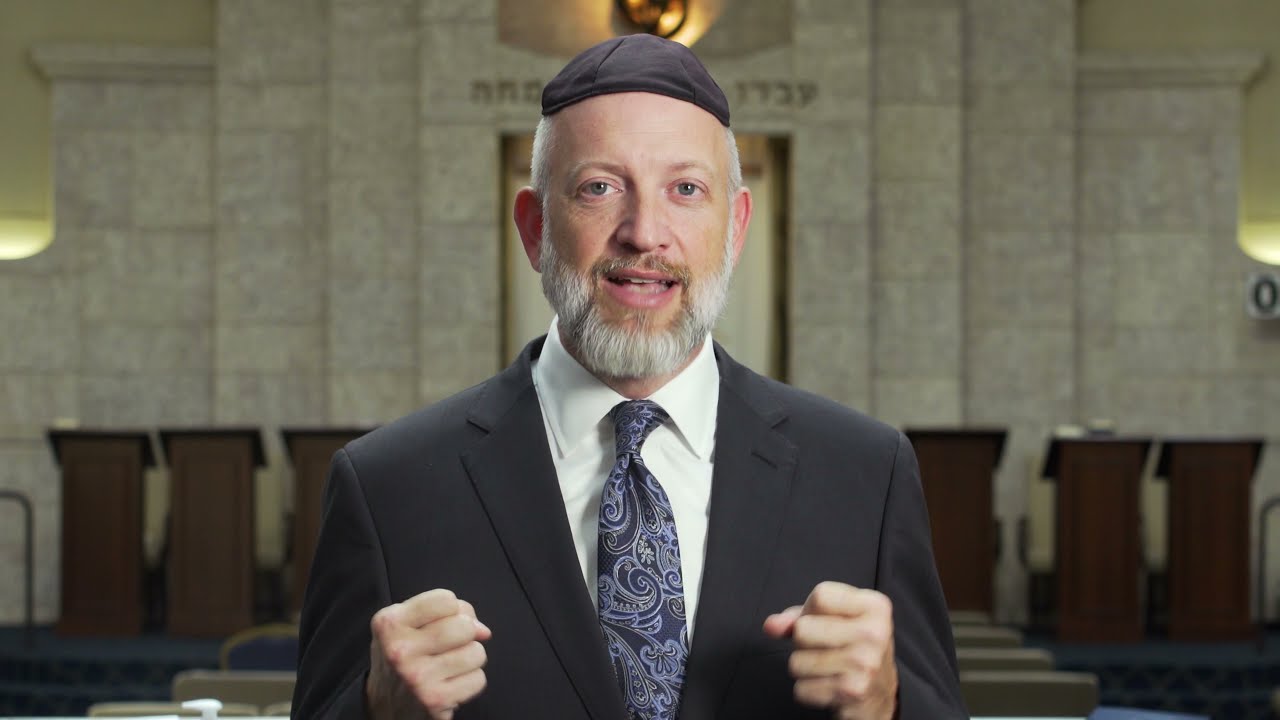
Fan or Player? The Big Game Called Life

Over 208 million viewers tuned in at some point to watch last year’s Super Bowl.  In fact, the big game drew so much attention, that last year a 30 second commercial cost $7 million, or $233,333 per second.   Consider this – In contrast, only 158.4 million people cast a vote in the 2020 presidential election, which was considered an impressive turnout.  Indeed, the last ten Super Bowls attracted more than 150 million viewers while the 2020 election is the only presidential election to hit that mark.  This is not just a statement on the country’s priorities – data also suggests that people like to watch and be spectators to something big.


Vayishma Yisro kohen midyan chosein Moshe eis kol asher asah Elokim l’Moshe u’lYisroel amo, ki hotzi Hashem es Yisroel mi’mitzrayim.  Rashi, quoting the famous statement from the Gemara in Maseches Zevachim, asks, mah shemuah shama ubah?  What did Yisro hear that inspired him to come. Rashi answers he heard about the splitting of the sea and the war with Amalek.


The question of the Talmud is perplexing. What do you mean “What did Yisro hear that made him come,” did the Rabbis not read the end of the pasuk, where it clearly states what Yisro heard? 


But there is something that troubles me much more, that is indeed somewhat staggering.  While we read this week of the impressive arrival of Yisro, how he abandoned all of the other religions and modes of worship to join the Jewish people in the desert, we never find out what actually happens to him.  The pasuk tells us a little later, Vayeshalach Moshe es chosno, vayeilech lo el artzo.  Moshe sends off his father-in-law, and he goes to his land.  Why didn’t Yisro stay, where did he go off to?  What ultimately happens to Yisro?


Indeed, we do encounter Yisro one more time.  He reappears amidst the drama and saga of Jewish History.  In the book of Bamidbar, Yisro reemerges among the nation of Israel, but again seeks to depart back to his home.  This time, in a striking departure from what we would call normal behavior between a son-in-law and father-in-law, Moshe begs, pleads and implores Yisro to stay. 


After a brief back and forth, the discussion ends abruptly and we are again left without knowing what happened to Yisro.  Indeed, the Torah literally leaves it a mystery: did Yisro ultimately reside among the Jewish people or did he move on?  The text is so ambiguous that it leaves room for the commentators to debate the issue.  The Ramban explains that Moshe’s arguments were so cogent and convincing that Yisro yielded to the request and remained among Bnei Yisroel.  The Seforno comments that Yisro followed his earlier pattern and once again split off from the Jewish people and headed home. 


The question for us, though, is why would the Torah omit this seemingly important fact, this very relevant detail?  We heard so much about his arrival, why not include whether or not he stayed?


The answer to both questions, I believe, is the same.  In truth, the Torah is not concerned with what ultimately happens with Yisro.  Where did he live, how many children did he have, what minyan did he daven at, what kind of yarmulke did he wear, all of this is not what we learn from Yisro.  The Torah is most impressed with, and wants to impress upon us, how Yisro did not exist in life as a spectator, an observer, but rather lived by listening carefully and by being moved by what he heard.  He didn’t watch from the sidelines, but he decided to enter the game.


The Talmud wasn’t asking what did Yisro hear that made him come, that’s clear from the pasuk. Look at the language of the question again. The Gemara didn’t ask mah shemuah shama, what did Yisro hear, it asked mah shemuah shama u’bah, what did Yisro hear that made him come, that got him off of his couch, and to live life.


Yisro merits having a Parsha named for him—and not just any Parsha, the one that contains the most seminal event in Jewish History, matan Torah—because he taught us a critical lesson.  We must not live as spectators but we must enter the game.  All of Yisro’s contemporaries heard the miraculous events that occurred to the Jewish people.  We recite every day, Sham’u amim yirgazun, they all heard.  But Yisro didn’t hear as a spectator from the sideline, he really heard the message and was moved to action.


I am a sports fan.  There is nothing wrong with being a spectator at times but we have to distinguish between real life and leisure.    In his book ““The Meaning of Sports: Why Americans Watch Baseball, Football and Basketball and What They See When They Do,” Michael Mandelbaum, a professor at Johns Hopkins, argues that we escape our lives and live vicariously through the athletes we watch when we become spectators.  He writes, “The word sport is related to ‘disport’ to divert oneself.  Baseball, football and basketball divert spectators from the burdens of normal existence…The prominence of the word play in team sports reveals their affinity with drama, the oldest form of which is in English, the play and the participants in which the actors are by tradition like participants in games called players.”


In the 1950s, the Lubavitcher Rebbe zt”l met with a young man who was about to become a Bar Mitzvah. After meeting with him and giving him a bracha, he had one more question for him: “Are you a baseball fan?” The Bar-Mitzvah boy replied that he was. “Which team are you a fan of — the Yankees or the Dodgers?” The Dodgers, replied the boy. “Does your father have the same feeling for the Dodgers as you have?” No. “Does he take you out to games?”


Well, every once in a while my father takes me to a game. We were at a game a month ago. “How was the game?” It was disappointing, the 13-year-old confessed. By the sixth inning, the Dodgers were losing nine-to-two, so we decided to leave. “Did the players also leave the game when you left?” “Rabbi, the players can’t leave in the middle of the game!” “Why not?” asked the Rebbe. “Explain to me how this works.”


“There are players and fans,” the baseball fan explained. “The fans can leave when they like — they’re not part of the game and the game could, and does, continue after they leave. But the players need to stay and try to win until the game is over.” “That is the lesson I want to teach you in Judaism,” said the Rebbe with a smile. “You can be either a fan or a player. Be a player.”


This escape, this notion of living as a fan is perfectly acceptable for windows of time necessary to relax.  The problem is that this mindset, this attitude has pervaded much of our ‘real’ lives. What might be termed a spectator psychology has invaded virtually every area of human concern.  Far too many people sit on the sidelines and contentedly observe others.


People become ‘just spectators’ to their own lives. They therefore cannot act to improve their lives and to change what is going on in their lives any more than they can act to change what is going on in the movies or the soap operas.


In a reality TV, spectator society, it is so easy to sit on our couch and be critical of others.  It is easy to become complacent, satisfied and content watching those around us but not actually seeking to change ourselves, to embrace that which is correct or to make a difference. 


We don’t know what happens to Yisro, but it is unimportant.  What is important is that he taught us how to be a seeker and a searcher.  He taught us how to break the mold of those watching from the sidelines and make the decision to join the game.


Hashem tells Bnei Yisrael, Va’Esa Eschem al Kanfei Nesharim V’Avi Eschem Eilai, I will lift you up on the wings of eagles and I will bring you close to Me. The first move is made by Hashem; I will bring you close to Me. And in the next pasuk the Torah uses the term segulah: V’Heyisem Li Segulah Mikol Ha’Amim, you will be to me more beloved than all the nations.  He makes the first move and we respond. As the pasuk says in the end of sefer Eichah, Hashiveinu Hashem Eilecha V’Nashuva; Return us to You and we will respond with Teshuvah.


In just a few months we will sit at the Pesach seder and when it comes time to welcome Eliyahu HaNavi we will get up and open the door.  Let me ask you an obvious question: can Eliyahu not come through the chimney?  Can’t he crawl through the window or walk through a closed door?  Why do we have to open the door? If we want the geulah, the redemption to come, we can’t remain seated in our chairs as spectators, but we must get up and respond with action.




Are Safe Spaces a Danger?

After three seasons with little flu activity, the dreaded illness came back with a fury.  In the last few weeks, almost every family I know has been hit by either the flu, Covid-19, RSV, or some combination of them, leaving people feeling as sick as they have ever been and taking weeks to recover their strength and shake their cough. 


Why are people, particularly children, getting sick with every virus, all at once?  According to many experts, we are paying back a collective “immunity debt.”  


Though far from accepted by all, according to many, the result of the locking down, distancing, masking and sterilizing surfaces is an immune system that isn’t primed, engaged, and ready to fight what comes its way.  That isn’t to say those weren’t correct policies at the time, rather it is to recognize that there was an unintended consequence, immunity debt that was incurred when we essentially pampered and protected our systems so they were unprepared or primed to withstand the viruses that came their way.  Paying off debt is never fun and it especially hurts when the currency is viruses and respiratory diseases.


When I read about this phenomenon, I thought not about the flu or Covid, but about its implications or analog in the world of our emotions and mental well-being.  

In December, Stanford University’s IT department introduced the Elimination of Harmful Language Initiative with a long list of words and phrases it considers “potentially harmful” and suggestions of an alternative word or term. “Guys” is considered “gender-based” and it groups people into gender binary groups and recommend using “folks,” “people,” or “everyone,” instead.   “American” is discouraged because it “refers to people from the United States only, thereby insinuating that the US is the most important country in the Americas (which is actually made up of 42 countries)”.


Stanford’s committee recommends instead to use “U.S. citizen.”  At Stanford, you can’t “master” your subject, as “historically, masters enslaved people.”  Studies should never be “blind,” they should better be described as “masked.”  Don’t write a “white paper,” since it “assigns value connotations based on color, an act which is subconsciously racialized.”  Stay away from “war room,” which represents the “unnecessary use of violent language.”  Ironically, it suggested not using “trigger warning” because “the phrase can cause stress about what’s to follow.”


Not surprisingly, the list generated significant backlash and pushback causing the university to take down the website a few weeks ago, almost immediately after it had launched.  Steve Gallagher, Stanford’s chief information officer, wrote: “The feedback that this work was broadly viewed as counter to inclusivity means we missed the intended mark. It is for this reason that we have taken down the EHLI site.” 


It turns out that cancelling the use of trigger warning was triggering for those who want to be able to speak freely.  This episode and this failed attempt are a great illustration of the challenge to find the careful balance between promoting and pushing for sensitivity, while not creating an environment with an unintended consequence of over-sensitivity. 


On the one hand, we should be intolerant of abusive, inconsiderate, and insensitive language that unnecessarily hurts and harms people.  But on the other, we need to build people’s resilience and toughness to not be so sensitive to the point they are harmed or injured by words that had no negative intentions. We have made enormous progress in promoting more sensitive language but at the same we must not create such a regulated and sterilized world in which the slightest insensitivity will trigger victimhood and injury.


Are we unintentionally creating an emotional immunity debt that paradoxically puts the very people we are trying to protect in greater danger of being harmed?


Prominent NYU social psychologist Jonathan Haidt recently argued that Gen Z (those born between 1997 and 2012), has been set up for failure due to a confluence of social media, bad parenting, and a culture that emphasizes victimhood.  Gen Z’ers are “fragile,” he says, unable to cope effectively with the normal stresses and challenges of adulthood.


In their book, “The Coddling of the American Mind,” Haidt and co-author Greg Lukianoff coined the expression Safetyism. “Safetyism refers to a culture or belief system in which safety has become a sacred value, which means that people are unwilling to make trade-offs demanded by other practical and moral concerns.” They argue that all this protection, hypersensitivity and “safetyism” is in fact breeding anxiety, depression and the danger of significant mental health challenges.


When it comes to allergies, the thinking used to be the more precautions the better.  More and more schools went nut-free to protect those with dangerous allergies.  But it turns out, studies showed that allergy-free zones were not only ineffective in keeping people safe, they were often counterproductive because allergy sufferers developed a false sense of security.  Researchers noticed that Israel has a relatively low rate of allergies in general and one allergy in particular, peanuts, which is strange considering that not only do Israelis not shield children from peanuts, they bring them up eating them in the form of Bamba.  Ultimately, a study found that 1.9% of children with allergy risk factors who were fed peanuts developed an allergy by their fifth birthday while among children not given peanuts, the figure was 13.9%.  In other words, they found if you don’t want your children to develop a peanut allergy, don’t create an environment free of peanuts, feed them peanuts early and often. 


To be clear, I am not suggesting that we expose children to hurtful and insensitive language early or often so that they don’t later have an allergic reaction when they hear it.  It should be a universal belief that people should always take care with the words and language they use and certainly avoid saying anything to intentionally harm or offend.  People must also understand that sometimes their words can genuinely harm even if they did not intend to.


However, I do believe that our effort to create an environment preventing exposure to anything “triggering” can have the unintended negative consequence of lowering our “immunity” and heightening our “allergic reactions” when something is said or written.  We must not raise an overly delicate and fragile generation who can become emotionally injured or paralyzed too easily.


When Man is created, the Torah tells us, וַיִּפַּ֥ח בְּאַפָּ֖יו נִשְׁמַ֣ת חַיִּ֑ים וַֽיְהִ֥י הָֽאָדָ֖ם לְנֶ֥פֶשׁ חַיָּֽה, “God blew into Man’s nostrils a Soul of life, and he became a living creature.” Targum Unklus explains “living creature” means “a speaking spirit.”  What differentiates people from animals is our power of speech.  Indeed, Shlomo HaMelech (Mishlei 18:21) warns us: מָוֶת וְחַיִּים בְּיַד־לָשׁוֹן, “Death and life are in the power of the tongue.” 


Classically, this is understood as a caution to be vigilant and careful in our use of words and to ensure we don’t harm others with them.  Perhaps, though, it is also a warning not to allow our life or death, or happiness or sadness to be determined by the words of others.  Our job is to both be sensitive with how we speak to, and about others, but also not be overly sensitive regarding how others speak to us.  


We must condition ourselves and our children towards sensitivity while also building our resilience and tenacity.  We must not relinquish our happiness or well-being to the comments or even actions of others.  Let’s not create a collective emotional immunity debt or coddle those around us in a way that unintentionally harms the very people we are committed to protect and keep safe. 

Criticizing Israel – The 5:1 Rule

PHOTO: RONEN ZVULUN/PRESS POOL

Dr. John Gottman has spent his career studying healthy marriages and has scientifically identified the behaviors that contribute to dysfunctional ones. He can spend a short time with a couple and predict with over 90% accuracy if they will still be married in five years from that point.


Gottman found that the single biggest determinant to a happy and healthy marriage is the ratio of positive to negative comments the partners make to one another. A different study examined factors that made the greatest difference between the most and least successful business leadership teams. The optimal ratio was amazingly similar in both studies—five positive comments for every negative one. For those who ended up divorced (or for unsuccessful business teams), the ratio was 0.77 to 1—or something like three positive comments for every four negative ones.


If we want relationships to not only survive but to thrive, we must make a concerted effort to express compliments in a 5 to 1 ratio over criticisms.  This magic formula is critical not only for marriage or business but for any relationship we are invested in and we want to feel connected to. Parents must be mindful of the ratio in interacting with children and educators should be thoughtful of this proportion when communicating with students.


Recently, I have been thinking of one other relationship in which this ratio is critical: our relationship with the State of Israel.


The new Israeli government, one that has frequently been described as the most right-wing in Israel’s short history, has attracted significant attention and garnered strong criticism.  Some have expressed outrage at the election and appointment of several ministers. Others express concerns about proposed legislation regarding judicial reforms, arguing they risk compromising and undermining the foundation of Israel’s very democracy. Still others have strong feelings over the ministerial appointment of Aryeh Deri and the subsequent Supreme Court decision to invalidate it.


Sadly, and unfortunately, both opponents and defenders of the current coalition and its proposed legislation have too often oversimplified the issues, eliminated nuance, subtlety, and legal analysis and have resorted to sound bites that serve a political agenda.  These issues and topics are complicated, and deserve analysis and study before arriving at or expressing an opinion; yet, as is often the case, predictably, most will choose to take an uninformed position that conforms to political affiliation and loyalty regardless of the actual complexities of the issues. 


Several American Jewish organizations have weighed in and publicly offered their criticism, expressed their outrage, or prophesized their doom and gloom for Israel’s future.  Locally, a prominent Jewish organization was weighing adding its voice to the chorus of those publicly proffering criticism and concern with a statement and communication to its constituents.  I think that is a tragic and potentially destructive mistake.


Certainly, Israel is not beyond reproach or criticism from either direction.  Some thought the last coalition that included Mansour Abbas of Ra’am, an Islamic Party, was the time to express public concern while others feel the current coalition that includes far-right ministers Bezalel Smotrich and Itamar Ben-Gvir is worthy of protest and opposition.  Some felt the Gaza withdrawal was worthy of public statements in resistance, while others expressed concern about expansion in Judea and Samaria.


Our words matter and we must be extremely judicious in deciding how to use them.  Rav Aharon Soloveitchik, zt”l, writes in his book Logic of the Heart, Logic of the Mind, “Upon delivery from the Egyptian bondage, the Israelites regained their self-expression. As long as they were subjected to Egyptian bondage, their self-expression was stifled and suppressed. But at the moment of Exodus, the Israelites regained their speech. Slaves cannot express or assert themselves properly. They cannot realize their potential. Only the free man is capable of doing so.”


The Arizal saw the connection between speech and freedom in the very name of the holiday.  Pesach, he explained, comes from “Peh – sach” – “a mouth converses.”  Part of affirming our freedom is affirming the awesome responsibility that comes with freedom of speech.


Criticism is, of course, at times warranted, but I wonder about the wisdom of Jewish organizations in the Diaspora expressing it on either side through public statements and proclamations. Will statements influence policy and politics in Israel in a meaningful way or do they just contribute to sowing division and discord while satisfying a certain segment of a base of constituents?  Is the goal to simply level a protest for posterity?  What is the risk or unintended consequence of criticizing Israel publicly in America, no matter how warranted or deserved it may be? 


A 2021 Pew Study found that only 60% of U.S. Jews say they are either very emotionally attached or somewhat emotionally attached to the modern state of Israel.  Will non-nuanced and oversimplified public criticisms from both sides bring diaspora Jews closer or further to Israel?  Will it garner more or less support for Israel from the general American public and from American elected officials? 


To be clear, what is at stake is not Israel’s connection to diaspora Jews, but diaspora Jews’ connection to Israel. If that is severed, Israel will survive, but Jews with tenuous identity may not. The leaders of diaspora organizations should think carefully about what best serves the interests of their constituency and what promotes a healthy long-term relationship in which criticism will be relevant and important but cannot be the central or most common expression.


One can violate the 5:1 ratio, criticize more freely and frequently, but they will be an outside critic, not someone nurturing a relationship. If we want to promote and strengthen our and others’ relationship with Israel, it behooves us to hold ourselves to Gottman’s standard and work hard to release at least five statements of support and compliments for every time we feel it is necessary to criticize. 


Cruise Considerations: FAQ

Halachos Related to Going on a Cruise

Frequently Asked Questions

Rabbi Efrem Goldberg


Q: Can I eat from the sealed Kosher meals that were heated for me on Shabbos?

A: It is prohibited to explicitly ask a non-Jew to heat food for you on shabbos.  If a non-Jew on their own heated solid foods without liquid, they may be eaten.  If the non-Jew heated liquids, they should only be consumed once they have cooled significantly and the benefit of having been heated is gone.[1]


Q: Can I eat a baked potato that was double wrapped in silver foil and brought to me as such?

A: A raw potato is obviously kosher.  It can be cooked in a non-kosher oven by double wrapping it in silver foil.  Since bishul akum is a concern, you should arrange to put the potato in the oven yourself. 


Q: Can I eat a piece of salmon that was double wrapped in silver foil?  What about other fish?

A:  It is only permissible to eat fish when you have seen the fins and scales and confirm its kosher status.  A clean knife should be used to fillet the fish on clean paper.  Salmon is the only fish that is kosher even once filleted since it is distinguished by its color.  The fish should be double wrapped in silver foil, and you must place it in the oven to avoid bishul akum.


Q: Can I eat hard boiled eggs that were prepared in a non-kosher pot?

A: The taste from the non-kosher pot is transferred and the eggs are not kosher.


Q: Can I eat cold cereal and milk in a non-Kosher bowl with a non-kosher spoon?

A: Yes, but care should be taken to confirm that the cutlery and utensils are clean.


Q: Can I eat freshly cut up fruit and/or vegetables?

A:  Yes, with exception of onions and radishes.[2]  Please be aware that some vegetables like broccoli and cauliflower require inspection to make sure there are no insects.


Q: When the cruise is complete, is birchas ha’gomel recited?

A: Yes, preferably within three days [3]


Shabbos Considerations:


Q: Does it make a difference what day of the week the cruise begins?

A: There is no concern with a cruise that begins on Sunday – Wednesday.  Due to the potential for sea sickness, combined with the possibility of Shabbos violation, Chazal decreed[4] that it is forbidden to set sail within three days of Shabbos.[5]  While a minority opinion[6] suggests that today large ships are stable and eliminate the necessity to adjust, most opinions[7] require us to observe the original decree.  Therefore, you should not book a cruise that sets sail Thursday or Friday.[8]


Q: If the cruise docks on Shabbos, can I disembark?

A: There is no prohibition in disembarking on Shabbos, but there are a few halachic considerations you must be careful about.  Since there is no eruv binding the ship to the dock and its adjacent area, carrying is forbidden.  You must check your pockets, etc. before disembarking.  Furthermore, there is a limitation in how far you can travel on shabbos outside of a residential area.  The techum (boundary) begins at the dock and extends approximately 7/10 of a mile.  Care must be taken not to walk too far and many believe out of caution, one shouldn’t disembark from a ship that docked on Shabbos.


Q: The ship has a metal detector, can I pass through it when re-boarding the ship on Shabbos?

A: You may pass through the detector assuming you are not carrying or wearing anything that may set it off. 


Q: My cabin has an electronic door lock, what should I do on shabbos?

A: You must leave your key at the front desk or with security and let them know that you will be asking them over shabbos to open your door for you.[9]


Q: The doors throughout the ship are electronic and open based on a sensor.  What should I do?

A: If there are manual doors available, it is preferable to use them.  If not, wait for a non-Jew to trigger the sensor and open the door and follow closely behind them.


Q: Can I carry on the ship; does it need an eruv or eruv chatzeiros?

A: Carrying on the ship is permissible as it is an inherently closed space.  No eruv chatzeiros is necessary.[10]


Q: Where should I light Shabbos candles? Can I use electric lights?

A: It is preferable to light candles in the dining room within proximity to where the Shabbos meals will take place.  If that is not possible, they can be lit in the cabin where you will sleep.  In most cases, candles are not allowed on the ship, so the mitzvah should be fulfilled by turning on an incandescent light bulb or flashlight; a beracha should be recited.[11]


Q: I don’t have kosher grape juice or kosher wine, how do I make Kiddush?

A: If there is no kosher grape juice or wine, Kiddush should be recited over bread.[12]


Q: I didn’t bring a havdallah set, what should I do?

A: Beer or juice can be used in place of wine.[13]  Any spice that has a fragrance can be used as besamim.[14] Two candles held together can be used as the havdallah candle.  If only one candle is available, the beracha may be recited. If candles are not permitted on the ship, one may use an electric incandescent light in place of a Havdalah candle.


Listen to a 3-part series on these halachos:

Cruise Considerations: What You Need to Know (Part 2)

Cruise Considerations: What You Need to Know (Part 3)


[1] Biur Halacha 253: d”h dino k’shachach

[2] Taz, Yoreh Deah 91:2

[3] Shulchan Aruch o.c. 219

[4] Shabbos 19a, Shulchan Aruch o.c. 248.  The decree is limited to a recreational journey.  A journey for a mitzvah is not subject to this limitation.

[5] According to the Vilna Gaon, the three days include Shabbos and therefore, Wednesday is permissible to journey

[6] Menuchas Ahava (1:2) by Rabbi Moshe Halevi (1961-2001)

[7] Tzitz Eliezer 1:21 and Yalkut Yosef Shabbos 1:248:note 1

[8] If a cruise that begins Thursday or Friday was already booked and is non-refundable, please ask your local Orthodox Rabbi

[9] Operating the electronic door mechanism is a Rabbinic prohibition thereby rendering asking a non-Jew to open it a shvus d’shvus b’makom mitzvah (oneg Shabbos).  Even if it were prohibited from the Torah, amirah l’akum on a psik reisha is permissible.

[10] Igros Moshe o.c.1:141

[11] Shemiras Shabbas K’Hilchasa ch. 43 note 22

[12] Shulchan Aruch o.c. 272:9

[13] O.c. 296:2

[14] Mishna Berura 297:10

An (Updated) Open Letter Regarding Yeshiva Week(s)

This week marks the much-anticipated and highly celebrated time on the Jewish calendar. Yeshiva Week has become such a fixture and institution that it now has a Wikipedia entry defining it as “the informal term for a vacation period occurring annually in mid- to late January, in which many Jewish day schools and yeshivas afford time off to their students.  It is primarily a North American phenomenon.” 


In truth a more apt name would be “No Yeshiva Week,” as schools and yeshivas close while many students and their families go on pilgrimage to Florida, Mexico, the Caribbean and other exotic locations, while others enjoy a staycation.  What began as Yeshiva Week has morphed into Yeshiva Weeks, with different states and institutions no longer coordinating the time off and intentionally staggering it to avoid overlap, a fascinating phenomenon in its own right.


Our community is a primary destination that feels the impact of Yeshiva Week.  Local cynics describe preparing for it as one might for a hurricane.  We load up on supplies early, hunker down, assume it will be difficult to be out and about, and wait for the storm to pass before emerging.


But the truth is, there are many beautiful aspects to welcoming so many fellow Jews to our South Florida community.  For me, I look forward to meeting and greeting guests, love seeing familiar faces and old friends, colleagues, and acquaintances, and genuinely enjoy learning about new people and the places they are visiting from.  Nevertheless, for some visitors and local residents, Yeshiva Week can be challenging and frustrating when waiting on lines, looking for parking, or struggling to get a table. In general, whether we see the beauty and blessing, or instead focus on the frustration and aggravation, is really all up to us.


Dovid HaMelech teaches us (Tehillim 34:13) the secret to life: מִֽי־הָ֭אִישׁ הֶחָפֵ֣ץ חַיִּ֑ים אֹהֵ֥ב יָ֝מִ֗ים לִרְא֥וֹת טֽוֹב׃, Who is the man who is eager for life, who desires years of good fortune?  The simple interpretation of the passuk and its advice has the question mark after the words “Liros Tov.” Who is the person who wants to live a long life, loving days and seeing good? And then Dovid gives the answer:  A good long life is achieved when one guards his tongue from speaking evil…”


Rav Nissan Alpert, however, encourages us to punctuate and interpret differently. Place the question mark after the words he’chafetz chaim, who wants a long and good life?  The answer is ohev yamim liros tov, one who loves to fill days with seeing good.  


The quality of our lives is determined by the attitude that we bring.  Liros tov, look for the good, see the positive. There is a phenomenon that psychologists call the “Missing Tile Syndrome.”  When a person is in a beautifully tiled room, his eye is not drawn to the ornate tiles or to the detailed labor.  Rather, if there is one tile missing in the whole room, the natural tendency is to be drawn to and focused on that tile.  We tend to fixate on what is missing, on what is lacking or deficient, instead of emphasizing the beauty, the abundance, or the plenty.


Our Jewish world too often has a culture of criticism. We suffer from the Missing Tile Syndrome, drawn to what we think is wrong or missing, instead of focusing on the abundance of blessing.  Yeshiva Week(s) presents a fantastic opportunity to be liros tov, to bring parts of the Jewish world together, to form relationships and enjoy each other’s company while on vacation.  We can focus on the blessings, the opportunities and the good, or we can be fixated with hyper criticism on what is frustrating or wrong.


There is always more we can do to make each other’s lives even more pleasant.  Here are some suggestions:


To our Yeshiva Week visitors:


We hope you have a safe and smooth trip down here and enjoy your time in our community.  We are very excited to welcome you and to benefit from the influx of your energy, enthusiasm and participation.  We are grateful you have chosen to visit our community and to support our local establishments and attractions.  If we can be helpful in any way during your visit or can offer any hospitality, please don’t hesitate to reach out.


If you don’t mind, here are a few reminders that may be helpful during your visit:


·  Unlike the Beis HaMikdash, our restaurants don’t expand based on the pilgrimage of Jews. Our proprietors and their staffs are doing the best they can. Please be patient, understanding and courteous, and please be generous with your tips, since the waiters are doing the best they can during an overwhelming time.


·      While you feel that they may do things differently or even better “back home,” and you may have the best intentions in sharing feedback in real time or later online, please be patient and supportive of our local proprietors, especially while they are trying to manage an overwhelming mob of patrons.  Please don’t feel obligated to share your feedback and suggestions online or offline, particularly if you aren’t here full time, as it can negatively impact our friends’ livelihoods. 


·      Please note and be sensitive to the fact that while you enjoy our many kosher dining options and kosher supermarkets, it is the local residents who support them all year long and enable them to be available to you when you visit.


·  Please observe all parking rules and regulations and don’t double park. The white lines are not suggestions; your car should be between them.


·      Our shul has many minyanim each morning and each evening. Please attend one of the listed minyanim and don’t assume a new minyan should be formed based on the time you arrive. 


·     In South Florida, life moves at a little slower and more relaxed pace. If the light turns green and the person in front of you doesn’t step on the gas within a millisecond, be patient, take a deep breath, take in the palm trees, and enjoy being on vacation.


·      If you encounter a line, see it as an opportunity to spend time with others in your group or to read, learn, or listen to a shiur. Talk to the person in front of you or behind you; they are as eager as you to get to the front.


·   When shopping at the local establishments, please only enter the check-out line when you have completed your shopping. Leaving your cart in line while you run back and forth to fill it and using it as a place holder is discourteous and is not our definition of online shopping.


·      If you enjoy the minyanim, shiurim, learning opportunities, programs, mikvahs, eruv, or kashrus available in our community, please feel free to express your gratitude by making a contribution of any amount to our Tomchei Shabbos or Chesed Fund that can use help and support.


Over the course of your stay, please come say hello and introduce yourself.  If you are considering moving here, please let us know if there is any way we can help or any questions we can answer. We would love to get to know you.


Sincerely,


Rabbi Efrem Goldberg


________________________________


To my fellow Floridians:


This week begins the annual influx of visitors for Yeshiva week.  This week is a great reminder of the honor and privilege we have to live year-round in the very paradise that others clamor to get a taste of for just one week a year.  Yes, it may be hard to find parking, eat out, or have your usual seat in shul (and maybe another one for your Tallis bag) during this time, but those are small prices to pay to offer gracious hospitality to fellow Jews, some of whom specifically come here to experience the warmth our community is known for.


If you don’t mind, here are a few reminders for the coming few weeks:


·      While we support the local establishments all year, don’t minimize or dismiss the economic boon that our proprietors have come to rely on from vacation week.  Be grateful and gracious for the patronage and support of all of our visitors.


·      Be warm and welcoming when you see visitors and new faces. Offer a smile and a kind greeting.  When in doubt, fail on the side of assuming someone is visiting and say hello.  The worst that can happen is the person lives here longer than you, but they will still feel appreciated. 


·    Be patient, gracious and hospitable, and treat every visitor the way we would want to be treated when visiting or vacationing elsewhere. These weeks are an amazing opportunity to practice authentic Hachnosas Orchim – which is not just having our friends over for Shabbos meals (though there is nothing wrong with that), but helping, making sacrifices for, and showing kindness to visitors we do not know.


·      If someone is sitting in your usual seat in Shul, the appropriate response is not, “You are in my seat,” or a passive-aggressive “That row has a few empty ones,” or non-subtle gesturing with your hands in an effort to get someone to move; simply find another seat. Our visitors aren’t doing anything malicious or with bad intent, they are just trying to experience davening at BRS. (This applies the rest of the year too.)


·   Recognize it will be hard to get a table or eat out and plan around it. We can enjoy our wonderful restaurants all year long, let others have them for the week or be patient when eating out.


·      Don’t use social media to share any frustrations or displeasures. Post about all the beautiful tiles in your life, not the missing one.


Looking forward to welcoming our guests and enjoying this vacation period together.


Sincerely,


Rabbi Efrem Goldberg


A Priceless Gift That Blew Away the Recipient

Did you have a happy Chanukah?  Did you get any good gifts?  It turns out if you want to increase your happiness and health, the question is not did you get any good gifts but did you give any.  Research across psychology and neuroscience shows that giving gifts lights up the pleasure portions of the brain.


In a widely-quoted study, Elizabeth Dunn, Ph.D., professor of psychology at the University of British Columbia, gave participants either $5 or $20 and told one group to spend it on either other people and the other group to spend it on themselves. The results showed that people who were told to spend on others were significantly happier than those who spent the money on themselves, regardless of the dollar amount.


Happiness does not result from a focus inward, but it results from the deep satisfaction and profound gratification of imitating God and helping and giving to others.  The Rambam discusses the Halachos of giving not when discussing Chanukah, but in reference to Purim.  At the end of Hilchos Megillah (2:17), the Rambam makes an incredible comment.  He asks, if a person has limited funds and must choose between having a more lavish and luxurious Purim meal, more extravagant and impressive mishloach manos, or giving more matanos l’evyonim, money to the poor, what should he do and why?


The Rambam codifies that the resources should be dedicated to helping the indigent and poor because Purim is about simcha and there is no greater happiness than bringing joy to others, especially the underprivileged.


Someone once wrote to the Lubavitcher Rebbe zt’l in a state of deep depression and hopelessness.  The letter essentially said, “I would like the Rebbe’s help. I wake up each day sad and apprehensive. I can’t concentrate. I find it hard to pray. I keep the commandments, but I find no spiritual satisfaction. I go to the synagogue but I feel alone. I begin to wonder what life is about. I need help.”


The Rebbe sent a brilliant reply that did not use even a single word. He simply circled the first word of every sentence in the letter and sent it back. The author of the letter understood, and he was on the path to greater happiness and hope.  The circled word at the beginning of each sentence was “I.” 


A self-centered person, a taker, can never be happy in life because they could never take enough.  Givers find joy in doing for others and therefore have great access to happiness because there are always ample opportunities to give.


Dunn found that an exceedingly underrated gift is much simpler and cheaper than you think, the gift of gratitude.  She observed, “Research shows that people absolutely love hearing expressions of gratitude. It makes people super happy.”  You don’t have to spend a lot of money or figure out the perfect gift.  “Writing really lovely thank you notes to people is actually a great gift in itself.”  


Moshe Rabbeinu had many names and yet the one he is universally known by is Moshe. Why? Of all his names, why use the one given by Bisya, the daughter of Pharaoh, who saved him from the river?  Why not use the name his own mother gave him? The Torah endorses the name Moshe as a perpetual thank you to Bisya for her generous and courageous act.  Sometimes, an act of generosity is so great, it cannot possibly be repaid other than to never stop saying thank you. 


This week I learned of yet a different type of gift, one the giver and recipient both benefit from and enjoy. 


A dear friend of mine who leads a very successful company held a retreat for his employees and their spouses, an overwhelming majority of whom are observant. The long weekend provided magnificent hospitality, delicious delicacies, fun activities, spiritual inspiration and amazing entertainment.  The level of gashmiyus, material pleasure, was matched and surpassed by the height of the ruchniyus, the spiritual atmosphere and opportunities. 


The employees wanted to present a gift to the company’s owner in gratitude not only for the weekend but for all he does for them regularly, but they were stuck.  What would be meaningful?  What would be something he would appreciate that he couldn’t easily get for himself? 


What they gave him blew him away.  They presented a stunning edition of the Sefer Chafetz Chaim, a sefer he learns daily with his wife, but that wasn’t the real gift. They distributed copies of Chafetz Chaim: A Daily Companion, a wonderful work on the concepts and laws of proper speech, to all the employees, and made a group commitment to study and implement it in his honor.  He was so excited and it meant the world to him. 


It has been said, the best things in life aren’t things.  While there are “things,” necessities in life that we can’t live without, and there are “things” that make wonderful, sentimental, and practical presents, sometimes the greatest gift is not a thing, but a commitment to improve and to become better. 


Not in lieu of material gifts, but alongside them, we can gift our spouse a commitment to be a better husband or wife, we can gift our parents a practical plan of how we will be a better son or daughter, we can demonstrate to our friend the gift of more loyal friendship.  These gifts won’t break the bank, they don’t cost anything, but they are invaluable. 


If you want to find happiness, don’t focus on getting but giving.  Give a gift to someone for no reason at all, make them feel acknowledged and visible.  It will bring a smile to their face and put happiness in your heart.  Give the gift of gratitude for those who have enriched your life.  Don’t just mumble a thank you, take the time to write a nice note and communicate meaningfully.  But the greatest gift you can give both yourself and others around you is to become the best version of yourself, the person they deserve you for you to be. 

Roar Like a Lion!

One December, Rav Yaakov Kamenetsky zt”l, asked his students what their New Year’s Resolutions were. The students were shocked: “Rebbe, this isn’t the Jewish new year!” He responded, “The entire country is using this as a time for self-reflection and self-improvement, and we won’t?!”


We are almost a full week into our New Year’s resolutions for 2023.  How are yours going so far?  What did you resolve to change?  If you decided this is your year to lose weight and get healthy, you are not alone.  In fact, according to a recent survey, these are this year’s most popular resolutions (participants could elect more than one):


1.    “Exercise more” – 52%

2.    “Eat healthier” – 50%

3.    “Lose weight” – 40%

4.    “Save more money” – 39%

5.    “Spend more time with family/friends” – 37%


Do you know who the biggest beneficiaries are of new year’s resolutions?  Not the people who responded to the survey, or the tens of millions of people who took on new resolutions.  It is fitness retailers and gyms who see an enormous spike in sales and membership come the first week of January. Statistics show that by the beginning of February, almost 80% of the gym’s new members have stopped coming.


This attrition is hardly limited to weight loss or exercise resolutions. While 45% of Americans make New Year’s resolutions, only 8% are successful at keeping them and meeting their goals.  What is the difference between the 8% who succeed and the 92% who fail?  Is it conditions around them?  Are they programmed differently?


As Yaakov anticipates that his days are coming to an end, he gathers his children to bestow berachos upon them.  He likens his son Yehuda to a lion, the King of the animals and with that metaphor foreshadows that the monarchy will descend from Yehuda: “Gur aryeh Yehuda mi’teref b’ni alisa, kara ravatz k’aryeh, u’chelavi mi y’kimenu, a cub and a grown lion is Judah. From the prey, my son, you withdrew.  He crouched, rested like a lion, and like a lion, who will rouse him?”


Indeed, this week’s Haftorah tells the story of Dovid Hamelech a descendant of Yehuda, and the progenitor of the Davidic dynasty.


In describing Yehuda as a lion, Yaakov is highlighting that Yehuda’s personality radiated power, strength, authority, courage and prominence.  Like a lion, he was an invincible warrior, a triumphant King. 


But what is Yaakov communicating with the imagery of karah ravatz, the lion crouching down and mi yekimenu, nobody can awaken him?  The simple understanding is that he is so powerful, so strong, that even when he is resting and crouched down, nobody dares to rouse him.


However, the Kotzker Rebbe interprets the pasuk differently.  He suggests Yehuda’s greatness and worthiness to be the source of Jewish monarchy is not his invincibility and infallibility, but exactly the opposite.  Says the Kotzker Rebbe, karah ravatz. He is not only a lion when he stands upright, but even when he falls, when he fails or makes a mistake.  Mi yekimenu, who can rouse him from his fall?  Nobody but Yehuda, who has the internal strength, resolve, tenacity and drive to pick himself back up and return to his relentless pursuit of success. 


Rabbi Soloveitchik quoted this insight from the Kotzker and added that at Yosef’s sale, Yehuda acted not like a lion, but a coward.  He crouched to the ground and failed to show leadership. Yet, he rose by himself without anyone extending a helping hand.  He made a terrible mistake with Tamar, but he repented with a contrite heart.  He was not embarrassed to publicly confess, to admit the truth in front of all his friends and associates and say, Tzadka mimeni, she was more righteous than I. 


Do you know what it means to see yourself as a lion?  You are not just a lion when you are on top of the world, things are going your way, you are in control, disciplined and living your best life.  Being a lion means even when down and out, even when undisciplined and falling, even when failing on resolutions and goals, you nevertheless still believe there is a lion in you, waiting to roar.  It means picking yourself up, rededicating yourself to the goal, the resolution, the commitment, the relationship, the promise or pledge. 


Look around us.  We live in a time of lambs, not lions.  When the going gets tough, people bail on relationships, jobs, commitments and goals.  We are living in a disposable society and in a time of CDD.  We all know ADD – attention deficit disorder.  Many are suffering CDD – commitment deficit disorder.


But that is not us.  We are a stubborn people.  We have a sense of stick-with-it-ness.  The Sfas Emes quotes the Targum Yonasan on our Parsha who says this is in fact why we are called “Yehudim.”  Each one of us is a Yehudi, a descendant of Yehuda.  Even if you are a Kohen or Levi, you also descend from Yehuda.  We are called Yehudim because we have internal strength to elevate ourselves after we have fallen.  We have the will to stand back up and roar.  Says the Sfas Emes, the uniqueness of Yehuda was that after the episode with Tamar, he didn’t feel doomed, hopeless or despondent.  He wasn’t disappointed in himself or resigned to failure.  He was always ready to start anew, begin again and, as Yehudim, it is that strength and that conviction that he instilled in us. 


Do you know what the difference is between the 92% who fail to fulfill their New Year’s resolutions and the 8% who succeed?  It is their belief in themselves as a lion, not only when all is going well, but even or especially when they hit a bump in the road.  It is the belief that if they are knocked down, if they miss a week at the gym, or cheat on their diet, or lose their patience, or have an impulse buy, that it isn’t all over, it just means, like Yehuda, having the will and strength to begin again.


Mi yekimenu – nobody can rouse the lion but himself.  Steve Salerno, author of “How the Self Help Movement made America Helpless,” demonstrates how believing the solution is outside of ourselves is not only not a solution, but actually promotes and reinforces the problem.  Certainly, there are tools, values, people, classes and books that can help us accomplish our goals and become the best version of ourselves.  But the changes that we are looking for must come from within ourselves.


Yehuda’s dignity and majesty were the result of his drive and determination.  If this is to be our year of making our resolutions come true, the answer is not anywhere but inside ourselves.  Research shows that you are 42 percent more likely to achieve your goal if you write it down.  Articulate it, make a plan to achieve it, ask others for help making you accountable with it, and most importantly, resolve in your heart that not if, but when, you get knocked off of it, you will roar like a lion and get right back on.   

Some Questions Don’t Have Answers

* This article first appeared in Mishpacha Magazine on November 22, 2022

Isidor Isaac Rabi was a Nobel laureate physicist recognized for his discovery of nuclear magnetic resonance, used the world over in MRI machines. He was born into a religious Jewish family in Hungary and came to the US as a young child. A letter to the New York Times in 1988, published shortly after he died, tells an amazing story.


Rabi was once asked, “Why did you become a scientist, rather than a doctor or lawyer or businessman, like the other immigrant kids in your neighborhood?”


Rabi answered, “My mother made me a scientist without ever intending it. Every other Jewish mother in Brooklyn would ask her child after school: ‘So? Did you learn anything today?’ But not my mother. She always asked me a different question. ‘Izzy,’ she would say, ‘did you ask a good question today?’ That difference — asking good questions — made me become a scientist.”


In our day and age, there is no shortage of good questions. The world is only getting more complicated and confusing with each passing day. And yet, despite the complexity of the questions we face, and regardless of our own ignorance or illiteracy on any given subject, we want to give the answer. We don’t hesitate to weigh in or stake out a position.


And the truth is, it is no wonder. We live in the information age, with access to terabytes of information at our fingertips offering answers to almost anything in milliseconds. We can consult  videos found online and repair our own cars, install our own home alarm systems, replace the control board on a clothes dryer, or design incredibly complex spreadsheets. It shouldn’t come as a surprise that we feel capable and entitled to understanding any issue and having answers to everything.


But the truth is that while technology may be opening doors to more information, more accessible instructions, and even answers, it is also giving us a gross case of overconfidence.


A 2015 study found that recent college graduates vastly overestimated how much they knew about their area of concentrated study, and dramatically underestimated just how much they had already forgotten. Social psychologists call that the “illusion of explanatory depth”: assuming you can write or speak extensively about a particular subject, when in fact you can barely scratch the surface. Another contributor is the Dunning-Kruger Effect, a cognitive bias that tricks people into believing they are smarter and more skilled than they actually are.


In his 2011 book, Thinking Fast and Slow, Nobel Prize–winning economist Daniel Kahneman (nephew of Rav Yosef Shlomo Kahaneman, rosh yeshivah of Ponevezh) called overconfidence “the most significant of the cognitive biases.” Indeed, Kahneman singles out overconfidence as the first bias he would eliminate if he “had a magic wand.” It has been blamed for the sinking of the Titanic, the nuclear accident at Chernobyl, the losses of the space shuttles Challenger and Columbia, the 2008 subprime mortgage crisis, the oil spill in the Gulf of Mexico, and much more.


Overconfidence is not only responsible for natural disasters and large calamities; it’s also a core cause of broken relationships, failed dreams, and struggles in faith for countless individuals. If someone believes and behaves as if he has a monopoly on truth and positions himself as the source of all answers, he will alienate all those around him, be they friends, chavrusas, colleagues, or, most significantly, his spouse and children. Genuine and healthy relationships require humility and modesty, openness to being influenced, and a commitment to understand others as much as to be understood by them.


Mark Twain once said: “It ain’t what you don’t know that gets you into trouble. It’s what you know for sure that just ain’t so.” L’havdil, long before Twain, Chazal taught that a smart person is not one who knows the most but one who knows how little he knows. “Ezeihu chacham? Halomeid mikol adam.” Who is the smartest person in the room? The one who knows he has something to learn from everyone else in the room.


Knowing that the answer to almost anything is a simple Google search away, or that hundreds of thousands of Torah sources are instantly accessible, available, and searchable thanks to Otzar Hachochma, conditions us to feel far more knowledgeable than we are, far more self-assured than we should be.


Overconfident talmidim and students struggle to submit and defer to their rebbeim and teachers. And simultaneously, overconfident rebbeim and teachers too often fail to admit when they don’t know something, or when a question is better than any answer they can provide. Instead, they often criticize the questioner or label the question illegitimate or out of bounds, often leaving a young person dissatisfied at best, or worse, embarrassed, shamed, or turned off altogether. Overconfident rabbanim, rebbetzins, and chassan and kallah teachers fail to stay in their line, offering advice or guidance without training or expertise rather than referring to true authorities, unintentionally hurting the very people they intend to help.


Another byproduct of overconfidence is feeling both capable and entitled to understand the ways of Hashem. Previous generations who survived and lost more than we can imagine found a way on the whole to maintain their faith and Torah lives. Meanwhile, today, not only significant and consequential challenges rock our faith, but also much more minor hardships cause crises of emunah for those who can’t make sense of them.


To put it simply, the test of our generation is to avoid feeling arrogant, smug, or overly confident in understanding of politics, policies, religion, and life. When we fail that test, the impact is felt in marriages, in learning, and in faith.


I recently had privilege of sitting in the shiur of Rav Elimelech Reznick, a maggid shiur at Yeshivas Mir in Yerushalayim. The yeshivah is learning Maseches Yevamos, considered one of the three most difficult tractates in Shas. That particular day, Rav Reznick presented what is known as a “bomba kashe,” an incredibly compelling and powerful question, in this case asked by Rav Akiva Eiger. Before analyzing the question and the assumptions driving it, Rav Reznick went on a tangent to talk about the beauty of a great kashe, a wonderful question.


He spoke about Rav Aharon Kreiser, an alter Mirrer who, when he had a great question on the Gemara, would walk around the beis medrash with the biggest smile, sharing the question with anyone he could. When someone tried to respond with an answer or offer an unsolicited solution, he would cut them off and say, “This question has brought me so much light. Why are you trying to darken the sugya by offering a teirutz, an answer to my kashe?”


Once, when Rav Reznick showed up for his chavrusa with Rav Asher Arieli, the Mir rebbi who delivers the largest shiur in the world, Rav Asher told him, “I have a matanah for you, a special gift.”


Rav Reznick looked around and didn’t see a box or anything in wrapping paper. Rav Asher told him, “I have a great kashe for you, a great question for you to think about. There is no matanah more precious than that, enjoy.”


When he was a young bochur, Rav Reznick’s rebbi presented this very same question of Rav Akiva Eiger. After shiur, Rav Reznick went up to his rebbi to offer a possible answer. Instead of considering the answer, his rebbi immediately launched into a ten-minute mussar schmuess, characterizing the effort to answer a question of the great Rav Akiva Eiger, without having ever fully having learned all of Yevamos even once, as an enormous chutzpah, an act of brazenness.


Rather than reflect with bitterness or resentment, Rav Reznick nostalgically shared this story with gratitude and appreciation, explaining how today we would coddle a young person, put an arm around him, and say, “Way to go for attempting an answer, good for you.” But that is a disservice, he continued, a terrible pedagogic mistake. Genuine chinuch means reminding talmidim of their place, to both encourage and reward their creativity and pursuit of answers while simultaneously reinforcing the importance of humility and the dangers of overconfidence.


In Koheles, Shlomo Hamelech describes his efforts to explore, understand, and have the answers to everything. “Amarti echkamah, v’hi rechokah mimeni — I said I will be wise, but it remained elusive to me.” Shlomo confesses that he tried, analyzed, contemplated, but at the end of the day, he came up short; despite being the wisest of all men, complete understanding was beyond his grasp.


The reality is that there are some questions we simply aren’t capable of answering. Some questions aren’t for us to answer. We need to learn to concurrently foster curiosity, inquisitiveness, interest, and the pursuit of answers, while also reinforcing the importance of understanding our place, and appreciating that we must not have the chutzpah to feel entitled or even able to understand everything, and that sometimes there is not only nothing wrong with living with and grappling with a question we cannot answer. Indeed, there is something very beautiful and magical about it.


Admitting we don’t know and learning to live with questions is not just necessary for our generation, it is an important part of our mesorah. The Gemara (Berachos4a) states, “D’amar Mar, lameid leshonecha lomar eini yodeia, shema tisbadeh v’sei’achez — Teach your tongue to say ‘I do not know,’ lest you become entangled in a web of deceit.”


Our greatest scholars didn’t hesitate to say “I don’t know,” causing us to think more rather than less of them, and to place greater confidence in the things they did purport to know. Rashi, without whom Shas would be a closed book, is famous for the several places in which he writes, “eini yodeia, I don’t know,” regarding the meaning, interpretation, or relevance of a particular verse or statement.


Rav Soloveitchik once shared:

I remember that once I was studying Talmud with my father. I asked him why the Talmud did not resolve the problem under discussion in so many cases. Instead, the Talmud concludes with the phrase Teiku [let the matter remain unresolved]. Why was no conclusion reached by the Talmudic sages? My father explained to me that a Jew must apprehend that he cannot understand and comprehend everything. When a Jew learns that there are halachos which are ambiguous, then he will also come to the realization that there are other areas that are also not clear-cut. In matters of faith, Teiku will also be encountered.


The greatness of Avraham, our forefather, was that he knew how to say “Here I am” [Bereishis 22:1] even though he did not understand the request that Hashem made of him. The basis of faith is Teiku. If a Jew does not master the concept of Teiku, then he cannot be a true believer.


Similarly, when discussing a perplexing theological challenge, Rav Mattisyahu Salomon stated that sometimes the best response is “Teiku,” that we don’t yet know, we can’t yet answer, the matter is unresolved.


If Chazal were sometimes satisfied leaving a question unanswered, if Rav Soloveitchik and  ybdlcht”a Rav Mattisyahu could live with the tension of questions that are unresolved, then we, too, must have the humility to sometimes admit that we don’t know, we don’t understand, and we won’t have the chutzpah to suggest otherwise.


If we want healthy and functional relationships in our lives, if we want to succeed in our dreams and ambitions, if we want to live with emunah and bitachon, we must recognize that confidence is a virtue, but overconfidence is a dangerous vice. As we confront difficult dilemmas and circumstances, as we try to make sense of complicated issues and topics, let’s let in some light by spending time sitting on the question and appreciating its light, and not hurrying to extinguish it by running to provide answers.


The Epidemic of Loneliness

Even before the Covid pandemic, an “epidemic of loneliness” was compromising our physical and mental health and even our life expectancy.  Despite people being more connected than ever now—through smartphones, Facetime, WhatsApp, social media and Zoom—loneliness continues to rise. Among the most digitally connected, teenagers and young adults, loneliness nearly doubled in prevalence between 2012 and 2018, coinciding with the explosion in social media use.


According to the Census Bureau’s American Time Use Survey, a decade ago, the average American spent 15 hours per week with neighbors, friends and even clients, which shortened to 12 hours per week in 2019, and only 10 hours a week in 2021. On average, Americans did not transfer that lost time to spouses or children. Instead, they chose to be alone. 


In a powerful and oft-referenced study, Julianne Holt-Lunstad of Brigham Young University found that the risk effects of loneliness and weak social networks parallel smoking fifteen cigarettes a day.  Social interaction is not a luxury, it is a basic need. Holt-Lunstad compares the need for connection to our bodies need for food. A study published in Nature Neuroscience found similarities in brain scans between participants who had been socially isolated and those deprived of food for ten hours.


As connected as we are online, people are increasingly disconnected offline, creating feelings of loneliness and having a terrible impact on our health and wellbeing. While there is no vaccine for this epidemic, there is a solution that is much less expensive, less painful, and immediately accessible to all.


Eliminating someone’s feeling of loneliness can be as simple as saying hello.  New research in the Journal of Personality and Social Psychology found that people underestimate how much others like hearing from them and how big a difference it can make to someone to simply receive a text or call from someone saying hi.  Put differently, taking a moment to check in on someone can mean the same thing to them as giving food to someone who is starving. 


Last summer, a young person posted on a WhatsApp group that he no longer wanted to live. As you can imagine, everyone on the group jumped into action.  I was notified and reached out to him, his parents, and his therapist.  An amazing father and son from our community went over to this person’s apartment to spend time, show love and, working with professionals, make sure he was safe.  When I checked in on the young person a few days later, he apologized for all the commotion he had caused and explained, “I was feeling really lonely, really isolated and like I was totally invisible.  I just needed connection and I knew that text would get it.”  


Baruch Hashem, he was not serious about doing harm to himself, but others feeling that way are and a simple text, phone call, or check-in from us can mean the world.


The Mishna in Avos teaches: רַבִּי מַתְיָא בֶן חָרָשׁ אוֹמֵר, הֱוֵי מַקְדִּים בִּשְׁלוֹם כָּל אָדָם.  Upon meeting people, be the first to extend greetings.  The Tiferes Yisroel comments: הרי זה ההצלחה היותר גדולה שתשיג בעולם הזה, this is the greatest success you can achieve in this world.  The biggest title in a community, the most “successful” person, is not the one who has the longest Shemoneh Esrei, learns most diligently, or even gives the most tzedakah.  It is the community’s biggest connector, the one who is friendly and warm, who smiles at people and creates connection with others. 


If you don’t know what to text or say, it’s very simple.  “Just saying hi.” “Checking in.” “Been too long, let’s catch up.”  That connection, that social nourishment and nutrition, can make the difference between someone’s happiness or depression, success or struggle, and even literally between life and death. 


In this week’s parsha, Mikeitz, Yosef is released from prison.  What changed, what was the catalyst for his freedom?  In last week’s parsha, Yosef has been not only abandoned by his family, he has been sold into slavery, falsely accused and sentenced to prison.  But instead of retreating to the corner of his cell and wallowing in his own sorrow, focused on his own suffering, he notices that his two cellmates look sad and he asks them, maduah pneichem ra’im hayom, why do you look sad today?  Grateful for his asking, they confide about their dreams, Yosef successfully interprets them, and later one of them recommends Yosef to Pharaoh. 

Not only did Yosef’s destiny change but the course of the Jewish people, the Egyptian empire, and arguably all of humanity changed because of four words, “why are you sad.” 


If we want to get out of the prison of our lives, to break free of that which is holding us back and closing us in, like Yosef, we have to stop looking inward and being concerned only with ourselves.   We must notice, care about, and inquire about the people around us. 


As a young man, Yosef was concerned with himself.  With vanity, he beautified himself in the mirror.  He talked about his dreams instead of asking others about theirs.  But then he grows up. This na’ar who struggled with narcissism, learns to turn outward, concern himself with others. Instead of obsessively looking in the mirror, he looks through the window and sees others.  He matures to the point of asking fellow cellmates, why do you look so sad, what can I do for you, how can I make you feel better, tell me what is happening in your life, I am listening. 


Like Yosef, too many of us flaunt our dreams and are obsessed with looking in the mirror.  But like Yosef, we too can mature. We must learn to take an interest in others.  When we see friends, family members or co-workers, instead of sharing our status or metaphorical selfie with them, let’s ask, maduah pneichem ra’im hayom?


Chanukah has begun and while so many of us are excited to light candles with family, to go to concerts with friends, to enjoy parties and exchange gifts, others are dreading observing yet another holiday all alone.  Don’t just light your candles this Chanukah. Take the time and make the effort to make sure everyone is on fire and together we can end the pandemic of loneliness.    


SEEING WITH 20/20 VISION – THE ESSENCE OF CHANUKA

A husband and wife are getting ready to go to sleep. The wife is ready to close her eyes and her husband stands staring at himself in the full-length mirror. “What’s the matter with you?” she says. Come to sleep already.” He turns to her and says, “Look at this, I am so depressed. All I see is a receding hairline, a growing gut, and wrinkles under my eyes and what hair I have left is grey. Tell me something positive, something uplifting so I can go to sleep.” She thinks for a moment and says, “Well the good news is your vision is still 20/20.”


There is a very high association between Chanuka and the sense of sight. “HaNeiros halalu kodesh heim, v’ein lanu reshus l’hishtameish bahem elah lirosam bilvad.” As we will begin to sing next week on each night of Chanuka, the candles are sacred, we don’t have permission to benefit from their light but their purpose is simply to be looked at. Moreover, we have a unique halacha on Chanuka. The Talmud tells us and the Shulchan Aruch records – ha’roeh mevareich, one who can’t light for himself or herself and sees the candles of someone else – nevertheless makes the second beracha, she’asah nissim la’avosainu. When I see someone put on tefillin, take a lulav, or blow shofar, I don’t make a beracha. Only on Chanuka do I make a beracha on seeing someone else do the mitzvah.


The Kedushas Levi, Rav Levi Yitzchak of Berdichev, tells us that Chanuka is the holiday of seeing. The different moadim correspond with our different senses. On Purim our hearing is heightened as we listen to the megilla. On Pesach our sense of taste is sharpened when we eat matzah and marror and on Chanuka, he says, we evaluate our sense of sight, how well do we see.


What kind of seeing are we honing? It is not our physical sense of sight. Indeed, in a sort of paradoxical way, our eyes are a liability. You see, we often feel that “seeing is believing.” If I can perceive and observe it, it is true. If I can’t, it is not real. Following this rule, we have dismissed and disregarded many of the most precious truths and realities in our lives. There are ideas, feelings, thoughts and dreams that are authentic and genuine, despite the fact that they can’t be seen or observed.


Our Rabbis describe the Greek empire and Hellenist influence as choshech, darkness. In expounding on the opening verses of the creation story, the Midrash Rabbah says choshech al p’nei sehom – zu galus yavan, darkness on the vastness, that is the exile of Greece. Moreover, our Rabbis taught that darkening our eyes was the goal of our Greek oppressors – shehechshichu einehem shel yisroel.


What is the difference between a room that is filled with darkness or with light? Is there any actual change to the room itself? Whether the light is on or off in the room, the furniture remains the same, the layout of the room, the placement of the door and the height of the ceiling are a constant. What, then, is the difference whether the light in my room is on or off? The answer is just my perception. The only difference is my ability to identify and see the reality, the truth and that which was right before me all along. Chanuka is about seeing things, people, ideas, and miracles that are really right in front of me, even though I may not be able to visibly see them.


George Orwell once wrote: “To see what is in front of one’s nose needs a constant struggle.” One can live with his eyes open, perfect vision, and the light on and still be cloaked in darkness. On the other hand it can be pitch black all around and yet a person can see absolutely clearly. The Chashmonaim didn’t see their few numbers, weak army, and impossible task. They saw the mighty hand of Hashem, they saw the obligation to fight, and they saw Divine protection that would accompany them.


Chanuka is about lighting the candles and using them to harness our sight, not opthalmologically speaking, but our deep vision of what is true, precious, and dear. When we look at our spouses and children, do we see the amazing blessing of their presence in our lives or do we hear lots of noise, see rooms that need to be cleaned up, and a messy house? When we face a challenge do we see no way out or an opportunity to further lean on our Creator? There are truths all around us; it is up to us to decide what to look at and how to see.


In her “Hasidic Tales of the Holocaust,” Professor Yaffa Eliach shared the incredible story of Chanuka in Bergen Belsen:


It was time to kindle the Chanuka lights. A jug of oil was not to be found, no candle was in sight, and a Chanukia belonged to the distant past. Instead, a wooden clog, the shoe of one of the inmates, became a Chanukia, strings pulled from a concentration camp uniform, a wick, and the black camp shoe polish, pure oil.


Not far from the heaps of bodies, the living skeletons assembled to participate in the kindling of the Chanuka lights. The Rabbi of Bluzhov lit the first light and chanted the first two blessings in his pleasant voice, and the festive melody was filled with sorrow and pain. When he was about to recite the third blessing, he stopped, turned his head, and looked around as if he were searching for something.


But immediately, he turned his face back to the quivering small lights and in a strong, reassuring, comforting voice, chanted the third blessing: “Blessed are Thou, O Lord, our God, King of the Universe, who has kept us alive, and has preserved us, and enabled us to reach this season.”


Among the people present at the kindling of the light was a Mr. Zamietchkowski, one of the leaders of the Warsaw Bund. He was a clever, sincere person with a passion for discussing matters of religion, faith and truth. As soon as the Rabbi of Bluzhov had finished the ceremony of kindling the lights, Zamiechkowski elbowed his way to the Rabbi and said, “Spira, you are a clever and honest person. I can understand your need to light Chanuka candles in these wretched times. I can even understand the historical note of the second blessing, “Who wrought miracles for our Fathers in days of old, at this season.” But the fact that you recited the third blessing is beyond me. How could you thank God and say “Blessed art Thou, O Lord, our G-d, King of the Universe, who has kept us alive, and hast preserved us, and enabled us to reach this season”? How could you say it when hundreds of dead Jewish bodies are literally lying within the shadows of the Chanuka lights, when thousands of living Jewish skeletons are walking around in camp, and millions more are being massacred? For this you are thankful to God? For this you praise the Lord? This you call “keeping us alive?”


“Zamietchkowski, you are a hundred percent right,” answered the Rabbi. “When I reached the third blessing, I also hesitated and asked myself, what should I do with this blessing? I turned my head in order to ask the Rabbi of Zaner and other distinguished Rabbis who were standing near me if indeed I might recite the blessing. But just as I was turning my head, I noticed that behind me a throng was standing, a large crowd of living Jews, their faces expressing faith, devotion, and deliberation as they were listening to the rite of the kindling of the Chanuka lights.


I said to myself, if God has such a nation that at times like these, when during the lighting of the Chanuka lights they see in front of them the heaps of bodies of their beloved fathers, brothers, and sons, and death is looking from every corner, if despite all that, they stand in throngs and with devotion listening to the Chanuka blessing “Who performed miracles for our Fathers in days of old, at this season”; indeed I was blessed to see such a people with so much faith and fervor, then I am under a special obligation to recite the third blessing.”


You see, that night in Bergen Belson, Mr. Zamietchkowski only saw what lay before him, dead bodies and terrible suffering. The Rebbe also looked, but he saw another layer of truth that was equally accurate – that there was a gathering of people who maintained incredible faith despite the most horrific circumstances.


As we celebrate Chanuka next week, let us remember that there are truths all around us not visible to the naked eye. Let us use the light of the Chanuka candles to inspire us to see the truth with clarity and 20/20 vision.


Rabbi Efrem Goldberg

Join Our Community

Subscribe to our newsletter or connect with us on WhatsApp.