Don’t Just Sing Am Yisrael Chai, Live It!

When the Jews of Bergen-Belsen concentration camp were liberated on April 20th 1945, they sang Hatikvah. At the end of the anthem, British Army Chaplain Rabbi Leslie Hardman, cried out, “Am Yisrael Chai – the People of Israel live!”


When Golda Meir visited the Great Synagogue in Moscow as the Israeli Ambassador in 1948, the crowd of 50,000 ecstatically welcomed her with shouts of “Am Yisrael Chai!”


In 1965, in order to energize the Soviet Jewry movement, Shlomo Carlebach was asked to compose a song. He wrote the famous version of Am Yisrael Chai.


In 2009, Prime Minister Netanyahu visited Wannsee Villa in Berlin, where the Final Solution for the destruction of Europe’s Jews was planned in 1942 by Hitler and leaders of the Third Reich. In the visitors’ book he wrote just three words in Hebrew and then translated them into English: “Am Yisrael Chai – The people of Israel live.”


As a slogan, Am Yisrael Chai affirms that despite the systematic attempts to exterminate and annihilate the Jewish people, thanks to God’s guiding hand and the tenacity and resilience of the Jewish People, we stubbornly persevere. God has made an eternal covenant with the Jewish People; He has their back.


Am Yisrael Chai is also a tefilla, a longing for a united Jewish people living together in safety, security and with unity and harmony.


Explaining the words “I will take you to Me as an “עם”, a people (Shemos 6:7), Rav Soloveitchik writes:

The political-historical unity as a nation is based on the conclusion of the covenant in Mitzrayim, which occurred even prior to the giving of the Torah at Sinai.  This covenant forced upon us all one uniform historical fate. The Hebrew word עם Am, nation, is identical to the Hebrew word עם Im, with. Our fate of unity manifests itself through a historical indispensable union…No Jew can renounce his part of the unity…Religious Jews or irreligious Jews, all are included in one nation, which stands lonesome and in misery in a large and often antagonistic world…

In the ashes of the crematoria, the ashes of the Chasidim and pious Jews were put together with the ashes of the radicals and the atheists. And we all must fight the enemy, who does not differentiate between those who believe in God and those who reject Him.


The secret to a strong Am Yisrael is a sense of Im Yisrael, being in it together, united, loyal, giving one another the benefit of the doubt and judging each other favorably.


The Torah relates that at the end of the first day of creation, ויהי ערב ויהי בוקר, יום אחד – “It was evening and it was morning; the first day” (1:5).  Rav Zev of Strikov advances a beautiful chassidic reading of this pasukערב (evening) represents the gloom of exile, periods when we are thrust into “darkness,” struggling, suffering, and in distress.  בוקר (morning), then, symbolizes the “light” of the redemption, the joy of salvation.  The way we proceed from ערב to בוקר, from the darkness of suffering to the light of redemption, is יום אחד – having days of oneness, days of achdus, unity, togetherness. 

This is a major gut check moment for those who live outside of Israel.  Do we feel connected to the plight of our brothers and sisters there? Are we in profound pain by the events unfolding?  Are our lives severely interrupted and different while this is going on? 

The Rambam (Hilchos Teshuva 3:11) writes that a person who vigilantly and righteously observes Jewish law, but separates himself from the Jewish People, has no portion in the World to Come.  How does he define separating from the people?  Someone who doesn’t identify with the tzarah, with the crisis and tragedy Jews are enduring, has no portion in the World to Come. 

There is so much we can and must be doing.  We are all called to serve in this war, our courageous and brave heroes on the front lines but also Jews and decent people everywhere in the world.  Daven, learn, send funds and supplies, text, call and check in on family and friends in Israel.  Rally, advocate, write letters in gratitude to elected officials and media who are getting it right, and stand up to and protest those who are grossly wrong.

As we recite in the beracha of יוצר אור each morning, עושה שלום ובורא את הכל (“Maker of peace and Creator of everything”) – once there is shalom, then there is “everything.”  If we are embroiled in conflict and strife, we will remain in darkness.  It is only when we transcend our differences and join together in mutual love and harmony that we can emerge from ערב to בוקר, from the darkness of exile to the light of redemption.

It must be clarified that unity does not mean uniformity.  We do not need to be the same, act the same, think the same, or hold the same opinions, in order to achieve the “light” of יום אחד.  We need simply to focus on all that we share in common – which far exceeds that about which we disagree – and build and strengthen our bonds of friendship despite our relatively few differences.

Rabbi Yisrael Meir Lau, standing in Auschwitz-Birkenau at the March of the Living several years ago said, “We always knew how to die together. The time has come for us to know also how to live together.”

During this most difficult time, may the people of Israel learn to live with one another in harmony and unity. Am Yisrael Chai!
 

The Meaning of Am Yisrael Chai

When the Jews of Bergen-Belsen concentration camp were liberated on April 20th 1945, they sang Hatikvah. At the end of the anthem, British Army Chaplain Rabbi Leslie Hardman, cried out, “Am Yisrael Chai – the People of Israel live!”


Jews in Bergen-Belsen singing Hatikvah


When Golda Meir visited the Great Synagogue in Moscow as the Israeli Ambassador in 1948, the crowd of 50,000 ecstatically welcomed her with shouts of “Am Yisrael Chai!”


Golda Meir in Moscow


In 1965, in order to energize the Soviet Jewry movement, Shlomo Carlebach was asked to compose a song. He wrote the famous version of Am Yisrael Chai.


In 2009, Prime Minister Netanyahu visited Wannsee Villa in Berlin, where the Final Solution for the destruction of Europe’s Jews was planned in 1942 by Hitler and leaders of the Third Reich. In the visitors’ book he wrote just three words in Hebrew and then translated them into English: “Am Yisrael Chai – The people of Israel live.”


As a slogan, Am Yisrael Chai affirms that despite the systematic attempts to exterminate and annihilate the Jewish people, thanks to God’s guiding hand and the tenacity and resilience of the Jewish People, we stubbornly persevere. God has made an eternal covenant with the Jewish People; He has their back.


Am Yisrael Chai is also a tefilla, a longing for a united Jewish people living together in safety, security and with unity and harmony.


Explaining the words “I will take you to Me as an “עם” a people (Shemos 6:7), Rav Soloveitchik writes:

The political-historical unity as a nation is based on the conclusion of the covenant in Mitzrayim, which occurred even prior to the giving of the Torah at Sinai.  This covenant forced upon us all one uniform historical fate. The Hebrew word עם Am, nation, is identical to the Hebrew word עם Im, with. Our fate of unity manifests itself through a historical indispensable union…No Jew can renounce his part of the unity…Religious Jews or irreligious Jews, all are included in one nation, which stands lonesome and in misery in a large and often antagonistic world…

In the ashes of the crematoria, the ashes of the Chasidim and pious Jews were put together with the ashes of the radicals and the atheists. And we all must fight the enemy, who does not differentiate between those who believe in God and those who reject Him.


The secret to a strong Am Yisrael is a sense of Im Yisrael, being in it together, united, loyal, giving one another the benefit of the doubt and judging each other favorably.


Rabbi Yisrael Meir Lau, standing in Auschwitz-Birkenau at the March of the Living several years ago said, “We always knew how to die together. The time has come for us to know also how to live together.”


During this most difficult time, may the people of Israel learn to live with one another in harmony and unity. Am Yisrael Chai!
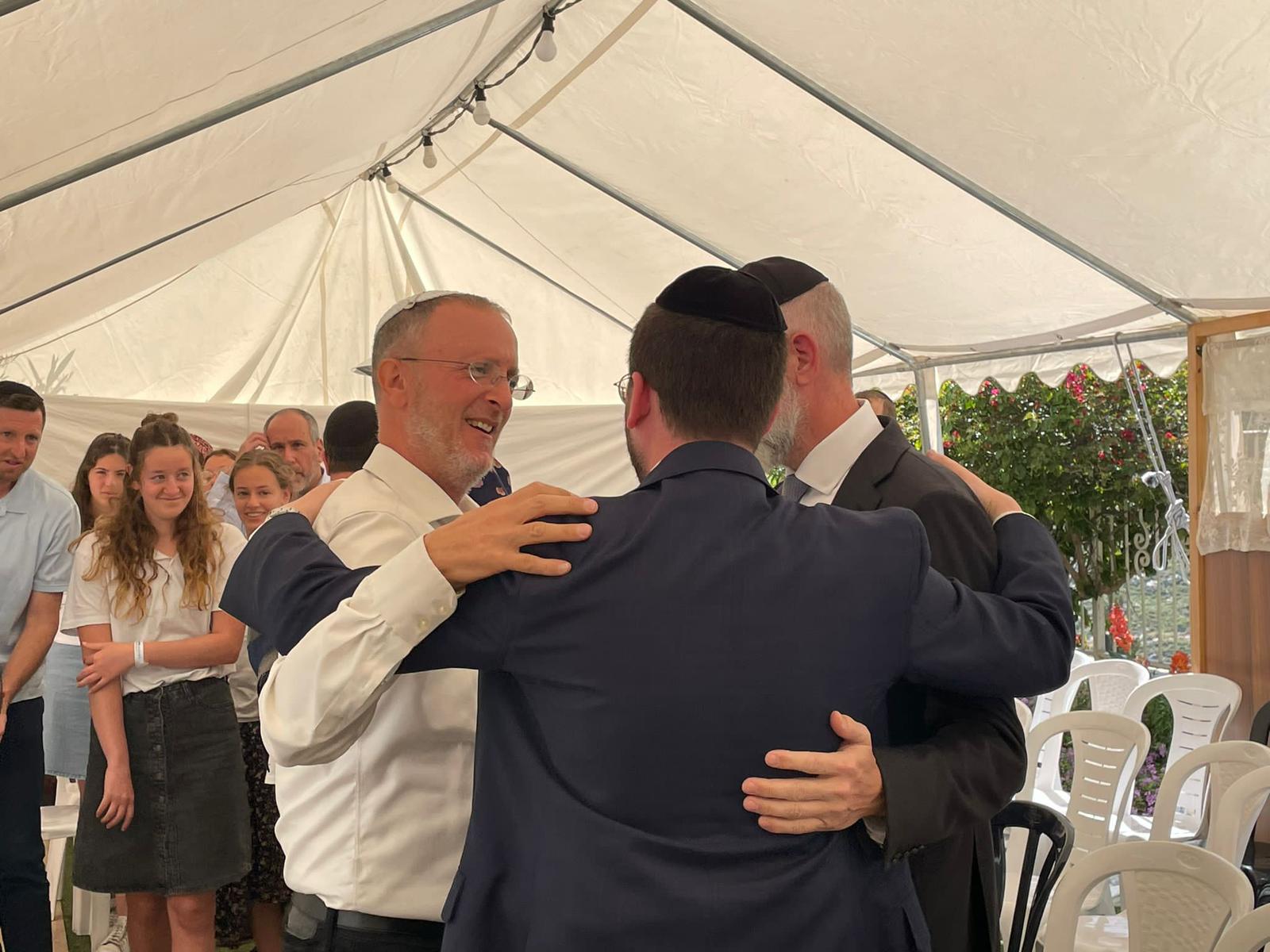
 

Souls Connecting: A Reflection from the Dee Shiva

How does one feel so profoundly connected to someone they never met, they had never spoken to, they had never even heard of?


At the heartbreaking funeral for his two daughters, Maia and Rina H”yd, who were brutally murdered by Palestinian Arab terrorists, Rav Leo Dee mentioned my name and that he drew strength from listening to our shul’s shiurim on Emunah.  When I watched the funeral and heard him say those words for myself, I was overwhelmed with emotion by a feeling of closeness to this man and I burst into tears. 


As I went online to book a ticket to Israel, it wasn’t that I actively decided to travel on behalf of our community to pay a shiva call to Rav Leo and his children, it was that I simply could not stay away.  Two days later, at the funeral for his wife Lucy Lee H”yd who had succumbed to her wounds, once again, Rav Leo quoted a thought from one of our shiurim. This solidified my decision to go to Israel for a day, but I was still puzzled trying to understand what was compelling me to go.


Certainly, representing BRS in an effort to communicate comfort, love, loyalty, unity, sympathy and faith were justifications enough.  But that would apply to every tragic terror event in our holy homeland and yet I had not previously been moved to jump on a plane before.  What was different this time?  Was it my ego, a sense of honor and pride that he acknowledged me so publicly at such a vulnerable moment? It continued to gnaw at me. 


After landing, I made my way to the shiva house where I had coordinated to meet my dear friend and colleague, Rabbi Shay Schachter.  Several people who had attended Shiva told Rabbi Schachter that Rav Leo was quoting him and referencing how much he loved listening to his classes, too.  Rabbi Schachter was also moved to come meet this special man in person and so we coordinated to arrive and visit together.


With thousands of people coming from all over Israel to offer comfort, strength and love, the Dee family sat shiva in a tent in their backyard.  Holy volunteers carefully conducted crowd control, turning over all those assembled in the tent every few minutes.  When we arrived, we were invited to come into the tent before it opened to the public.  Rav Leo was there, but before we could meet, the Yom HaShoah siren blasted throughout Israel and everything screeched to a halt, everyone standing still, taking exactly two minutes to honor and daven for the memory of the six million kedoshim, the martyrs of the Holocaust.  In that silence, I couldn’t help but think that these two tragedies were really one and the same.  As we just sang on Pesach, bechol dor va’dor omdimm aleinu l’chaloseinu, in every generation they rise against us to destroy us. 


That siren at that moment was not just paying tribute to the six million but it was wailing for the three fresh graves that had just been filled, and it was crying out for every Jewish life and light that has been extinguished in our history by enemies that have sought to eliminate us.  But as the wail of the siren was accompanied by the sound of birds chirping, my eyes were drawn to the view from the tent of the magnificent Judean hills and I was struck by the notion that as much as the martyrdom of the Holocaust and the murder of Lucy, Maia and Rina had in common, there was a profound, fundamental difference between them.  The Holocaust was perpetrated against a defenseless Jewish people, strangers in a foreign land, while the Dees had died al kiddush Hashem in the one and only Jewish homeland, under Jewish sovereignty, under the protection of a strong Jewish army and with the promise that those that perpetrated this heinous act would be brought to justice and that we will never leave these hills or this land.


The siren concluded and Rav Leo came directly over to us.  No words were exchanged as we embraced and held onto a meaningful hug that will last a lifetime.  We sat directly in front of the mourners as Rav Leo took the microphone, a necessity so that all who had now packed the tent could hear all he had to say. He thanked us for coming and said, I have been listening to Rav Efrem and Rav Shay’s shiurim for ten years.  For a decade I quote them at my Shabbos table and share their divrei Torah with friends.  He shared a few more thoughts, and once again thanked us for the countless hours of Torah learning together.


Hearing him speak, it became absolutely clear.   It was true that our guf, our bodies had never met, but I now understood that our souls have been talking and connecting and singing together for many years and my soul was craving to be with its good friend and chavrusa at this painful time.


That night, Rav Shlomo Katz invited us to join his Efrat community, which was collectively struggling with this horrific tragedy, for a night of chizuk and to share a few thoughts.  I hope our words resonated and offered comfort but for me, the most moving parts of the night were not when people were speaking but when souls were singing.  Every chair in the room had a physical body in it, but it was the chorus and connection of neshamos that sang together at the beginning, in the middle, and at the end of the night that gave the greatest chizuk.


There are so many powerful moments and poignant lessons from this extraordinary day with an extraordinary family and community that I take home with me.  As I continue to process them I look forward to sharing further reflections.  But as I traveled back to Boca, there is one thought in particular that jumped out at me.  If Rav Leo’s wife and two daughters had not been murdered, would we have ever met in person? Would I ever come to know that we had been learning together all along?  Would I ever discover the impact of the ideas we are privileged to share?


While not everyone publishes Torah shiurim online, all of our neshamos are connected with our brothers and sisters in ways we don’t realize or fully appreciate. There may be a Jew halfway around the world you do not know who is living a more inspired life today because she once crossed paths with you in an airport and saw the way you patiently spoke with the airline staff during a delay. There could be someone learning more Torah every day because he read an article about a learning group you are part of and was motivated to do more. There may well be a Jew somewhere whose name you don’t recognize but who saw your name on a program you sponsored, or a cause you supported, who now supports that same program or cause. We may not ever meet these people physically but we must appreciate they are out there and recognize that every single positive action we do potentially builds a new relationship with another holy neshama.


Rav Leo spent shiva challenging us to leave our comfort zone, to extend ourselves to others, to become better people, and to change the world together.  At davening on Shabbos, he stopped the chazzan before kedusha to offer an interpretation and charge to all who had gathered.  Kadosh, kadosh, kadosh, Hashem Tzevakos melo chol ha’aretz kevodo.  Kadosh Lucy, Kadosh Maia, Kadosh Rina, the three of them are now kedoshim, they have died al kiddush Hashem.  Now, in their memory, in their merit, we carry on their mission of melo chol ha’aretz kvodo, filling Hashem’s whole world with His glory, His teachings and His value.


Every day I wake up and feel beyond blessed to have the greatest and most fulfilling job in the world.  There is no greater privilege and nothing more gratifying than sharing Hashem’s Torah and teachings. It turns out there was a Jew 6,000 miles away who was listening, enjoying, and drawing inspiration for a decade without my ever knowing it or knowing him.


Regardless of our full-time formal position, every single one of us is a teacher and influencer and there are people watching, listening and observing what we say and do. We have no idea if we daven intensely or learn diligently or volunteer generously who will impact, who will seek to emulate us, who might be transformed without our ever knowing it. Indeed, by emulating the Kedoshim, the three beautiful Dee souls who can no longer bring glory to Hashem’s name in this world, we have the ability to melo chol ha’aretz kvodo  – we can literally connect with and fill the entire world with His glory without realizing it. Appreciate the impact you can have on other neshamos, the connections we all share, and the difference you can make in someone’s life.

Criticizing Israel – The 5:1 Rule

PHOTO: RONEN ZVULUN/PRESS POOL

Dr. John Gottman has spent his career studying healthy marriages and has scientifically identified the behaviors that contribute to dysfunctional ones. He can spend a short time with a couple and predict with over 90% accuracy if they will still be married in five years from that point.


Gottman found that the single biggest determinant to a happy and healthy marriage is the ratio of positive to negative comments the partners make to one another. A different study examined factors that made the greatest difference between the most and least successful business leadership teams. The optimal ratio was amazingly similar in both studies—five positive comments for every negative one. For those who ended up divorced (or for unsuccessful business teams), the ratio was 0.77 to 1—or something like three positive comments for every four negative ones.


If we want relationships to not only survive but to thrive, we must make a concerted effort to express compliments in a 5 to 1 ratio over criticisms.  This magic formula is critical not only for marriage or business but for any relationship we are invested in and we want to feel connected to. Parents must be mindful of the ratio in interacting with children and educators should be thoughtful of this proportion when communicating with students.


Recently, I have been thinking of one other relationship in which this ratio is critical: our relationship with the State of Israel.


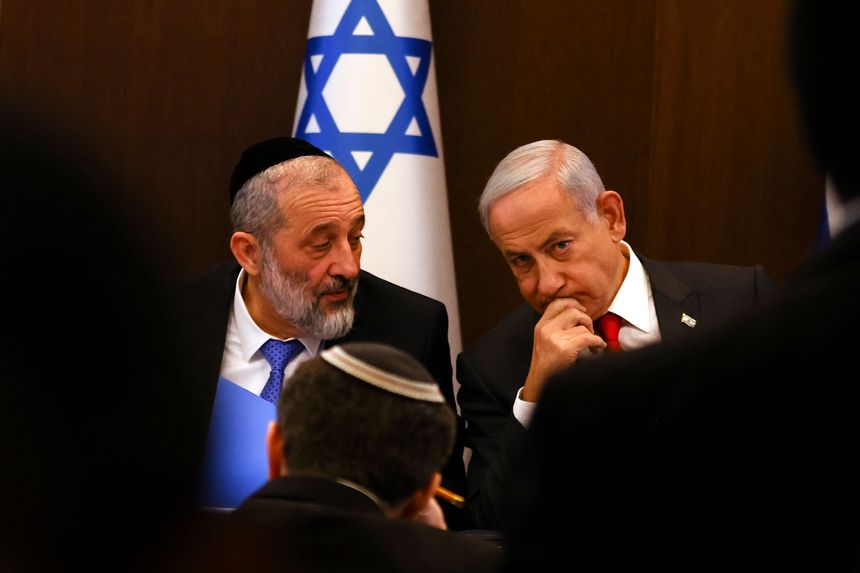
The new Israeli government, one that has frequently been described as the most right-wing in Israel’s short history, has attracted significant attention and garnered strong criticism.  Some have expressed outrage at the election and appointment of several ministers. Others express concerns about proposed legislation regarding judicial reforms, arguing they risk compromising and undermining the foundation of Israel’s very democracy. Still others have strong feelings over the ministerial appointment of Aryeh Deri and the subsequent Supreme Court decision to invalidate it.


Sadly, and unfortunately, both opponents and defenders of the current coalition and its proposed legislation have too often oversimplified the issues, eliminated nuance, subtlety, and legal analysis and have resorted to sound bites that serve a political agenda.  These issues and topics are complicated, and deserve analysis and study before arriving at or expressing an opinion; yet, as is often the case, predictably, most will choose to take an uninformed position that conforms to political affiliation and loyalty regardless of the actual complexities of the issues. 


Several American Jewish organizations have weighed in and publicly offered their criticism, expressed their outrage, or prophesized their doom and gloom for Israel’s future.  Locally, a prominent Jewish organization was weighing adding its voice to the chorus of those publicly proffering criticism and concern with a statement and communication to its constituents.  I think that is a tragic and potentially destructive mistake.


Certainly, Israel is not beyond reproach or criticism from either direction.  Some thought the last coalition that included Mansour Abbas of Ra’am, an Islamic Party, was the time to express public concern while others feel the current coalition that includes far-right ministers Bezalel Smotrich and Itamar Ben-Gvir is worthy of protest and opposition.  Some felt the Gaza withdrawal was worthy of public statements in resistance, while others expressed concern about expansion in Judea and Samaria.


Our words matter and we must be extremely judicious in deciding how to use them.  Rav Aharon Soloveitchik, zt”l, writes in his book Logic of the Heart, Logic of the Mind, “Upon delivery from the Egyptian bondage, the Israelites regained their self-expression. As long as they were subjected to Egyptian bondage, their self-expression was stifled and suppressed. But at the moment of Exodus, the Israelites regained their speech. Slaves cannot express or assert themselves properly. They cannot realize their potential. Only the free man is capable of doing so.”


The Arizal saw the connection between speech and freedom in the very name of the holiday.  Pesach, he explained, comes from “Peh – sach” – “a mouth converses.”  Part of affirming our freedom is affirming the awesome responsibility that comes with freedom of speech.


Criticism is, of course, at times warranted, but I wonder about the wisdom of Jewish organizations in the Diaspora expressing it on either side through public statements and proclamations. Will statements influence policy and politics in Israel in a meaningful way or do they just contribute to sowing division and discord while satisfying a certain segment of a base of constituents?  Is the goal to simply level a protest for posterity?  What is the risk or unintended consequence of criticizing Israel publicly in America, no matter how warranted or deserved it may be? 


A 2021 Pew Study found that only 60% of U.S. Jews say they are either very emotionally attached or somewhat emotionally attached to the modern state of Israel.  Will non-nuanced and oversimplified public criticisms from both sides bring diaspora Jews closer or further to Israel?  Will it garner more or less support for Israel from the general American public and from American elected officials? 


To be clear, what is at stake is not Israel’s connection to diaspora Jews, but diaspora Jews’ connection to Israel. If that is severed, Israel will survive, but Jews with tenuous identity may not. The leaders of diaspora organizations should think carefully about what best serves the interests of their constituency and what promotes a healthy long-term relationship in which criticism will be relevant and important but cannot be the central or most common expression.


One can violate the 5:1 ratio, criticize more freely and frequently, but they will be an outside critic, not someone nurturing a relationship. If we want to promote and strengthen our and others’ relationship with Israel, it behooves us to hold ourselves to Gottman’s standard and work hard to release at least five statements of support and compliments for every time we feel it is necessary to criticize. 


A Miracle Instead of a Massacre: Why You Should Celebrate Yom Yerushalayim

The Klausenberger Rebbe lost his wife and eleven children in the Holocaust.  He survived and subsequently gathered a small community of followers who were also survivors; from this small group, he eventually rebuilt the whole community.  Rabbi Riskin describes a visit to the Beis Medrash of the Klausenberger Rebbe in the summer of 1952 when he was just 12 years old:


Then came the Torah reading. In accordance with the custom, the Torah reader began to chant the Warnings in a whisper. And unexpectedly, almost inaudibly but unmistakably, the Yiddish word “hecher – louder,” came from the direction of the the lectern upon which the rebbe was leaning at the eastern wall of the synagogue.


The Torah reader stopped reading for a few moments; the congregants looked up from their Chumashim in questioning and even mildly shocked silence. Could they have heard their rebbe correctly? Was he ordering the Torah reader to go against time-honored custom and chant the tochacha out loud? The Torah reader continued to read in a whisper, apparently concluding that he had not heard what he thought he heard. And then the rebbe banged on his lectern, turned to face the stunned congregation and cried out in Yiddish, with a pained expression on his face and fire blazing in his eyes: “I said louder! Read these verses out loud! We have nothing to fear, we’ve already experienced the curses. Let the Master of the Universe hear them. Let Him know that the curses have already befallen us, and let Him know that it’s time for Him to send the blessings!” The rebbe turned back to the wall, and the Torah reader continued slowly chanting the cantillation out loud. I was trembling, with tears cruising down my cheeks, my body bathed in sweat.


I could hardly concentrate on the conclusion of the Torah reading. “It’s time for Him to send the blessings!” After the Additional Service ended, the rebbe rose to speak. His words were again short and to the point, but this time his eyes were warm with love leaving an indelible expression on my mind and soul. “My beloved brothers and sisters,” he said, “Pack up your belongings. We must make one more move – hopefully the last one. God promises that the blessings which must follow the curses will now come. They will come – but not from America. The blessings will only come from Israel. It is time for us to go home.”  And so Kiryat Sanz – Klausenberg was established in Netanya where the rebbe built a Torah Center as well as the Laniado Medical Center.


The tochecha describes the result of siluk haShechina, when God removes and withdraws His countenance and providence.  The results are devastating.  The Rebbe described living through the tochecha, but it wasn’t just the Holocaust which was the fulfillment of the tochecha. In many ways, the Jewish condition during the last 2,000 years, including pogroms, crusades, the Inquisition, and countless expulsions, were all the embodiment of this harsh and devastating description.   


In the middle of the tochecha, the Torah says:

וַהֲשִׁמֹּתִ֥י אֲנִ֖י אֶת־הָאָ֑רֶץ וְשָֽׁמְמ֤וּ עָלֶ֙יהָ֙ אֹֽיְבֵיכֶ֔ם הַיֹּשְׁבִ֖ים בָּֽהּ

I will make the land desolate, and your enemies who dwell in it will be desolate upon it.  Chazal see a silver lining, a message of hope within even this harsh promise.  The Sifra writes that when we are exiled from our land and it is occupied by others, it will remain desolate and they will not succeed in making it bloom.  It is astounding to see how accurate this promise of our Parsha has been.  Over the last two millennia, Eretz Yisroel was in a virtual state of ruin. The Crusaders, the Mamelukes, the Ottomans, the Turks, the Arabs, and the British all tried to settle the Land and make it blossom.  Some made more progress than others, but all failed to make it truly flourish. 


In the mid 1800’s, Mark Twain traveled the world and wrote a book recording his impressions and experiences called “The Innocents Abroad.”  His experience in then-Palestine stands in stark contrast to the vision we have when we think of traveling around Israel.  Twain writes:


Of all the lands there are for dismal scenery, I think Palestine must be the prince.  The hills are barren, they are dull of color, they are un-picturesque in shape.  The valleys are unsightly deserts fringed with a feeble vegetation… It is a hopeless, dreary, heartbroken land…Palestine sits in sackcloth and ashes.  Over it broods the spell of a curse that has withered its fields and fettered its energies.  Renowned Jerusalem itself, the stateliest name in history, has lost all its grandeur, and is become a pauper village.


Six hundred years before Twain, in his commentary on our Parsha, the Ramban writes:


And your enemies will be desolate upon it is a good tiding.  It proclaims in every generation that our land does not accept our enemies.  This is a great proof and promise for us, for you will not find in the entire world another land that is so good and spacious and was always inhabited but is now in such a state of ruin.  Ever since we left it, it has not accepted any other nation; and they all try to settle it, but are unsuccessful.


Indeed, the Gemara (Sanhedrin 98a) quotes Rebbe Abba who teaches – ein lecha keitz megulah mi’zeh, you have no more explicit manifestation of the end of days than when produce will grow in abundance in Eretz Yisrael; it is an indication that the Moshiach will be coming soon. 


R’ Yoel Bin Nun, the great Tanach teacher in Israel today, was a member of the now-famous 55th brigade of paratroopers who liberated Yerushalayim.  When his commander, a shomer ha’tzair ha’kibbutznik, asked him how he felt after taking Har Ha’Bayis, he responded “Alpaim shnot galut nigmeru, two thousand years of exile are now over.”


If, for the Klausenberger Rebbe, the Holocaust represents the fulfillment of the tochecha, the consequences of siluk haShechina, Divine withdrawal and hiddenness, then 1967, the miracle of the Six-Day War, and the reunification of Yerushalayim represents nothing short of genuine giluy haShechina, the intense presence and the powerful revelation of the hand of the Almighty. 


Those of us with no memory of May 1967 and earlier don’t know what it means to feel truly fragile and vulnerable as a people. Those of you who do remember will confirm that just over 20 years after losing 6 million of our people there was a collective panic and sense of urgency that there was going to be another Holocaust. NCAA coach Bruce Pearl recently described on Behind the Bima how his grandfather, a secular American Jew, could not go to sleep at night and was glued to the TV, saying, “I’m afraid to go to sleep and wake up and find out there is no more Israel.”


Rav Yehuda Amital recounted that before the Six-Day War there were American Jewish leaders who pleaded with the Israeli government to evacuate the children from Israel, since the annihilation of Israel was expected. The Chief Rabbinate of Israel had designated public parks as burial sites and almost 100,000 graves had been dug in preparation for casualties. 


Instead of a massacre, a miracle occurred.  On June 5, Israel launched a preemptive strike. In a single day, it destroyed almost the entire Egyptian air force. Jordan and Syria both declared war. In six days, Israel defeated all three armies, each larger than the size of its own. The Israelis retook Sinai, captured the old city of Jerusalem and Yehuda and the Shomron and the Golan Heights.


This sweeping military victory against all odds continues to leave experts confounded.  Rav Berel Wein tells the story of a cadet at West Point who asked why the Six-Day War was not part of the curriculum.  The high-ranking teacher silenced the questioner and demanded he speak to him following the class.  The soldier approached the general and again wondered why Israel’s victory in the Six-Day War wasn’t studied.  The teacher explained that the Six-Day war is not studied because at West Point they study strategy and tactics, not miracles.


Yossi Klein HaLevi tells the powerful story of his father who was from a very religious, chassidishe family and gave up on God and on religion after surviving the Holocaust.  Even after the founding of the State of Israel, he was still so traumatized from his devastating loss he couldn’t find God.  In June 1967, however, after witnessing with the world the miracle of Israel not only surviving but thriving, he took his family to Israel and went directly to the Kotel.  After seeing the hand of God he was ready to forgive Him and to have a relationship once again.  They moved to Israel and his father came back to religion. 


HaLevi explains that 1967 turned Israel from a secular to a sacred landscape.  Yes, in 1948 we got a country, but we had no holy sites.  After the miracle of 1967, overnight, we returned not only to the Kotel and Har HaBayis, but to our Mama Rochel Imeinu, to Chevron and Ma’aras Ha’Machpeila, to Tzefat, and to Teveria.


Following the Six-Day War, Jews around the world felt they were seven feet tall, confident, proud, almost invincible.  Everyone wanted a piece of this special nation, a connection to the Jewish people.  And the Jewish people felt a giluy haShechina, revelation of God Himself. 


Every single time I visit Israel I find a way to spend a few minutes sitting in one of the squares in the Old City of Yerushalayim.  I simply watch and listen.  I watch the people walking through and I listen to the sounds of the children playing and I pinch myself that we merit to live in the generation that is literally seeing the fulfillment of prophecy.


In fact, in one of the squares the words of Zecharia Ha’Navi are etched in the stones:

עֹ֤ד יֵֽשְׁבוּ֙ זְקֵנִ֣ים וּזְקֵנ֔וֹת בִּרְחֹב֖וֹת יְרוּשָׁלָ֑͏ִם וְאִ֧ישׁ מִשְׁעַנְתּ֛וֹ בְּיָד֖וֹ מֵרֹ֥ב יָמִֽים׃

וּרְחֹב֤וֹת הָעִיר֙ יִמָּ֣לְא֔וּ יְלָדִ֖ים וִֽילָד֑וֹת מְשַׂחֲקִ֖ים בִּרְחֹֽבֹתֶֽיהָ


“Thus said the Hashem: There shall yet be old men and women in the squares of Jerusalem, each with staff in hand because of their great age. And the squares of the city shall be crowded with boys and girls playing in the squares.”


This week when we mark Yom Yerushalayim, that summer of Divine revelation and God’s miracles, we must awaken ourselves with a sense of hallel v’hodaah, profound gratitude and boundless appreciation.  We must not stop feeling we experienced Yad Hashem, the guiding hand of God. 


V’ha’aretz ezkor – We are in a generation that has witnessed God remembering His people and His land.  Will you remember Him?

A Time to Speak and a Time to Remain Silent

Martin Luther King, Jr., whose birthday we will mark this Monday, spoke powerfully about the danger and potential damage of silence.  He once said, “Our lives begin to end the day we become silent about things that matter.”  On another occasion he said, “In the end we will remember not the words of our enemies, but the silence of our friends.”  Both of these insights, individually and the combination of the two together, resonate deeply for me these days.


Whether Avraham Avinu speaking truth to the ultimate Power when he protested the impending destruction of  Sedom, Moshe challenging Hashem about why bad things happen to good people, Moshe and Aharon confronting Pharaoh, Esther and Mordechai taking on Haman, the Chashmonaim standing up to the Syrian Greeks against all odds, or countless other examples, we come from a tradition of not being silent when injustice is being perpetrated against anyone, and certainly not when it is directed against our people. 


That is why this week nearly 1,000 people came together to raise our unified voice in support of Israel. In August 2014 during the war between Israel and Hamas, just two hours after Hamas agreed to a ceasefire sponsored by the United States and the United Nations, Hamas terrorists emerged from a terror tunnel, shot Hadar Goldin, a Lieutenant in the Israeli Defense Forces, and killed two other Israeli soldiers. Hadar Goldin did not survive this attack, and Hamas continues to hold Hadar and the body of another Israeli soldier slain during the 2014 Gaza war, Oron Shaul, for ransom.


Seven years have passed, and the families of these fallen soldiers are still struggling to obtain the release of their loved ones for return to Israel. Currently, a huge aid package to rebuild Gaza is making its way through Congress. Any US aid packages earmarked for the reconstruction of Gaza be expressly conditioned on the return of Hadar, Oron to Israel and their families as a non-negotiable pre-condition to the award of such aid. 


There is a moral imperative to bring them home.  International humanitarian law requires the repatriation of missing soldiers and civilians; Jewish law requires us to make all efforts to bring the dead to their final resting places. Click here to find out how you get do more to get the bodies of our brothers home. 


These are moments that demand we not remain silent.  Abuse, agunahs, antisemitism and other injustices demand we speak up and speak out.  Hashem has blessed us with voices, with influence and with access.  We must generate outrage, the most powerful commodity these days, and the only one that draws attention and demands action and reaction.  


But while there are moments to overcome our silence and to express outrage, there are other times in which we would do better to be quiet than to react with indignation.


When the Jewish people miraculously cross the sea and emerge safely on the other side, they erupt in spontaneous song – Az yashir Moshe u’Vnei Yisroel.  In that song that we recite each morning in our prayers, we describe Hashem:

מִֽי־כָמֹ֤כָה בָּֽאֵלִם֙ ה׳ מִ֥י כָּמֹ֖כָה נֶאְדָּ֣ר בַּקֹּ֑דֶשׁ נוֹרָ֥א תְהִלֹּ֖ת עֹ֥שֵׂה פֶֽלֶא׃

“Who is like You, Hashem, among the celestials; Who is like You, majestic in holiness, Awesome in splendor, working wonders!”


We typically understand the song as praising Hashem’s unique power.  For example, the Seforno writes: “Hashem’s incomparable stature consists in His ability to change the nature of phenomena in the universe which had previously been considered as indestructible, inviolate, impervious to any attempt by man to influence their nature in any way.”


But the Gemara understands our praise and awe of Hashem differently.  When the wicked Titus entered our Holy Beis HaMikdash and desecrated the Holy of Holies in unspeakable ways, Hashem was silent, He was passive and failed to react.  Why would the Almighty, the infinite, omnipotent, omniscient, all-powerful Hashem, do nothing when He could do anything?  Our rabbis explain (Gittin 56b):

דבי רבי ישמעאל תנא מי כמוכה באלים ה’ מי כמוכה באלמים

Do not read “Who is like You God b’eilim,” among the celestials, but “Who is like You b’ilmim,” among the mute.  Hashem modeled for us the greatest strength, the most potent response – doing nothing. God showed us His power not by manipulating nature and controlling the world, but by self-control and discipline, to remain silent in the face of insult, defamation and even blasphemy. 


He taught us that our greatest strength, too, is not in overreacting to being insulted— it is not acting at all.  Chazal teach (Shabbos 86) we should train ourselves to always be min ha’ne’elavim v’einam olvim, from those who when insulted don’t insult back; shom’im cherpasam v’einam m’shivim, hear the wrath against them, but don’t respond.  


Save your outrage and indignation.  When it comes to a personal slight, a hurtful insult, let it go, walk away.  But how?  We get that nasty text, that hurtful email, the  aggressive comment we feel we cannot ignore. How do we stay silent?  How can we find the resolve to walk away, press delete, not match or escalate what has been cast our way? 


The answer is found in something we say every day, three times a day.  We say at the end of the Amida – “v’limkalelai nafshi sidom, to those who curse me, may my soul remain silent.”  Why do we invoke nafshi, our soul? Perhaps we mention our soul because it is the source of our strength, our self-control.  We each have a tzelem Elokim, a Godly spirit, and just as Hashem shows His greatness by seeing His name and dwelling place desecrated and choosing not to respond, we can similarly find the inner strength and discipline to not respond and match the volume and vitriol, no matter how poorly we are mistreated.


The Zohar says that Hashem’s chariot has four legs, the first three are Avraham, Yitzchak and Ya’akov, and the fourth is Dovid HaMelech.  It is understandable that the patriarchs represent the first three legs, but why Dovid over Moshe, Aharon, and so many worthy others?


The Chafetz Chaim, in his Shemiras Ha’Lashon, explains that David Hamelech became the fourth leg of Hashem’s Chariot when Shimi ben Geira hurled insults at him in public, and Dovid just ignored it.  Even when Dovid’s servants wanted to respond, Dovid told them, he couldn’t be cursing me and embarrassing me if Hashem didn’t want it to happen, so leave it.  There is a master plan, no need to respond.


Rav Pam says there are times we are meant to experience yesurin, suffering.  It can come in many forms – illness, financial collapse, relationship crises.  When it comes in the form of someone insulting us, we should sing and dance with joy that with all the options and alternatives, being insulted is our form of suffering.  What a gift and a blessing.  Lean into that insult, embrace it, and gladly take it and remain quiet. 


Finding the capacity to remain silent, even when insulted, is an expression of true gevurah, of great strength.  When we dig deep and find that ability, it creates a very special moment. We have a tradition that when being insulted, instead of responding, escalating or matching the vitriol, we should take a deep breath and offer a prayer, ask for something in that propitious and providential moment in time.  That is when we are at our best and most worthy.  Don’t waste it by shouting or insulting back; prove your strength and take advantage of the opportunity to be worthy by asking for something important.


We seem to have it backwards sometimes.  We are outraged when we should be quiet, and when we should be screaming from the rooftops, somehow, we remain silent. 


When it comes to antisemitism against our people and injustice against others, let’s vow to never be silent, but to stand up and speak out. Let’s hold our elected officials accountable. Not the ones in the other party, that’s easy. But calling up and calling out those in our party, the ones we identify with and voted for.  Object to the elected officials saying the wrong things and call up those who are remaining silent while their colleagues cross important boundaries.


But when it comes to being personally insulted, to absorbing a slight against ourselves, let’s learn to let it go, to show our true strength and be like Hashem, to be counted among the ilmim, those that are silent, and among the ne’elavim, those that are insulted but never insult back. 


Should We Partner With Evangelicals To Support Israel?

If absence makes the heart grow fonder, those who for now live outside of Israel are more in love with Israel than ever, longing for a time we can visit freely and easily.  Physical distance won’t weaken our love, commitment and concern for our holy land and our brothers and sisters who live there. 


While in many ways, Israel is safer and more prosperous than ever, dangers and threats persist.  Hezbollah threatens from the North, Hamas instigates from the south, and the nation of Iran’s official spokesman declared in November, “We will not back off from the annihilation of Israel, even one millimeter. We want to destroy Zionism in the world.”


As independent and powerful as Israel has become, she still relies on enormous support from the United States.  That includes material, measurable support like the $1 billion of military aid above the $3.8 billion annual commitment, approved by U.S. House of Representatives this fall.  Additionally, and arguably more importantly, the diplomatic support America provides at the UN and throughout the Middle East is indispensable.


Where does the support for Israel come from in the United States?  There are shifting attitudes toward Israel among Democrats, but even among Republicans, the support is far from a given. A University of Maryland Critical Issues Poll has recently shown that evangelical attitudes toward Israel account for most of the Republican Party’s support for Israel; without evangelicals, Republican attitudes on Israel do not substantially deviate from the rest of America. If public opinion continues to shift, the support from our elected officials could easily disappear with real policy implications that impact Israel’s security.


This data led former Israel Ambassador to the US, Ron Dermer to say last year that Israel should spend more of its energy reaching out to “passionate” American evangelicals than to Jews, who are “disproportionately among our critics.” A recent frightening survey found that younger evangelicals are much less supportive of Israel than older evangelicals, by a widening margin. The poll found a dramatic shift in attitudes between 2018 and 2021: support for Israel among young evangelicals dropped from 75% to 34%. 


To summarize, US support for Israel, which is critically important for Israel’s safety and well-being, is increasingly dependent on evangelicals, whose younger members are becoming less and less likely to support Israel.  So while in some measures, the US-Israel relationship is thank God strong, just beneath the surface lie reasons to be very concerned and, more importantly, to act. We must bolster support for Israel among Jews and non-Jews alike.


On January 11, Boca Raton Synagogue will be hosting a “Night to Celebrate Israel” with keynote speaker Ambassador David Friedman.  The evening will also feature political commentator and media personality Ben Shapiro, a staunch and passionate advocate for Israel.  It will be introduced with virtual greetings by Governor Ron Desantis, Senator Rick Scott, and Rabbi Yitzchak Adlerstein of the Wiesenthal Center.  Short remarks will be shared by Former Deputy Special Envoy Ellie Cohanim and by myself and Pastor Mario Bramnick.


The event is co-sponsored by the Simon Wiesenthal Center and by the Latino Coalition for Israel, the largest pro-Israel Hispanic organization in the world. LCI is led by Pastor Bramnick, who consistently stands up for Israel and publicly fights antisemitism.  He and LCI have partnered in hosting events with Jewish Federation, AIPAC and FIDF. For his work, he received the Outstanding Achievement Award from the Consulate General of Israel to Florida.


Some may wonder, should we accept financial support and advocacy from non-Jewish or evangelical sources?  When Rabbi Berel Wein was asked this question, he replied: “I do not see a moral problem in Jews accepting monies from Christian organizations for humanitarian purposes as long as there are no missionary purposes and conditions attached to the donation.”  Last year, with the approval of the Sanz-Klausenburg Rebbe, Laniado Hospital in Netanya accepted a large donation from the International Fellowship of Christians and Jews. Rav Hershel Schachter gave our event, which is exclusively focused on Israel, his blessing.


We are expecting a large turnout of non-Jewish guests. I urge you to be there. The event is free of charge and open to all.  If we expect those who aren’t Jewish and for whom Israel is not their homeland to continue to fight and stand up, we must show our own commitment to Israel and our willingness to use our voice to combat antisemitism. 


Please join us on Tuesday, January 11th at 7:00 at Boca Raton Synagogue. 

You can RSVP or sign up for the VIP reception at www.brsonline.org/israel

The Most Effective Way to Have Influence

A couple of years ago, Bibi Netanyahu was quoted as saying there are only two men he considers fit to lead the State of Israel and one of them is Ron Dermer.  We had the great privilege of hosting Ambassador Dermer at Boca Raton Synagogue this week and after meeting him and hearing his insights, analysis, and reflections, it is clear why Prime Minister Netanyahu felt that way.  During his seven-and-a-half years as Israel’s Ambassador to the United States, Dermer wasn’t just a diplomat and outstanding spokesperson for Israel, he helped shape historic policies and nurtured major peace initiatives. 


Following his presentation, I had the chance to sit with Ambassador Dermer and my daughter Tamar to discuss ways young people can get involved in advocating for Israel in a meaningful way.  Not surprisingly, the ambassador made some excellent suggestions and gave tremendous encouragement regarding the long-term impact of influencing even one opinion, even when you don’t realize it right away.  He then shared a story to illustrate his message that had a tremendous impact on me. 


In 2015, while he was ambassador, he lobbied feverishly against the Iran deal that Congress was going to vote on.  He met with countless members of Congress, scheduling a half-hour with each one in an effort to persuade them to vote against what he felt was a deal that left Iran with a clear path to a nuclear weapon.  He went in to see a particular congressman and thirty seconds into the conversation, before he could even begin to make his pitch, the congressman said, “You don’t need to try to convince me, I plan to vote against the deal.” 


Somewhat startled, Dermer recalled thinking to himself, I have twenty-nine and a half minutes left, and so he naturally asked the congressman what made him take what was an unpopular position among his party. The congressman explained that he immigrated to America when he was fifteen years old and lived in a neighborhood of immigrants. Few people gave them the time of day, they were treated downright rudely and with hostility by others, and nobody allowed them to play on their basketball courts.  There was one exception. 


“There was a synagogue in our neighborhood,” explained the congressman, “and the members greeted us warmly and respectfully. They invited us to use their basketball court and they treated us with dignity.  Since I was fifteen years old, I have been determined to always stand with the Jews and to stand with Israel and that is why I am voting against the Iran deal.”


Ambassador Dermer then pointed out the members of that shul were enormous Israel advocates who influenced the US-Israel relationship without even realizing it, just by being good people. 


Those learning Daf Yomi recently studied a Gemara (Taanis 21b) that teaches how we may not appreciate the impact of our behavior and the merit it brings to others, even when we think nobody sees:


Once there was a plague of pestilence in Sura, but in the neighborhood of Rav there was no pestilence. The people therefore thought that this was due to Rav’s great merit. However, it was revealed to them in a dream that Rav’s merit was too great and this matter too small for the merit of Rav to be involved. Rather, his neighborhood was spared due to the acts of kindness of a certain man, who would lend his hoe and shovel to prepare sites for burial.


Rabbi Paysach Krohn tells the story of a Conservative Jew walking into an Orthodox shul in Dallas, Texas.  The man introduces himself to the rabbi and presents a large, unsolicited donation.  The rabbi was stunned by the unexpected gift and explained that the shul had a great need to renovate an educational wing but didn’t have the startup money.  “Your donation,” he said, “is going to turn this project into a reality, but I am very curious about who you are and why you chose to make a large gift to our shul?”


The man explained that he made his first trip to Israel a few months back and ended up at the Kotel. He said, “As I took in the sights around me, I noticed a Yerushalmi Jew standing and davening in silent devotion.  I had never witnessed someone praying so fervently or with such meaning.  I was mesmerized and entranced.  But even more, I was inspired.  I determined right then and there that when I got home, I was going to make a donation to a shul in honor of that Yerushalmi Jew.  When I returned I thought to myself, if that Jew were here in Dallas, where would he be comfortable praying, and I looked in the Yellow Pages for an orthodox shul and came up with you.”  That man ultimately became more observant and continued his generosity in building the Torah institutions of the community.


Reflecting on the story, Rabbi Krohn invites us to imagine what happens when the Yerushalmi Jew comes before the Heavenly court after 120 years in this world.  He will be greeted enthusiastically with a hero’s welcome.  He will be rewarded for transforming Judaism in Dallas, Texas and for all the Torah learned by thousands of people, and by all the davening that took place in the Shul that he supported. He will undoubtedly turn to the Heavenly Judge and say, there must be a mistake, I have never even been to Dallas, Texas.  I don’t even speak English.  He will only then learn the impact of the impression and inspiration he spread when he davened so sincerely and fervently at the Kotel that fateful day.


Our actions have cosmic implications. The small acts of kindness and virtue we engage in can make the biggest difference not only to ourselves, but to all of humanity. In 1963, meteorologist Edward Lorenz introduced what he called the “butterfly effect.” He showed that the flapping of a butterfly’s wing in Australia can cause a tornado in Kansas, a monsoon in Indonesia, or a hurricane in Boca Raton. Lorenz’s thesis is part of a greater theory called chaos theory that essentially posits that small acts can have large outcomes. Chaos theory is applied in mathematics, programming, microbiology, biology, computer science, economics, engineering, finance, philosophy, physics, politics, population dynamics, psychology, robotics, and meteorology.


Chief Rabbi Jonathan Sacks has applied chaos theory in one more realm. In his book “To Heal a Fractured World,” he coined the phrase “chaos theory of virtue,” demonstrating how small acts of kindness and virtue can have immeasurable consequences on the world. Sometimes, as was the case with the donor in Dallas and the synagogue that was the basis for a pro-Israel vote, we see the consequences and impact; more often than not, we don’t.


Our mission is to be kind, warm, welcoming and respectful, act with virtue and righteousness always.  Among many other reasons, you never know who is watching or how it will impact their attitude to Jews or Israel.

UFOs and Pro-Israel Life Here on Earth

Every few years, someone claims to have seen a UFO and the suspicion of life on other planets is raised, only to disappear as quickly as it came about.  This time, however, seems different. It isn’t just golfer Bryson DeChambeau, basketball star Shaquille O’Neal, and quarterback Baker Mayfield who claim to have recently seen UFOs. Sightings have soared during the pandemic.  Indeed, instead of just the usual attributions to conspiracy theory, a unit of the Pentagon has been established to investigate sightings, and UFOs are the subject of a Congressional inquiry whose report is due in the next few weeks.  


Even former President Barack Obama said in an interview this week, “What is true, and I’m actually being serious here, is that there are, there’s footage and records of objects in the skies, that we don’t know exactly what they are. We can’t explain how they moved, their trajectory. They did not have an easily explainable pattern. And so, you know, I think that people still take seriously trying to investigate and figure out what that is.”


The upcoming report from Congress likely won’t conclusively settle the question of the existence of UFOs, but is Judaism even open to the possibility?  In his Sefer Ha’Ikarim, R’ Yosef Albo (1380-1444) rejects the concept of life on other planets. R’ Pinchas Horowitz (1765-1861), in his Sefer Ha’Bris, says that R’ Yosef Albo is wrong; but while he believes there is life on other planets, they do not have free will in the sense of human beings.


Rav Chasdai Crescas of Spain (1340-1411) writes that nothing in the Torah negates the possibility of believing in extraterrestrial life. He quotes the words of Tehillim (19:2): הַשָּׁמַ֗יִם מְֽסַפְּרִ֥ים כְּבֽוֹד־קל וּֽמַעֲשֵׂ֥ה יָ֝דָ֗יו מַגִּ֥יד הָרָקִֽיעַ׃, “The heavens declare the glory of God; the sky proclaims His handiwork,” as potential evidence that praise of Hashem can come from inhabitants of the heavens.  He has an entire chapter in his work, Ohr Hashem, on the possibility of life on other planets. 


Rabb Aryeh Kaplan argues that the basic premise of the existence of extraterrestrial life is strongly supported by the Zohar. He writes, “The Midrash teaches us that there are seven earths. Although the Ibn Ezra tries to argue that these refer to the seven continents, the Zohar clearly states that the seven are separated by a firmament and are inhabited. Although they are not inhabited by man, they are the domain of intelligent creatures.”


Rav Soloveitchik (“The Rav Thinking Aloud,” p. 93) was asked about alien life and said: “It is possible that Hashem created other life forms on other planets. It is no problem to yahadus. The reason man likes to think he is the only created being in the entire universe is because of his egotistical nature. Even the concept of am ha’nivchar, chosen nation, may only be relative to our world, our small section of the universe. The Torah is written from the viewpoint of our sun, moon, and stars. It would not detract from our being the am ha’nivchar of this region of space if there were other am ha’nivchar in a distant galaxy.”


Rav Yaakov Kaminetsky, on the other hand, is reported as having said that there may or may not be living creatures in outer space but there cannot be human like creatures with bechira, free will.  The Torah was given only to the Jewish people on planet Earth, and Hashem would not have created creatures with bechira, but without a Torah to guide them.


Shortly after the first moon landing, the Lubavitcher Rebbe, Rabbi Menachem M. Schneerson, argued similarly. While acknowledging that there is support in Torah for the notion that life exists on other planets, he argued that life could not be intelligent or similar to human life. If they were, they would need Torah to guide them.  They couldn’t have the same Torah, since it was only revealed on Earth.  They couldn’t have a different Torah, since there is only one truth.  Therefore, while there might well be life elsewhere, it is not intelligent life similar to humans.


So, do UFOs and extraterrestrial life exist?  Maybe. But while we may be curious, how much of a difference would it really make to our lives? 


On the other hand, there are a group of people who live with us here on Earth, yet it feels like we are living on different planets. And there is something we can and must do about it.


While over the last two weeks 4,000 rockets have rained down on innocent Israeli civilians, If Not Now, a group that describes itself as “a movement of Jews to end the Israeli occupation and transform our community,” tweeted this: “We can show the world that Jews don’t need Israel in order to keep us safe. We’re creating thriving, flourishing, safe Jewish lives here in the diaspora by building strong communities and working in solidarity with other marginalized people against white supremacy.”


Reacting to a group of Jews being attacked in L.A., popular comedian Sarah Silverman posted, “Jews in the diaspora need allies. WE ARE NOT ISRAEL. And we…aren’t the Israeli government.”


Perhaps most disturbing is a public letter signed by dozens of American rabbinical students accusing Israel of apartheid and calling on American Jewish communities to hold Israel accountable for the “violent suppression of human rights.”


Inexplicably, the letter does not mention Hamas or Israeli civilians. Frankie Sandmel, a rabbinical student at Hebrew College and one of the authors of the letter, explained: “I can’t speak for the group. For myself, as an American Jew who has never lived in Gaza or the West Bank, I don’t feel like I have ground to stand on to try to influence how Palestinians respond to oppression. I do have the ability to speak to the American Jewish community that I am hoping to lead, to look at the ways that we vote and the ways that we give tzedakah and the ways that we educate our communities.”


Am I really living on the same planet as those who signed this letter? Are we looking at the same reality? Do we come from the same history and do we really share the same destiny?  How can we expect non-Jews to stand with the Jewish State while a growing number of our own people are expressing sympathy and support to the perpetrators of evil, rather than the millions of innocent victims being terrorized?  When it comes to these philosophies, there is no speculation or inquiry necessary.  These attitudes are alien and foreign and have no place on our planet or in our universe. 


Our brothers and sisters in Israel are facing a harsh battle, running in and out of bomb shelters and executing missions to eliminate terrorists.  But the battle doesn’t end on Israel’s borders; it is continuing online as well as offline right here in America where elected members of Congress are condemning Israel and calling for cutting off funding and support. 


This is no time for silence, indifference or inaction.  For a year and a half our Israel activism was suspended as we, Israel and the world focused on a common enemy, Corona.  It is time to re-activate, to set the record straight, to speak truth to power, to demand of elected leaders that they have a strong moral voice, to stand with justice and to give our greatest ally in the Middle East more than lukewarm support or a tepid statement that Israel has a right to defend themselves.


While UFOs and extraterrestrials are uncertain, let us stand up and leave no doubt that there is strong pro-Israel life here on Earth.

Trump’s Peace Plan: A Historic Day, No Matter the Outcome

Prime Minister Netanyahu touted the
unveiling of President Trump’s peace plan, including its position on Judea and
Samaria, as a historic moment, almost as great as May 14, 1948, when President
Truman first recognized the State of Israel. 
Whether it indeed proves to be historic or simply a footnote to history
has yet to be determined. 

To me, though, sitting in the East Room of
the White House with goosebumps watching the president deliver his message and
then the prime minister respond, there was something else that felt historic.  Though it wasn’t referenced, there was a
different date that I couldn’t stop thinking about as I looked around the room
at the group gathered. Included in this group were prominent and powerful
Jewish leaders and senior officials, many of whom are welcomed regularly in
those hallowed halls, something unthinkable only a few decades ago. 

The event in the White House took place
one day after January 27th, which marked the 75th
anniversary of the liberation of Auschwitz. 
More than 1 million people were killed in the gas chambers at
Auschwitz, the overwhelming majority of whom were Jews.  Ninety-four-year-old Bat-Sheva Dagan spoke next to the iconic
railway tracks at Auschwitz. She described having her head shaved and arm
tattooed upon her arrival and how she was forced to sort the belongings of
those sent to their deaths.  “Where was
everybody?” she asked. “Where was the world, who could see that, hear that, and
yet did nothing to save all those thousands?”

The skeletons who walked out of Auschwitz,
barely clinging to life, could never have imagined that just 75 years later,
there would be a Jewish state, a return to our biblical homeland, and a place
of refuge for Jews throughout the world. 
Would they have believed that just 75 years later, almost to the day,
the president of the most powerful nation would pledge his support to the
safety of the thriving Jewish state, committing to continued military
cooperation, and promising borders that would always keep it secure?

Larry Weinberg, a past president of AIPAC, would relate that in 1944, he was a soldier in the U.S. 100th infantry division.  They were in combat in the Vosges Mountains when a fellow soldier came to tell him they had found a Jewish man hiding in the woods who wanted to know if any of the American soldiers were Jewish.  He describes running to meet the man, finding him gaunt and unshaven.  As he got closer, he was filled with emotion, feeling as if he was somehow part of this man’s liberation.   He reached out to the man who he asked in Yiddish if he was a Jew. Larry responded enthusiastically, “Yes, I am a Jew!”  The man came closer, spit in his face and said, “You came too late,” and walked away. Larry never saw him again, but he pledged then and there that he would spend the rest of his life doing all that he could to make sure that when our people are in need or are in danger, we will never be too late.

The most powerful moment of the day for me
was when Prime Minister Netanyahu addressed Jared Kushner and said, “I know how
much the Jewish future means to you and to your family. Well, Jared, today you
have helped secure that future. The Jewish State owes you and it owes President
Trump an eternal debt of gratitude.”

Jared’s grandparents, Joseph and Rae
Kushner, were survivors. They came to America in 1949, determined not only to
survive, but to thrive.  They were among
the builders of the community of Elizabeth, New Jersey, and were great
philanthropists involved with many Jewish causes.  Seventy-five years ago, could they have
dreamt that their grandson would not only be the son-in-law of the president,
but credited with securing the Jewish future and the Jewish state, fulfilling
our collective promise to never be too late again?

None of us know if this peace plan will
pan out and prove to be historic.  But
what felt historic already was listening to the Prime Minister of the Jewish
State with the President by his side quote Pirkei Avos to capture the moment – אם לא עכשיו אימתי, if not now, when,
and if not us, who?  What felt historic
was to be comfortable in a building that previously Jews were denied entry to,
to be among leaders whose predecessors wouldn’t meet with us in our darkest
days.  On the day after we marked the
liberation from Auschwitz, a time in which the world showed up too late, it
felt historic that a grandson of survivors was recognized for showing up to
protect our Jewish homeland.

This potentially historic event took place
the day after Rosh Chodesh Shevat.  We
have a tradition that Shevat is an acronym for “She’nisbaser Besuros Tovos,” may
we hear only good news and good tidings.

May this day and this plan bring the news
of peace, safety and prosperity for our brothers and sisters in Israel and may
they continue to have the love, friendship and support of the United States of
America.

Rabbi Efrem Goldberg

Join Our Community

Subscribe to our newsletter or connect with us on WhatsApp.