Rising Smoke, Falling Rockets

When sirens pierce the sky in Israel and families have seconds to run to bomb shelters, when Jews in Yerushalayim, Tel Aviv, and Ashkelon gather their children and whisper Tehillim in reinforced rooms, when soldiers stand at the borders and the Jewish people keep refreshing the news, desperate for updates, the parsha feels less like ancient history and more like a modern survival guide.

The Torah tells us that Hashem instructed Moshe to take the spices for the ketores. There were eleven spices in the sacred incense offered each day in the Mishkan. Ten of them were sweet. One, the chelbona, had a foul odor. On its own it was unbearable, yet it was not excluded. It was not optional. It was essential. Rashi, quoting the Gemara in Kerisus, teaches that the Torah deliberately included the foul smelling chelbona to teach us that we must include the poshei Yisrael, even those who have strayed, when we gather for prayer and fasting. We do not merely tolerate them. We include them because we need them.

Before Kol Nidrei, on the holiest night of the year, we proclaim אנו מתירין להתפלל עם העברינים. We sanction praying with the transgressors. This is not a modern innovation but a deeply rooted practice in our mesorah. A Jew is a Jew. His or her choices may not smell the way we would like, but without them we are incomplete. And perhaps we should ask ourselves who is to say which of us is the chelbona. Maybe we are the ones whose odor needs blending. Maybe we are the ones who are only tolerable because we are surrounded by others whose fragrance lifts us.

Right now, when rockets do not distinguish between the observant and the secular, between right and left, between those who keep Shabbos and those who do not, the message of the ketores is no longer theoretical. In a bomb shelter there is no chelbona and no sweet spice. There are only Jews. A soldier who has not put on tefillin in a long time says Shema next to a yeshiva student who has never held a rifle. And suddenly the aroma is whole.

Dovid HaMelech pleads in Tehillim that his prayer be like ketores before Hashem. Why like ketores and not like a korban. Because korbanos could be brought individually, but ketores was always communal. Eleven distinct ingredients were ground together until you could no longer tell which was which. The ketores had a unique property. Its smoke rose straight upward, unaffected by the wind. Chazal teach there was an ingredient called maaleh ashan that caused the smoke to ascend directly to Heaven. Perhaps the deeper reason its smoke rose so purely is that it contained every type of Jew. When all of Hashem’s children are present, when none are excluded from the blend, nothing can block the ascent of that tefillah.

Alone perhaps we carry an unpleasant scent. Together we create a fragrance. The Mishnah in Sanhedrin teaches that all Israel has a share in the World to Come and supports it with the pasuk in Yeshayahu that says, Ameich kulam tzadikim Your people are all righteous. Are we all righteous? Individually perhaps not. But when we attach ourselves to the totality of the Jewish people, when we see ourselves as part of something larger than ourselves, then together we are righteous. Together we are the ketores.

Today across Israel and across the world Jews are davening. Some in shuls, some in living rooms, some in bomb shelters, some on army bases, some with siddurim, some with tears, some with faith they did not even know they had. The Ribbono Shel Olam does not sort us by scent. A parent looks down and sees children huddled together. Nothing gives a parent more joy than seeing all their children standing as one loyal family, bringing out the best in one another and compensating for one another’s shortcomings.

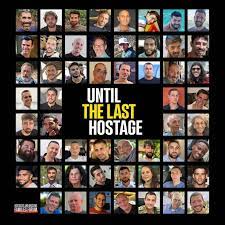
Perhaps that is the avodah of this moment. Not to decide who is the chelbona. Not to determine who smells sweeter. But to make sure every Jew is in the blend. Because when we stand together, whether in a sanctuary or in a shelter, the smoke rises straight to Heaven. And may that united tefillah protect our soldiers, comfort our mourners, heal our wounded, bring our hostages home, and usher in days of peace and redemption for all of Klal Yisrael.


To Go Is to Know

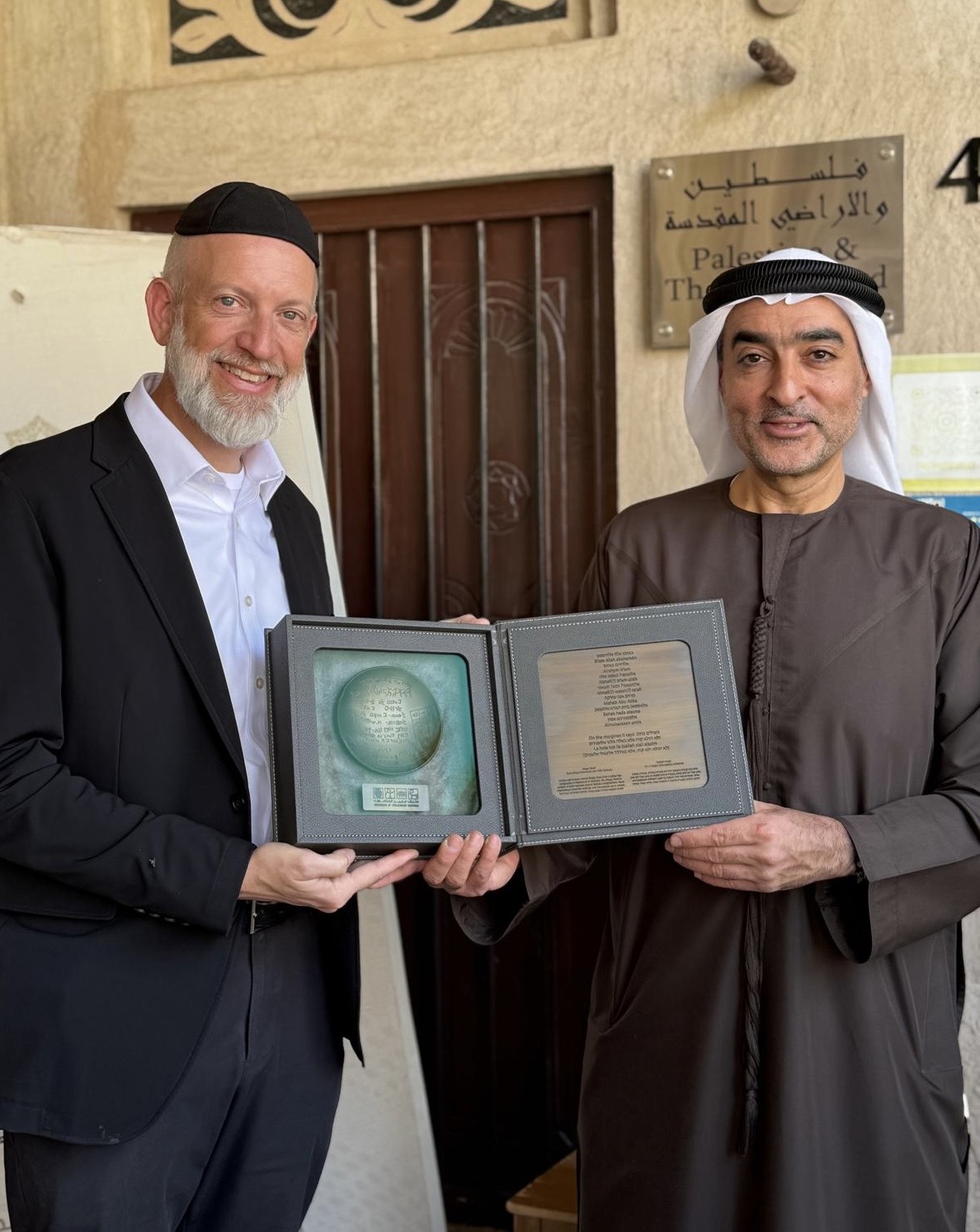
I have a confession to make. For most of my life, I bought into a stereotype. Supported by headlines and history, reinforced by wars, terror, and the chilling rhetoric that echoes from too many corners of the Middle East, I assumed that all Muslims and Arabs hate Jews, that deep down they want to destroy us and to eliminate the State of Israel. Then, on a recent trip to Dubai and Abu Dhabi, I discovered how incomplete that belief was. What I thought I knew could not hold up to the reality, the faces, the stories, the friendships, and the genuine feelings that we encountered.


A close friend, Eli Epstein, who has done business in the United Arab Emirates for more than thirty years, had long been urging me to see the reality with my own eyes.  The goal would be to meet Emirate leaders to express gratitude for the Abraham Accords and encourage its expansion.  Together, in partnership with his non-profit organization, Visions of Abraham, we arranged a small leadership mission of members of our shul, BRS, joined by our dear friends Eli and Shalva Paley from Israel. Eli Epstein’s mantra became our guideline: “To go is to know and to know is to grow.” He could not have been more correct. What we saw and whom we met changed what we know, and what we now know is already changing who we are.


The United Arab Emirates is a young nation, founded in 1971 by its benevolent ruler, Sheikh Zayed bin Sultan Al Nahyan on an intentional and courageous vision. From its inception, it committed itself to mutual respect, safety for different religions, valuing peace, and embedding into law a zero tolerance for hate. Today roughly 1.5 million Emirati citizens live alongside more than 10 million residents from around the world. More than 200 nationalities live together there in peace and harmony. This is not coexistence by accident. It is harmony by design.


The modern beauty is breathtaking. The cities are clean, orderly, and meticulously maintained. Crime is extraordinarily low. But the most striking feature is not steel or glass, it is spirit and culture. We are now seeing the third generation raised entirely within this vision, and the values have trickled down from the top. The tone set by leadership is echoed by regular Emiratis. Respect is not performative. It is practiced, expected, and felt.


We understandably generalize that the Arab world is a monolith of hatred. We point to Hamas, Hezbollah, and Iran and conclude that the rest must be the same. Yet our own history reminds us otherwise. There are chapters of Jews and Muslims living side by side, golden ages of Jewish life in Muslim lands, including from the 8th to the 12th centuries in Al-Andalus, Muslim Spain, and in parts of the Middle East and North Africa. During that period, Jews thrived as scholars, poets, physicians, and administrators, contributing profoundly to philosophy, science, and literature. In the UAE, we discovered a modern echo of that golden age, made possible by a people who do not merely tolerate us, but who admire and respect us. They share many of our values, ethics, priorities, and even practices. They are deeply committed to their faith, yet they do not seek to impose it on others.


The proof is in their actions. The UAE was the first Arab country to condemn Hamas after October 7. While airlines around the world stopped flying to Israel, Emirates Airlines never stopped once and, during that time, even increased their service.


What moved me most were the stories we heard so often. Despite the message from the leaders, prior to the Abraham Accords and a meaningful Jewish presence in the UAE, many of those we met grew up with stereotypes about Jews, just as too many of us grew up with stereotypes about them. They were taught to feel hate until real encounters rewrote their hearts.


We met with Loay Alshareef, a Saudi-born Egyptian activist who now lives in the UAE. He told us, without flinching, that he hated Jews as a child because that is what he was taught. Then he went to France to study and boarded with a Jewish family. The hospitality he received and the decency he experienced shattered what he thought he knew. Today he is a proud and fearless online advocate for better relations between the Arab world and Israel, with a massive following among young Muslims.

We met a senior leader in the Abu Dhabi Investment Office who said he, too, grew up thinking he was supposed to hate Jews. At the age of six, he traveled with his family to New York. In JFK Airport, he saw a chassid praying and asked his father who it was. His father told him it was a Jewish person.


The boy said, “But he is praying just like us.” His father replied, “Yes, we have much in common.”


That boy grew up to be a diplomat who worked on the Abraham Accords and today is building economic and human bridges between the UAE and Israel. He is eager for Jewish partnership and investment, not as a slogan but as a sincere invitation.


We met a successful Emirati businessman. He went to Cambridge without knowing English and was paired with an Israeli student who also did not know English. He called his father, anxious about studying with an “enemy.” His father answered gently, Jews are our cousins and our friends. That simple truth began a lifelong connection with the Jewish community.


We saw the fruits of those connections. There are approximately 500 Jews living in Abu Dhabi and about 2,000 in Dubai. There are daily minyanim, shuls, kosher restaurants, a mikvah, and a Jewish school which we visited. Even our guide, Houda, who wore her hijab proudly throughout the trip, spoke about the kinship she feels with the Jewish community and the many Jewish clients she has guided. She delights in comparing customs, traditions, and practices, in discovering the familiar within the foreign. It is easy to demonize and vilify the other when they remain a stranger. It is much harder when the other becomes a neighbor, a colleague, a friend.


The Hebrew word for “cruel” is achzar, a combination of ach and zar — “but a stranger.” We become cruel when we decide someone is a stranger, when we allow distance to define them, when we insist we have nothing in common. The UAE taught us how quickly cruelty can soften when strangers become familiar.


One of the most moving experiences was our visit to the Crossroads of Civilization Museum for a private tour with its founder, His Excellency Ahmed Al Mansoori, former member of the UAE Parliament. The museum celebrates the contributions of many faiths and cultures, and at its heart stands a powerful Holocaust exhibit. In an era of denial and distortion, standing before a Holocaust exhibit in the heart of a Muslim country was deeply meaningful and appreciated. It was a testament to the UAE’s commitment to truth and to the museum’s founder’s commitment to fight hate against all, including and especially against the Jewish People.


The highlight of the trip was an extended glatt kosher dinner hosted by His Excellency Dr. Ali Al Nuaimi, Chairman of the Defense Affairs, Interior and Foreign Affairs Committee of UAE. He described the UAE dream, an open and inclusive country for everyone, pointing to its multinational population. He reminded us that the UAE was the first country to combat Al-Qaeda and sent troops after September 11 to fight alongside the United States because terrorism is a threat to all humanity.


He spoke with conviction about how peace requires investment in people, not just signatures on paper. In the UAE hate speech is a crime. Hateful comments based on religion, nationality, or ethnicity carry legal consequences. He believes this model of coexistence must become the standard throughout the Middle East. He drew a distinction that has stayed with me. The goal should not simply be normalization, which is cold and transactional. The goal should be genuine human connection, friendships between peoples. The UAE does not want others to follow the old model of peace between governments; it wants to model and promote peace between people.


He also shared a concern born of friendship. Before October 7, he warned counterparts in Israel about the dangers of internal division. If you want to get along with those from without, he said, you must get along with those from within.


That lesson pierced. The same phenomenon of demonizing and vilifying those we disagree with exists within the Jewish community itself. We, too, can be quick to judge Jews who are not like us. The Torah tells us that when Yosef approached his brothers, vayir’u oso mei’rachok, they saw him from a distance and began to conspire against him. Distance breeds distortion. Tensions between brothers, and between fellow Jews, arise when we see each other from afar, when we refuse to come closer. Had they seen Yosef up close, had they spoken and listened, their hearts would have softened. Within our own people, we need to listen, to learn, and to find common ground.


This trip was not about tourist sites or luxury hotels. It was a mission to open hearts and minds and to bear witness to a model of coexistence that is not theoretical but real.  There is no doubt it needs work in both directions, as each side is still overcoming stereotypes, deepening connections, reinforcing built bridges and building new ones.


Those bridges should connect us in matters of technology, innovation, economics and more, but as one Emirati pointed out to us, they should also create connection over something even more real, something eternal.  He said that when he has visited Israel and when Israeli leaders have come to the UAE, they talk about Israel as the Start-Up Nation and focus on Israeli innovation, while omitting what makes Israel and the Jewish people uniquely special.  He yearns to hear about the Israel that is the land of Abraham and the Jewish People that gave the world ethical monotheism and Biblical values.


Listening to him, it became clear that while there is a significant role for government, political leaders and titans of industry to play in deepening connections with the UAE and moderates in the Muslim world, there is a critical role for Torah Jews to play as the ambassadors of the Abrahamic legacy and the representatives of living those Biblical values.


We are not so naive as to assume that what we saw in the UAE reflects the majority or even many in the broader Muslim world. We remain acutely aware of the venomous hate that is preached and practiced and of the dangers posed by enemies of our people. But our conclusion from this mission is clear: The same passion we pour into confronting our enemies in the Muslim and Arab world must be matched by the passion to celebrate and elevate our genuine friends from all worlds.


To go is to know and to know is to grow. The mission of our trip was accomplished. But, the larger mission, building bridges of understanding, trust, and genuine human connection, within the Jewish People and beyond, has only just begun. We all must have the courage to keep going, the humility to keep knowing, and the hearts to keep growing.


(Originally featured in Mishpacha, Issue 1091)

An Invocation in an America First Moment: Standing for Faith and Principle

When I was invited to deliver an invocation at the America First Policy Institute (AFPI) Summit, I was honored, but I also hesitated. The timing, early Friday morning, was particularly challenging, and there were other considerations as well. After consulting with people I respect and trust, I came to see it as an important opportunity at a critical moment.


AFPI is a relatively new but rapidly growing conservative think tank that promotes a Trump-aligned “America First” agenda. It has limited Jewish involvement and, until now, had never hosted a rabbi to speak or offer an invocation. With several high-ranking members of the administration and prominent conservative leaders present, the invitation created a rare platform: to both express gratitude for those standing firmly with Israel and the Jewish people, and to candidly address the troubling trends and dangerous elements emerging in parts of the conservative world.


In this broader landscape, some institutions have taken divergent paths. Most notably, the Heritage Foundation has not, in recent times, been sufficiently clear or consistent in condemning antisemitism or its purveyors. By contrast, the Hudson Institute has been a steadfast ally of the Jewish community through its long-standing, principled pro-Israel positions. AFPI is currently on the pro-Israel side of that divide, but it is crucial to reinforce and encourage institutions like AFPI to follow the Hudson model rather than drifting toward the ambiguity we have seen from Heritage.


I am grateful to share that the remarks were warmly received. There were several spontaneous rounds of applause, particularly when speaking about unwavering support for Israel. Afterward, many attendees came over specifically to express their strong solidarity with Israel and the Jewish people, and to affirm how deeply the message resonated with them.


I am sharing the text of my remarks below not only for your interest, but also as a resource, a set of talking points and themes you can draw upon and adapt for your own settings, whether addressing a crowd or having one-on-one conversations where these issues arise.


Invocation at the America First Policy Institute

Mar-a-Lago | November 21, 2025


Ladies and gentlemen, honored leaders and dear friends,


We gather today to thank God for the gift of this great nation and to offer our prayers for America: for safety, unity, and for moral clarity and courage.


I stand before you this morning as an Orthodox rabbi, as an unapologetic Jew, and as a grateful and proud American.


If we speak of “America First,” we must also speak of how America first came to be. This country was born from an extraordinary faith, deeply informed by the language and ideas of the Jewish Bible.


When our Founders wrote in the Declaration of Independence that all men are “endowed by their Creator with certain unalienable Rights,” they were echoing the first chapter of Genesis, that every human being is created b’tzelem Elokim, in the image of God.


When they appealed to “the Laws of Nature and of Nature’s God,” they were affirming that there is a moral law higher than any king, any parliament, or any polling data.


When they concluded, “with a firm reliance on the protection of Divine Providence,” they spoke in the language of our prophets, a people placing its destiny in the hands of Heaven.


So if we say “America First,” it must mean America first in fidelity to these founding biblical principles: First in honoring the Creator who endows our rights. First in defending the dignity of every person and their right to practice their faith. First in preserving the moral order that makes liberty possible.


“America First” must not only mean prioritizing American interests; it must mean America first in standing true to the principles, values, and ideals that made her exceptional in the first place.


We now approach 250 years of American history. For nearly a quarter of a millennium, this nation has been a beacon of light and hope to the world. It has understood that being the world’s superpower means wielding not only might, but also moral influence.


This morning, we offer our deepest gratitude and our prayers for the next 250 years.  That America remains strong, free, and secure. That her children grow up in homes of stability, in communities of faith and responsibility. That her leaders be guided by wisdom, humility, and courage.


As Jews, we are profoundly conscious of the blessing this country has been. In all of Jewish history, no diaspora land has given us more freedom, more safety, and more opportunity than the United States of America, and for that we are deeply grateful.


I stand here as a rabbi but also as an ordinary Jew to say, “I love America,” not as a slogan or a platitude, but as a heartfelt expression of religious obligation, a fulfillment of hakaras hatov, of gratitude: recognizing the goodness we have received and feeling the responsibility to respond with loyalty and service.


Yet I must also take this moment to speak personally and honestly. We are living in a time when, from the extremes of both the left and the right, a climate is being created in which many Jews feel less safe.


There are moments, even in this blessed country, when I step onto certain streets wearing this yarmulka on my head, and for the first time in my life, I hesitate. I feel the stares. I hear the rhetoric. I read the threats. And I find myself unimaginably asking: Are they questioning my loyalty? Do they see me as fully American?


There are voices on the left who demonize Israel and then look suspiciously at anyone who loves and supports it, as if that love somehow disqualifies us from full belonging in American life. There are voices on the right who speak of “real Americans” and “patriots” in a way that can leave Jews and other minorities wondering whether we are truly included in that vision.


To all those voices, I say this, respectfully but firmly: my loyalty to this country is not conditional, not partial, not divided. It is expressed in prayer for its leaders, in gratitude for its freedoms, in service to its communities, and in the raising of children who sing its anthem and uphold its ideals.


And at the very same time and in no way a contradiction, I am a proud, unapologetic Jew and a steadfast supporter of Israel. To love Israel is not to betray America. To stand with Jerusalem is not to stand against Washington.


In truth, to love Israel is to be deeply faithful to America’s own values, because America is founded on values that come from Jerusalem: On belief in one God. On the sanctity of human life. On the rule of just law over mere power. On the conviction that nations are accountable to a higher moral standard.


The Bible that inspired the Declaration of Independence is the same Bible that first gave birth to the people and land of Israel. So when America stands with Israel, America is standing with the very wellspring of its own moral vocabulary.


Let me be clear: to platform purveyors of hate, to provide a podium to promote antisemitism, may be one’s first amendment legal right, but it is not “America First.” In fact, it is not American at all. It is an offense against the very values that America ought to be first in defending.  Those spreading vile lies against Israel and the Jewish people on college campuses, outside of Synagogues and even in the halls of Congress do so not only because they hate the Jew.  In truth, they hate America, they are not proud Americans, and they are not loyal to how America first came to be or how it must remain first in upholding its values.


We must speak with moral clarity. We must act with courage. And we must continue to express gratitude. We thank God Almighty that on July 13, as a bullet was fired at him, President Trump suddenly turned his head. Turning his head saved his life, and the president has continued to turn his head since then: turning to listen, turning to hear the call of the moment, turning to act.  President Trump and his Administration have shown unprecedented loyalty and friendship to Israel and the Jewish people, a steadfast support that we don’t take for granted and for which we will never stop saying thank you. 


I close with a brief prayer.


“The Lord is my Shepherd; I shall not lack.”  Let us never lack in knowing the Lord is our Sheperd.


Master of the Universe, Bless the United States of America as she approaches her 250th year. May she return again and again to the truths written in the Bible and echoed in its founding Declaration—that our rights come from You, and that our greatness lies in fidelity to Your moral law.  Bless our leaders, that they may have wisdom to discern right from wrong, courage to choose what is sometimes the harder path. Bless the alliance between America and Israel, two nations that look to Jerusalem not only as a city on a map, but as a source of enduring values. Bless this land so all may continue to walk proudly including those with our yarmulkas visible, our faith intact, and our love for America unwavering


Our Father in Heaven: Give strength, wisdom and courage to President Trump and his distinguished administration to guide our country towards unity, security, and success.  Guard the courageous members of the United States military and the Israeli Defense Forces as they guard us and protect freedom and democracy around the world.


Dear God – We ask that you grant peace and prosperity to the United States, to the State of Israel and to the entire world, and let us respond, Amen.


Standing on the Other Side—Without Turning Our Backs

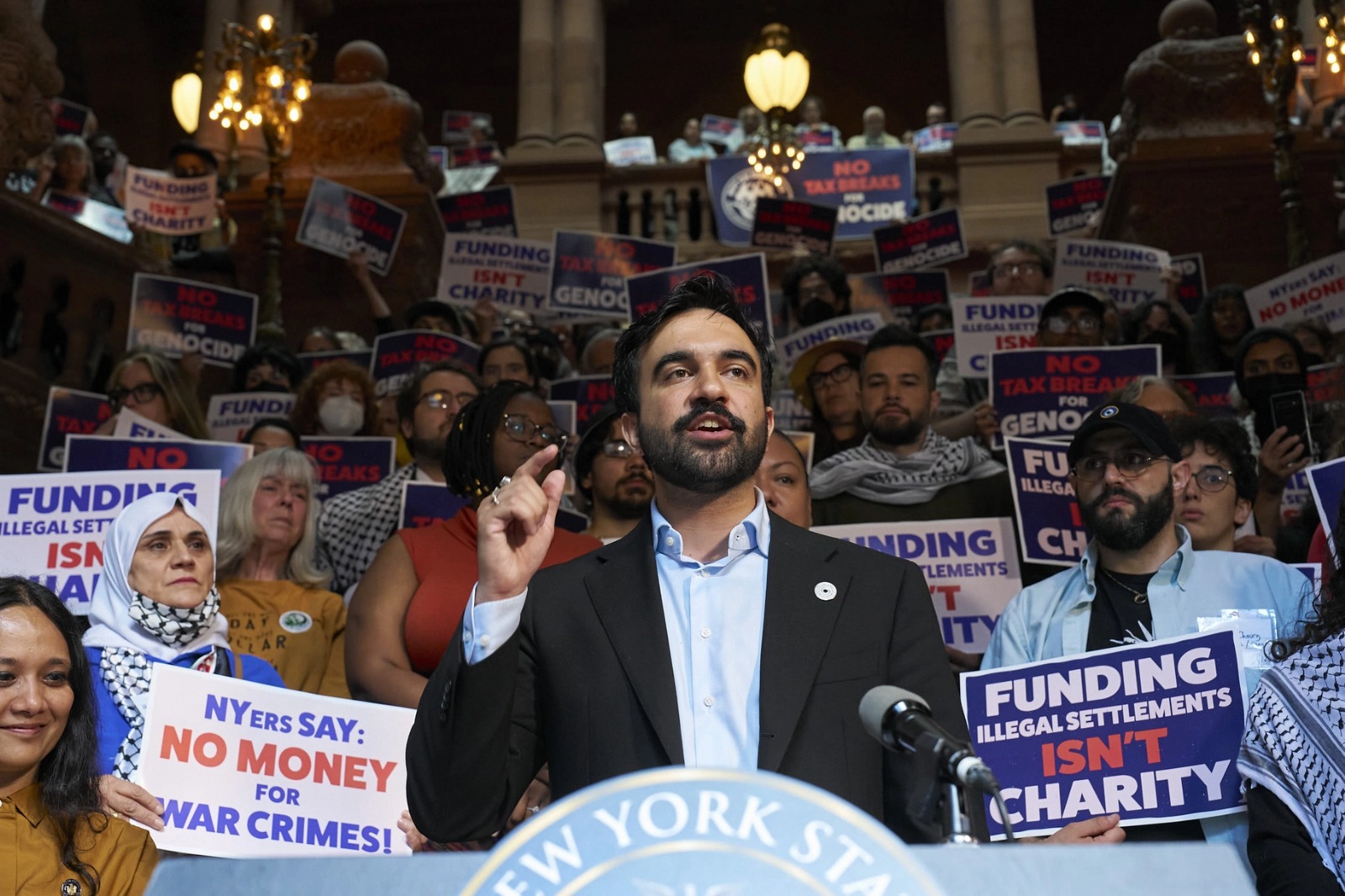
In the last week, more videos have emerged demonstrating New York mayoral candidate Zohran Mamdani’s obsessive hatred of Israel.  During a panel at the 2023 Democratic Socialists of America’s national convention, he said, “We have to make clear that when the boot of the NYPD is on your neck, it’s been laced by the IDF.”   Additionally, in an effort to blame the problems of his city on Israel, he said, “You have so many opportunities to make clear the ways in which that struggle over there (Israel), is tied to capitalists interests over here.”  He has defended suicide bombers as soldiers, repeatedly refused to condemn the violent and threatening phrase, “Globalize the Intifada,” falsely accused Israel of genocide, and announced he would attempt to have Prime Minister Netanyahu arrested as a war criminal if he came to New York.  His hateful preoccupation with Israel has been well documented and rises to the level that many Jews in New York are concerned they will be less safe if he wins.


Recognizing the danger, over 1,000 rabbis signed a letter opposing Mamdani. Rabbi Elliot Cosgrove of the Conservative Upper East Side Park Avenue Synagogue gave a sermon that went viral in which he said,  “To be clear, unequivocal, and on the record: I believe Zohran Mamdani poses a danger to the New York Jewish community.”


And yet, despite what should be obvious, polls ranging from as high as 43% (and on the low end, 21%) show that Jewish voters in New York intend to vote for him.  Prominent Jewish actors and media personalities have unabashedly endorsed Mamdani. This week, a campaign video produced in partnership with the organization “Jews for Racial and Economic Justice” was released, which includes four self-described rabbis (three women and a transgender rabbi) expressing open support for Mamdani. 


In the best case scenario, these Jewish poll responders, celebrities and these rabbis seem to be putting their liberalism and progressivism ahead of their Jewish identity and loyalty to Israel.  They are prioritizing being part of a socialist movement over the safety and preservation of their own families and their people. In the worst case scenario, they are not making a choice between two things (progressive politics and Jewish identity) they embrace, rather they substituting one for the other, rejecting their Jewish identities. Either way, it is deeply troubling.


This segment of our people failed to learn the lesson of Avraham, who in our parsha is referred to as Ha’Iviri.  While the literal translation means Avraham “the Hebrew,” our rabbis share another layer of interpretation. Ha’ivri meanis mei’eiver, on the other side.  When the whole world took one position and stood on one side, Avraham had the courage to stand out, remain true to the vision and to the will of the Almighty.  He had the courage and confidence to stand on the other side, even if it meant standing alone.  


This mayoral election is hardly the first time members of our people chose to stand with their own haters.  Nor did this behavior begin with the many Jews who tragically donned keffiyehs and spent two years protesting against Israel’s right to defend itself. When after over two centuries of slavery and persecution, our people were redeemed from Egypt, the Torah tells us that 80% stayed behind, wanted to remain part of the very society and culture that had oppressed them.   They chose to stay attached to their oppressors, comfortable in their captivity, unwilling to walk toward freedom.


It’s hard not to look at those Jews for Mamdani, look at Jews who join “Free Palestine” rallies, and be disheartened and say, “This is our generations 80%.  They are choosing Egypt over Israel, Socialism over Judaism, they are irredeemable and hopeless.”  But that would be to neglect another part of Avraham’s legacy.  


Avraham didn’t just stand apart, he also reached back. When his nephew Lot, who had already parted ways with Avraham, was taken captive, the Torah describes Lot as achiv, Avraham’s brother, even though Lot was not actually his brother. Avraham didn’t say, “Lot made his bed, let him lie in it.” He didn’t cancel him, mock him, or write him off. He felt the responsibility to his brother and went to rescue him.


And maybe as this election approaches, that is a lesson for us. We have to follow Avraham Ha’Ivri and stand proudly, courageously, on the side of Torah, of Israel, of truth. But we also have to be like Avraham the uncle—the brother—the one who never gives up on family.


Those Jews supporting Mamdani are still part of our family. They are misguided, confused, maybe even lost, but they are ours. The goal isn’t to shame or scorn them; it’s to love them back into the light. We can disagree deeply while still caring deeply. We can hold firm to our principles without hardening our hearts.


Avraham teaches us that being on the other side doesn’t mean turning our backs. It means standing strong for what’s right while still extending a hand to bring others along.


That’s our challenge, and that’s our calling, to stand where Avraham stood, with unrelenting conviction in one hand but compassion in the other.


Who is Sitting Next to You?

Our hearts were broken by the news that two evil terrorists indiscriminately opened fire on a crowd of innocent people waiting at a bus stop in Yerushalayim earlier this week. The lives of the family members of the six beautiful souls (in addition to 4 precious solders) who were murdered will forever be different, and the futures of the twelve people who were wounded—six of them seriously—are forever changed.

 
The scene was horrific, filled with panic, dread, sadness, and grief. The wicked terrorists who perpetrated the atrocity, and the organization and society that sent and applauded them, were successful in casting a shadow of darkness not only over that intersection, but in truth, over all Israel. The central victims of this event were of course the kedoshim who were murdered, those injured, and those directly in harm’s way that day. But in truth, all of Israel became victims of terror that day and beyond. The goal of terrorists and terrorism is to terrorize. Two of my daughters in Israel called me that day, worried about taking the bus. They, and nearly ten million people, are now (or, in some cases, once again) looking over their shoulders, increasingly mindful of their surroundings, braced for what to do if an attack occurs.
 
If you look at that scene, you see darkness, hate, and evil. But if you look closer, you can also find light, love, and goodness. Naturally, countless people ran away from the scene, fleeing for their lives. But, as is often the case in Israel, several ran toward the gunmen, risking their lives in an effort to protect total strangers. Indeed, many lives were saved because an IDF soldier from Chashmonaim and an armed civilian were successful in neutralizing the perpetrators before they could claim more lives. While understandably most people were focused on saving themselves, one particular taxi driver could be seen ignoring bullets being shot mere steps from him while helping an elderly woman exit his cab and get out of harm’s way.
 
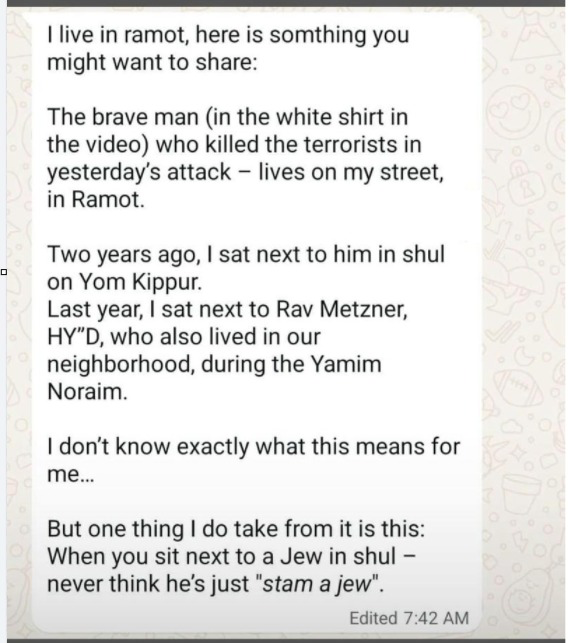
A day after the attack, I saw a message from someone who lives near where the attack occurred that left me deeply moved:


People will sometimes refer to themselves as “stam a Jew, just a simple Jew.” There is no such thing as “just a Jew.” Every person you encounter carries an entire world within them, a unique mission, an irreplaceable neshama, and a story, a history, and a destiny only Hashem fully knows. If you knew that in the coming year the person you were sitting next to would be murdered, would you not cherish him a bit more? If you knew that in the coming year the person you were sitting next to would display heroic courage and save countless lives, would you look at him the same way?
 
As we prepare for the Yamim Noraim, it’s natural to become absorbed in ourselves—our situation, our status, our tefillos, and our success. We open our selichos or machzor, look down at the words, and focus on our personal struggles, our hopes, our fears. These are important concerns that deserve our heartfelt prayers. But the Yamim Noraim are not meant to be experienced in a silo. They are not private retreats of the soul; they are communal pleadings of Am Yisrael standing together before our Father in Heaven.
 
The great Rosh Yeshiva of the Mir Yeshiva, R’ Nosson Tzvi Finkel zt”l, was once asked by a student on Rosh Hashana what he should prioritize in his davening. Success in Torah? Good health? A proper shidduch? What is the most important thing to daven for? The Rosh Yeshiva answered him with two words: “Someone else.”
 
When you sit in shul this Rosh Hashana and Yom Kippur, take a moment—not to interrupt your davening, but to expand it. Look around. Who is sitting next to you? Who is behind you? Who is in front of you? Don’t assume you know their story. That elderly man may have carried the weight of unimaginable suffering and still comes faithfully to minyan. That young father may have risked his life to protect others. That quiet neighbor may be enduring an invisible struggle you can’t see.
The person beside you is not “stam a Jew.” He or she is a precious child of the Ribbono Shel Olam, with infinite worth and unique greatness.
 
So as you pour out your heart in prayer, include them. Daven not only for yourself and your family, but for the family sitting two rows behind you, for the widower across the aisle, for the single struggling mother, for the child fidgeting beside you. And just as importantly, trust that they are davening for you, too.
 
This year, may we enter the Yamim Noraim with the awareness that there is no such thing as “stam a Jew.” Every Jew is extraordinary. Every Jew is worth knowing, worth caring about, and worth davening for. And when we recognize that—when we see the greatness and holiness in each other—then perhaps Hashem will see the greatness and holiness in us all, and inscribe us together for a year of blessing, health, and peace.
 

667 Days Without a Day of Their Own: Building B’Yameinu

667 days.  


Of course, we daven from the bottom of our hearts that by Tisha B’Av the hostages will all be home, our soldiers will all be with their families, and our enemies will all be defeated. 


But if not, Tisha B’av will mark 667 long days since October 7.  667 days in which innocent people, guilty only of the crime of being in Israel, will have been held by cruel, evil terrorists.  667 days that heroic IDF soldiers have been fighting on several fronts, leaving their families and risking their lives for our people and our land.  667 days with an entire country of 10 million people constantly remaining aware of where a bomb shelter is and needing to think about it each time they leave their home.  


For 667 days—granted in very different ways—hostages, soldiers and the people in Israel have not been able to call any day fully their own. 


The Talmud (Yerushalmi, Yoma 5) tells us Kol dor she’eino nivneh b’yamav, ma’alin alav k’ilu hu hecherivu, any generation in which the Beis HaMikdash isn’t built in its days, it is considered as if that generation itself destroyed it. 


Why didn’t the rabbis just say kol dor she’eino nivneh, any generation in which the Beis HaMikdash isn’t built? What is added by the word b’yamav, in their days?   We use this same word daily in our davening when we ask Hashem u’vnei osah b’karov b’yameinuAgain, why not just ask Hashem to build Yerushalayim and the Beis Ha’Mikdash, what is added by b’yameinu, “in our days,” when this is inherently the request?


In his Zera Kodesh, the first rebbe of Ropshitz, Rav Naftali Tzvi Horowitz, explains that “B’yameinu” isn’t a prayer for when we want redemption and rebuilding, it is the formula and blueprint for how to bring it.  The letter Beis, when used as a prefix, can mean two different things. B’yameinu can mean in our days, but it can also mean with our days. 


The building blocks, the materials for a generation to build the Beis HaMikdash and bring redemption, is “b’yamav,” to use its days meaningfully, productively and as fully as possible.  Doomscrolling, mindless binge watching, criticizing, fighting and sowing division are exercises in squandering our days.  If we waste them, misuse them, fail to appreciate the gift of “our days,” it isn’t only that we failed to rebuild the Beis HaMidkash, but by destroying our most precious commodity, our days, k’ilu hechrivo, we destroyed what we could have done with them, what we could have built with them. 


For 667 days the hostages haven’t had “y’mayheim.”  Their days haven’t been their own.  They haven’t had control over their time or their lives. They haven’t had their freedom or seen their families.  Maybe they haven’t even seen the light of day. For 667 days they haven’t been able to decide for themselves what they want to do, where they want to be, what they want to achieve. 


We daven daily that Hashem finally changes our condition in the world, that He brings a genuine and lasting peace, that He builds the Beis HaMikdash b’karov. How? B’yameinu, by using our days to heal instead of harm, to create connection instead of separation, to compliment instead of criticize, to build instead of destroy, to unite instead of divide.   


In Eicha we describe the unbearable pain of yashva badad, of feeling alone, a malady and condition that too many continue to suffer from today.  If loneliness is the problem, the antidote and the answer is to be nosei b’ol im chaveiro, to bear the burdens of our friends and our people, to feel their pain, to empathize with their plight and to become part of their suffering. 


To be nosei b’ol im chaveiro means to not only feel bad for, but to feel pain with those who are struggling and to focus on filling our days with providing relief, support, and love. 


If we want to change what is happening to us in the world, we have to be thoughtful and mindful of what we do to and for each other.  We must fill yameinu, our days, with standing with and davening for the hostages, our soldiers, and all our brothers and sisters in Israel.  We must ensure nobody is dreading the countdown to Shabbos wondering if they will get invited or will once again be eating alone.  We must make sure that nobody in our community can’t sleep at night because they aren’t confident they will cover their bills.  We can’t allow an Agunah to feel she is all alone or a victim of trauma or abuse has been abandoned. 


If you own and control your days, you are not only blessed but bear an awesome responsibility to fill it with meaning, purpose, care, and concern.  If we use the days leading up to Tisha B’Av well, we will merit to no longer sit on the floor and mourn but to celebrate the building of the Beis HaMikdash, constructed b’yameinu, with our days. 

Antisemitism Uncensored: Let Them and Let Us

Last week, Piers Morgan, whose show has over 4 million subscribers on Youtube, hosted virulent and unapologetic antisemite Candace Owens.  Seething with hate for the Jewish state and the Jewish people, Candace opened by calling Israel a terrorist state and falsely accusing Israel of perpetrating a genocide and a holocaust by indiscriminately and intentionally murdering innocent children in Gaza.  She described AIPAC as owning American policy and claimed that American soldiers have died and will continue to die for Israel. 


“I would say as an American that if we’re going to get behind a regime change it should be in Israel first… I think [that would be] the position of a lot of people who are waking up to the fact that Zionism has brought us nothing but grief in America.  Can you name one positive thing that Zionists have contributed to America?”


At the conclusion of the interview, Piers closed by saying, “Candice, always good to have your views on Uncensored. You know that I appreciate you coming on.  Thank you.”


Good to have your views?! Would it be good to have the views of a white supremacist, a member of ISIS, a blatant racist, or anyone else filled with hate for a particular people and lies about an entire nation?


Someone shared this clip with me and I only watched a few moments, but it was enough to make me want to jump through the screen, correct the lies, and set the record straight to both the antisemitic guest and the host who has sold his soul for views by platforming such heinous individuals. Hearing them even for such a brief period of time, and then catching that conclusion about it being “good” to have her views, made my blood pressure rise, my pulse quicken, and my stomach turn.


When I calmed down it quickly struck me – why in the world did I watch that?  Why did I allow them to take up space in my head and heart?  They certainly didn’t impact my beliefs or opinions an iota and obviously, being a passive spectator, I didn’t influence their views either.  All that was accomplished was giving them another online “view” and causing me to get terribly upset.   In retrospect, there couldn’t be a worse use of time.


Hearing the distortions, lies, hate, and fake news about Israel on podcasts, viral clips, social media and even some mainstream news programs is infuriating, maddening, and ultimately unproductive.  If we care about our beloved people and our people’s homeland, the truth is that there are much better ways to use our time.


In her bestselling book, “The Let Them Theory,” Mel Robbins describes an almost universal phenomenon of wanting to control everyone and everything around us.  We want to dictate what people say, believe, and do, and when we can’t, it frustrates us enormously often leaving us feeling stuck.  The Let Them Theory teaches how to stop wasting energy on what you can’t control and start focusing on what you can: YOU.


The theory is made up of two parts, Let Them and Let Me.  When you find someone speaking, behaving, or believing things that bother you, frustrate you or disappoint you, say to yourself – Let Them.  Let them think that, let them say that, let them do that.  Let them.  But the theory only works when followed by Let Me.  Let Me focus on myself, my life, my happiness, what I can control, what I am supposed to do, who I am supposed to be. 


Robbins writes: “When you say Let Them, you make a conscious decision not to allow other people’s behavior to bother you. When you say Let Me, you take responsibility for what YOU do next.”  Let Them: Have their opinions, judge your choices, think what they want, talk behind your back. Let Me: Live authentically, focus on growth, find happiness.  The brilliance of the theory is its simplicity and in the book she provides science-backed evidence for why it works. 


Reflecting on the recent Israeli triumph over Iran and its success fighting on seven fronts over the last almost two years, one marvels at Israel’s capacity to practice Let Them and Let Me.  Shutting out all the noise from around the world, Israel has focused on what it needs to do and the results are stunning.  By saying “Let them,” let the haters make noise and “Let us,” let us eliminate our enemies, neutralize existential threats, and take a leadership role in providing security for the Middle East and the world, Israel has earned both the fear and respect of unlikely sources.  We hope and pray that it comes to fruition but even the prospect and rumor of several countries that were previously hosts to Israel’s enemies now open to joining the Abraham Accords is welcome great news. 


Rav Soloveitchik commented that slavery and subjugation come in two different forms – both the physical component and also a mentality.  Physical slavery means that a person is literally under the control of somebody else who decides what he can and cannot do.  The Jewish people who were under the rule and control of the Egyptians were released from this form of bondage at the time of Yetzias Mitzrayim.  Nevertheless, they still were not freed from their slave mentality.  They still felt inferior, subservient to the opinion and perspective of other people.  They not only assumed that others viewed them as “grasshoppers,” as small and inferior, they allowed that projection to overwhelm them with fear, hold them back, and ultimately keep them from the Promised Land.


For 2,000 years we have been fighting to survive, subjugated by our host countries who orchestrated pogroms, attempted to exterminate us, or expelled us.  Today, with endless gratitude to Hashem, though we remain in a state of galus, we are physically and religiously free.  Yet, the long conditioned galus mentality breeds a feeling of inferiority, a concern for what others think of us.  We seek validation for something as simple as a right to exist.  The truth is, the opinion we should be most obsessed about is that of Hashem and the question of if we are fulfilling His vision and mission for us. 


In the beracha with which we conclude the maggid section of the seder on Pesach, we express our hope to experience our final redemption, when we will praise Hashem al ge’ulaseinu v’al pedus nafsheinu – “for our redemption and the redemption of our souls.”  Rav Soloveitchik explained that we anticipate the time when we will experience not only ge’ulaseinu, physical redemption, freedom from those who oppress and exert control over us, but also pedus nafsheinu – mental freedom, the freedom from our insecurities and our sense of inferiority, so that we will have the confidence to act as we are supposed to act without worrying how we will be perceived and what others are thinking and saying.


When Hashem summoned Moshe back to the top of Mount Sinai to receive the second set of tablets, He commanded, v’ish lo ya’aleh imach – “and no man shall ascend with you” (Shemos 34:3).  The Degel Machaneh Efrayim, grandson of the Ba’al Shem Tov, comments that whenever we “ascend,” seeking to grow and lift ourselves higher, we should not bring anyone else with us; we should not be worrying about what other people are thinking or saying about us.  What others think about us is their problem, not ours.  We should live with the freedom to “climb the mountain,” to rise to the greatest heights we can, without worrying at all what people are thinking.


It is true that we rely on the help and support of others and therefore it is critical to engage in lobbying and advocacy with those in elected office. If we are in a position to have our voices heard, we must use those voices as much and as loudly as possible. But when it comes to watching, listening and reading the news, we must be judicious and mindful in distinguishing between staying informed and aware of the news, and becoming aggravated and infuriated by the lies.  


Let them! Let them make noise and spew hate. 


And let us!  Let us climb higher and higher in our unity, our love, or faith, fighting for our people and spreading Hashem’s light. 

The Triumph of Israel and the Spirit of the Jewish People

Israelis, Jews, and decent people around the world breathed a great sigh of relief and were filled with euphoria at the news that the spectacular American military, at the courageous order of President Donald Trump, had bombed and obliterated Iran’s nuclear program.  As of now, the 12-day war with Iran has reached a ceasefire with a stunning Israeli military victory, one that experts already say surpasses the Six Day  war.  We would all be remiss if we didn’t follow the example of President Trump and Prime Minister Netanyahu, who both publicly and proudly thanked God for the success of their efforts. 


It is truly extraordinary that for nearly fifty years, an evil regime, the world’s largest state sponsor of terror, has wreaked havoc, murdering innocent Americans and Israelis while threatening its Arab neighbors.  The danger and threat to the world of a nuclear Iran has been articulated by the last five American presidents and by countless world leaders.   


History will show that President Trump and the United States didn’t just talk about eliminating that threat, they acted.  But the US, the world’s greatest superpower, didn’t do it alone, they had the help of only one other country.  If you looked only at a comparison of countries by populations, land mass, economy, how long they have existed, their role among nations, would you ever guess that the other country that not only assisted but paved the way and set the stage was smaller than New Jersey, is only 77 years old and has a total population of just 10 million? 


I got goosebumps when President Trump thanked Israel: “I want to thank and congratulate Prime Minister Bibi Netanyahu. We worked as a team like perhaps no team has ever worked before, and we’ve gone a long way to erasing this horrible threat to Israel. I want to thank the Israeli military for the wonderful job they’ve done.” 


The role and contribution of the State of Israel in protecting the world and keeping it safe is nothing short of a Kiddush Hashem, a fulfillment of the Jewish people’s mission in the world. 


I was sitting at a beautiful Chuppah on Sunday, thinking about and reflecting on this achievement.  The seventh beracha was recited and the Chuppah was about to conclude but instead of turning to the singing of Im Eshkacheich, we were all invited to rise as something else was sung first, the Mi’Shebeirach for Tzahal, the prayer for the IDF.  I have attended dozens of weddings since October 7, and at every one of them, a prayer for our brothers and sisters in Israel and for the heroic and courageous members of the IDF was included, sometimes as the IDF prayer and other times as Tehillim.


As we all stood and focused on the heartfelt Tefillah, a thought occurred to me.  In America’s wars, in Afghanistan, Iraq and elsewhere, was any wedding of the average American interrupted to include a prayer for the American military?  Were the weddings of any Americans paused to pray for American troops? Unless an immediate family member of the bride or groom was serving in active duty, I can’t imagine a prayer was included, even right here in America.  And yet, for the last year and three quarters, around the world, thousands of miles from Israel, Jews everywhere have refused to celebrate without also pausing to pray for the IDF.  The Jewish people are unique in this way.  Wherever we are around the world, we feel connected, and our wellbeing is intertwined.


In several places (Yevamos 61a, Bava Metzia 114b, Kerisus 6b), the Gemara says, “You, the Jewish people are called אדם, Odom, but the nations of the world are not called Odom.”  Read simply, it sounds like a terribly prejudiced and biased statement. 


Rav Frand shares a story that offers a deeper understanding:  In 1912, in Russia, Mendel Beilus was accused of killing a Christian child and using his blood to bake Matzahs. This slander or variations of it were unfortunately prevalent in Europe for many, many years. They were known as blood libels. Beilus’ lawyer was afraid that to buttress their case, the accusers would make the argument that Jews considered non-Jews less than human. He was in fact afraid that they would cite the above-quoted Talmudic reference to prove this very point.


The lawyer therefore visited the Chortkever Rebbe and asked him how he could respond if the opposing lawyers would throw that Gemara at him. The Rebbe said as follows: If an Italian was seized and put on trial, we would not witness a scenario where all Italians were congregating in their churches to pray for this one Italian. The same can be said about the French for a Frenchman, and so too about all other nations. However, when a Jew is seized and put on trial, the solidarity that Jews have toward each other will make every Jew throughout the world stop and pray for the welfare of that other Jew.


This is how the Chortkever Rebbe explained Chazal’s statement that “You are called Odom.”  The Hebrew language is extremely precise in terms of the different connotations of apparent synonyms.  Other words for “man” has a singular and a plural – ish, anashim, gever, gevarim.  However, the word Odom is the same whether  referring to one or many.  The singular term “Odom” fits the Jews. All Jews are considered as a single entity. There is no dichotomy. We are all in this together. The reason why the word “Odom” is employed referring to Jews is because this is the only term for humanity that has no plural and the Jewish people are a singular people.


This is not a racist or bigoted interpretation. It is a unique attribute of the Jewish people that has been demonstrated time and time again in ancient times and we are experiencing it right now.  If one Jew is held hostage, Jews around the world feel the pain and storm the heavens.  When heroic soldiers of the IDF are fighting, Jewish weddings around the world are interrupted with a prayer on their behalf. 


With Israel’s victory against Iran, we hope and pray that Hamas surrenders, releases the hostages, and Jewish people around the world can live with the peace and tranquility we deserve.  But until they do, we will always feel a sense of responsibility for and oneness with one another.

A Nation Rising and Roaring Like a Lion

Several times over the last few days, I was talking to someone in Israel—my daughter, sister or a friend—and they nonchalantly interrupted to say, “I need to hang up, the sirens is sounding and we need to head to the bomb shelter.”  To be clear, though this is commonplace, there is absolutely nothing normal about ever having to utter the sentence, “I am gathering my family and going to a bomb shelter because ballistic missiles are headed our way.” 


Is it really any wonder that Jews suffer disproportionally from gastrointestinal disease?  How could the stress, anxiety, and trauma of two thousand years of running and hiding from pogroms, attempted exterminations, and expulsions not be absorbed into our people’s kishkes?


Eighty years after the Holocaust, Jews are once again running to take shelter from those attacking them.  In Gaza and Lebanon, our heroic soldiers have been on the front lines risking their lives for the future of our people.  But in this war with Iran, all of Israel, 10 million people, find themselves on the front lines, running for shelter and bracing for potential impact.  This includes waking sleeping babies, carefully escorting the elderly, stocking up space, packing people in, and going long periods without sleep. 


Mi K’amcha Yisroel – Nobody Like the Jewish People


I am in absolute awe of my family, friends and all in Israel whose lives have stopped and have been turned upside down.  Many are doing it with spouses serving in miluim or stuck out of the country or without family around to help them.  The entire country is now bearing the brunt of the hatred of Iran who want to wipe out the whole Jewish nation globally but are taking it all out only on those in Israel.  And yet, somehow, our people carry on with positivity, faith, hope, tenacity, resolve, and a healthy sense of humor.


This is the story of our people.  They, our brothers and sisters in Israel, are why we are unstoppable and undefeatable. 


There is much uncertainty that remains, but as of now we know that Israel has pulled off an operation that makes the Hezbollah beeper episode look modest and, according to some experts, is on par with the miracle of the Six Day War.   On June 13, 6/13, an auspicious date, Israel launched a pre-emptive strike to take out Iran’s nuclear capability, a country that has pledged to destroy Israel and wipe out the Jewish people. Earlier that same day, the Prime Minister davened at the Kotel, a seemingly innocuous gesture as he hosted a foreign leader.  Together with the announcement he was going on vacation and attending a celebration, and the coordinated statements by President Trump, Secretary Rubio, and Steve Witkoff telling Israel not to attack, Iran was caught by surprise. 


Mindbogglingly, the Mossad had been operating in Iran for years, setting up a base with drones that were smuggled in. Having eliminated the air defense, Israel’s extraordinary air force operated with impunity, flying more than 1,100 miles to relentlessly pound missile sites, attack nuclear sites and, in pinpoint strikes, eliminate Iranian nuclear scientists and military leaders all while brazenly refueling over Iran.


Israel orchestrated events that they knew would cause Iranian military leadership to gather and then took them out. Israel is the size of New Jersey and has 10 million people. Iran is more than twice the size of Texas and has 93 million people.  We are witnessing nothing less than a modern-day version of David defeating Goliath. 


This courageous action, in defiance of some world opinion and world leaders, is a gift to the world, just like it was when Israel took out Iraq and Syria’s nuclear programs. Thankfully, despite the public posture designed to distract, in truth, President Trump and the United States stand with Israel, are coordinating with Israel and are helping defend Israel.


Gratitude and Angst


On Thursday night, when Israel launched its preemptive strike, we were filled with gratitude and elation, pride and joy in the unprecedented and heroic success.  But those feelings were quickly tempered as Iran began to retaliate and launch waves of barrages of ballistic missiles, most of which have been intercepted but too many of which have gone through, taken lives, and caused scores of injuries.


There have been countless, extraordinary miracles and achievements.  As this war with Iran continues to unfold, we are filled simultaneously with boundless gratitude and pride on the one hand but also profound concern, worry, and angst on the other.  How do we balance these conflicting feelings?


Once, in the early years of his leadership, Rabbi Shneur Zalman of Liadi told his chassidim: “One must live with the times.” What he meant is that every day a Jew should “live with” and interpret everything happening through the messages and prism of Torah.  The timing with which we read the weekly Parsha is not random but by design from Above and there is always a connection.


It is no coincidence that Israel courageously attacked Iran in the week the Torah portion tells us: “When you are at war in your land against an aggressor who attacks you, you shall sound short blasts on the trumpets, that you may be remembered before your God and be delivered from your enemies.”


This is the same Parsha that contains the promise: “Va’yehi binsoa ha’Aron…v’yafutzu oyvecha, v’yanusu misanecha mipanecha.  When the Ark was to set out, Moshe would say: Advance, Hashem! May Your enemies be scattered, And may Your foes flee before You!”


Rashi explains: “Your enemies,” a phrase we address to Hashem, means that anyone who hates the Jewish people hates the Creator of the universe. Iran has targeted the Jewish people and in so doing has targeted our Father in Heaven. Iran has started up with the wrong enemy.  


When the Aron sets out, when the Torah leads us, when we are proud Jews, God makes a promise that He will help us defeat our enemies. When the Prime Minister, the political leader of the Jewish state, the Commander in Chief of the Israeli military, goes to the Kotel to pray before launching an attack, the Ark is leading, our fighting is informed and inspired by our faith.


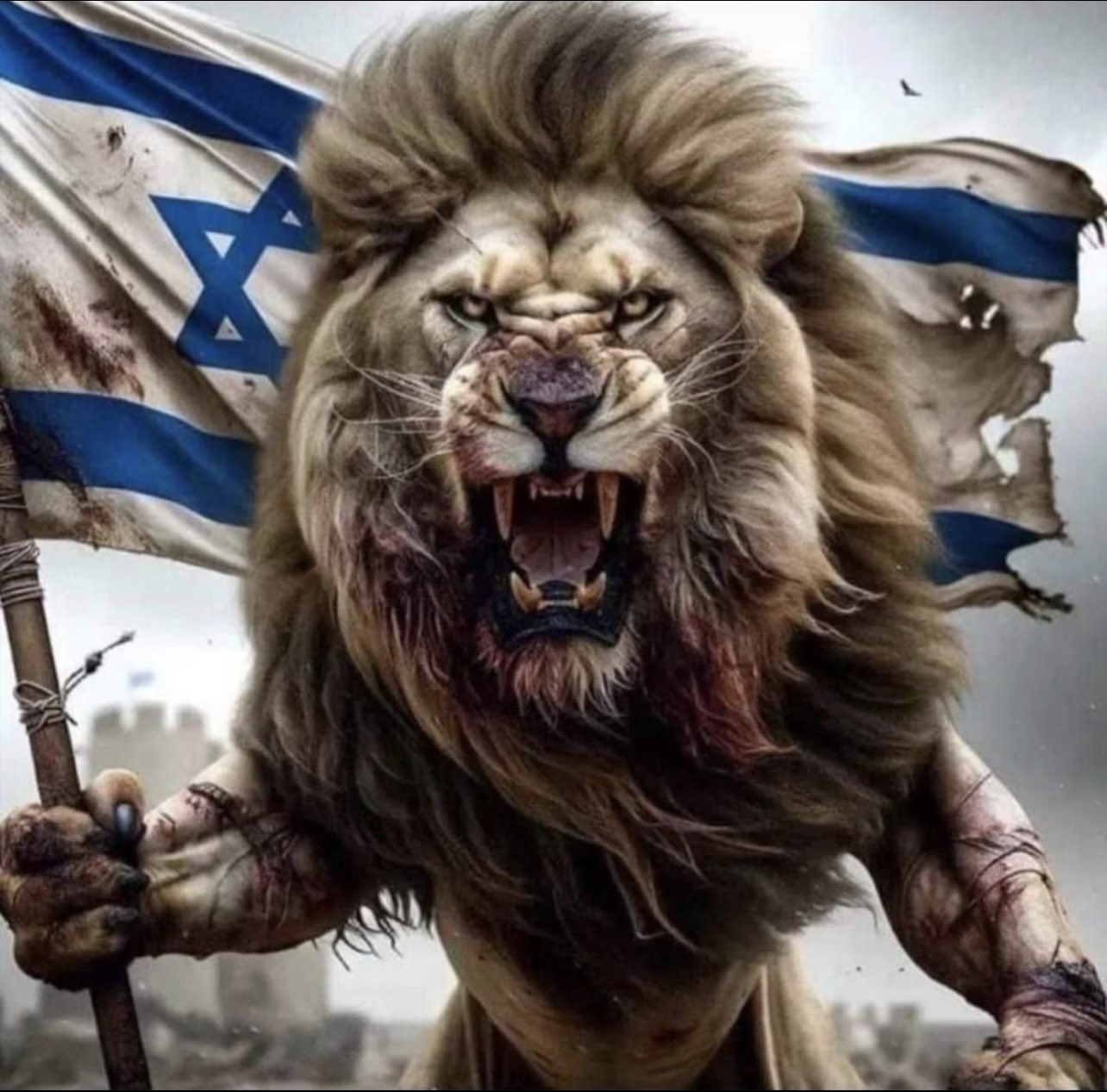
When the government chose a name for the operation, they didn’t use a military code word or a reference to a weapon, they quoted a pasuk from our sacred Torah – Hein am k’lavi yakum, we are a nation that rises like a lion.  That is leading with the Aron, fighting for our people and our Torah. 


With Faith and Fortitude


The Gemara (Berachos 12b) relates that at one time our rabbis contemplated adding the parsha of Balak, which includes the words of the wicked Bilam, into the seder to be said together with Shema.  Why would we think it appropriate to quote daily a villainous prophet who hated our people, and why would we couple it with the iconic and central words of the Shema? 


The Gemara itself tells us that what makes the words of Bilam so special are that they contain a pasuk comparing the Jewish people to a fearsome lion:  “The Jewish people crouches; he lies like a lion and a lioness. Who dares rouse him?” 


Rav Kook in Ein Aya explains that Bilam poetically compared the Jewish people first to a lion that rises and then to a sleeping lion that none dare disturb. Everyone who sees it rise and roar then fears the formidable powers of this majestic creature, even when it sleeps.   Our people have survived against all odds, defying all the laws of history.  We rise and rest like a lion so that we can continue to declare Shema.  When we accept the yoke of Heaven, when we declare the unity of Hashem, we are indestructible. 


In a world of variables, there are two constants.  In a world that is temporary, there are two things permanent: Hashem as expressed through Shema, and the Jewish people, the lion who roars and rises when awake and who remains and is even feared when asleep. 


We feel boundless gratitude to Israel’s heroic soldiers and the members of Israel’s air force.  We recognize the selfless dedication of the Mossad agents who have lived for years in Iran undercover, forfeiting their Jewish identity and Jewish practice to protect the Jewish people.  We appreciate the courageous leadership of Prime Minister Netanyahu.  They all deserve credit, praise, admiration, and gratitude. Yes, they have dismantled Hezbollah, Hamas and pulled off amazing feats against Iran.  But none of them could or would succeed without Hashem leading the way. We must never forget or fail to credit God with our survival, our existence and our future.


And that is why we can simultaneously be grateful to God and His agents for the success so far and also manage our concern and worry for the future. When we recognize and realize that God got us here, He enabled and empowered our success and He promises us that we will be here forever, that we will persevere and triumph, that He is fighting by our side.


Our people have not only survived but thrived against all odds, against the laws of history, despite countless attempts to annihilate and exterminate us.  We have persevered with faith and fortitude, resilience and resolve. When our enemies try to destroy us, we our protected by Hashem.


To our lions in Israel, not only the courageous members of the military but each and every one of the 10 million living on the front line – we are giving you the biggest hug, sending the greatest love, and thanking you from the bottom of our hearts. 


What They’ll Never Understand About the Jews

Chaim Lindenbaum, a 77-year-old man from Haifa, was diagnosed with aggressive leukemia in 2022. Doctors said the grandfather could only survive with a life-saving bone marrow transplant. Dr. Daniel Levi had signed up to be a bone marrow donor after moving to Israel from Peru and he came up as a match for Lindenbaum, even though they were not related. After finding out he could be a donor, Levi had about one week to prepare for the urgent stem cell transplant, which was arranged through Ezer Mizion, the world’s largest Jewish bone marrow registry. The transplant was a success, and the older man wanted to thank his benefactor. But donor rules forced the men to wait a year before the donor’s identity could be revealed.


A year later, Chaim Lindenbaum and Daniel Levi were anxious to finally meet each other.  They scheduled to meet after the Jewish holiday season that ended with Simchas Torah on October 7. But that meeting never happened. Daniel Levi and his young family lived in Kibbutz Be’eri and on October 7, when terrorists infiltrated the kibbutz, he answered the frantic calls from the medical clinic. He ran into the trouble, racing to treat the severely injured.  As his wife Lihi, 34, daughter Emma, 5, and son Liam, 2, were hiding in a safe room for seven hours, Levi calmly texted her, “I love you” while Hamas terrorists opened fire.  After treating many people and saving lives, Dr. Daniel Levi was killed on October 7.


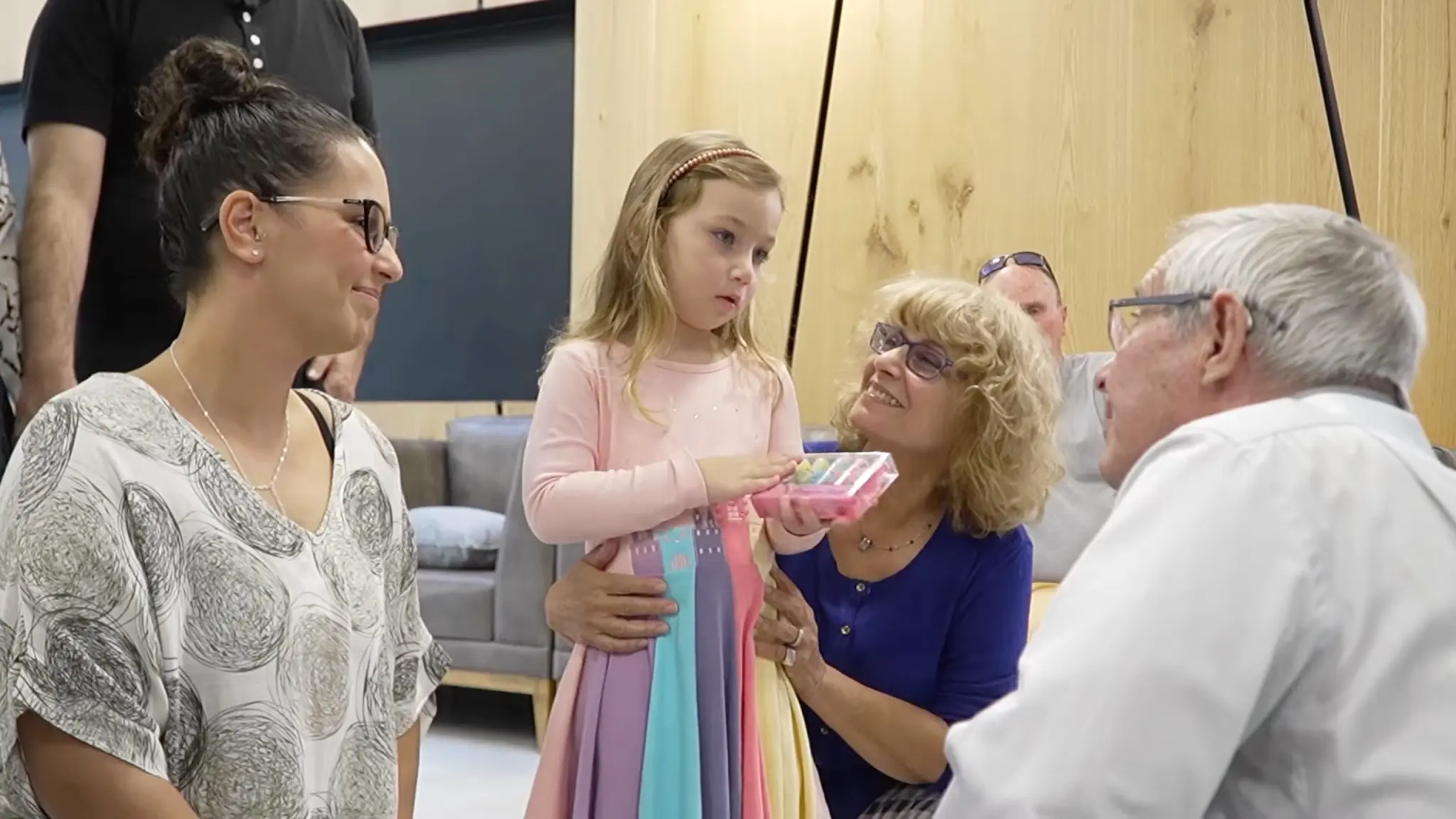
Lindenbaum never did get to meet the man who saved his life, but he did get to meet his family.  A few weeks after the horror at Be’eri, someone from Ezer Mizion was trying to arrange the meeting and kept called Levi but didn’t hear back. She looked at his file and saw he was from Be’eri.  She did more research and learned he had been killed.  She decided to call Lihi nonetheless to see if a meeting could be arranged. During an “exciting and emotional” meeting  for the two families, Daniel Levi’s widow got a chance to do what her husband dreamed of doing for more than a year, hug his bone marrow recipient.


Bending down to little Emma, Lindenbaum explained, “I was very sick – my blood was sick. And today I’m healthy, thanks to your daddy’s blood.” He continued: “I was very sad, I wanted to thank him. His blood system is in my body. In compatibility we were like brothers.” He added that a part of Levi still lives on in him: “He left, aside from his two beautiful kids, his blood, which is my blood.”


The truth is this principle is not limited to Chaim Lindenbaum and Daniel Levi, but all Jews are brothers and sisters, we must work to be perfectly compatible. 


In describing the most seminal moment in history, the revelation at Sinai, the Torah tells us: Va’yachanu ba’midbar, vayichan sham Yisrael neged ha’har, they encamped in the desert and the Jewish people camped opposite the mountain. Rashi famously comments on the change in tense—from the plural “Vayachanu” to the singular “Vayichan”—that we stood “k’ish echad b’lev echad, like one person with one heart.”  The Ohr HaChaim writes that this mindset was from “ikarei ha’hachana l’kabbalas ha’Torah” a critical part of preparing to receive the Torah. It was then, and it is again now, as each year we accept the Torah together anew


The simple understanding of this concept is that we were united, cooperative, caring and loving of one another.  We were a family, a community, a people instead of just a gathering of disparate individuals.  But the idea is deeper.  Indeed, we can’t fully observe and keep the totality of Torah unless we are united and as one.  We are all obligated in Taryag mitzvos but yet can’t observe every one of them because we can’t simultaneously be a man, woman, Kohen, levi, Live in Israel and outside of it, during the Beis HaMikdash and without it, etc.   The Kiryas Sefer explains that only through the principle of Kol Yisroel areivim zah la’zeh can we fulfill the entire 613 commandments.  By being guarantors one for the others, we can be motzei each other and thereby all fulfill it all.  It is not a coincidence that areivim is the same word as ta’aroves, a mixture.  When we guarantee one another and have each other in mind, we become a mixture together. 


The Baal Shem Tov understands this idea in an even deeper way.  The only way to fulfill Taryag Mitzvos, he says, is to not only exist independently, but also to see ourselves as part of one organic, integrated whole, one unit.  קיום תרי״ג מצוות אינו אפשרי אלא ע״י שכל אחד כולל עצמו בתוך כלל ישראל באהבה ואחוה ע״י זה יש לכל אחד חלק בתרי״ג מצוות.  This is why Chassidim say before each mitzvah they perform, “בשם כל ישראל”. 


But perhaps there is yet another explanation. We all know the name of the mountain the Torah was given on is Har Sinai.  The Gemara (Shabbos 89a) tells us the etymology of the name Sinai.

דְּרַב חִסְדָּא וְרַבָּה בְּרֵיהּ דְּרַב הוּנָא דְּאָמְרִי תַּרְוַויְיהוּ: מַאי ״הַר סִינַי״? הַר שֶׁיָּרְדָה שִׂנְאָה לְאֻמּוֹת הָעוֹלָם עָלָיו.

It is called Har Sinai because it is the mountain from which sinah, hatred descended against the Jews.  While countless explanations have been offered for antisemitism, the world’s oldest hatred, there is no unifying explanation because it has reared its ugly head in times of prosperity and poverty, in times of assimilation and strong Jewish identity, throughout history and across the globe, when we have been in our homeland and when we were dispersed in galus. 


Ultimately, our rabbis taught, we are hated because we stood at Sinai and accepted a great role and responsibility, a mission to be models and examples, to improve and repair the world. Subjective cultures and systems of morality challenge the objective moral timeless truths of our Torah, but they don’t endure.  We are meant to be the moral conscience of the world, an example of creating an ethical and holy society and community, and the people of the world don’t like that.


The sinah, the hatred of the Jew, goes all the way back to Har Sinai when we stood at the mountain, three thousand, three hundred and thirty-seven years ago and accepted to live lives informed, inspired, and guided by the Torah.  We have faced discrimination, bias, double standards, tropes and hate since the very moment we began.  We have been forced to live with and navigate sinah since we first stood at Sinai. 


How? How has our people not only survived this sinah but thrived despite it throughout the millennia?  What is the explanation for our endurance, resilience, strength and capacity to still be here standing, to be back at that same mountain that brought this hatred?


The answer, the secret to our surviving the sinah, also goes all the way back to that mountain and the way we gathered there.  כאיש אחד בלב אחד, we stood together as one: undivided, invincible, ready to confront and overcome whatever sinah would come our way. 


A study released on friendship in 2008 by professors from four universities in the Journal of Experimental Social Psychology found something remarkable about companionship and community.  Participants in their studies were asked to estimate the incline of a hill in front of them. Over and over again, those who were accompanied by a friend estimated the hill to be less steep than participants who were alone. The researchers concluded that the more one is connected with others, the more we are part of a community, the more we feel we can climb whatever mountain is in our way.


Long before researchers, our Torah understood this.  The Navi Yeshayahu (41:6) said:אִ֥ישׁ אֶת־רֵעֵ֖הוּ יַעְזֹ֑רוּ וּלְאָחִ֖יו יֹאמַ֥ר חֲזָֽק׃ , Each one helps the other, saying to his fellow, “Take courage!”    We have overcome the sinah since Sinai because we stood and we stand together k’ish echad b’lev echad, as one, turning to each other over and over and saying, “Chazak! Be strong.”  We have not just stood united, we have become united, like one, laughing together, crying together, davening together and feeling together with our lev echad, one heart.


As we prepare to stand at the mountain again to reaccept the Torah, the sinah from Sinai continues to rage in Israel, on college campuses, in some offices of Congress, and in too many countries around the world.  Our response now must be as it was then, to turn to one another with a sense of unity, love and oneness and to wish each other chazak.  If we are going to not only survive but thrive, we must be in compatibility like brothers and sisters, like one. 

Rabbi Efrem Goldberg

Join Our Community

Subscribe to our newsletter or connect with us on WhatsApp.