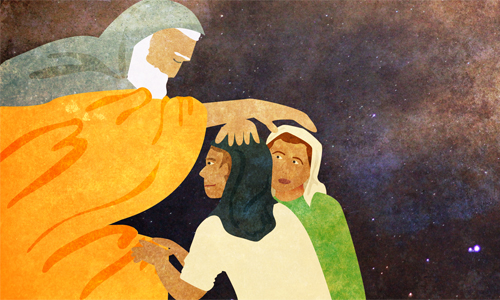
The Greatest Threat Americans Face

Ask Americans what the greatest threat we face is and you will get a range of answers.  Some will say it is global warming and climate change.  Others think it is the issue of illegal immigration and unsecured borders.  Still others say it is the threat of terrorism or a nuclear war. The truth is it is none of the above.


Our greatest threat is extinction. The National Center for Health Statistics reported the total fertility rate in the United States was 1.62 in 2023. That’s the lowest rate ever recorded in the United States and well below the rate needed to maintain a growing population.  Recently, the EU reported another declining birth rate, their lowest in 60 years.  Many developed countries’ birth rates are below the rate needed to maintain and grow the population. Projections suggest that by century’s end, a shocking 93% of countries, including the UK and the US, will confront underpopulation given the present trajectory.  The statistics seems clear – extreme birth rate collapse is the biggest danger to human civilization by far.


The Jewish people are doing our part with a birth rate of 1.7 overall, an average of 3.3 for Orthodox Jews, 1.4 for non-Orthodox Jews, and 6.6 for “Ultra-Orthodox” Jews.  Israel’s birth rate remains the highest among countries in the Organization for Economic Cooperation and Development and is the forum’s only member state reproducing above replacement rate.


The Talmud (Shabbos 31a) reports that each of us will be asked a series of questions by the heavenly court at the end of our lives.  One of them is Asakta b’pirya v’rivya, did you occupy yourself with populating the world?  The Maharsha points out that we will not be asked whether we fulfilled the mitzvah to have children, because that is beyond our control.  We will be asked, asakta, were you oseik, did you take responsibility for continuity, did you contribute to creating a better future, irrespective of whether you had children.  The Chochmas Shlomo, Rav Shlomo Kluger, rules that one can fulfill the mitzvah of pru u’rvu, to have children, by caring for children, even if not biologically their own.  (It goes without saying that we daven daily that all who want children and who are waiting should be blessed with healthy children who give them nachas.) 


One can have no biological children but still be the proud progenitor of generations by living for and being dedicated towards the future. And one can have a large biological family but be entirely consumed with themselves and their own pleasure, indifferent and apathetic to creating continuity and to the next generation.


The Lubavitcher Rebbe and Rebbetzin had no biological children, but they were the parents and grandparents of generations, of worlds of spiritual heirs.  Two weeks ago, over 6,500 rabbis who each see and feel the rebbe as a father gathered for the annual Kinus Hashluchim. 


As an American, the birth rate collapse is a genuine concern but as a Torah Jew, what it reflects about our society is even more concerning.  The world around us is increasingly more concerned with the here and now, with pleasure, comfort, and convenience rather than in the effort, sacrifice, faith, hope, and optimism it takes to bring and raise children in this world.  Is it any surprise that we are suffering from a population threat when many states have laws that require insurance companies to cover birth control while simultaneously refusing to cover fertility treatments such as IVF, leaving many couples with the burden of exorbitant expenses when trying to have a child privately?


Soon, in Sefer Shemos, we will read how Moshe Rabbeinu was commanded to make the boards of the Mishkan out of shittim wood. Rashi says that the wood used for the Mishkan came from special trees that Yaakov Avinu planted in Egypt.  Just prior to his death, he instructed his children to remove these trees and take the wood with them when they left Mitzrayim.  Where did Yaakov get the wood? The Midrash on Vayigash tells us that on his way down to Egypt, Yaakov stopped in Beer Sheva and he gathered cedar wood that his Zayda, Avraham, had planted there years earlier.  This wasn’t ordinary wood from ordinary trees. This was intergenerational.  It represented and reflected the effort, sacrifice, forethought, and investment of earlier generations.


Are you planting the trees that your great-grandchildren will be nourished by and will build their religious lives from?  Do you prioritize building the future over indulging in the pleasure of the present?  Is Jewish continuity a concern for you and what are you doing to educate, enrich, empower, and inspire future generations?


Chanukah begins this week and ironically, though it is not even a Biblical holiday, it is perhaps the most observed Jewish holiday, including by those who would not define themselves as observant.  Rav Samson Raphael Hirsch writes that the root of the word Chanukah is chinuch because at its core, the battle against the Hellenists was about the continuity of Jewish identity and who would define our future..


A couple of years ago, Yeshivas Rav Yitzchak Elchanon (RIETS/YU) celebrated the 50th anniversary of Rav Hershel Schachter Shlita serving as Rosh Yeshiva. In an interview, he was asked: “What are you most proud of accomplishing in these 50 years?”  Rav Schachter responded: “Over this 50-year period I am most proud of raising together with my eishes chayil a wonderful family. To me, that comes way before anything else I accomplished.”


What is your greatest source of pride? How do you define success?  Do your calendar and credit card statements reflect a commitment to the future or the present, to others or to yourself, to ensuring our continuity or to prioritizing the here and now?


This Chanukah, let’s touch our candle to others to pay the flame forward, to make our Menorah shine with the light that illuminates the world. 

Surviving Auschwitz With Constant Prayers on Her Lips (Guest Post: Rebbetzin Yocheved Goldberg)

A tribute to Chaya Esther Bruckstein, a Holocaust survivor, in honor of Yom Hashoah

Sitting on my shelf is a precious treasure. While its pages are starting to brown and its letters starting to fade, its words still jump off the pages and fill my heart every time it catches my eye. Because it’s more than just an old, used book. It’s a time machine.


My Babi, Chaya Esther Bruckstein, was born on August 15, 1913. She grew up in a beautiful, spacious and ornate home in Bustina, Hungary (now Ukraine). Later in her life she would wistfully tell us, “Ve vere so very vealthy.”  Her family was prestigious and prosperous and Babi’s childhood was filled with plenty—the most beautiful dishes and décor, servants who took care of everything, even a separate guest house on their large estate. It was a hospitable and warm home too, rich with Torah values and gemilus chassadim, attracting all different types of guests. Some were recuperating from illness while others were visiting Rabbis from all over Europe. Her family, including 6 siblings and over 60 first cousins, was loving and close-knit, a robust, beautiful family steeped in Yiddishkeit. It was during those early days, and then later in 1938 when she and her husband had their first child, that she would open up her Tehillim and recite the words of Hallel and Hoda’ah for all the good she was given and for the brachos in her life: Hodu lashem ki tov ki le’olam chasdo.


Like so many others, one day her warm, pleasant life was shattered. She, her husband and their 5-year-old daughter were rounded up together with her extended family and community, and taken to Auschwitz. As she was standing on the platform, waiting to be told in which line she should stand, an unfamiliar man in prison garb came up to her and instructed her, “give your child to the old lady next to you right now.” My Babi, disoriented from the long and arduous train ride, followed his orders and handed over her child to her mother-in-law, never to be seen again. As the days went on, starved and exhausted, Babi would find inner reservoirs of strength that she never knew she had. It was there, in Auschwitz, that she would see her father for the very last time, across a fence in the men’s camp, and not know who he was, until he called out to her in a weak voice, saying, “Don’t you recognize me Hajnal? It’s me, your Opu.” And a little while later, while in Ravensbruck, her sister and cousin would task her each day with dividing up the measly rations they would get, because she was the oldest and wisest and had deep compassion and integrity. It was there that her younger sister felt helpless and hopeless and shared her plan to throw herself against the electrocuted barbed wire to end her agony. My Babi was the one who, despite being just as beaten down and tired, pleaded with her sister, encouraging hope, faith and will to survive. It was there that she cried out to Hashem, from the depths of her suffering, quoting the same Tehilim from her parched lips that she once sang from a full heart: Mima’amakim kirasicha HaShem


After being liberated and reuniting with the few scattered members of her family, her realization of how many people were lost was daunting. Among the living was her first cousin, a wonderful man she had her eye on earlier in her life and had wanted to marry, but her parents had not allowed it at the time. They both found themselves at a mutual cousin’s home in Romania and they decided to get married. It was there that she had to do chalitza before her wedding, after testimony that her child was killed before her first husband. In the aftermath of the war that broke their bodies and souls, they were able to locate her brother-in-law, find a Rabbi, and make it a priority to complete this obscure and complicated mitzvah so they could finally be able to unite under their chuppah. Together they grieved the life they once had, he too having lost a wife and son in Auschwitz. It is there that they committed to put one foot in front of the other and look towards the future. There was nothing left for them in their hometowns and it was time to move on. They had a baby, my father, secured visas, and came to America to start a new life, but the hardships continued. They arrived in Ellis Island with battle scars, empty pockets and an unfamiliar language. They were able to get jobs in a garment factory, sewing clothing. My grandfather had no idea what he was doing. He was a brilliant man but his talents and skills were not in the sewing and fabrics trade. He would slowly and painstakingly try to do his work, but struggled to finish his pile. My grandmother would not let him get fired. She would spend those days working quickly and tirelessly to do his workload in addition to hers, in order for him to save his job and his self-respect. It was here, replanted in a new world, with nothing but hope for the future, that she called out with those same tefilos that had accompanied her this far, Dovid Hamelech’s Tehilim: Ezri me’im HaShem.


As the years went on, Babi slowly rebuilt her life. She raised her son and supported her husband with care and selflessness. She was machshiv Torah at a time when it wasn’t so common to care about daily limud Torah. In the cold, winter months she would wake up early to warm their clothes on the heater so “her men” could learn together each morning in comfort, before going off to work and Yeshiva. With kindness and grace she devoted herself to her sister Gizi, who was never zoche to have her own children, including her in every part of her life so she had a family to call her own. It was in their Washington Heights apartment that she had to tell her precious 13-year-old son that he did not need to fast as a bechor before Pesach, because there was another child who came before him. And it was here that she reunited with the man who took that child from her arms in Auschwitz and, now realizing that he had saved her life, stayed in touch with him and invited him to partake in all of her family simchas. Despite trying to move forward, she was never able to fully let go of her past. Where else to turn but her Tehilim to find the right words that can capture her desire to transition to a life of goodness and no more sadness: Hafachta mispidi l’machol li.


In her later years she imparted life lessons to us, her grandchildren, who she never imagined she’d see, in her everyday attitude and actions. We knew that every crumb was precious, never to be wasted. Every grandchild and great-grandchild was a miracle, never to be taken for granted. And every milestone was a momentous occasion to participate in and celebrate. There was not one graduation, Visiting Day or Chumash party that she missed. Each time her heart filled with nachas and joy as she experienced the rebirth of her family. She reveled in her husband’s Torah learning and scholarship, in her son’s success in medicine and in the beautiful home he built with his wonderful eishes chayil, her precious daughter-in-law. She felt her life, in her tiny apartment in Rego Park, Queens, without the servants and fancy serving pieces, was complete. She would thank HaShem for all the bracha and riches she had, and with her beloved Tehilim in her hand she would sing: Kos yeshuos esa uv’sheim HaShem ekra.


In 1993 I went off to seminary and, upon my return trip for Pesach I wanted to buy something for my Babi. I knew that her old Tehilim was battered and ripped and that it was time for a new one. I got her name engraved on the cover and when I presented it to her, the smile on her face and joy in her eyes convinced me that it was the right gift.  At that moment she knew that I understood what was most important to her and the legacy she was passing on. I have such vivid memories of my Babi reading from that Tehilim, day and night, well into her 90’s. Her connection with HaShem was unflinching, her love for HaShem palpable: Lehagid Baboker Chasdecha, Ve’emunascha Balaylos


And so, sitting on my shelf for the past 18 years since her petirah, is my Babi’s precious Tehillim, the one that I gifted to her 30 years ago. It’s a symbol of her tenacity, courage, strength, perseverance, profound faith and deep love.  And now, since its pages are starting to brown and its letters starting to fade, I keep it in a frame on my shelf to preserve it for longer and safeguard it for many more years. Whenever I walk by the shelf and see it from the corner of my eye, it serves as an inspiration to me.  It reminds me that while Baruch Hashem, my own highs and lows can’t begin to compare with what my Babi endured, I too, like everyone, have good days and more challenging ones. And that no matter what is going on in my life and the lives of those I love, I can find expression like she did, in the book of Tehillim. Sometimes singing Hodu laShem ki tov and at other moments, Mimamakim kerasicha Hashem.


Now that I am blessed to have grandchildren who call me their Babi, I look at that time machine on my shelf and feel responsible to not only transmit the physical sefer to my children and grandchildren, but all the lessons, tefillos and tears it has absorbed as well. I try my best to give over the values and messages I was privileged to gain from previous generations, and to be the next link in the unbreakable chain: Dor l’dor yishabach ma’asecha.


Reprinted from Mishpacha Magazine, Pesach 2023

Don’t Stop Holding Hands

 Photo Credit: Chabad.org

In addition to the regular Ushpizin that we proudly welcome each night into our Sukkah, our family has a beautiful minhag.  We go around the table and I ask each person at the table to answer the following question.  If you could invite anyone as your personal ushpizin, someone who is not alive anymore, from the recent past or from long ago, who would it be and why?  Some mention members of their family, grandparents or great grandparents.  Others share personalities from Tanach or from Shas and yet others mention heroes of modern Israel. 


The answers are fascinating and offer a great insight into what people are reading, thinking about, feeling or who they are missing.  This year, I want to ask it a little bit differently.  Who would you invite to be your Ushpizin that thinks differently than you, that believes differently, observes differently, dresses differently?  Do you have friendships, not acquaintances, but real friendships with people different than you?   


שִׁבְעַ֣ת יָמִ֔ים תַּקְרִ֥יבוּ אִשֶּׁ֖ה לַה׳ בַּיּ֣וֹם הַשְּׁמִינִ֡י מִקְרָא־קֹדֶשׁ֩ יִהְיֶ֨ה לָכֶ֜ם וְהִקְרַבְתֶּ֨ם אִשֶּׁ֤ה לַֽה׳ עֲצֶ֣רֶת הִ֔וא כָּל־מְלֶ֥אכֶת עֲבֹדָ֖ה לֹ֥א תַעֲשֽׂוּ׃ 

“Seven days you shall bring offerings by fire to Hashem. On the eighth day you shall observe a sacred occasion and bring an offering by fire to Hashem.”


Many make a mistake of seeing Shemini Atzeres as the “last days” of Sukkos, but the truth is they are an independent holiday, Atzeres, not Sukkos.  Indeed, our rabbis label them a רגל בפני עצמו, an independent holiday. The rest of Sukkos, sacrifices are brought in the merit of the nations of the world, but on Shemini Atzeres, the sacrifices are exclusively on behalf of the Jewish people, Hashem’s children.  


Rashi quotes the midrash that compares it to a King who hosts all of his children for a party for several days and when the last day comes, he pleads, please stay with me one more day because קשה עלי פרידתכם.  Classically this is understood to mean, it is difficult for me to separate from you. 


However, the Imrei Emes has a phenomenal interpretation.  What bothers Hashem is not our parting from Him; He will come with us.  What bothers Him is פרידתכם, the idea that for the last month and a half we have been united, spent quality time together, worked together, celebrated together, focused on our sense of community with a shared destiny, together.  


And now, the holidays will be behind us and we will go back to the usual divides, focusing on our differences instead of our commonalities, resuming the usual blame, finger pointing, name calling and hyper criticism. We will go back to local minyanim instead of gathering at the shul, will go back to our own interests, instead of focusing on community, go back to judging others based on what is on or not on their heads instead of what is in their hearts, go back to worrying about is the community going too far to the right or swinging to the left.


Hashem dreads that business as usual.  The Yamim Noraim and Sukkos were so refreshing, so different, so unified, so happy.  קשה עלי פרידתכם, says Hashem.  Your pirud, your divisiveness, is kasheh, it is so difficult for me.  Please spend one more day unified and together, transcending these differences and that nahrishkeit.  


How will we spend this one last day, this regel bifnei atzmo?  We will grab hands and dance in a circle, a circle that has no beginning and no end, no hierarchy or tier system, no head of the table or dais, no mizrach or lead position, just everyone dancing equally in a circle, united, together.  There is not one circle for shtreimels, one for black hats and one for kippot serugot.  There isn’t a circle for the old and one for the young or a circle for the republicans and a circle for the democrats.  


One circle, one people, one community, one history and one destiny.  That is the enduring image of this yom tov, that is the message we take with us into the dead of winter and beyond.  


Don’t stop dancing even when Simchas Torah ends.  Don’t go back to the usual pirud.  Don’t stop holding the hands of the person on your left and your right literally, and metaphorically. 


Don’t let go of the hands of your family, friends and members of the community.  Don’t let go of the hands of those who are here, and don’t let go of those who are gone.  Like the Ushpizin, we have felt the presence of our ancestors, our parents and grandparents over these holidays.  Our homes have been filled with the aroma and taste of their recipes, we have heard the tunes they sang, and we have been observing their minhagim. They have lived with us these last few weeks and we must not let them go.


Seeing separation and division is hard for Hashem and it should be hard for you.  Don’t let go of those who are gone and don’t stop holding the hands of those who are still here.   


Why Get Married?

*A version of this article was written for Aish.com


After rising for many years, the divorce rate in the United States today is lower than it was a decade ago.  But before you celebrate, the reason is not because of a sudden increase in blissful marriages; it’s because fewer are choosing to marry to begin with. 


Indeed, the marriage rate today is at its lowest level since the U.S. government began keeping national marriage records in 1867.  Of those who do marry, 50 percent will divorce, with the average length of marriage lasting just 8.2 years.  


With those odds, it’s no surprise that fewer and fewer young people are subscribing to the entire institution of marriage or seeing any significance to it. 

Now to be clear, marriage is not for everyone.  Additionally, there are individuals who sincerely want to be married but haven’t yet found their bashert.  For legitimate reasons and due to many factors, we aren’t necessarily always in control of being married.  However, we don’t have to be married to cherish and fight for and defend the institution of marriage.  As the marriage rate continues to fall and cynicism towards marriage continues to rise, it is important to articulate the Jewish view of and value of marriage so we can best understand ourselves and advocate to others.

So, if two people love each other, isn’t marriage just a piece of paper, an outdated tradition, a social construct?  And if someone is happy alone, why consider marriage at all?


Working on Yourself


Adam HaRishon was originally created alone. An essential part of the core of a person is to be by himself, feel comfortable being alone, and pursuing his own interests.  But soon after, God says, “It is not good for the Human to be alone; I will make a fitting counterpart for him.” Alone, man is a taker; God wants man to become a giver, and so He creates marriage, the need to compromise, to prioritize a partner, and to make room for another. Marriage forces us to grow and helps us become better versions of ourselves.   

That is why the Torah (Bereishis 2:24) says when the time is right, “A man must leave his father and mother and cling to his wife, so that they become one flesh.” A child is a receiver, focused on himself and dependent on others. When a person clings to a spouse and they become one, they grow to be independent together, they must be concerned with and responsible to and for one another. Marriage fosters maturity, dependability, and trustworthiness. Rabbi Chaim Vital, a great 16th century mystic, said: “A person’s character traits are primarily measured based upon how they are to their spouse.” 

Becoming Whole


The Torah teaches that on the sixth day of creation, God fashioned one figure comprised of man and woman, and then He split them in two, Adam and Chava. If Hashem is Omnipotent and Infinite, if He knew He would ultimately create two, why didn’t He make them that way to begin with? 


Had Hashem created Man and Woman separate and apart, their union would have been a case of one plus one, a collaboration of two.  Instead, He wanted us to realize that alone, we are a half and when the time is right, we must search for our other half, the person who completes us so that we can become whole. That is why the Talmud (Yevamos 62a) comments, “Any man who is without a wife is not a complete man,” and continues, “One’s wife is as one’s very own body.” 


In a healthy marriage, one’s spouse is not just a roommate or someone to divide responsibility and chores with. Marriage is not for convenience or comfort. A spouse complements one’s personality, completes one’s soul, and is the exclusive person who combines to be one flesh.


Two of the Sheva Berachos end with the words, “yotzeir Ha’Adam,” Creator of man.  But creation took place significantly before marriage, so wouldn’t that beracha be much more appropriate at a celebration of birth?  Understanding the fundamental purpose of marriage provides the answer. When a baby is born, we know very little about them.  A person is only truly entirely born or fully created when they find their other half and becomes whole.  We learn who someone is, what they value and what kind of life they want to lead, not when they are a newborn, but when they are newlywed.  When we see who someone chooses to marry, we learn who they are and who they want to be.  Under the Chuppa, “Yotzeir Ha’Adam,” a person is fully created.


On one occasion, Rav Aryeh Levin accompanied his wife to a Jerusalem clinic.  The physician inquired what was wrong to which he responded, “Doctor, my wife’s foot is hurting us.”  Another time, Rav Aryeh Levin was traveling in a cab and the driver asked, “What’s your home address?” Rav Aryeh told him I used to have a home but my wife passed away and now all I have is an address.”


Countless research shows the mental, physical and emotional benefits of marriage.  Studies show that married couples are the happiest on the whole, even though they are no longer living life only on their own terms. In contrast, half of the couples who cohabitate break up and people who cohabitate before marriage are more likely to get divorced. 


So in Judaism, marriage isn’t just a tradition or a living arrangement; it is a holy institution (this explains why it’s called Kiddushin in Hebrew, from the root kadosh, holy).  Holy means distinguished, separate and apart.  Marriage is an exclusive bond and commitment; it is a unique relationship shared by husband and wife to the exclusion of all others. 


Rebbe Akiva teaches (Sotah 17a) If a man [ish in Hebrew] and woman [isha] establish a faithful marriage, the Divine Presence rests between them. The Hebrew words ish and isha are almost identical; the difference between them is the middle letter yud in ish, and the final letter heh in isha. These two letters joined form the name of God. Marriage promotes selflessness, compromise, responsibility, and faithfulness, all attributes that imitate and attract the presence of the Shechina, the Divine.

The act of marriage uniquely creates union of complete oneness. Marriage isn’t just a piece of paper. The mystical unification forged through the bond of marriage, making two halves into a whole, creates a concretized commitment.  It’s investing oneself in the deepest, most meaningful, and consequential way. It means the relationship is anything but casual; it isn’t disposable and cannot be dissolved without consequences.

Judaism teaches that one should go into marriage with the mentality of until death do us part, as evidenced by Avraham’s commitment to Sarah that lasted through their lifetime and continued even after Sarah’s demise. We derive the mechanism of marriage, the giving and receiving of a ring from husband to wife, from the way Avraham secured a burial place for Sarah. This source isn’t a mere coincidence; it communicates that a healthy marriage is built on a commitment until the very end. We don’t leave or abandon a relationship when the going gets tough. Marriage is not disposable, doesn’t have scheduled upgrades to newer versions.  While divorce is also a mitzvah and not only legitimate at times, but fully appropriate and correct, marriage is a cherished commitment that should be honored until all options and efforts have been exhausted.

Good for Society

But marriage is not only good for individuals to realize their potential and to become better versions of themselves, marriage benefits society as a whole. A society made up of distinct individuals living for themselves, pursuing their own happiness and seeking to take the most out of life, is a splintered, divided society of those prioritizing their self-interests. 

A society comprised of people who have learned to prioritize others, to give in addition to taking, who have entered a meaningful and consequential covenant and contract with each other is an elevated society, a more noble community. The lessons and growth inherent in marriage improves people, yielding a better functioning, more committed, and selfless society and community. A society made up of physically, emotionally and mentally happier and healthier people is a happier and healthier society and better for everyone.

Marriage is not just a mitzvah, it is good for individuals, it is a sacred and indispensable institution that benefits all, and it is valuing and defending. 


Count Your Blessings Each Friday Night & Throughout the Week

When most people think of Times Square this time of year, they picture the tremendous New Year’s Eve party usually attended by more than a million people filled with banners, streamers and the ball that drops at midnight.  Less well known, and with much poorer attendance, is an annual event in Times Square that takes place just a few days earlier. It even took place this year, albeit with social distancing and masks.

On Monday, a small group gathered to observe the annual “Good Riddance Day.”  Each year, around New Year’s, visitors and residents of New York write down the problems and disappointments they experienced that year on a piece of paper, toss it in a dumpster, and watch it get shredded. They say good riddance to the aspects of the year they wished to leave behind.

Most years I would say that Good Riddance Day is yet another reminder of the stark contrast between the way the secular New Year is observed and the way we observe Rosh Hashana, the Jewish New Year.  But this year, I join the chorus of those eager to say good riddance to so much of 2020.  Good riddance to Corona. Good riddance to quarantine.  Good riddance to contentious and divisive politics.  Good riddance to 2020.

And yet, with all we are eager to say good riddance to, it is simultaneously more important than ever to focus on what we hold on to.  Indeed, we have a weekly practice of literally counting our blessings. 

Since I have been a small child, each and every week I have looked forward to my father’s Friday night beracha.  When I went off to my year in Israel, I would receive it on the phone and if we missed that, I knew that before my father would begin Kiddush, he would close his eyes, picture me and give the beracha telepathically.  I always knew that geographic distance or different time zones could not stop the flow of that beracha each and every Friday night. 

Even today, as a grown man, I look forward to feeling his hand on my head, his whisper in my ear and his kiss on my cheek.  I may be a grandfather myself, but when he is in Boca and when it is safe to be close and touch, I still cherish when he gives me the same beracha I have been receiving weekly for over four decades. 

Ever since I became a father, I have equally looked forward to giving each of my children their weekly beracha.  Technology has improved and now, with the help of Facetime, I can put my hands on their heads, even if they are thousands of miles away, and utter those same words that were said to me.

Where did this custom come from?  What is its source? 

In our Parsha, when Yaakov anticipates his impending demise, he summons his children and grandchildren to not only arrange his material estate, but to communicate his ethical will, his vision and charge to each of them.  He begins with his grandsons, Efraim and Menashe, and bestows upon them opening berachos. 

Afterwards, he tells them:

וַיְבָ֨רֲכֵ֜ם בַּיּ֣וֹם הַהוּא֮ לֵאמוֹר֒ בְּךָ֗ יְבָרֵ֤ךְ יִשְׂרָאֵל֙ לֵאמֹ֔ר יְשִֽׂמְךָ֣ אֱלֹקים כְּאֶפְרַ֖יִם וְכִמְנַשֶּׁ֑ה וַיָּ֥שֶׂם אֶת־אֶפְרַ֖יִם לִפְנֵ֥י מְנַשֶּֽׁה׃

So he blessed them that day, saying, “By you shall Israel invoke blessings, saying: ‘May God make you like Efraim and Menashe.’”

But why Efraim and Menashe, why not Avraham, Yitzchak or Yaakov?  Why not Yosef, Dovid or Shlomo, or one of the other shevatim?  Why mention anyone by name at all, why not a general blessing to be like our Avos HaKedoshim, our holy patriarchs? 

Moreover, the Torah doesn’t tell us when to give this beracha, it just says when the Jewish people will bless children it will be through invoking these names.  Indeed, the custom to use this beracha on Friday nights is relatively recent, only a few centuries old.  Why do we give it Friday night?

Rav Chaim Dovid HaLevi in his Teshuvos Aseh Lecha Rav says he cannot find a source for giving this beracha on Friday night so he offers his own suggestion.  The Magen Avraham  (ריש ס׳ רעד)writes  טוב לנשק ידי אמו בליל שבת, it is good to kiss your mother’s hand on Friday night.  He suggests the minhag developed because when a father witnessed his children bestowing honor on their mother, he couldn’t help but want to give them a beracha.  Witnessing the next generation see themselves as connected to the past and continuing to honor, revere and respect their parents is among the greatest blessings we can have and it elicits from us a desire to reciprocate blessing back. 

That explains Friday night, but why specifically to be like these two?  Many suggest that after several generations of sibling rivalry, conflict, competition and adversarial relationships, Efraim and Menashe are the first generation to not only get along and tolerate one another, but to embody loyalty, love, mutual admiration and respect.  The foundational beracha for our children, even before we can invoke the chesed of Avraham, the gevurah of Yitzchak, the emes of Ya’akov, the piety of Yosef or the passion of Dovid, the wisdom of Shlomo or the virtue of any of our great leaders, is that our children—and by extension our families, our communities and our people—simply get along. 

As we begin our Shabbos meal basking in the light of the Shabbos candles, the symbol of shalom bayis and peace, we offer a blessing of unity, harmony, cooperation, love, loyalty and family.  As we sit down for the Friday night meal, rife with potential for heated exchanges and divisive debate about politics, religion or life, we offer a beracha that our table be like Efraim and Menashe and it be the fulfillment of  מה טוב ומה נעים שבת אחים גם יחד, how wonderful and pleasant when we sit together as unified siblings. 

Others suggest that among Yaakov’s twelve sons and their families, Efraim and Menashe were the only ones raised outside of the Land of Israel, in a foreign culture and with powerful external influences. Despite the pull to assimilate into Egyptian culture, religion and practice, Efraim and Menashe clung tenaciously to the teachings and traditions of their father and were steadfast in their commitment to Torah.

Shabbos provides an oasis from the chaos of the week and from the images, ideas, and temptations we face all week. As we reflect on another week gone by and immerse ourselves in a new Shabbos to energize us for the week ahead, we offer a beracha that our children, our families and ourselves be protected from the forces and pressures we face daily to compromise who we are, the choices we make and the lives we lead.

Rav Moshe Shternbuch (Ta’av V’Daas 265) suggests another answer.  He explains that when the Torah says we give a beracha to be like Efraim and Menashe it doesn’t mean like the two specific people themselves but we should emulate Yaakov to give our children berachos in which we identify their potential, who and what can come of them and guide them to achieve it. 

The mandate is not to give a beracha to be like Efraim and Menashe per se, but to make the time to give a beracha, to interact, to share hopes, dreams and aspirations.  The Sefer Nishmas Shabbos says this is why we give the beracha Friday night.  Our children are not competing for attention with our work, our other obligations, or nowadays with our technology.  The biggest beracha we can give our children, and for that matter all those around us that we care about, is ourselves, our full attention when we are engaging with them.

Reb Moishe Lieb Sassover suggests that the content of the beracha Yaakov gave Efraim and Menashe was to live in the moment, to be fully present in the present.  ויברכם ביום ההוא, he gave them a beracha, “ביום ההוא”, to be in the moment.

On Shabbos we go off the grid, disconnect with no guilt, no second guessing, no FOMO or self-importance, but only the rich possibility of truly being present with those we are engaging.  What a beracha for us and for those around us!

May we merit the fulfilment of the archetypal beracha to Efraim and Menashe – to see our children figuratively kiss our hands and embrace our values and instinctively respond by giving them blessings.  May we experience only harmony, unity, love and loyalty within our families, at our Shabbos tables and in our lives.  May we find the resolve and resiliency to overcome the influences and forces we confront and be uncompromising in our mission as Torah Jews.  And may we be blessed to live ביום ההוא, fully present, living each moment to its fullest.

As we say good riddance to 2020, let’s not forget to count our berachos, on Friday night and throughout the week. 

Harvard Researchers Found that Children Who Do This Have Lower Risks of Mental Illness

Before coronavirus ever arrived, levels of anxiety, particularly among young people, were disturbingly high.  Indeed, nearly one in three adolescents (31.9%) will meet criteria for an anxiety disorder by the age of 18.  Many others struggle with depression and other forms of mental illness.  Much has been researched and written to understand this deeply disturbing trend which is only growing.  Many theories have been offered, including the impact of technology and social media.  Last year, Erica Komisar, a psychoanalyst and author, shared a theory in the Wall Street Journal that is very worthy of consideration, particularly given the stress of an ongoing pandemic challenging us all.


In our parsha, Yaakov falls asleep and has one of the most famous dreams in history, one that produced the iconic image of a stairway to heaven.  He awoke and remarked – “this is none other than the house of Hashem and a gate to heaven.” Yaakov identifies his location as both a house and gateway. Are these descriptions independent or complimentary?  Was Yaakov describing one place or two? 


The Gemara (Pesachim 88a) tells us that Yaakov’s description of this place surpassed that of his father and grandfather.  They had each encountered this special space, the Temple Mount, but described it in a more limited fashion: “Avraham called it a ‘mountain, har Hashem yeira’eh,’ and Yitzchak called it a ‘field,’ but Yaakov called it ‘Beis Elokim, a house.’”  Why is the designation of a house superior to the other ones?


Avraham saw the Beis HaMikdash as a mountain, a place one climbs towards, ascends to.  But we know that it is difficult, if not impossible, to stay on the top of a mountain.  We all have highs and lows, we wax and we wane in our religious inspiration and in our level of connection to Hashem.  Yitzchak described the place as a field, a place of planting, growing, blossoming, reaping and harvesting.  We visit the Beis HaMikdash to grow and to blossom.  But a field after being harvested is fallow, barren, and empty and needs to be plowed and planted once again.  Yaakov describes the Beis HaMikdash not as a mountain or a field, but as a house or a home.  A home is not a place to visit or tour; it is your permanent residence, where you live, function and exist. 


Avraham describes religious inspiration and spirituality as something to strive for, a mountain to climb, a peak to ascend towards.  Feeling Hashem’s presence in our lives comes in fleeting moments, and while we do feel those highs, we spend a good part of our time at the base of the mountain, trying to climb back up.  Yitzchak describes religious inspiration as a field.  It comes in cycles.  We must plant the seeds that will blossom into a deep relationship and feeling of the Almighty’s presence, but seasons change, and fields die, and they must be planted once again. 


In Yaakov’s vision, by contrast, our relationship with Hashem is not far off, distant, or in a transcendent state.  It is not a high altitude that is hard to spend a long time at. Rather, we build a home for Hashem when we welcome Him into our mundane lives in a sustained and continuous way.  For Yaakov, the best metaphor to describe our relationship with Hashem is the home and all that happens therein. 


Put differently, for Avraham, the holiest place in our lives is the Shul.  We climb the mountain and we see seek to attain inspiration in our prayers.  For Yitzchak, the holiest place in the community is the Beis Midrash.  Like the field, we go there to learn, study, grow and blossom.  But for Yaakov, the holiest place, the space for the greatest religious growth, spiritual inspiration, and a relationship with Hashem is the bayis, the home.


Rav Hirsch explains, when we turn ourבית , our physical homes into a בית אלוקים, a place of virtue, nobility, honesty, integrity, chesed, gratitude, learning, generosity and kindness, then we create aשער השמים , a gateway straight up to Heaven. 


Too many of us make the mistake of thinking that learning and growing, inspiration and spirituality only happen at school, the shul or the beis midrash, while the house is for eating, sleeping, recreation, entertainment, and storing our things.  We think that Hashem is found in religious settings, but in reality, if you want a stairway to Heaven, if you want access to the highest places, it is by inviting God into your home.  Our homes are fertile classrooms, places of higher learning in which our children are watching and absorbing all that we do.  


In bentching we sayהרחמן הוא יברך את אבי מורי ואמי מורתי , Hashem bless my father, my teacher and my mother, my teacher.  But most people’s fathers are not employed as teachers and their mothers are not in education so why do we give them the title Morah and Moreh?  Rav Shmuel Kaminetzky says because in truth, no matter what their training, profession or type of business, every single parent is a teacher and indeed is very involved in educating not only their children but all those whom they influence.


As Yaakov understood, our homes, the environment we create, the activities we promote, the images and ideas we allow to enter, are the greatest contributor to our religious identity and ultimately have the biggest impact on our children as well.  The emphasis on home is not just the physical structure, but home is a symbol of our attitudes, our efforts and our willingness to work and sacrifice for spirituality.


Erica Komisar wrote in the Wall Street Journal:


As a therapist, I’m often asked to explain why depression and anxiety are so common among children and adolescents. One of the most important explanations—and perhaps the most neglected—is declining interest in religion. This cultural shift already has proved disastrous for millions of vulnerable young people.


Harvard researchers studied 5,000 people and among many factors, tracked religious involvement.  They found that children or teens who reported attending a religious service at least once per week scored higher on psychological well-being measurements and had lower risks of mental illness. Weekly attendance was associated with higher rates of volunteering, a sense of mission, forgiveness, and lower probabilities of drug use and early sexual initiation.


Komisar suggests that there may be a correlation between the decreased practice of religion and the increase in anxiety and depression.  She writes:


I am often asked by parents, “How do I talk to my child about death if I don’t believe in God or heaven?” My answer is always the same: “Lie.” The idea that you simply die and turn to dust may work for some adults, but it doesn’t help children. Belief in heaven helps them grapple with this tremendous and incomprehensible loss. In an age of broken families, distracted parents, school violence and nightmarish global-warming predictions, imagination plays a big part in children’s ability to cope.


I also am frequently asked about how parents can instill gratitude and empathy in their children. These virtues are inherent in most religions… Such values can be found among countless other religious groups. It’s rare to find a faith that doesn’t encourage gratitude as an antidote to entitlement or empathy for anyone who needs nurturing. These are the building blocks of strong character. They are also protective against depression and anxiety.


This pandemic has caused all of us to spend more time at home.  Some have not been able to go back to Shul, many have not seen their offices in months, others have been forced to convert their homes into classrooms with children engaged in distanced learning or home schooling.  Certainly, we all long to return to vibrant activity and attendance in those venues so valued and critical to our sense of belonging, growth and community.


But this should not be disheartening. The paradigm shift to our role as teachers and educators, and transforming our homes into religious places, could be just what we and our children need to be resilient, strong, happy and healthy.  While tempted to turn inward to avoid feeling anxious, it turns out the opposite is true.  Turn out, towards caring for others, and towards connecting with God. 


Even if your children are grown up, even if they are no longer in your home or under your influence, they are still deeply impacted by who you are, how you live, what you value, how you speak, and how you prioritize your life.  It is never too late to turn your literal or figurative home and life into a house for Hashem and thereby create a gateway to Heaven. 

4 Recommendations For Raising Kinder Children

Ralph Waldo Emerson once said, “What you do speaks so loudly that I cannot hear what you say.”  When we say one thing and communicate a different message through our actions, priorities, and values, we drown out our own voices.  There is no instrument more finely calibrated to detect hypocrisy and duplicity than a child.

Our Parsha tells the story of the rebellious son.  Our Rabbis teach us that the criteria to qualify for this label have never been and will never be met and that such a child exists only theoretically.  Yet a series of pesukim are dedicated to this subject because there is so much to learn and glean about parenting and education nonetheless. 

Rashi tells us the term soreir comes from sar, he has drifted from the path, he is not meeting our expectations and hopes.  The Torah tells us he does not and cannot hear kol aviv u’kol imo, the voice of his father and the voice of his mother.  The Torah never wastes a word and yet it could have said b’kol aviv v’imo, he doesn’t listen to the voice of his father and mother.  It must be that the second use of kol, voice, is not redundant or extraneous at all.  Rather, there is in fact a separate kol aviv, a message and values of the father, and a kol imo, a message and values of the mother. 

When children receive mixed messages, inconsistent and contradictory values, everything becomes incoherent.  They then stop paying attention and begin to be soreir, drift, until it ultimately leads to moreh, rebellion.  It is not only parents that influence and raise a child but it is the grandparents, the school, the shul, and all the adults in the community to whom they turn for modeling and for inspiration.  We must be on the same page and project a consistent message of what our values are, what we are all about, and what we expect from them. 

The Ohr HaChaim Ha’Kadosh, Rav Chaim ben Attar, notes that the passuk does not say eino sho’meiah but einenu sho’mei.  There is a big difference between the two.  Eino means he doesn’t, einenu means he can’t, there is a blockage preventing the message from penetrating.  Our children and grandchildren literally cannot hear what we say when our contradictory actions are much louder. 

If your child or grandchild ask you – do you care more about my being happy and successful or my being kind – what would you answer?  I would hope they would hear us answer being kind.  And yet, though our voices may be saying that, we are clearly articulating another message.  According to a recent study done by researchers at the Harvard Graduate School of Education, when asked if their parents care more about achievement and happiness or if they were kind to others, 80 percent of children said their parents care more about achievement or happiness.  In the same study, children were far more likely to rank “hard work” above fairness. 

The study concludes: “But when youth do not prioritize caring and fairness over these aspects of personal success — and when they view their peers as even less likely to prioritize these ethical values — they are at greater risk of many forms of harmful behavior, including being cruel, disrespectful, and dishonest. These forms of harm are far too commonplace. Half of high school students admit to cheating on a test and nearly 75% admit to copying someone else’s homework.  Nearly 30% of middle and high school students reported being bullied during the 2010-2011 school year. 

“At the root of this problem may be a rhetoric/reality gap, a gap between what parents and other adults say are their top priorities and the real messages they convey in their behavior day to day… And here’s the irony: the focus on happiness, and the focus on achievement in affluent communities, doesn’t appear to increase either children’s achievement or their happiness.”

Dr. Richard Weissbourd, one of the authors of the studies, states, “We should work to cultivate children’s concern for others because it’s fundamentally the right thing to do, and also because when children can empathize with and take responsibility for others, they’re likely to be happier and more successful, they’ll have better relationships their entire lives, and strong relationships are a key ingredient of happiness.”

Rav Shamshon Raphael Hirsch notes that the Torah describes the ben sorer u’moreh not only as a rebellious child, but as one who is zoleil v’sovei, gluttonous and indulgent in meat and wine. Rav Hirsch explains that the inappropriate emphasis in the home on food and drink, success and indulgence, leads to rebelliousness. Parents, he says, must be much more concerned with their child’s values, behavior, sensitivity, and kindness than with the quantity and quality of the food their child is eating.  We focus on our children being well-fed, well-dressed, and happy, all of which are important. But we must focus even more on who they are and how they behave than on their happiness.  They need to know that we care more about their concern for the happiness of others than for their own happiness.

Weissbourd provides four recommendations to raise and cultivate kinder children:

1.     Children and youth need ongoing opportunities to practice caring and helpfulness, sometimes with guidance from adults. Learning to be caring is like learning to play an instrument – it needs daily repetition.  Encourage your children to help a friend with homework, pitch in around the house without a connection to a reward (like allowance), and to volunteer in some capacity.  When you speak to your child or grandchild at the end of the day, don’t just ask how they are doing on their grades and tests but ask them if they did anything kind that day for someone else.


2.     Children and youth need to learn to zoom in and zoom out.  They need to listen closely and attend to those in their immediate circle like family and friends but they also have to learn to zoom out and look for those who are too often invisible like a new kid in the class, or the school custodian who is largely ignored and feeling isolated.


3.     Children and youth need strong role models.  Veshinantem levanecha v’dibarta bam, b’shivtecha b’veisecha u’velechtecha baderech… The Torah obligates us to teach our children and we usually assume it is fulfilled with v’dibarta bam, by articulating and verbally communicating our values.  However, the truth is they learn much more from b’shivtecha b’veisecha, how we carry ourselves at home, the type of conversations we have, and activities we engage in.  They learn from b’lechtecha ba’derech, what we do on the road.  We should seek opportunities to share moments in our day when we were kind to another or when we were the recipients of the kindness of another and how it made us feel.  If our deeds match our words our ideals will come across loud and clear.


4.     Children need to be guided in managing destructive feelings. Anger, shame, envy and other negative feelings arise and we need to teach children that those feelings are ok but must be dealt with constructively if they are to be resolved and not overwhelm their ability to care for others.


As our parsha emphasizes, Hashem cares as much – if not more – about our behaving with righteousness, justice, and kindness as He does about our observing His laws.  The best gift we can give our children is not making them believe the world is about them, but helping them learn the world is about helping others. 


The parsha concludes with the laws of having honest weights and measures and describes one who doesn’t as a to’eivah, an abomination.  However, the verse uses two phrases – kol oseh eileh, kol oseh aveil, one who does “these,” and one who does “iniquity.”  Rav Menachem Bentzion Zaks, in his Menachem Tziyon, offers a novel interpretation.  The abomination, he explains, is when someone is oseh eileh, learns Torah and does mitzvos and yet, oseh aveil, is dishonest, lacks integrity, and is unkind.  God has no tolerance for such a duplicitous person.  To Hashem, it is repulsive and despicable to appear as a religious, observant individual and yet be rotten to the core when it comes to honesty and righteousness.


Wearing a kippa and going to Jewish school provide tremendous information, knowledge, and lessons.  Nevertheless, our children are ultimately molded most by what they think that we, their parents and grandparents, value most.  When our children are asked if their parents care more about achievement and happiness or being kind, let us do all we can to ensure that they know the right answer.


Shalom Bayis When You Can’t Leave the Bayis

by Rabbi Efrem & Rebbetzin Yocheved Goldberg

There is an old joke that a man’s version of “shalom bayis” is to
turn and wave as he leaves home and say “Shalom, goodbye bayis.”  But these days, the joke is on those who
think they can have peace by leaving.  The
word shalom also means hello, and right now, like it or not, we can only say
hello to being home, there is no goodbye. How can couples maintain, even
improve shalom bayis, when they can’t leave the bayis? While there is no
one-size-fits-all solution, the following are practical tips that we find apply
to many if not most people:

  • Allow for Differences: This pandemic and quarantine has forced many into roles and responsibilities outside their experience, expectation, and comfort. Everyone is adjusting to these new realities in different ways.  Our rabbis teach, k’sheim she’ain partzufeihem domim zeh la’zeh, kach dei’oseihem, ainam domim zah la’zeh. Just like our faces aren’t identical and we don’t criticize or reject those who don’t look exactly like us, people’s personalities, their psyche, coping mechanisms aren’t the same either.  Make space for the other people in your home to cope in their way.  Honor and validate their feelings and their needs.  Know what you need and respect the needs of others.

  • Communicate: We are deep into this crisis and many haven’t even shared with one another how they are feeling, what they are worried about, what they long for or dream about, what is particularly hard about the situation and what is working to make it easier.  Be sure to let each other know about what your triggers are, specifically what you are feeling when negative emotions come up (“I’m feeling anxious”, “I’m feeling frustrated”, “I’m scared”, “I am overwhelmed”).  Agree to boundaries that need to be honored and respected, such as work space and work time versus family space and family time. Often the best way to communicate is to listen actively, not trying to fix the other person or their problem.  Don’t take anything for granted and don’t assume that either your spouse or children know what you are feeling or needing, or that you know what they are going through or how you can help. 

  • How to “Fight”: Dr. John
    Gottman writes that within every fight is a conversation that needed to happen
    but didn’t because the fight broke out instead. 
    The very differences that enhance and enrich our relationships can also,
    at times, introduce friction and conflict. 
    Gottman says that the way conversations begin
    usually determines how the conversations end. So, when bringing up a
    challenging or difficult subject, remember, this is someone you love, make sure
    to give the benefit of the doubt and see the whole person and the big
    relationship. Pirkei Avos (Perek 2) teaches that we must dan es kol ha’adam
    l’kaf zechus,
    judge everyone favorably. 
    The Menachem Tziyon points out, it says, judge kol
    ha’adam
    , the whole person, because a happy relationship demands not
    defining a person or your relationship with them by one action or conversation
    but by kol ha’adam, the big picture of who they are and the life you
    have together.   Use a productive,
    non-judgmental, and non-accusatory tone. To be productive, get to the root of
    the difference and calmly navigate and negotiate a conclusion or action both partners
    can live with, even if not ideal. 

  • Positivity: We may feel
    like we are struggling to keep our heads above water, but we must not forget we
    are the heads of our homes.  Rashi at the
    beginning of our Parsha writes, l’hazhir gedolim al ha’ketanim, the
    adult Kohanim are instructed to teach the children how to protect their
    holiness.  The Imrei Chaim explains l’hazhir
    doesn’t just mean to warn or caution, but can be translated as to brighten or
    illuminate.  The adults are charged to
    bring light and, through modeling, brighten the lives of the ketanim,
    the children, with positive messaging and positive behavior.  Focus on the good, the blessings and
    opportunities and feel grateful.  Be
    mindful to use positive language and to smile, even when you don’t feel
    happy.  Smiling utilizes facial muscles
    that release dopamine and researchers have shown that smiling is contagious,
    like yawning or sneezing. Smile and those around you will start smiling
    too.  The passuk says, He’emanti ki
    adabeir
    , which has been translated as I have emunah, faith, because I
    choose to talk about Hashem.  Bring
    Hashem into your home by speaking about and to Him, even if it doesn’t come
    naturally.

  • Self-Soothe: When you are
    struggling to stay positive, when you sense you are at the end of your fuse,
    don’t take it out on others or display moodiness.  Know what you need for self-care to restore
    your sanity, nourish your soul and bring back your patience and positivity. Go
    for a walk, savor a cup of coffee, call a friend, listen to a shiur, or do what
    works for you in a way and at a time that can work for your spouse.

  • Don’t Sweat the Small Stuff: When under
    pressure and in a tense environment, we tend to overact and over-dramatize what
    are ordinarily small and insignificant issues. 
    In his bestselling “Don’t Sweat The Small Stuff…And It’s All Small
    Stuff,” Richard Carlson reminds us that the secret to serenity, good health,
    and happiness is perspective.   It is understandable to sometimes grow
    frustrated or to want to address difficult matters, but do it with
    perspective.  Before escalating, ask
    yourself if this really matters, if it is worth getting upset about or holding
    on to.  Use the 5-5-5
    technique to hold yourself back from getting angry. Before losing your
    cool, take a step back and step outside yourself and ask, “Will this matter in
    5 days? Will this matter in 5 months? Will this matter in 5 years?”  If it won’t, let it go and move on.  There is never a time to hold a grudge but
    especially not during a pandemic when we need to conserve our energy for what
    really matters. 

  • “Steal” Time: Time is the
    oxygen relationships need to breathe. 
    Many are juggling working with homeschooling with trying to make it
    through the day.  By quitting time, there
    is no energy left.  However, we can’t
    neglect this critically important relationship in our lives.  Make the time to go for a walk, play a game,
    laugh and dream together.  Partner in a
    goal that will add meaning to your lives like learning Torah, volunteering, or
    planning for the future. Being stuck at home presents a great opportunity to do
    what social psychologists refer to as “nostalgizing.” Go through that trove of
    cards, letters, pictures and videos of simchas, vacations and outings.  Reliving the best parts of the past will put
    a smile on your face and bring you closer together.

  • Make an Effort:
    You
    may not be engaging the outside world, but you are still presenting yourself to
    those who should be the center of your world. 
    Make an effort to be attractive to one another.  Surprise your spouse with a cute, inexpensive
    gift ordered online for no reason at all. Give compliments and express
    gratitude, especially for mundane and expected things like shopping, cooking,
    cleaning, taking out the garbage or putting the children to sleep. 

Most relationships will not emerge from this extraordinary time the
way they went in. The pandemic of 2020 is a chance to either grow together or, sadly,
to grow apart.  Whether we look back with
positive memories and sentiments towards our relationship in this time, or find
ourselves still recovering from the conflict and trauma, will be determined by
how we act and treat one another now. 

The shalom in our bayis is up to us.  Now is the time to say goodbye to strife and hello to happiness.

*This article is adapted from classes delivered by Rabbi and Rebbetzin Goldberg.

To hear Rabbi Goldberg’s class for husbands, click here
To hear Rebbetzin Goldberg’s class for wives, click here

Take a Vacation With God, Not From Him

Related image

Each year, like so many of you, I eagerly look forward to my summer vacation.  Used properly, a vacation is not only an opportunity to take a break from the rigors of work, but it provides tremendous growth opportunities.  In fact, how we use our vacation and what we do in our down time not only reveals much about us and our priorities, it sends a loud message to our children as well.


Every day in Shema we recite “ושננתם לבניך ודברת בם,” teach your children and speak about Torah, “בשבתך בביתך ובלכתך בדרך,” when you are sitting at home and when you are traveling on the way.  We certainly teach our children through the words we say and the messages we articulate.  But even more so, we teach them through our actions and behaviors בשבתך בביתך, what we do when we are at home, and בלכתך בדרך, when we are out of our homes, traveling on the road, away on vacation.


When we are on vacation from our job, do our children perceive we are on vacation from our Judaism, or do they see us use that time off from work to do what we claim we care about but “never have enough time for,” to nurture and nourish our souls?  Do we find the time to attend minyan if we normally can’t, to stay until the end if we normally run out, to take our time if we are normally in a rush? Do we set goals to finish a book or catch up on Torah texts or online classes only to instead catch up on popular shows and finish “must see” Netflix series?  Do we truly disconnect to be fully present with those that we love in meaningful, memorable ways, or do we remain absent present, still distracted, if not by work responsibilities, by other things competing for our attention?


The summer is not only a time for us adults to rejuvenate, revitalize and refresh.  Children often experience incredible growth spurts over the summer, sometimes to the point the clothing they wore at the end of one school year no longer fits by the beginning of the next.  Similarly, the summer break represents an amazing, often neglected opportunity for children to grow emotionally and spiritually as well.  I would humbly submit to you that the two months between school years is as important and significant in molding and shaping a child as the ten months they attend school.


For ten months a year, children that attend Yeshiva Day School are well-versed and familiar with the weekly parsha.  Do we make sure that they study the parshiyos that fall between June and August as well?  For ten months a year, our children begin each day by davening to Hashem.  Do we make sure that they realize that davening is part of a Jew’s daily routine, whether they are in school, working, or on vacation?


For ten months of the year, many children wear uniforms or follow dress codes that preserve the values of dignity and modesty.  Are those values reinforced over the summer or do children learn that they are just rules for school, not for life?  Our children have chessed and community service requirements for school, are they encouraged to find chessed and service opportunities when not in school, too?


The summer provides tremendous growth opportunities for our children, but sadly, it also presents risks and threats for their safety if we are not careful and if they are not well informed.


With our children off from school, many of them heading off to camp and others having more leisure time roaming the neighborhood, there is no better time to rededicate ourselves to best practices for safety for our family and community in general. Review stranger danger. Have proper and working smoke detectors and carbon monoxide detectors in appropriate locations. Lock the doors to your car and home, no matter how safe you feel. Make sure your pool fence is sturdy and closed. Don’t let children swim unsupervised or alone, teach children to use sunscreen, and make sure they always wear helmets when riding bikes or scooters. Be vigilant in reviewing with your children where they are going, what they are doing, who is driving them, who else will be there, what they are seeing, etc.


While the world is generally a safe place and the people our children are exposed to are almost always appropriate and safe, sadly the threat of abuse is real. Research has consistently shown that the most important and effective tool to protect our children is education. As loving and trusted parents, we have the capacity to safeguard our children, but it means having a difficult and uncomfortable conversation.


My friend Rabbi Yakov Horowitz, a respected voice on the topic of child safety education, identifies four points to communicate to our children in order to empower them to protect themselves and to transform them into difficult targets for predators:


  1. No secrets from parents – In a non-anxious, calm conversation we must remind our children that we love them beyond words and that they can feel confident confiding in us about absolutely anything. We must make them recognize that we take them seriously, we will honor their concerns and fears, and we will always do everything in our power to serve their best interests.
  2.  

  3. Your body belongs to you – It is crucial for children to understand the concept of personal space and that our bodies belong to us, and us alone. Our private parts are ours and absolutely nobody, not a friend, family member, or person in any position of authority, can have access to them.
  4.  

  5. Good touch/bad touch – Not every touch is bad and qualifies as abuse. However, there is touch that is categorically wrong and should set off an alarm for our children. They must understand the difference so that they can be aware and respond appropriately.
  6.  

  7. No one should make you feel uncomfortable – Lastly, we must communicate to our children that no one should make them feel uncomfortable. If they do, they have a right to walk away and tell someone they trust.
  8.  


Too many parents are avoiding this talk because they think they will introduce their children to a topic that will make them fear adults and worry excessively. However, the experts explain that rather than fear adults, children will feel safer knowing they can trust their parents and they will feel empowered to protect themselves going forward.


While it is never comfortable to broach this subject, good opportunities for bringing it up can be bath times for young children, clothes shopping for older children, or at the time of a doctor’s appointment. Should God forbid an issue arise, the best way to respond to our children is to tell them that we believe them and that we will react swiftly and appropriately.


Halacha (Jewish law) is clear that safety concerns must be reported to the appropriate authorities and all mandated reporting laws must be observed. Remaining silent, covering up, or excusing inexcusable behavior leaves other children vulnerable to abuse and trauma that will haunt them their entire lives and do what can be irreparable damage.


May we all have a safe and healthy summer and may we experience a great spiritual growth spurt.


Finding a Match is Already as Hard as Splitting the Sea: Are We Making it Unnecessarily Harder?

“Do you know if anyone in his family is taking medications and

what those medications are for?”


“Can you give me the name of a friend of her father and a different friend of her mother I can speak to about her?”


“What are the circumstances that led to his parents’ divorce?”


“Is anyone in her family currently receiving counseling or therapy and for what?”


“Does the father come to Shul during the week or only on Shabbos?”


By far, one of the most uncomfortable aspects of being a Shul Rav is fielding shidduch inquiries regarding members of our community of all ages by prospective mates or their parents.  Yocheved and I remain eager to help singles we know however we can, and so we try to graciously answer all such calls, but they are often uncomfortable and awkward.  Above are just a few of the actual questions I have received. Comprehensive investigations are not only taking place in the more “right wing” orthodox communities, but are becoming increasingly customary in modern orthodox circles as well.


As a parent who wants to protect and guard my children as much as anyone, I can only imagine the desire that will swell up in me when my children are dating, please God, to do forensic detective work and uncover absolutely everything about whomever might win the heart of my child and contribute to the spiritual and physical genetics of my future grandchildren.


And yet it seems to me that the increasing level of investigation, and some of the latest practices surrounding shidduch dating, are not only failing to yield greater effectiveness or the desired results, but they are compounding some of the existing challenges in the system and are contributing to an inappropriate tone to dating.


The Talmud tells us (Sota 2a) that finding one’s match is as difficult as the splitting of the sea.  Why does it specifically use that metaphor?  The Maharal of Prague explains that water naturally flows together. Water molecules stick one to another.  To separate water and have it remain apart is not natural, it is supernatural.  Similarly, people are naturally apart, we act as individuals pursuing our needs, wants and desires.  For two separate people to act selflessly, prioritize another person and willingly blend their lives together and become one is as supernatural as getting water to become two.


Finding one’s match is hard enough to begin with, are we unnecessarily making it harder?


There is little disagreement that the modern shidduch system is flawed and in some ways broken.  There is an inherent imbalance in the numbers and in the current system, that imbalance favors men and gives them the upper hand and the opportunity to be highly selective.  While the process of shidduch dating is often filled with disappointment, loneliness, and frustration for both genders, the demographics make it especially difficult and sometimes acutely painful for young women in particular.


There is no clear way around the demographics and therefore no quick fix for the system.  But at the same time, we need not compound the problems in the system by asking our eligible men and women to degrade themselves in order to be noticed.  While admittedly I am neither single nor do I have children currently in the shidduch scene, I do have the perspective of a community rabbi who fields weekly phone calls inquiries and who hears from parents of young people, usually young women, who are struggling with a system that is frequently demeaning and inequitable and often challenges their self-worth.


I freely admit that I don’t have radical suggestions or transformative solutions.  I do, however, feel compelled to share a few observations with the hope that we can collectively tweak the terminology we use and the standards we practice as we aspire to raise the bar, not lower it, and as we try to make the most of a difficult situation.


First things first: It is completely reasonable and understandable to feel entitled to know basic facts about the individual one is being set up with before agreeing to go out.  The question, then, is what is reasonable?  I was recently having a Yom Tov meal at someone’s home when they shared with me the album they curated out of memorabilia from their dating and courtship.  It began with the scrap of paper upon which the now-husband jotted down a few facts he heard from the shadchan about the girl he was being set up with, his now-wife.  Suffice it to say that while it included her education, hobbies and interests, it did not make reference to her medical records or her siblings-in-law.


In contrast, young people from a similar background as this couple are now told that if they want to enter the shidduch scene, they need to prepare a proper “shidduch resume.” Tips are offered as to how to make the resume look professional and impressive and what must be included, including not only a name, date of birth, height, education, camps, and extra-curricular activities of the prospective mate, but also their parents’ names, birthplace, occupations, and shul affiliation, as well as the siblings’ ages, educational institutions, and spouses’ names, if applicable.


To be clear, I have nothing against utilizing technology to produce a summary page that can be shared easily and efficiently.  My issue is not with streamlining the information collection process; it is with the level of detail we are demanding and expecting on “resumes.” Why is the sibling’s occupation relevant to whether or not someone is a viable candidate to meet?  Should those who have unemployed siblings, or older single siblings, or siblings who are “off the derech” automatically be rejected?  If individuals list such information they are at a disadvantage, and if they omit the information, in the current resume climate it raises suspicions about why it wasn’t included.


One can’t help but wonder: Had Eliezer seen Rivka’s “shidduch resume” and investigated her father and brother, would he have gotten far enough or been open to see her extraordinary chessed, or would he have nixed the shidduch from the outset?  Do you know what the resumes of Rebbe Akiva before he married Rochel or Rachav before she married Yehoshua would have looked like?  Imagine the resume of Moshiach, do you know his lineage and family background?


Scrutinizing shidduch suggestions excessively and performing inquisitions on every recommendation not only precludes and prevents meeting what might have been one’s soulmate, but it does little to ultimately protect oneself or one’s children from someone who on the surface “has everything” going but in reality makes a poor spouse and parent.  In my experience interacting with hundreds of families, I have come across many individuals who would have had “undesirable” resumes, including families that have dysfunction, illness, or disability, who emerge to become the most amazing, kind, sensitive, thoughtful, loyal and special spouse and parent.  In counseling many couples, I have also discovered many individuals with “perfect” resumes—from the perfect family and with the perfect pedigree, appearance, education, and interests—who turn out to be cruel, selfish, and simply horrible spouses and parents.


It seems to me that our children don’t need detectives working on their behalf. They need us to model the balance between reasonable research and being nonjudgmental, open-minded, and encouraging.  The demographic problem poses a great enough challenge without making each young woman feel inadequate if her “resume” cannot pass a forensic investigation.


Additionally, while I recognize that this is not the biggest issue in shidduch dating, nor will it provide a sweeping solution, I believe that language matters, and calling the intake form a “resume” is not only a semantic mistake but it frames dating negatively from the outset.  A resume is what one produces when he or she is the applicant seeking entrance to a school or job.  When one submits a resume, the understanding is that they are the candidate making a case for their worthiness to be accepted by the institution or employer.


Do we really want our children approaching dating and courtship as if they are applying and being interviewed for a job?  Don’t we want the tone of their relationships to be defined by two equals engaged in the process of learning about one another through conversation, shared experience, and by observing how they each behave and react in diverse situations? Would they not be better served if we all called them “Shidduch Biographies” rather than “resumes?”


Dr. John Gottman, a world-renowned authority on healthy marriages and whose insights we have shared in our Shalom Bayis series, describes the importance of couples forming what he calls “love maps.”  In his extensive research, he found that emotionally intelligent couples are intimately familiar with each other’s worlds, including their life goals, dreams, worries, hopes, fears, and aspirations.  Love maps never appear on a resume.  They are written and formed when a couple have enough in common to be willing to see if there is chemistry between them that transcends what it says about them on paper.


Sometimes, when being interrogated about a member of our shul, if I feel it is appropriate, I will stop the conversation and say, “I think he is an incredible young man, and if one of my daughters were old enough, I would be thrilled if she would go out with him.”  It never fails to shock me, and frankly offend me, when the inquirer continues to proceed with their list of questions, revealing that “the rabbi’s” glowing endorsement that he would happily welcome someone into his family is not as important as getting through their often inappropriate questions.


The latest phenomenon is that many—mostly boys—won’t entertain a resume unless it includes a picture.  Of course, physical attraction is a critical component of a successful marriage.  In fact, the Talmud (Kiddushin 41a) forbids a man from marrying a woman without seeing her first, lest he insult her and hurt her by a lack of attraction.


Yet Chazal would never have endorsed the immodest practice of gazing at a still picture to determine attraction as a prerequisite to meeting someone in person.  When asked about this practice, Rav Chaim Kanievsky responded, “that is nonsense!  He will not see anything from the picture.  One must meet her in person.”  Rav Dovid Feinstein responded similarly,  “Why are we making things more difficult? There is a certain chein that young ladies have that often does not come across in a photograph, and can only be seen in person. We are making the shidduch crisis worse with these new requirements.”


Don’t we owe our daughters, many of whom have a hard enough time with dating already, to not have to suffer the indignity of sweating over producing a comprehensive resume and attaching a striking picture?  Why is it considered acceptable in some circles for the boy or his mother to ask about the girl’s dress size (yes, this happens), but one would be judged negatively for asking about the boy’s pants size or the receding pattern of his hairline, or even about how many masechtos he has completed or exactly how much income he earn?


Is it a surprise that in the current system, with the current expectations, one prominent author went so far as to suggest, “Mothers this is my plea to you: There is no reason in today’s day and age with the panoply of cosmetic and surgical procedures available, why any girl can’t be transformed into a swan. Borrow the money if you have to; it’s an investment in your daughter’s future, her life.”


Have these boys that are demanding pictures and dress sizes looked in the physical and metaphorical mirror lately?  The Talmud (Sota 2a) tells us, “ein mezavgin l’adom elah l’fi ma’asav,” we are matched commensurate and in parallel with who we are and what we have to offer.


I recognize that like many others, I have highlighted some of the challenges without offering transformational solutions.  I don’t offer them, as others have not, because they are not obvious or easily attainable.  We many not be able to move the needle in large ways, but our sympathy and empathy for those stuck in a challenging system should minimally move us to refuse to participate in some of the latest trends.  The least we can do within the system we are stuck with is preserve the dignity and self-esteem of our children and friends with small gestures such as not labeling their lives resumes, not forcing them to feel they need cosmetic surgery just to provide a picture to make their “resume” more compelling, and by not demanding more information than the FBI and CIA together could uncover.


Nobody is going to be the one person bucking the system, as repulsive as full participation may sometimes be, because they fear the consequences of being ostracized or ignored. If all of those in the “parsha” of dating, including those single and their parents, collectively refuse to play by the artificial rules, the system can improve. Shadchanim should prioritize the people they are representing by not asking for or providing pictures, and by collecting shidduch biographies, not resumes. If rabbis, shadchanim, and friends not only refuse to answer inappropriate questions, but call out and shut down those asking them, we can scale back the inquisitions and return to reasonable research. Perhaps more importantly, if every member of the Jewish community makes it his or her personal mission to advocate for their single friends, people can be set up by those who know them and therefore be more trusting and less scrutinizing.


The period of dating perhaps provides parents with their final opportunity to model and teach critical life lessons and values to their children while still living under one roof.  If we use the opportunity to encourage them to be open-minded in dating and to bravely be part of a community not willing to stoop or cave to unreasonable pressures, we can not only help our children find appropriate spouses, but we can also help them become better people.

 

Rabbi Efrem Goldberg

Join Our Community

Subscribe to our newsletter or connect with us on WhatsApp.