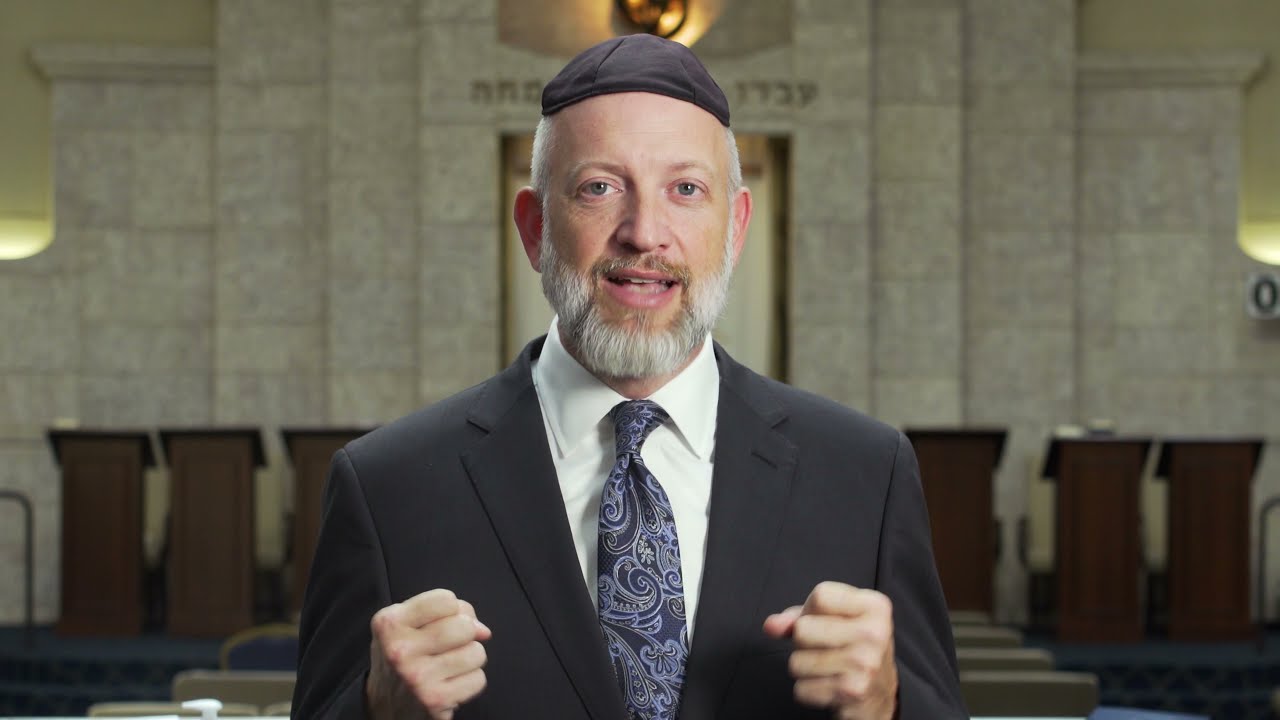
Transcript
לכבוד שבת לא היה שם בו. Lichvod Shabbos. Hello to Kahal Chasidim. Today is not Friday, today is Erev Shabbos and we are turning our Friday into Erev Shabbos. Thank you so much for joining us with tremendous thanks to our series sponsors Mendy and Tziporah Fischman, a zchus l'chayei רבקה בת ציפורה פרידל and in memory of Rabbi Lord Jonathan Sacks, הרב יעקב צבי בן דוד אריה as well as Mendy's father. And turn Friday into Erev Shabbos is also sponsored by P4P Team, Professionals for Positions. For inquiries email Mark, M-A-R-C at P-F-P-4-P dot team, Mark at P-4-P dot team. We're turning our Friday into Erev Shabbos is not any ordinary Shabbos, this is Erev Shabbos of Shabbos HaGadol, the great Shabbos. This is the big Shabbos. This is the Shabbos before Pesach, not just because the drasha is long and there is a big Shabbos HaGadol drasha coming up, but because Shabbos itself is great and Shabbos has what it takes to make us great. And I want to share with you a teaching from רב אברהם שור שליט\"א, Neser HaParsha, about this Shabbos HaGadol, but really each and every Shabbos, something a lesson we could take into our every Shabbos. And says Rav Schorr the following: Shabbos is a time, he says, of rectifying the power of speech. The Gemara tells us in Shabbos, pasuk says in Yeshaya, Daber Davar, v'chibadta, we're supposed to honor Shabbos and elevate Shabbos, how? Daber Davar, through our speech. And what that means is not only protecting ourselves and guarding ourselves from negative speech, but Rav Tzadok points out Daber Davar is a positive command to make speech elevated, to lift our speech, what we speak about and how we speak, speaking calmly, speaking softly, speaking gently, speaking lovingly, speaking affectionately, speaking in a holy way, speaking in a high way, in a sophisticated way, in a refined way, that speech comes from the neshama. And that's why Shabbos is a time that we're even more strict on speech, because Shabbos is all about the neshama, neshama yeseira. Shabbos we're endowed with this more sensitive, this broader, this more finely-tuned neshama. And after all, when Hashem breathed life into us, Ruach Memalela, Onkelos says, ויהי האדם לנפש חיה, when we became a living, vibrant, animated being, what it meant was we were given the power of speech. Animals don't speak, they bark, they meow, they make all kinds of other noises, they communicate in some fashion, but speech, the power of speech, the advanced sophisticated concept of speech is uniquely human and therefore it comes from the neshama. And that's what differentiated us when God first gave us that neshama, ויהי האדם לנפש חיה, Ruach Memalela, he gave us the power of speech. So Shabbos, when we have a neshama yeseira, our speech, our power of speech is even greater through that neshama yeseira we can be more mindful, more conscious, more present, more careful not to use vulgarity or profanity, not to speak gossip or slander, not to say anything off-color, inappropriate. But even more than that, not to talk about the topics that we do in the weekday, so don't talk about business and we don't talk about silly narishkeit, we don't talk about things that aren't going to elevate us and lift us, because Shabbos is also a time of geulah. And what was galus? Galus, says Rav Schorr, is speech was in exile. Paro is peh ra, the evil mouth, says the Dagal Machaneh Ephraim. Peh ra, whereas Pesach is peh sach. Paro, peh ra. Pesach is peh sach. So the whole idea of speech is freedom. Freedom is the freedom to speak and the responsibility of speech. And we believe in free speech, but not the free speech that America guarantees you, because in America as long as you don't yell fire in a crowded theater you have the right to free speech even if it's filled with hate and gossip and slander. But Judaism, the Torah doesn't give us that right. Peh sach, the neshama yeseira, that extra neshama extra obligates us to even be more careful to have a refined speech and to have a more careful speech. And that's what it means to have a neshama yeseira, a neshama that's even more on fire. The Bas Ayin, the holy Bas Ayin in his drush l'Shabbos HaGadol teaches that on Shabbos right before Pesach, on Shabbos HaGadol, a Yid should be even more vigilant with speech than usual. The entire essence of the night of Pesach is peh sach overcoming Paro, peh ra. It's the power of dibbur, the power of speech, refined speech, the responsibility of speech, the impact we can make with speech, a compliment rather than a criticism, to elevate rather than knock down, the power of speech of Tov L'hodos L'Hashem, power of speech to sing Hallel on Pesach night. So Shabbos HaGadol, Gadol means grow up, be big. A child uses vulgarity, a child speaks whatever's on their mind, but to be a Gadol is to be grown up, to grow up, and that's Shabbos HaGadol. Says Rav Tzadok, Shabbos HaGadol, like the Bas Ayin says, it's a time that we the Shabbos before Pesach, a great. greater responsibility, consciousness, and attitude approach towards speech and using it even more responsibly and making a bigger difference. So חברה, on this holy שבת, שבת הגדול, let us use our power of speech for זמירות, for דברי תורה. Let us use our speech to invite people who need meals, let us use our speech to lift and to elevate and to inspire, let us use our speech for holiness, and let us hear the speech of בשורות טובות, let others tell us of good news for עם ישראל and for כלל ישראל. יהא רעוא, יהא רעוא, דתזכי לזמר בשמך. יהא רעוא, יהא רעוא, דתזכי לזמר בשמך. יהא רעוא, דתזכי לזמר בשמך, בטוב טעם. יהא רעוא, יהא רעוא, דתזכי לזמר בשמך. יהא רעוא, דתזכי לזמר בשמך, בטוב טעם. וצדקתך תרנן לשוני, וצדקתך תרנן לשוני, בטוב טעם, יהא רעוא. יהא רעוא, יהא רעוא, יהא רעוא, יהא רעוא, יהא רעוא קדמך, דתזכי לזמר בשמך. יהא רעוא, דתזכי לזמר בשמך, בטוב טעם.