Transcript
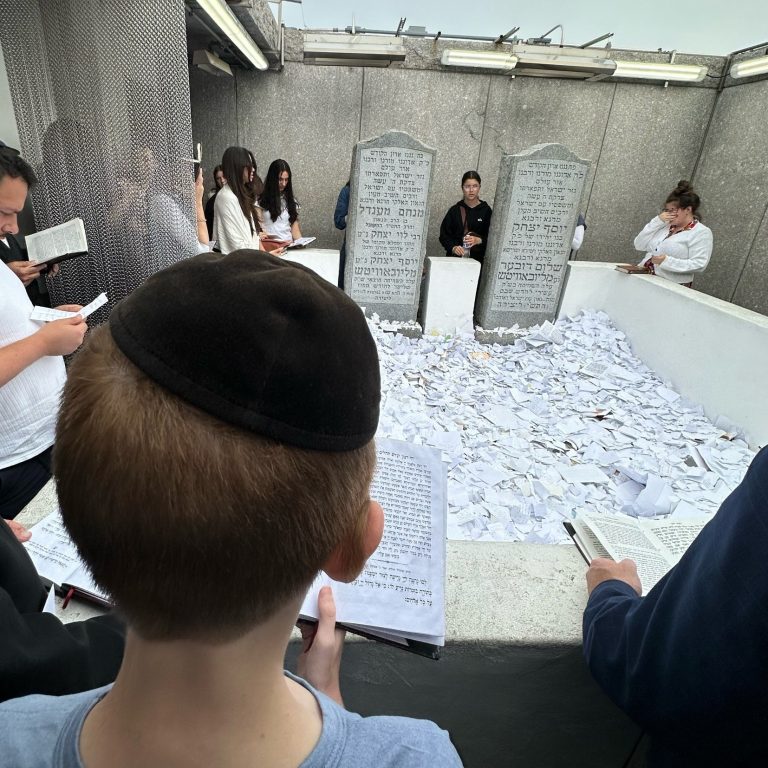
יא דאי דאי דאי, יא דאי דאי דאי, דאי דאי דאי, יא דאי דאי דאי. יא באם באם באם, דרי דאם דאם דאם, באם.שכויח Shkoyach everyone. It's wonderful to see everyone. I hope everyone's having a happy and a healthy and a meaningful and uplifting and a safe summer. It's good to be back and it's good to see everyone and it's good to have the opportunity to learn together for a few minutes before we, before we דאווענען מעריב daven Maariv.The three weeks, the nine days, culminating in תשעה באב Tisha B'Av, a period of חורבן churban, a period of destruction, for many, they need to artificially try to recreate some sense of sadness. חז\"ל Chazal, in fact our rabbis intuited this when they reverse engineered the mourning and the grieving this time of year. Normally a person experiences an acute loss, there's the period of loss, then שבעה shivah, then שלושים shloshim. Here our rabbis understand it's an אבלות ישנה aveilus yeshana, it's such an old and ancient mourning, they reverse engineer it. Instead of the acute and then the seven days, the thirty days, we went through three weeks, and we now find ourselves in the period of the nine days, and will culminate in תשעה באב Tisha B'Av, because something that happened so, so long ago, it's very hard for people to relate or identify with, to get on the floor to cry, to mourn, to grieve, to feel a sense of loss.After two years ago, תשעה באב Tisha B'Av and ערב תשעה באב Erev Tisha B'Av, for me personally, תשעה באב Tisha B'Av is no longer a hard day to feel loss, to feel חורבן churban. It's a time of the year that I, that we, that anyone who knew Rabbi Dr. Brian Gabbett, ברוך צבי בן ראובן נתן Baruch Tzvi ben Ruven Natan, anyone who knew him, certainly knew him well, feel that חורבן churban, that loss, that gaping hole in our hearts, and that gaping hole in our lives, and that gaping hole of somebody who was an extraordinary role model, a source of support, a source of inspiration. As he was נפטר niftar on ערב תשעה באב Erev Tisha B'Av, he left this world, his נשמה neshama left this world on ערב תשעה באב Erev Tisha B'Av, and a לוויה levaya, that funeral that I'll never forget on תשעה באב Tisha B'Av, that took up this entire campus as we then headed off to ארץ ישראל Eretz Yisrael for his for his final resting place.Our rabbis say that מיתת צדיקים misas tzaddikim, the loss of righteous people is כחורבן בית אלוקינו k'churban beis Elokeinu. To lose a righteous person is like the destruction of the בית המקדש Beis HaMikdash. Because the בית המקדש Beis HaMikdash was, was bricks and mortar. It was a building, maybe we'll repeat this idea again over שבת Shabbos, מוצאי שבת Motzei Shabbos with the איכה Eicha, but I've been thinking a lot about the Surfside tragedy and the crumbling of that tower. And nobody cares about the structure. Nobody cares about the cement or the bricks and mortar. Certainly there was a lot of personal memorabilia inside that people will be saddened to lose. But it's not a building, it's the people in the building. It's the soul of the building. It's what the building represents, and the חורבן churban, the loss of the בית המקדש Beis HaMikdash was not about a structure, an edifice, it wasn't about bricks and mortar. It was about the one who occupied that building. The spirit and soul of that building was the ריבונו של עולם Ribono Shel Olam, was the Almighty himself. And when a person was filled with doubt, and when a person had uncertainty, and a person had anxiety or worry, they went to the בית המקדש Beis HaMikdash. It was a place where חז\"ל Chazal tell us no less than ten miracles happened a day. And when you felt the need to know that not only are we here in this physical world, but we have a soul, and that our soul is immortal, is eternal, is everlasting, that we are here not randomly or by chance, but for a purpose, then one went to the בית המקדש Beis HaMikdash, you connected and communed with your creator and you just knew, you came alive, you felt connected. And the loss, the destruction, that חורבן churban, the devastation of the בית המקדש Beis HaMikdash, it's not about the building, the edifice, as great and magnificent and as glorious as it was, it was about that loss of that connect capacity, the ability to connect.צדיקים Tzaddikim are an embodiment, they are a manifestation of God in this world. And מיתת צדיקים misas tzaddikim when we lose someone special, the people who play, not the same לא הבדיל lohavdil but a similar role to the בית המקדש Beis HaMikdash. There are people who when we had doubt or uncertainty, there are people who when we were down and out, we would magnetically be pulled towards them and just being in their mere presence made us feel alive and made us feel confident and made us feel comfortable and made us believe that everything's for a reason and everything will be okay. We were able to attach and latch ourselves on to their optimism and their positivity and their faith. And when they're gone, when they leave this world, כחורבן בית אלוקינו k'churban beis Elokeinu, it is another expression of a destruction of a בית המקדש Beis HaMikdash. Because just like we can't go there to feel God, we can't go there to that person to feel their godliness, their צלם אלוקים tzelem Elokim, and to connect to Hashem in that way.For me, for so many of you, for all those who knew Brian, מיתת צדיקים כחורבן בית אלוקינו misas tzaddikim k'churban beis Elokeinu. He was, he was and he still is that person that the mere thought of his positivity, of his smile, of his unending and unshakable אמונה emunah, his faith, it just lifts you and it makes you feel that you can be stronger and that you can be more, to attach ourselves to such a person. There's not a day that's gone by in the last two years that I don't think about Brian. Just before the summer I was at a an event, a communal event, I won't say which one, it wasn't a BRS one, and it was in an auditorium that was hot and uncomfortable and the event was taking a very long time and I wished it were going faster. And I had a child in that event and Brian has a child in that event and I just thought to myself when I was about to complain and I was about to feel negative and I was about to turn to the person next to me and say it's hot and it's going so long and it's uncomfortable and why, I heard Brian's voice in my ear say, \"Isn't this amazing? Isn't it amazing? Look at our children, and look at this graduation, and look at this event. Isn't it amazing?\" And even today, two years later, I stopped myself from going negative and from feeling sad and instead continue to attach and latch on to him and מיתת צדיקים כחורבן בית אלוקינו misas tzaddikim k'churban beis Elokeinu, it's hard, and it's harder than when we could physically dance and sing and when he would be here in this בית מדרש beis medrash and he was such larger than life on our campus. But I want to share perhaps another suggestion of what it means מיתת צדיקים כחורבן בית אלוקינו misas tzaddikim k'churban beis Elokeinu, what it means that loss from our פרשה parsha, a message for all of us and in his memory.The פסוק pasuk says משה רבינו Moshe Rabbeinu in our פרשה parsha begins this soliloquy, this monologue on the last day of his life, and Moshe as he recalls nostalgically some of the high parts of Jewish history, he also taps into some of the challenges. Any person in any position of leadership will remember that it's not smooth sailing and it's not linear, there's ups and downs and there's challenges. And in fact, the פסוק pasuk is so relevant to the time that we're in and we invoke the sadness of משה רבינו Moshe Rabbeinu that we lain it in the tune of איכה Eicha. When משה רבינו Moshe Rabbeinu says איכה אשא לבדי טרחכם ומשאכם וריבכם Eicha esa levadi tarchachem u'masaachem v'rivchem? How can I alone carry you? Moshe remembers how hard it was, as broad and as big as his shoulders were, how can I carry your contentiousness, your טרחכם tarchachem, משאכם masaachem, your burdens, your heavy, your load, וריבכם v'rivchem, your quarrels, your fights. How can I carry it? So what does that mean? What was משה רבינו Moshe Rabbeinu, what was משה רבינו Moshe Rabbeinu saying? So Rashi tells us, טרחכם מלמד שהיו ישראל טרחנים tarchachem melamed she'hayu Yisrael tarchanim. שהיה אחד מהם נראה כבעל דין ונוצח בדין, אומר יש לי עדיין להביא, יש לי ראיות להביא. מוציא אני אתכם מן הדיינים Shehehaya echad mehem nireh k'ba'al din v'nitzach b'din omer yesh li adayin l'havi, yesh li ra'ayos l'havi, motzi ani eschem min hadayanim. טרחכם Tarchachem means you were a pain in the neck. You were a huge pain. You were a absolutely incorrigible, adolescent, complaining, negative, miserable people. And when two of you would have a conflict and there was a conclusion reached, you wouldn't allow the conclusion to be reached, you tried to prolong every battle, every fight, every conflict. You didn't come to a resolution in the pursuit of peace. You were טרחכם tarchachem, you were just a pain in the neck. You weren't pursuing peace, you were happy to prolong conflict. ומשאכם U'masaachem says Rashi, מלמד שהיו אפיקורסים melamed she'hayu apikorsim. You were a burden. You were a heavy load to carry. This teaches, says Rashi, that you were אפיקורסים apikorsim. אם הקדים משה לצאת אמרו מה ראה בן עמרם לצאת. אם איחר לצאת אמרו מה ראה בן עמרם לצאת Im hikdim Moshe latzeis amru ma ra'ah ben Amram latzeis, im icher latzeis amru ma ra'ah ben Amram latzeis. If משה רבינו Moshe Rabbeinu got up early in the morning to go out, they would say, שמא אינו שפוי בתוך ביתו shema eino shafui b'soch beiso, he must not have peace in his home. משה רבינו Moshe Rabbeinu must not have it together at home. The guy gets up early to go to work. He comes home late at night. He barely overlaps with his wife and family. Clearly he's got שלום בית shalom bayis problems. איחר לצאת Icher latzeis, if Moshe slept in a little bit, if he slept in, אמרו amru, מה ראה בן עמרם שלא לצאת ma ra'ah ben Amram shelo latzeis, מה אתם סבורים יושב ויועץ עליכם עצת רעות, וחושב עליכם מחשבות ma atem svurim yoshev v'yoetz aleichem eitzas ra'os v'choshev aleichem machshavos. He's probably having coffee with his wife, gossiping לשון הרע lashon hara about everyone in the shul. He hasn't left his house. He's probably sitting with his wife. He's probably sending texts and emails and WhatsApp and he's busy gossiping and sharing the confidences of everybody in the community. Says Rashi, משאכם masaachem, you were a burden, שהיו אפיקורסים she'hayu apikorsim, you were אפיקורסים apikorsim. And the question is, there are a lot of ways of describing the way the Jewish people were. They were immature, they were incorrigible, they were negative, they were complainers, they were hypercritical. There are a lot of ways to describe who they were. They were filled with sarcasm and cynicism. They had unfair suspicion of Moshe. There are a lot of words you could use to describe how they behaved. But Rashi doesn't use any of them. Rashi says, מלמד שהיו אפיקורסים melamed she'hayu apikorsim. אפיקורסים Apikorsim? What's an אפיקורוס apikorus? An עם הארץ am ha'aretz is an ignorant person. He's a believer but he doesn't know anything. What's an אפיקורוס apikorus? A heretic. An אפיקורוס apikorus is someone who doesn't believe in God, who challenges the very existence of God, who has theological, philosophical problems, who rebels against the very premise, the very existence of God. So these negative, miserable, complaining, difficult people, they were all those things, but were they heretics? Why does Rashi describe, מלמד שהיו אפיקורסים melamed she'hayu apikorsim, they were אפיקורסים apikorsim? So listen to what of Nachman of Breslov says. Says the holy Rebbe Nachman, you know what it means שהיו אפיקורסים she'hayu apikorsim? What's a משא masa? משאכם Masaachem, you were a heavy weight. A משא masa is a burden, it's something heavy to lift, it's something heavy to carry. What does that mean, משאכם masaachem, you were a heavy to lift and heavy to carry, שהיו אפיקורסים she'hayu apikorsim? Says the holy Rebbe Nachman, he says if you believe in God, if you have faith, if you attach with דבקות dveykus that there is a creator and that he has created every one of us, and we're here for a reason, and nothing in life is random and everything is by design, and he has a plan, if you really believe with אמונה emunah and בטחון bitachon and דבקות dveykus, then nothing is heavy. Then nothing is a burden. Then nothing weighs you down. Then you're able to walk through life so lightly, so swiftly, because what's to get anxious about? Hashem did this. What's to get envious about? You have what's meant for you. What's to get angry about? Everything that happens is by Hashem's design. If you really live with faith, if you have אמונה emunah, בטחון bitachon and דבקות dveykus, then nothing weighs you down. Nothing is so heavy that you can't go on. Nothing debilitates you and nothing paralyzes you, but your faith carries you because you know that everything is for a reason. You're light and you're able to swiftly be carried through life. So says Rebbe Nachman, משאכם masaachem, you were a heavy burden. And you know why you lived such heavy lives, heavy with anger, heavy with anxiety, heavy with anger, envy? Because אפיקורסים apikorsim. Because if Hashem is not in your life, then you'll be absolutely crushed by everything that happens. But if you face life and you say that I have to come and I have to confront whatever comes my way, I have to navigate it, I have to conquer it, I have to tackle it, I have to do my best with it. We're not passive or submissive, of course. We take our effort, we take our initiative, but with all of that, I surrender and submit to Hashem. It's all Him, I have nothing to worry about. It's all by design, it's all the way it's meant to be, it's all the way it's supposed to happen. It's all the way. I teach this class living with אמונה emunah, I say this, preach these concepts regularly, and I struggle to live it. I was just on the plane flying back, and there was a open can of seltzer on the tray, and there was some movement with the travel companions, and the bottle of the can of seltzer fell off the tray, turned over while full into my briefcase, upside down, and filled my briefcase with the entire content of the seltzer. So my immediate reaction was, this one I took out the bathroom, this one moved, this one I was like filled with anger, steam coming out of my ears, coming out of my mask, coming out of everywhere. I said I teach this class with אמונה emunah. The seltzer can wouldn't have fallen in my briefcase if that wasn't what was meant to be. And I took a deep breath and it was fine. And we, I poured the briefcase into a cup, literally, and salvaged whatever was inside, and that's what was meant to be. When you live with אמונה emunah and בטחון bitachon, nothing weighs you down and nothing ruins your trip or your flight through life. Everything's a little lighter, everything's a little bit easier. And Brian ברוך צבי בן ראובן נתן Baruch Tzvi ben Ruven Natan, there was no משא masa, nothing was weighty or heavy. Nothing was too much. He faced at the end of his life the greatest and the hardest challenges anyone could. He knew his life was slipping away. He watched it and he waited for it. And it wasn't a burden. He would say as he was close to his deathbed, \"Isn't Hashem amazing? Isn't Hashem amazing? Look at the life he gave me. Look at the family he gave me. Look at the years that I had. Hashem is amazing.\" And when you live with that אמונה emunah, you can not only live but you can die light, without it being heavy, without it being a burden. It's not easy, and I'm not saying any one of us should compare ourselves or try to judge our ourselves or evaluate by that standard, but how lucky we were to know someone and to be touched and to be inspired by somebody who nothing was a משא masa, nothing weighed him down, nothing was impossible to overcome, no challenge to be able to absorb because he lived with אמונה emunah. Everything was \"Hashem is amazing.\" That was his refrain, that was his mantra. It wasn't just his mantra at a family שמחה simcha and it wasn't a mantra in a moment of success. It was a mantra in the hardest moments of life. Hashem is amazing. And if he could, when a can of seltzer tips over on a plane, then it shouldn't weigh us down. Then Hashem is amazing with everything that happens in our life. Says Rebbe Nachman, that's why they were אפיקורסים apikorsim, because the very fact that you're being weighed down, the very fact that you're being frazzled is evidence that there's a little bit of a פגם pagam, there's a challenge in your אמונה emunah, because if a אמונה emunah were greater, you'd be able to tackle and take on whatever came your way, even, even the greatest challenges that exist. But I want to share with you one other idea. And then we'll מעריב daven Maariv. The Gemara in סנהדרין דף צט Sanhedrin daf tzadi tes tells us, there's a debate. The word אפיקורוס apikorus, what does it mean? מלמד שהיו אפיקורסים Melamed she'hayu apikorsim, משאכם masaachem, the Jewish people were אפיקורסים apikorsim. Rav says אפיקורוס apikorus is somebody who is מבזה תלמידי חכמים mevazeh talmidei chachamim. An individual who disparages, an individual who shames, embarrasses, an individual who speaks derogatory, negative about a תלמיד חכם talmid chacham is an אפיקורוס apikorus. It has nothing to do with heresy about belief in God, it has to do with behavior towards the ambassadors of God, towards the representative of God, towards תלמידי חכמים talmidei chachamim. Reish Lakish says an אפיקורוס apikorus is מבזה חבירו בפני תלמידי חכמים mevazeh chaveiro bifnei talmidei chachamim. It's not that you embarrass the תלמיד חכם talmid chacham, it's that you're willing to disparage your friend to the תלמיד חכם talmid chacham. You'll gossip, you'll slander, you'll try to feel superior, you'll push down someone else in front of the תלמיד חכם talmid chacham. The Rambam in his פירוש המשניות Peirush HaMishnayos says that the word אפיקורוס apikorus is Aramaic for the word הפקר hefker. אפיקורוס Apikorus is the same root as the word הפקר hefker, and it means that somebody who makes Torah הפקר hefker. It means the world is הפקר hefker. The world is ownerless. It's random, it's chance, nobody owns anything. The Torah is ownerless. The Torah doesn't inform and inspire. The Torah doesn't regulate and require us to do anything. But the world is a place of randomness. And yet other suggests the word אפיקורוס apikorus, the etymology comes from the Greek Epicurean. It represents the pursuit of pleasure, the Greek ideas, and חז\"ל Chazal were speaking out against אפיקורוס apikorus, Epicurean, that philosophy, that attitude and that way of life. מלמד שהיו אפיקורסים Melamed she'hayu apikorsim means either they were מבזה תלמידי חכמים mevazeh talmidei chachamim, that's what Rashi means, they would speak that way about משה רבינו Moshe Rabbeinu, speaking so negatively, either suspiciously about his marriage, suspiciously that he's gossiping about them, or מדבר על חבירו בפני תלמיד חכם medaber al chaveiro bifnei talmid chacham, or הפקר hefker. These people did not, Torah wasn't central to their lives, and the people who represent Torah and who live Torah did not receive the honor and the centrality that it deserved. But I want to close by sharing with you my own interpretation maybe of what אפיקורס apikorus means. Why would מלמד שהיו אפיקורסים melamed she'hayu apikorsim? You fought with one another, you were contentious, you and you were suspicious. Why does that make you an אפיקורוס apikorus? So if you think about it, אפיקורס apikorus is about the faith and belief in the ריבונו של עולם Ribono Shel Olam in Hashem. But faith in Hashem is not only faith in Hashem and God the creator. הקדוש ברוך הוא, הריבונו של עולם Hakadosh Baruch Hu, the Ribono Shel Olam, the creator expresses and manifests himself through us, through the צלם אלוקים tzelem Elokim, the human creations, the human beings. Every human is singular. Everyone is individual. Everyone is a unique expression of Hashem in this world. There is no repeat and there is no random and there is no unnecessary. Everyone is a צלם אלוקים tzelem Elokim, there's a godliness inside each human being, each person. Our mission, our challenge in life, our challenge in these nine days, our challenge if we don't want to sit on the floor on מוצאי שבת Motzei Shabbos and Sunday this year, but instead be dancing in ירושלים Yerushalayim with Brian and all those we want to welcome back to this world, our challenge is to see the צלם אלוקים tzelem Elokim, the godly soul, the godly spirit, to see that which is redeemable, see that which is valuable, to see that which is beautiful in the other. Some people, the godliness is right on the surface, as Brian and others we know. Others, that godly soul, that godly spirit, that godly spark is buried somewhere deep within. There are layers and layers on top and it's really, really hard to find it. And that's where the מצוה mitzvah kicks in. It's not hard to love Brian Gabbett. I don't know a human being alive who met Brian Gabbett who didn't love Brian Gabbett and didn't feel he loved them back. But there are people it's really hard to love. It's even harder to like. And that's when the מצוה mitzvah of ואהבת לרעך כמוך v'ahavta l'reiacha kamocha kicks in. That's when we have to find and discover their צלם אלוקים tzelem Elokim, their godly soul. And the people who live in this world and the people who live a life in which they refuse to find the godliness in the other. All they see is that which there is to be suspicious about. All they see is that which there is to criticize or condemn. This one's wrong for this reason and this one's not religious and this one voted that way and this one handled Corona that way and this one this and that one that, and all they see are the differences and all they see is that which they disagree with and all they see is the suspicion and what they can be critical of, they're אפיקורסים apikorsim. They're heretics because they are failing to find the God in the other. And that is a form of heresy. You could have the longest מעריב Maariv and you could שׁוּקְל shuckle and you could be strict in every area of הלכה halacha and if you mistreat others and if you don't see the beauty in others and if you are suspicious and cynical and judgmental and superior to others, אפיקורוס apikorus, it means you're a heretic because you may live a life in which you think you're showing you believe in God, but you can't believe in God and not find him in the people around you. That is the last lesson. That is the last lesson of Brian, ברוך צבי בן ראובן נתן, נשמתו שתהיה עלייה Baruch Tzvi ben Ruven Natan, nishmaso she'tehiyeh aliyah, as we approach his יארצייט yahrzeit, that I think מיתת צדיקים כחורבן בית אלוקינו misas tzaddikim k'churban beis Elokeinu not only because they were the manifestation of God and we no longer have the comfort and confidence that we used to when we attached ourselves to them, like when we visited the בית המקדש Beis HaMikdash, but perhaps it also means because they were the example of that ability to find the צלם אלוקים tzelem Elokim in others. They lived lives in which they saw that good, in which when everyone else felt they needed to sit in judgment, criticize, condemn, be holier than thou, they found that which they could connect with with every human being, Jew and non-Jew alike, religious and not religious, voted the same as you, voted differently, and every other difference that's out there. And that was Brian's life. He connected with everyone, the most diverse group of people. He saw the good in them and he searched for the good in them. And I'll close by telling you, I remember once playing golf with Brian, and I asked him, how do you do it? You're always so positive. Life is not so simple. ברוך השם Baruch Hashem, you have a big family and a big practice and challenges of Jewish communal life and leadership of which he played a big role. How are you never down? How are you always positive? How are you always see the good in people? And what looked like it came naturally and easily, he told me, it was a lifetime of effort. He made a conscious decision when he was younger that that was how he was going to live and he worked hard on it until it became who he was. And that is perhaps the most powerful lesson, that it's not always an instinct or natural, but it's something that we could work on and learn. And מירט השם im yirtzeh Hashem, we too should not be אפיקורסים apikorsim. Like רב נחמן Rav Nachman, we should have the faith, the hope, the positivity, the optimism of Brian to be able to feel that nothing weighs us down. We should have the good seeing the good in others, the positivity that Brian attached himself and connected with the best of everyone, finding it and searching for it as hard as it sometimes was, until nobody is a משא masa, nobody is a burden on anyone else. And מירט השם im yirtzeh Hashem, we won't be reading this in the tune of איכה Eicha while sitting on the floor, but מירט השם im yirtzeh Hashem be together dancing.